Today’s excursion was described as being focused on the highlights of Luanda’s heritage, looking back at pre-colonial and colonial times, and touching just briefly on Angola (and Africa)’s 20th century struggles about which we’ve learned so much from our on-board lectures.
The last couple of sea days have given us the opportunity to really delve into the background to, implementation of, and lasting effects of Apartheid, and it has been both deeply disturbing, intensely emotional, and mentally exhausting.
Man’s inhumanity to their fellow man, and the incredible hubris – often fuelled by misguided religious beliefs – required to justify subjugating other people continue to astonish me, even though I didn’t consider myself naive.

Today, in a bit of an effort to – right or wrong – take a break from all that guilt, I chose an excursion that allowed us to be just “tourists”.
Luanda is the capital of Angola, with a population of 9.7 million people, which makes it the 5th largest city on the African continent. The country of Angola is a major African oil producer, second only to Nigeria; oil of course has engendered lots of foreign interest. We know that’s not always a good thing; Portuguese colonialism, and the support of the fairly recent civil war’s opposing sides by Russia and the US, have all left scars on the country. The current oil economy, combined with government corruption, continues to exacerbate the divide between the haves and the have-nots.
During our port talk yesterday, our shore excursion manager Victoria reminded us to be kind and patient, and remember that we are in a country very different from our own. Despite a modern-looking downtown, populated by a lot of ex-pats involved in the oil industry, most people living in Angola have lives much less privileged than ours, and it is incumbent upon us to be understanding. You’d think world travellers wouldn’t need to be reminded of that, but we’ve learned from experience that there are always those who forget who we are and where we are – in the same way that there are always those who take photos of things they’ve been specifically told not to photograph.
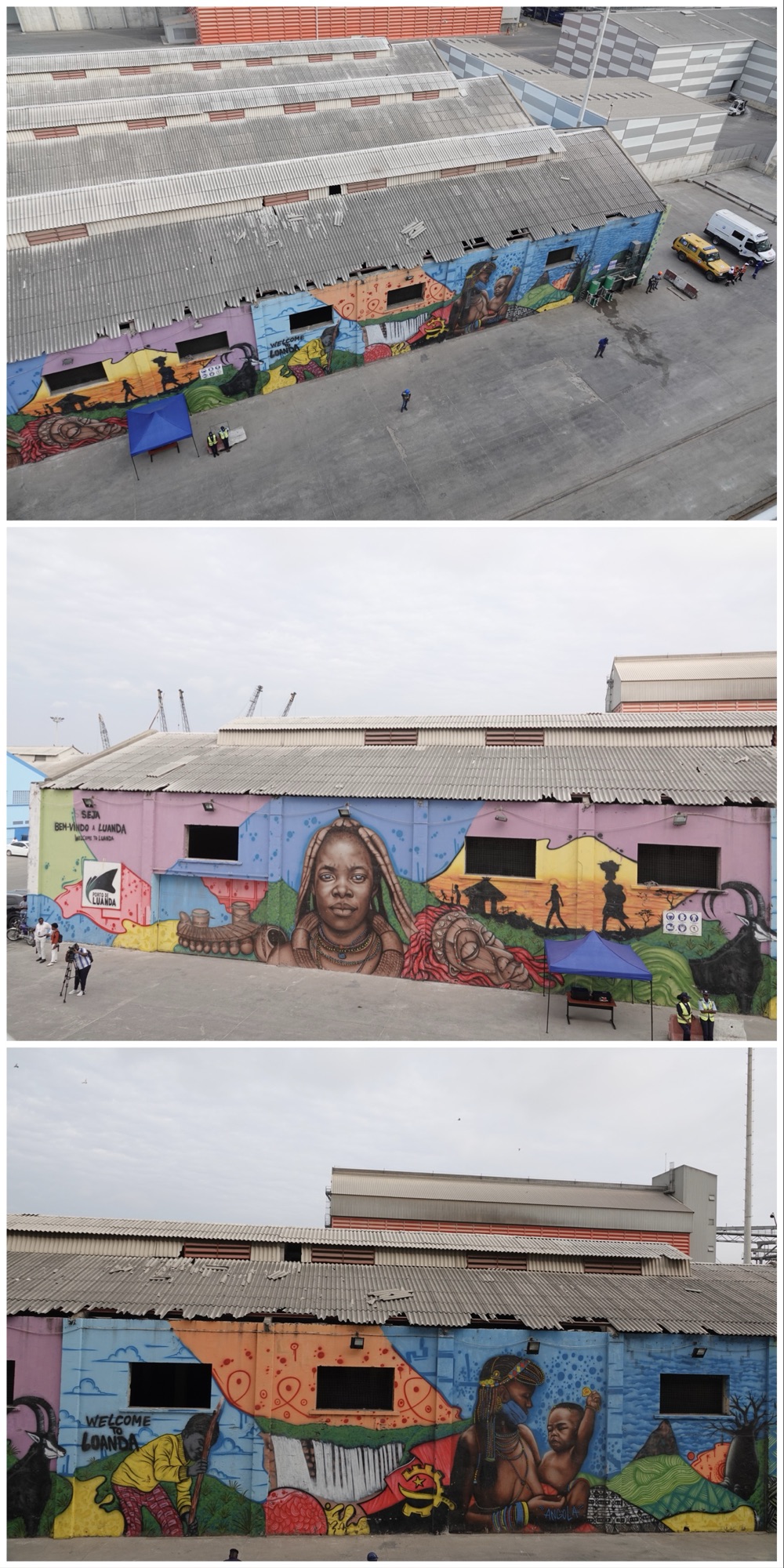
Victoria mentioned that we’d be in an industrial port, with no terminal building or cruise ship passenger amenities, so we were pleasantly surprised at what a clean and colourful port it was, with a beautiful mural adorning one of the warehouses. There was a smell of warm grain – not surprisingly beside grain elevators!


She also shared that there is no tour guide accreditation system in Angola, so our guides would simply be enthusiastic ambassadors for their city. Our guide, André, fluent not only in his native Portuguese but also in English, French, and Spanish, was a gem.
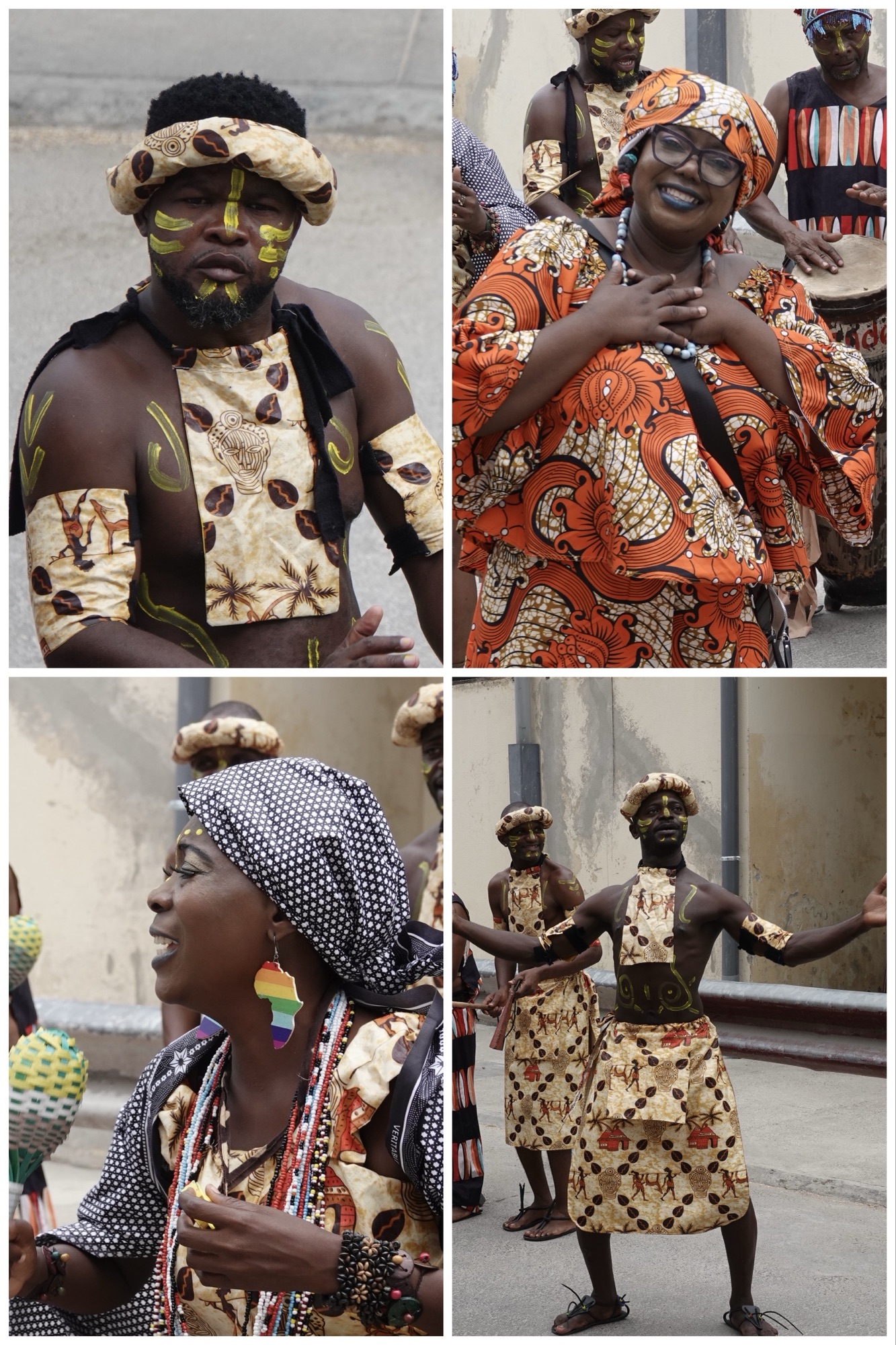
André greeted us next to our small bus, right beside where a wonderful dance group was performing.


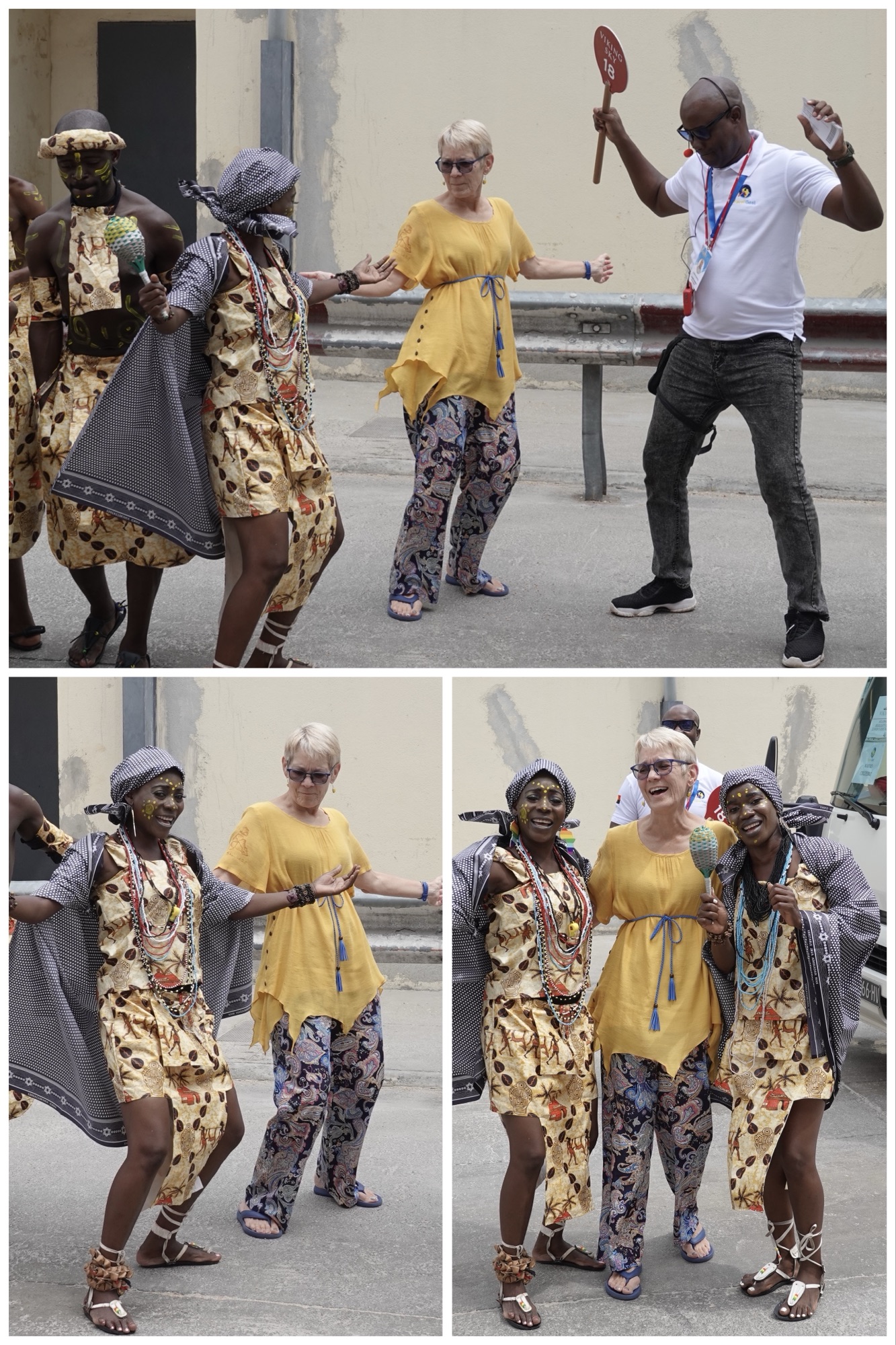
I absolutely could not resist the rhythm (neither could André), and joined in for a bit. I may not speak Portuguese beyond good morning and thank you, but music connects us all.
We drove along the seacoast to the ornately decorated Palácio de Ferro (“Iron Palace”), rumored to be the work of Gustav Eiffel who built Paris’s famed Eiffel Tower. Legend has it that the unassembled house was destined for Madagascar, but the ship on which it was being transported foundered off the coast of Angola.
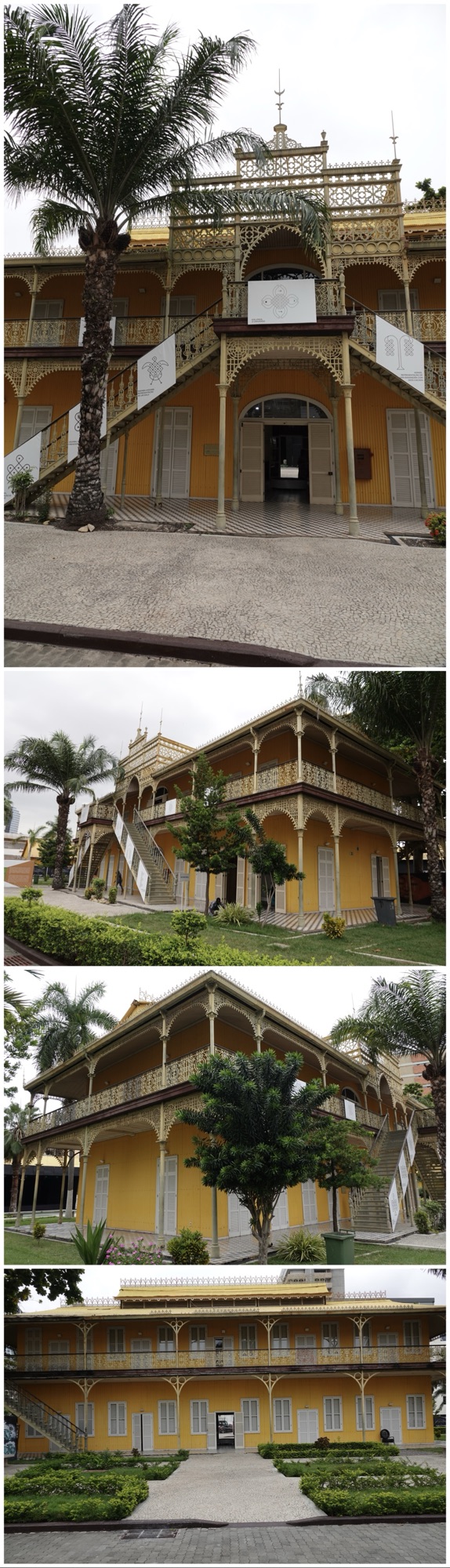
Climbing the exterior stairs allowed me to look like I was at home there.

Inside, in addition to several patterns of beautiful pasta tile floors in shades of black, grey, and white, there was a wonderfully colourful art exhibit.
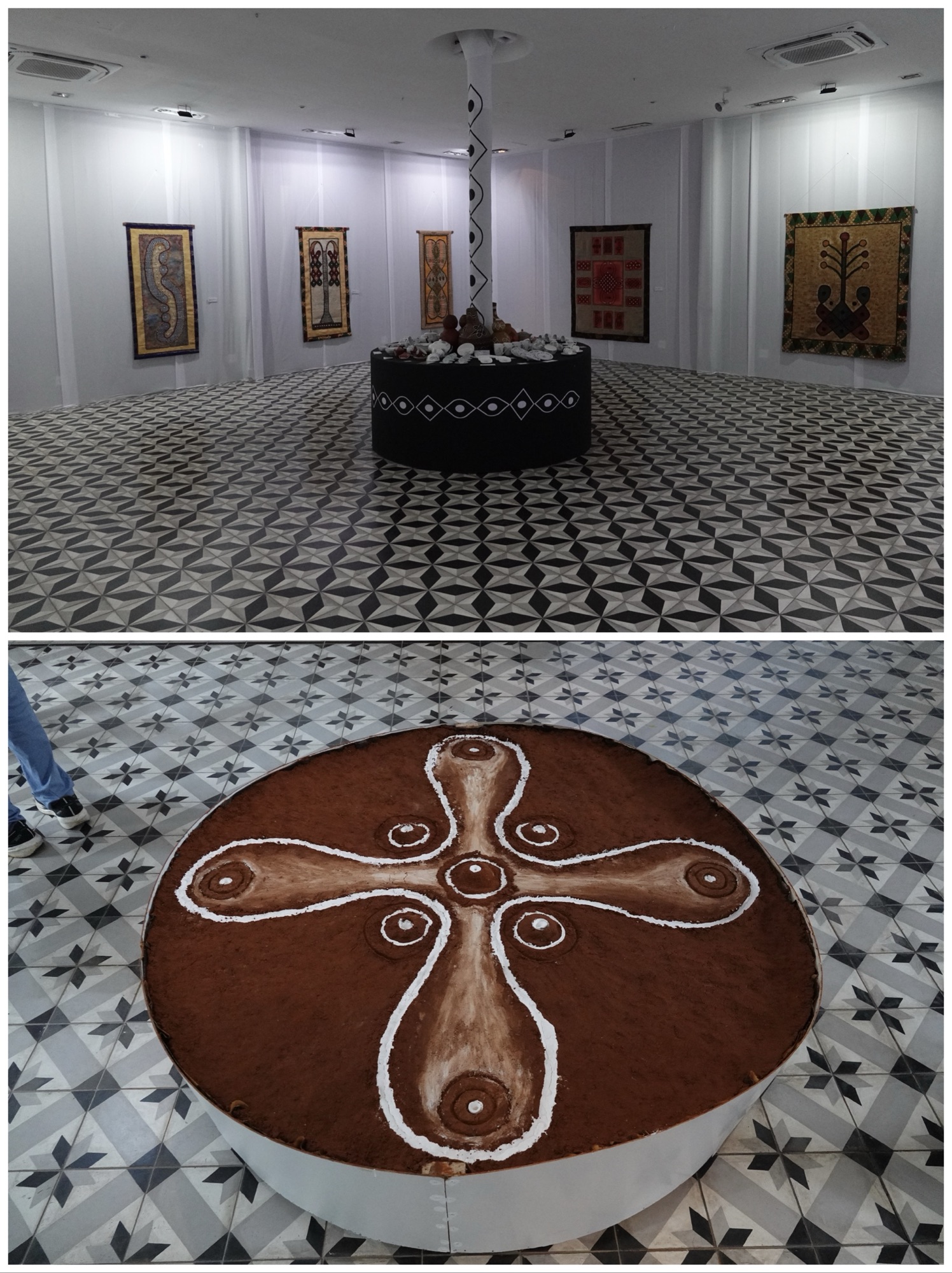

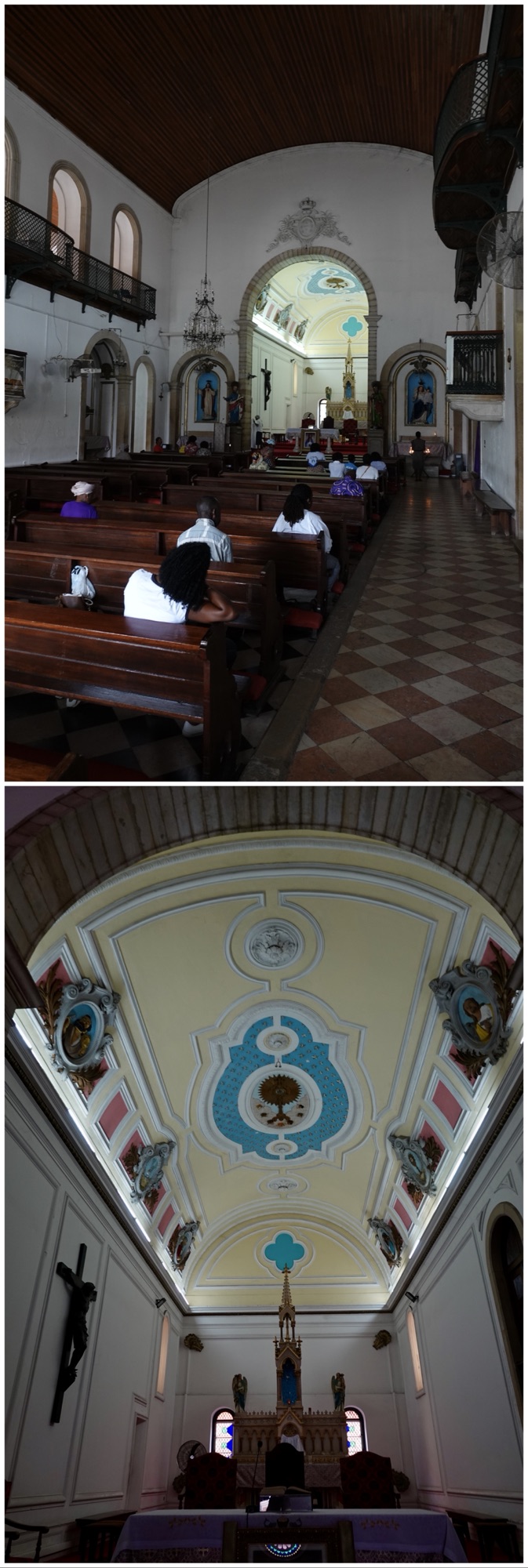
Our second stop was at the 17th-century Church of Our Lady of Remedies to see one of the best-preserved places of worship in the area.

The simplicity of the church’s interior, with its painted wooden statuary, reminded us of the church we stayed near in Trieste.
From the church we headed to the National Museum of Anthropology.
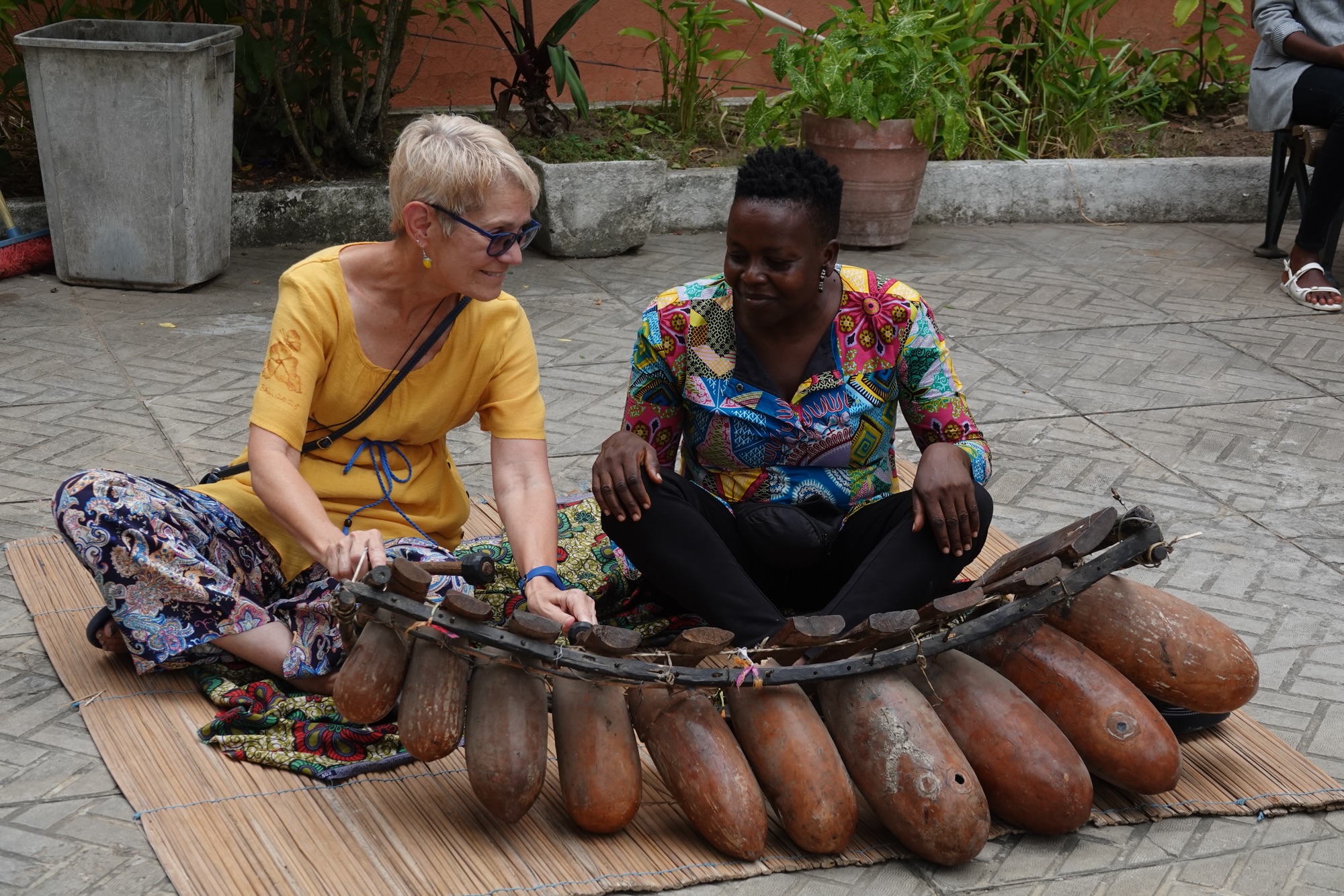
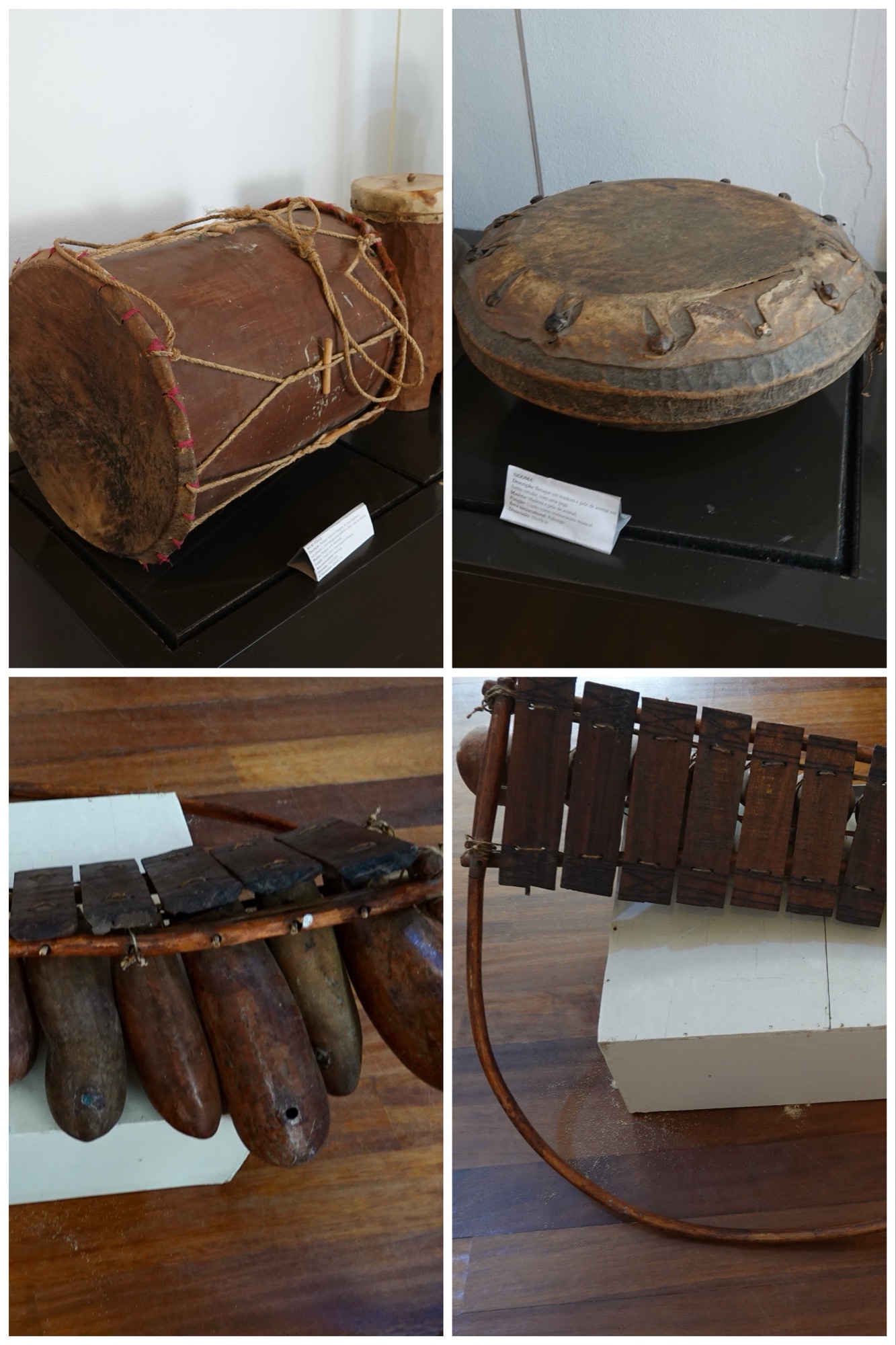
Outside the museum was a woman demonstrating the marimba, a xylophone-like traditional instrument made out of hardwood bars and resonating gourds, played with two mallets.
She allowed me to try playing it.
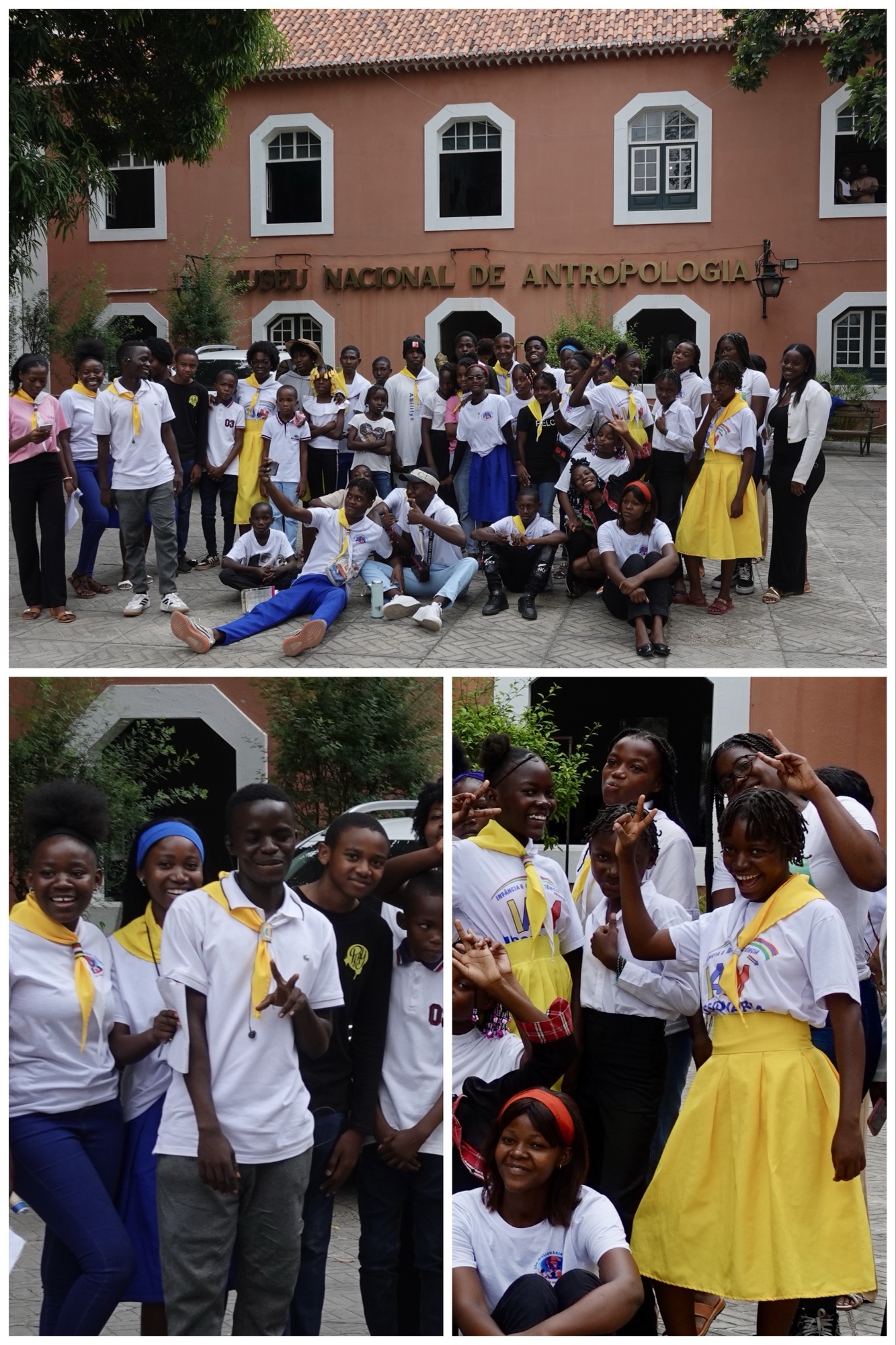
There was also a large group of students just leaving the venue. They posed for us … and then asked us to pose for their cellphone pictures!
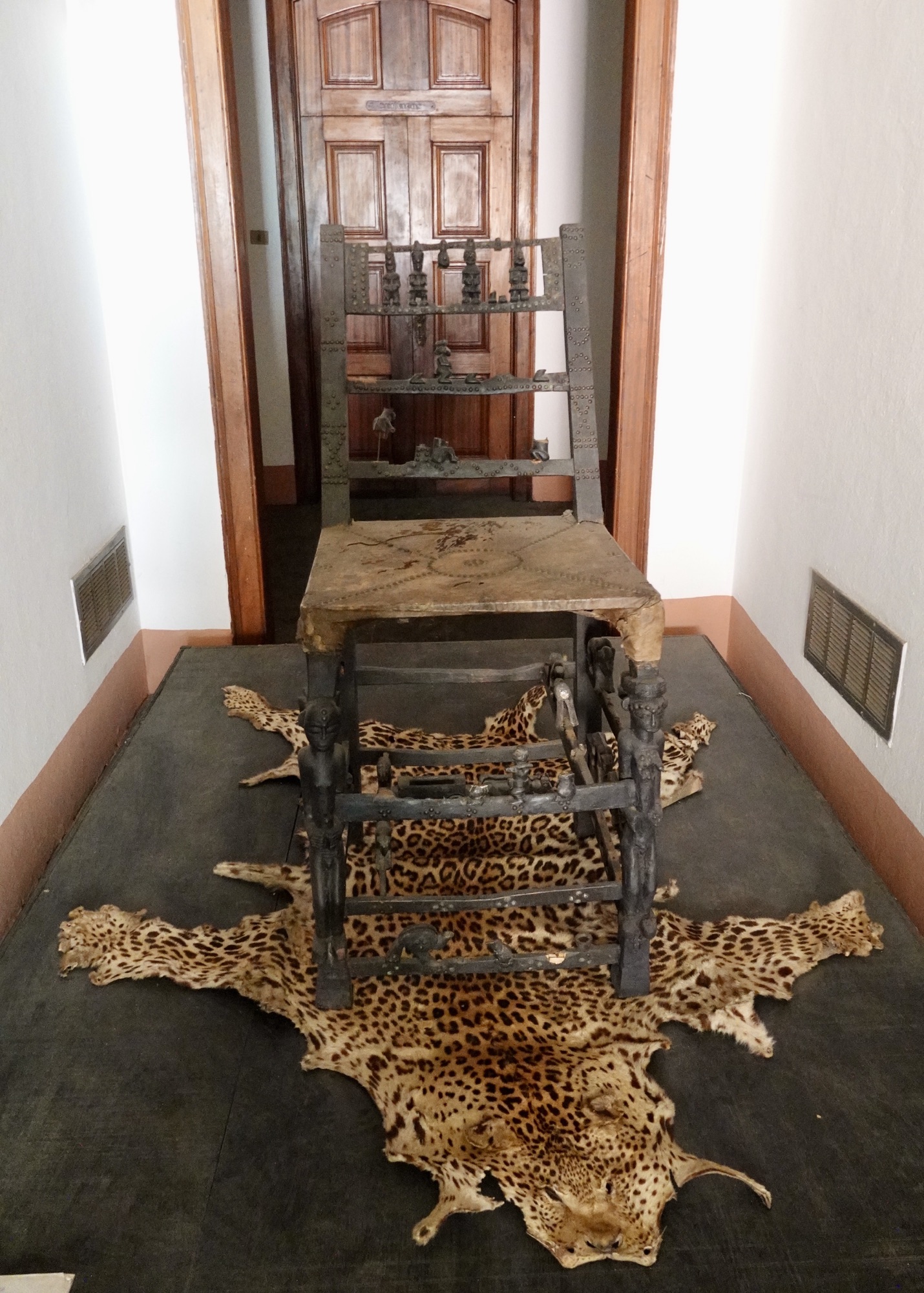
Inside the museum we were able to view a renowned array of art, sculpture, weapons, musical instruments and more. The exhibits here rotate regularly, since there are far more artifacts than there are spaces to showcase them.

At our next stop, the Fortress of São Miguel, a national monument, we enjoyed sweeping views of the city and surroundings.
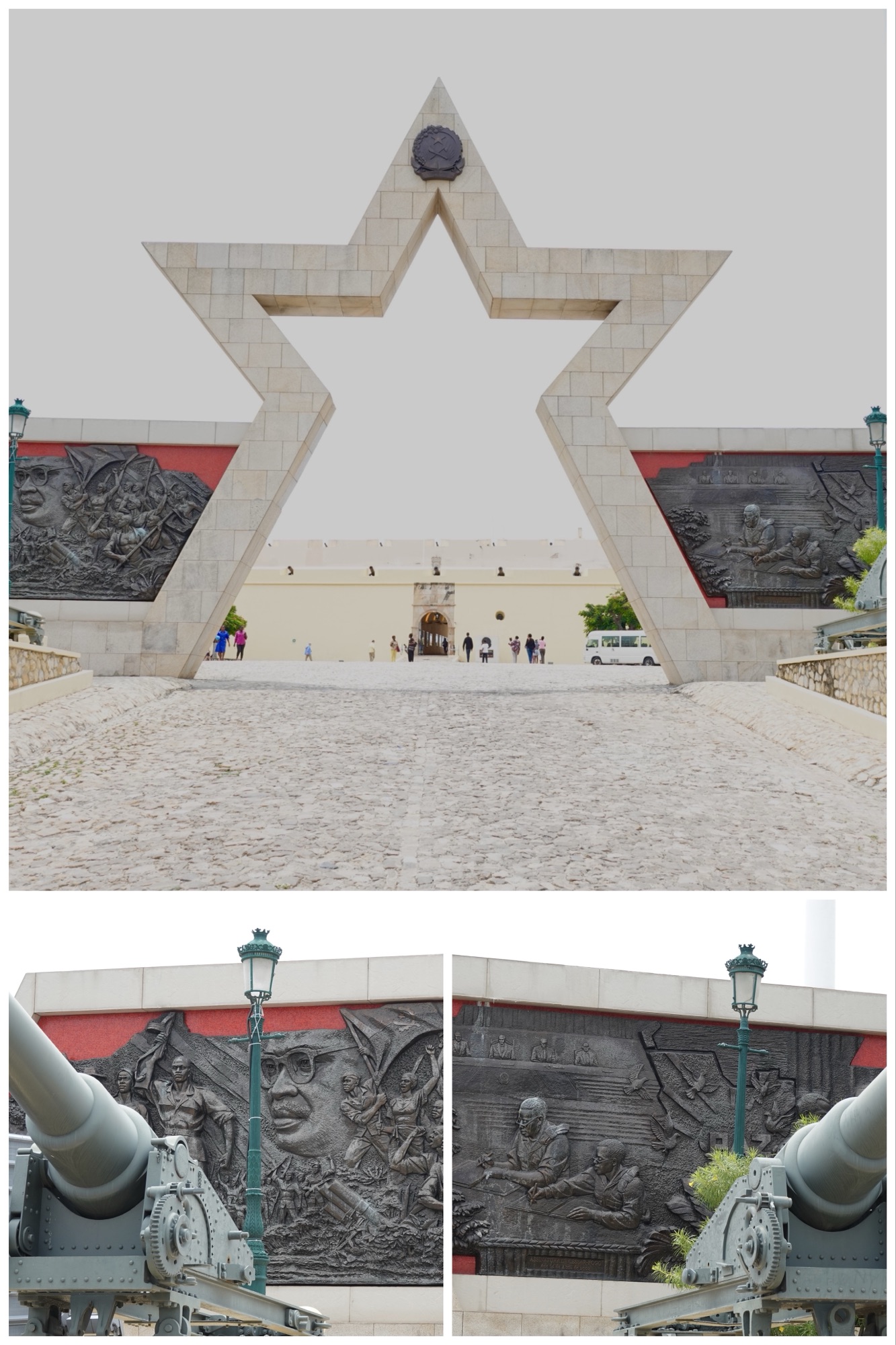

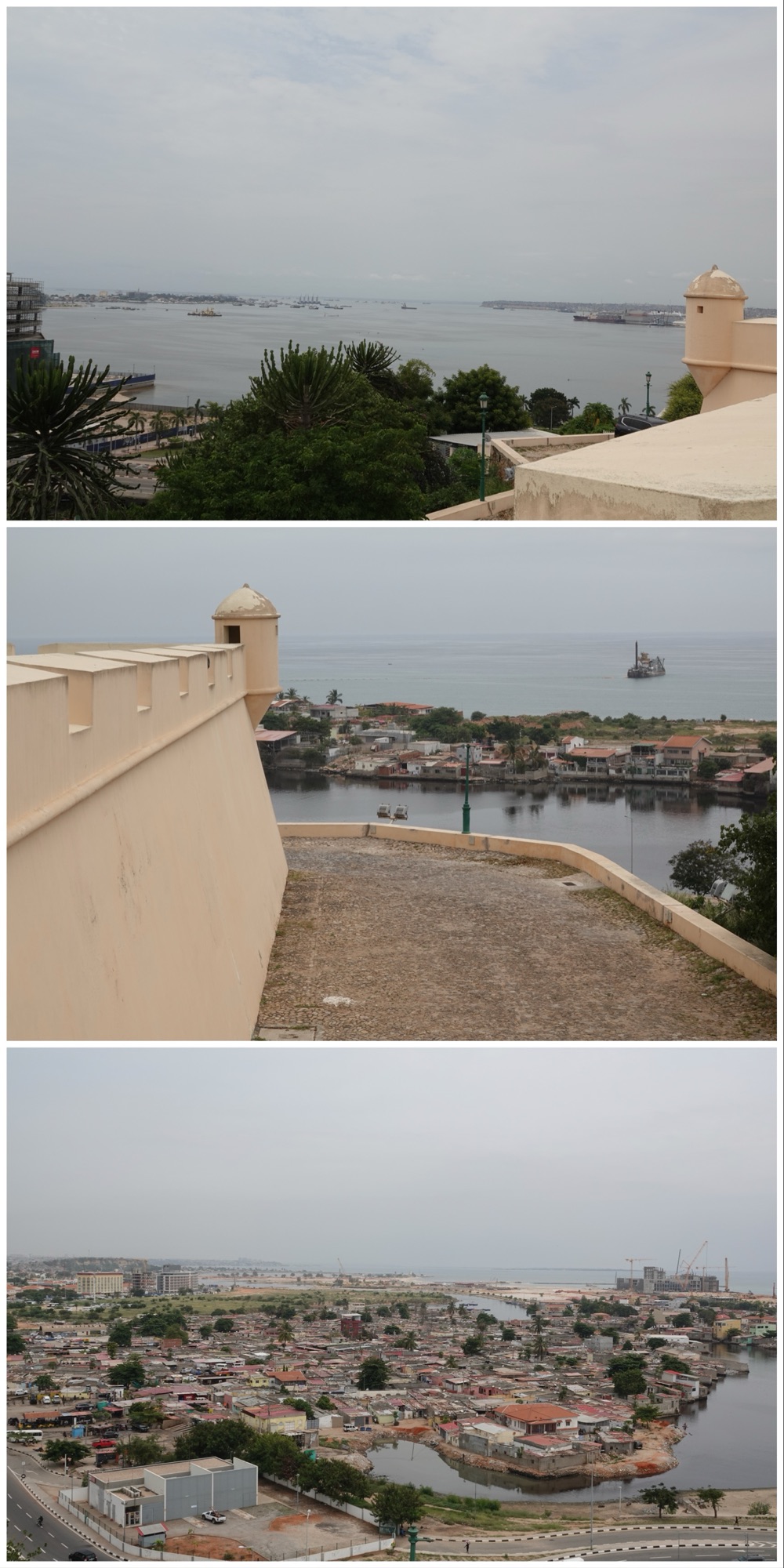
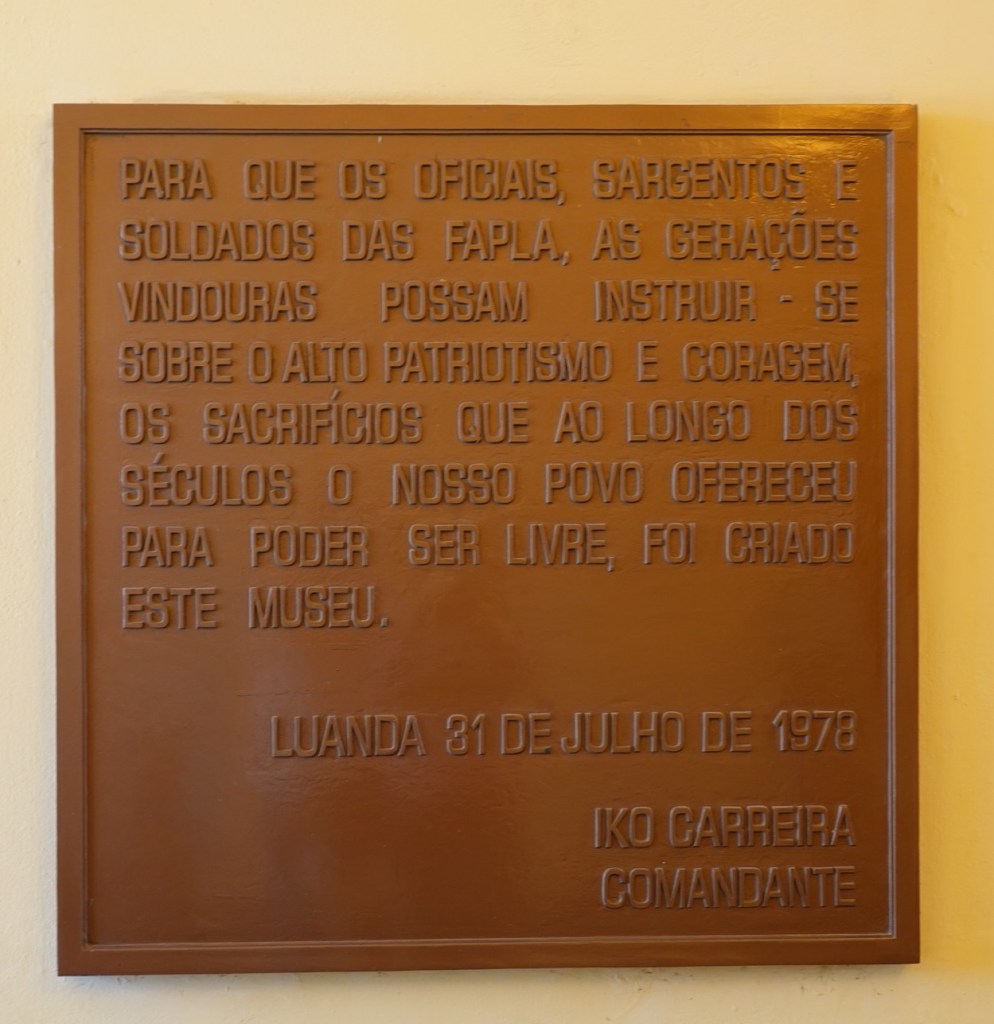
The fort – a self-contained town surrounded by cannon-studded walls – was built in 1576, became the administrative centre of the colony in 1627, was a collection site for enslaved people being sent to Brazil, served as headquarters of the Portuguese Armed Forces until 1975, and now hosts the Museum of the Armed Forces. That’s a lot of history. Since conservation efforts were completed in 1995 it has been the shared responsibility of the Angolan Ministries of Defense and Culture.

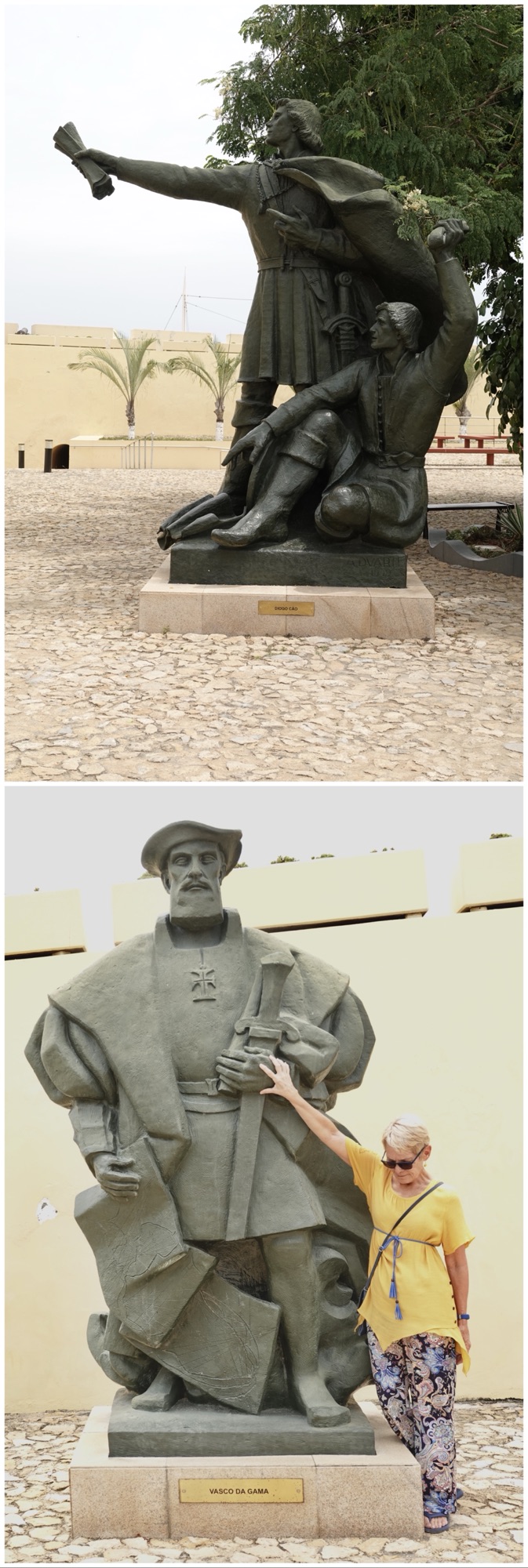
The courtyard was filled with massively-proportioned statues of Portuguese royalty and explorers.

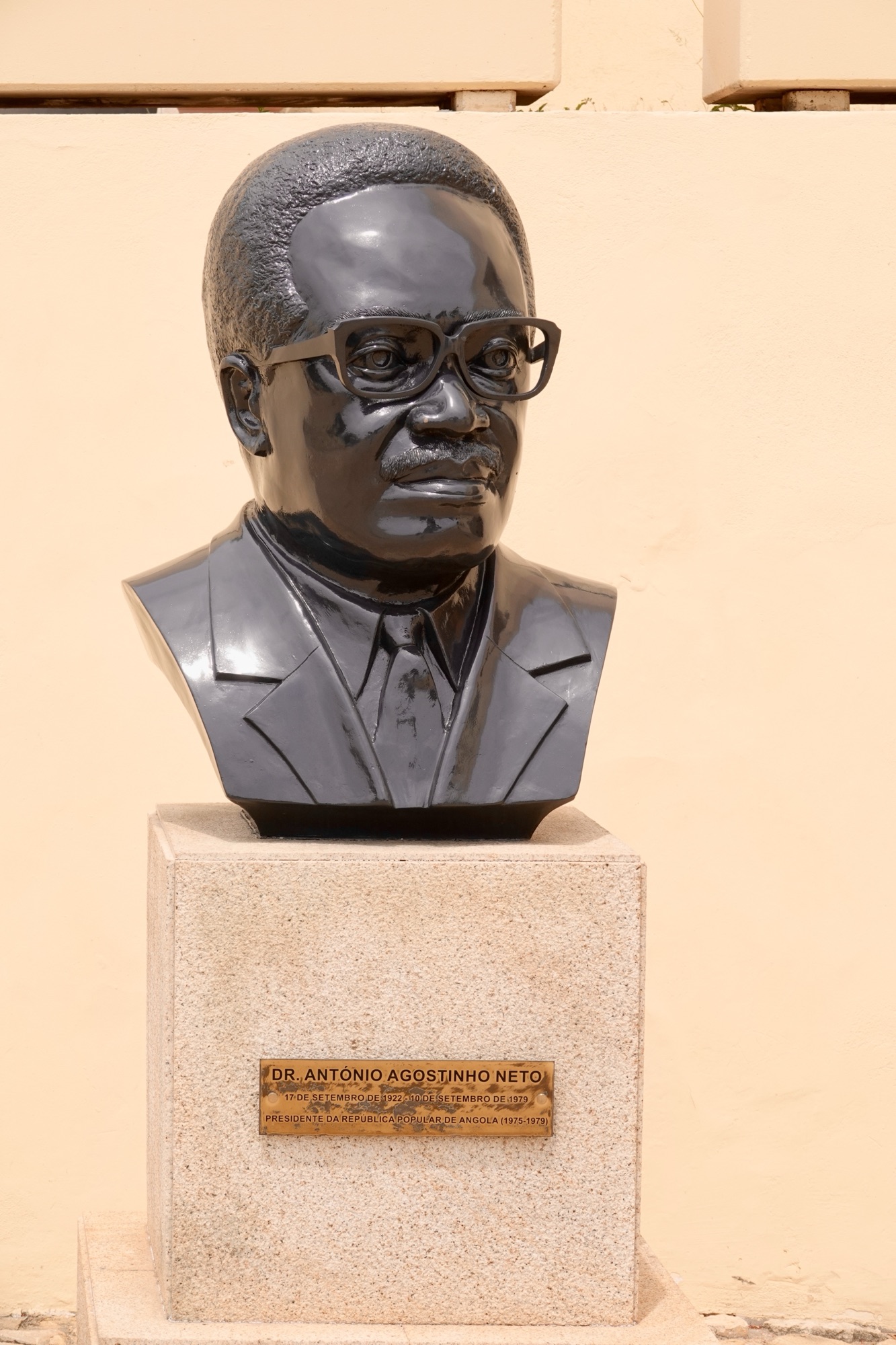
Although not the largest statue, the most important one in the courtyard was the bust of the country’s first president after independence from Portugal.
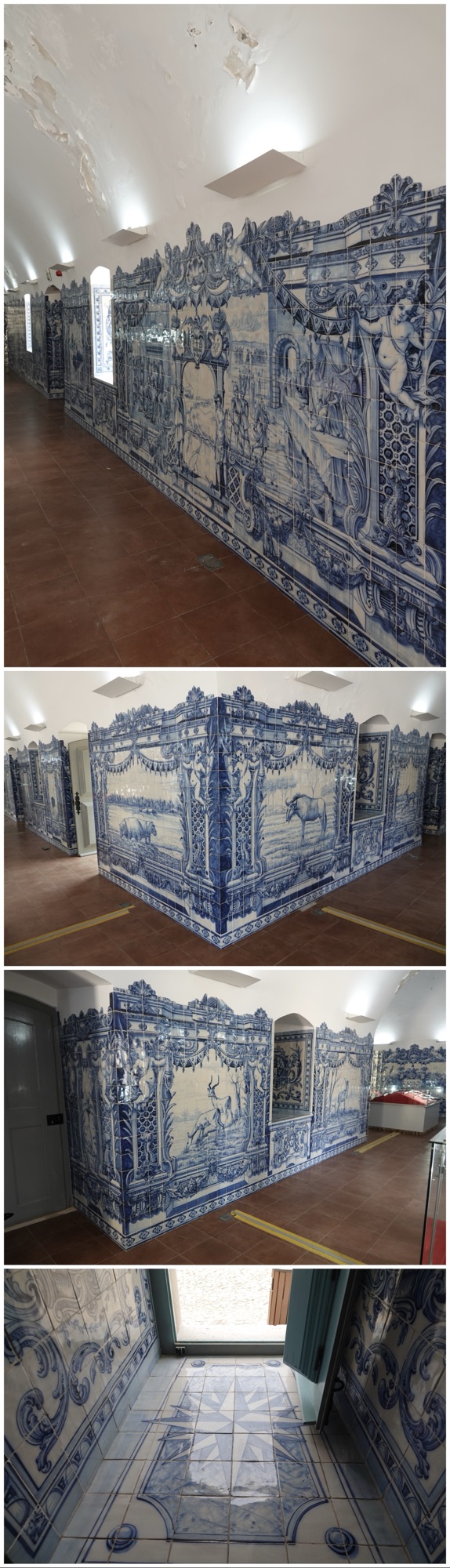
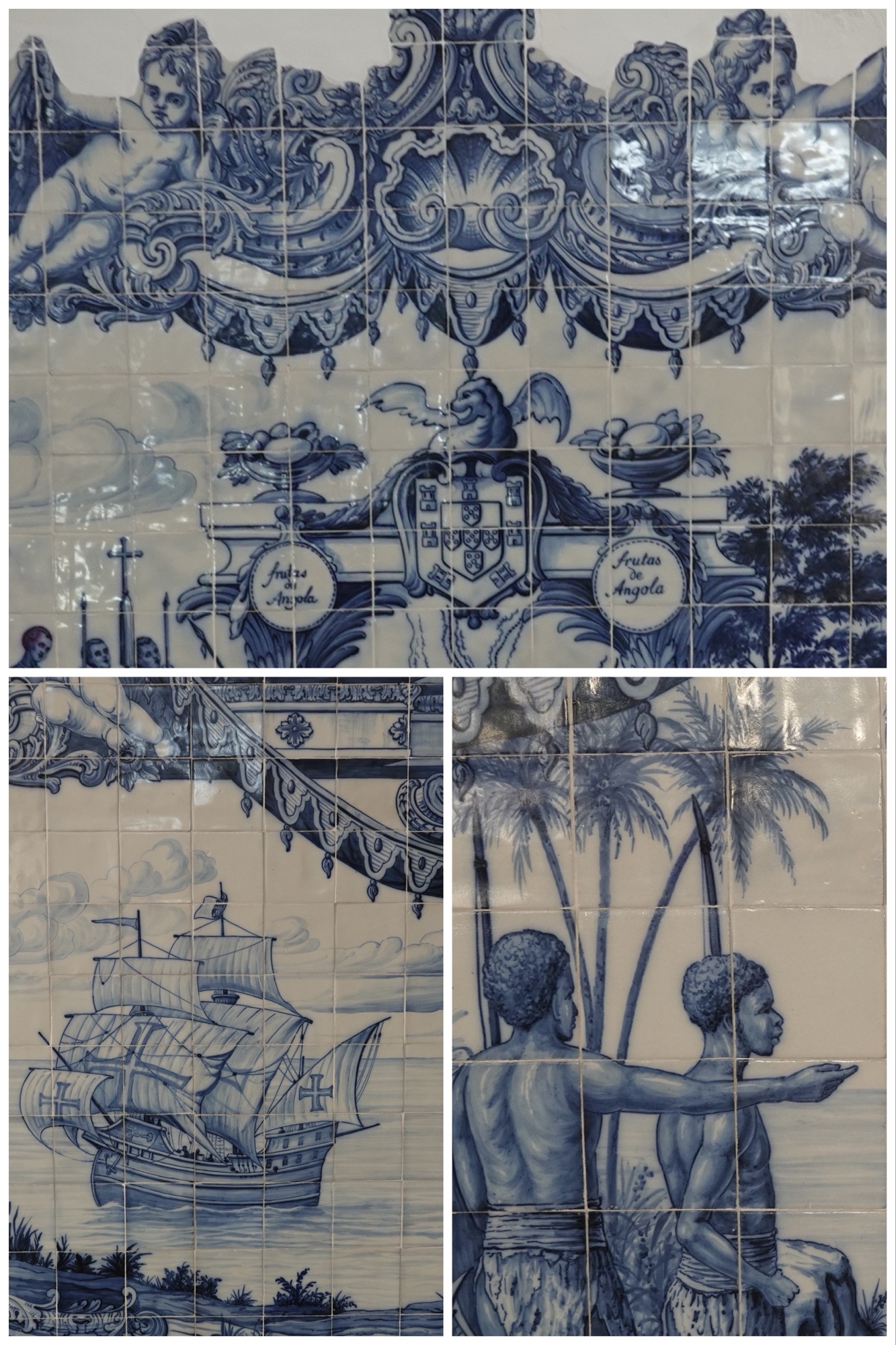
The most surprising thing about the fort was the interior Portuguese ceramic tile murals, depicting the flora, fauna, and history of Angola. The exact date the tile work was added doesn’t seem to be known, but the style dates to the 17th and 18th centuries, during the colonial period. The tiles were removed and sent to Portugal for restoration at the end of the 20th century and then reinstalled.
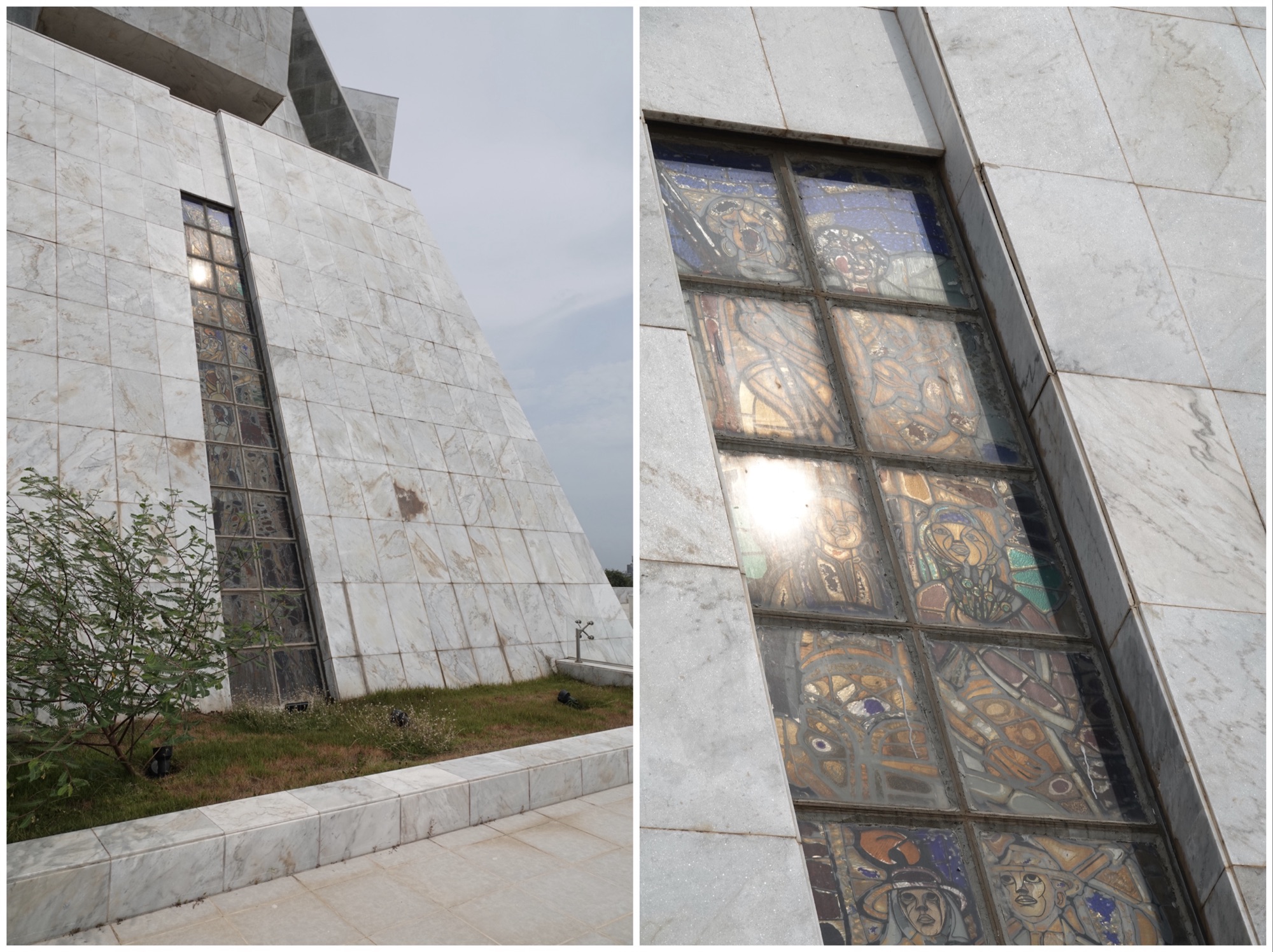
Our last extended stop was at the Dr. António Agostinho Neto Memorial, where the remains of Angola’s first president are entombed. The exterior of the huge concrete memorial, designed and funded by the Soviet Union, at first glance seems a bit like Soviet brutalist architecture, largely because of the use of grey concrete.

A closer look, especially on the terrace level, reveals marble wall surfaces and stained glass windows that almost look art nouveau.
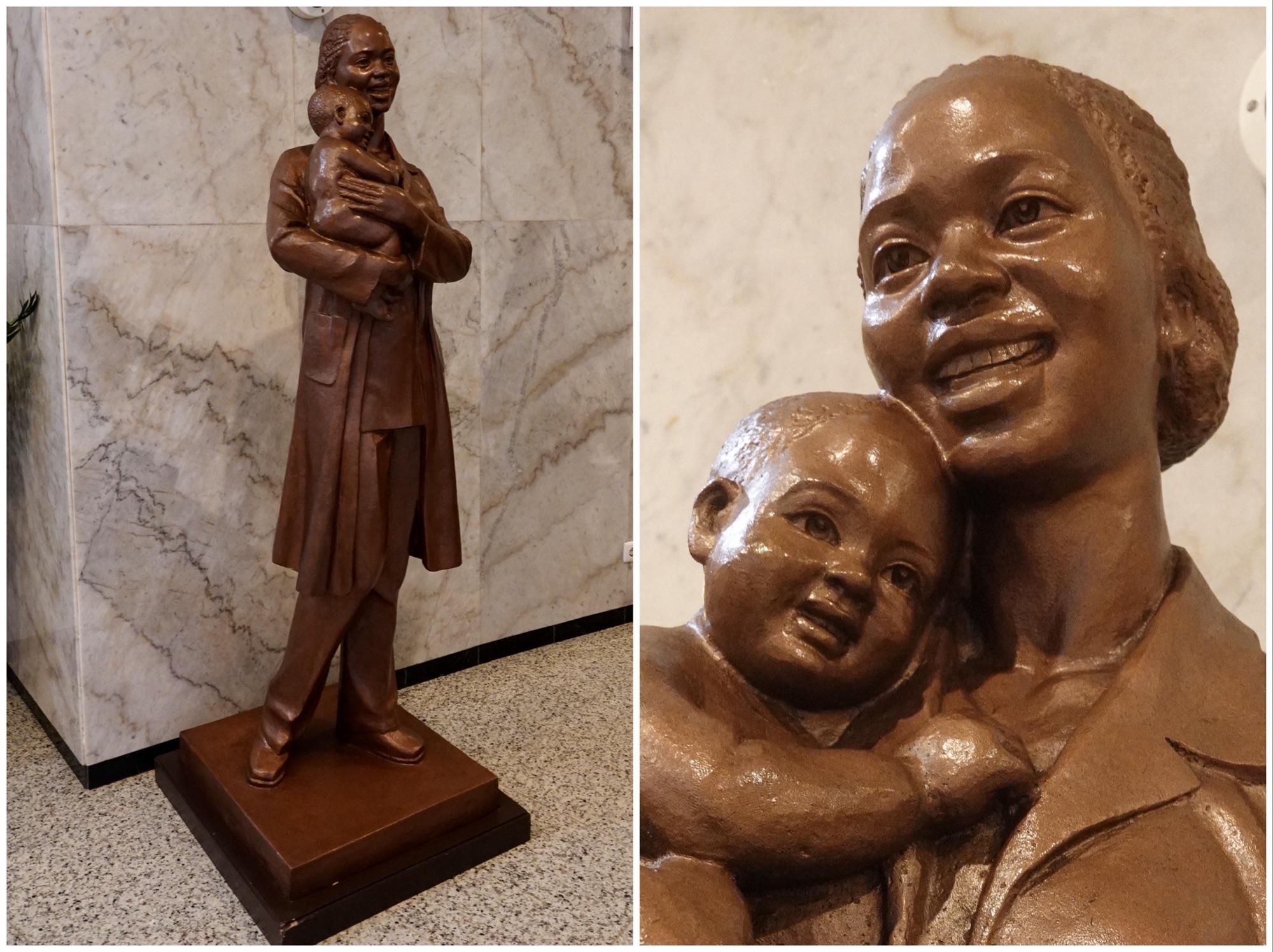
The inside of the memorial features marble everywhere, and bronze statues depicting people in various roles in society – from motherhood to fishing to agriculture to manufacturing to diamond mining to military service.
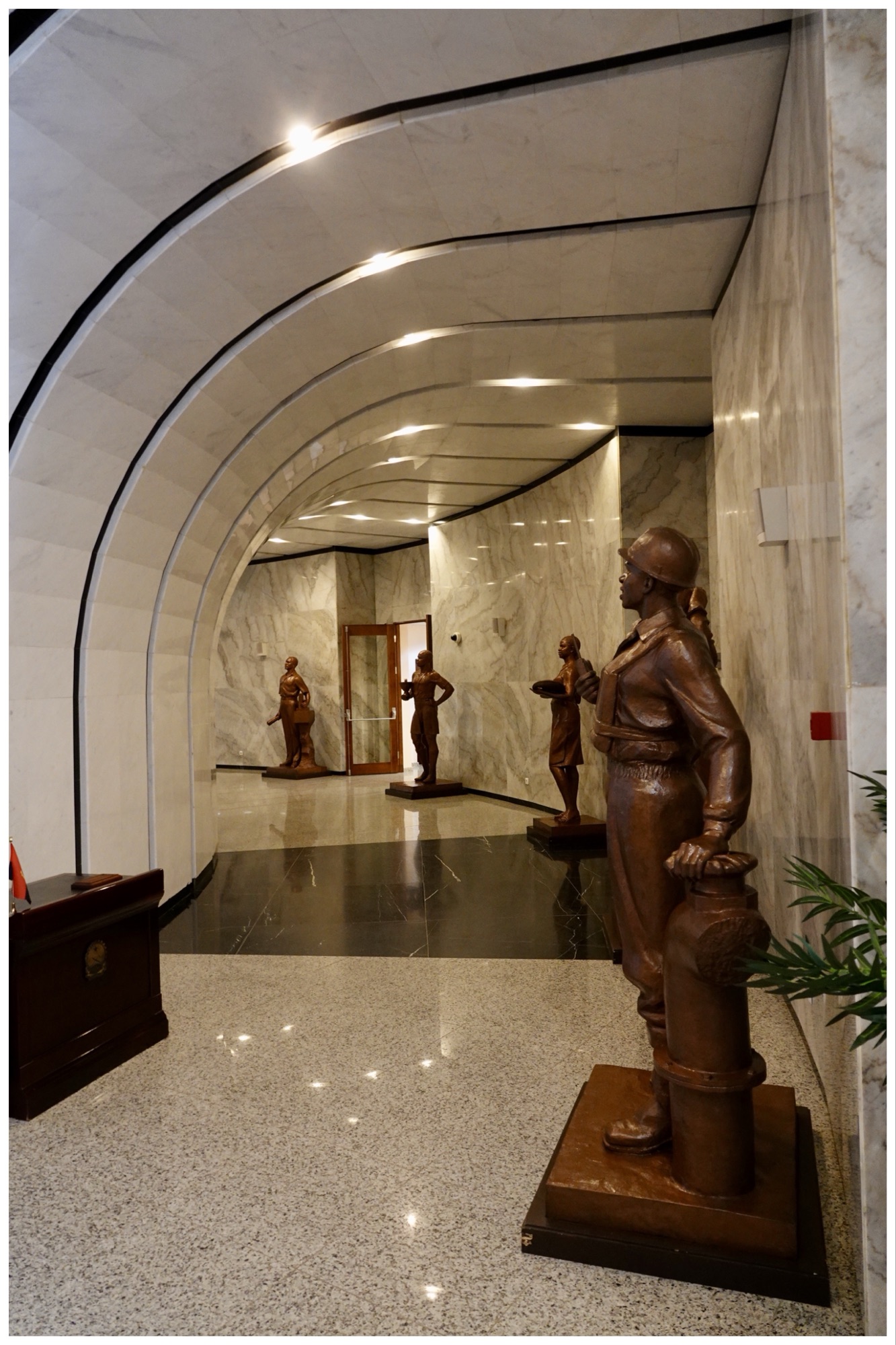
I was enthralled by the expressions on the faces: sheer joy, even in the sparkle of their eyes. I’d never seen statues that looked like that, but a fellow passenger told me they were exactly like those in the Moscow subway – except for the Angolan faces. The intent may have been propaganda, but I loved them nonetheless.


There were exhibits of the former president’s medals, suits, medical texts, poetry – even his suitcases. The only place inside the memorial where photographs were not allowed was the inner mausoleum, where Dr. Neto’s coffin lies permanently in state within a glass tomb. The room was filled with silk floral tributes from all over the world; I noticed Chile, Brazil, Italy, Cuba, South Africa, and Russia among dozens more.
From the 3rd floor terrace of the memorial, we got a glimpse of the magnificent pink and white parliament buildings, and then drove past them for a closer look. Most of the government ministries, also in the “upper hill” of Luanda, are built in the same style and colour, although none are as impressive.

We stopped, but did not get off the bus, at the memorial to the unknown soldiers, which honours all those non-Angolans who fought in the country’s war of independence.
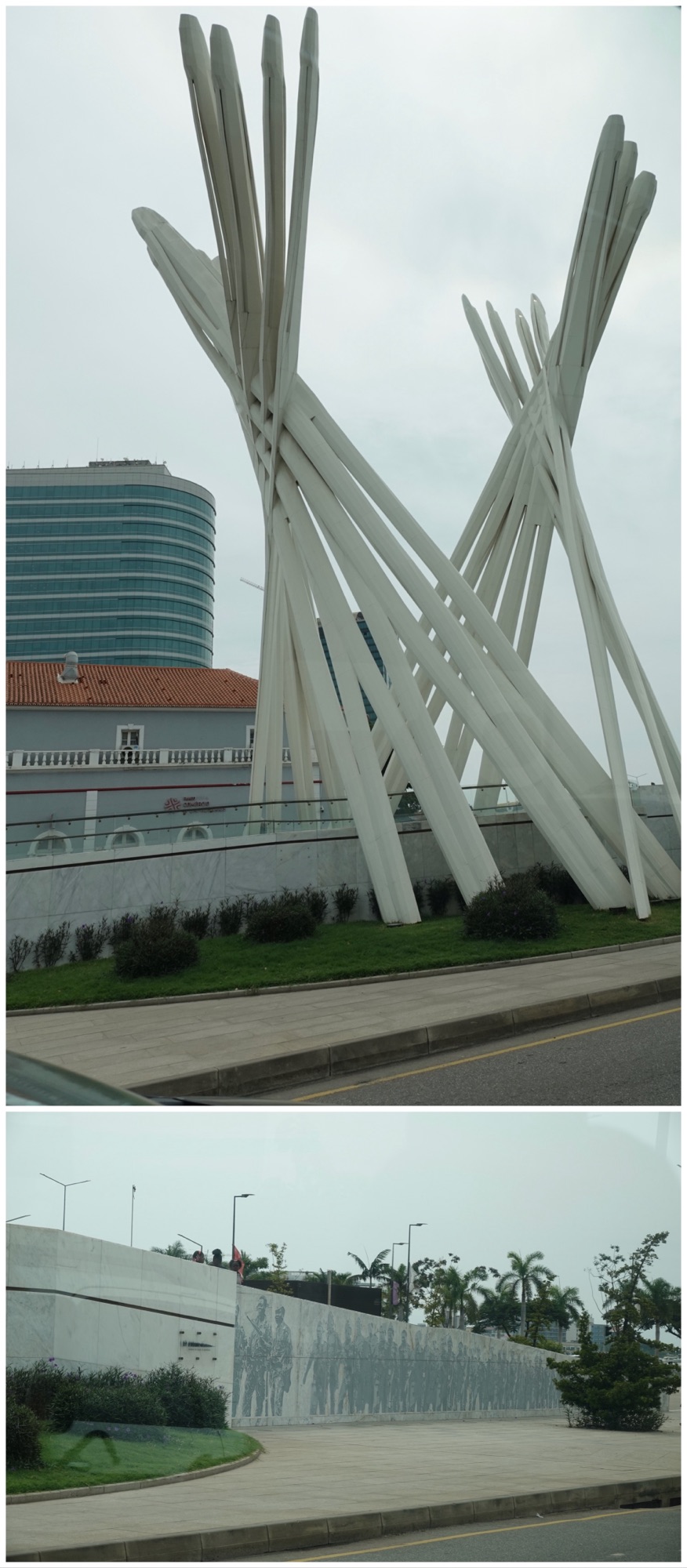
Luanda wasn’t perfect; there was certainly evidence of poverty (the country has huge unemployment numbers), and lots of ongoing new and replacement construction going on. From our balcony we counted at least 8 construction cranes, and we saw many more on our tour.

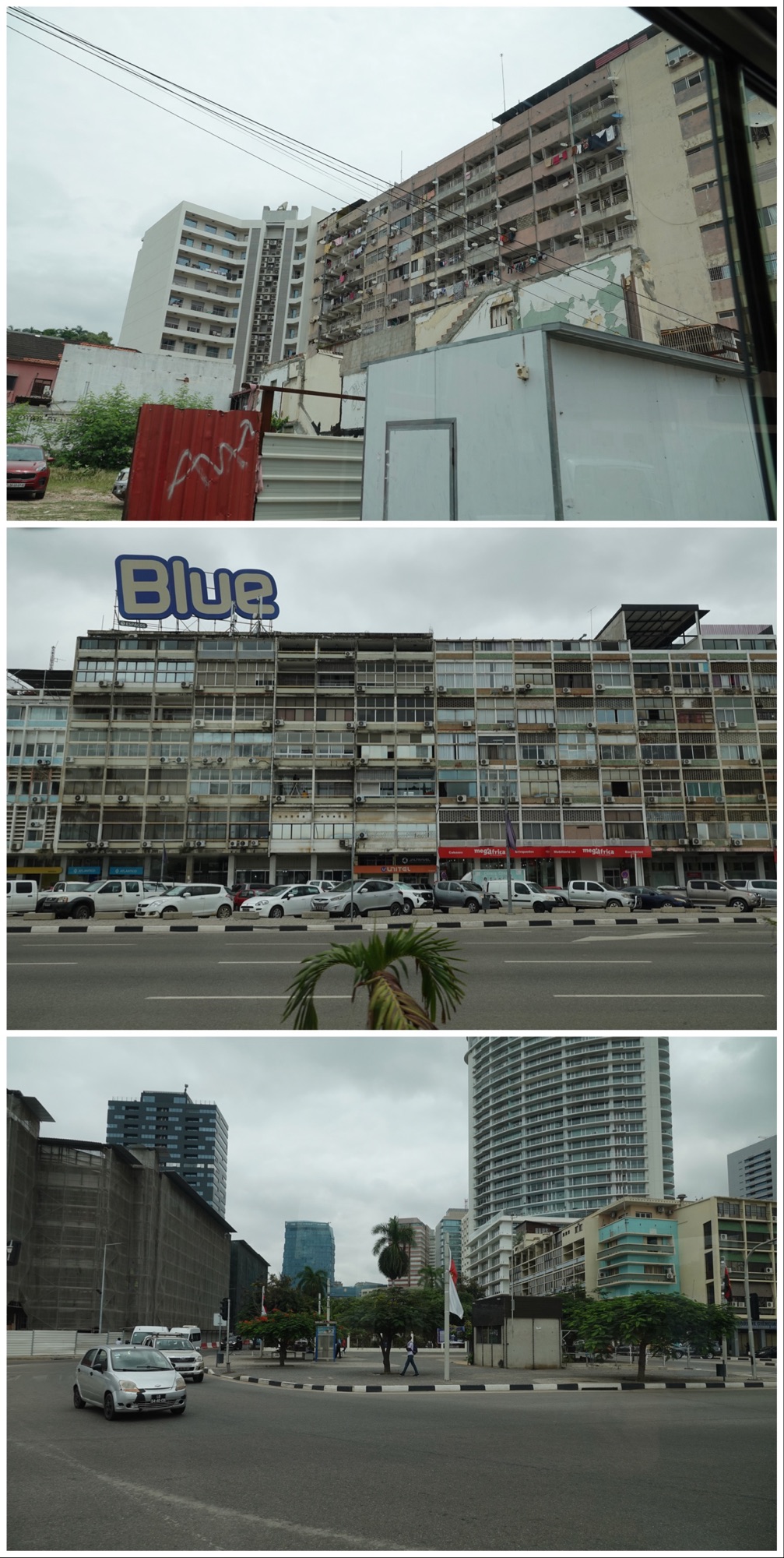
Overall though we felt both safe and appreciated as tourists, and the people with whom we interacted were enchanting.
We returned to the ship early afternoon, with plenty of time to do laundry and relax before taking in the absolutely incredible evening cabaret by Viking Vocalist Isaac Aston.

Tomorrow begins a LONG 6-day stretch at sea. We have no doubt that Viking will have lots of events planned to keep us educated, entertained, and well fed!


Thanks for another full day of touring I will probably never experience in person! I especially loved the way the wooden masks were displayed on the vivid black and white mural of people “wearing” them. The blue and white tile inside the museum was amazing. I’m so glad it was removed and conserved — and especially returned. Even if it was all about the colonial project, the artistry can be appreciated by all. Enjoy the sea days!
LikeLiked by 1 person
I, too, loved the mask display.
LikeLike
l have enjoyed reading your journal Rose. Thank you for sharing and thank you Ted for the photographs. As you begin the journey north towards Europe I wish to share something with you. There is a hostile environment towards tourists with demonstrations and direct action in several countries for the adverse impact on lifestyles of the local people – Airbnb, water shortages etc. I suggest you find a way to display about your person a Canadian symbol as Americans have been singled out for abuse with all that has happened this last week. (I live in London and have witnessed this on the Underground). The world has changed beyond recognition since you embarked on your cruise – very sad indeed.
LikeLiked by 1 person
Thank you for the heads up. I’m heading to Germany next (without Ted) and am fluent, so hopefully I’ll “pass”. I will forewarn my son with whom I’ll be travelling though. Just anecdotally, we’ve always assumed those overtly displaying Canadian flags are American- it’s not a typically Canadian thing to do.
LikeLike
We leave May 5 for 11 days with Viking in Cairo and on the Nile, then 3 weeks in London staying with our daughter. I’ll admit, I’m tempted to wear a Canadian flag pin or patch on a backpack. I absolutely despise what our current administration is up to and have been out in the streets for the first time in my 68 years. Is there another way to signal our deep distress with the current situation? How are people on the ship coping? Have the divides between the US passengers deepened?
LikeLike
For the most part, people on board have found their “tribe”, which minimizes political tensions. I will say – displaying/wearing an overt symbol of Canada is a generally un-Canadian thing to do. We don’t as a rule wave our flags around or wear tee shirts with giant flags on them except on July 1st, and even then only within Canada. Better is remembering “you’re welcome” instead of “uh-huh” (a dead giveaway that someone is from the US) when someone says thank you, saying thank you to retail and service workers, apologizing even if you’re not sure you need to, checking any unnoticed tendencies to say “y’all”, paying in local currency instead of USD, and avoiding wearing “golf course gear” in public (those sequinned visors immediately identify a woman’s as American).
I cannot imagine that YOU need any of that advice!! 😆
LikeLike
Thanks! You’re right — I don’t. Maybe we’ll just speak French! Pretty fluent… I only start saying Y’all when I’m visiting the south — and not much reason to go there again now that my parents who’d retired to North Carolina are gone. They retired there for the woodworking, furniture making community and the cost of living, plus milder climate. The culture remained a problem, but they found their tribe…
LikeLike
Again, I wish we’d done this tour instead of the “panorama.” The inside of the Neto memorial looks amazing, and it seems you didn’t have to contend with seven buses of Vikings
LikeLiked by 1 person
Indeed…. at the fort the 7 buses arrived as our van of 15 people was done and leaving. We’ve had some very good panoramic tours, but I knew that in Africa I’d want more. It’s been an amazing experience.
LikeLike