Walvis Bay is an Anglicization of the Dutch “Walvisch Bay”, which translates to “whale bay”, but if I’d hoped to see whales, I was disappointed. The bay is known for its whales , but it’s the wrong season.
We originally had nothing planned for this half day, but Viking surprised everyone with an evening “Dinner in the Desert” event, reminiscent of when we were treated to “Sunset in the Desert” in Saudi Arabia in 2022 (Episode 236). We had high hopes that this excursion would be much more successful than that one was.
But first, a lecture on “The History of Western Africa” by Dr Caroline Malloy, our new Resident Historian until we reach London. She acknowledged that even speaking really fast, 45 minutes is not enough time to cover – at a minimum – 3000 years of “modern” history. Her special area of interest is “empires”, so we can expect a focus on the effects of colonialism on Africa as we know it now.
Caroline explained very clearly that the way that Europeans, even now, tend to define “history” as a written account that tells a chronological story, whereas African (and other non-European) civilizations may use oral tradition, art, and archeology to tell their story. She hilariously shared a personal story about submitting the first draft of her doctoral dissertation on how history is preserved in Africa, only to be told to “remove all the illustrations” if she wanted to be taken seriously. That’s a prime example of an ingrained bias as to what connotes history. She also described the way that many civilizations consider history to be cumulative, whereas European cultures tend to see history as a record of fixed “past” events.
“Man can live without gold, but not without salt” was her introductory quote to talking about trans-Saharan trade along historic routes that far predated Europeans’ “discovery” of the continent.
She also introduced one of her future lecture topics: slavery. Her first clarification was that the slavery that existed prior to the industrialized slavery with which we are familiar was indentured slavery – very different than “chattel” slavery.
I’ve wondered how Islam spread so quickly across Africa. The West African country of Mali’s wealth and fame – and concurrently Islam – was spread by the hajj of King Mansa Musa in the early 14th century. When Mansa Musa decided to travel to Mecca, en route he gave away incalculable amounts of gold to regional leaders, AND paid to build mosques across the continent. Caroline described him as history’s richest man.
Her lectures are going to be a big part of this next leg of our cruise, which has our longest single stretch of sea days (six) as we travel from Angola to Praia on Ilha de Santiago. I’m really looking forward to them.
I headed upstairs for coffee and to watch our late mornng sail-in to Walvis Bay. It took a while for the opaque fog to dissipate – or maybe we just sailed through it – but we eventually started seeing other ships and fishing boats… and then the harbour itself.
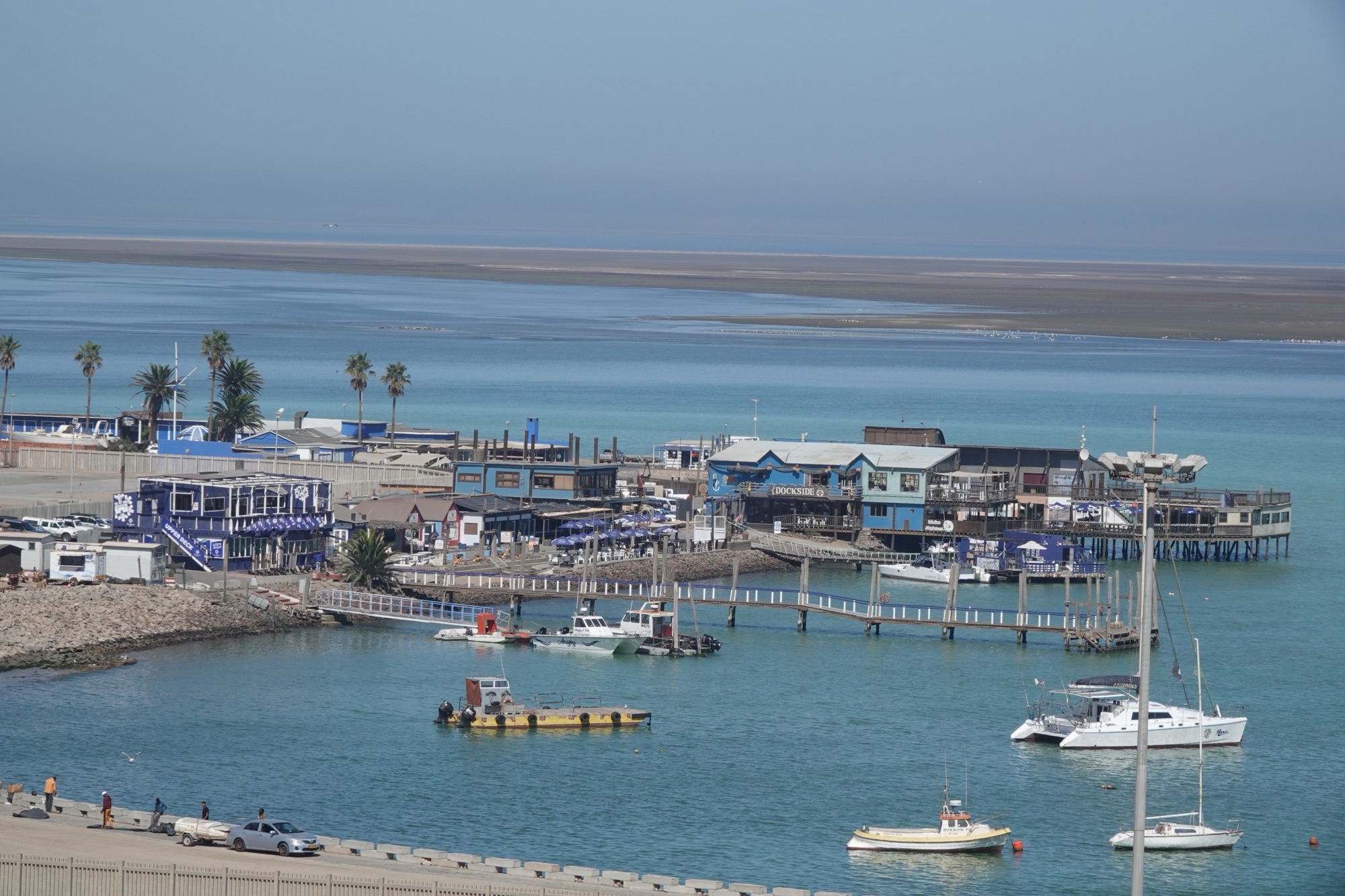
This is another industrial harbour (there are not a lot of cruise ship terminals on Africa’s coasts), but one with the town very nearby, and with lots of palm trees! I often tell Ted that the only places to which I want to travel are those with palm trees, but I’m flexible – I happily include the palm trees in conservatories and orangeries in Europe!

On to our special evening event.
Viking’s expectation was that all 850 passengers would be taking part in the – a truly “big event”. In the end, more than 700 passengers chose to enjoy the experience, and Viking really pulled out all the stops.
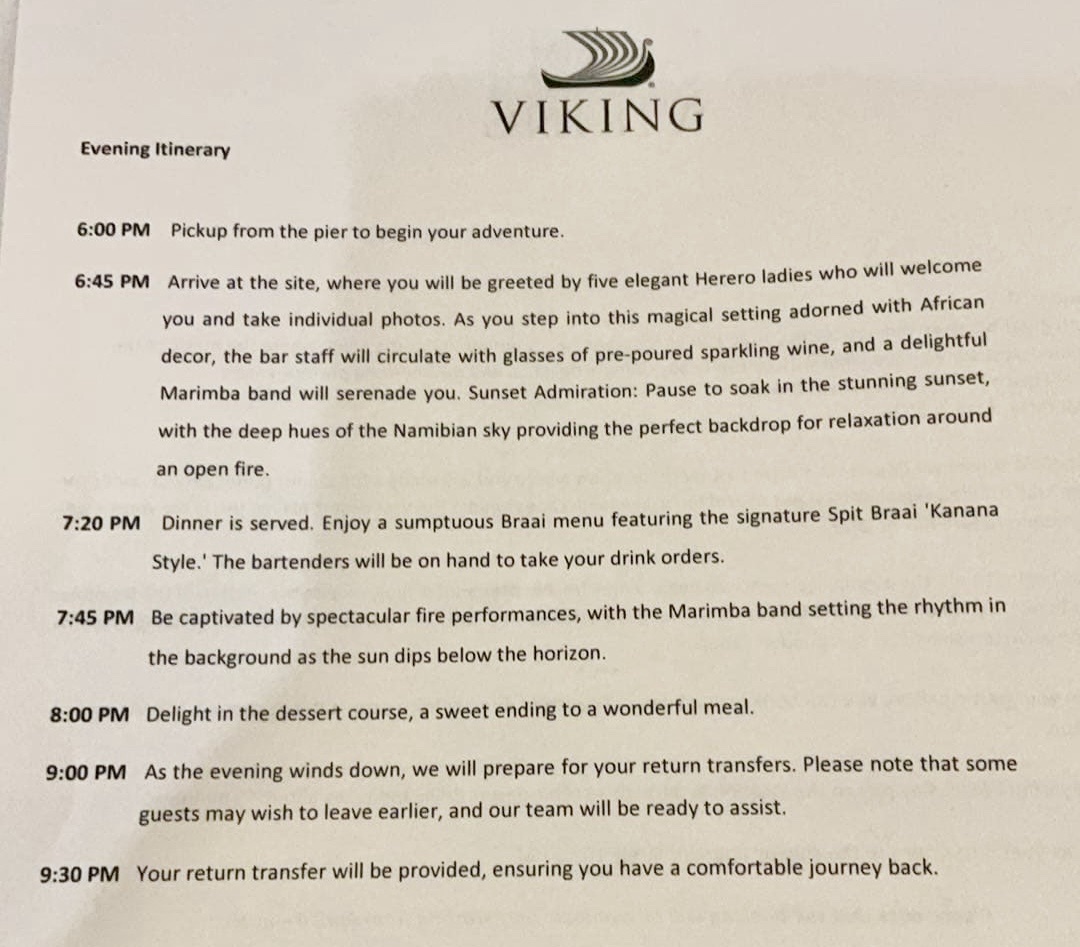
The event was so spectacular that it left me almost without words – something not very useful in a diary.
We drove inland to the Namib desert in landscape more striking than pictures can express. The vast expanses of sand dunes reached as far as the eye could see, and made sweeping silhouettes against the sky.

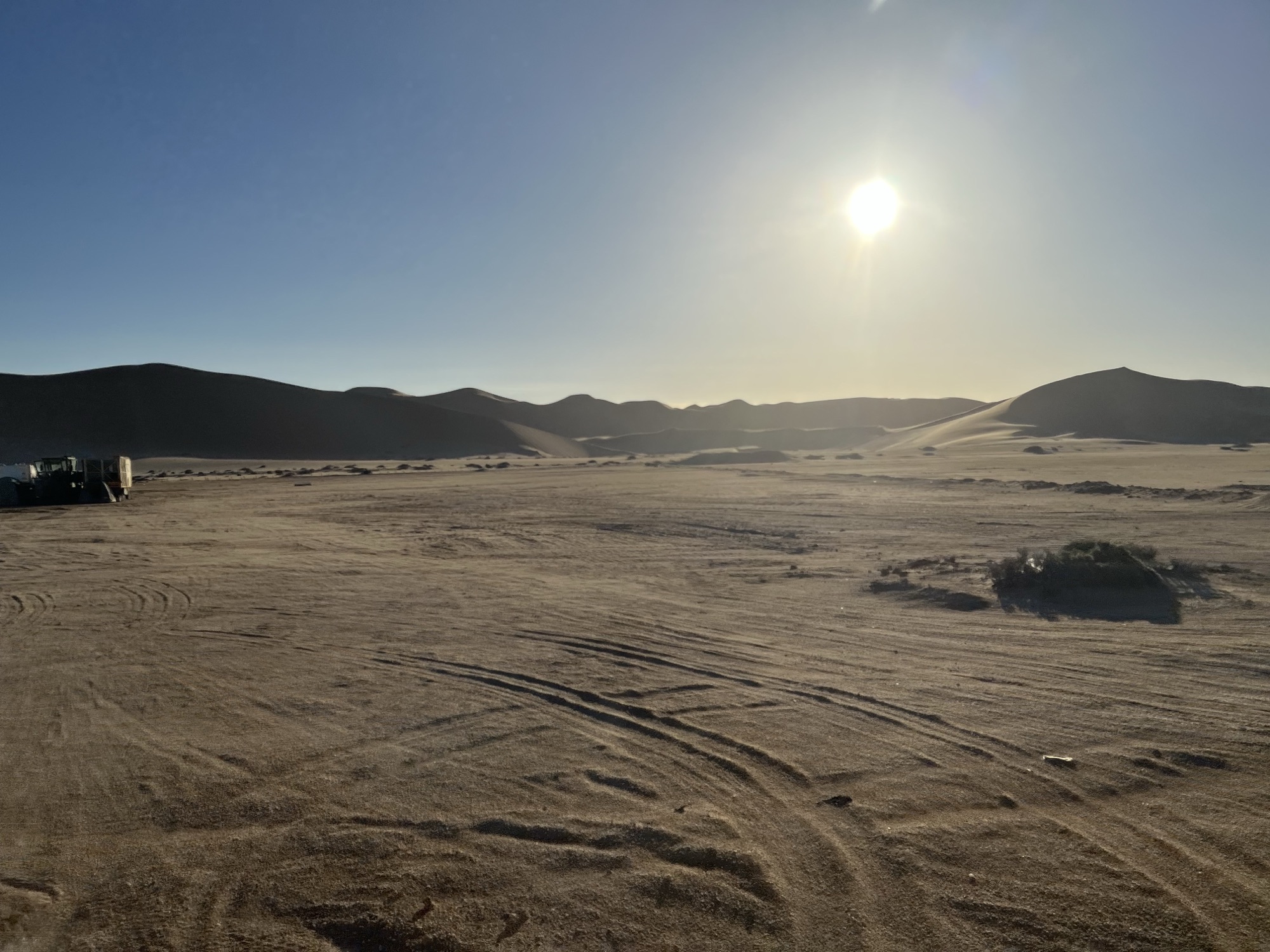

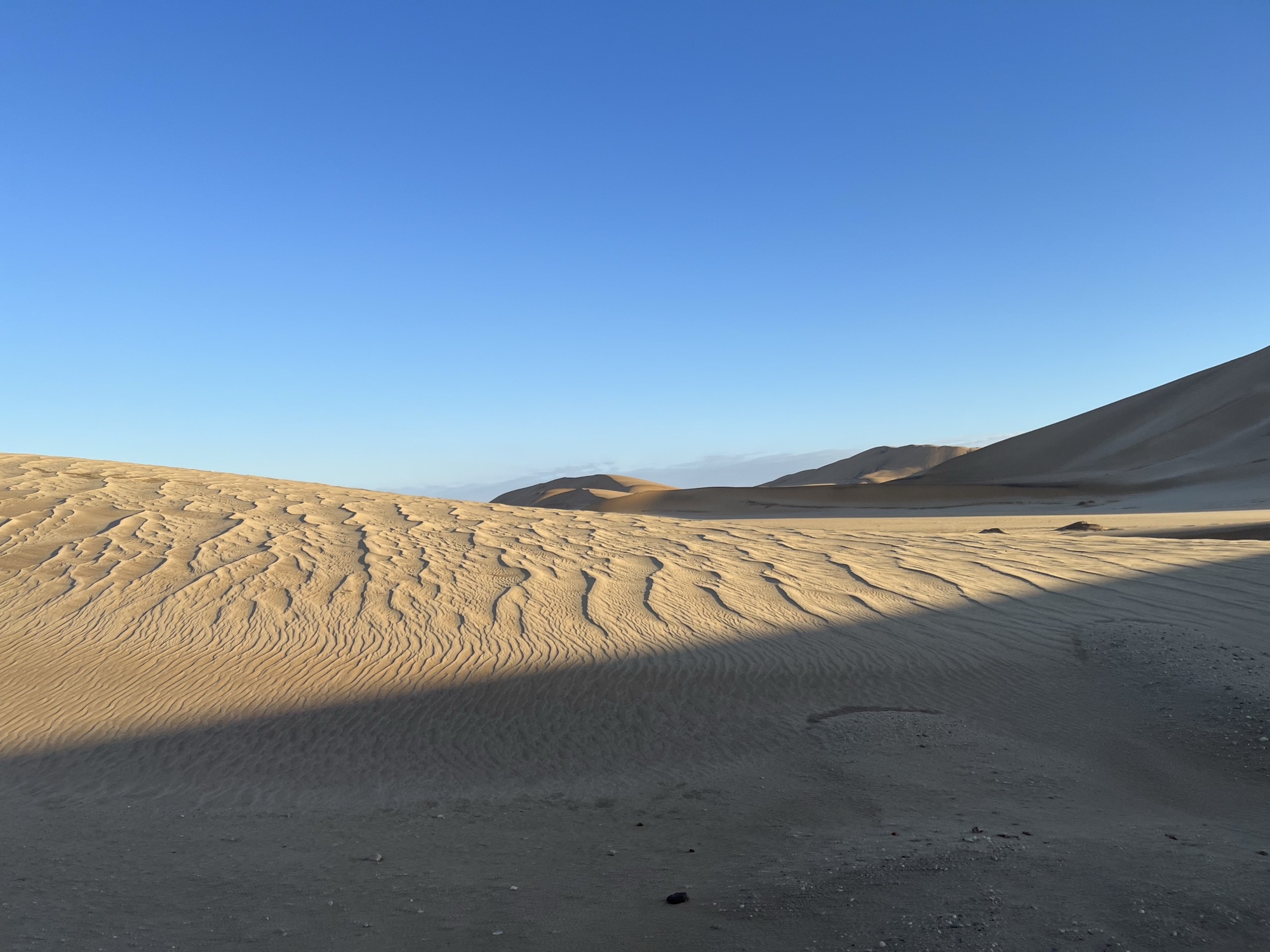
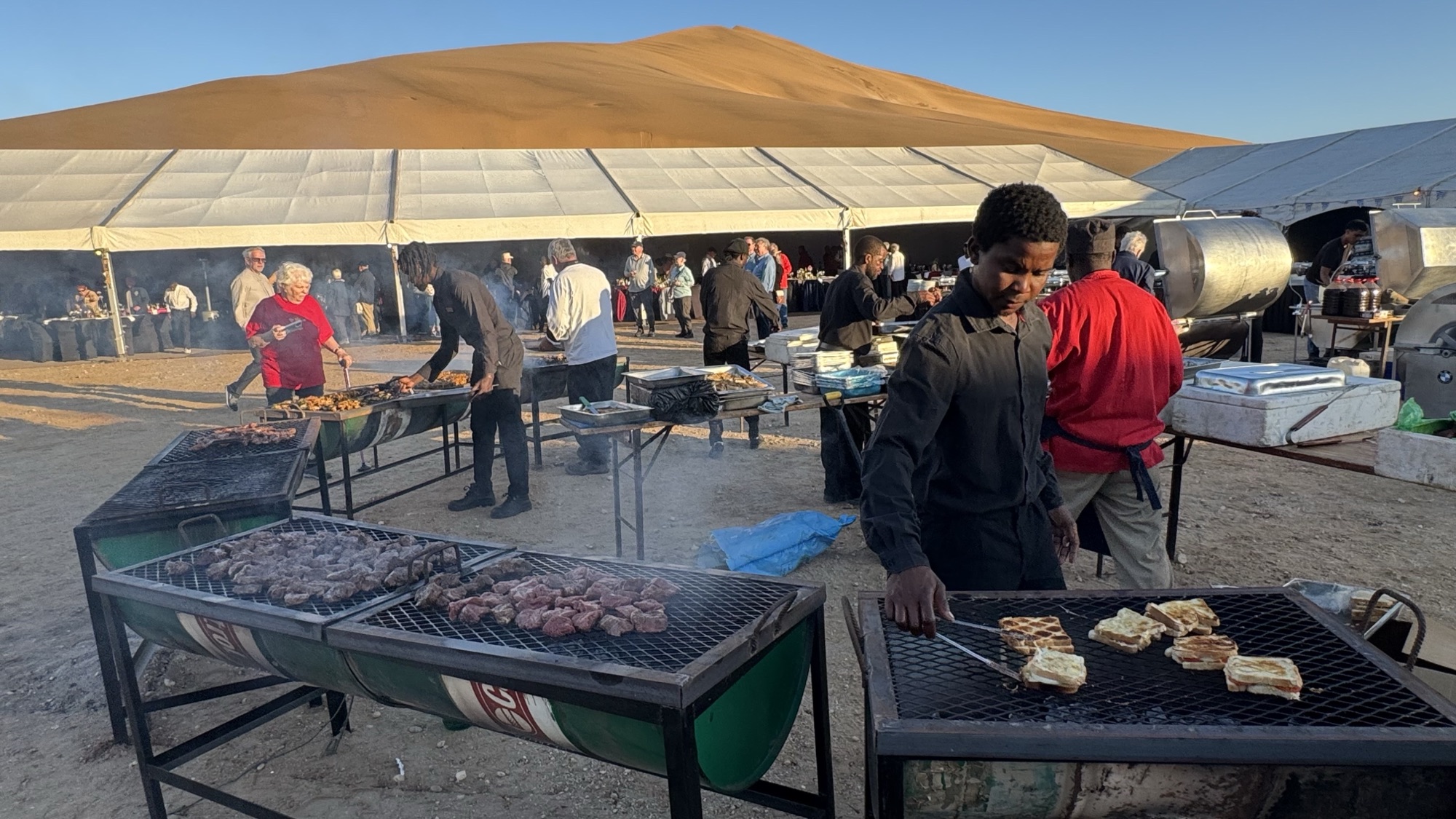
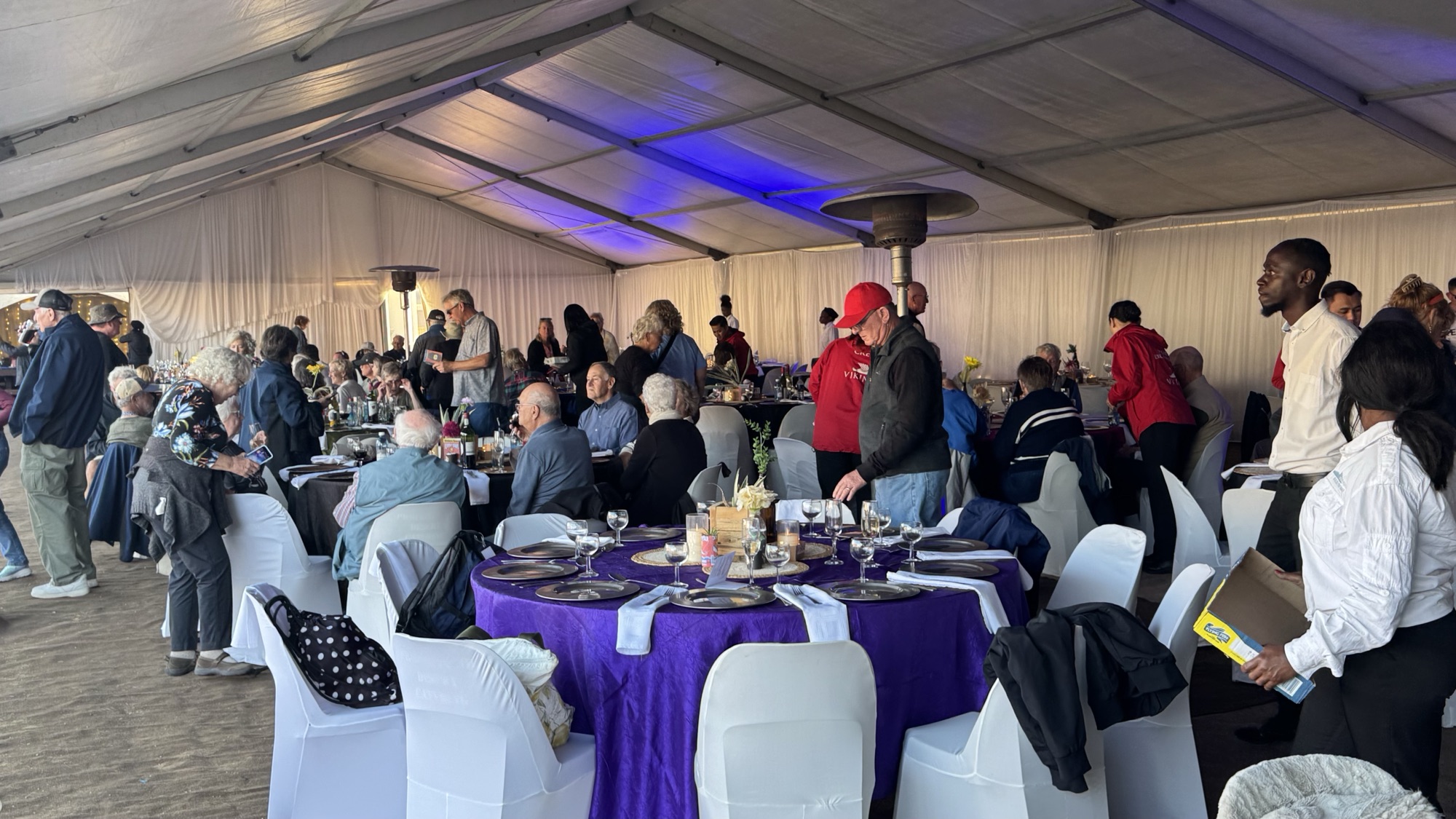
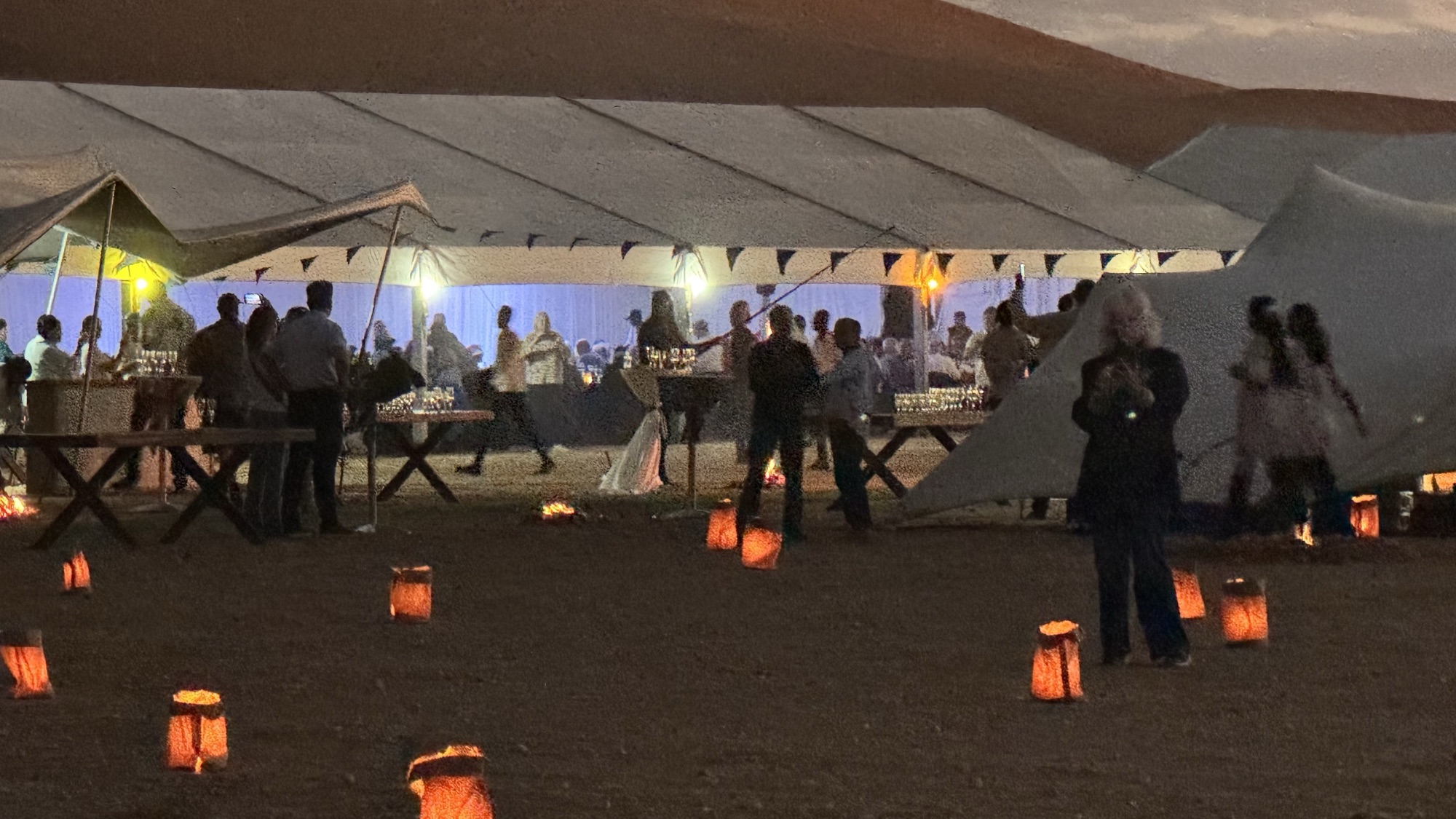
We disembarked to find a huge white tented venue set up and waiting for us, complete with tableclothed tables, welcome glasses of champagne, a full bar, long tables with scores of gleaming steel chafing dishes, and chefs behind multiple huge wood and charcoal-fuelled grills barbecuing all kinds of scrumptious meats. A marimba band was playing songs from The Lion King (which is actually based on the history of Mali’s royal family).

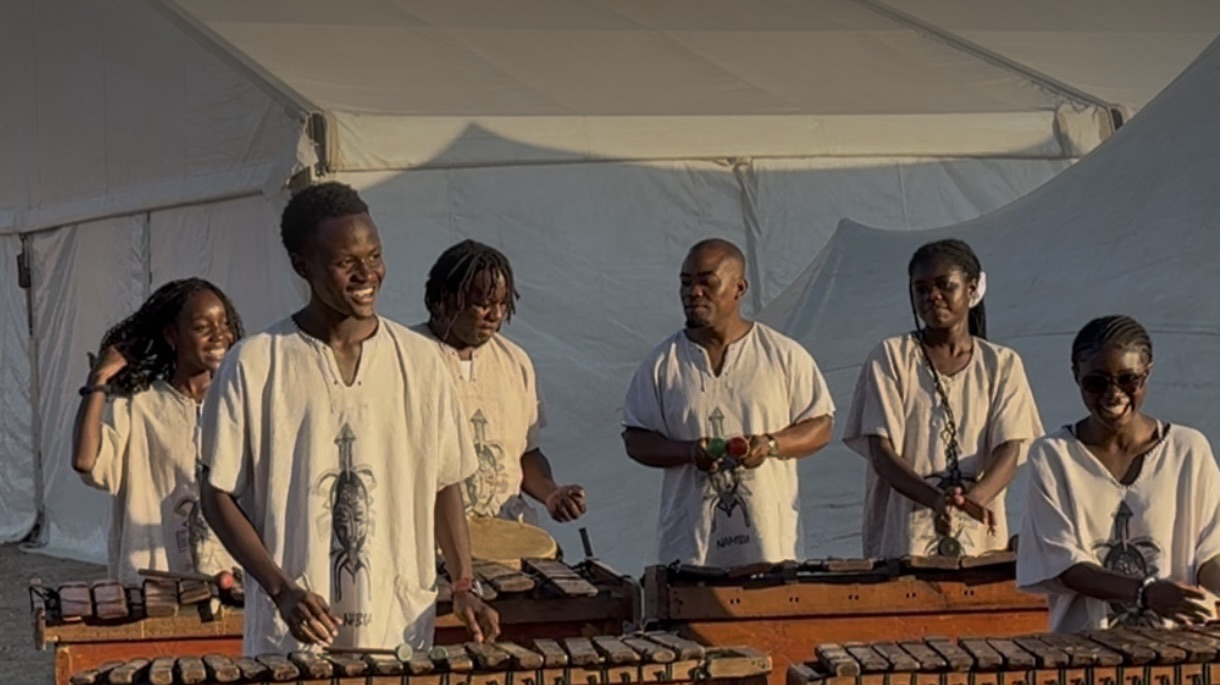





These gorgeous Herero ladies took a minute to teach me to ululate. It might not be a skill I’ll get to use, but it was fun!

Some of our fellow passengers headed up to the top of the dunes.
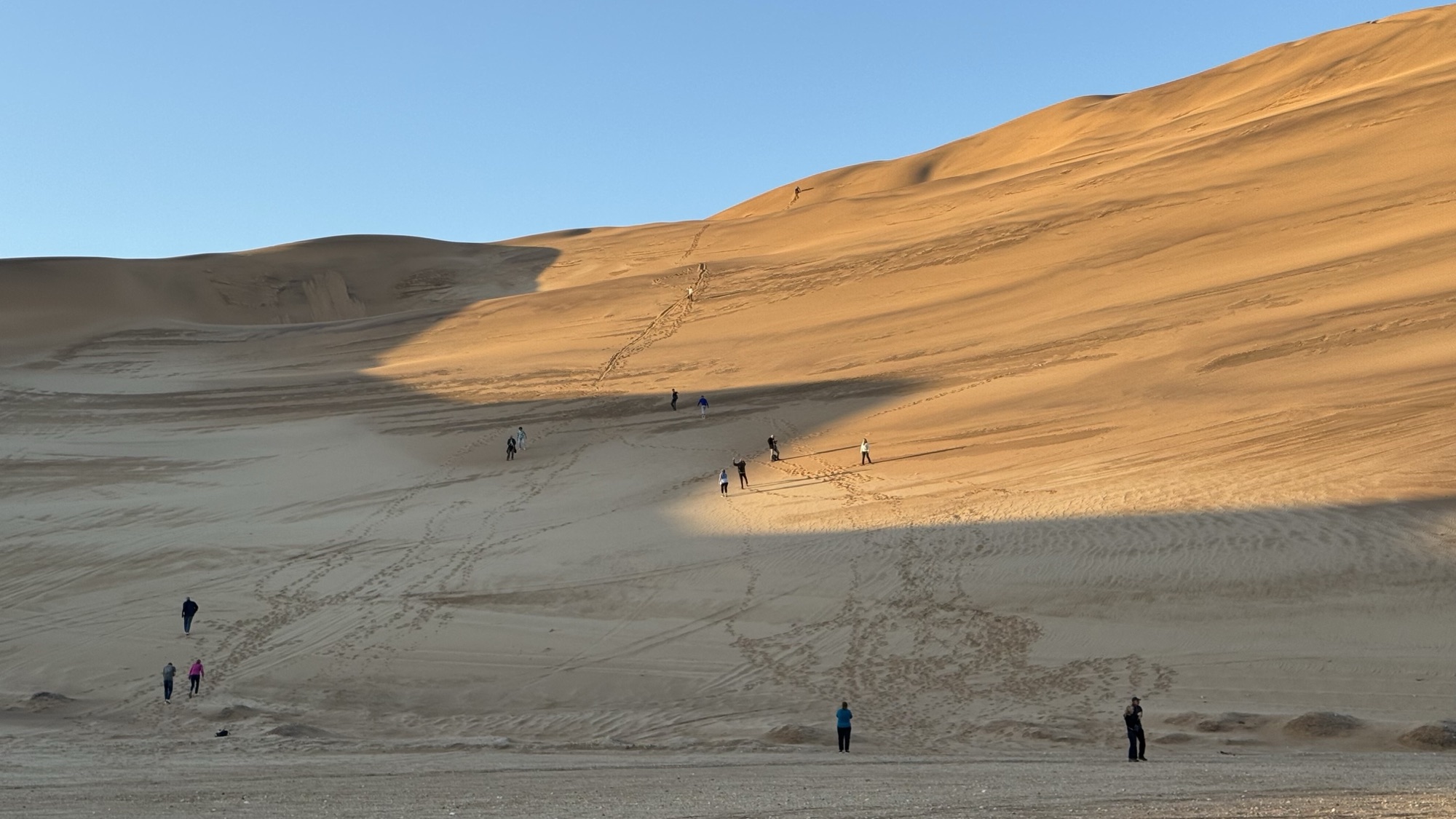
This was their view of our event from the top (Photo credit: Fred Danner)

Some of us just ate, drank, and enjoyed the entertainment.

There were grilled lamb chops, springbok steaks, grilled chicken skewers, grilled Boerwurst (coiled beef sausages), lamb stew with potatoes and corn, grilled bread stuffed with cheese, pap (maize polenta), plus all kinds of vegetables and salads (that I’ll admit neither of us really even looked at) and malva pudding with custard sauce for dessert.

As night began to fall, the desert floor was lit with dozens of lumenarias, as well as several small fragrant firepits, and the fire dancers came out to entertain us.


When we got back to the ship we were greeted by dancing, clapping, whooping crew and pounding music… as well as shots of mulled wine. From the enthusiasm you’d have thought we were arriving rock stars instead of just returning passengers.

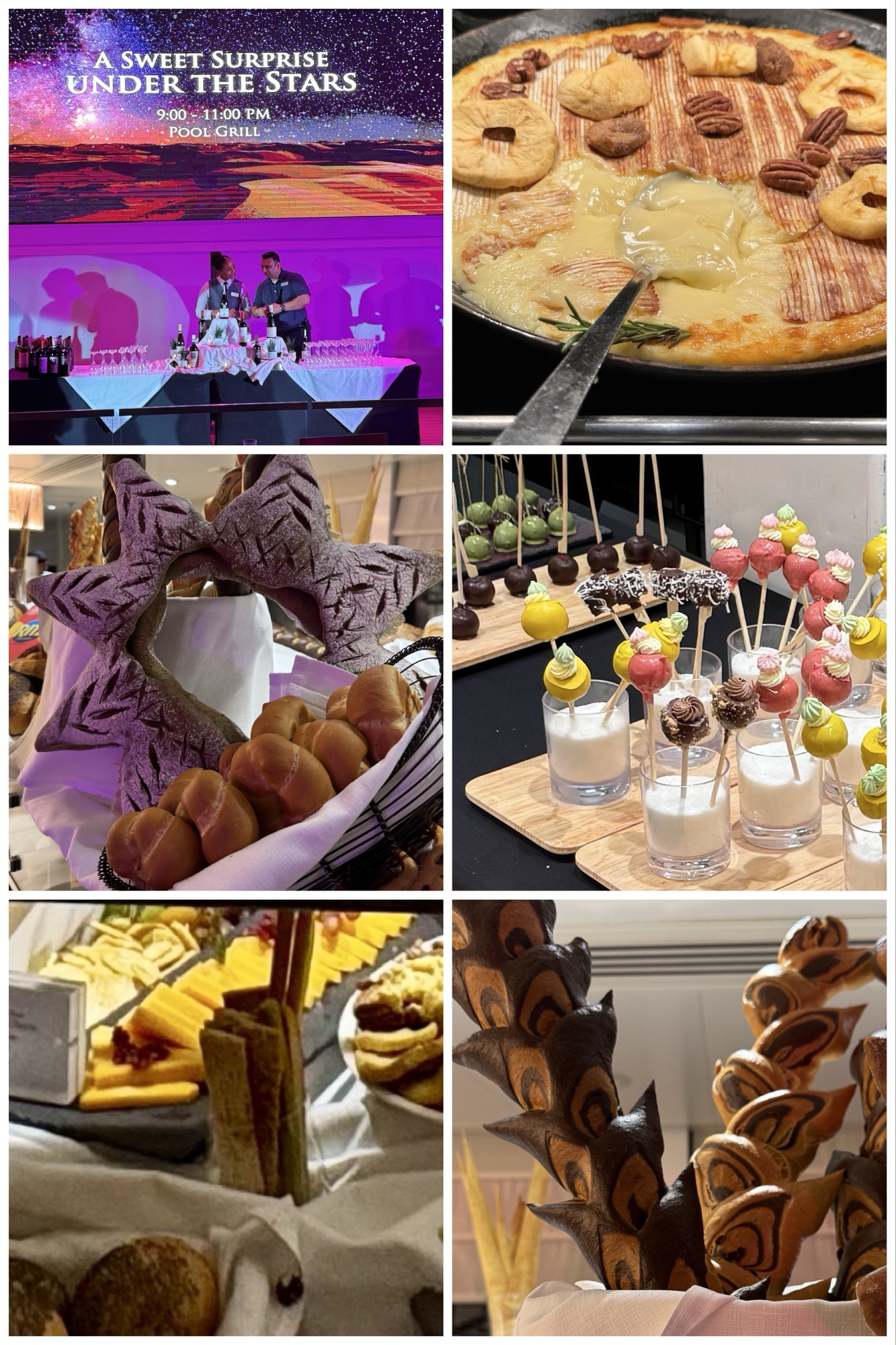
Then to top it all off, there was wine, cheese, and chocolate on the pool deck. We are well and truly spoiled on this voyage.
Tomorrow we have an excursion focussed on history and booze. Stay tuned.
 Rose and Ted’s Excellent Adventure
Oh, I hope they “surprise” us with this experience next year!
Looks like folks are wearing jackets now. Chilly when the sun goes down?
Dee
LikeLiked by 2 people
First time for jackets. Down to about 62F when the sun went down. High of 108F /low 78F expected in Angola in 2 days though !!!
LikeLike