
Today was an unusually short (7 hour) port stop, so we chose to make the most of it by learning about the local Xhosa culture on a village visit to the Eastern Cape.

It was a “bus 10” kind of day (a reference to our lost bus in Saudi Arabia on our 21/22 world cruise). The predicted 45 minute drive to the cultural centre took over 2 hours because our driver headed in a completely wrong direction, at which point our previously talkative guide went silent for an hour. Fortunately, the Xhosa waited for us and we still had a wonderful experience.
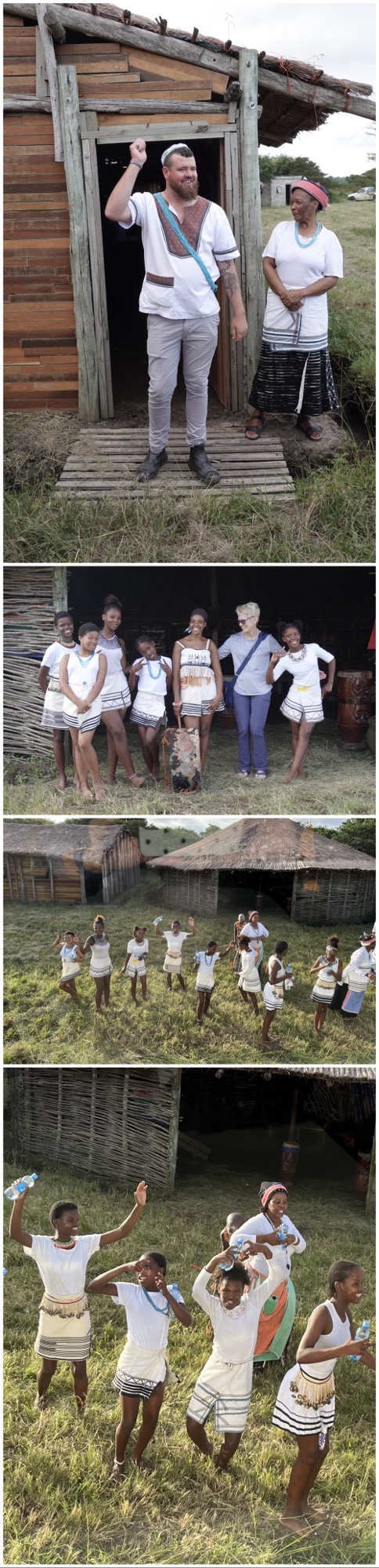
We were welcomed at Khaya Xhosa Cultural Village by young and old Xhosa women, drumming and dancing, while wearing traditional costumes. Their dancing was athletic, graceful, and mesmerizing.

We all entered a ceremonial hall, built in the round, where the men and women sat on opposite sides of the room while we listened to the group sing the very beautiful and moving South African national anthem, watched several more dances, and learned a bit about the roles of men and women in Xhosa culture, as well as their marriage rituals.

Michael, an honorary Xhosa who has undergone all of their tribal rituals, explained that Xhosa men are “lazy” – they watch the cattle, negotiate bride prices, and build the frames of buildings, but generally expect to get waited on. The women perform all the household duties, and also plaster the walls of their homes, cut and carry thatch for the roofs, and do all the heavy carrying when they travel between villages- all potentially with a baby strapped to their hip.

After our brief orientation, the men in our group headed off with Michael, while we women went with the Xhosa women and girls to learn about their lives and ceremonies.
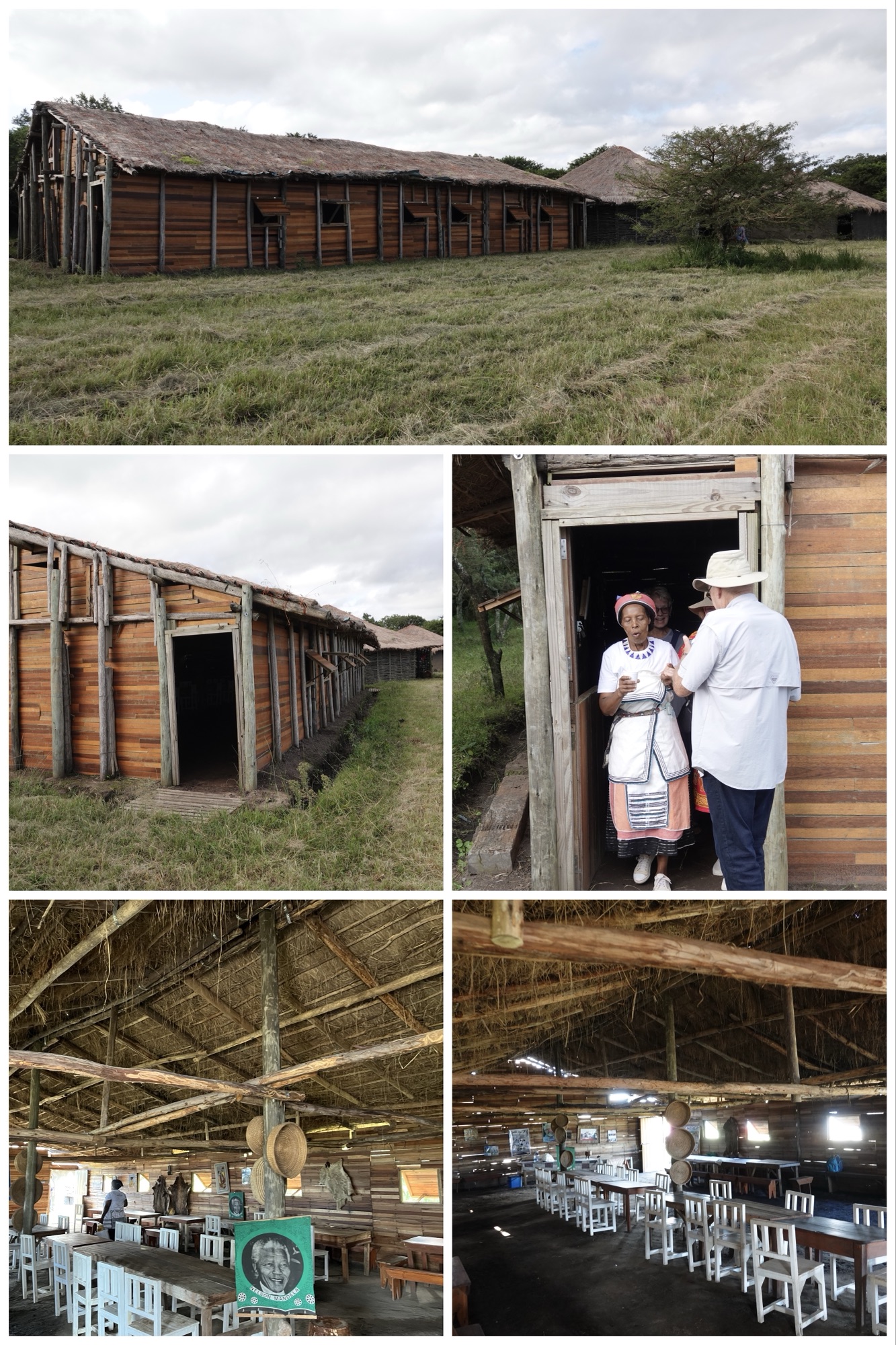
We entered a ceremonial round house, with walls framed in wood and plastered with mud, floors of hard-packed mud and cow dung, and a thatched roof.

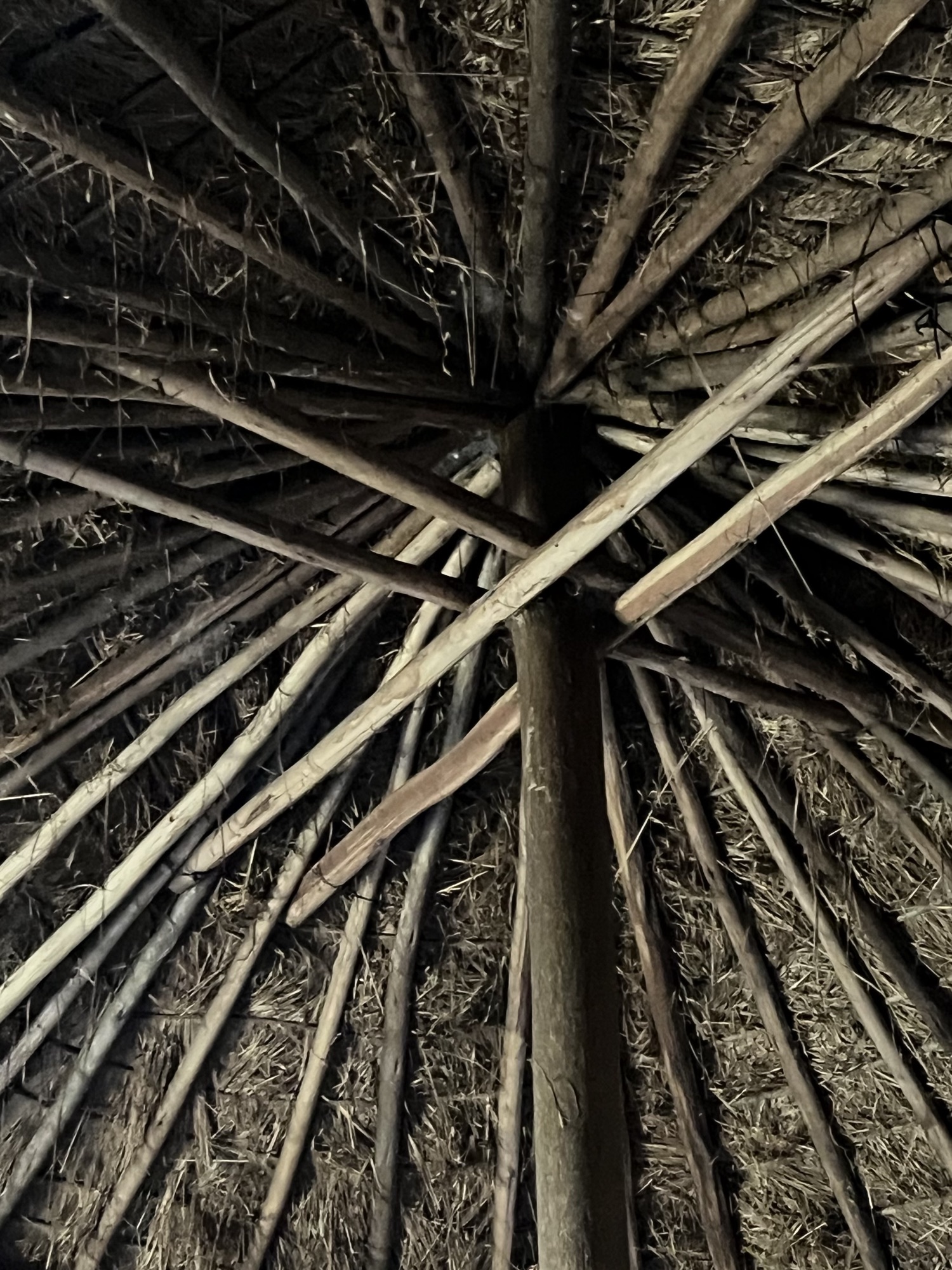
We were shown the thatch wall behind which a girl, at 16 years old, would meditate with her ancestors for a full month, never leaving the space. Other Xhosa girls would drum and dance for her at the beginning and end of the ritual. Girls generally marry at age 18-20, having communed with their ancestors and also having been taught all the practical skills they need to run a household – like grinding dried sorghum into millet flour.

There is no “physical” initiation; the Xhosa have never practised female genital mutilation.
The girls and women wore traditional costume and explained the importance of dress, including how their intricately adorned attire indicates the social status of its wearer.
By custom, young unmarried women can go bare-breasted or even completely naked; our hosts were dressed in white tops, short traditional skirts, beads, and bells. The skirts wrap around and have a flap opening. The girls’ faces are painted with a few white dots, like beauty marks.


As women age, their skirts get longer, but are still wraparound style. Over the skirt they wear a short apron. Once a woman has children, she wears a longer apron. When a woman marries, or is over 25, she covers her breasts. If she is married, she also wears a beaded or embroidered frontispiece that is her “ring”, and can paint her face in any manner she wishes – no longer only “dots”. Just by looking at a woman’s clothing, her status is known.


While I was with the women, Ted and the other men walked through the village to see the sacred kraal (a word with a meaning similar to corral), a round structure of interwoven branches. There they learned about the Xhosa males’ circumcision rite, which takes place when young men are between 17 and 24 years old. The entire rite lasts for a month. Michael, our host, chose to undergo the ceremony when he was accepted into the tribe; without it he would be forever considered a “boy”, and subservient to the men, regardless of his age.

The young man will be wrapped in a ceremonial blanket – his only “clothing” during recuperation. The very small entrance to the hut precluded easy access or egress.

The men also took part in a local Beer Ceremony, where male “members of the tribe” were be invited to sample a glass.


In Xhosa culture, men’s ceremonies and rites are not revealed to women, and vice versa, so the men did not realize we women were having a brandy and beer ceremony of our own.
The first sip of liquor is always poured onto the floor for the ancestors. It’s strong stuff (reminded me of my Dad’s slivovitz) – a little goes a long way to warm you up from the inside out.

Then we were all invited to share some traditional Xhosa corn beer. Wikipedia describes it better than I can: “Umqombothi , is a South African traditional type of beer made from maize (corn), maize malt, sorghum malt, yeast, and water. The beer has a rather low content of alcohol (usually less than 3%) but a high content of B vitamins. It has a thick, creamy, and gritty consistency (from the maize), a heavy and distinctly sour aroma, and an opaque, buff-colored appearance.” It is an “acquired taste”.
We next headed to the kitchen to see traditional 3-legged iron cooking pots in which our lunch had been prepared, before re-joining the men to taste a delicious array of traditional Xhosa foods including corn stew, wild spinach with maize rice, butternut squash, steamed pot bread, and lamb stew. Given that the Xhosa only eat meat about once a week, outside of celebrations, the stew was a special treat for their guests (us). The women explained that the Xhosa use no seasonings except salt, believing that spices are not good for the digestive system. The food was delicious anyway! They also do not drink sweetened or carbonated drinks.


We ate in a communal dining hall.
Traditional handicrafts were on display, available for purchase. The young dancers were each selling their own beadwork, and were thrilled that we were interested in buying it.

We got a very warm farewell, with many hugs and blown kisses.
On a final note, this cultural experience (it is a living history museum, not an actual inhabited village) is a way of reinforcing Xhosa traditional culture and sharing it. Khaya Xhosa (“place of the Xhosa”) Cultural Village is an NGO created by a Canadian South African man from Saskatchewan (there was a Canadian flag displayed opposite the South African one in the meeting hall), and is supported through tourist visits and donations. We were proud to donate to keeping it operating – especially when we realized that we 20 were the first tour group here since January. Safaris and wild animals are a much bigger attraction in this part of the world. I’m really glad we took a break from our game drives to visit, and glad that Viking helps support these kinds of cultural initiatives.

These were warm, wonderful girls and women that I will never forget.

 Rose and Ted’s Excellent Adventure
very interesting! What a wonderful cultural experience. Question: What currency did you use to purchase your beads? With such short stops, wondering how/if you use local currency?
LikeLiked by 1 person
We bought local currency for almost every country before leaving Canada, recognizing that in many places the people who need the money most are those least able to conveniently exchange USD. I paid 100 South African Rand for the 2 pieces.
LikeLike