How lovely to get to sleep in and wake up headed into the deepest harbour on the east coast of Africa. The only downside was explained in Captain Fredrik’s morning announcement: we needed to turn hard to starboard at a speed that precluded using the ship’s stabilizers, which meant some noticeable rolling!
This is the largest coal exporting port in the world; we were warned that coal dust would be absolutely everywhere, and unavoidable. In order to keep our gorgeous clean ship unscathed, the pool deck roof was closed, minimal furniture was put out on the open decks, and we were asked to keep our balcony doors shut. Viking even issued each of us with a face mask for the short walk from our ship to the buses.

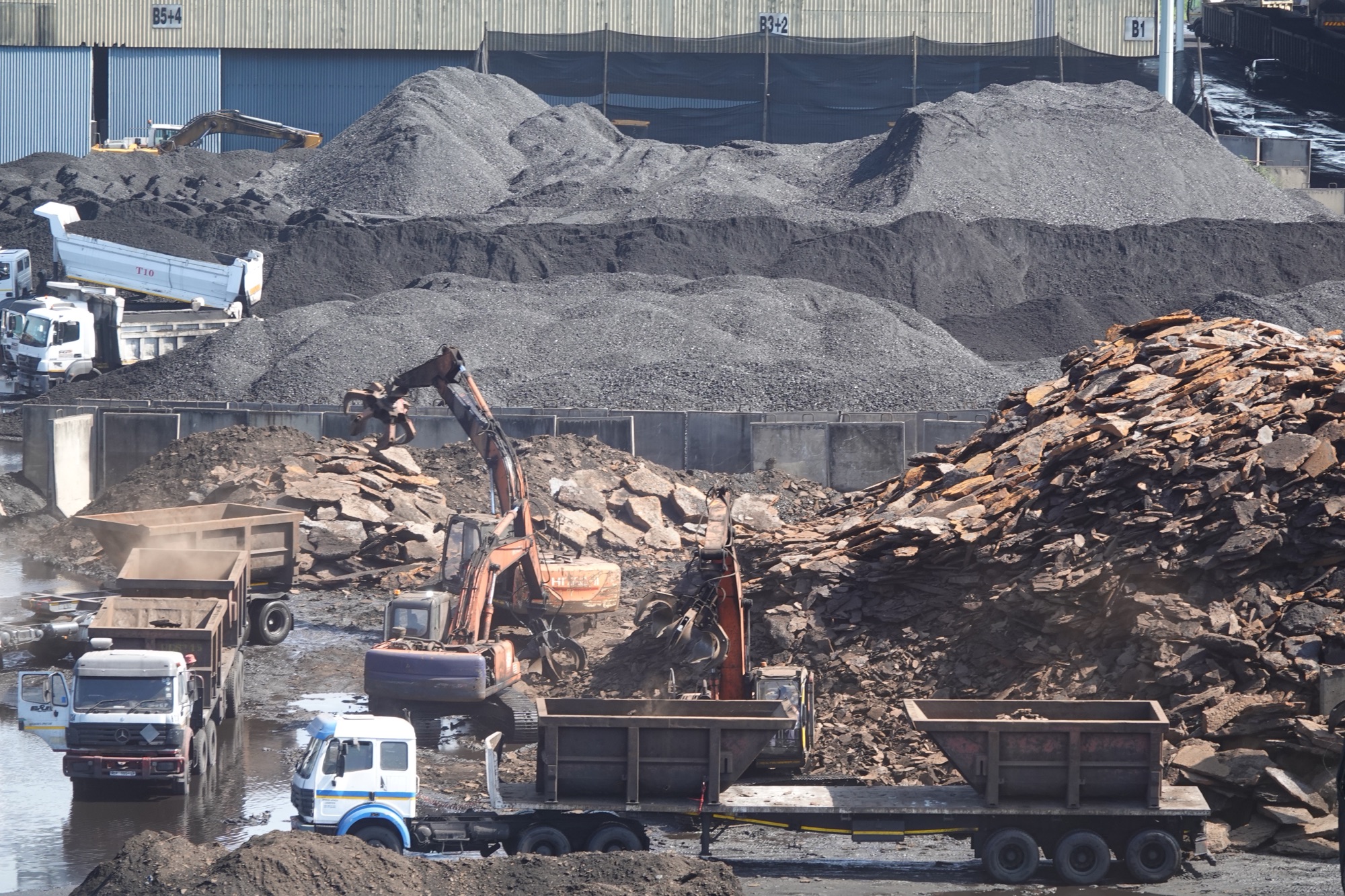

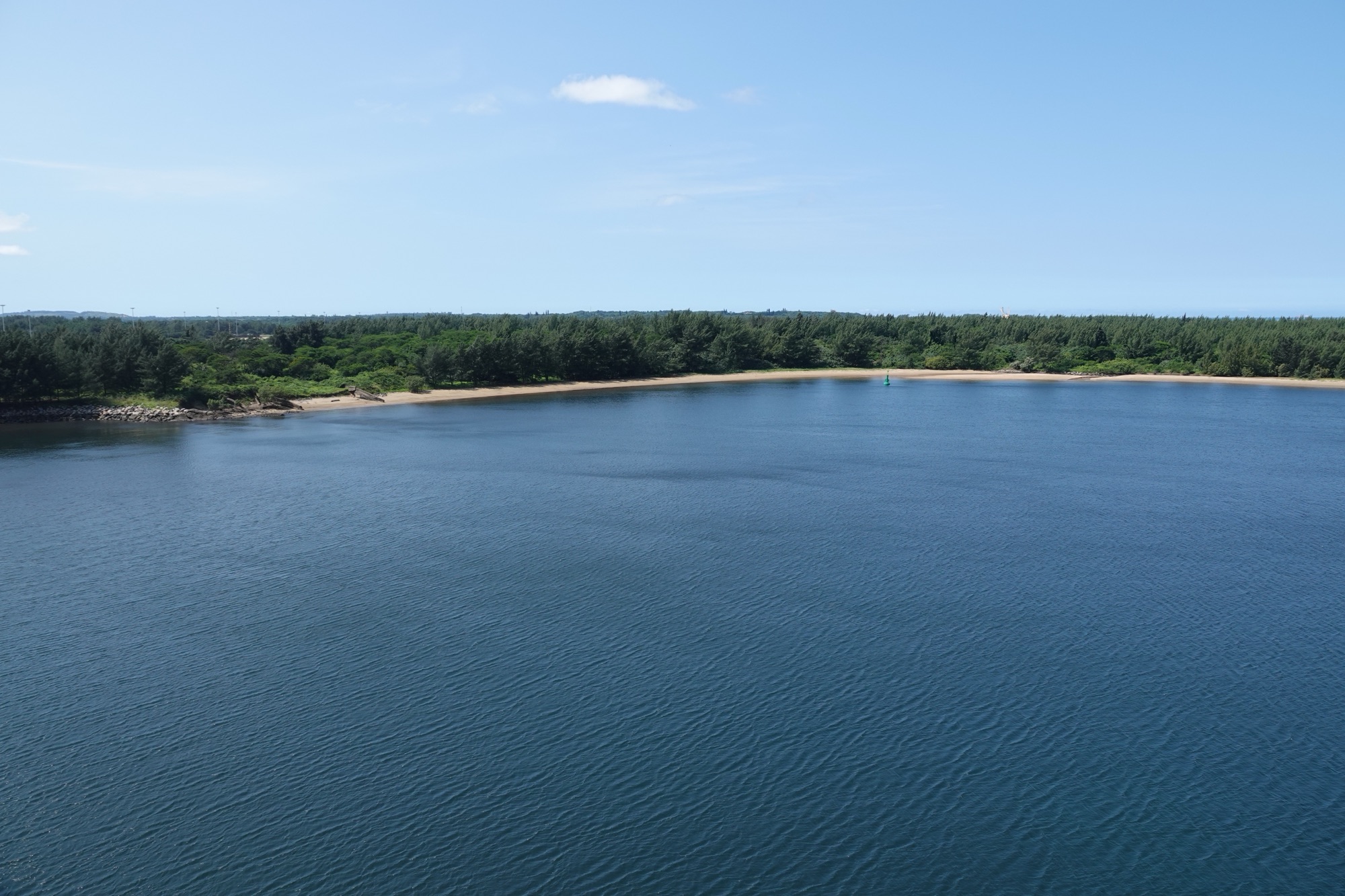
We were docked today from noon until 10:00 p.m., which gave us the perfect window to go on a day safari – AFTER clearing the face-to-face South African security and passport check.
Our destination of Zulu Nyala is a relatively small (4000 hectares/40 square km/15 sq mi) private reserve and lodge nestled between the wilderness reserves of Hluhluwe and iSimangaliso, in one of South Africa’s most diverse conservation regions. Though lacking lions, it is home to a wide variety of wildlife, especially abundant plains game. We had high hopes for lots of great photos.
We left the ship just before 2:00 p.m. for a 2-hour coach bus drive to the reserve. En route we passed neighbourhoods full of lovely homes; the port employs thousands of people, most of whom live in neighbourhoods in Richards Bay.
As we got further from the port, we noticed houses with a second “round house” in their yards: homes where Zulus can commune with their ancestors, who aren’t comfortable in modern houses. Our guide explained that single adult children often live in these round houses, but never married couples.

We also glimpsed – through our fast-moving bus’s windows – areas of government housing for the “destitute”, noting the solar water heaters on the roofs, as well as rubber tires to protect against lightning strikes.

There were long stretches of eucalyptus forest. The trees are grown mostly for paper production, although some is used as timber. In many places, eucalyptus are an unwanted invasive species because of the huge amount of water they require, but here they are perfectly suited to the climate and soil.
At 3:40 p.m. we reached Zulu Nyala, boarded our 10-passenger four-wheel drive vehicles, and set out on a two-hour roundtrip journey into the African bush. For all of our game drives, I’m using the same format: the time stamps from Ted’s photos.
3:53 p.m. Our very first sighting was this gorgeous lone giraffe.

The savanna here is thickly treed in most places, but occasionally there is a stunning view of fever trees silhouetted against the skyline. The trees were actually mis-named by the British, who often developed malarial fevers after sleeping under them. The real culprit, of course, was mosquitoes. Today the name lives on in my favourite tonic water, containing quinine (an antimalarial).

3:59 p.m. The egg nest of a grey foam-nest tree frog, in a fever tree. During the mating process, the female produces a foam nest which keeps the eggs moist. These frogs have evolved to lay their eggs high above aquatic predators, and when the tadpoles hatch and fall into the below they stay together in a protective clump. Weird and wonderful.

4:01 p.m. Impala

4:04 p.m. A large grouping of impala and blue wildebeest, with their young. All the little ones were born in November. There were also adult and young warthogs, but they ran off as soon as they heard our truck approach.


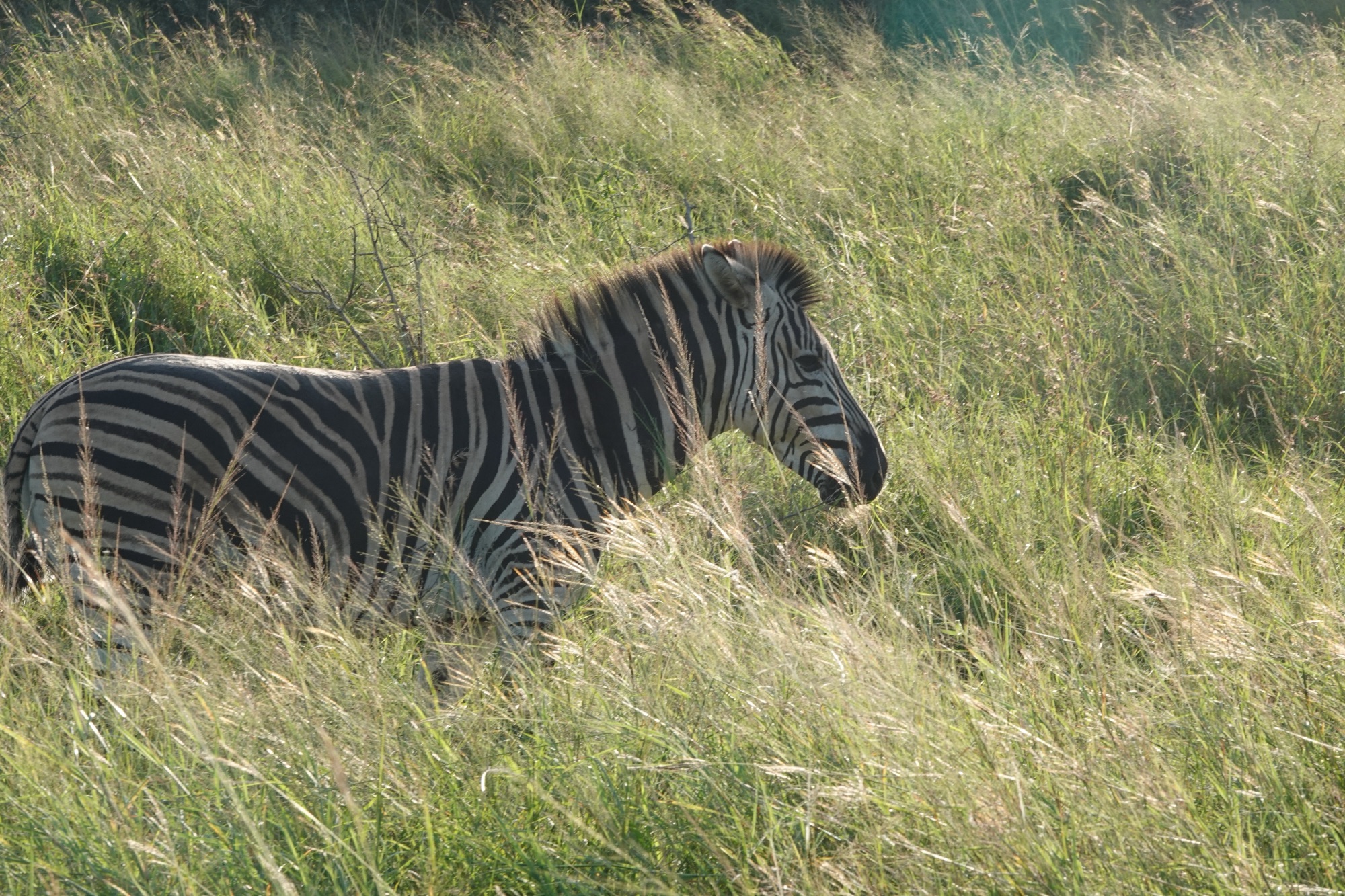
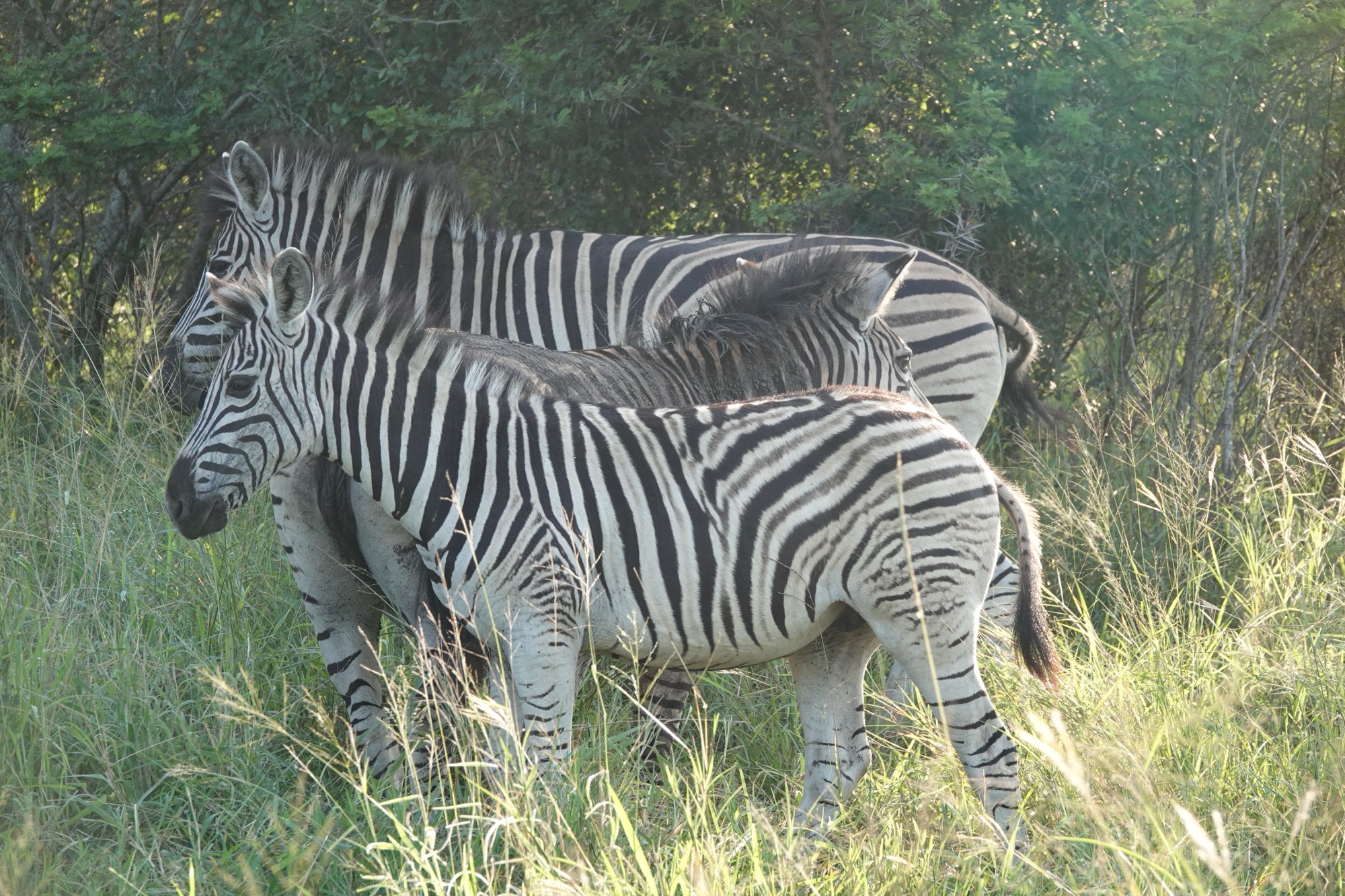
4:23 p.m. Our first Burchell’s zebra of the day. They are identifiable by the taupe/brown stripes between the black and white ones.
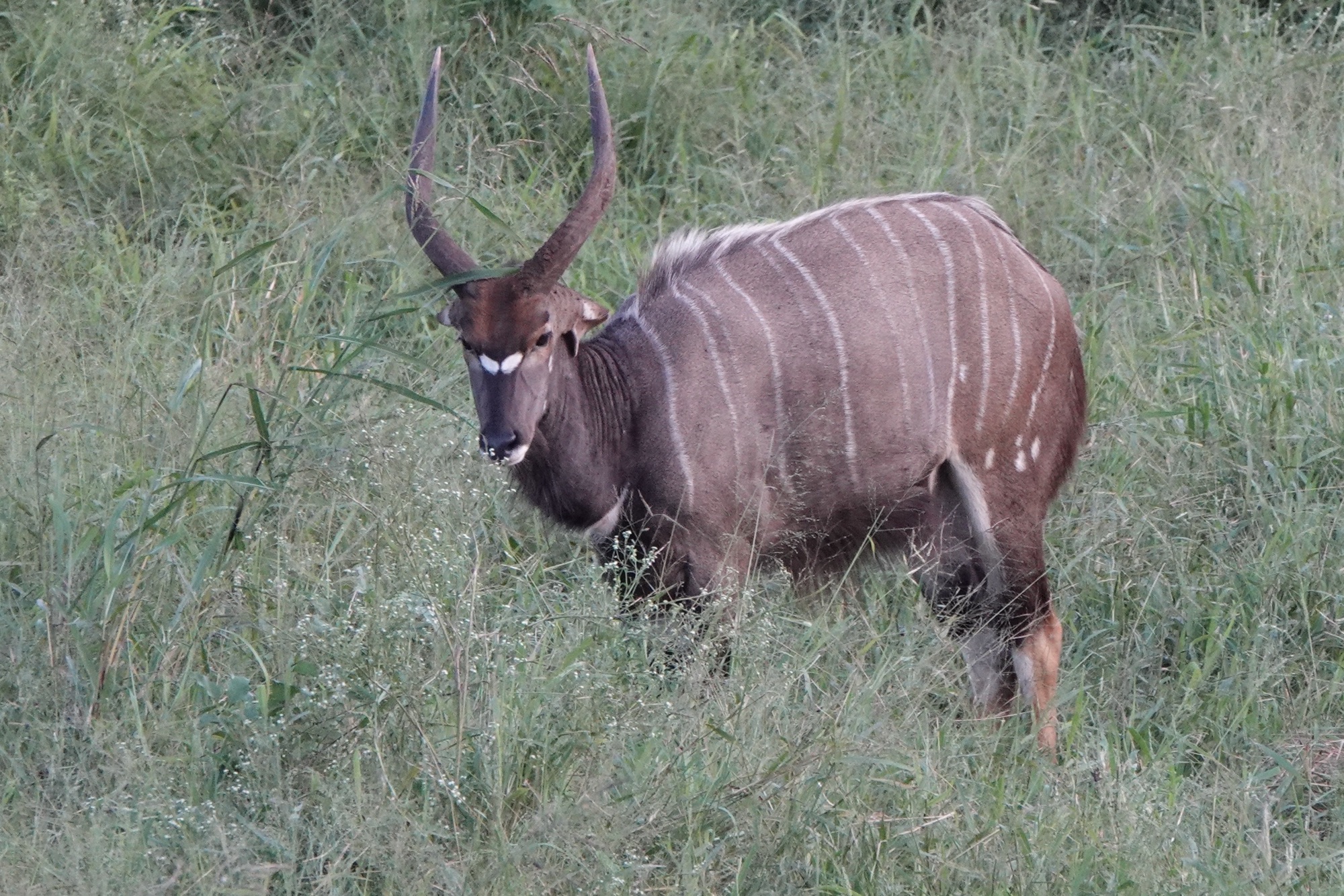
4:25 p.m. Nyala

4:29 p.m. More Burchell’s zebras – we saw dozens!
4:30 p.m. More impala.

4:34 p.m. A young nyala, and a slightly older male whose hide is starting to darken. By the time he is fully mature he will look nothing at all like the tawny striped females.

4:35 p.m. A water thick-knee. Who’d have thought that even poor birds get body-shamed.
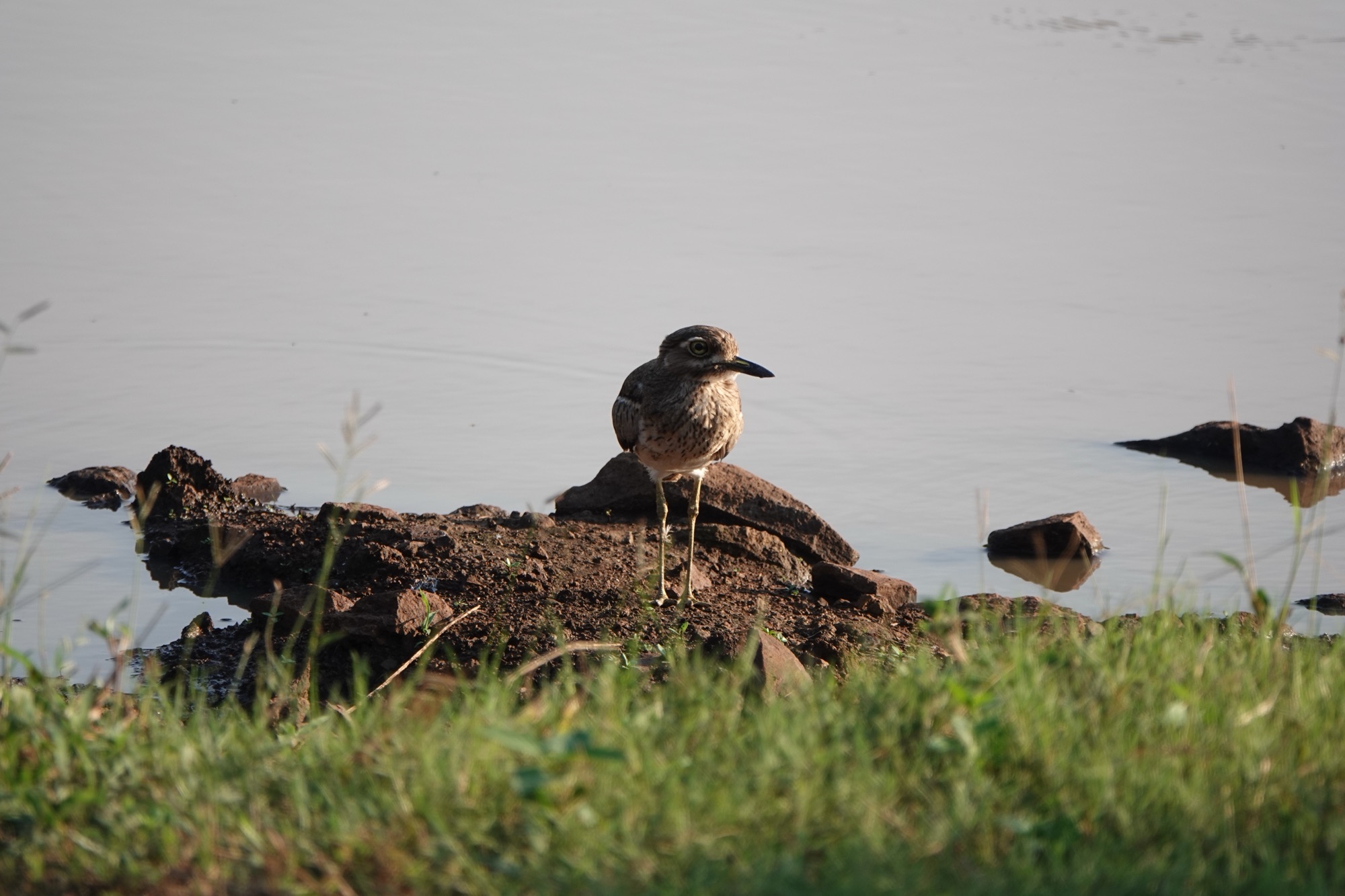
4:37 p.m. A rare 10-passengered savanna explorer. One of the nice things about this game drive was that there were multiple roads and we were not in convoy, so rarely saw the other 9 vehicles.

4:40 p.m. We continued to see lots of Burchell’s zebras, but what was unique about these two young males were their tails: one of them hardly has one. We learned that during the years that young males are together in a “bachelor hood” (our guide’s term), they often fight by biting each other’s tails – sometimes right off!

4:43 p.m. Yet more impala. Ho hum.

4:45 p.m. Something completely different: a hamerkop (hammerhead) bird.

4:53 p.m. Elephants!


5:16 p.m. A big African buffalo, grazing.


5:17 p.m. Nyala
5:29 p.m. A Senegal coucal.

5:40 p.m. What we’d been hoping for: a rhinoceros!!

5:51 p.m. Sunset fast approaching, and our driver/guide Rob was getting anxious to get us back to the lodge before dark.
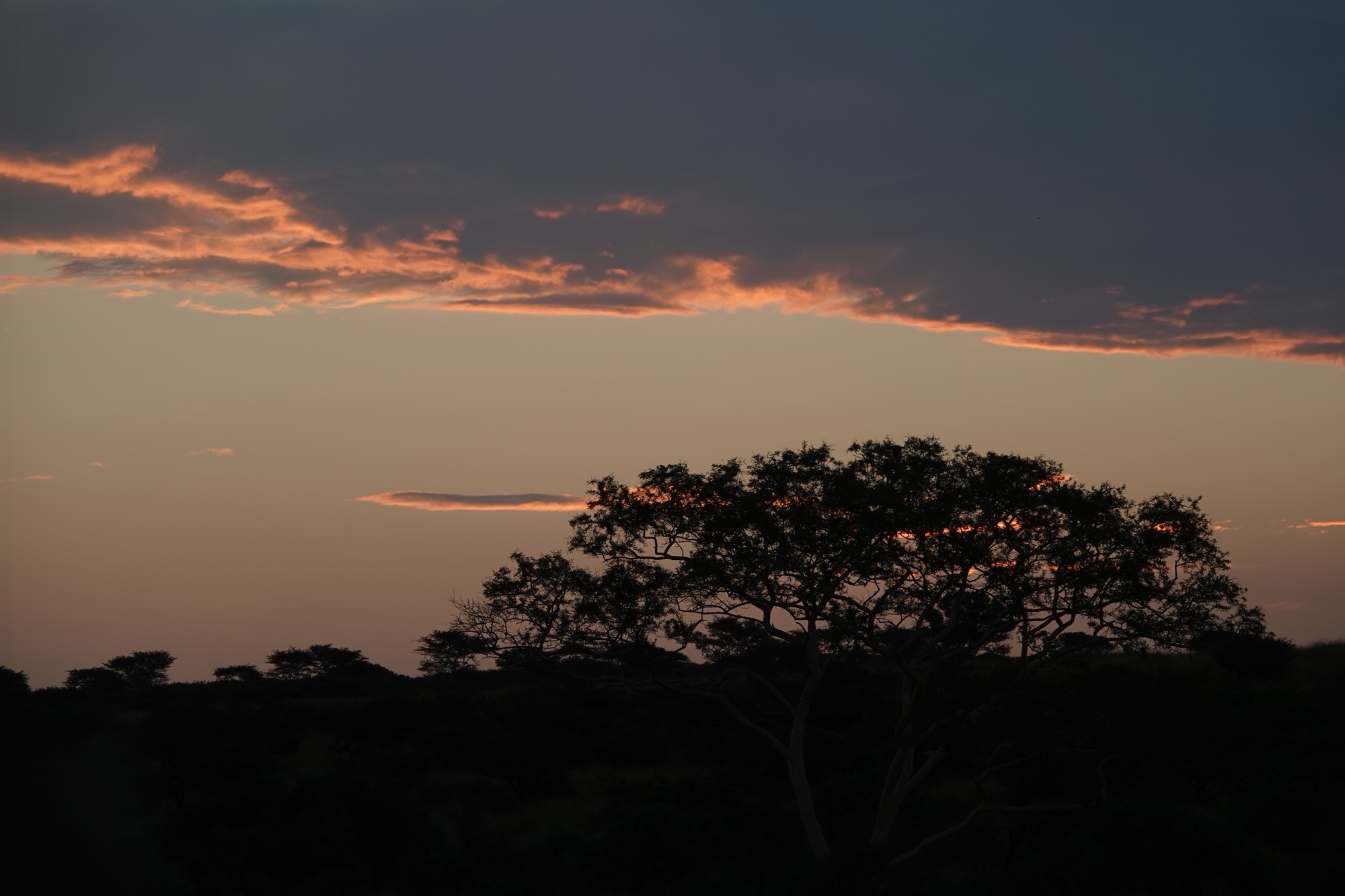
5:58 p.m. A pair of giraffes had other ideas and delayed our return a bit.

At the end of the drive, we returned to the beautifully appointed lodge to enjoy a meal, entertainment, and cold beer.

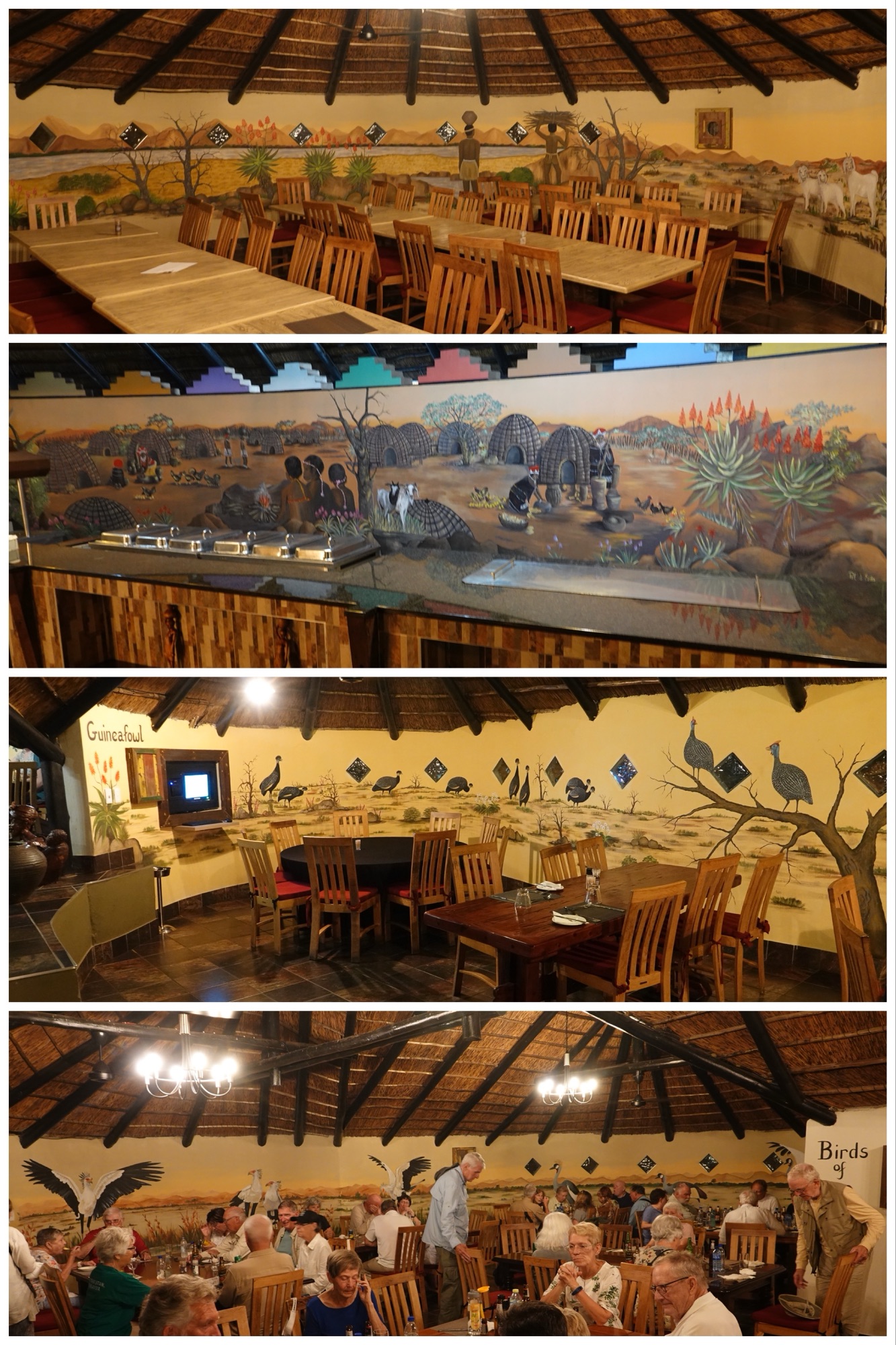

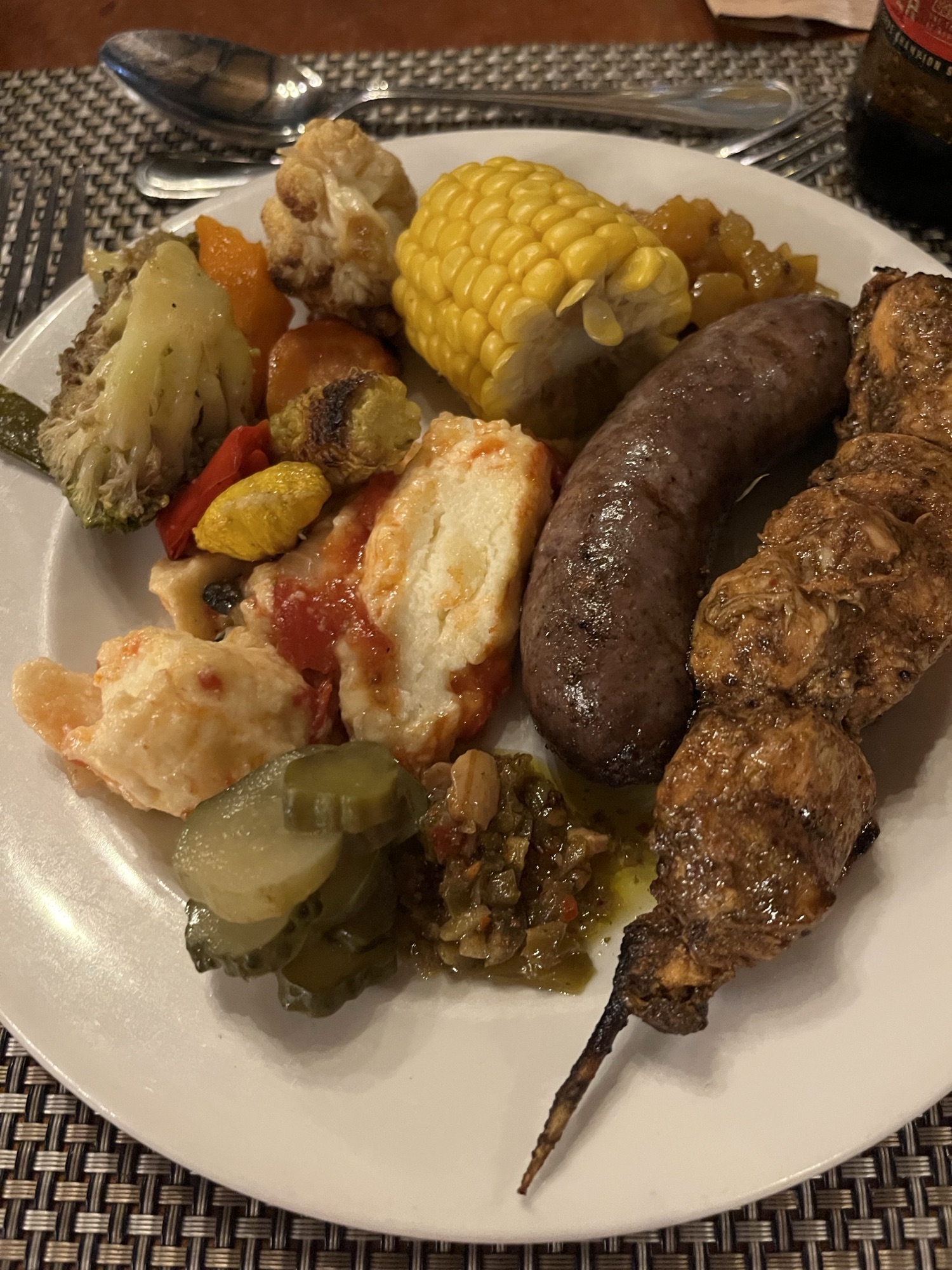
Then it was time to reboard our motor coach for the return transfer to our ship, arriving just before 9:00 p.m.
It was another wonderful day. The only thing missing as we take part in our animal safaris is getting to know more about the history of the area’s people. One of our wonderful café and restaurant servers, Zee, is Zulu, and assured me that we did indeed miss a lot, including the traditional tribal dances of her people.
Choosing from the wide range of excursions offered 6 months ago was a challenge. We’ve been pretty happy with our choices, but there’s always more to see and learn.


It looks like Viking is doing a good job of getting you some animal sightings despite starting from the coast at all times.
Even though I’m sure it’s rather dated and probably not all that PC any longer, James Michener’s historical novel, “The Covenant” provides a painless way to learn the early history of South Africa — colonization by the Dutch and English, reaction of the local people — up through the beginning of the apartheid movement. It was published in 1980 and Mandela wasn’t released until 1990, so it’s far from complete or modern but might be a start on that complicated history. He focuses on three families, including one from Nyasaland, I think.
Thanks, as always for sharing your experiences.
LikeLiked by 1 person
I read The Covenant many years ago when I was binge-ing Michener. Got lots of new perspective from our 33 year old Indian guide today
LikeLike
What an experience! Ted’s photos are amazing. I hope my iPhone gets some good shots at Tala today.
LikeLike
What an experience! Ted’s photos are amazing. I hope my iPhone gets some good shots at Tala today.
LikeLiked by 1 person
I was lucky enough to stay at Zulu Nyala for a week two years ago. Love seeing your photos!
LikeLiked by 1 person
It looked like a gorgeous safari resort!
LikeLike