Today was the longest day of our entire journey: an 11 hour excursion leaving the ship at 5:30 a.m., and it turned out to be even longer at 13 hours start to finish.
Two hundred and thirty five of us signed up for a journey inland to Tsavo East National Park, part of a vast park system covering more than 21,000 square km / 8,000 square miles, in search of at least some of Africa’s “Big 5.” This region was made famous by JH Patterson’s book, The Man-eaters of Tsavo, which was the basis for the movie, The Ghost and the Darkness.
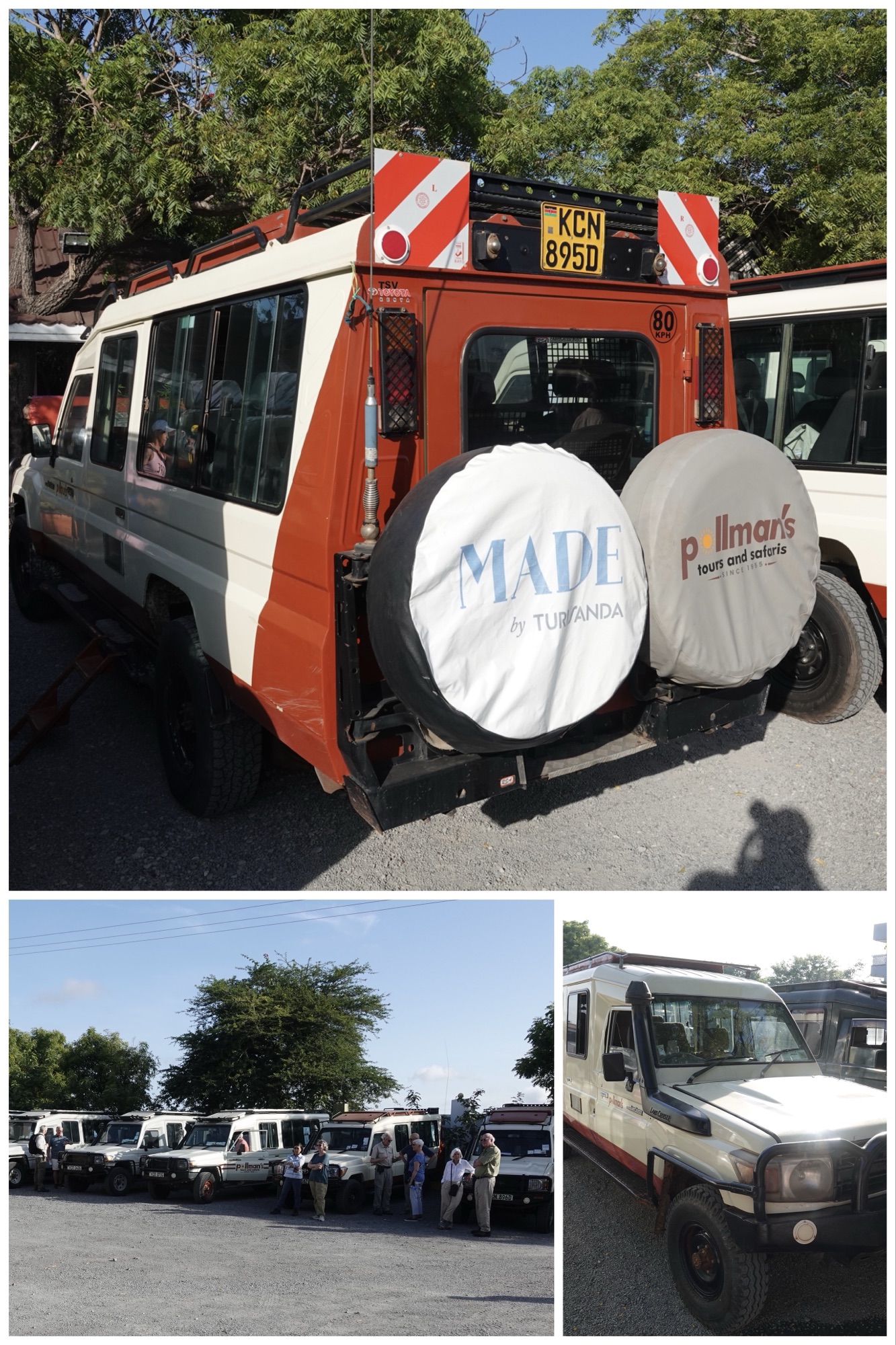
We, and the Viking excursion staff, expected 7 air conditioned coaches to appear in port to take us to Tsavo, a more than 2 hour trip, where we’d set out on a game drive in 4X4 vehicles.
Instead, what arrived in port this morning were forty (!) Toyota 4X4 Landcruisers, each capable of seating 8 including the driver. We discovered later in the day exactly why Pollman’s, the Kenyan tour operator, made the switch. They’ve been around since 1950 and know what they are doing.
There was a bit of scrambling and confusion as we created groups of 6 people for each vehicle, but we were all on the road by 6:00 a.m. There was no air conditioning, but the big windows let in a lovely breeze – and all the smells of Mombasa at dawn. I don’t know what it smelled like to everyone else (although travel mate Claire mentioned popcorn at one point), but to me it was boiling hotdogs.
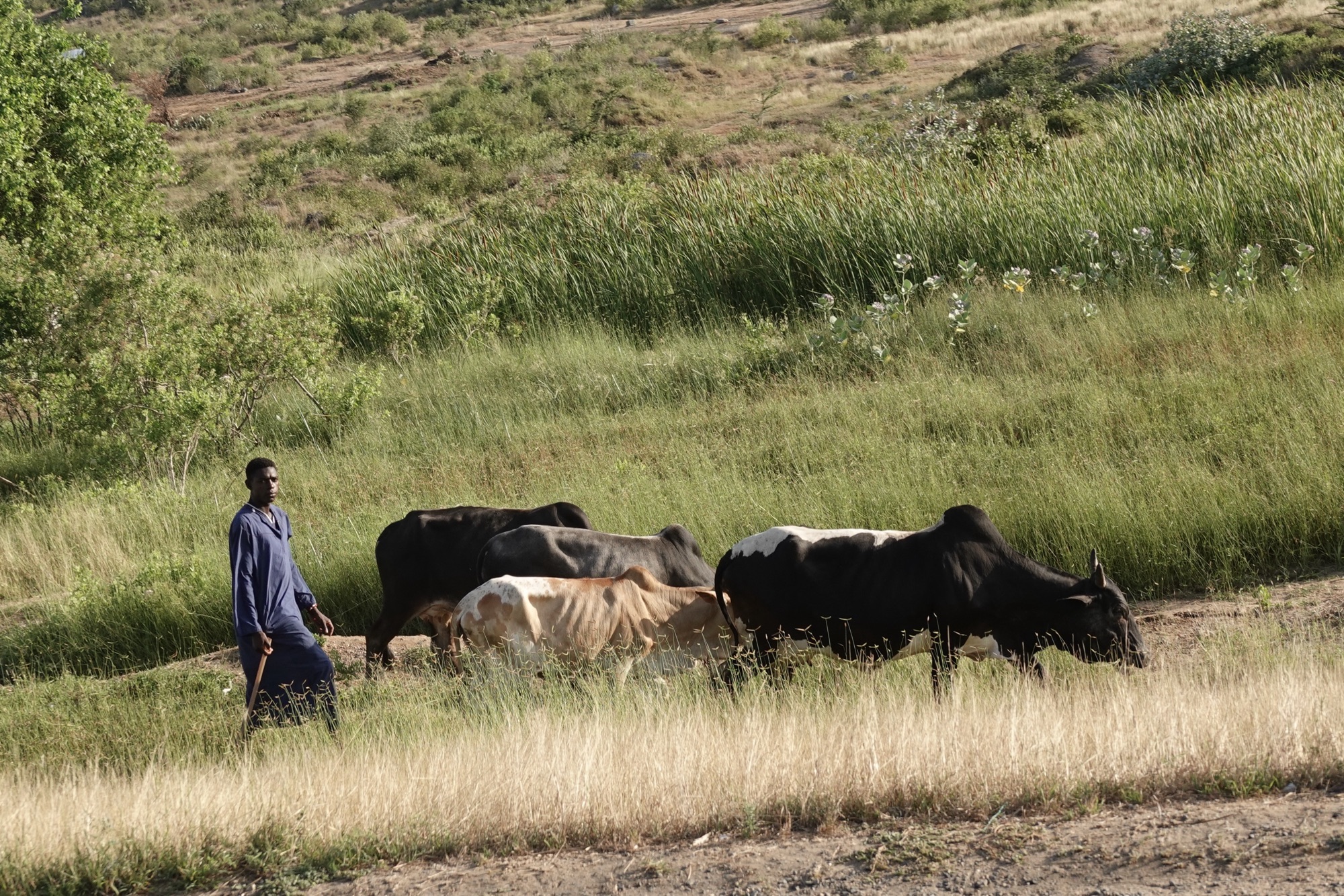
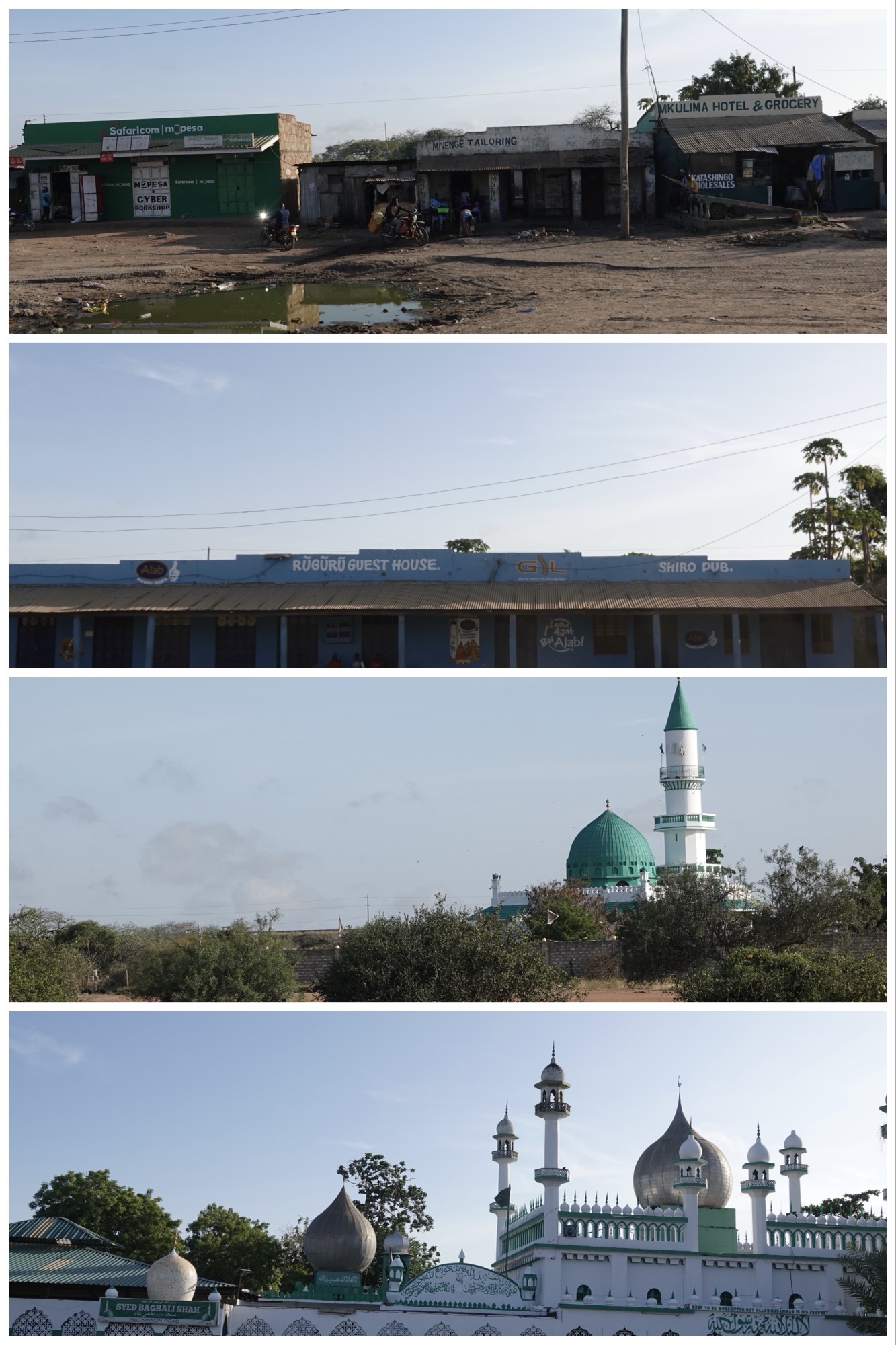
By 8:00 a.m. our convoy had reached our rest stop, the Kilimanjaro Curio Shop and Café in Kinango. No, Mount Kilimanjaro was not visible from here.
We continued past shanties set up as restaurants for the workers in a large steel plant, and saw workers carrying their hardhats, headed on foot from their tiny villages to the factory. Apparently the local buses, which are privately owned, double their fares during shift changes, so most people simply choose to walk. Interspersed with workers and school children in uniform were Maasai men and women with their animals.

At 8:50 a.m. we reached Tsavo East National Park. The ranger at the gate double-checked that we all had securely attached hats, and then the roof of our 4X4 was raised so that we could stand up and look out. At no point in the next two hours would we be allowed to leave the safety of our vehicle.

Our guide, Fahnwin, reiterated the caution that there is never a guarantee of sighting animals, although the likelihood is good. I’m not sure what I expected, but even though we didn’t see any of the big cats, the day’s experience far exceeded anything I could have imagined.
We headed down a red dirt road splitting Tsavo East and West, and then later turned east. The animals in the east portion of the park here roam freely over 13,747 km2/5,308 sq mi of semi-arid land formerly known as the Taru Desert. The smaller (“only” 9065 km2) Tsavo West becomes greener and hillier as it approached inland Africa. While there are tens of thousands of animals here, it is easy to drive for many kilometres without spotting any.
Ted’s photos below are in the order we saw the animals, with the timestamp from his camera to give a sense of what we experienced.
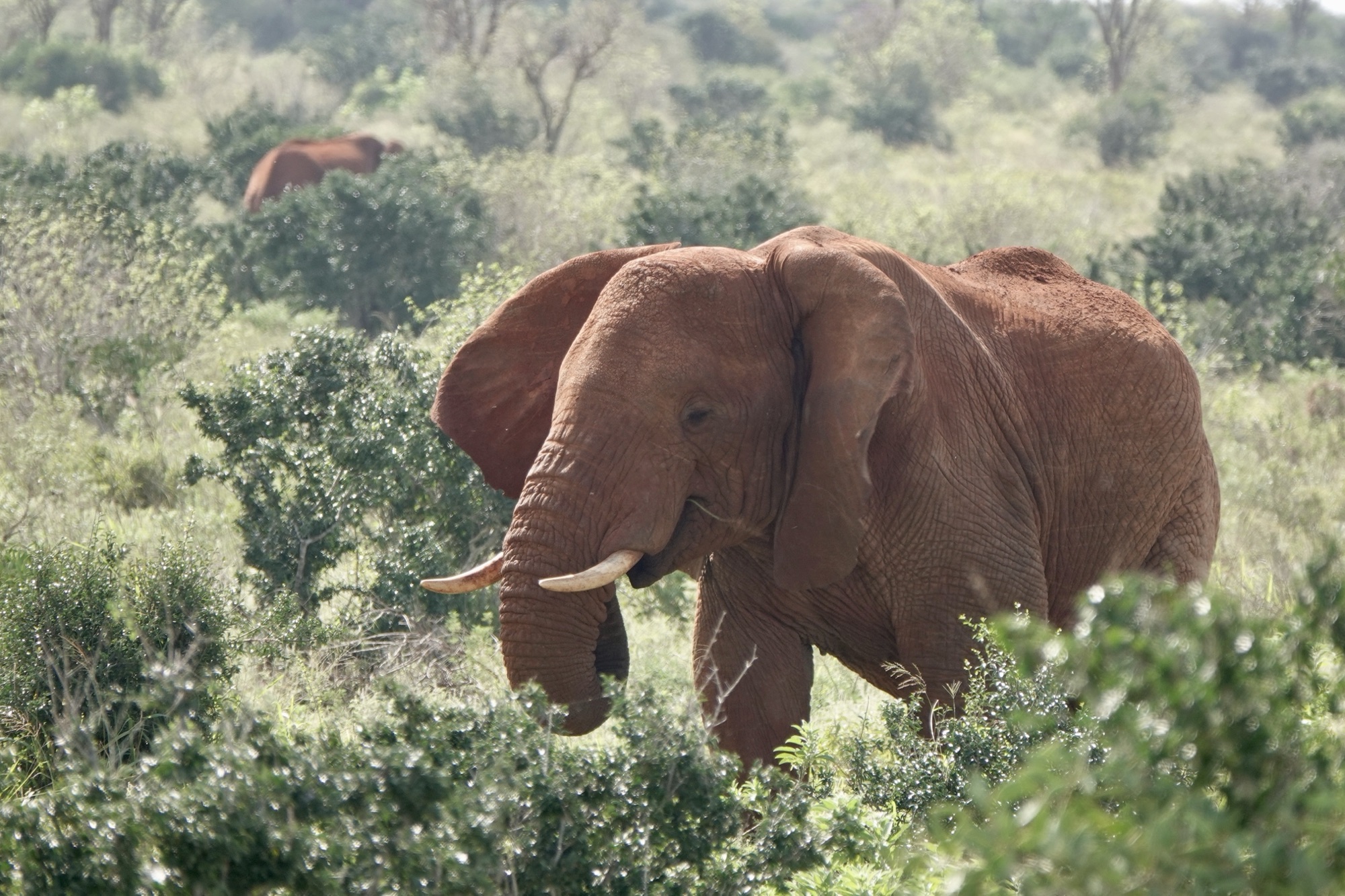
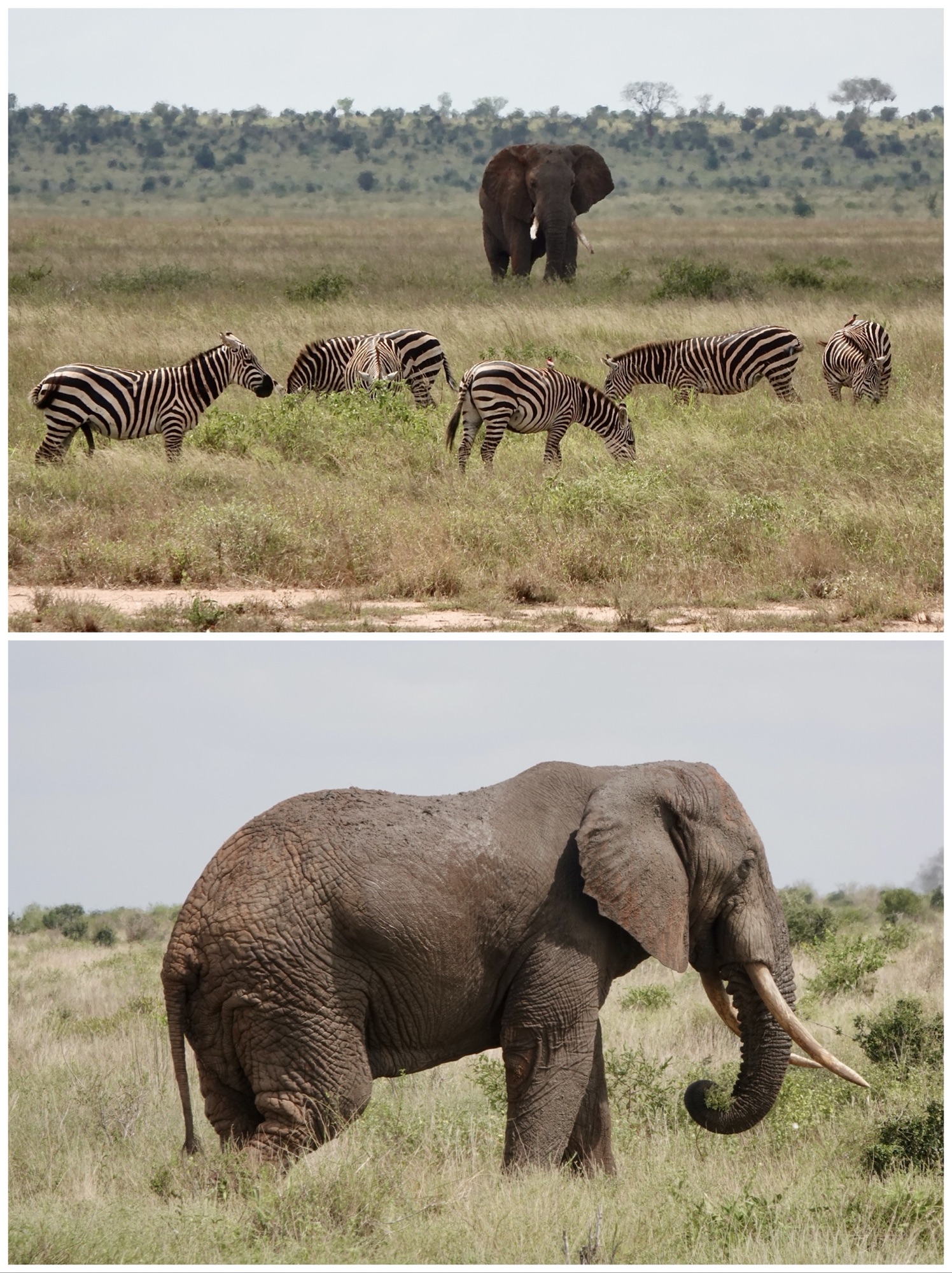
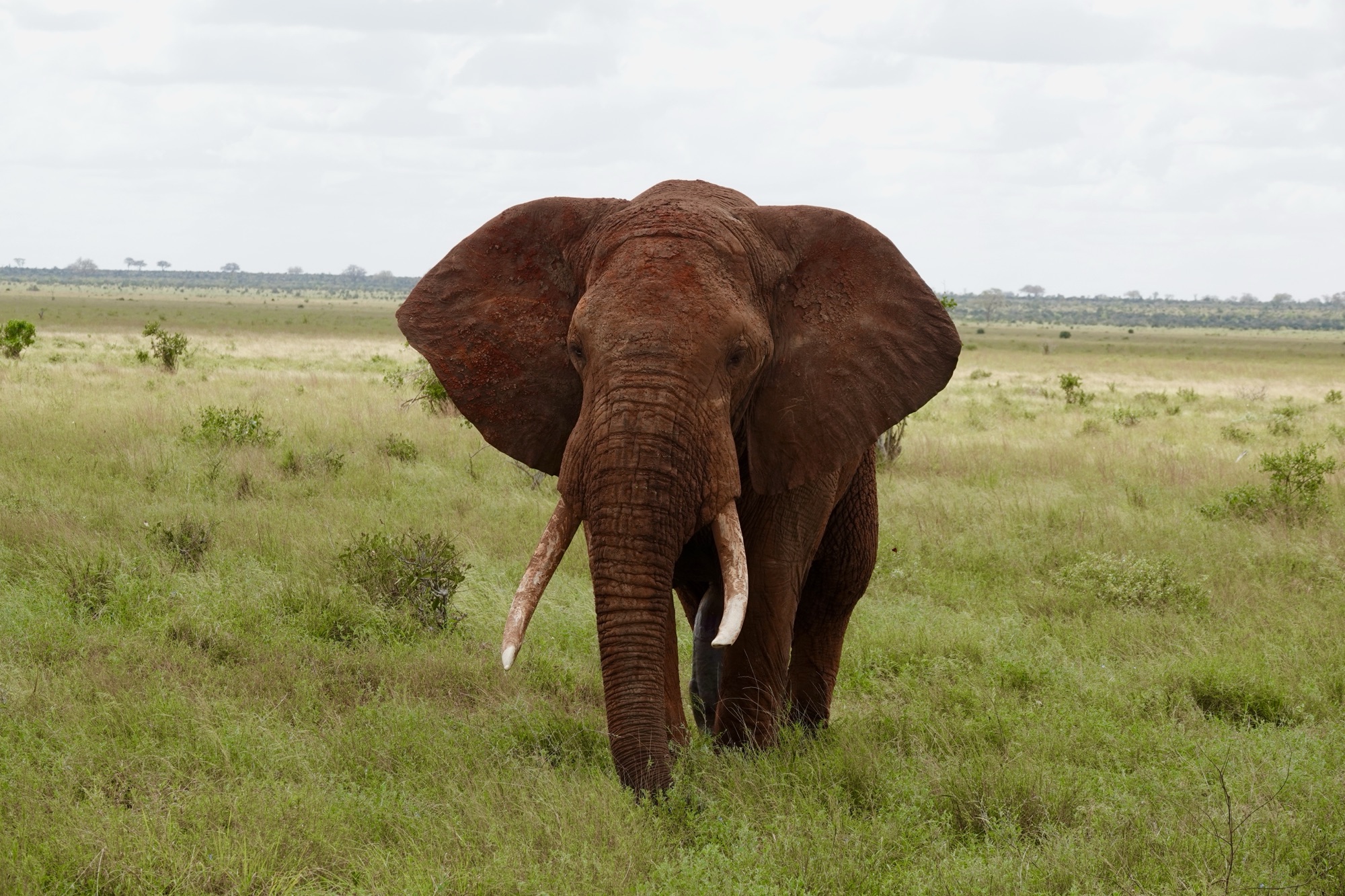
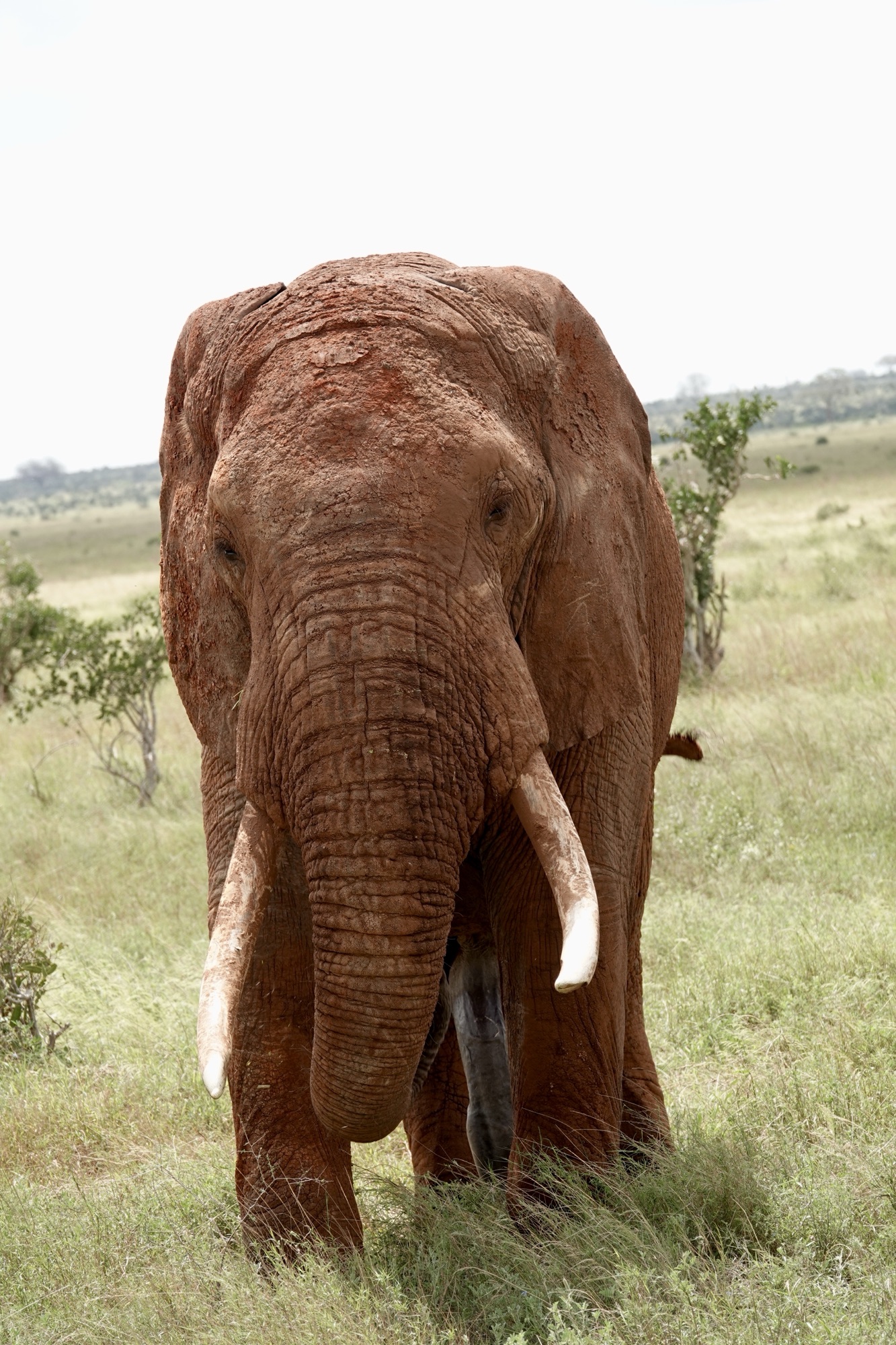
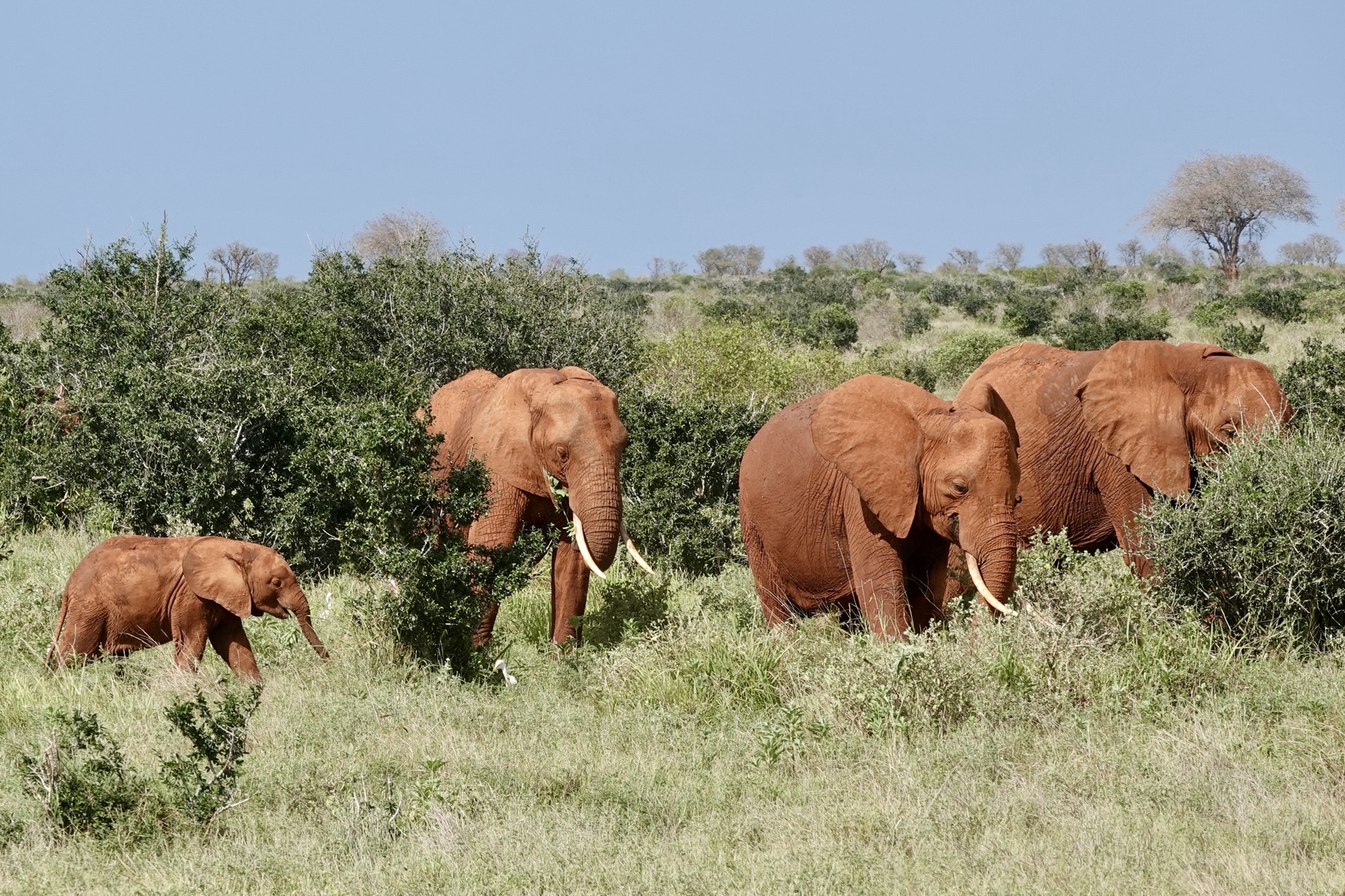
9:06 a.m. Our first elephants. The earth here is the reddest we’ve ever seen, and the elephants who use the mud to both cool themselves and rid themselves of ticks (who get caught in the mud and fall off when it cracks and dried) look like huge terra cotta sculptures.
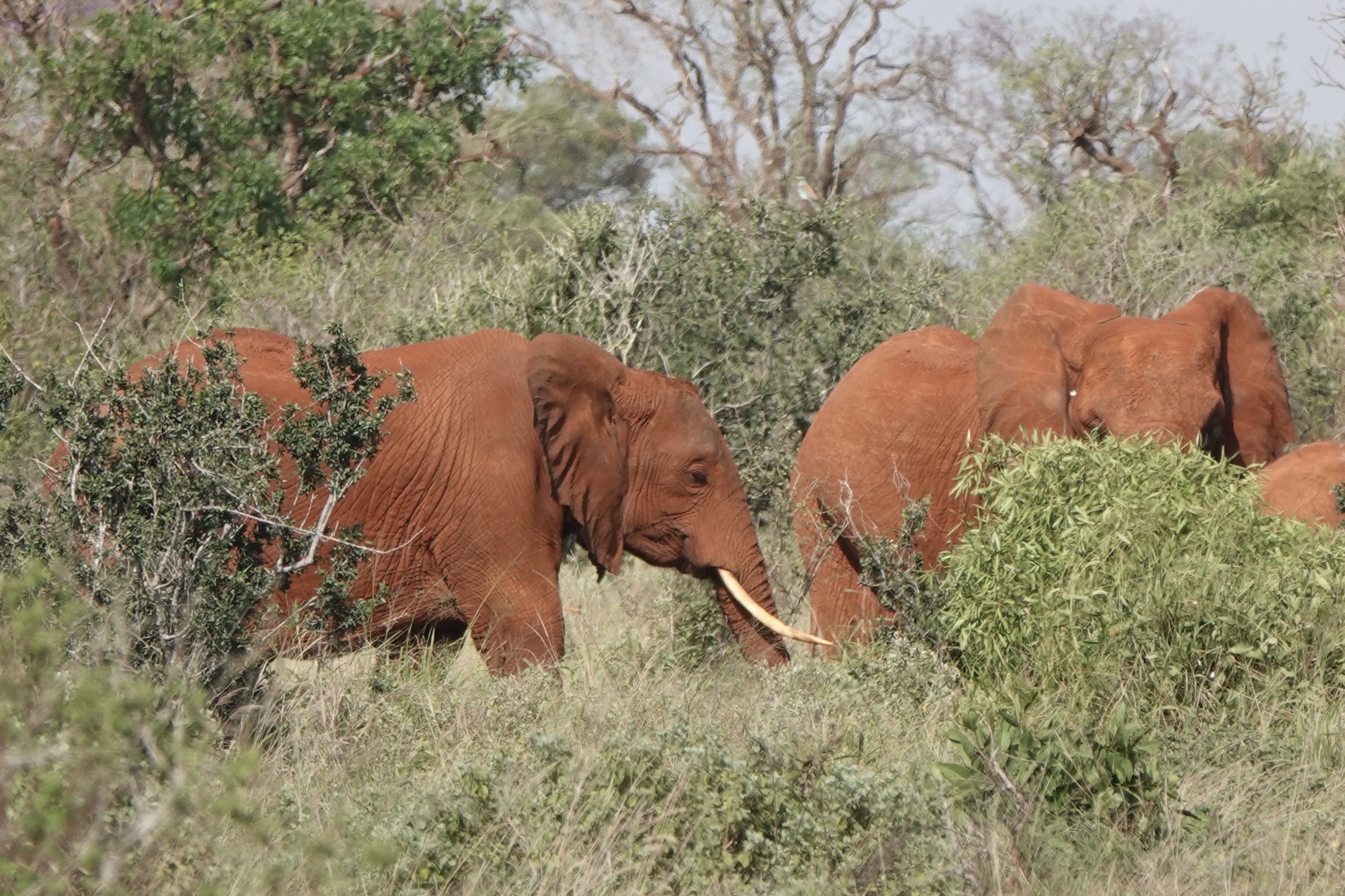
9:10 a.m. our first Abyssinian/Senegal Roller.
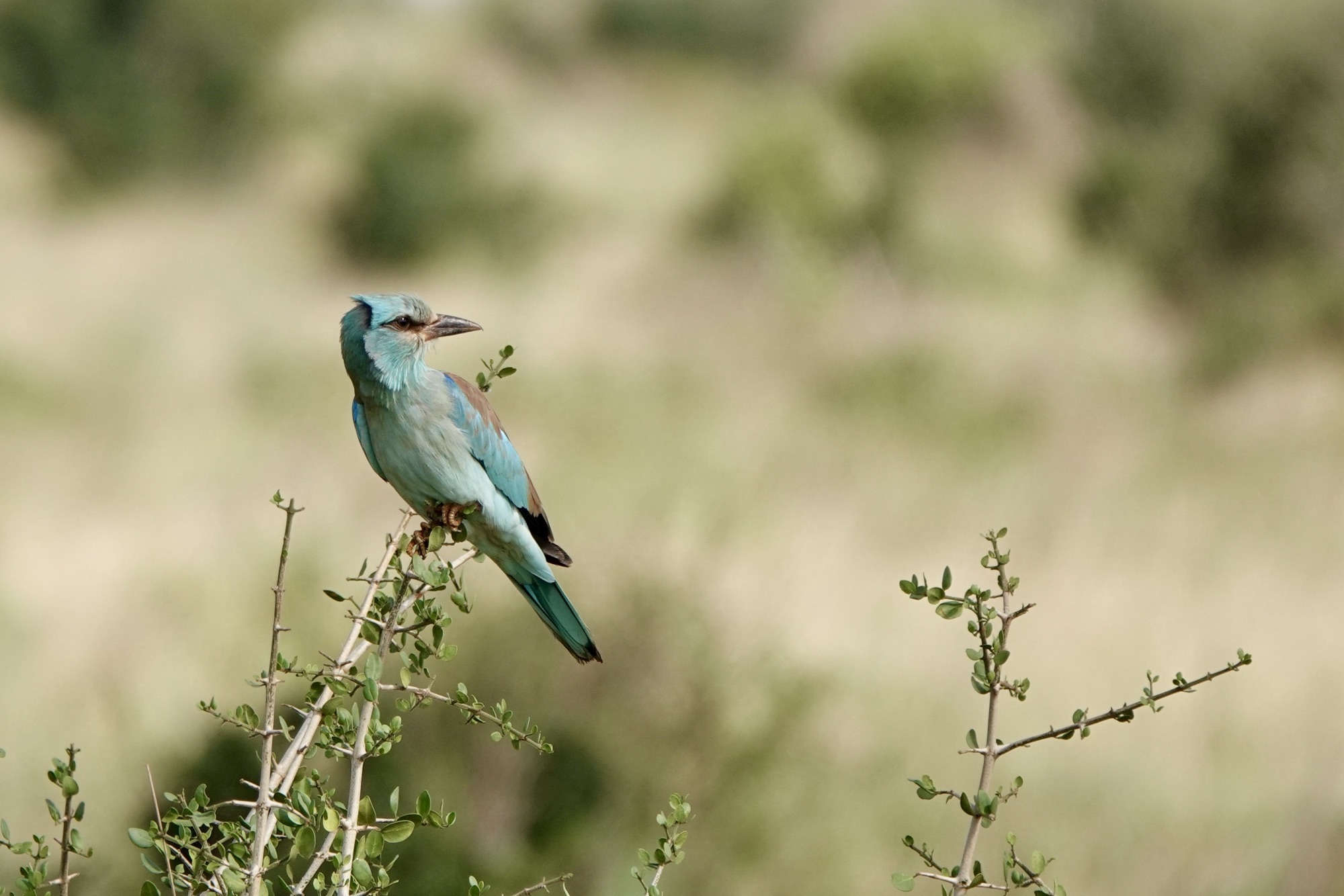
9:17 a.m. More elephants.

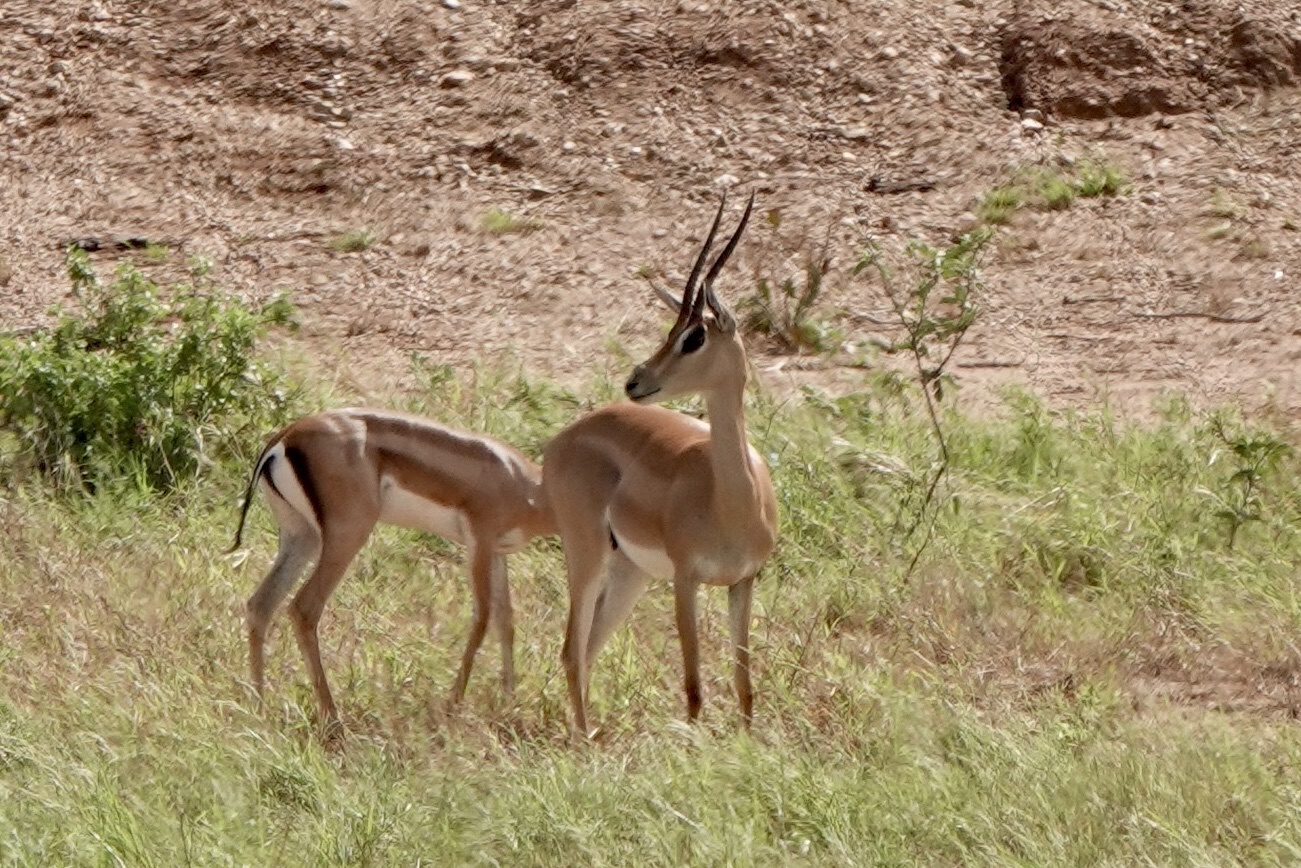
9:29 a.m. A pair of gerenuk (also called giraffe gazelles)
9:48 a.m. This is exactly what I expected African savanna to look like.

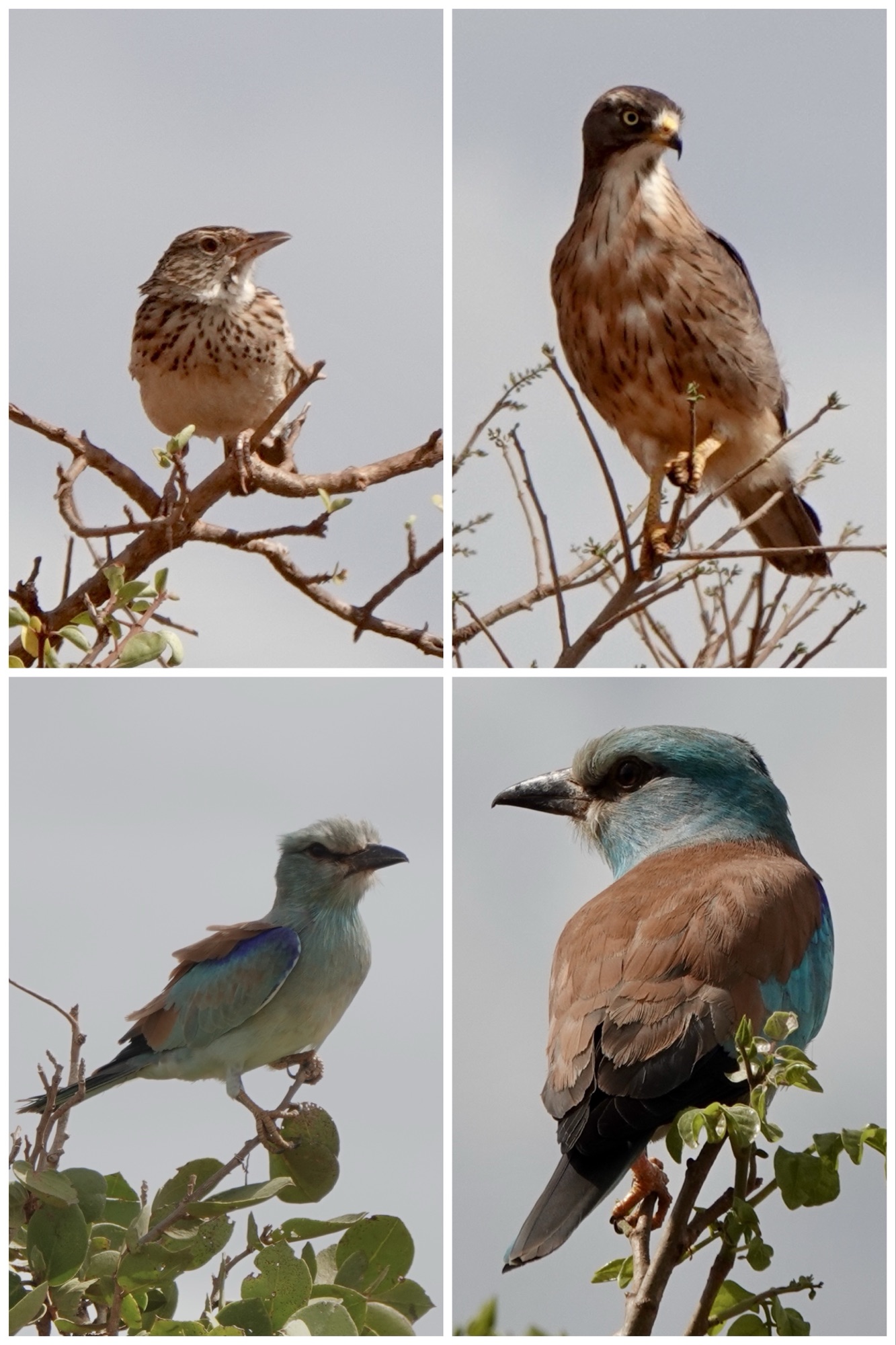
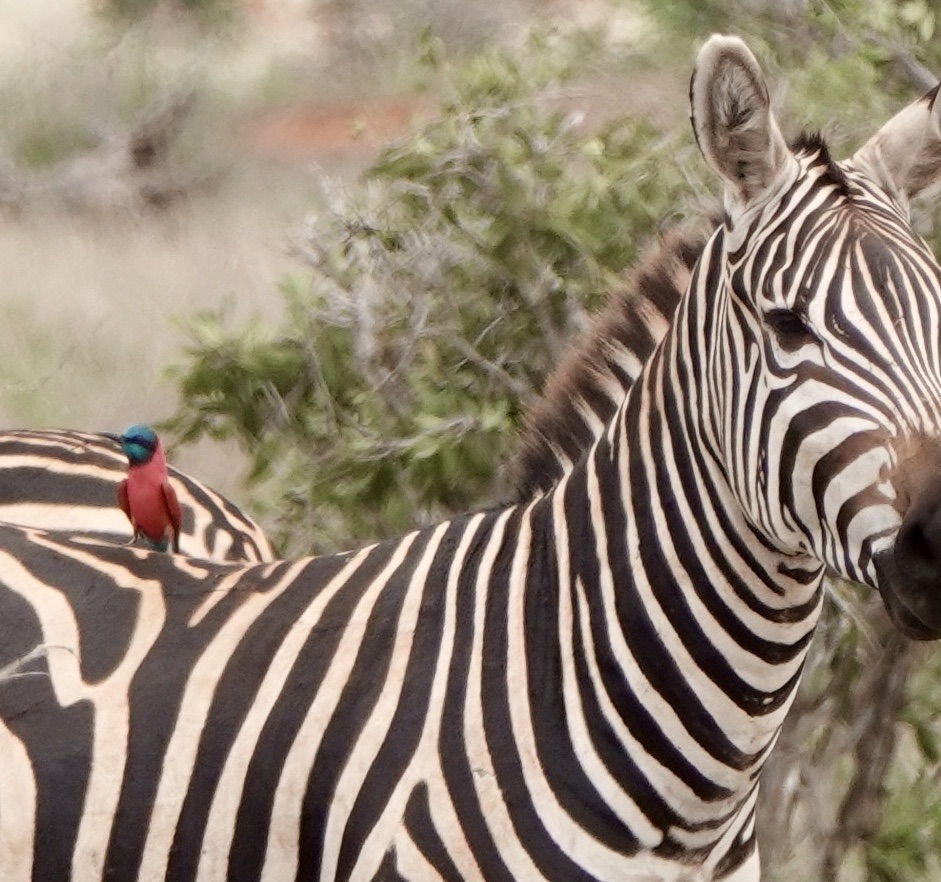
9:55 a.m. Birds! We had to ask our driver to stop when we saw interesting ones; he’d assumed we were only interested in mammals.
10:10 a.m. One of many, many termite nests.

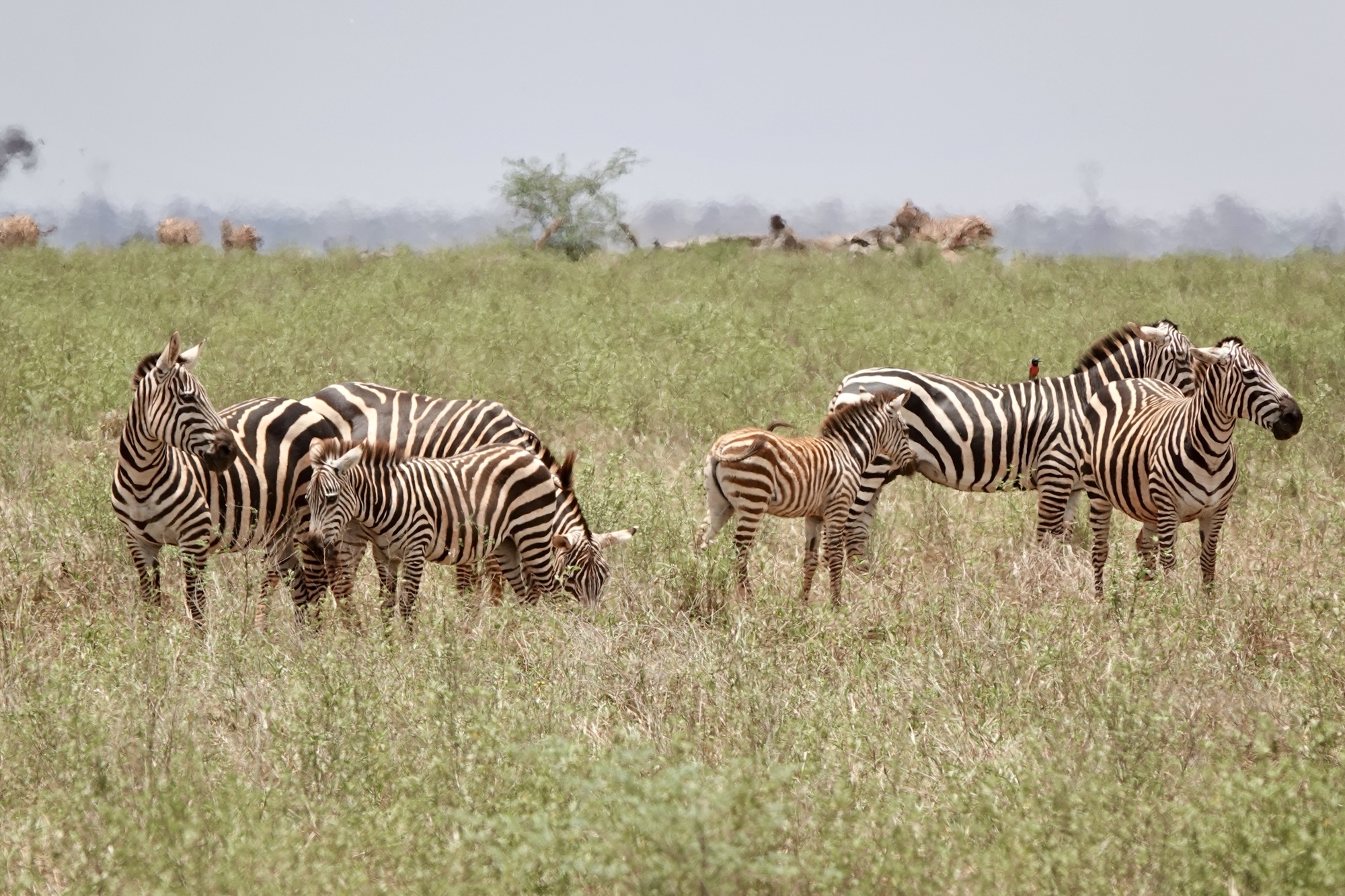
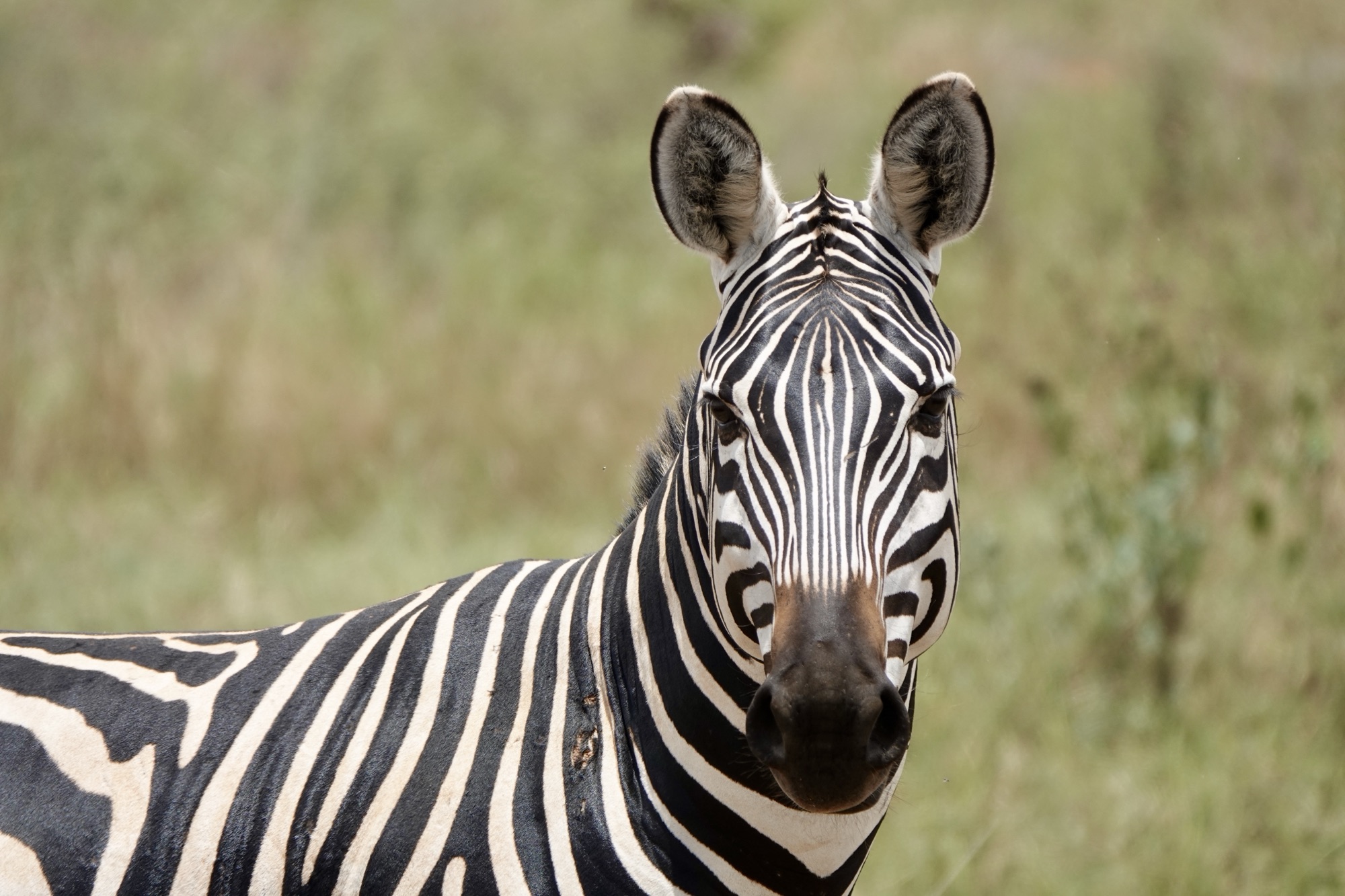
10:26 a.m. Zebras! (probably Grants zebras, but possibly Plains zebras.)

10:30 a.m. Approaching elephants on both sides of the road.
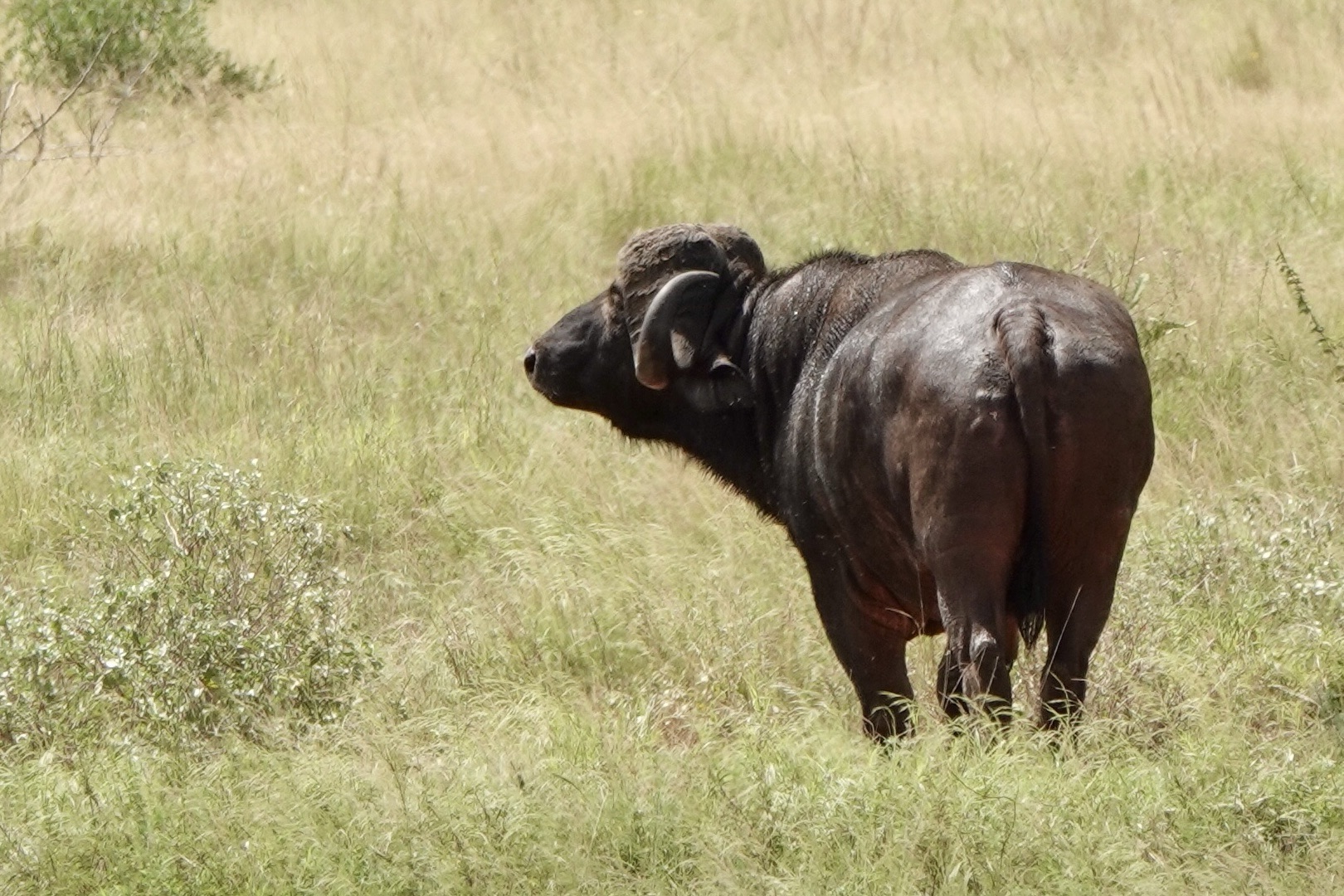
10:38 a.m. A lone African buffalo, thankfully in the distance (the6’re known for their nasty tempers).
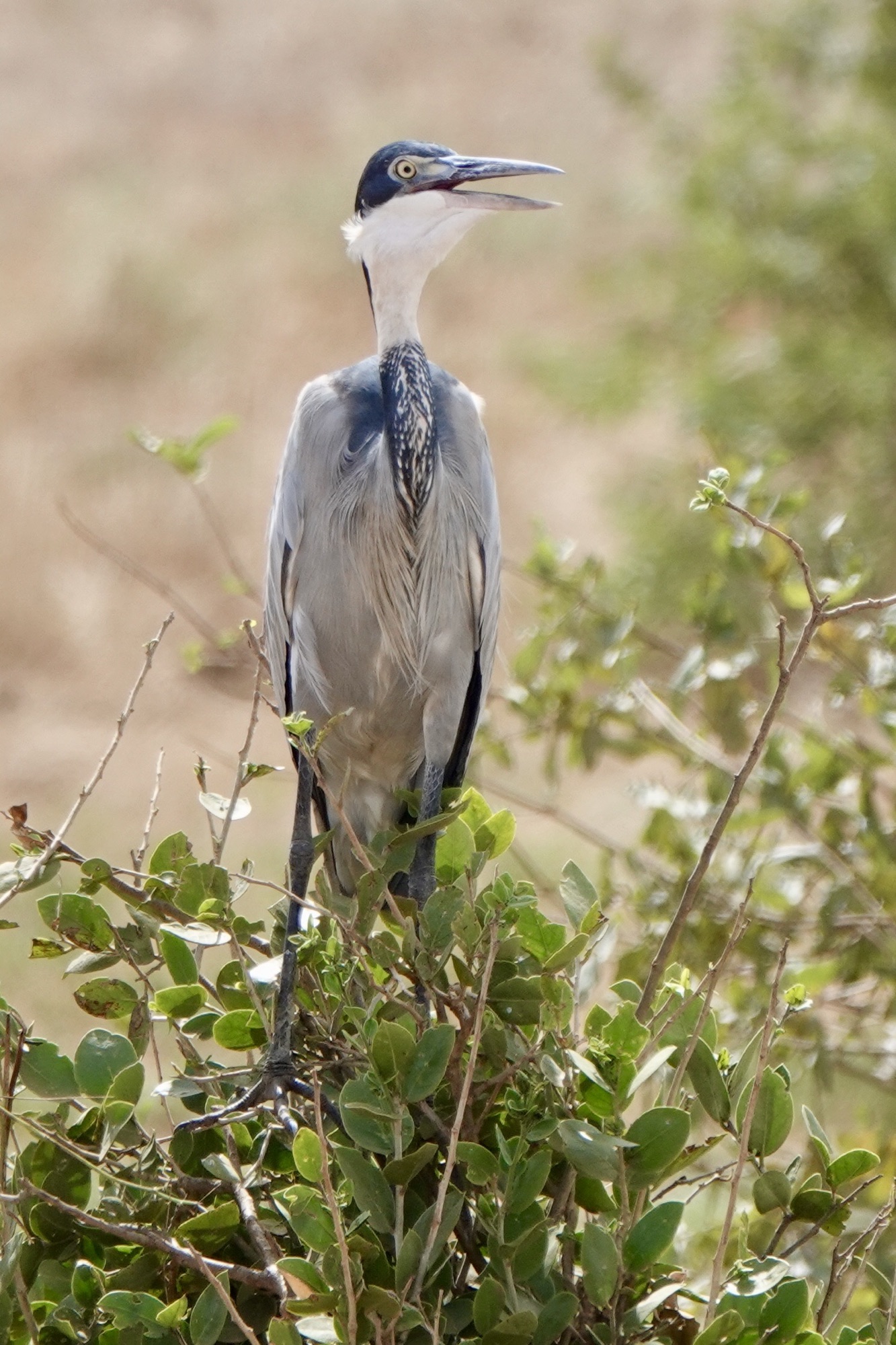
10:40 a.m. Black-headed herons near some ongoing road maintenance. The Kenya Wildlife Service monitors the roads and tries to keep them passable in all kinds of weather.

10:42 a.m. We stopped disconcertingly close to a huge elephant preparing to cross the road. He stayed back and ignored us for a while, but when we didn’t move after about 2 or 3 minutes, he started to grunt softly and inch forward. We got out of there.

10:47 a.m. A herd of African buffalo.

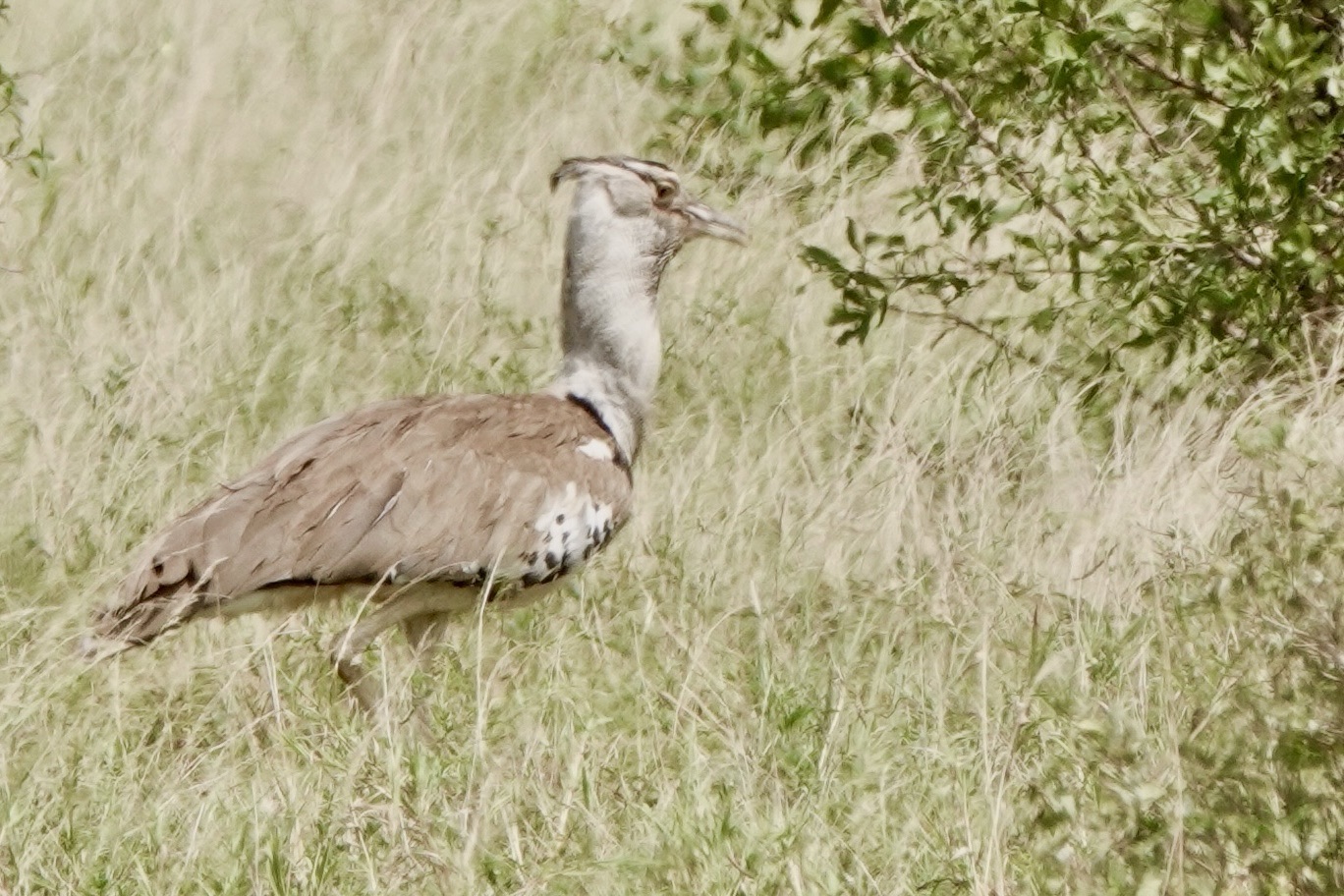
10:53 a.m. A kori bustard stalking something in the grass.
And then nothing except a few more elephants in the distance until 11:40 a.m. when we spotted some Grant’s gazelles.

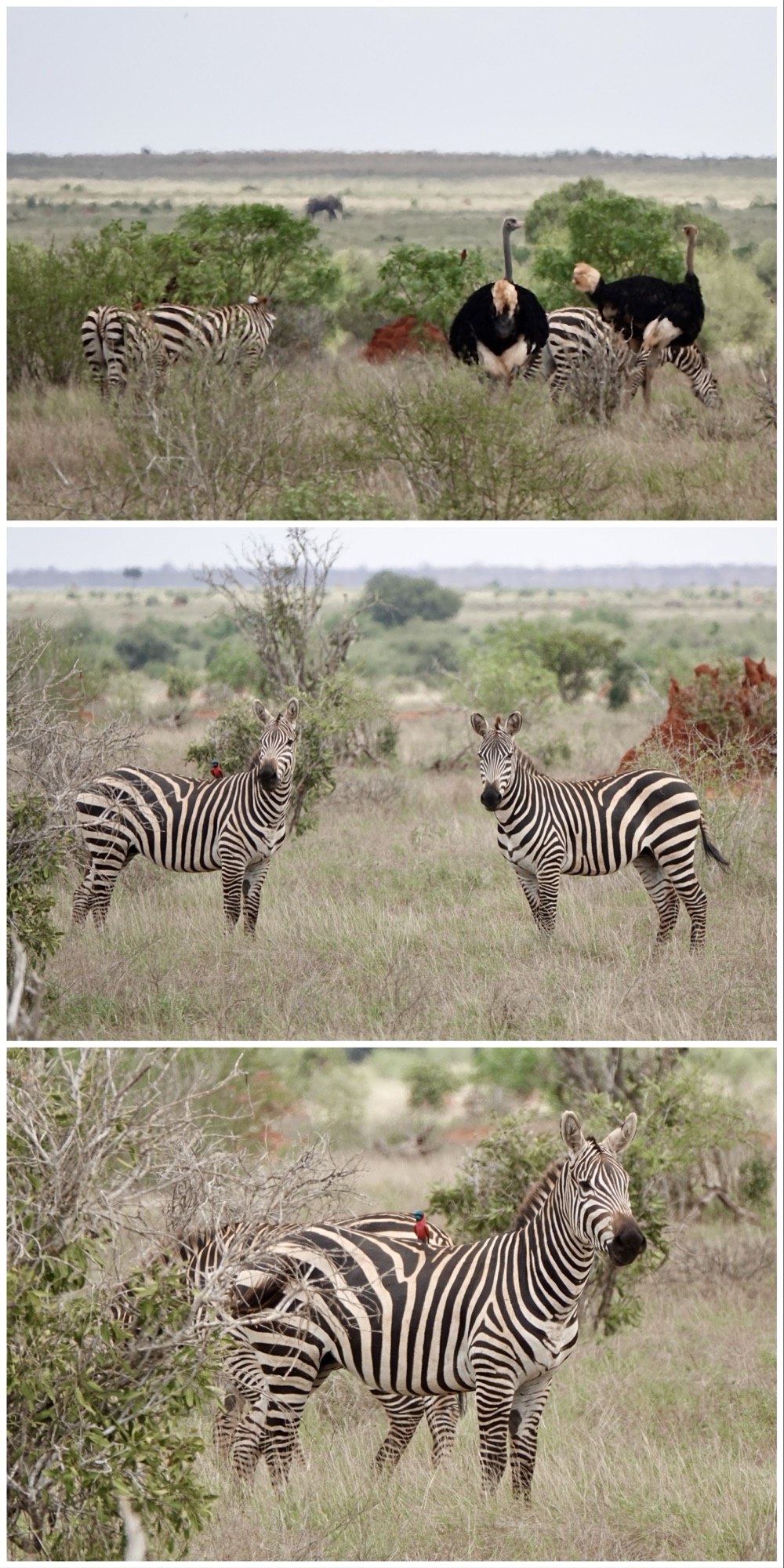
11:47 a.m. Somali Ostriches among the zebras. Or zebras among the Somali ostriches.
11:52 a.m. A herd of East African Oryx.

12:02 p.m. More beautiful Grant’s gazelles.

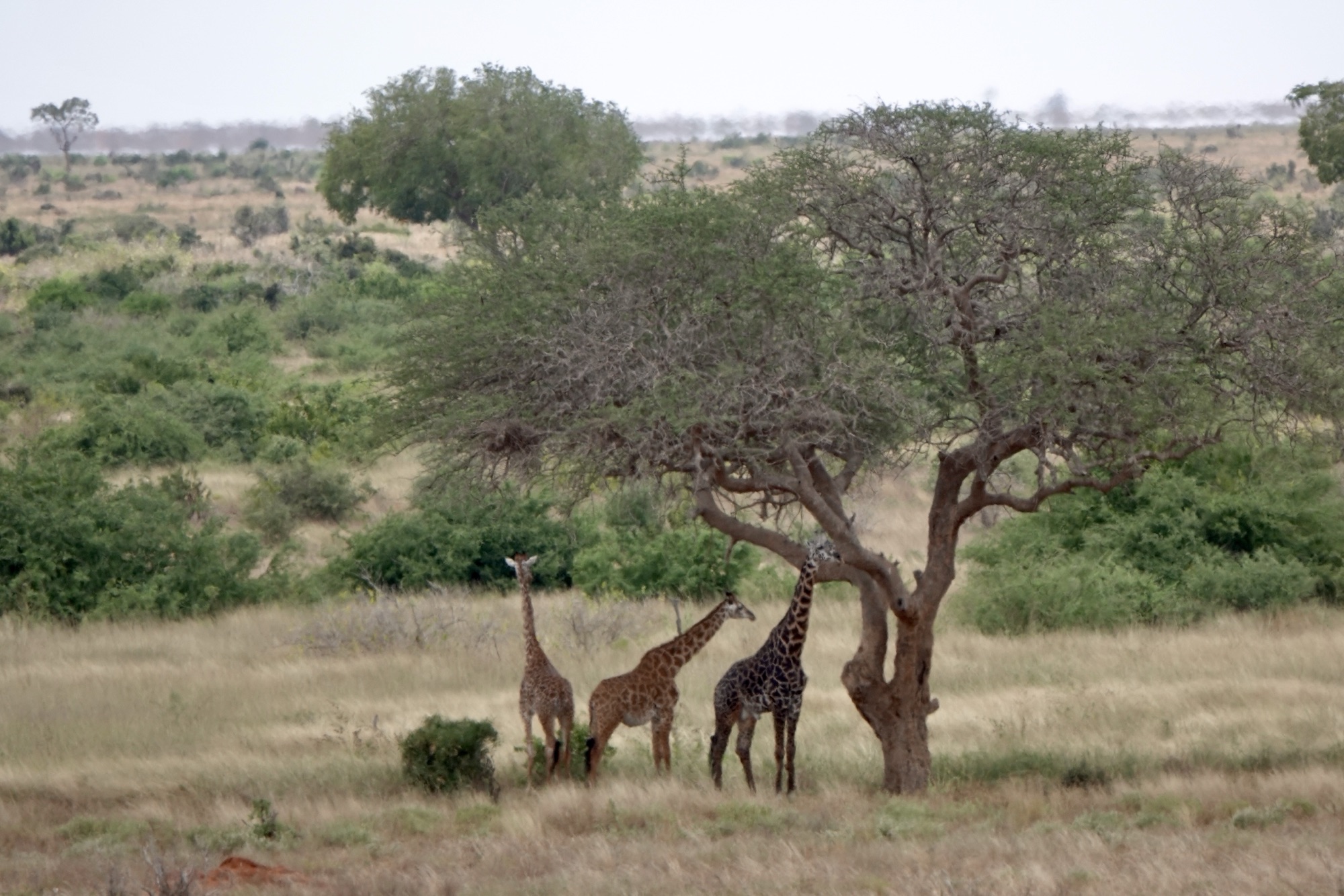
12:10 p.m. Giraffes in the distance eating acacia leaves.
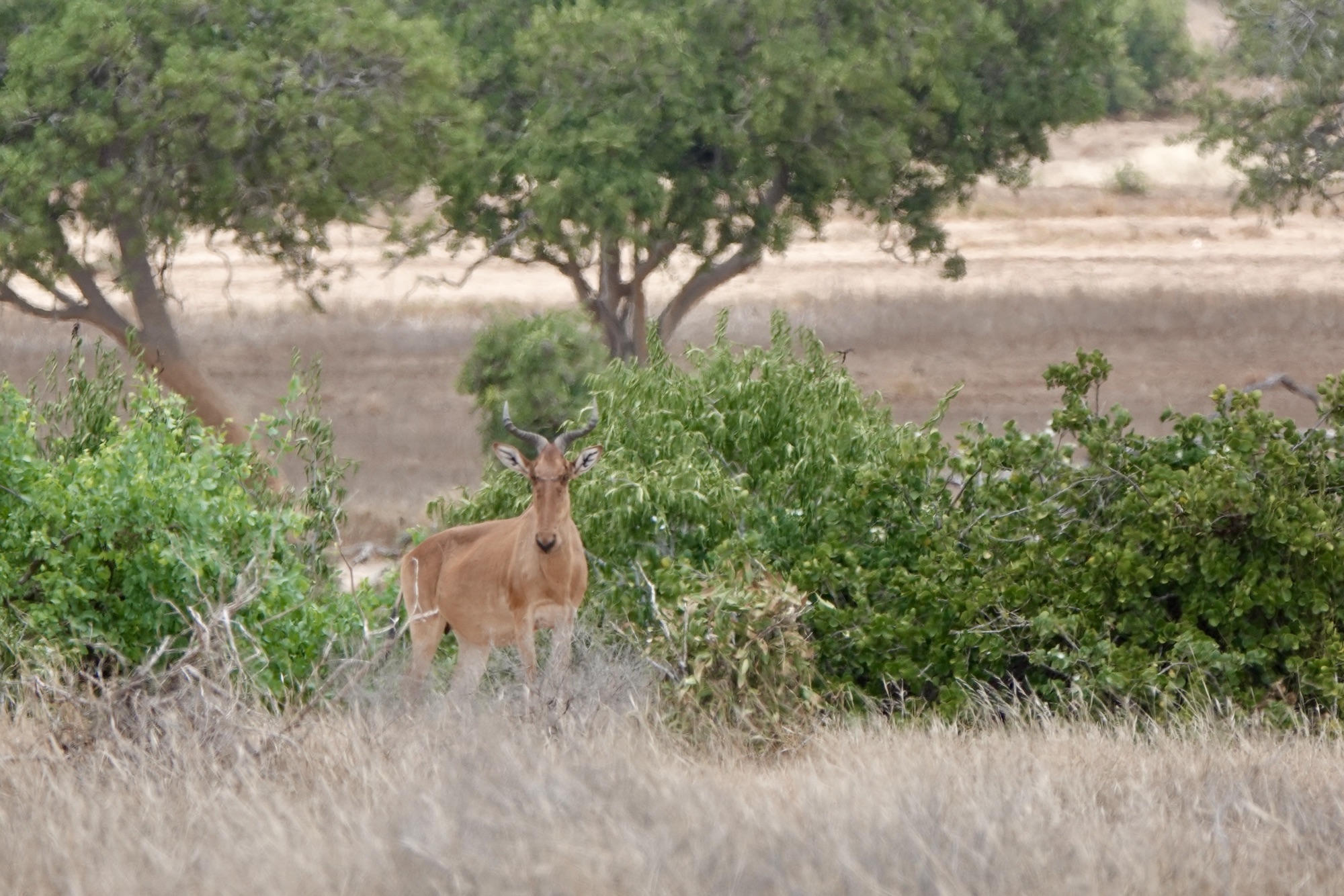
12:18 p.m. A Coke’s hartebeest.
Another long stretch with elephants and zebras in the distance, and then at 12:59 p.m. something new: a wildebeest.

1:00 p.m. A watering hole!!


Zebras headed to the watering hole…

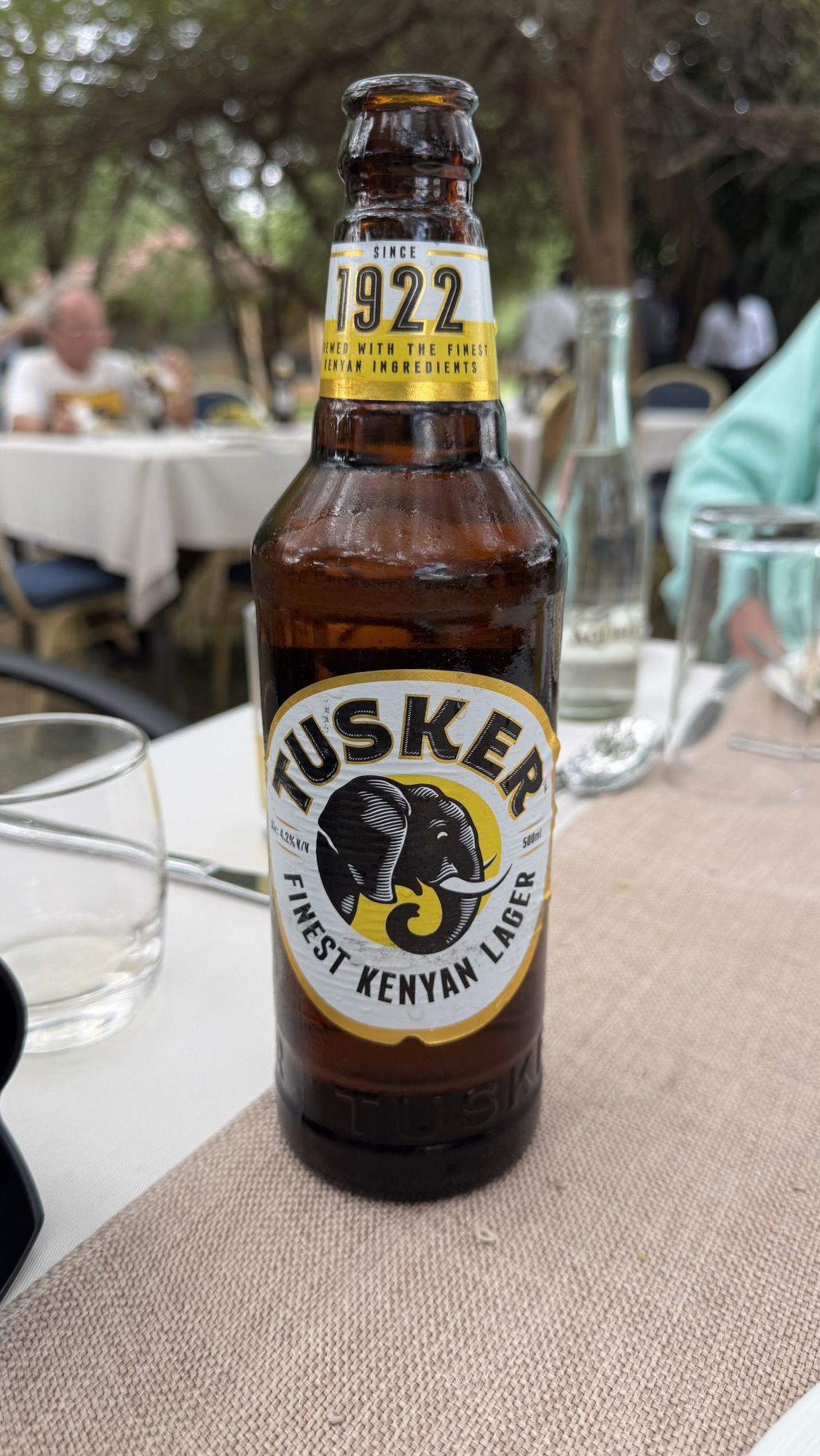
At about 1:20 p.m. we reached one of the park’s lodges for an amazing buffet lunch and cold Kenyan beer. On the way in, we were given menthol-scented cool cloths to wipe our faces and hands. The white terrycloth came away rust coloured, which was the first hint we had of what we must have looked like, covered in red dust. (In the afternoon, I took my hat off since the vehicle’s roof was shading us; when we got back to the ship my blonde was orange.
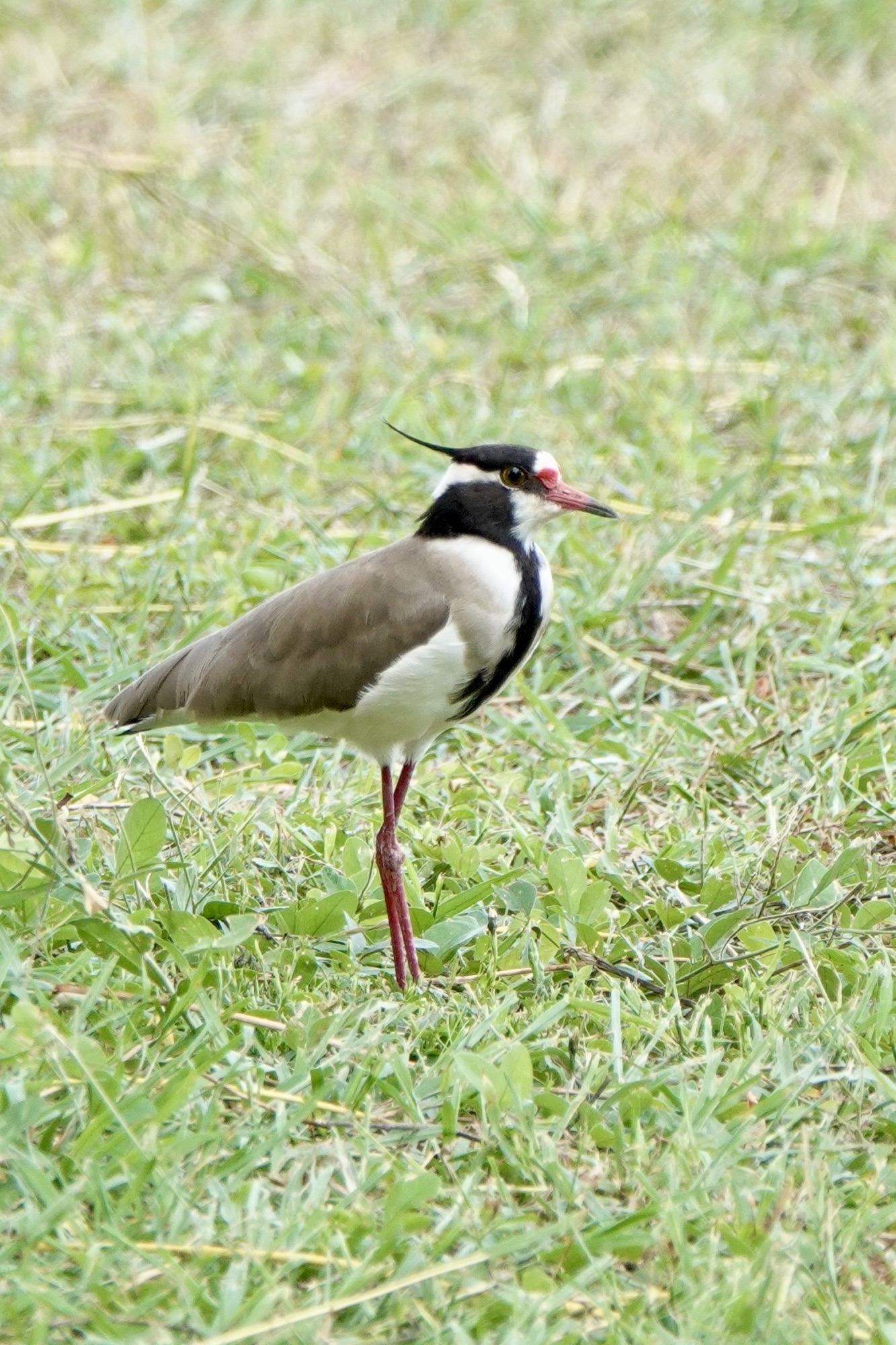
We ate under a canopy of trees, and saw more African birds and reptiles roaming the lawns.



Bottom: a ground Agama.

We left the lodge just after 2:00 p.m., needing almost an hour to reach the park gate and get on the road home.

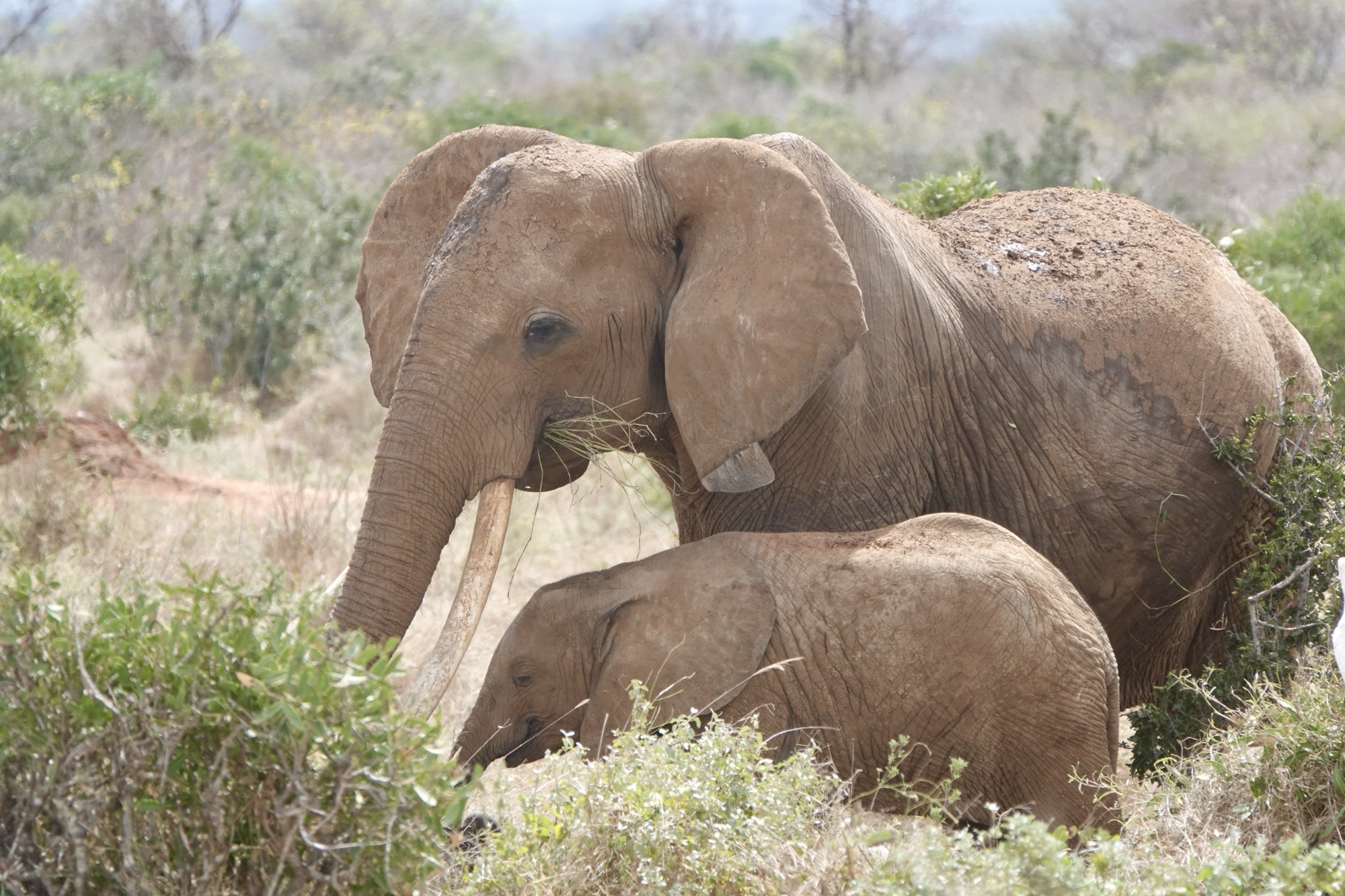
3:02 p.m. A mother and baby elephant (they were part of a large herd). Our guide estimated the baby at between 2 and 3 years old.

3:05 p.m. A black-headed heron looking as if he is wearing a suit and tie and calling a meeting to order.
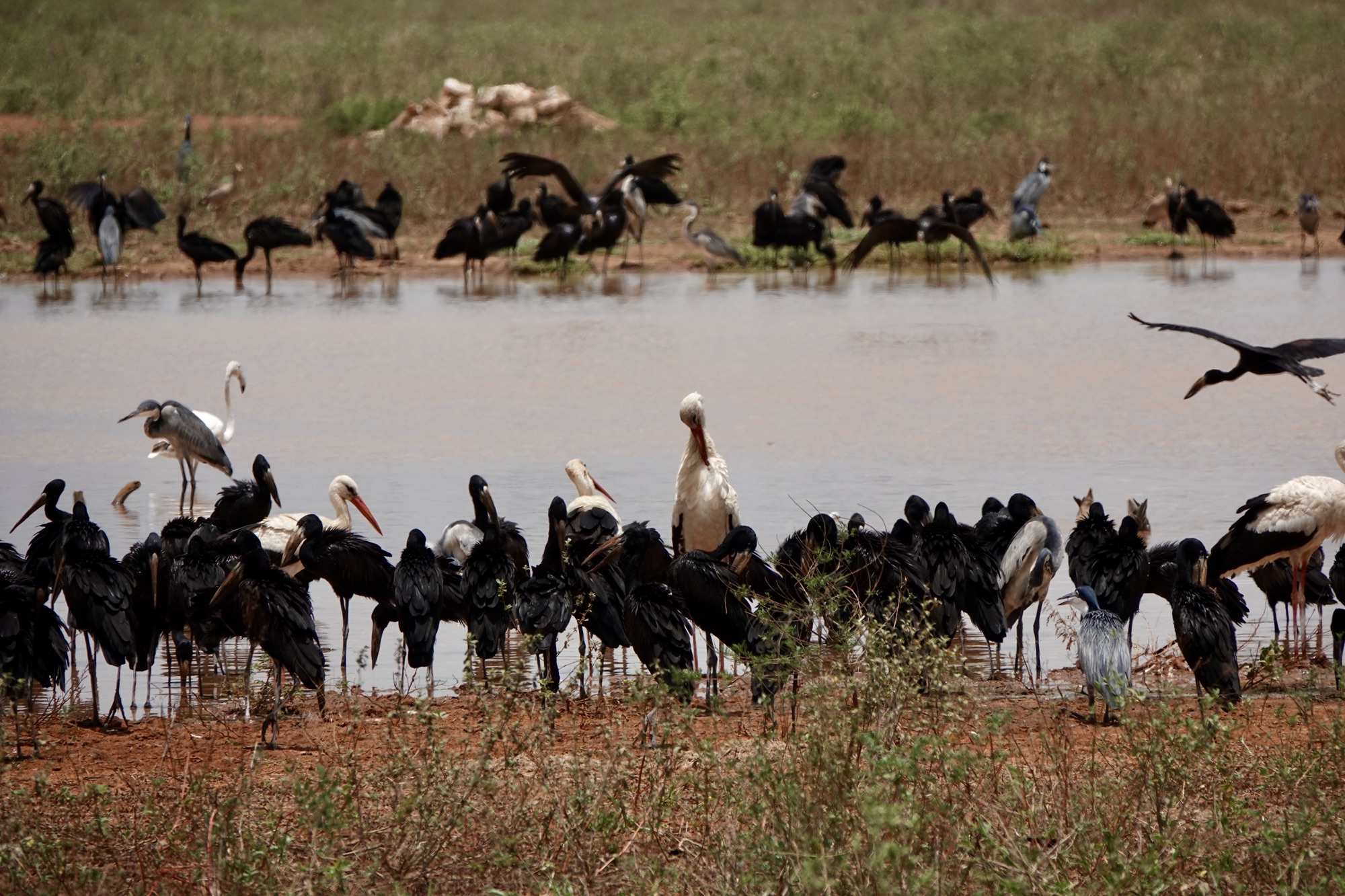
3:10 p.m. Another watering hole with herons and storks.

3:30 p.m. More elephant families.

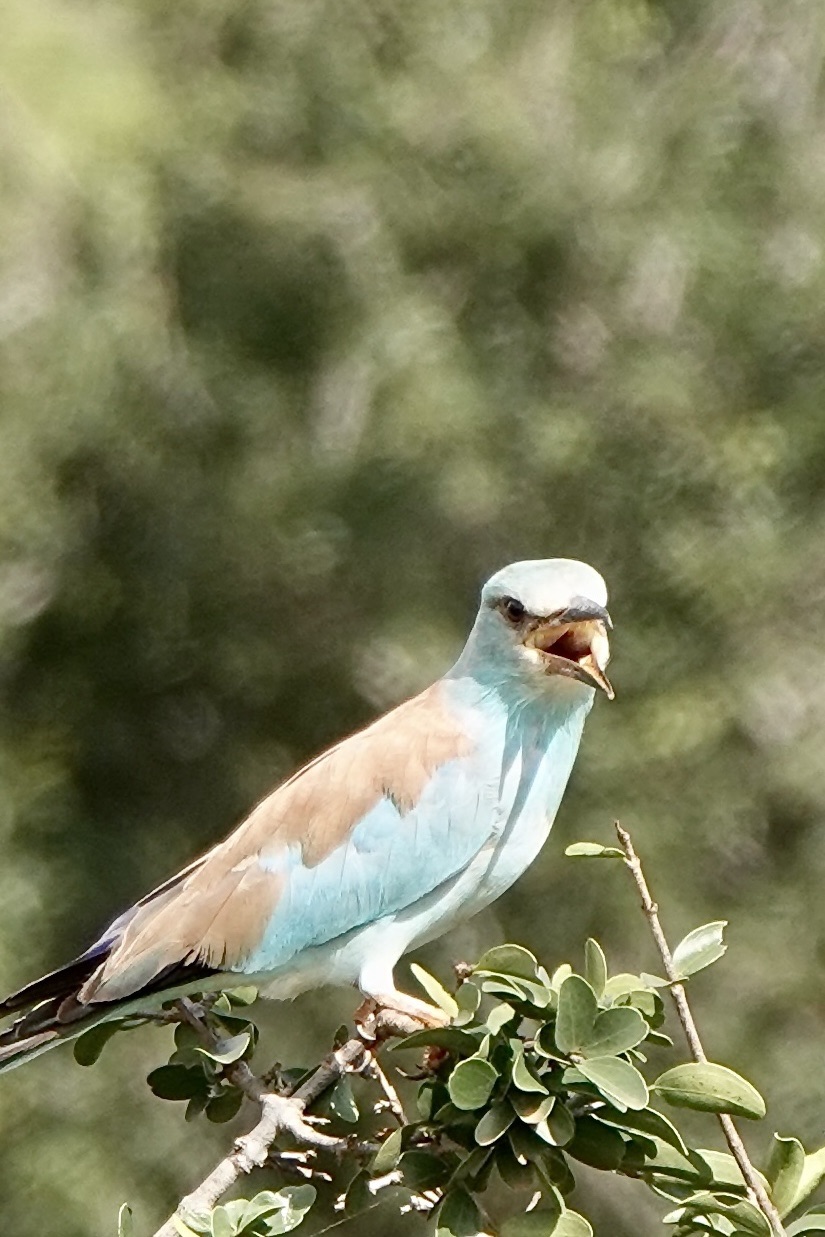
We got a final goodbye from a Roller as we exited the park.
The journey should have taken about two hours from the park gate, getting us back to the ship by 5:30 p.m.
Instead, we had an exciting THREE AND A HALF hours after leaving the park.
Traffic outside Mombasa is like nothing we have seen anywhere else in the world, including Jeddah Saudi Arabia and Cairo Egypt. First, there are NO stoplights, stop signs, yield signs, street signs (with the exception of highway exits), or – in most cases – lane markings. Second, on any given two “lane” road, the traffic is only one way – until it isn’t. Vehicles both big and small simply drive full speed beside each other until oncoming traffic appears, and then someone moves over to make space. If traffic is moving in 3 lanes, one is “usually” reserved for traffic going in the opposite direction.
As if that isn’t harrowing enough, two more factors come into play: more transport truck traffic than we’ve ever seen (between the Port of Mombasa and Nairobi and the landlocked African countries that the port also serves), and ongoing construction involving long stretches of dirt road.
Had we been in coach buses, we never would have reached the ship at all last night; we’d still be in a line of stopped trucks. But since we were in 4X4s, our drivers were able to regularly simply go “off road” onto surfaces far more uneven than what we’d driven in Tsavo. At one point, just before our driver took us into a 45 degree slope, he looked back briefly and calmly said, “hang on”. Hakuna matata! No worries at all.
We all made it back safe and sound – if a little rattled and shaken – just after 7:00 p.m.
Exhausted barely described us, because the day was exhilarating too.
Our third and last day in Kenya will be a relaxing one.


Wow, the roads and traffic into Mombasa sounds incredible lol, but glad to hear the safari and all those lovely experiences were worth the tiredness.😊
LikeLiked by 1 person
Fabulous adventure
LikeLiked by 1 person
what wonderful pictures by Ted! And what a memorable day from start to finish! I loved reading your account of the day with the timestamps. And thanks so much for identifying all the critters! I think you have chosen wisely on the excursions from Mombasa to get the best overall experience of the region.
LikeLiked by 2 people
Wonderful — I’ve never been on safari — unless you count a couple of hours in a very small game park in Senegal (no big cats to not see!) — we did see rhinos about 8 ft away from our vehicle — just hanging out, lying down together! I have a picture of my daughter, age 4 or 5 out of the vehicle trying to get closer to some giraffes… Yes, life has been interesting, but thankfully we are still in one piece! Glad you had some Tusker and the experience of that lovely looking lunch spot.
LikeLiked by 2 people
You shoud, try it out some time- we in Uganda will be than happy to give you most unforgetabble safari adventure
LikeLike
Thank you for sharing your amazing day! The photos are awesome, you certainly saw a lot! I loved seeing all the animals but the colorful bird close-ups were the “extra”!
LikeLiked by 2 people
The birds were definitely a highlight for Ted too!
LikeLike
What a fabulous day that was. The abundance of creatures that you came across was simply “astoundishing”! Great pictures, Ted.
LikeLiked by 2 people
Thank you for this wonderful account and great photos which must have taken you almost thirteen hours to put together! But your excitement at this adventure certainly comes across, so thanks for taking me along.
LikeLiked by 2 people
Glad to have you with us!
LikeLike
What an amazing and exciting day!
LikeLiked by 2 people
Wow! Just Wow! 😮
Thank you for sharing!
LikeLiked by 2 people
Wow! Just Wow! 😮
Thank you for sharing!
LikeLiked by 1 person