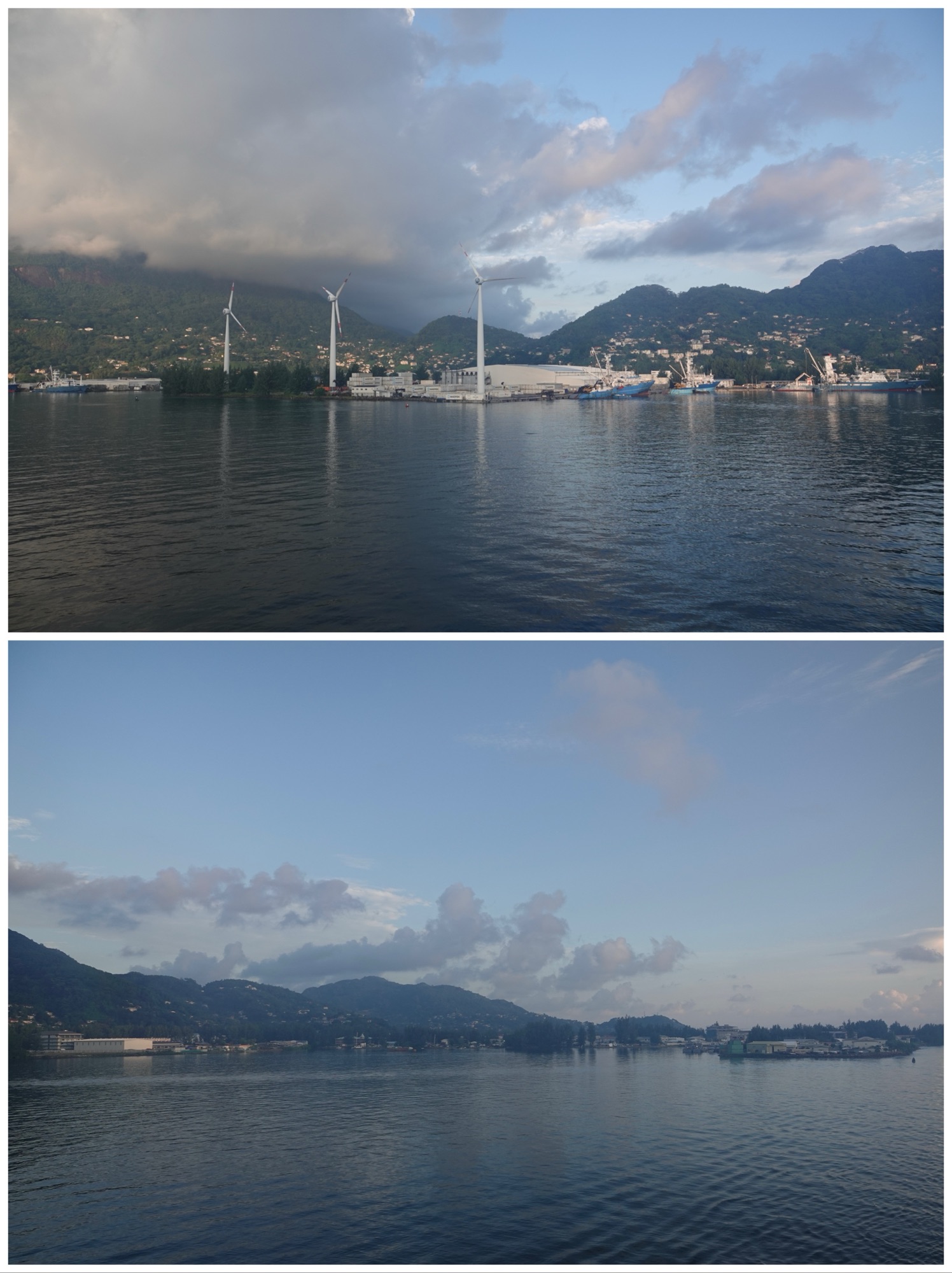
The Republic of Sychelles, like the Maldives, is a multi-island country consisting of a 115-island archipelago in the Indian Ocean. It is the smallest country in Africa, the continent’s 1st ranked democracy, and is the least populated, but has the highest GDP per capita of any African nation.
The islands were uninhabited until the 16th century when Vasco da Gama and his Portuguese armada sighted them, but it was not until 1609 that a crew of a British East India Company ship actually set foot on the islands. After being simply a transit point between Africa and Asia, and occasional pirate hideout, the French laid claim to them in 1756 and named them after Louis XV’s Minister of Finance, Séchelles. In order to prevent an un-winnable sea battle in 1794, the French surrendered the islands to the British, who took official control in 1814 via the Treaty of Paris. Independence was achieved in 1976 – but the culture still reflects French influences as well as British, African, Chinese and Indian ones, in recognition of the fact that the first settlers were Europeans, and enslaved Africans and East Indians.
Independence hasn’t been all smooth going. There have been several coup attempts (and successful coups), and strongman presidents, almost right up until the last election in 2020. Nonetheless, by the time of that 2020 election Seychelles was ranked as the least corrupt country in Africa.
Tourism is incredibly important here, and the Seychelles were for many years the playground of the rich and famous, but the government is actively working to reduce dependence on tourism by promoting agriculture, fishing, manufacturing, and off-shore finance.
We were in harbour today from 8 until 6, and our nine hour excursion was scheduled from 8:15 a.m. until 5:15. p.m. That’s about as full a day as can be planned.

Our tour destination was the Praslin & La Digue Islands, and the first place where Ted and I really felt that it was going to be worth going to a beach.
We began with a short bus ride to a marina where we boarded a 24-seat boat.

The hour-long cruise to to Praslin Island lived up to its description as “scenic”, but it was also at fairly high speed!

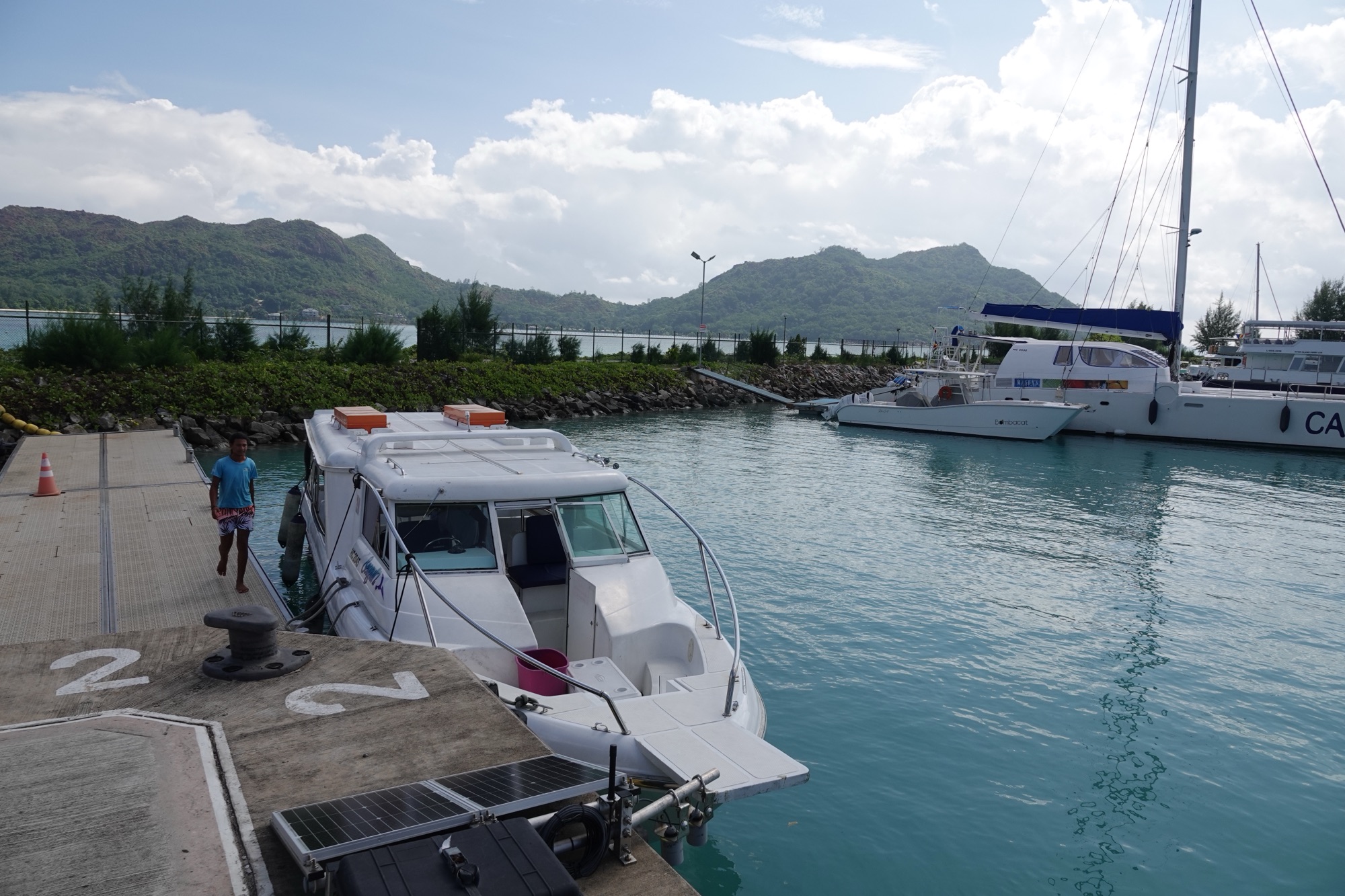
Praslin and La Digue are both granite islands, as are about 2/3 of the Seychelles; the rest (all uninhabited) are coral.
I hadn’t expected the granite to be so obvious. The coastline is a combination of white sand and huge rock formations smoothed by millenia of water.
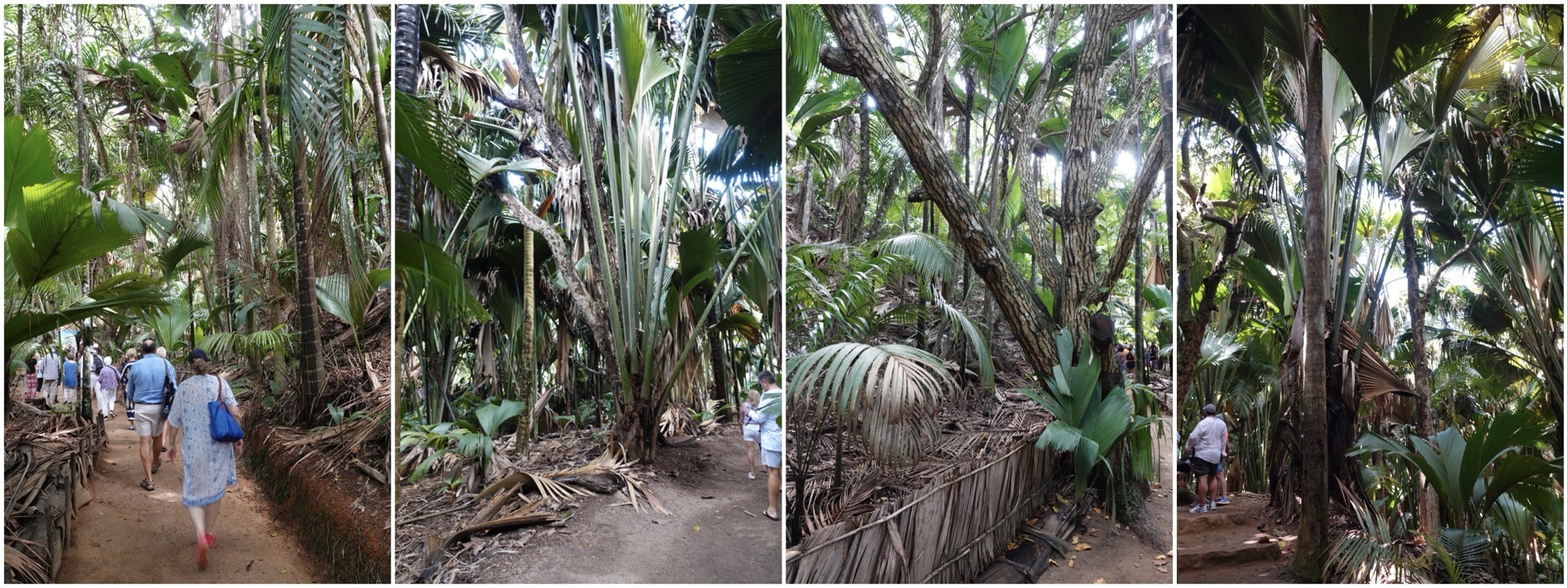
Another small bus took us through lush countryside to the Vallée de Mai, a prehistoric palm forest so unchanged that it has been designated a UNESCO World Heritage Site. It is home to many rare species of flora and fauna—some not found anywhere else on Earth—including the world’s largest collection of Coco de Mer palm trees. We entered through a tiny welcome centre with a café and restrooms, and not much else.

On about a one hour hike along trails carved out of granite – and with LOTS of stairs – our guide Davyna pointed out the many different palms. It really was amazing to be among palms ranging from shorter than us, to up to 30m/100 ft tall. Of course, our focus was on the coco de mer.
At one point, coco de mer fruits were harvested, but now they are a protected species.
We learned that they got their name from the fact that early explorers found them floating in the Indian Ocean, but could not determine where they grew; they surmised that they must grow on underwater trees – hence “coconut of the sea”.
They really are quite strange looking once the fruit is out of its shell.
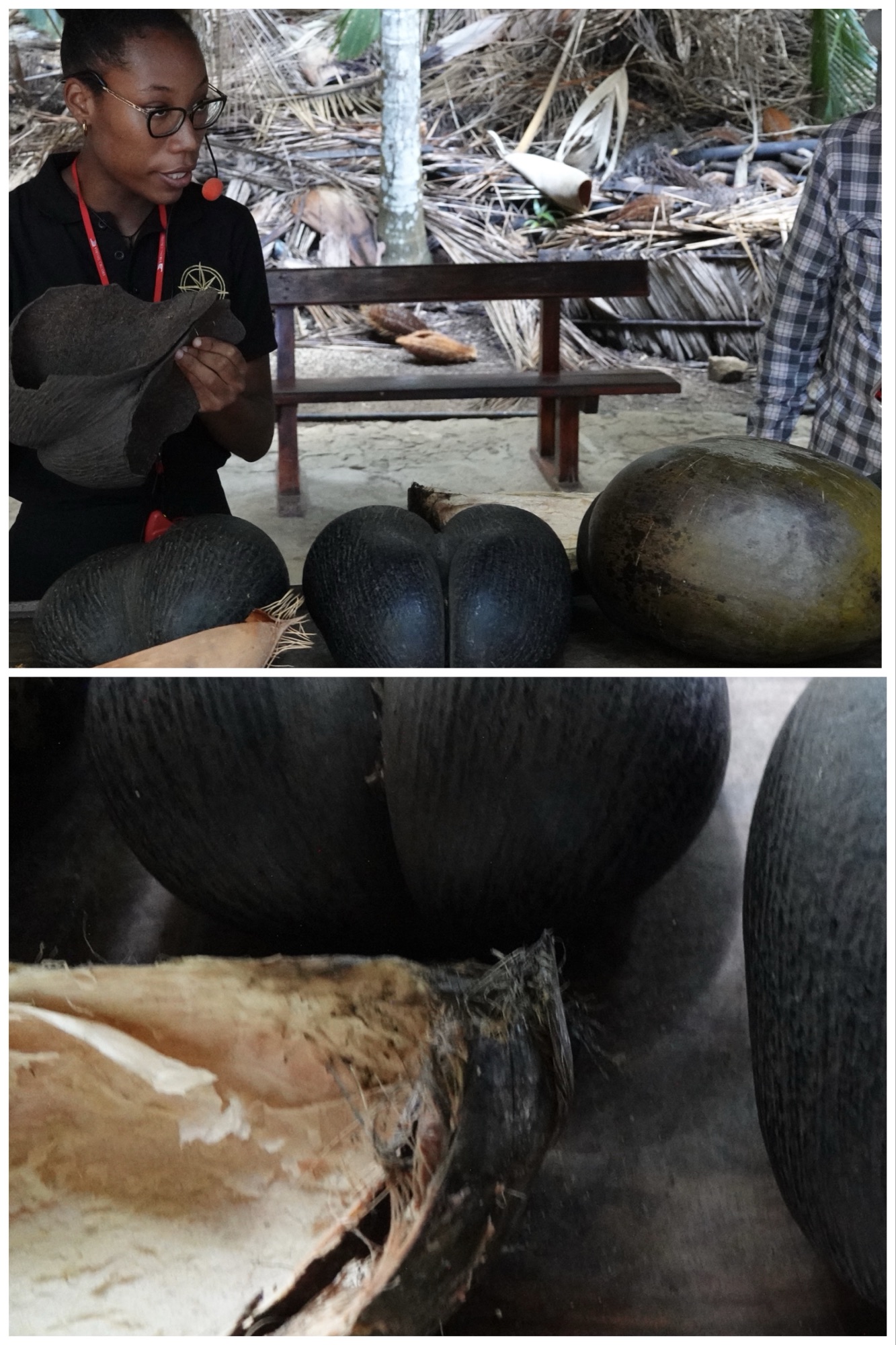
I knew they were the largest of the coconuts, but picking one up that weighed almost 10kg/22 lbs really reinforced that fact.

Our guide Daryana explained how, with the help of the wind and the endemic Seychelles day gecko, the coco de mer reproduces. Male coco de mer trees produce long, catkin-like inflorescences, which are structures that bear the male flowers and produce pollen.

Female trees bear the large, distinctive nuts, which are the seeds of the palm.

After our nature walk we got back onto the boat to cruise to La Digue Island for a buffet lunch of Creole cuisine.
The lovely ferry jetty on La Digue was a good omen.
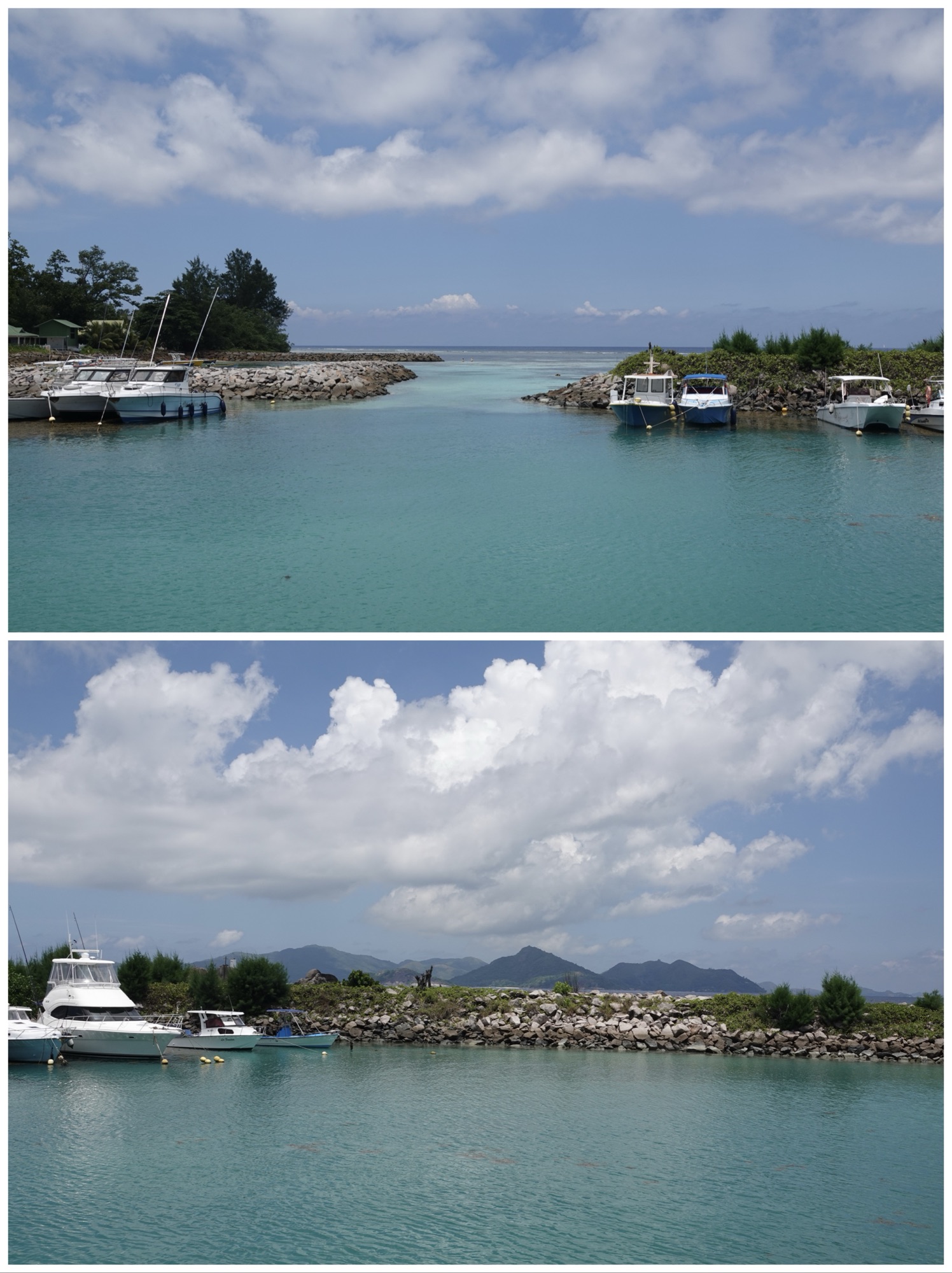
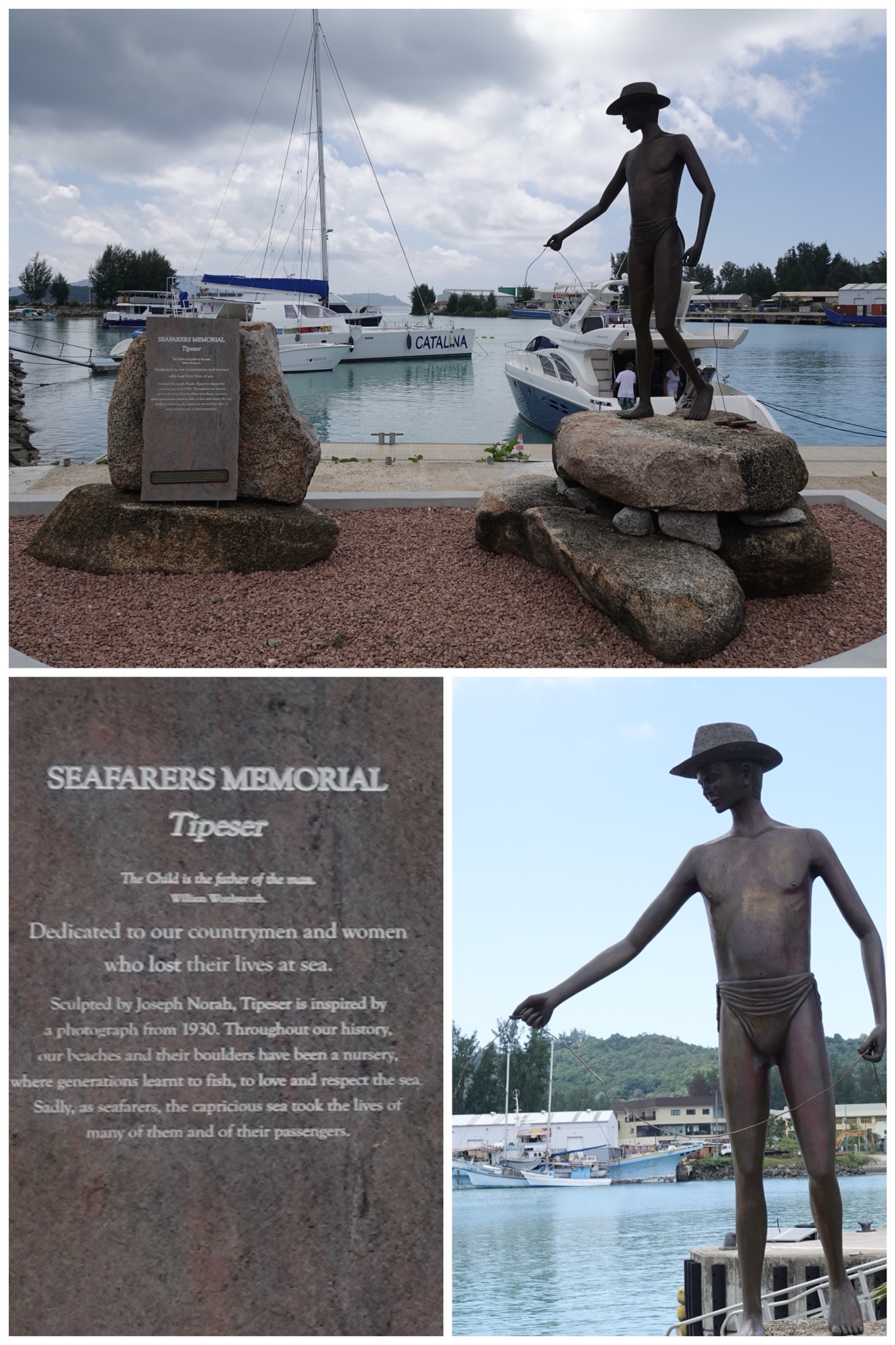
Hibiscus were in bloom everywhere.

So far we’d been on a bus and a boat. On La Digue it was an open truck, with local mahogany bench seating for 20 (including close proximity). I don’t think we’ve ever been in a vehicle before that had turned balusters before.

At our lunch venue, we got a first glimpse at the kind of beaches the Seychelles have to offer.
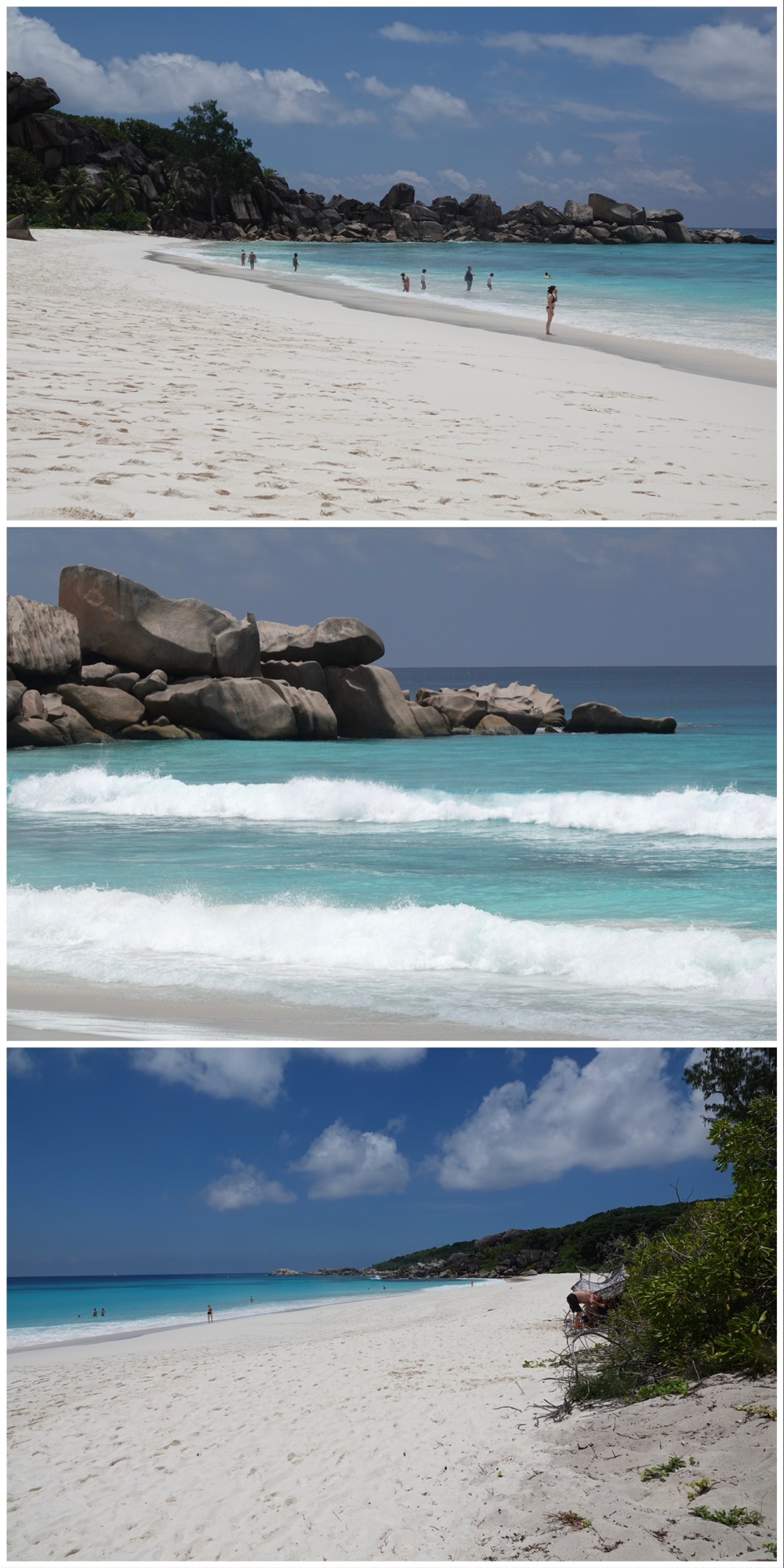
Then it was back into our truck for the transfer to a coconut plantation in L’Union Estate Park, where giant tortoises roam the vanilla fields around a historic house.
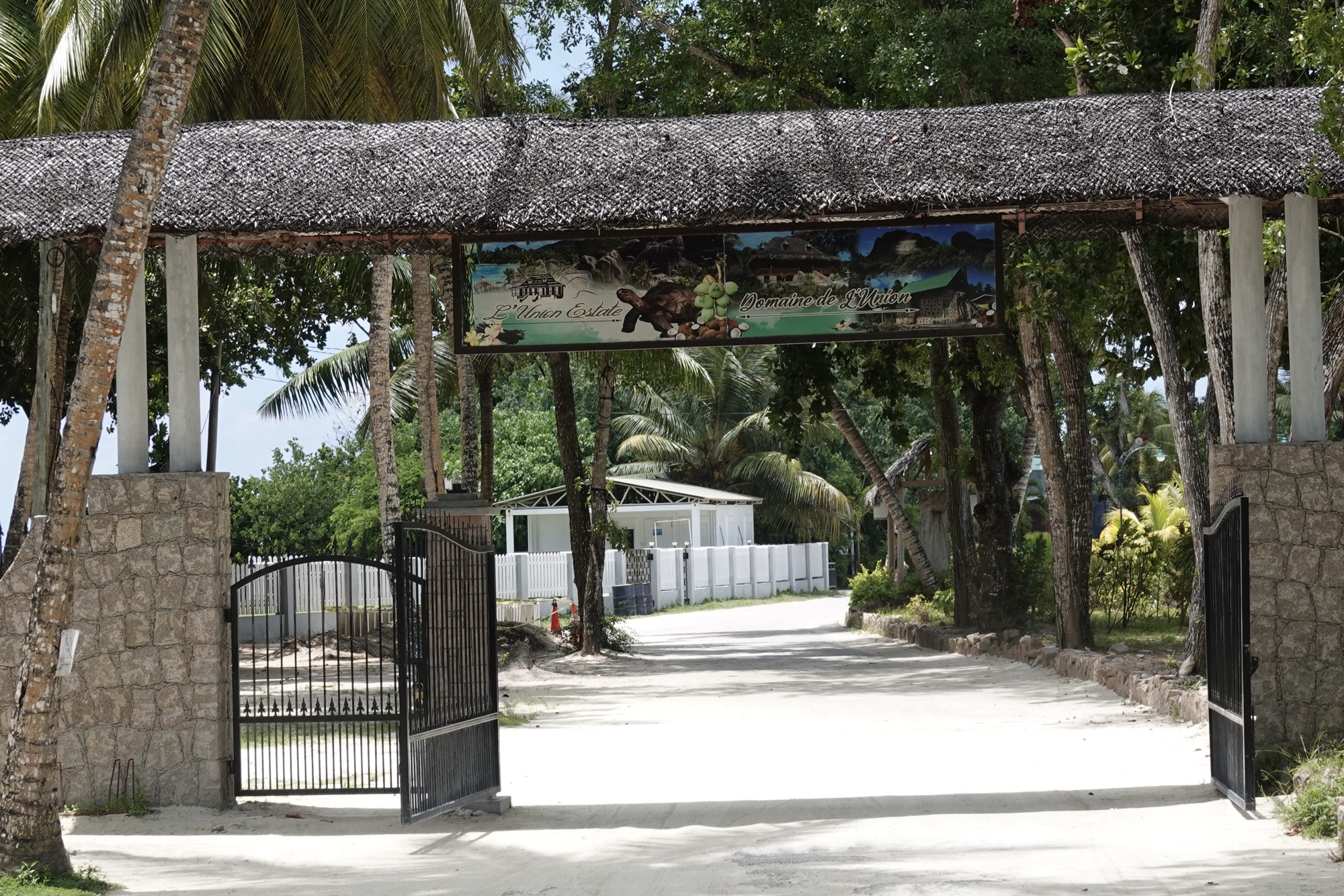
We got a demonstration of how coconuts used to be hand-processed for milk and oil, leaving behind a residue that is basically shredded coconut, known as copra, which is used in animal feeds … or, Daryana quipped, in Bounty bars.

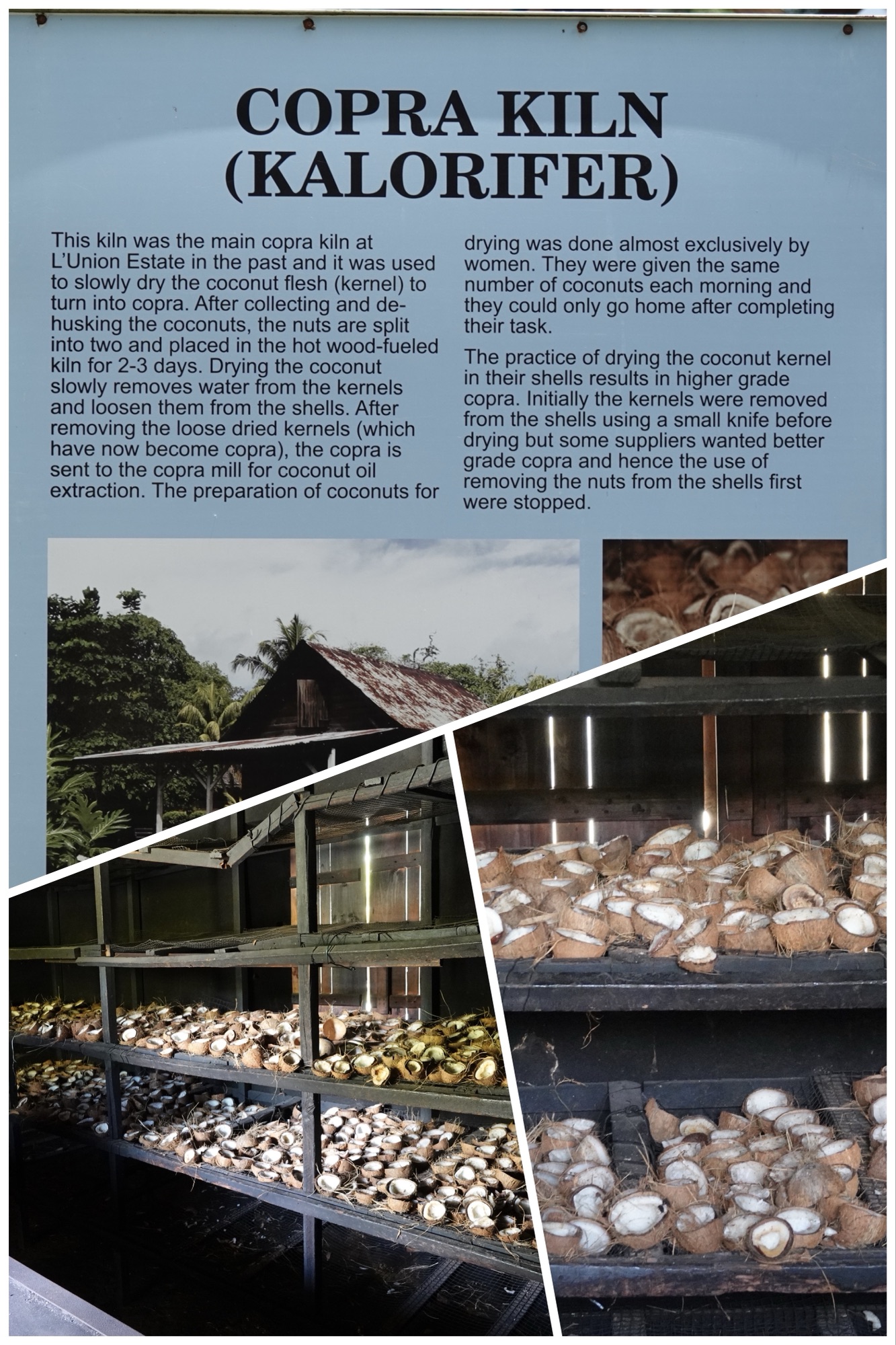
Coconut is no longer processed in these labour intensive ways, so the plantation buildings are mostly a history teaching tool.
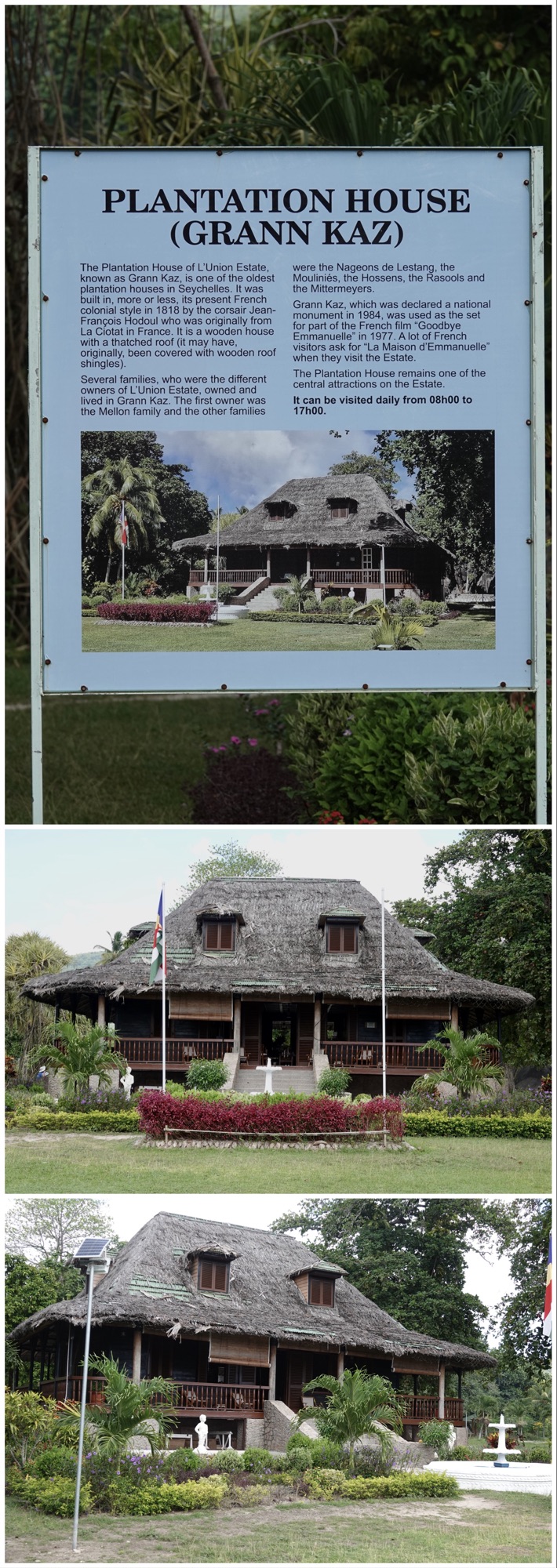
A little further into the plantation were vanilla bushes trained to,grow like grape vines.
And then… giant Aldabra tortoises, some of the largest tortoises in the world and endemic to the Seychelles. We were allowed, under supervision, to feed and pet these gentle giants.


The Seychelles are rightly renowned for their beaches. As our last stop we were taken to Anse Source D’Argent, arguably the country’s most famous and most picturesque beach There was “nothing” to do there but enjoy free time to unwind on the pristine white sand, watching and listening to the clear turquoise waters lap the shoreline.
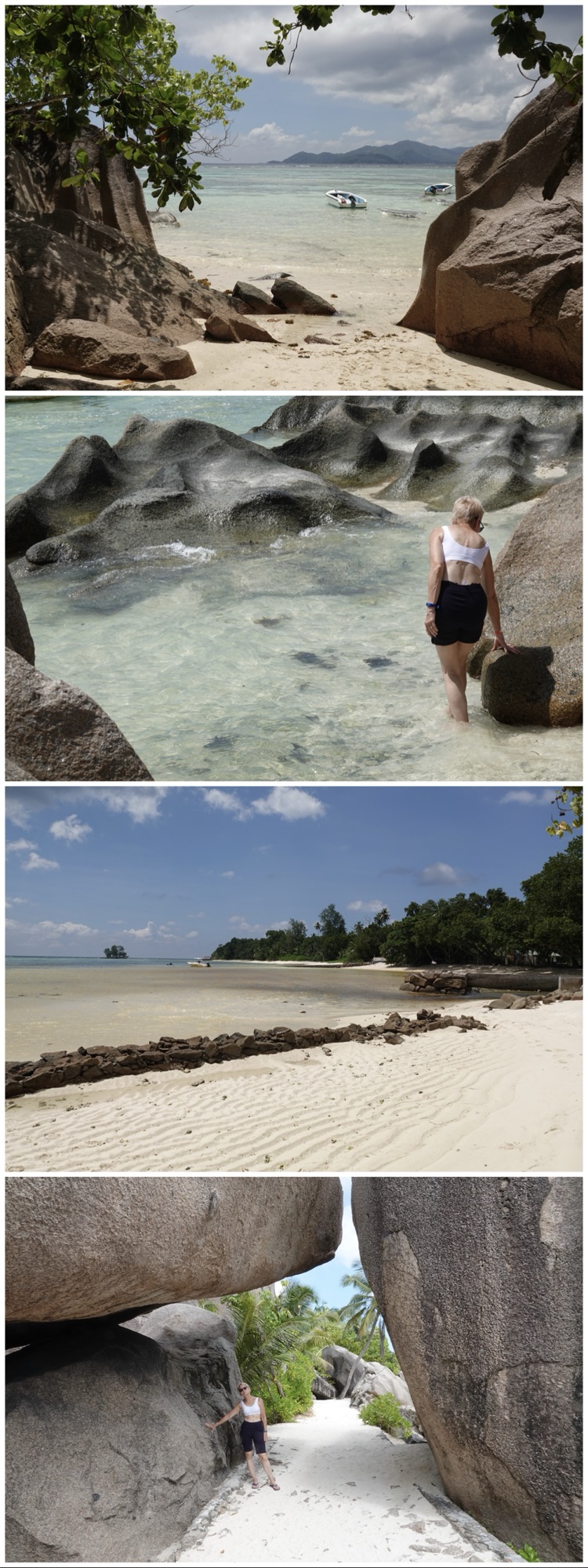
Daryana shared the story of how the beach got its name. In French, “argent” means both “silver” and “money”. There’s no silver on these islands, but apparently a colonial settler building a home here found a buried jar of coins near the beach!

In addition to all that gorgeous scenery, Ted also managed a few wildlife photos, some of them of species found nowhere else.

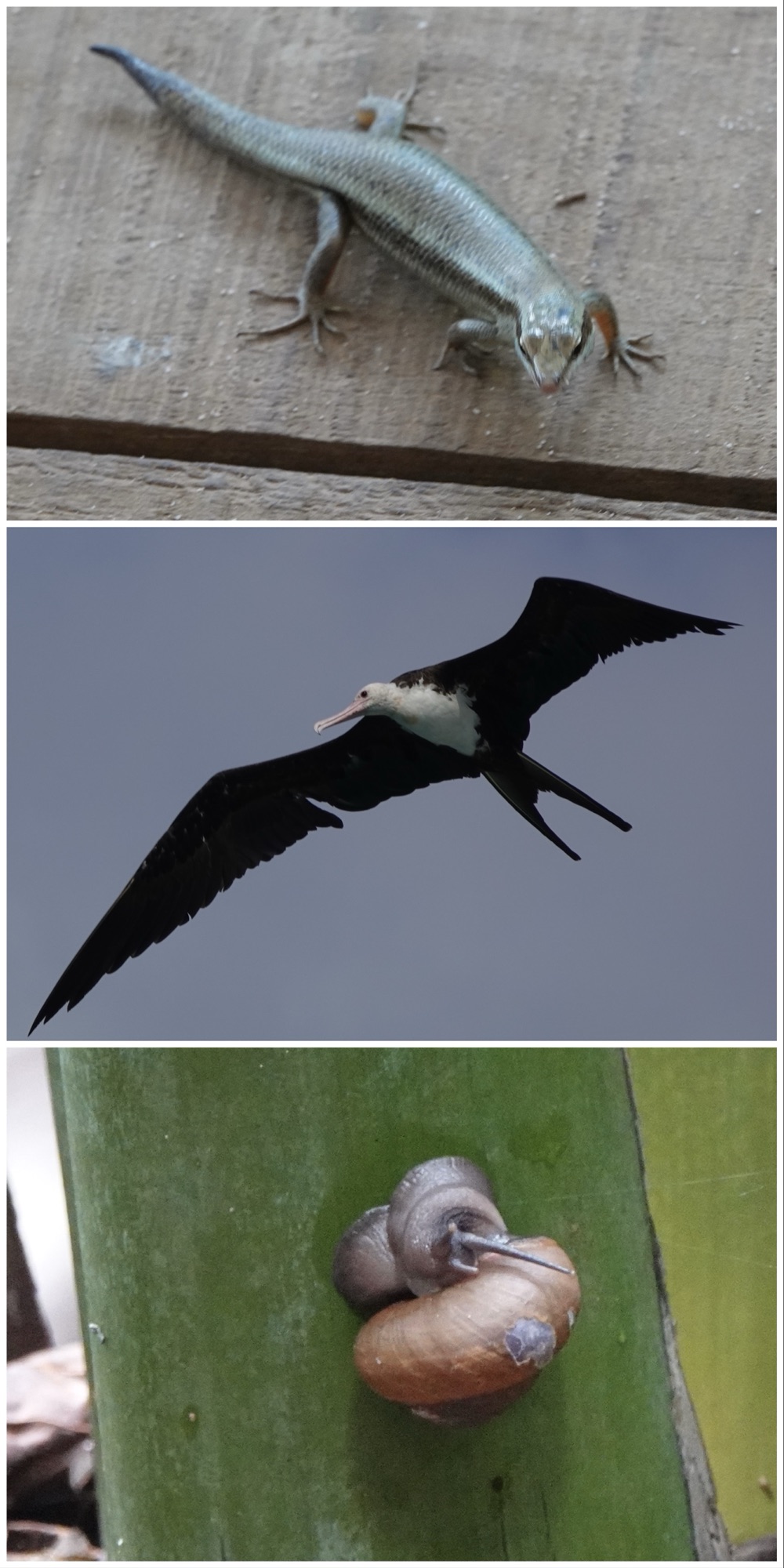
The Seychelles were heavenly. And despite the very tempting alliterative tongue-twister, there was no one selling seashells.


I haven’t been commenting but reading every day. As usual, I am SO enjoying your blog! Thank you so much!
LikeLiked by 1 person
1981 remember meeting à 150 year old tortoise. What about coco fesses?
LikeLike
Coco fesses?
LikeLike
That excursion looks fantastic, would you mind sharing its name for when we go in 2 years? Thanks
LikeLiked by 1 person
It was simply called Praslin and La Digue Islands
LikeLike