Today was most definitely a “me” day, focussed as it was on architecture, which has become a bit of a new passion since we’ve become nomadic. I may not want to own a physical building, but I’m slightly obsessed with cathedrals, shrines, temples, libraries, museums, PALACES, bridges – and even architectural ruins. Over our recent years of nomadic travel, poor Ted has been asked to take thousands of pictures of cherubs and gargoyles; floor and ceiling tiles; moulded stucco, carved wood, and sculpted marble; stained and etched glass; frescoes and murals; and light fixtures of every description.
Today was one of those days.
Geoffrey Bawa was the main proponent of “tropical modernism,” an architectural style based on the availability of local materials and reflecting the needs and traditions of a local population. He is widely regarded as one of the most influential Asian architects of the 20th century.
Bawa initially trained as a lawyer, but his extensive travels around the world solidified his interest in architecture. He not only gathered ideas, but also artwork and artifacts from around the world that he incorporated into his own personal space. At the age of 35 he enrolled in London’s Architectural Association School of Architecture.
Bawa never married. Upon his death a 7 person trust was created to maintain his properties and legacy.
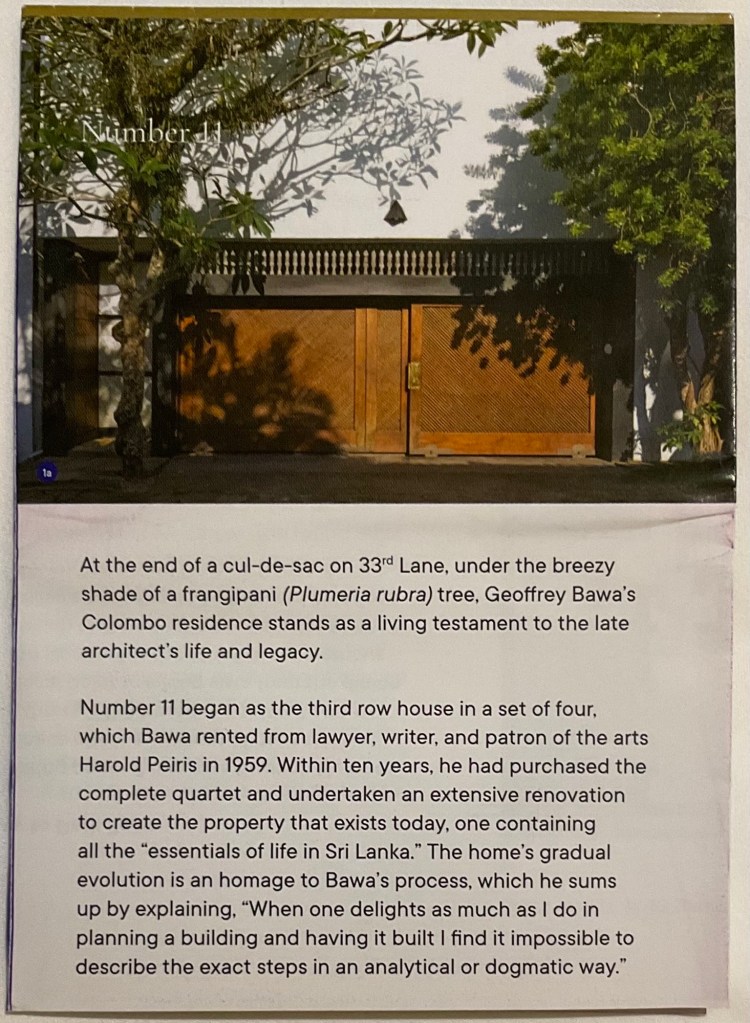
Bawa’s former residence (eupemistically referred to simply as a “bungalow”) in Colombo, built during the 1960s through the artful addition of different units, perfectly reflects Bawa’s principles.

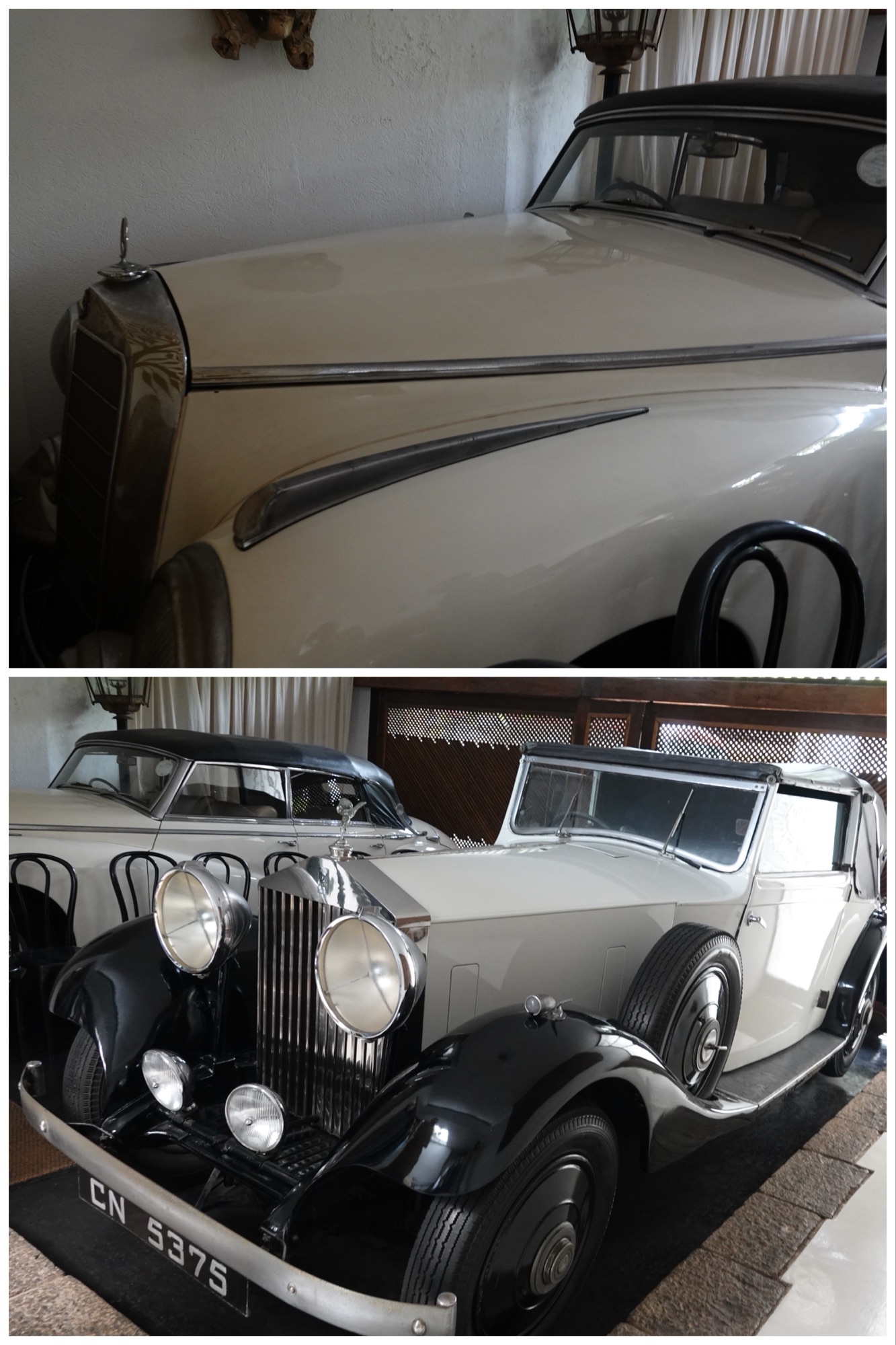
Our small group of just 14 people got a private tour of the residence. We entered through the 2-car “garage”, which still houses two spectacular vehicles: a 1953 Mercedes Benz Cabriolet, and a 1934 Rolls Royce 20/25 Connaught driphead Coupé. Such was Bawa’s love of black and white that he had the originally silver Rolls repainted white. He also apparently owned a series of Dalmatian dogs!
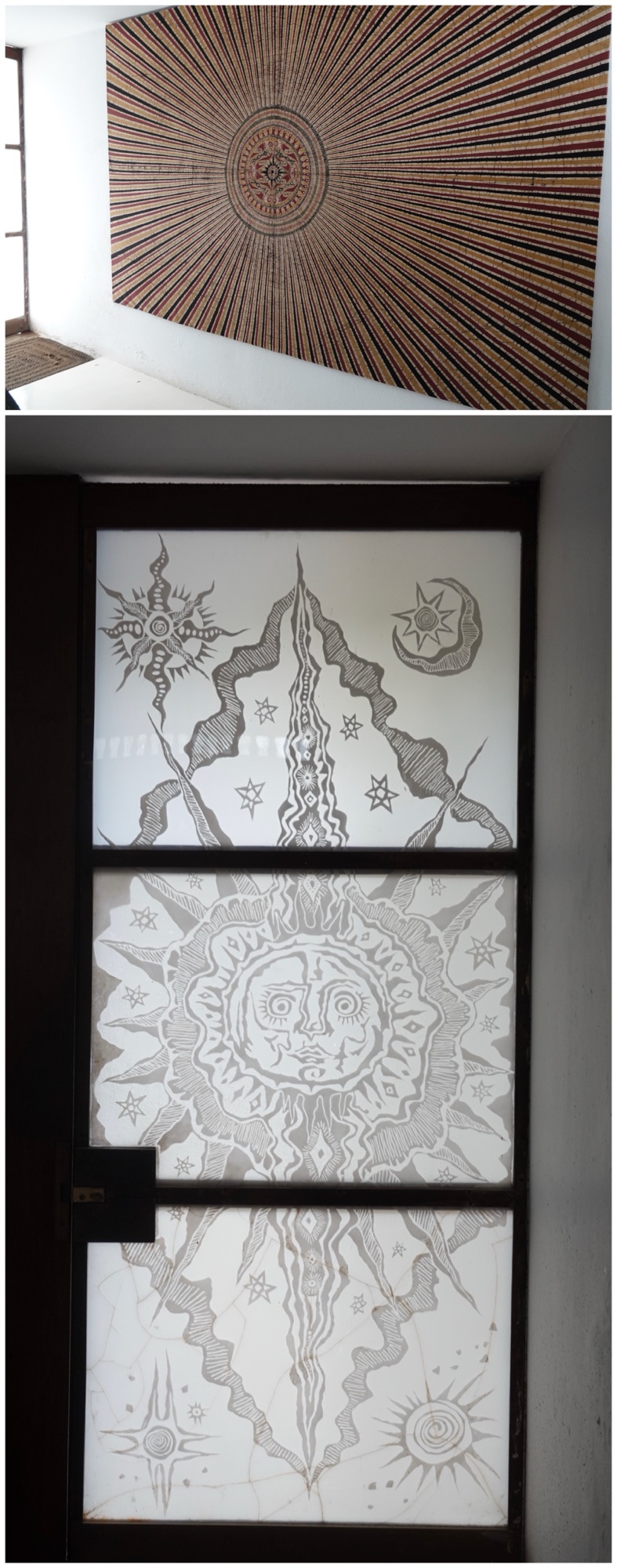
Despite the presence of Bawa’s vintage automobiles, it’s hard to think of a space as a garage when the access door is an acid-etched acrylic work of art by painter and sculptor Laki Senanayake, and pristine white wall is adorned with a huge sunburst batik by Ena de Silva and a painting (not pictured) by Belgian artist Saskia Pintelon. The artists whose works feature in Bawa’s home were often his closest friends and collaborators.
What I fell in love with about Bawa’s architecture was the way he brought the outside world in. In every single space, whether a room or a hallway, he found a way to incorporate natural light and air.
The long entryway to Bawa’s living space beckons visitors to walk in the direction of the light.

All the walls are painted white. It takes annual repainting with latex paint to prevent the blistering and peeling that happens so quickly in this humid climate, but the white is a perfect backdrop for Bawa’s collections.
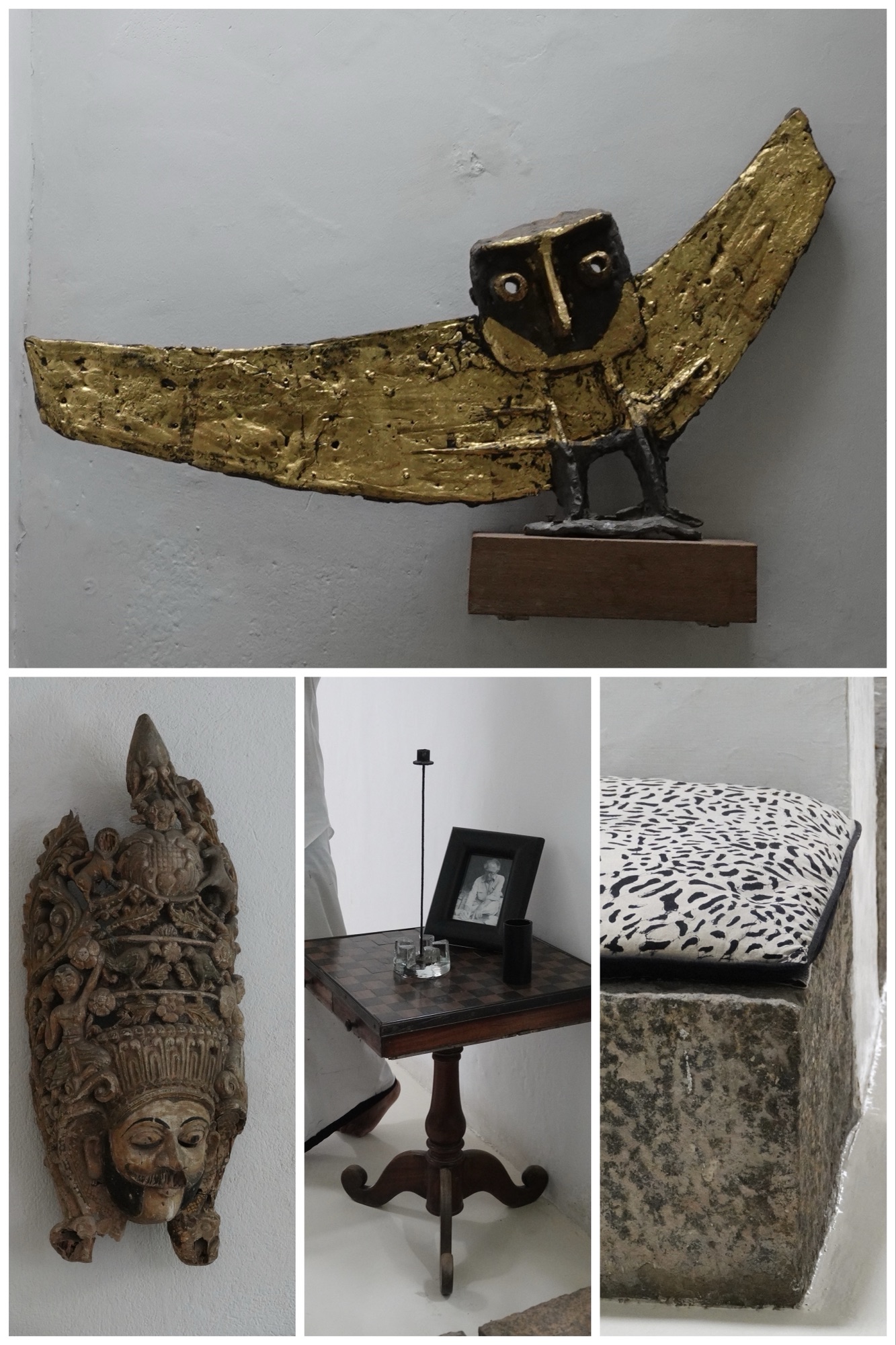
Bottom L to R: a sculpture from India, an inlaid checkers table chosen not for its utility (Bawa played neither chess nor checkers) but for its beauty, and a stone ottoman upholstered in a batik “Dalmatian” print by Ena da Silva. Apparently it was a favourite resting spot for three successive Dalmatians, all named Leopold.
The property was designed so that even in rainy season nothing would flood. The flow of water was channeled, through the use of rooflines, to flow down stone walls as a water feature, or be directed to flow gently into pools. Our guide to the site explained that the only downside was mosquitoes.
Similar to what was done with rainwater flow, natural light was also strategically aimed to enhance each space. Light reflected on still water, and flowed in through open alcoves, louvered windows, etched glass doors, and archways.


Around the corner was a small seating space. The concrete table with its papaya leaf imprint looks deceptively simple, but is a painstaking process to get right. Just visible on the left side of Ted’s photo is Bawa’s reinterpretation of Mies van der Rohe’s famous “Barcelona” chair, reupholstered in a textile by Barbara Sansoni (that name would come up later in our tour) in a striped pattern called “Jak and Ebony”, which are two popular types of timber in local carpentry. In addition to being an architect, Bawa also designed furniture – and replicated or reimagined established furniture designs – for (among others) the Kandalama, Bentota Beach, Jetwing Lighthouse, and Triton hotels.

Once we entered what were Bawa’s private living spaces (bedroom, sitting room, dining room) we were not allowed to take pictures. Those spaces have all been preserved exactly as they were when he created them in the 1960s. Evidently he felt no great need to change them, although he lived there on and off for decades. Piles of books in both the bedroom and bathroom, two huge stuffed animals (a plush Saint Bernard and lion), and clear blow-up plastic chair with a red ottoman attest to a man with eclectic taste who did not have to curtail it for anyone. He also didn’t have to curtail his bad habits. Apparently he smoked 100 cigarettes per day and drank more than 20 cups of coffee – but only an “occasional” gin and tonic or an evening arrack with ice on his rooftop terrace … and yet he lived to be just a couple of months short of 84!
Bawa’s 2-bedroom guest suite has been converted into a hotel suite, which rents for about $400USD per night. That includes breakfast; there is a full year waiting list.
We were lucky. The previous night’s guests had checked out early, so we were able to see and photograph the suite.
Entry is up a white painted staircase and through a hammered aluminum door created by artist Ismeth Raheem. Bawa had an elevator, but it is no longer in use.

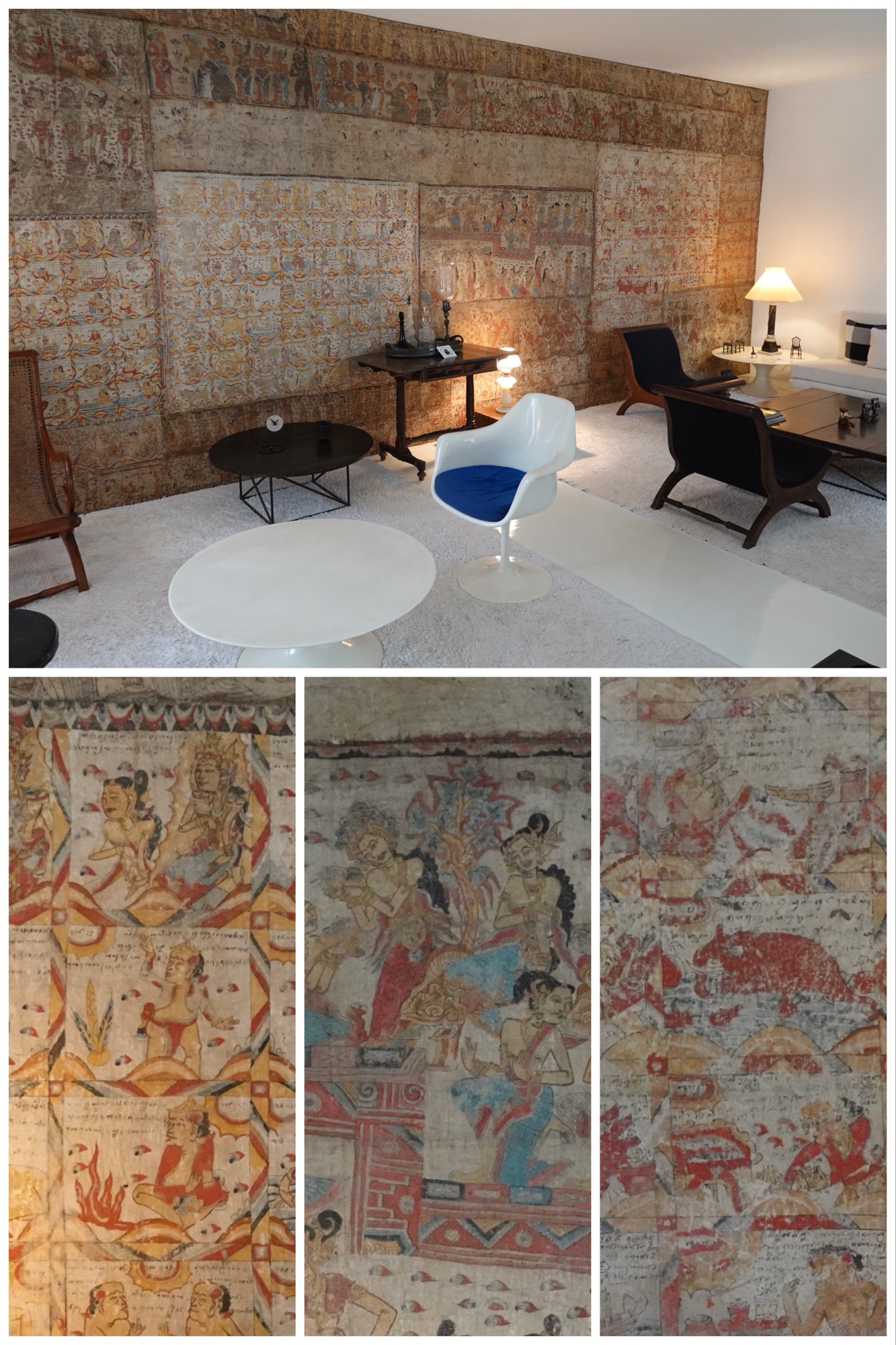


Up one more set of winding stairs and we were in the rooftop terrace, useable by hotel guests as well. The large terrace overlooks 33rd Lane and the back yard of the Indian Ambassador’s residence.

One of the things I loved most about today’s tour was how cohesive it was. Rather than try to fit in several topics, it really did focus in on Geoffrey Bawa and his legacy.
Even our lunch stop added to the experience. We ate at the Galleries Café, which was located in Bawa’s old offices.
The venue was stunning.
We were immediately struck by the design of the koi pool in the entrance. It was open to the sky, but the adjacent rooflines were angled in such a way that if it rained, the water would flow in a sheet directly along the centre of the pool.


The black and white theme, open spaces, and natural light made the café both beautiful and comfortable.

Even the tableware fit the theme, and our lunches were also beautifully plated.

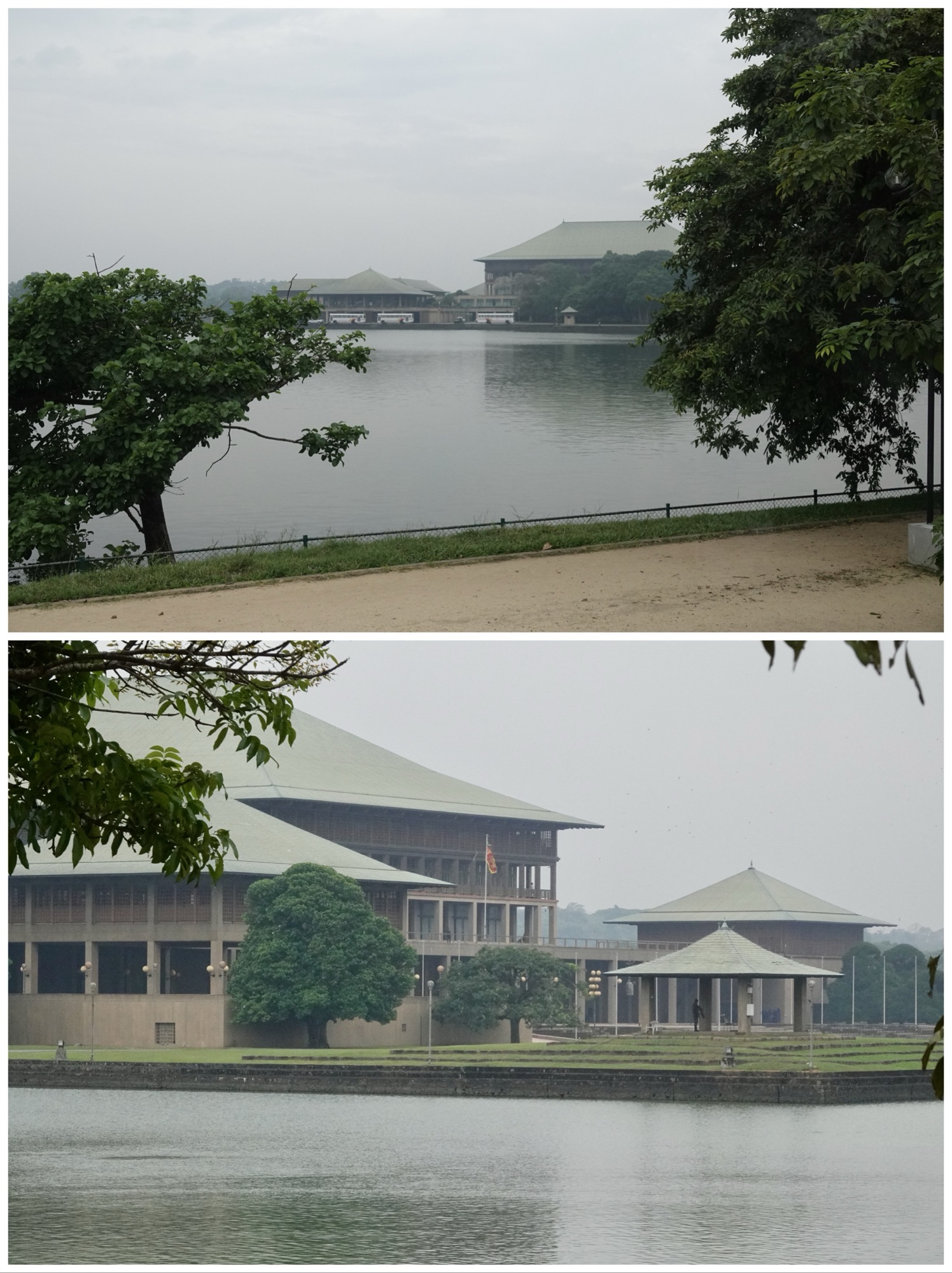
As lovely as Bawa’s home and office were, his crowning achievement is considered to be the Sri Lankan Parliament buildings. They are definitely not like any parliament building we’ve ever seen. Instead of an imposing stone edifice in the centre of a city and either surrounded by formal gardens or looming over an impressive square, this is an elegant complex of copper-roofed pavilions built on an artificial island! The style is anything but European/colonial – its simplicity, clean lines, bright interior, and natural materials perfectly suit Sri Lanka’s climate. We could see why it is considered a masterpiece of modern regional architecture.
Unfortunately, we really couldn’t get close for good photos. The lengthy civil war has left a legacy of caution: the area is surrounded by a huge natural sanctuary, a lake that boasts giant crocodiles, an armed military guard, and an enforced 300m perimeter. Only government workers and visitors with pre-approved passes get closer.
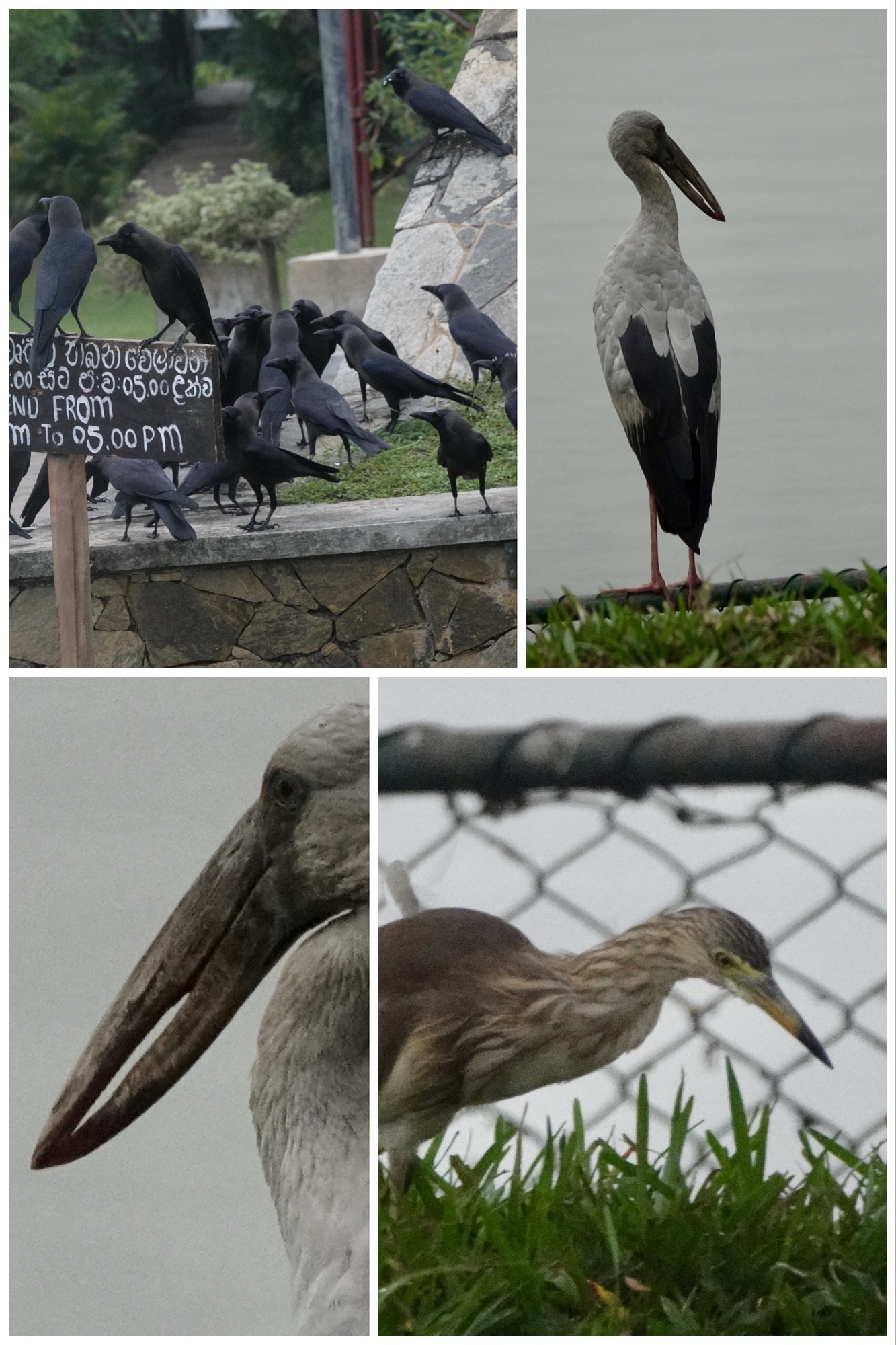
We did, however, see a lot of crows, an open-billed stork and an Indian pond heron.
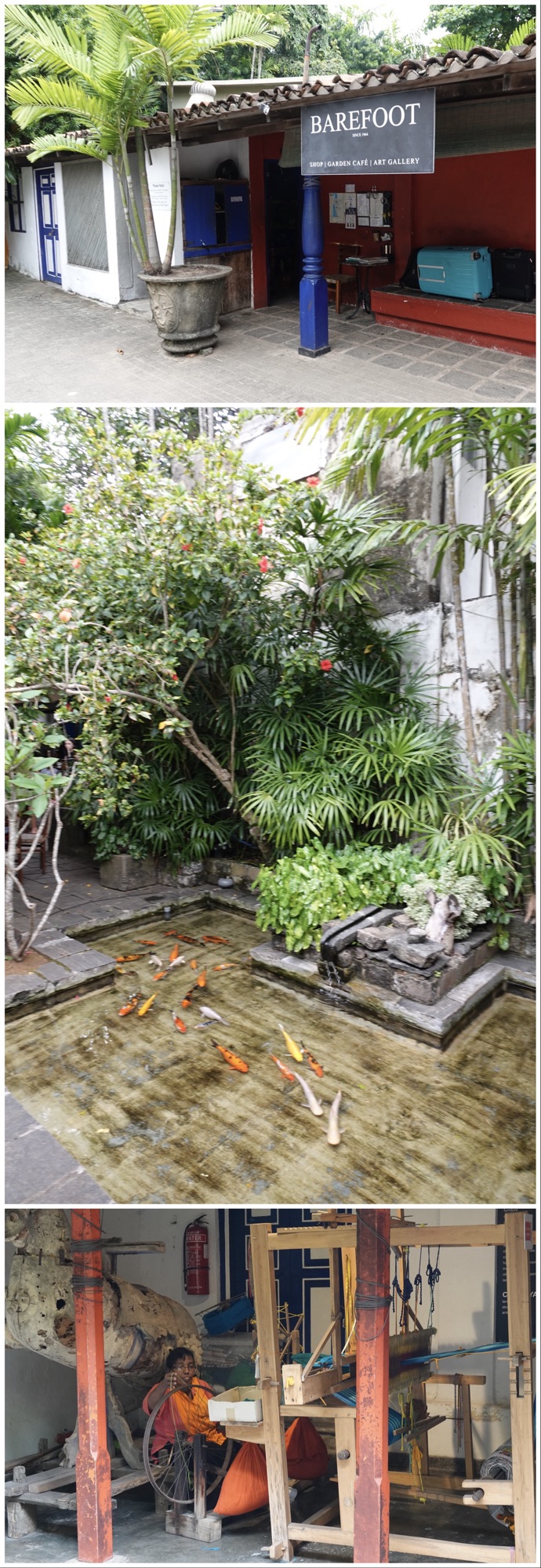
Our tour ended with a visit to Barefoot, a local business that designs, hand-weaves and exports textiles. Even that had a Bawa connection. Barbara Sansoni, the designer who opened it as a boutique in the 1960s, was a close friend (and the creator of the textile covering the Barcelona chair in Bawa’s home). No photos are allowed inside the shop, but it is full of brightly hued textiles, gorgeous modern interpretations of traditional Sri Lankan clothing styles, handicrafts, Ceylonese teas, and art-themed souvenirs.
On the bus ride home, we passed by one more Bawa building – a Buddhist “confessional”.

It was a wonderful themed excursion, that allowed an in-depth view into a single topic.
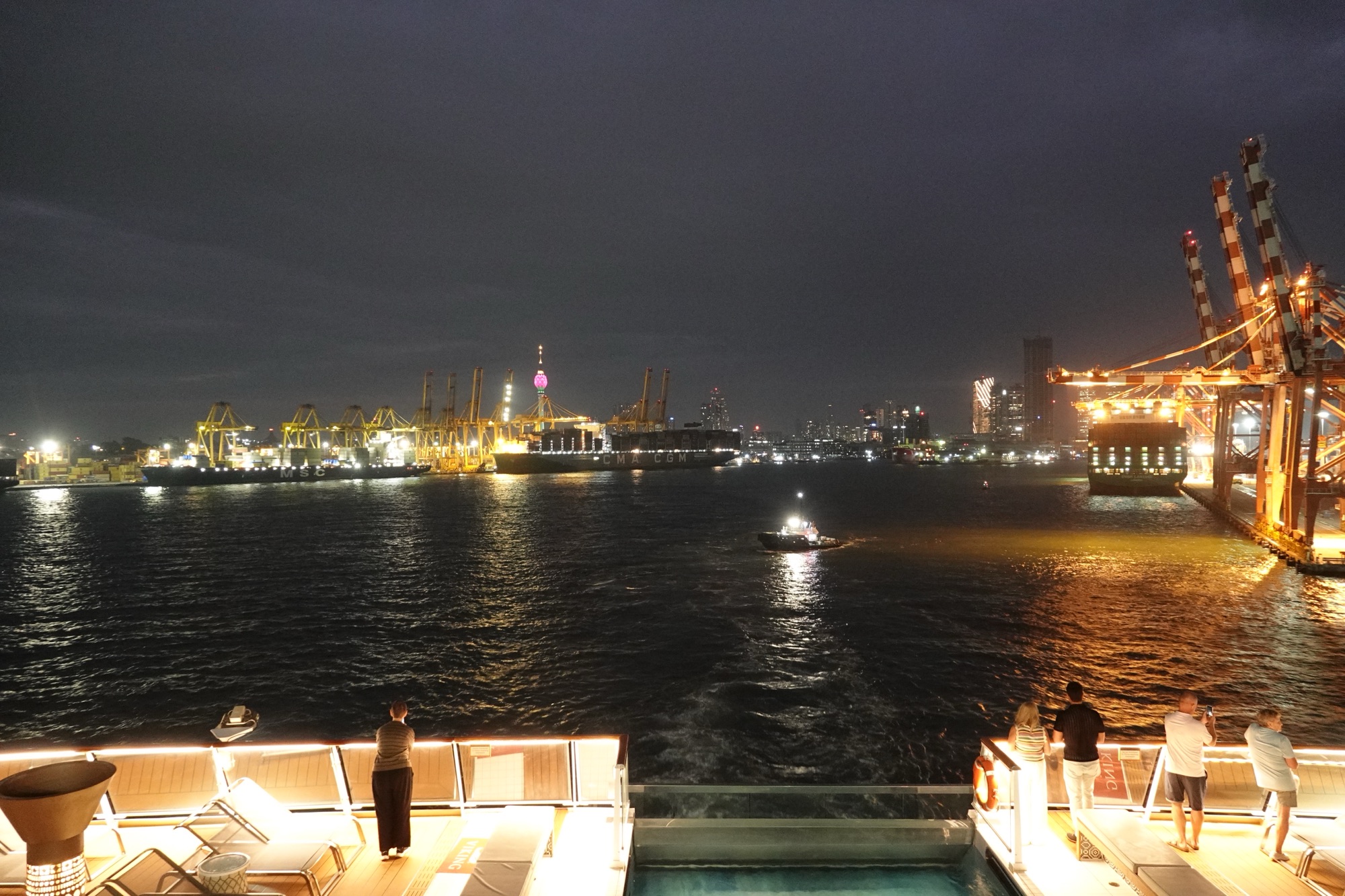
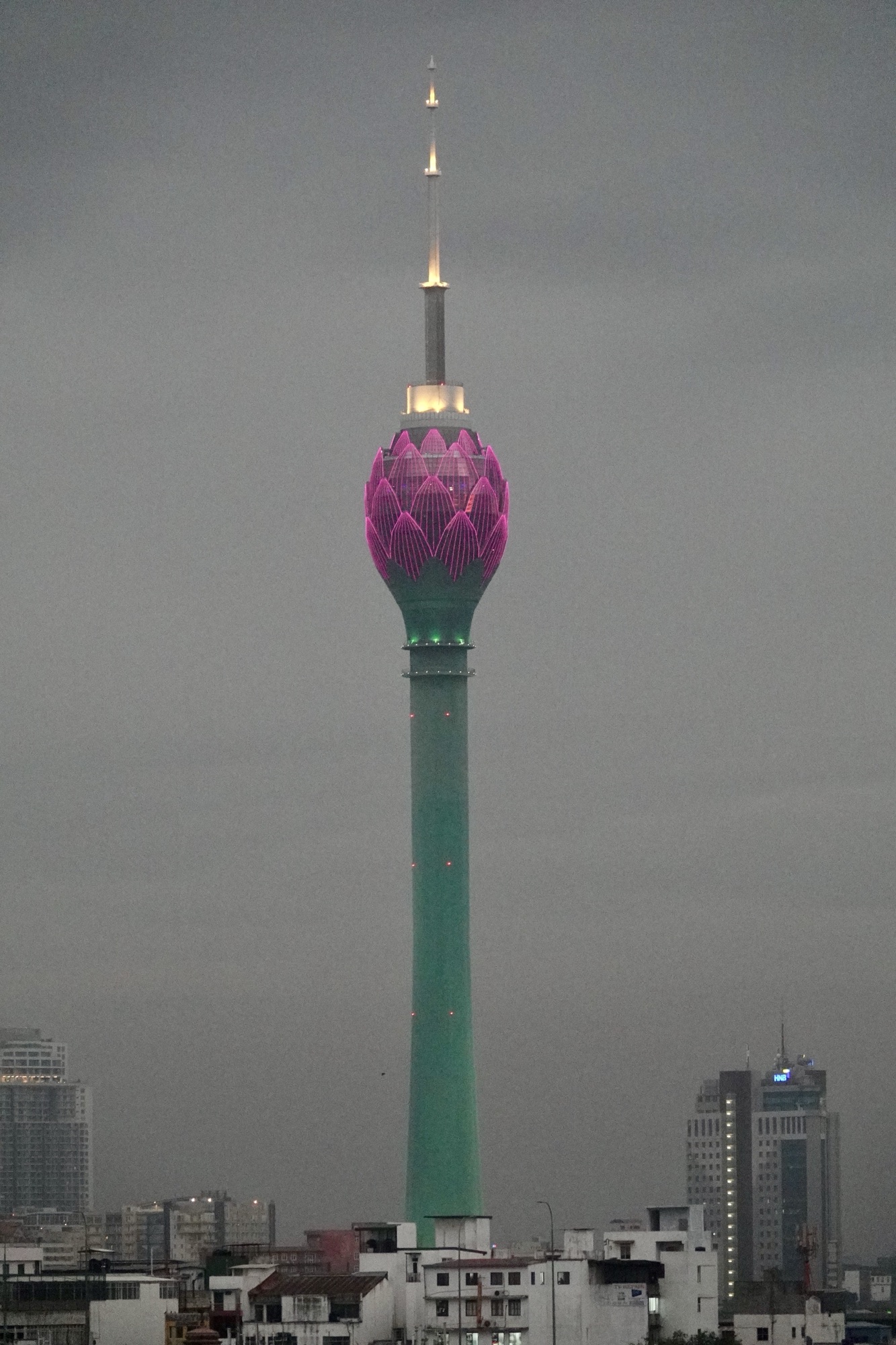
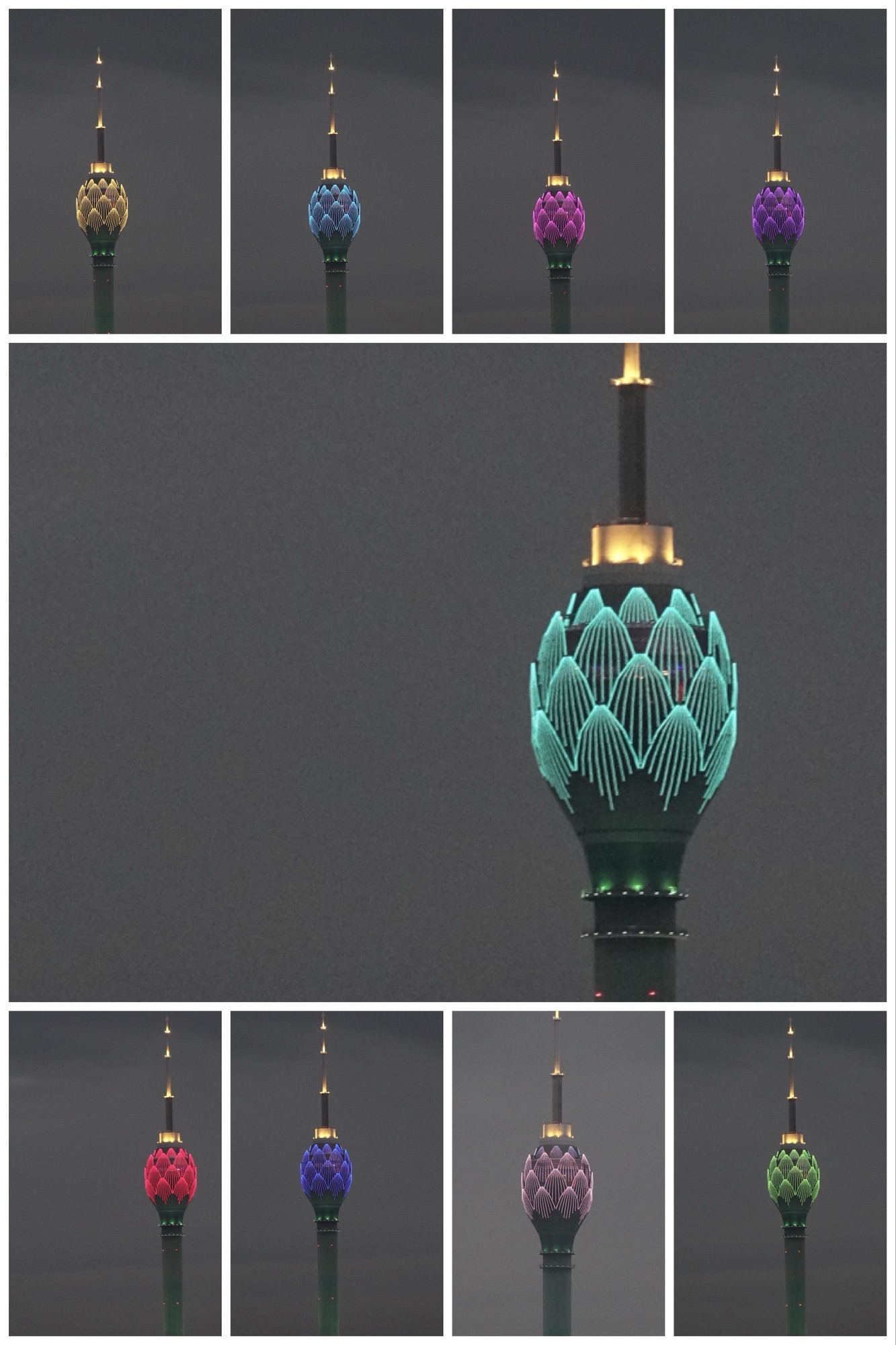
Our day ended with dinner on the Aquavit Terrace, with a backdrop of the Colombo skyline and the changing colours of the Lotus communication tower.
 Rose and Ted’s Excellent Adventure
So interesting! Thank you. I’d never heard of this architect — to my shame. Did he work in other countries as well? I love his aesthetic. Visiting an artist’s home always gives wonderful insight to the character of the creator. We enjoyed Neruda’s hillside home in Santiago (one of three open to the public in Chile) — it looked in places like he’d just stepped away. He also had homes in Valparaiso and on an offshore island you might visit from Viking.
LikeLiked by 1 person
Bawa, as far as I know, only worked in southeast Asia. I loved touring Neruda’s homes in Chile (in Dec 2019) – they were fabulous!
LikeLike
Fabulous. Great descriptions and photos. It truly is a once in a lifetime place to visit.
LikeLiked by 1 person
Your beautiful photos and wonderful write up brought back so many fond memories of one of my absolute favorite excursions on last year’s World Cruise. So glad it was offered again so that others could experience Bawa’s talent.
LikeLiked by 1 person
Thank you. I really enjoy “single theme”excursions, and wish more were offered.
LikeLike