The port of Colombo, on the Laccadive Sea, is the largest port in South Asia (as distinct from Southeast Asia, where Singapore is the largest). It’s also the 25th largest port (by container traffic) in the world, which is pretty impressive for a country whose population is #61. Geographically, most of the city of Colombo’s coastline is port.
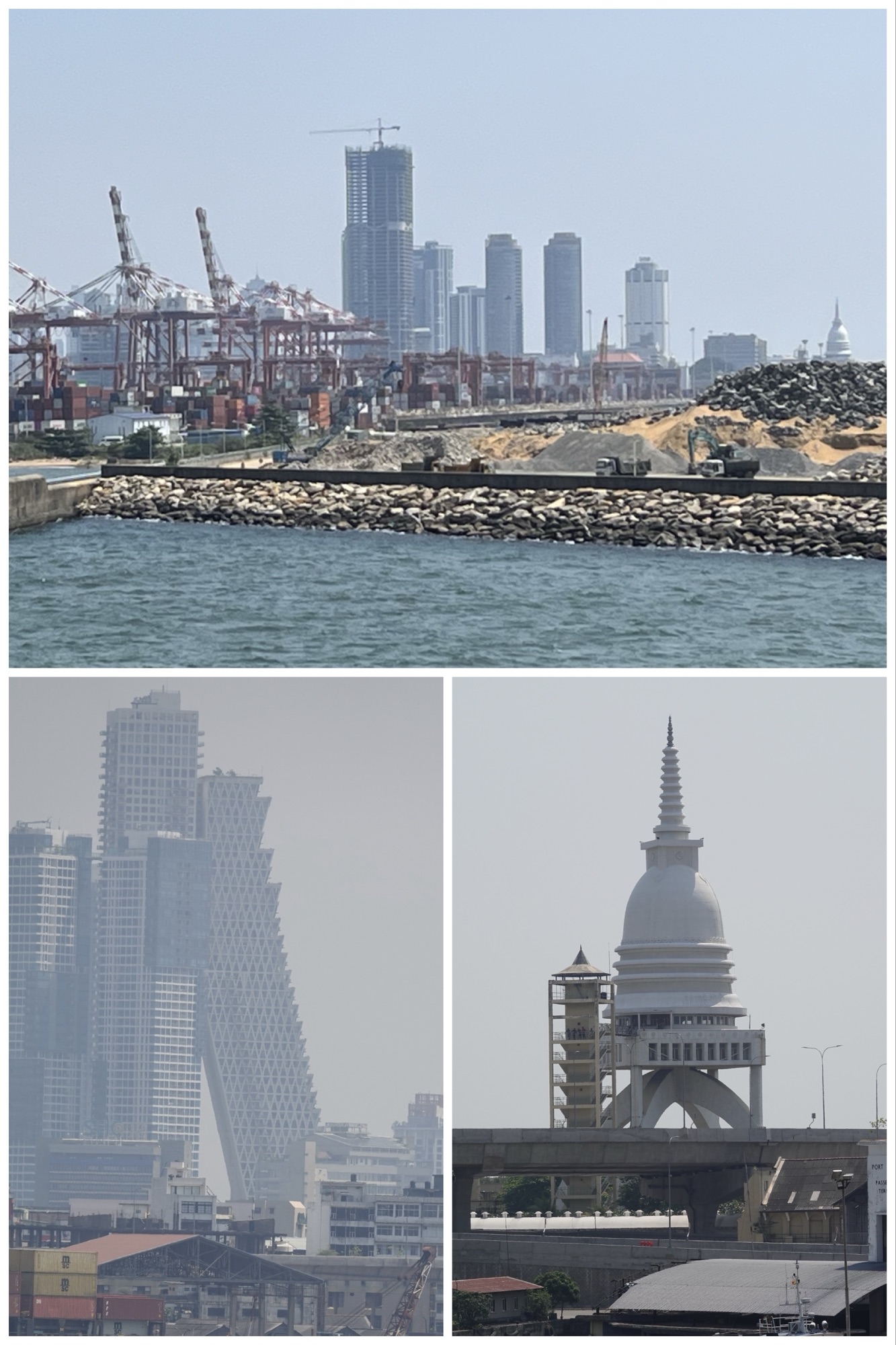
We arrived just before 2 p.m., under hazy skies, but were still able to appreciate the three lighthouses and the city skyline.

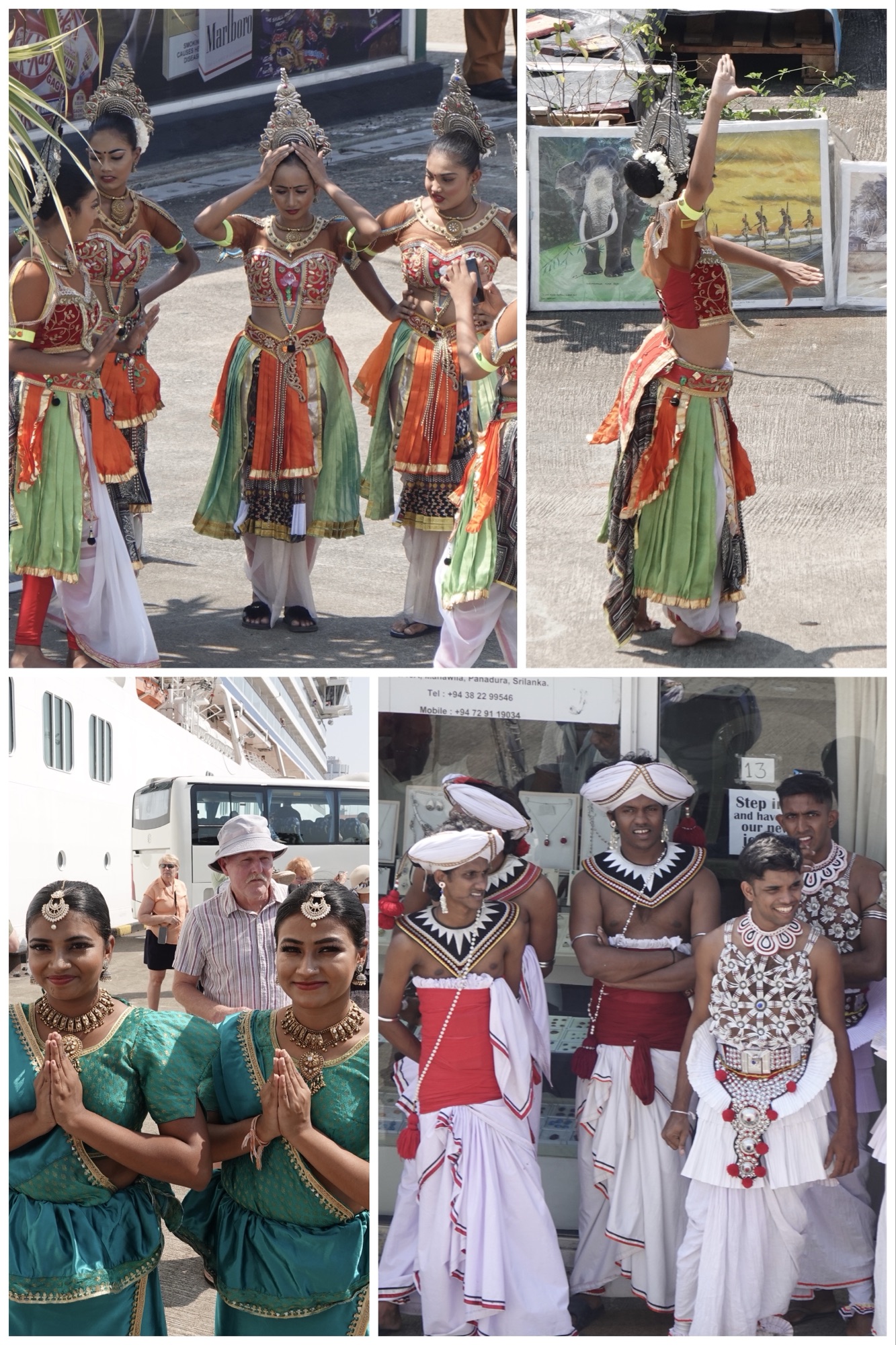
We also saw the preparations by the Sri Lankan welcoming committee.
Our afternoon excursion to a tea plantation in the hills of Ingiriya was scheduled for 2:30 p.m. until 8:00 p.m. We were a bit late getting going, but our bus driver made up the time on our way back in the evening.
Until 1972, the Republic of Sri Lanka was still called Ceylon, and it is Ceylon tea – ranking as some of the world’s finest – that holds such a sense of exotic romanticism for me. I was really excited to see this experience on our list of available tours.
The plantation was an almost 2 hour drive inland, skirting the city centre completely. As always, the long bus rides are used to give us information about the country we’re visiting.
We saw lots of new development, including a huge elevated expressway. Our guide explained that it was exactly “new”, having been begun in 2019 and then stalled during the pandemic. Completion is expected by end of this year.
That new development is interestingly juxtaposed with streets full of roadside stands and tuktuks.

He also shared that virtually all development in Sri Lanka began after 2009, which marked the end of the 26 year long Sri Lankan Civil War.
He didn’t tell us much about that civil war, but I looked it up because I can remember welcoming Tamil students to our school in Halton in the early 2000s, and I also remember the Tamils being labelled as terrorists.
Here’s the short version, with a link to the longer one: That conflict was the insurgency led by the Tamil Tigers to create an independent Tamil state called Tamil Eelam in the north-east of the island, due to the continuous discrimination and violent persecution against Sri Lankan Tamils by the Sinhalese-dominated Sri Lanka government. Like so many conflicts in this part of the world, the roots go back to Colonialism; Tamils were brought to Sri Lanka by the British as cheap English-speaking labour for their tea plantations. After the British left, the Sinhalese majority began a campaign of harassment, disenfranchisement, and deportation of Tamils, who they felt had been somehow favoured by the British.
Our guide was a young Sinhalese man, who credited President Rajapaksa (in power from 2005-2015) with ending the war, but it’s much more complex than that. (Sri Lankan Civil War), and it became obvious later in our visit that for the 15% of the population that is Tamil life is still not great.
Back to our guide.
We learned that the current religious makeup of Sri Lanka is about 70% Buddhist, 13% Hindu, 10% Muslim, and 7% Christian. Its ethnic makeup splits similarly: 75% Sinhala, 11% Sri Lanka Tamil, 10% Moor, 4% Indian Tamil.
Sri Lanka gets most of its power from hydroelectric plants, but we saw a new thermal station, and the country is also building new coal-fired plants.
The economy was once largely agricultural, exporting tea, coconuts, and rubber, but is gradually moving into becoming a service based economy as their raw goods decrease in value globally. Nonetheless, our guide told us that Sri Lanka is relatively “rich” within Asian countries. High government spending on free education (including public university for which only the top 10 % of students will qualify) and health care have made Sri Lanka’s human welfare status second only to Japan. The downside is that doing that has raised taxes formerly at 10-15% to a maximum of 36%, which is unheard of in this part of the world. With a high cost of living compared to salaries, many professionals have gone abroad for jobs; Sri Lankan doctors in particular often go to the UK.
We also talked about symbolism and religion.
The lion on the Sri Lankan flag is a symbol of the Sinhalese people, even though there are no lions here. It dates back to the legend of an exiled Indian prince of a family, whose symbol was the lion, and his large entourage landing on the shores of Sri Lanka and settling it. The Buddhist flag in evidence all over the country incorporates all 5 colours of the Buddha’s aura.
And the rounded beehive shaped structures we saw were stupa, structures in which are enshrined the relics of someone (usually a monk) associated with Buddhism. They are secondary places of worship and meditation and are usually within a temple (which refers to a complex of shrines as opposed to a single building).
After driving through several Sri Lankan suburbs, and a few rural areas, we finally climbed into the hills about 140m/460ft above sea level to Rayigam Estate.
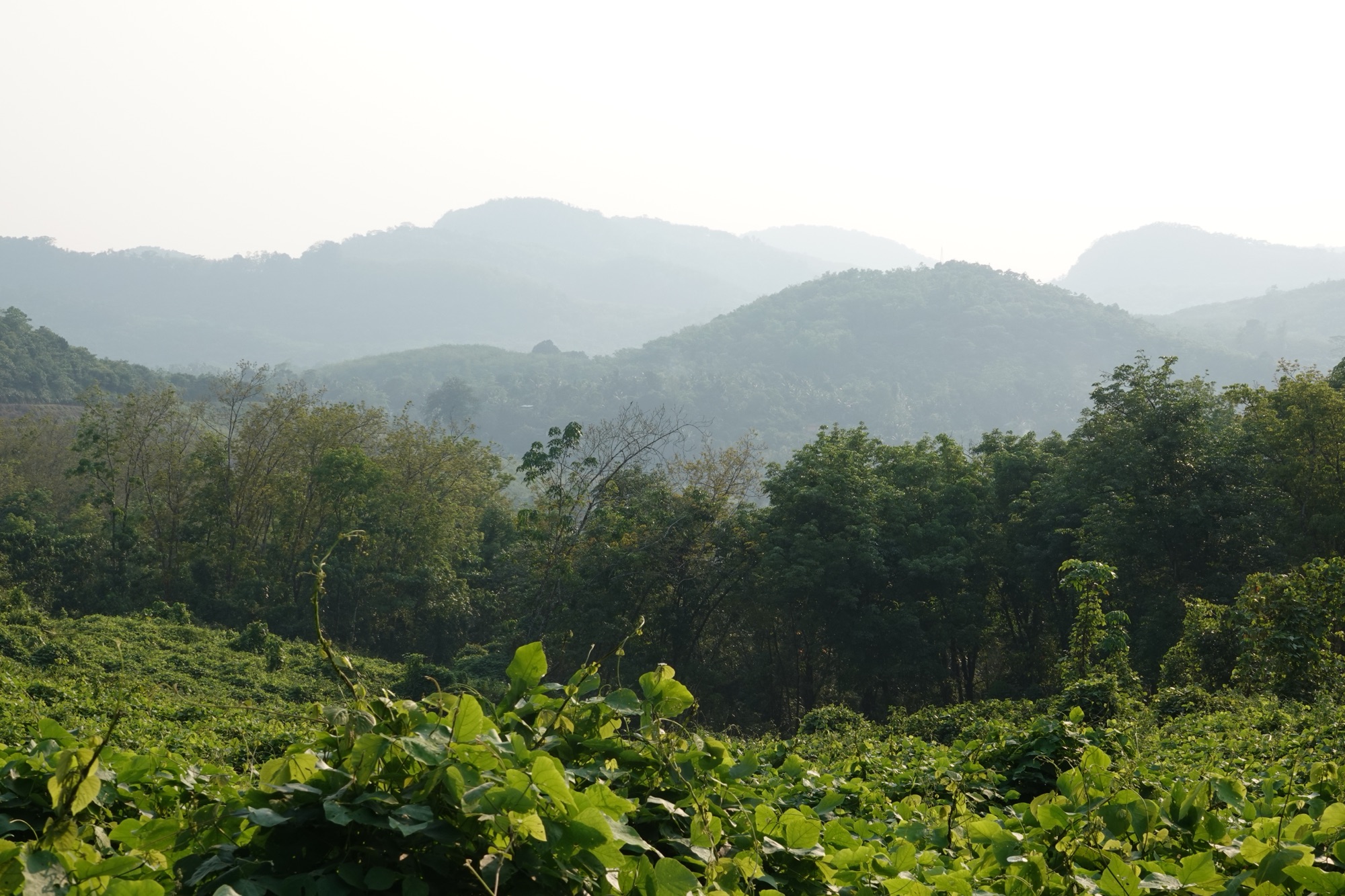
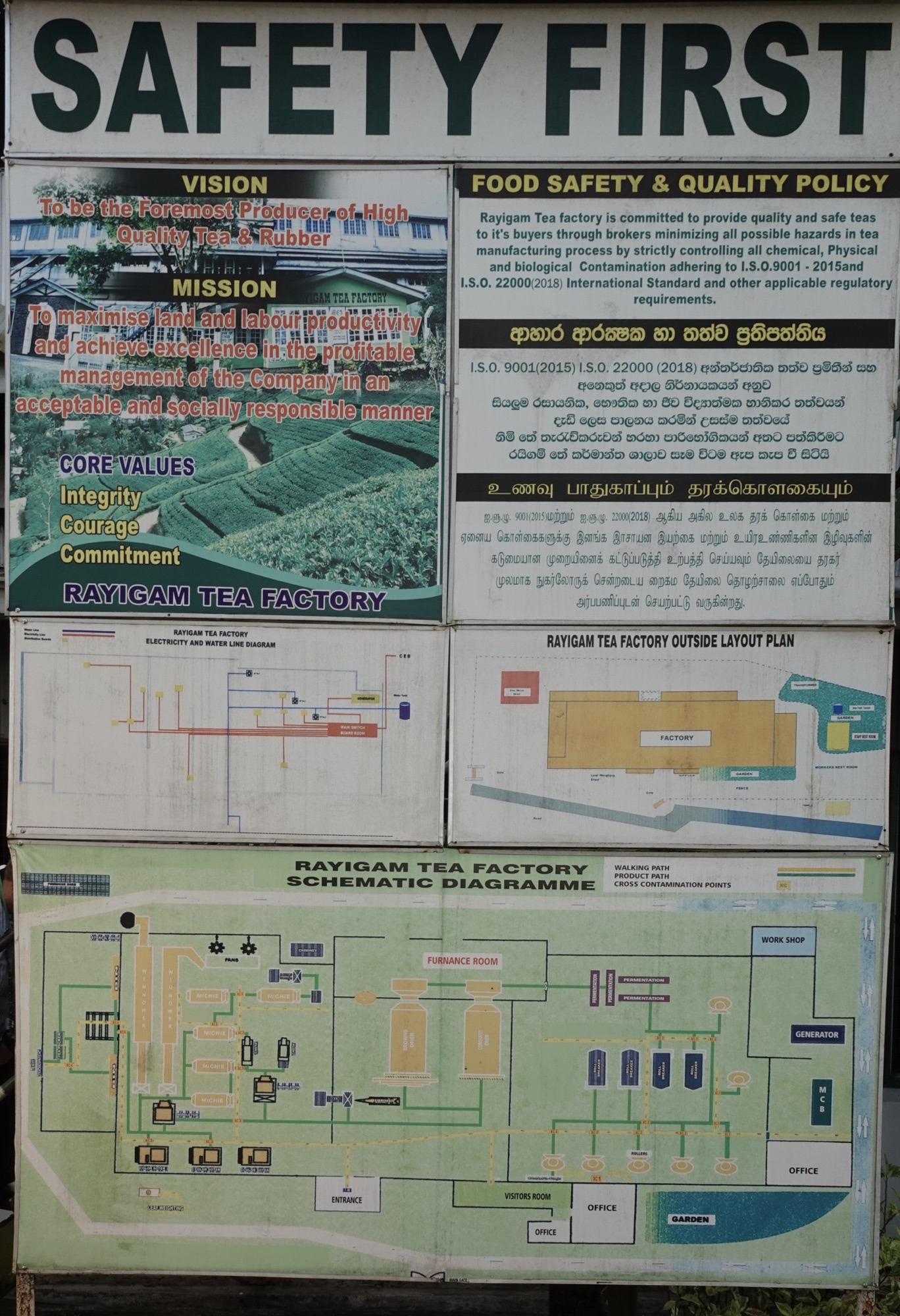
The sign at the entrance explained that the plantation comprises 37.47 hectares of tea, 86.45 hectares of rubber, and 100 hectares of oil palm. Each hectare is equal to 2.47 acres or 10,000 square metres; 100 hectares make a square kilometre.
Tea and rubber are planted together because both need the same kind of sloped landscape and soil which drains well.
Despite the popularity of synthetic rubber, latex (natural) rubber production is still a significant industry in this area and is essential to the local economy. We were fortunate to see a brief demonstration of the rubber tapping process.
Tapping rubber trees is not terribly different from tapping maple trees, except that rather than a “hole”, it is a slice into the bark that is made. After that, the dripping into a cup and daily collection are pretty similar.
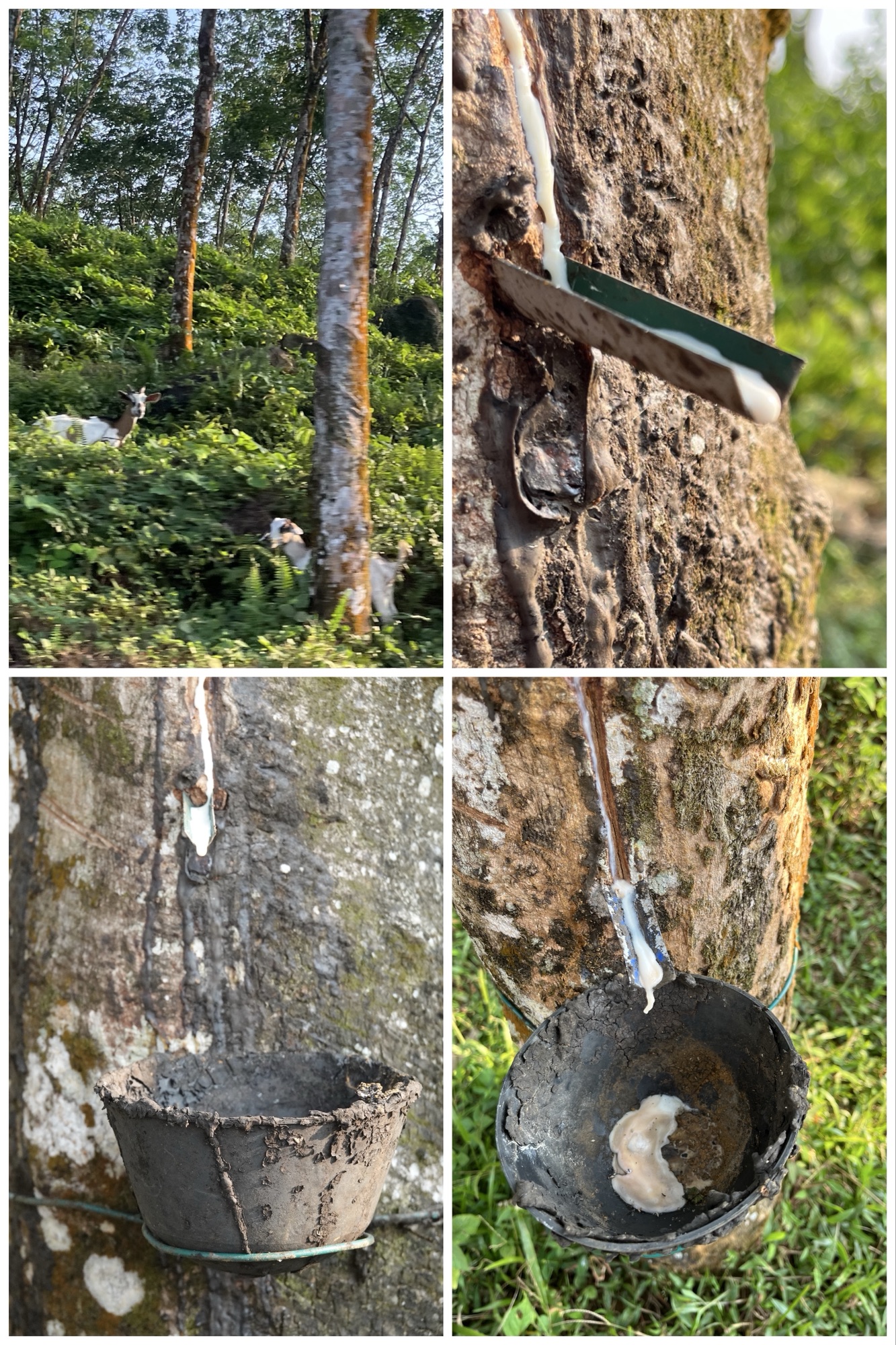
A rubber tree yields 1/2 to 1 cup of latex “sap” per day, and one Tamil worker taps 200-300 trees per day.
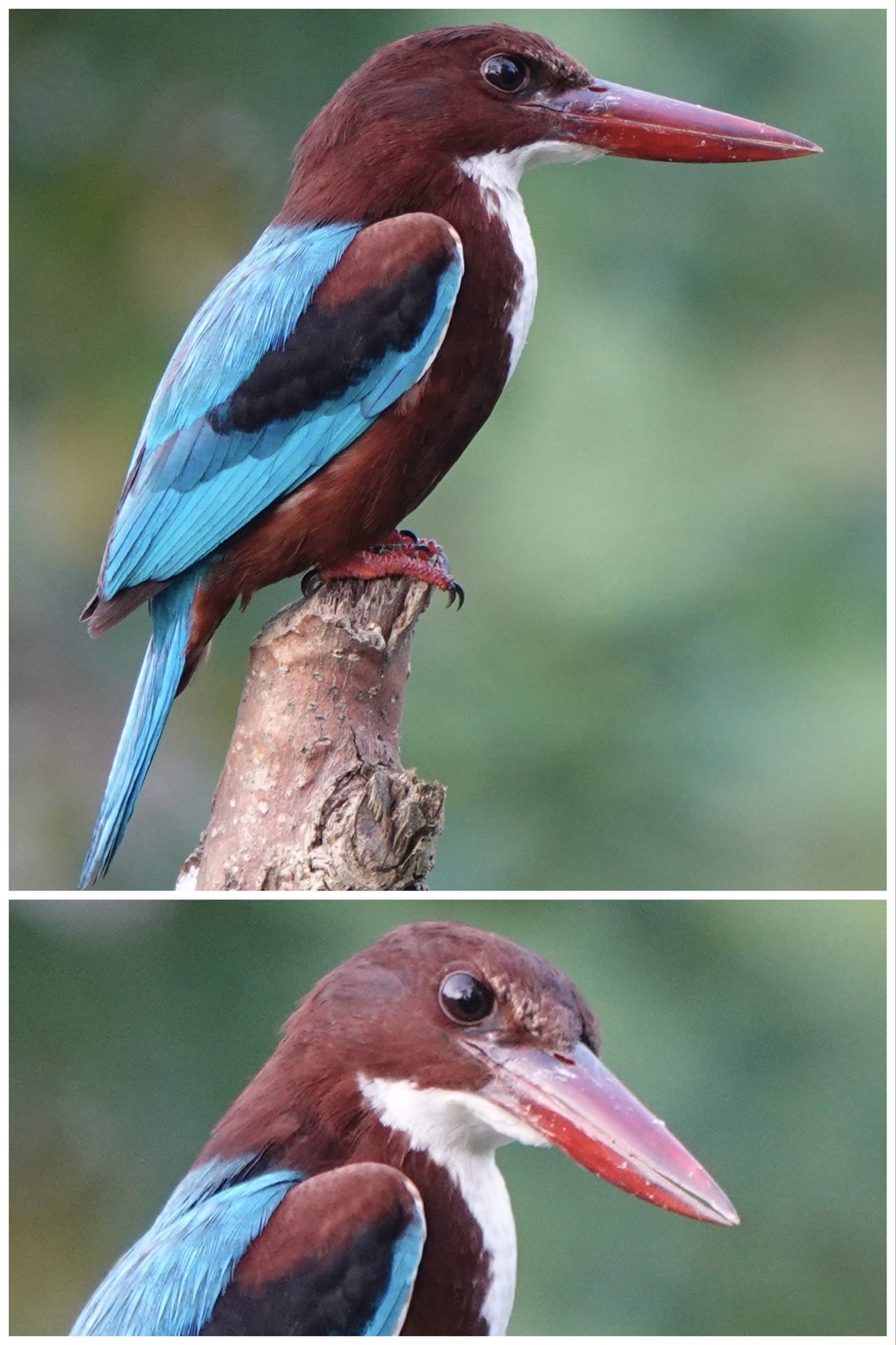
Ted found something much more interesting than either rubber or tea: an absolutely gorgeously coloured White-Throated Kingfisher. Both of us were astounded that that was the best name an ornithologist could come up with for this bird.
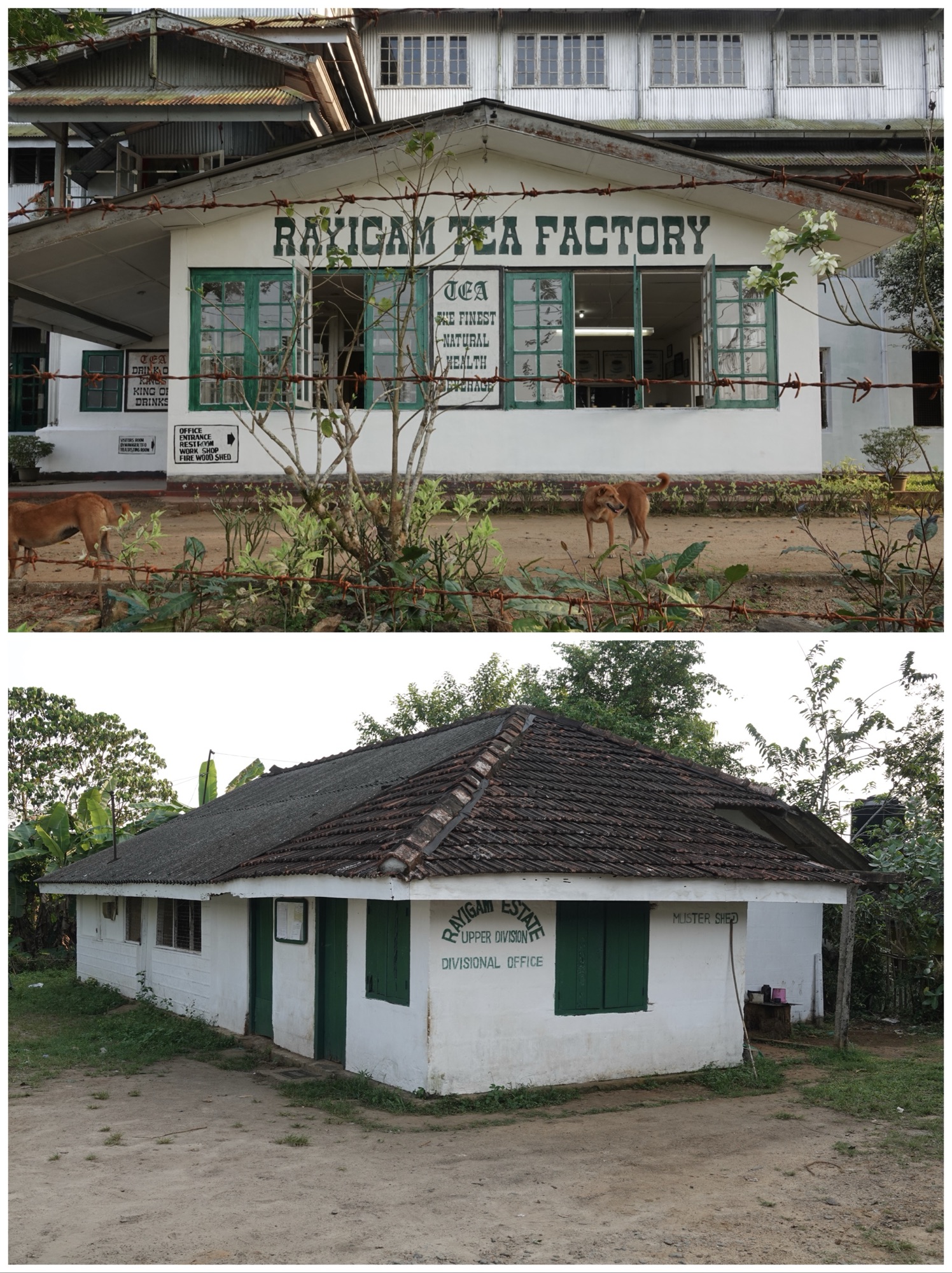
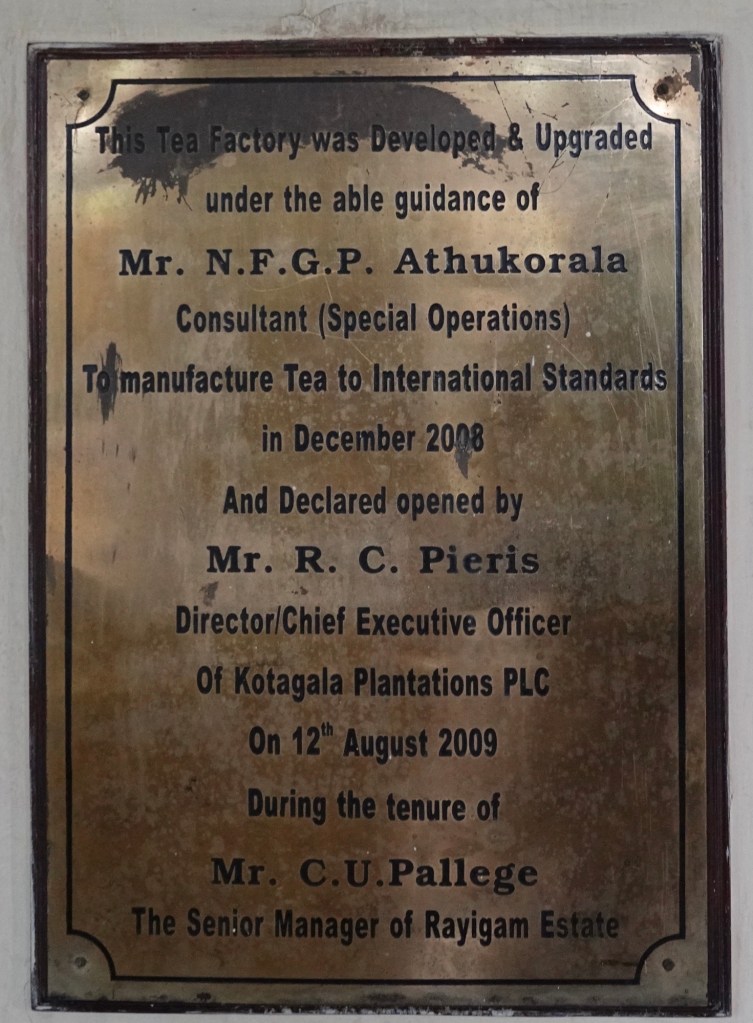
A bit further up the hill we reached the tea processing plant. It looked a bit more rustic than I might have expected, although it was updated most recently in 2008.
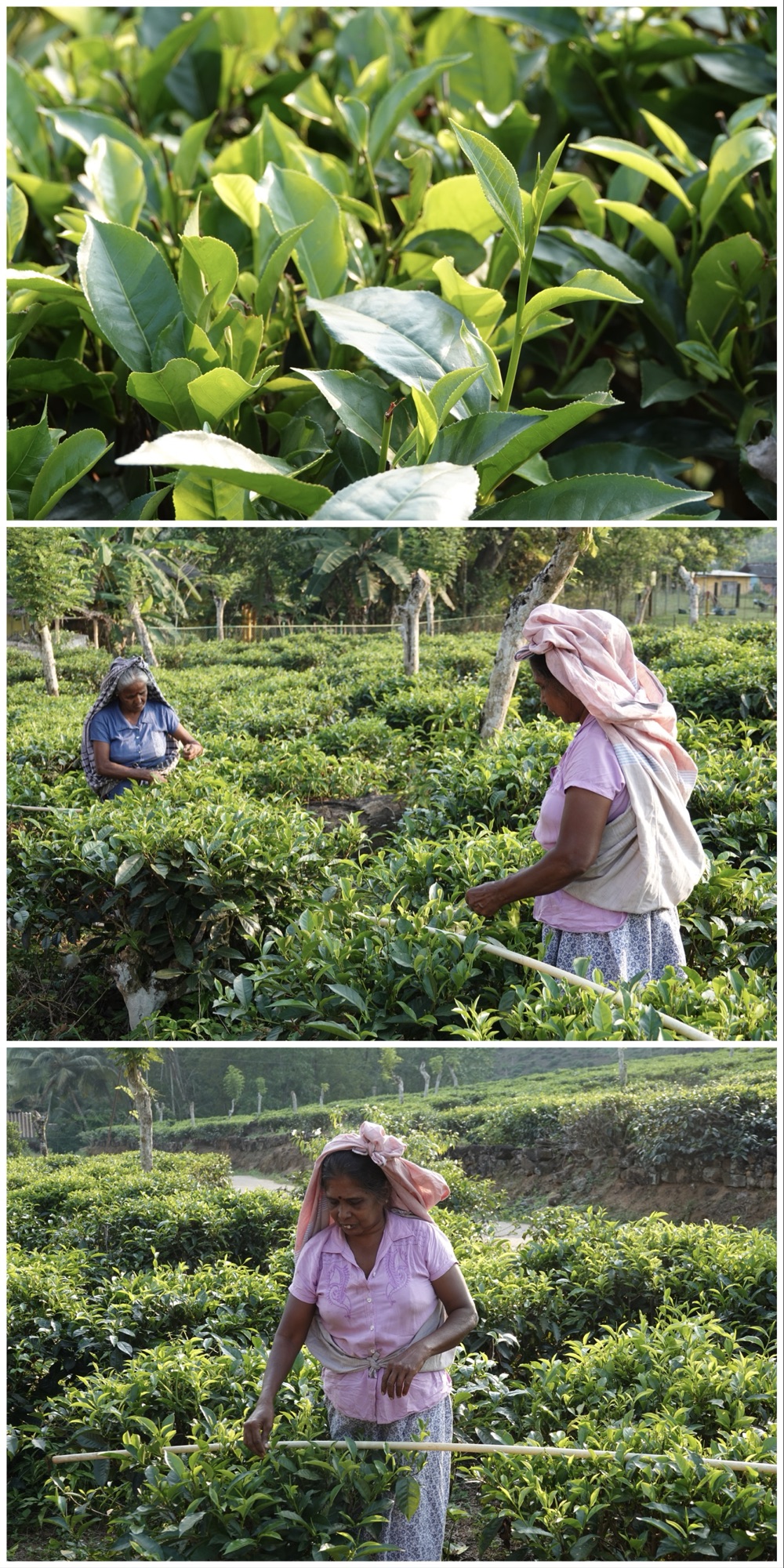
Just outside it were two older Tamil ladies hand-picking tea leaves. Our guide told us that theirs is the lowest paid job in the country, and is exclusively done by Tamils.
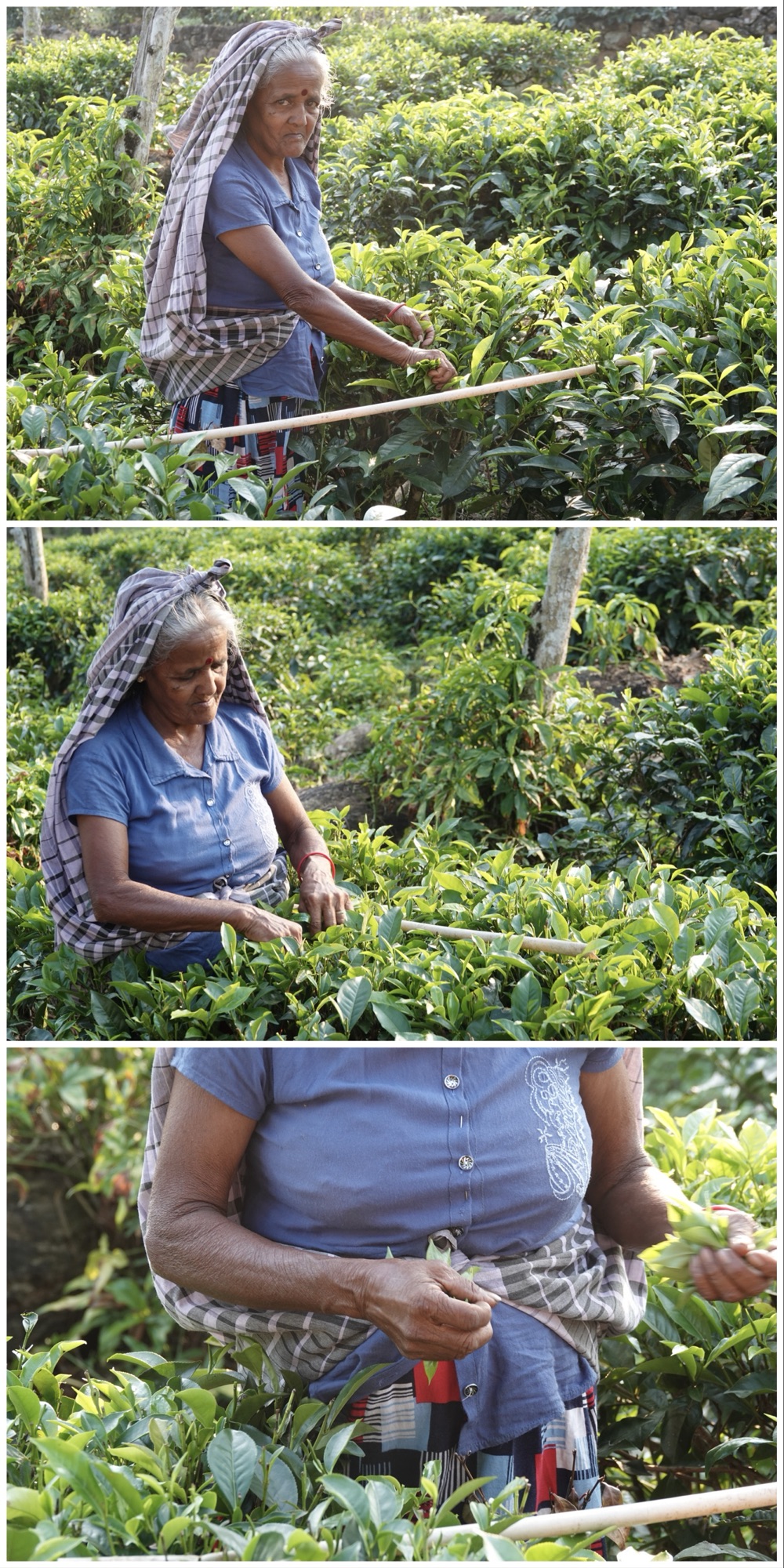
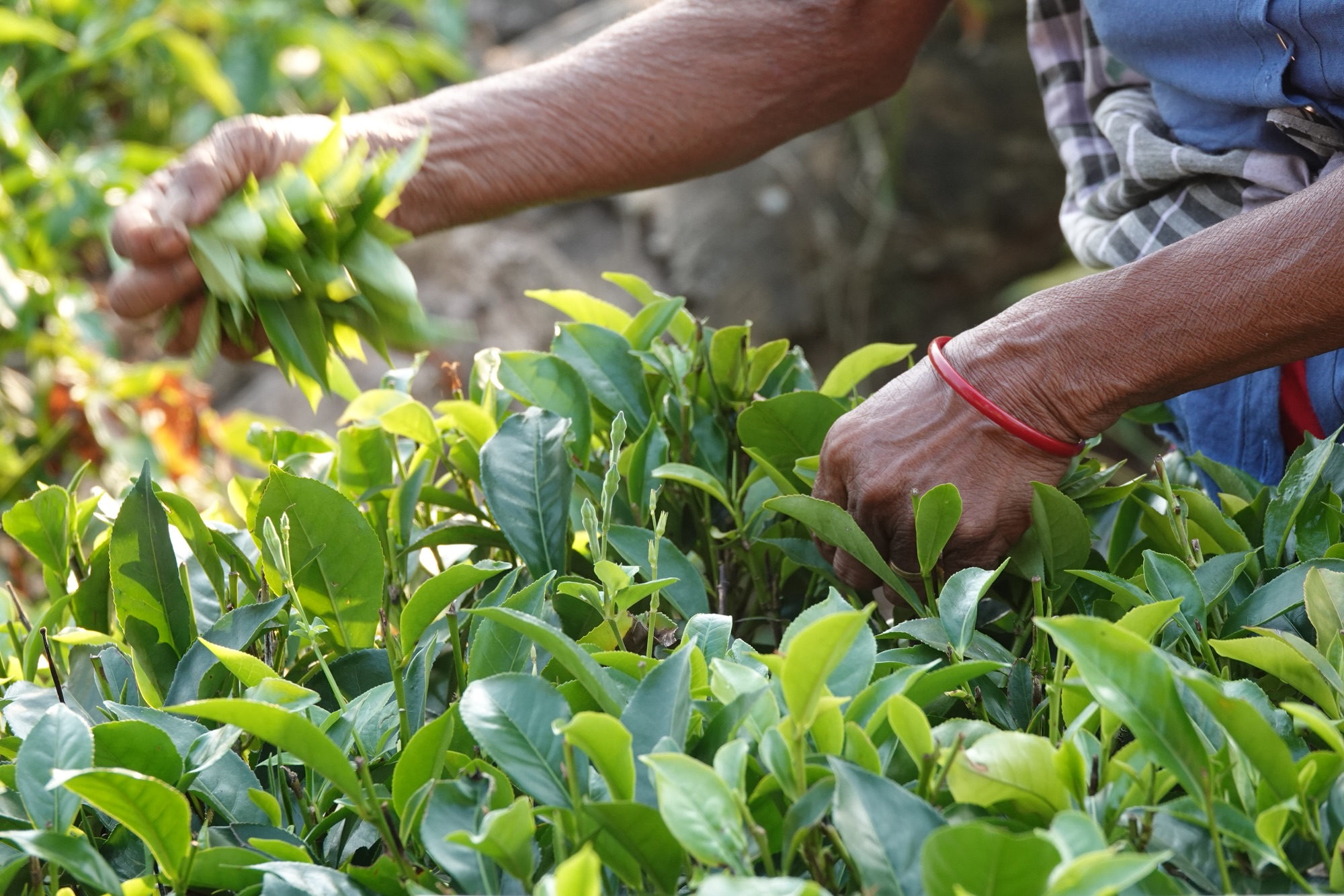
He also shared that every tea plantation is a limited corporation in which the government owns one “golden share” that allows them to enforce a minimum wage and minimum safety standards.
That said, barefoot workers with no ear protection working 12 hour days beside a noisy tea rolling machine doesn’t seem like much of a standard.
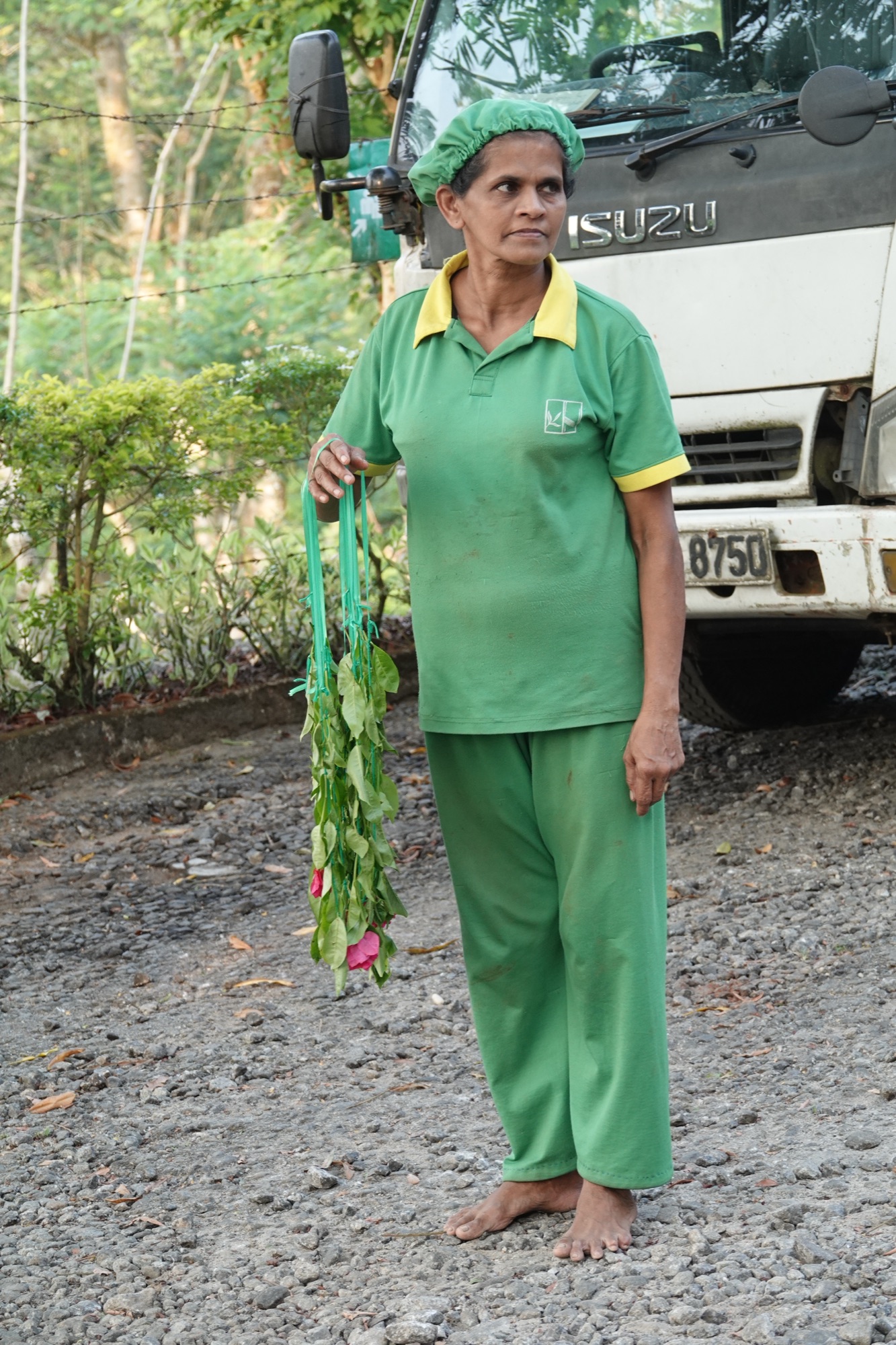
Before entering the processing plant, we were given the traditional welcome of garlands made from tea leaves.
We climbed a fairly steep outdoor staircase to the first floor of the plant, where we saw huge trays of freshly picked tea leaves laid out to dry. This is where they lose up to 80% of their moisture.
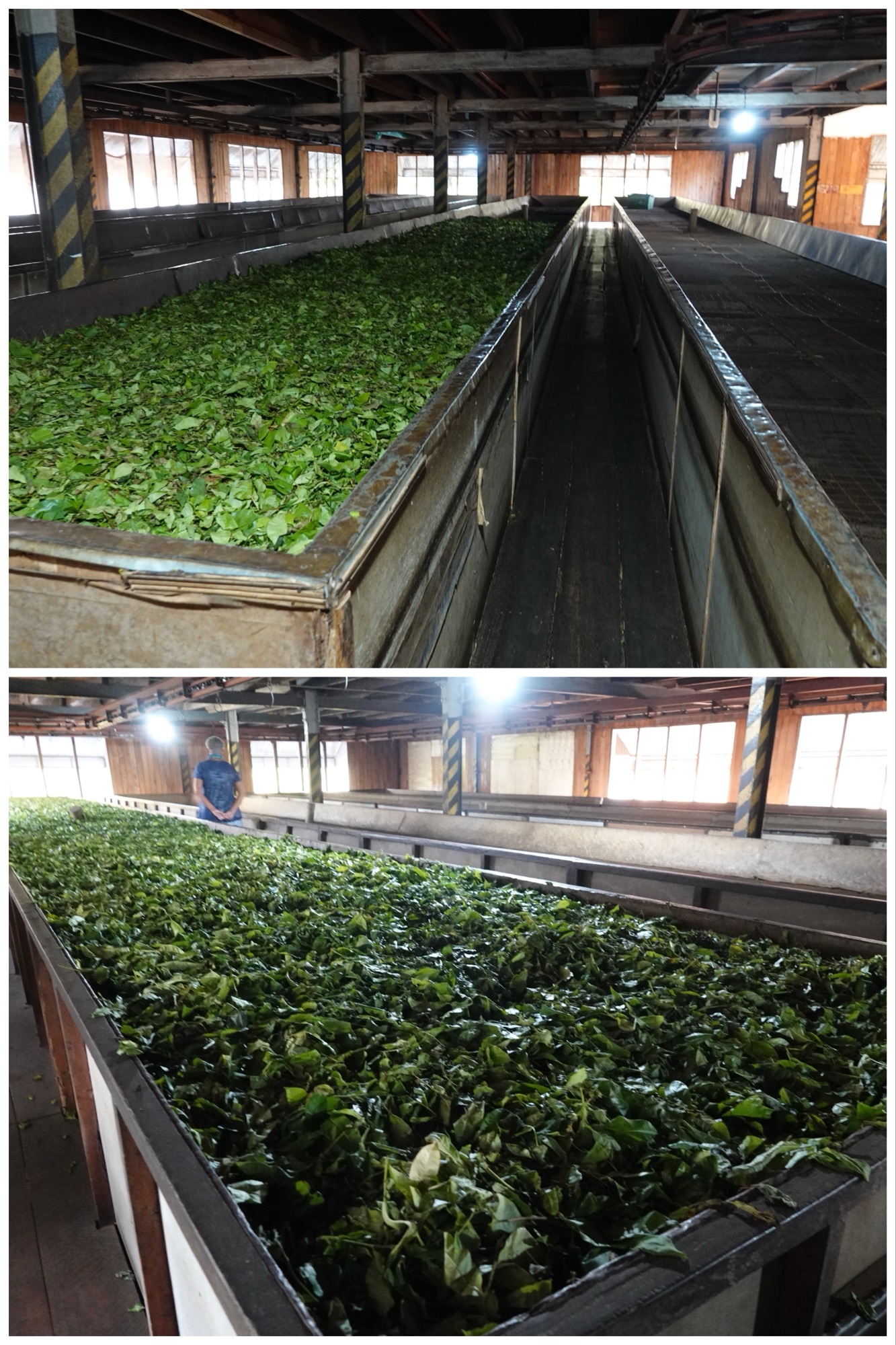
The dry leaves are then gathered into baskets which are given to ladies who empty them by armfuls into a square tube (think laundry chute) that drops them into a rolling machine on the ground floor.
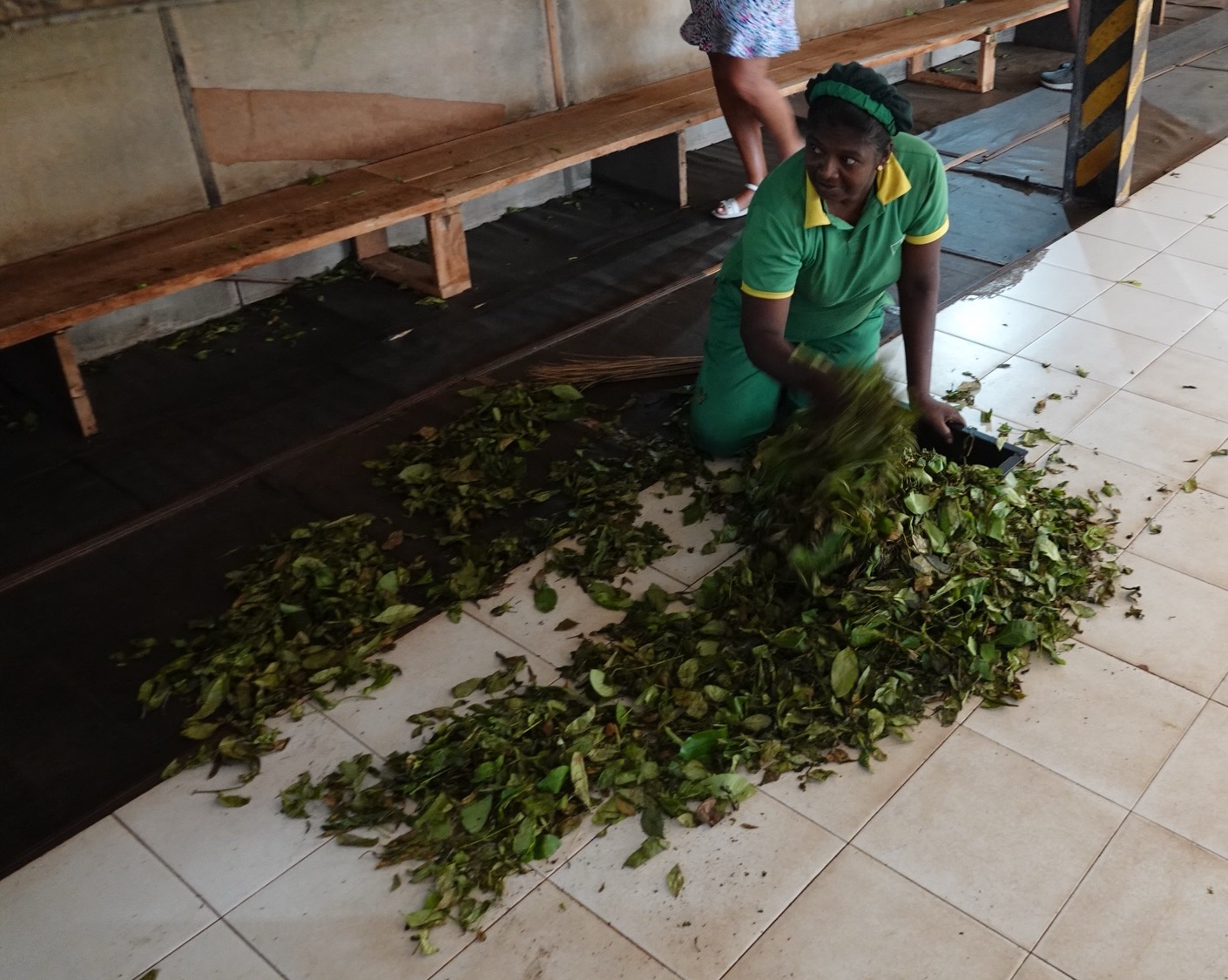
We headed back to ground level to see (and hear) the rolling machine working.

Once the tea leaves have been rolled, they go into a dryer at 150°C (300°F) to pull out more of their moisture.
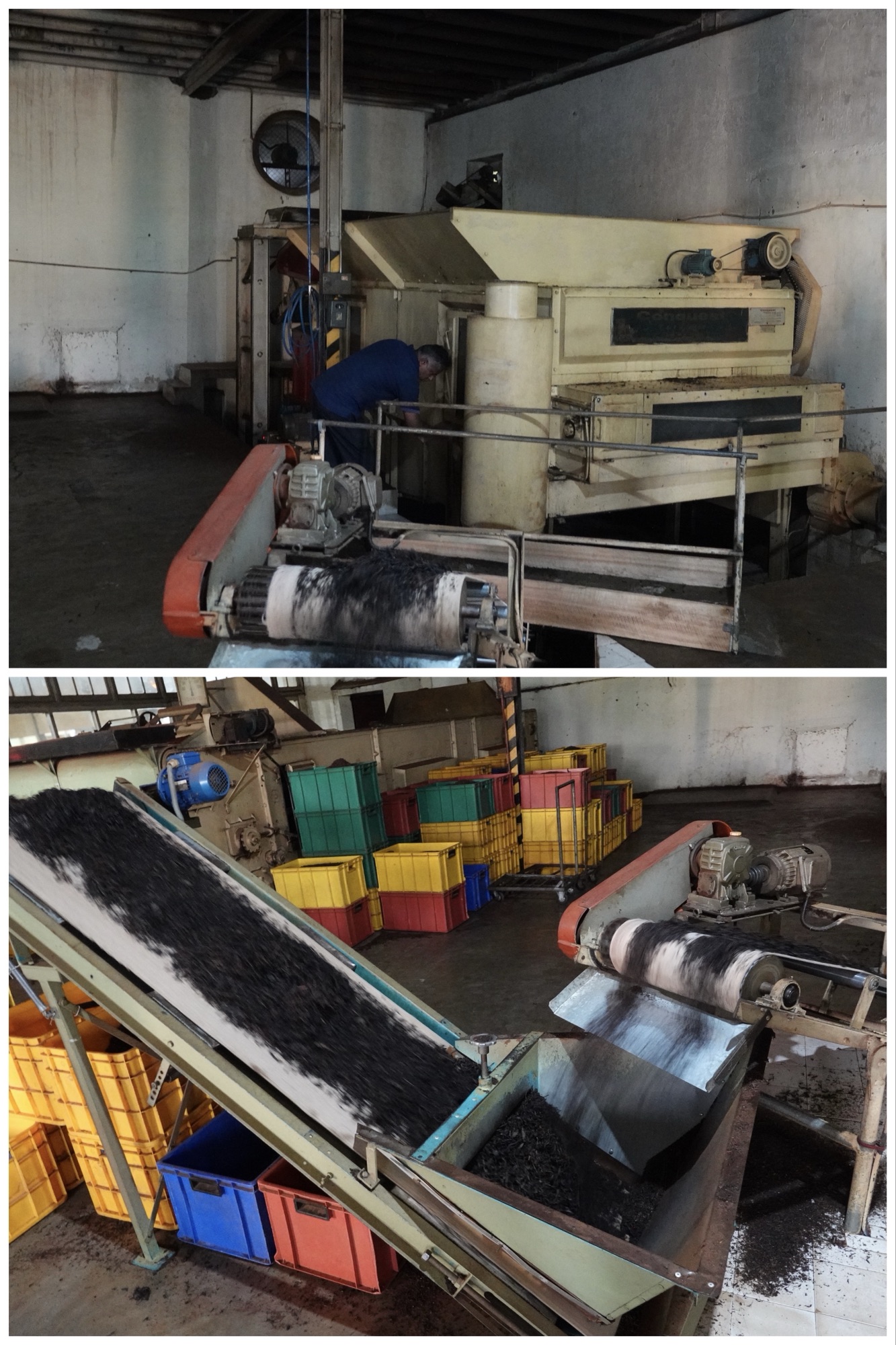
Next they go to a “colour sorter”. No one explained exactly how that worked, but the rolled tea leaves were dispensed into yellow, blue, and red bins – and they really were different colours. One of the bins was “refuse” – leaves unsuitable for commercial sale.

Next the useable tea was sorted by size, again using a huge machine.
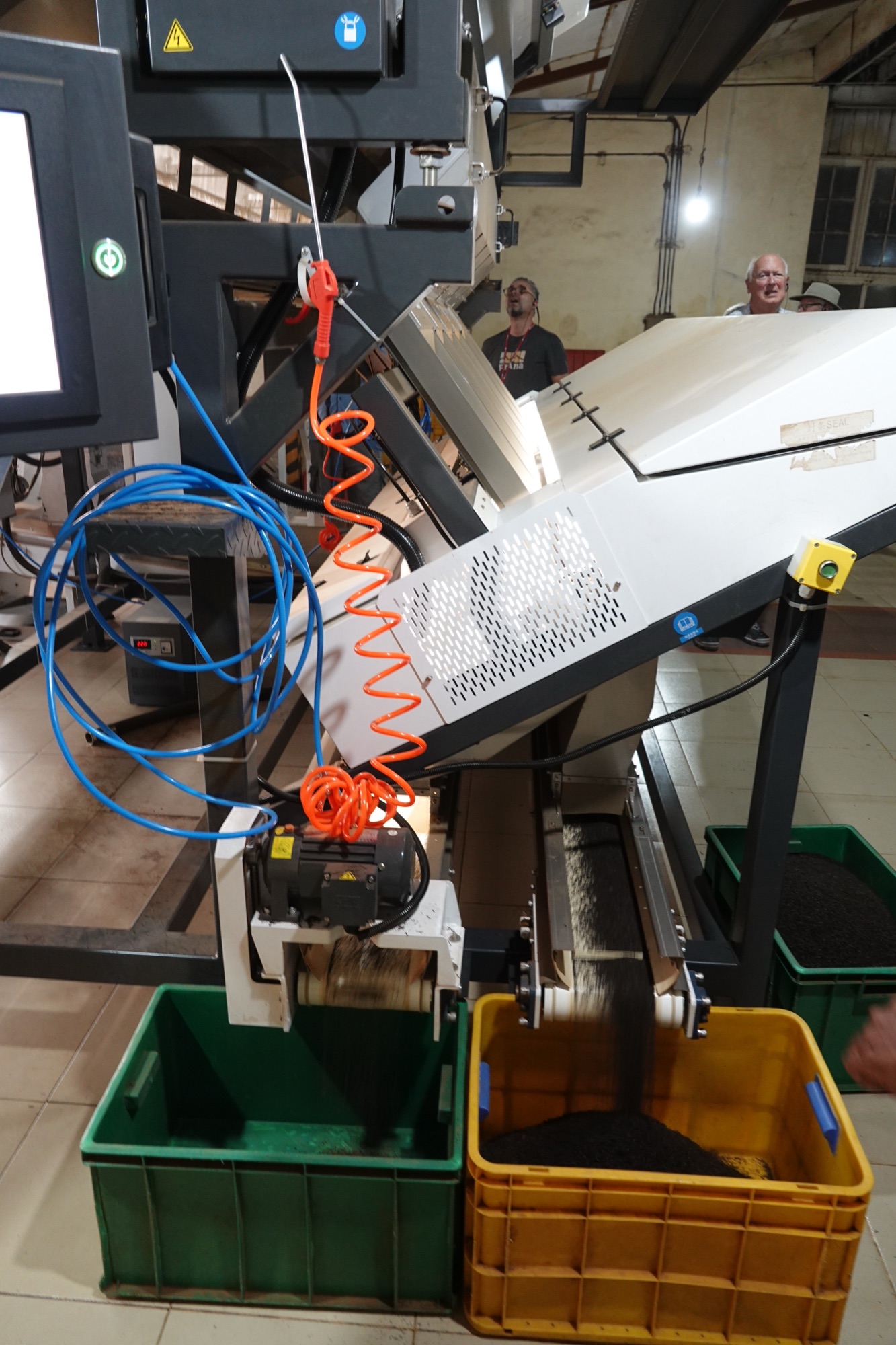
The end product, with 96-97% of the original leaf’s moisture removed, was packaged in huge foil-lined bags which would be sent to a tea auction.
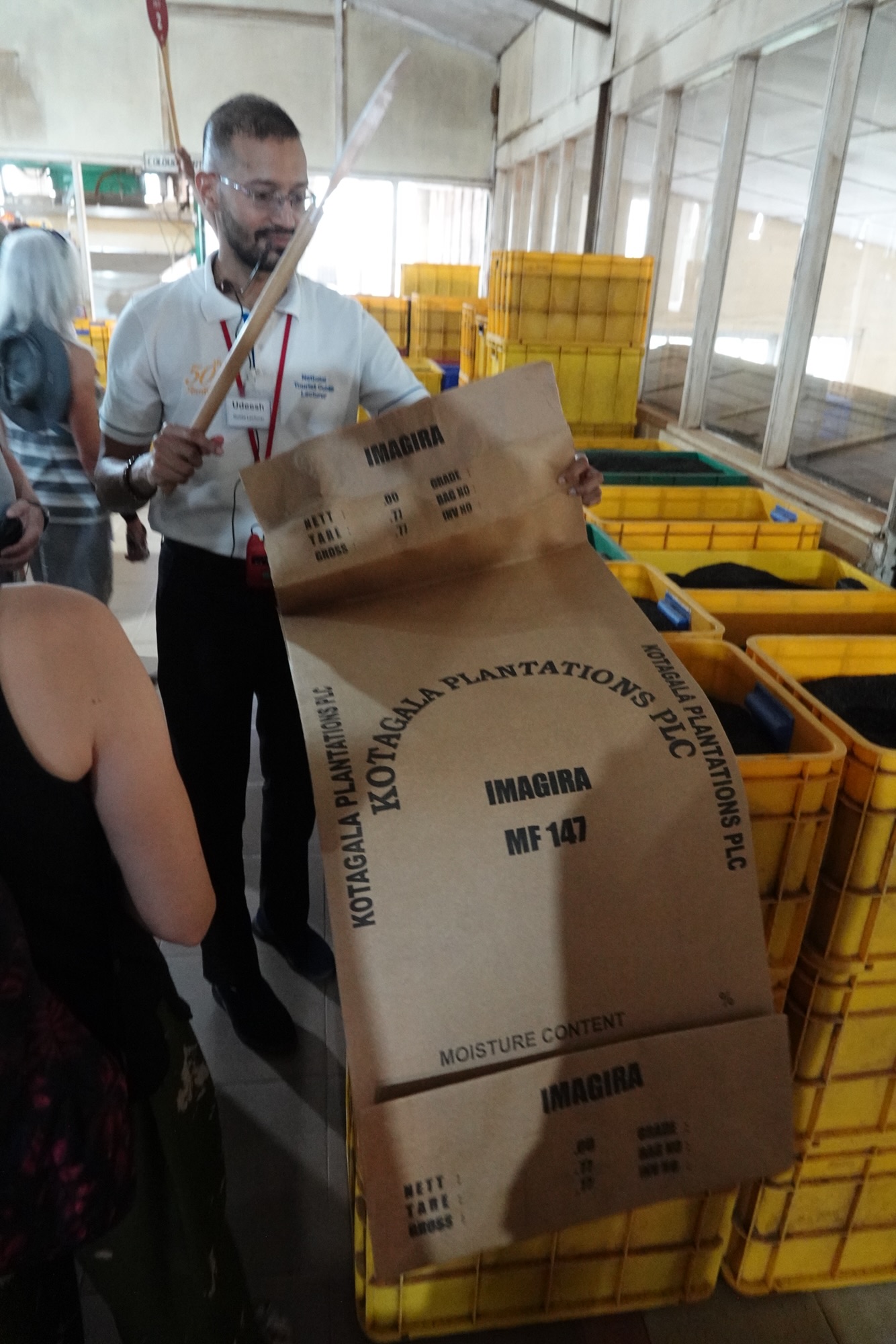
The process from picked leaf to ready-to-ship tea takes 24 hours.
All the workers in the plant were Tamil.
We learned that there are 4 basic grades of tea in the traditional grading system of leaves that are rolled, i.e. not left whole:
- B.O.P. Broken Orange Pekoe
- F.B.O.P. Flowery B.O.P.
- G.B.O.P. Golden B.O.P.
- T.G.B.O.P. Tippy Golden B.O.P.
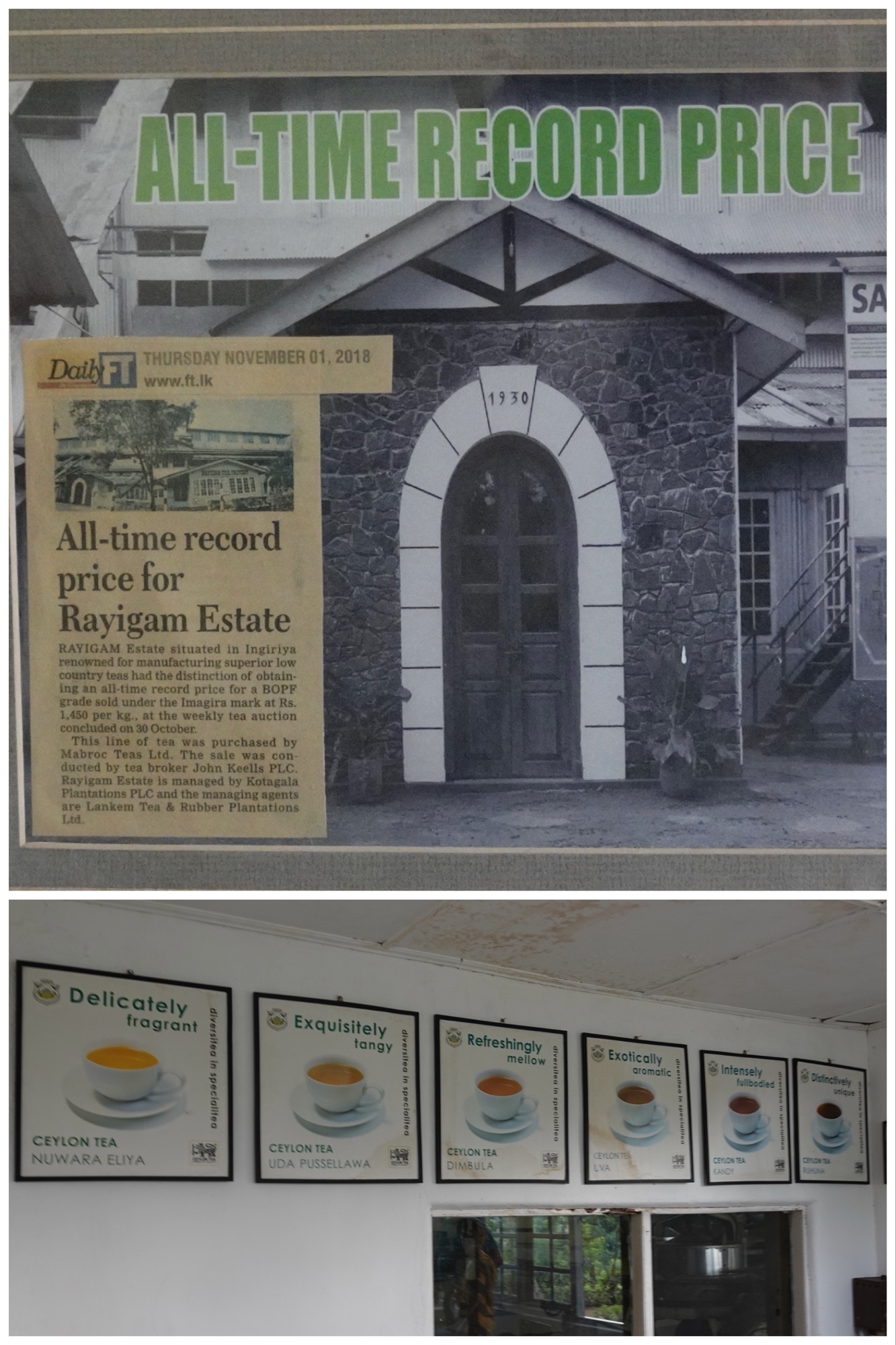
In 2018, this plantation set a record for highest price paid per kg for a BOPF (Broken Orange Pekoe, Flowery) grade tea.
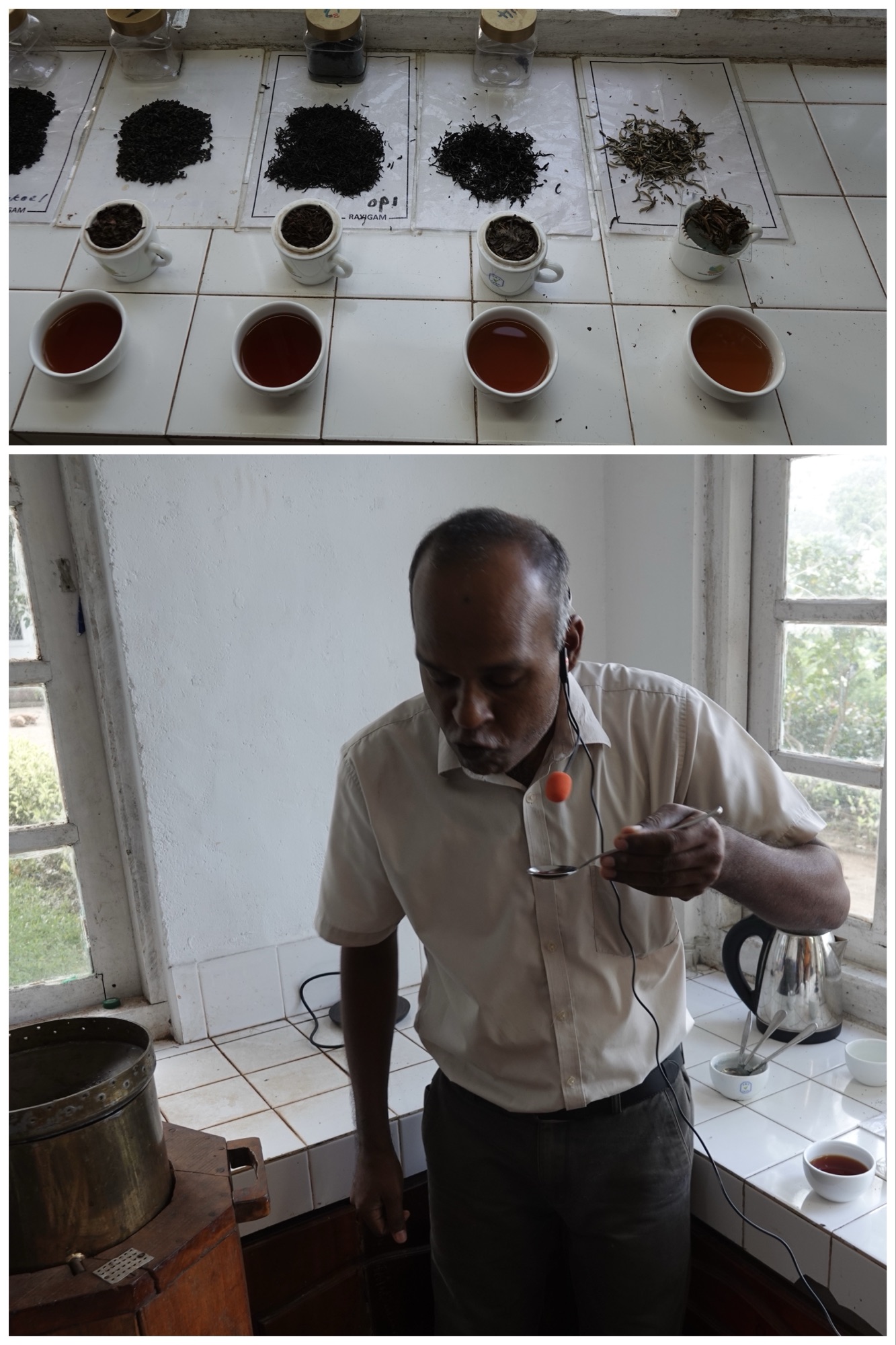
We got to see, but not taste, an array of different tea grades, and watch a (Sinhala) master taster demonstrate how to taste tea, steeping exactly 2.5 grams of leaves in 80 ml of freshly boiled ware for 5 minutes, and then basically swishing and snorting the tea to judge the taste and aroma before spitting it out – a bit like what professional wine tasters do.
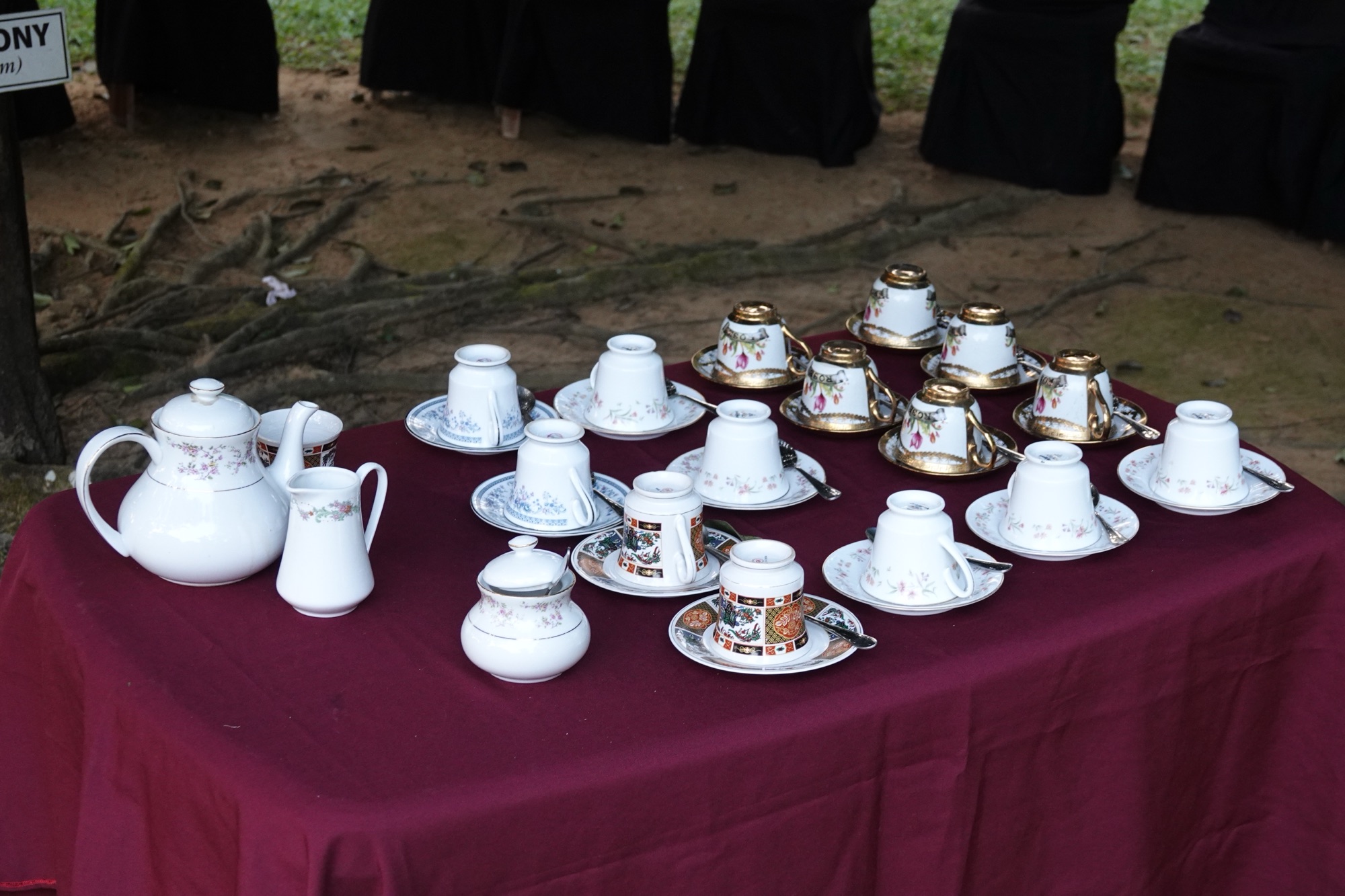
Then it was time to taste the finished product, while seated on the lawn of the plantation manager’s bungalow. The manicured gardens and lovely architecture of the manager’s bungalow was in stark contrast to the on-site worker housing, which was basically a collection of corrugated aluminum sheds, although with plumbing, electricity, and kitchens.

We were each offered sponge cake and a cup of excellent tea by a team of gracious Tamil waiters.
I asked our guide how to say “thank you”. He told me in Sinhalese, and then commented that the waiters were Tamil and wouldn’t understand. So I asked him to tell me in Tamil. He did, but first asked me why I wanted to know. That told me, without any extra words, what the attitude continues to be, even though “officially” there is no longer any discrimination.
From the smiles it generated, either the waiters were really pleased to be thanked, or my pronunciation was hilarious.
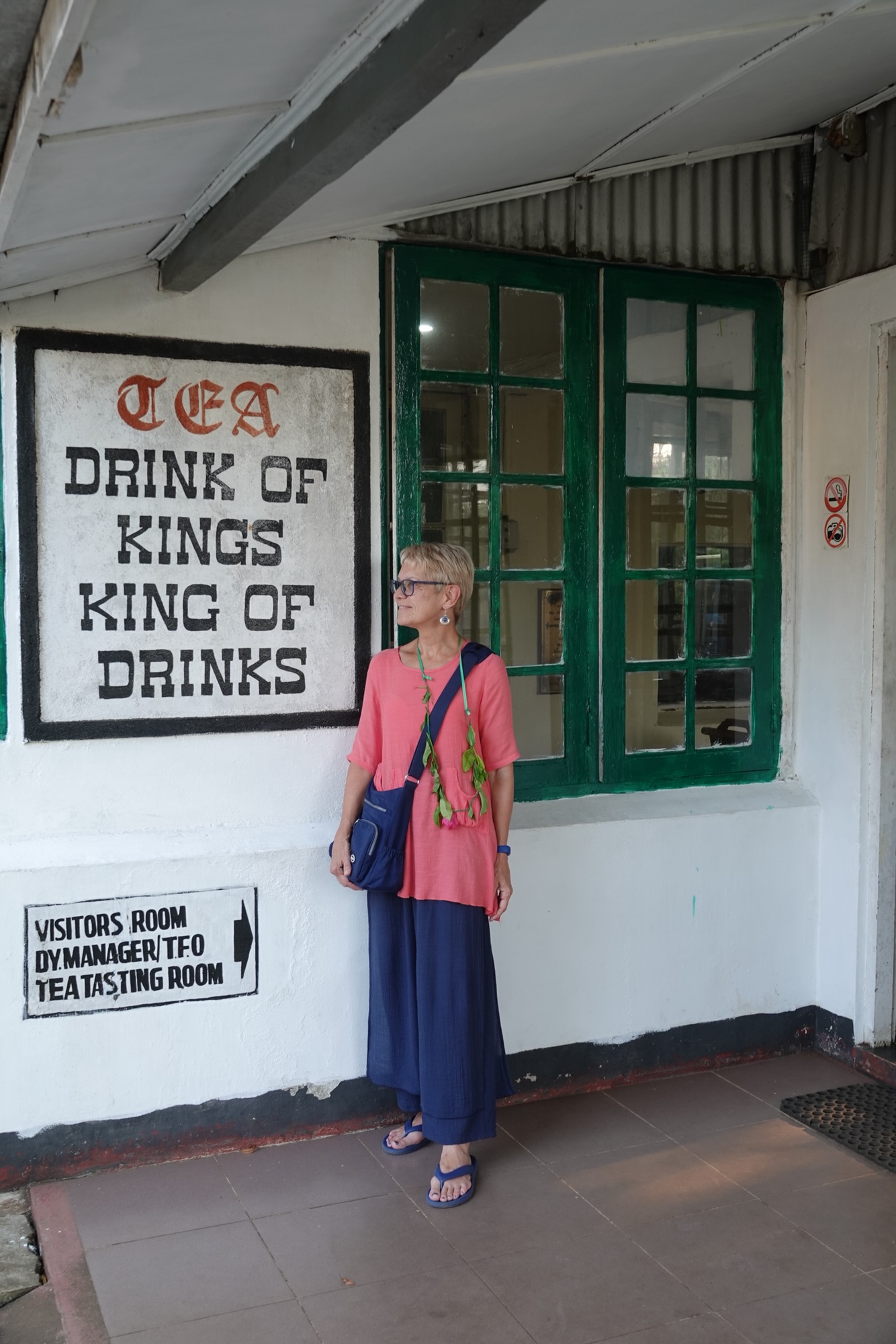
I still love my Ceylon tea, but I now have a much greater appreciation for what goes into my cup.
On the long ride home we had more opportunity to ask questions, so someone asked about crime. Our guide candidly told us that most of the country’s crime was by corrupt politicians, the rest being largely petty theft. From the end of the civil war in 2009 until just the most recent election, the same “family” ruled the country, and created a lavish lifestyle through getting kickbacks from all the infrastructure projects they approved. The country’s infrastructure has improved, but at an inflated cost to taxpayers.
Our arrival back at the ship wasn’t until after 8:00 p.m. – no time to change for dinner in the main dining room, or to make the evening’s show in the theatre (which instead of live entertainment was a screening of the Metropolitan Opera’s Rigoletto, acknowledging that in an overnight port many folks stay on shore). With only afternoon tea in our stomachs, we dropped Ted’s camera and my bag in our cabin and went directly up to the World Café for a late supper.
It was an interesting and informative day.
Tomorrow: architecture!
 Rose and Ted’s Excellent Adventure
Thank you for sharing such a rich and immersive account of your first day in Colombo! We loved how you captured not just the scenic and cultural beauty of Sri Lanka, but also its complex history and the human stories behind iconic industries like tea and rubber.
At Tourstro.com, we’re passionate about curating experiences that go beyond sightseeing—just like your journey to Ingiriya did. Your reflections on the lives of Tamil workers, the legacy of colonialism, and the contrast between development and tradition are exactly the kinds of conversations we hope travelers will have.
And yes—Sri Lanka’s tea truly is the drink of kings, brewed with heritage and humility. We’d love to feature Rayigam Estate on our list of immersive plantation tours.
Wishing you more unforgettable adventures!
Warm regards,
The Tourstro Team
🌐 http://www.tourstro.com
LikeLiked by 1 person
So interesting! I admire your effort to learn Thank You in Tamil. Colonialism exacerbated animosity between Hutus and Tutsis in Rwanda and Burundi as well, with Tutsis favored and given more education and administrative jobs. The French did the same on Madagascar. In both cases, I think physical attractiveness, to white eyes, of the favored group that added to the discrimination the white colonials practiced. Were the Tamils and Sinhalese different in appearance? Heading to make a fresh cup of tea now –with more appreciation. Thanks!
LikeLiked by 1 person
Yes, the Tamils were generally a bit darker. So sad to see “worth” assessed on physical appearance. We’re in South Africa now, where that becomes even more heartbreaking
LikeLiked by 1 person
I really enjoyed this post. I learned some history (a favorite pursuit) and current observations on a part of the world I haven’t yet visited, obtained a book recommendation, and viewed a magnificent photo of a bird I’d never seen before. I am tempted to take a world cruise, but am reluctant to give up the time I would normally spend outdoors and with friends engaging in activities while I’m still able to do so. But one can’t wait too long, or the option closes. What do you estimate are the age demographics on the longer cruises or cruise segments?
LikeLike
Should mention that the shorter segments skew younger – 50s and 60s
LikeLike
I really enjoyed this post, from which I learned some history (a favorite topic), obtained a book recommendation, and enjoyed a magnificent photo of a bird I’d never seen before. I’m interested in taking a world cruise but I am still more committed to playing golf with my friends and pursuing other outside activities while I can, which covers much of the year. So I’m thinking of waiting a bit longer. What would you estimate are the typical age demographics on the longer cruises you are taking?
LikeLike
Honestly, by the time folks can afford 4-5 months away, they’re pretty much all retired. Median age probably 75!!
LikeLike
Thank you. I love the detail and photos you include with every blog post.
Dru
Dru Pearson
Tightwad Travel Bloghttp://tightwadtravel.blogspot.com/ http://www.amazon.com/Europe-Dime-Five-Star-One-Star-ebook/dp/B007CATMKK
Europe on a Dime: Five-Star Travel on a One-Star Budgethttp://www.amazon.com/Europe-Dime-Five-Star-One-Star-Tightwad/dp/1470172526/ref=tmm_pap_title_0
My interview with Dana Hersey on a Boston radio stationhttps://www.dropbox.com/sh/g39p3rubfs30d1s/bXEaEkkSGU/aircheck%20Dru%20Pearson%20Travel%201-6-13.mp3
Retire in Mexico – Live Better for Less Moneyhttp://www.amazon.com/Retire-Mexico-Better-American-shoestring-ebook/dp/B003YOSCJA/ref=tmm_kin_swatch_0?_encoding=UTF8&sr=&qid=
Osher Lifelong Learning Institute
at the University of Arizona
Learn more at https://olli.arizona.edu/
“In the midst of winter, I found there was, within me, an invincible summer.” – Albert Camus
LikeLiked by 1 person
Thanks for your comment, but…. since we intentionally don’t monetize our site, feel free to link to your blog, but not to products for sale please.
LikeLike
Sorry, but the comments were sent via e-mail and that information is at the bottom of every e-mail I send. It never occurred to me to remove it, but I will should I write in the future. My intent was not to advertise but to compliment.
Dru
LikeLike
I totally understand! Thank you for your understanding as well.
LikeLike