Two days, two tours.
To be fair, day one was intended as a noon arrival in port, so really 1-1/2 days, two tours.
Since we knew it would be a half day, we simply signed up for the included tour, featuring the famous Indonesian Wayang shadow puppets. Jakarta is a place we definitely wanted to be doing only tours organized by Viking.
What’s In Port describes it this way: “Getting around Jakarta is a problem. The city layout is chaotic and totally bewildering, traffic is indisputably the worst in South-East Asia with horrendous traffic jams slowing the city to a crawl during rush hour, and the current railway system is inadequate to say the least. Most visitors opt to travel by taxi, which is cheap and occasionally even fast. Keep the doors locked and the windows closed when traveling in a Jakartan taxi, as your bag and watch make attractive targets when stuck in a traffic jam or traffic light. Criminal groups in Jakarta often attack passengers who use their cellular phone during traffic jams or near traffic lights.”
Our tour was to have begun at 1:30 p.m., based on arriving at noon, but at around 11:30 a.m. Captain Jutland informed us that our berth in Jakarta was not ready, and we’d be arriving about 2 hours later than anticipated. It looked like maybe Cunard’s Queen Elizabeth was delayed in leaving this morning.
We’d need to stay tuned for updates as to what would happen with our excursion. At 12:30 p.m. Captain Jutland announced an expected port arrival time of between 1:30 and 2:00 p.m.
Let’s put that port delay – which is completely out of Viking’s control – into perspective. I had to check out what Wikipedia had to say about traffic through this port. “The Port of Tanjung Priok is the busiest and most advanced seaport in Indonesia, (and 22nd busiest in the world) handling more than 50% of Indonesia’s trans-shipment cargo traffic. The port has 20 terminals for accommodating general cargo, liquid bulk, dry bulk, containers, etc. It has specialised facilities catering to oil tankers, chemical-laden ships, metal scrap, and passengers.” I also learned that a new passenger terminal had only just been completed.
Our 4-1/2 hour excursion left at 3:00 p.m.
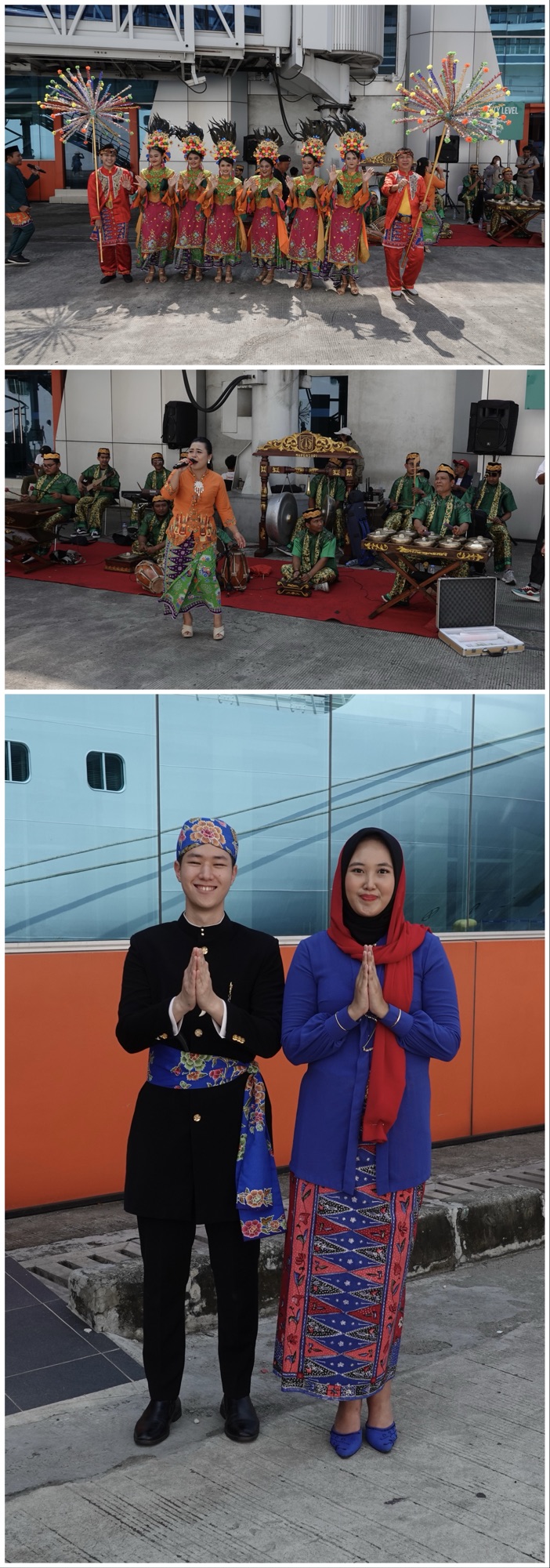
We’re not often one of the first tours off the ship, which means we generally miss the welcome ceremonies. Today we were lucky enough to catch them, and they were lovely. Jakarta certainly made a great first impression.
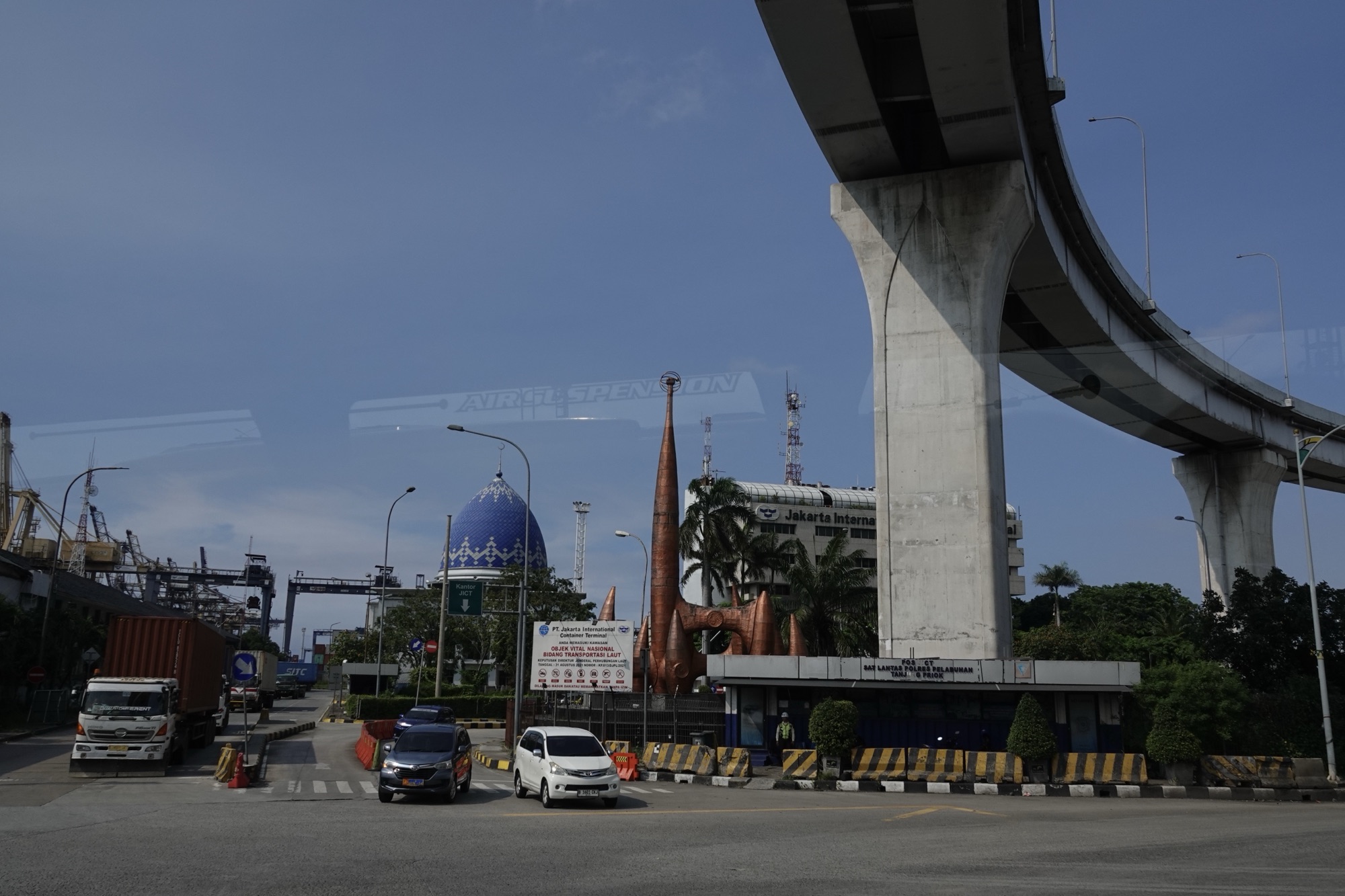
Downtown Jakarta is – optimistically – a 45 minute drive from the port, so there was lots of time for our very knowledgeable guide, Iwan, to tell us about Jakarta.
The city is home to 11.35 million people, in an area of 661 square kilometres. That translates to a whopping 17,171 people per square kilometres. No wonder most people live in towering high-rise apartments.
We learned that the city’s middle class earns an average of the equivalent of $500-700USD per month, and an apartment rents for between $400-1000USD per month. It’s obvious that families need 2 incomes, and most choose to have a maximum of 2 children.

Our guide told us that 60% of Jakartans are considered lower class economically, but poverty is not necessarily visible since the city has many job opportunities, and virtually no one is homeless. That said, he pointed out that the area right around the port is a slum, housing mostly itinerant workers who supplement the 7000 regular port employees.
There is also an upper middle class comprised increasingly of younger people with university educations, employed in the oil and banking industries, or in government jobs, and an economically upper class of industry owners, politicians, diplomats, and bankers.
We drove through crazy traffic, on roads often very bumpy from the constant flow of heavy trucks in and out of the container port. The city subsidizes public transit, and has created dedicated bus lanes, both to encourage people to leave their cars and scooters at home to decrease congestion and pollution. At age 58, which is the retirement age, public transit becomes free. Nonetheless, being able to own a vehicle is still seen as a status symbol and freedom from pre-determined travel schedules. Since gas is also subsidized first lower income families, driving a motorcycle with 3 people on it can be almost cheaper than the subsidized bus fares.

Once we were in the downtown area, Jakarta looked much like any modern country’s capital city: gleaming office towers, upscale hotels, government offices, company headquarters, museums, galleries, shopping malls, and urban parks featuring impressive monuments. We were told the city has over 500 skyscrapers!
Through the bus windows we got a glimpse of the 137 metre tall national monument, “The Pride of Indonesia”, topped with a flame made out of 50 kg/110 lbs of solid gold.

Our first stop was the National Museum, renowned for its vast collection of artifacts. Our guide took us on a short narrated tour focussed mostly on Indonesia’s history, and an astounding collection of ancient Hindu statues. He was incredibly knowledgeable, and seemed intent on sharing every single fact he knew about every single exhibit at which we stopped.
The concept for this museum was established in 1778 by the Dutch East India Company as a research and knowledge institution. It is now the largest museum in Indonesia. Needless to say, our visit only scratched the surface of what is on offer.
The first exhibit room we visited showcased the multiple ethnicities that comprise Indonesia: 1340 ethnicities and 740 distinct languages in Indonesia, that certainly helped us understand the need for a common Indonesian language.
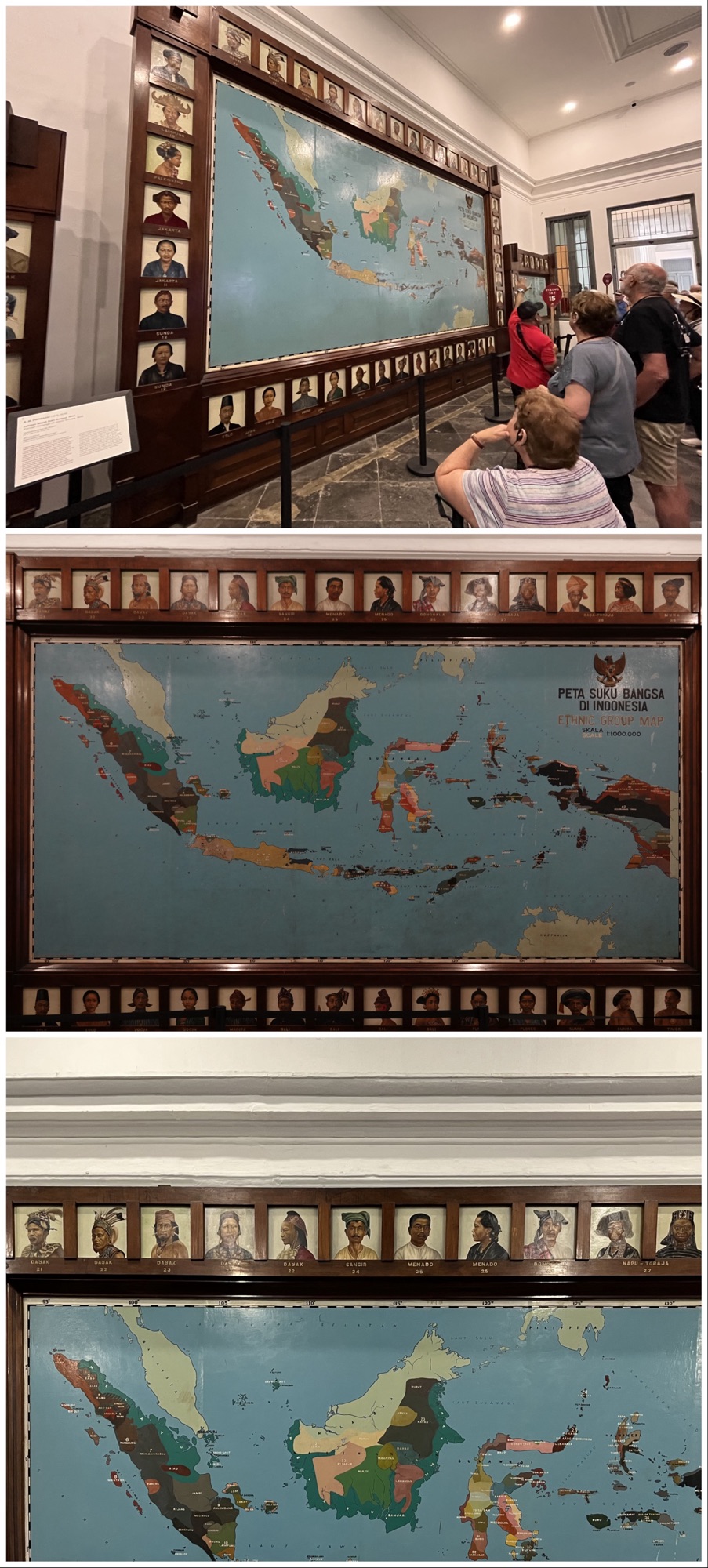
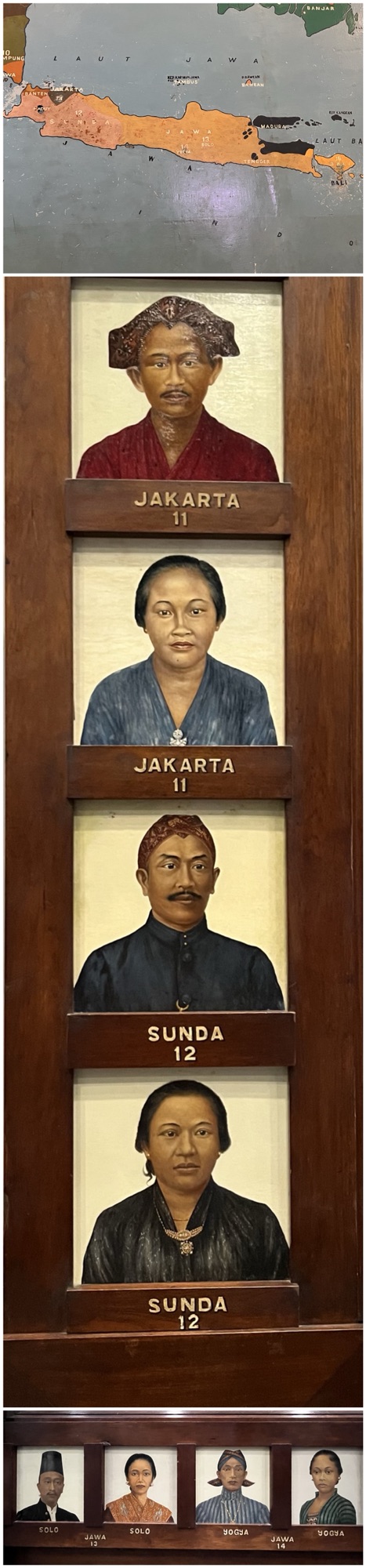
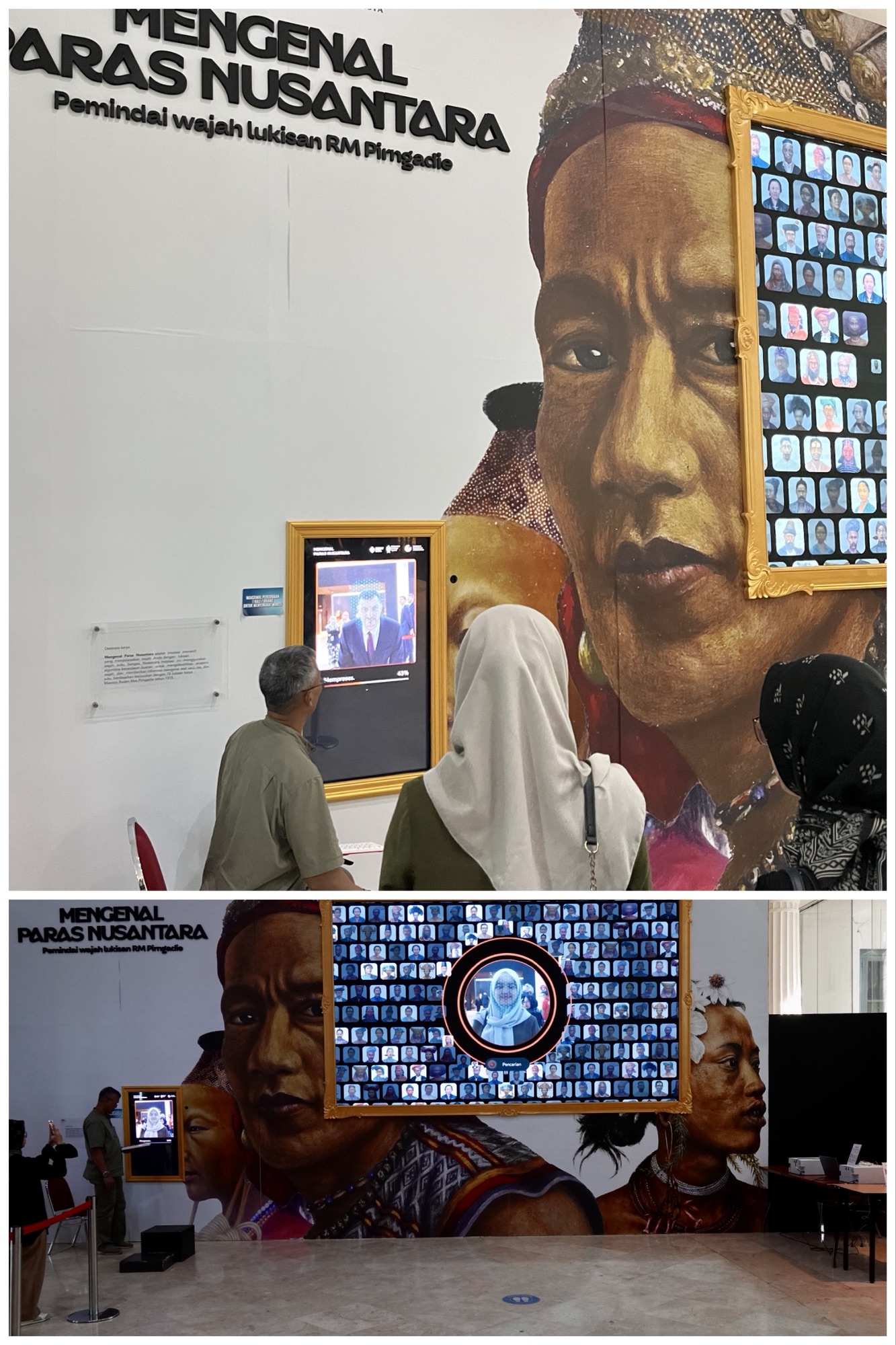
The entire exhibit consisted of “Portrait Paintings of Ethnic Groups” created by R. M.Pirngadie (1875-1936) in 1935 with the original title Les peoples des indes neerlandaises (People of the Dutch Indies), features 78 portraits of ethnic groups in Nusantara (the Indonesian name for Indonesia) Originally, these paintings were created for a colonial exhibition in Paris in 1931. After the original works were destroyed in a fire, R. M. Pirngadie painstakingly recreated them on teak panels, which now serve as an invaluable record of Indonesia’s cultural diversity in the collection of the National Museum of Indonesia. These portraits, restored between 2016 and 2020, are displayed at the museum. R. M. Pirngadie was a maestro and cartographer, celebrated for his detailed documentation of Nusantara’s crafts and heritage.
Pirngadie only split Java into two areas: Javanese and Sundanese. (Our guide on Day 2 was Sundanese, and told us more about the differences, including variations in skin pigmentation.
In the next gallery, Indonesians are invited to have their faces scanned in order to determine their ethnic heritage. The result is displayed on a huge screen and added to a collage of faces. Whether physical characteristics like bone structure are as accurate as a DNA test no one seemed to care.
The pride of the museum is its collection of ancient Hindu statues. Each of these is human-sized or larger and, given that they date from the 5th century to the 15th century, their degree of preservation is magnificent.
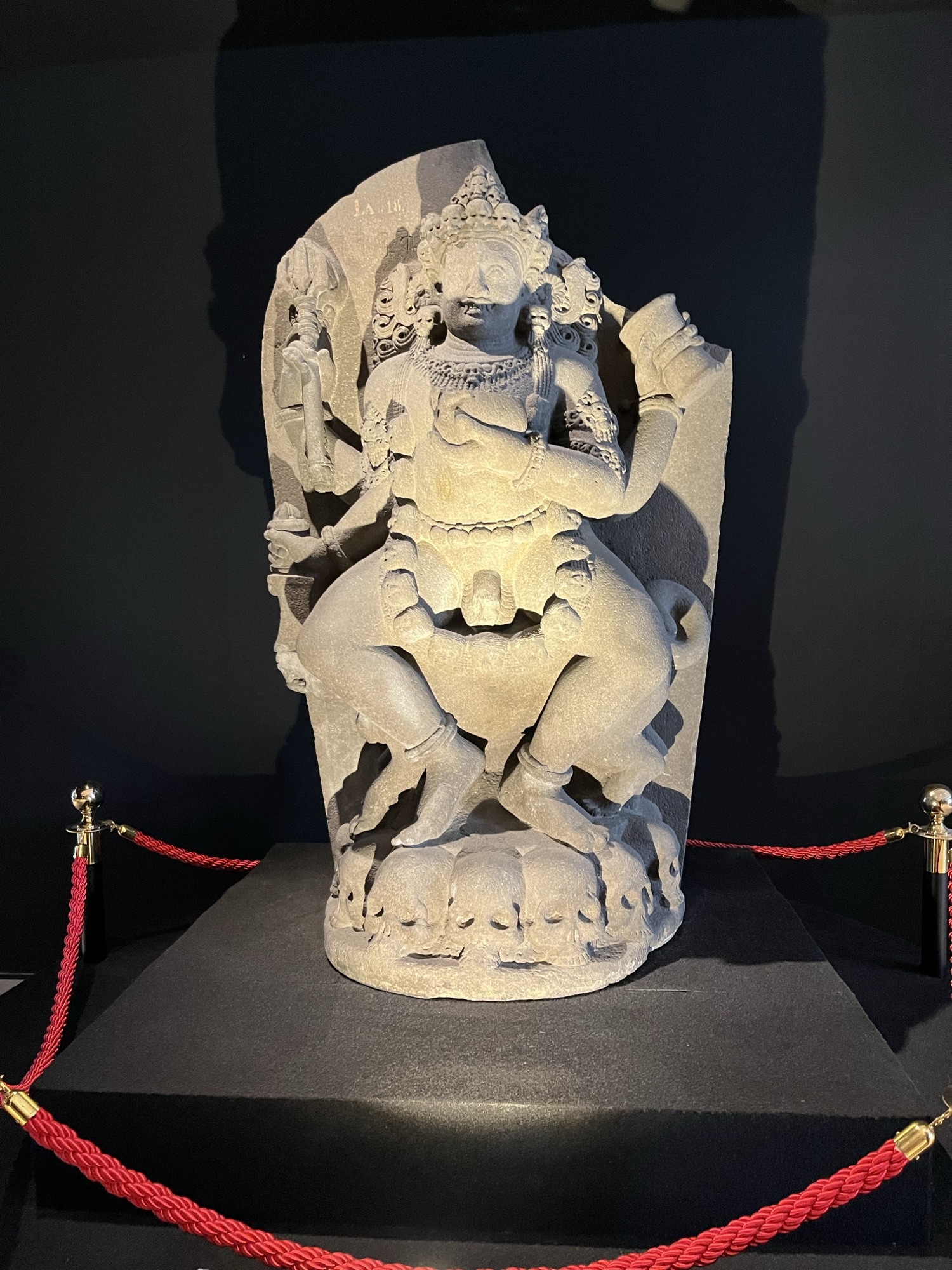
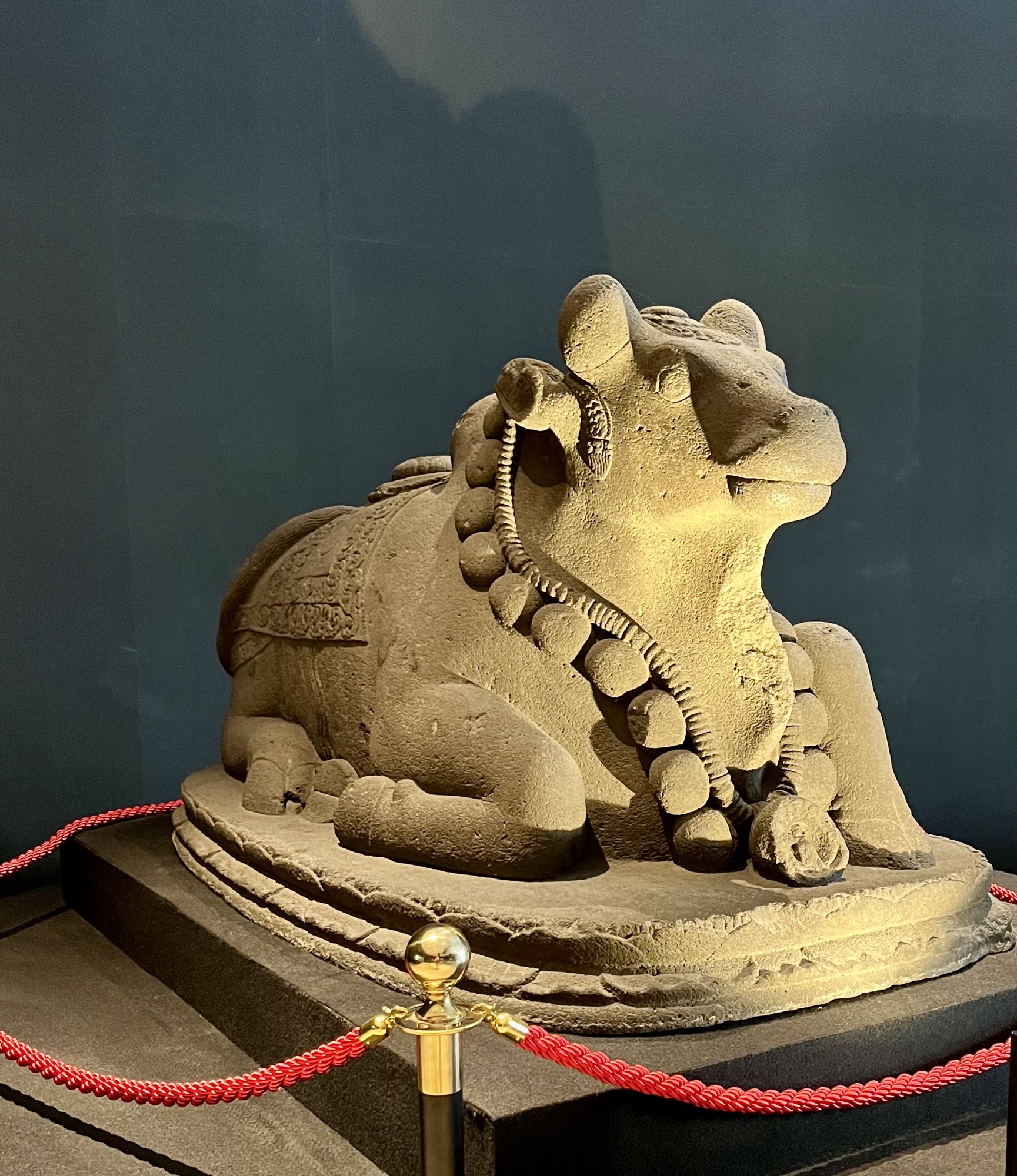
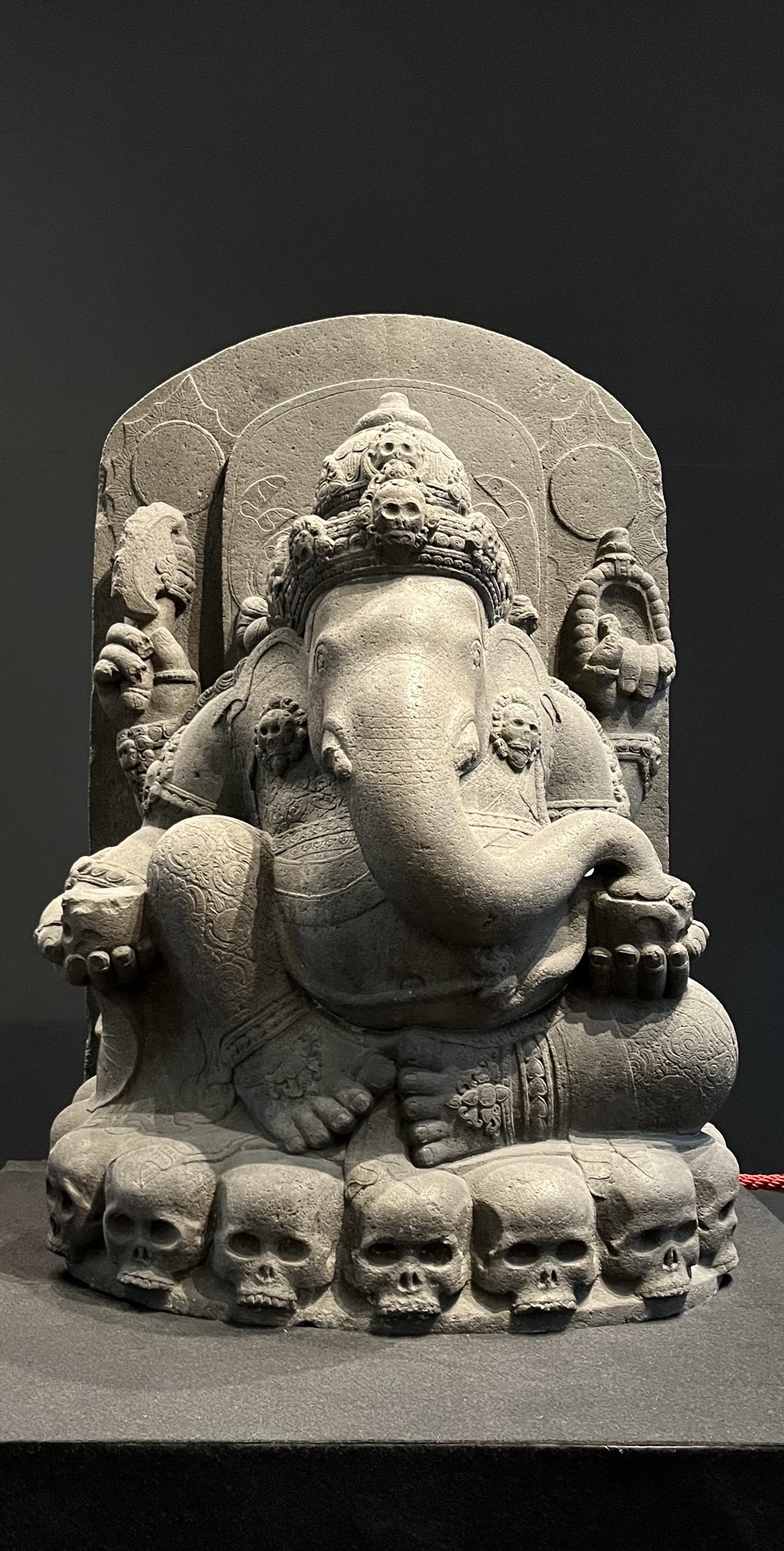

The inner courtyard of the museum gives a better perspective of the statue sizes, since there is another Nando here. Notice that in the distance beyond the museum the flame of the Indonesian National Monument is visible.

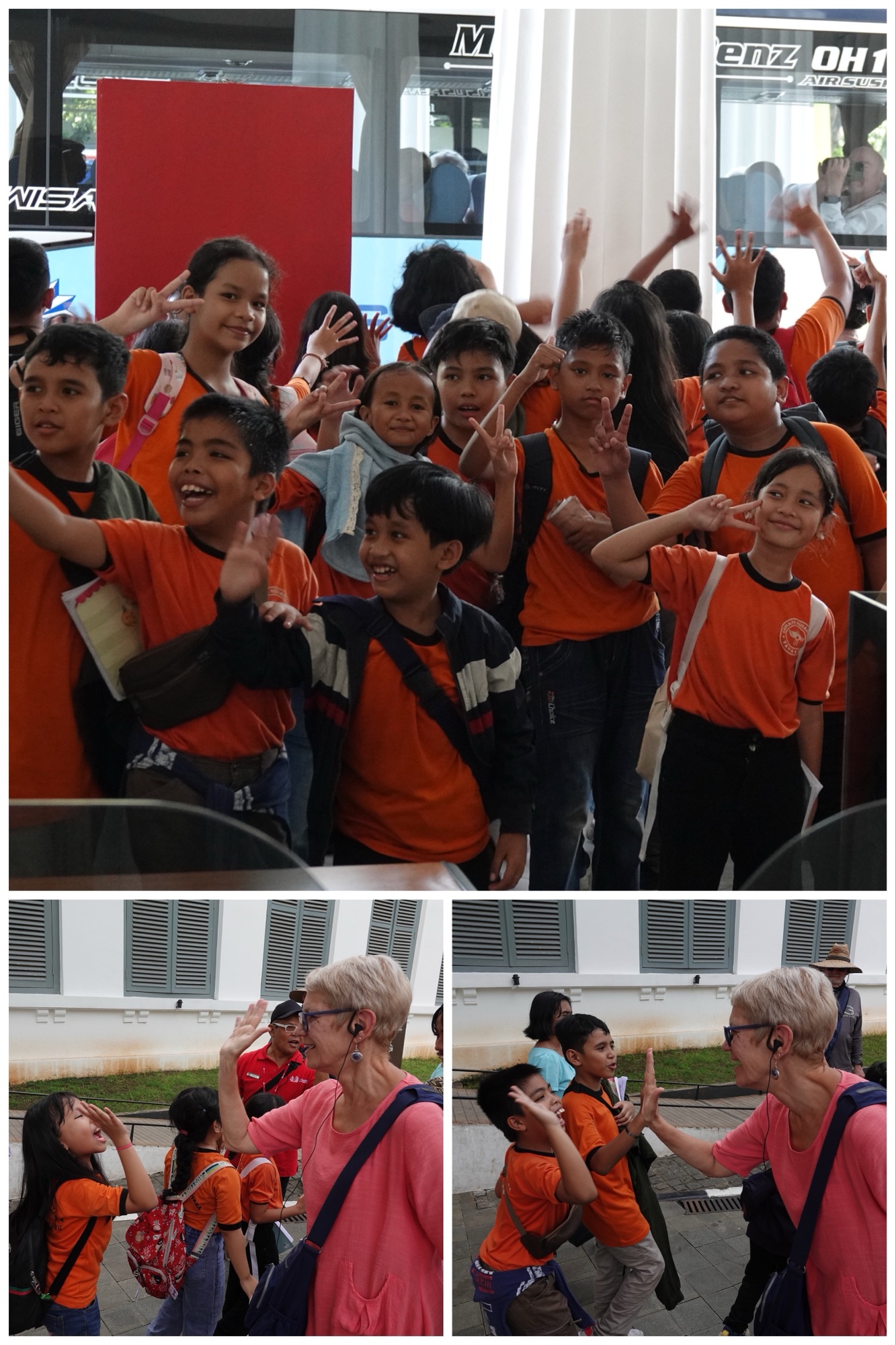
As we left the museum, a large group of elementary school students on a field trip were in the lobby. As is so often the case, they were excited to smile and wave at tourists. The girls happily returned blown kisses, while the boys gave us fist bumps.
From the museum, we were taken to the Sarinah Mall, a historic landmark that offers a blend of traditional and modern Indonesian goods. I was hoping to find a long dress is a batik-style print, but this was high-end one-of-a kind designer style shopping, and I knew I wouldn’t wear any of the beautiful things we saw. While this was billed as a “shopping stop”, it was really a chance to show off how modern Jakarta has become since their independence from the Dutch. There was a prominent display (all in Indonesian) at one end of the ground floor talking about the building and opening of the mall in 1963.
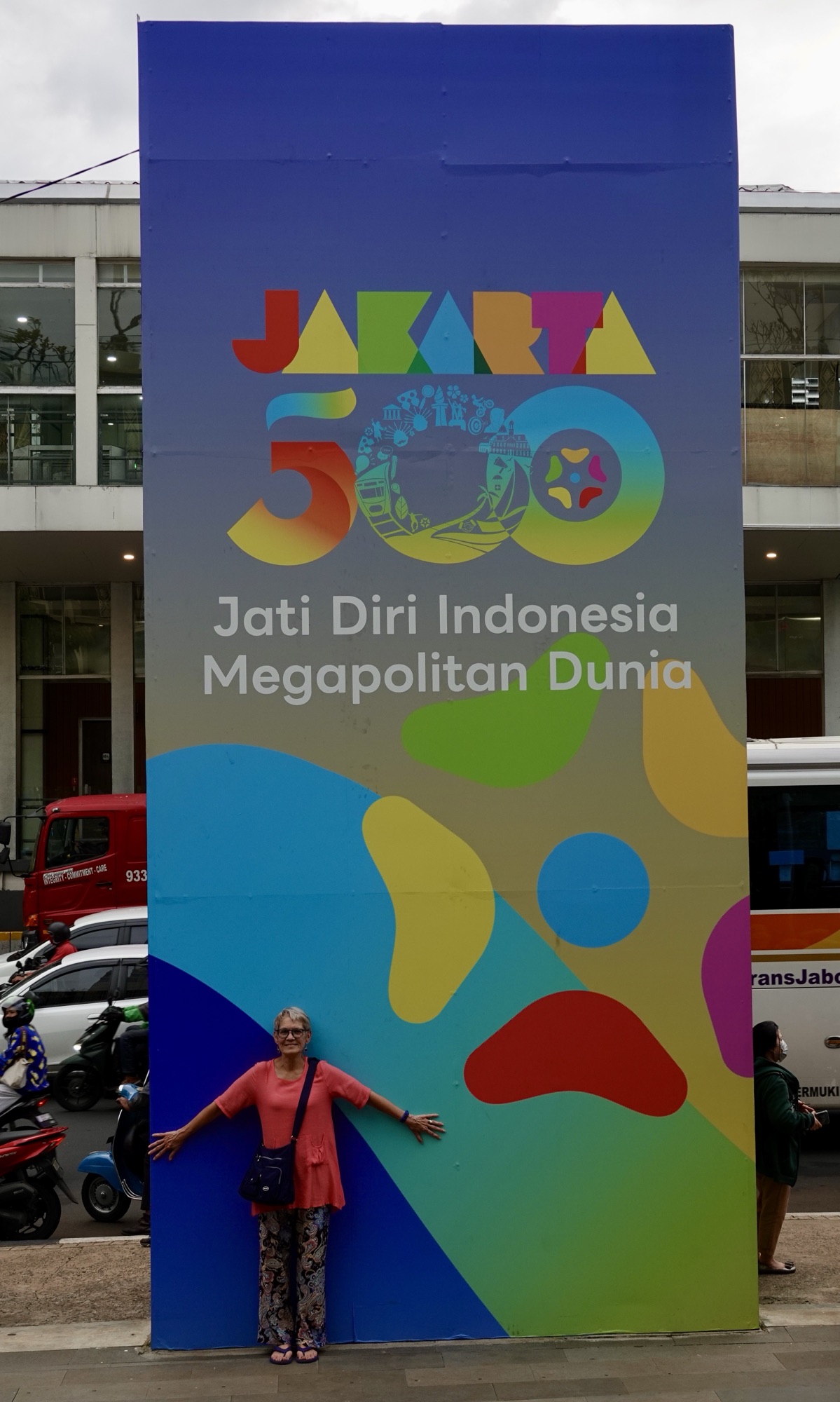
Outside the mall was a sign advertising the upcoming 500th anniversary of the founding of Jakarta by the Dutch in 1527.
Next up was the Museum Wayang (“puppet museum”) in Jakarta’s historic old quarter, Old Batavia. We got a glimpse of the well-preserved buildings of the 18th-century Dutch colonial administration in Fatahillah Square, the heart of the old city.

From the square we walked to the Museum Wayang itself where a fascinating collection of puppets is on display, protected in glass cases. Wayang shadow puppetry is an art form that has been designated a UNESCO Intangible Cultural Heritage.
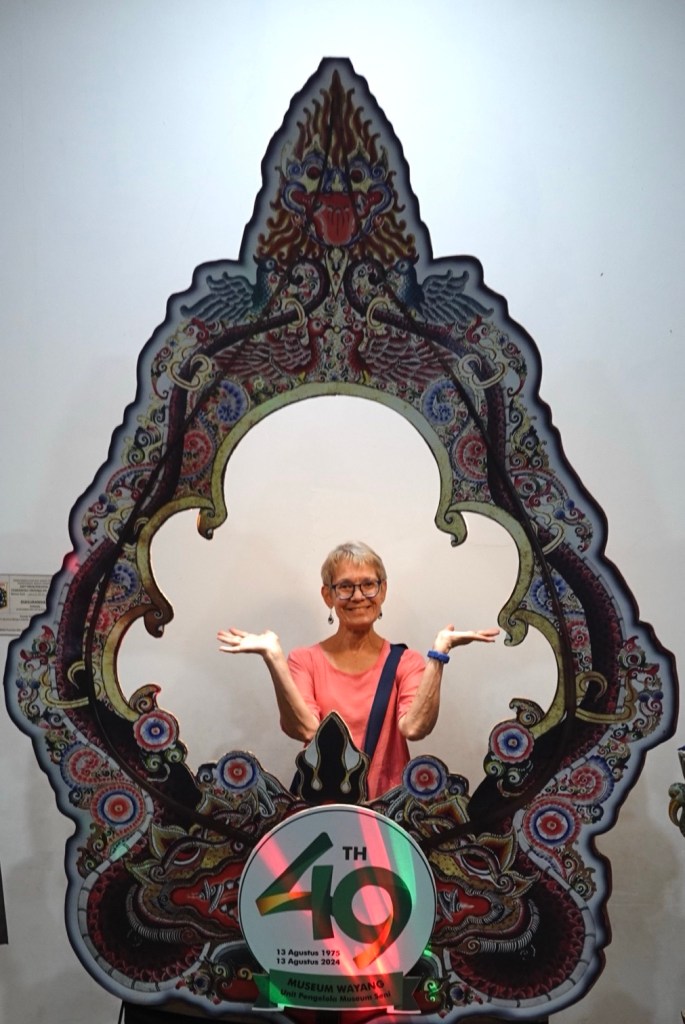
The entire collection here consists of 4200 puppets, displayed in a building that was originally a church built in 1640 by the Dutch East India Company (VOC). The building has had many uses over the centuries, including a church, a trading company’s building, and other museums, before becoming the Wayang Museum in 1975.
Interestingly, one of the halls in the building has been preserved as it originally looked, including the grave markers of Dutch congregants of the church.
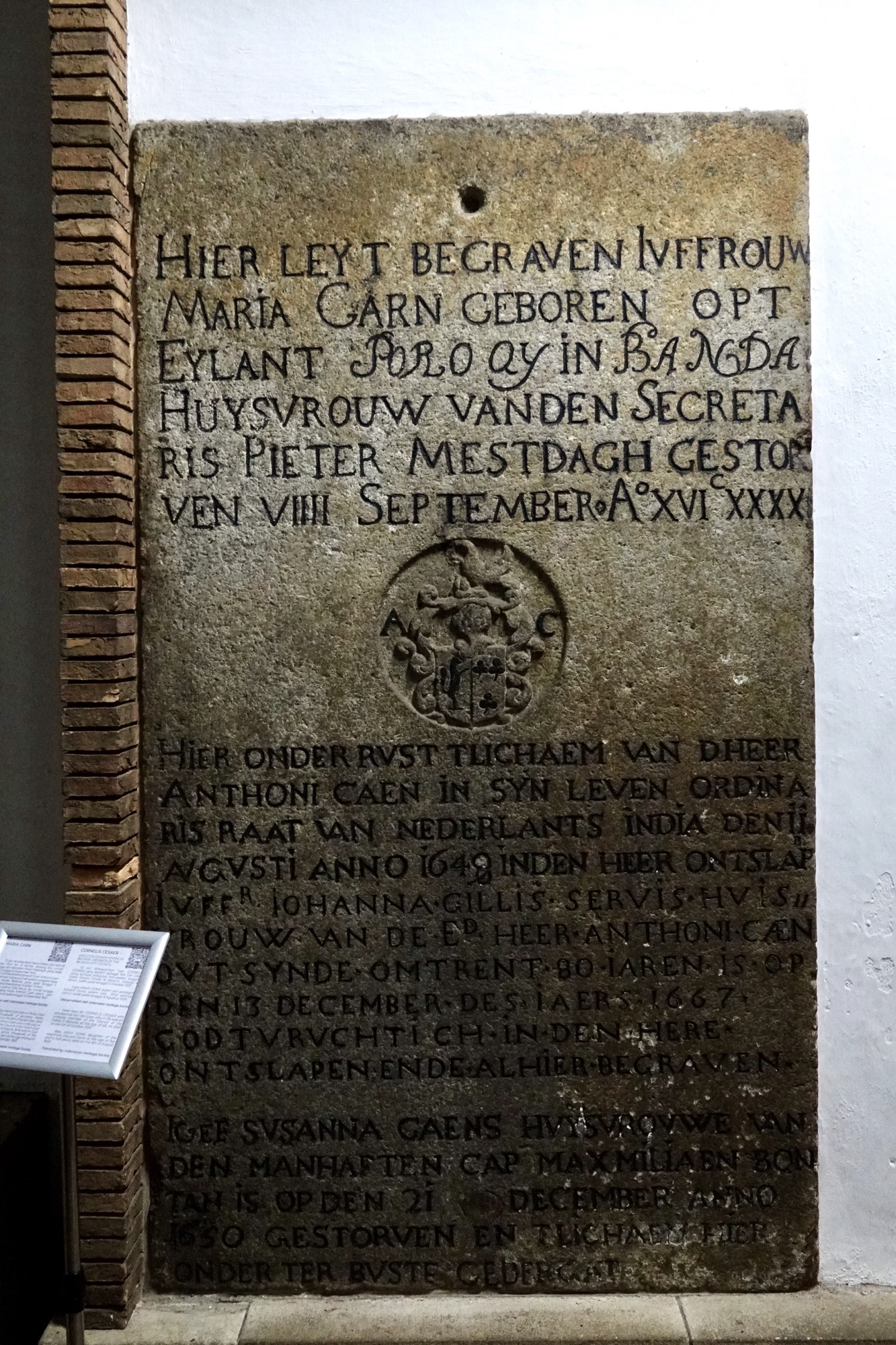
Here rests Mr. Anthoni Caen who in life was an ordinary member of the Council of the Dutch East Indies, who on the 2nd of August, 1648 rests in God.
Miss loanna Gillis Seruis, Housewife of the honourable Mr. Anthoni Caen at the age of around 80 years on the 13th of December, 1667.
Translated by: Indonesian Heritage Society
Once through the crypt passage, we entered a world of puppetry.
A lot of the puppets were designed to tell the Hindu Ramayana legends, one of which we had seen (the Kacek dance) in Bali. The monkey army plays an important part in the rescue of Sinta from her abductor.
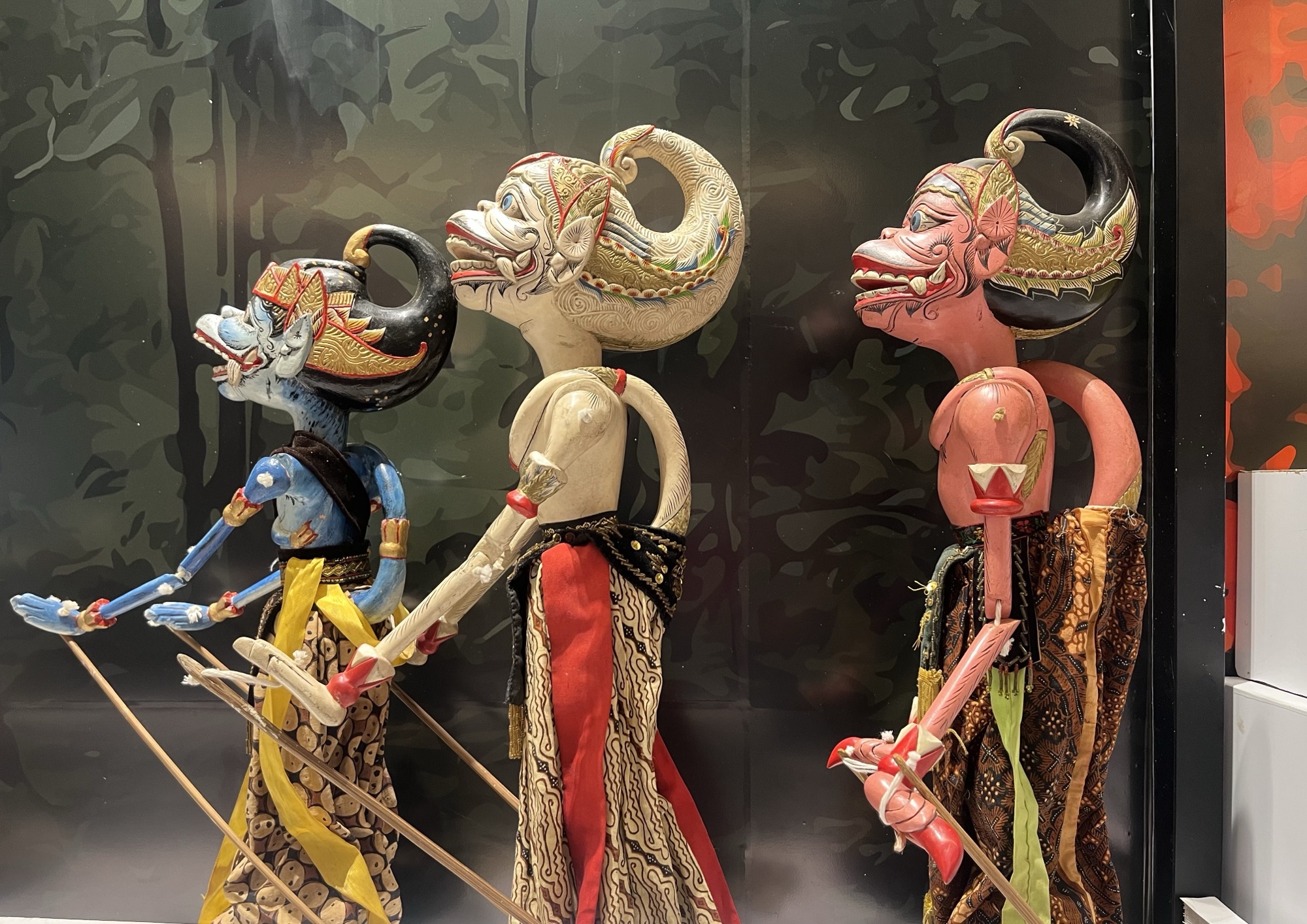
Klithik puppets (below) are made of thin balsa wood. The name klithik is taken from the “klithik-klithik” sound caused when the puppet is played. Wayang Klithik Yogyakarta style puppet shows usually feature the epic story of Damarwulan. Wayang Klithik Yogyakarta Style puppet shows can still be found at the Sultanate Palace puppet shows.

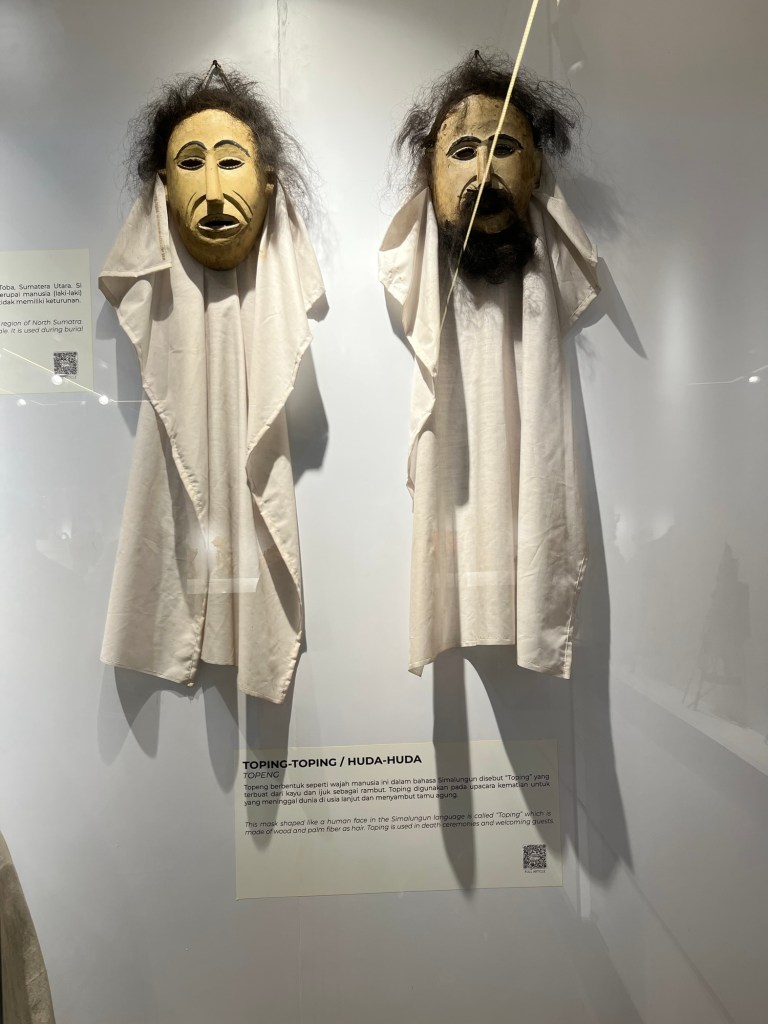
TOPING-TOPING / HUDA-HUDA: these masks shaped like a human faces in the Simalungun language are called “Toping” which is made of wood and palm fiber as hair. Toping is used in death ceremonies and welcoming guests.
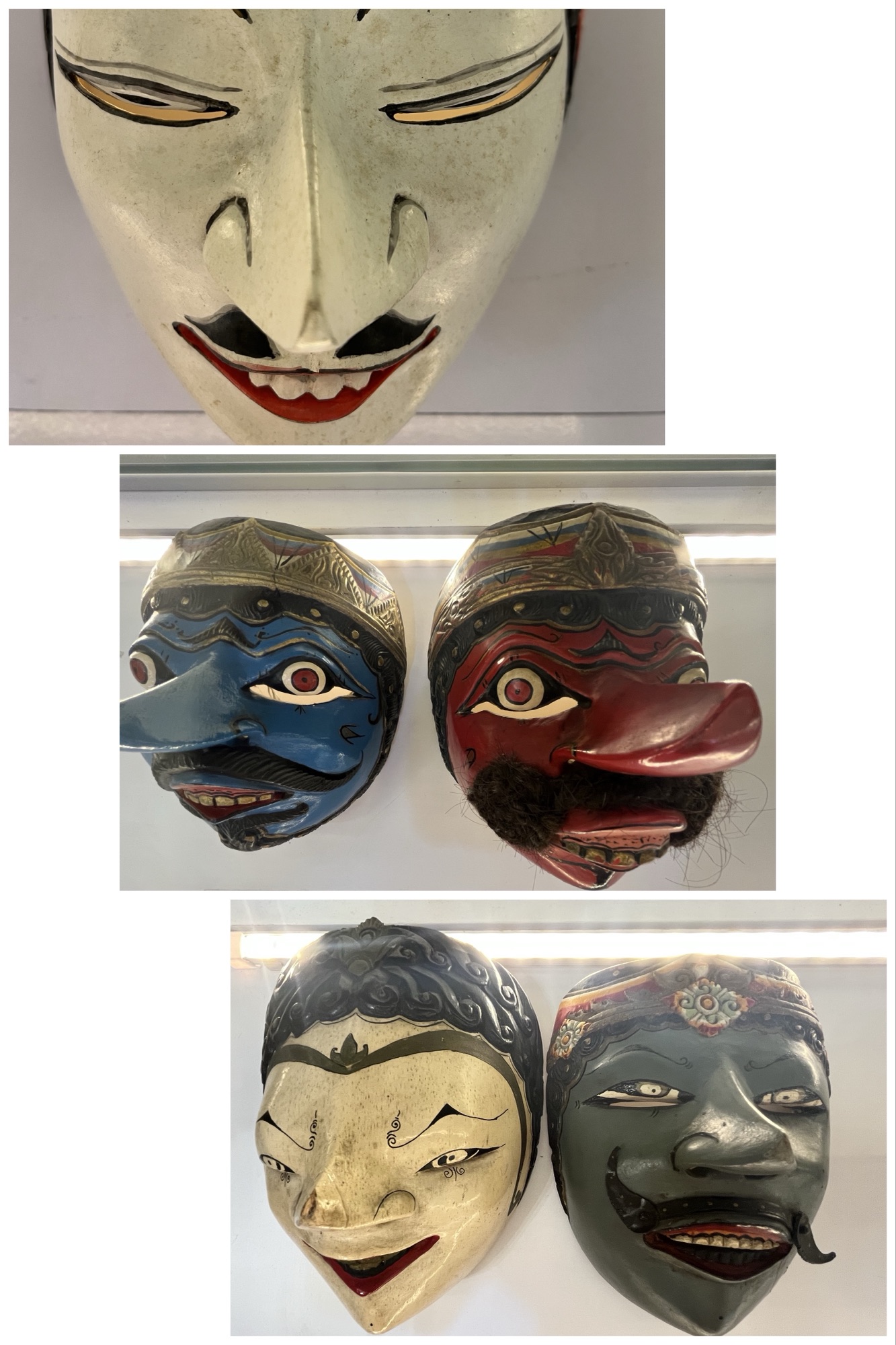

We learned that especially ugly faces on puppets indicate characters who have been cursed by the gods. Our guide told us that it is better to have an ugly exterior hiding a good heart, than a beautiful exterior hiding evil.
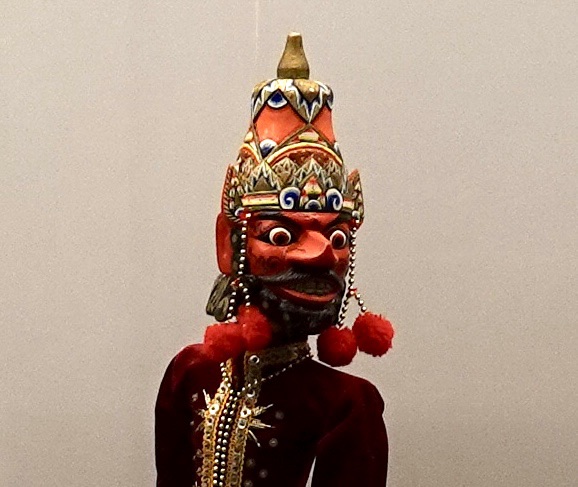
The museum also had displays of puppets from other countries, including the U.S, U.K., China, and Russia.
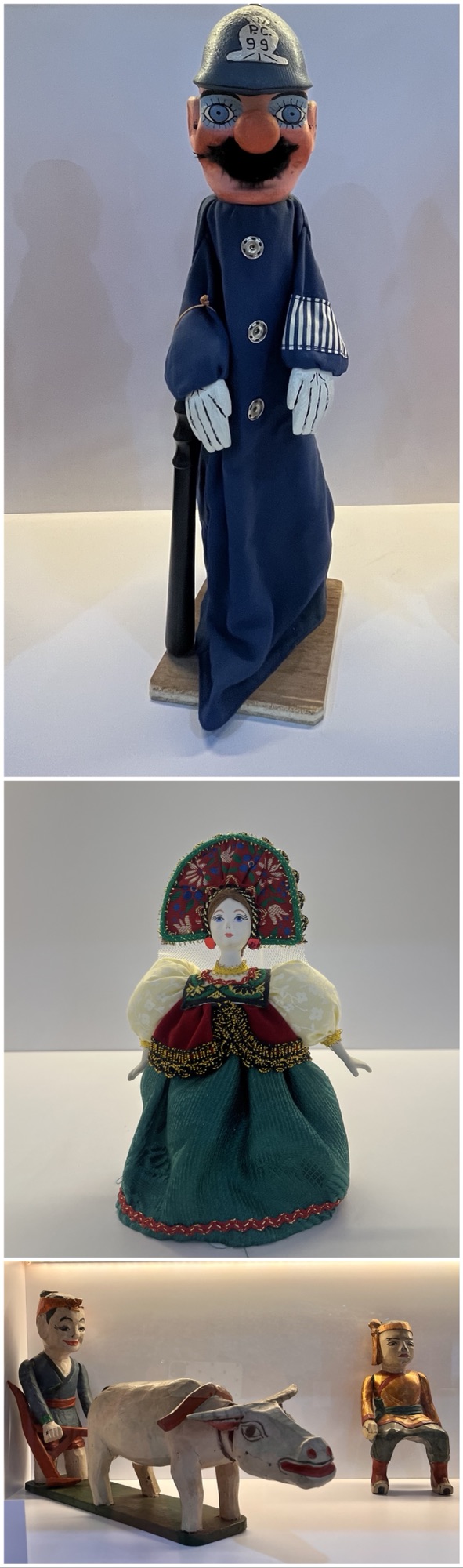
We were reminded that puppetry is not only an amusement; it can be used to carry on tradition, to teach, and even to criticize or protest. It brought to mind the way that German carnival parades use giant puppets and effigies to make political statements.

We were treated to a brief demonstration of shadow puppetry before reboarding our bus for the drive back to the port. Interestingly, we were “back stage” with the musicians and puppeteer, as opposed to on the other side of the screen watching shadows play put the story.
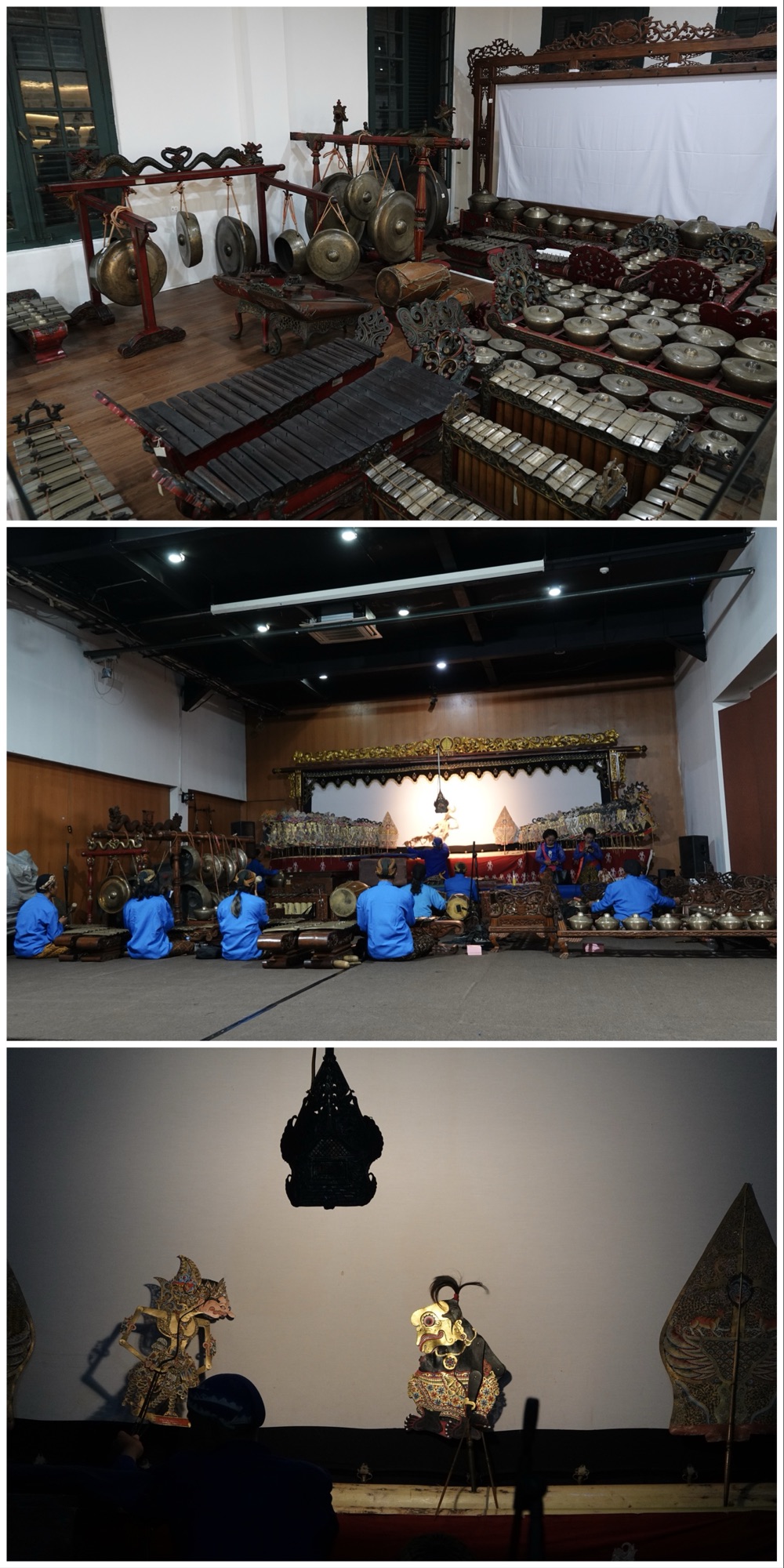
Our drive home after dark gave us a whole new look at Jakarta.
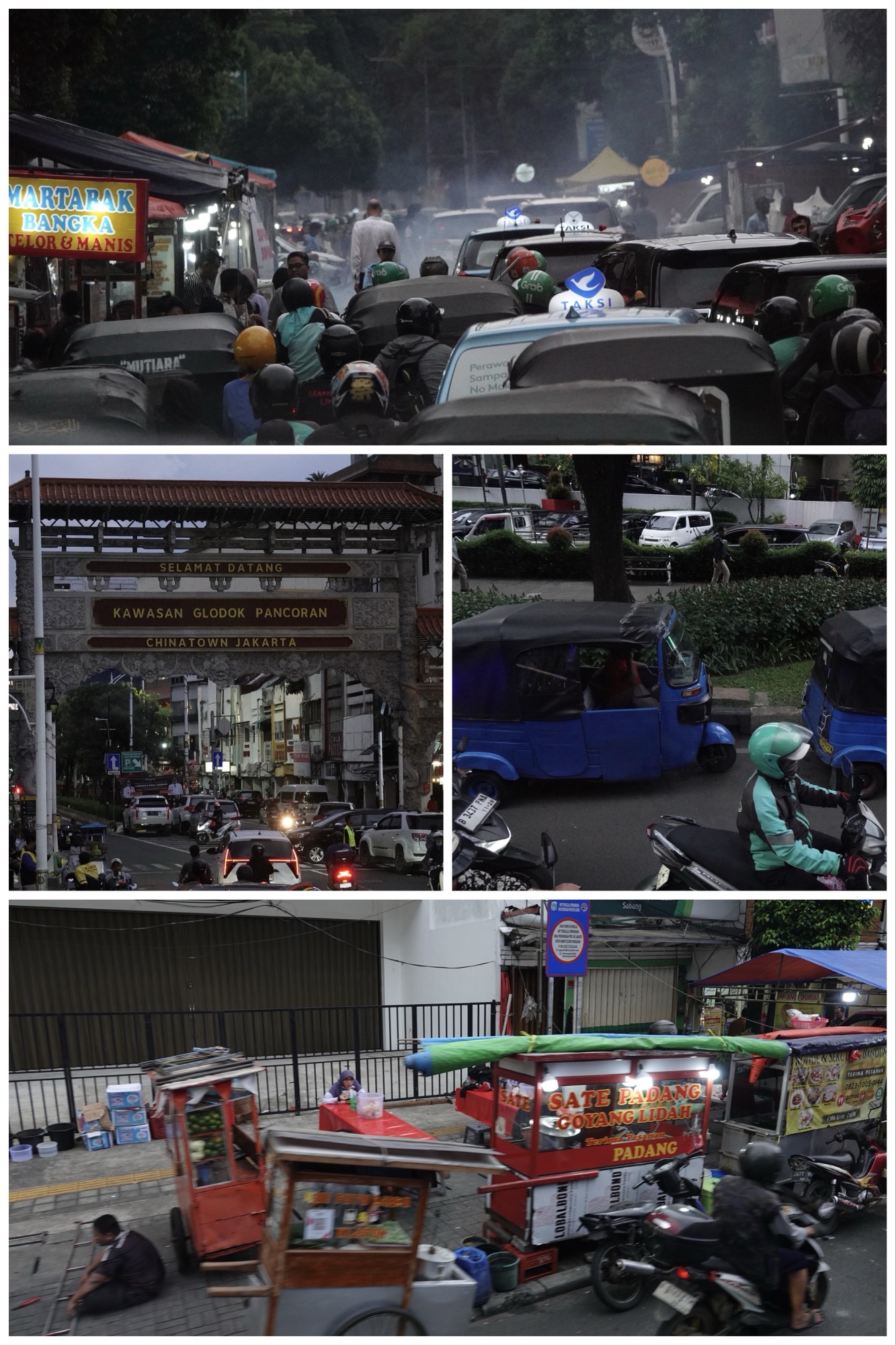
Adding a half hour of “extra” traffic jams during our day resulted in getting back to the ship at 8:00 p.m. We had 6:00 p.m. reservations for Guest Chef Wayan’s Taste of Indonesia menu, and Chef’s Table Maitre ‘d Carlito had held our table, but we were frankly too exhausted for 5 courses and 4 wines. Instead we grabbed a bite in the World Café with Al and Karin, who’d done the same excursion today, and then headed straight to our room. No theatre show for us tonight either. We needed to rest up for our 7:25 a.m. start to a 9 hour tour on Day 2.
 Rose and Ted’s Excellent Adventure
Neat to read about your visit to Jakarta. As you may know, Nicole’s grandparents on her mother’s side moved to Canada from Indonesia. It was through unusual circumstances. Her grandfather was Dutch and while they were in Canada visiting relatives, Indonesia declared its independence from the Netherlands. As a result, her grandfather could not return so they unexpectedly had to make a life in Canada. It turned out very well for them and for us : )
LikeLiked by 1 person
Wow! I didn’t know that…. But how lucky for Canada, and for you!
LikeLike
Thanks so much for the detailed report and photos. In 1983 I had hoped to start my Foreign Service career in Indonesia (my then husband was a professional puppeteer when I met him) but a woman in my training class with fluent Indonesian beat me out for the position and I ended up in Madagascar! I’ve still never visited the country and am not sure I’m likely to, so your details are so welcome! Viking’s certainly setting you a fast pace when in port. That’s great!
LikeLiked by 1 person