I’ve always been fascinated by images of ornate Balinese temples, so for our second day here I chose a 7-hour excursion called “Temple Wonders”.

Sadly, after 2 intense days of touring in Bali, I’m overloaded with information and exhausted and a full day behind in writing up my notes. Because I was afraid of forgetting the details of our visit if I didn’t write them down quickly, I prioritized writing today over anything else, including the morning lecture and the cooking demo that I ended up missing.
Our tour left the harbour at 8:00 a.m., with just 21 people in a full-sized tour bus. That sounds like it should have been roomy, but here in Bali we’re realizing what large people we are, both in height and girth, compared to Indonesians.
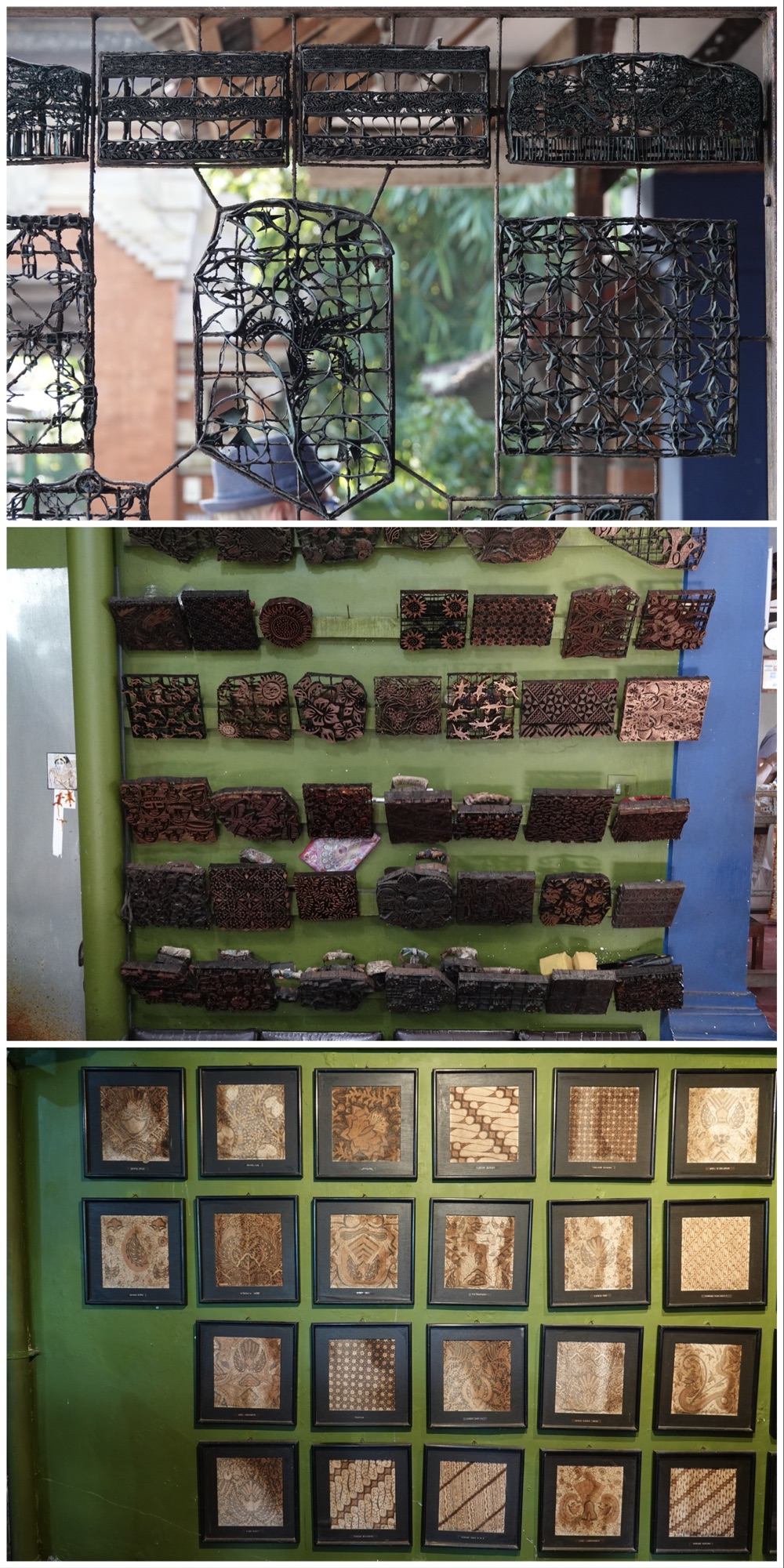
Our first stop of the day was at Tohpati Village, where the island’s fabric dyeing tradition lives on at a batik factory. The skills used here are passed down from generation to generation; there is no school teaching the art of batik. Compared to the experience Ted and I had 46 years ago in Ocho Rios Jamaica where we watched fabric being waxed, dipped in dye, re-waxed, re-dipped, and actually sewn into garments, today’s stop was more of a shopping experience.
We did see lots of the beautiful metal stencils used for stamping wax onto fabric to create a repeating pattern, including one of them in use.
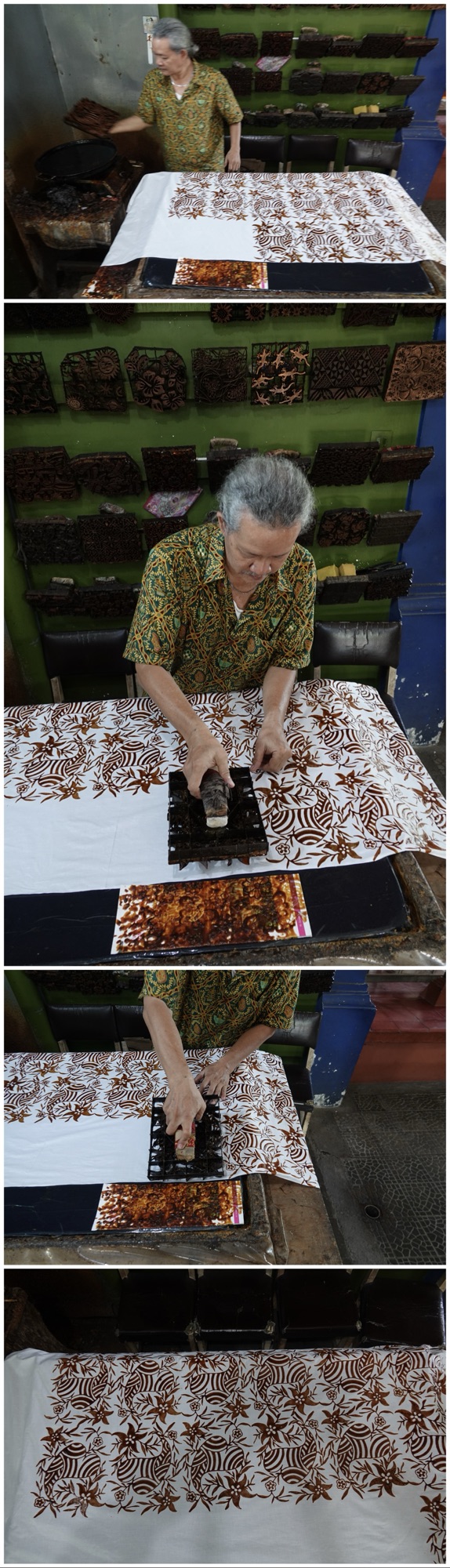
A batik artist painted my sleeve, and the shirts of many other passengers, with a wax flower design, which will last for quite a while since I wash in cold water. Another artist painted fish on men’s shirts. Both artists’ speed and skill were impressive.

When hand-waxing is used instead of stencils, one-of-a-kind pieces are created, which are much more expensive – especially when silk is used as the base fabric.

The best of these pieces are intended as works of art, and are signed by the artist.

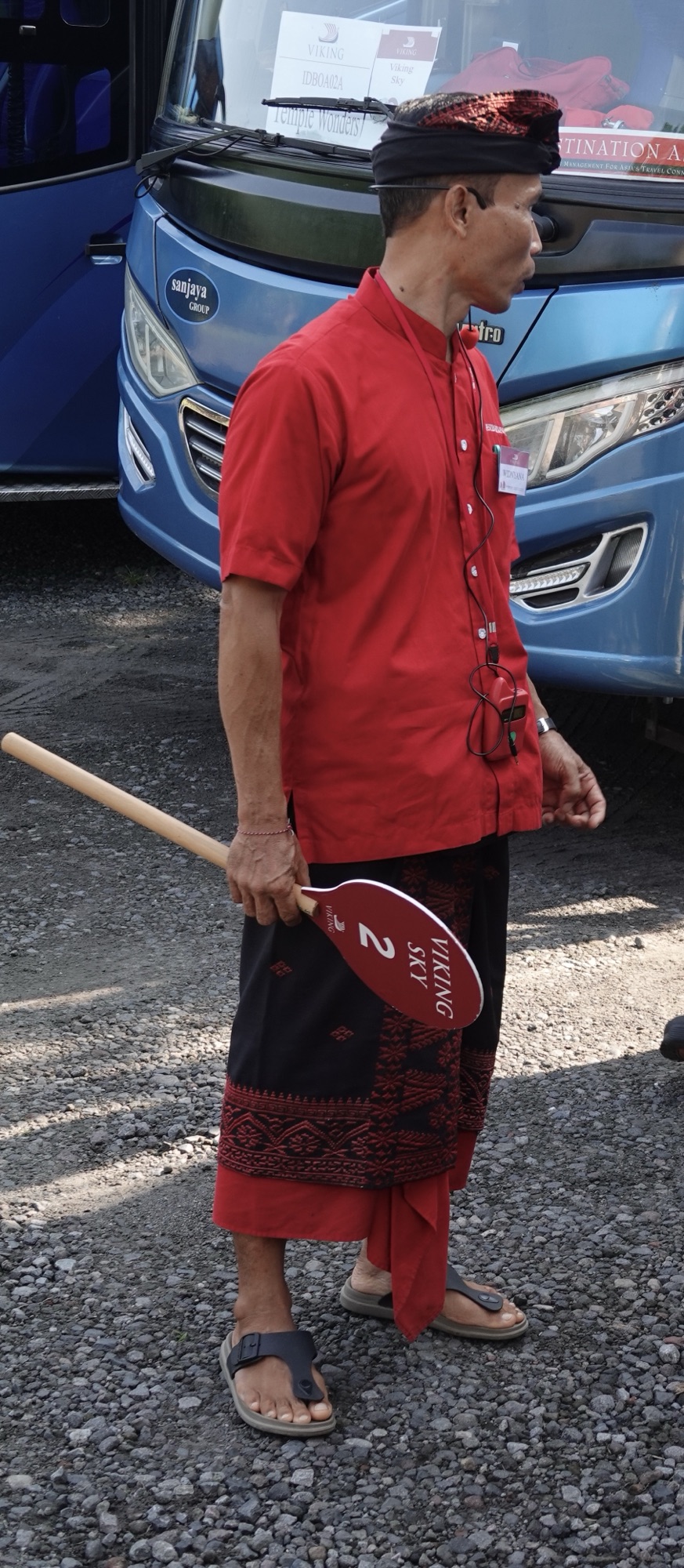
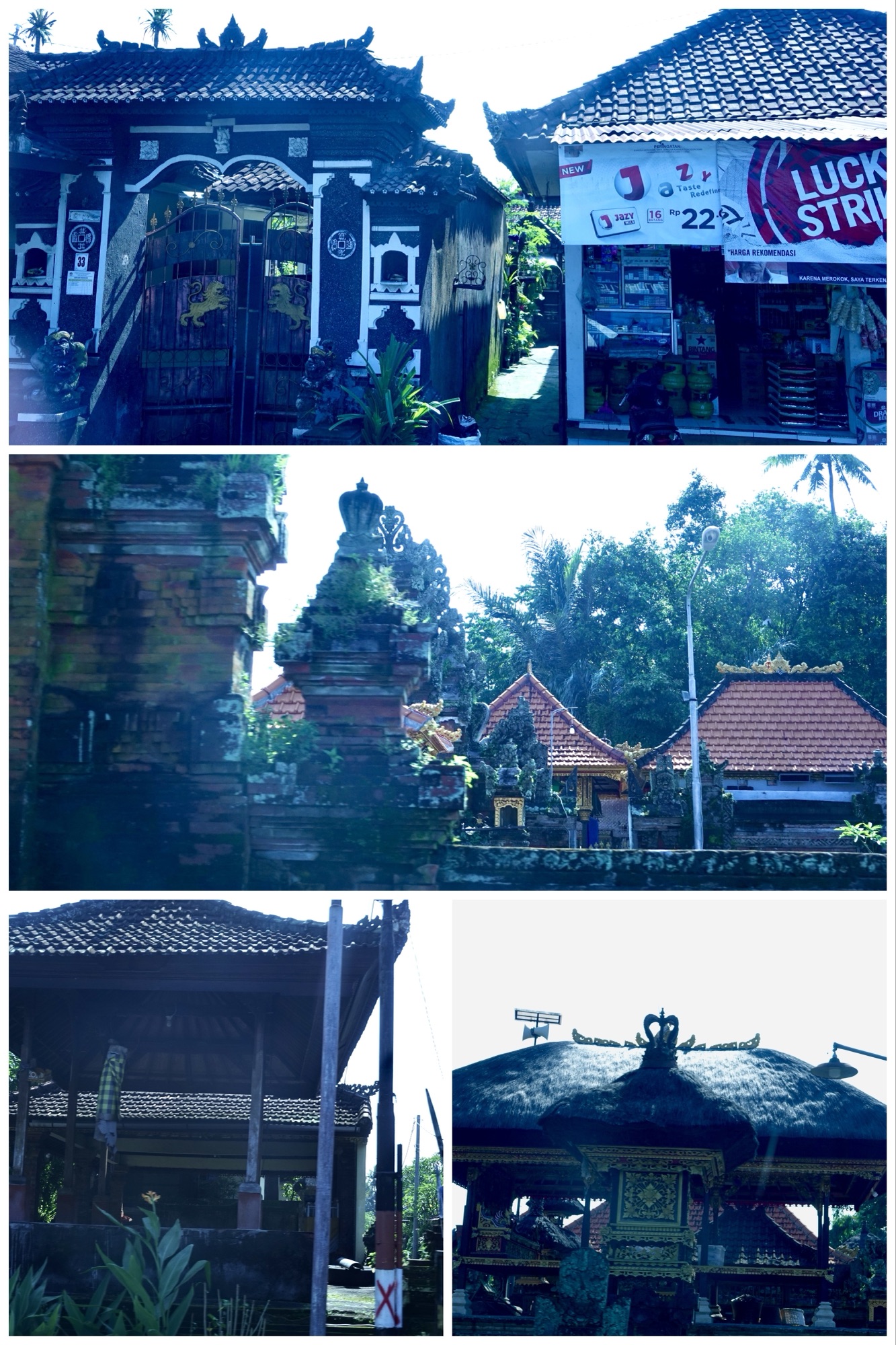
Our next stop was at the magnificent 17th-century (built in 1634) Taman Ayun Temple in the town of Mengwi, bit to get there we drove through several small towns: progressing from suburban settings with retail shops to rural areas filled with rice fields. ALL the pictures in the towns we passed through were taken through the bus windows, which impacted the vibrancy of the colours.
Angantaka,
Sedang,
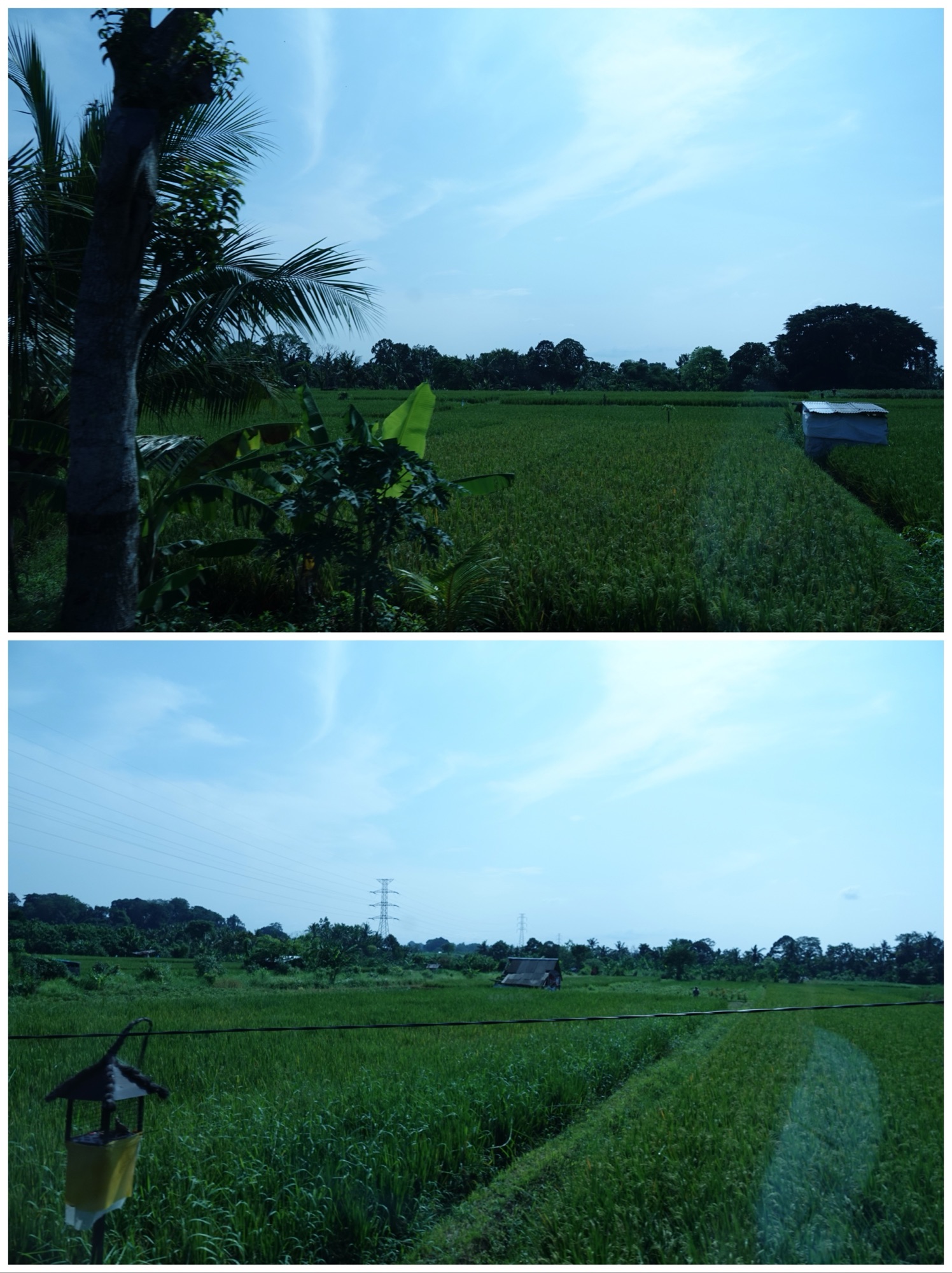
Mekar Bhuwana,
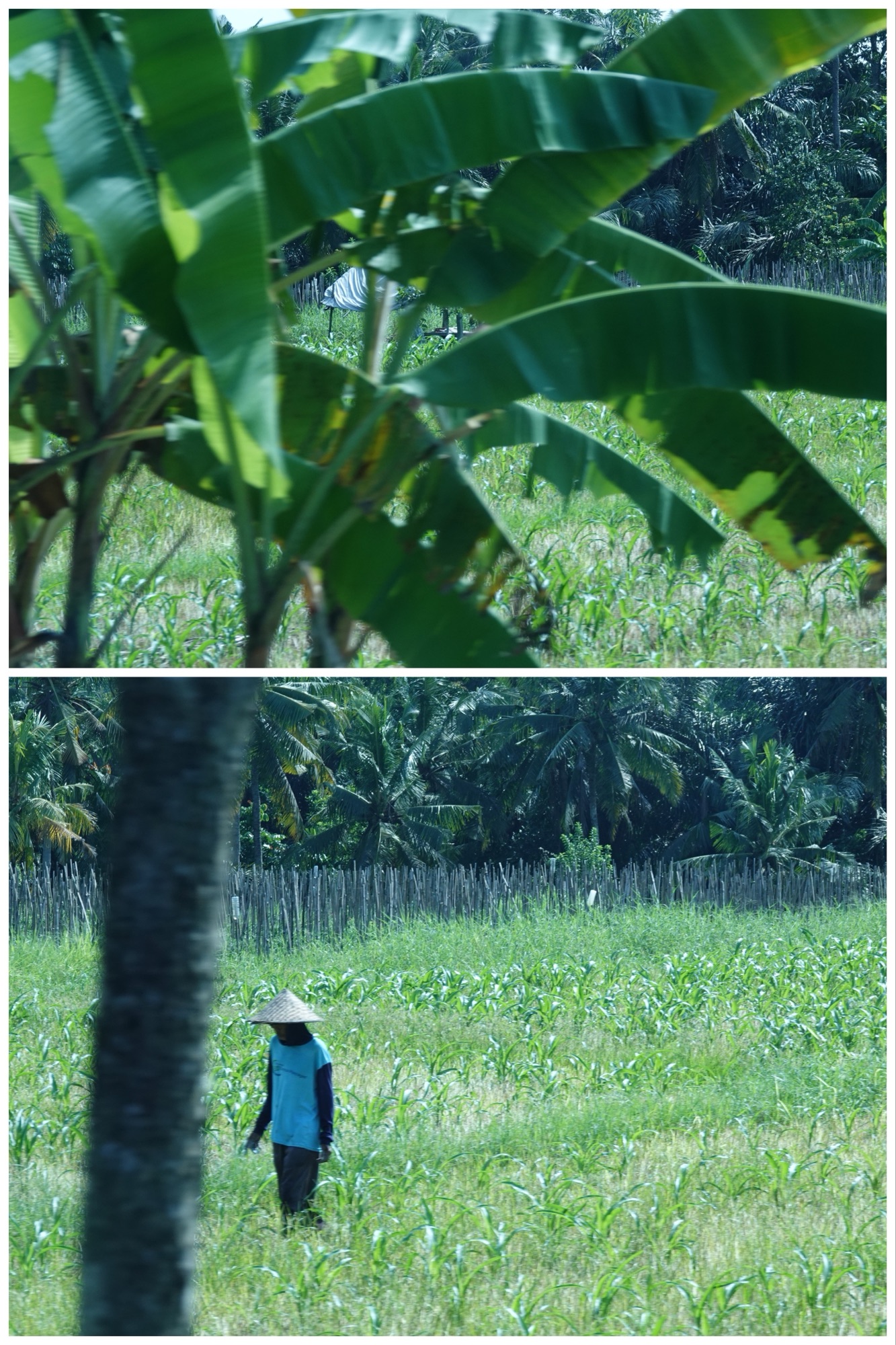
Penarangun,

and Gulingan.
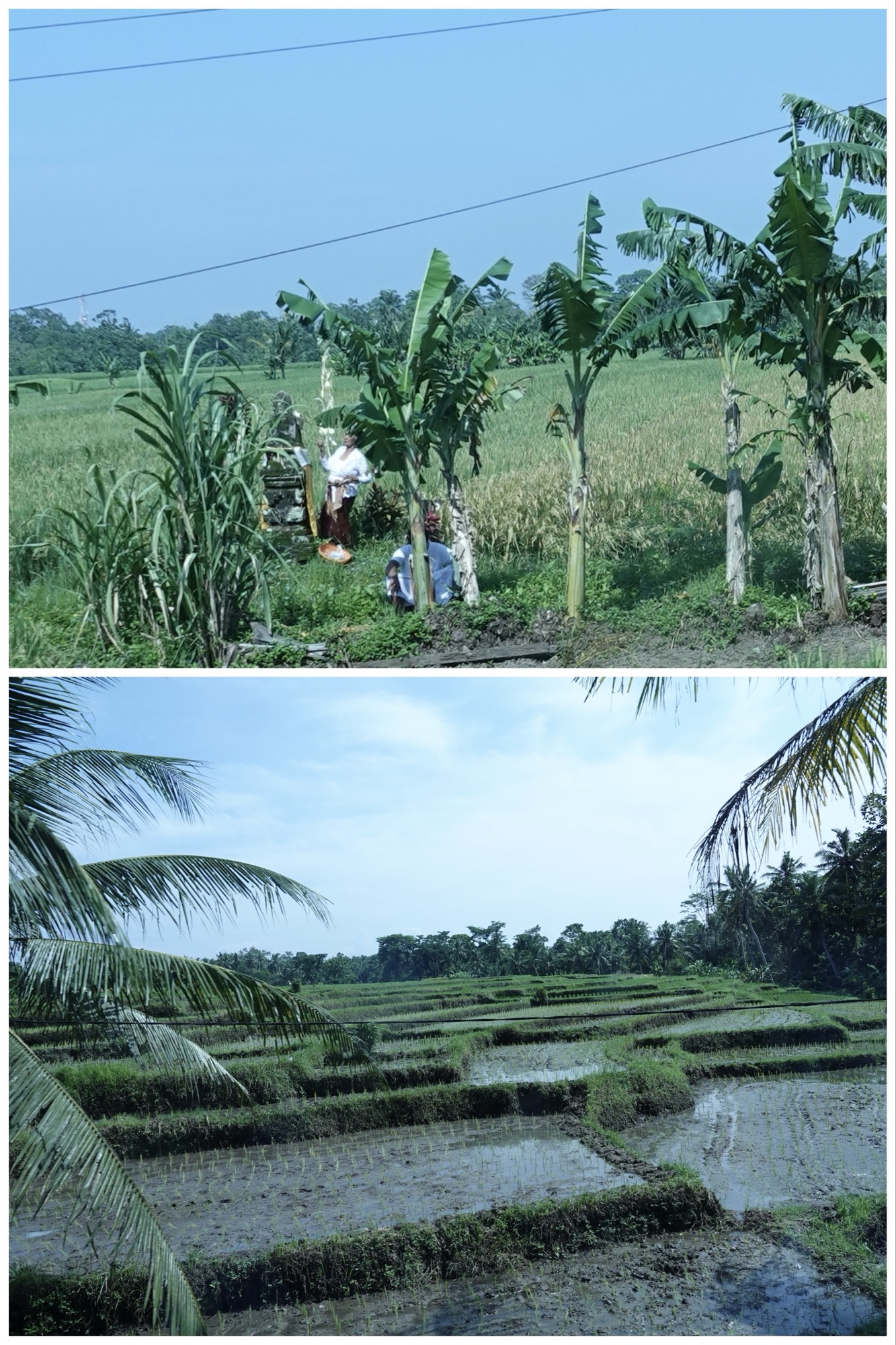
As we drove, our guide explained that in the crowded urban areas, like Denpasar, many families have retail businesses that abut the street (sidewalks being meaningless since the ubiquitous scooters both park and drive on them), and live behind the storefronts, which is why their family temples are less visible. Homes not fronted by a business have ornate entryways, like many we saw mixed into the neighbourhoods in Denpasar yesterday. Once we were into more rural areas, the norm became either a screened courtyard or an ornate split gate entry, behind which a temple with multiple shrines was located, along with living and cooking quarters for extended families.


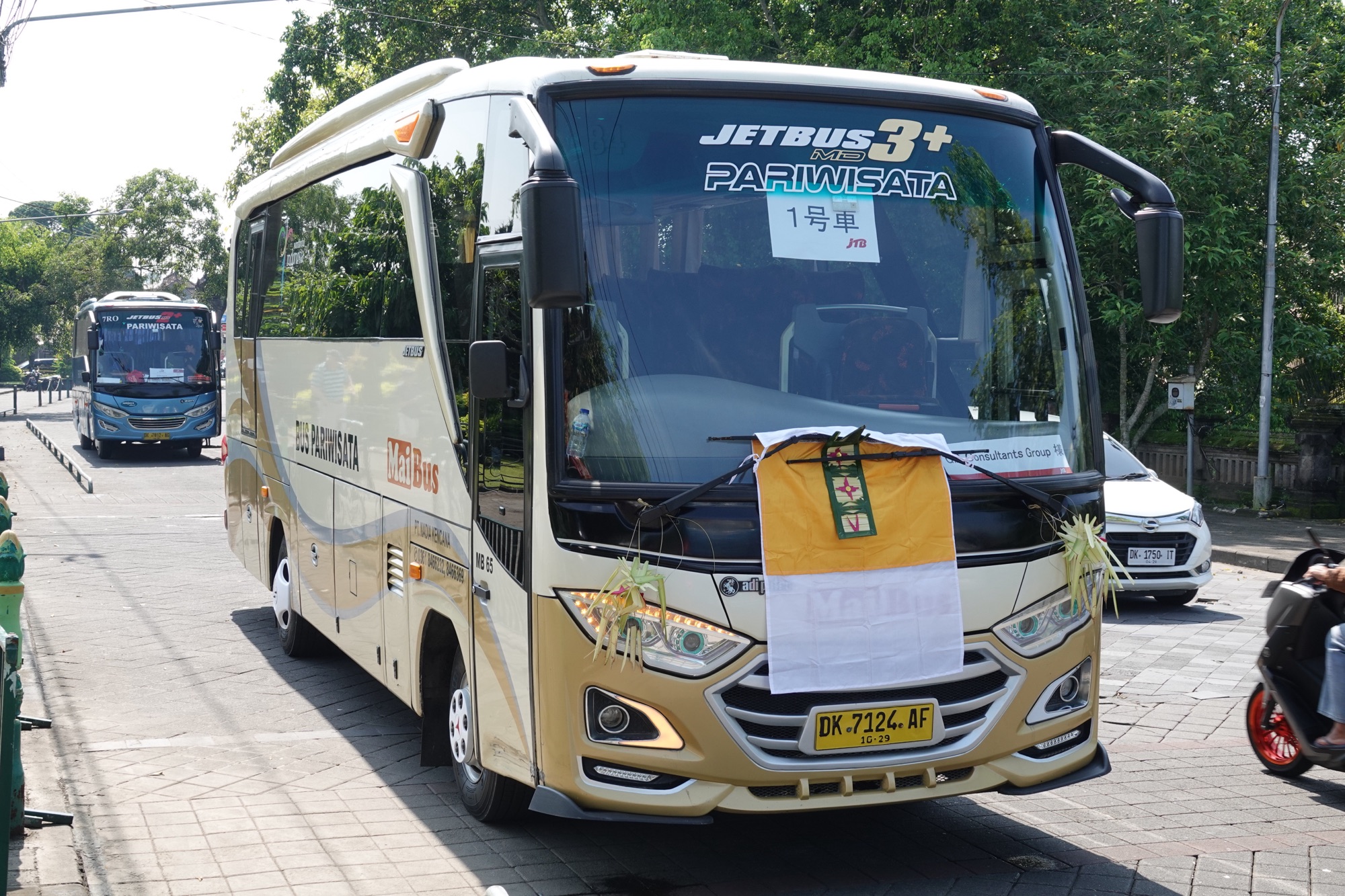
We saw the tour bus, below, decked in sacred colours and adorned with offerings in palm leaf sprays over each headlight. There was no shortage of cars and scooters similarly decorated.
Taman Ayun translates to “beautiful garden”, and that certainly describes the temple’s setting. This striking landmark served as the family temple of the Mengwi dynasty, whose kingdom survived until the late 1800s; members of that royal family still worship at this temple today.
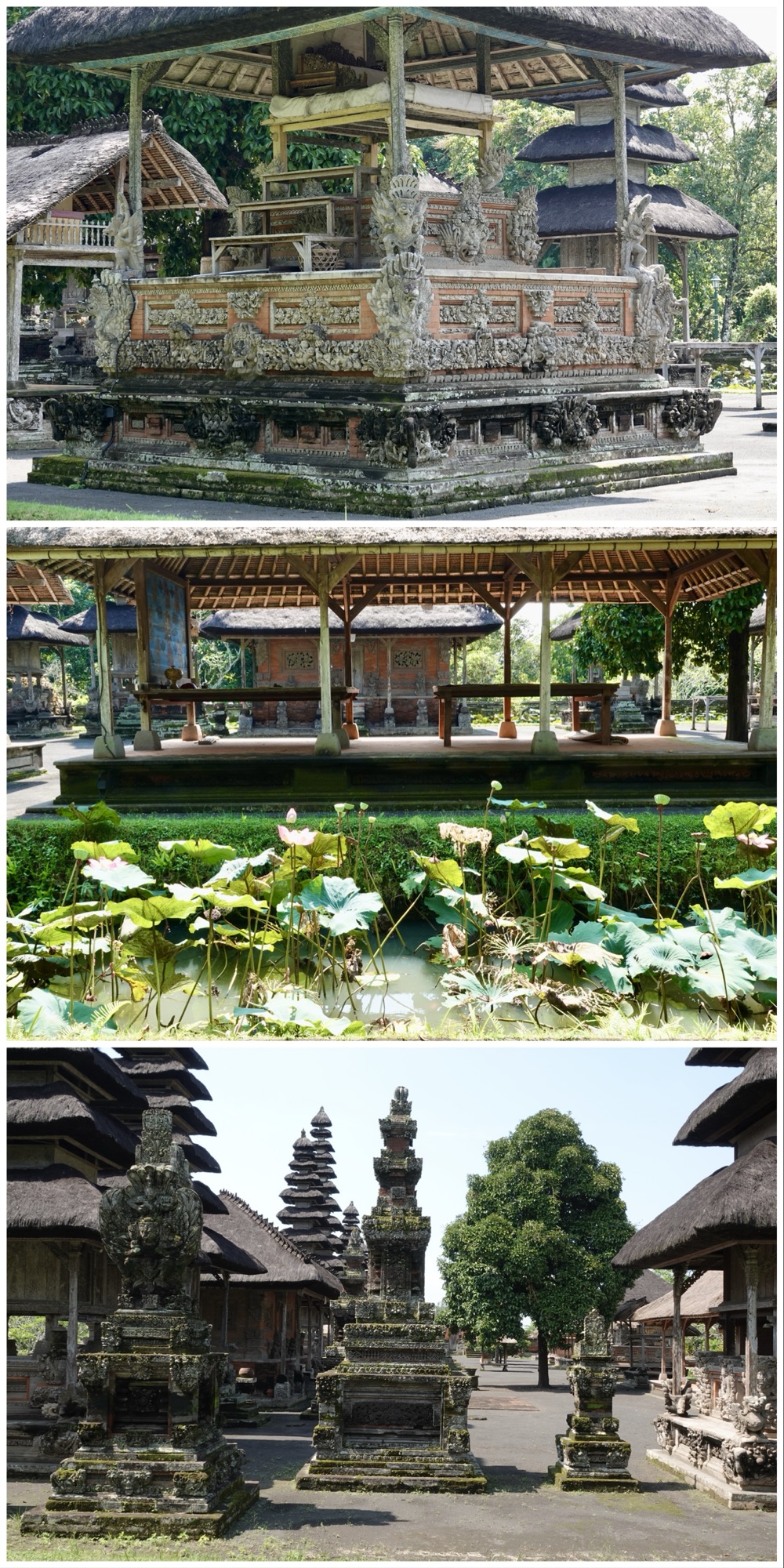
The complex includes a wide moat, exquisite wooden shrines and beautifully carved gates.


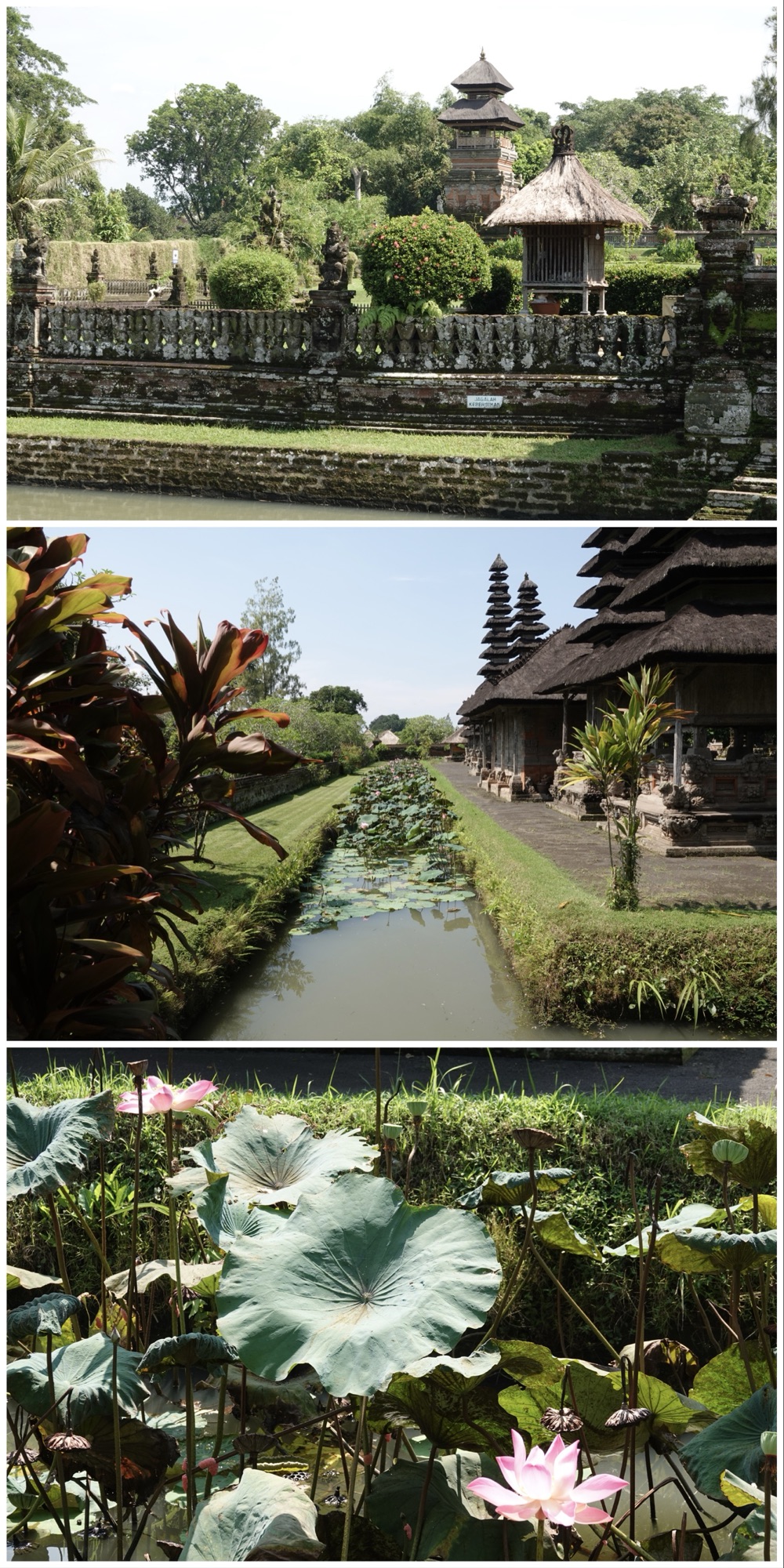
Entering the central shrine (had we been allowed) for worship involves crossing over more water, which represents purification.
Looking over the short barrier wall, we could see the many individual shrines within the temple’s innermost area. Each would have its own focus for worship.

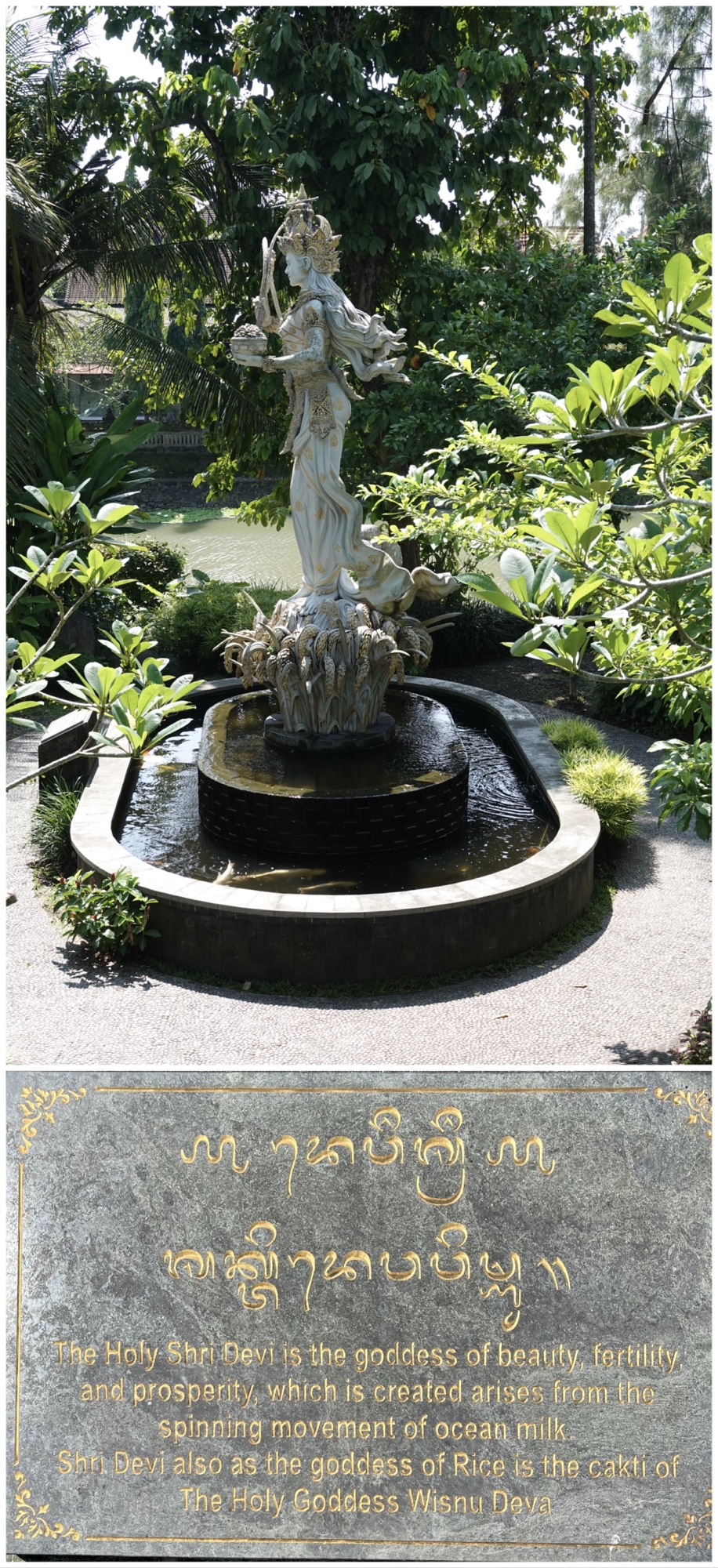
In a completely accessible side garden was this stunningly lovely statue of Holy Shri Devi.

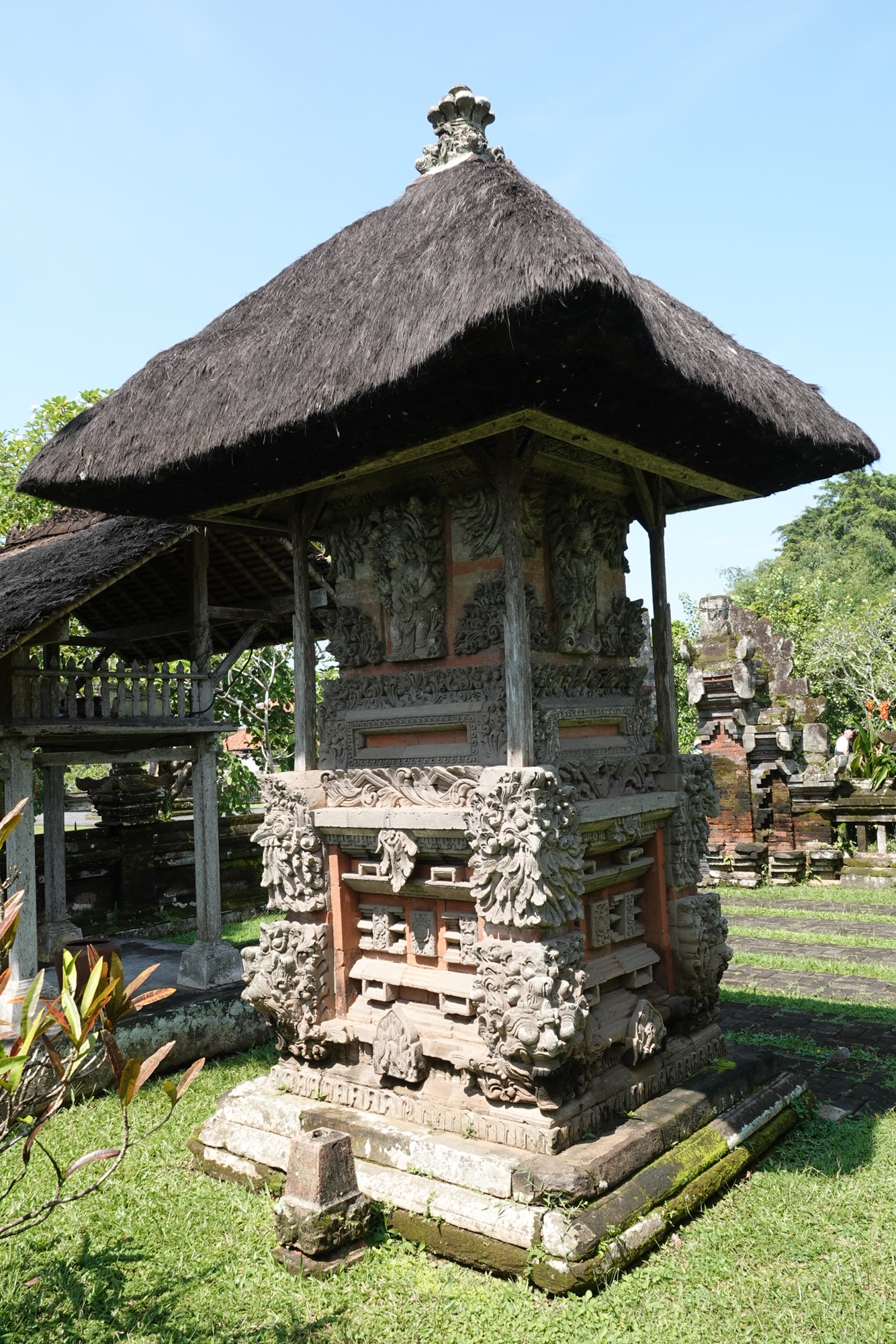
Leaving the temple involved exiting through another split gate.
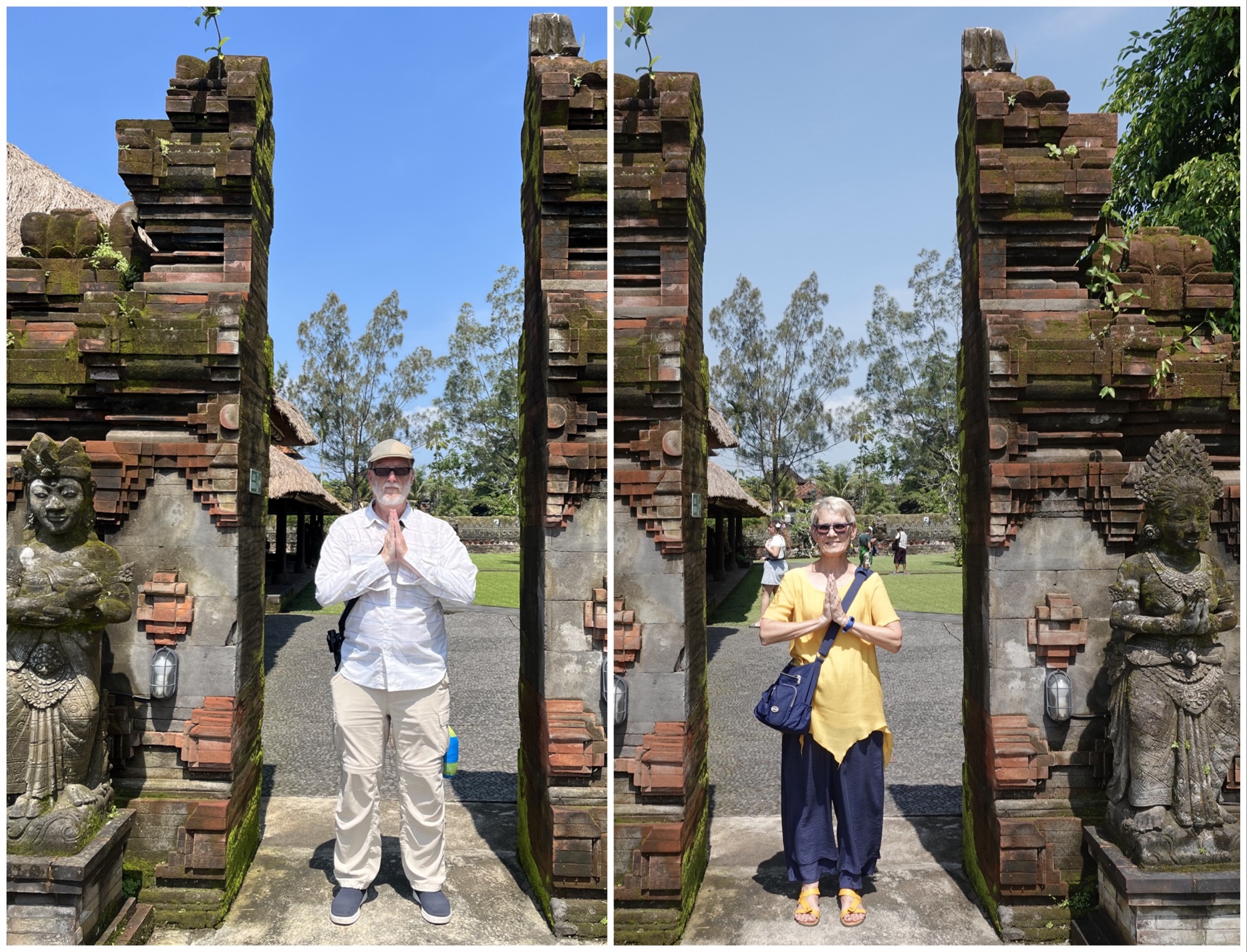
As we left, a woman was leaving an offering at the shrine outside the temple.

From the temple we travelled through more rural landscape through Werdi Bhuwana to Peken Belayu, where we saw freshly planted flat and terraced rice paddies. Bali produces enough white, yellow, red, and black rice for its own consumption, but nonetheless imports rice from other parts of Indonesia as a safeguard against the possibility of a poor growing year. That makes sense given that rice is the mainstay of the Balinese diet – eaten for all three daily meals.

Our destination was Puri Taman Sari, the family compound that has been converted into a “village stay” resort, for our included lunch of Indonesian foods.
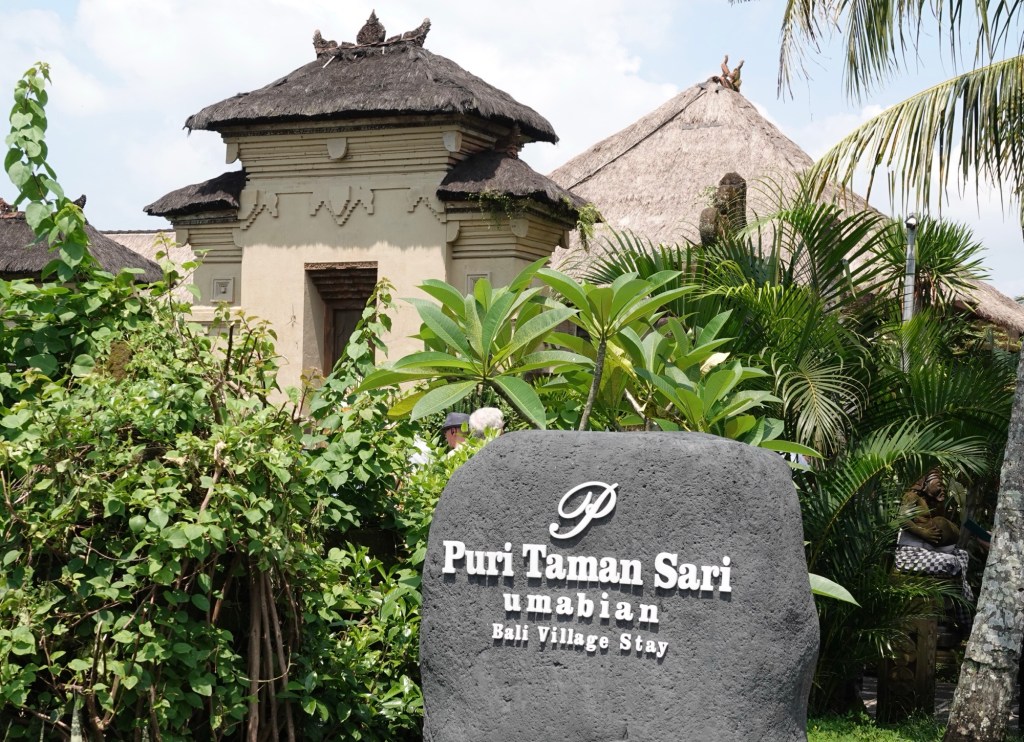
Despite being opened to the public, the compound has kept much of its original layout: family temple, ceremony building, and separate “sleeping” buildings for each faction of the family – although these have been turned into individual “suites” for guests.

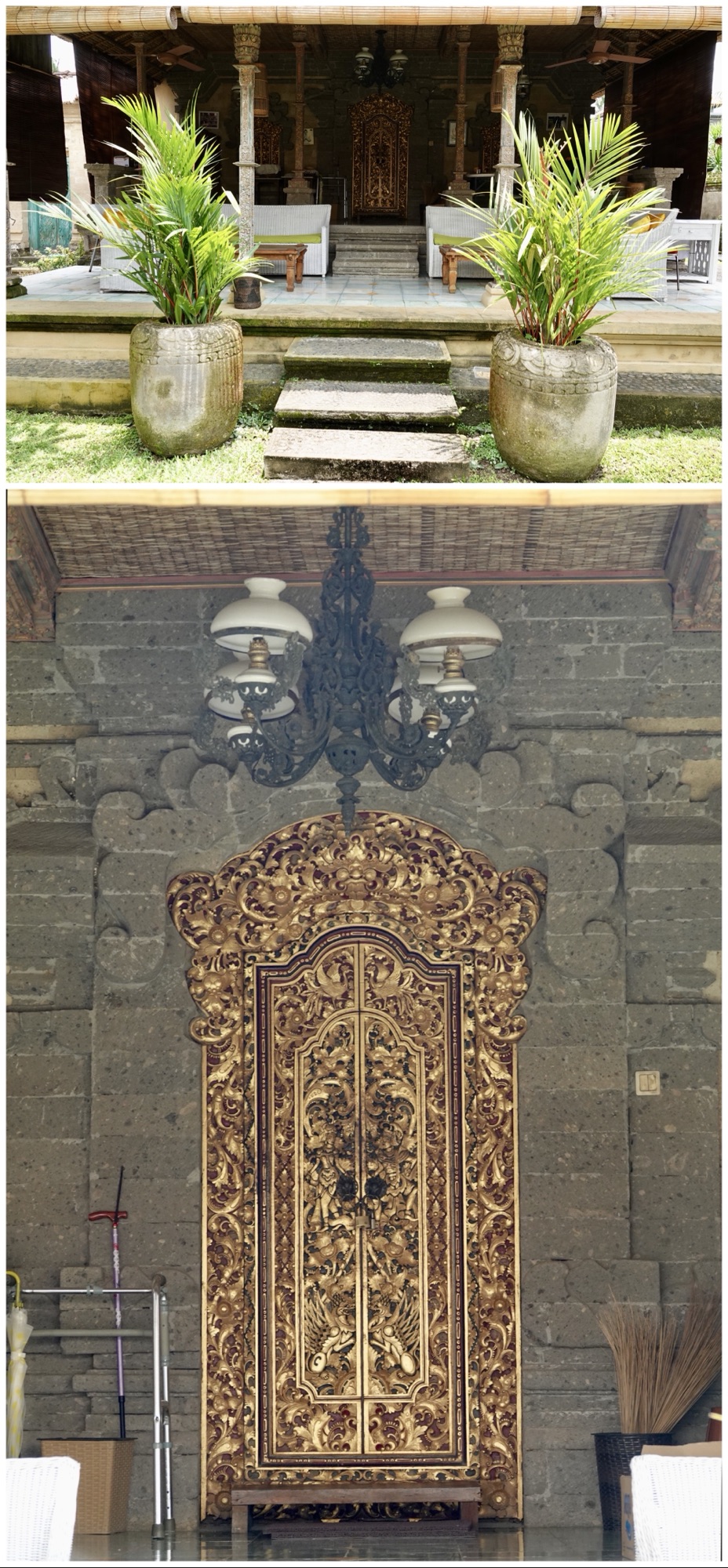
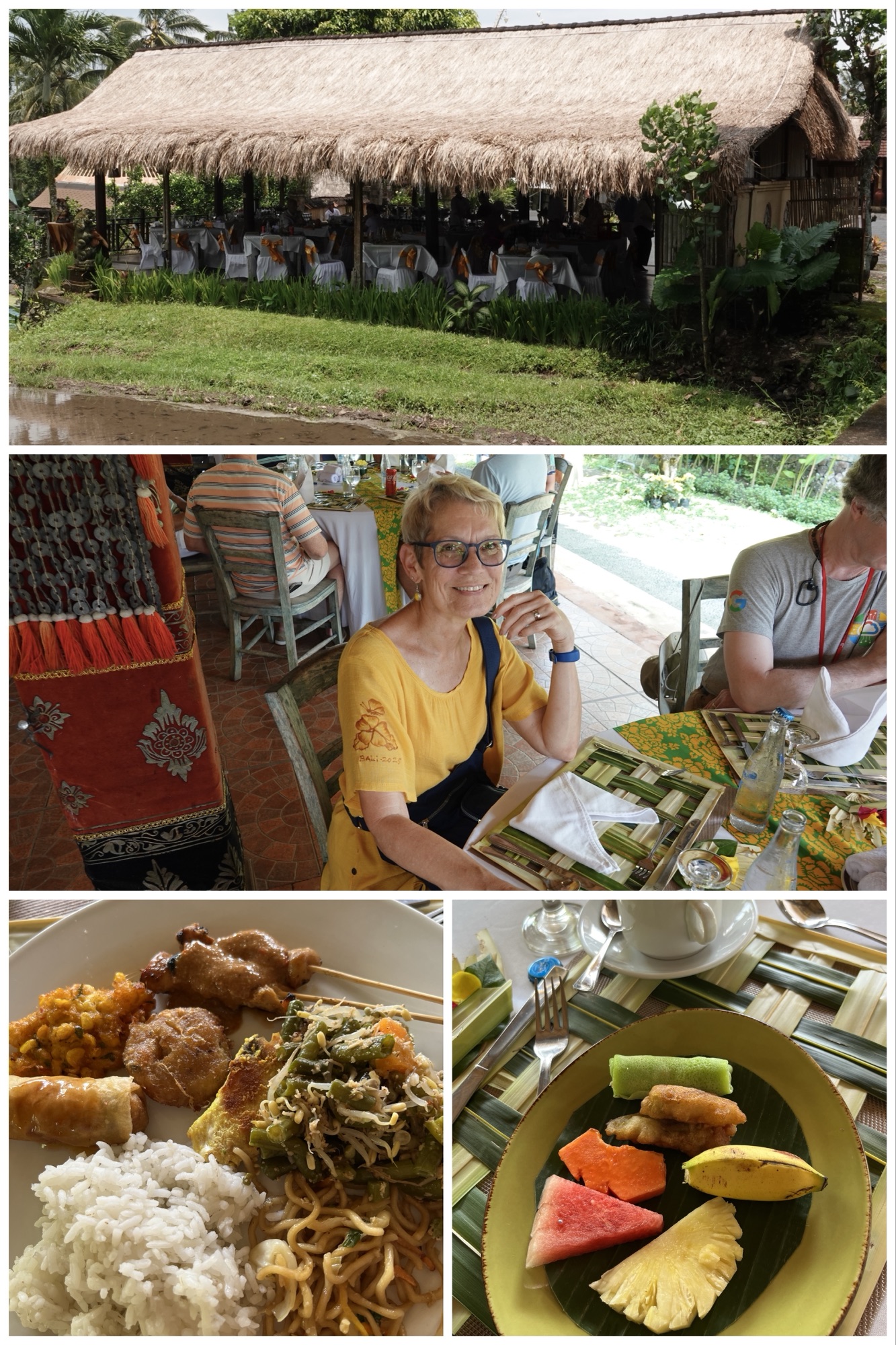
After eating, we had some free time to explore.

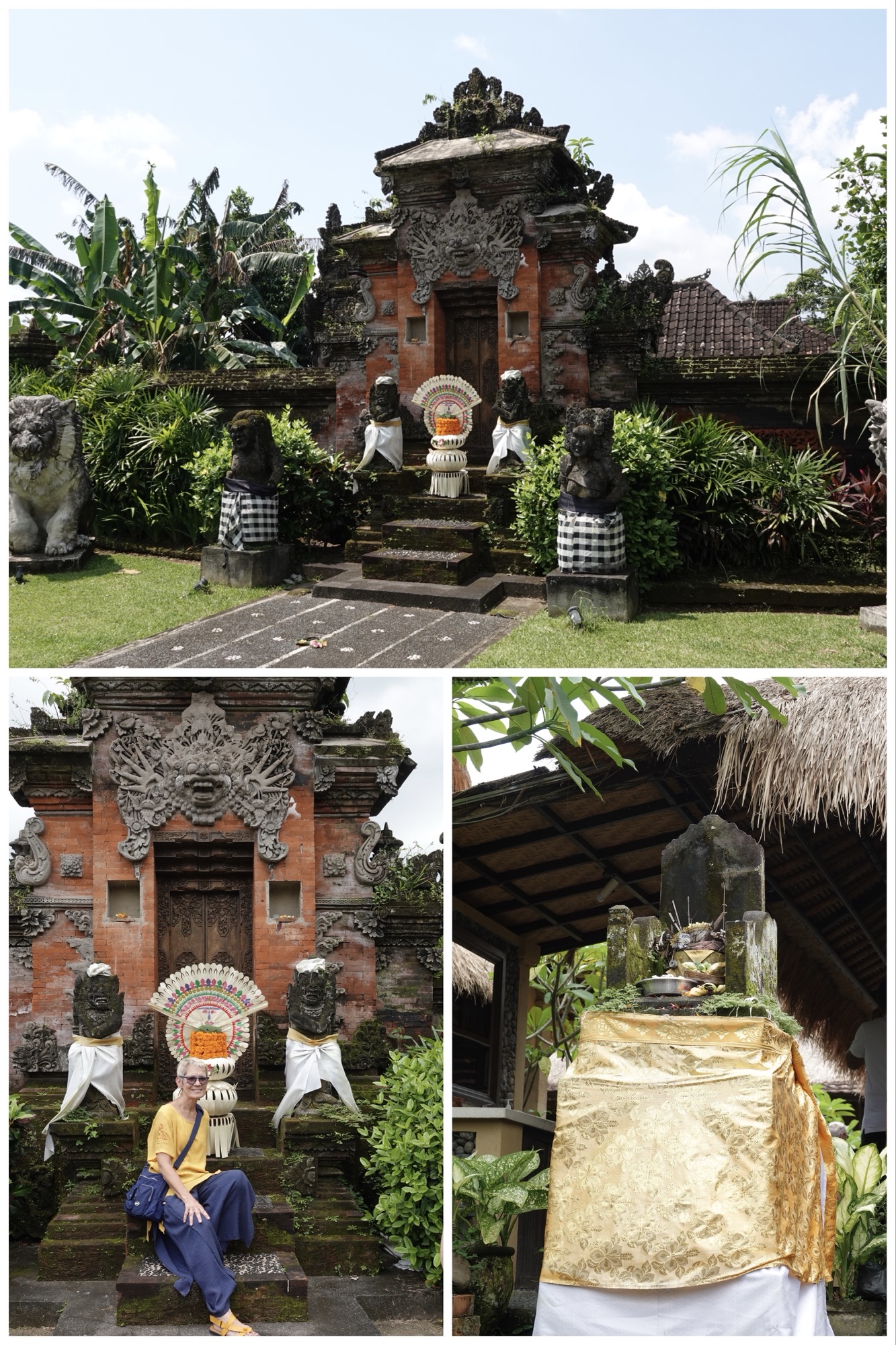
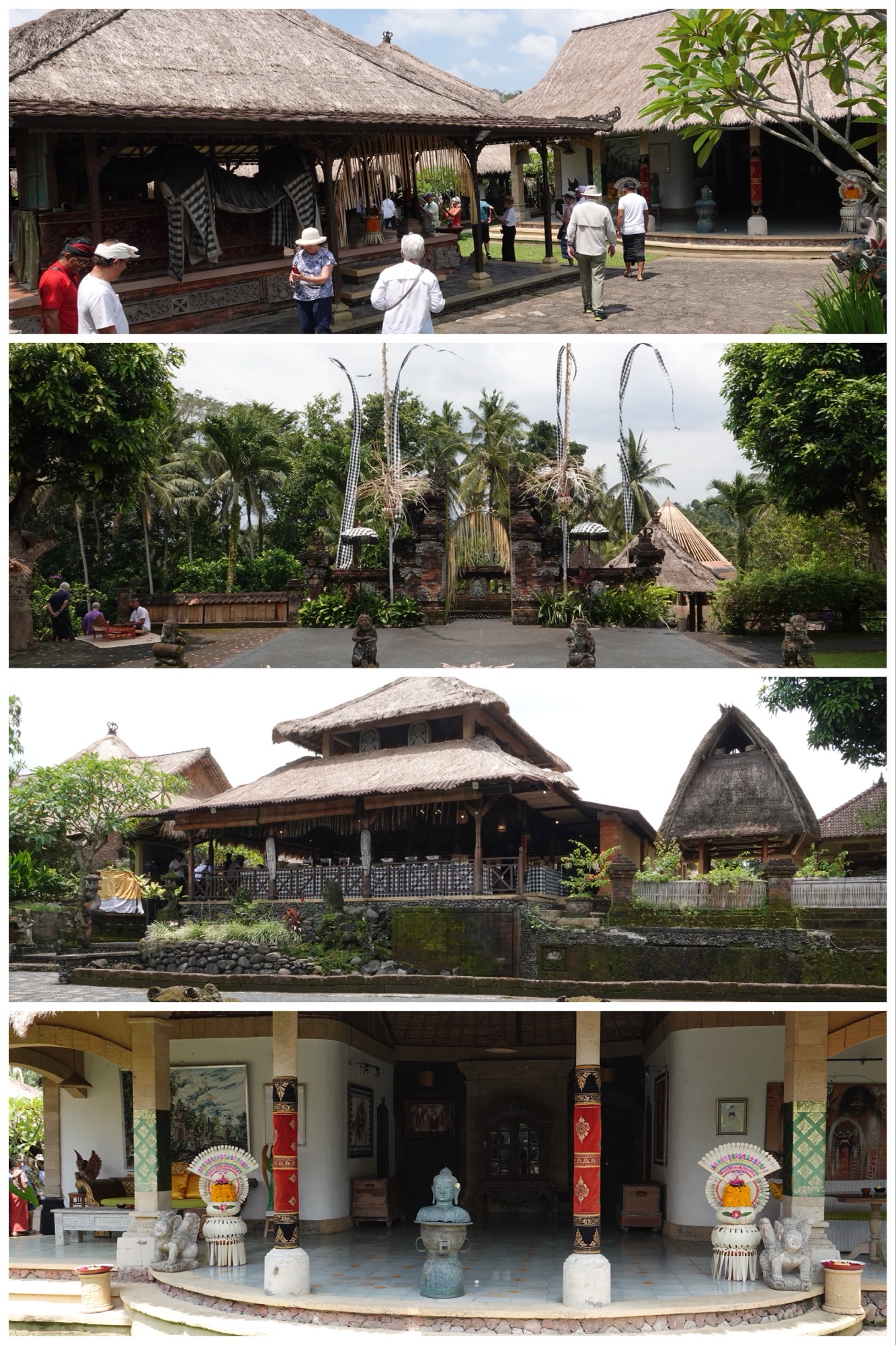
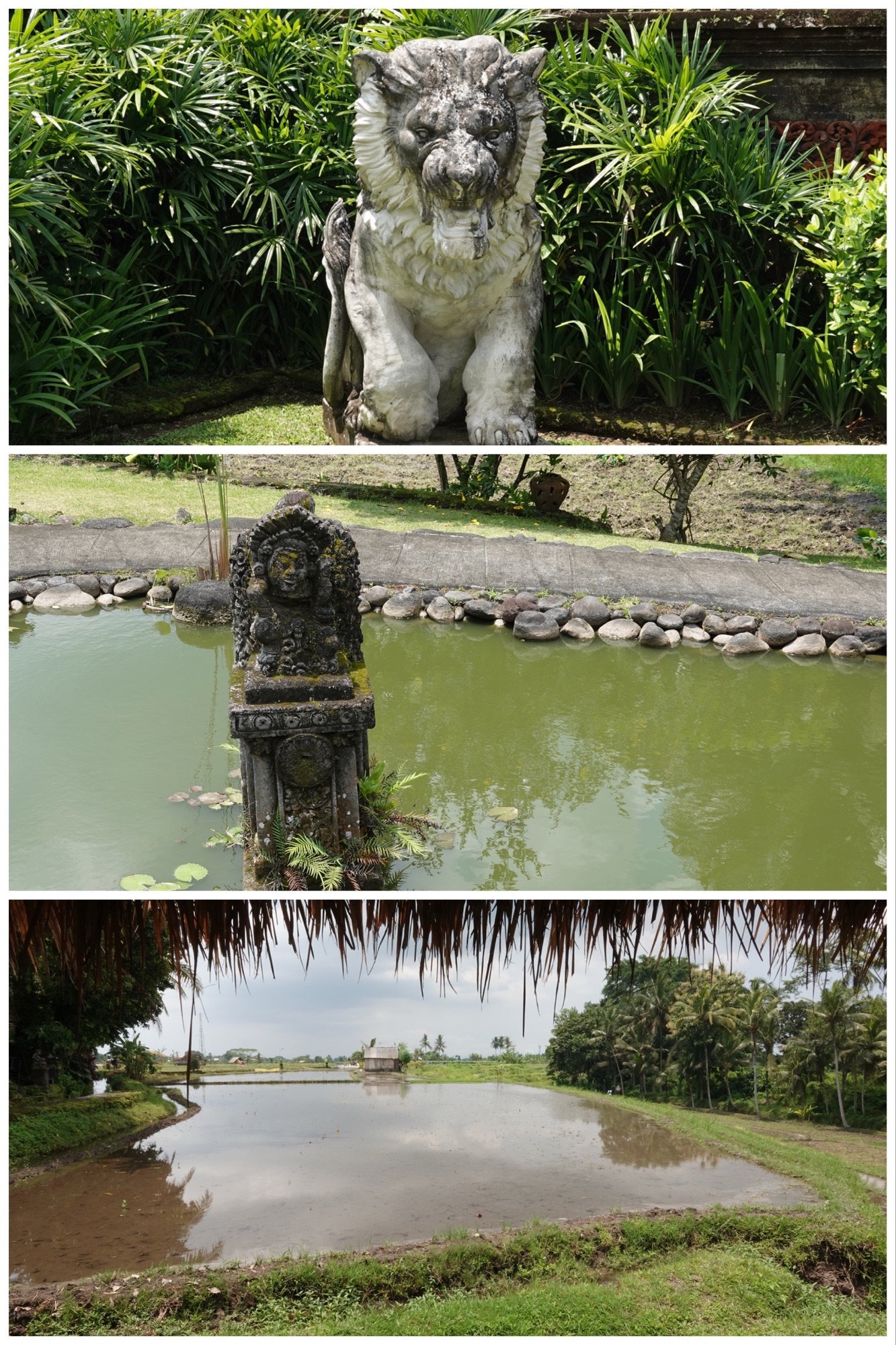
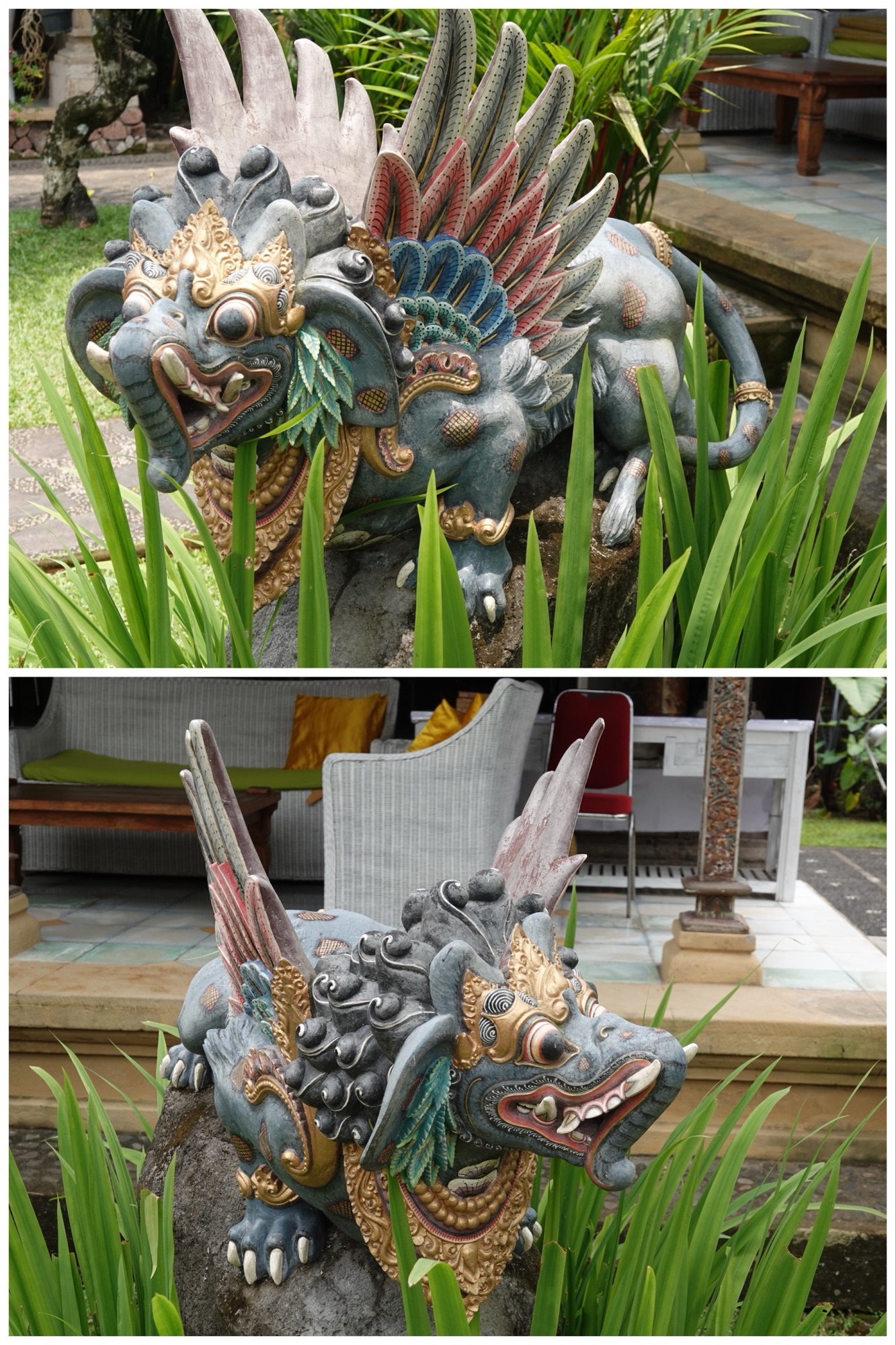
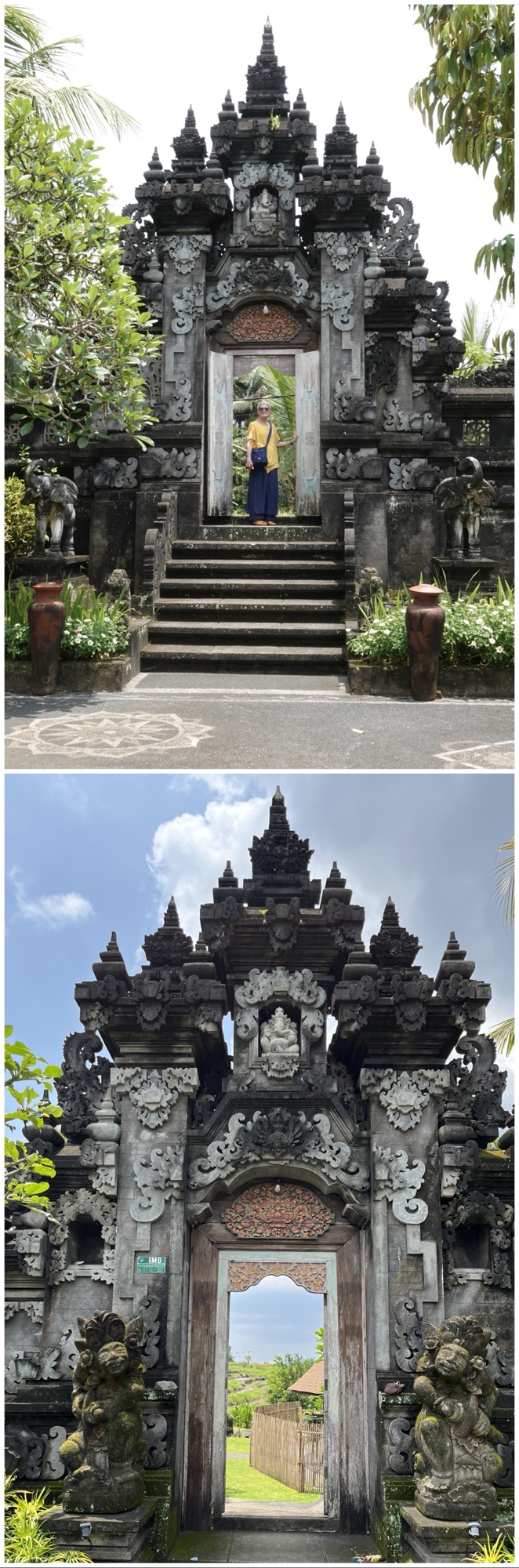
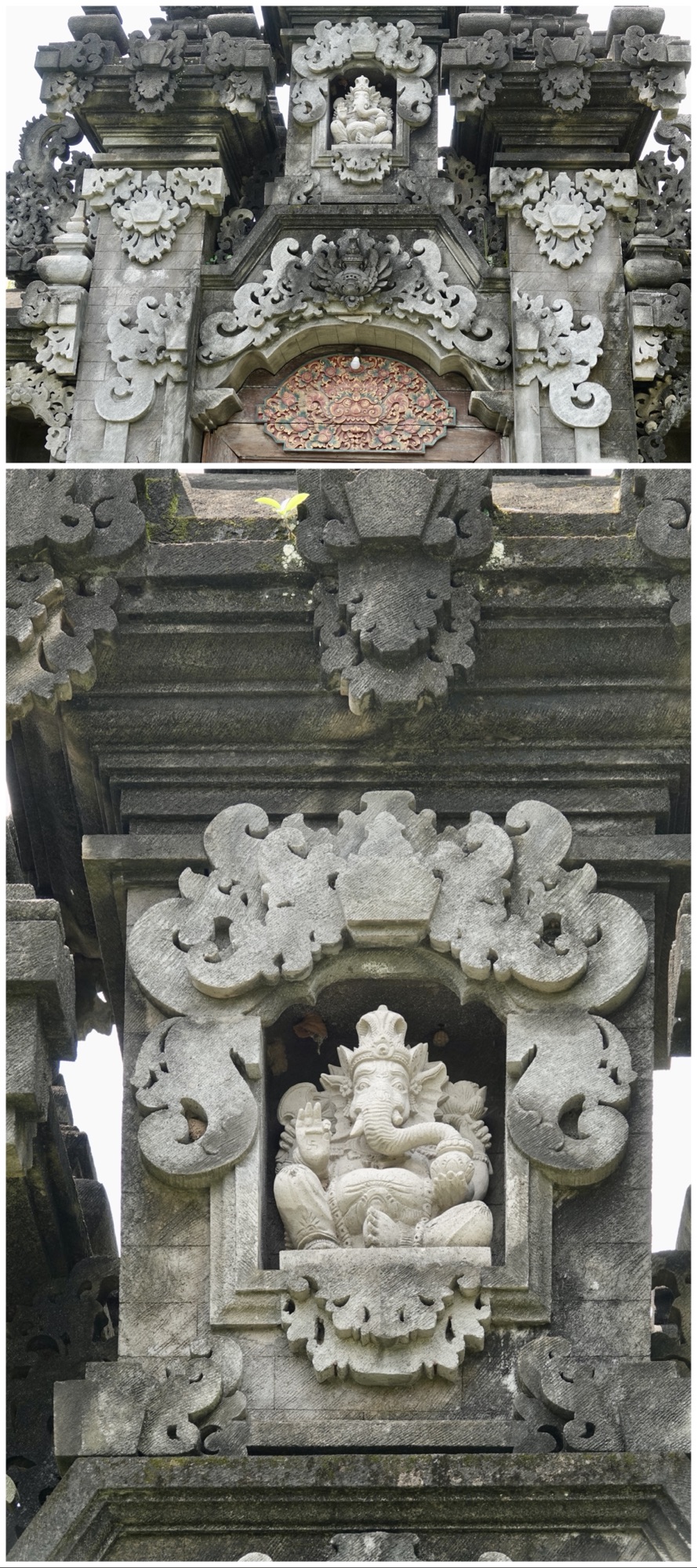
The hotel has added a lounge area with an infinity pool that overlooks the terraced rice paddies, and each “villa” has an open-air bathroom, neither of which are original to the compound!


Then, after about a 45 minute drive through more small Balinese towns…

…we came to the site of the 16th-century Tanah Lot temple (“pura” means temple), also called the Sunset Temple. Its impressive black lava towers are perched on a narrow rocky promontory that juts into the ocean. Surrounded by pristine aqua waters and white surf, it is Bali’s most photographed site, which also means it is full of Instagrammers, tourists, and market stalls. In fact, it was the first place we’ve visited on Bali that felt like a “tourist site”. Kudos to Viking for showing us lesser-known wonders and giving us as many authentic experiences as possible. We’re certainly leaving Bali with a much different view of it than travel agent posters depict – and feeling much richer for that.
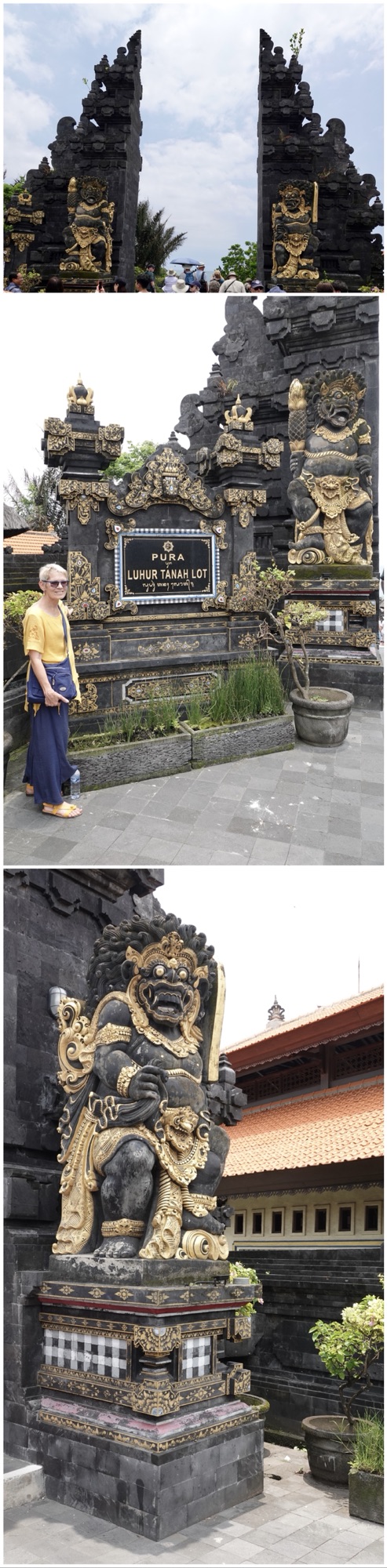

At high tide, the temple is completely isolated from the main island of Bali.

Our guide explained that in order to get a really good photo, Ted needed to walk to the viewpoint on the other side of the bay at Pura Batu Balong, a much smaller temple about 300 m away.The arrow shows the prime viewing spot. Pura Batu Bolong features 14 altars and pagodas that tumble down a rocky volcanic outcrop into the sea. The rock underneath the temple has a natural hole, hence the name (batu bolong literally means ‘rock with hole’).

And here are the results!


We arrived back at the Port of Benoa just as the predicted rain started pelting down, so first priority was getting wet and sweaty clothes into the laundry before a light dinner in the world café and a cabaret style performance by Jenna Beaudoin (another Viking Cruise Director currently a guest on the Sky).
Today we’re sailing in the Java Sea on the way to Semarang. In his noon report, Captain Jurland mentioned that the water here is quite shallow, only about 50m/155ft below our keel. We’re. Sharing the sea with lots of fishing boats, which means he is navigating around them so as not to get our ship’s propellers tangled in their nets. I don’t suppose I’d ever thought about that before.
 Rose and Ted’s Excellent Adventure
Thanks for the comprehensive tour. Have you enjoyed Indonesian food? I’ve only had it in Amsterdam, but loved the variety. These stone carved temples look so dark with all the lichen and moss which must accumulate in the humidity. I hope that storm cleared some of the humidity and that you had a pretty sail away.
LikeLiked by 1 person
Loving the food! Sadly, the humidity comes right back…. and it POURED during sailaway!
Rain predicted for the next 3 days at least.
LikeLike
Rose, you must both be totally exhausted; such a full two days you have had! But what a beautiful and interesting part of the world. As you said, good on Viking for showing you so much of the non-touristy areas – the real Bali…
BTW: I love that yellow/blue combo on you – and the gorgeous art wax print on your sleeve! Barbie
LikeLiked by 1 person
Glad y’all are having a good time-still envious here though not missing the 35° and 300% humidity even with the unusual snow we had last week. There is a discussi
LikeLiked by 1 person
Your comment got cut off after “there is a discussi….” 😢
LikeLike
Ooops! are there any outdoor excercise equipment
LikeLike
No. Just a well equipped indoor gym. The outdoor sports deck has mini-golf, shuffleboard, bocce, and a jogging track.
LikeLike