Today, we took a full day excursion to Kuranda National Park’s tropical rainforest, which boasts extraordinary biodiversity and a profusion of wildlife. It was overcast and drizzly again, but what’s a little extra rain in the rainforest?
We began by heading out, with our guide, via the breathtaking 75-minute Kuranda Scenic Railway, passing plummeting waterfalls and lush forests and traversing tunnels carved into mountainsides.

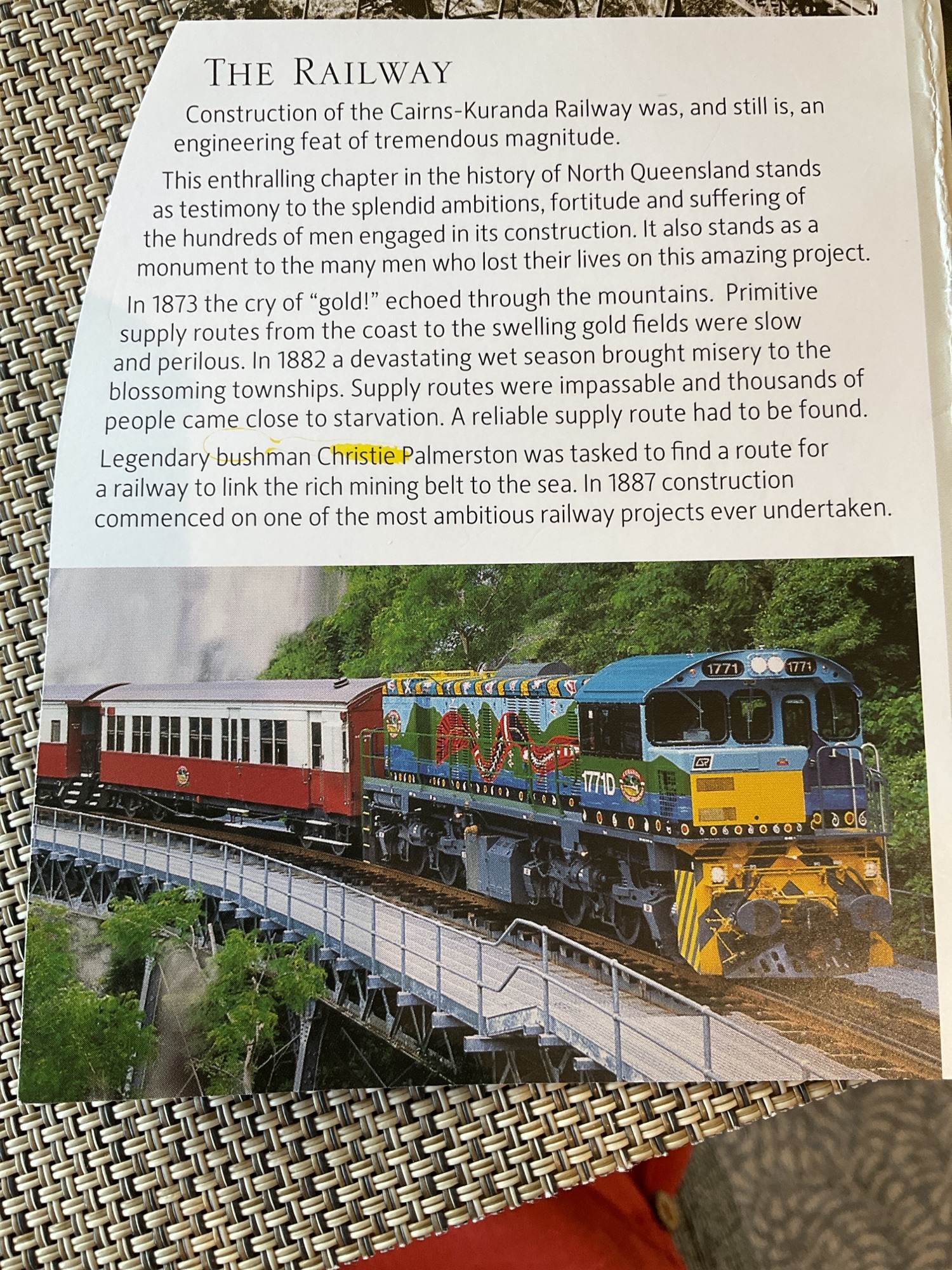

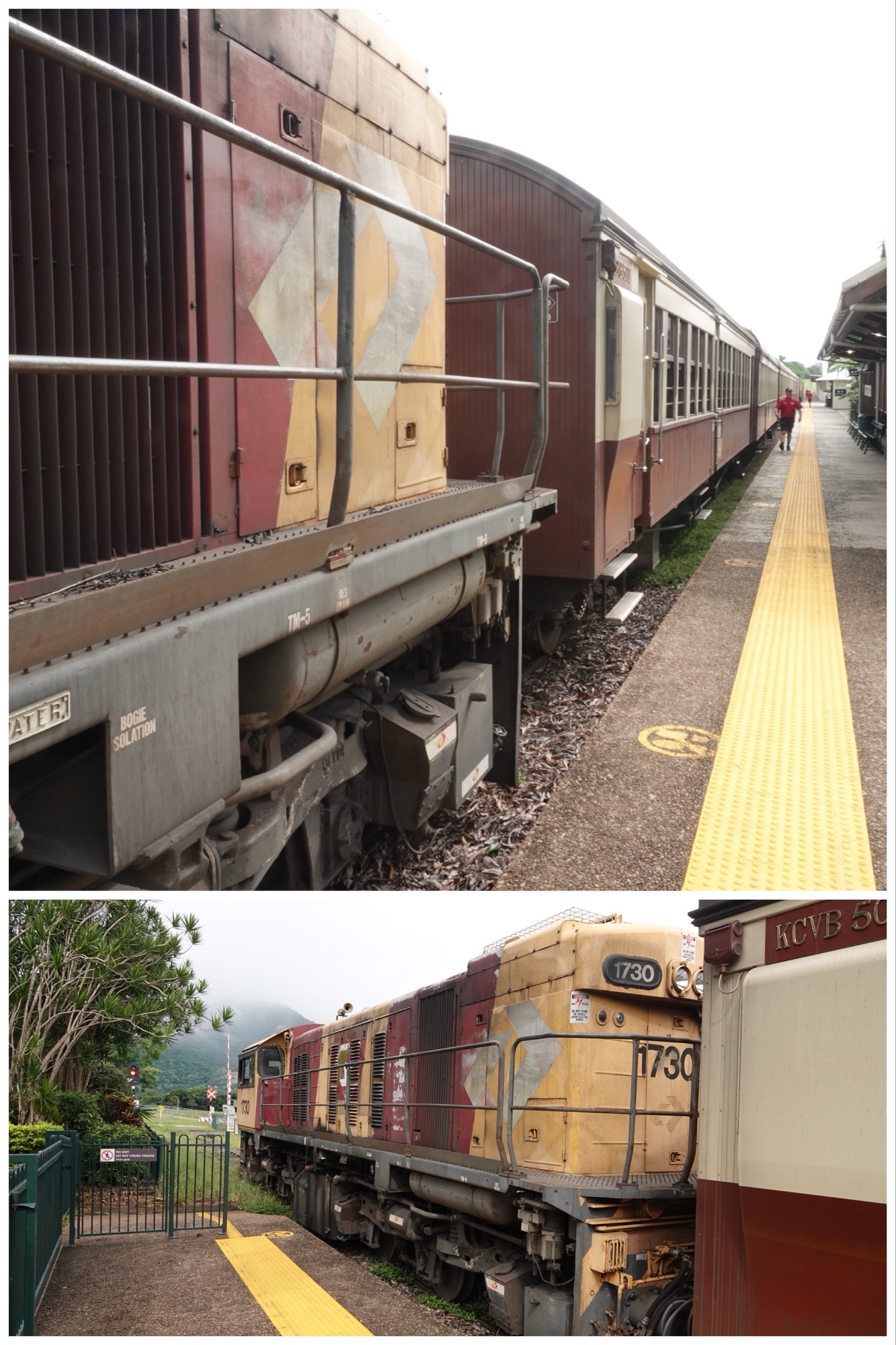
If this ride was a taste of what we’ll get in New Zealand next year, then we’re in for a treat.
The train travels between Cairns and Kuranda, but the first section between Cairns and Freshwater Station is mostly suburban, so we began at the Freshwater Station. The station, like the train, dates back to the late 19th century, and is quite lovely. The town of Freshwater was built around the first point where the navvies (railroad workers) could get fresh water before heading up the Kuranda Range.

A railway workers’ cottage, relocated from Redlynch, stands beside the station, and now holds a small Kuranda Railway Museum. Ted didn’t get a photo of the cottage exterior, but did take pictures of lots of the plaques that described the railway’s construction as well as what we would see on our route.
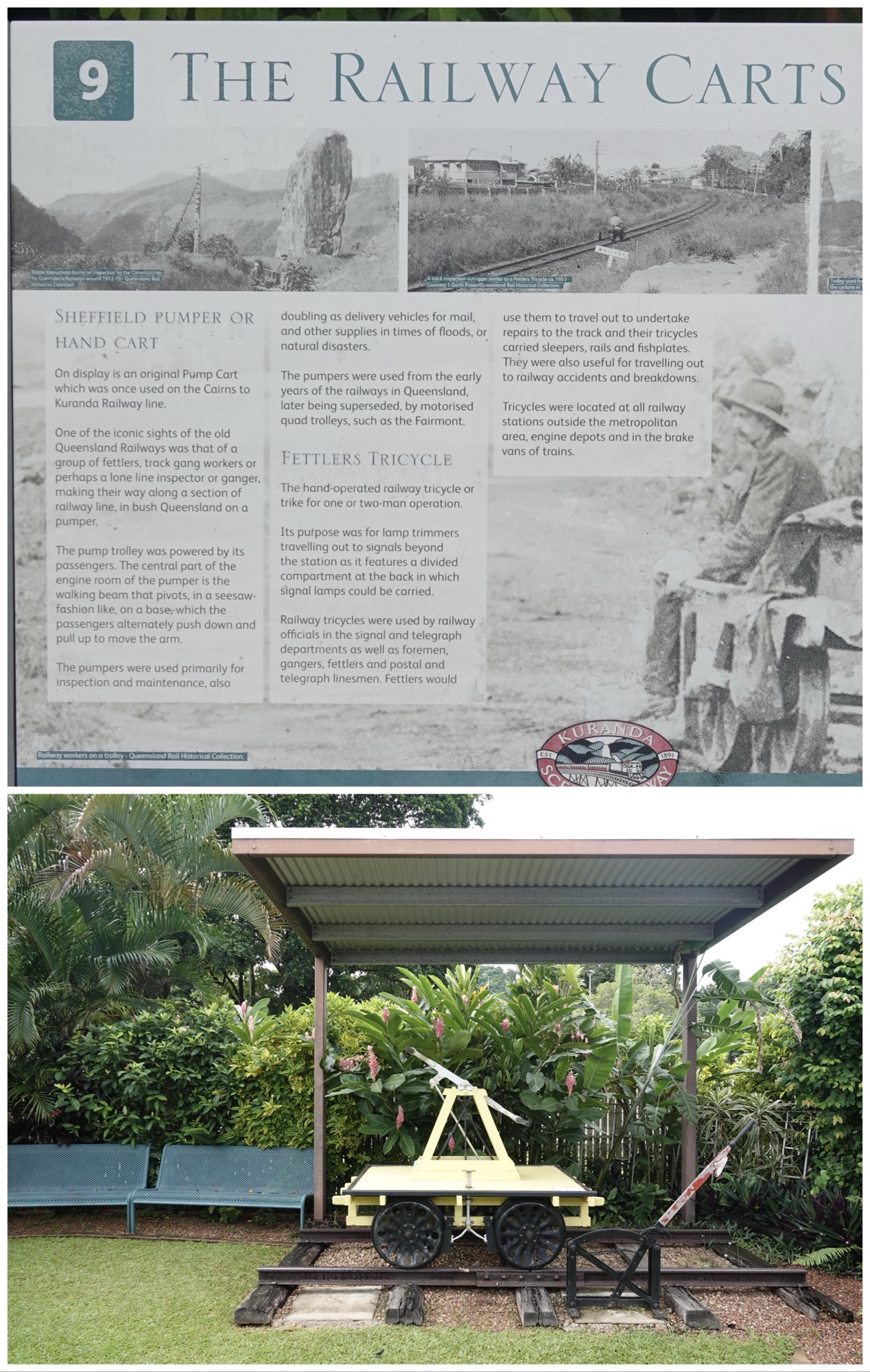
All the wood inside the station is native Spotted Gumwood.

Inside the station are several decommissioned passenger cars, including Macarthur’s Car with its 4-person compartments featuring deep red leather seats and wooden tables.
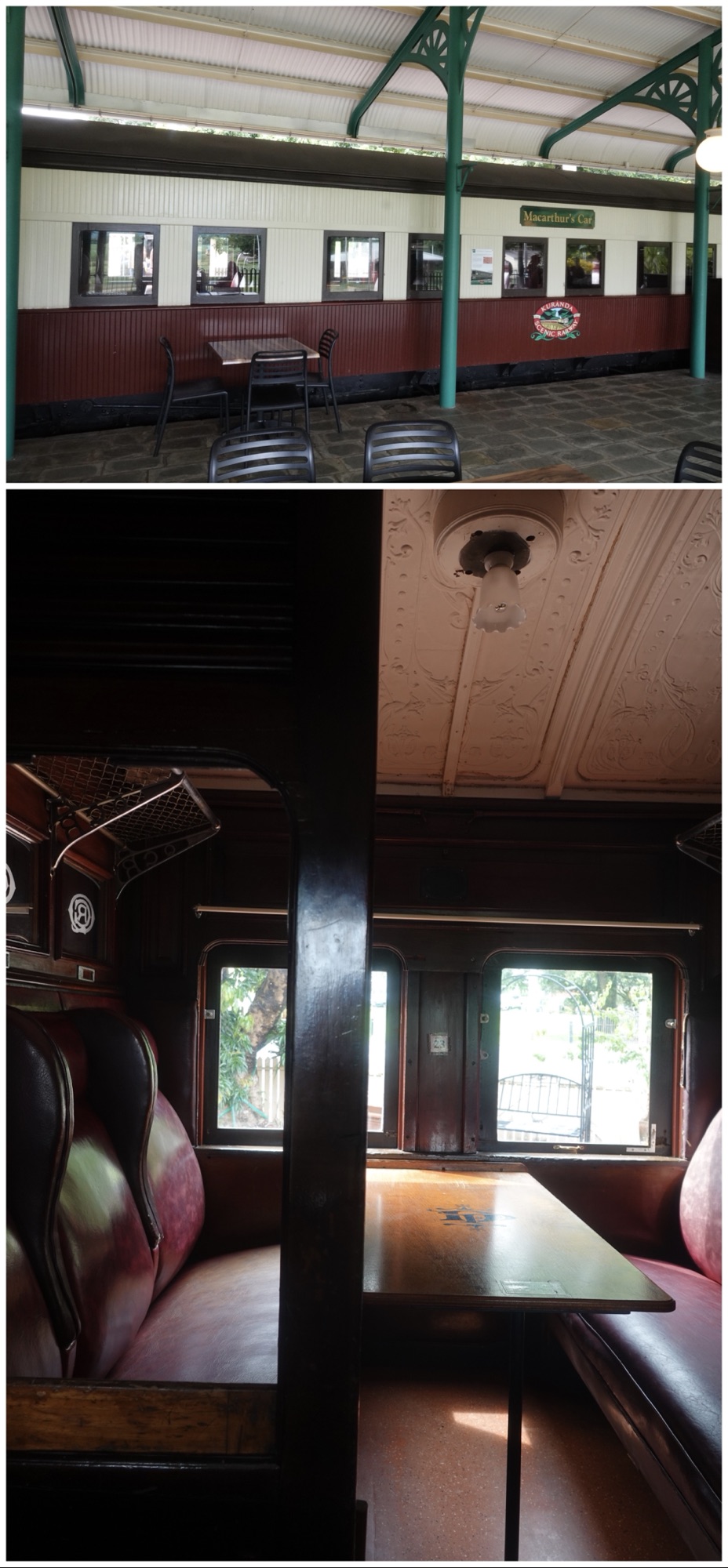
Once we boarded the train our own carriage was less fancy, being “second class”, but still had leather seats and that iconic pressed tin ceiling.

There would once have been both sleeping and dining cars, although originally this train was simply transport for tin and gold miners.
To say that the route from Freshwater to Kuranda was spectacular would be an understatement. We travelled through 15 hand carved tunnels on the line, 55 bridge spans, dozens of “cuttings” where the track was laid on surfaces cut out between rock faces, and around 90 of the total 98 curves (the remaining curves being between Cairns and Freshwater). It took 1500 men, mostly Irish and Italian immigrants, less than 10 years to complete 33 km/20.5 miles of railway which ascends 327 metres/1072 ft above sea level.
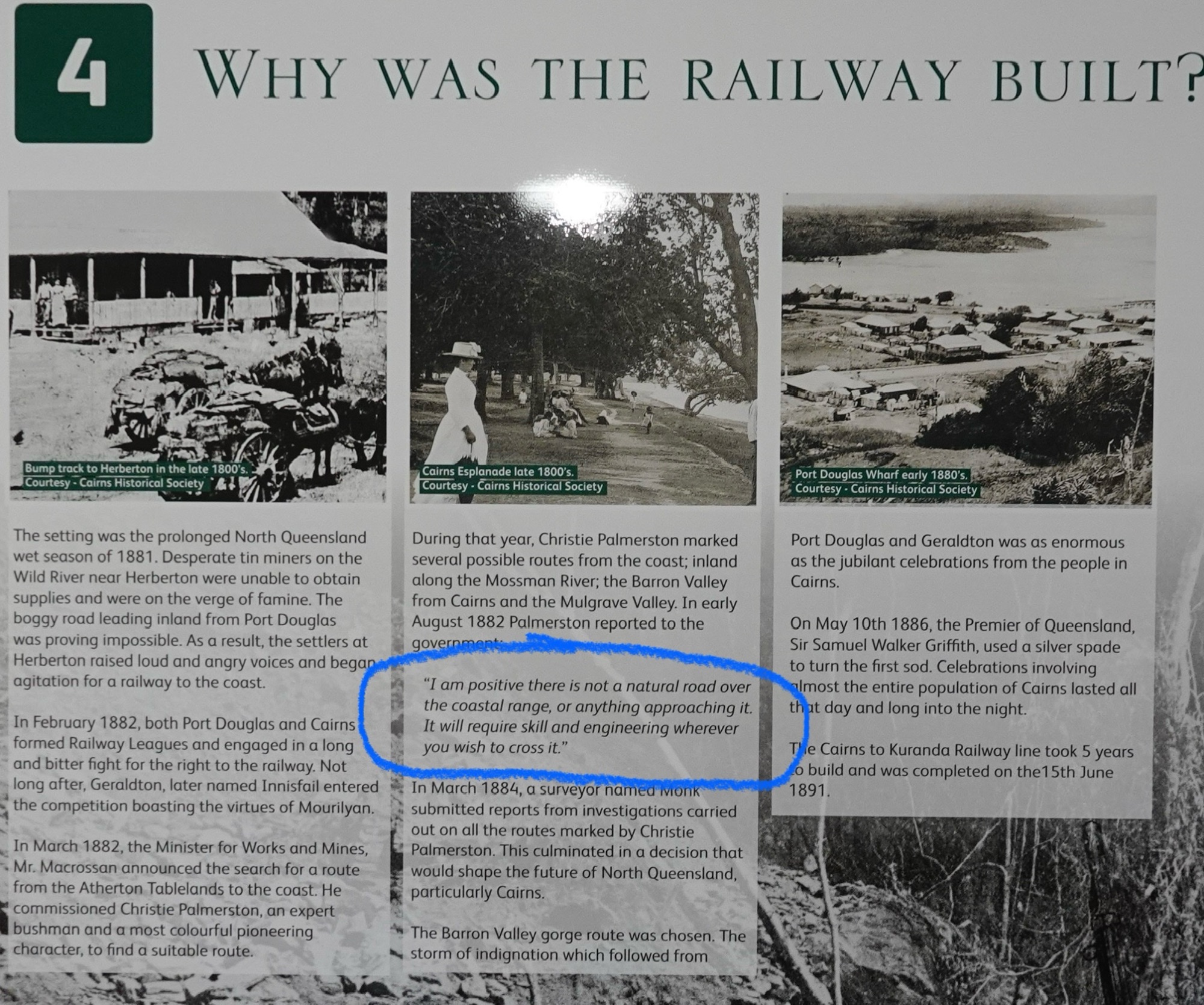
The track is a 3 foot 6 inch narrow gauge. Before 1901, when Australia was 6 separate British colonies, there was no standardization of railways, so Australian railways are a mix of all 3 gauges (narrow, standard, and broad).
Our entire journey was narrated. When we reached Redlynch, we learned that the town was named after the red-haired Irish foreman of the railway construction. His name was Lynch, but his nickname was “Red”. When the mostly Italian workers were told to go see “Red” Lynch, they thought it was the name of the place, not a person, so when it was time to officially name the area, the name “Redlynch” stuck.
We were in rainforest during almost our entire ride, and at times it was gently raining, which lent refreshing coolness to the air.


After Horseshoe Bend, we entered our first tunnel. I’ll admit that every time we travelled through a tunnel, in my imagination the carriage lights went out and a murder took place, to be revealed by a woman’s scream as we emerged into the light. I watch and read way too many Agatha Christie novels.
Since the carriages have not been retrofitted with air conditioning, all of the windows were open. When we entered tunnels, we could feel how oppressively hot it was “underground”. That’s when everyone really appreciated what a hard job it was hand-digging these passageways.
Stoney Creek Falls bridge is the railway’s most outstanding feature. After it was completed, a marquee was erected and a special lunch organized for the Governor, Sir Henry Norman, and various dignitaries. Naturally, many speeches were planned, but the sound of the falls made it impossible to hear. Our narrator suggested that the event went down as one of the most successful in history: pomp, food, drink … and no speeches by politicians!
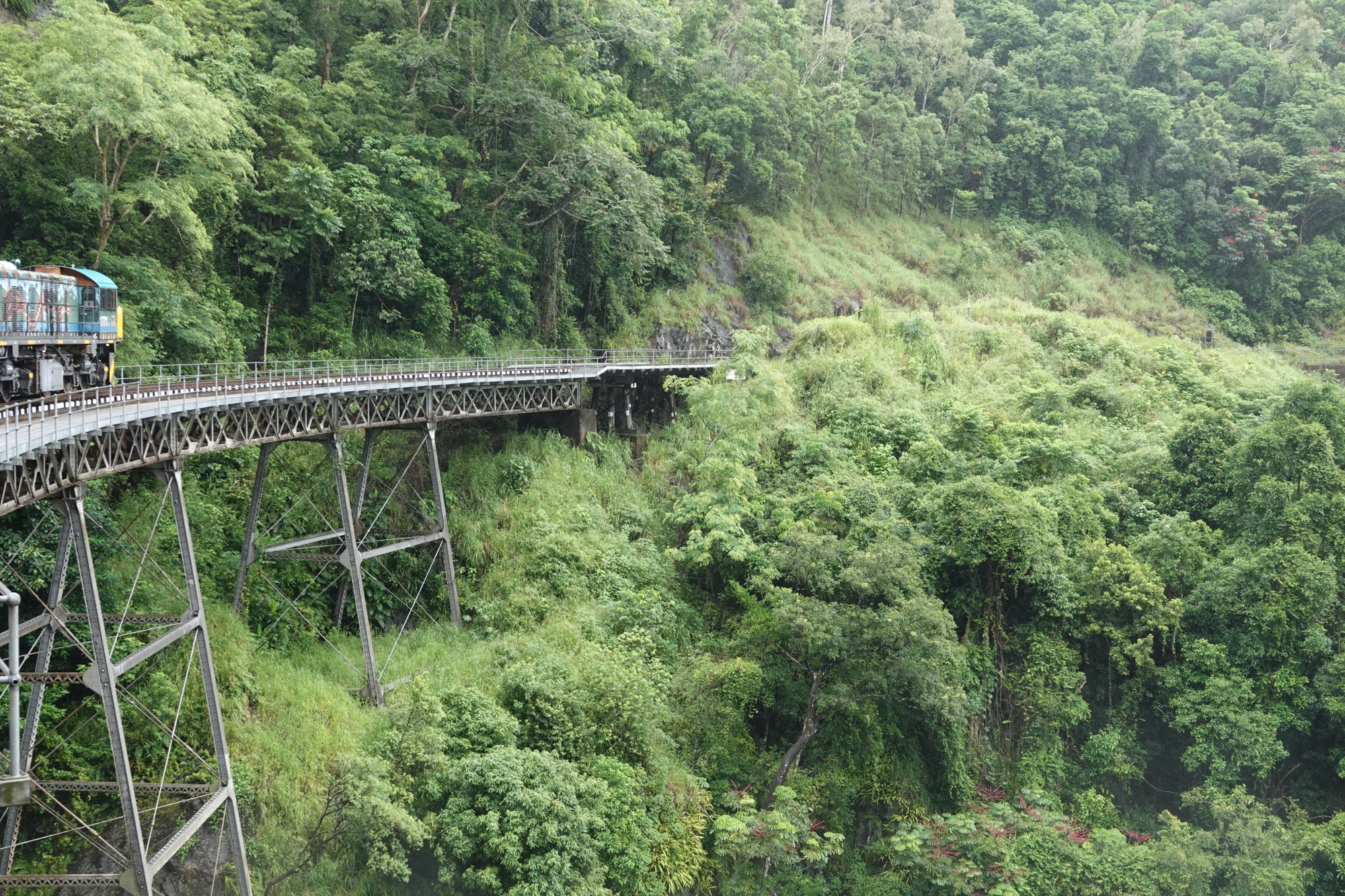
In the photos below, again there is a sense of the bridge curvature. What Ted was able to capture was the last few cars in our train, backed by Stoney Creek Falls, as well as our view out the opposite side windows as we passed the falls themselves.

Before and after Tunnel #14, we had a vantage point from which we could see the Coral Sea and Cairns city, but passed by too quickly to get a photo.
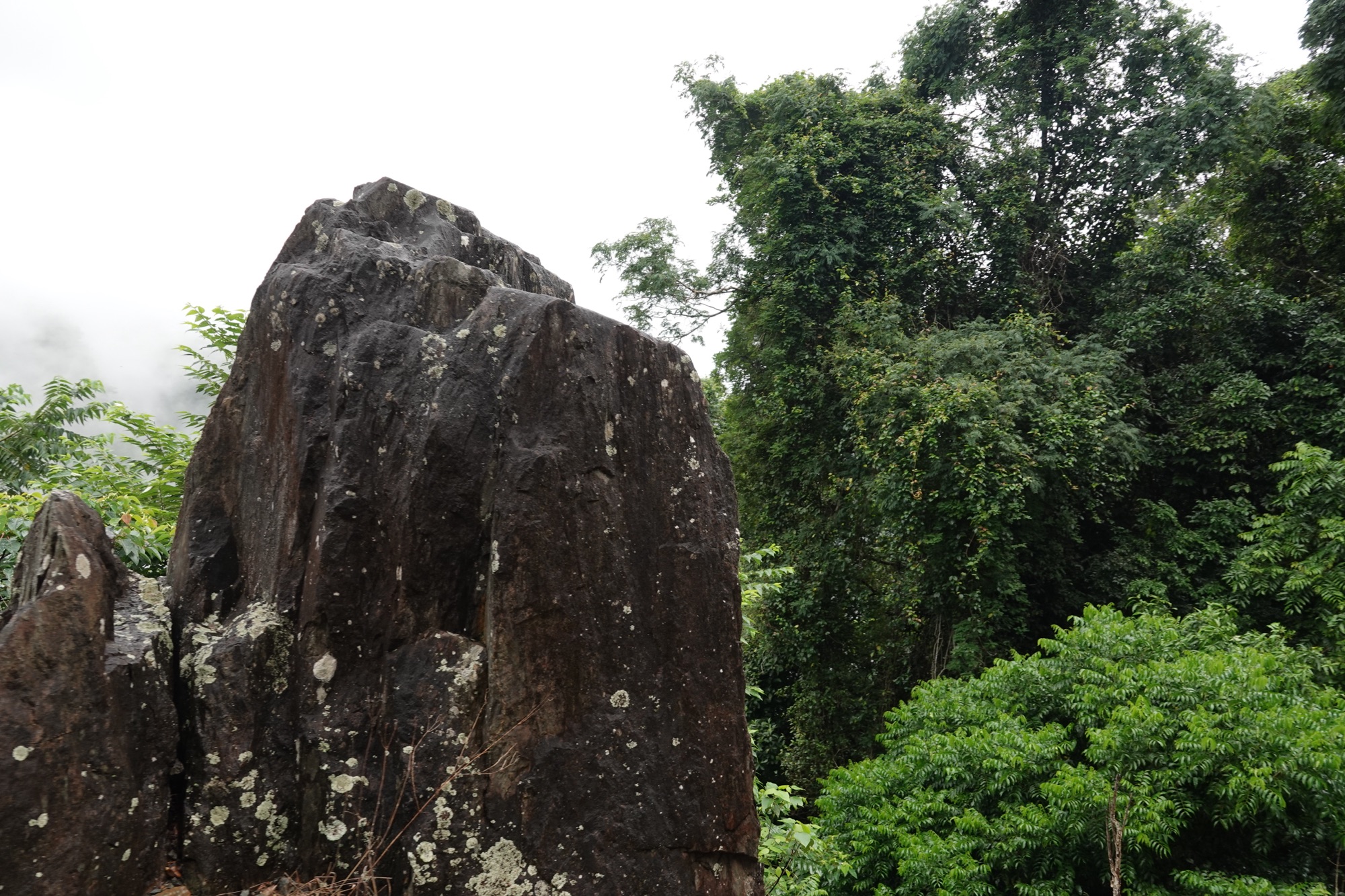
Our next landmark was a large rock formation called Robb’s Monument. This rock was left undisturbed during the building of the railway and serves as a monument to John Robb’s engineering prowess. Since along our route much of the rock face is covered by the roots and vegetation that holds it in place, this rock also allowed a closer look at what those intrepid railway workers had to cut through.
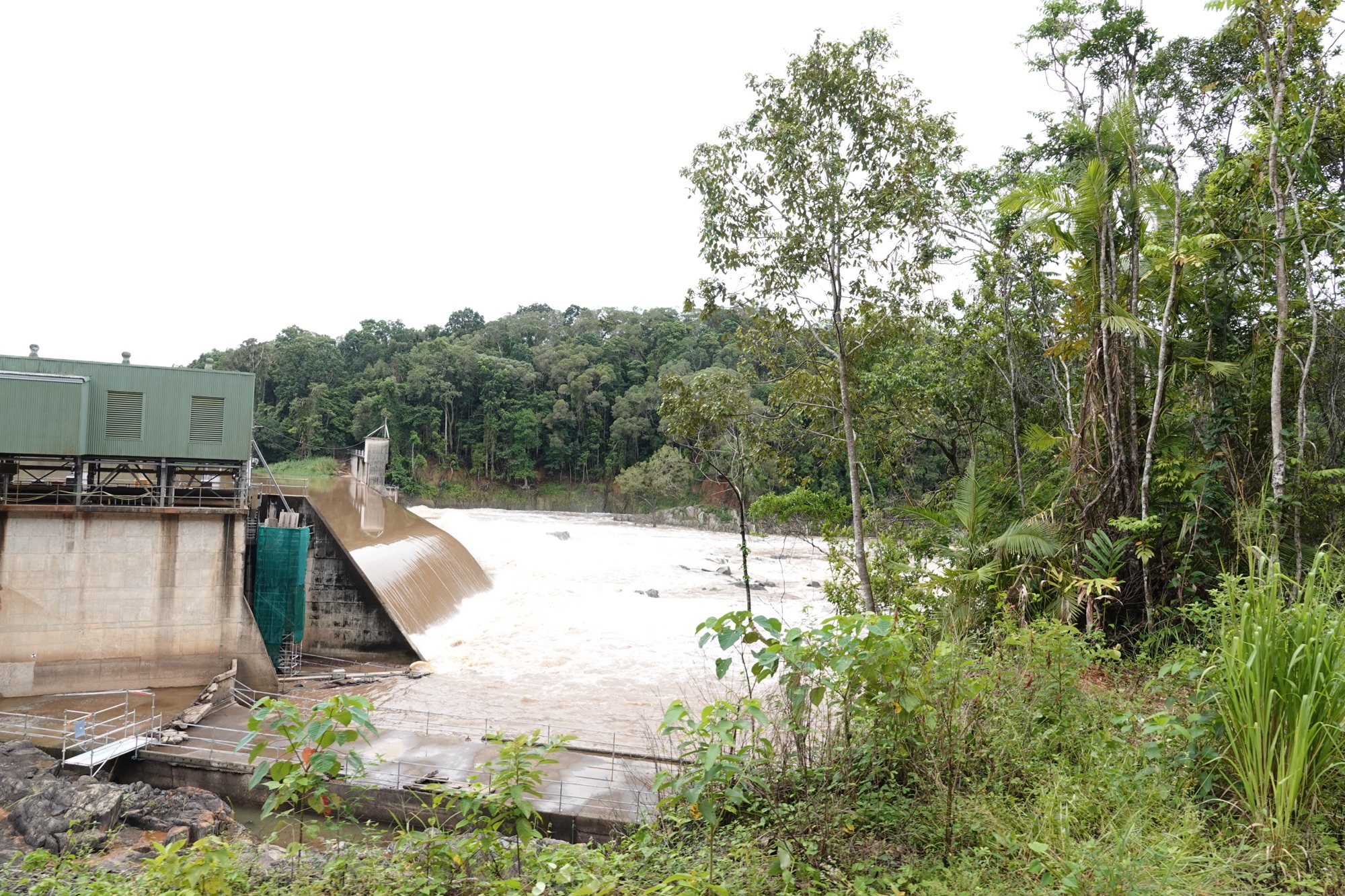
The absolute highlight of our train journey was Barron Falls. While I’m sure it is stunning at other times, the recent monsoon-like rains and subsequent flooding in Queensland have dumped so much extra water that the lake created at the Barron Gorge Dam to supply the Barron Gorge Hydro Electric Station was overflowing, and the falls absolutely thundering with water. Because the earth here is iron-rich, it is very orange; the floodwaters bringing earth down from the slopes have created a reddish brown river and reddish-brown falls.
The falls are 327 metres/1073 ft above sea level with a drop of 265 metres/870 ft over 4 stages, the highest drop of which is 125 metres/410 ft. By comparison, Niagara’s Horseshoe Falls have a drop of 57 metres/188 ft, and Victoria Falls’ drop is 108m/355 ft.


Our final destination was Kuranda Station.

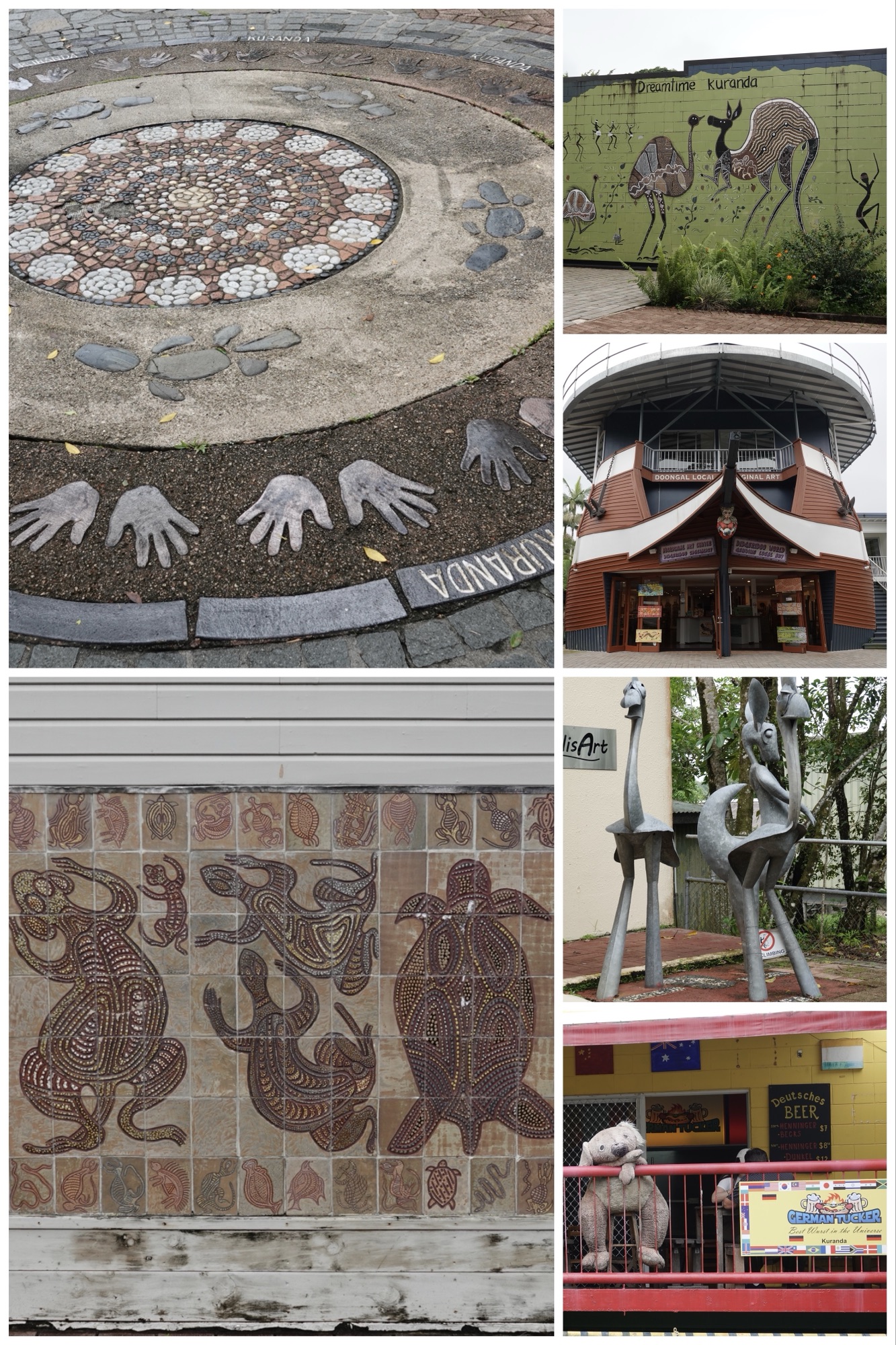
We had some free time (and I had a bit of very successful clothing shopping) in quaint Kuranda village before traveling to the Rainforestation Nature Park.
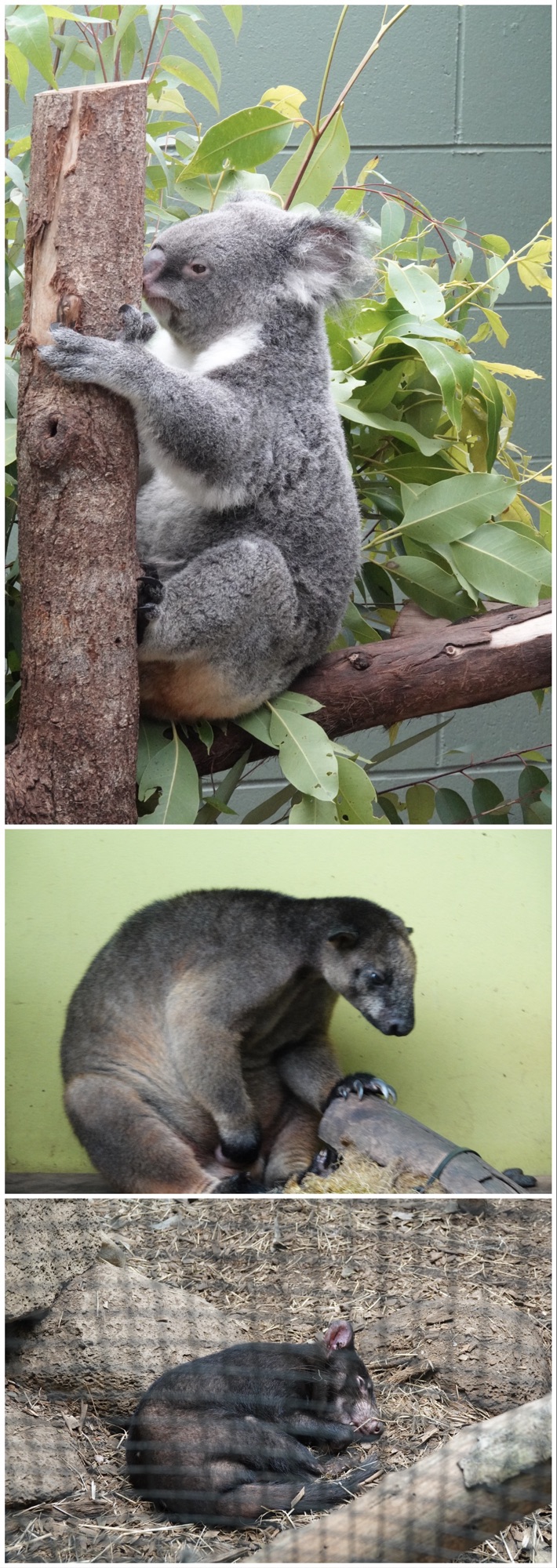
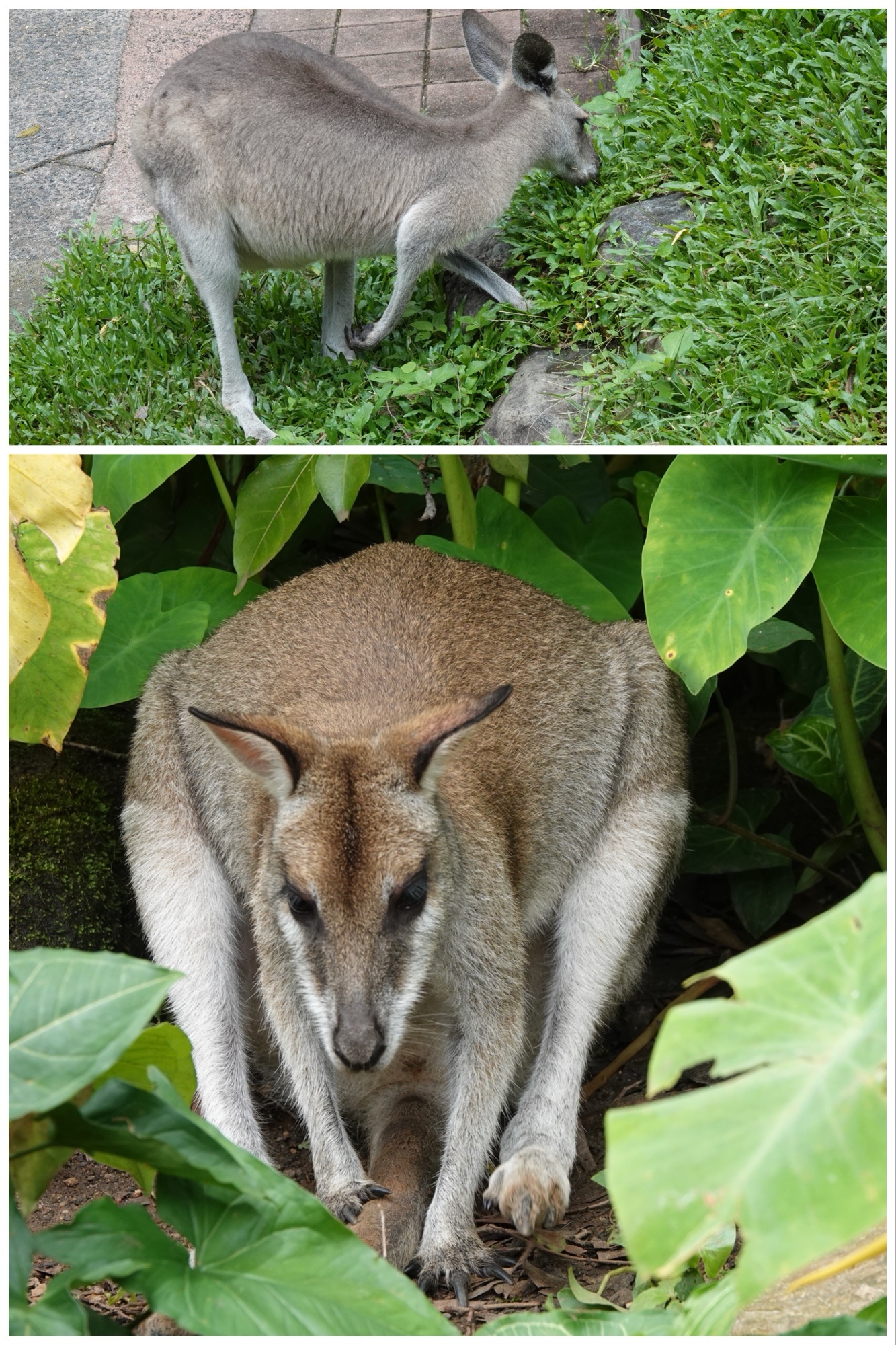
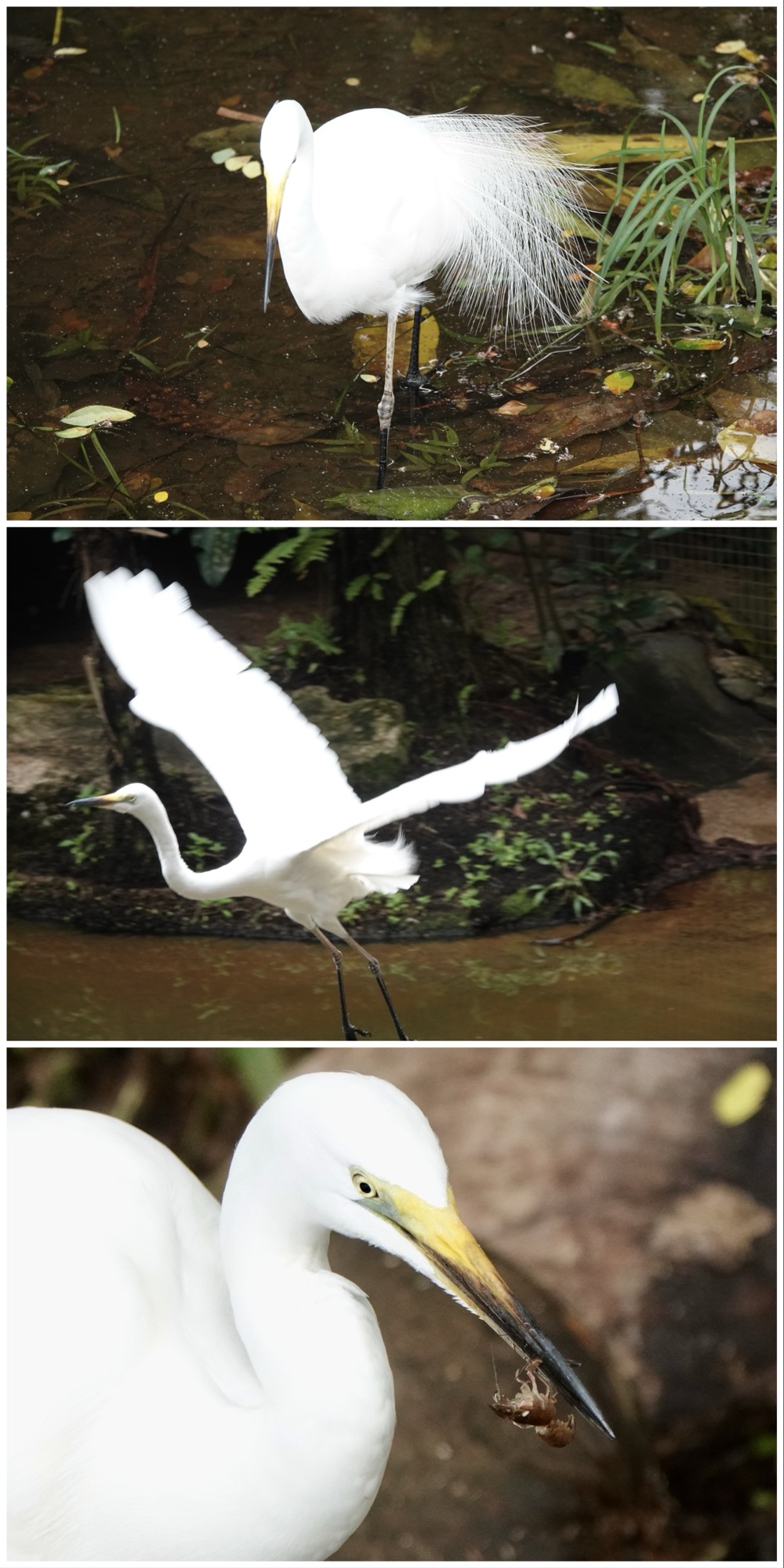
The nature park was a bit underwhelming – more of a very small zoo – but it’s hard to complain when there are wallabies and koalas around.


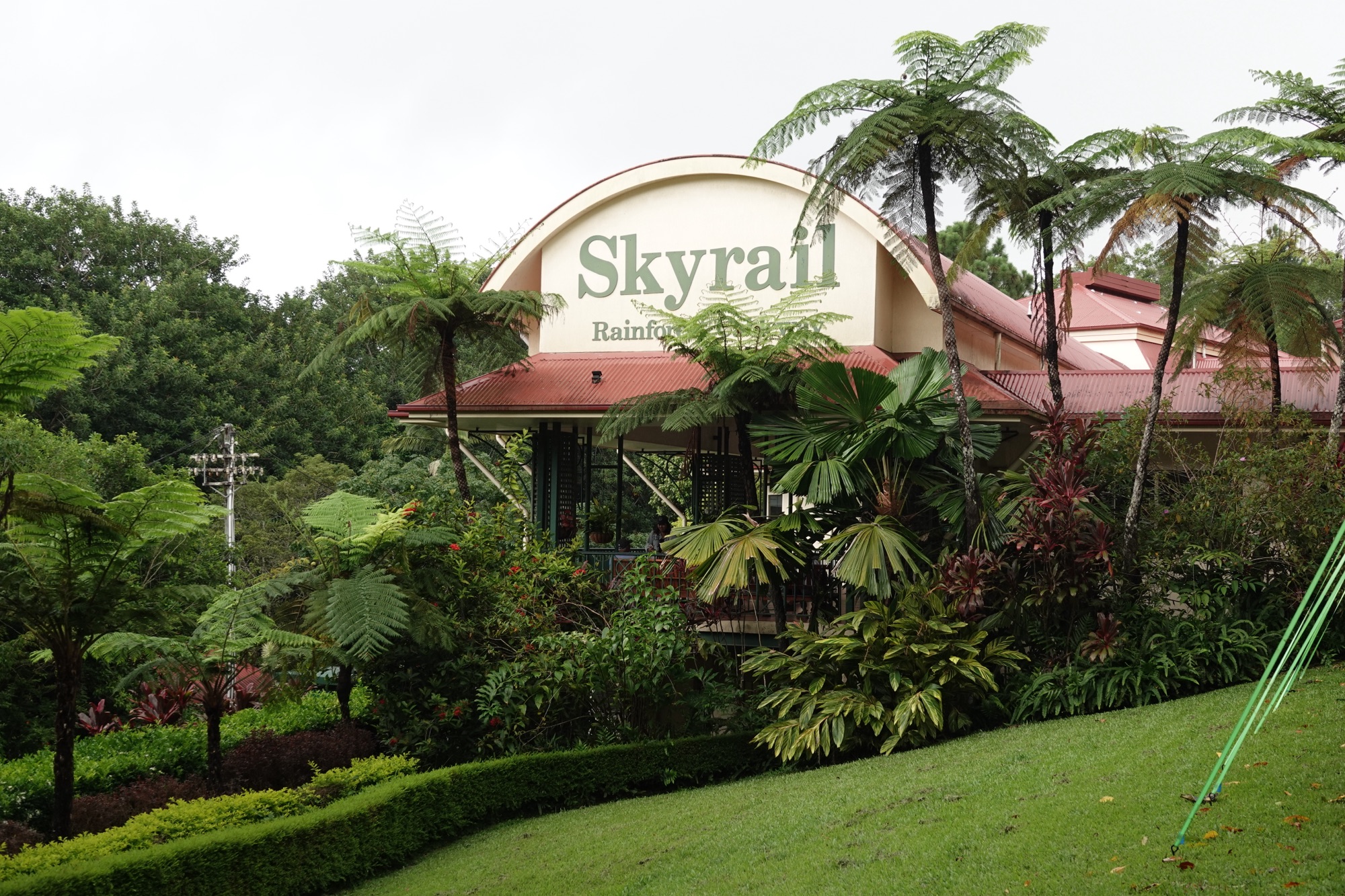
After lunch, it was time to board the Skyrail, a cable car spanning about 7km/4½ miles over the pristine forest. This is much more than a standard cable car ride with sweeping views of the countryside, mountain ranges, and life in the treetops, because it also allows passengers to disembark at stations along the way to explore the forest at ground level.
It was raining, which would not have been a problem, but radar reports were showing lightning along the route, which – sensibly – precluded the Skyrail from running. After about a 45 minute wait for the weather to change (during which time bottled water and snacks were distributed to all waiting passengers), an announcement was made that operations were being shut down for the day. The Skyrail system had buses ready to take passengers back to Cairns; those of us on the Viking excursion had our own coaches waiting.
It was disappointing not to see the rainforest from above, but safety comes first, and the added excitement of lightning striking a cablecar was something none of us really wanted.
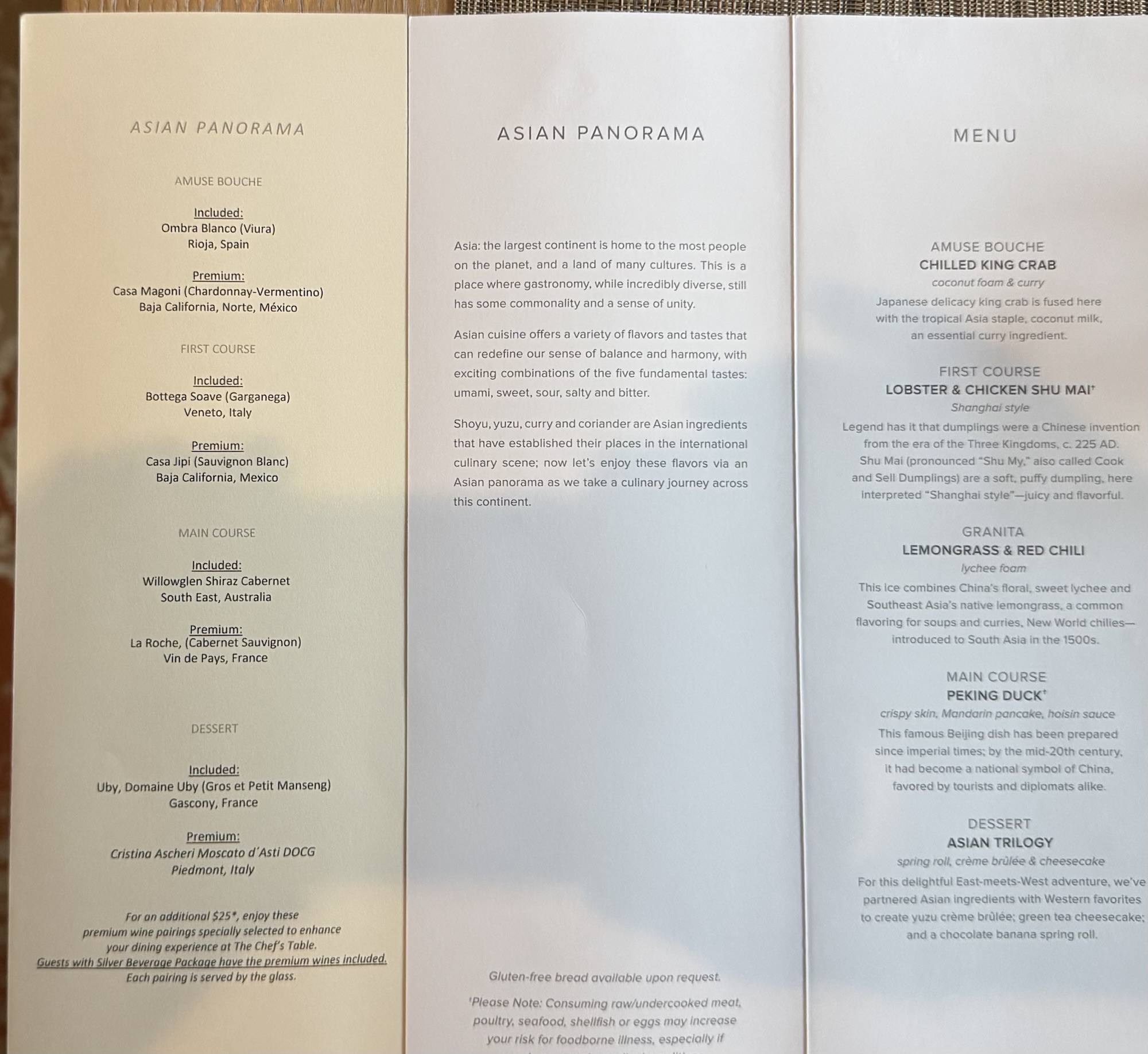
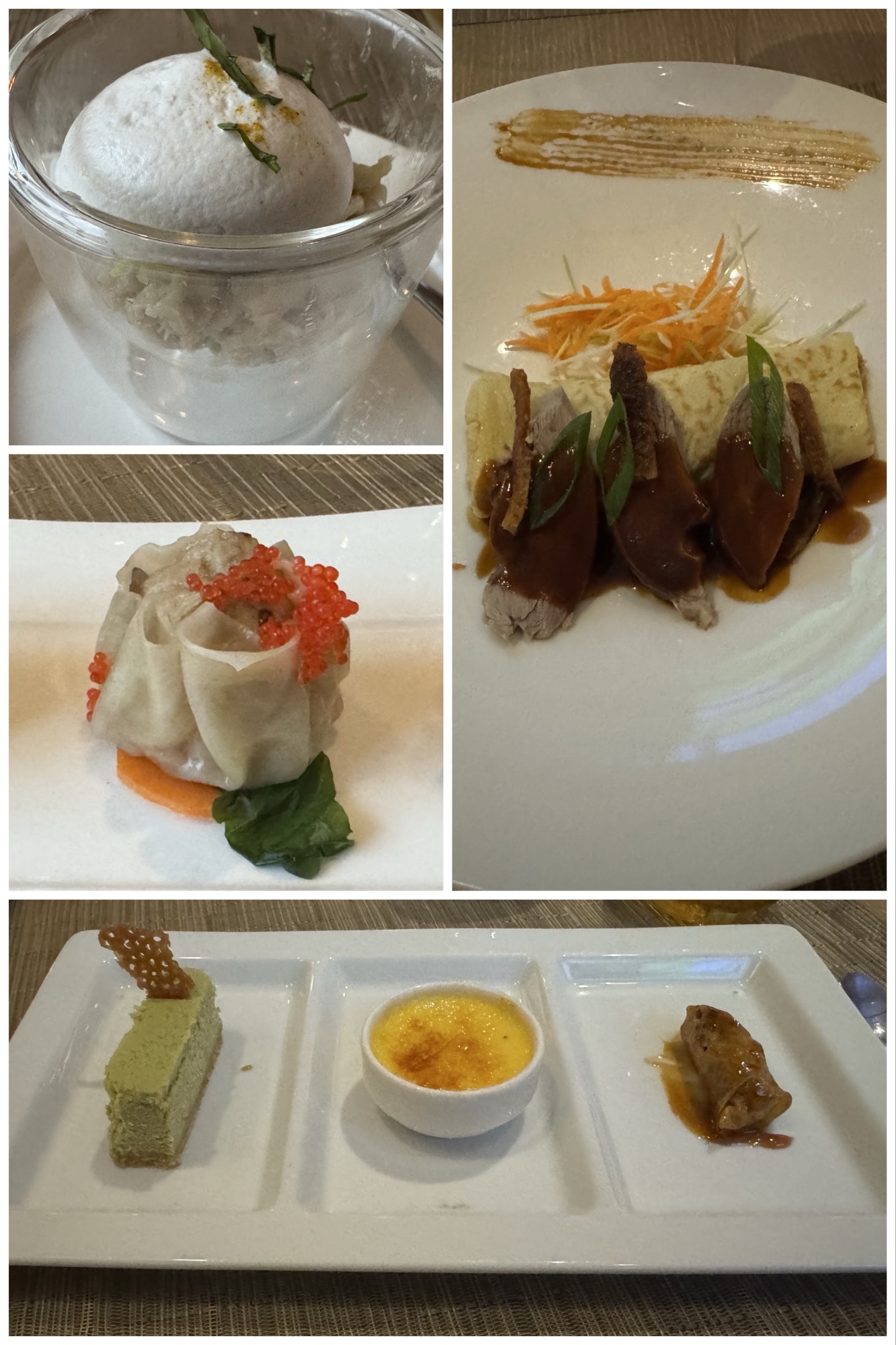
Once back on the ship, Ted and I had reservations at the Chef’s Table for the delicious Asian Panorama menu. This may be one of our favourites.
It was the anniversary of the day (49 years ago) that Ted proposed, so our wonderful waiter Godie offered to take our picture.

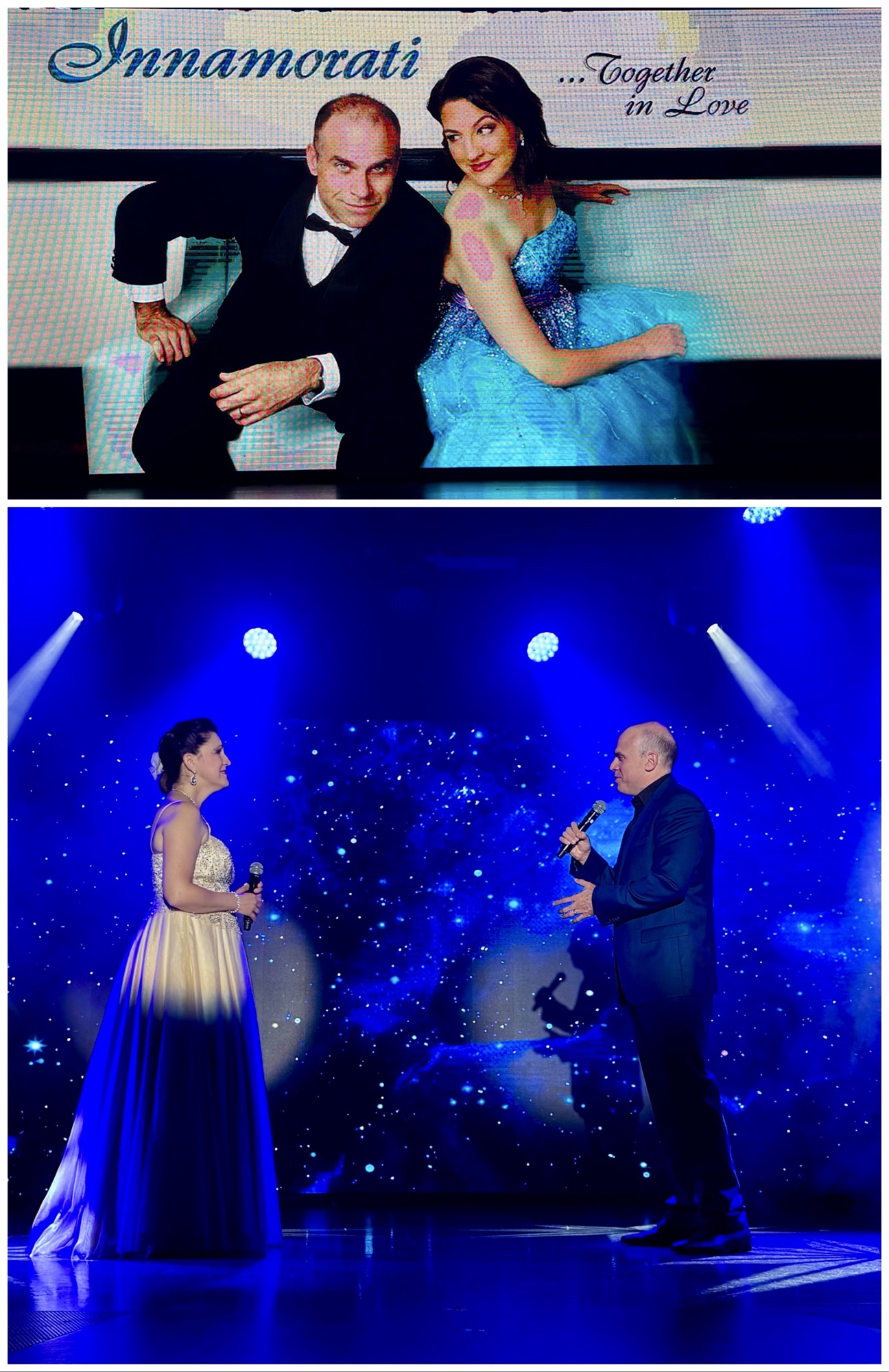
Appropriately enough, the evening’s entertainment was an Australian operatic duo “Innamorati” (in love) in a show called Together In Love. They were quite wonderful.
We finished our evening, as we’ve been doing more and more often lately, with the band in Torshavn.
Tomorrow we sail above the Great Barrier Reef as Reef Captain Vikram Hede navigates us through the Strait of Torres en route to Thursday Island.
 Rose and Ted’s Excellent Adventure
hate you missed the Skyrail and opportunities to explore at its stops and see the rainforest canopy from above, but safety first! It was a highlight of our Australia trip in February 2020. We took it up to Kuranda and then the train back down. Barron Falls wasn’t anything like what you saw, barely a trickle IIRC.
LikeLike
We’ve seen photos of the falls when it’s not rainy season, and realized how lucky we were (not so much the Queenslanders) to see it full force
LikeLike
Wonderful train ride — thanks for sharing. Your positive attitude towards the rain and the Skytrain shutdown is refreshing, too.
LikeLiked by 1 person
It’s impossible not to be positive when we’re just so grateful to be here and smiles are always reciprocated.
LikeLike
Isn’t that waterfalls amazing?! Interesting twist on your experience this week compared to ours last year on the World Cruise. The vintage train was out of commission last February as part of the tracks had been washed out in recent flooding, and we were unable to experience the train ride. So, Viking bussed us up to the Skyrail and at least we were able to see some similar views of the waterfalls as you shared. It was a really beautiful and quiet ride gliding above the canopy, albeit cloudy and misty, just as you described. All in all, a truly spectacular place!
Thanks for sharing!
LikeLiked by 1 person
Wow! Flooding last year too… those poor Queenslanders!
LikeLike