

It was a full day today with two tours booked, but we had a sea day yesterday and are heading into a stretch of 5 more before we reach our next port, Bay of Islands (Waitangi), New Zealand, so we thought we might as well do and see as much as we can!
Yesterday I had breakfast with a new friend, took in another of Patrick Goodness’s amazing lectures (The Peoples of Oceania, Polynesia & Micronesia) with another, finished reading The Poisonwood Bible so that I could take part in the book club meeting, attended said meeting, and then spent the afternoon doing laundry and listening to live music.
Ted was up and in the Explorers Lounge for coffee well before I got up. He spent his day reading news and walking 4 miles on deck 2 before hitting the sauna and pool in the spa.
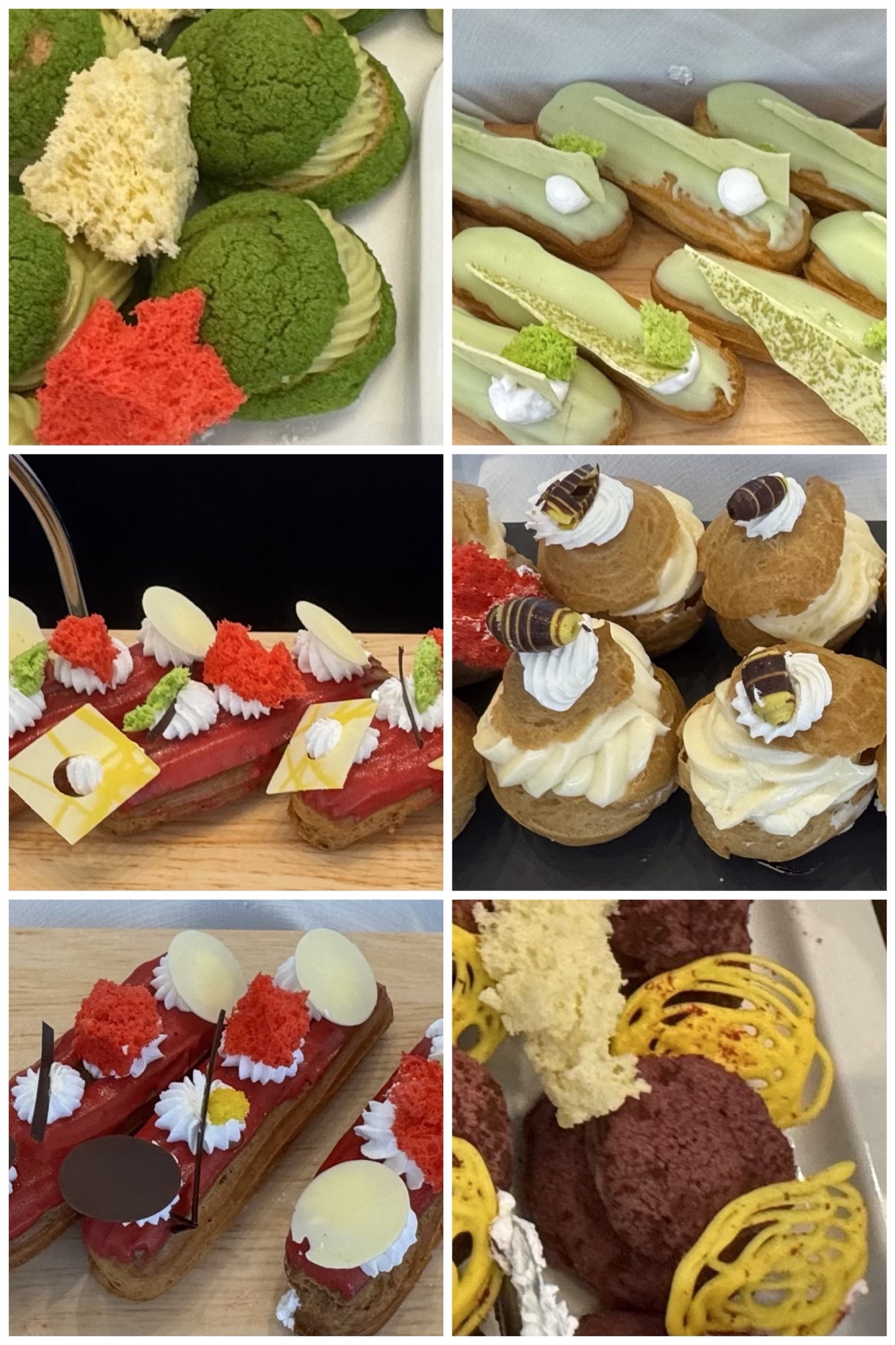
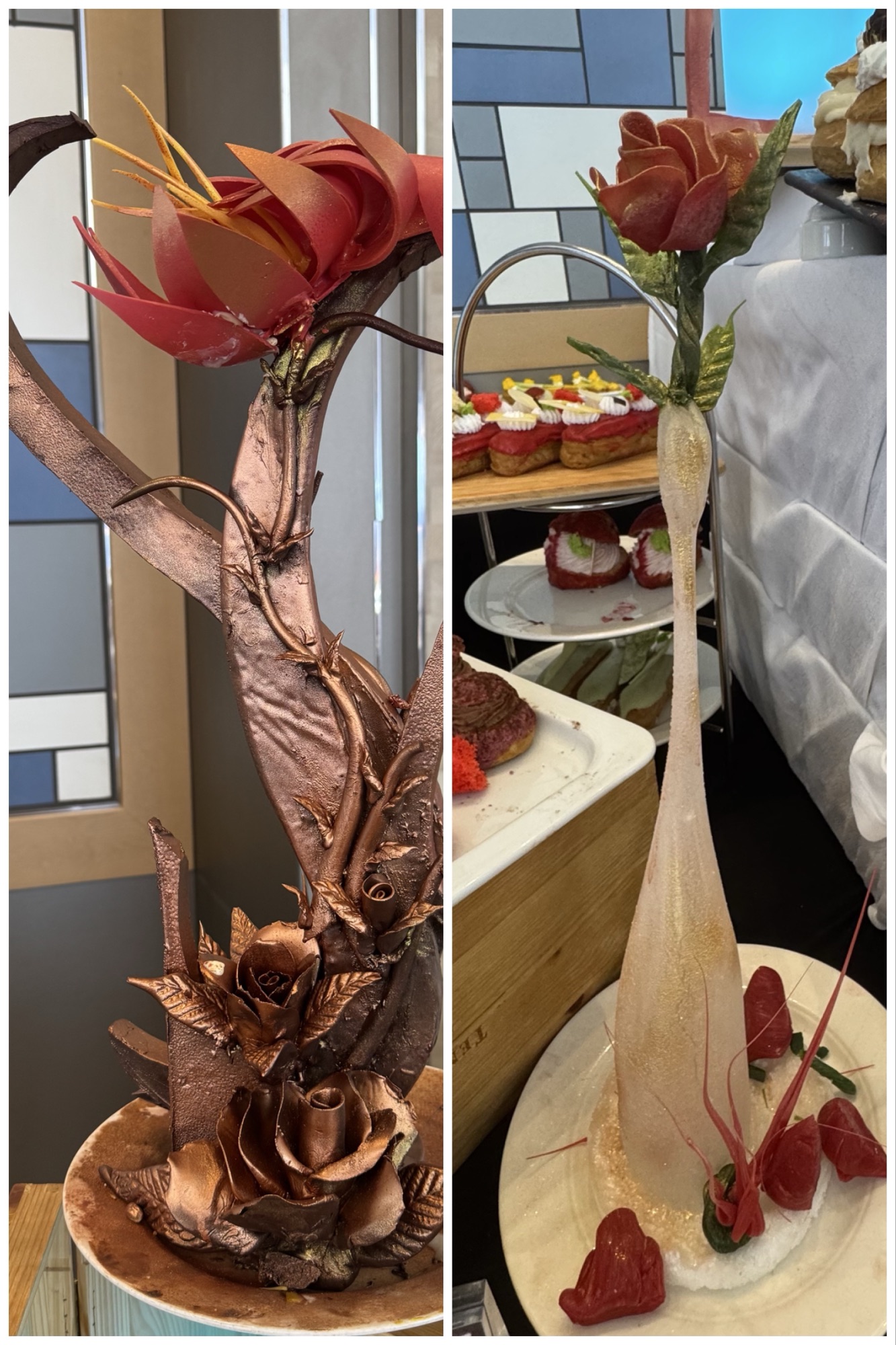
We met for lunch in the World Café, where today’s special event was an eclair bar, and we had a lovely dinner with 21/22 World Cruise friends.
No photos were taken to prove any of that, except for the eclairs.

This morning, we anchored off the island of Rarotonga, the largest and most populous of the Cook Islands, a nation of 15 islands in the central South Pacific. The entire island has an area of just 67.39 km2 (26.02 sq mi), and a population of under 15,000. By comparison, Bora Bora has an area of 30.55 km2 (11.80 sq mi) and a population just under 11,000. The interior of the island is made up of volcanic peaks, ridges and rainforest. Like Bora Bora, its main economy is based on tourism.
Getting to the island required taking a tender, since there is no large pier, and the coastal waters inside the lagoon are very shallow. Today boarding the tenders was a slightly precarious process; metre high swells meant that the ship and the tender boats were both moving up and down. It was a matter of skill and timing getting from one to the other when their decks briefly lined up.
In the morning we took a 3 hour “Island Discovery” excursion, a scenic motor coach tour with several stops. Our guide, whose Maori name’s closest equivalent in English was Patrick, both drove our 20-seater coach and narrated.
We began at the pier on the island’s east coast, and drove the coastal road around the entire perimeter. As we drove through the incredibly green and lush vegetation, he pointed out breadfruit, mangoes, bananas, papaya, avocados, coconuts, dragonfruit, taro, cassava/arrowroot, and sweet potato, as well as the pigs and chickens that – in addition to fish – create a varied diet even before considering imported foods.
We were also treated to a riot of colourful and delicately scented flowers growing wild: gardenias, tiare Maori, hibiscus, bougainvillea, frangipani, red flame trees, lobster claws, ginger flowers, and plumeria.
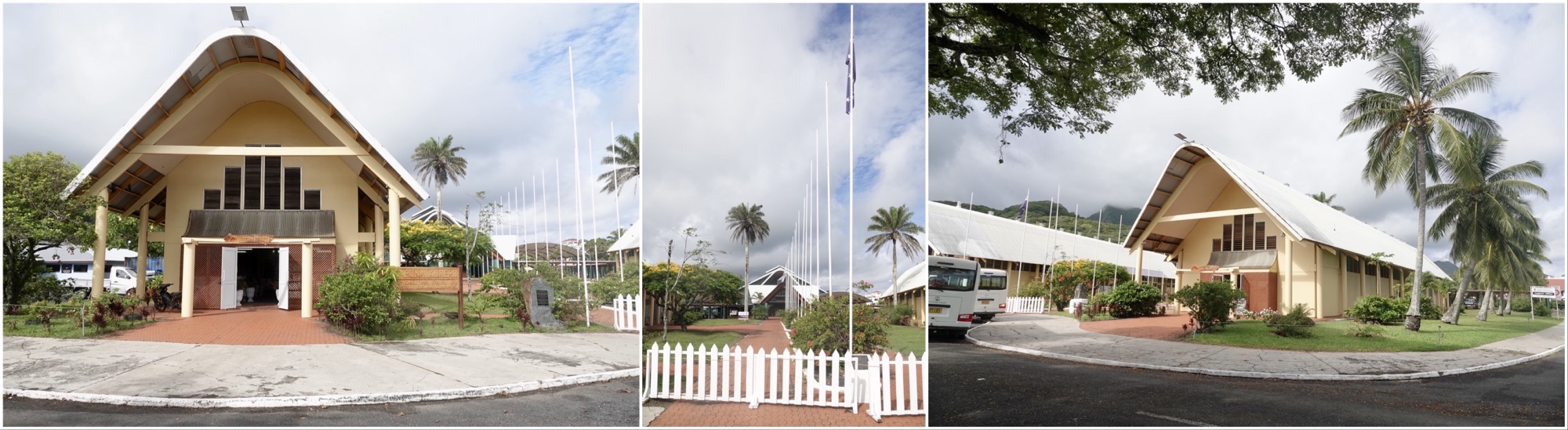
At the tiny National Museum (no interior photos allowed) we saw examples of clothing made from hibiscus wood, and cantilevered (single hull catamarans) canoes of the type used by the original Polynesian settlers to the Cook Islands. The museum was located on the same site as the mirror-image National Library, with the Department of Corrections buildings in between.
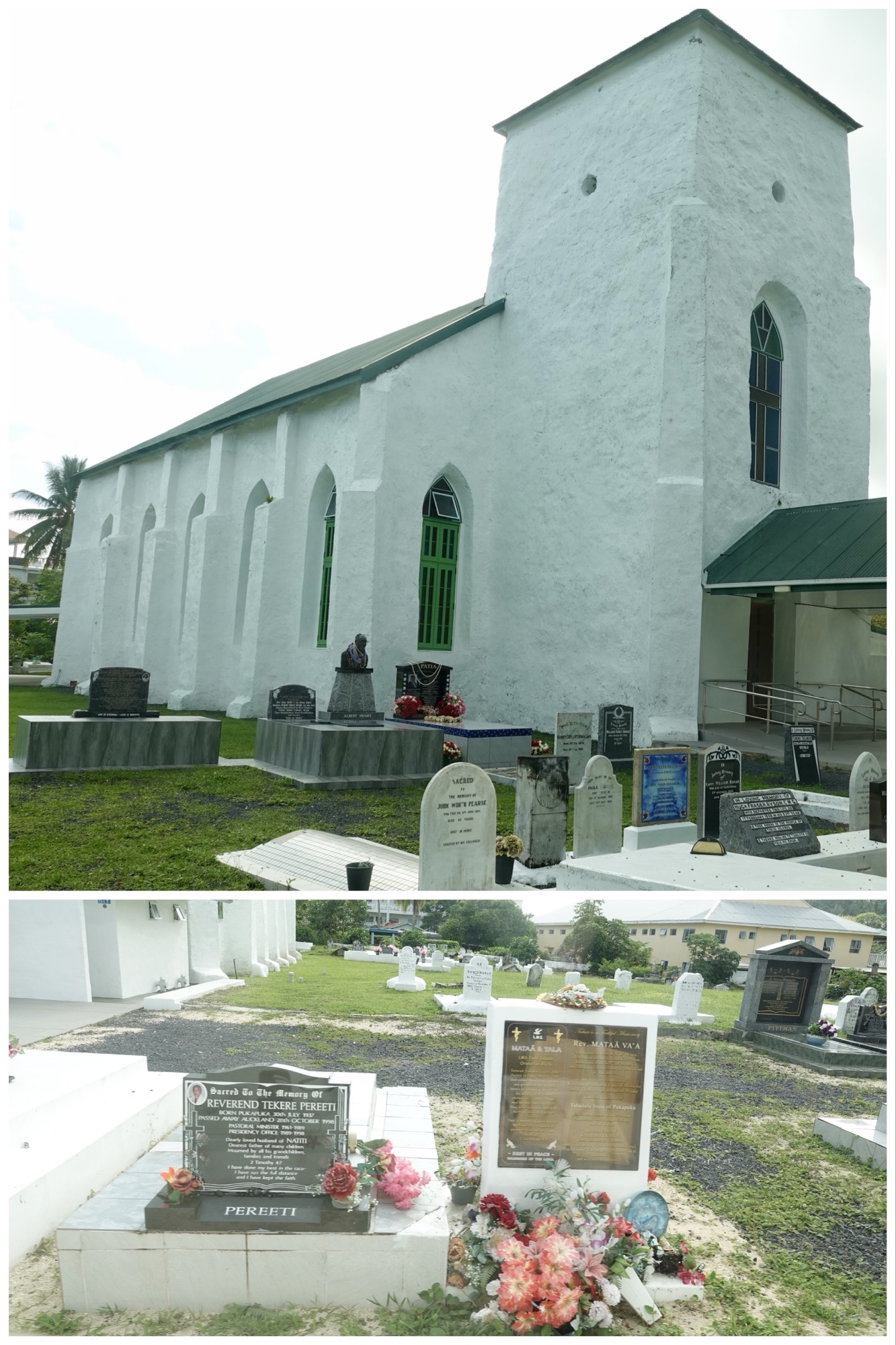
We passed by several churches of various Christian denominations. The Cook Islands recently celebrated the 200th anniversary of Christianity being brought to the islands, which our guide credited with ending both polygamy and cannibalism here. Each church had an adjacent cemetery, but only those involved in the (church) ministry or high-ranking people are buried here. Most people are interred on their own family’s land, in what are sometimes quite elaborate graves with shelters around them.
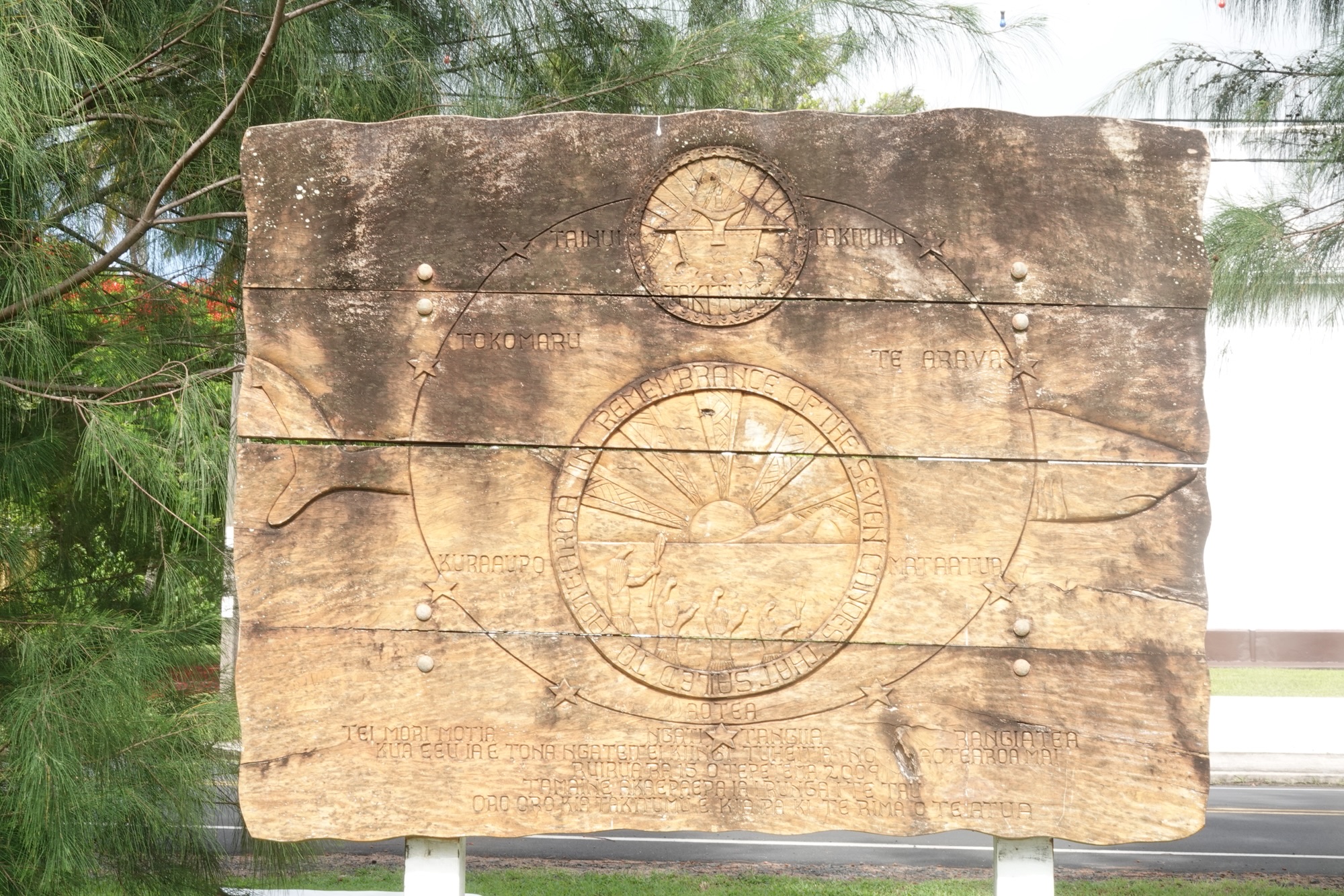
We had a short photo stop at Ngatangiia Harbour, the departure point for the seven canoes that are said to have brought the Māori people to New Zealand in 1350 CE: Tākitimu, Tokomaru, Kurahaupō, Aotea, Tainui, Te Arawa, and Mataatua.

We drove past the Cook Islands’ “mother church”, erected in 1835 (left) and the palace of Tinomana Mereana Ariki (1848 – 1908) a sovereign of the Cook Islands (right). We were driving too fast, and were seated on the opposite side of the coach, so Ted was unable to get great pictures, but he did manage to effectively capture a closeup of the coral limestone used in the church’s construction.

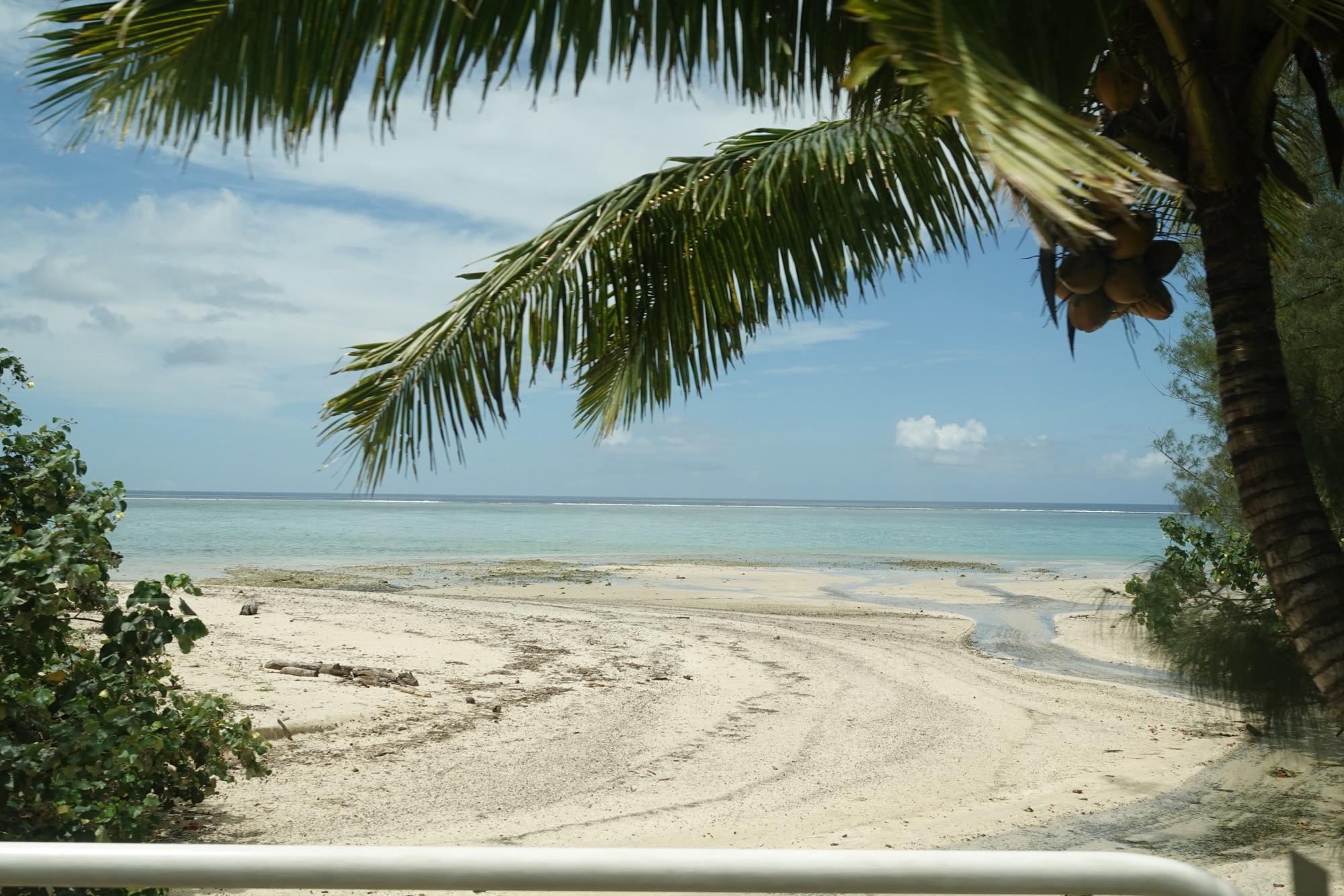
Next we made a brief stop at the famous white sand Muri Beach. To be fair, all the sand encircling Raratonga is white.
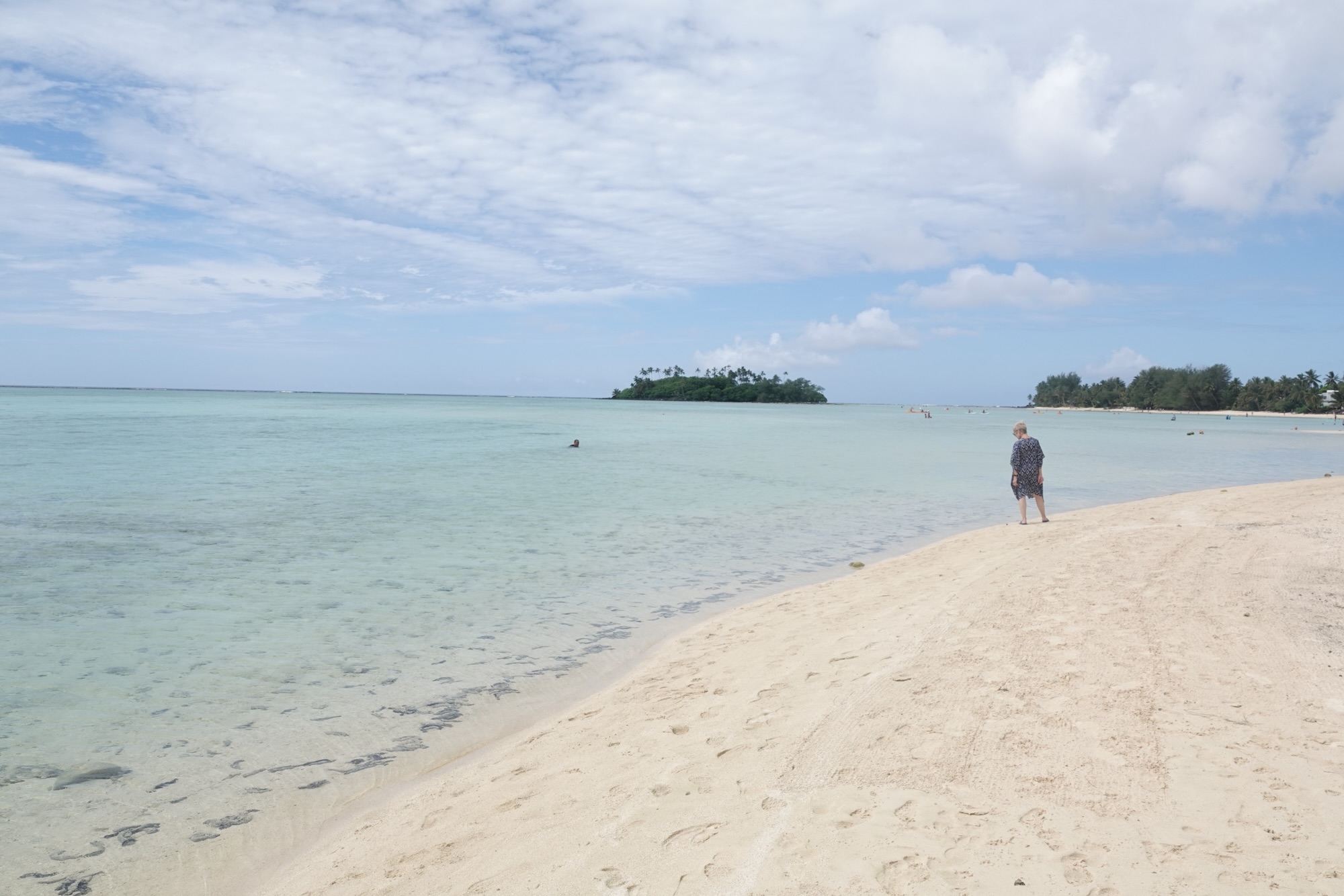
Our guide told us the animals laying under the shallow water at the edge of the beach were sea cucumbers. A fellow passenger insisted loudly to everyone that they were sea slugs, but (at the acknowledged risk of sounding completely nerdy) sea slugs and sea cucumbers aren’t even in the same taxonomic group. Sea slugs are a marine gastropod, which is part of Phylum Mollusca, where sea cucumbers are part of Phylum Echinodermata. Oceanconservancy.org explains “Most sea slugs have a defined “head” with tentacles used to sense their surroundings. These tentacles, called rhinophores, allow sea slugs to “smell” chemical signals. Some sea slugs also have exposed gills on their backs (in fact, the term “nudibranch” comes from Greek and Latin words meaning “naked gills”), which can appear feathery and brightly-colored. Conversely, sea cucumbers have no definitive head end—they kind of look like underwater sausages. You can sometimes see tentacles coming out of one end that the cucumber uses to feed, but they can retract those back into their bodies.”


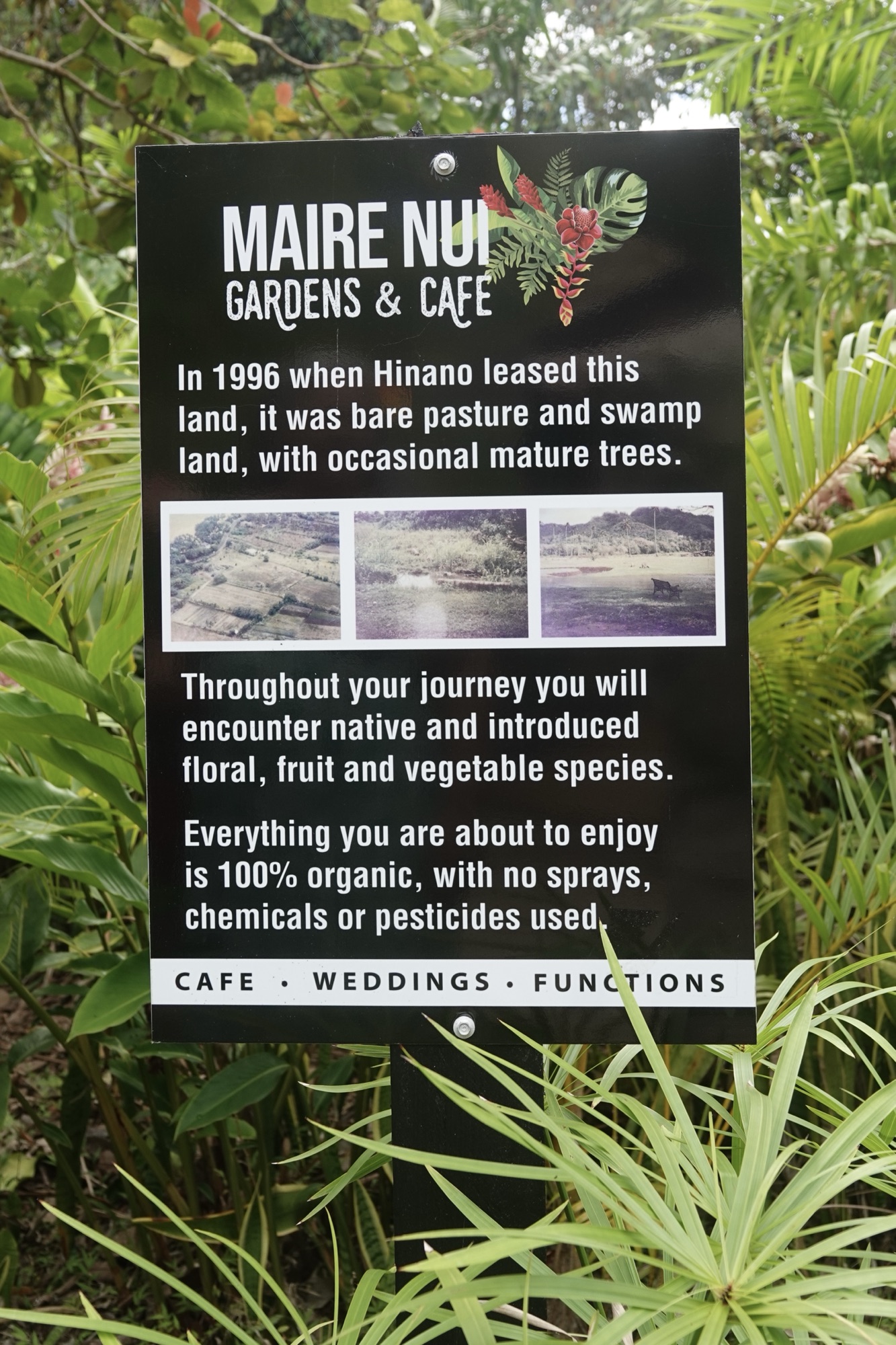
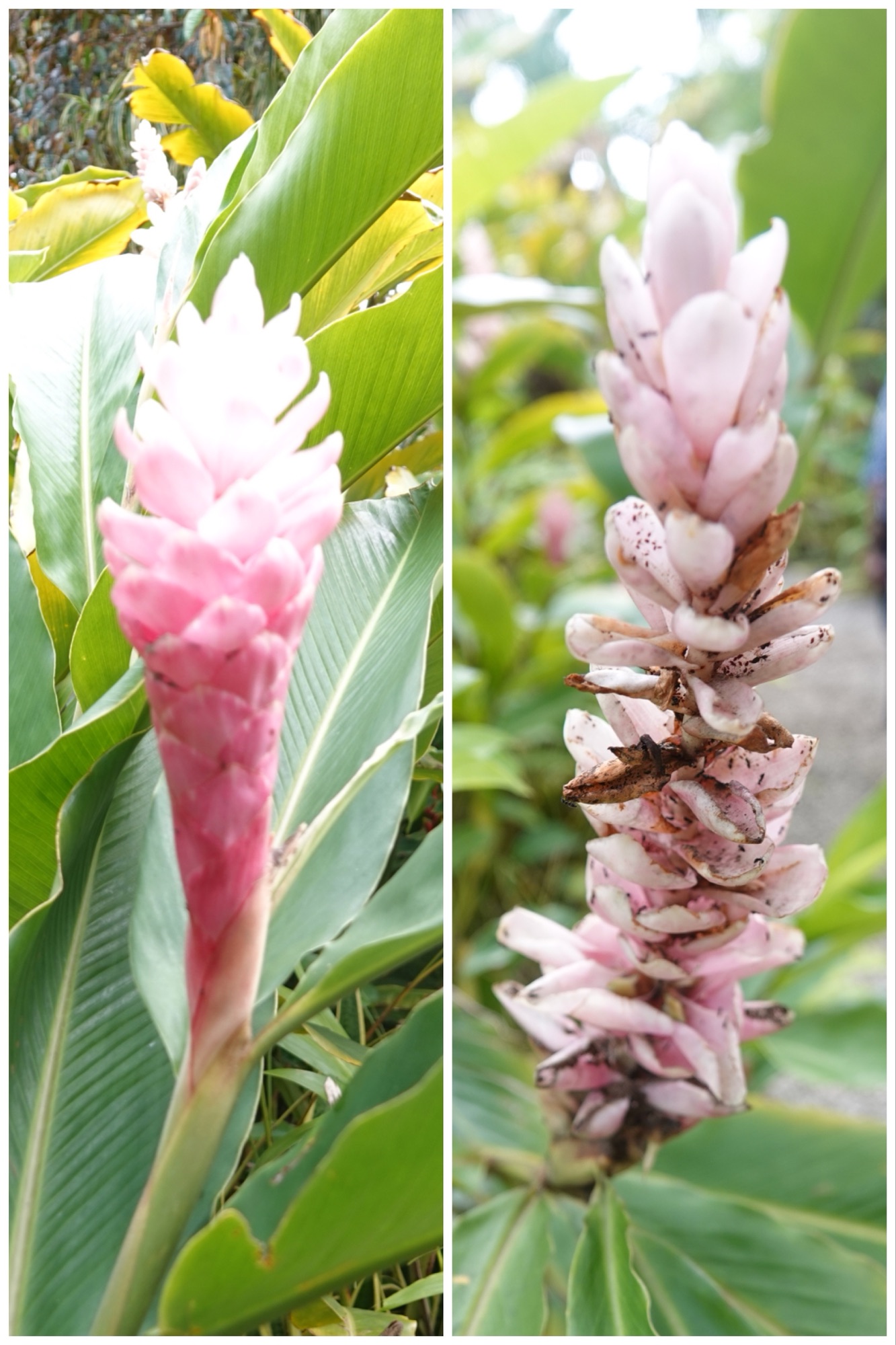
Our second-to-last stop was at a stunning botanical garden, run by a family who use only organic growing strategies. That means that they prune, transplant, and compost as necessary, but use no artificial substances.
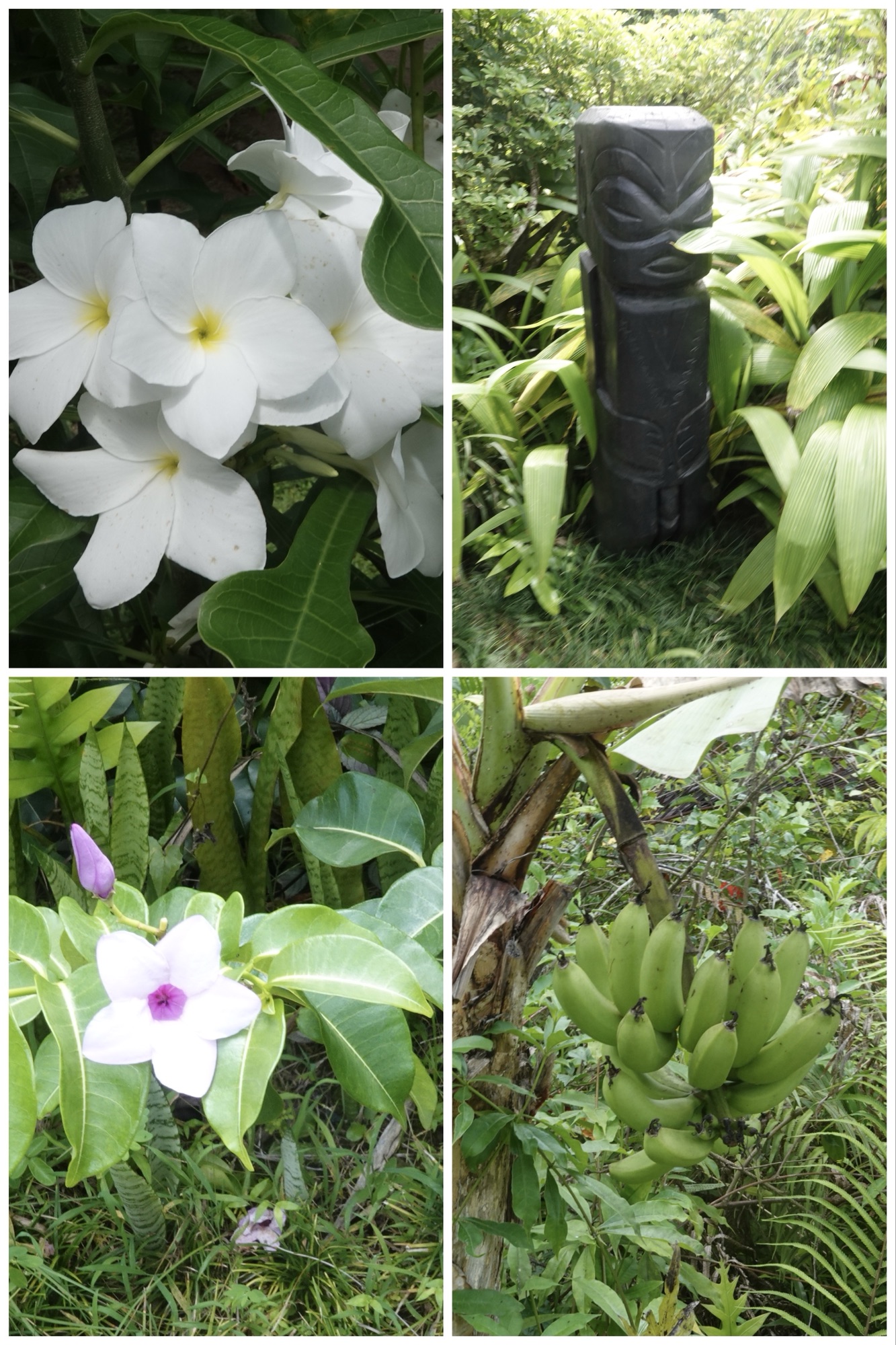
Bottom right: bananas.

Bottom: the “wedding chapel”
I asked about the thousands of tiny ants on the uncharacteristically pale pink ginger flowers, thinking that maybe they were like ants on peonies, having a mutually beneficial relationship. Sadly, that’s not the case. The ants were (one hopes accidentally) brought onto the island 2 years ago and are destroying both ginger plants and many citrus fruits. In every Polynesian port we’ve been reminded numerous times that taking any kind of fresh food, fresh juices, flowers or plants on shore is prohibited. People often ask why. These dying ginger plants are a very real example of how easily an ecosystem can be harmed. Perhaps the island’s fine of $400 NZD for flouters of the rule should be much higher.
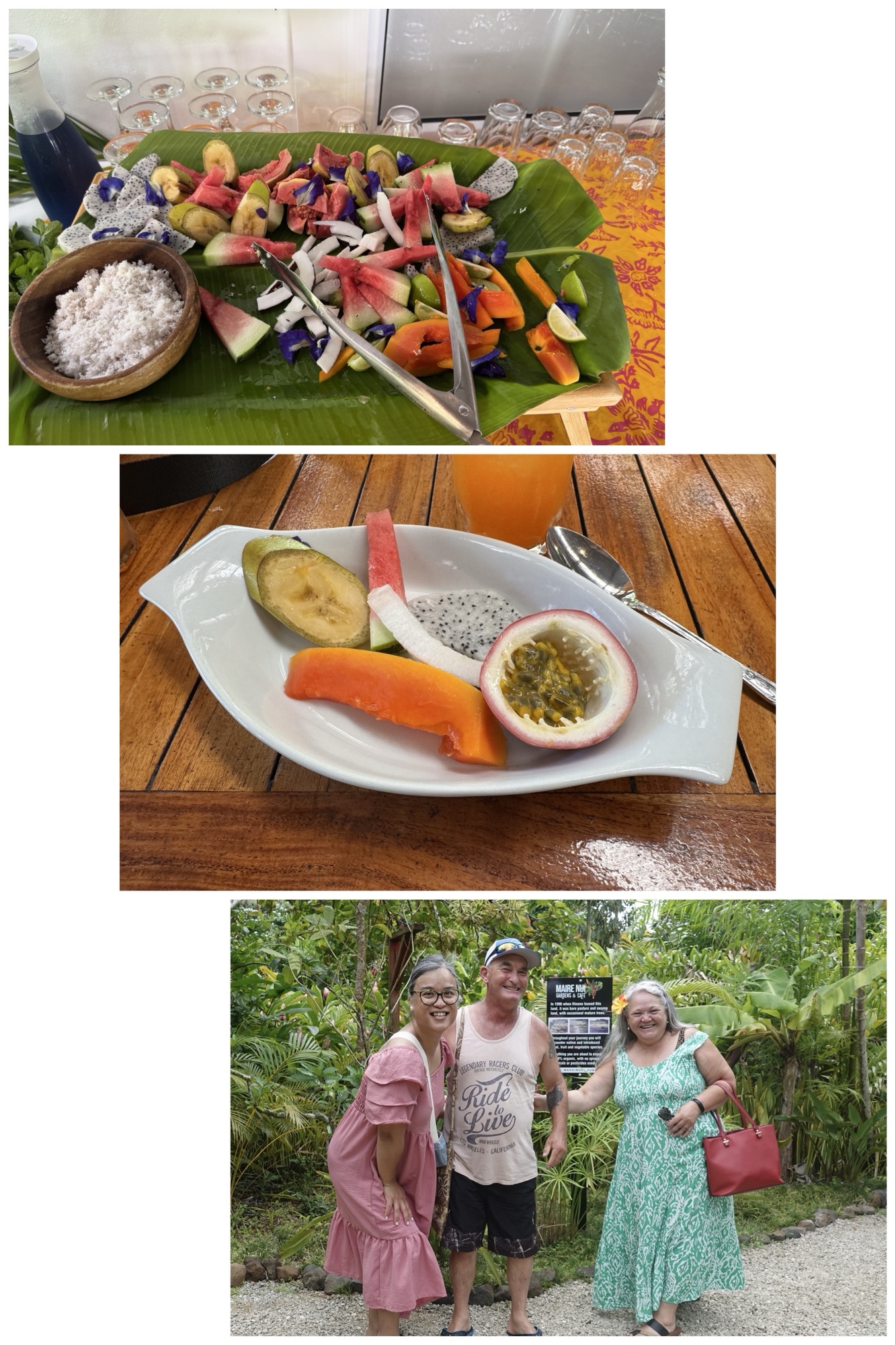
We were offered iced butterfly pea flower tea, which contains anthocyanin pigments, water-soluble compounds responsible for its blue colour. When lemon juice is added to the tea, it lowers the pH of the mixture. As a result, the pigments change from blue to purple, turning a deeper shade of purple the more lemon juice is added. This is what is used to make Victoria Distillers of Sidney, British Columbia’s famous blue Empress 1908 Indigo Gin. Apparently a distillery in the Cook Islands intends to do the same.

Alongside the liquid refreshments were a selection of organic fruits.
Our final stop was at Black Rock, the departure point of Maori spirits.

There was more beautiful tropical scenery as we returned to the pier.
After our morning tour, we were hot and sweaty enough that we decided to forgo our afternoon “tour”, which was really just being delivered back to Muri Beach to wander the market stalls and relax under the sun. Instead we chose to return to the ship, where I gulped down a tall glass of pink grapefruit juice to rehydrate, cooled off in the pool for a while, and enjoyed a burger from the pool grill. Ted curated photos.
As it turned out, there were warm gentle rain showers in the afternoon, which we watched from the dry safety of the Explorers Lounge as the boat rocked in the swells.
We enjoyed the featured “Indonesian Street Food” theme in the World Café for dinner with new friends Andrea and Chet, after we took in the Broadway/West End themed vocals of guest entertainer Australian tenor Paul Ettore Tabone. It was a lovely ending to a lovely day.
We’re headed into another stretch of 5 sea days, which I’ll probably just combine into a single food-focussed episode. You’ve been forewarned.
 Rose and Ted’s Excellent Adventure
I had a chance to eat raw sea cucumber on a visit to the coast in South Korea in about 1979 — well doused in gochuchang, the Korean fermented bean and chili sauce. They were kind of crunchy — a texture more than a taste. They were clear — like really, really firm gelatin. I’ve managed not to eat them again since! Thanks for the detailed reports — enjoying them!
LikeLiked by 1 person
It seems like the sauce would be the main attraction! LOL
LikeLike
Hi Rose Thanks again for your wonderful blog and to Ted for the photos! They really brighten my Ontario winter days. Thanks especially for the info on the colouring of Empress Gin. It’s Max & Nicole and Bruce’s sister, Marlene’s favourite gin. I copied the info and photo and shared it with them. Happy Travels!
Wendy
LikeLiked by 1 person
Glad to be a small part of warming you up! 😆
LikeLike