Our altered itinerary brought us back to Papeete (pronounced “pap-eh-eh-tay”) Tahiti today – hardly a hardship in anyone’s books.
Our excursion today was the included walking tour, given by a local volunteer guide; we were told that there are no professional tour guides here.
At the municipal market, explore colorful stalls filled with fresh produce, regional delicacies, Tahitian pearls, and local arts and crafts. Walk past the Town Hall, a replica of the former Royal Palace, and Notre Dame Cathedral-one of the oldest and largest churches in Papeete. See the Territorial Assembly, home to the Polynesian Parliament and the French High Commissioner’s residence, and admire the edifice which reflects Tahiti’s traditional building style. Cap your tour with a stroll through Parc Bougainville, dedicated to explorer Louis Antoine de Bougainville.
Downtown Papeete is quite small. The population of all of French Polynesia (118 islands) is just under 309,000, with the island of Tahiti accounting for 192,000 of that. The capital city, which is also the capital of French Polynesia, has just 27,000 inhabitants. If Papeete’s six “communes” are included, the urban area has a population of slightly under 127,000, but that is certainly not evident in the city’s core.
We met our very enthusiastic (and prodigiously dimpled) young guide Teva (pronounced “tay-vah”) on the pier beside our ship, and began our tour by walking to Place Vai-ete (“vah-ee-eh-tay”, with each letter enunciated, as it is in Hawaiian). Teva explained that pre-Covid, ten or more food trucks would appear here each evening, and the park would take on a festive air. Unfortunately many of those vendors’ businesses didn’t survive Covid, and Tahitians’ social habits also changed. Now only one or two trucks appear, and few people stay to eat and socialize.

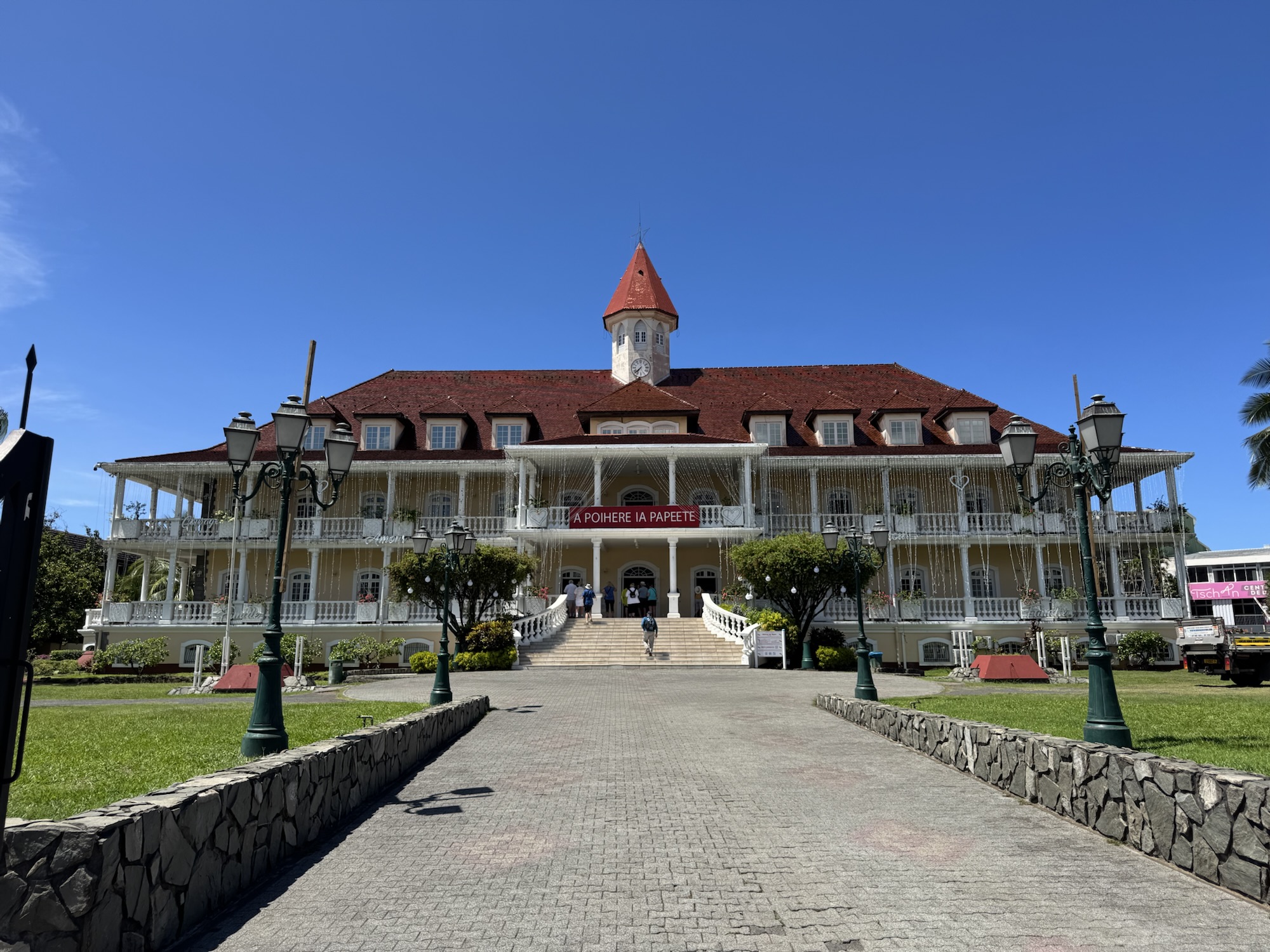
From there we continued into the city to Papeete’s City Hall. The building is a recreation of the Royal Palace, which originally sat on the site currently occupied by the Territorial Assembly, French Polynesia’s parliament.
The main vestibule features a mural depicting Tahitian life.

Inside is a wedding chapel, containing two chairs in the Philippine peacock style (the Polynesian name of which I cannot remember) which Tahitian royalty favoured. Naturally, I needed a “throne” picture. The chapel ceiling features stars and constellations on the ceiling, as a reminder to the Polynesians’ navigational skills using the stars.

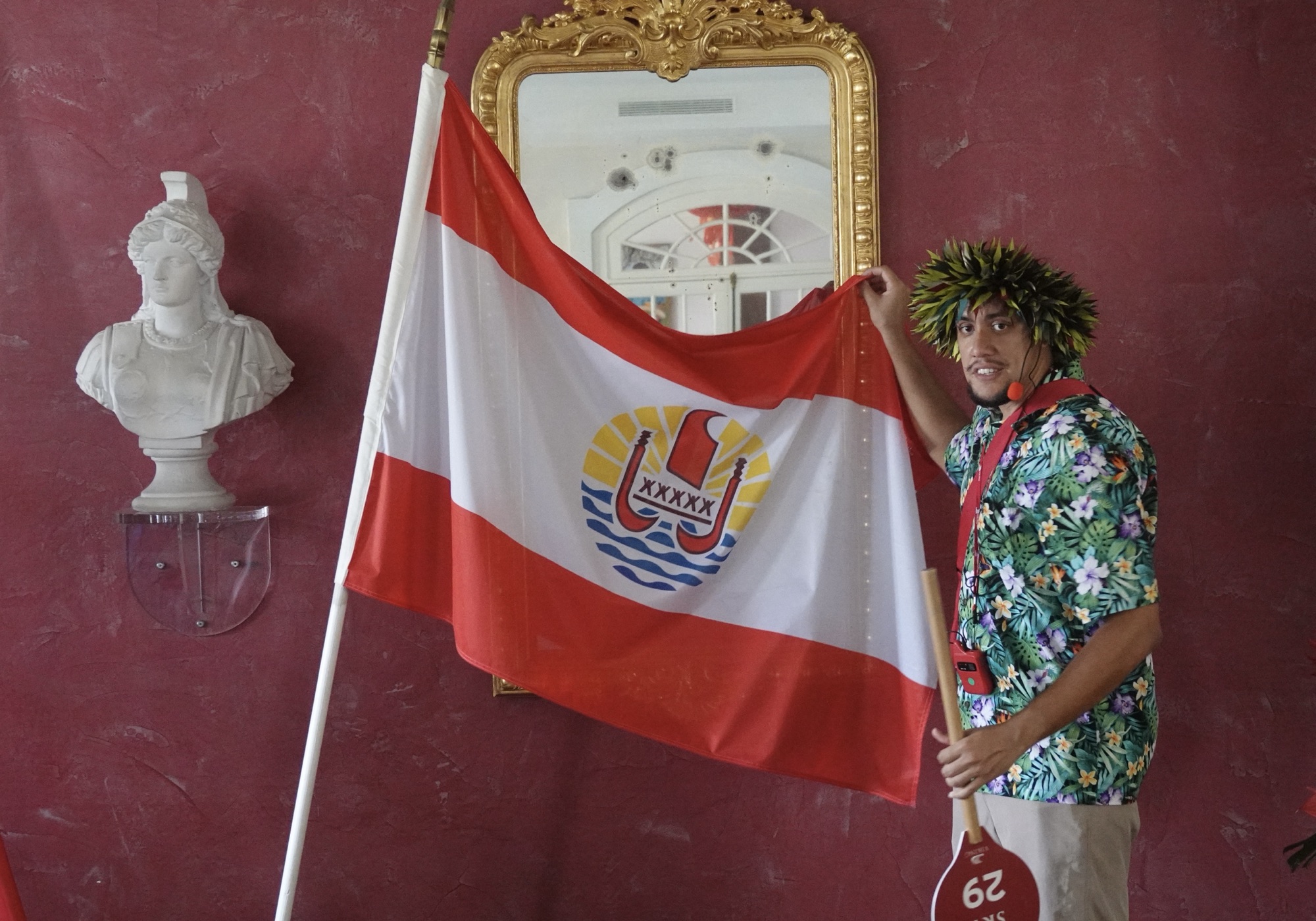
Teva took a moment to explain the symbolism in the medallion in the centre of the French Polynesian flag.
We also visited the interior courtyard, where bougainvillea and tiara Tahiti flowers bloom, and a tiki protects the building.
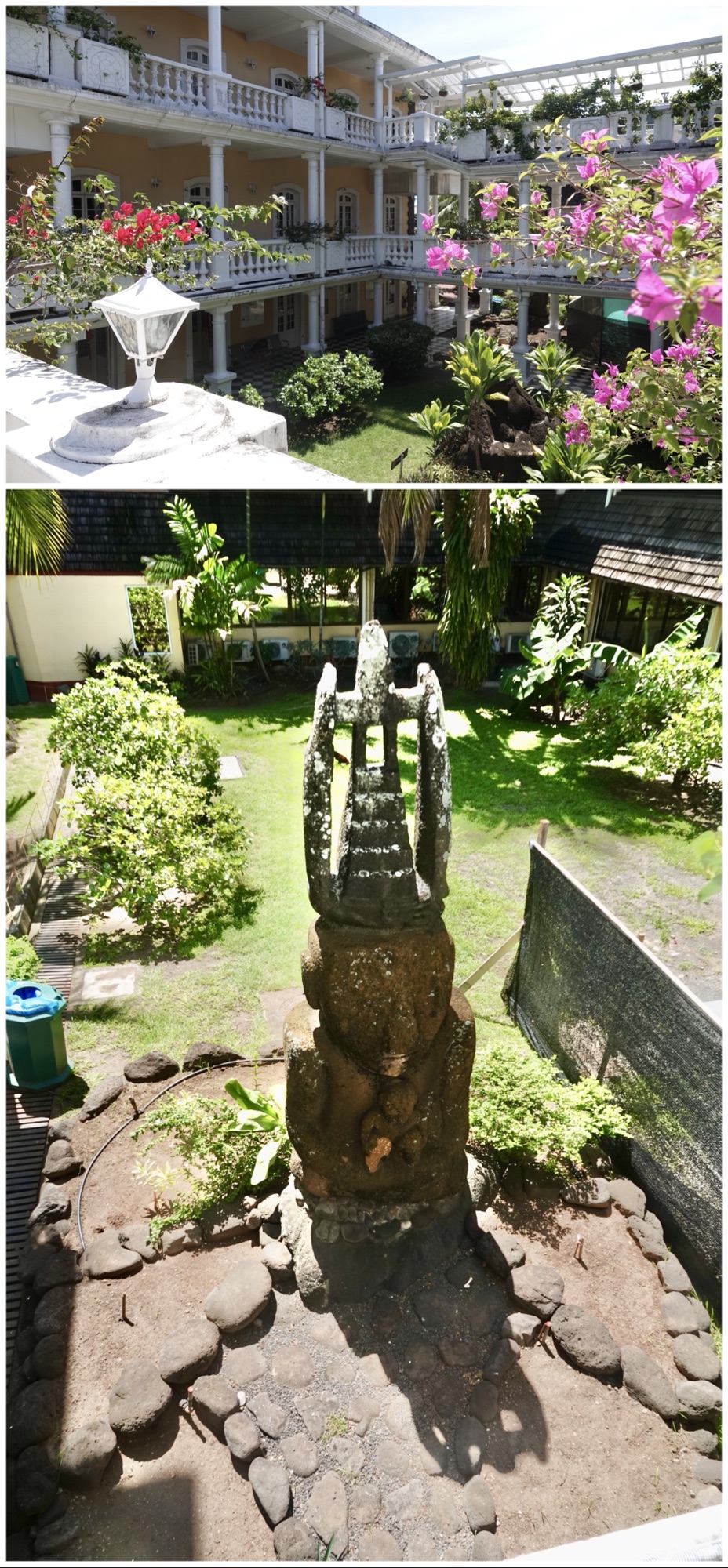
We learned that the positioning of a tiki is important. It faces danger and protects what is behind it. That made us wonder about a tiki we saw later at the Territorial Assembly that faced the parliament, ostensibly protecting those outside from those inside!
Beside the city hall is an event space constructed with a typical Pandanus leaf roof. When tightly woven, these roofs can withstand heavy rain and winds, and last between 5 and 10 years.


Our next stop was Papeete’s municipal market, which is open 6 days a week from 7 a.m.until about 2 p.m. The lower floor features produce, meat, fish, and artisan items; the upper floor is more traditional retail shops. The original market was only one storey and just a fruit market, with fish being sold at a separate market at what is now the cruise port. In 1914, at the beginning of WWI, two German coal-fired ships tried to refuel in Papeete, and were repelled. In response, the Germans fired their cannons, setting the coal piles on fire and burning down most of the coastal buildings, including the wooden market building. The new market is steel framed, and named in honour of the woman who gave her land to allow the port to be built.


We walked past Papeete’s Notre Dame Cathedral, remembering that almost every major Catholic city has a cathedral dedicated to “Our Lady”. This one was completed in 1875, and is now used in part as a homeless refuge run by the church.

From the cathedral, we moved on to the parliament buildings, and the park that includes the Queen’s bath (a serene natural spring pool), which is where she died in 1877 (of a heart attack). As a young woman who had no expectation of, or wish to, become Queen, her long reign until the takeover of Polynesia by the French must have been stressful.
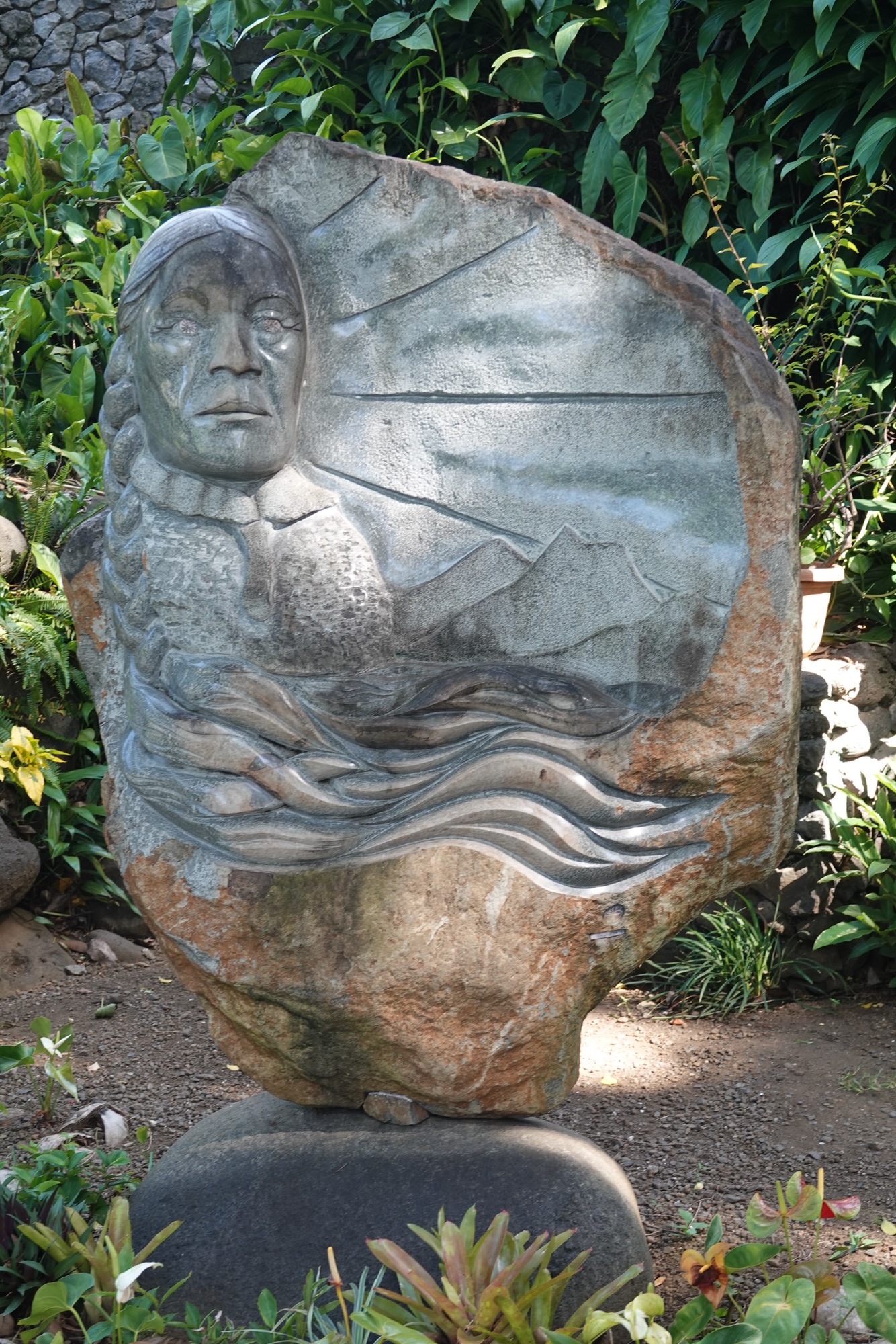


Although the official languages here are French and Tahitian, there are remnants of the British period in Tahiti in their language. For instance, the word for hello and goodbye is “Ia ora na”, pronounced “yoranna”. Our guide gave us an easy way to remember it: the English “your honour” but softened/slurred.
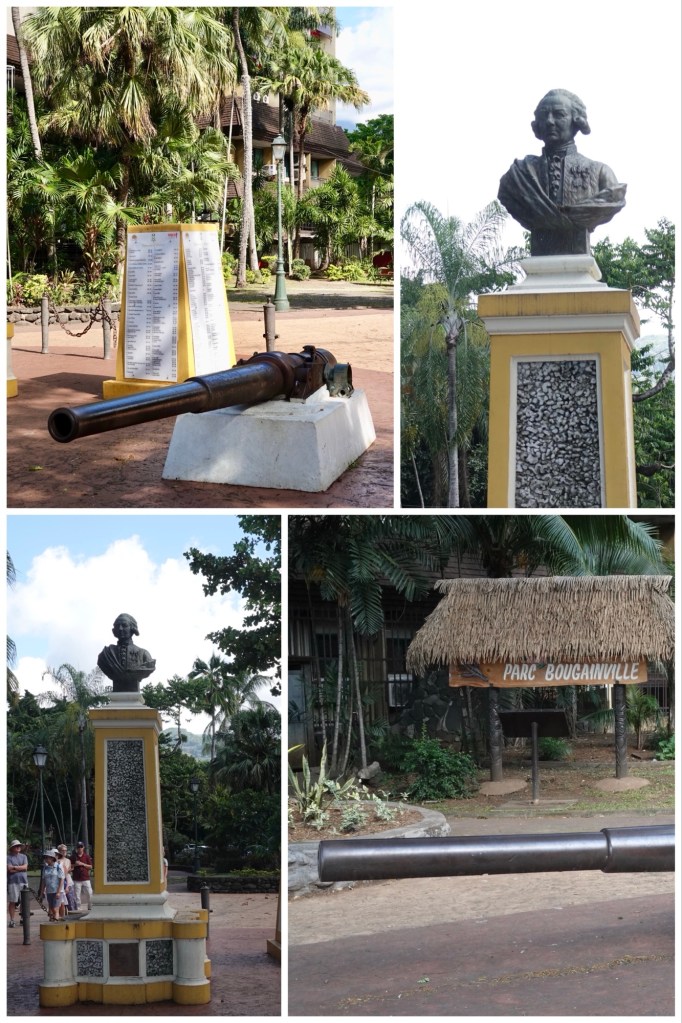
Our last stop before returning to the ship was Parc Bougainville, named after Louis-Antoine, Comte de Bougainville (12 November 1729 – 31 August 1811), a French military officer, explorer and nobleman who landed in Tahiti in 1777, claimed the island for France and named it New Cythera. There’s a Canadian connection here: In 1756, Bougainville was stationed in Canada as captain of dragoons and aide-de-camp to the Marquis de Montcalm.
There are two World War I cannons in the park: one from the French warship Zélée, and the other from the German ship the See Adler )”sea eagle”).
After a full 2-1/2 hours of walking and learning – all in 28°C/82°F heat – we were exhausted and glad to return to the ship for a short rest before dinner at the Chef’s Table with friends.
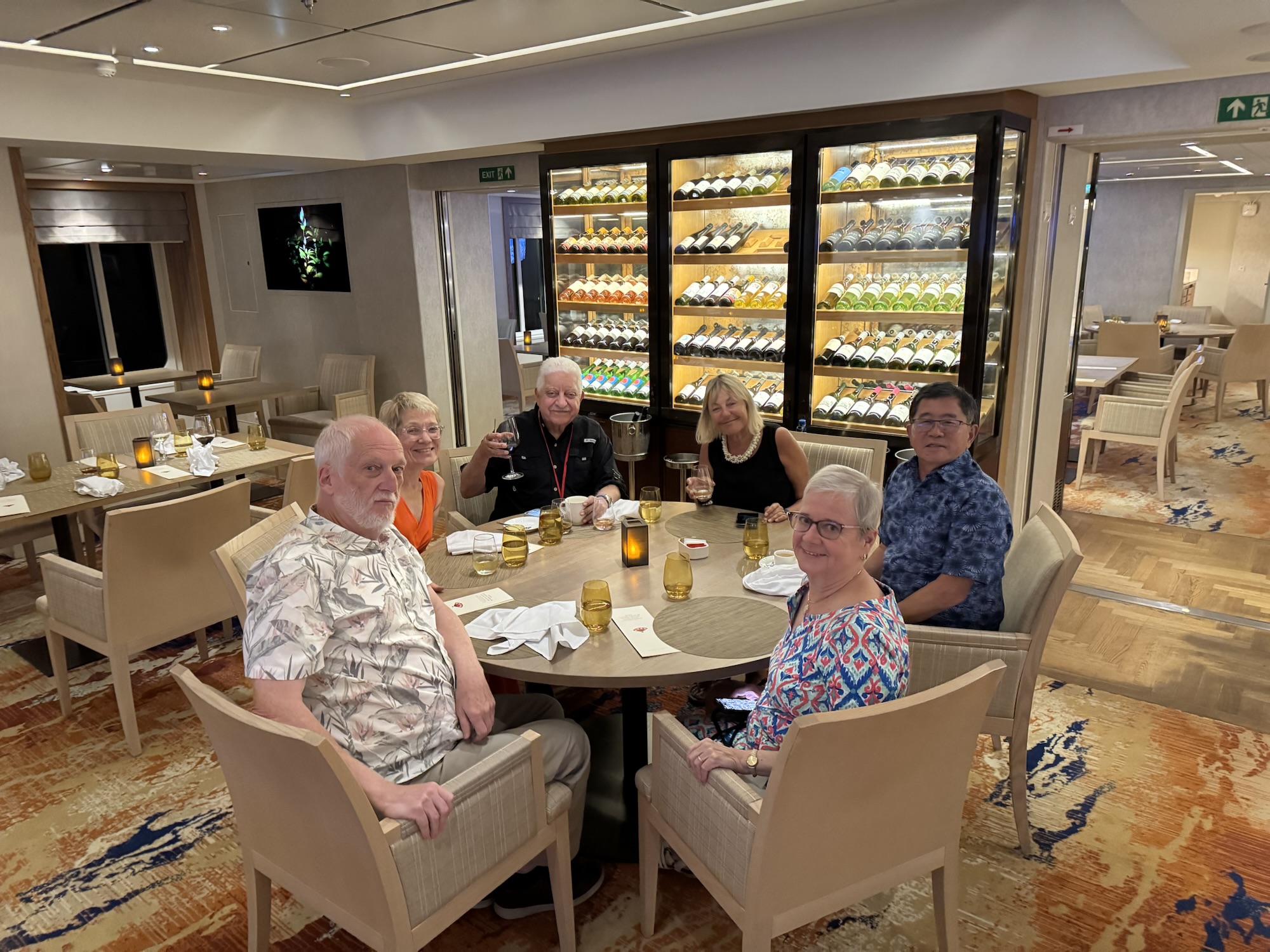
We’d been excited to try a brand new menu bybaward-winning sushi chef Pepi Anevski.


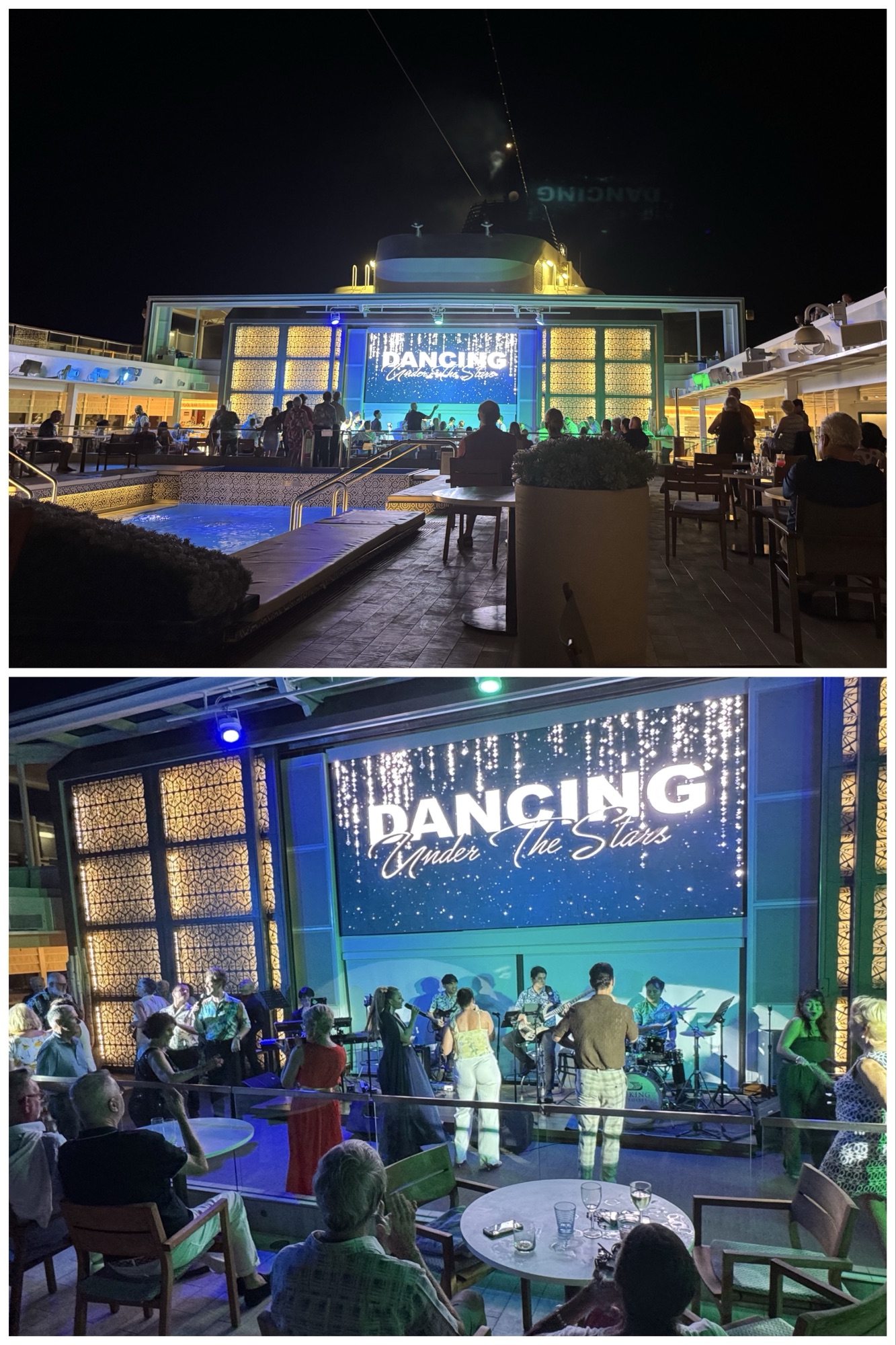
We ended our evening enjoying the last set of music under the stars on the pool deck.
What a wonderful day!
 Rose and Ted’s Excellent Adventure
Certainly the loveliest City Hall ever! That Japan Chef’s Table Menu is going on my list of the ones to catch asap.
LikeLiked by 1 person
No fair! We didn’t get to go inside the City Hall-didn’t know it was so beautiful. We loved the market and bought a tropical flower arrangement for our new Owner’s Suite friends. So good to see Rami’s smile. We were
LikeLiked by 1 person