Even though we were on a cruise for 21 days in October, there’s ALWAYS time to read – just maybe not at my usual pace.
Here are the past 2 months’ reads, in roughly reverse order from my most recent.
Spoiler alert: my favourite, by far, was The Island of Missing Trees, by Elif Shafak, although the quirky noir Cahokia Jazz came in a close second.
The Yiddish Policemen’s Union, by Micael Chabon
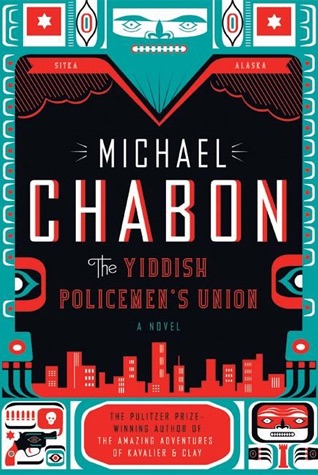
Until this month, I’d be hard pressed to remember the last time I read a book in the “alternate history” genre. Maybe something by Harry Turtledove back in the 1980s, but although he’s considered “The Master of Alternate History” I wasn’t captivated by his alternate history scenarios, such as survival of the Byzantine Empire (his PhD specialty) or an alien invasion during WWII. I tried a couple of his other books, on well-worn themes like the victory of the South in the American Civil War, and the victory of Nazi Germany in WWII, but in the and they weren’t really my thing.
I chose The Yiddish Policemen’s Union totally on the basis of its title catching my eye in the “available to borrow now” section of my online library.
It wasn’t until after the first couple of rather odd chapters that I went back and read the synopsis: “The Yiddish Policemen’s Union is a detective story set in an alternative history version of the present day, based on the premise that during World War II, a temporary settlement for Jewish refugees was established in Sitka, Alaska, in 1941, and that the fledgling State of Israel was destroyed in 1948. The novel is set in Sitka, which it depicts as a large, Yiddish-speaking metropolis.”
Suddenly it made sense!
It’s a little bit sci-fi, a little bit noir detective story, a little bit stereotypical Jewish guilt, a little bit of invented Alaskan Yiddish (you’ll want to read the glossary at the back of you’re not already conversant in Yiddish), a little bit love story, a little bit buddy cop story – and darkly funny throughout.
Like a perfect Kosher dill pickle, a warm noodle pudding, or a tender stuffed cabbage roll, I enjoyed every bit of it!

The Mayfair Dagger, by Ava January, is a fun romp through 19th century London on the heels of a would-be private investigator, Albertine Honeycomb, who is determined to establish her independence while escaping from the prospect of a very unattractive arranged marriage. Since a young single woman is easy prey in Victorian England, she reinvents herself as Countess Von Dagga, whose husband the Count is conveniently “absent”. It’s a bit silly, but a fun quick read.
There are lots of authors writing “new” Sherlock Holmes mysteries, of which my absolute favourite is Laurie R. King with her Sherlock & Mary Holmes series. Sherlock Holmes and the Telegram from Hell, by Nicholas Meyer, came highly recommended on the Globe & Mail’s list of best mystery books of 2024. The premise is that Holmes and Watson cross the Atlantic at the height of World War I in pursuit of a mysterious coded telegram which could change the course of the war. Unfortunately, I found the whole thing stuffy and boring. Meh.
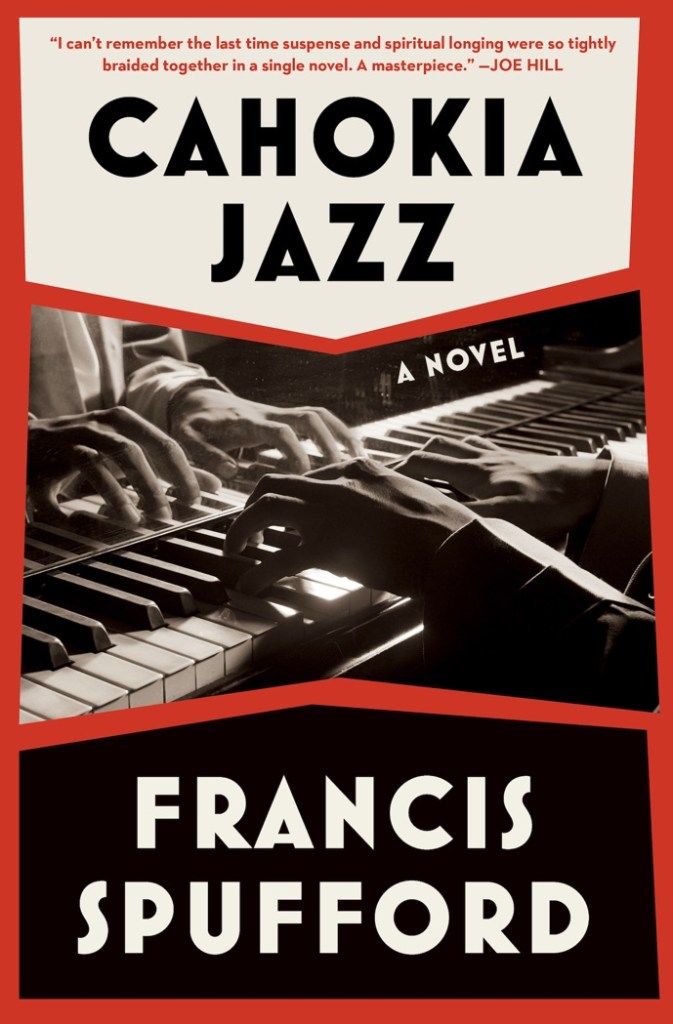
Cahokia Jazz, by Francis Spufford, was my second alternate history book of the fall, which reimagined how American history would be different if, instead of being decimated, indigenous populations had thrived and set up their own territory adjacent to the United States. The novel is set in Cahokia, an ancient indigenous city beside the Mississippi that is a teeming metropolis containing three very diverse populations: the takouma (persons native to the continent), the taklousa (persons of African ancestry), and the takata (persons of European extraction). Peace reigns until the murder of a takata is staged to look like an ancient takouma ritual.
The book is written in the noir style, and so effectively that I found myself visualizing it in black and white, smoky and foggy, with a soundtrack of mournful clarinet.
The Body in the Transept, Trouble in the Town Hall, and Holy Terror in the Hebrides, all by Jeanne M. Dams

I was hoping this series would be good, since it would mean 24 more to read. I definitely enjoyed them, although after bingeing the first 3 was ready for a break, How can you resist a book series with these kinds of asides in the plot ?
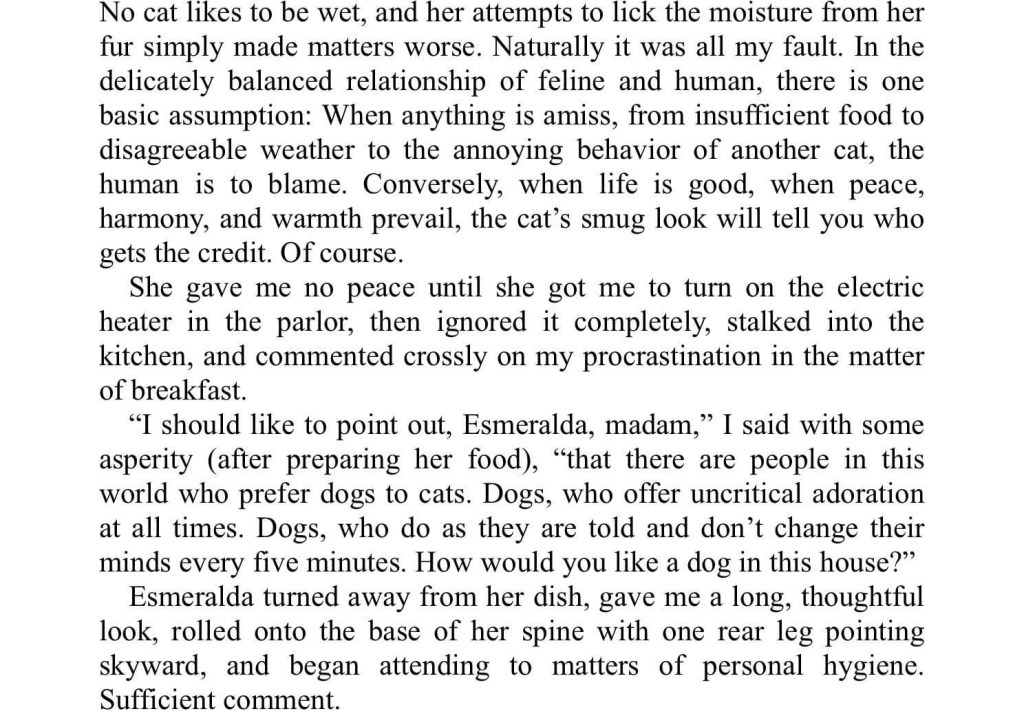
The protagonist is a 60-ish American expat, in love with all things British, who finds herself making her and her husband’s dream retirement move to a small English village alone when she is unexpectedly widowed. In each book she equally unexpectedly finds herself drawn into solving a local murder, at the same time as being drawn into a relationship with the local Chief Constable.

The Island of Missing Trees, by Elif Shafak is one of the most beautifully written books I’ve come across in years, and probably my favourite read of the fall. It tells the story of a family of immigrants to England from Cyprus – a Greek Cypriot, a Turkish Cypriot, and the daughter born to them after their immigration. Their story is told alternately by the daughter and a fig tree that was grown from a cutting brought from Cyprus. While that may sound odd, the “memory” carried by the tree is not only critical,to the narrative, but is expressed with heart-wrenching eloquence. I learned so much about Cyprus from this book, but also so much about resilience.

The Roaring Days of Zora Lily, by Noelle Salazar tells the story of a (fictional) young jazz era seamstress and her rise from poverty to the heights of American couture. The descriptions of jazz clubs, 1920’s Hollywood, and glorious fashions only served to make the story of Zora’s life even more vivid.
Everything, Everything, by Nicola Yoon is classified as a YA (Young Adult) read, but I learned from an excellent English teacher while working at a high school just how wonderful that genre can be. I’d never have picked up The Hunger Games, or read Maus, had I not been ordering copies for her grade 10 classes.
On the surface, Everything, Everything is the diary of a teenager confined to her sterile home due to a severe immunodeficiency that puts her at risk of illness or death if exposed to germs. Underneath that surface, though, is a story of first love, maternal love, loneliness, and obsession. I couldn’t put it down – and upon finishing it immediately looked for another book by Nicole Yoon.
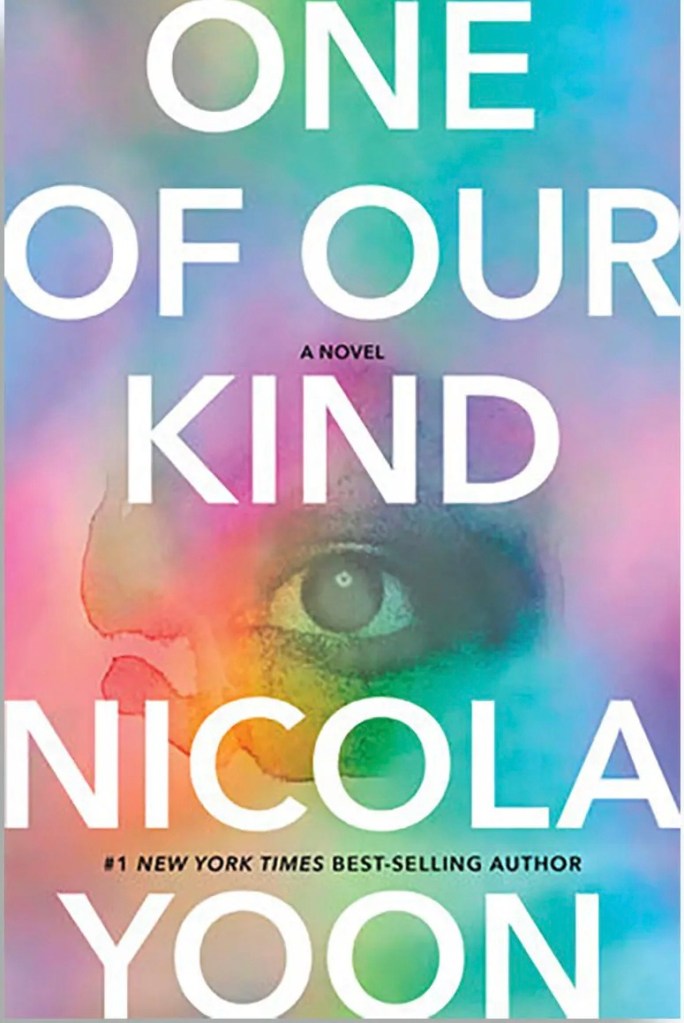
When I started reading One of Our Kind, by Nicola Yoon, set in a wealthy gated all-Black community in California, it reminded me eerily of The Stepford Wives…… but it was much more disturbing in the end. Besides being a really intriguing thriller, the novel left me thinking: to what lengths would I go to “fit in” in a society where my appearance made me a target?
The Busy Body, by Kemper Donovan, was a funny mystery (in the same realm as Richard Osman’s books) featuring a ghost writer who unwittingly ends up as the prime suspect in a murder.
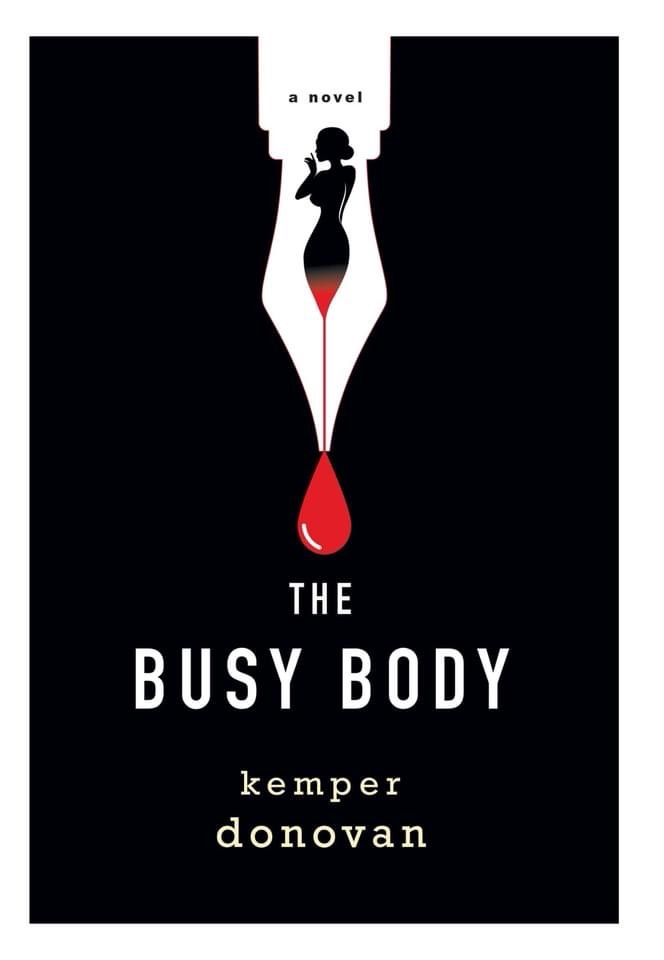
It pulled me in right from the first page.

The Glassmaker, by Tracy Chevalier is an especially enjoyable read if you’ve visited Venice and the island of Murano. The story follows a family of glassmakers from 1486, at the height of the Renaissance, through 6 generations to the present day. There’s beauty, intrigue, and the struggle of a young woman to use her gifts in a craft dominated by male artisans.
The Flight Girls, by Noelle Salazar, is based on an actual WWII program called the Women Airforce Service Pilots, which involved female American pilots both training military pilots in Hawaii and later shuttling planes between airbases, since actively flying into battle was not an option for women. It’s a no el filled with bravery, nuanced friendships, and hope in the face of the dangers and heartbreaks of war.
When the World Fell Silent, by Donna Jones Alward is a heartbreaking story of the aftermath of the 1917 Halifax Harbour explosion. Set against that backdrop are the very human lives of 2 women that become entwined in the most intimate and tragic way when each of them lose a child during the blast’s aftermath.


Two connections here — I also found The Island of Missing Trees very beautifully written. When I visited both Greece and Turkey last year it added depth to my experience. Also, my mother-in-law was a WASP. She was tiny and fierce — made it in under the wire for height and weight. She flew huge planes – it’s hard to imagine. Her work involved training pilots, often ones who had failed a couple of times already, ferrying planes and, between Florida and Cuba, flying smaller planes pulling gunnery targets! Yikes! There are a lot of stories out now about the WASPs –finally — for a long time they were almost forgotten. The US military had a lot to atone for. At the end of their service they paid their own way home and were denied Veterans’ benefits until into the ’70s! During their service, when several died on the job, they were denied funeral benefits. Look up Jacqueline Cochran, who founded the WASPs. I didn’t know there were some based in Hawaii.
LikeLike
What amazing stories your mother-in-law must have had, and what a tragedy (honestly, a crime) that her service was so undervalued.
We had to cancel a month in Cyprus due to Covid – The Island of Missing Trees has put it back on my list of places to explore.
LikeLike