When I was in primary school, Remembrance Day was fraught with the kind of stress and confusion that perhaps only a child really feels..
I grew up in a blue-collar community, where every single family (not hyperbole) on the street were post World War II immigrants to Canada. The entire neighbourhood was post-war housing construction, as much of a mixture of styles as its inhabitants were of nationalities. Our neighbours were English, Italian, Hungarian, Polish, Russian, Ukrainian, Latvian, Scottish, and Irish, and one other family was of German descent like my parents. There were Catholics, Protestants, and Jews; Liberals, Conservatives, and a good many NDP voters (New Democratic Party, the “workers” party). The dads worked mostly in the big local automotive factories and steel mills, although there was a grocery store manager on the block, and one engineer (in the newest, biggest house). Most of the moms stayed home – until heading off to work in offices, stores, or hospitals when their husbands were on strike for better wages and benefits.
We kids all went to the same school, played together after dinner each evening until dark, and were in and out of each other’s homes just as if each was our own, cadging snacks. We were equally happy with Mrs Lenz’s chocolate chip cookies (she was a grandma and her own grandkids didn’t live close by) as Mrs Dodds’ oatmeal raisin, Mrs Galbraith’s shortbread, Mrs Muskovitz’s rugelach, or Mrs Eichenberg’s store-bought cookies (she was the only mom working fulltime, as a nurse). Mr and Mrs Sommerfeld let us pick their mulberries, and my parents’ garden was fair game in raspberry season. In the summer, every house had homemade Koolaid popsicles.
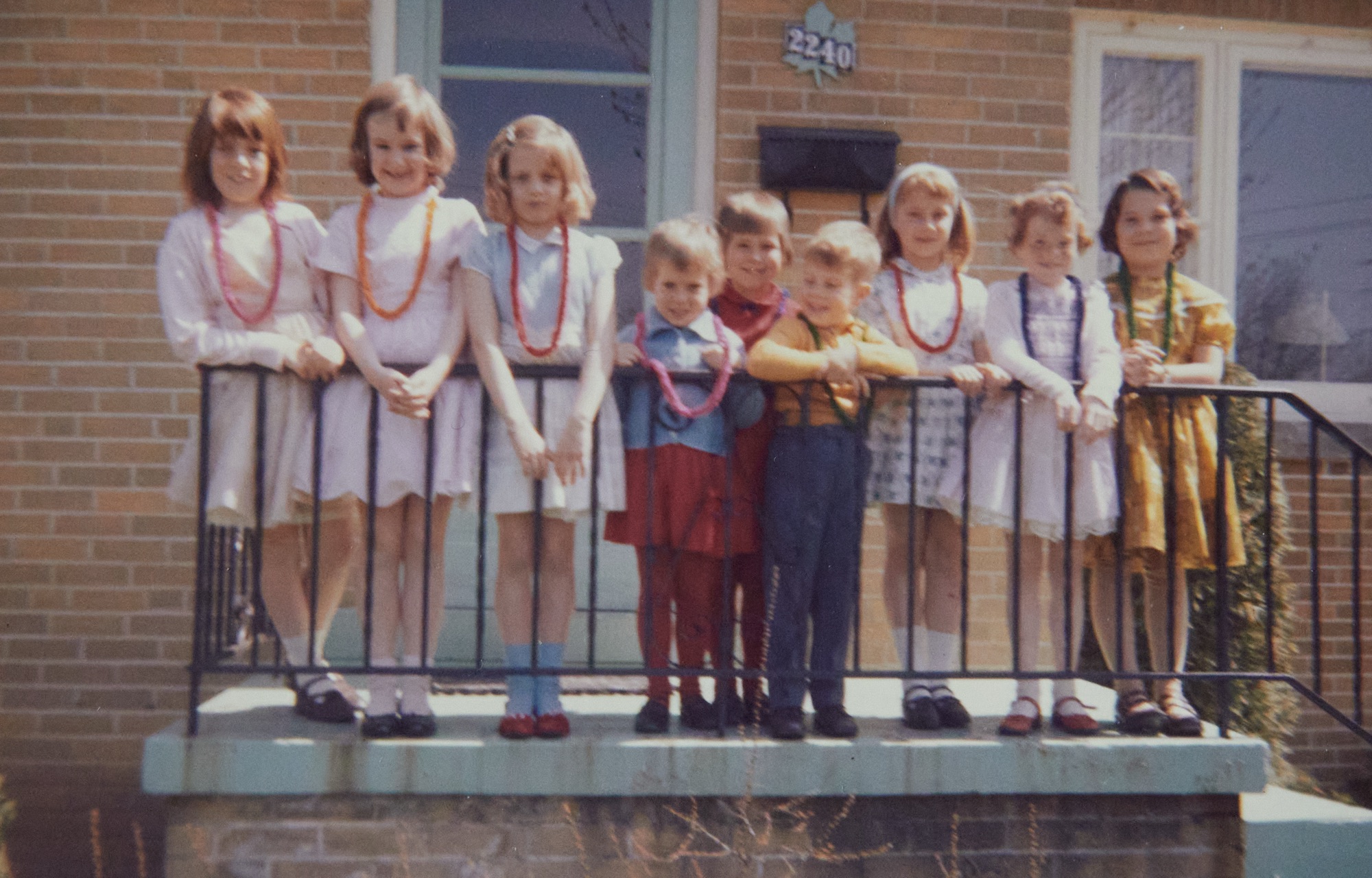
Everything ran smoothly until after Halloween, when our lessons at school started to focus on the annual Remembrance Day assembly. All of a sudden, where our families had come from mattered, as we learned about all the British and Canadians who had fought and died in the two World Wars fighting Germans and Italians. And then there was the whole issue of Russians; were they allies or scary communists? It was a bit much for a kid whose grandmother still occasionally spoke to her in German but whose parents discouraged it in public. After all, outside our safe little enclave there was still a widely held misconception that every German was a Nazi, and should be shunned. Would it be safer to just not complicate life and say mom was Hungarian, because she was born there? If Dad was Polish instead of German, would the Principal look at me differently on Remembrance Day?
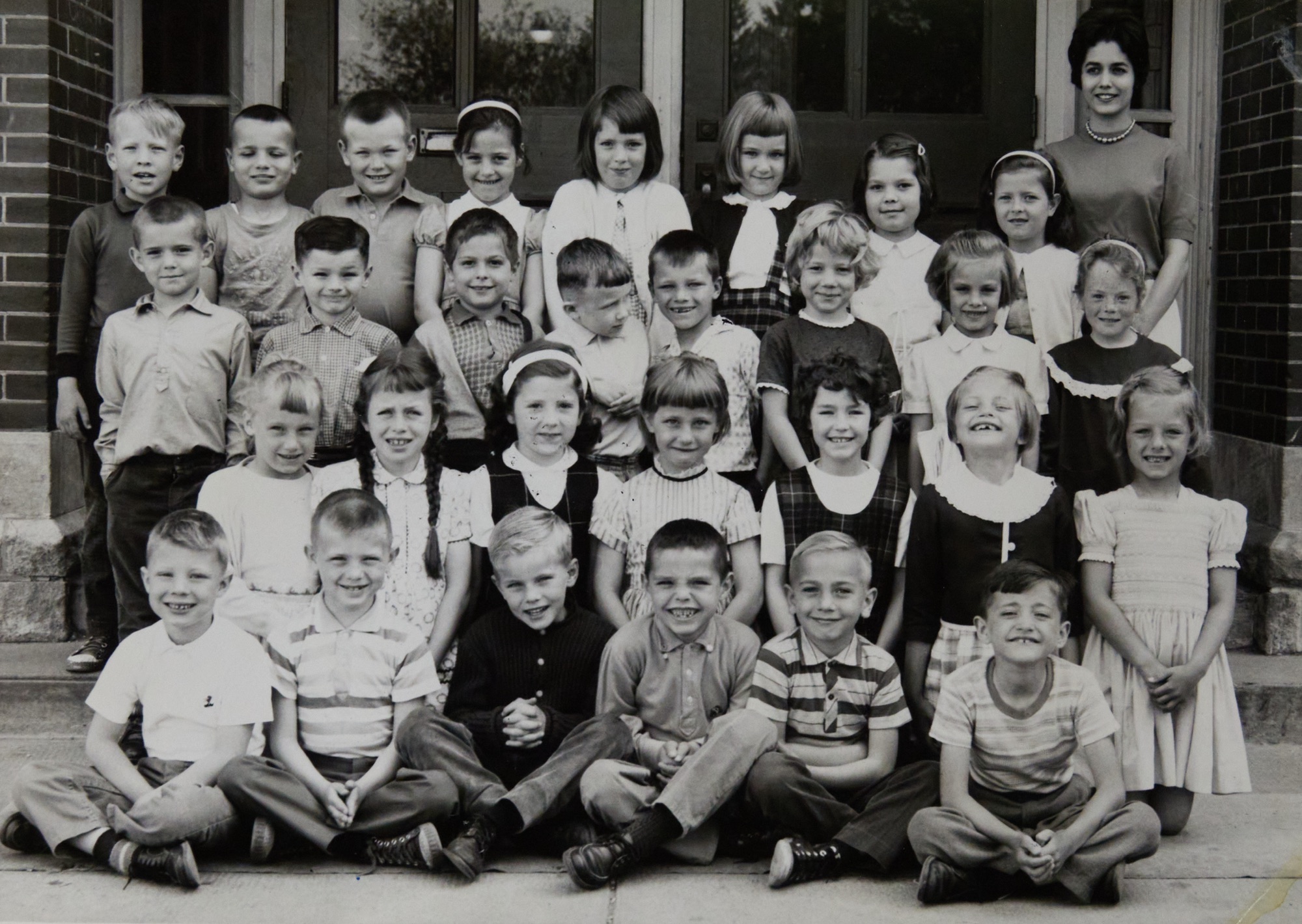
The whole thing was further complicated by the fact that I was the best reader in my class right through to grade 3, so I was the one chosen to read In Flanders Fields to represent the primary grades at the whole-school assembly three years in a row.
The older I got, the more embarrassed I felt. Was it even okay for me to read it? For my mom to sit in the auditorium feeling proud of me?
By grade 3, I had so many questions. I knew that our family included soldiers on both sides during both World Wars, but that unlike some of my English friends’ homes, ours did not display photos of young men in uniform. Members of each of my parents’ families had emigrated right around the turn of the 20th century, and become Canadian and American citizens. Those men fought in the Commonwealth and US armies – against cousins still living in Europe and who had either enlisted in or been conscripted into the opposing side’s armies. We’d lost members of our family on both sides. My favourite uncle had spent most of WWII in a POW camp in Italy. My own dad only escaped fighting on the Nazi side through his 15-year-old daring, going AWOL after being conscripted when he entered Germany as a refugee from Poland.
On Remembrance Day, was I allowed to be sad about people who had fought on the “wrong” side? Did their families get to mourn, or did they not even deserve to be sad?
Although things in the neighbourhood always got a bit quiet in early November, after Remembrance Day “normal” resumed, along with early preparations for neighbourhood Christmas parties. Our parents, all of whom had gone through the process of becoming citizens – or were well on their way – all considered themselves proudly Canadian. They all had good reason to have immigrated, and most (like my parents) never returned to their birth countries even to visit.
It took until I was almost a teenager – and for a history teacher who was himself an immigrant – for me to realize that Remembrance Day wasn’t about remembering who won or lost, or who our enemies were, but remembering the cost of war in human lives, honouring those who sacrificed for their country, and “remembering” never to do it again.
While most Commonwealth countries officially mark November 11th, Armistice Day, every country who has lost people in war finds a way to commemorate them.
In Germany, for instance, the second Sunday before Advent is Volkstrauertag (“people’s day of mourning”) which honors those who died in wars, conflicts, or as victims of violent oppression. This year (2024) on June 15, Germany celebrated its first ever Veterans’ Day to commemorate service to the country of all those in uniform – the country has lost soldiers in multiple NATO-related operations since joining the alliance in1955.
Today, we have a son who proudly serves our country as a Sergeant in the RCAF (Royal Canadian Air Force). His service adds an extra layer to our Remembrance Day commemoration.
He often marches in the parades with other active armed forces members and veterans, but also takes the opportunity to speak at his children’s schools, allowing students to put a face to what serving one’s country can look like.

The round silver medal on the red and tan ribbon is the Kuwait Op Impact medal, awarded to military personnel who served in direct support of the Canadian military operations provided from outside the theatre of operations consisting of the political bondaries and airspace of Iraq (in this case in Kuwait) for at least 30 cumulative daysbetween 20 January 2003 and 4 October 2014.
The 10-sided gold medal on the red and white ribbon is the Canadian Forces 12 year service decoration, awarded 6 years ago.
Looking back, one of the most meaningful Remembrance Day ceremonies we’ve attended in recent years was in Collingwood, Ontario. Part of what made it special was the complete lack of political rhetoric or self-aggrandizement by politicians that can sometimes stain the solemnity of the event. The other thing that made it special was having our son, safely on Canadian soil, beside us. Episode 32 – November 11 2019
This year, we’ll either attend the ceremonies at Memorial Park here in Maple Ridge, or those in Port Coquitlam hosted by the Legion there. In either case I fully expect that Ted and our son will then spend the rest of the afternoon at the local Royal Canadian Legion branch with the vets and dignitaries, listening to stories.
As an adult, now that I understand what Remembrance Day is really about, I know that the time spent listening and remembering is so very important if we want to truly honour and learn from our history.
 Rose and Ted’s Excellent Adventure
Rose, that was an excellent piece and reminded me so much of a Remembrance Day we commemorated while we were both at the HDSB. I was Director and invited any of the staff to speak after I had spoken.
You spoke and brought an extremely touching and reflective perspective that many of us had never considered. I was moved by it and remember well to this day. Your piece here is reminiscent of that day and I thank you for reminding us of the complexity of Remembrance Day and our shared humanity.
stuart miller
LikeLiked by 1 person
Thank you so much for your kind words and that (forgotten) memory. A sense of our shared humanity is, I hope, what will save us all.
LikeLike
Exactly on point! the sacrifice of men young men fighting for our Freedom should be celebrated remembered and treasured!
LikeLiked by 1 person
Rose thank you for this. It has stirred similar feelings in me. I appreciate your post.
LikeLiked by 1 person
Lest We Forget !
LikeLike
Rose,
A very commentary on reflecting on the importance of remembering the horrors of war that are fought by brave soldiers doing their duty.
Most people wants to live in peace and not in the live in the ravage of death. Which leads to hate which leads to war or terrorism.
Politicians can wave the flag of war or peace.
Afghanistan would have survived if the UN had supported democracy and the freedom from oppression of the Taliban.
History will repeat unless we remember the true cost of war.
LikeLiked by 1 person
Rose, This is just beautiful! Chiquita
LikeLiked by 1 person