PRE-CANAL SEA DAY
Clocks jumped ahead an hour overnight, but I still managed to be up by 8:00 a.m. in order to take full advantage of the morning activities, but not early enough to have breakfast before the Coffee Chat. No worries – the priority is, after all, coffee.
9:00 a.m. Coffee Chat with Cruise Director Bettyann and Hotel General Manager Ruben.
We learned that there are about 320 crew involved in Food and Beverage services, from the galley through the servers. The second biggest department after Food and Beverage is Housekeeping, which is also a subset of the “hotel” department.
Ruben told us about his somewhat convoluted career path with Holland America since joining them in 2006, through almost a dozen different roles before reaching his current position, and also told us a bit about his girlfriend of 17 years who works in HAL land-based Human Resources.
What staff did during the pandemic is always a question that comes up in these sessions. In Ruben’s case, he was involved in ferrying HAL employees back to their homes in Africa, Indonesia, and South Asia, (since air travel was not an option) before being involved in preparing his specific ship for sale to another cruise line! His many prior roles with HAL came into play during that time.
The chats are always just 25-30 minutes long, and kept very tightly on topic by the Cruise Director, so by 9:30 I was on my way up to the Market for some super thick Greek yogurt and a few fresh berries.
10:00 a.m. The Panama Canal Up Close talk in the World Theater.
I arrived at the theatre a bit early and got to have a lovely chat with Eileen and Martin from Washington State, who I think could be easily influenced to become nomads like Ted and I! (The topic inevitably comes up when we’re asked where we’re from….)
While I’d been to other presentations about the construction and operation of the canal, there’s always more to learn, and this talk focussed not only on history and engineering, but also on the people who work in the canal operations every day. Unfortunately the theatre is so dark during the talks that my iPad screen would annoy everyone around me, so I didn’t take notes. It was an unusually long presentation, an hour and a quarter instead of the usual 45 minutes, and absolutely full of information and wonderful visuals.
11:30 a.m. Lunch!
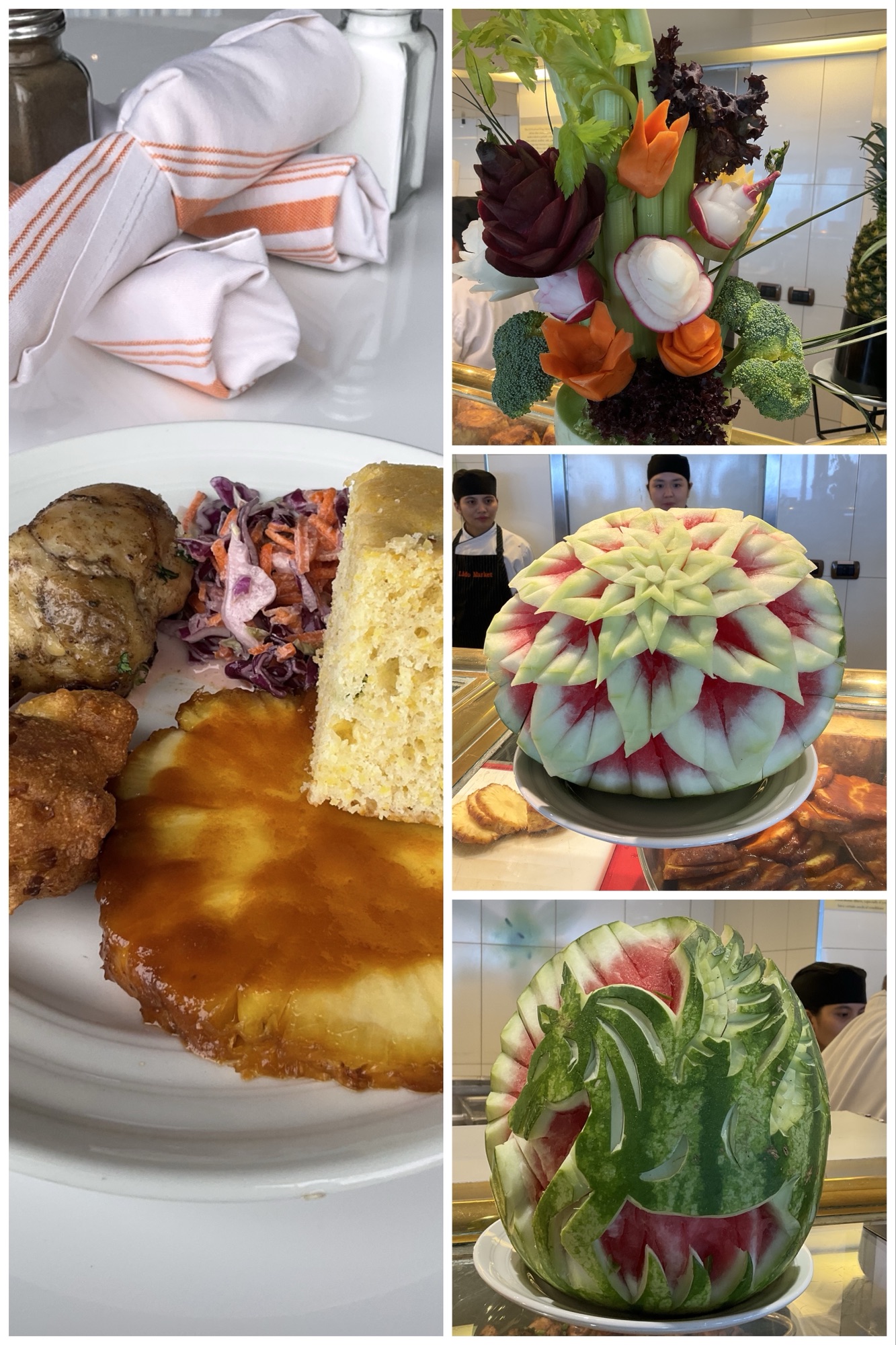
I spent the afternoon reading a really interesting novel, One of Our Kind by Nicola Yoon, an unnerving take on dealing with racism that had an eerie Stepford Wives feel to it.
Once again we had an interesting group of people at our shared dinner table. It’s been fun meeting folks from all over Canada and the U.S. – tonight from Espinola Ontario, and Idaho.
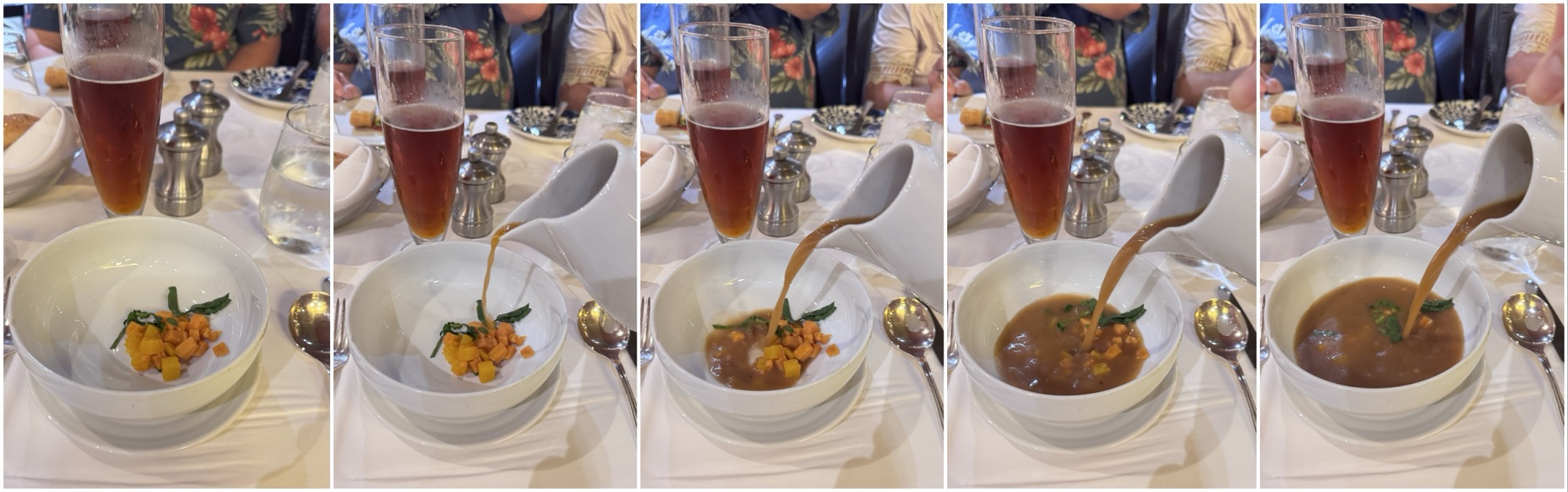

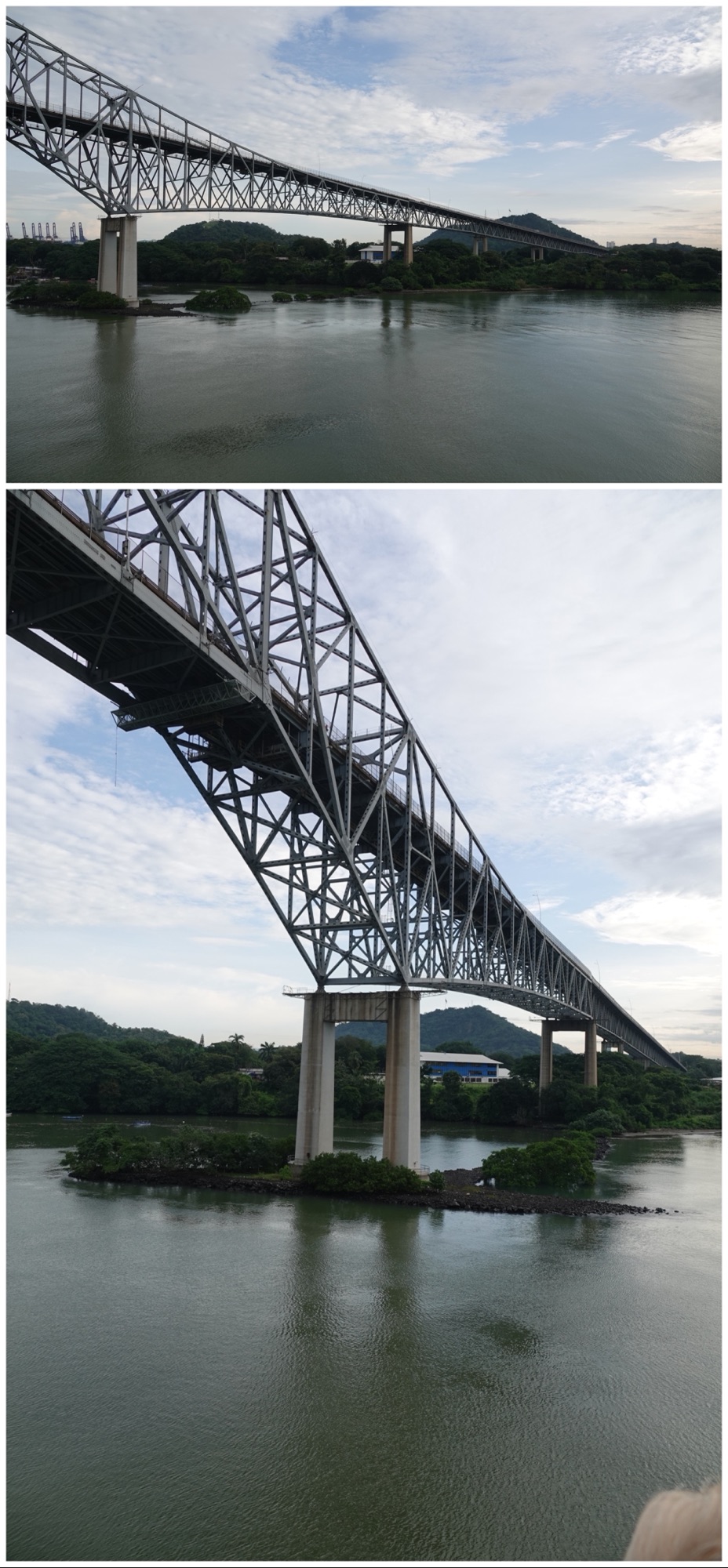
After attending the 9:00 p.m. comedy show we called it an early night because we planned to be up shortly after 6:00 a.m. to catch a photo as we go under the Bridge of the Americas.
TRANSITING THE CANAL
Our first transit through the Panama Canal was at the end of 2021 Episode 152. This time we’re going in the opposite direction.
For this unique cruise day, the Captain opened the bow areas on decks 5 through 7, in addition to the usual viewing spots on decks 9 through 11, and most of the promenade on deck 3.
As part of making the transit day special, there were “Panama rolls” (sweet yeast buns filled with vanilla custard and mandarin orange segments) and mimosas served on the bow on decks 5, 9 and 11 at 6:30 a.m.
The 50 mile distance we traverse across the Panamanian isthmus from the Pacific to the Atlantic will take 9 hours, and include 3 locks taking us up and over the former mountain ridge in the centre, and another 3 bringing us back down to sea level.
We’ll be doing it in the opposite direction of the handout we were given, entering at #13 and exiting at #1.

Cruising past Panama City we got a great view of the skyline of Central America’s most important financial centre.
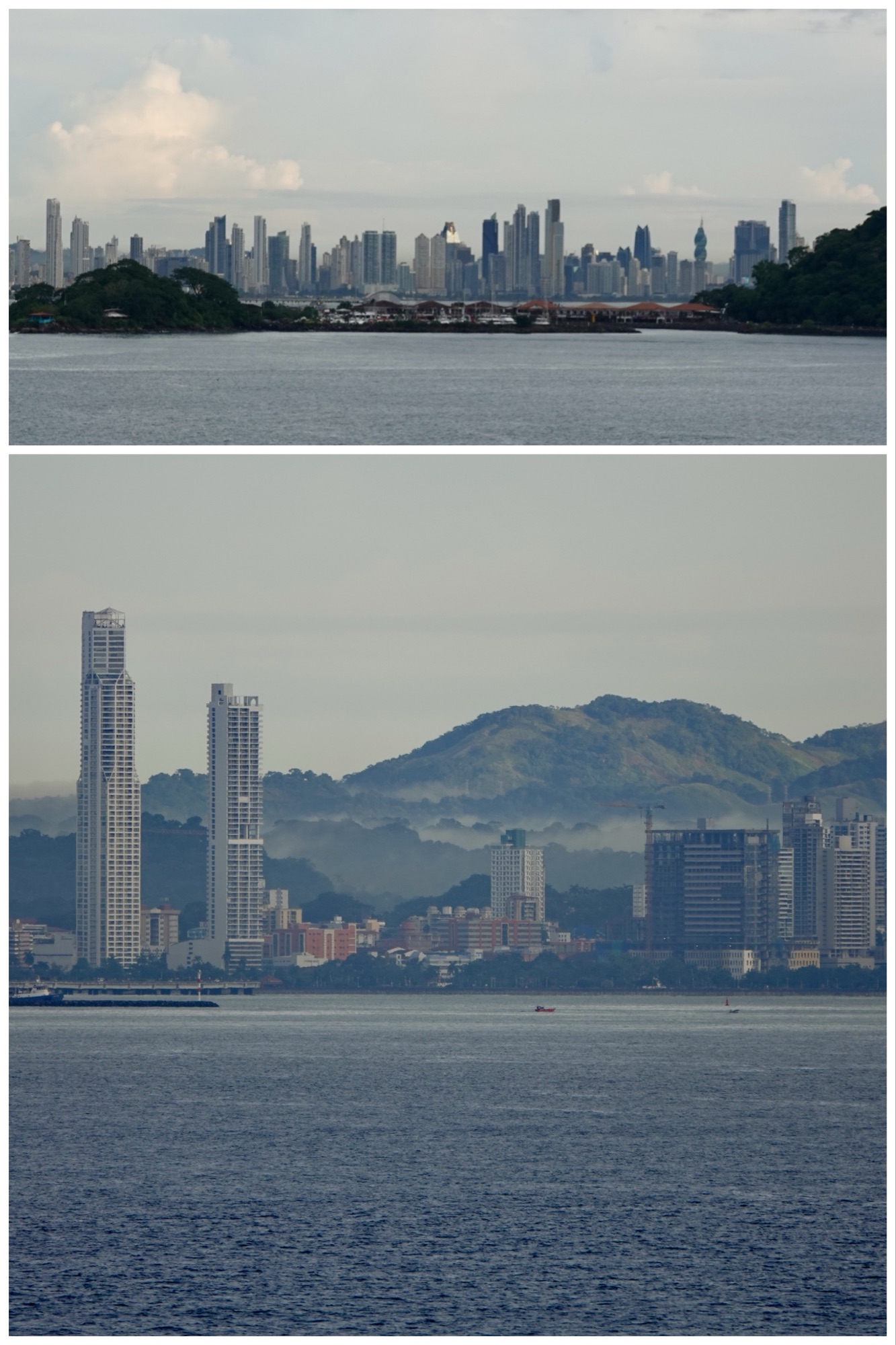
As on previous visits, Ted made sure to get photos of Panama City’s Biomuseo (Biodiversity Museum), located on the Amador Causeway. The museum was designed by Toronto-born architect/designer Frank Gehry, whose buildings we so love for their unusual curving designs. Completed in 2014, when Gehry was 85, this was his first building in Latin America.

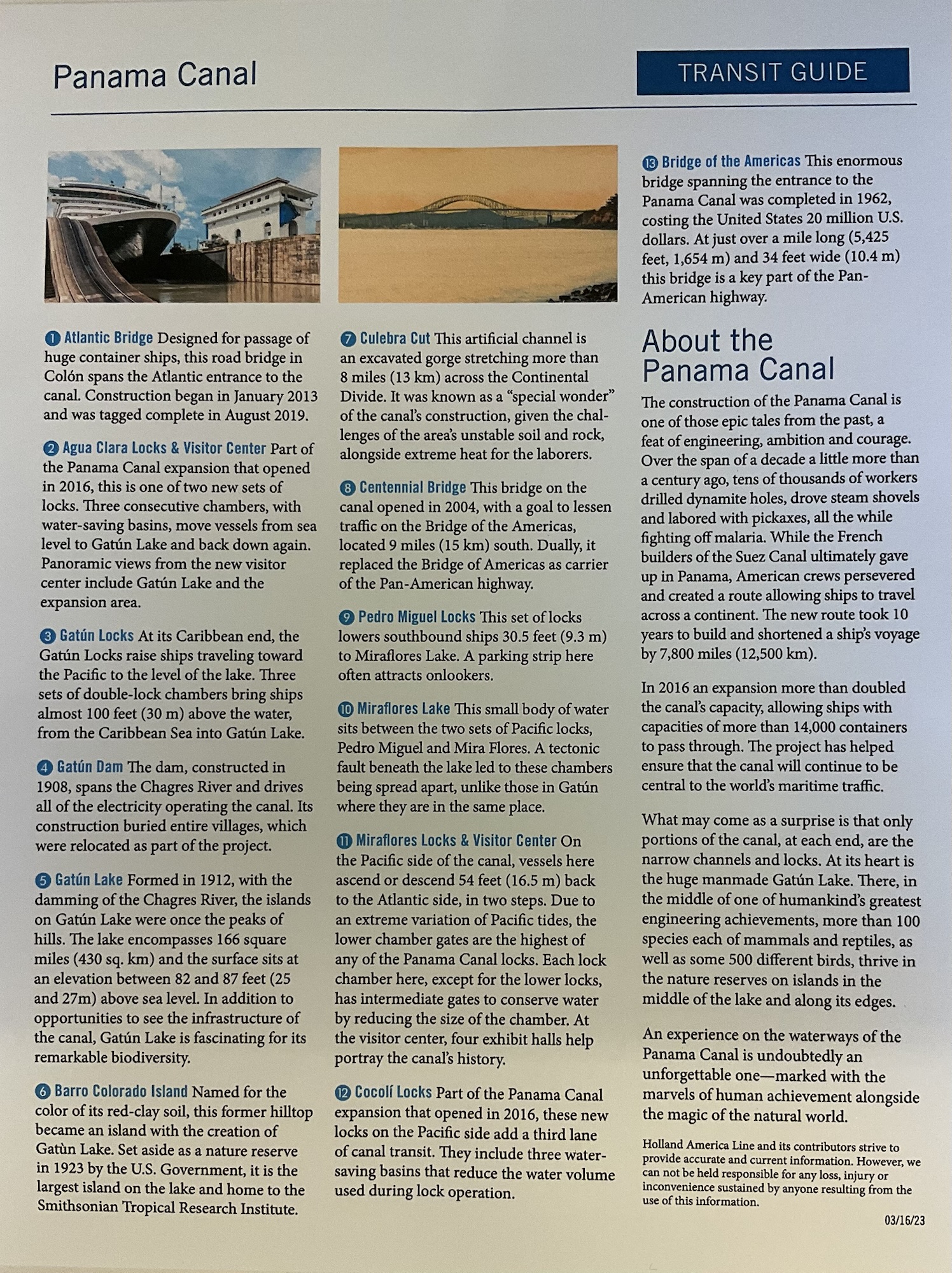
(Step 13) Cruising under the Bridge of the Americas

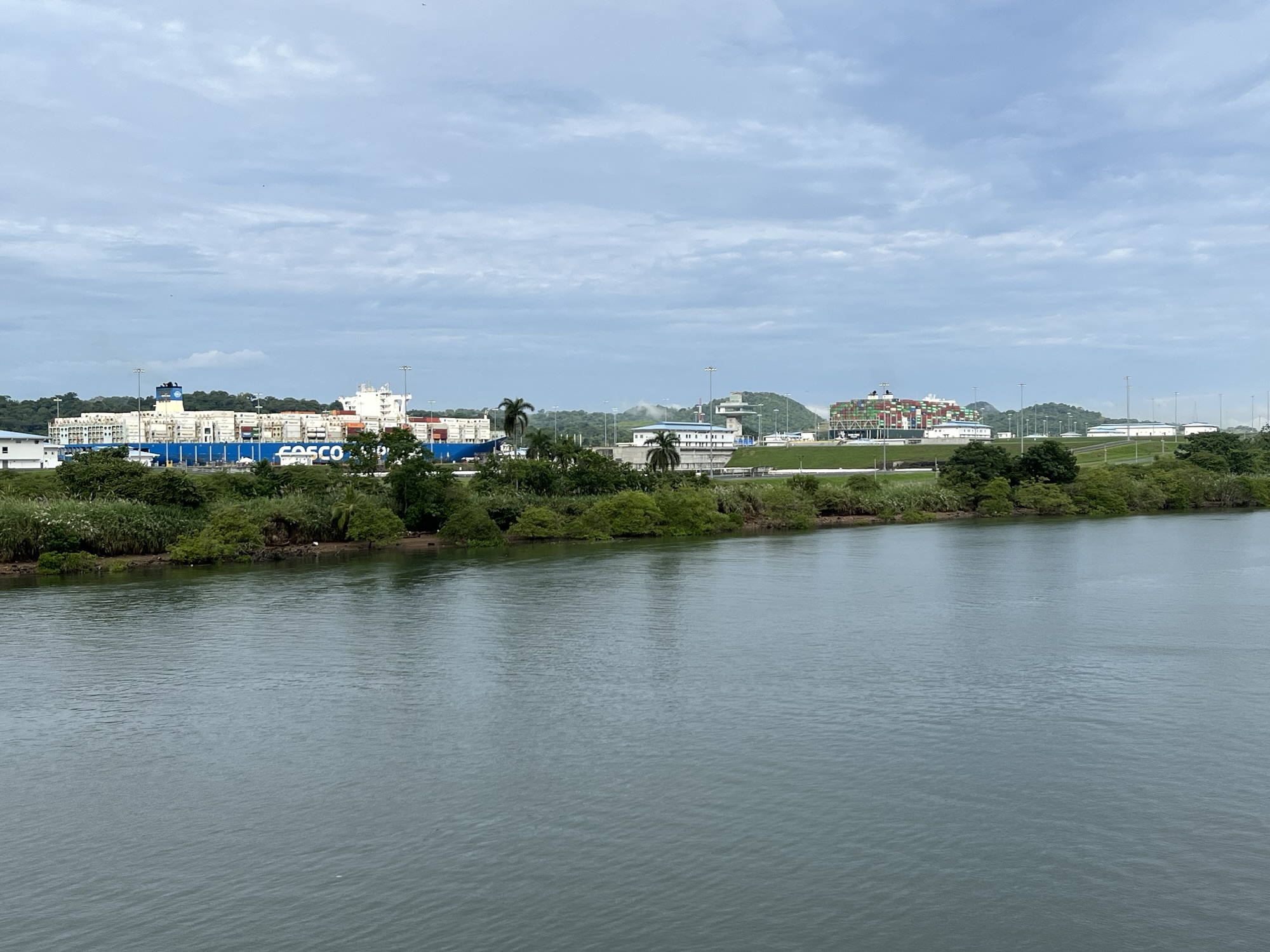
(Step 12) As we headed into the canal, we could see huge container ships in the Cocoli Locks. There’s a term known as “Panamax” that refers to ship size: the maximum size ship that can go through the Panama Canal. The Eurodam, and Viking’s ocean ships, are within that size, but until the Cocoli Locks were opened in 2016, Holland America’s Pinnacle Class ships like the Koningsdam would not have been able to use the Panama Canal to get between the Atlantic and Pacific Oceans. Ships conforming to the new locks’ allowable dimensions (70 feet wider and 18 feet deeper than the previous locks) are called “Neopanamax”.
The expansion project doubled the canal’s cargo capacity and the Panama Canal can now accommodate more than 96% of the world’s containerships.
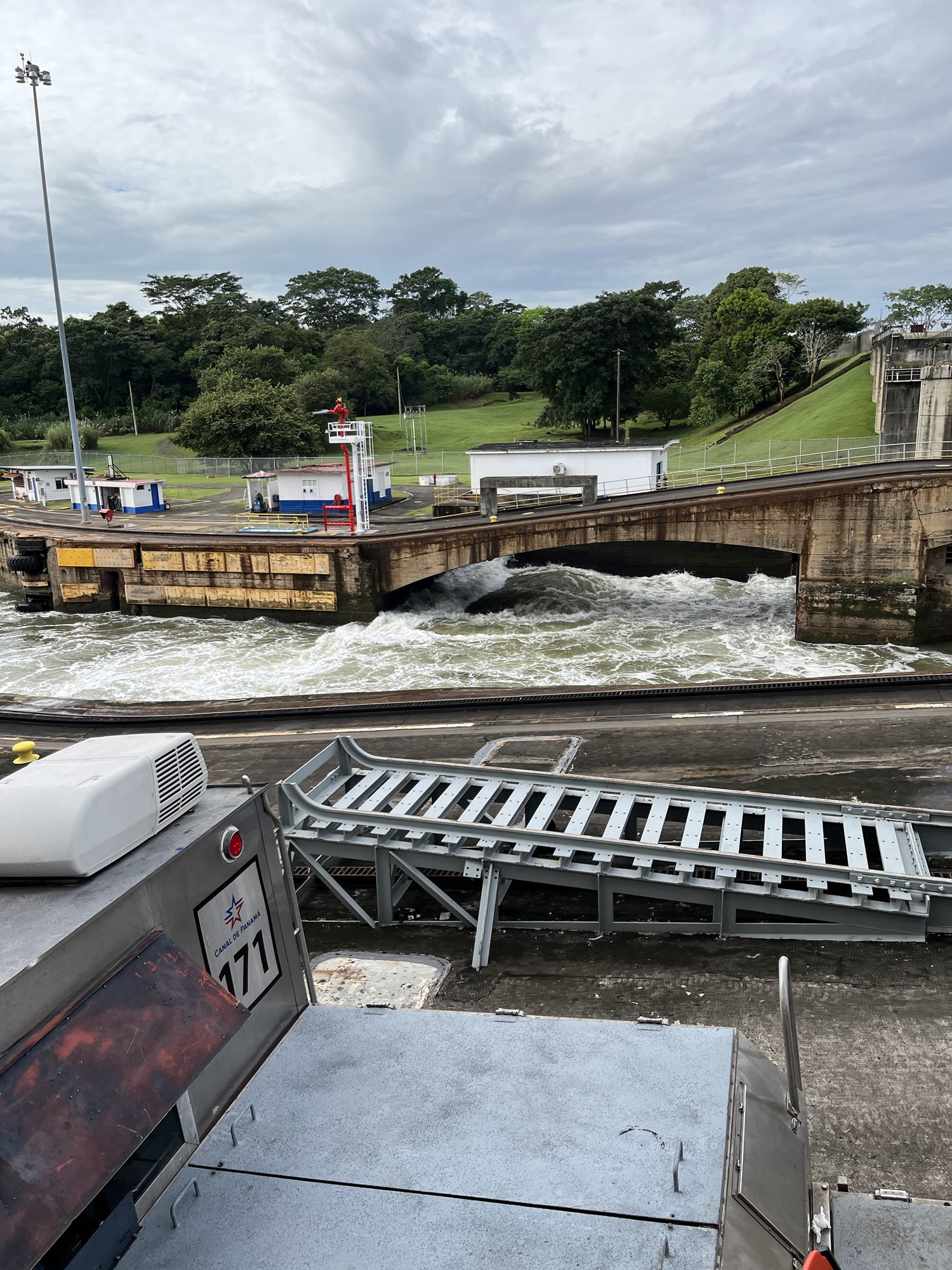
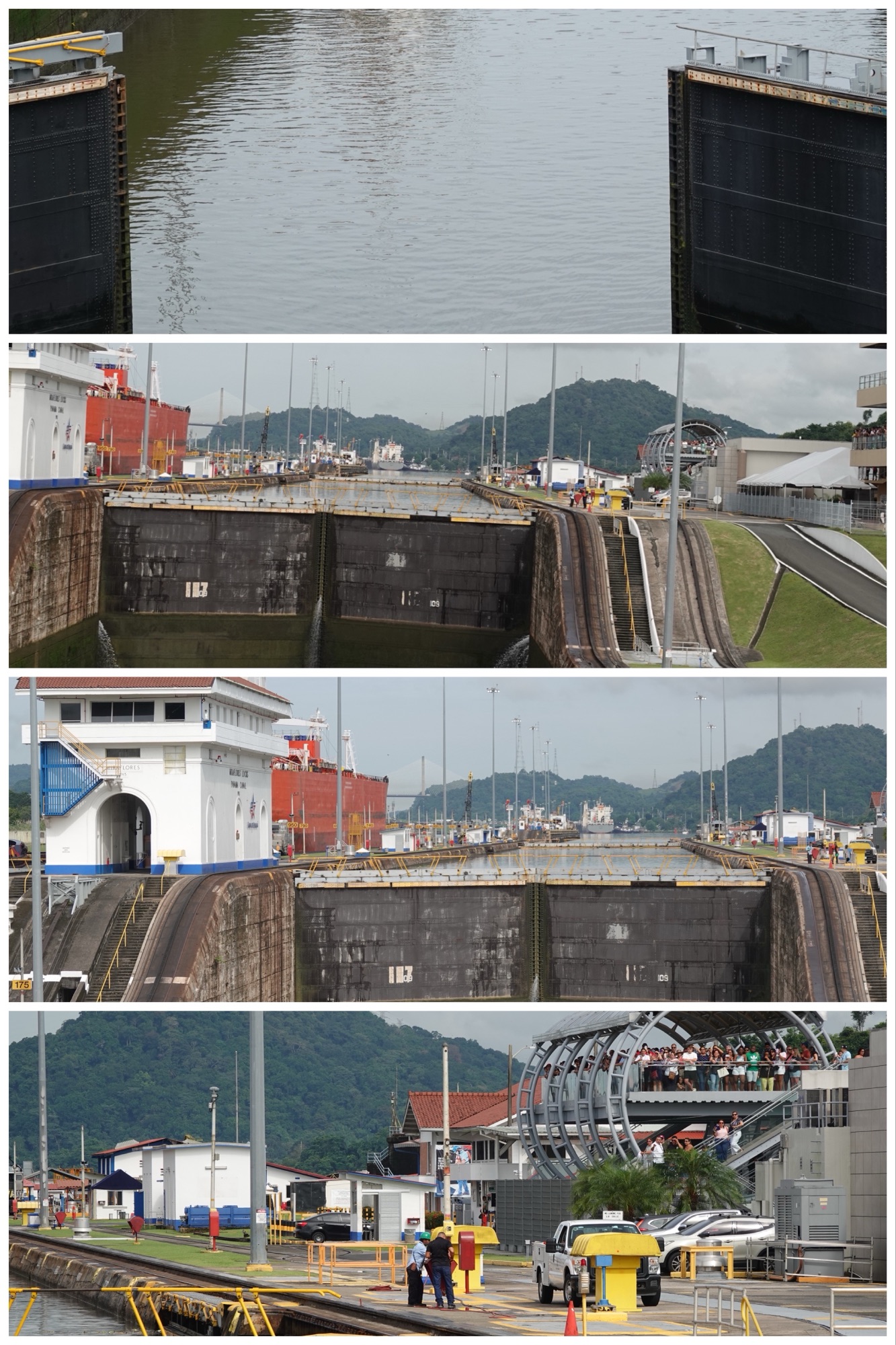
(Step 11) While waiting our turn to go through the Miraflores Locks, we watched a red ship go through the adjacent lane, “lifting” as the water poured into the lock.


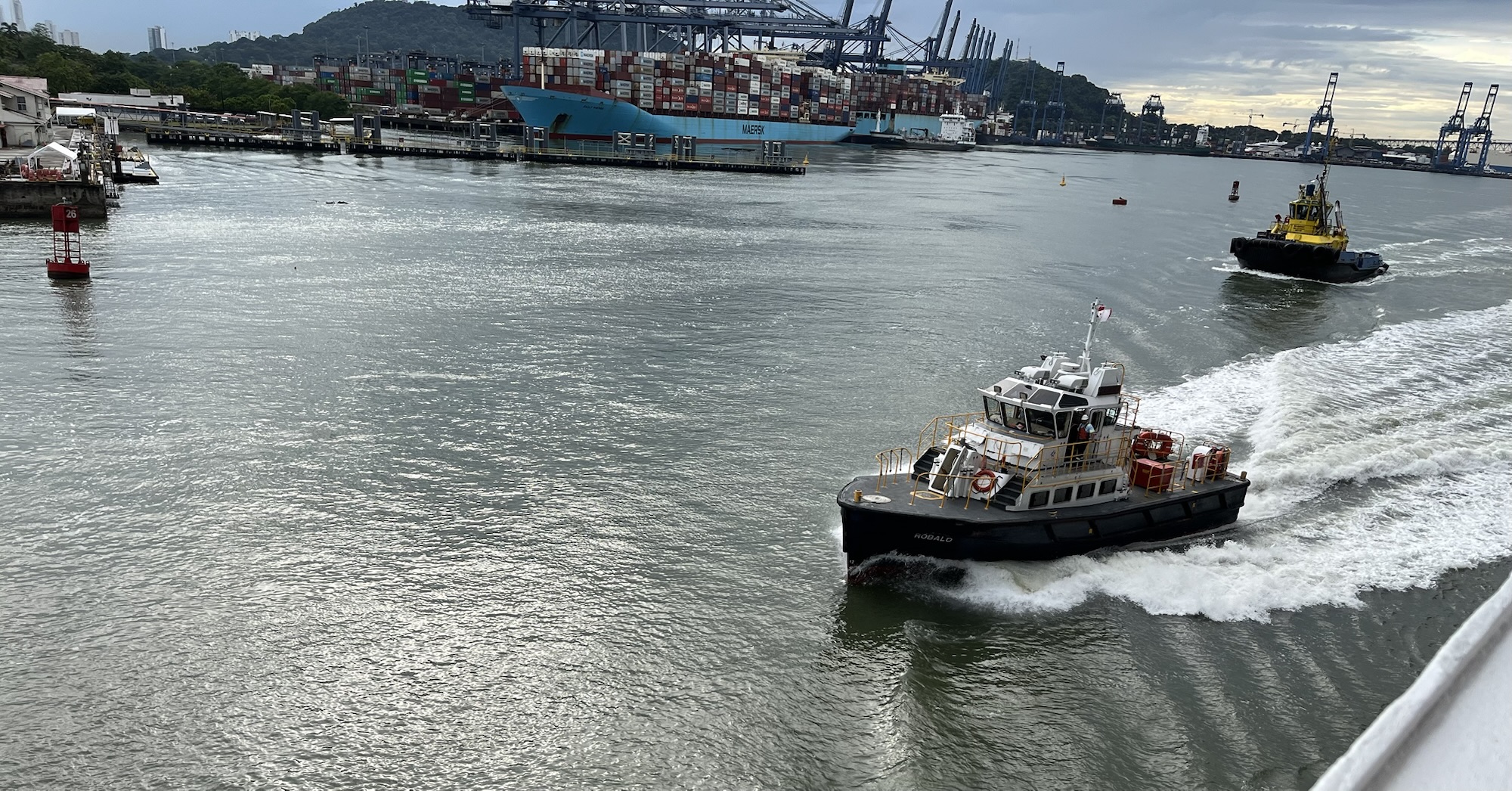
Navigating the canal involves a combination of engineering prowess and specialized skills. A pilot – who must train for at least 14 years specifically for this job – comes aboard to navigate the ship (with the Captain’s permission, somewhat moot since it must be given). Tug boats accompany the ship on both sides and at the stern until the ship is actually in the locks.

“Mules” (small train engines) with massive cables attached to them manually by lock workers follow the ship on both sides. The mules are not pulling the ship, but maintaining an even lateral tension so that the ship stays centred and never touches the lock walls.
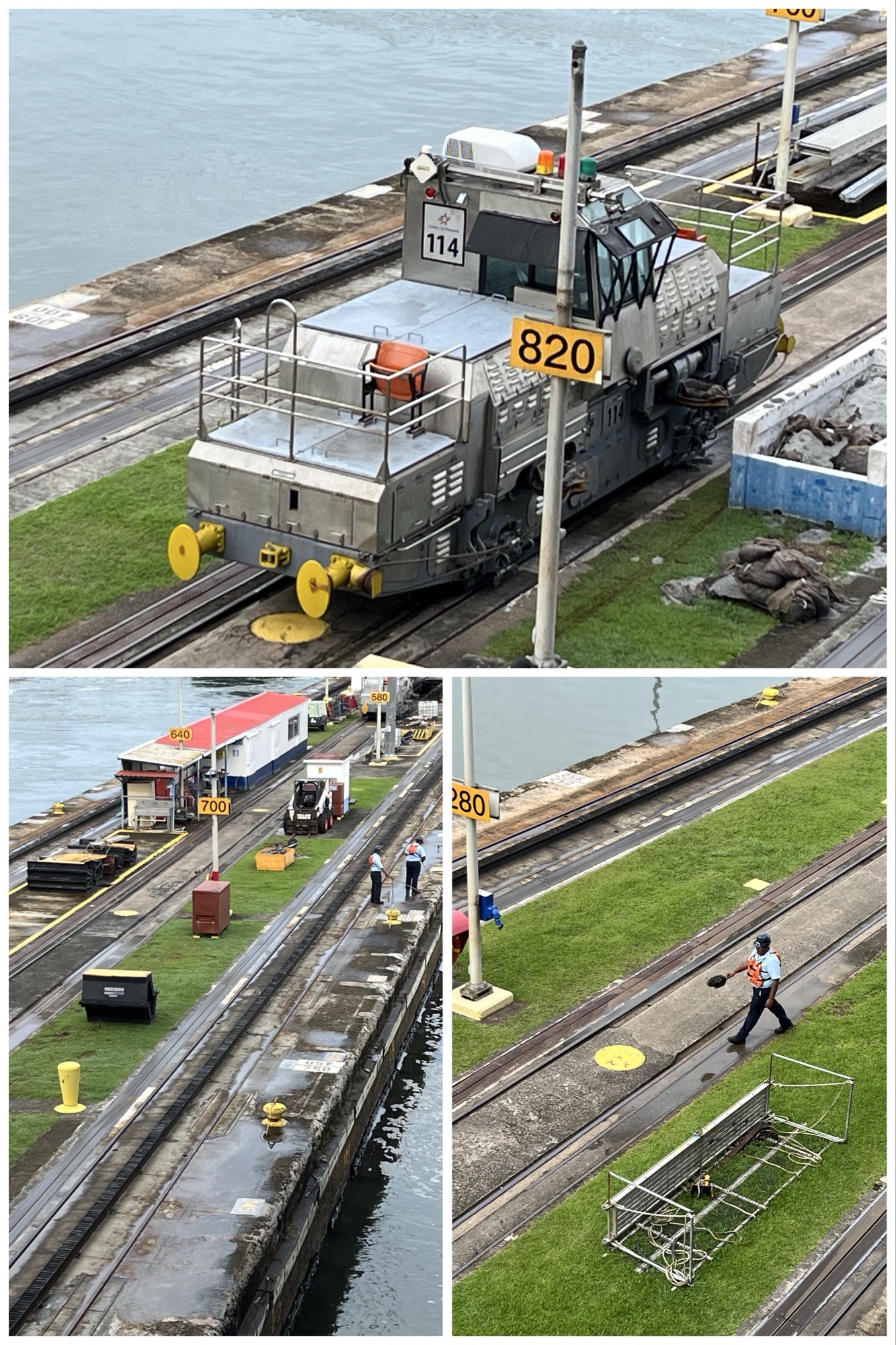

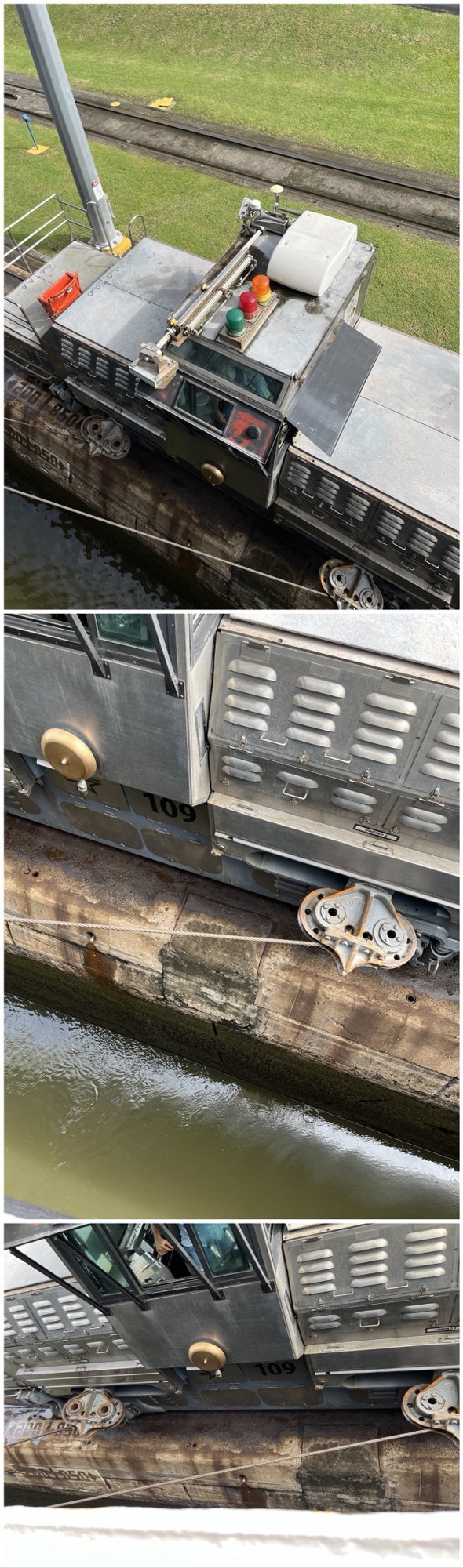
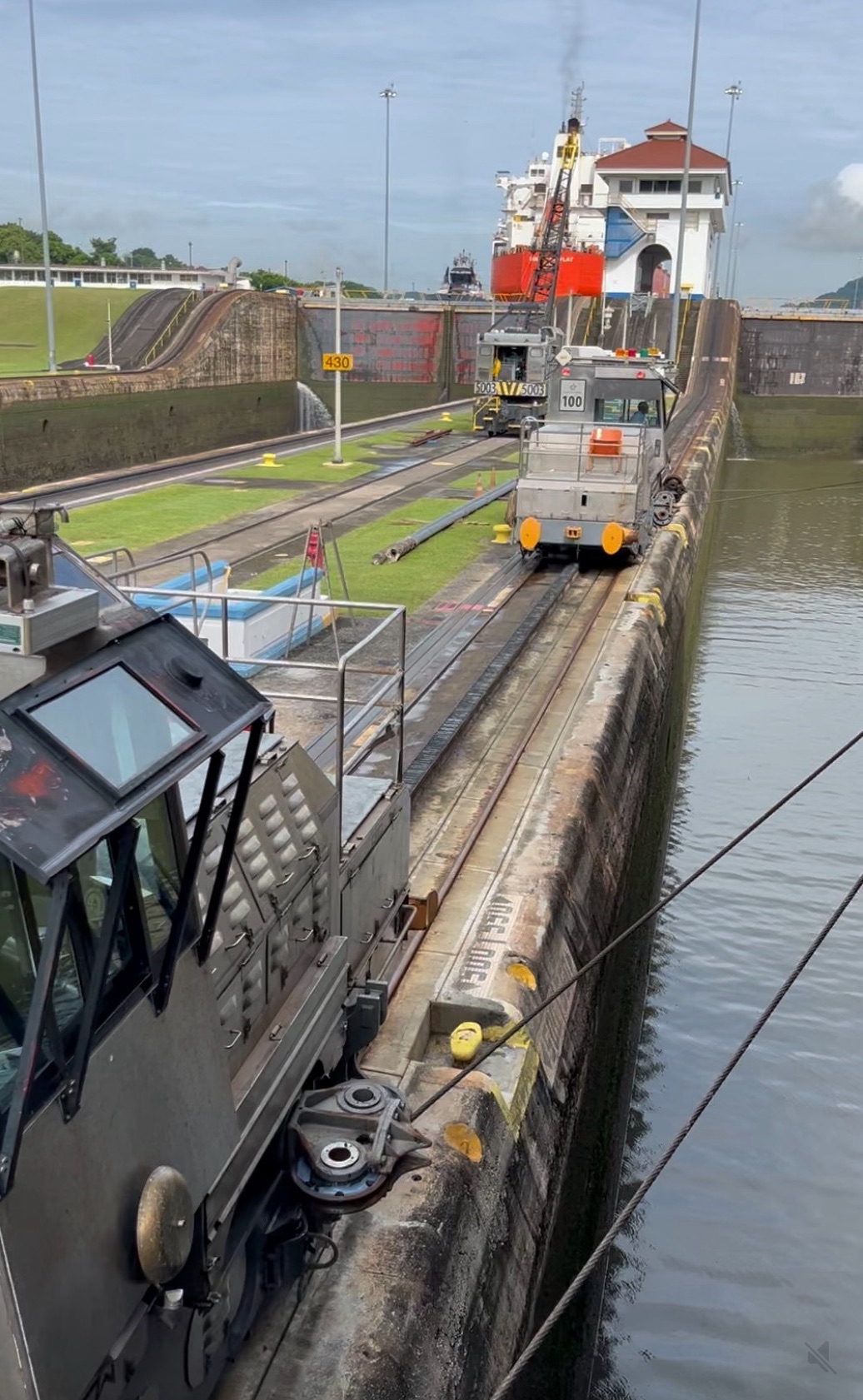
Here’s our progress through the Miraflores Locks, ending at the twelfth photo with the Pedro Miguel Locks in sight.
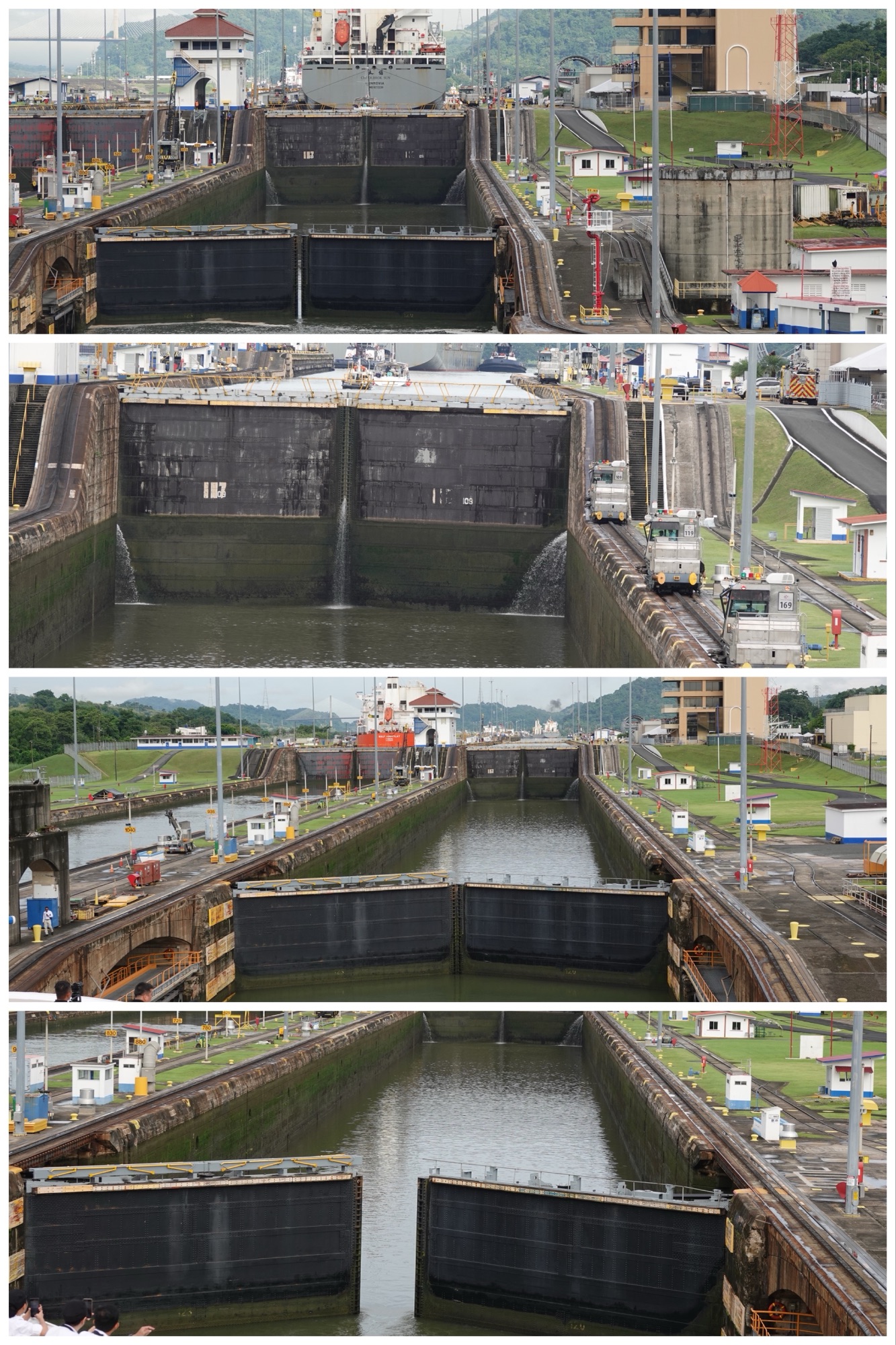
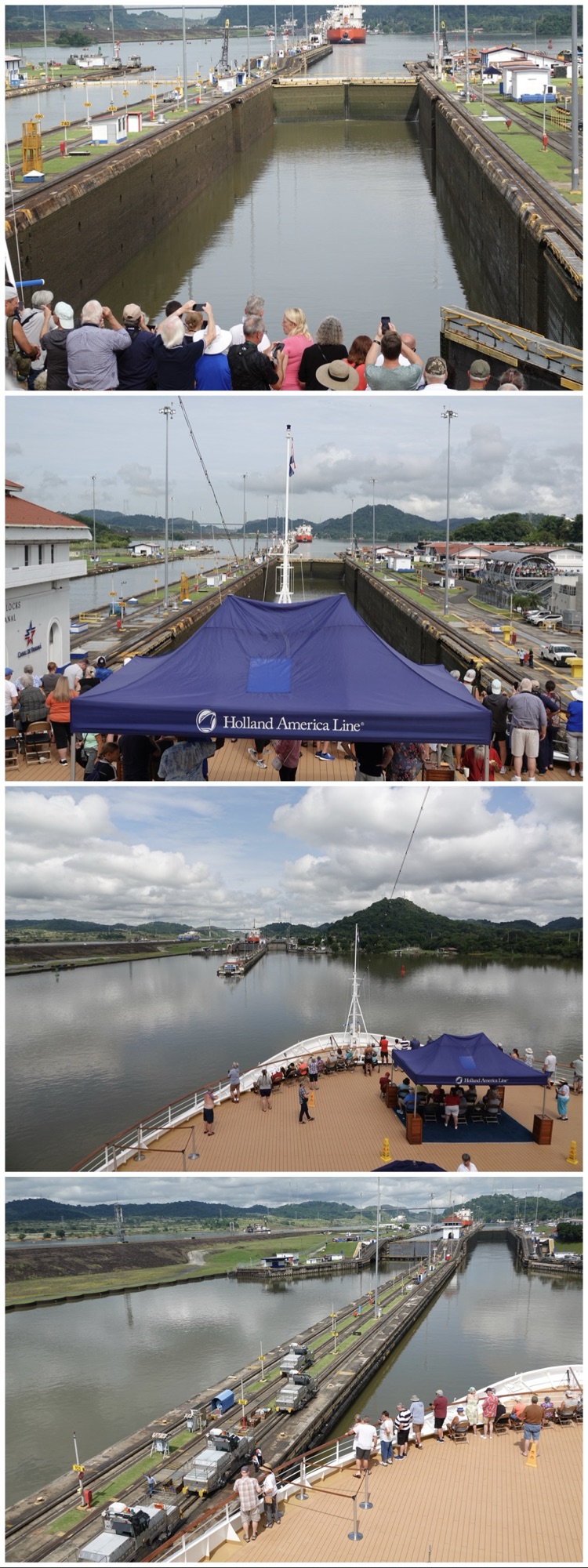
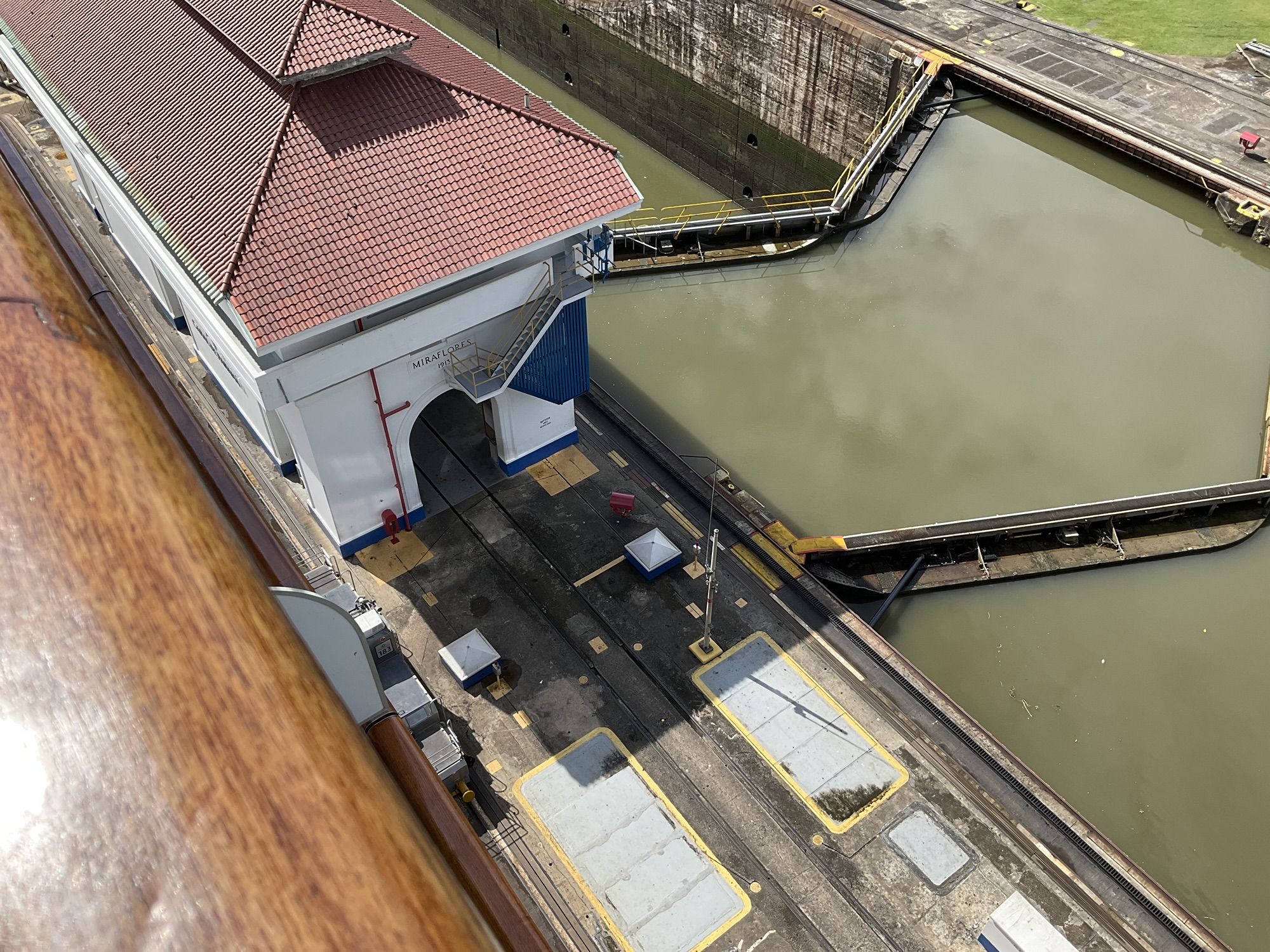
(Step 10) As we reached the level of Miradores Lake, between Miraflores and Pedro Miguel Locks, it was quite disconcerting to look down and have it seem as if the ship were flying high above the water in the adjacent lock!
(Step 9) the Pedro Miguel Locks.
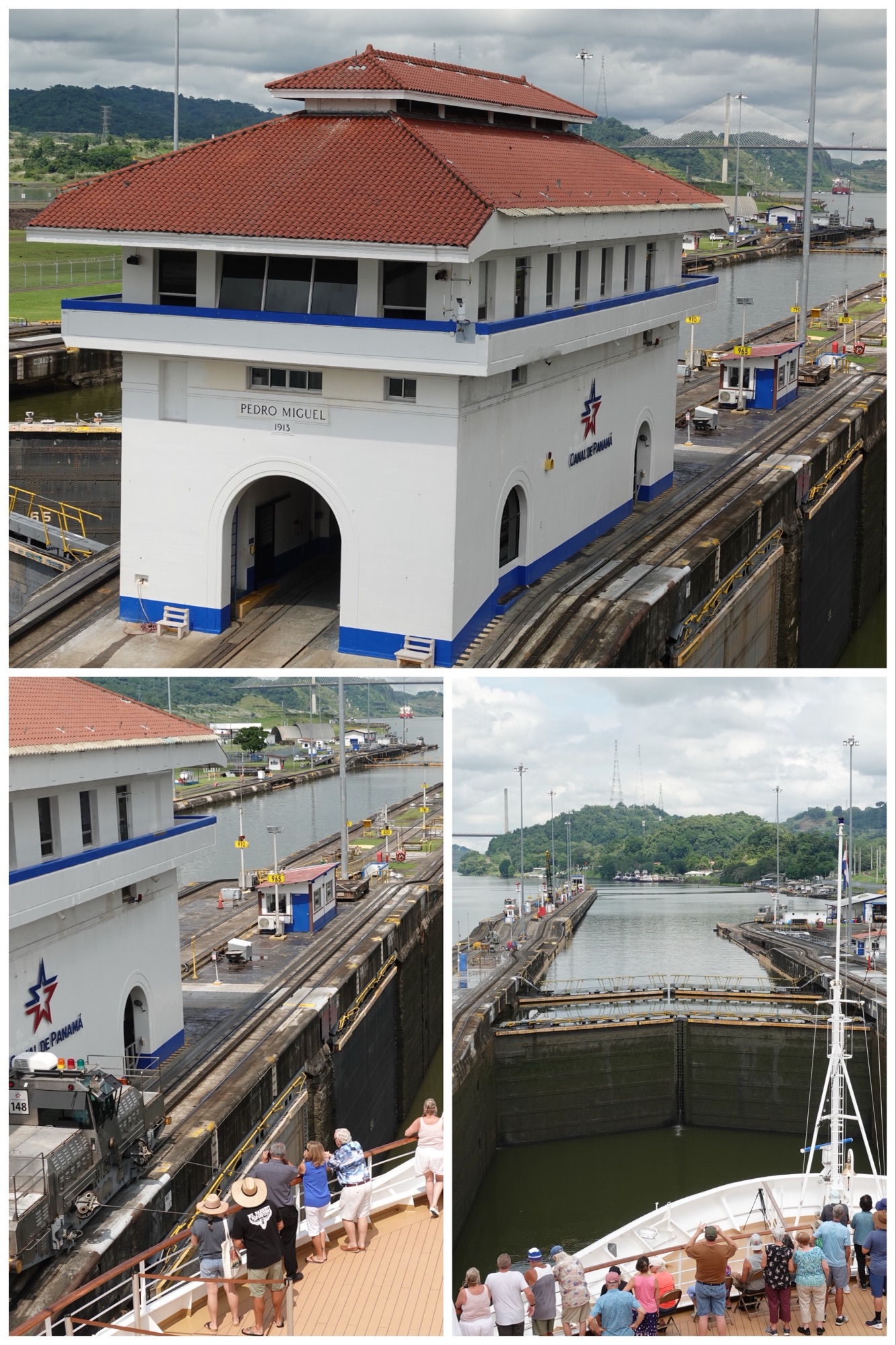
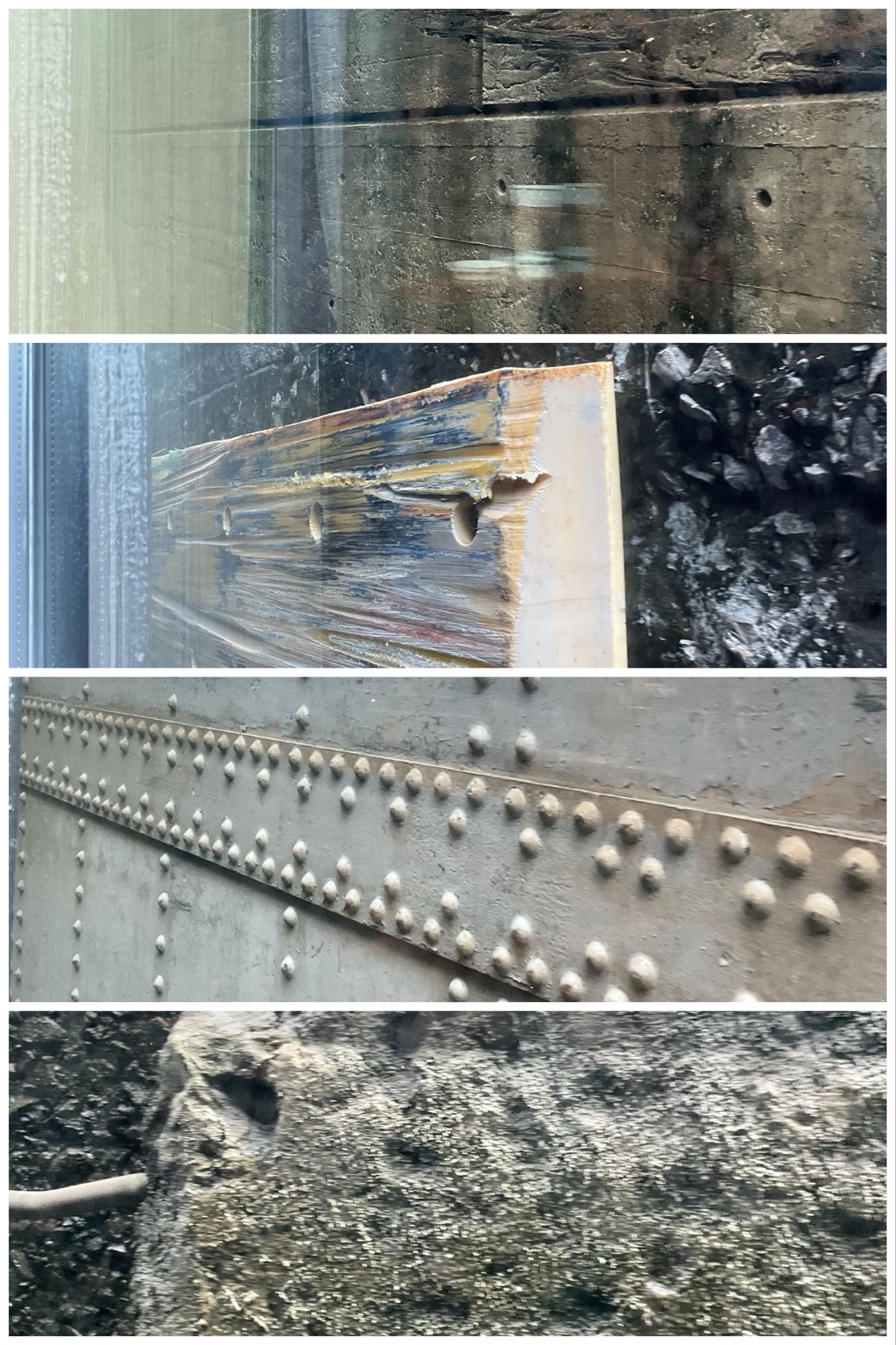
Sitting at the window in the Pinnacle Bar on Deck 2, seeing how close we were to the walls going through the Pedro Miguel locks, brought to mind touching the lock wall on one of our Rhine River cruises. Had I been on a balcony, I definitely could have touched the wet stone today!
(Step 8) Going under Centennial Bridge and past Gold Hill.
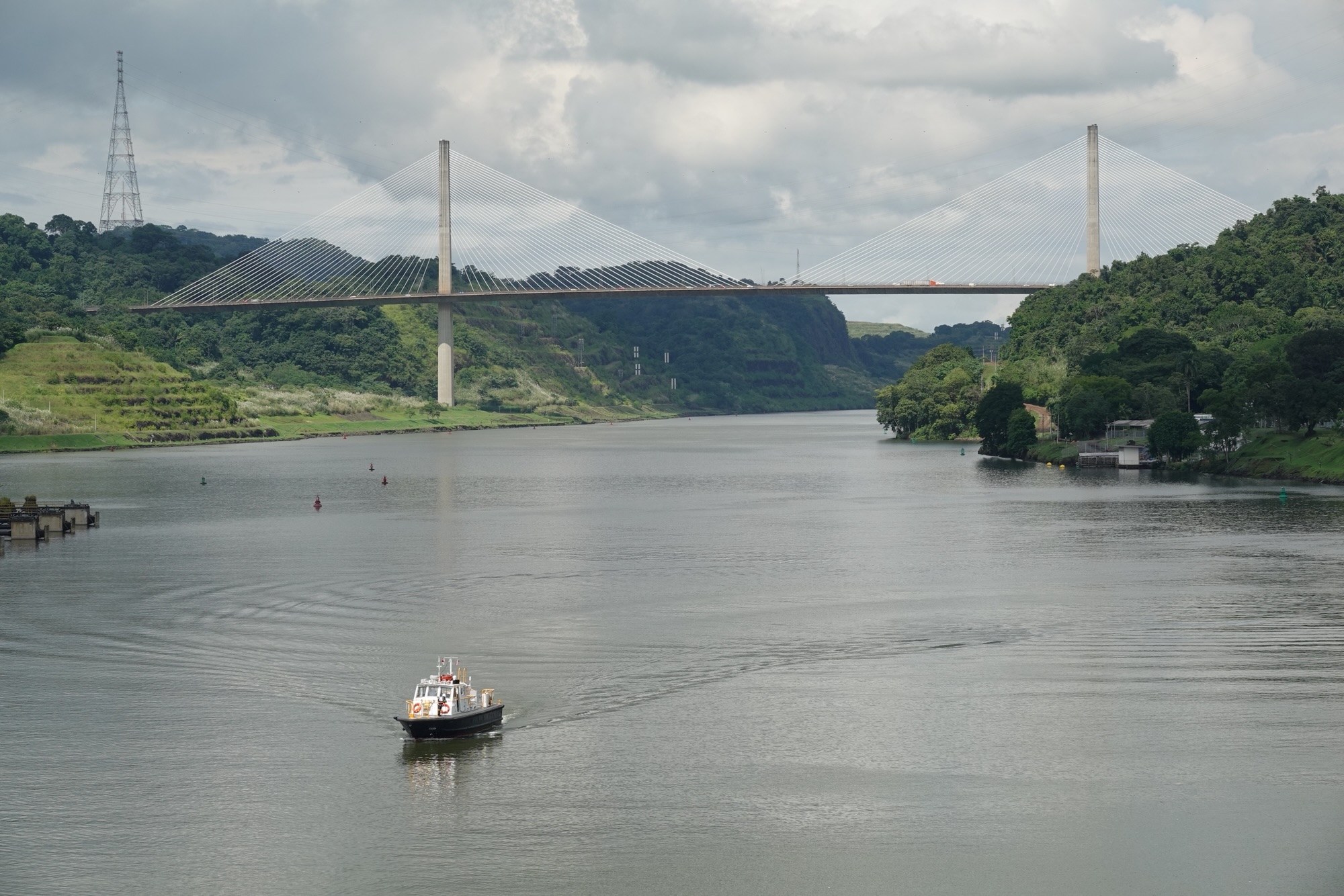
The face of what was a much taller hill was cut down and stair-stepped to reduce landslides. Despite the hill’s name, there’s no gold here; it was a rumour generated by the original French canal developers to encourage investors to fund the excavation. Intentional misinformation and unscrupulous developers are apparently nothing new.

(Step 7) The Culebra Cut cuts right through the Continental Divide. This area is what ultimately defeated Frenchman Ferdinand de Lesseps in the first attempt to build a canal in Panama. He’d been responsible for the development of the Suez Canal, but he was not an actual engineer (he was a career diplomat – what could possibly go wrong?), and understood nothing about the geography of the Panama Isthmus. He actually thought he could just dig a trench, oblivious to the fact that this was not flat desert, but rather a rainforest and mountain range.
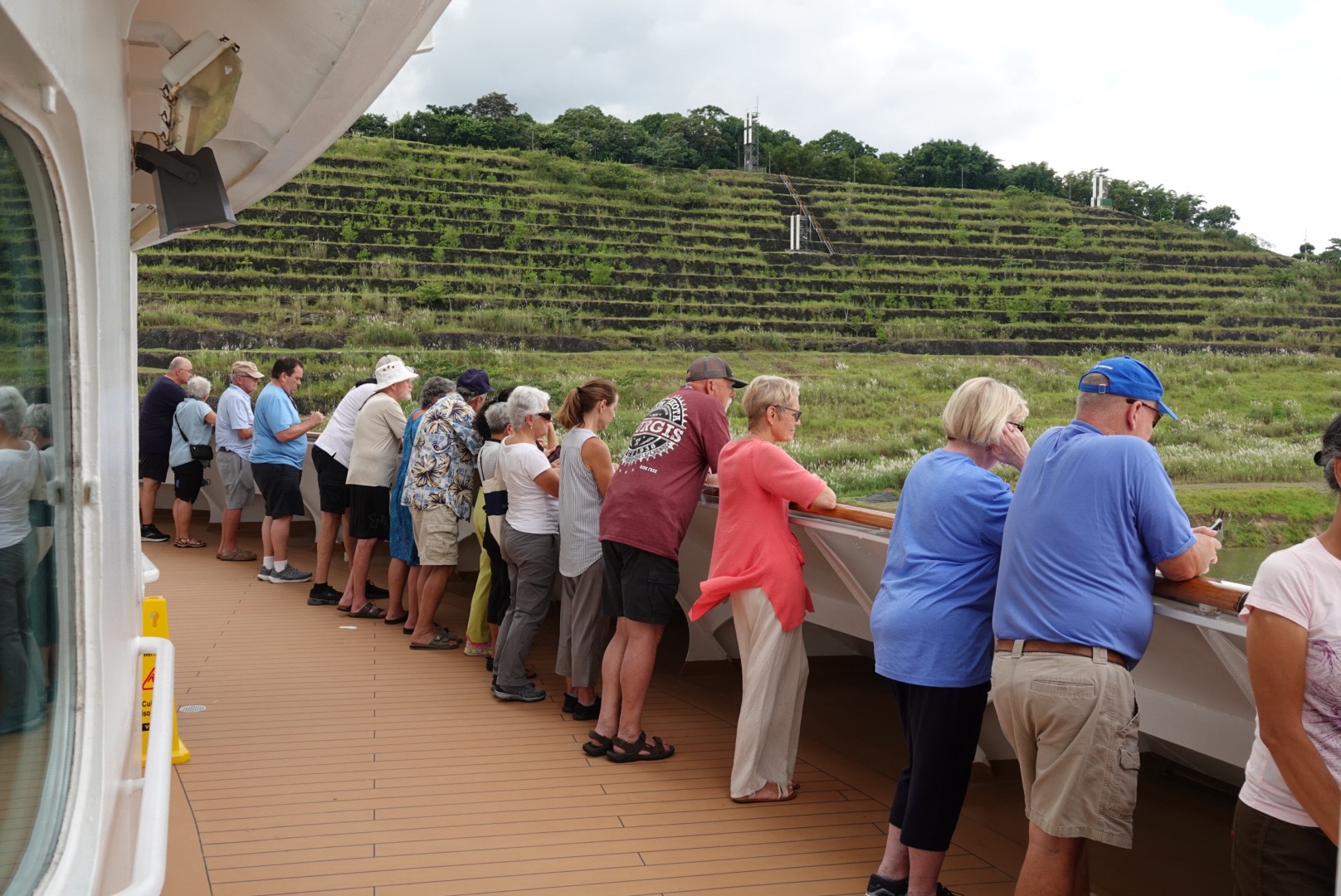
This is where the vegetation, and the mosquitos that the French didn’t know carried malaria and yellow fever, are both especially lush.
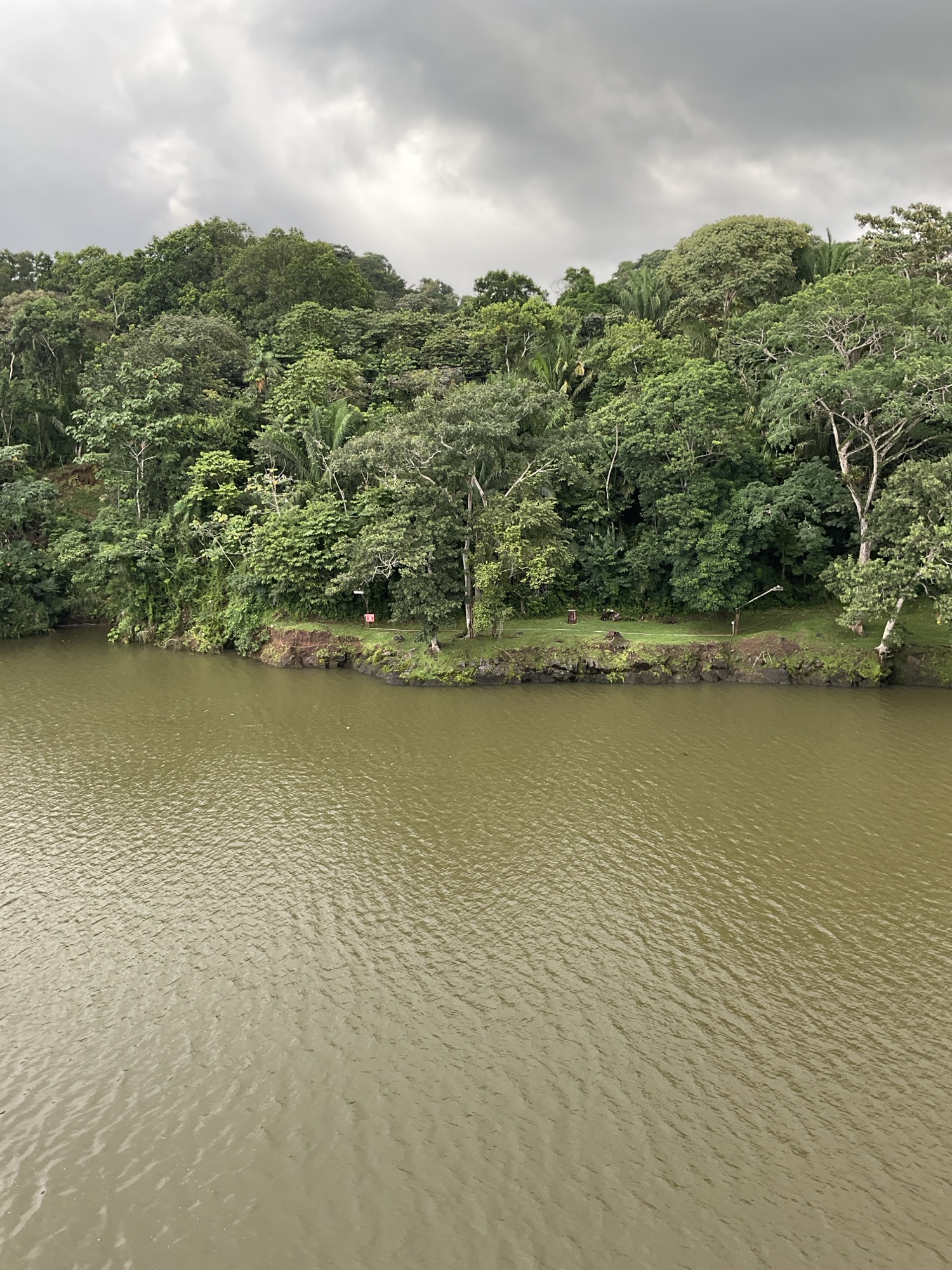
And then, as is typical for Panama in October, the sun suddenly disappeared and the skies opened with an absolute deluge of rain. Added to the fact that the rain was so heavy it precluded taking pictures of Barro Colorado Island (Step 6), the dense cloud cover obscured satellite visibility so we had no internet for about an hour.

(Step 5) In full sunshine like we had back in December 2021, Gatun Lake was probably the prettiest stretch of the entire canal. Under overcast skies it was less photogenic.

(Step 4) Shortly before we reached Gatun Dam the skies cleared and the sun reappeared, with the rain having taken the humidity out of the air. The dam came into sight on the left as we approached the locks.
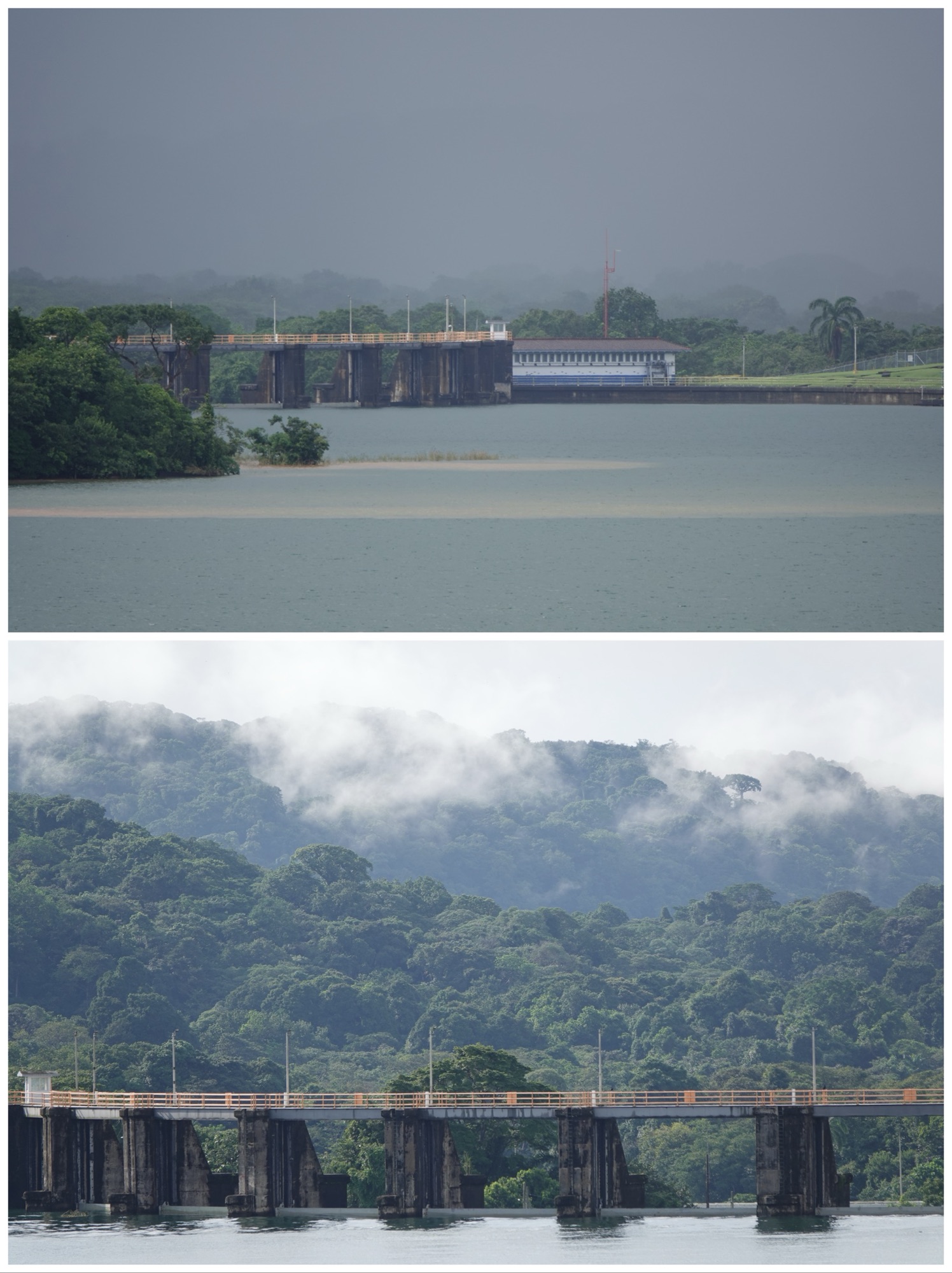
It was the physical reminder that this lake once wasn’t here; everything we now recognize as islands was once hilltops!
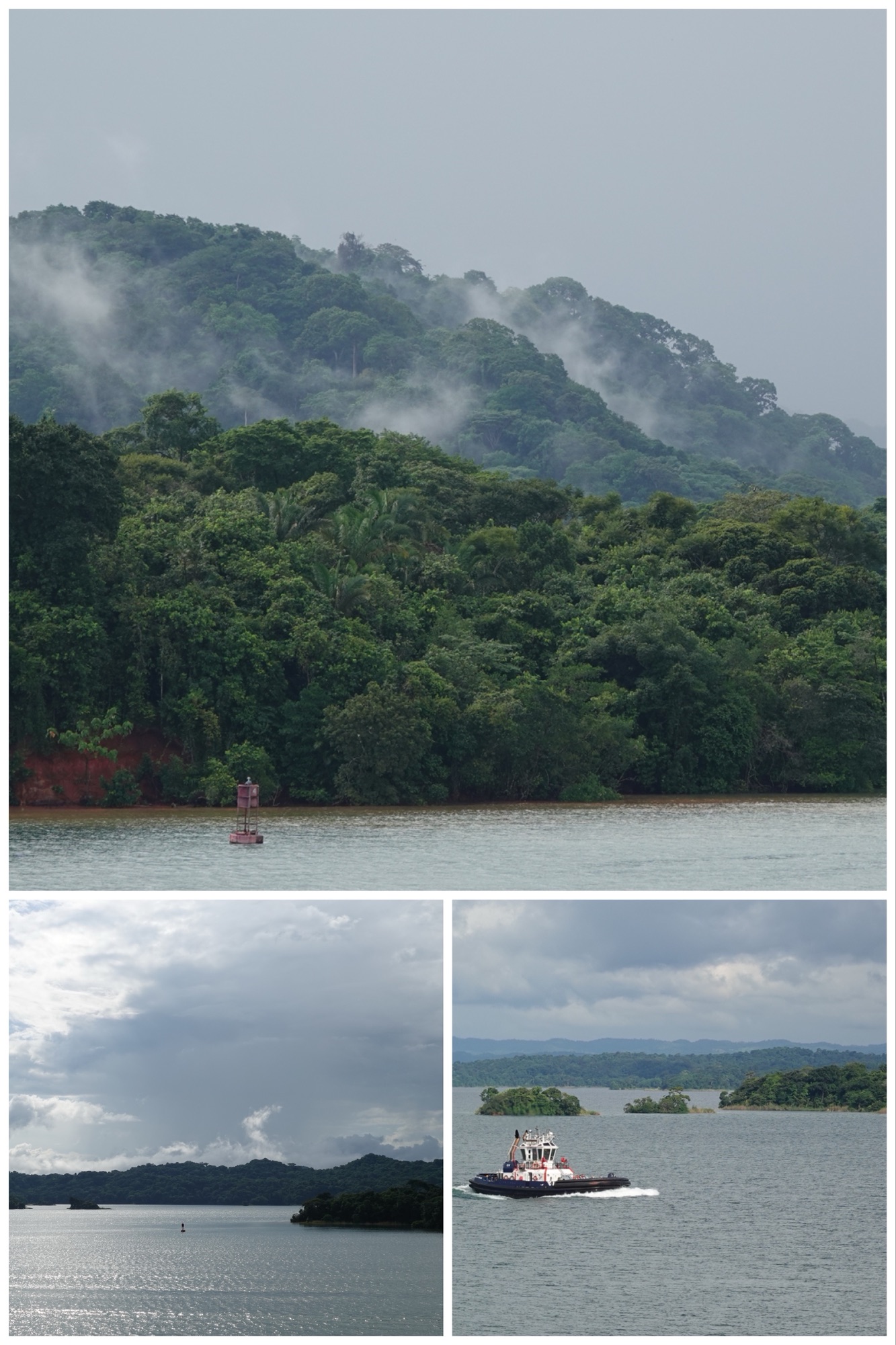
(Steps 3 & 2) We reached the parallel Gatun and Agua Clara Locks around 3:55 p.m., about 45 minutes later than anticipated, having to sit in a holding pattern on Gatun Lake just soaking up the sunshine as the cargo ship ahead of us proceeded through. It’s a tough life, right?
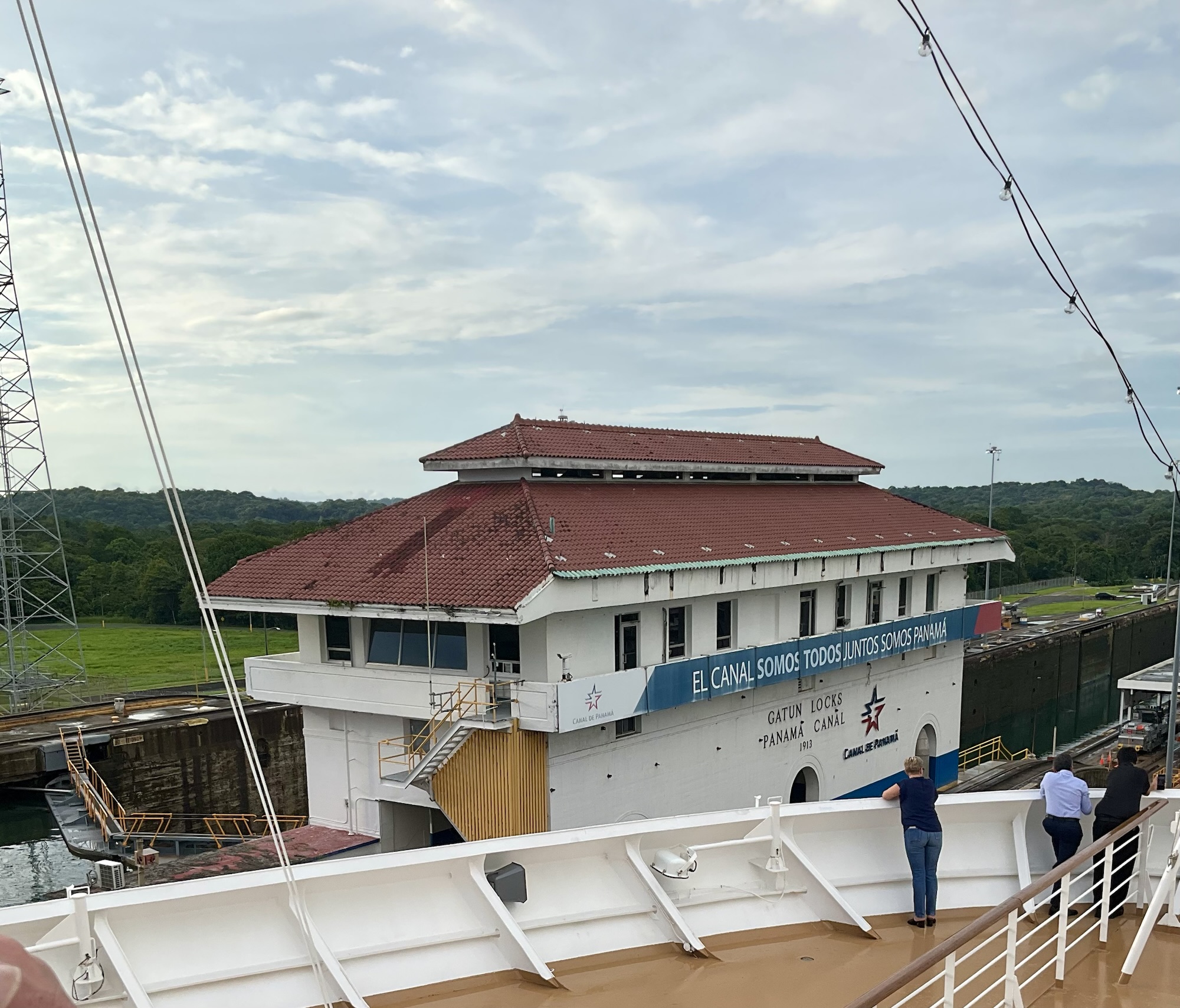
The Agua Clara Locks, like the Cocoli Locks at the Pacific end of the canal, were completed in 2016 to handle the larger Neopanamax ships entering from the Atlantic.
We got a closer look this afternoon at the most manual labour-intensive part of the lock process: the two men in their rowboat who throw the rope end up to our ship’s crew to be attached to our hull. The other end of the rope will be attached to the motorized mules to again ensure we stay centred in the lock.

We had a great view of the incoming AND outgoing ships ahead of us, the one on the left being lifted up to the level of the lake en route eventually to the Pacific, and the one on the right going down (like us) into the Atlantic.
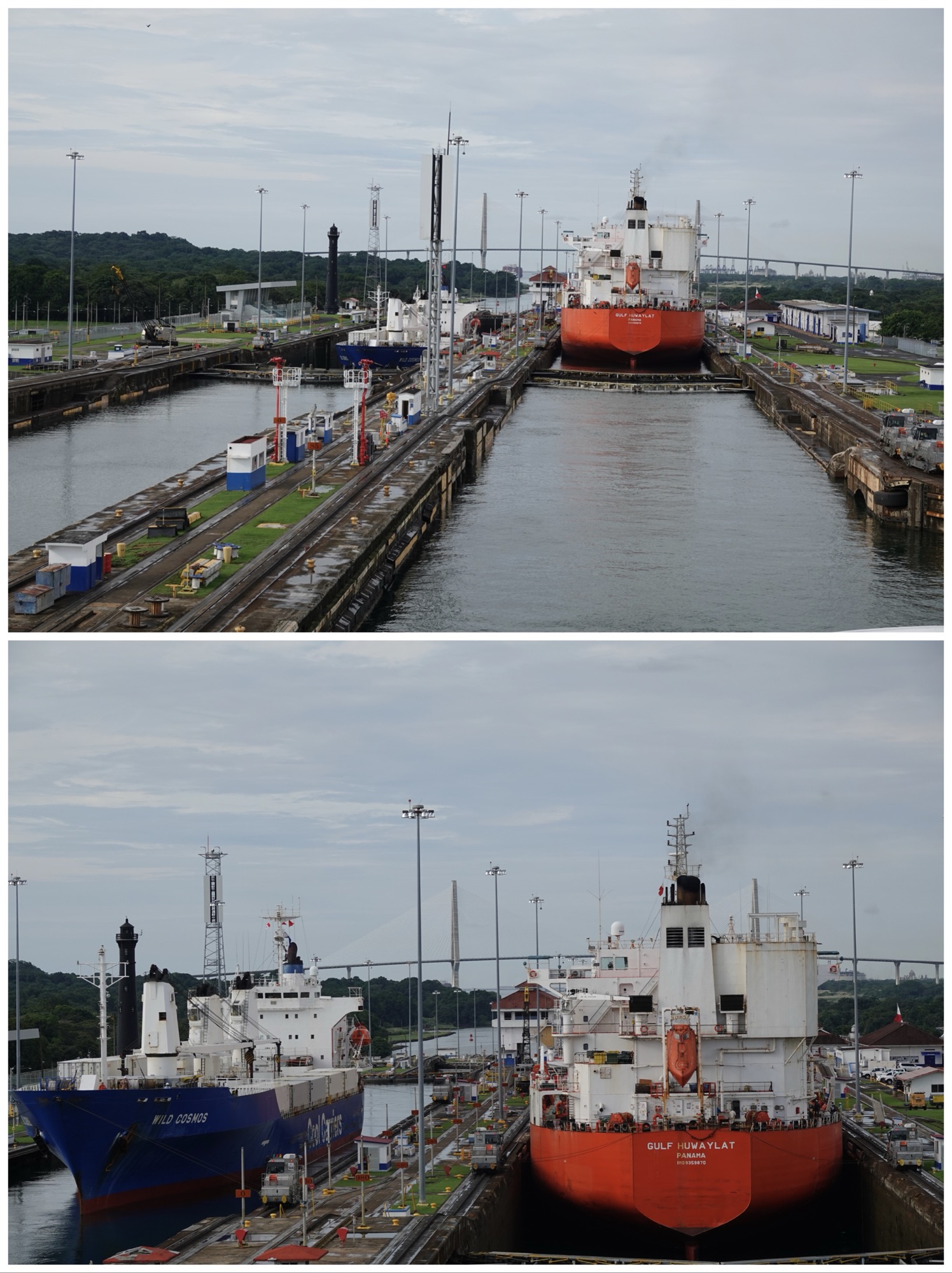
The Gatun Locks raise/lower ships 26m/85ft, the difference in elevation between Gatun Lake and the Atlantic. By comparison, at the other end the combination of Miraflores and San Pedro raises/lowers 16m/52 ft, since the Pacific is higher than the Atlantic (by that 10m/33ft difference).

Each ship’s transit uses 52 MILLION gallons of salt ocean water to fill and empty the locks. That water is released into the ocean at either end, since Gatun Lake in the centre is fresh water.
(Step 1) The Atlantic Bridge at Colón Panama, seen in the background of the previous photo) is the last landmark before we enter the Atlantic Ocean. It was intended to somewhat mitigate traffic on the Centennial Bridge, but since it ends rather abruptly in a suburb, it hasn’t really fulfilled its purpose.
As we got closer, the rain returned…
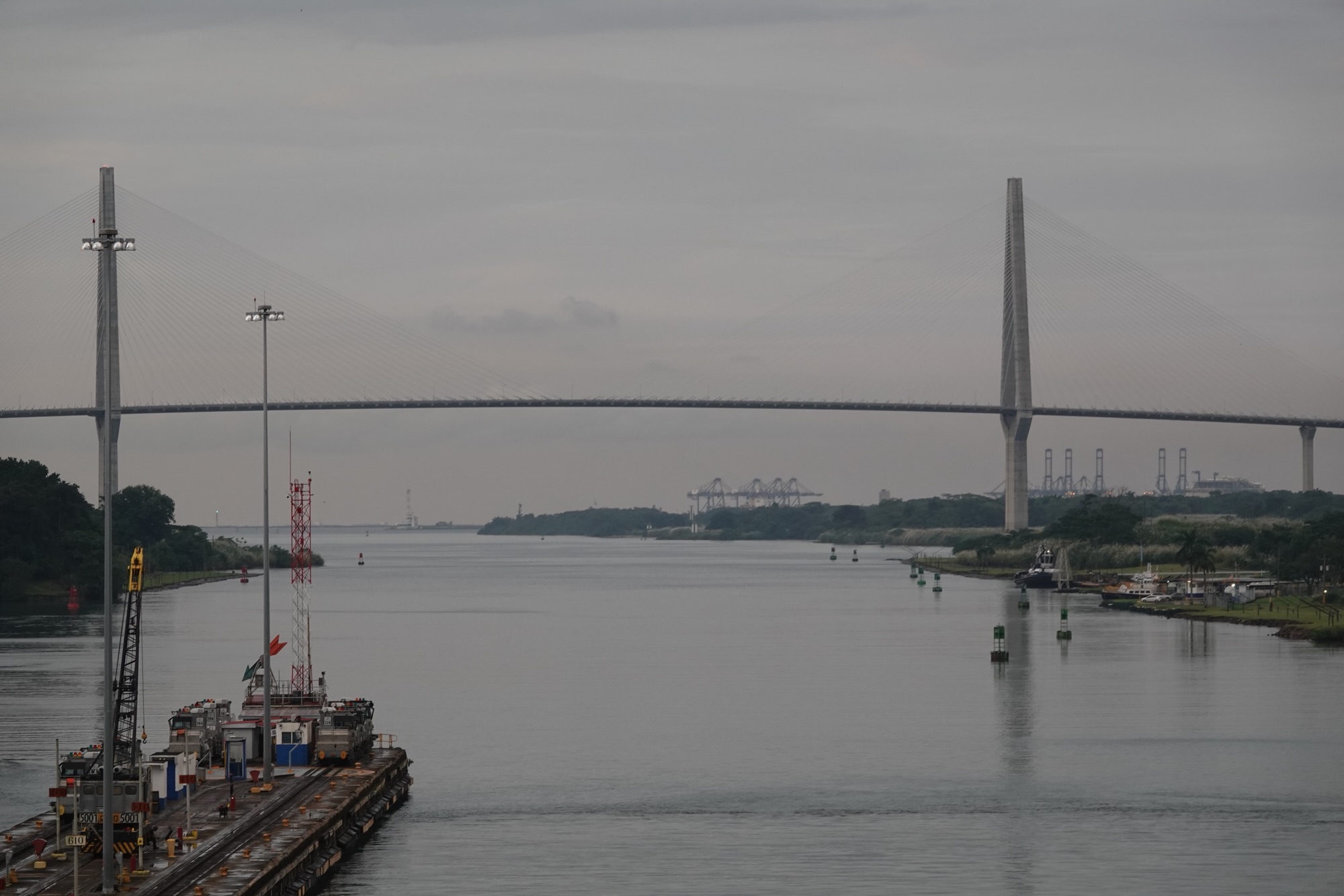
…but Ted got a beautiful photo of it after dark as we passed under it while enjoying pre-dinner cocktails in the Tamarind Bar on deck 11.

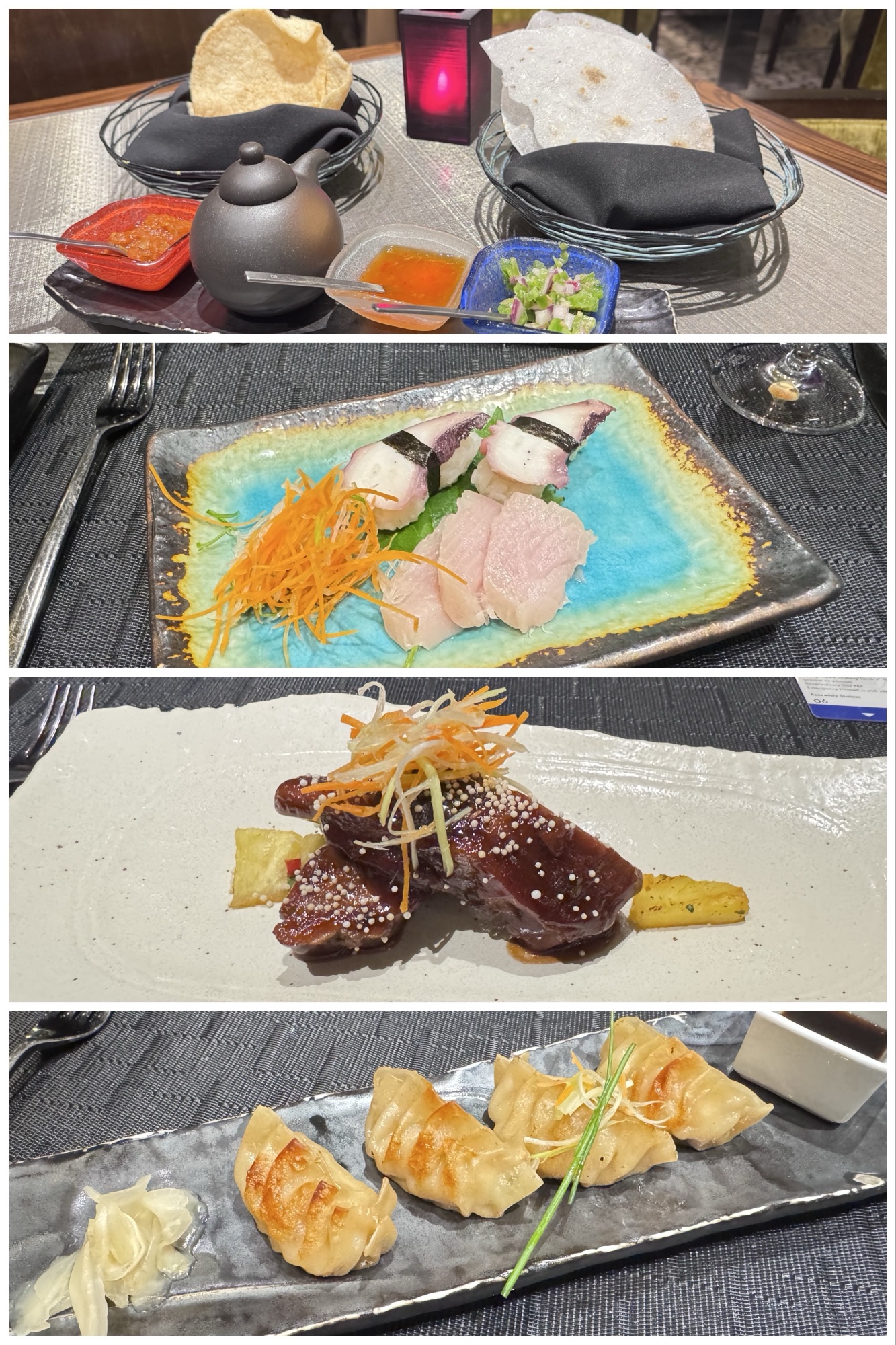
Our dinner tonight was also beautiful. We ate in our favourite place on board: Tamarind, the pan-Asian specialty restaurant.


Our evening closed out with a main stage performance by The Latin Divos, a Cuban male trio with wonderful operatic voices à la Three Tenors.
And here’s that after dark view of the Atlantic Bridge:

 Rose and Ted’s Excellent Adventure
I was mesmerized with the Peterborough lift locks.Image how I’d feel going through the Panama canals.Interesting to hear how they’re still progressing as new bigger ships are built.Thank you for your food revues.Yum!Love you
LikeLiked by 1 person
Rose,
What a wonderful day this must have been! It’s been 20 years since cruising the Panama Canal from the Atlantic to Gatun Lake. Your accounting of the entire trip makes me feel like I’ve been the full route! Thank you for taking us along!
Carol from Florida
LikeLiked by 1 person
Happy to have you with us!
LikeLike