
This month I began doing research for our upcoming October Mexico/Panama canal cruise, and when we return the six weeks leading up to our World Cruise will be spent researching some of the over 50 ports (in 29 countries) that we’ll be visiting between mid-December and mid-May.
That said, I still managed to break up on-line research with a few good reads.

The German Wife, by Kelly Rimmer, reminded me a bit of City of Women, by David R. Gillham, which was set in Berlin during WWII, during a time when all the able-bodied men were off fighting and women left behind to survive on their own. The setting in that book was interesting in that we’re used to reading this kind of story from an English perspective, but bombing raids, rationing, and loneliness existed on both sides. I can’t describe The German Wife any better than author Christine Wells did in her blurb: “…a heart-wrenching, uplifting story about family and the choices people make in impossible situations. Kelly Rimmer writes with deep compassion for human flaws and frailty, bringing us insight into the rise of Nazism through the eyes of her protagonist. An unforgettable historical novel that explored important questions highly relevant to the world today.”
The Weight of Ink, by Rachel Kadish, was a Heather’s Pick in this month’s Chapters/Indigo newsletter. Set in London of the 1660s, and of the early twenty-first century, it is the interwoven tale of two remarkable women: Ester Velasquez, an emigrant from Amsterdam who is permitted to scribe for a blind rabbi, just before the plague hits the city; and Helen Watt, an ailing historian with a love of Jewish history, who shares in the discovery of a cache of seventeenth-century Jewish documents and takes on one last project: determining the identity of the documents’ scribe, the elusive “Aleph”. That she is aided by a sometimes irreverent young Jewish-American postgraduate student only adds to the charm of the story.
It’s a long book, and often forces you often to stop and think, but is so beautifully written that the time it takes to read over 500 pages simply melts away.
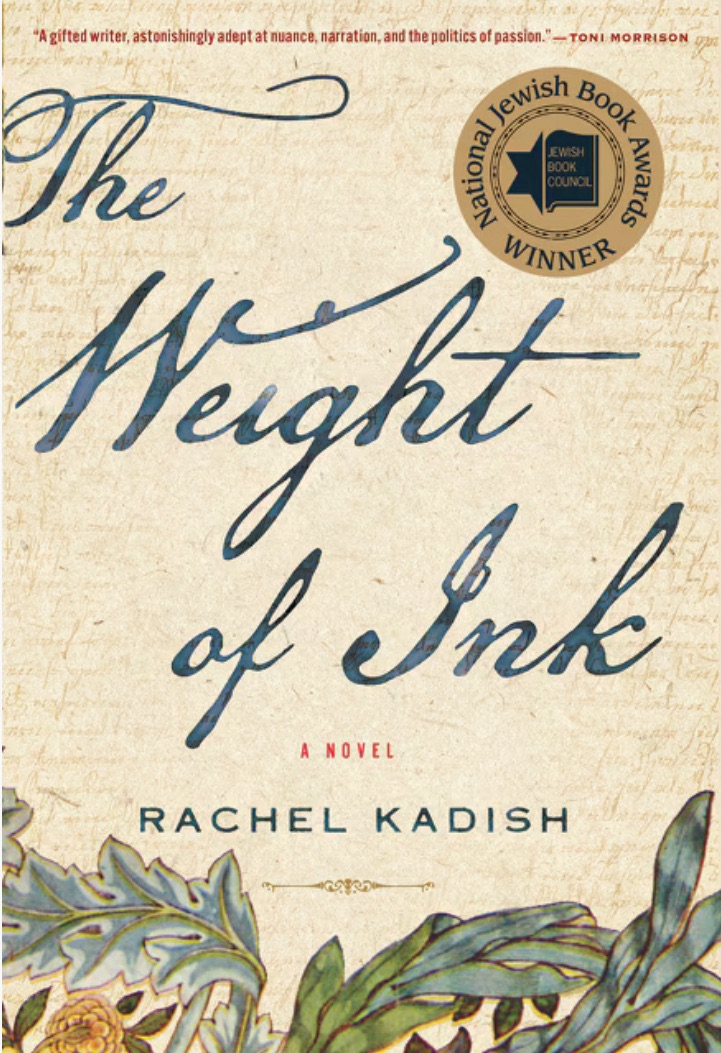
While The Weight of Ink was wonderful, it was also a “heavy” read, full of philosophical arguments that required actual thought and not just a quick skim. I needed something light as a follow-up, so went back to both of the mystery series I’ve been working my way through. The indomitable Irish “psychological detective” Maisie Dobbs, and the former British intelligence operative Lane Winslow, provided an excellent mood re-set.
I lost a little of Maisie’s narrative because I couldn’t access books 3 and 4 in Jacqueline Winspear’s series, but Among the Mad, sixth in the chronology, follows immediately after the last book I did read (An Incomplete Revenge), and Maisie’s skills and reputation as a “Psychologist and Investigator” continue to grow. It’s 1931, and Maisie is called upon to work with Scotland Yard’s Special Branch to help thwart a madman who threatens to inflict destruction on thousands of innocent people. Once again, the lasting and devastating effects of war on the human psyche come into play, and as readers we’re asked to think about how – even now – we treat those who come home from war.


In It Begins in Betrayal, the fourth book of her Lane Winslow series, Iona Winshaw gives us a bit of insight into Inspector Darling’s wartime history through a murder investigation that takes both him – the accused! – and subsequently Lane, back to England and right into the middle of British/Russian Cold War intrigue. After finishing this thoroughly satisfying instalment, I realized that part of what I’m enjoying so much is the general gentle “Canadian” tone; it’s as if I’m reading the equivalent of an episode of the television show Murdoch Mysteries (based on Maureen Jennings’ novels). I think I’m even picturing the star of that series, actor Yannick Bisson, in my head as Inspector Darling!


I felt the need to dive right into Book #5, A Sorrowful Sanctuary. Like many mystery/detective series, there’s an underlying story of mutual attraction between the main characters running through these novels. There are certainly a subset of the mystery genre involving really good husband/wife crime-solving teams (Anne Perry’s Thomas and Charlotte Pitt, and Hester and William Monk come to mind, and Laurie R King’s Mary Russell and Sherlock Holmes are particular favourites), but I wasn’t sure that I wanted Lane Winslow and Inspector Frederick Darling to make things “official”. It seems what I want may be immaterial, but I’ll need at least one more instalment to find out.
As they’d say on Monty Python’s Flying Circus: “and now for something completely different”. Browsing through the skip-the-line books in Libby (the online library service), I came across Michael Richards’ 2024 autobiography Entrances and Exits – or perhaps more appropriately it flung itself through the door and came to an abrupt stop, the way his television character Kramer always did.

In the Introduction, subtitled “The Hair”, he writes: “This book is a hymn to the irrational, the senseless spirit that breaks the whole into pieces, a reflection of the seemingly absurdist difficulties that intrude upon me….Upset and turmoil is with me all the time. It’s at the basis of comedy. It’s the pratfall we all take. It’s the unavoidable mistake that I didn’t expect. It’s everywhere I go. It’s in the way that I am, both light and dark, good and not so good. It’s my life.”
And that explains the book about as well as is possible. It’s an engaging, honest book that takes the reader inside the mind of a great actor and comedian, as well as inside the Seinfeld show, and I thoroughly enjoyed it. (But I have to say, the realization that Richards is 75 years old was a bit of a shock – I keep forgetting how long ago Seinfeld was on television – 30 years ago!! – and that we’re all getting old.)
Another non-fiction book rounded out the month. Although published way back in 1998, the science shared in Jay Ingram’s The Barmaid’s Brain has not lost any of its ability to amaze and amuse.
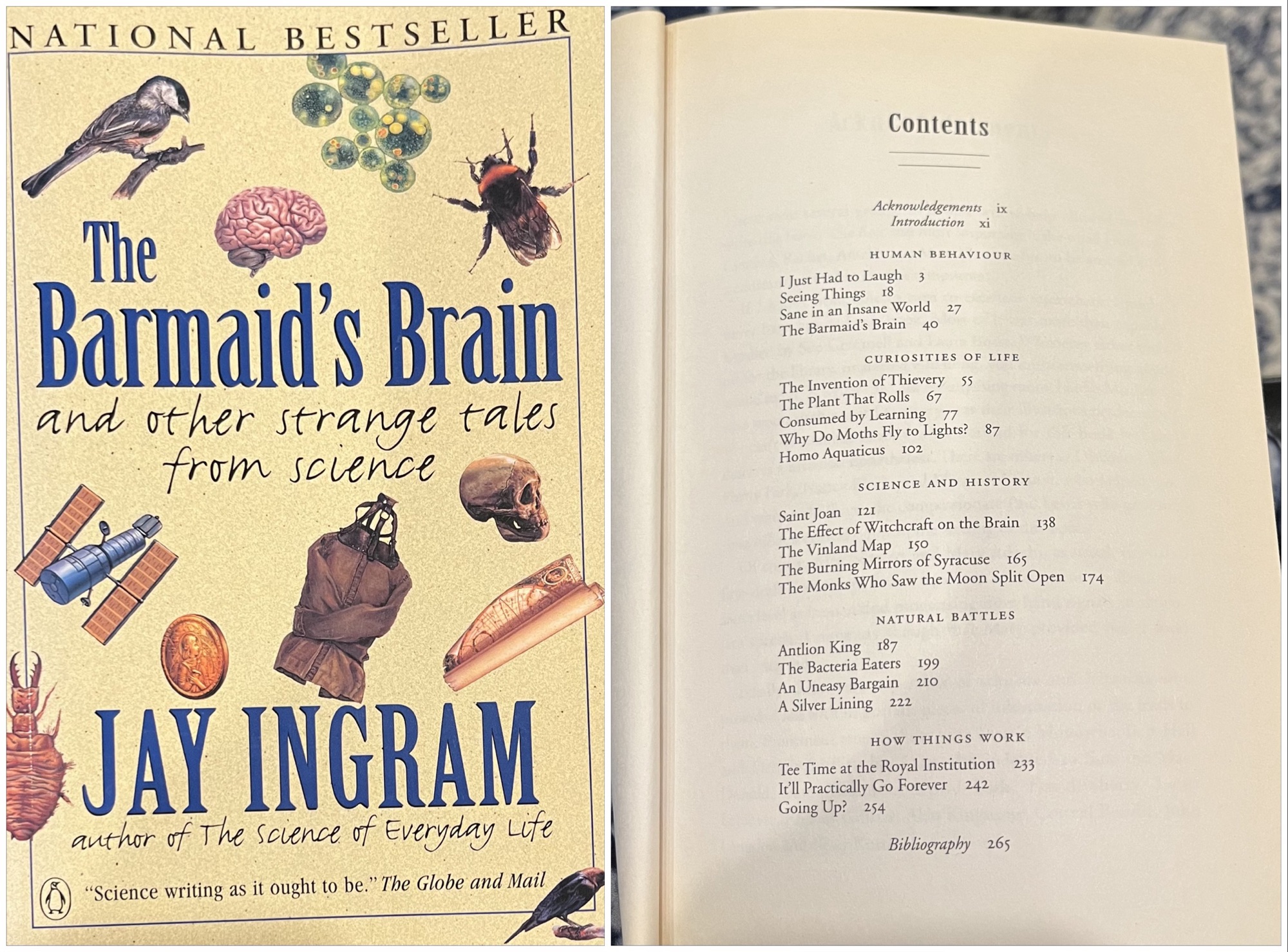
Back when Ingram hosted his own radio documentary on CBC, Canada’s national public radio station, we and our kids often listened to him in the car. Wow, are we old. From 1979 to 1992, Ingram hosted CBC Radio’s Quirks and Quarks and earned two ACTRA Awards as best host. He made science so much fun by addressing complex, scientific issues in non-technical terms. This book felt like a throwback to those unintentionally educational road trips.
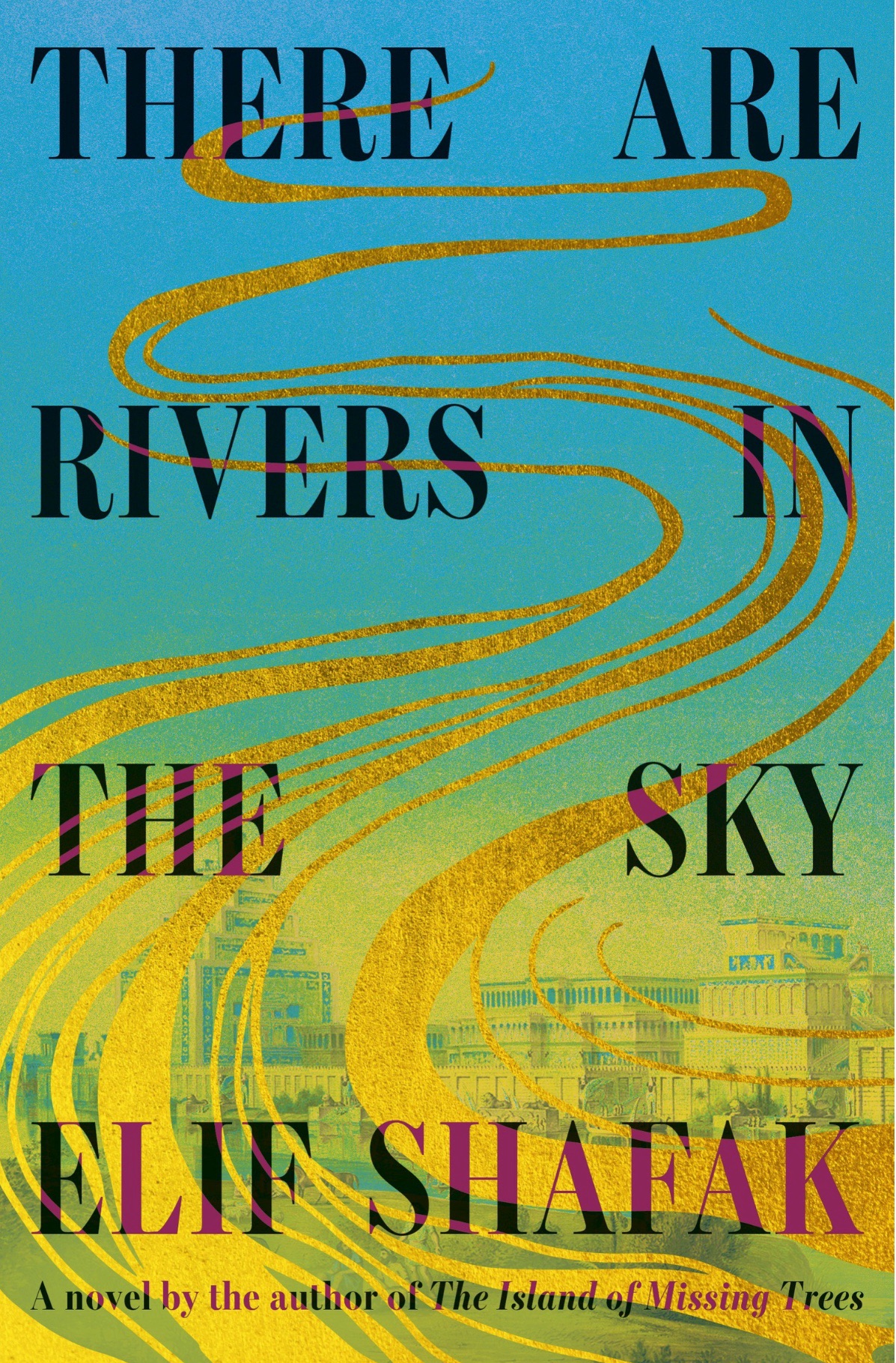
Elif Shafak’s There Are Rivers in the Sky, published just this year, was another Heather’s Pick from Indigo. The story centres around a long-forgotten poem: the Epic of Gilgamesh, fragments of which survived in the ruins of the ancient Mesopotamian city of Ninevah, but more than than keeps coming back to a single drop of rainwater reborn over and over. The narrative spans not just centuries, but millennia (beginning in the 640s BCE), as well as continents, and cultures, moving between England, Iraq, and Türkiye. As promised in its synopsis, the novel asks who gets to control memory, and tells a powerful story about the cost of forgetting.

Especially interesting to me were the things this book taught me about the Yazidi culture and faith, since Yazidi (more properly Êzidî) refugees were among the Syrians with whom I worked while assistant teaching ESL when we were in Collingwood pre-Covid. I had a much better understanding of the hardships they’d undergone, and the things they could never speak about, after reading this book.
After that engrossing read, it was back to arguably my favourite genre: mysteries.

A Curious Beginning is the first in Deanna Raybourn’s Veronica Speedwell series, although the author has a couple of other series as well. The description from Amazon intrigued me, describing a convention-flouting heroine with a mysterious background, but it didn’t truly prepare me for travelling circuses or a hunky humbug-eating scientist/taxidermist/explorer/knife-thrower nicknamed Stoker as Veronica’s sleuthing partner, or a cast of other interesting Victorian characters, each playing against type – and wrapped into a royal scandal.
Veronica and Stoker make a great team, and the book was lots of fun to read (who could resist learning about “the lethal properties of a cunningly wielded hatpin”?) although I probably won’t rush out to get the next instalment since I already have two other series on the go. The next set of Veronica and Stoker’s adventures will have to wait a little while.
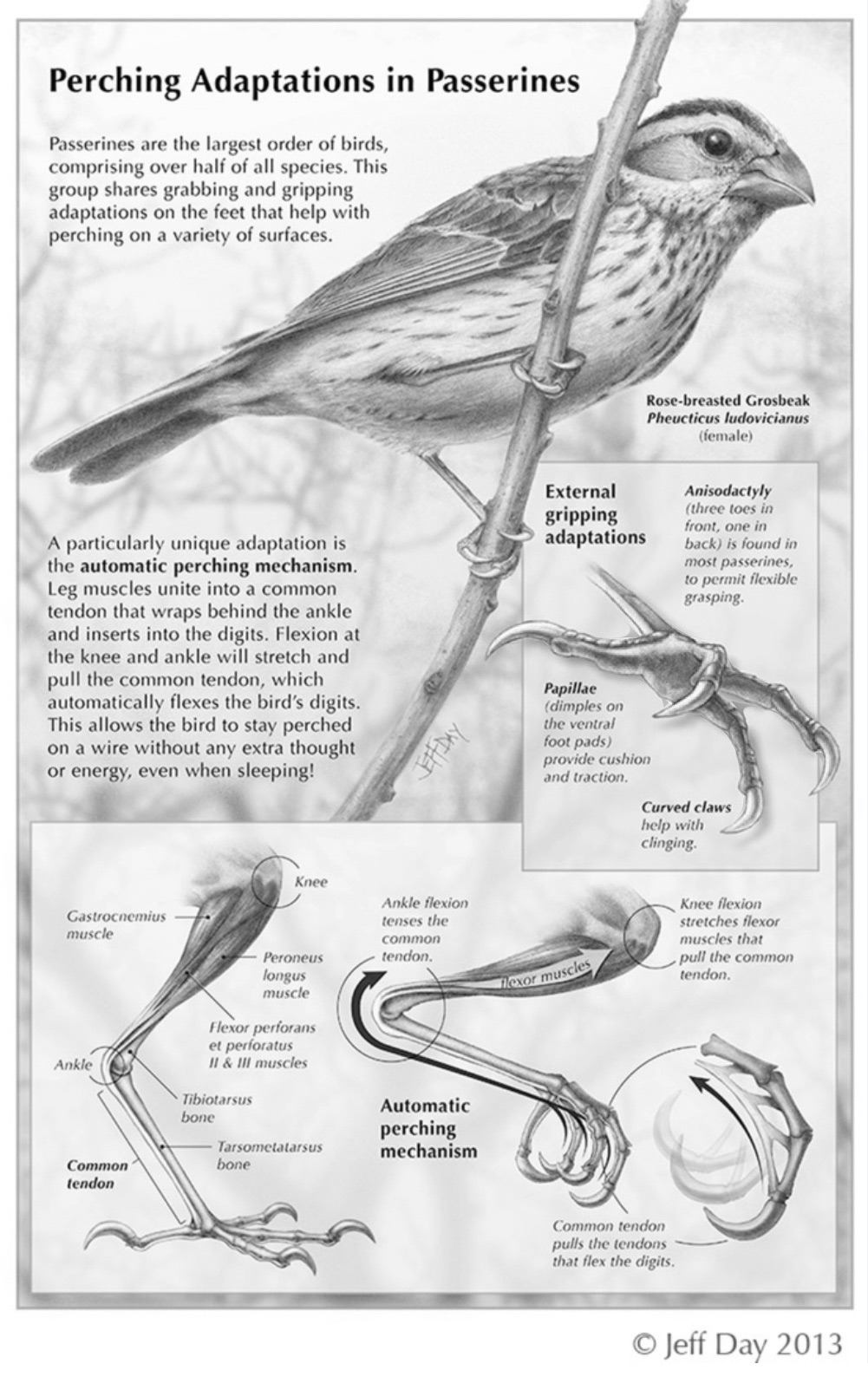
My word of the month, which, although I don’t think I’d ever heard it before, came up in three of the books I read, is passerine, which means a perching bird.
And just like that, September is over and a month of travel begins.


You amaze! For a busy time, you’ve read a ton!!!
LikeLiked by 1 person
I can’t believe you read all that!! Wow!!!I’ve been meaning to write to you to find out where you are.Now I knowI’m reading The Whispers. Having troub
LikeLiked by 1 person