
Ted and I lived most of our lives within a 50km radius of Toronto – more than 60 years each! That means that our family, friends, and work colleagues were – and most still are – all based there. Deciding to relocate to British Columbia as our base of operations in 2022 came with the knowledge that all those connections would now be largely maintained via text messages and video calls. That’s simply life in the technology age.
Deciding to spend a couple of weeks in Toronto this summer was mainly so that we could hug #1 son and their family, which is something I really miss being able to do regularly.
The “bonus” of our time here was reconnecting with so many others.
We didn’t intend to play tourist; after all, the GTA (Greater Toronto Area) was home for decades and remains familiar despite the new high-rises, increasingly sprawling suburbs, rerouted roads, new parklands, and ever-changing landscape of restaurants and retail stores.
Our focus was social, and the focus of our cellphone cameras was mostly on all the faces we love and have missed so much (plus food pics, of course!)
Wednesday July 17th. Travel days are never our favourite, especially when we need a 6 a.m. alarm in order to grab a bite of breakfast at the hotel before being shuttled to the airport. Today was made better, though, by the inclusion of our first ever flight on Porter Airlines, whose service was absolutely a cut above what we’ve been experiencing lately on WestJet and Air Canada.
When we arrived after 7 p.m. it was nice to find that our Airbnb was actually better than its photos: bright, well-equipped, and with a wonderfully responsive host. Cozy Suite in North York
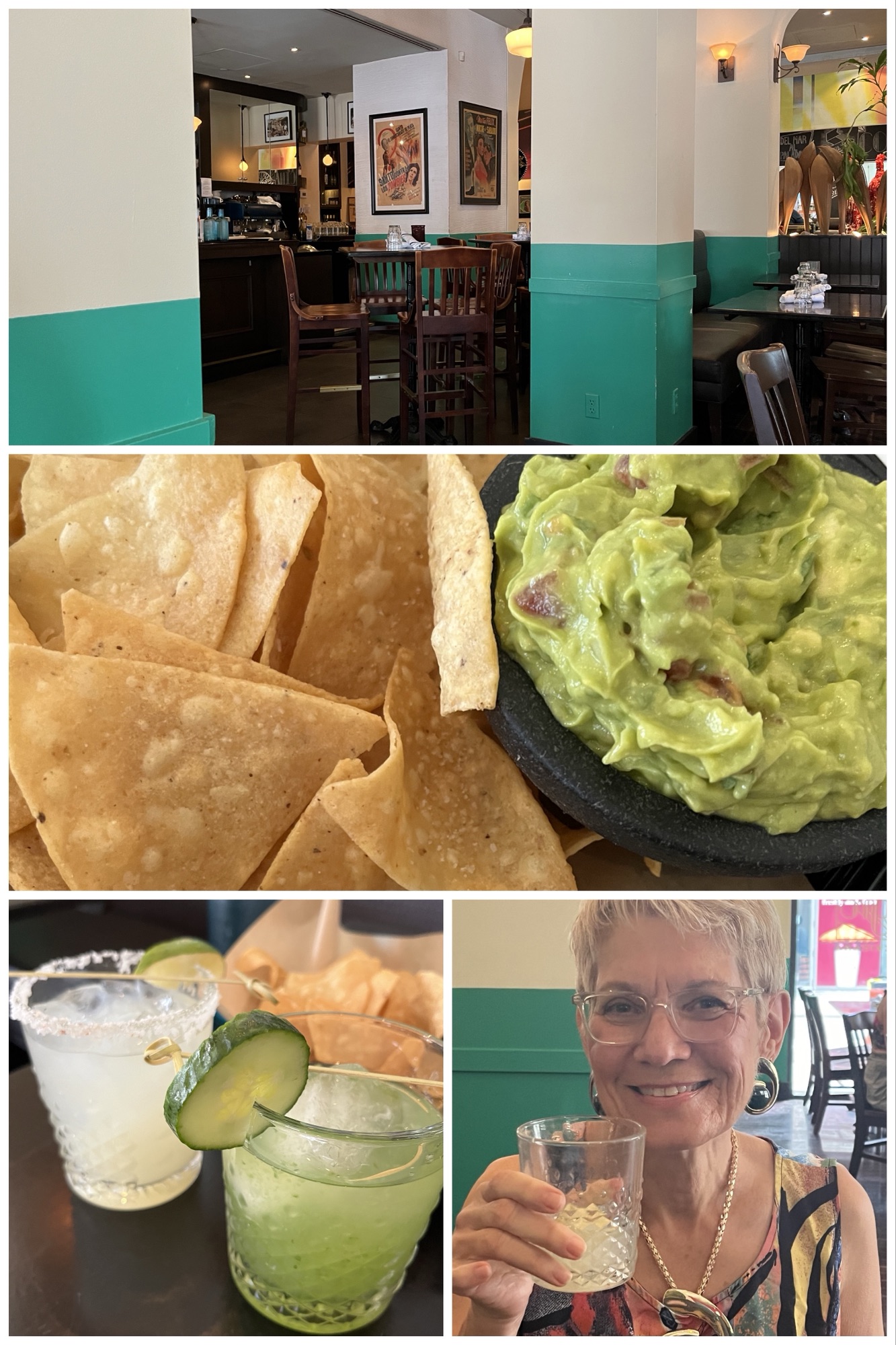
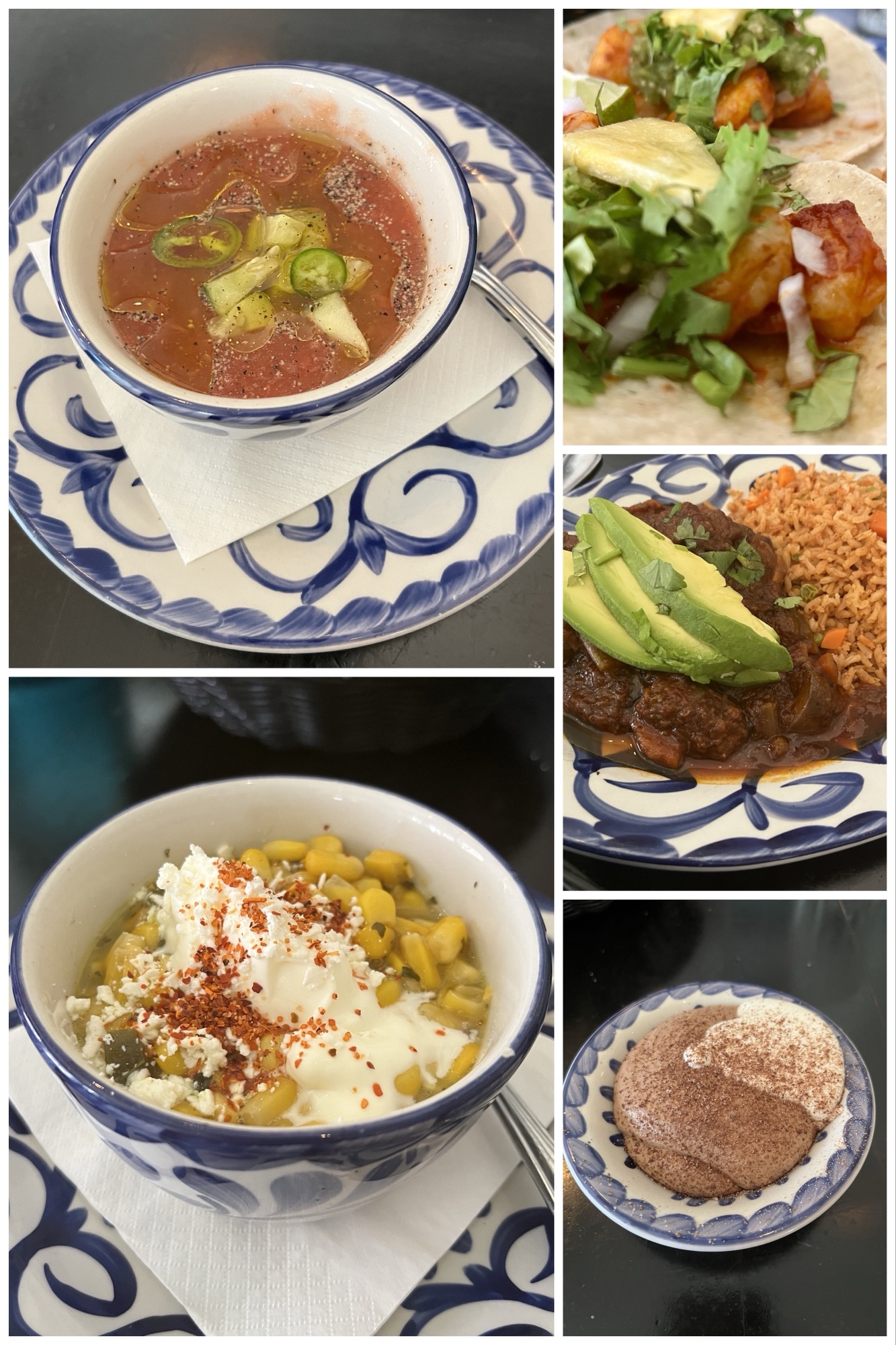
Thursday July 18th. We were coincidentally in the city during Toronto’s SUMMERLICIOUS event, so took advantage on our first day here of trying the prix-fixe lunch at Milagro Cantina on Mercer, in Toronto’s theatre district. The service was relaxed and friendly, with the owner checking in on every table during the meal, and the food and drinks were delicious. The owners’ Mexican heritage was evident in every authentic dish.
After lunch we made a quick stop at Penguin Random House, where Ted used to work, and had coffee with his successor as Director of I.T.
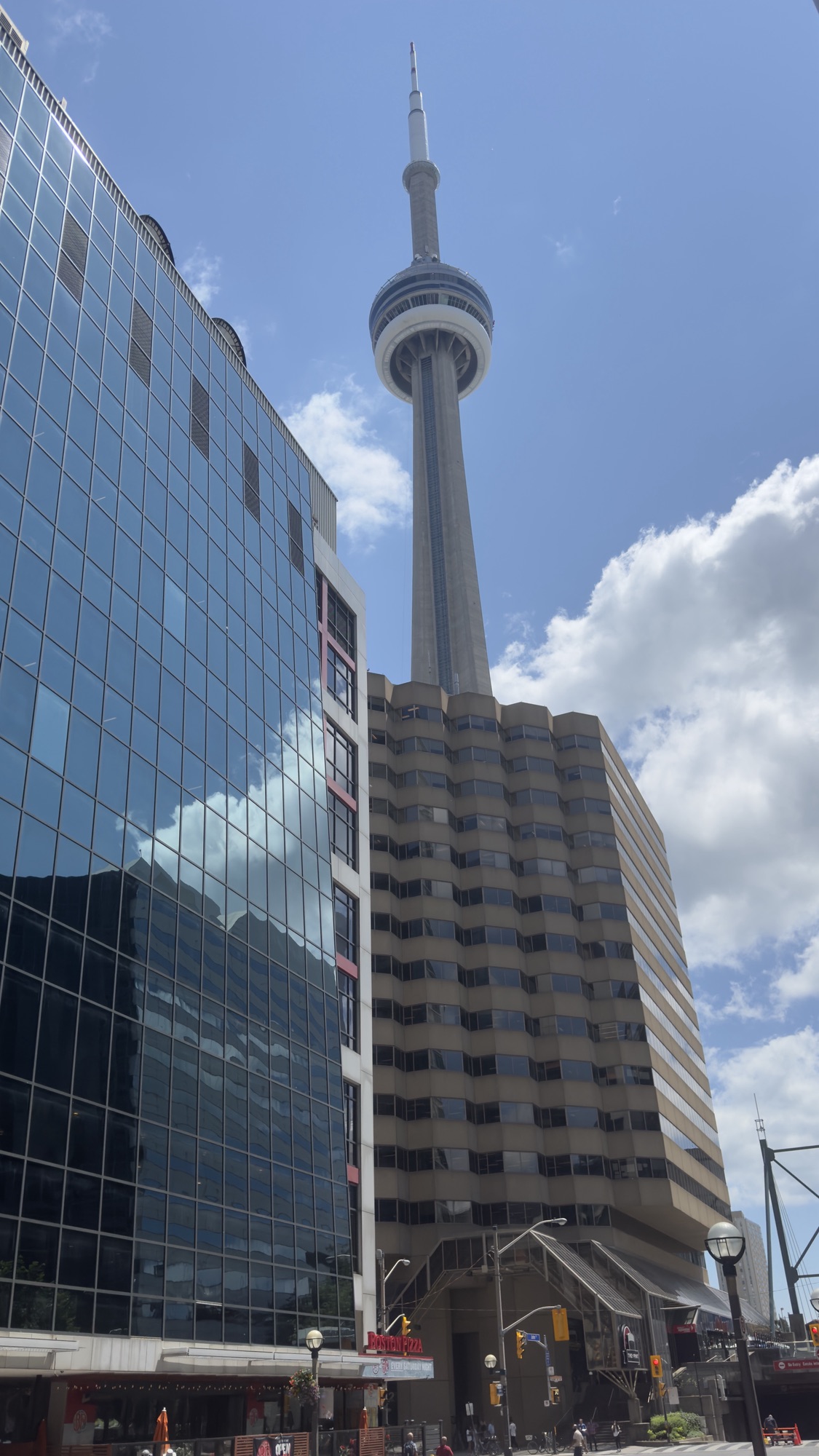
We couldn’t walk downtown without Ted snapping at least one photo of our first glimpse of Toronto’s famous CN Tower (peeking over the top pf the Metro Toronto Convention Centre). Ted can remember taking photos in 1973 of its construction – from the roof of his 4-storey apartment building miles away; that view would be completely obstructed by high-rises today … plus he’d probably get in even more trouble for being up on the roof.
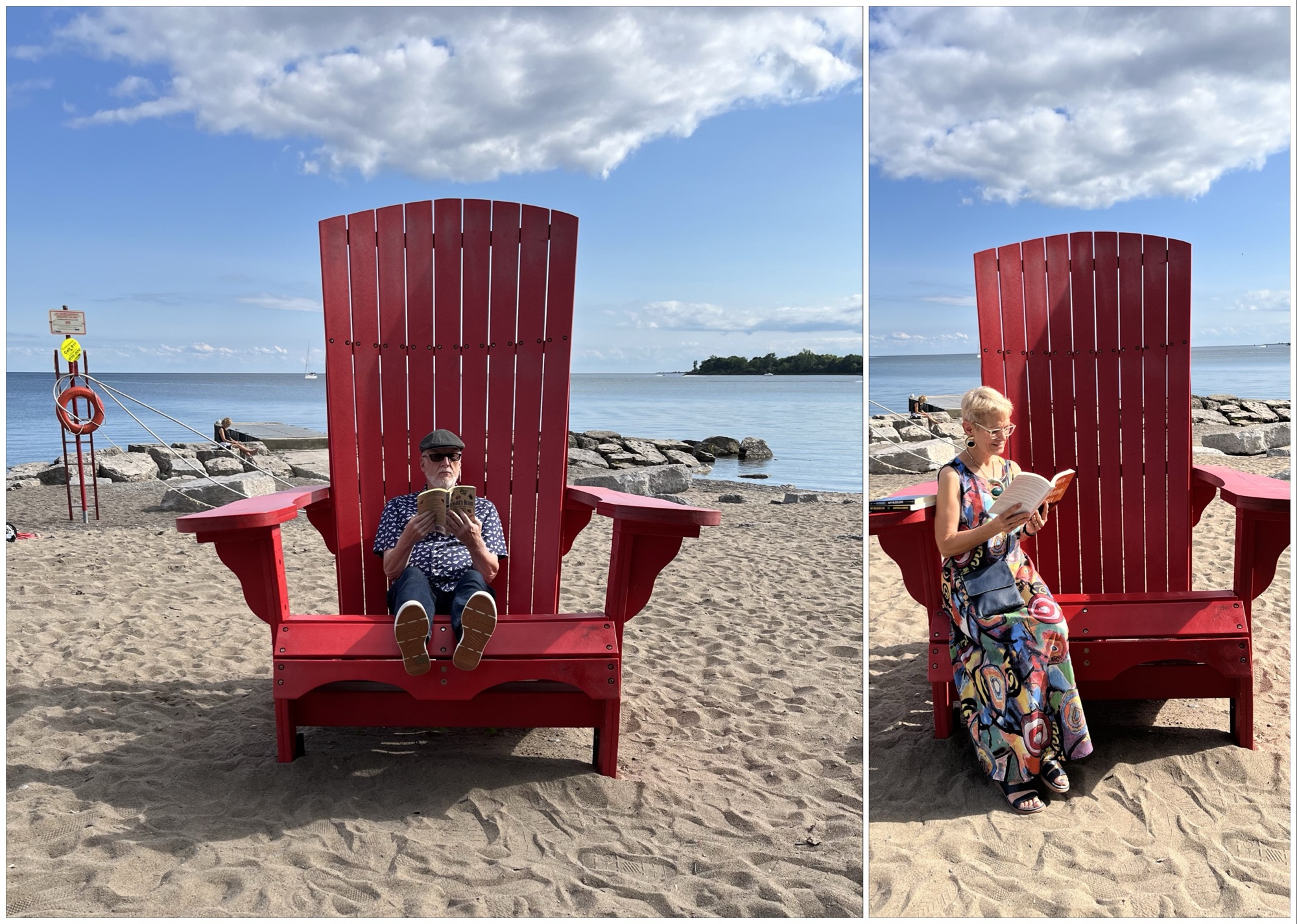
Our next planned event was our first dinner at our #1’s home, and a chance to reconnect with our daughter-in-law’s amazing vibrant grandmother, but we had some time before that to walk off our dessert and enjoy Toronto’s east end waterfront. Vancouver has Pacific beaches; Toronto has long stretches of Lake Ontario, and miles of shoreline boardwalk.
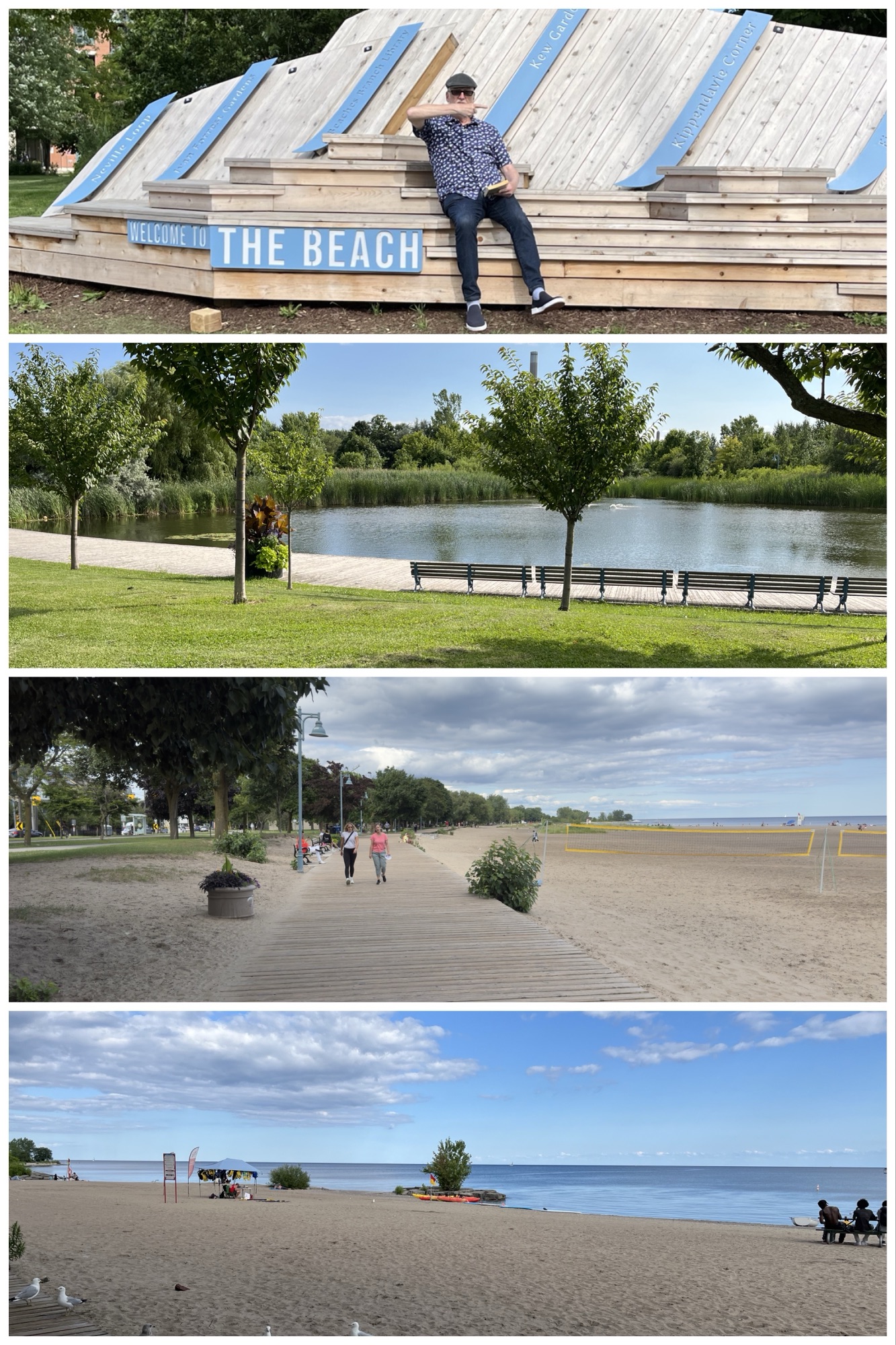
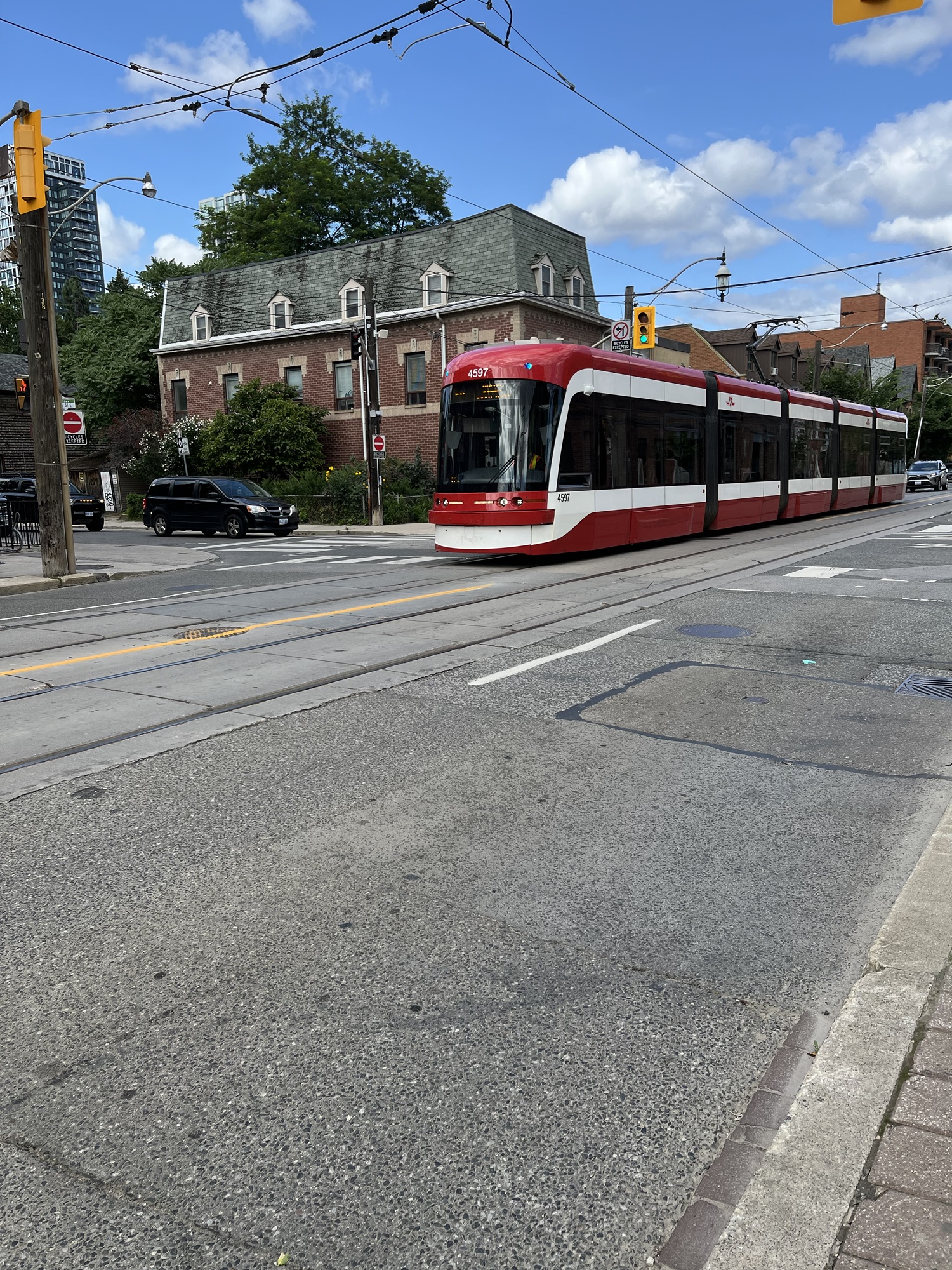
Getting to Woodbine Beach Park meant riding one of the city’s shiny red streetcars.
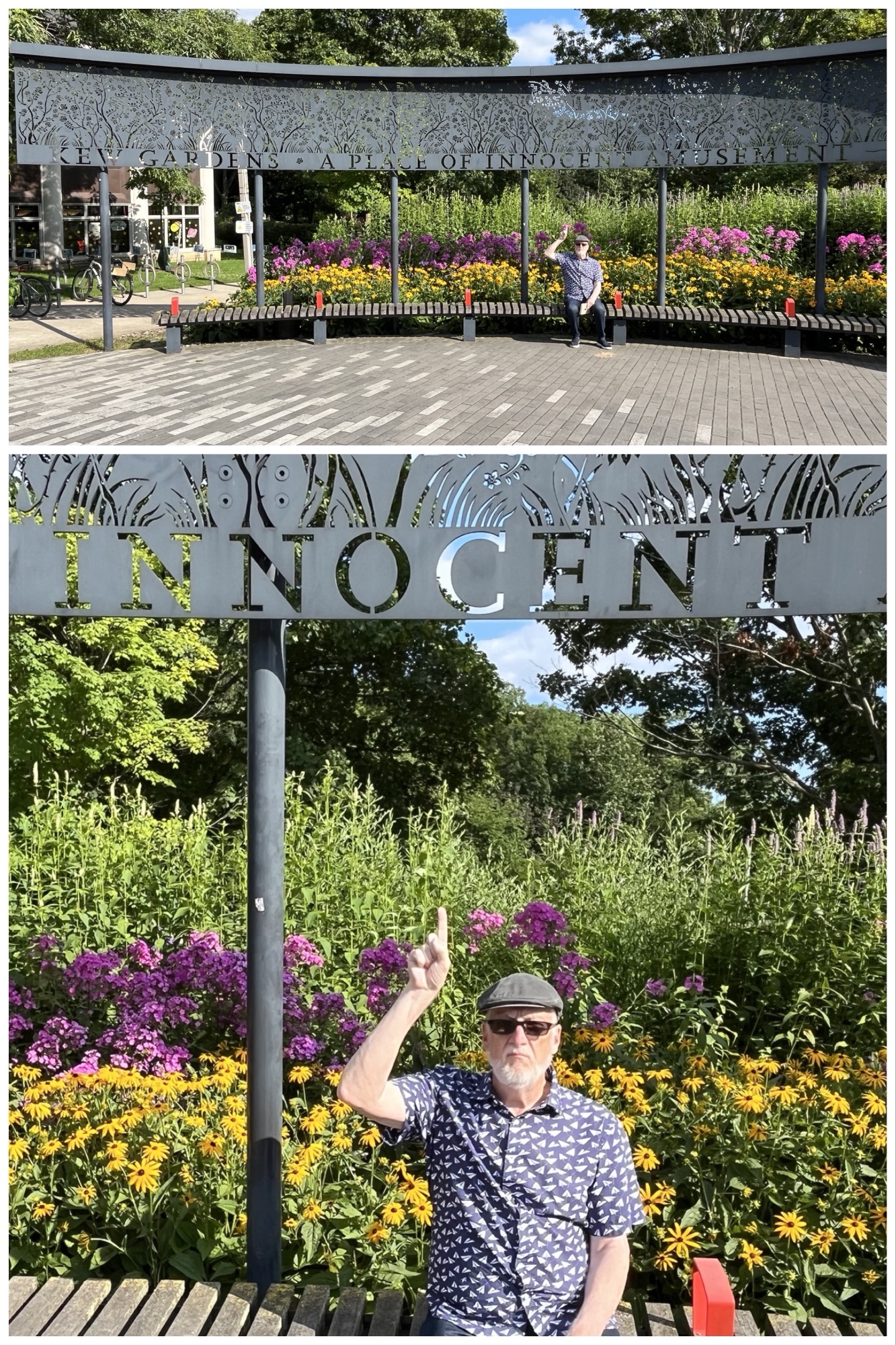
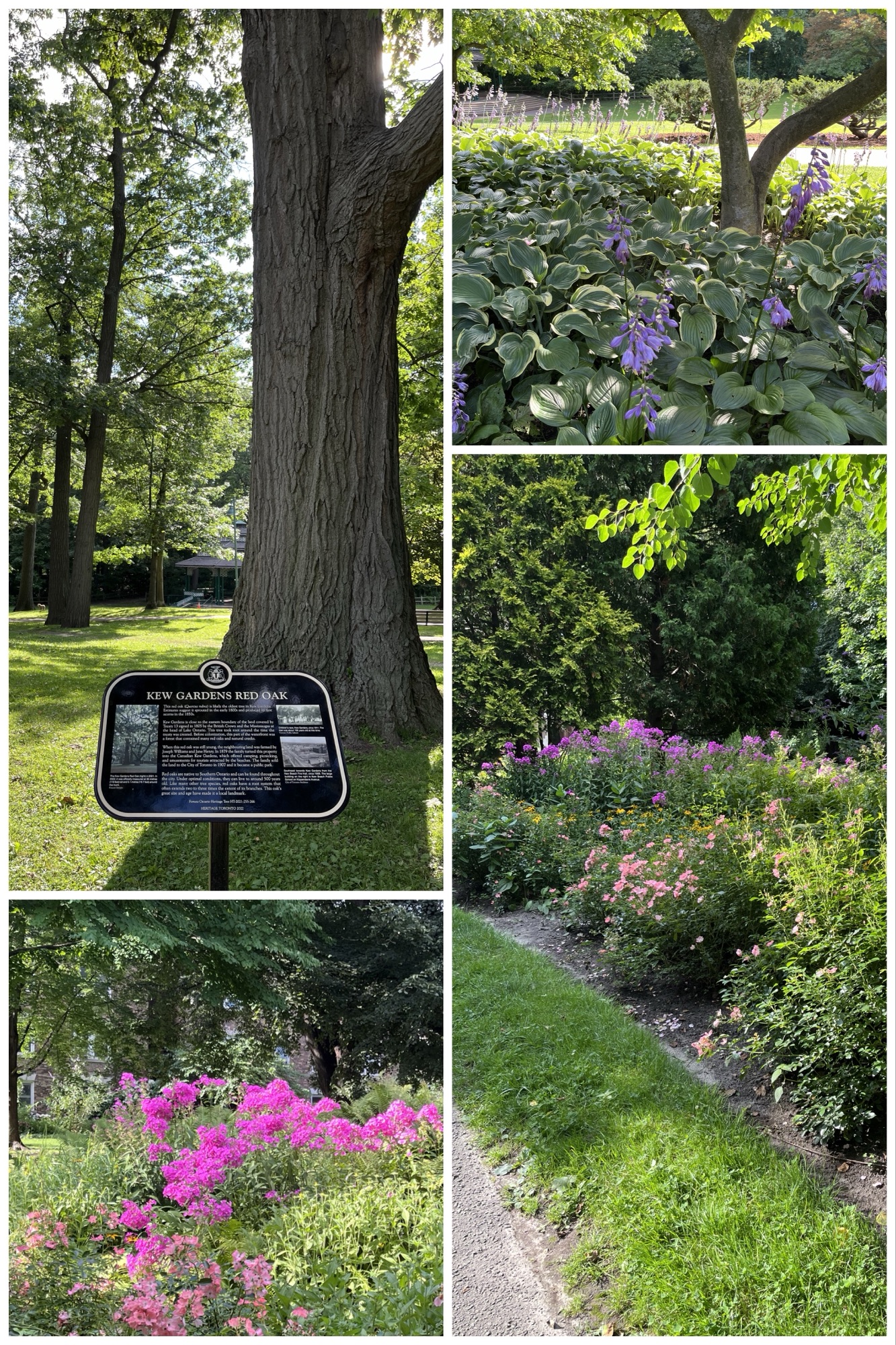
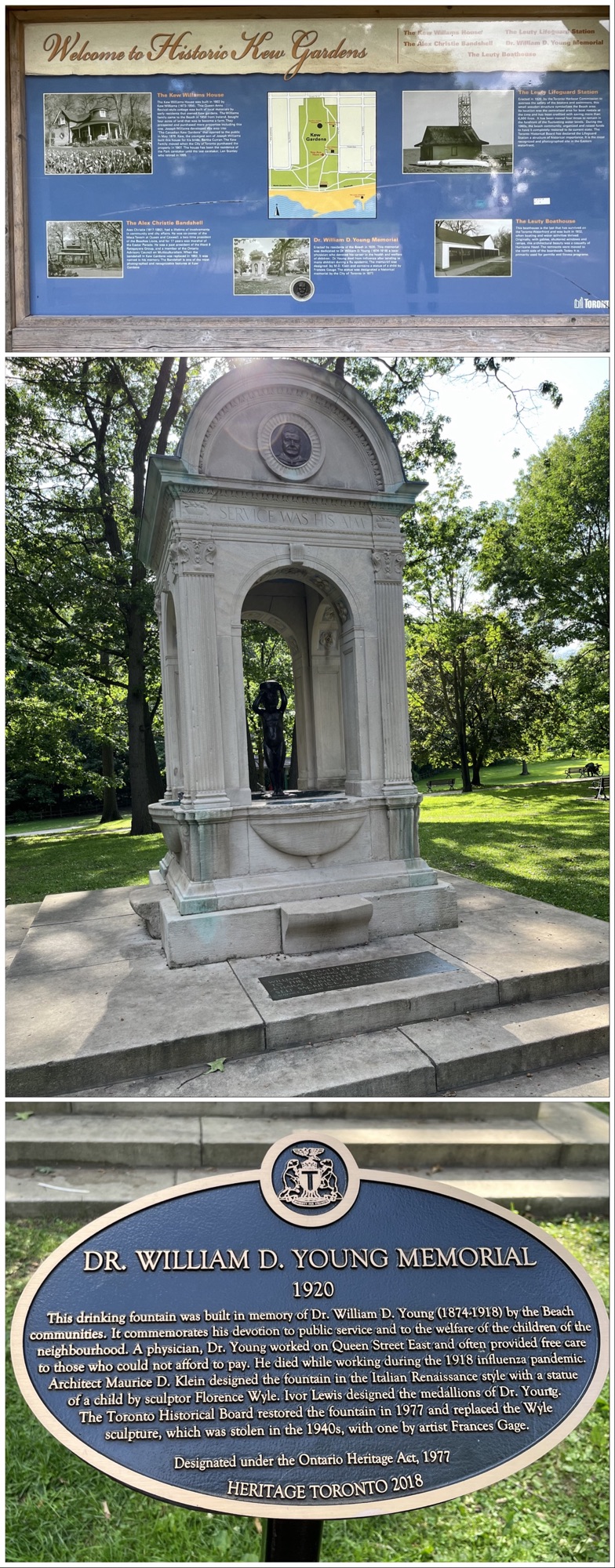
The next part of our route involved walking to the Main Street bus, through lovely Kew Gardens with its treed paths, beds of colourful flowers, and a memorial to Toronto Dr. William D. Young.
And finally … hugs!
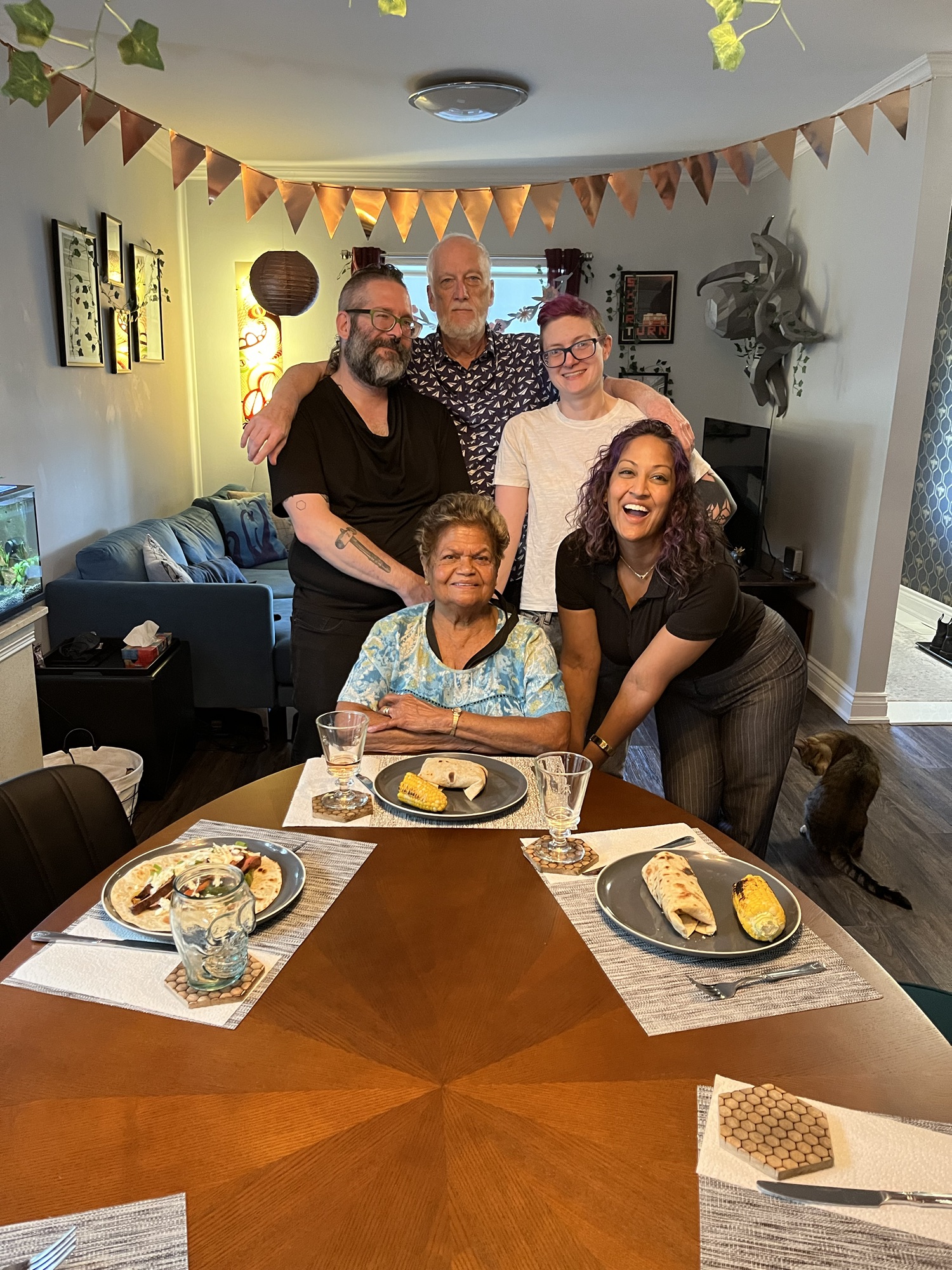
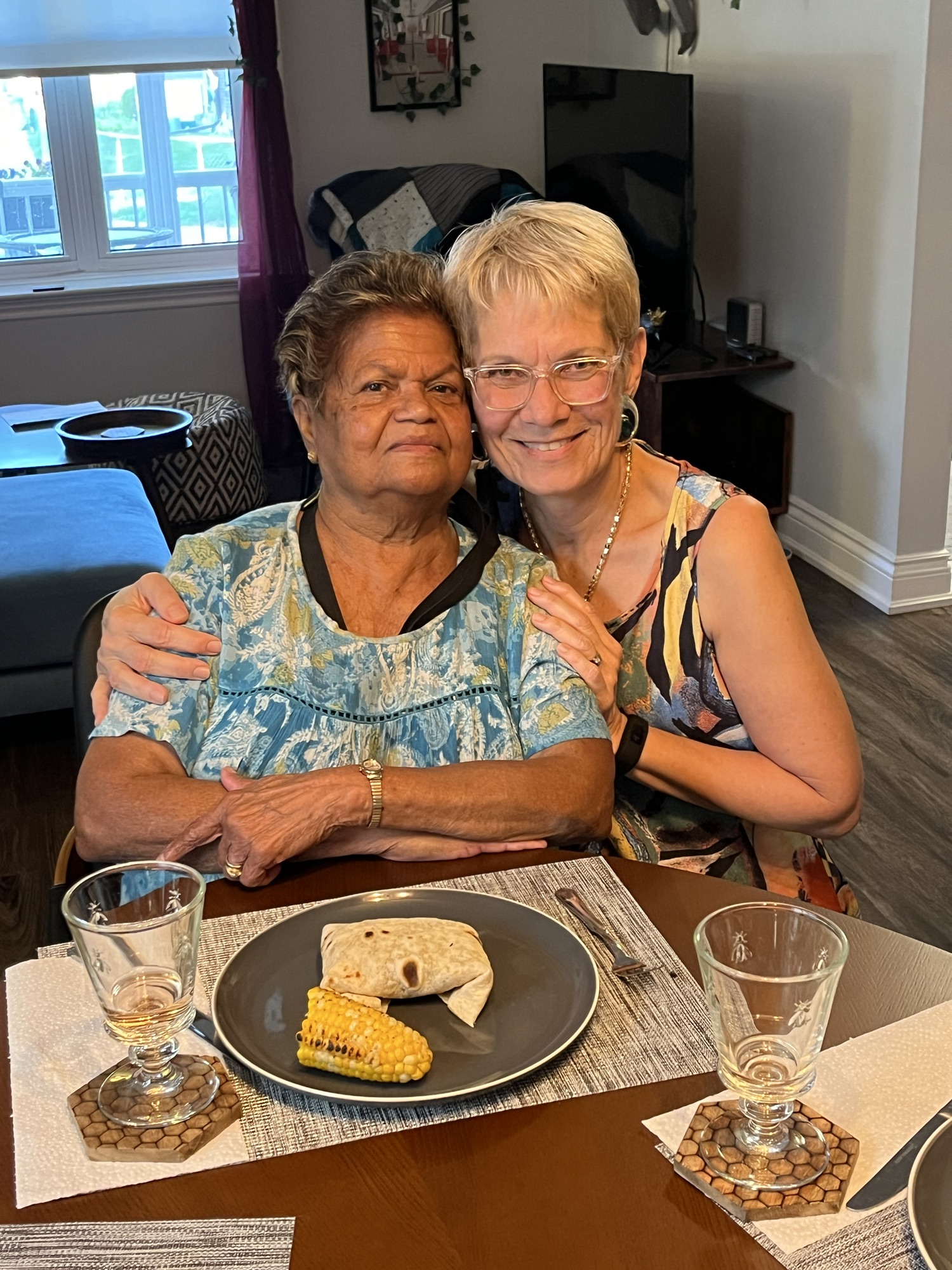
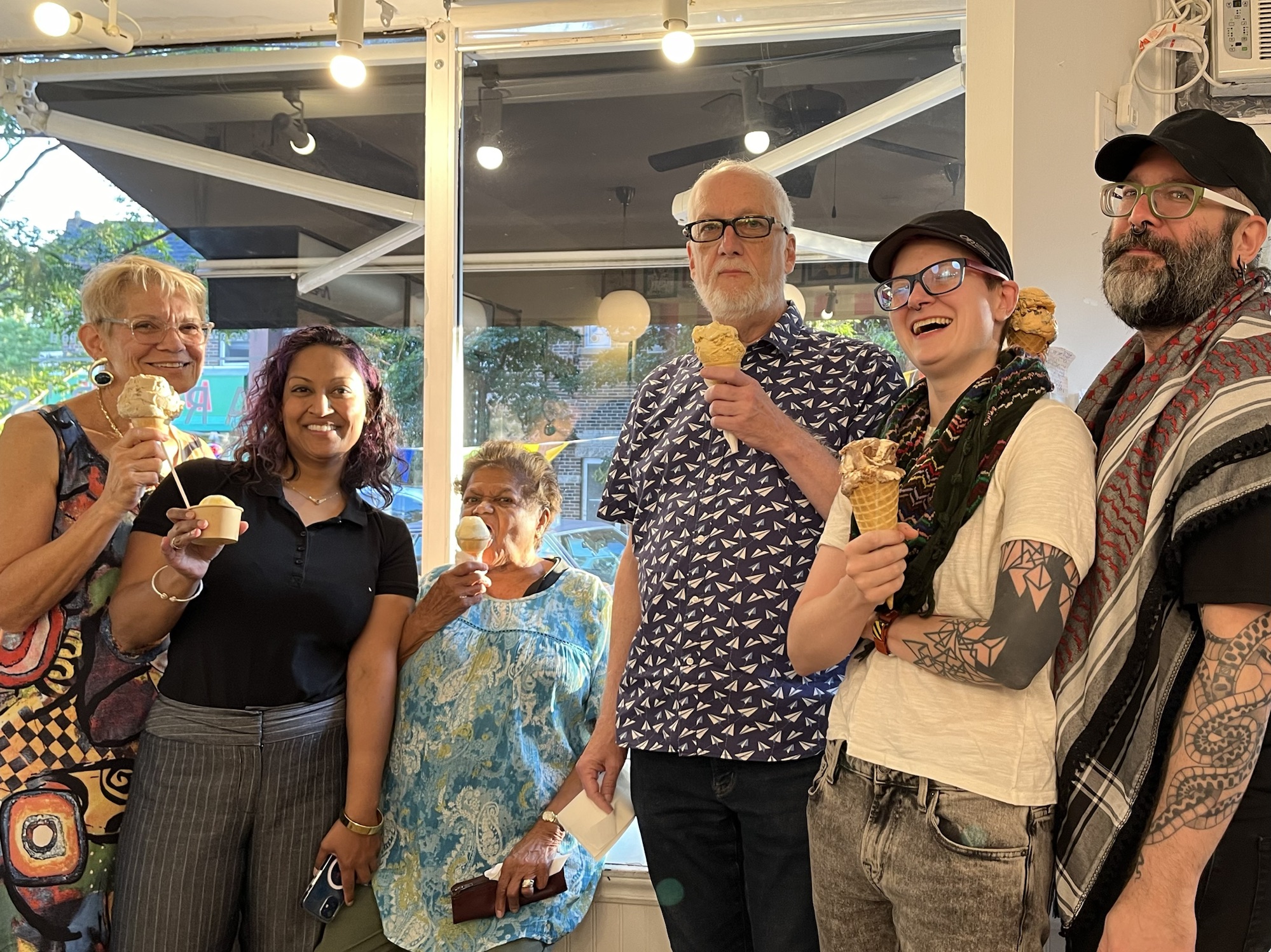
A fun family dinner deserves ice cream – from Carter’s Ice Cream parlour on Woodmount Avenue in Danforth Village.
Friday July 19th. I was really excited to see my cousins Marita and Grant and their spouses Steve and Donna. Unfortunately, at the last minute Donna wasn’t able to join us. Marita and Grant, the children of my dad Wilhelm Mandau’s first cousin of exactly the same name (!) were a huge part of my childhood. Their parents were my brother’s godparents; my parents were the same for Grant. When the boys’ birthdays were celebrated, Marita and I always created our own private girls’ birthday celebration. The parties at Marita and Grant’s parents’ home are some of my fondest memories: my Aunt Erika’s amazing food, my Uncle Willy’s gentle hospitality, and their large loving extended family that was so unlike my much smaller one.
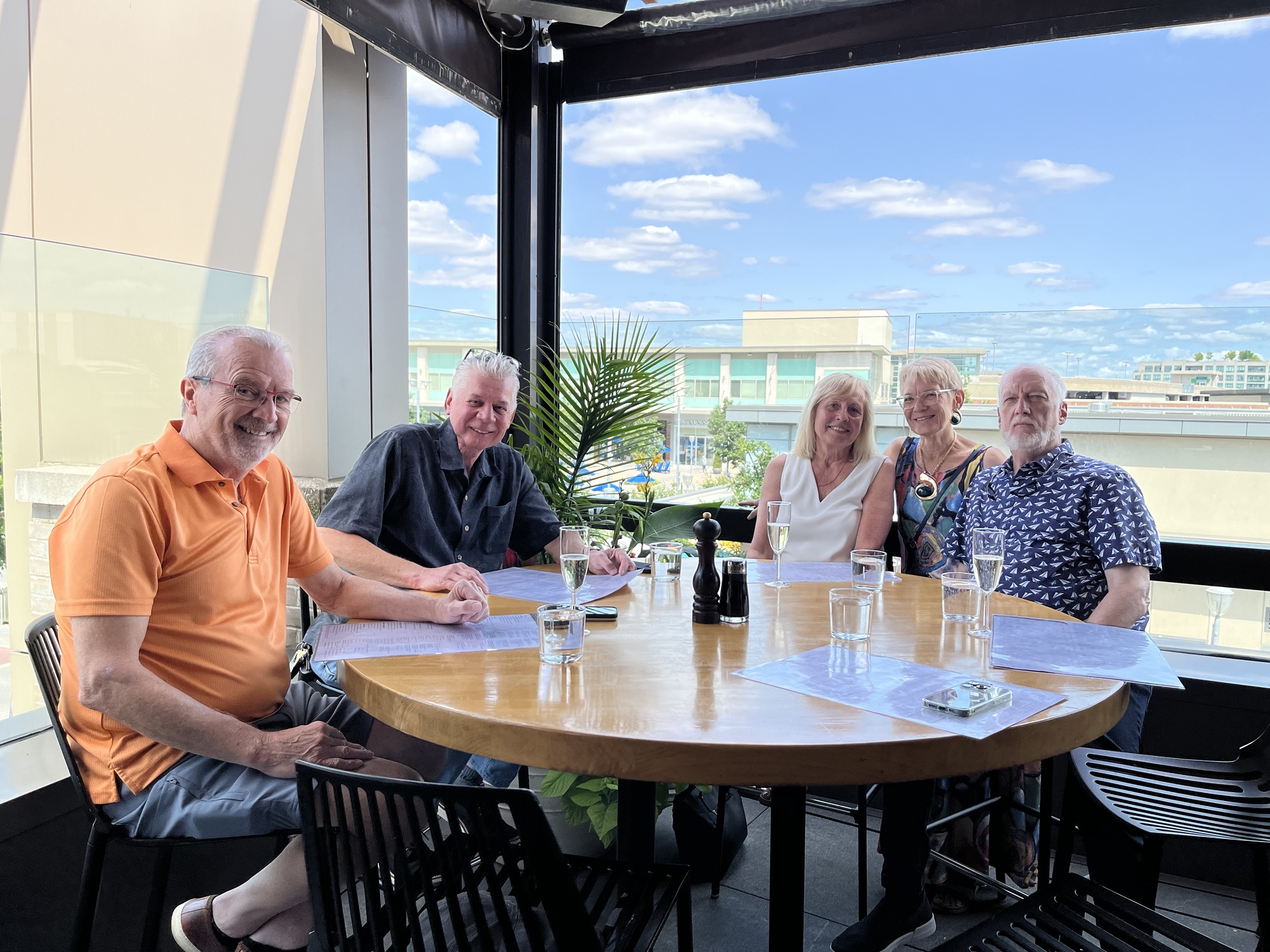
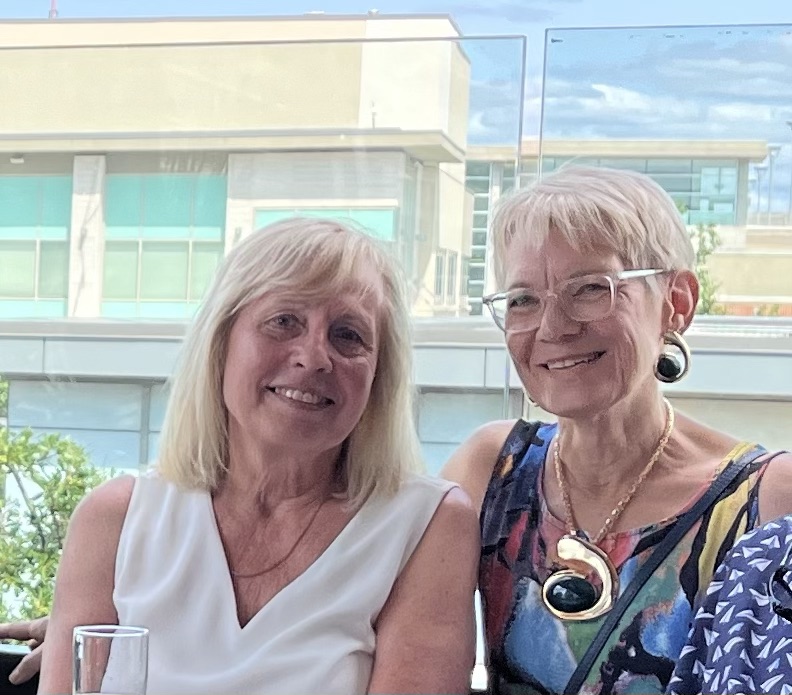
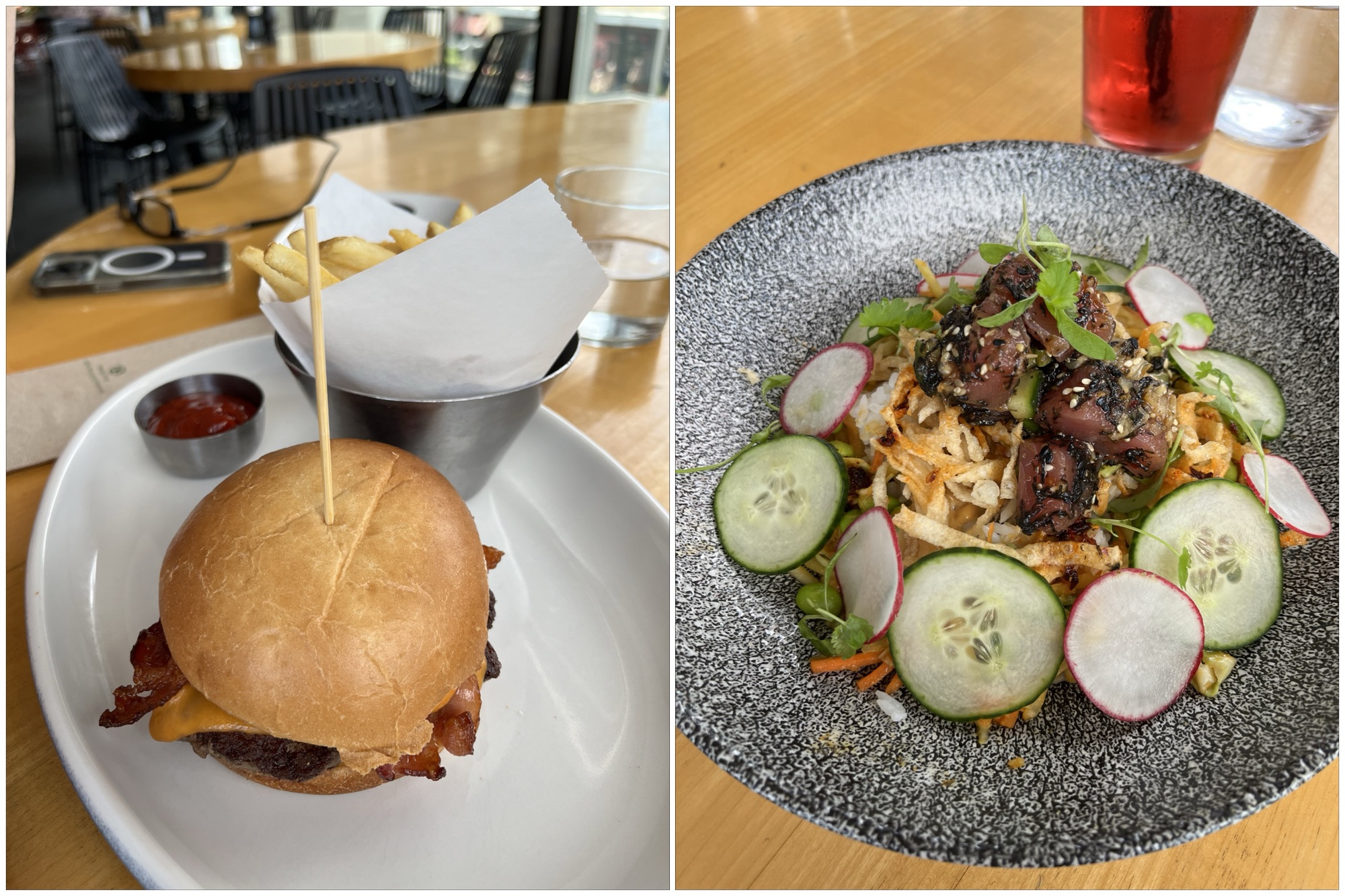
Marita and Steve generously offered to pick us up at the Don Mills Subway Station, and we then met Grant at JOEY, where we were greeted at the hostess station with “Would you like a complimentary glass of Prosecco?” Silly question.
We had a wonderful time catching up and sharing food, memories, travel stories, and laughter. We absolutely HAVE TO do this more often.
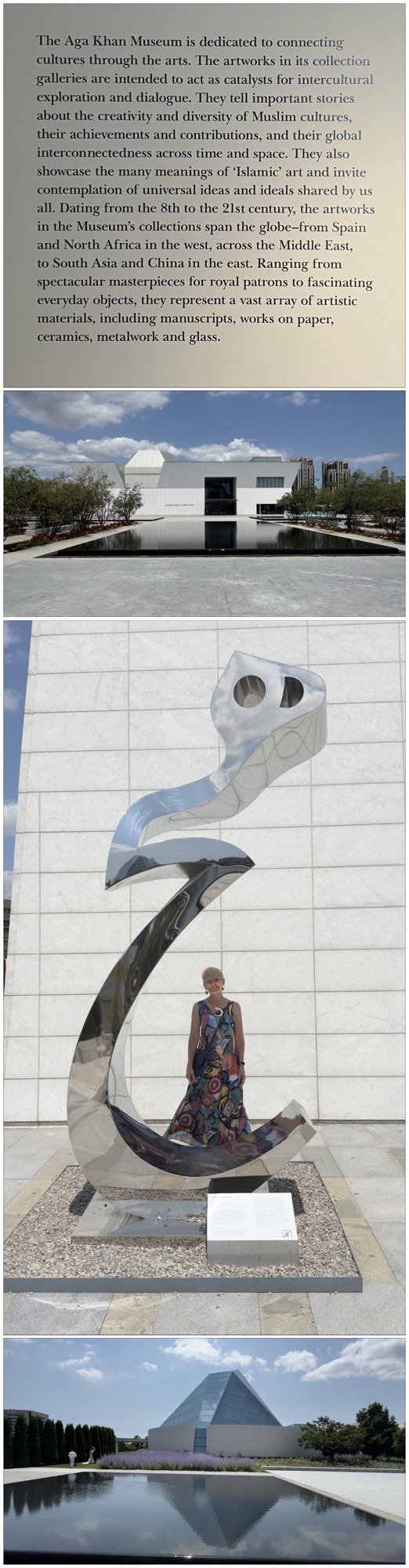
After lunch, Ted and I had a couple of hours to do something “touristy”. Steve and Marita very kindly dropped us off at the Aga Khan Museum, a place we somehow never found the time to visit when we lived in Ontario.
The building is very plain, but the clean lines and reflecting pools create a beautiful exterior space.
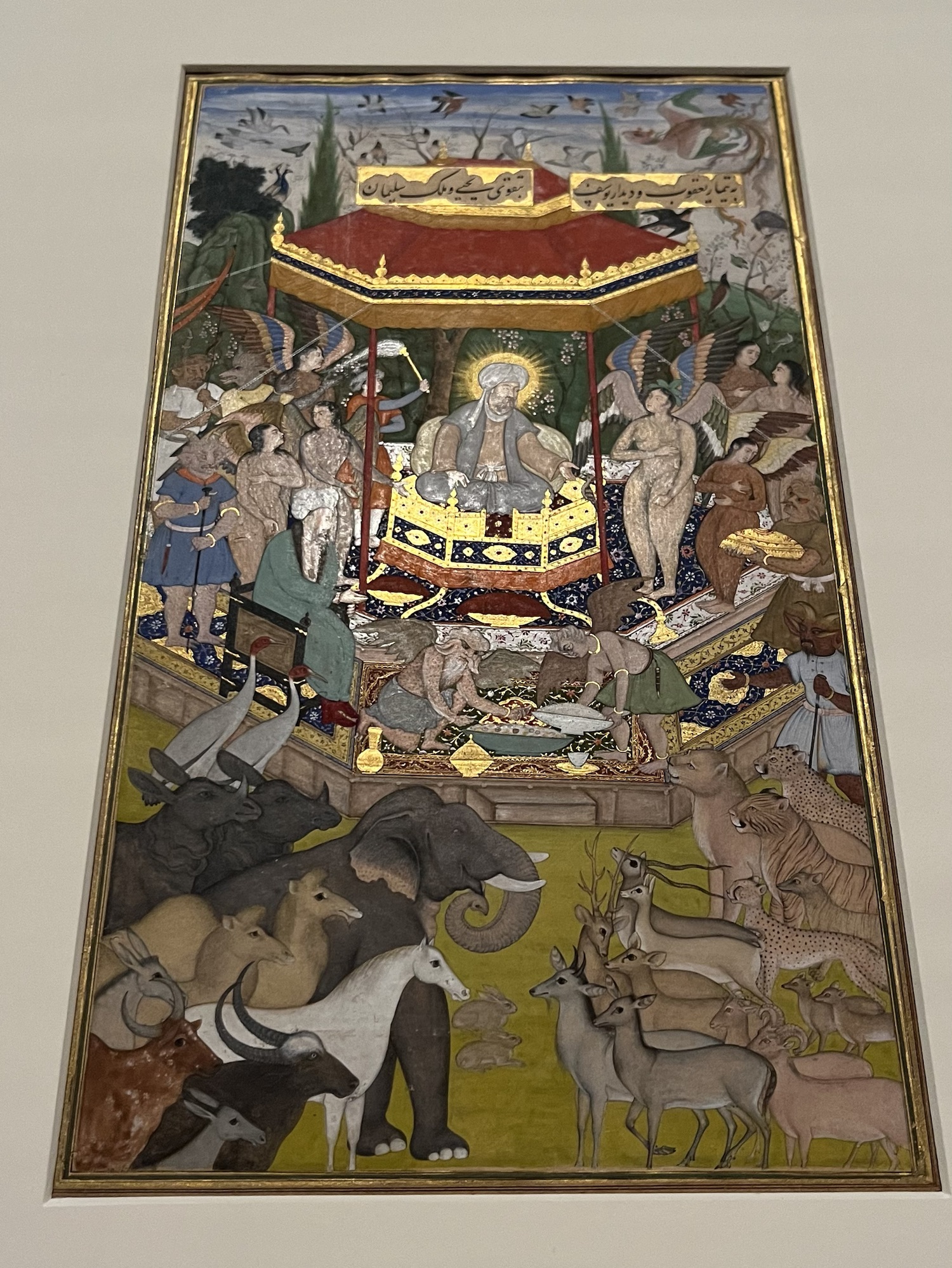
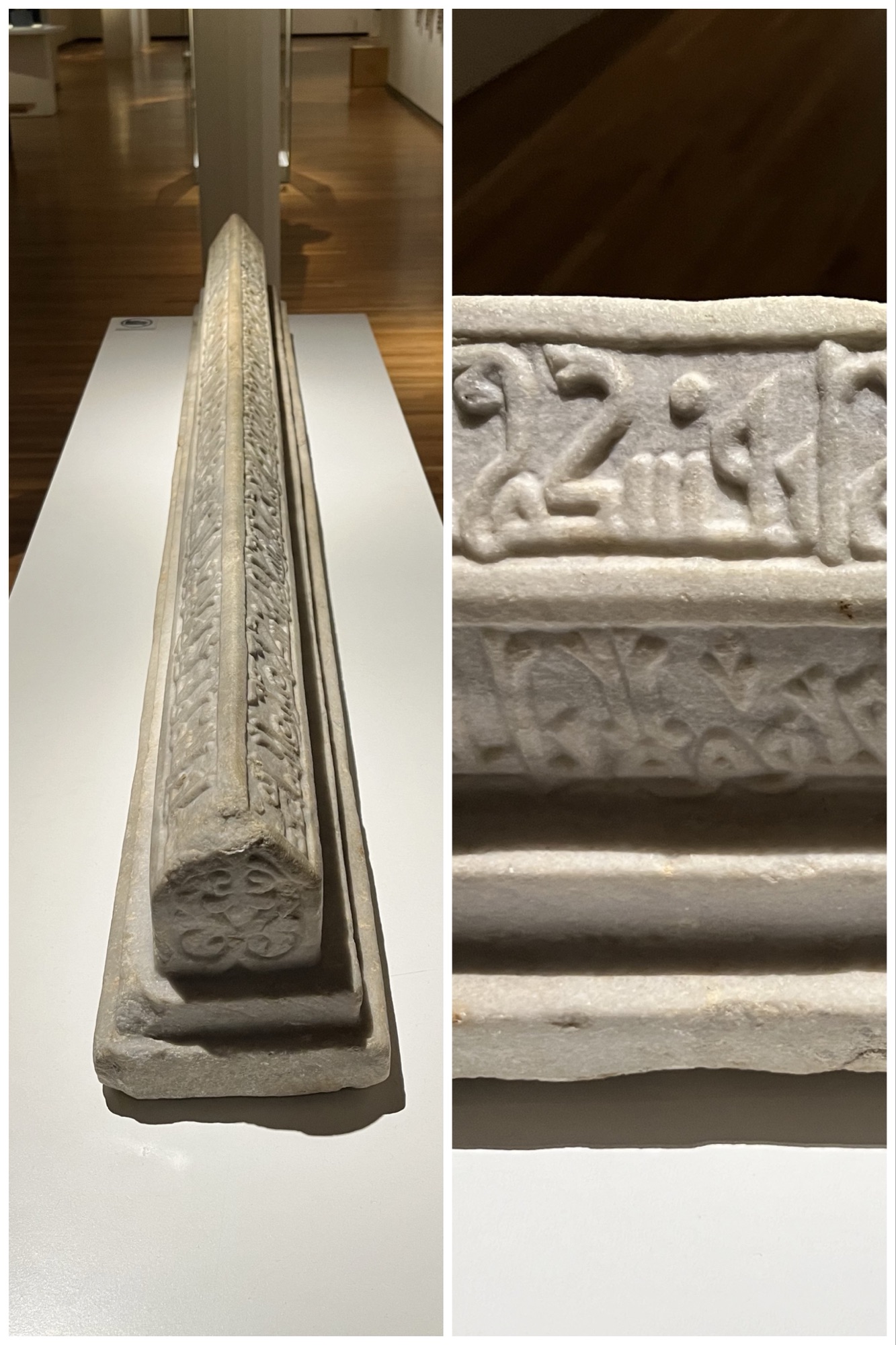
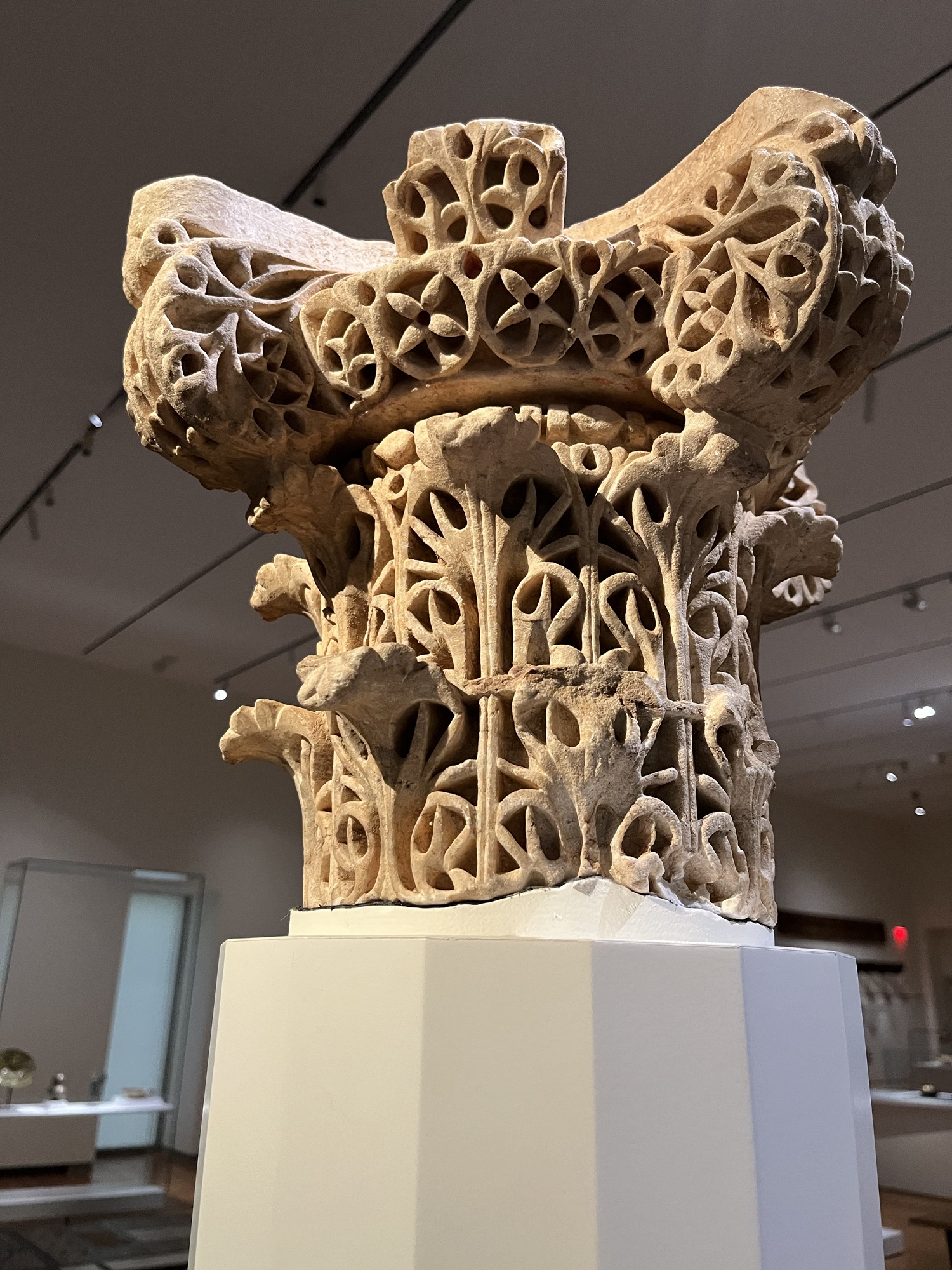
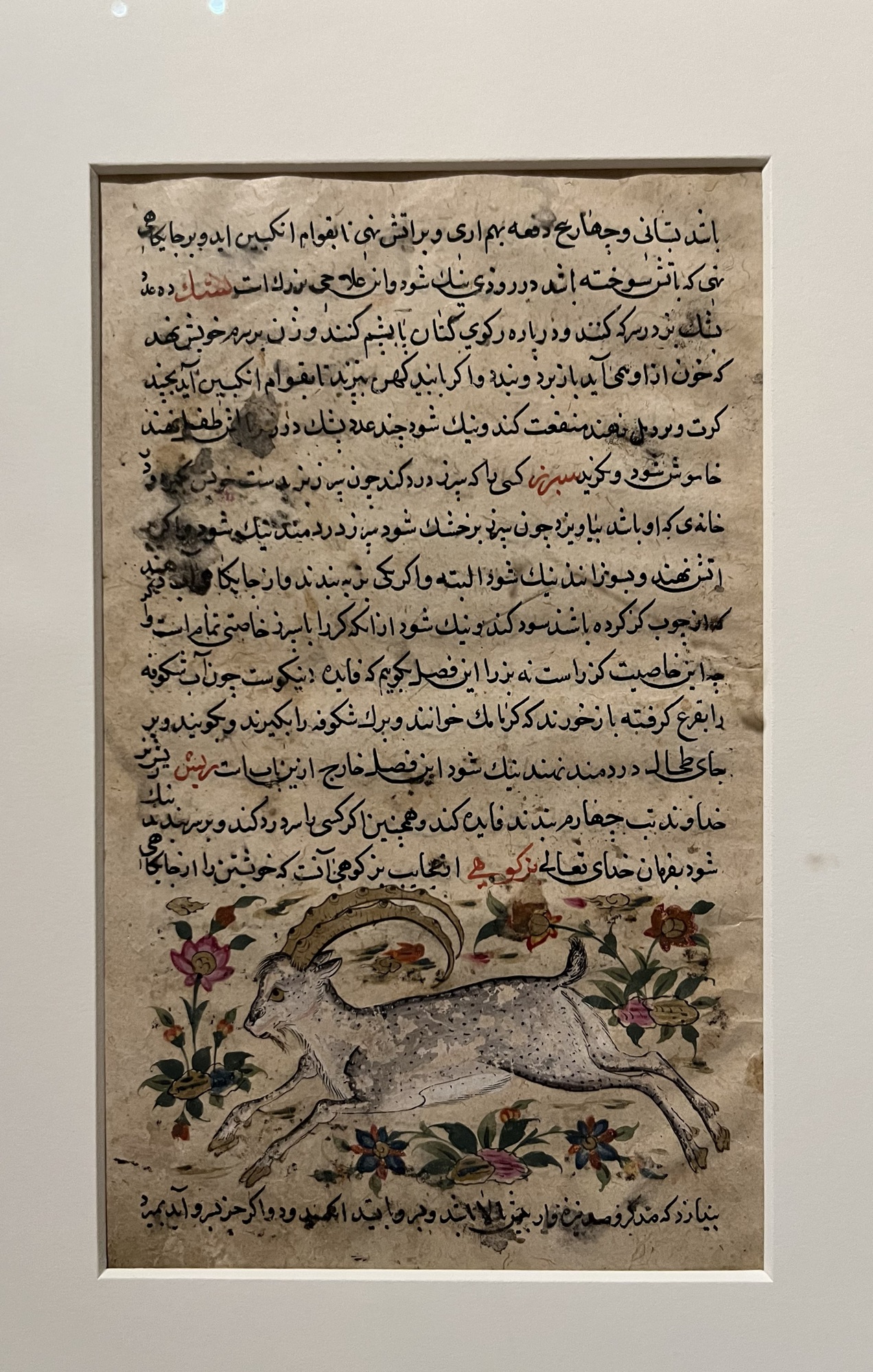
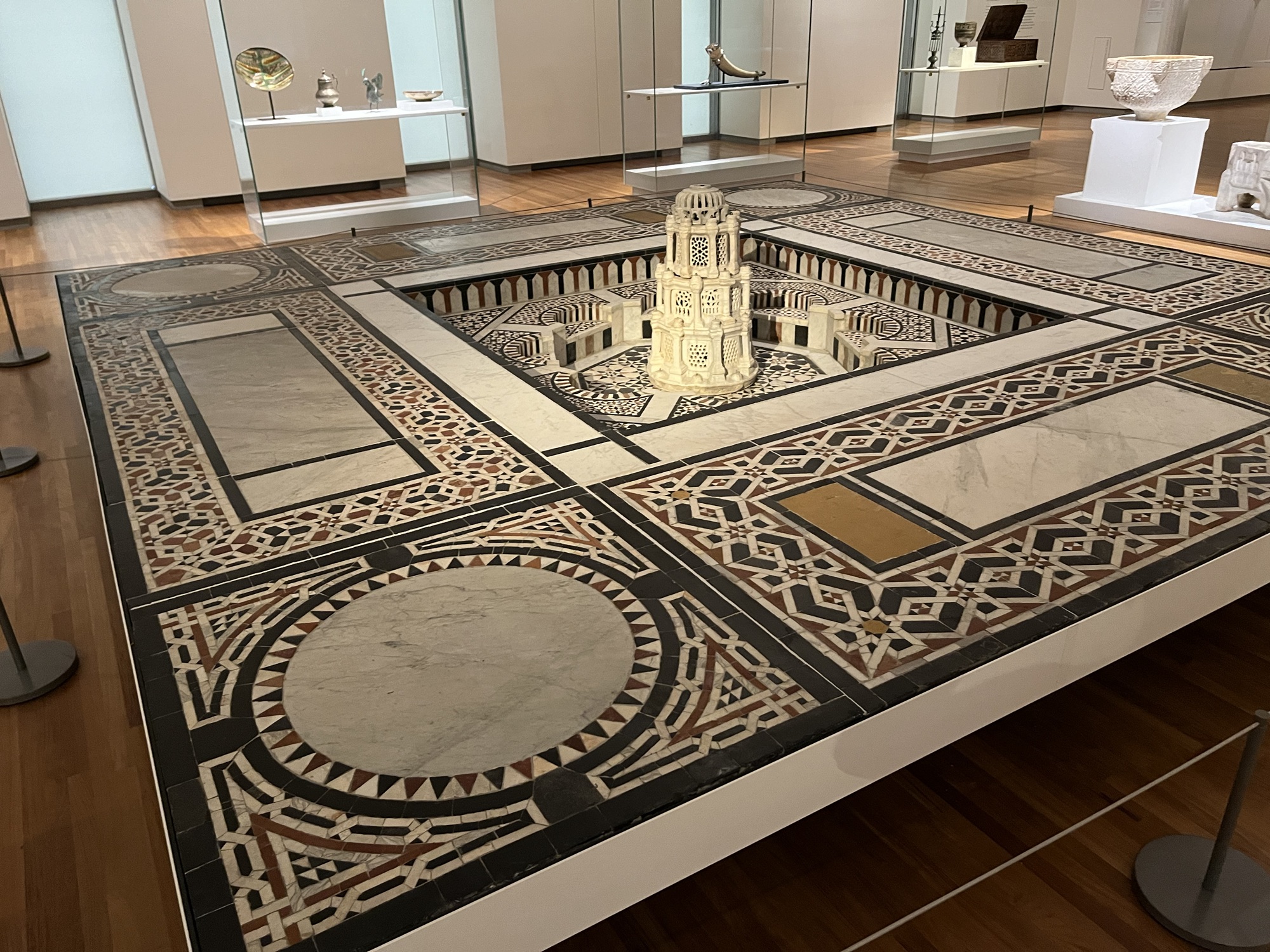
Inside, the gallery lines are equally clean, with exhibits widely spaced to allow them to be viewed from all angles without crowding or distraction. There were beautifully illuminated manuscripts, Qur’ans, books, ceramics, tiles, woven rugs, and carved pieces from Iran, Turkey, India, Iraq, Egypt, Syria, Tunisia, Spain and more – representing the pre-Columbian Islamic world. I tried to photograph a few of my favourites to look back on later.
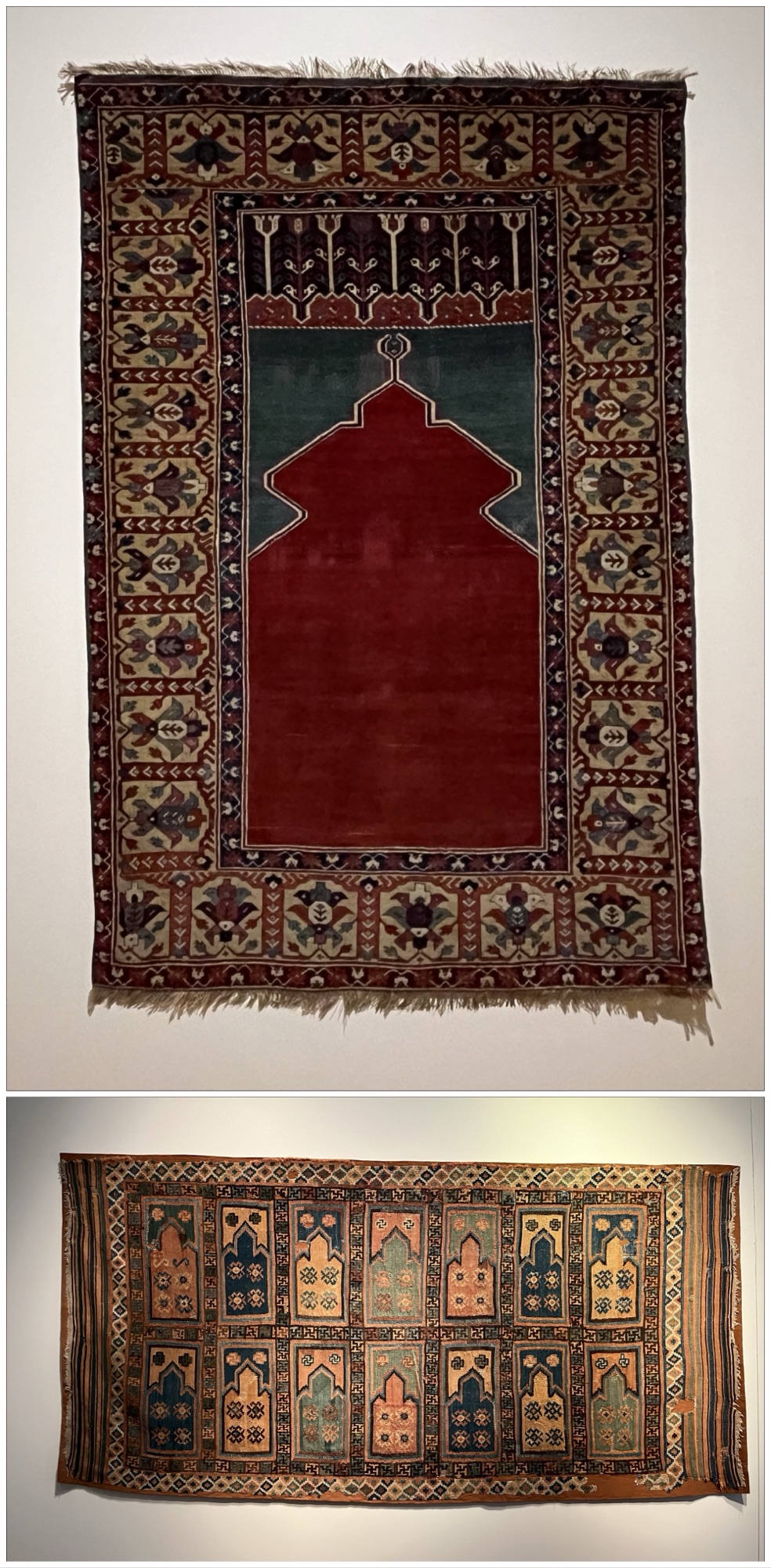
In Muslim societies, prayer rugs are used to create a ritually pure space on the ground for performing devotions. This one features a large arched space in the central field, representing a mihrab, an architectural niche found inside mosques to mark the direction of prayer.
Bottom: a multi-niche Prayer Carpet (saff), Western China, Xinjiang, 19th century, designed for many individuals (in this case 14) to kneel on during communal prayers in a mosque.
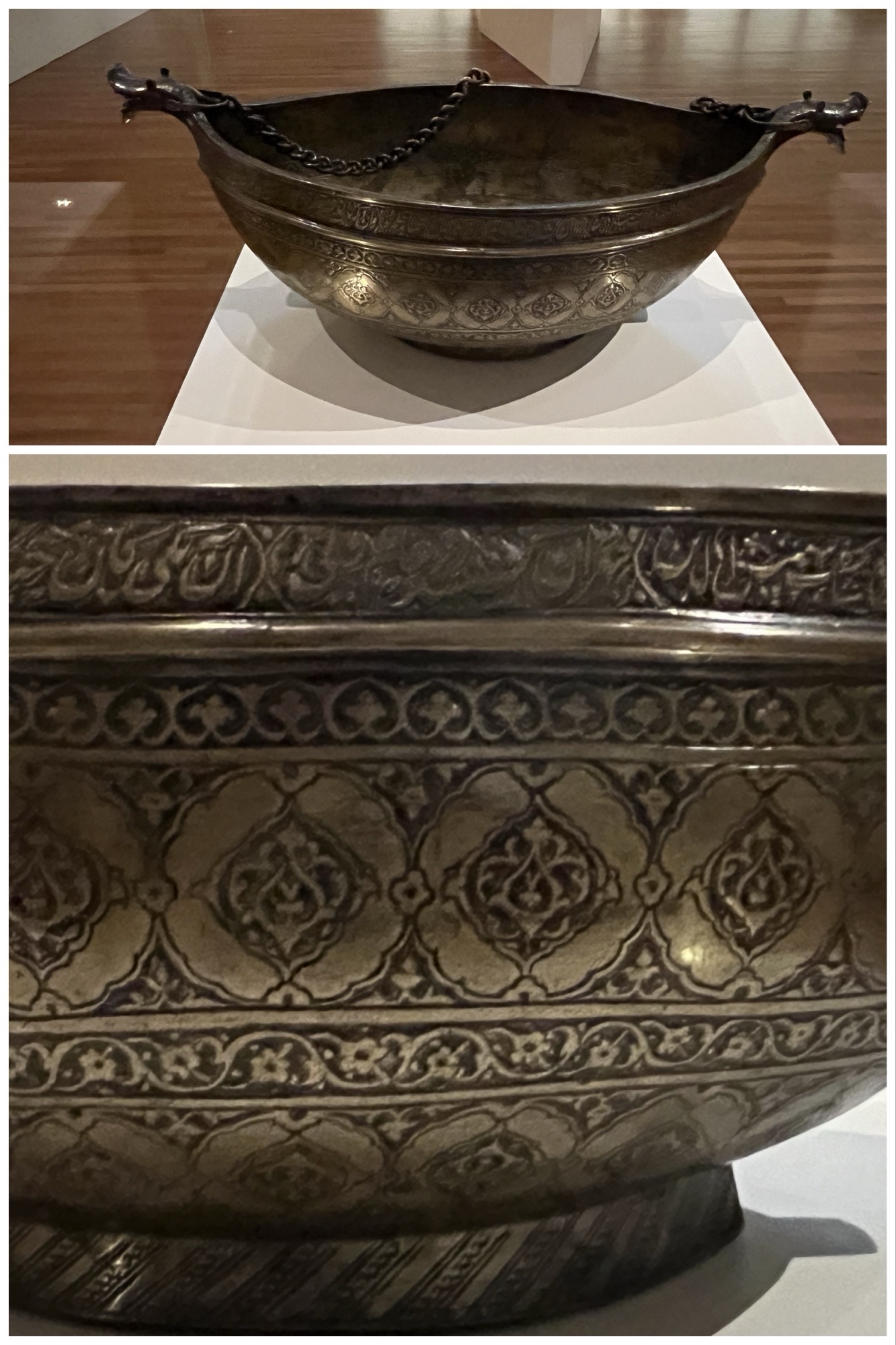
The kashkul is a boat-shaped container used in the Islamic period as a “begging bowl” by dervishes to collect donations. In this example, the kashkul ends in two dragon-headed terminals, a popular motif in Iran from the 14th century.
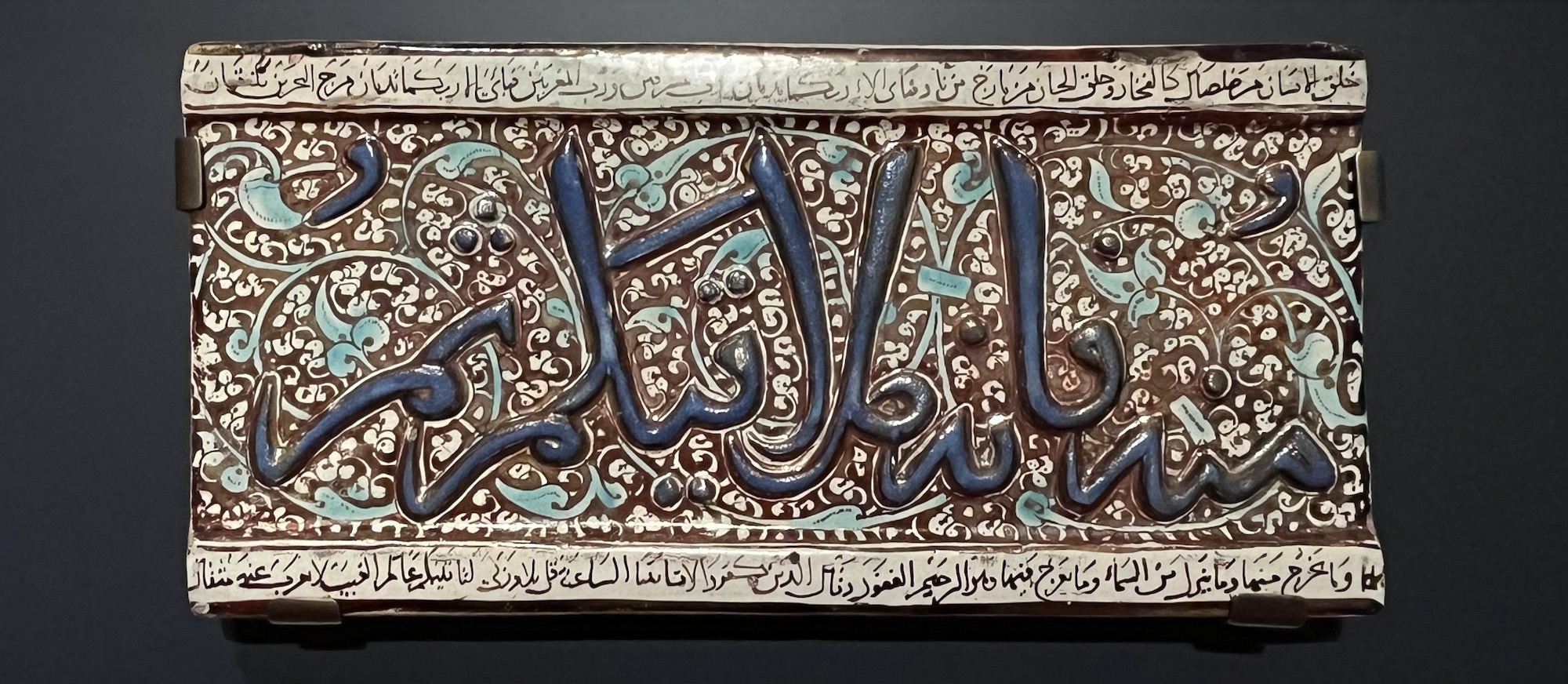
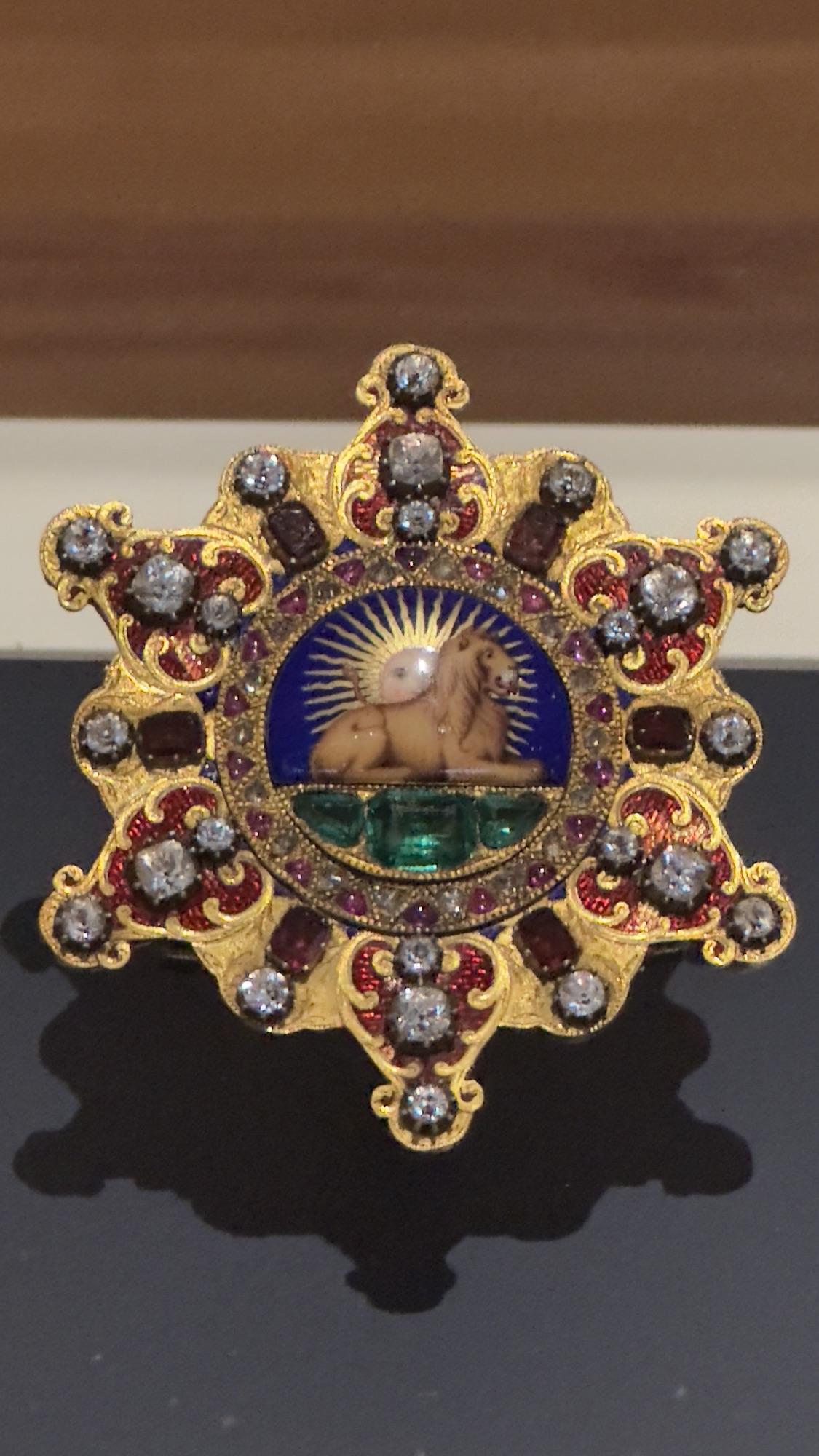
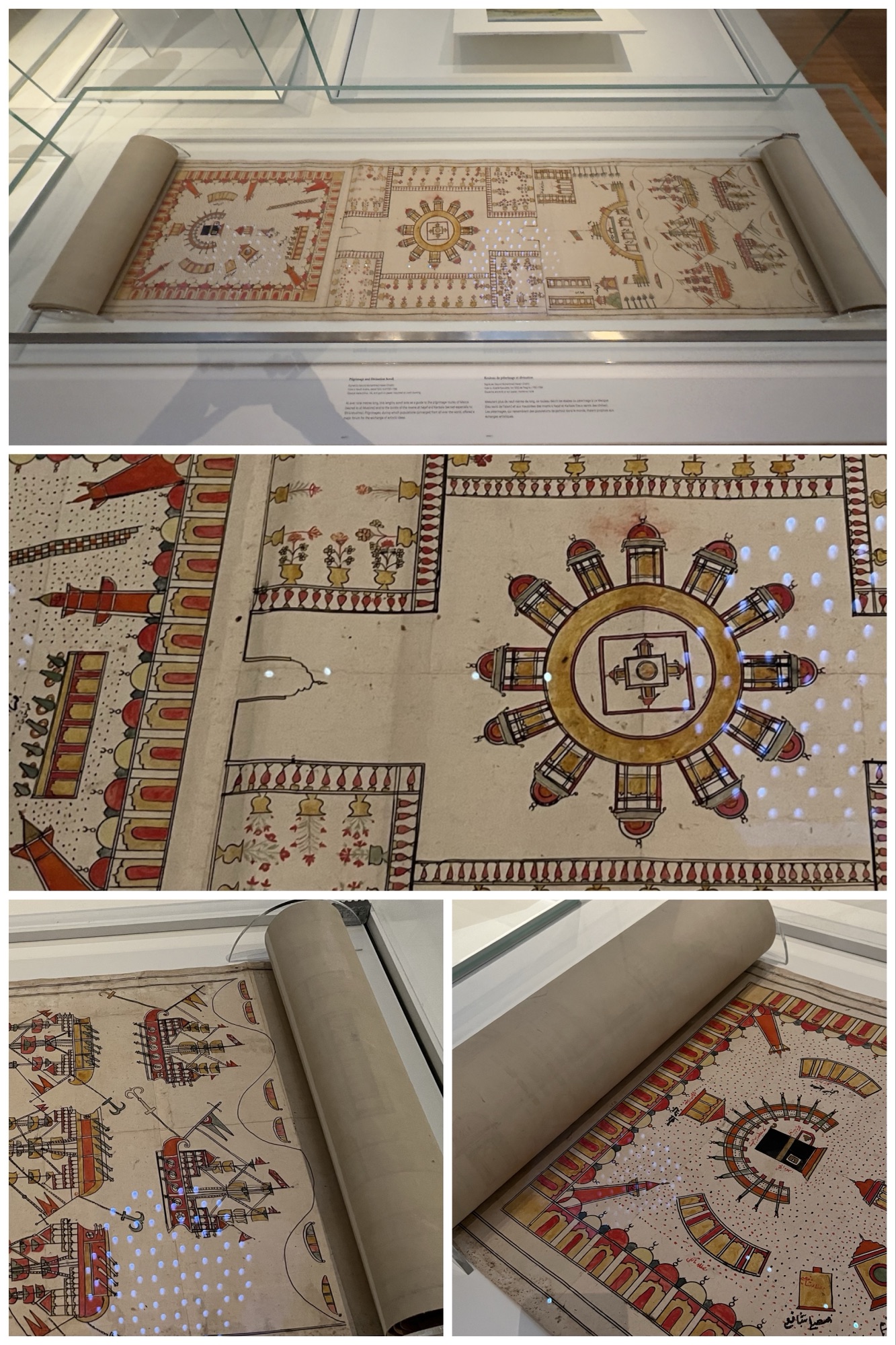
India or Saudi Arabia, dated 1202 AH/1787-1788.
At over nine metres long, this lengthy scroll acts as a guide to the pilgrimage routes of Mecca (sacred to all Muslims) and to the tombs of the imams at Najaf and Karbala (sacred especially to Shia Muslims). Ted and I couldn’t help but think of the Bayeux tapestry when we saw this scroll.
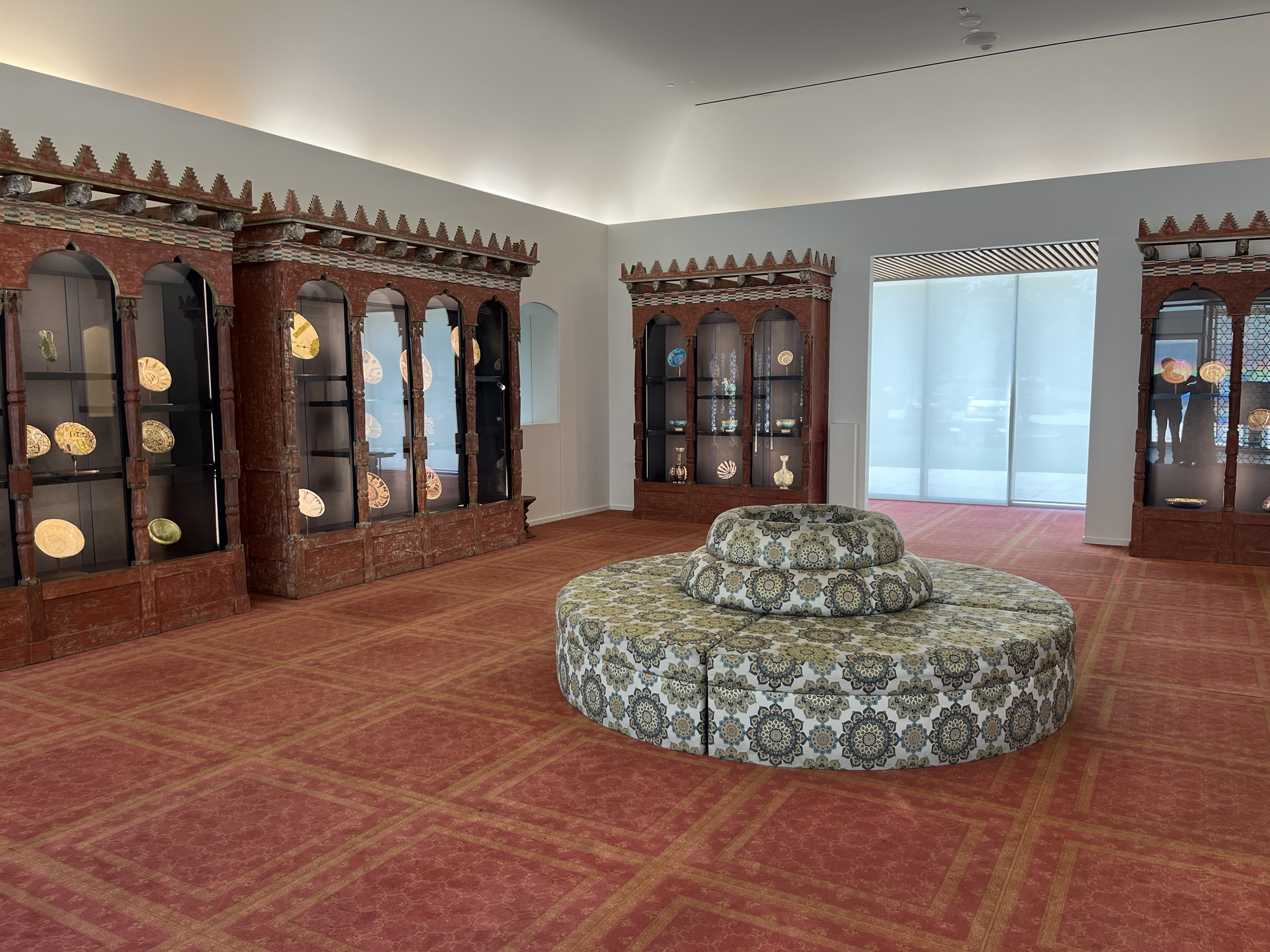
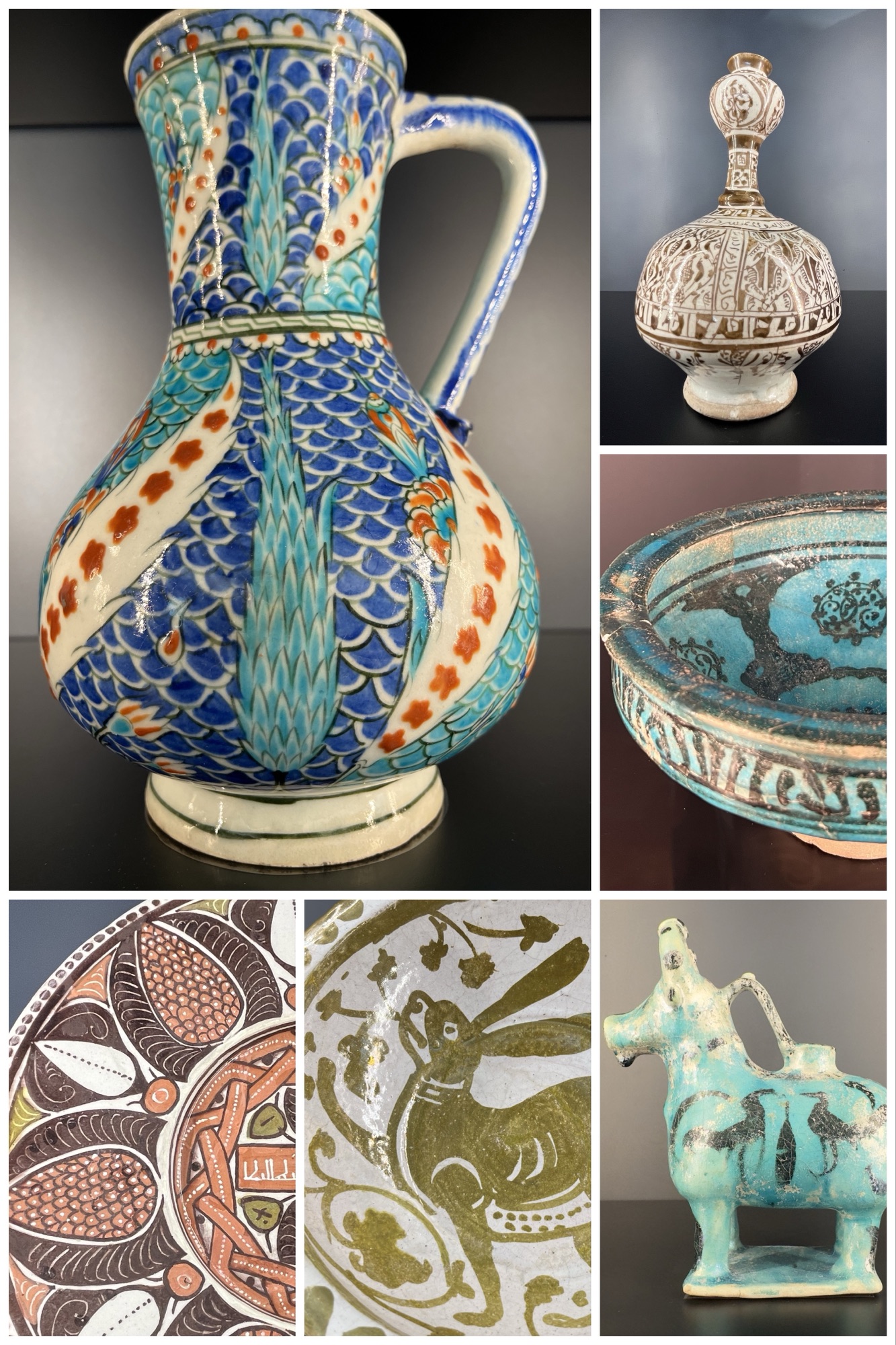
The museum also houses a porcelain room which contains 3 cabinets of items collected personally by Prince Sadruddin Aga Khan, and donated to the museum after his death by Princess Catherine Aga Khan, who requested that the ceramics be displayed as they had been in a room at the Château de Bellerive outside Geneva.
On the second floor of the museum was a temporary exhibit called LIGHT: Visionary Perspectives. Until recently, I wasn’t a big fan of these kinds of esoteric “immersive” exhibits, but I got so much joy from Yayoi Kuzama’s Infinity Mirrored Room at the Guggenheim in Bilbao Spain Episode 517 this past April that it opened up a whole new appreciation for this kind of art.
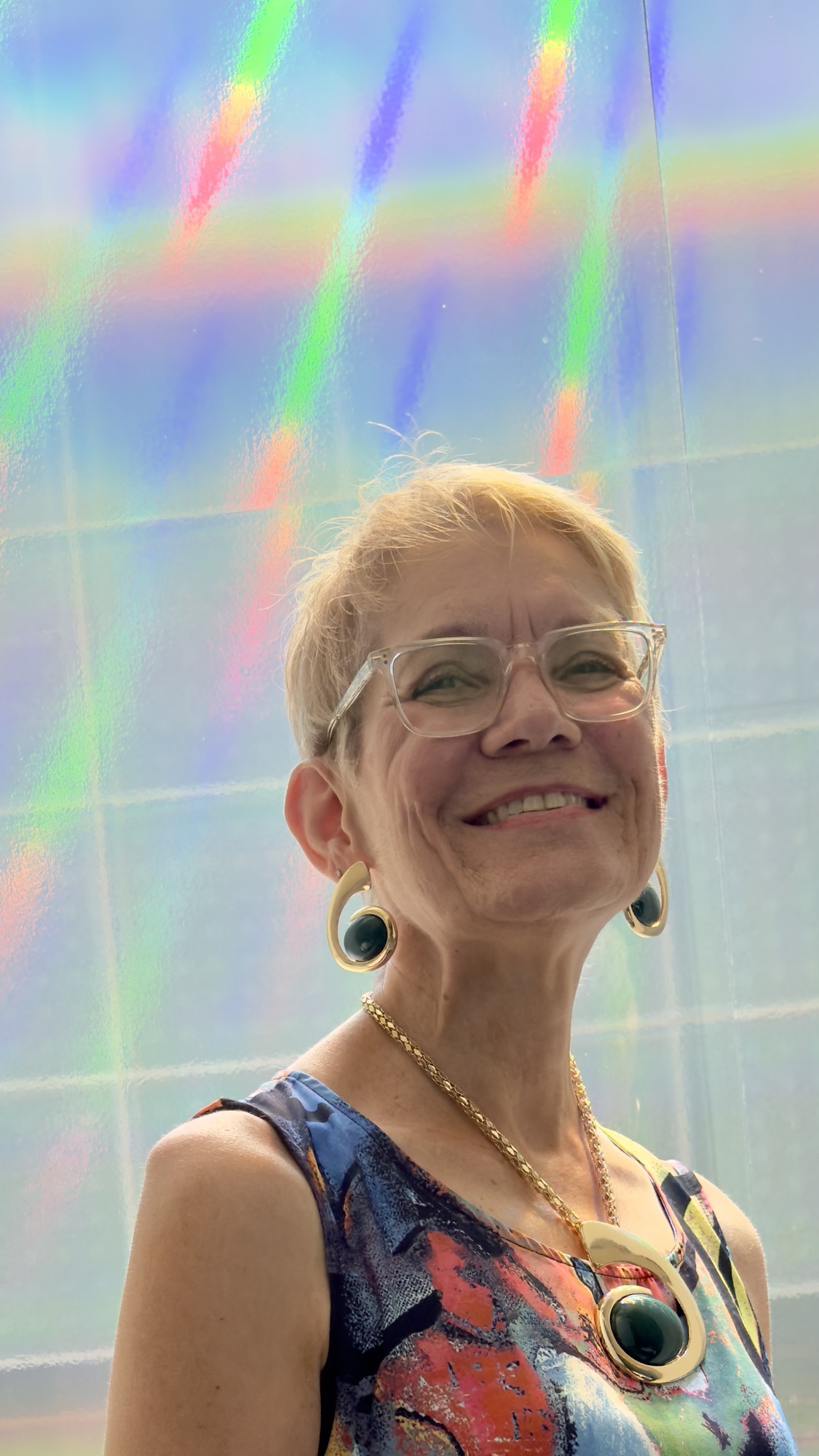
One of the installations involved “wrapping” the museum’s entire atrium with a geometrically patterned semi-transparent film that refracts light. Depending on time of day and light intensity, the rainbow effect changes, making the “exhibit” ever-changing. Who can help but smile when surrounded by rainbows?
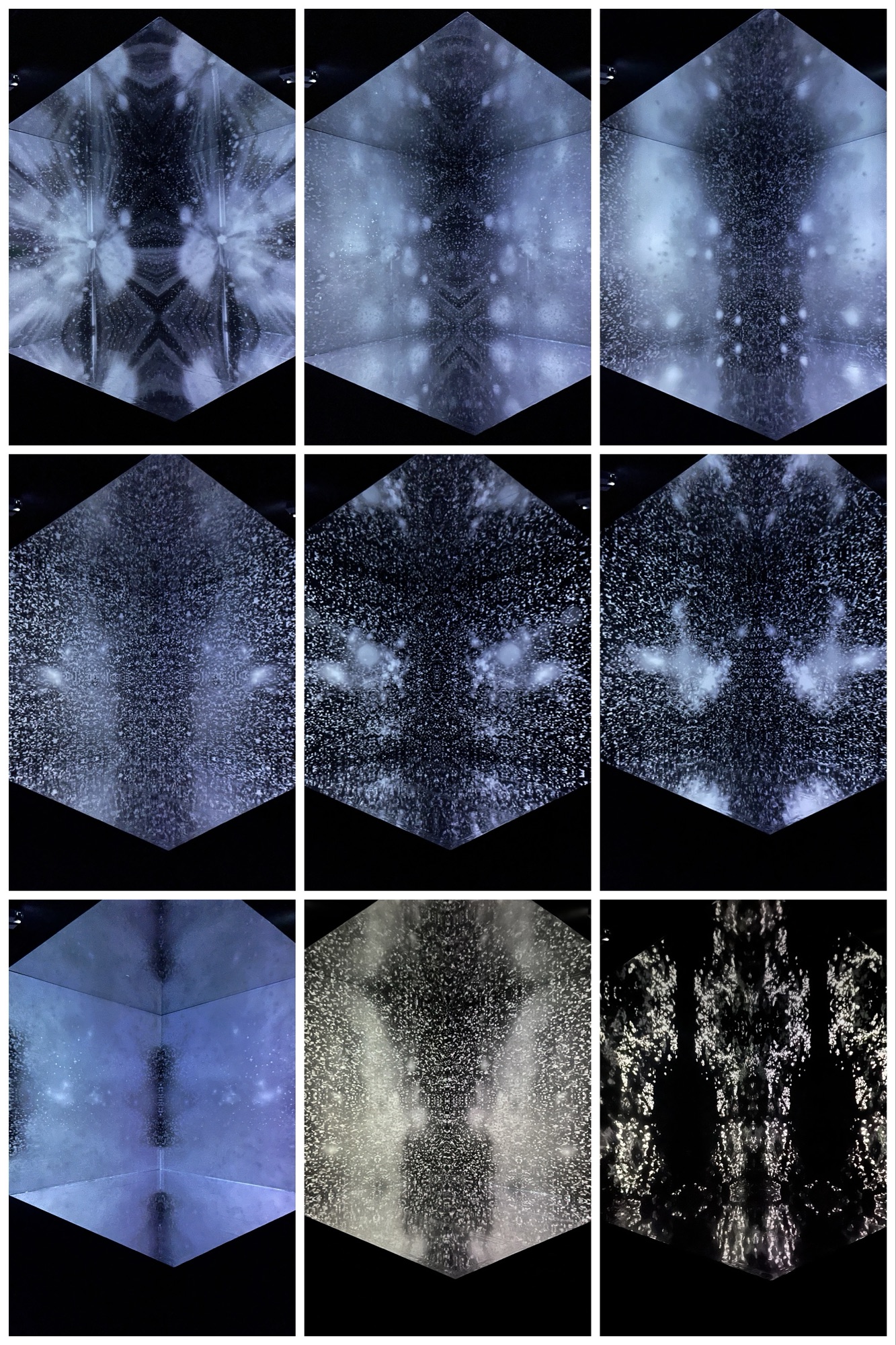
Red Deer, Alberta artist Tannis Neilsen created an installation called mazinbii’igan: a creation, that involved an almost room-sized cube of light within which a visual dance of electromagnetic energies takes place accompanied by a compelling narration of an Anishinaabe creation story.
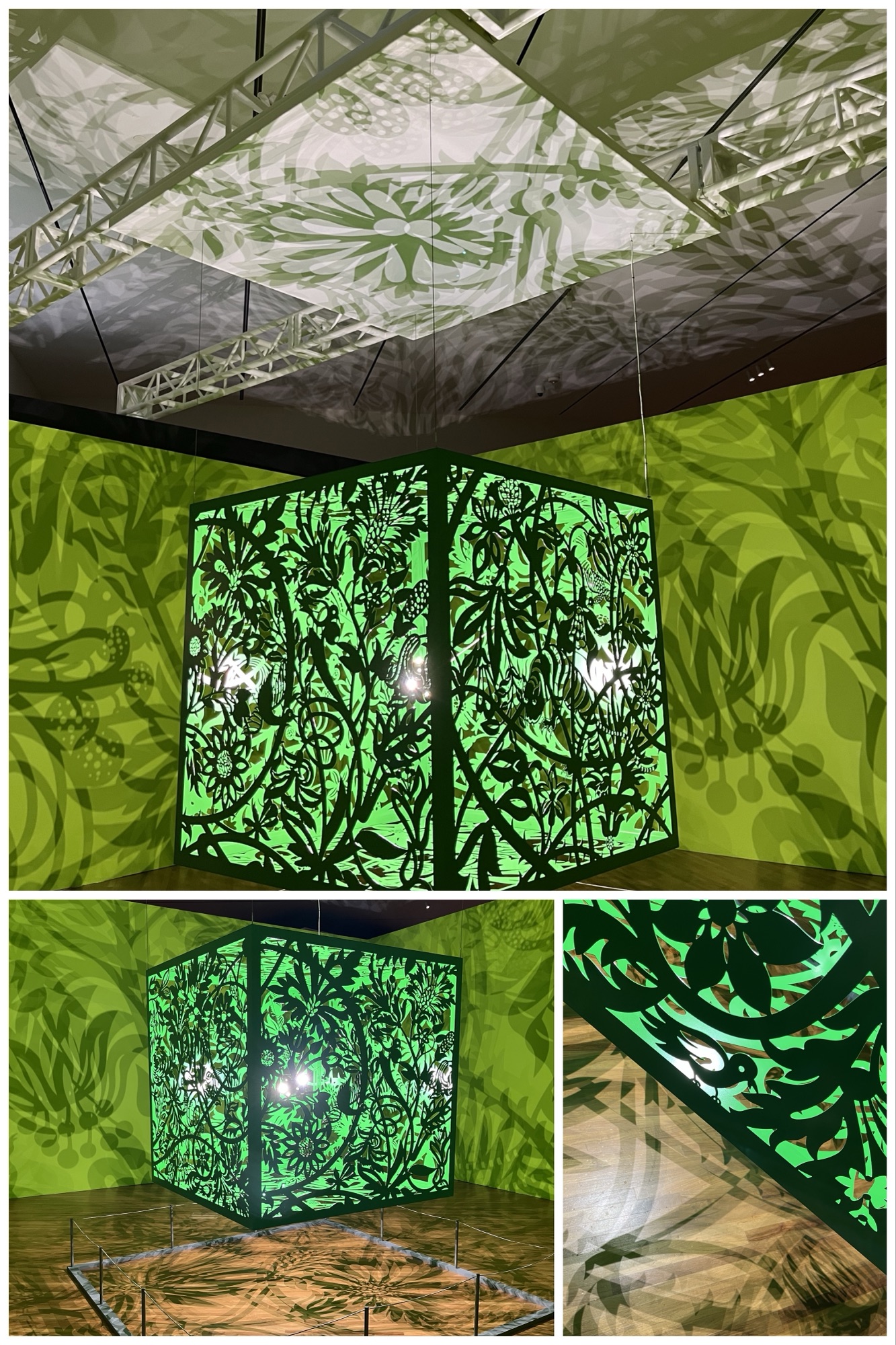
A Thousand Silent Moments (Rain Forest) by Anita Quayyum Agha of Lahore, Pakistan, is made of laquered steel and LED bulbs, and creates light and shadow on every surface of the room. At times it really did seem like dappled sunlight filtering through dense foliage.
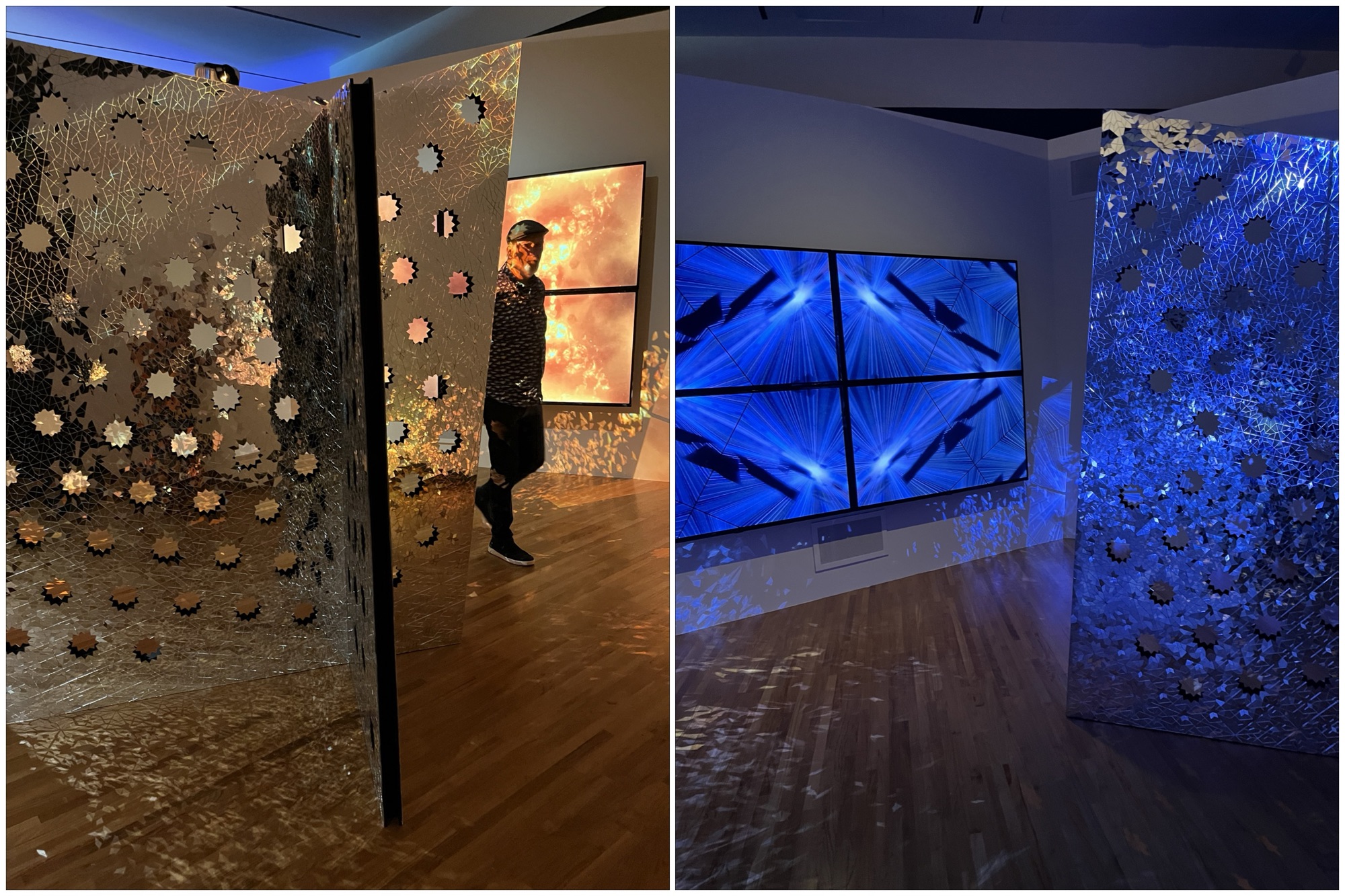
Threshold, by Iranian artist Sanaz Mazinani, uses intricate laser-cut mirror panels inspired by Islamic architecture. The mirrors reflect images of the viewer and intermingle them with video projections – a coming together that creates the “fractured” effect of a kaleidoscope.
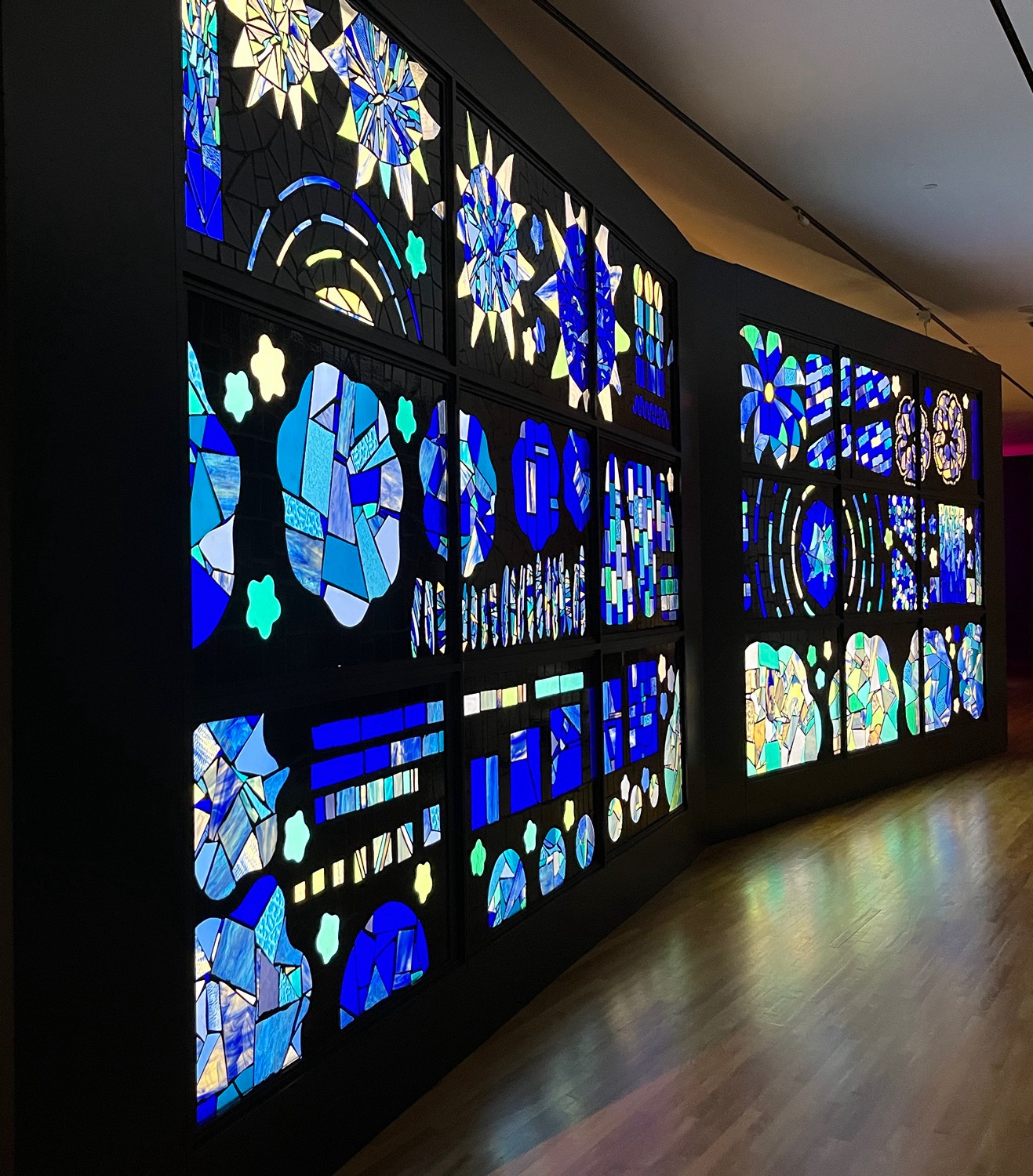
Who Watches the Watchers is a stained glass installation by artist Ghazaleh Avarzamani, from Tehran, Iran. Hidden in the geometric colours are portions of faces and eyes, only visible if the viewer stops to really look beyond the colours.
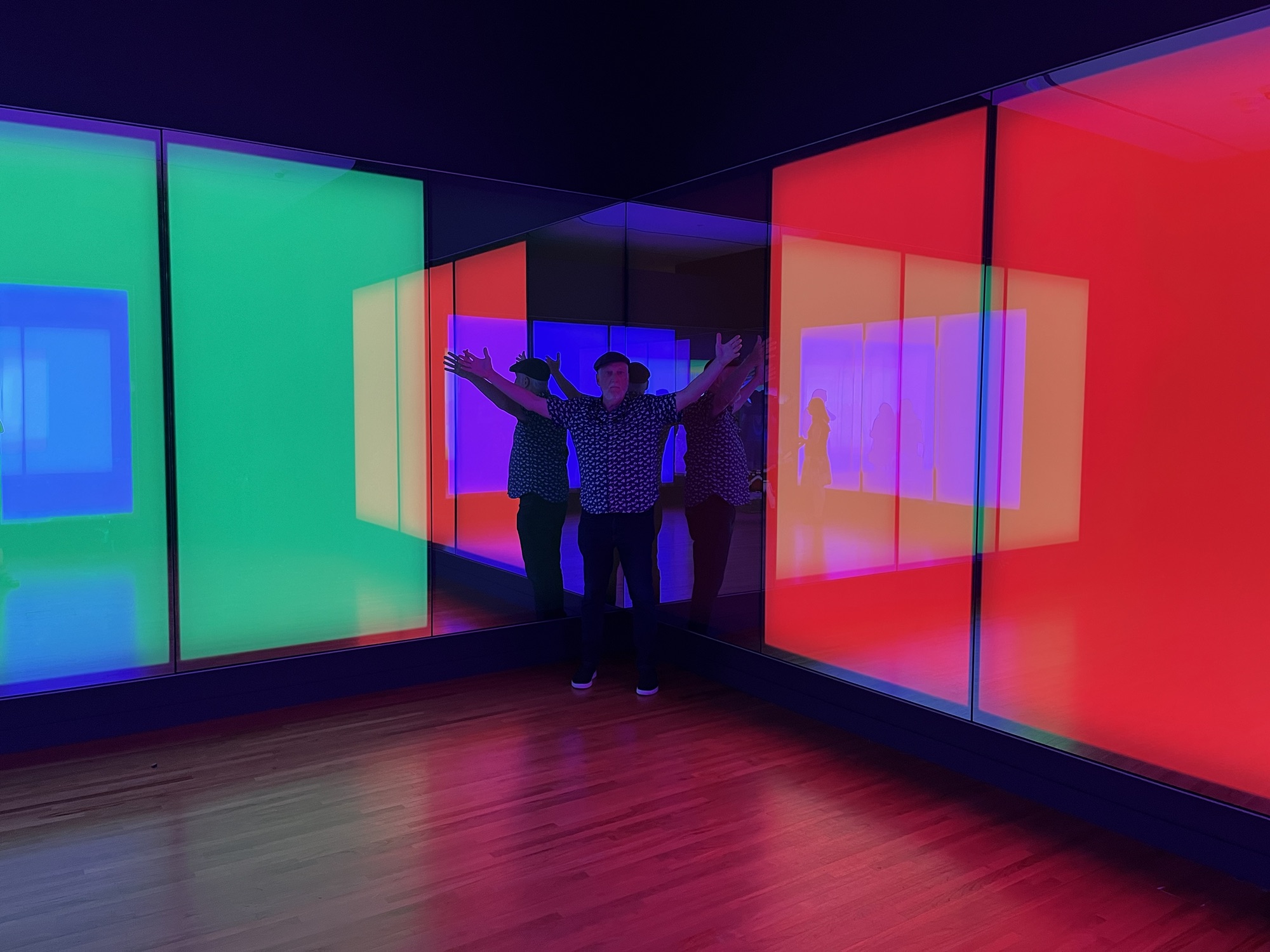
Phillip K. Smith III’s Two Corners immerses visitors in subtly changing colour and light. The slowly shifting colour choreography of the installation changes one’s perception of space, while providing an immersive and emotional experience of colour and light. The surfaces reflect the viewer, who becomes an intrinsic part of the artwork itself. It’s the kind of thing I might have simply walked past pre-Bilbao, but am learning to slow down and “feel”.
And that was Friday! So many more experiences still ahead!
 Rose and Ted’s Excellent Adventure
What a wonderful tour of the Aga Khan Museum! Thanks so much to both of you — though you said these were your pictures this time, Rose. It’s not easy to take pictures that really bring art home with you — kudos.
I wondered whether that sculpture outside at the beginning was also an Arabic letter in “foliated Kufic” like the inscriptions on the 11th c. woman’s tomb. I may have to plan a trip to Toronto.
LikeLiked by 1 person
Thank you for asking! I’ve added a caption to describe that lovely shimmering sculpture
LikeLiked by 1 person
To be fair, a couple of the pictures are Ted’s (LOL) and I’ve learned everything I know about framing photos from him!:
LikeLike
its just like a “Stay-cation”, Rose! Such fun you guys are going to have!!!!
LikeLiked by 1 person