It was a full day today!
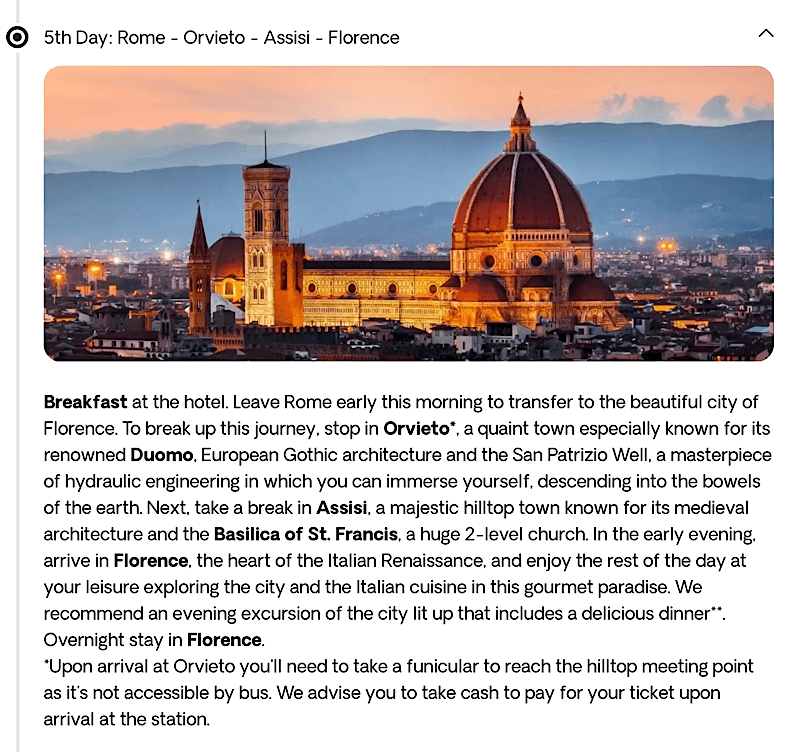

Orvieto is one of the older settlements in Italy, dating back to both the iron age and Etruscan settlements. There is even an ancient Etruscan museum in the city. It was later conquered by the Roman Empire, giving it its current flavour. Something about the narrow streets, stone buildings, banners, and floral elements reminded us of Dubrovnik, or maybe Malta.

The city is located at the very top of a hill which we accessed by steep winding roads, each turn giving us a progressively more beautiful view of the landscape below.
One of the tourist highlights of the city is the Moro clock tower, built by a wealthy family as a status symbol. Climbing its 240 steps gives a magnificent view of the city and the surrounding Umbrian hills.

We can attest to the fact that the 240 steps were well worth climbing. The view from the top of the clock tower is one of the most spectacular tower views we have seen anywhere in Europe.
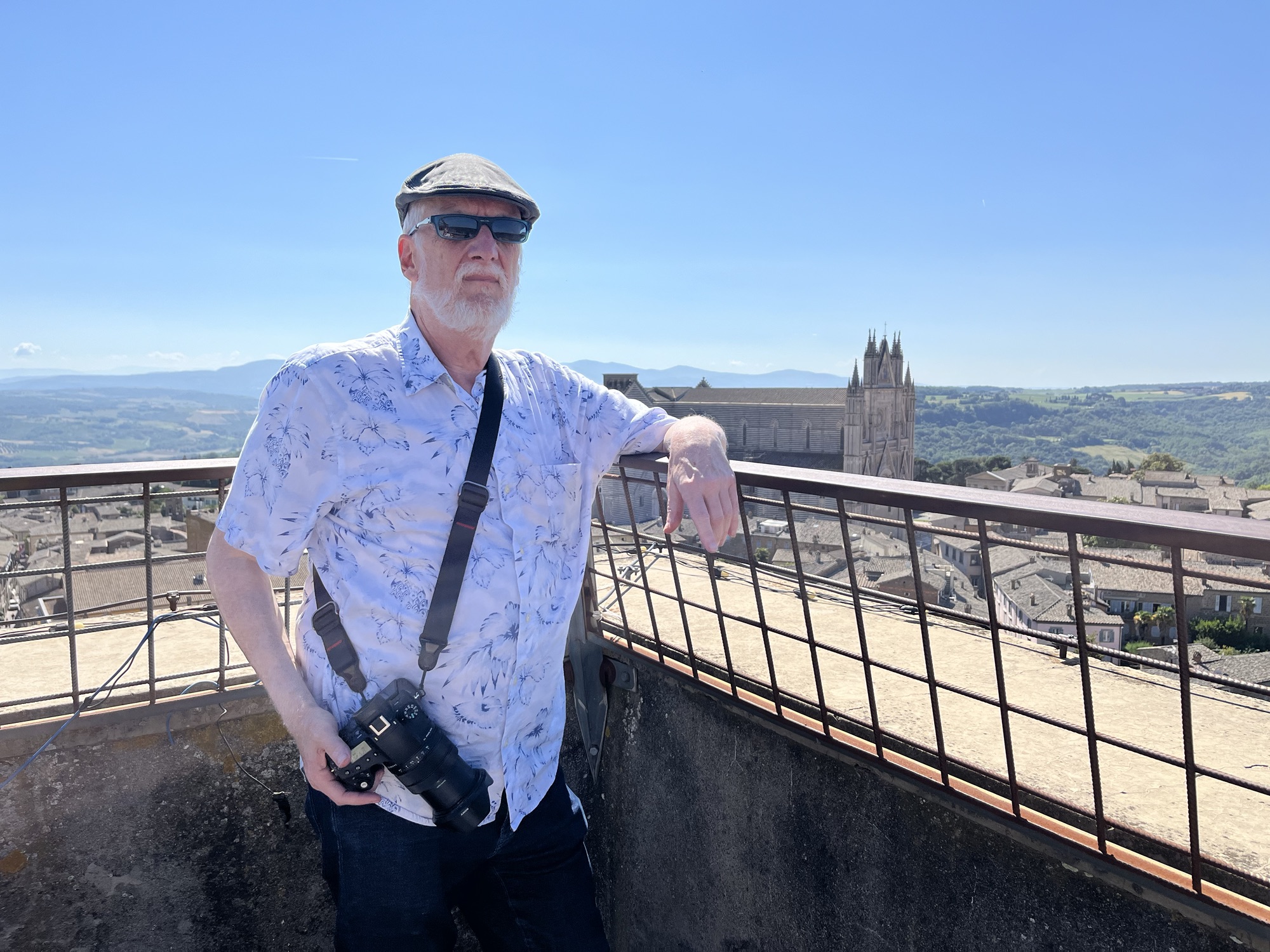

The most amazing attraction is the cathedral, which is considered one of the most beautiful churches in all of Italy.
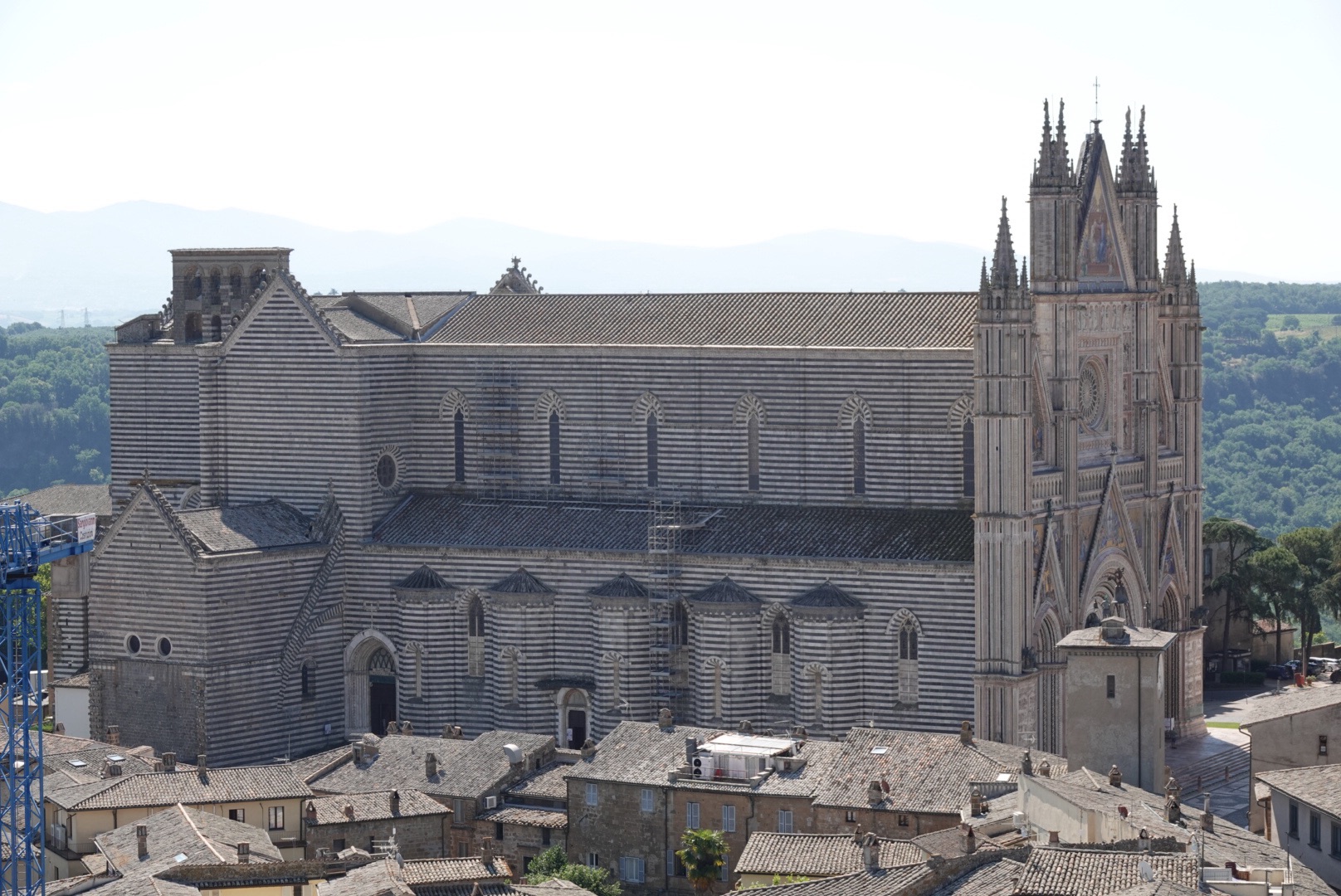
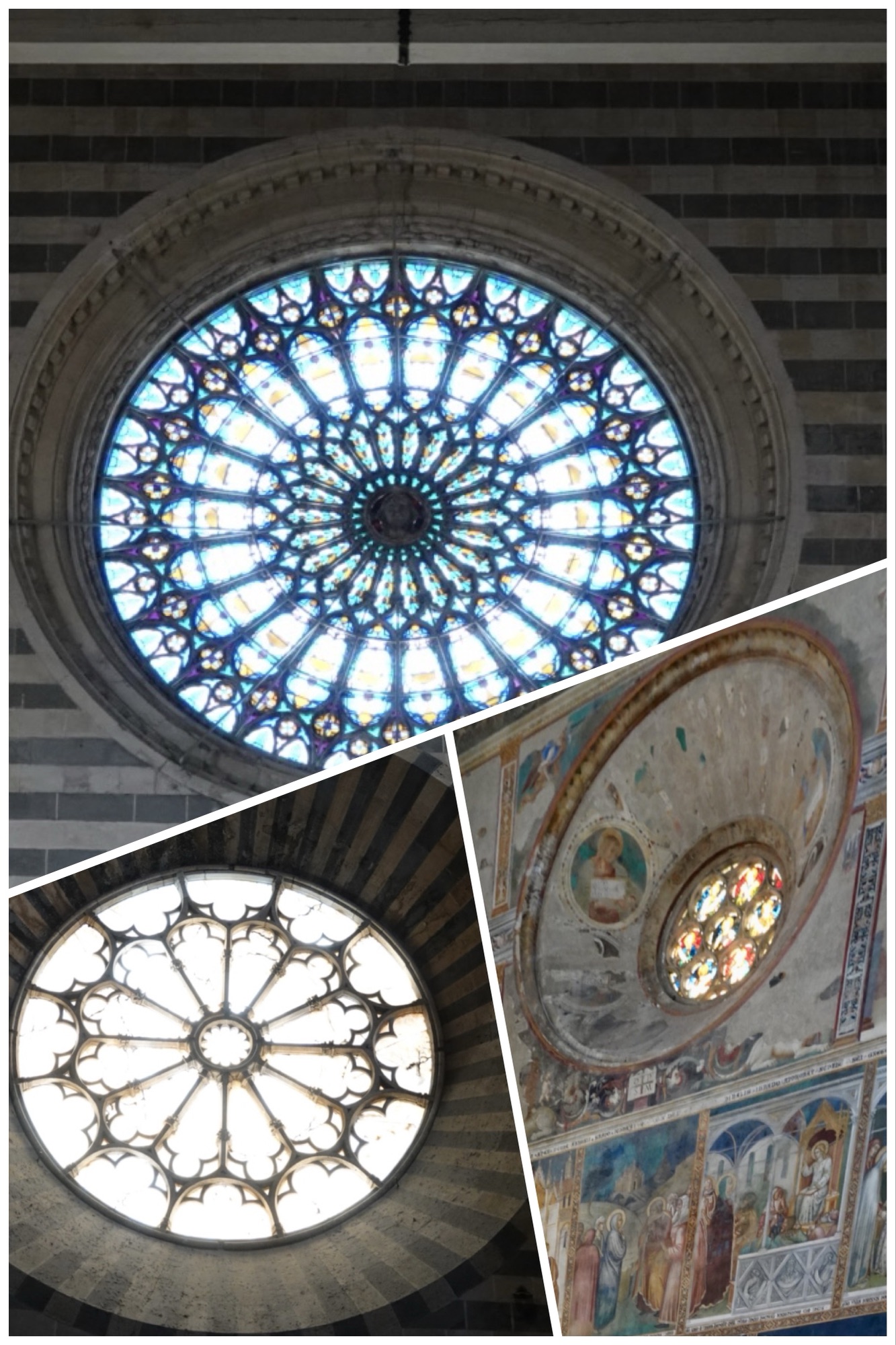
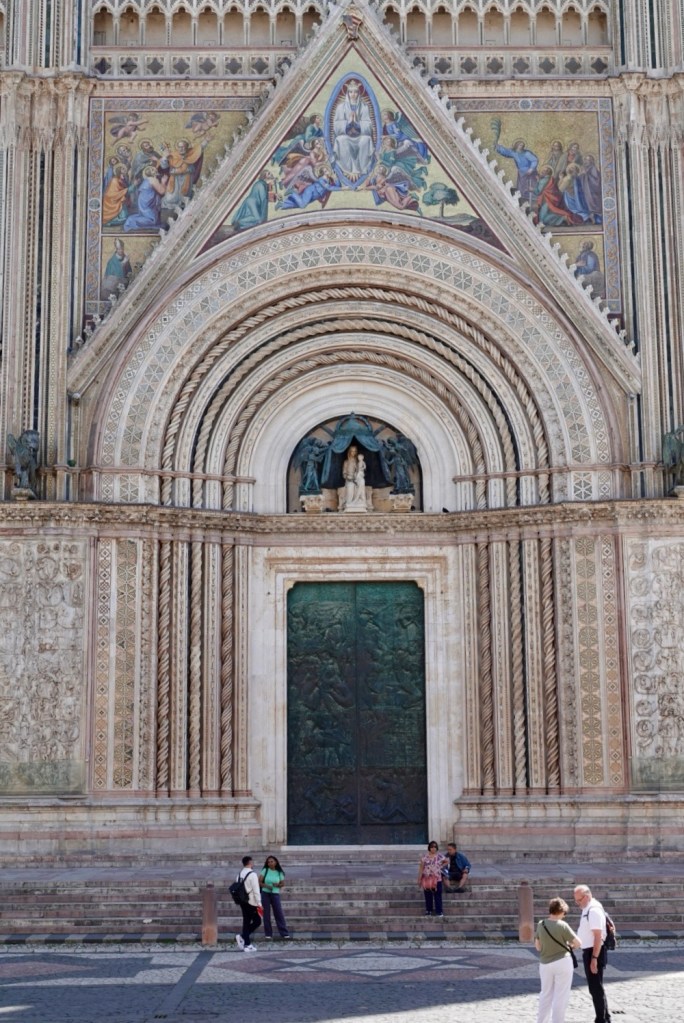
It is built in the Gothic style and features several rose windows and external mosaics that rival anything we’ve seen. The sheer detail and amount of gold on the outside of this highly decorated church is ridiculous.
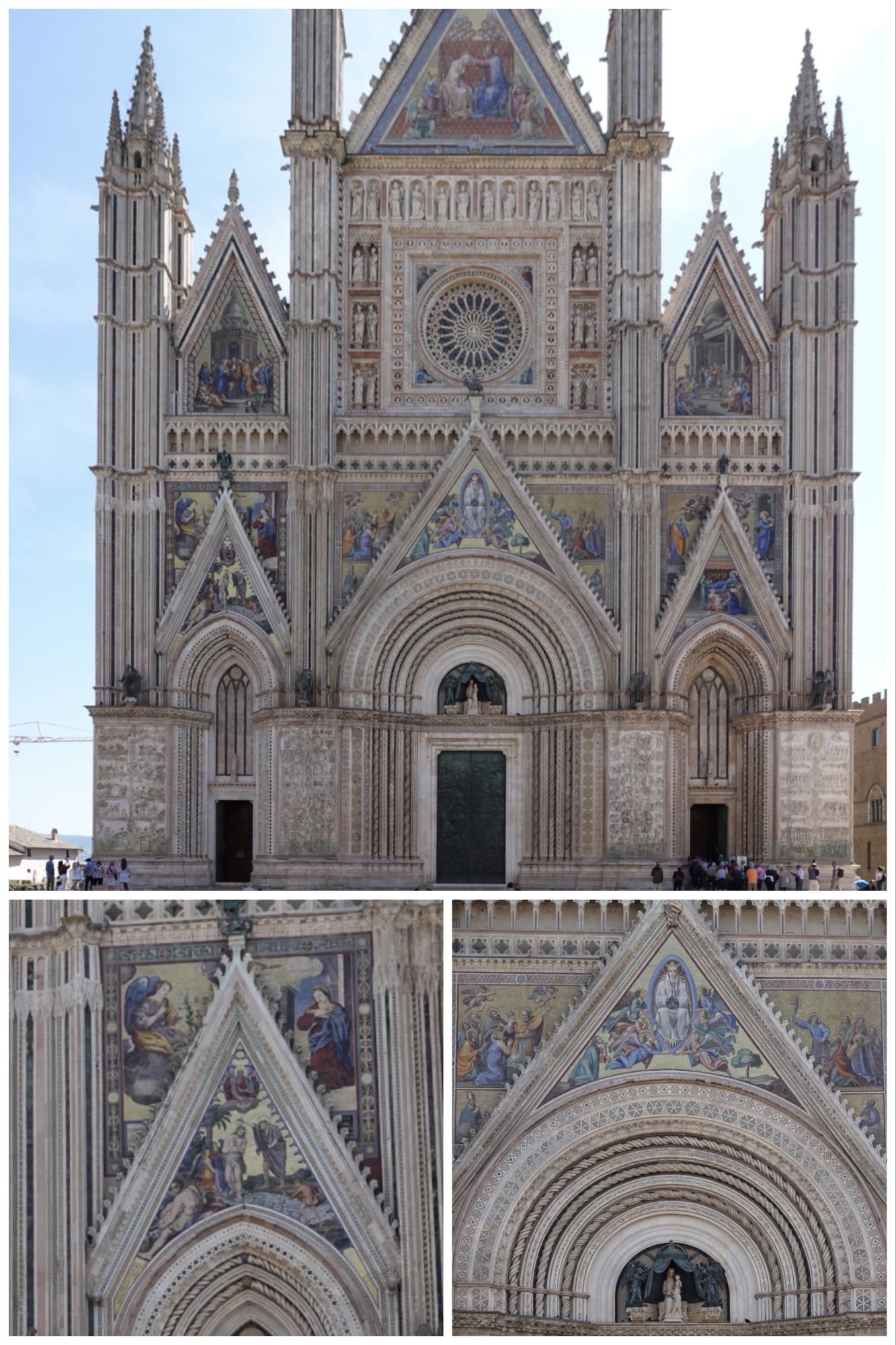
The huge bronze doors are also gorgeous, even if they are not as old as those on the second century pantheon in Rome.
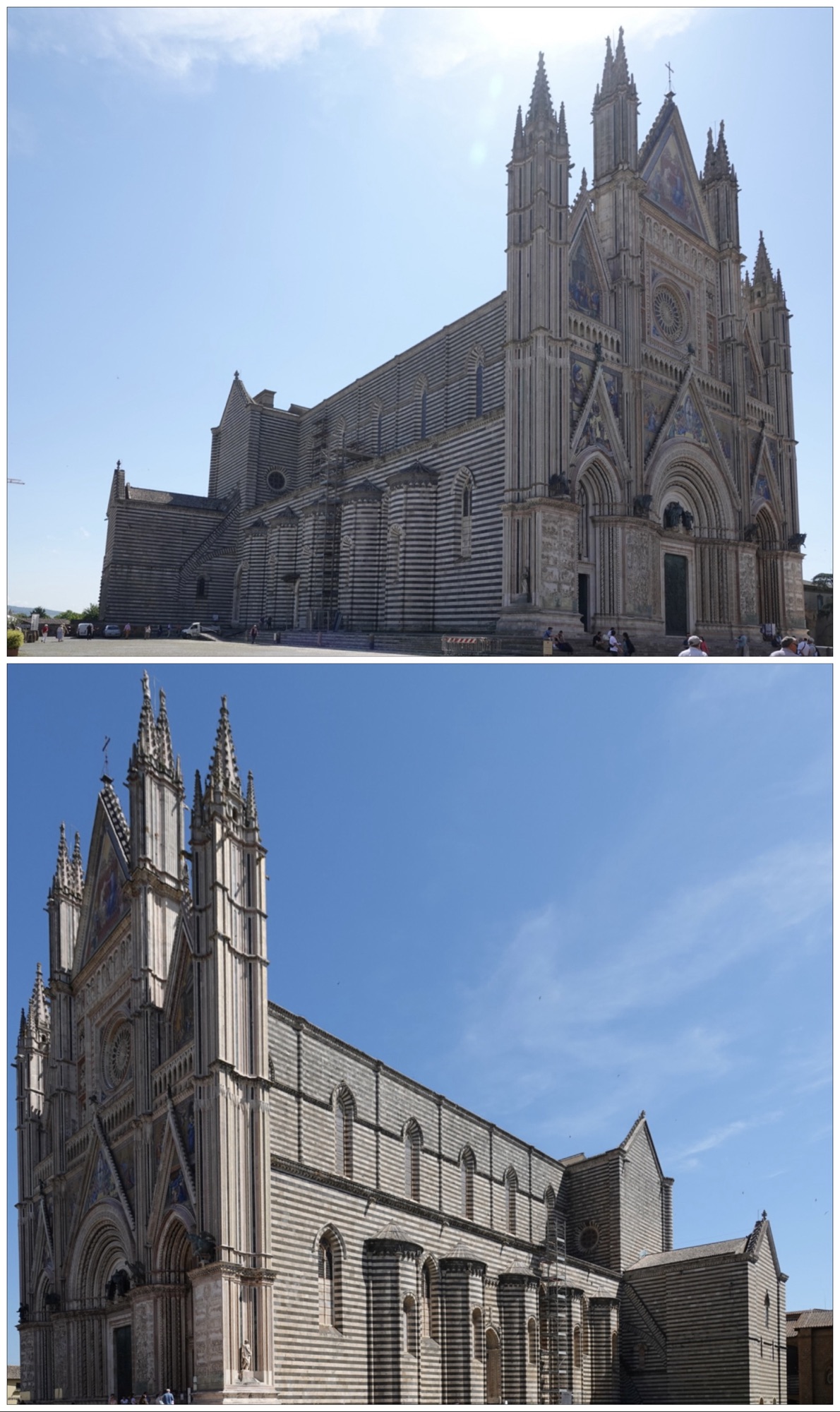
The two-tone granite construction, especially on the exterior, makes the cathedral reminiscent of a Hungarian Dobosz torte with its many light and dark layers.
Frescoes behind the main altar, reaching up and around the domed ceiling are vibrant and detailed, and beside the altar, the much decorated organ pipes draw your eye upward.
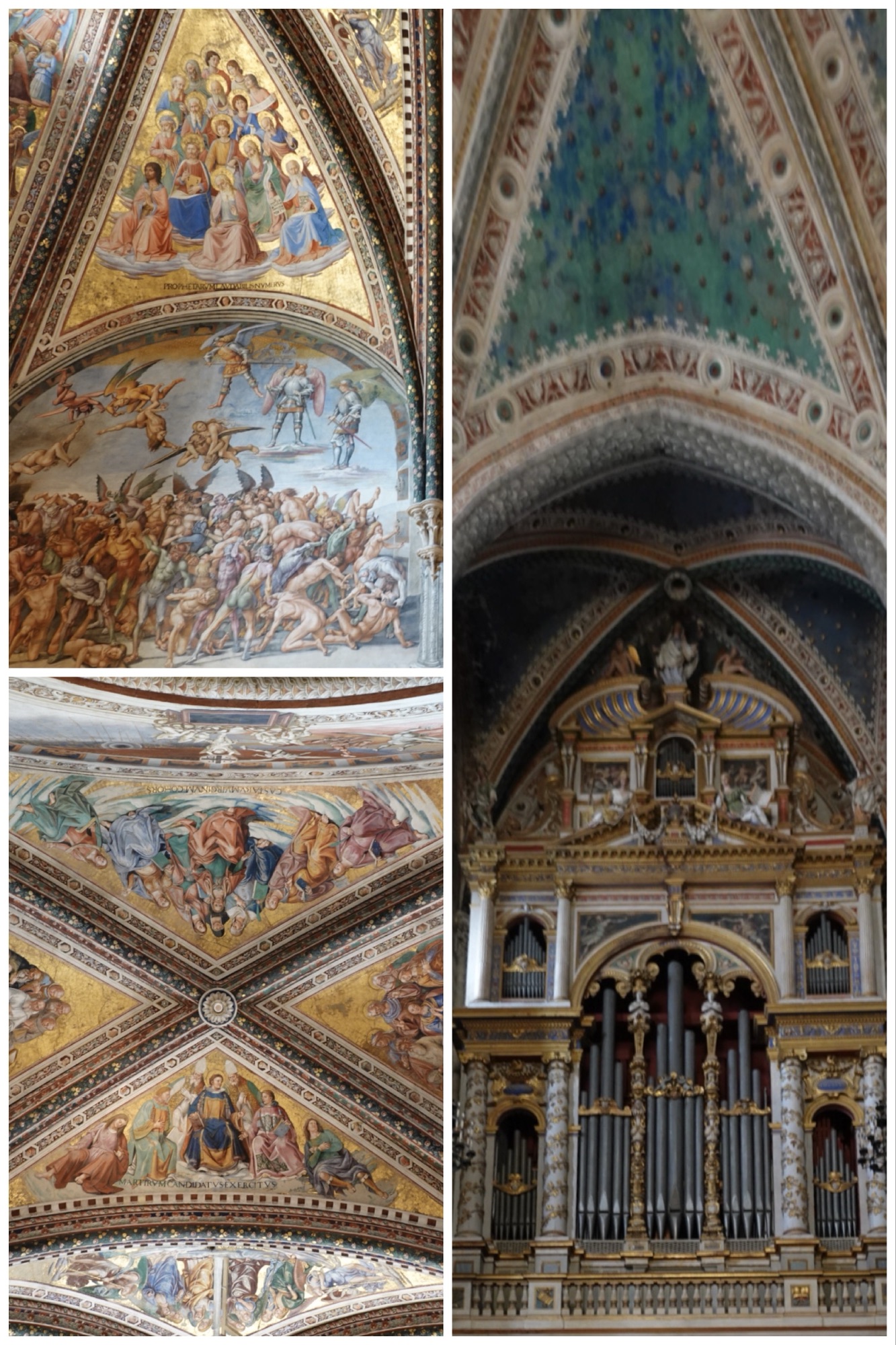
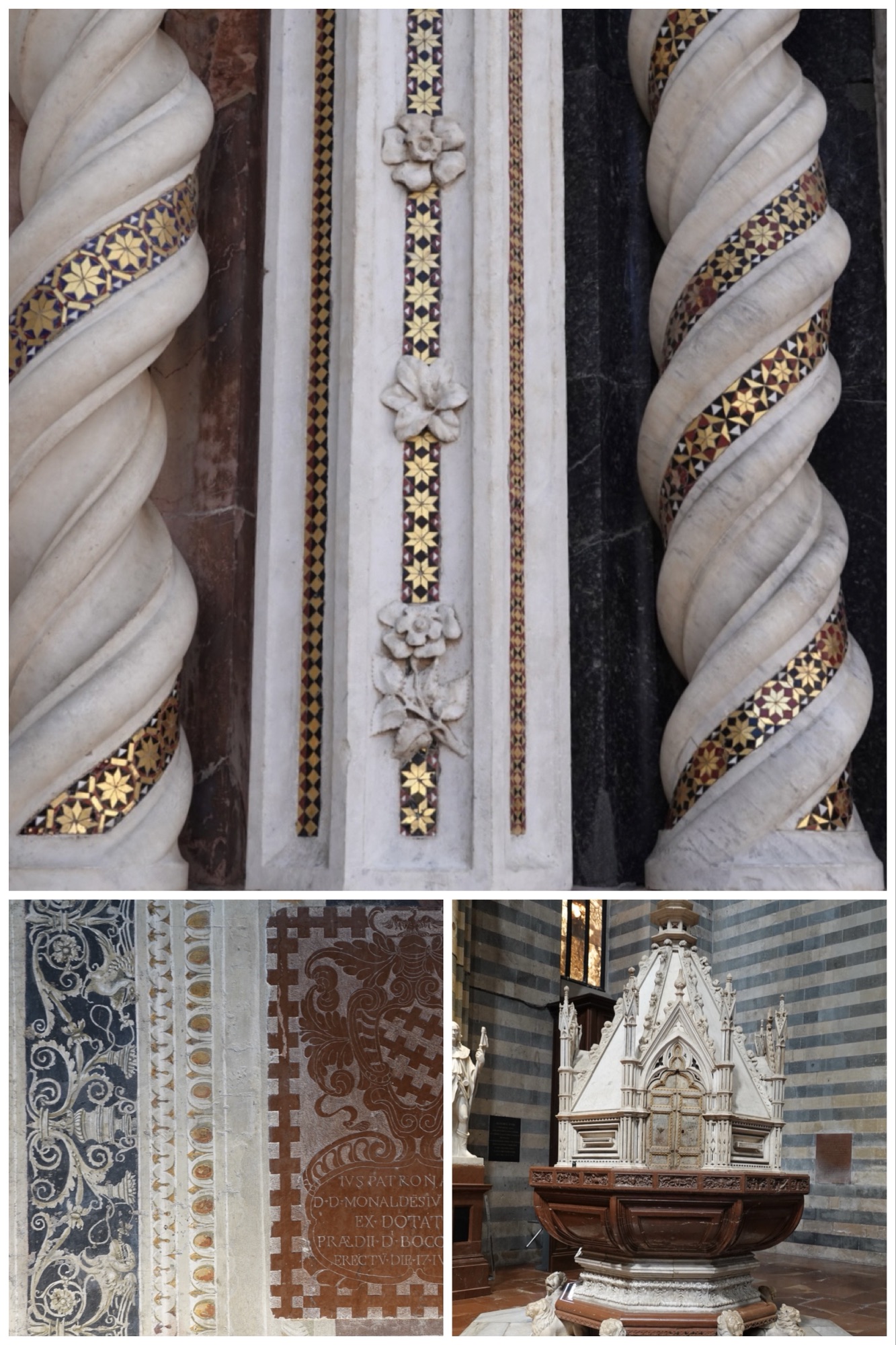
But probably the most beautiful space in the cathedral is the side chapel with its frescoes, stucco carvings, and abundant gilding. It is known as the capella nova (new chapel), having only been built in the 1470s. “New” means something entirely different in Europe than it does in North America.

We ran out of time before being able to also visit Saint Patrick’s Well or do more than take a picture of the gate to the city’s fort.
The well is 53 metres deep and has over 70 windows in its walls; it is possible to walk to the bottom of the well using two double helix ramps. The well was originally simply called the “Pope’s Well”, but later renamed for the same Saint Patrick who is so famous in Ireland.
Once the city became occupied in later Roman times a fortress called the Albertonoz, named after a family of the same name, was also built, although it’s hard to imagine that the city’s location so high on the hill would be assailable by any but the most determined enemy, even without fortifications.
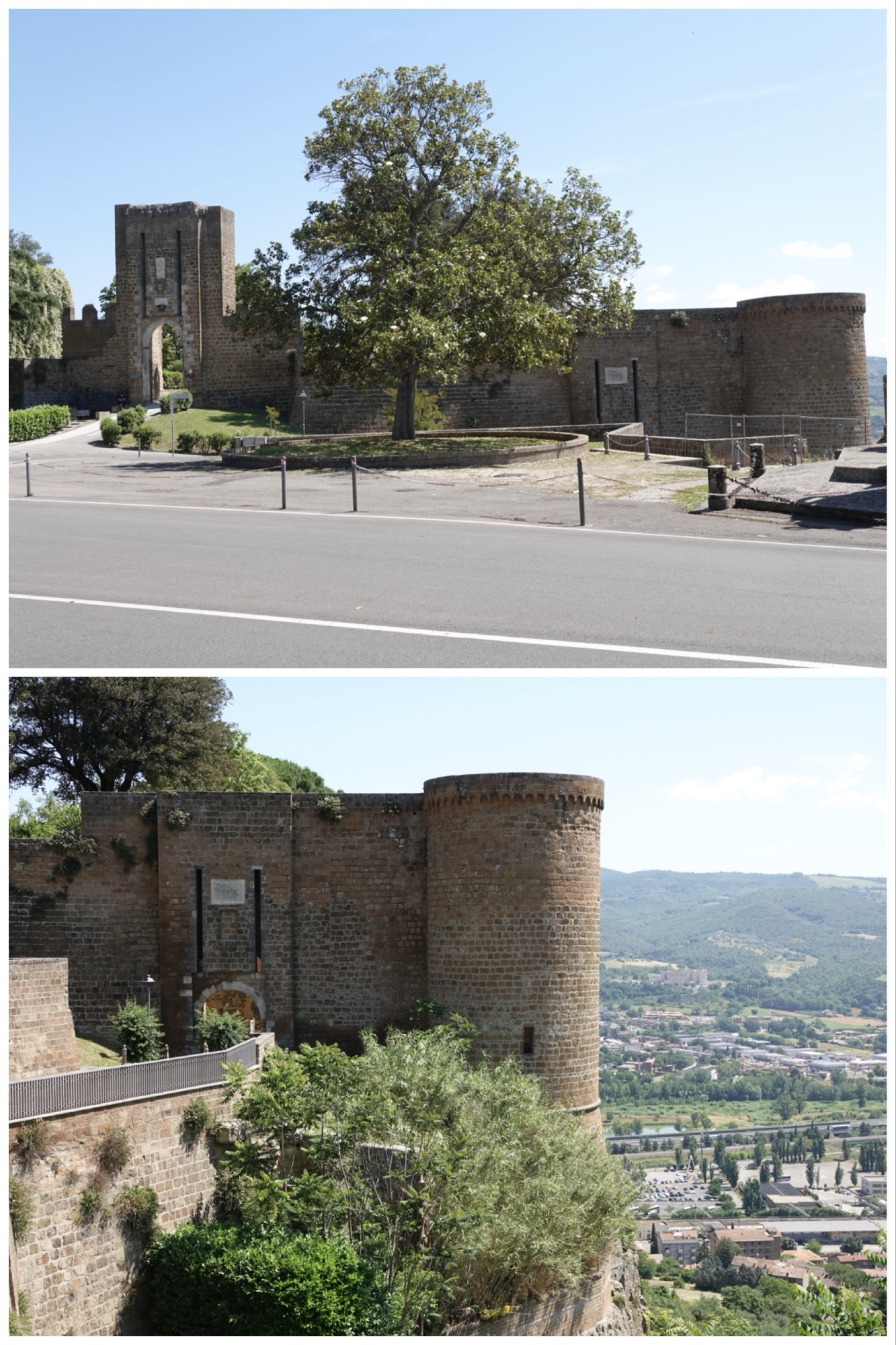
Orvieto really was a lovely little city. It only has about 20,000 inhabitants right now, but Ted and I, as well as our new friends Dorothy and Barry from Nanaimo, agreed that we’d be happy to swell the population by a few Canadian retirees. The atmosphere is serene, unhurried, and truly beautiful. We are glad that we made a stop here, but disappointed that it was only 90 minutes. Our tour guide had suggested the day before that under 2 hours would be plenty of time to experience what the city had to offer. She was completely wrong. We certainly could have used at least a half-day if not a full day. One of my big disappointments was that there was not time enough to try one of Umbria’s famous porchetta sandwiches. The roasting pork smelled so delicious as we walked by the restaurants, but we were rushing to meet our tour bus to continue on to Assisi.
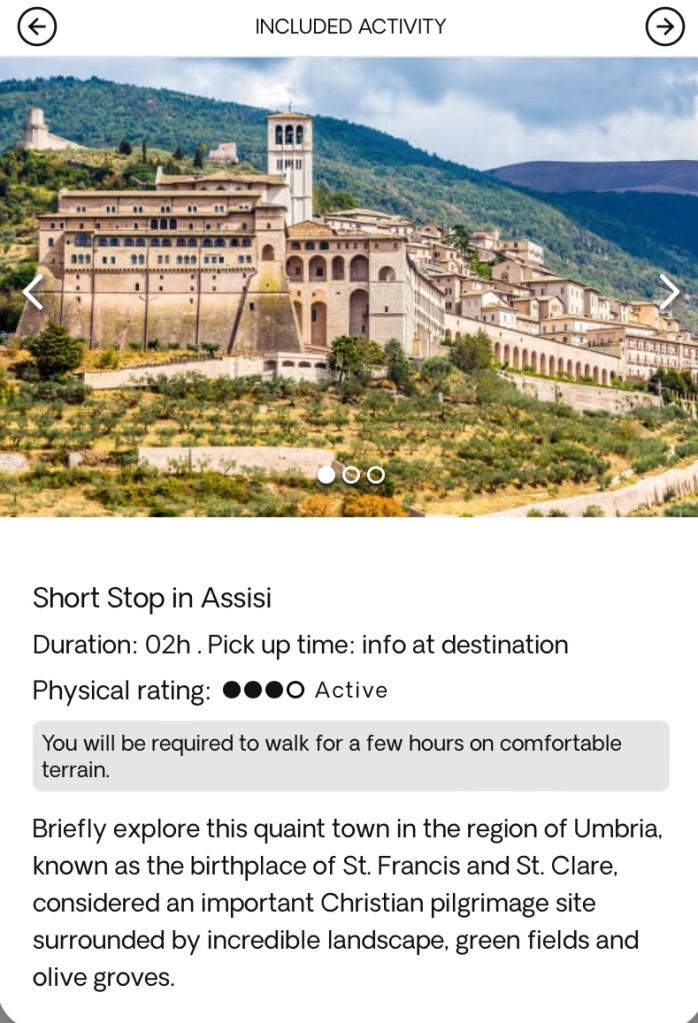
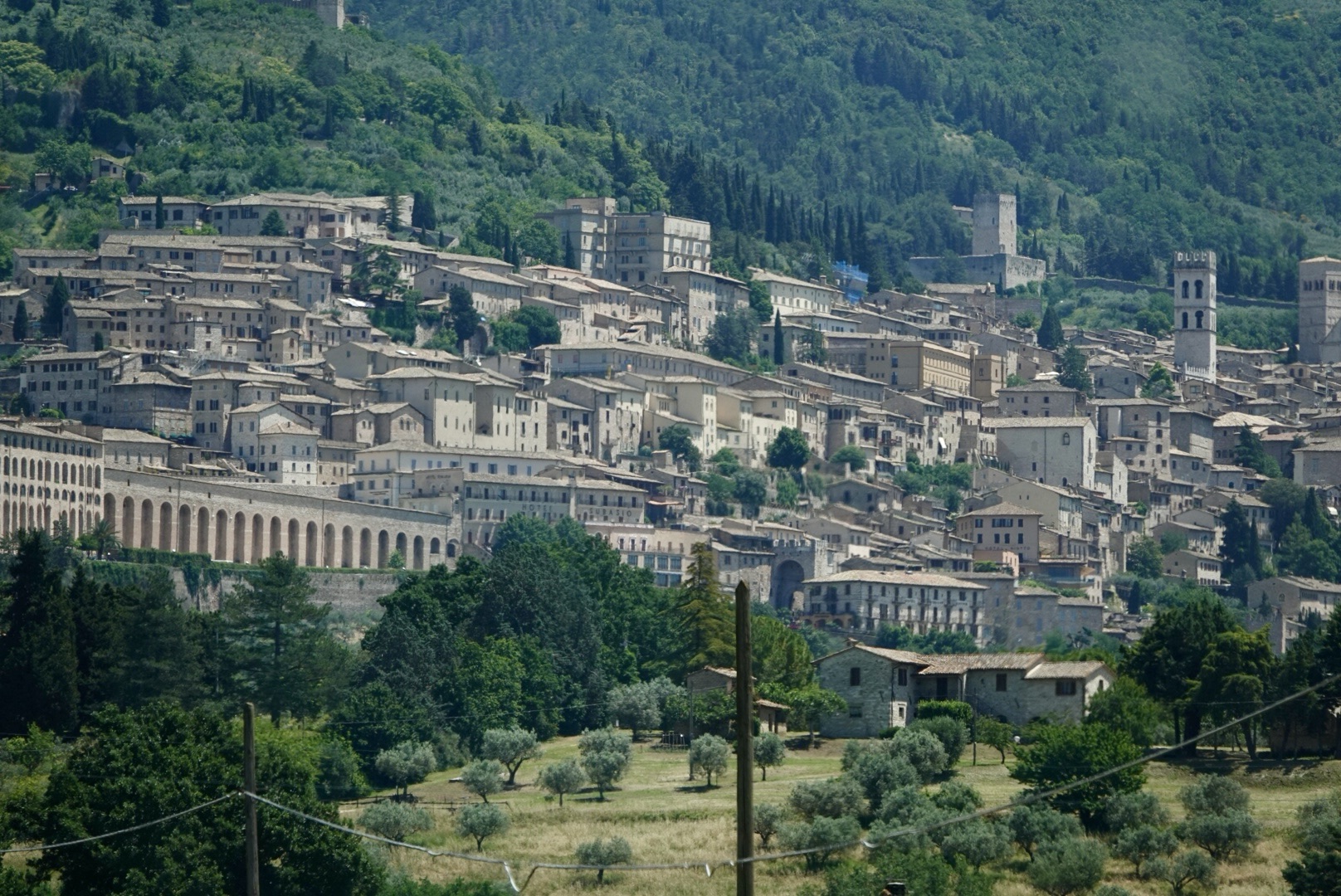
Like the city of Orvieto, Assisi is a UNESCO designated world heritage site. This town also predates Italy’s capital city of Rome – it was originally the site of a temple dedicated to the goddess Minerva. Approaching it by bus, it sprawls across the top of the hill almost shining white in the bright sunshine, although the brick colour is actually a pale, beige limestone.
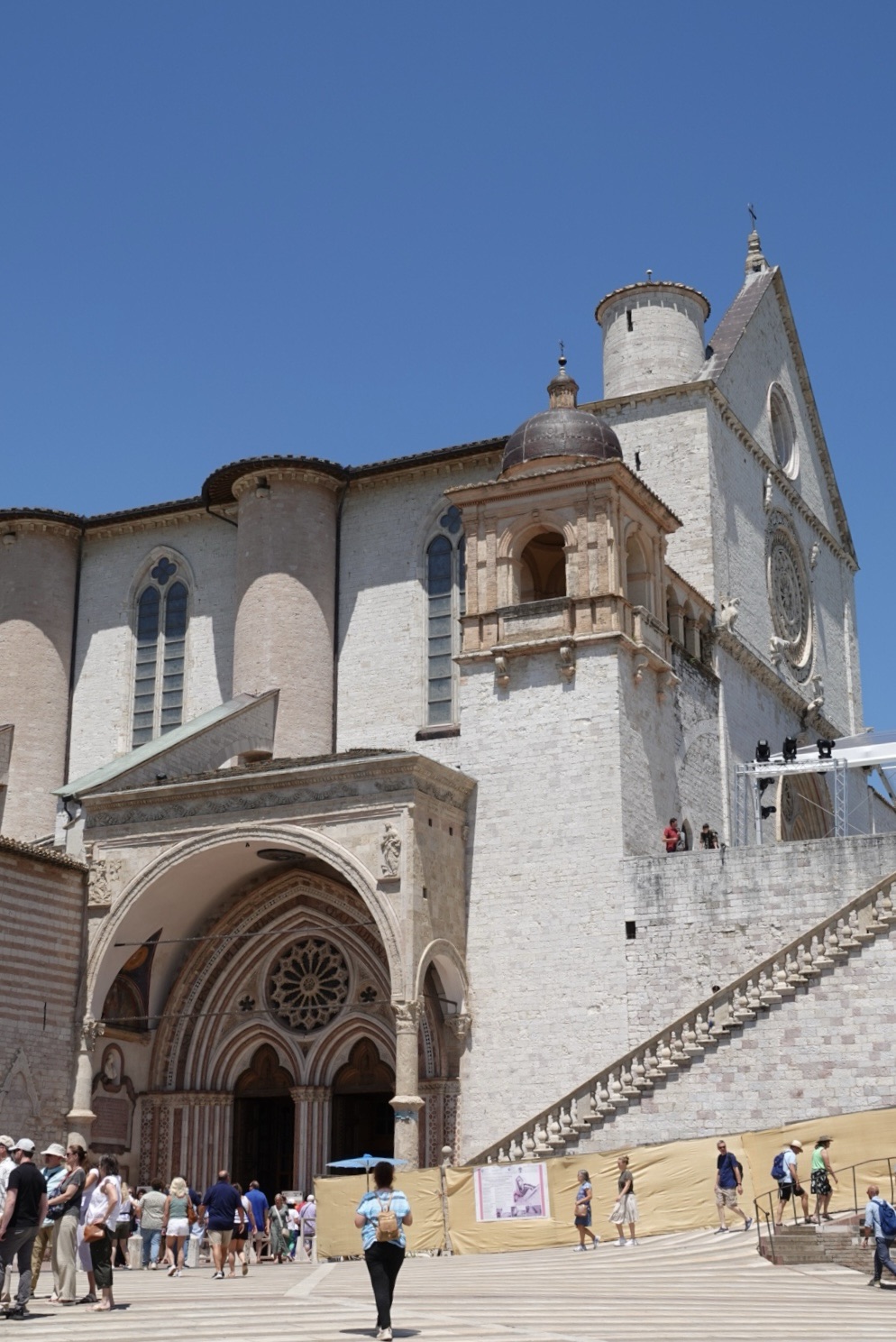
Assisi is, of course, most famous as the birth and burial place of Saint Francis. In 1268, only two years after his death, the first church dedicated to him was erected. There are two churches in one: the major (superiore)basilica, and minor (lower) basilica, both dedicated to Saint Francis. Neither is a cathedral; the city does have a cathedral which was the seat of the bishop, but it is not the church of Saint Francis.
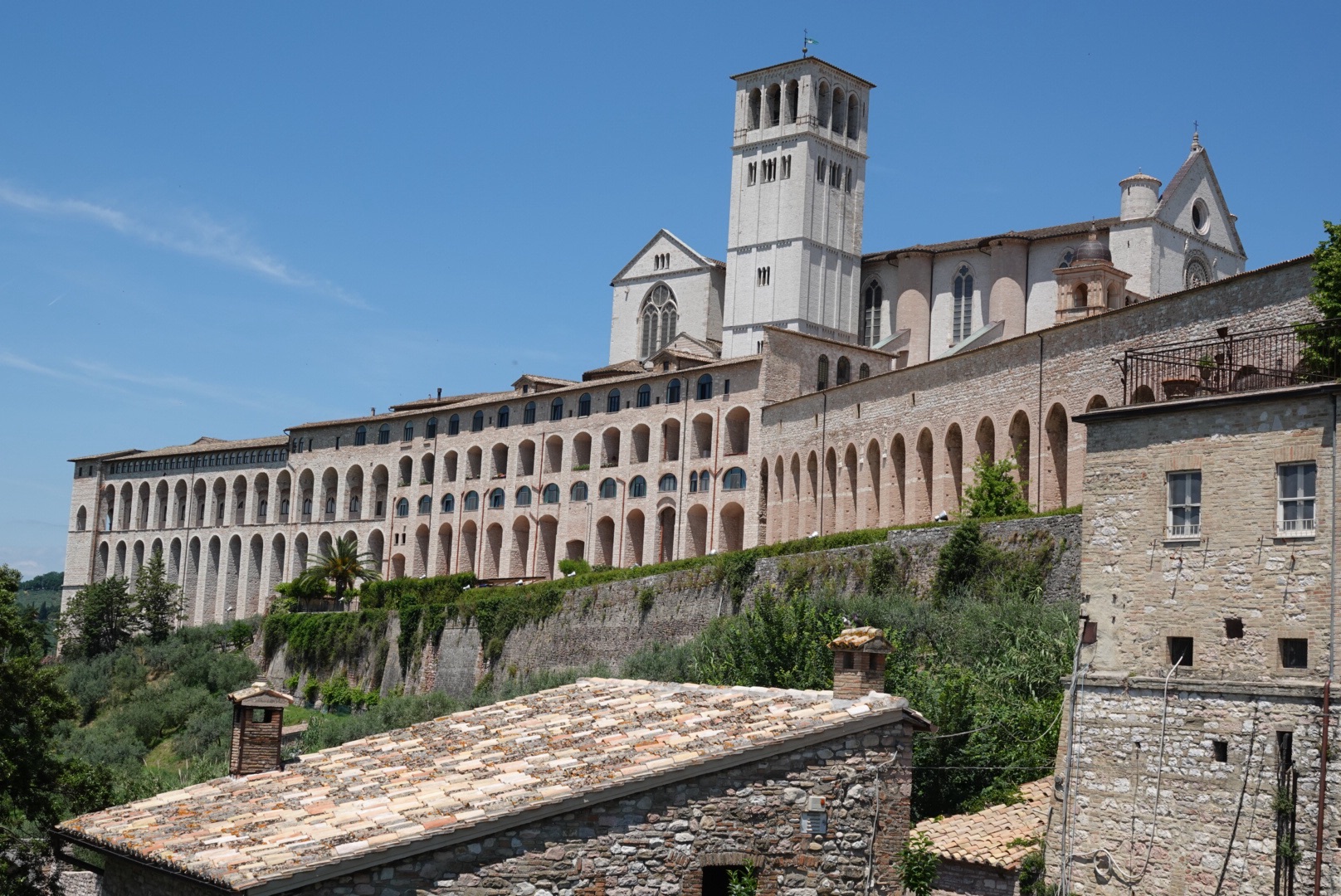
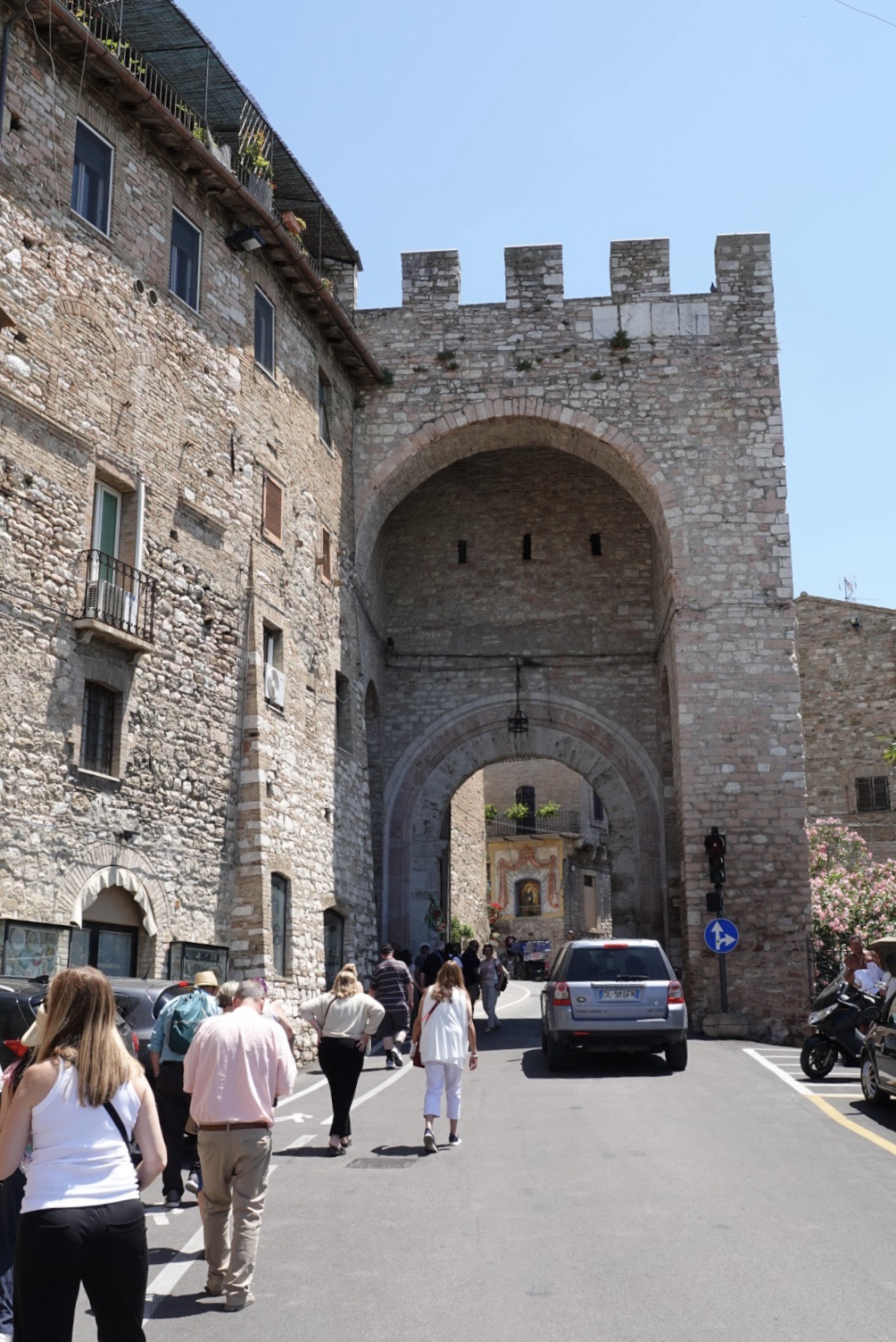
We entered this gorgeous city through Saint Francis’ gate (below). At the other side, there is corresponding gate called Saint Peter’s.
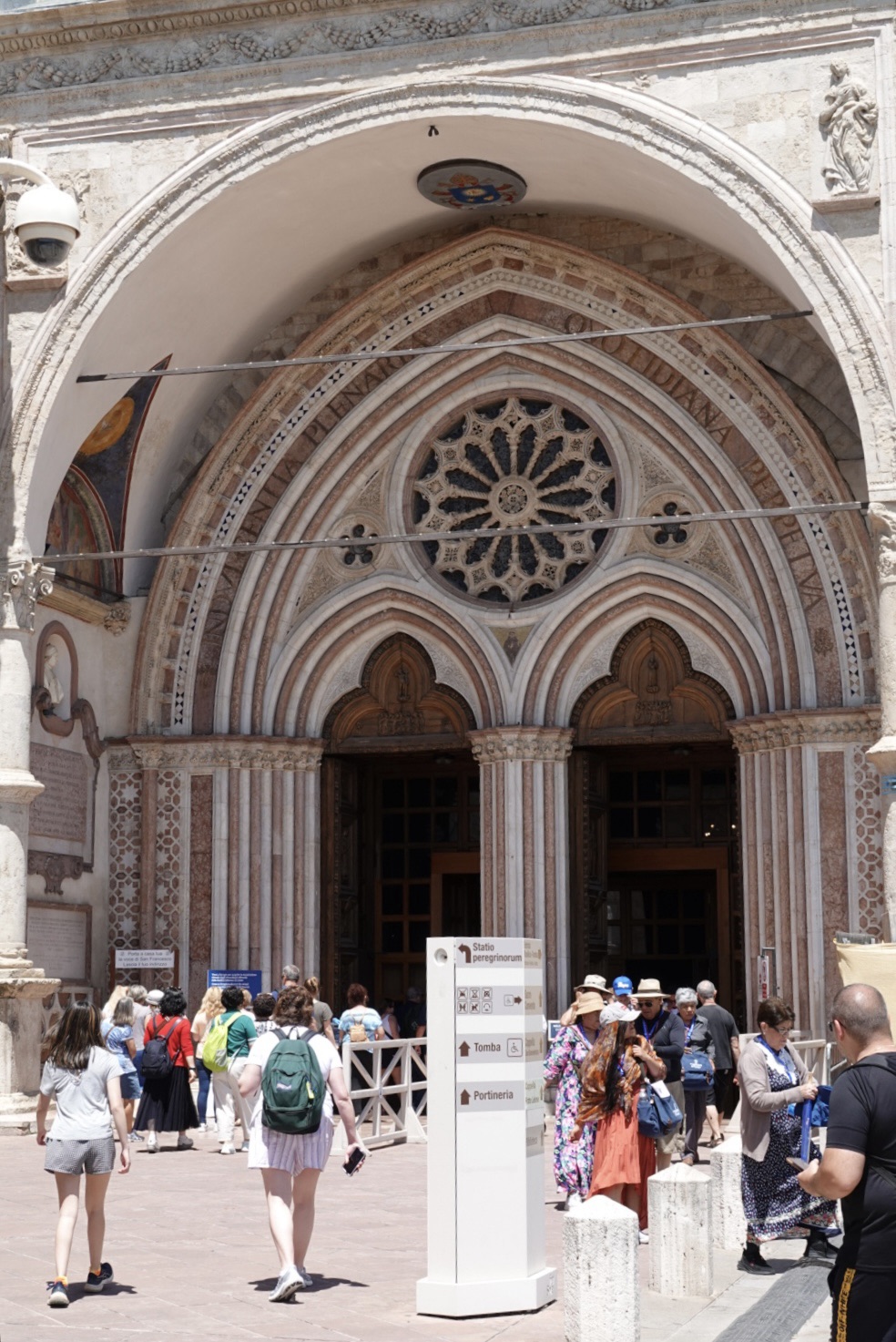
The Basilica is a truly magnificent church, combining the best elements of Romanesque and Gothic architecture. Absolutely no photography is allowed indoors in order to keep this as a place of pilgrimage and reverence. Ted took the photo below peeking in from from the basilica entrance before we were told about no photography, after which he put his camera away.
We continue to be amazed by how colourful all of these historic sites must have been when they were originally inhabited, and have to constantly remind ourselves that the very simple monochromatic architecture we admire in many places now is not really reflective of the original.

While “no photos” may be frustrating to photographers, it is in some respects refreshing that this church has not simply been turned into a tourist attraction. Ted and I are just going to have to try to remember the vibrantly coloured ceilings and walls done in patterns of lapis and aquamarine blue, carnelian red, bright white, and shades of yellow and ochre. Everywhere we looked there was colour and light. It seems like a church that truly carries out the spirit of the saint for whom it is named. Everyone was allowed to enter the lower portion of the basilica where Saint Francis’ body is entombed. There is the option there to light a long taper and carry it around the tomb, depositing it (after it has been extinguished!)into a basket at the base of the tomb.
I was glad that I had remembered to throw a shawl into my bag, a habit I developed when we were in the middle East visiting mosques. It was really hot here today, almost 30°C, so I wore a top with bare shoulders, which would have precluded me entering the church. As is the case in the Middle East the cathedrals here are prepared to hand out disposable paper scarves to cover up the shoulders of people who want to go in but were unprepared. I felt a little bit smug that I didn’t need one.
We were free to take lots of pictures of the exterior though.



We had just two hours here in the city and of course the priority was visiting the church of Saint Francis. But just for a moment imagine the voice of chef Gordon Ramsay narrating the beginning of one of his many reality shows: “While pilgrims come to Assisi to follow in the footsteps of Saint Francis, we are here today in search of the Umbrian region’s iconic porchetta on torta al testo (a local flatbread).” We found some, and the combination of juicy meat, crispy skin, and warm bread did not disappoint.
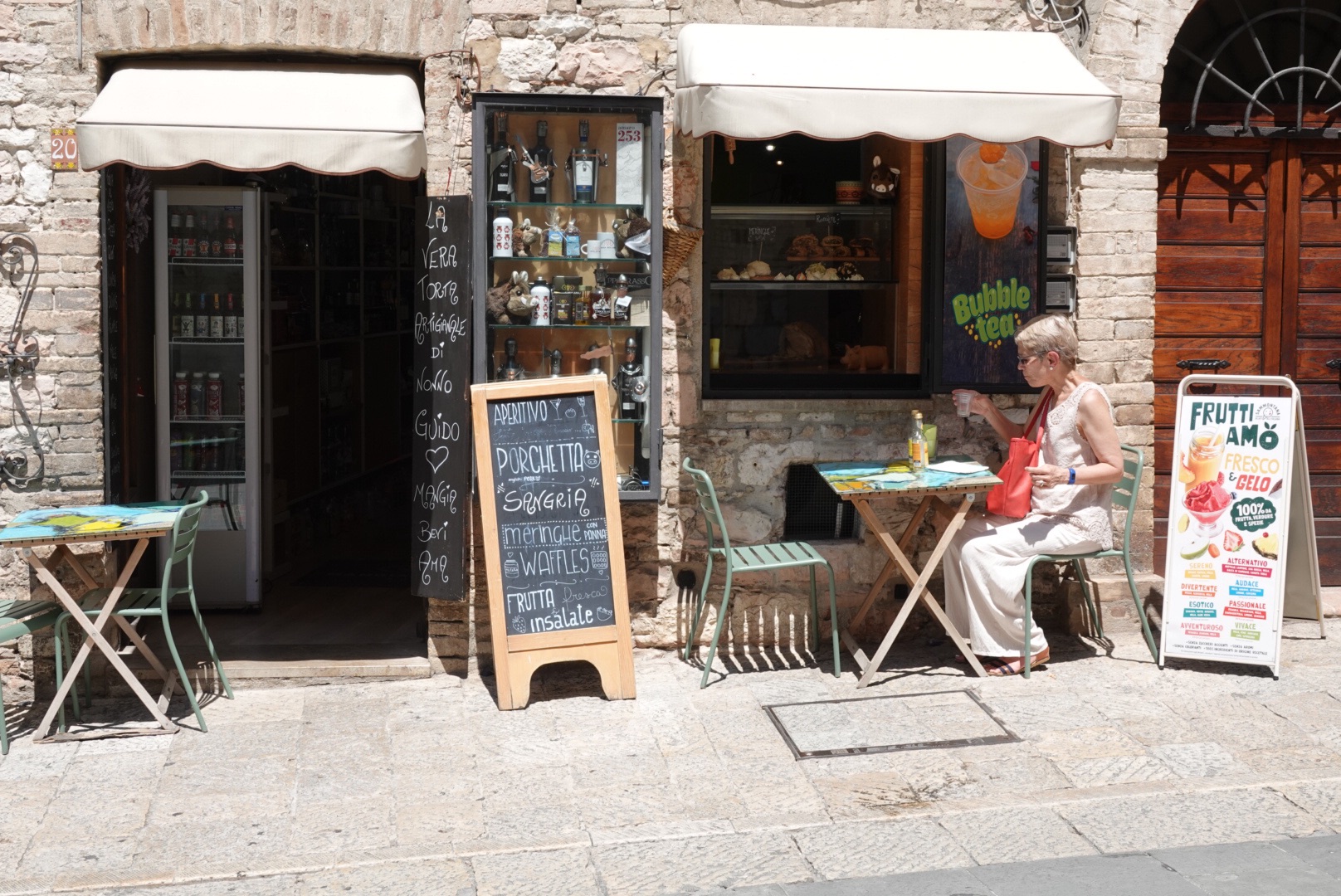
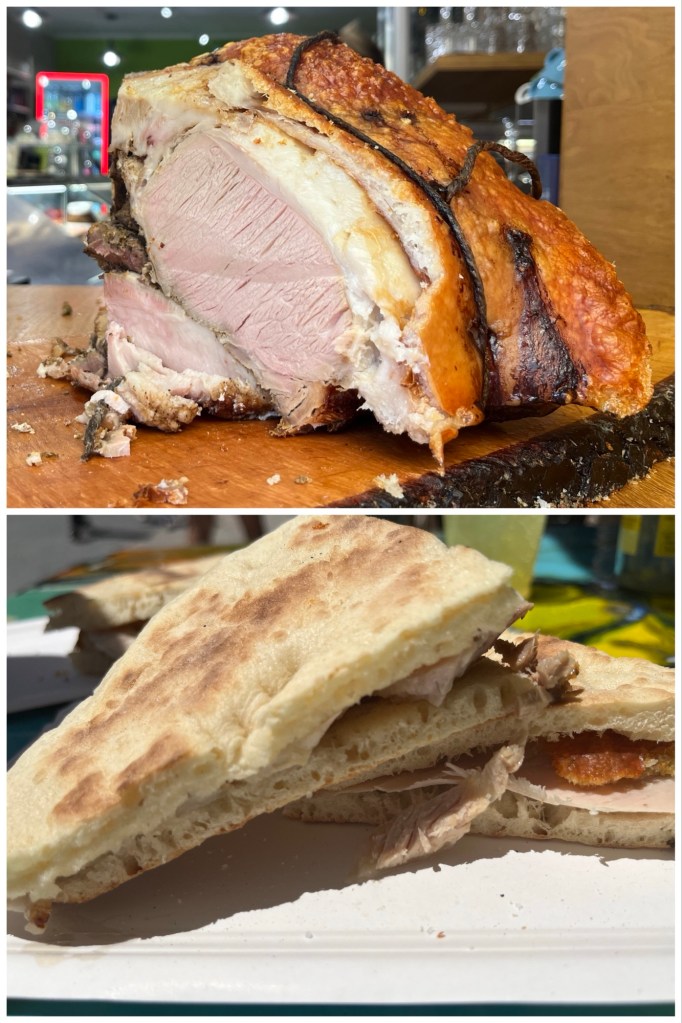
After walking around the steep cobbled streets of the city for our remaining half an hour…

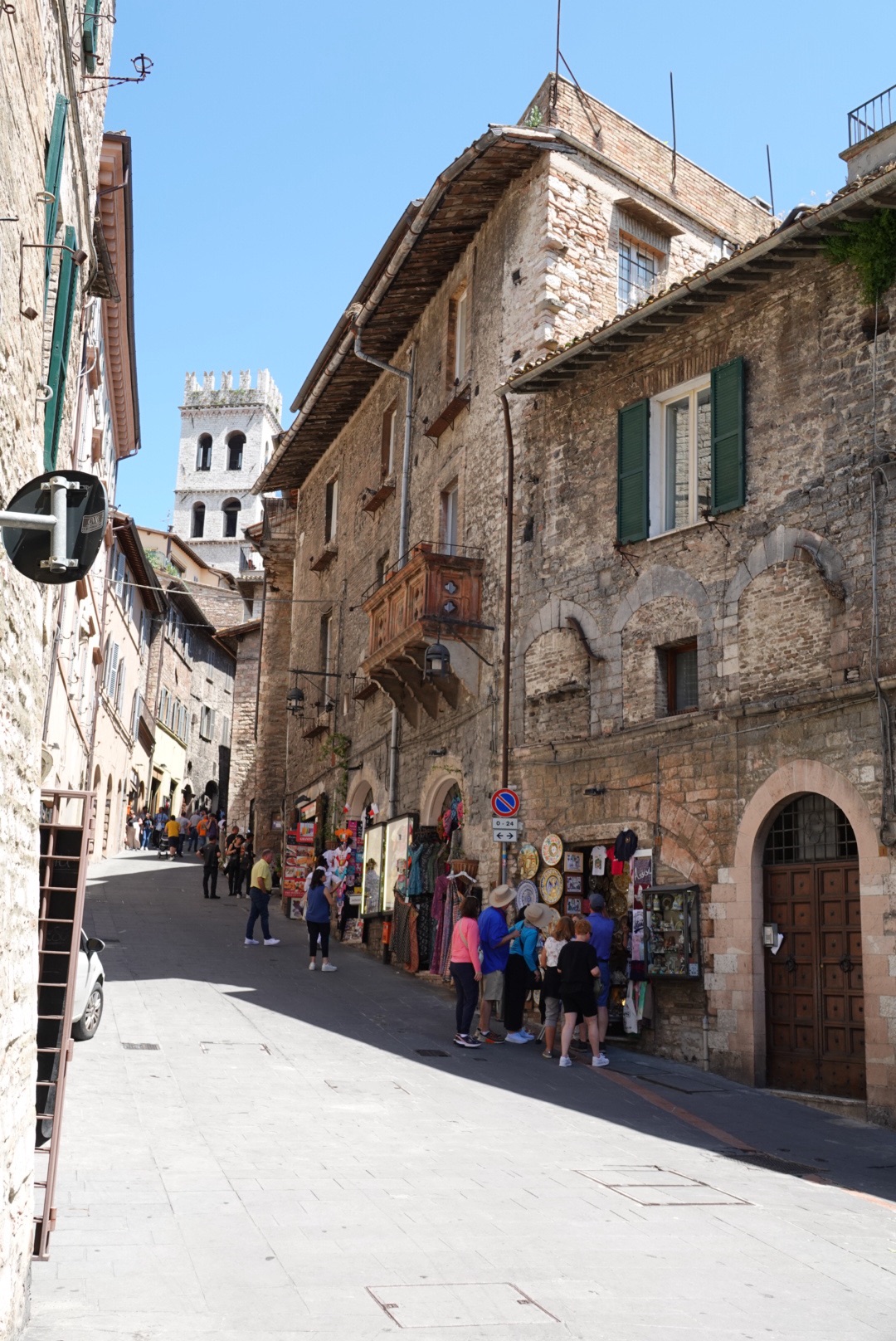

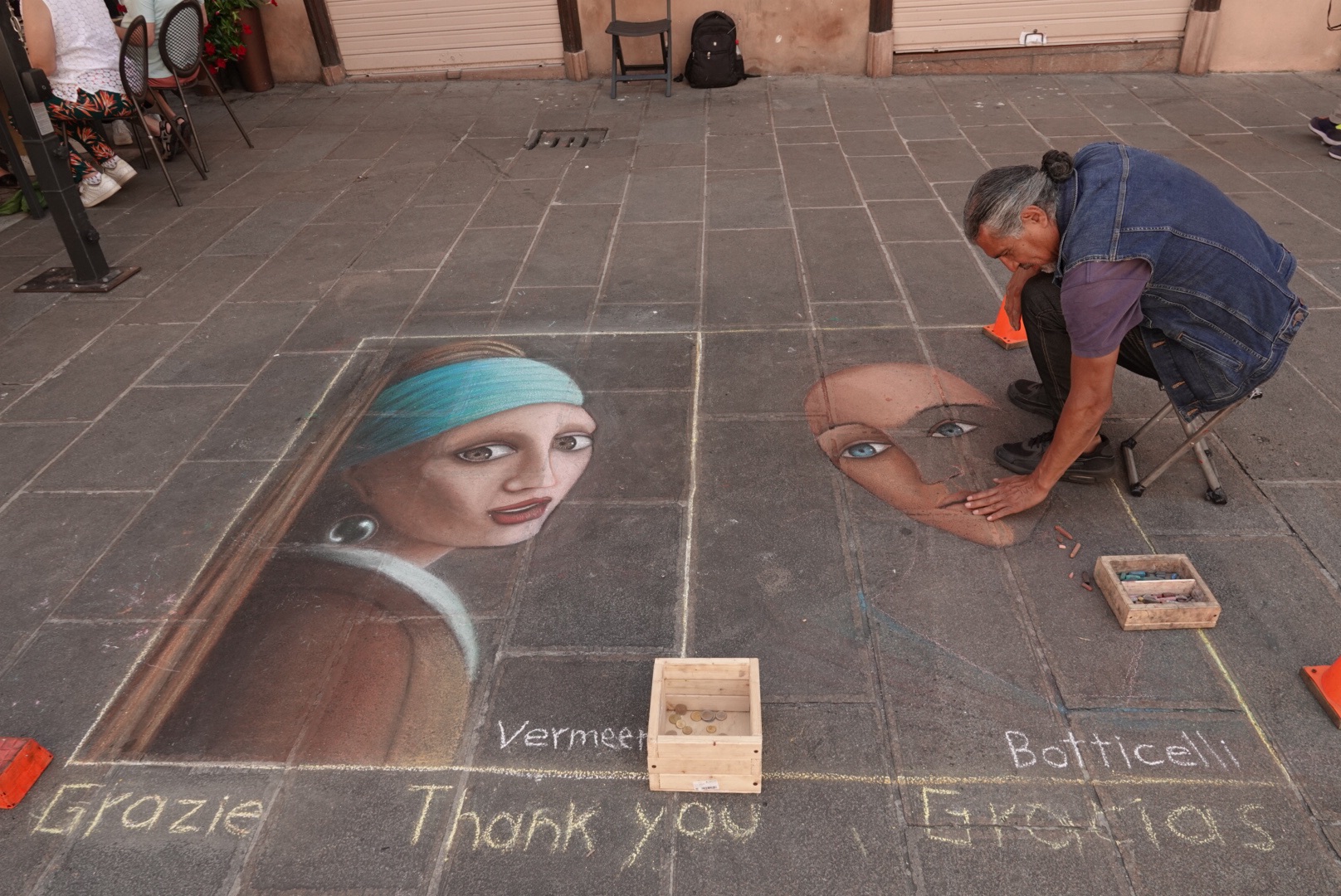
…we returned to the bus for the 2 1/2 hour drive to Florence, where tonight we took an evening walking tour and had another optional small group dinner.
After Assisi, we were taken directly to our hotel in Florence (Firenze in Italian), for 2 nights staying at the Hotel Grifone Firenze on Via Gaetano Pilati. The hotel’s website describes its location as “in the Bellariva district, ideal for discovering Florence. A nice walk along the banks of the Arno will take you to the historic town centre in 20 minutes or the no. 14 bus (the bus stop is next to the hotel) will take you to the Cathedral in 25 minutes.” While our room was still very plain, the hotel was definitely a cut above our accommodation in Rome.

After a short group limo ride from our hotel, we entered Florence’s historic centre on foot via an ancient Medici gate leading to a scenic outlook on the south side of the Arno. From there we could gaze over the entire city centre, the Duomo, the Palazzo Vecchio, the most recent city walls from the 1300s, and the river.
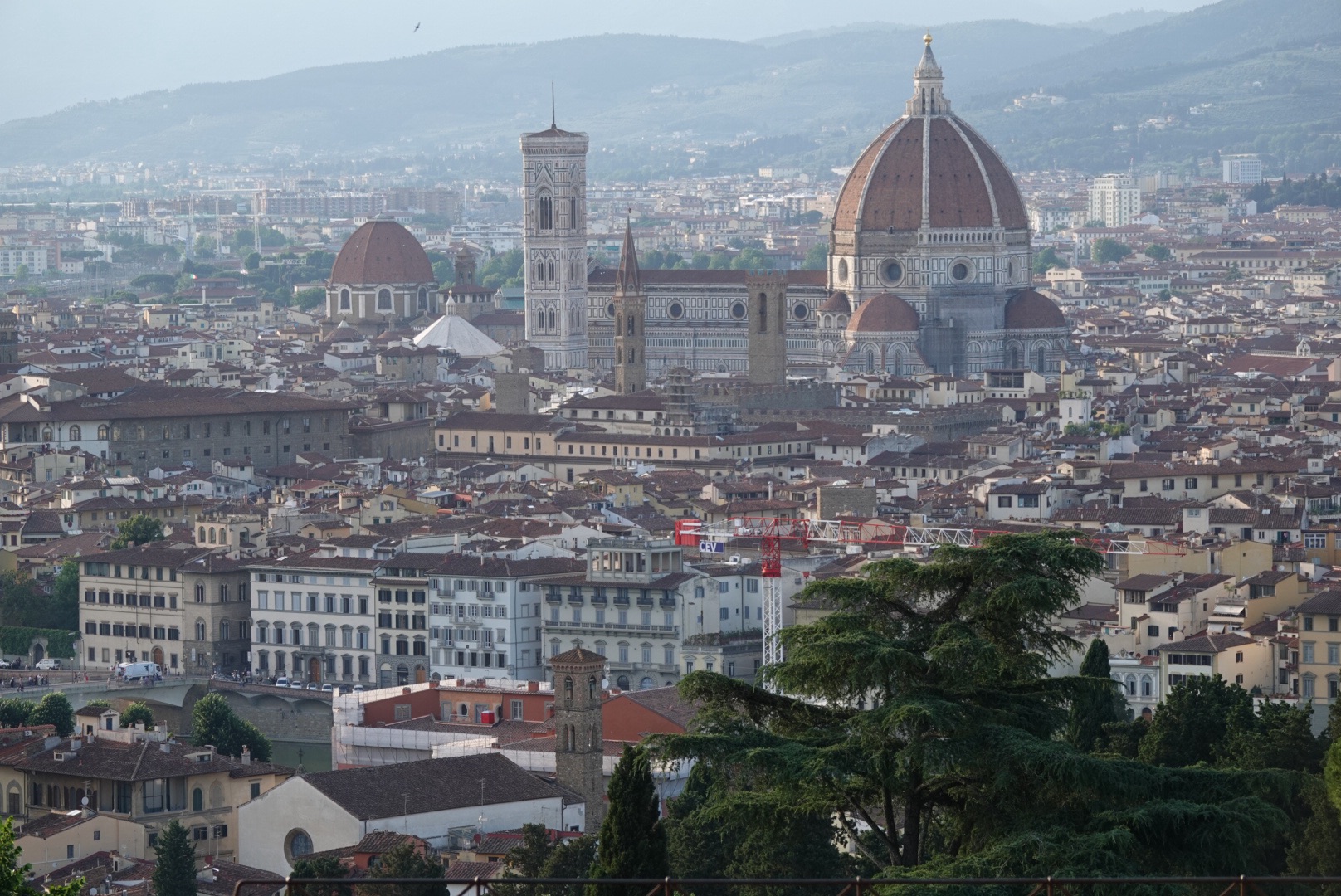
On the hill is a Romanesque Florentine church from 1013 dedicated to Saint Miniato (St. Minas in English), the first martyr of Florence in the year 250. Both the white and green marbles come from Tuscany, and are said to represent faith and hope respectively. The church is adjacent to a small Benedictine monastery, and just above a cemetery where wealthy Florentines were buried.
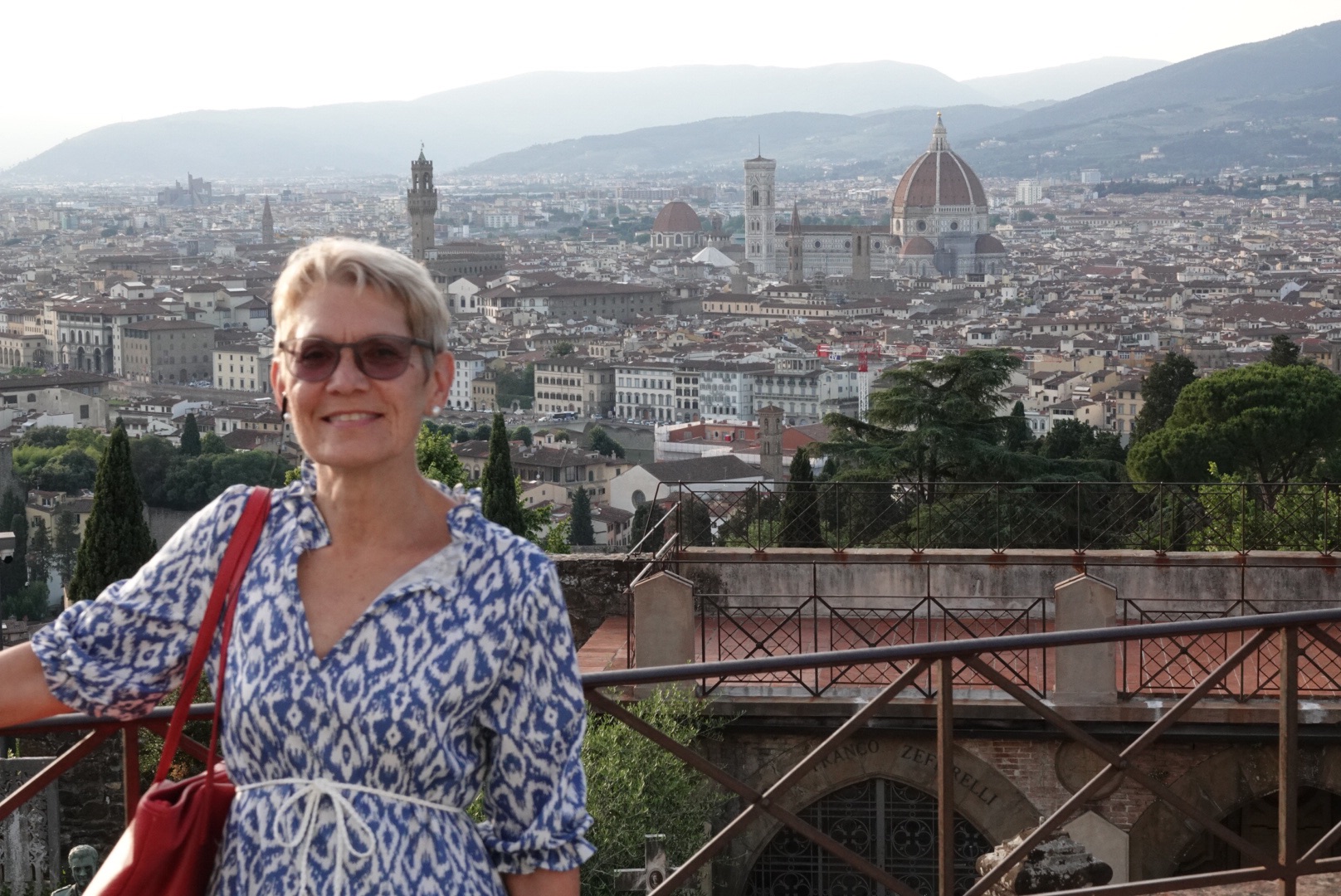


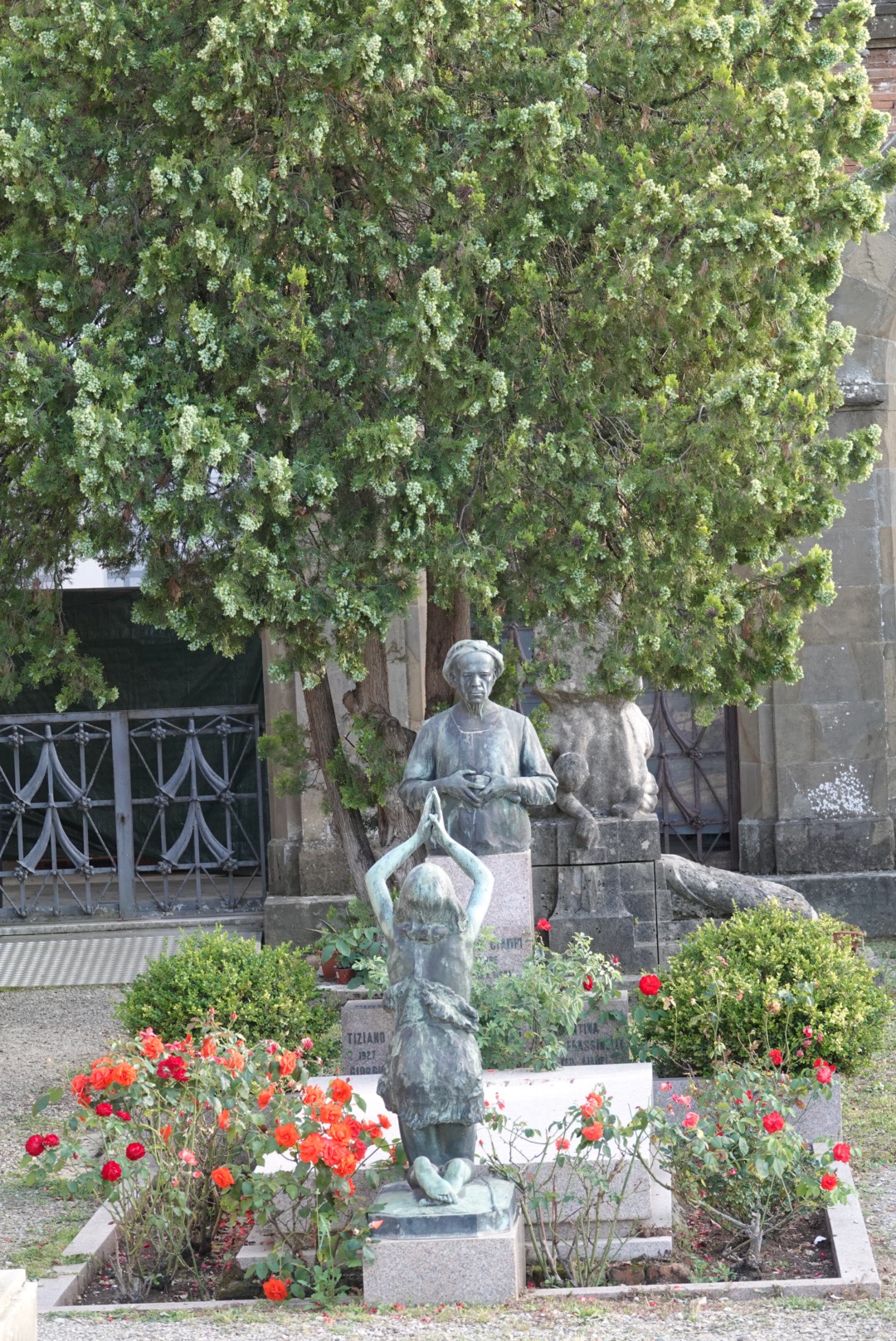

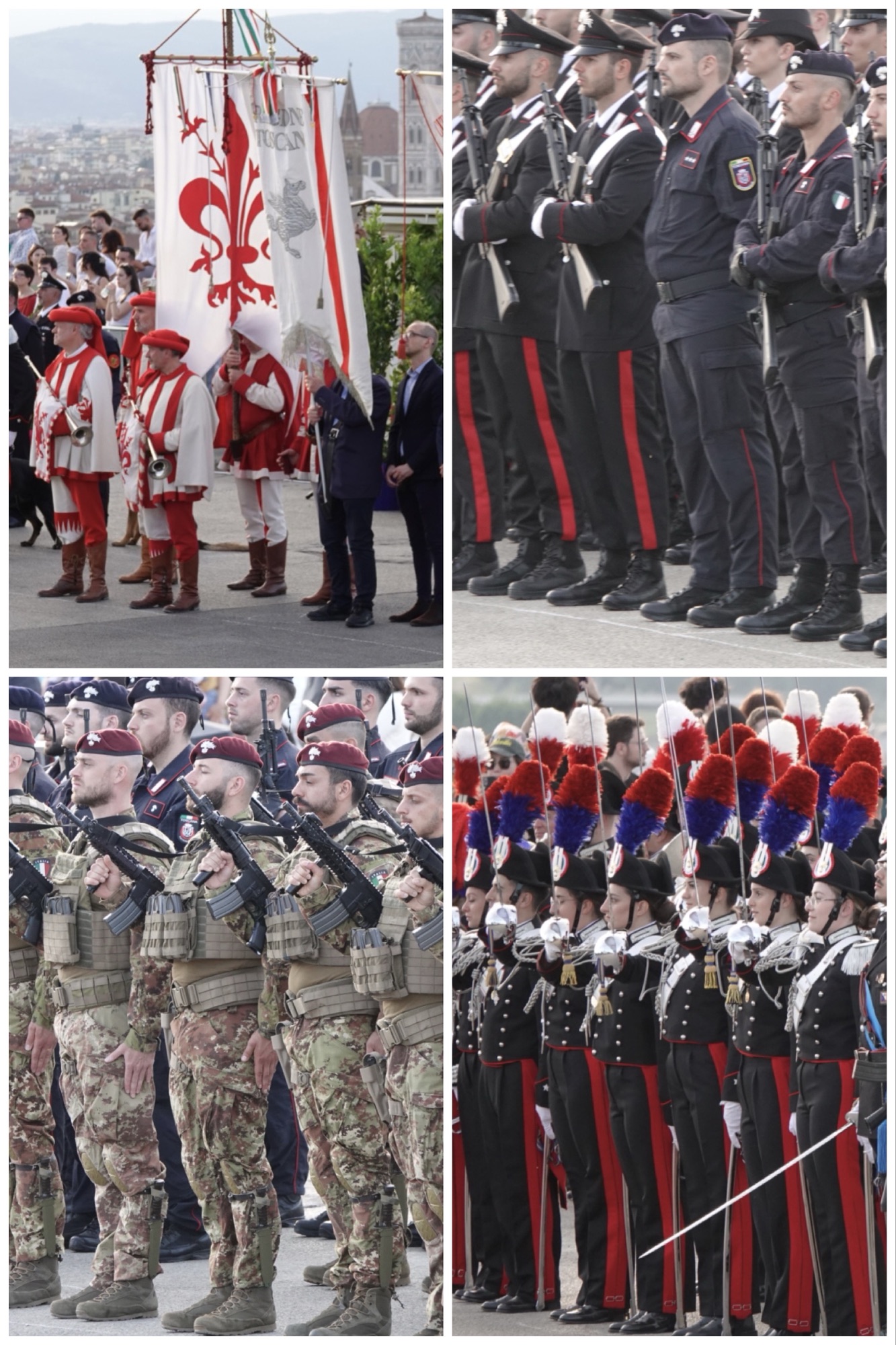
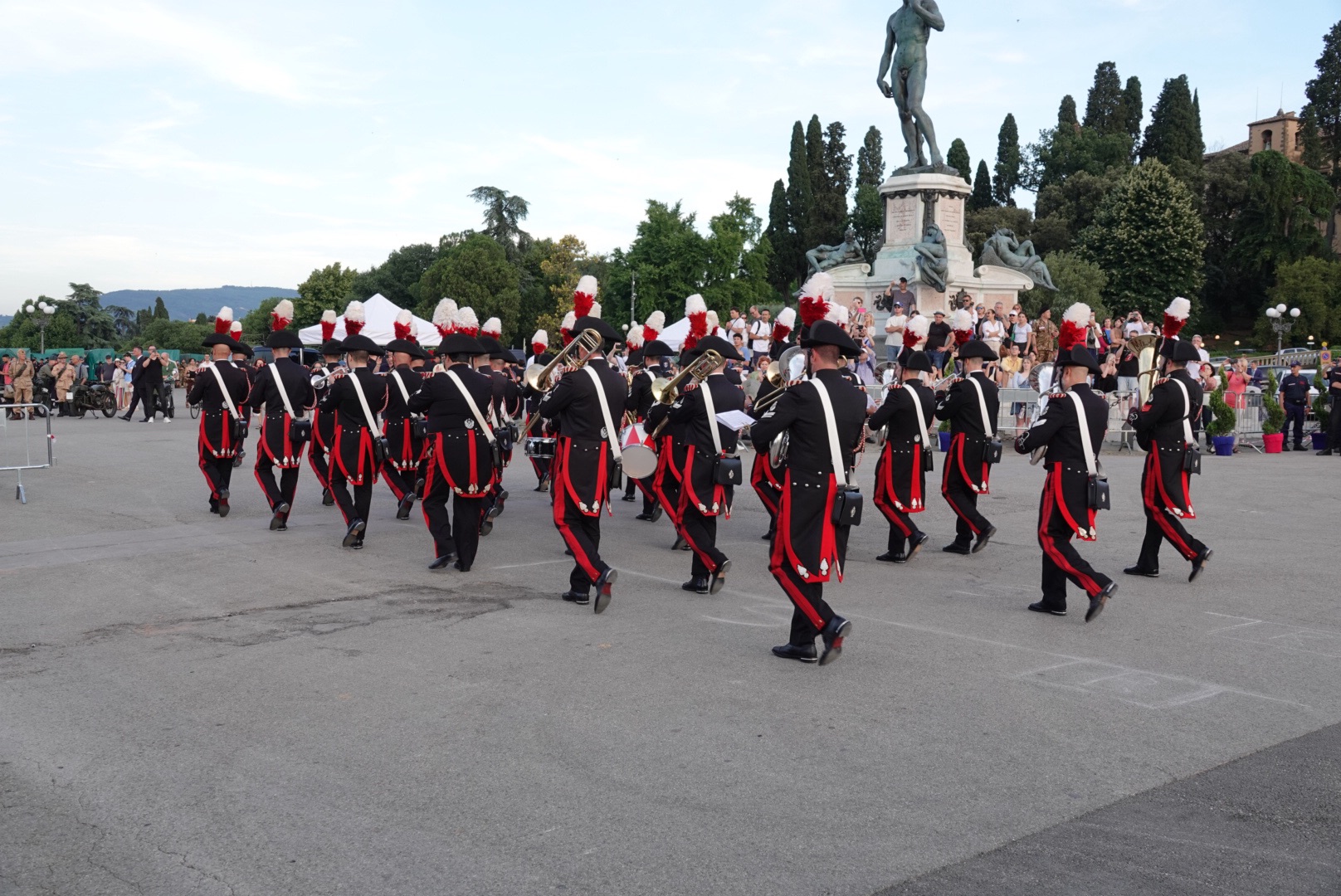
Next we headed to the Michelangelo Square. Along our walk, we passed a formal celebration of the Carabinieri, one of the arms of the Italian police force who are tasked to protect people, in conjunction with the military. (Theresa Polizia are specifically for traffic). It was quite impressive seeing so many policemen in elegant dress uniforms all in one place, and somewhat sidetracked our tour! Our guide was uncertain as to whether the celebration had to do with D-Day, but apparently today’s date was coincidental with the 210th anniversary of the carabinieri. Our guide suggested that tonight might be a night that we would not have to worry about pickpockets and could just walk around with our bags open, since the city was full of carabinieri. We listened to the entire corps of officers and cadets sing the stirring Italian national anthem – what an unexpected bonus!
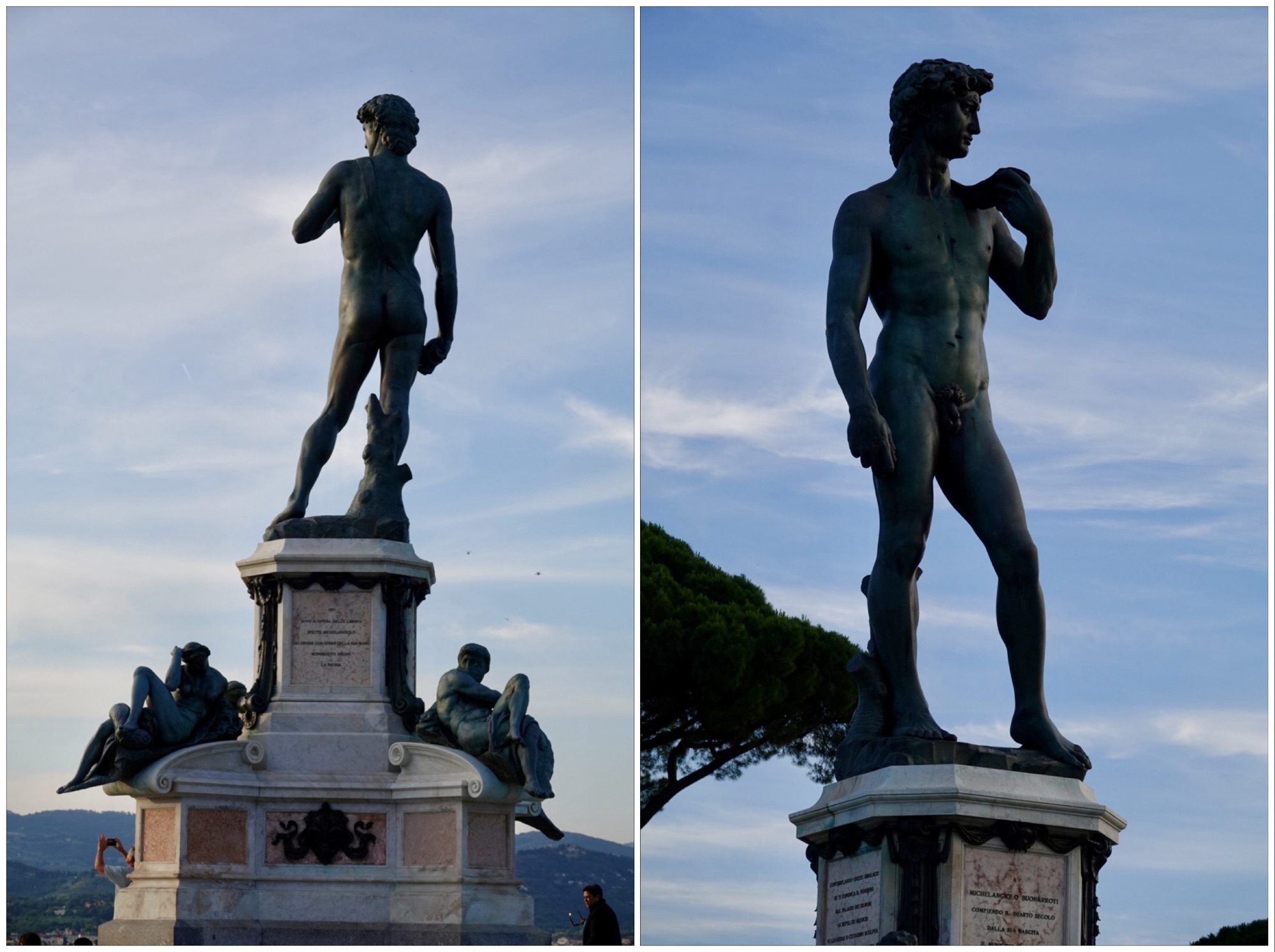
At that square we saw the first of many copies of Micelangelo’s famous David located in the city, this one in dark green Tuscan marble.
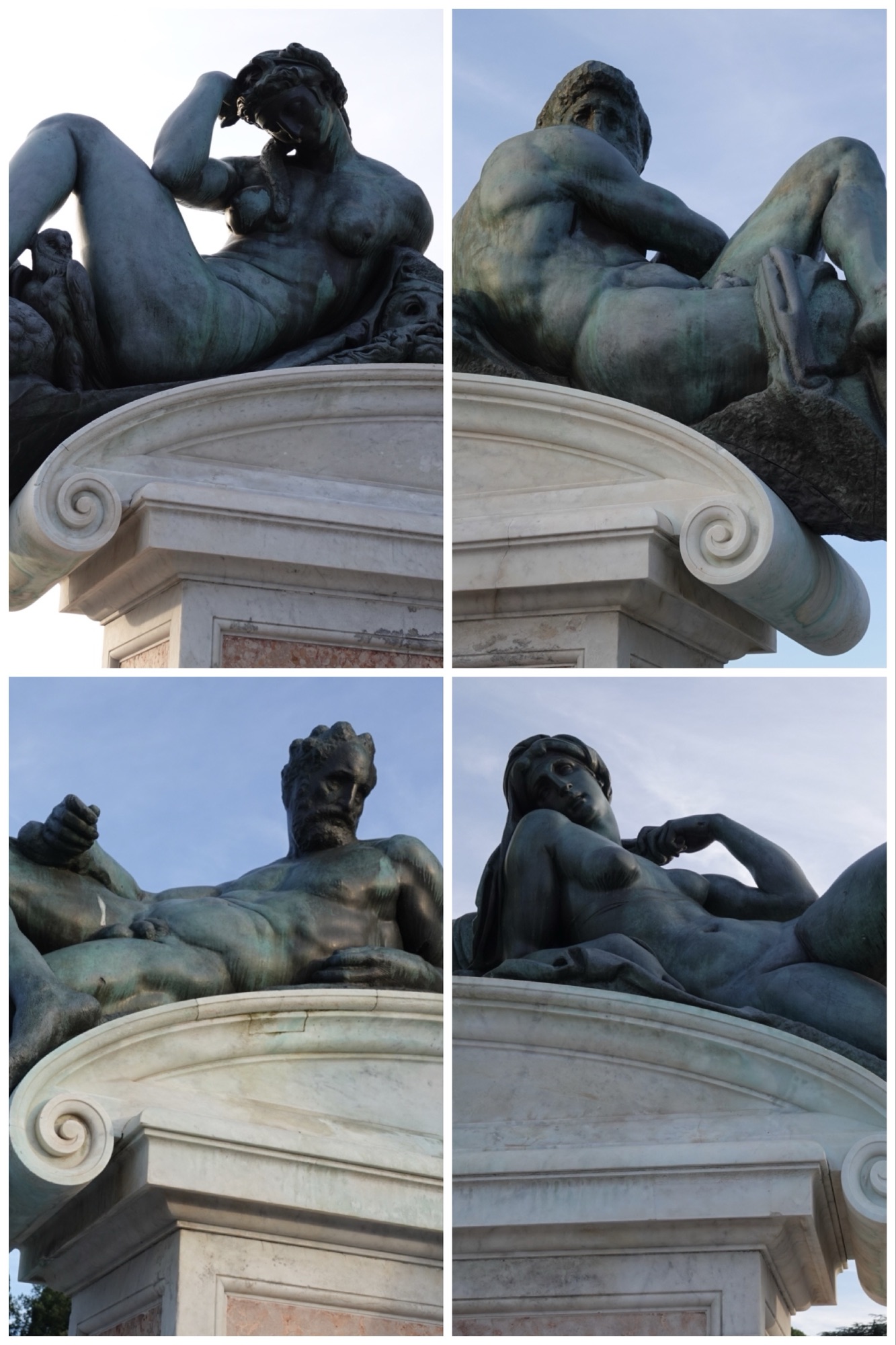
The four statues surrounding David represent night, dawn, day and dusk, and are also copies of the original white marble ones used at a burial ground; they represent the one thing that changed for no one – the passage of time.
The more time we spend in this area and the more we talk about Michelangelo as painter, sculptor, and architect, the more I am reminded of Irving Stone’s wonderful biography, called “The Agony and the Ecstasy” that I read way back when I was in high school. I don’t know if copies are still in print, but I may need to try to find it and re-read it.
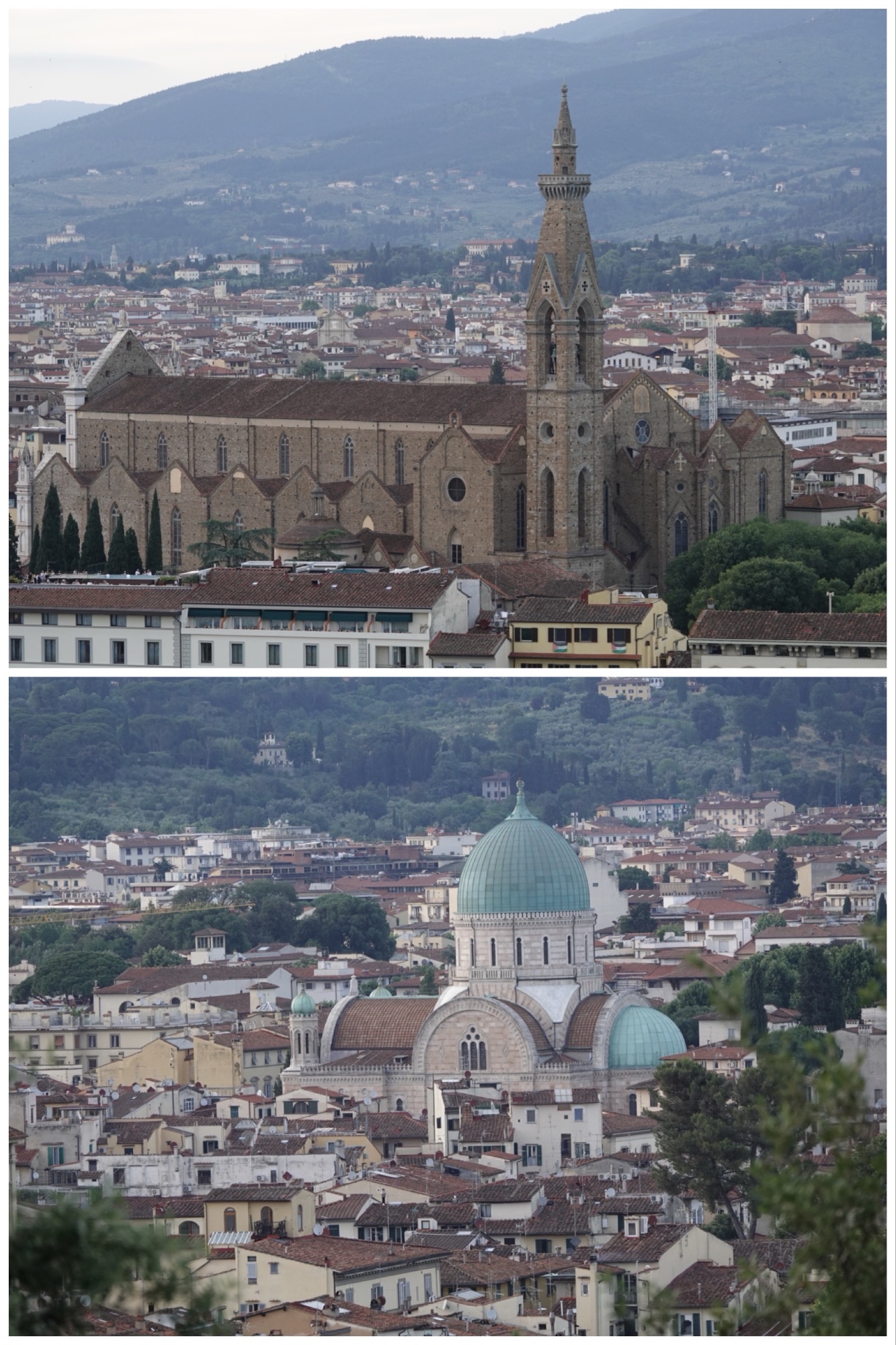
Michelangelo Square is also a lookout point over the city. From here we could see both the gothic style Santa Croce church where Michelangelo, Machiavelli and many other very important Italians are buried, and the green dome of the Florence synagogue.
Our evening ended with a lovely dinner, at which really enjoyed both the food and the company.
It was a terrific day. Our only complaint would be that the evening event in Florence, while wonderful, bore little resemblance to exoticca’s description of what we paid for: not “night”, not “illuminated”, and not a 3-course dinner as in the detailed excursion description.
Tomorrow: more Florence, with highlights being the Uffizi gallery and reconnecting with my friend Pat who is lucky enough to be living here right now!
 Rose and Ted’s Excellent Adventure
I also read and loved The Agony and the Ecstasy in HS. It might have had something to do with me becoming an Art History major… It was a historical novel, not a biography, though — thoroughly researched and more vivid for the author’s freedom to recreate interesting scenes and conversations from Michaelangelo’s life. Thanks for the reminder — hadn’t thought of it in years. It still gets great reviews on Goodreads! Now I just have to get back to Italy…
LikeLiked by 1 person
Hi. I really enjoy your posts. I’m wondering if you have investigated Overseas Adventure Travel. Most of their trips are small groups and the hotels are very centrally located and very nice. They are an American company, so perhaps that is an issue, but I’ve taken many tours with them and recommend them highly. Best, Laura Dankner in western MA (only about 4 hours from the Canadian border!)
Laura Dankner
>
LikeLiked by 1 person
Thanks for the recommendation! We’ll check them out.
LikeLike
Lots of my friends have traveled with OAT as well and really recommend them, especially if you like to meet the people wherever you are and not just see the sights. I hope to try one of their trips some day.
LikeLiked by 1 person
We enjoyed the Poor Claire’s in Assisi, and the next time in Florence see the original Michelangelo’s Dawn and Dusk in the Medici Chapel.
LikeLiked by 1 person
I am enjoying the opportunity to remember our trip to Italy in 2022 through your trip. I feel fortunate that we were allowed more time in each location!
LikeLiked by 1 person