WARNING: This post has a TON of photos!
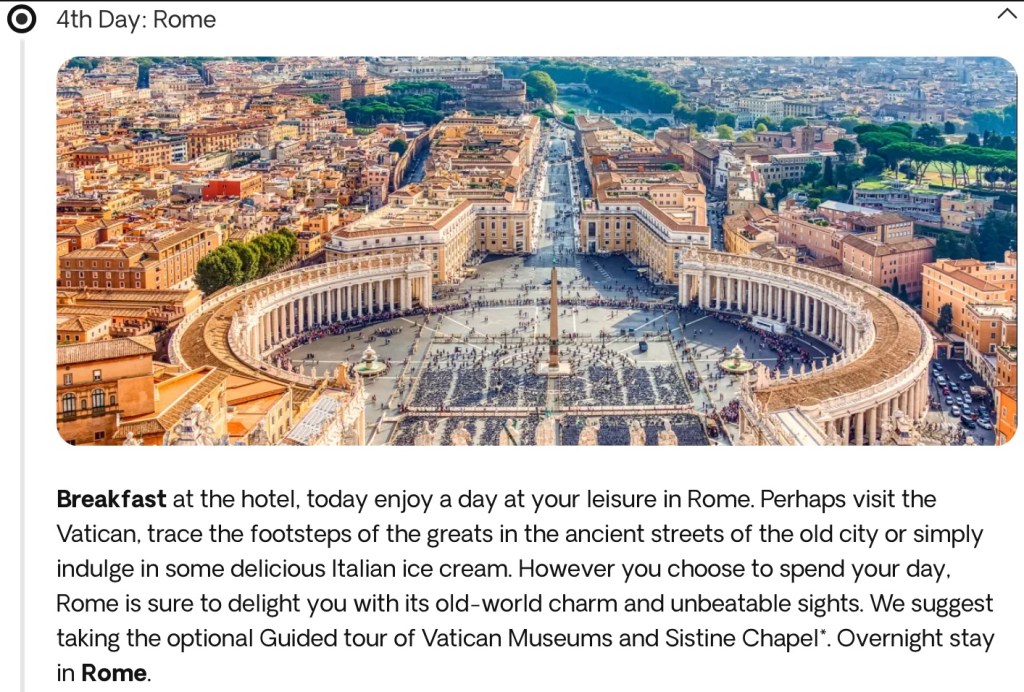
I regretted not having enough time to tour the Vatican on our last visit, so this optional tour was a “must do” this time. What a place!
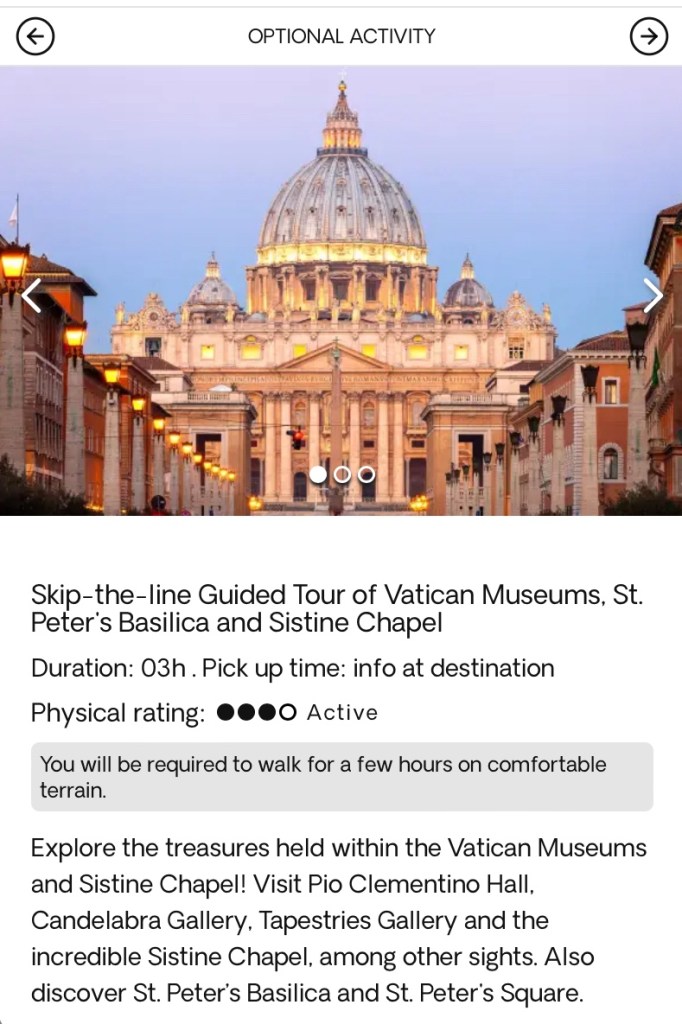
With our skip-the-line passes, we walked past literally hundreds and hundreds of people waiting to get into the Vatican Museum, and headed directly to designated area where we met our guide, Vincenzo, who spent the next 3 hours with us, telling us all about the history of what we were seeing. I cannot imagine touring the museum without a guide.
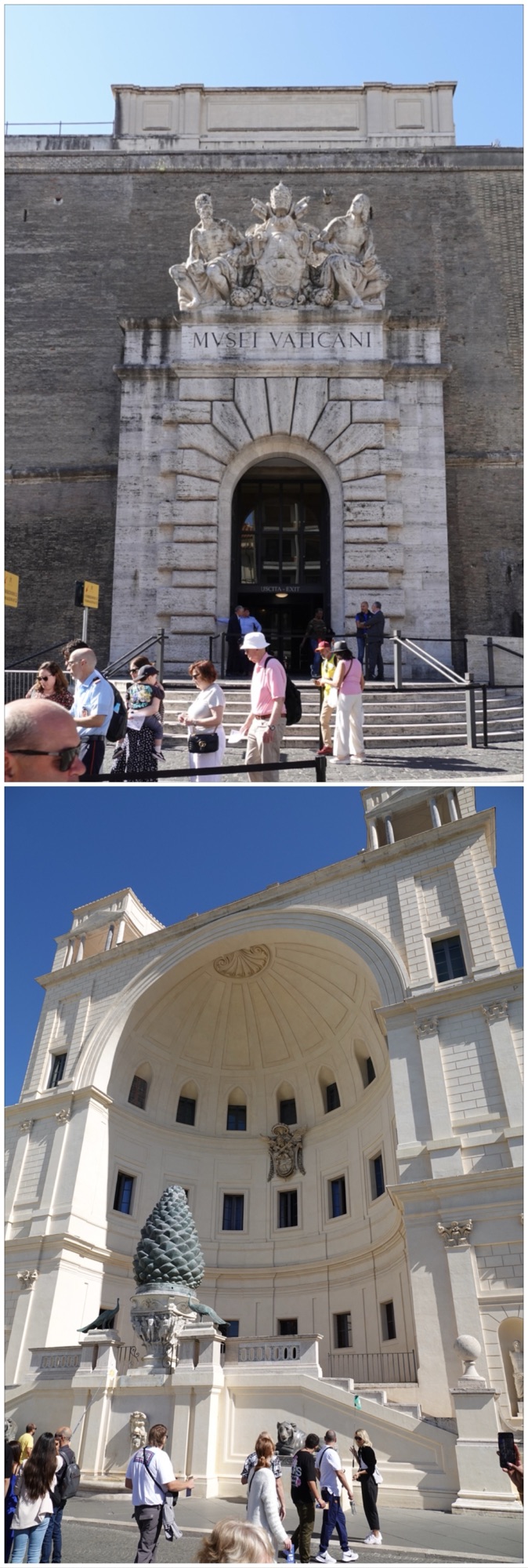
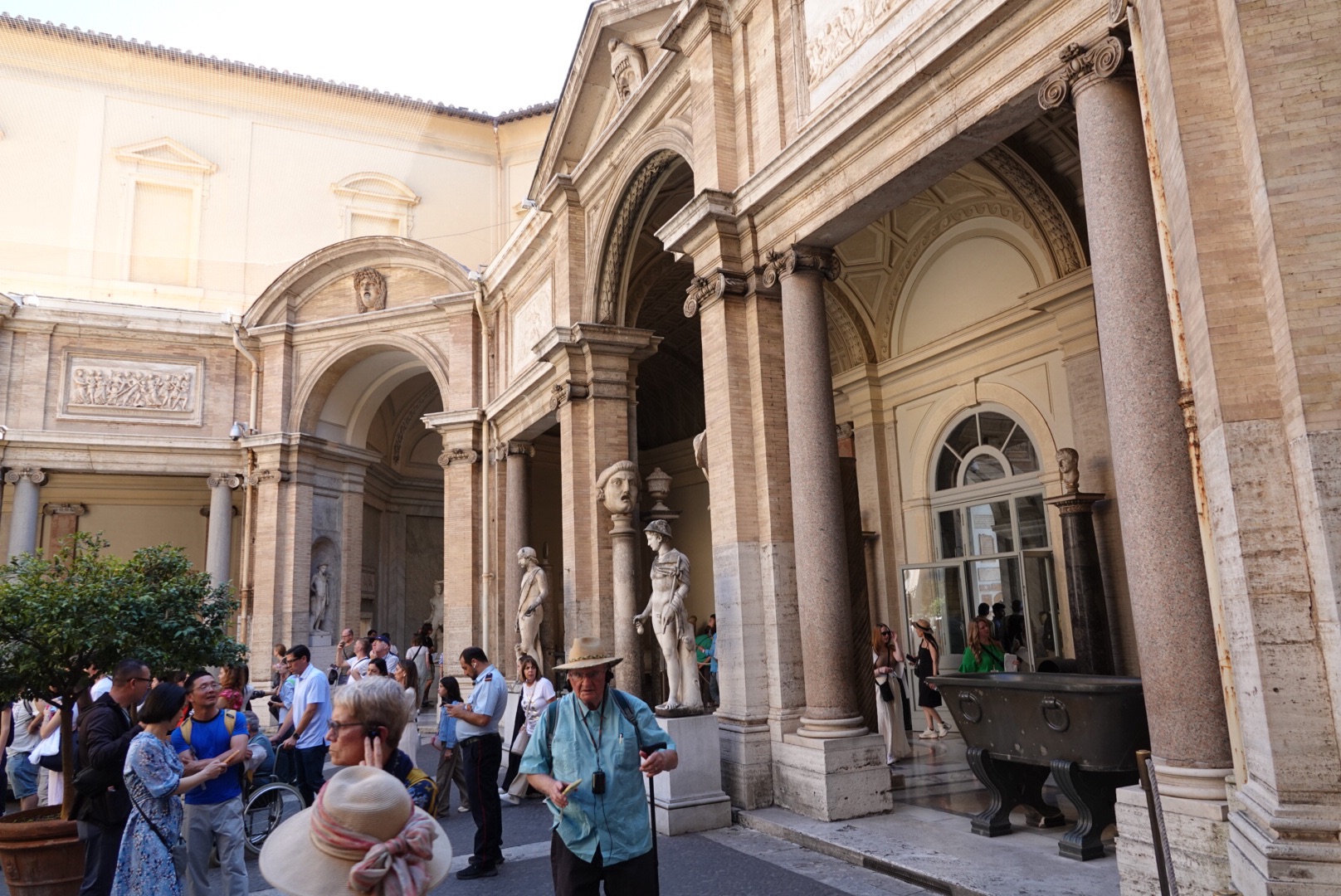
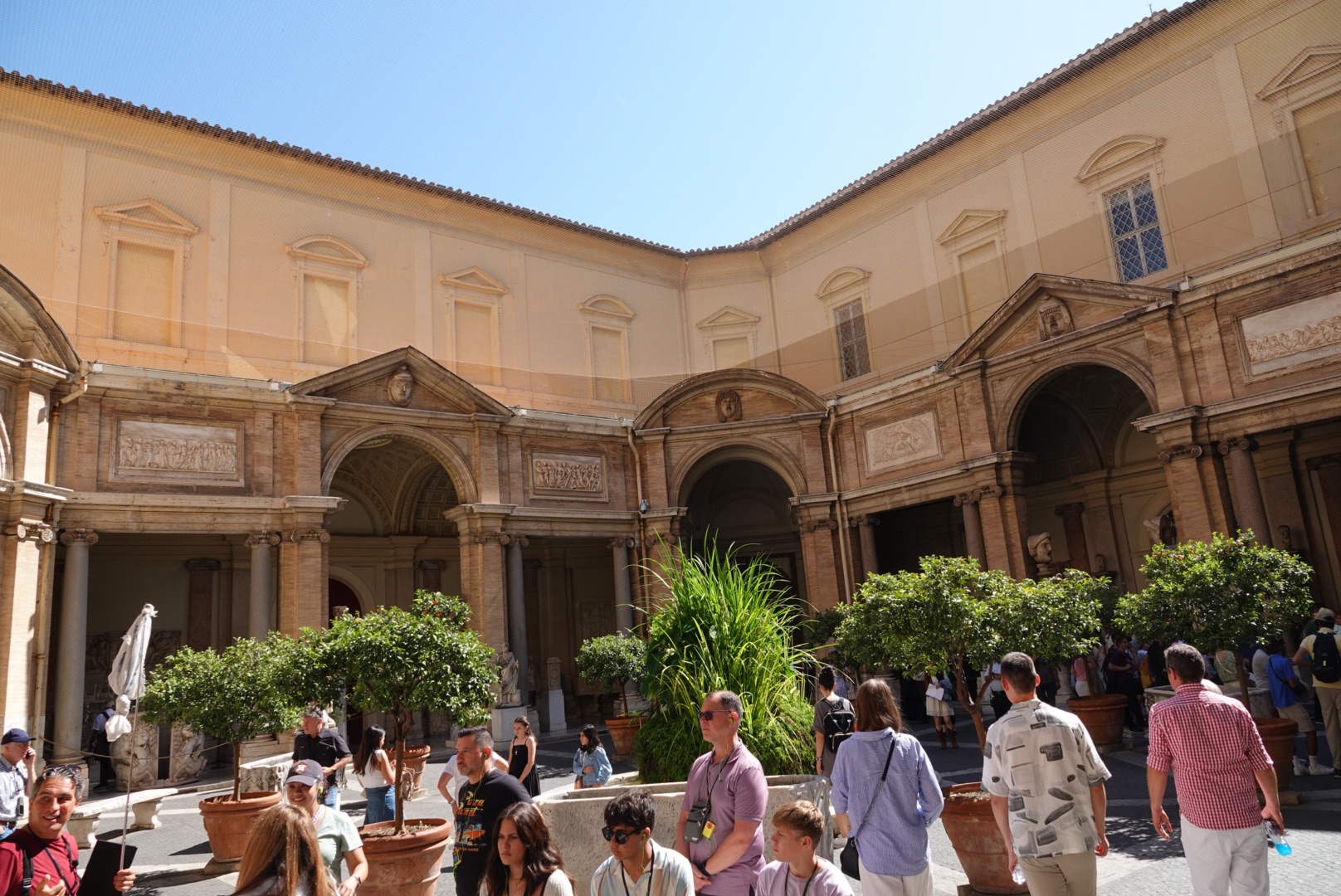
The Vatican Museum has been open to the public since some time in the 1700s, but while the public is invited to come in they are definitely not invited to linger. Even in the halls where photography is allowed there are security guards, encouraging you to “move along, move along”. There’s really no opportunity to just stand and study any one item. It’s a matter of chance whether you notice items or are able to read about their significance as you’re walking quickly past them all.
Given the plundered riches from all over the former Roman Empire on display here, next to fabulously valuable art from all over Europe, and artifacts from colonized Catholic countries, maybe it’s a good thing we don’t have time to think about how wealthy the Vatican and the Roman Catholic Church are?
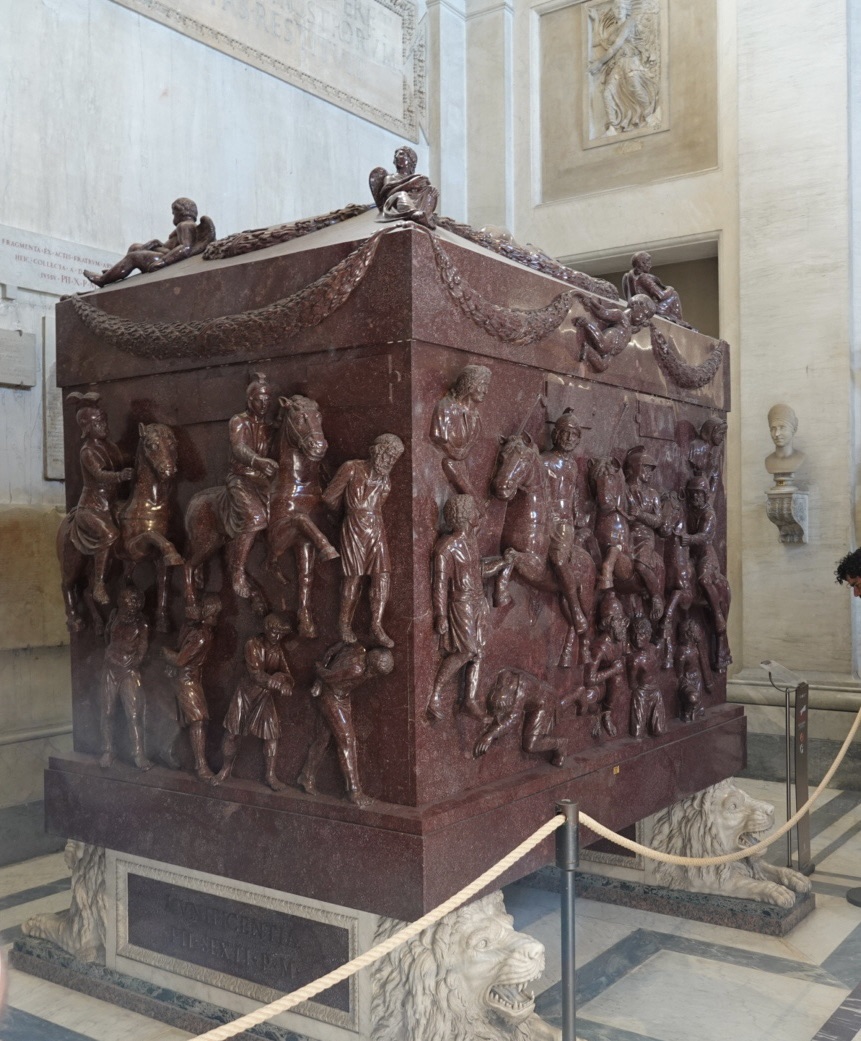
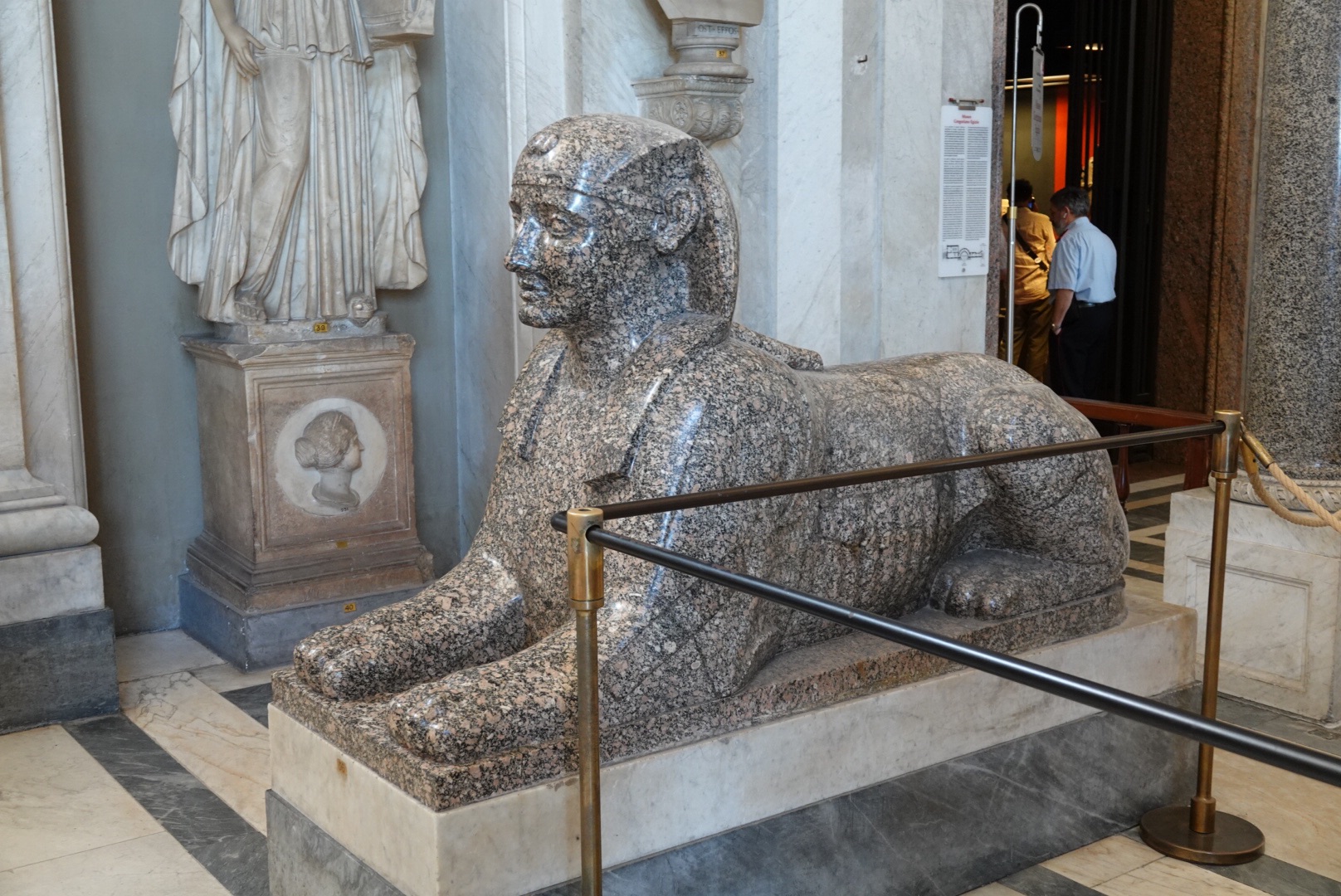
There are some really unique items, like this mosaic “menu” created for a wealthy Roman’s entryway as a temporary piece, announcing the menu for a lavish dinner party.

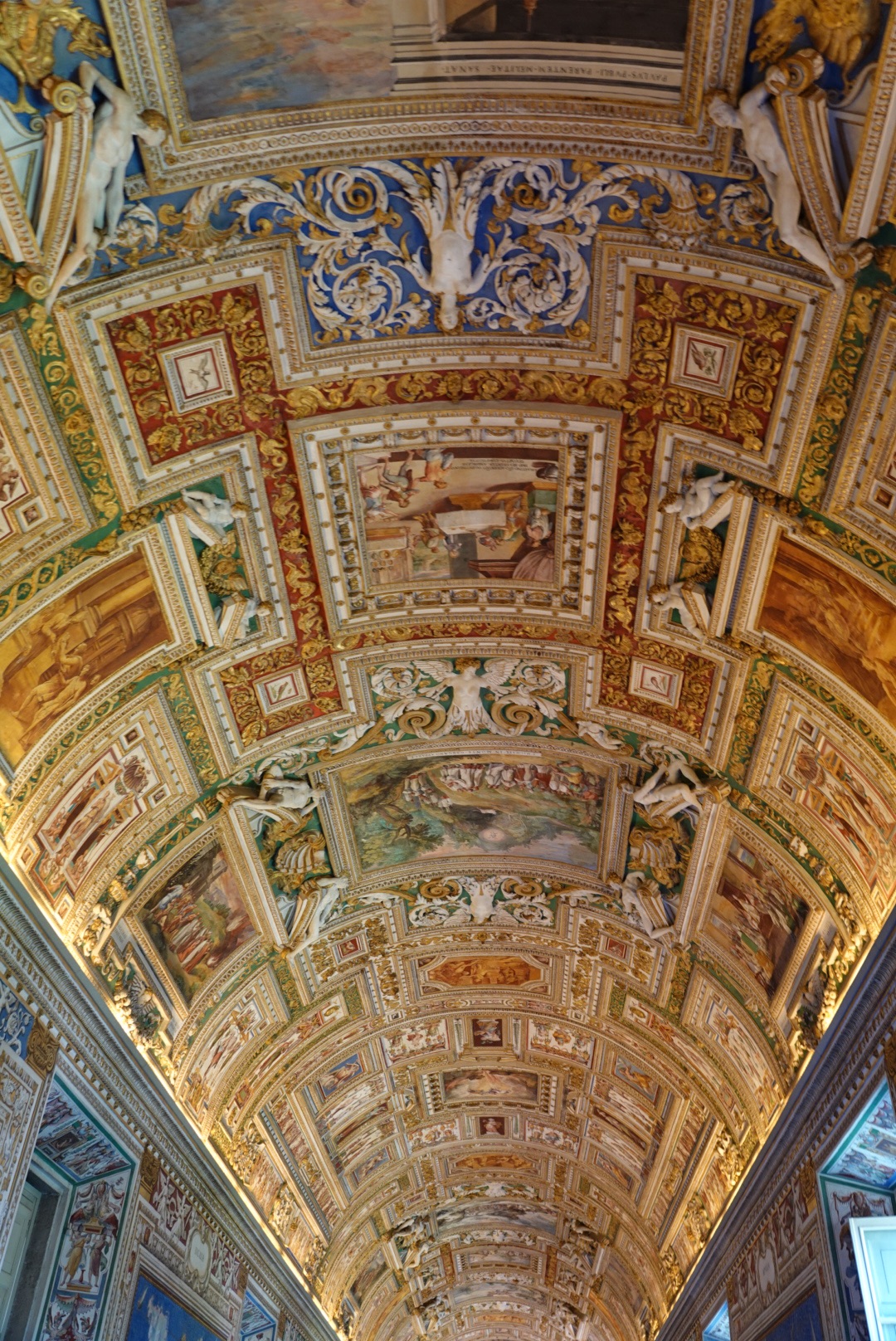
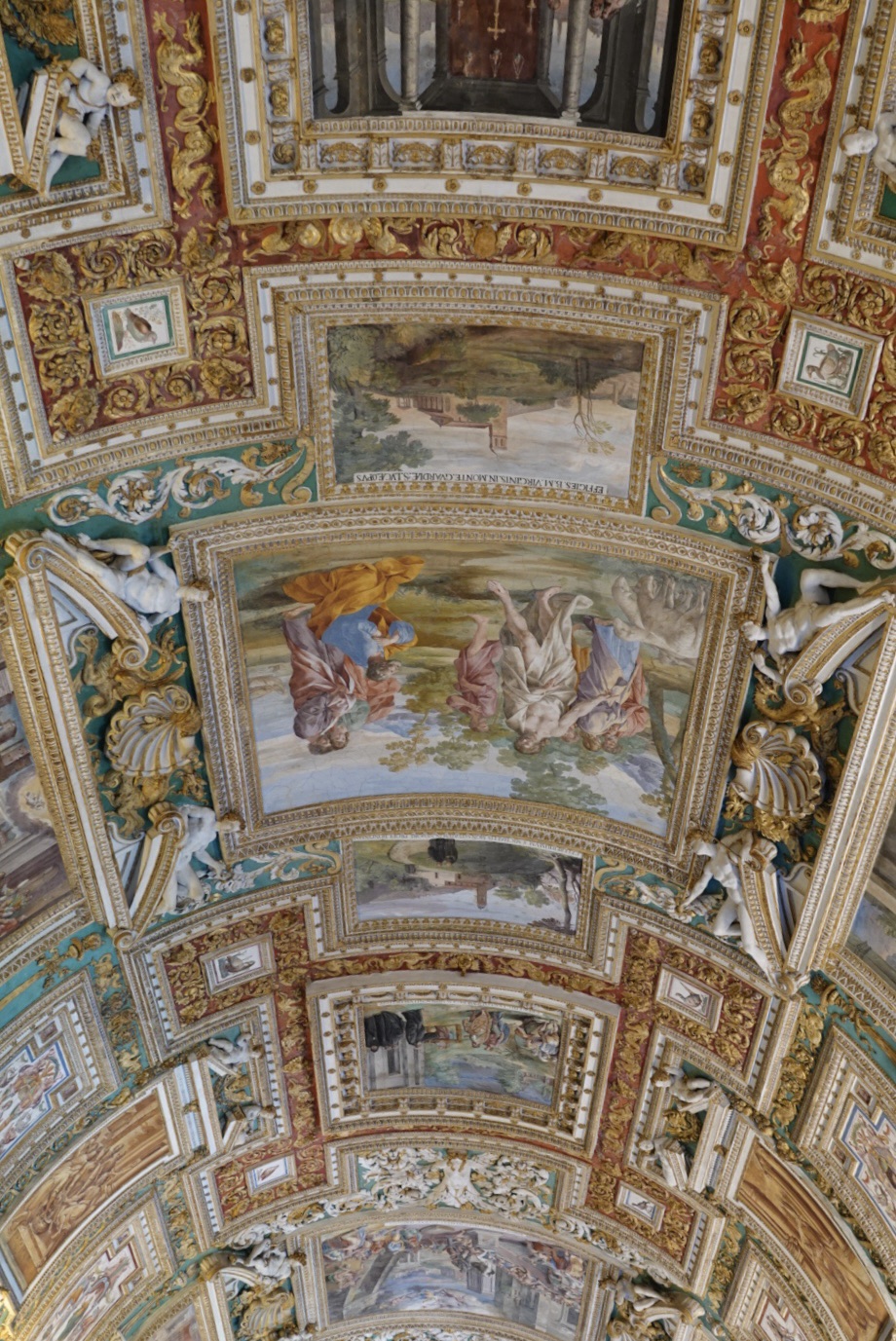
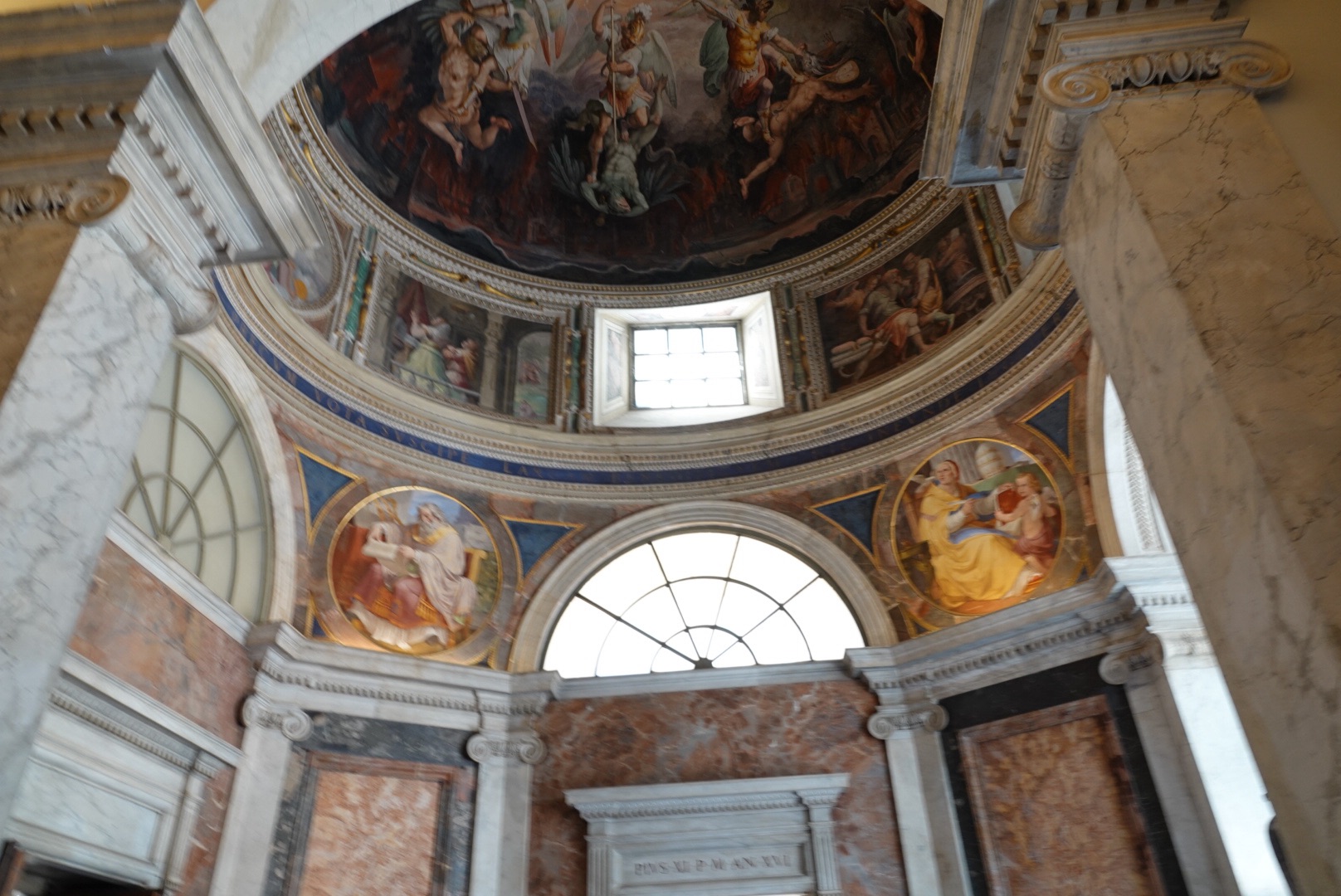
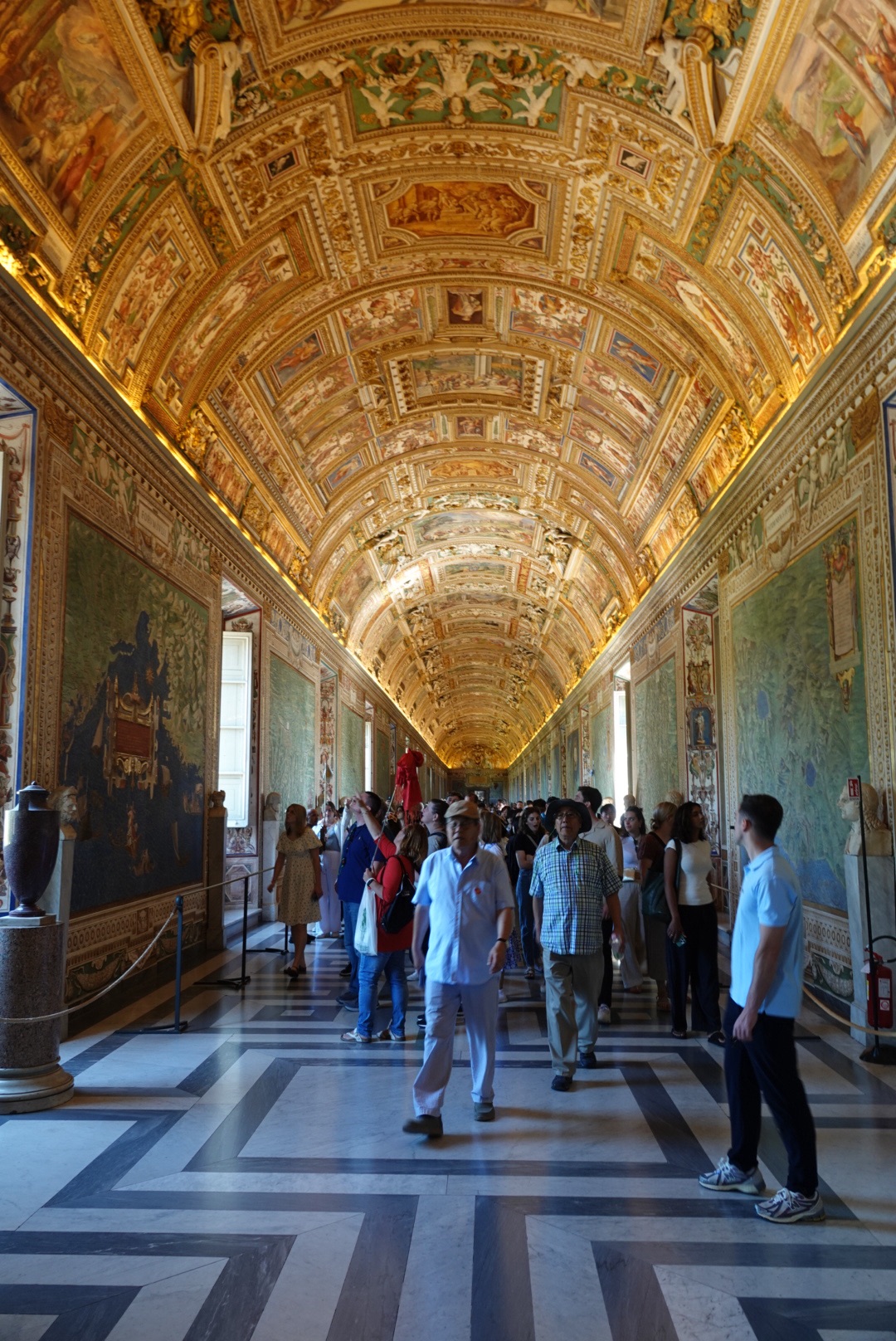
The museum itself is made up of many attached halls, all of which have incredible painted, frescoed, and stuccoed ceilings. Fresco (literally “fresh”) requires the pigment to be applied before the stucco/plaster dries in order for the colours to be so vibrantly preserved.

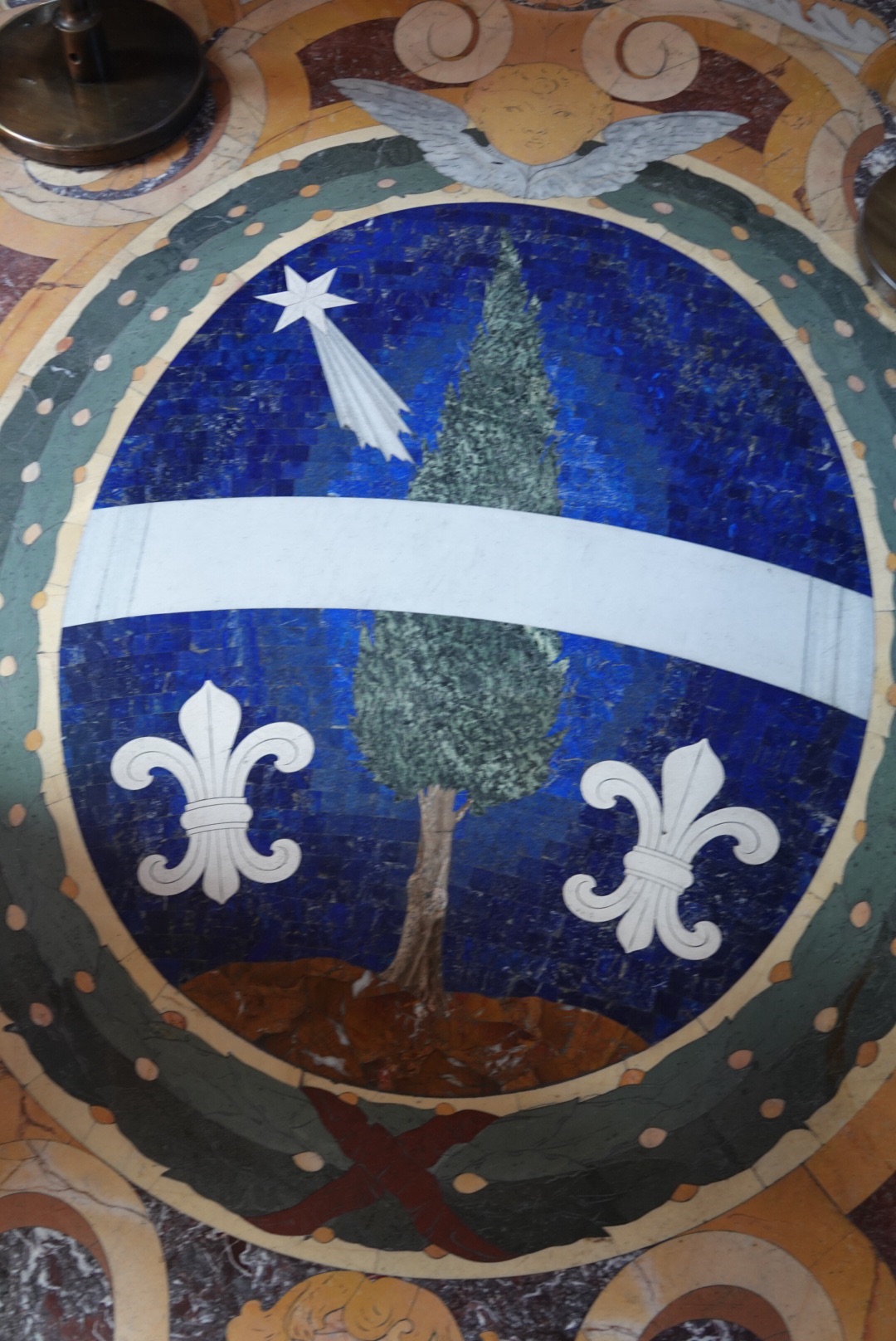
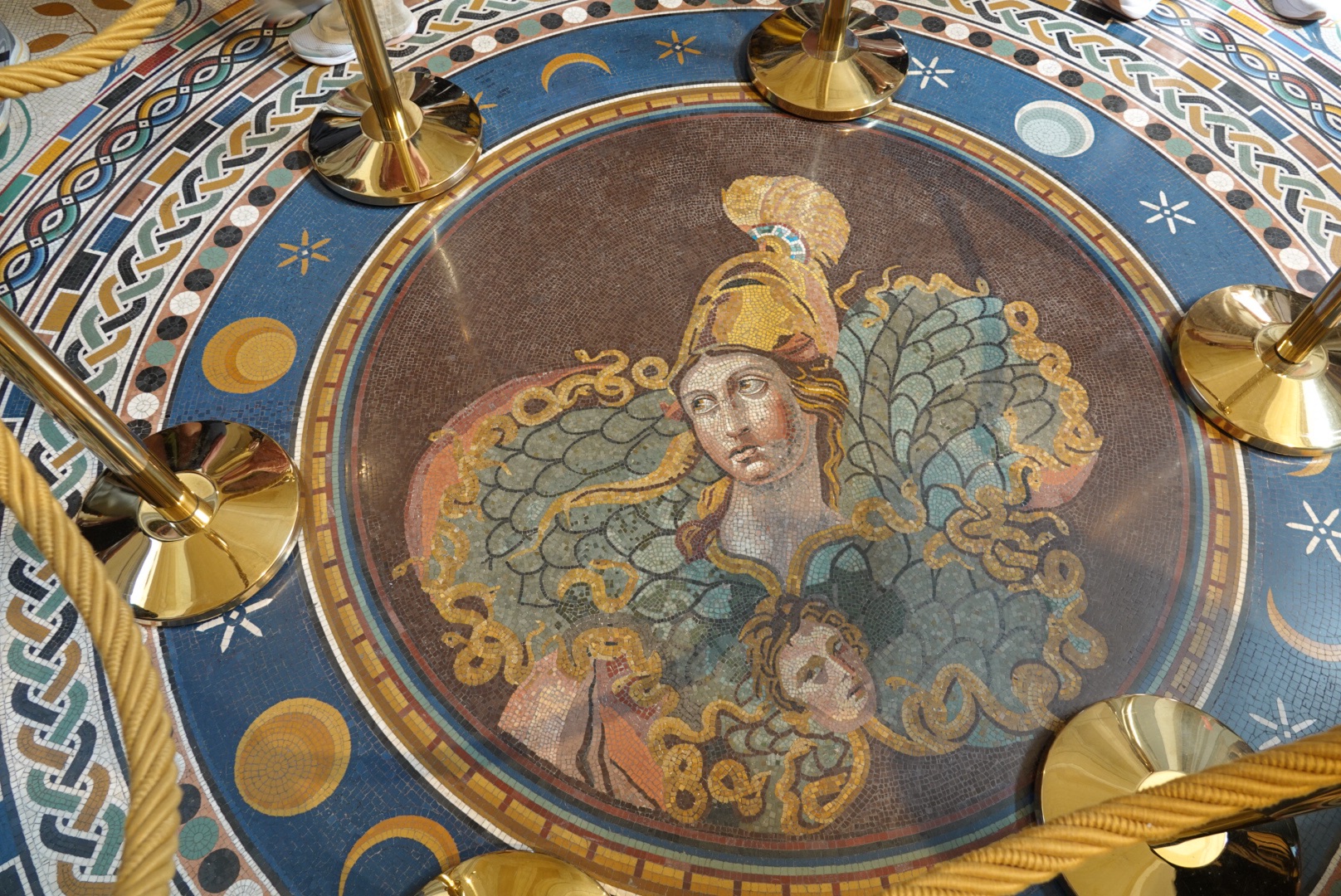
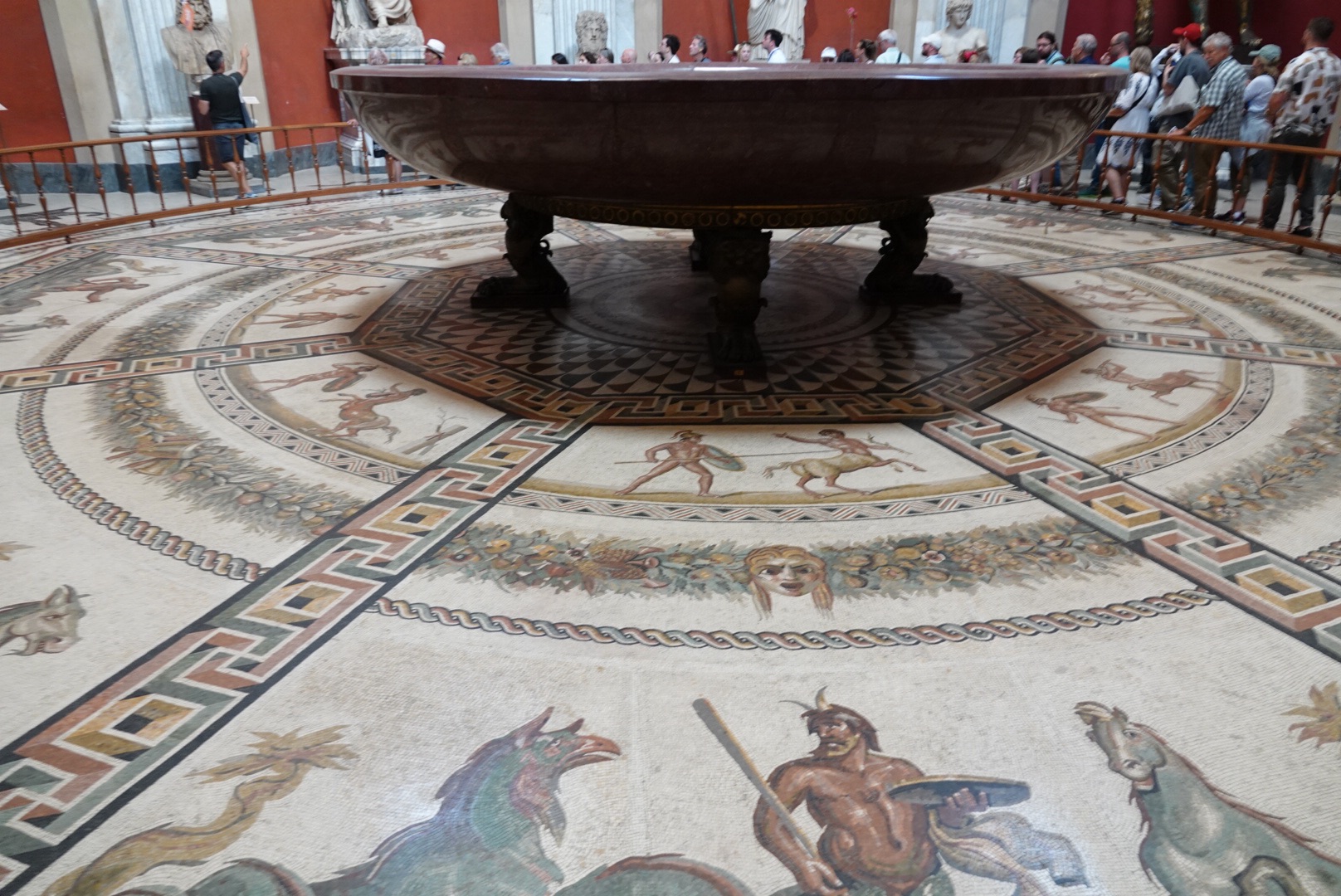
Not to be ignored, the marble inlaid floors are also magnificent. The deep blue is not blue pigment, but actual lapis lazuli semi-precious stone from Afghanistan! Of course, others are “only” ornate ancient mosaics.
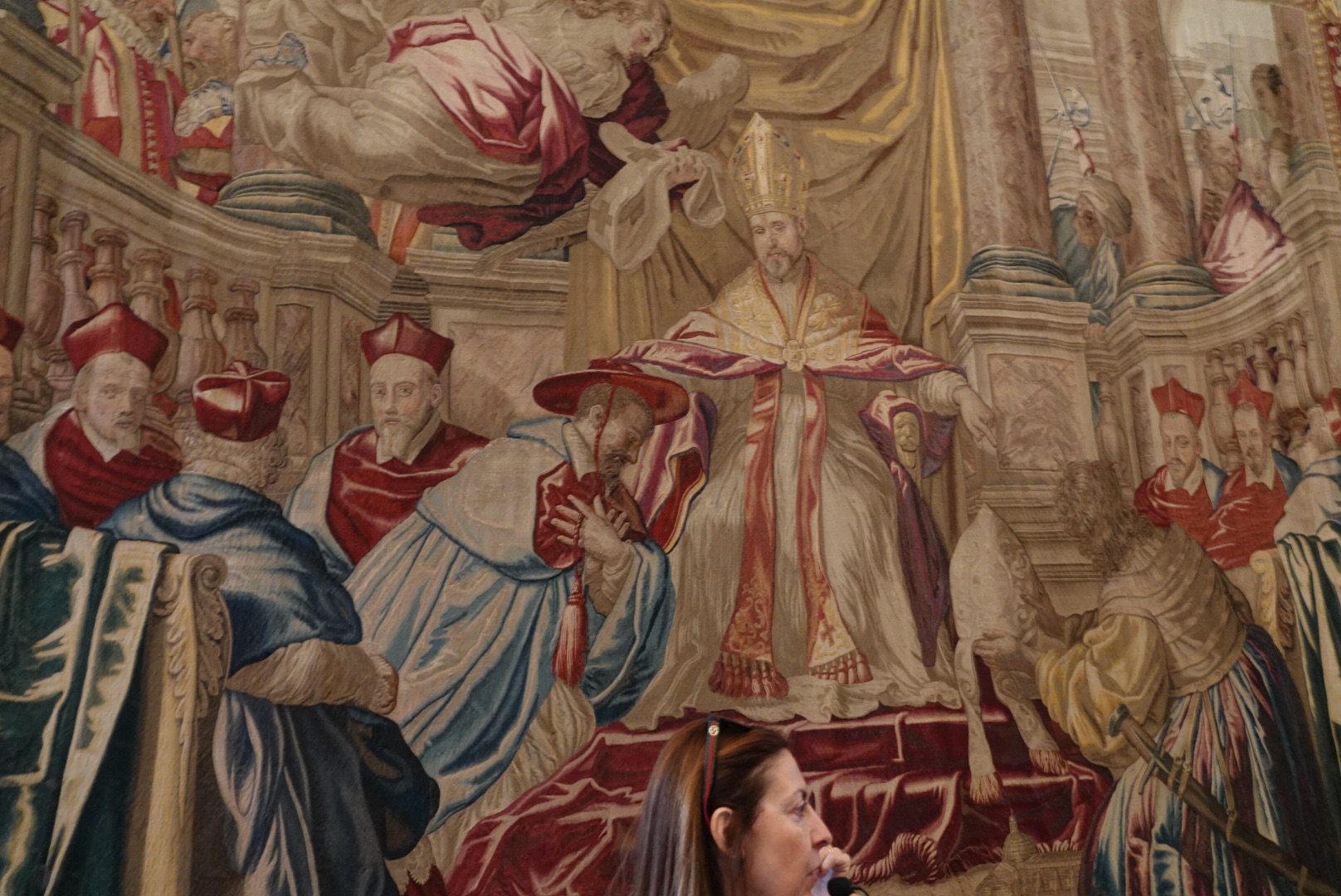
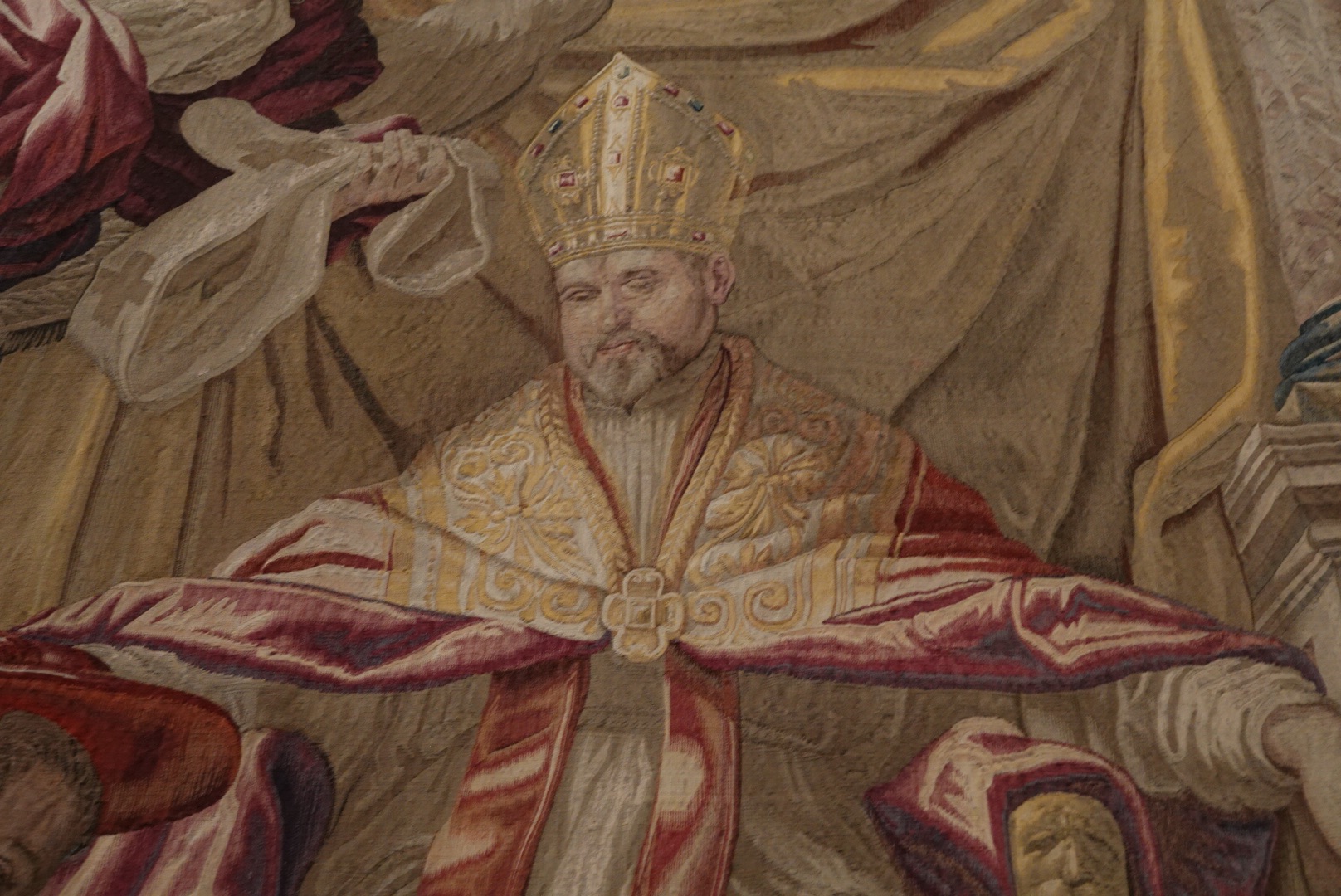
There is a tapestry hall filled with 16th century tapestries made using Roman designs, but Flemish/Belgian workmanship. The tapestries have kept their vibrant colours for the past 500 years: reds, blues, white, and greens all created from silk, wool and even gold threads.
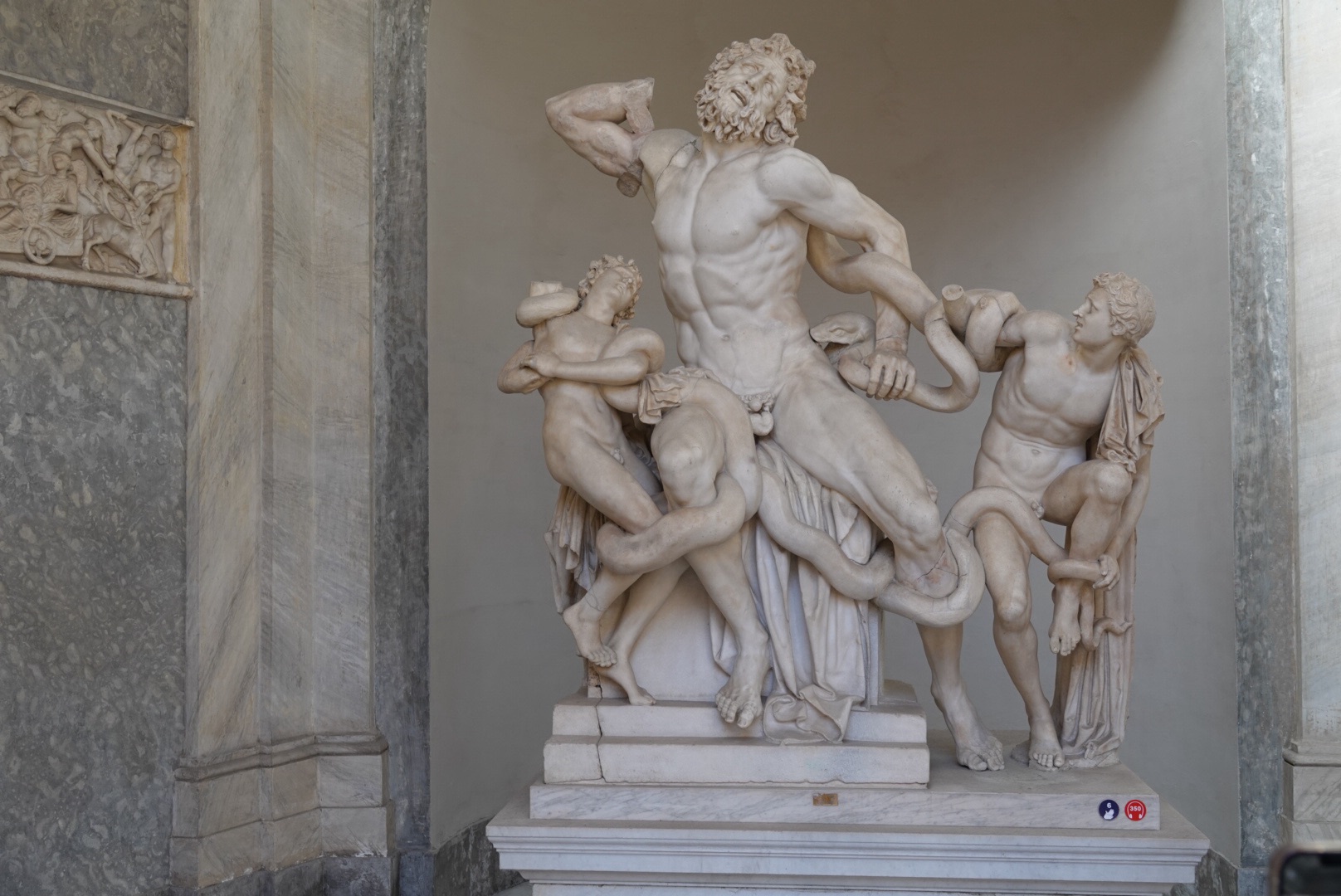
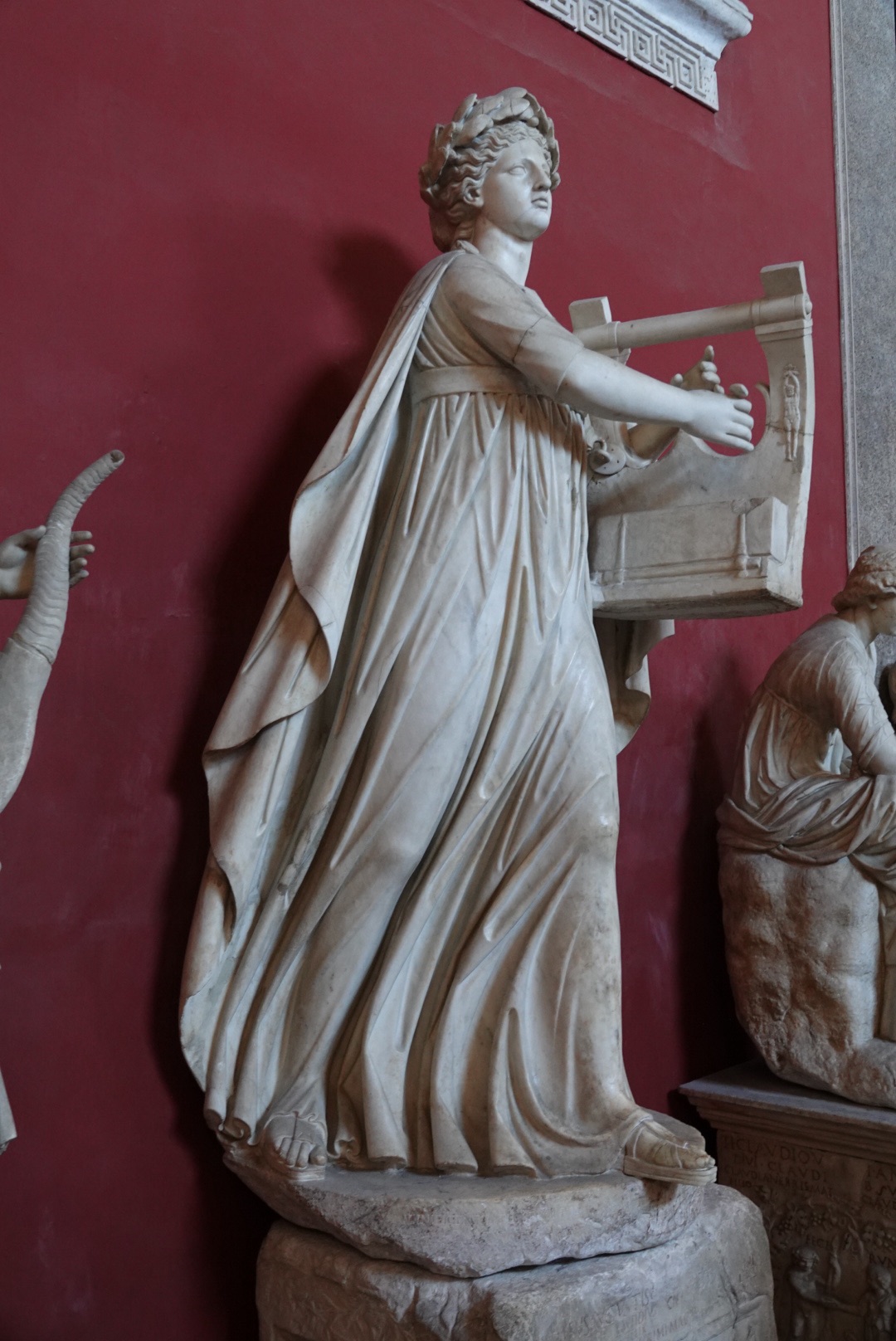
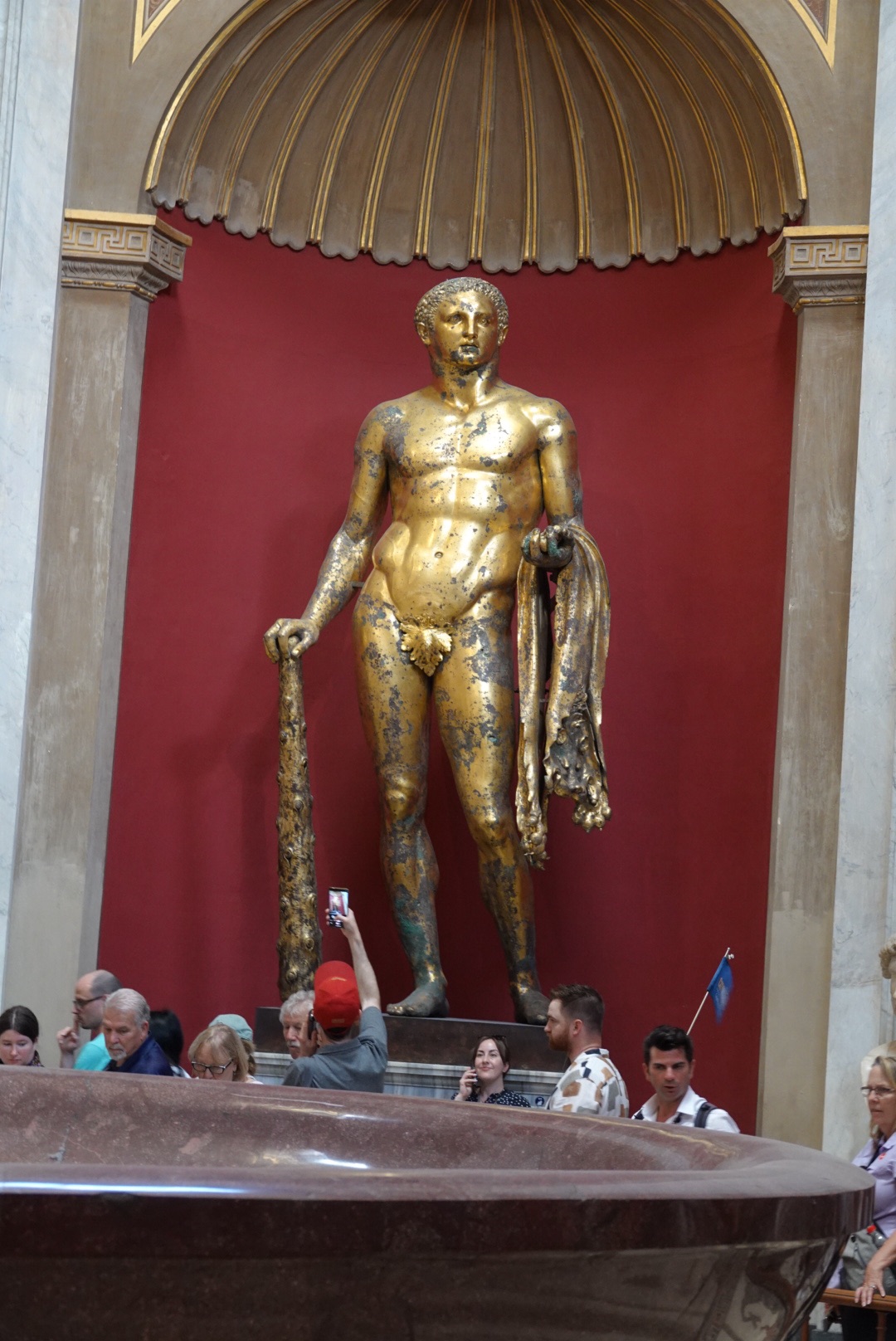
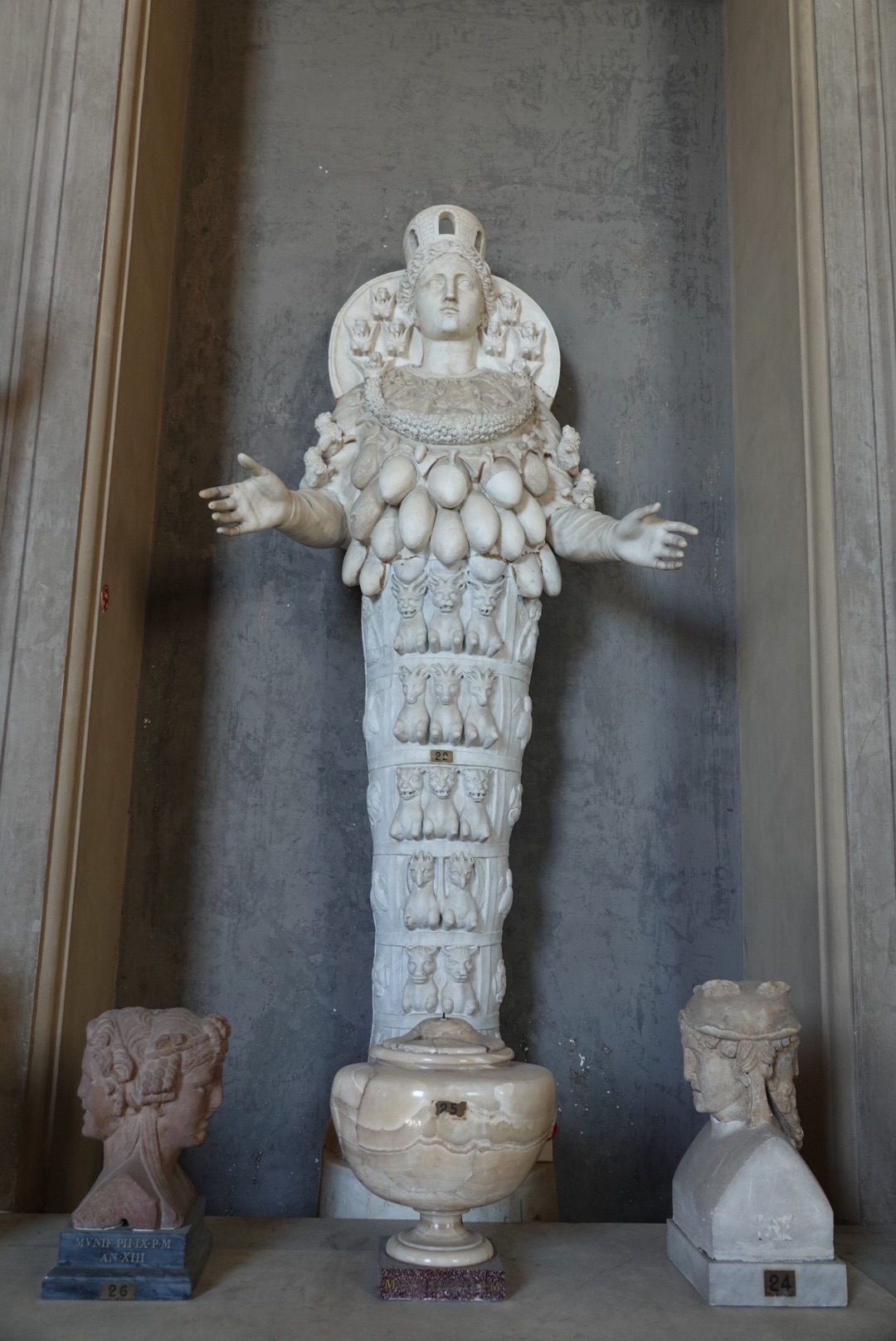
There are several sculpture halls, one of which is dedicated only to sculptures of animals, and others filled with Greek and Roman statues.
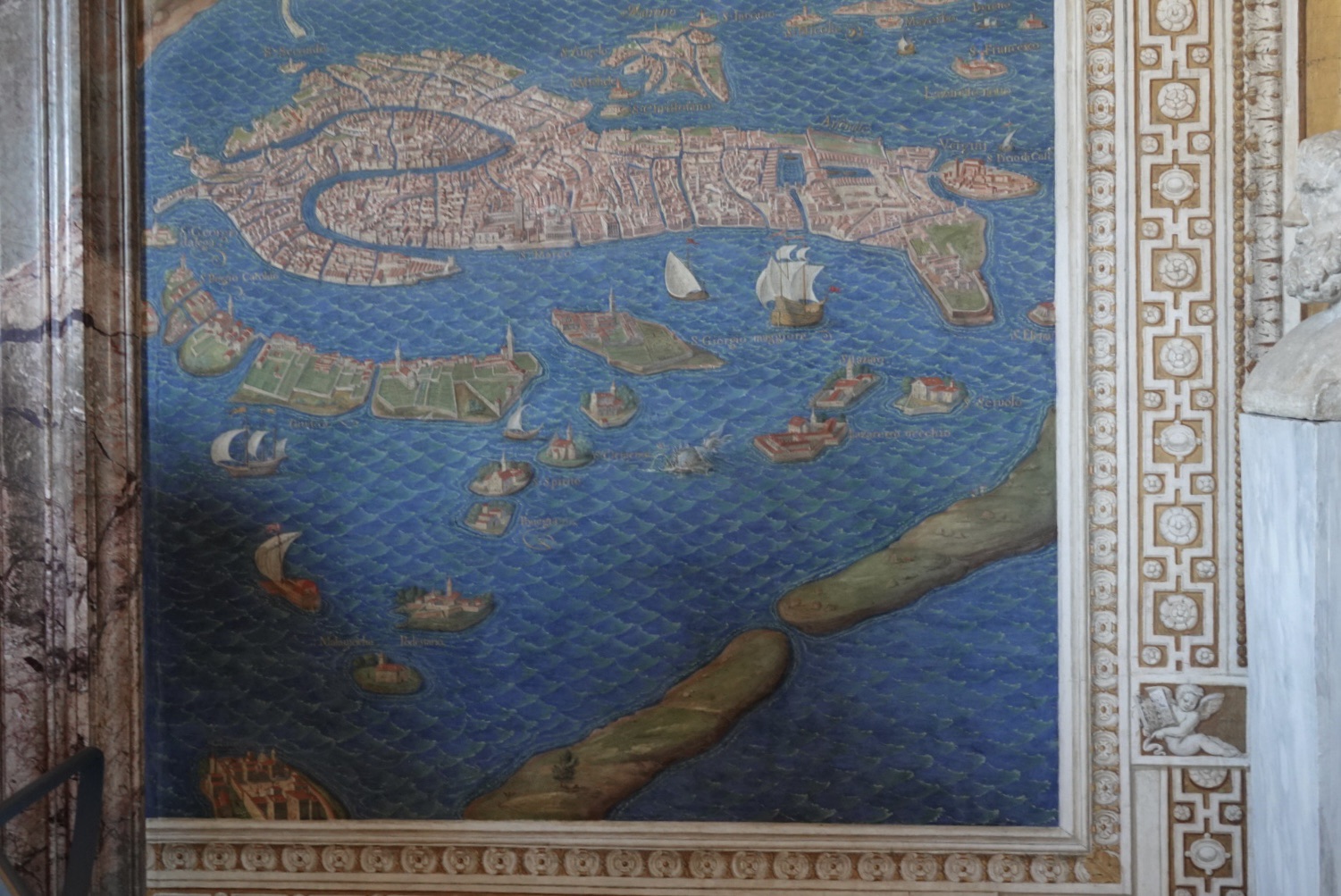
There is an entire hall dedicated to painted maps of all the regions of Italy: 20 maps on each side with the Mediterranean coast provinces on one side and the Atlantic coast on the other side. What is especially interesting about the maps is that they are 70 to 80% accurate, even though they were done in the 1600s.
From the Vatican Museum galleries we passed several of the famous Swiss Guards in their red and gold striped uniforms, who ensured no photography was taking place as we walked through the hallway adjoining the Pope’s residence (side note: the current Pope found it too ostentatious and is living in hotel rooms in the Vatican City instead) toward the Sistine chapel, where hundreds of people were standing and gawking at the ceiling and walls.
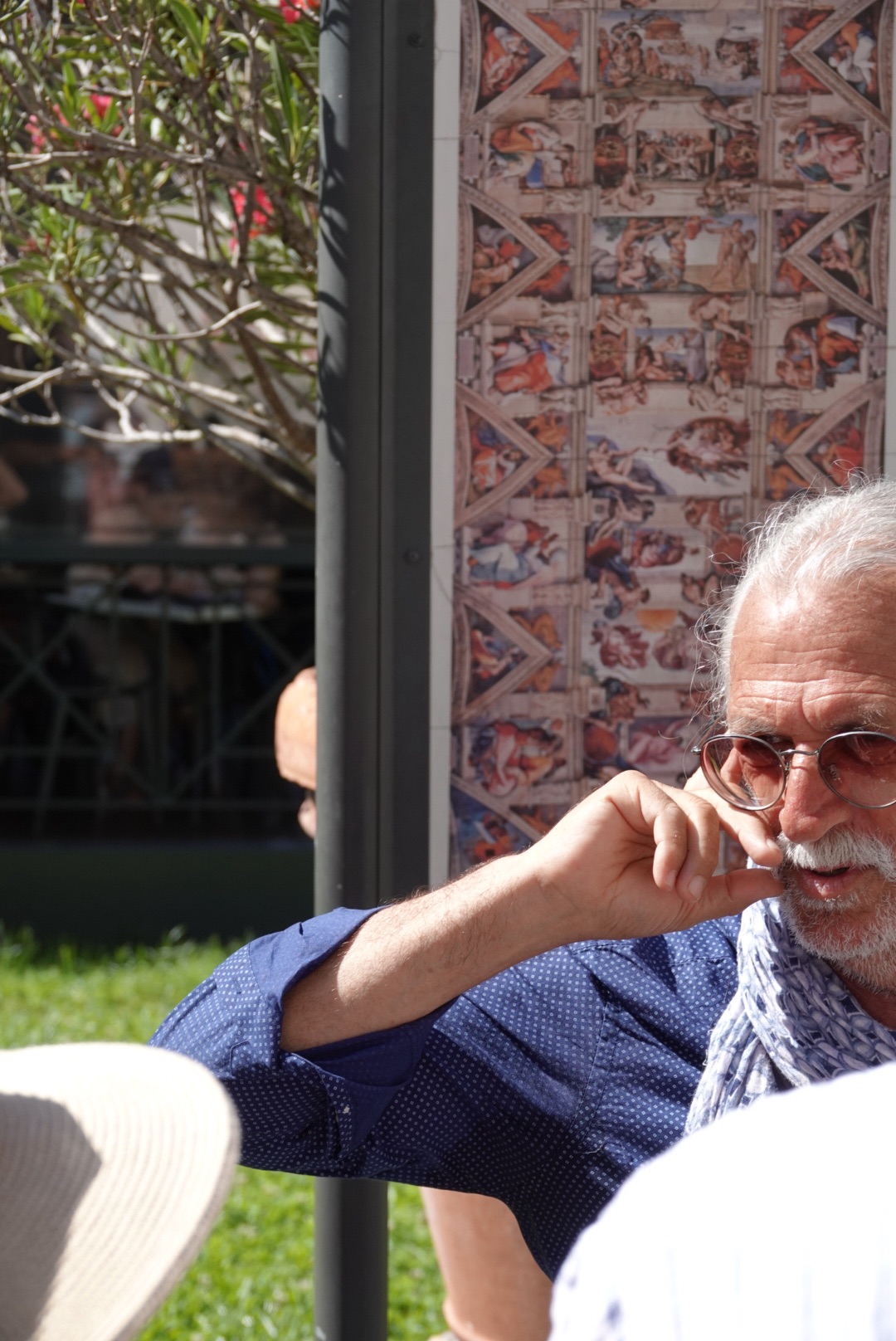
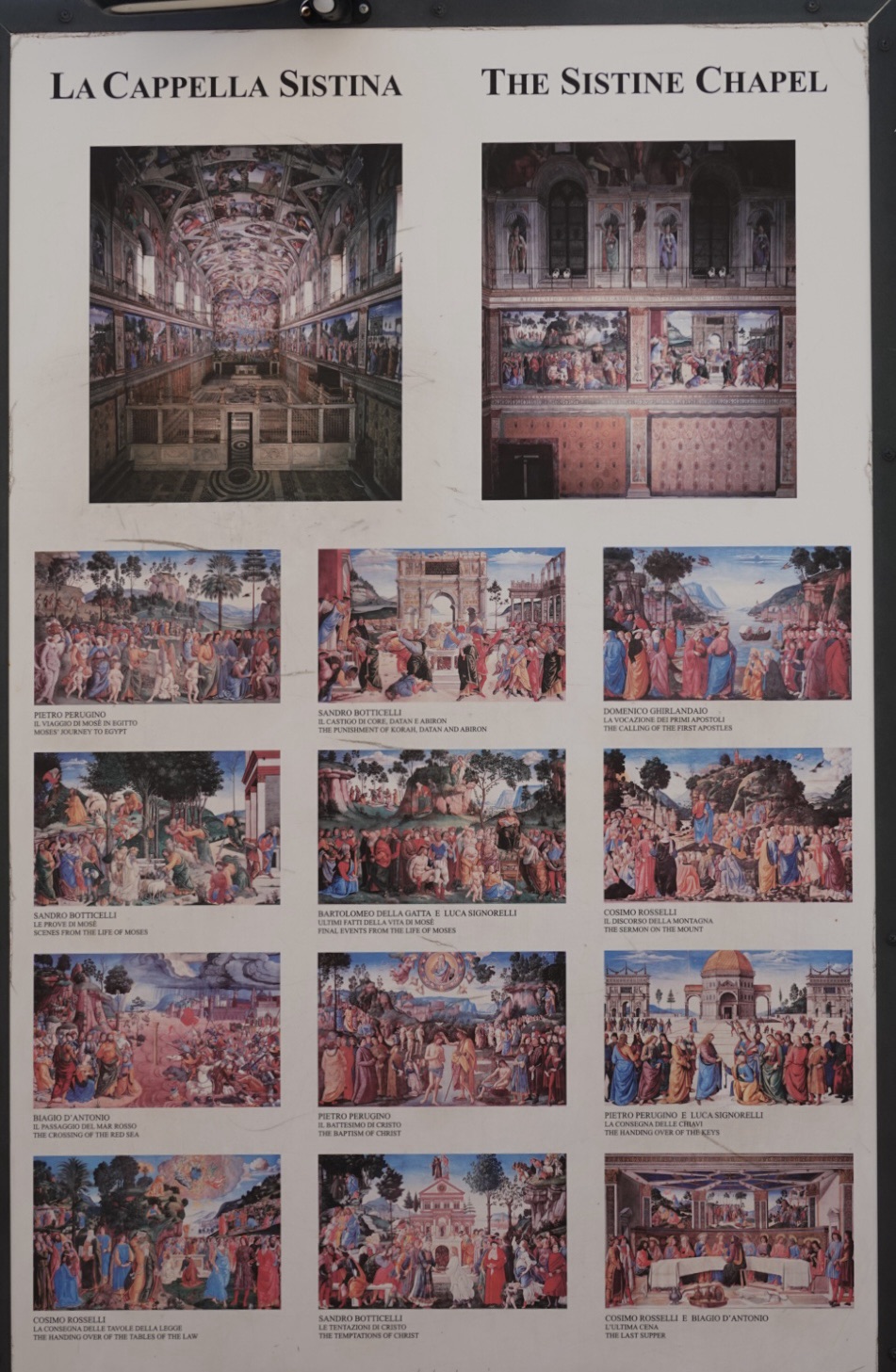
Since there is neither the possibility of lecturing/guiding in the chapel, nor any photography allowed, tour guides use a series of plaques outside in the garden to explain what we were going to see. Vincenzo explained what was contained in the frescoes, who painted them, what symbolism was involved, and the inspiration for some of the faces and bodies that Michelangelo used to represent Christ, God, and various saints.
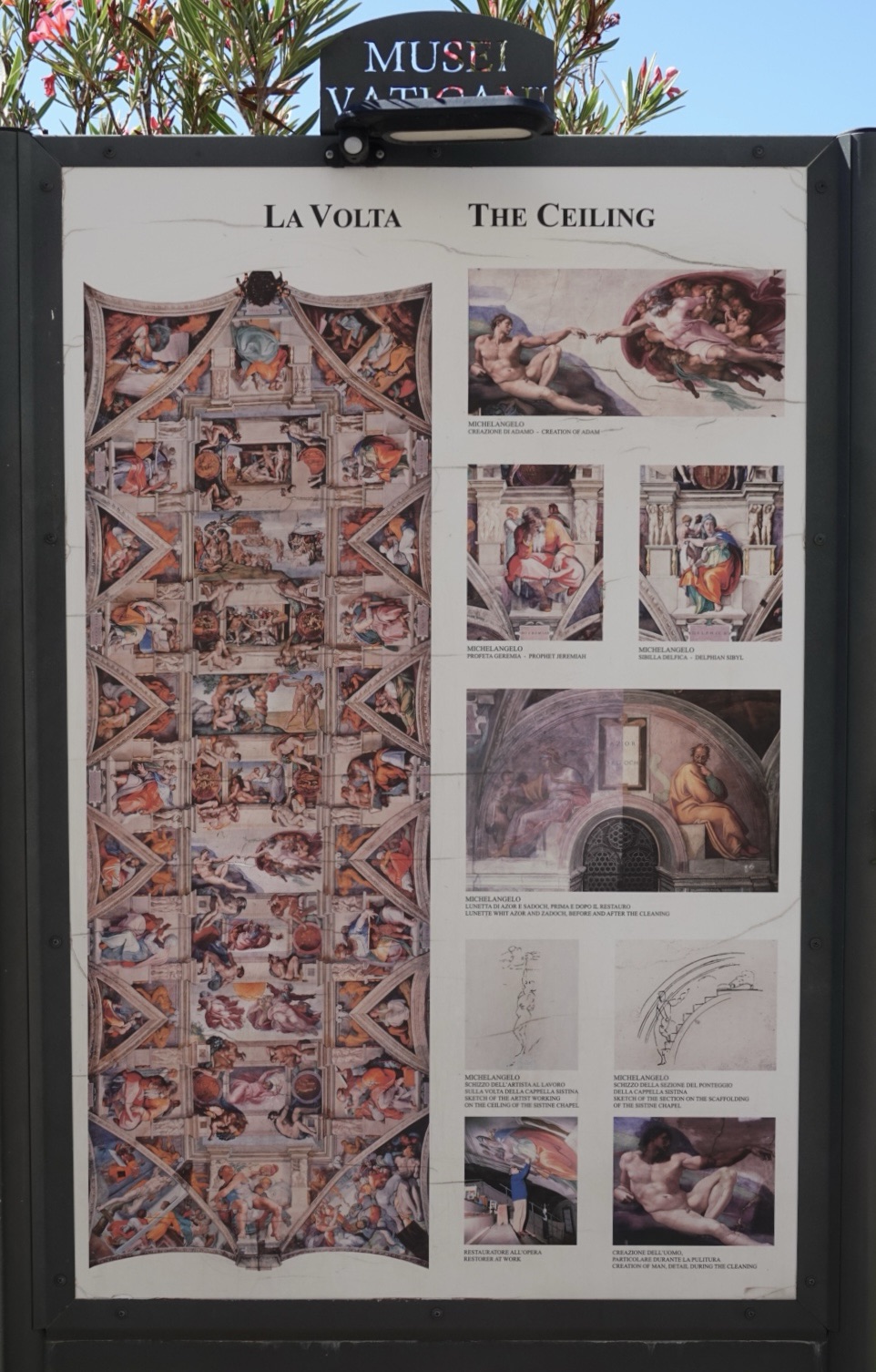
In the chapel, one wall has frescoes related only to the New Testament, and the other has frescoes related to the Old Testament. The lower portions of the wall look like draperies, painted in the style known as trompe l’oeil (“fool the eye”). Above the wall of frescoes , but below Michelangelo’s ceiling, is a row of paintings depicting the various popes.
During our morning tour, while there were crowds, they were much lighter than can normally be expected in Rome in June. That was because most of the people visiting the Vatican today were outside in Saint Peter’s square listening to the pope speak while we were inside the museums and chapel.
After spending about 20 minutes in a very crowded Sistine Chapel, it was time to visit Saint Peter’s Basilica, but unfortunately the church was closed due to the size of visiting crowds. Our guide suggested we wait five or 10 minutes to see whether the doors would be opened. We felt really fortunate when they were.
Because we were with a well known Vatican guide we were able to skip the extremely long lines to get into Saint Peter’s and virtually just walk in. That was where Vincenzo left us to explore as we wished.
The interior of the basilica is quite overwhelming. Not only is it huge, but the amount of marble, the quantity of statues, the sheer size of the decorations, and the overall beauty is incredible. The only disappointment of our visit was that we were not able to see Michelangelo’s famous Piéta statue because it is currently being restored.
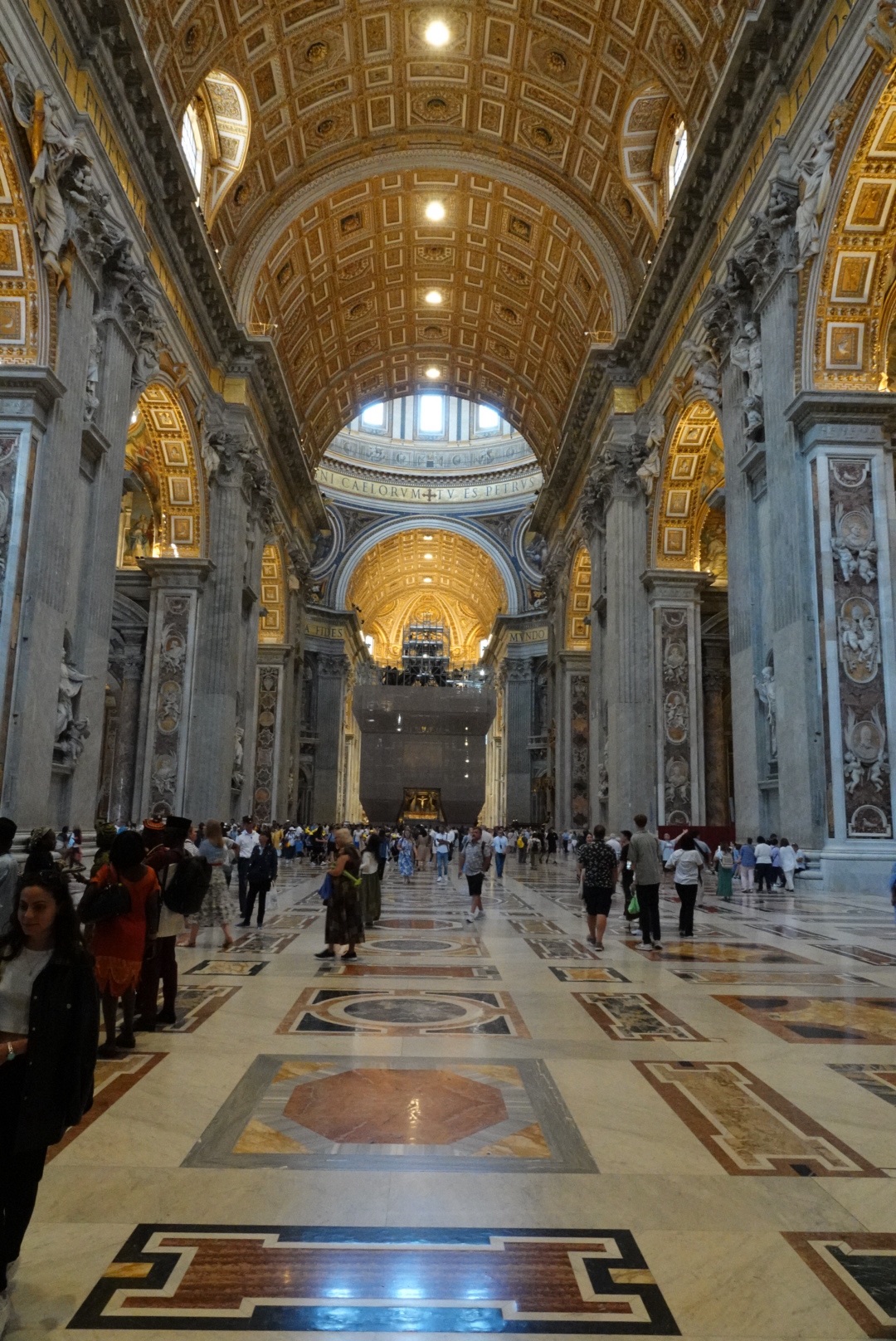
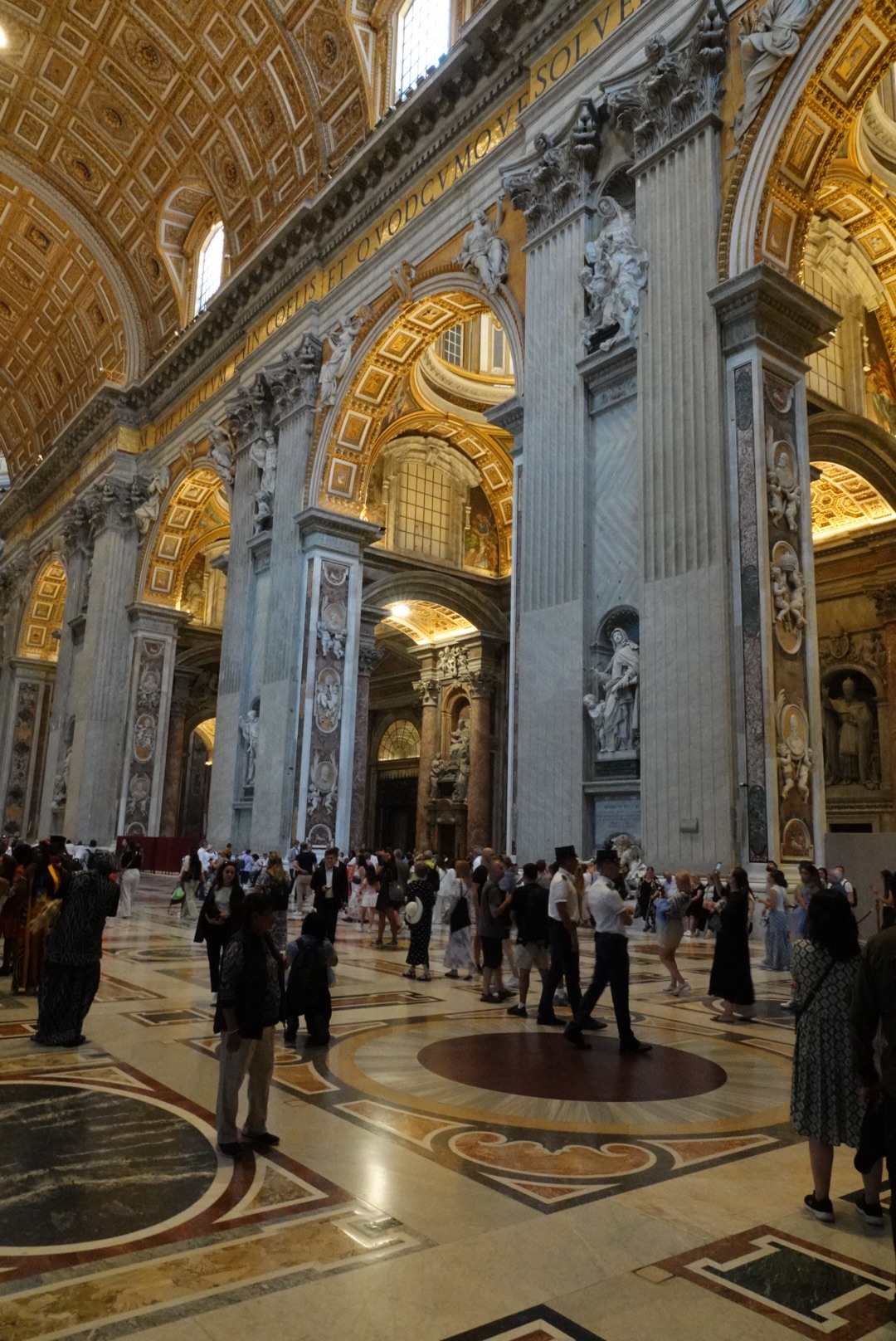
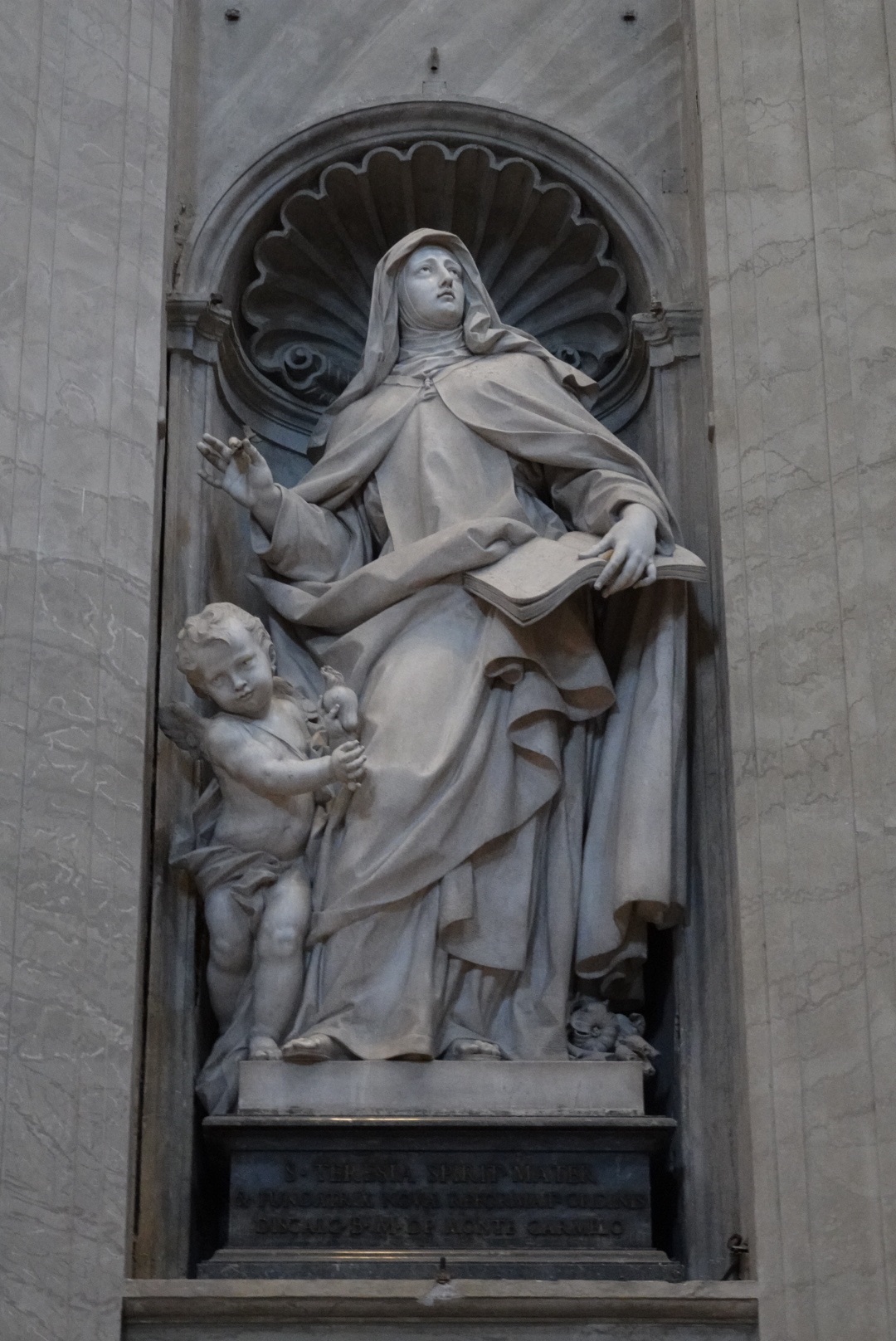
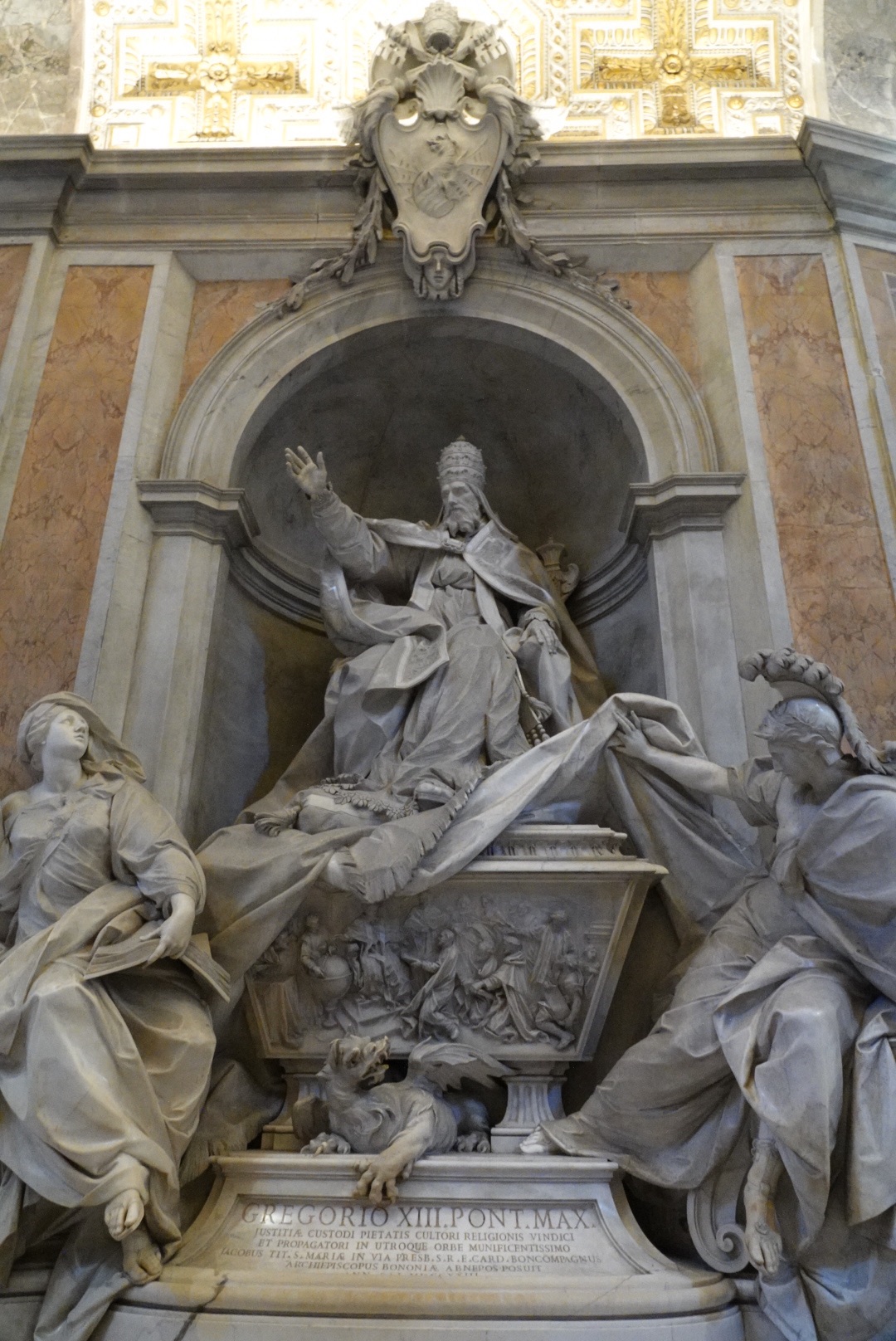
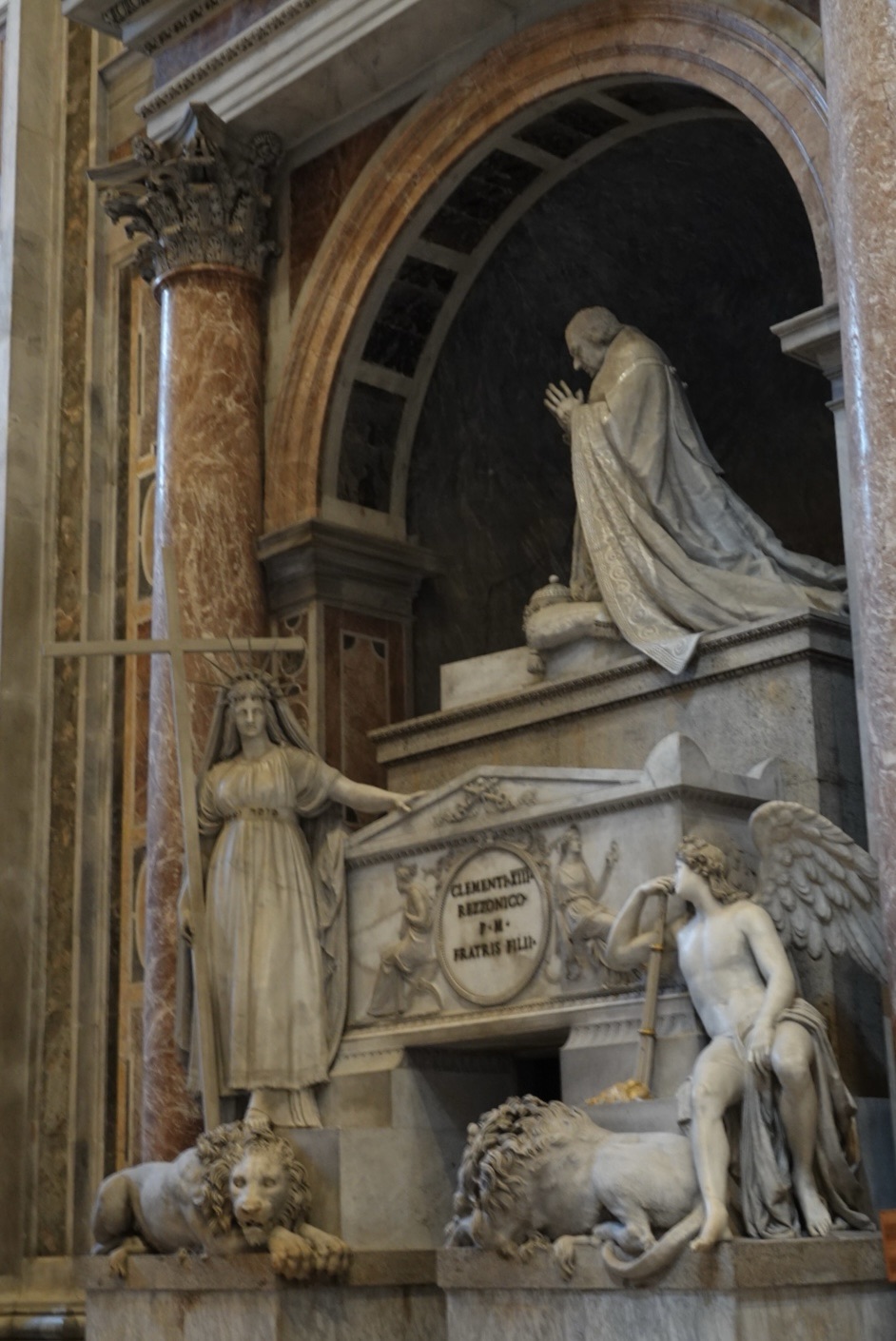
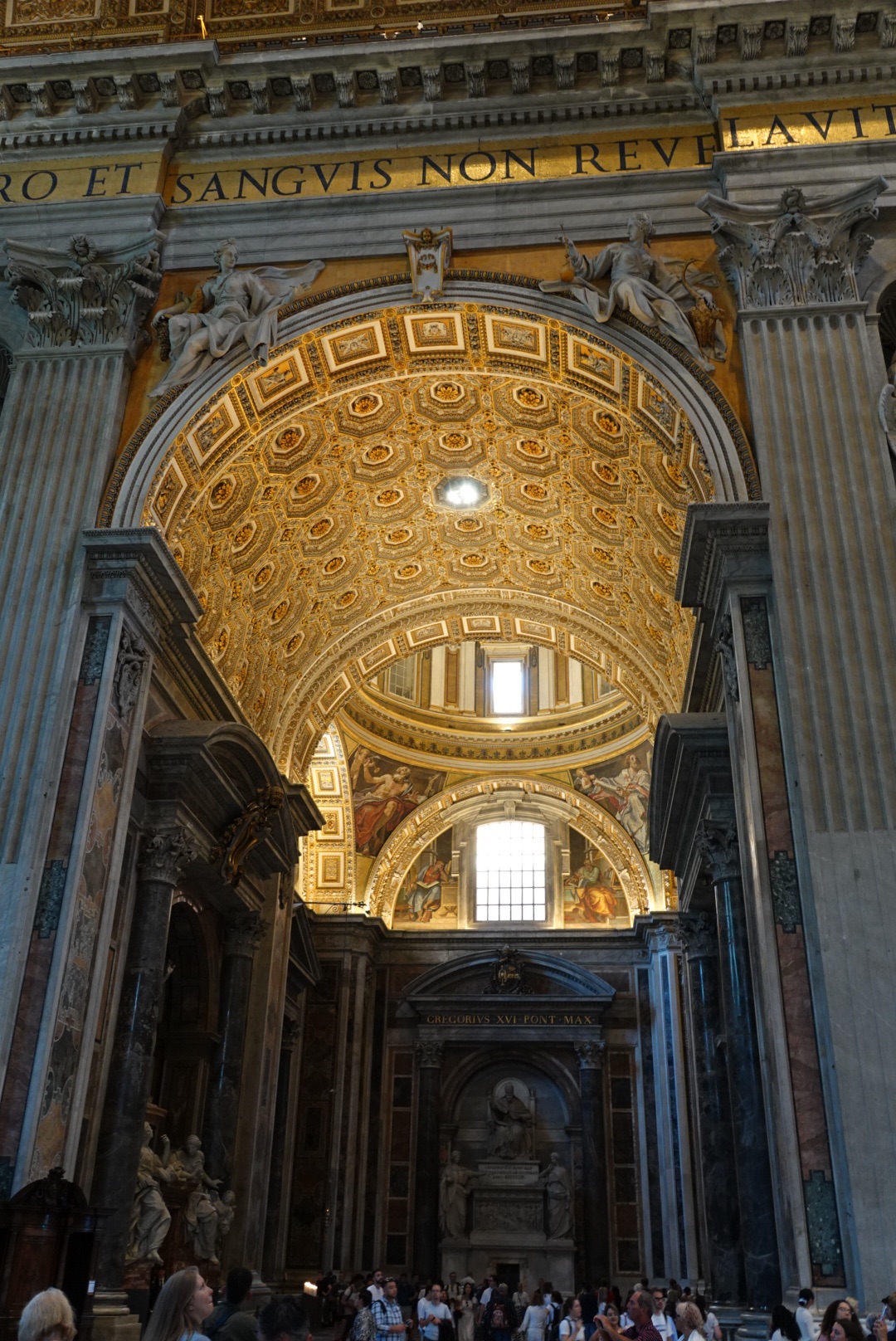
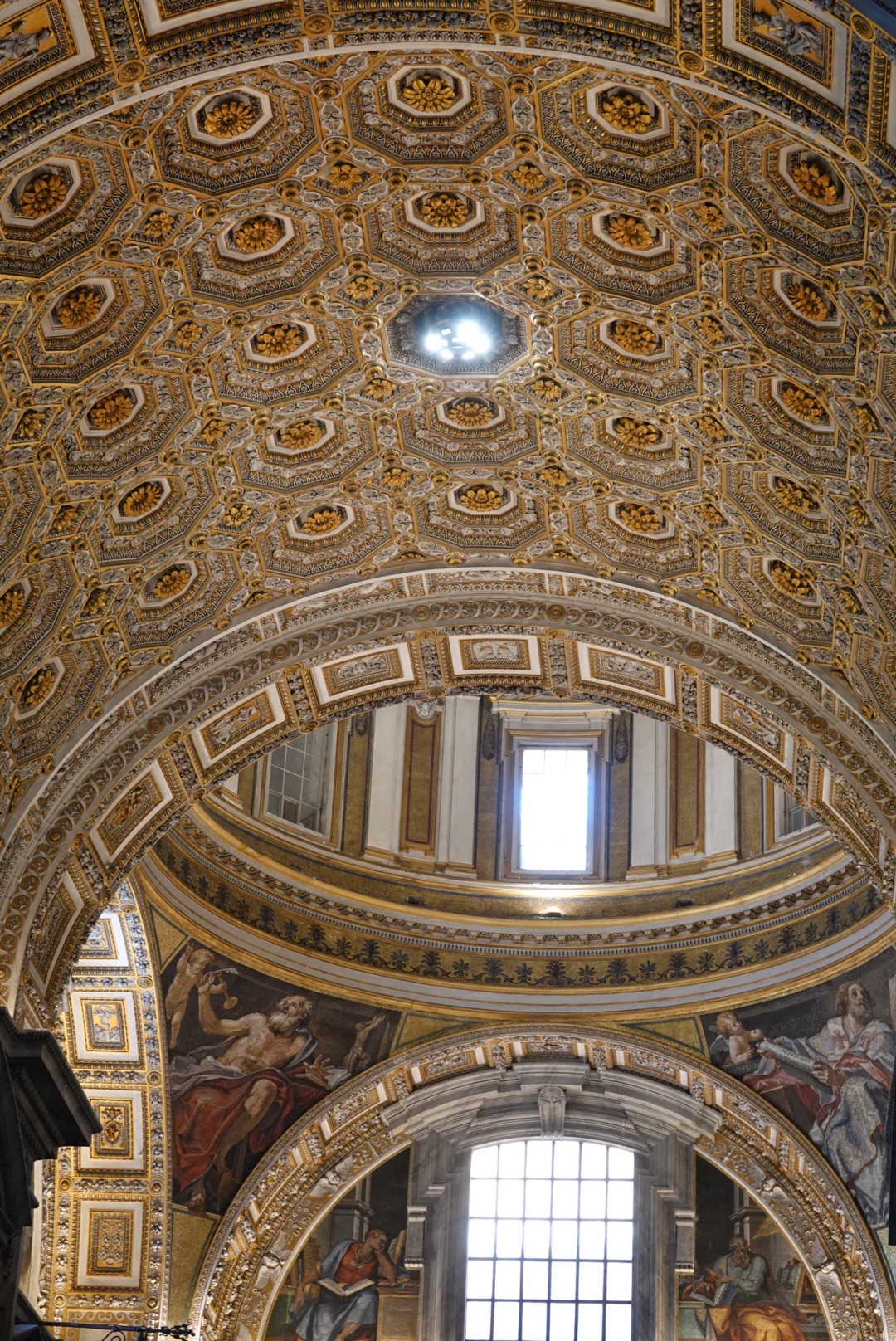
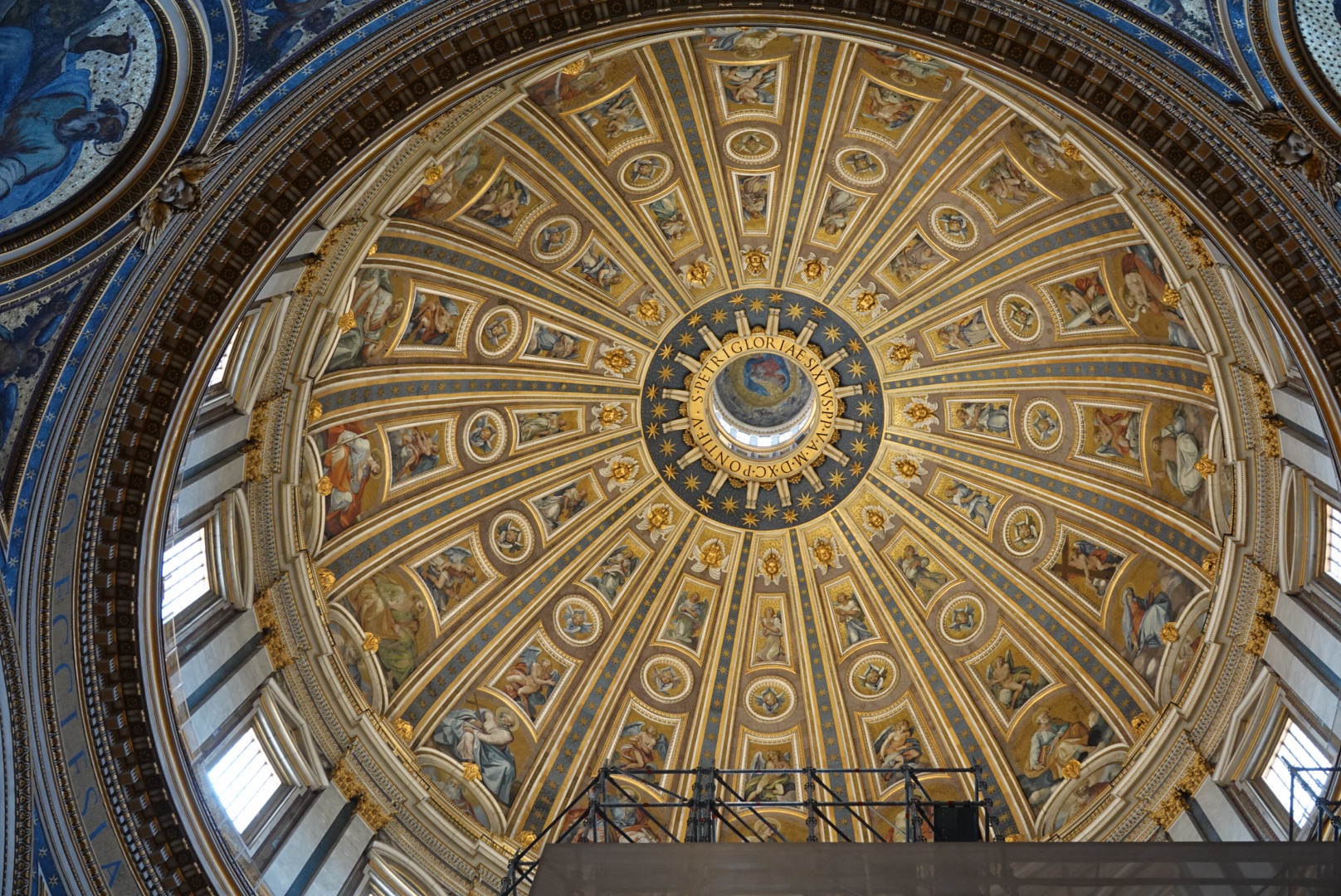

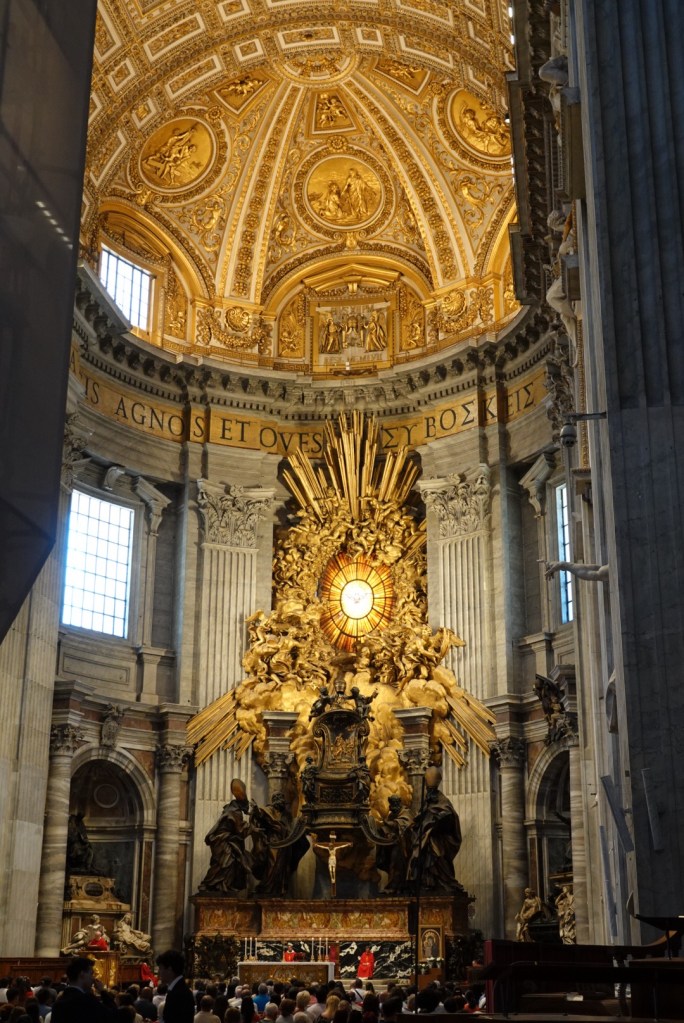
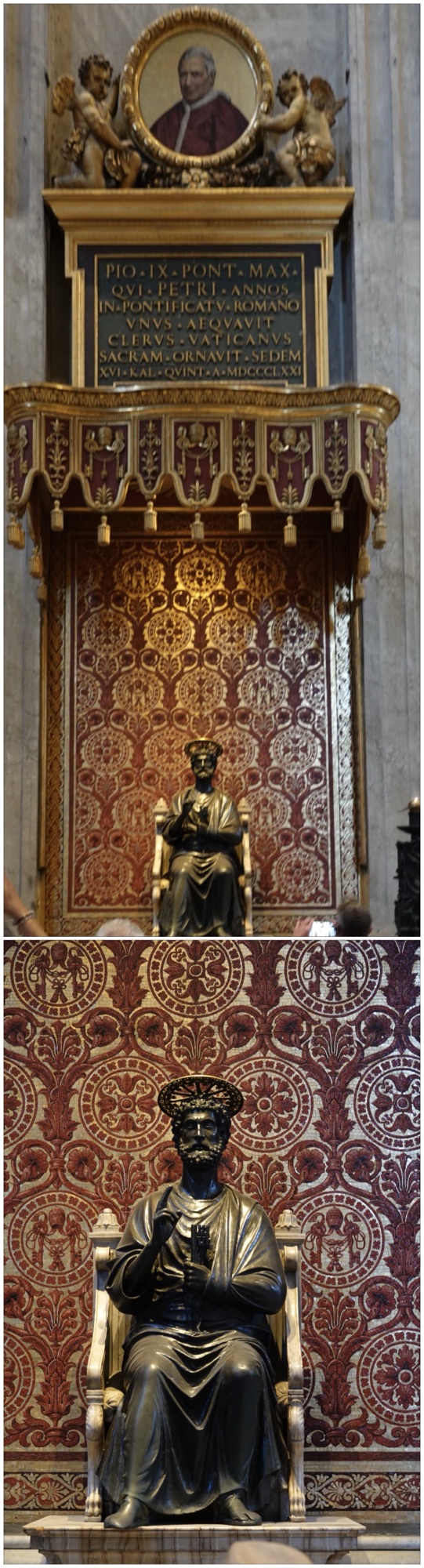
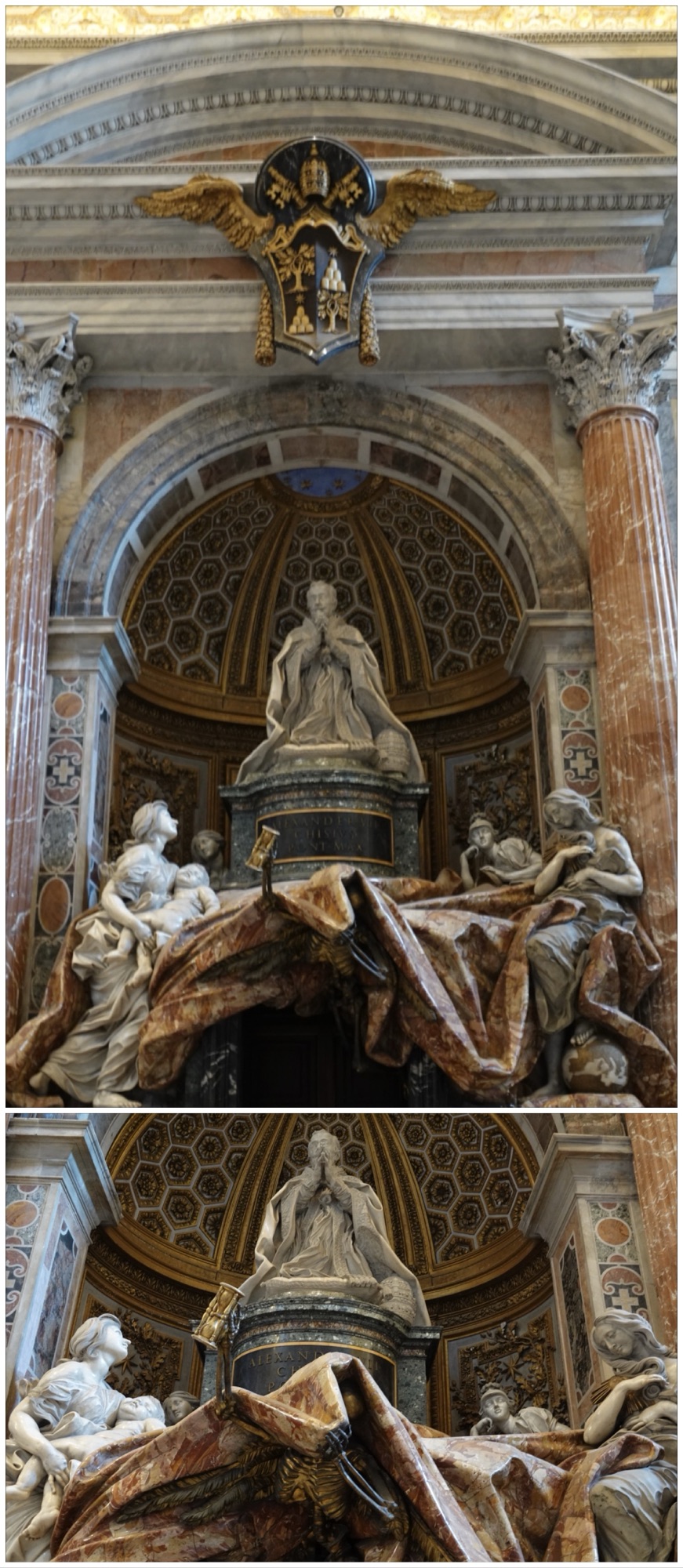
I was especially pleased that we got to enter the basilica because I had promised our daughter-in-law that I would light a candle in honour of her wonderful mother.
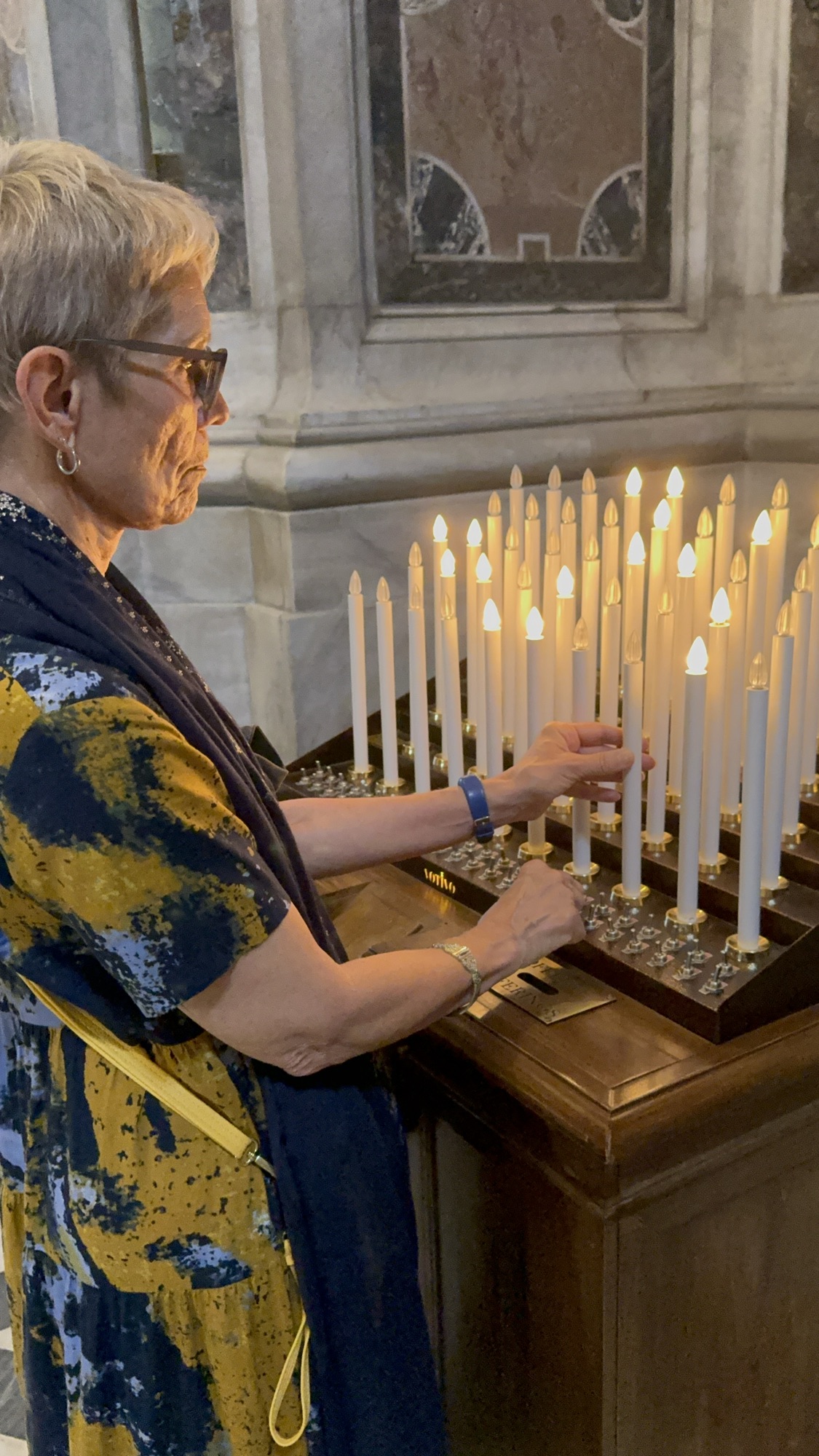
I was also able to “baptize” a newly purchased set of rosary beads from the Vatican store in holy water from Saint Peter’s.

Of course, what pilgrims come to St. Peter’s for is the tomb of Saint Peter, now located in a chamber below the altar. The entire reason for the basilica’s location is that this was Peter’s burial place, his grave having been dug on the southern slopes of the Vatican hill, right in front of the circus that was the scene of persecutions against Christians at the time of Emperor Nero.
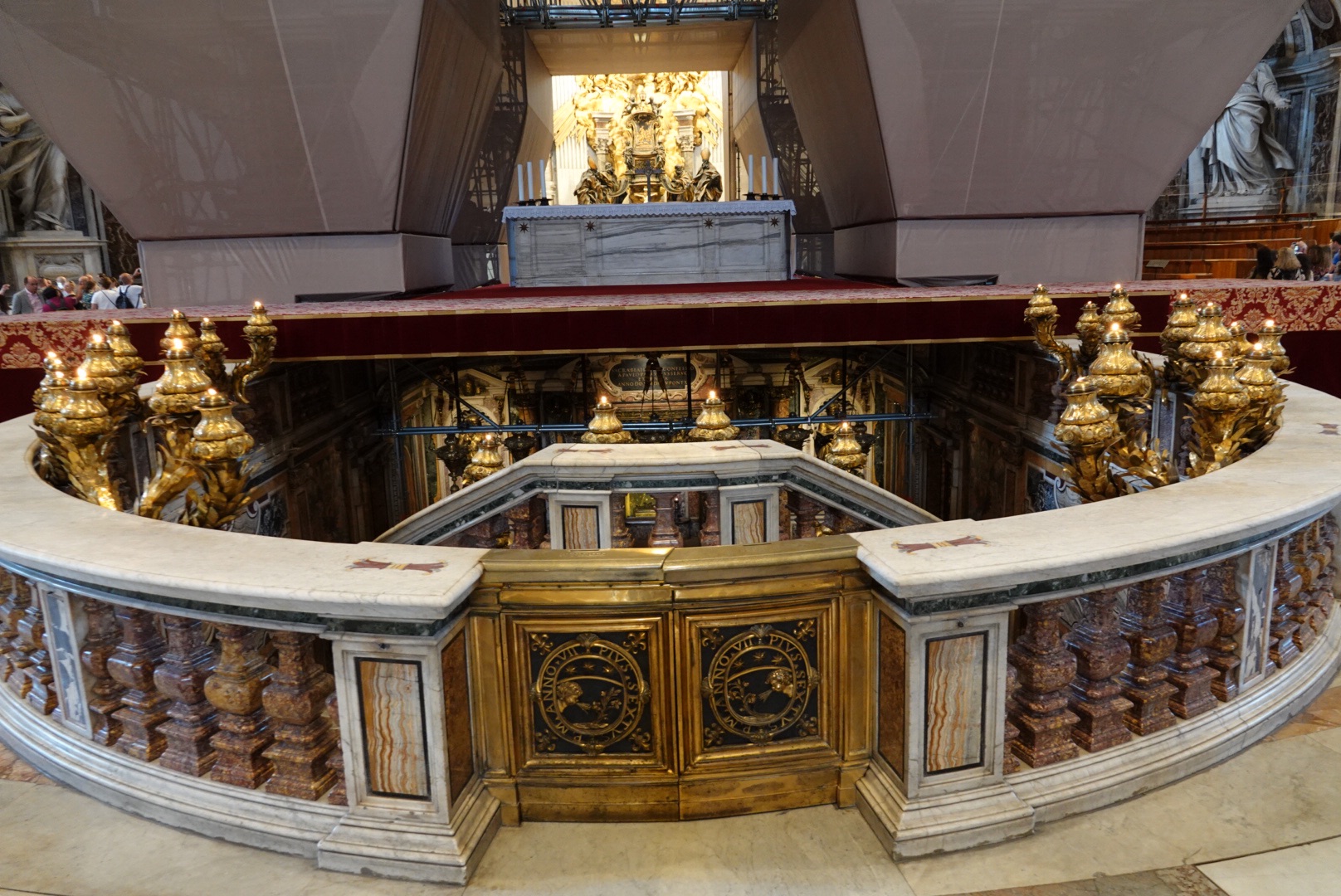
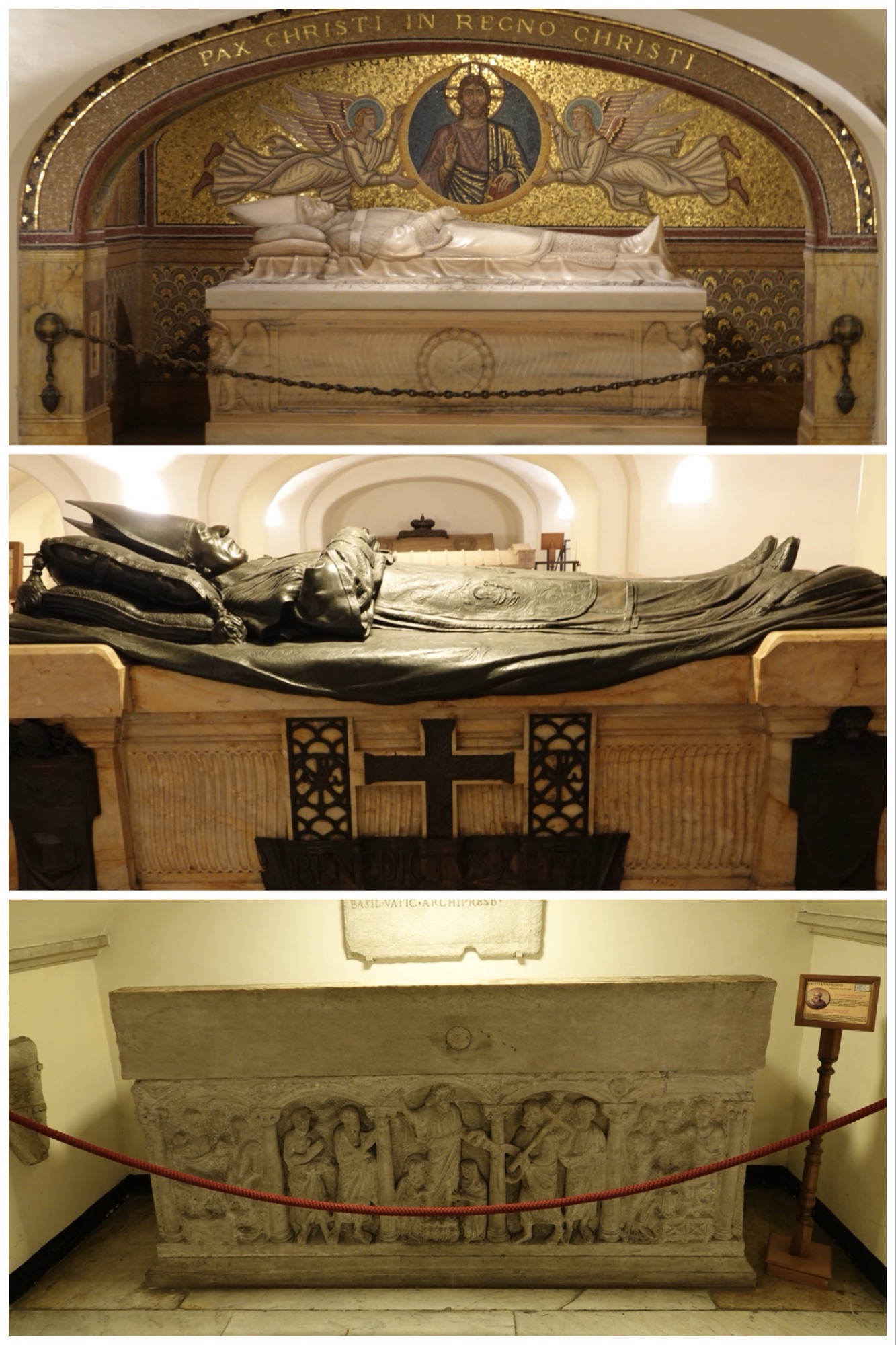
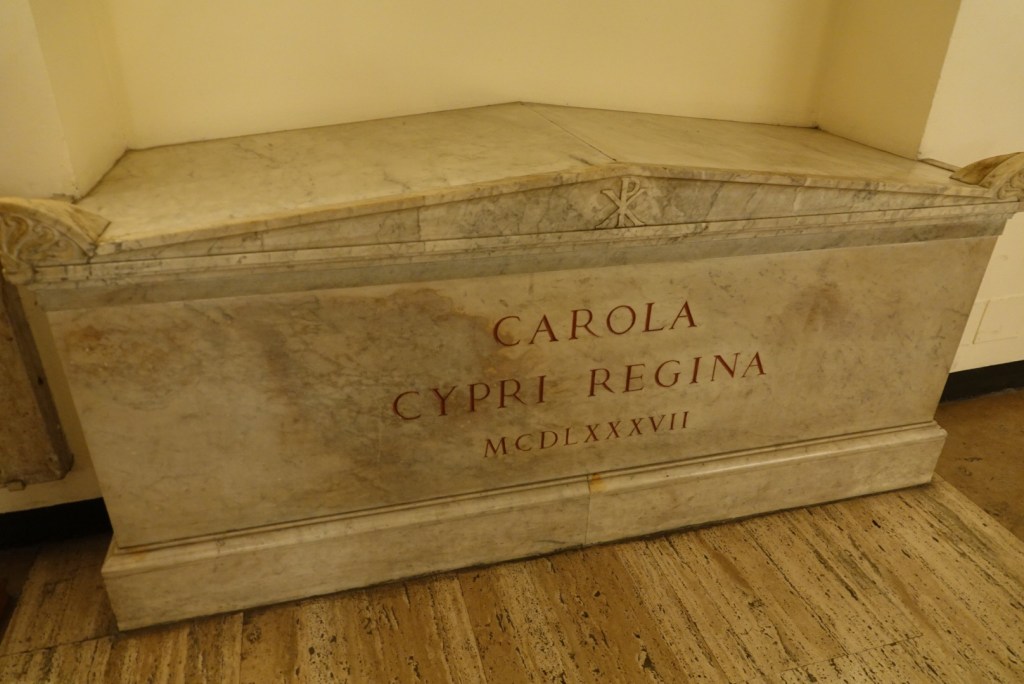
The tombs of several popes and a few members of royalty are located in the crypt below the basilica. After spending about an hour frankly just gawking on the main floor of the basilica, we went down into the crypt. It’s a bright modernized area with tombs that are well marked and sarcophagi in ornate designs.
Then it was back into the land of the living and glorious sunshine, where Ted took several pictures outdoors in Saint Peter’s Square, which was still set up for that morning’s appearance of the Pope.
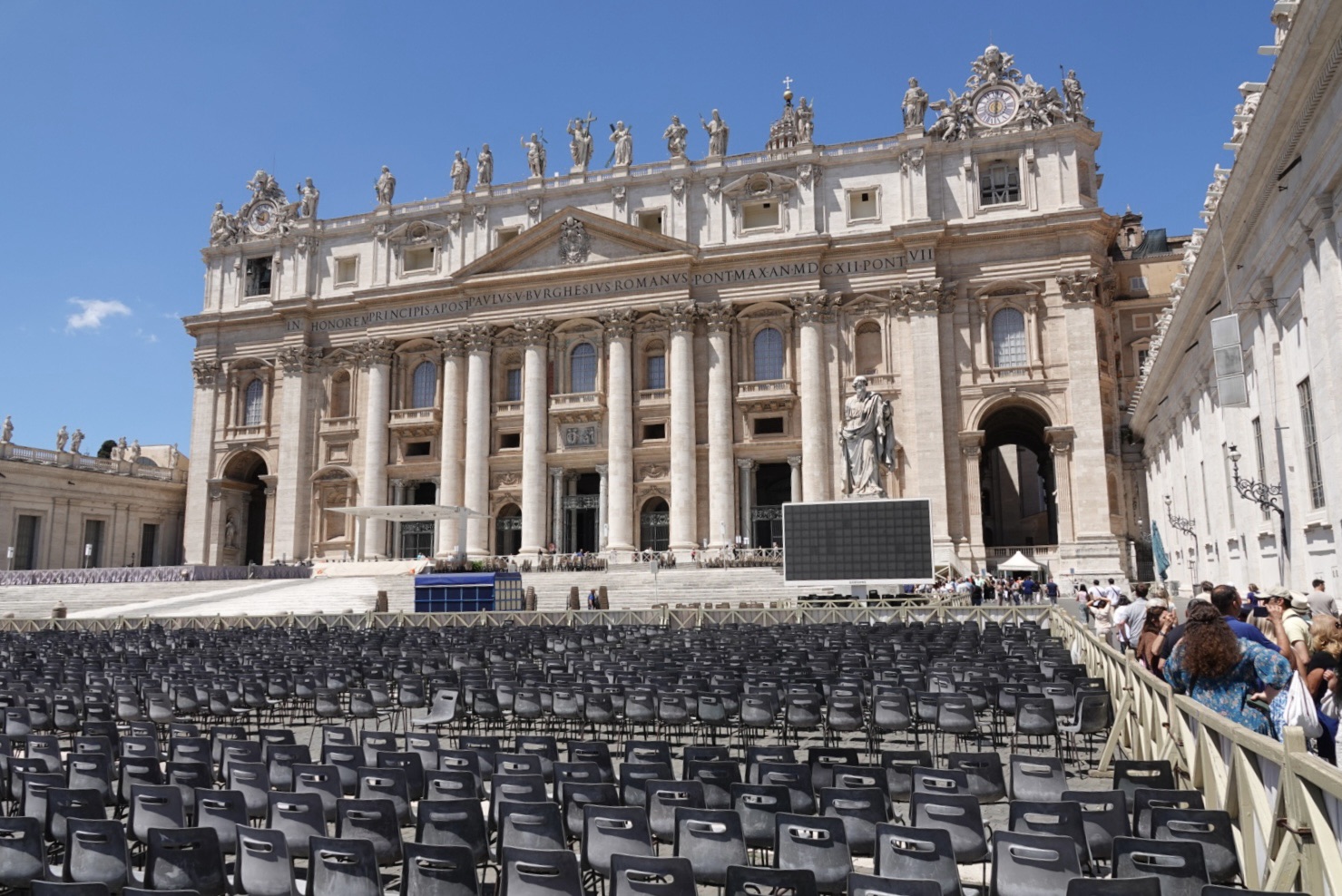

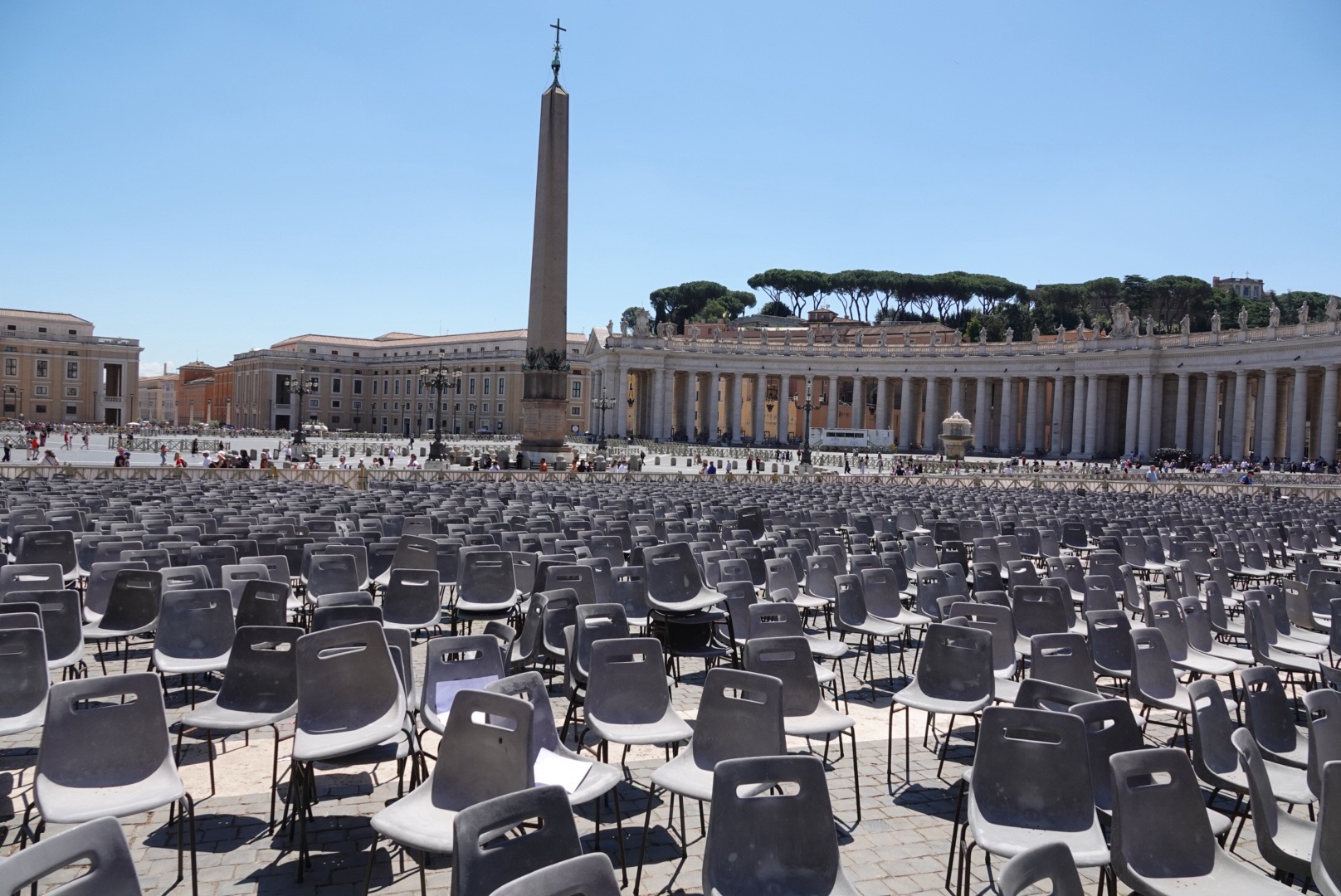
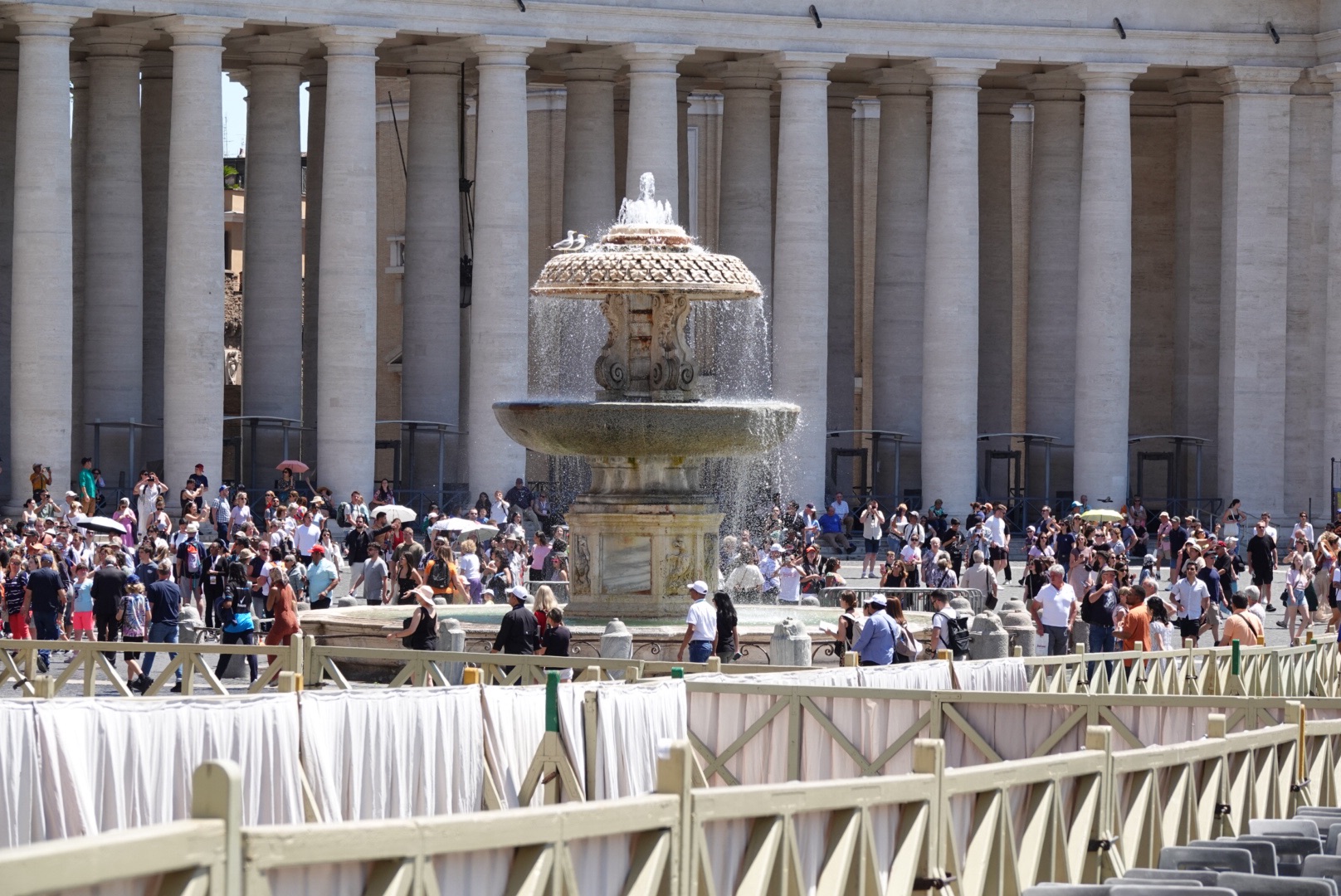


After several hours on our feet marvelling at statues and architecture, and learning history, we were more than ready for a lunch break. We stopped at a restaurant just outside the Vatican walls, where we relaxed over water, wine, prosciutto and melon, and a spicy salami pizza.
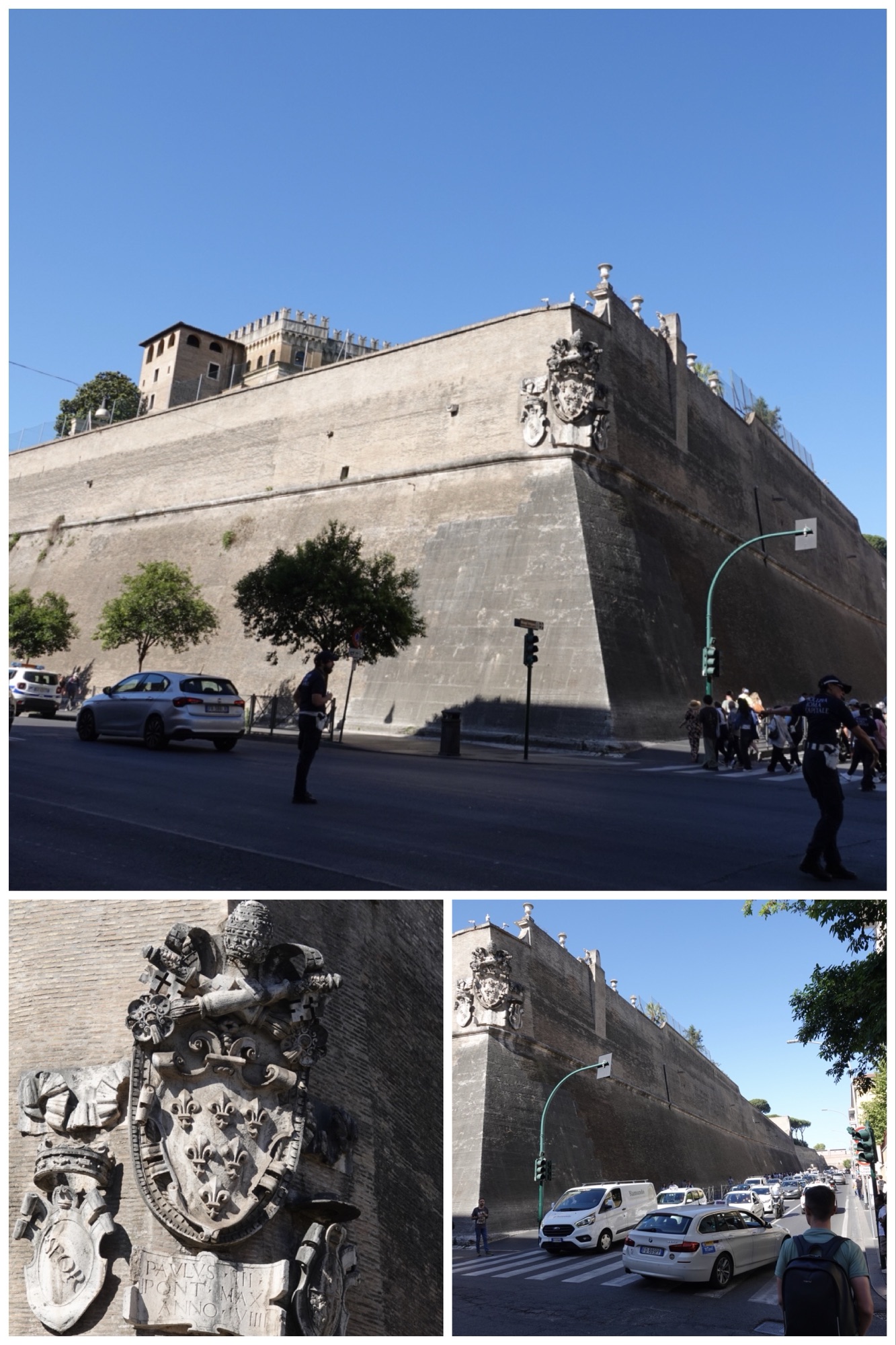
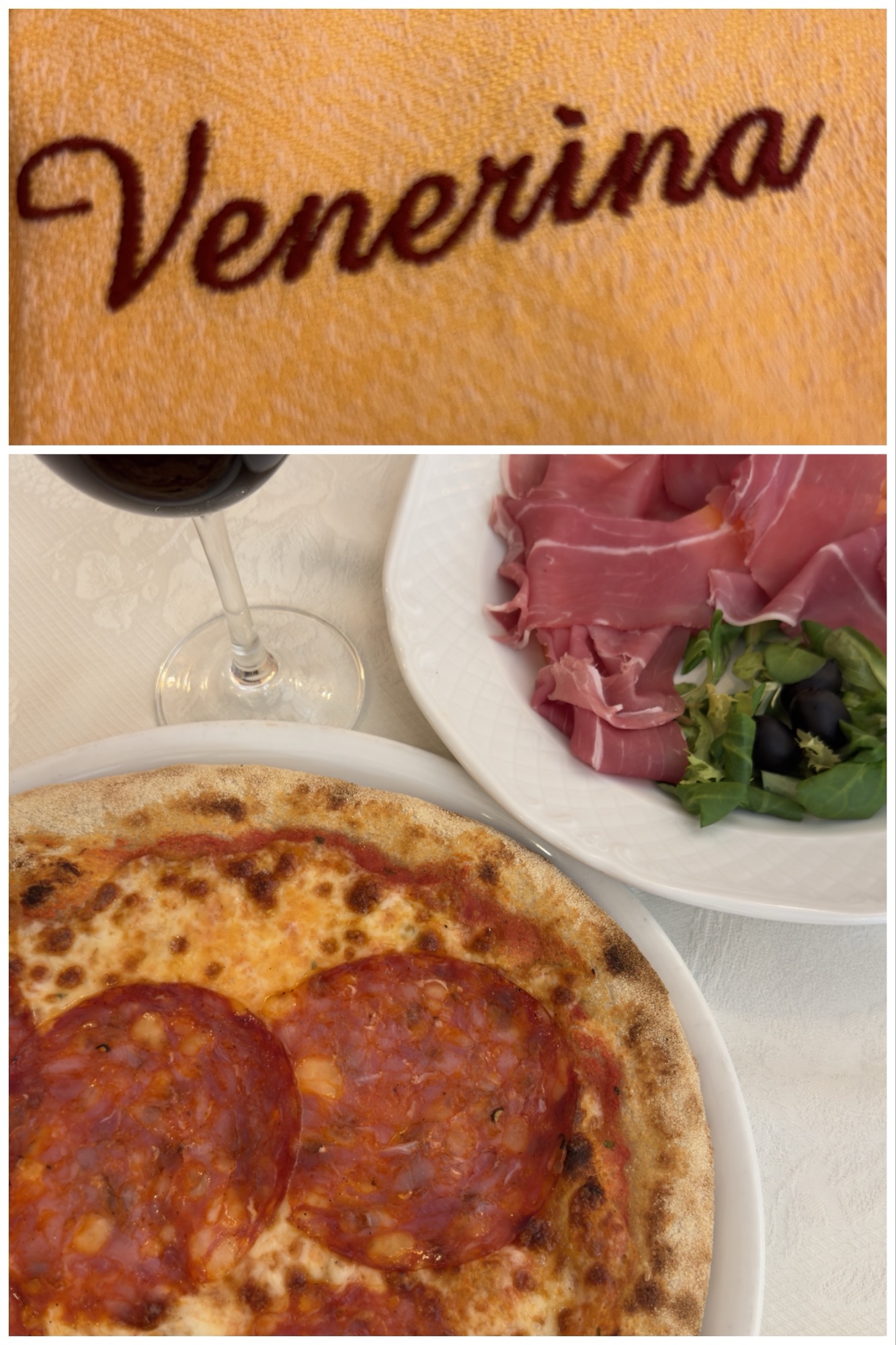
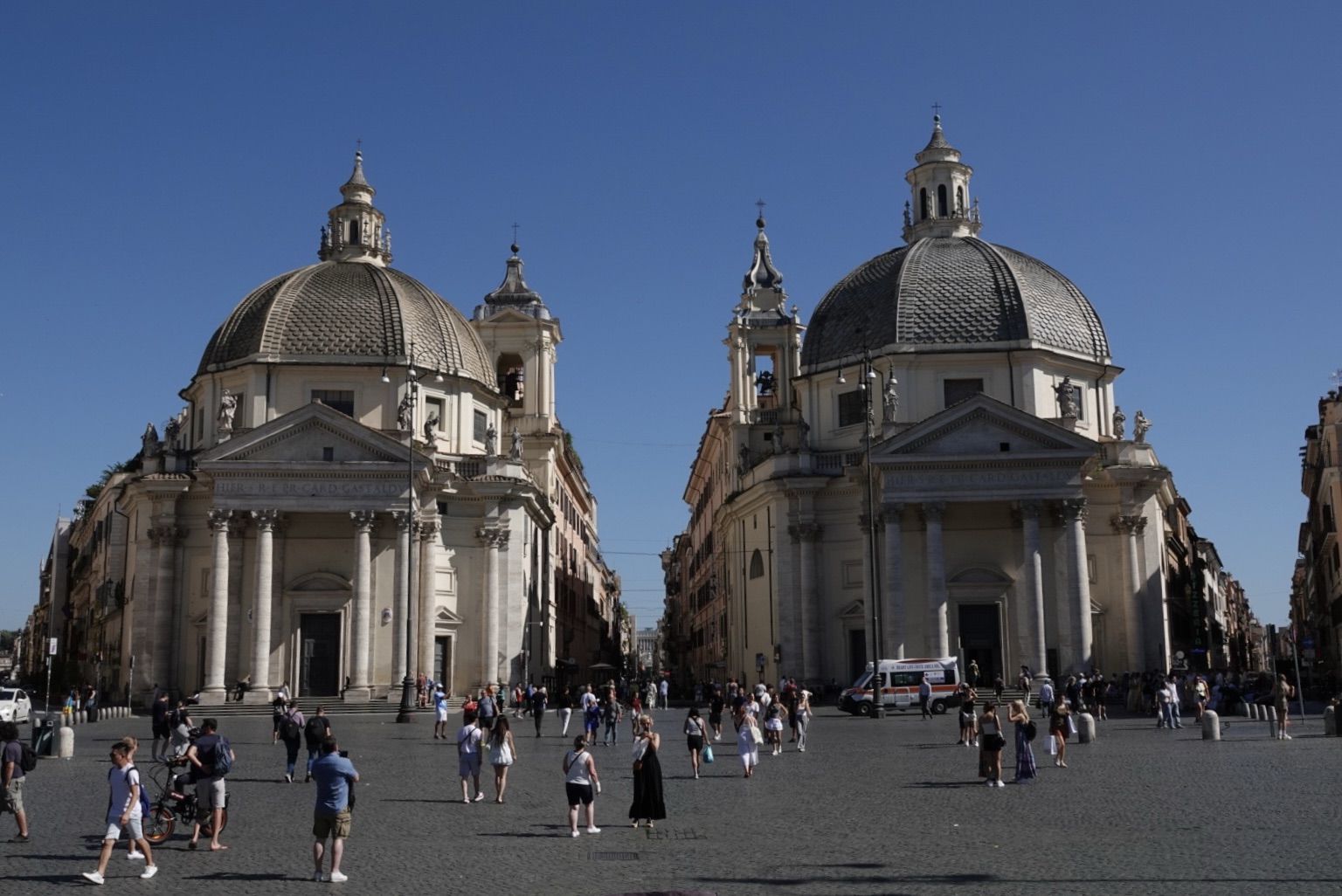
Then it was time to make the stroll to this evening’s dinner and illuminated tour meeting place at the Spanish steps. We walked through the Piazza Populo with its fountains, churches, and one of the 13 Egyptian obelisks brought to the city by armies of the Roman Empire.
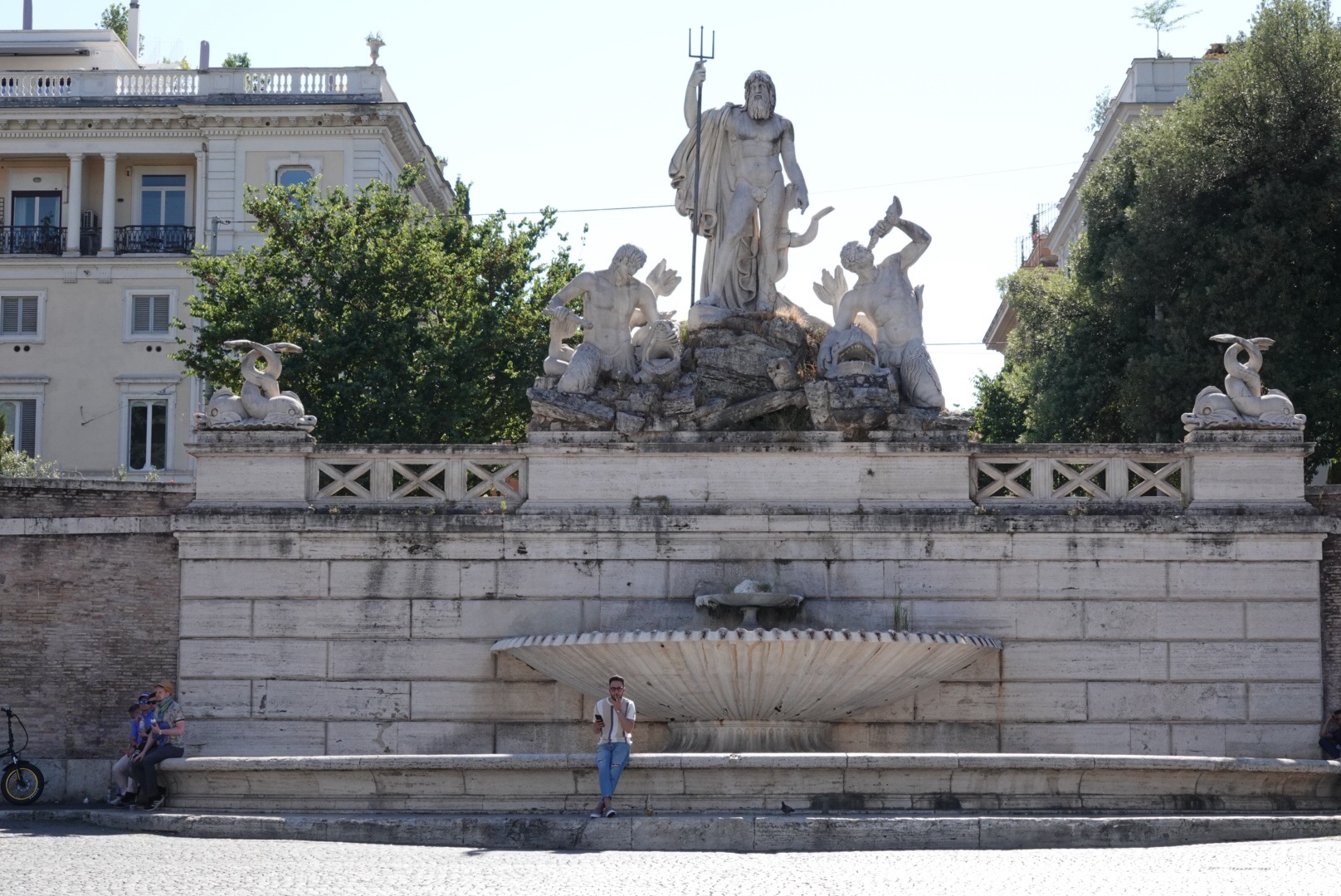
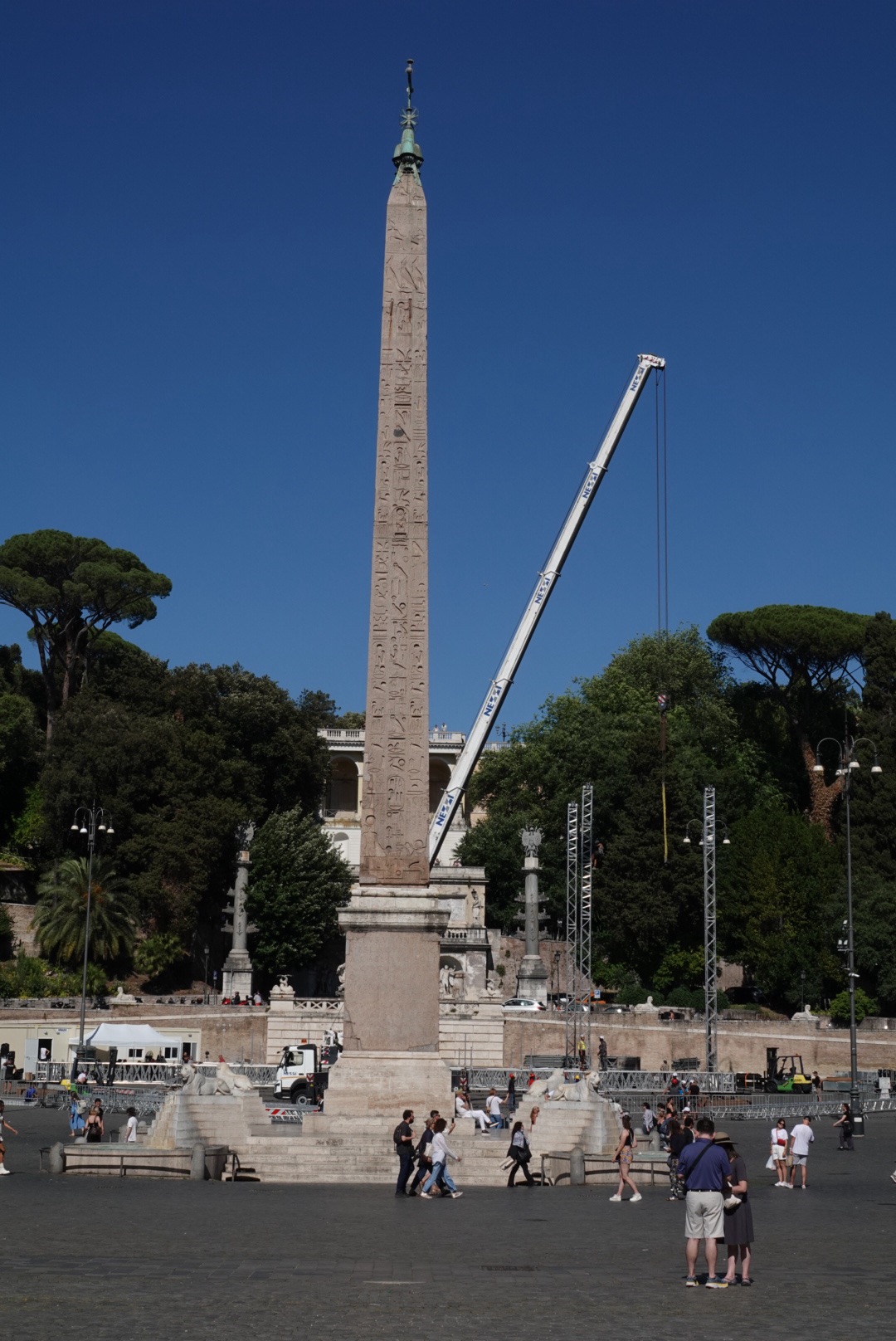
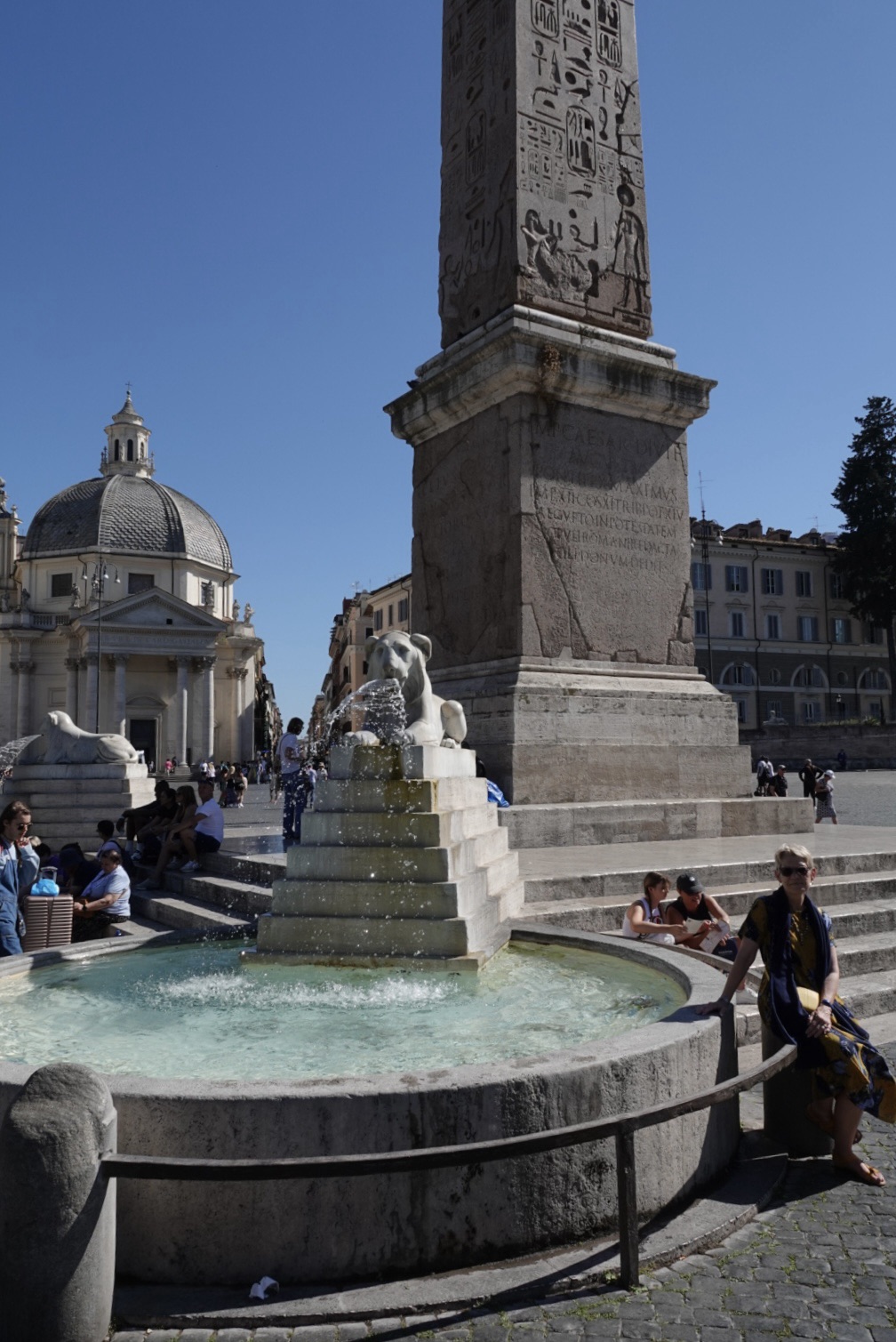

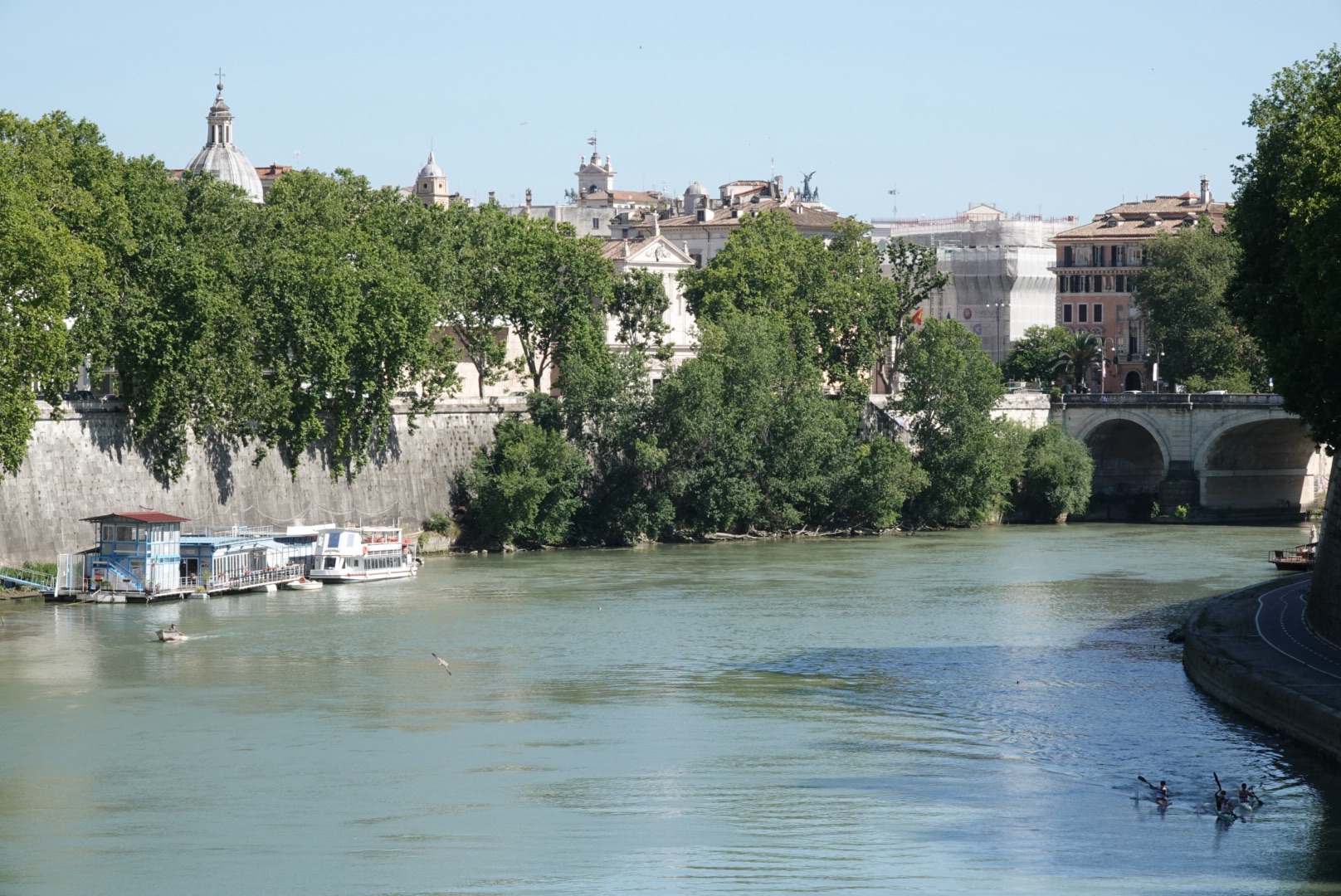
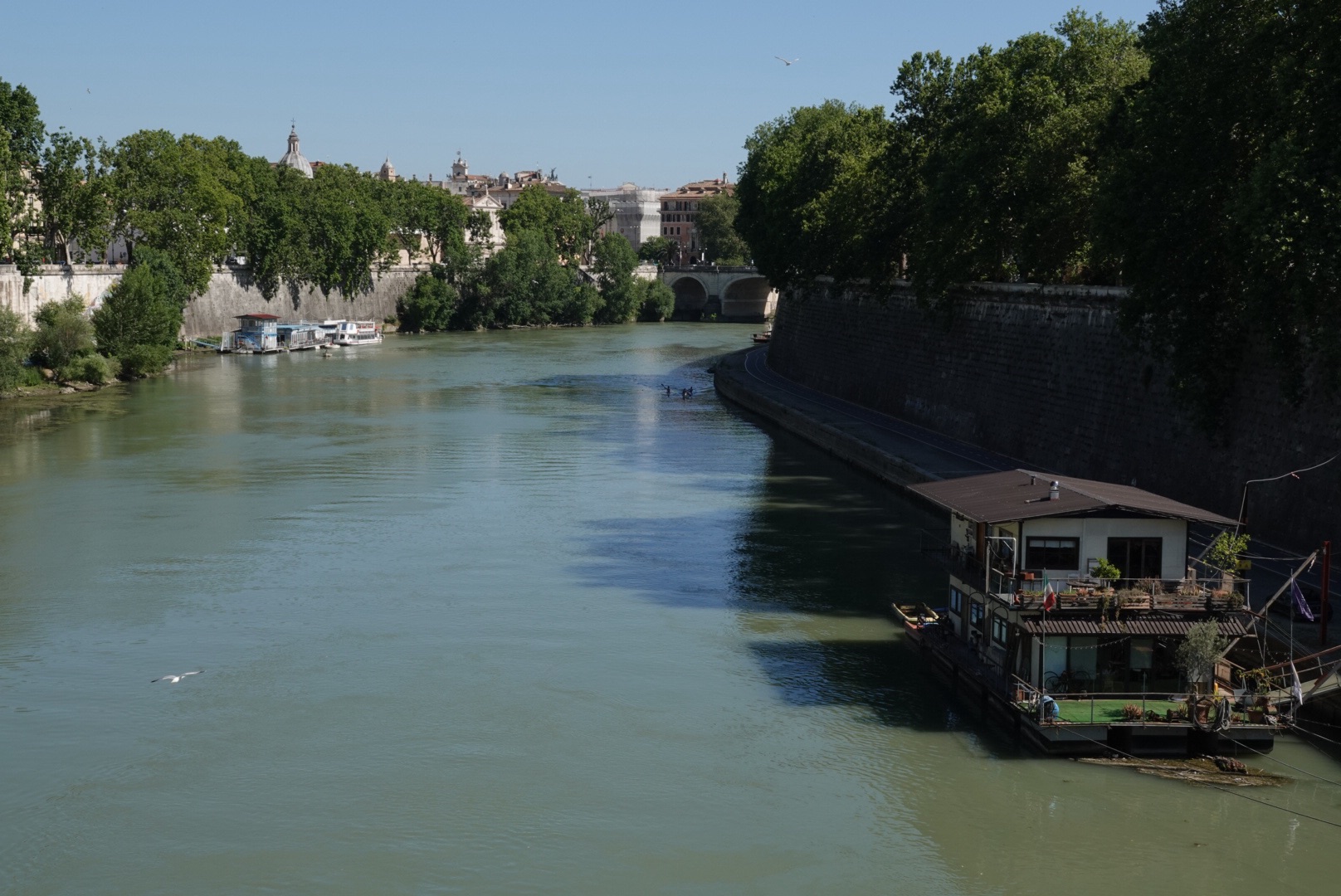
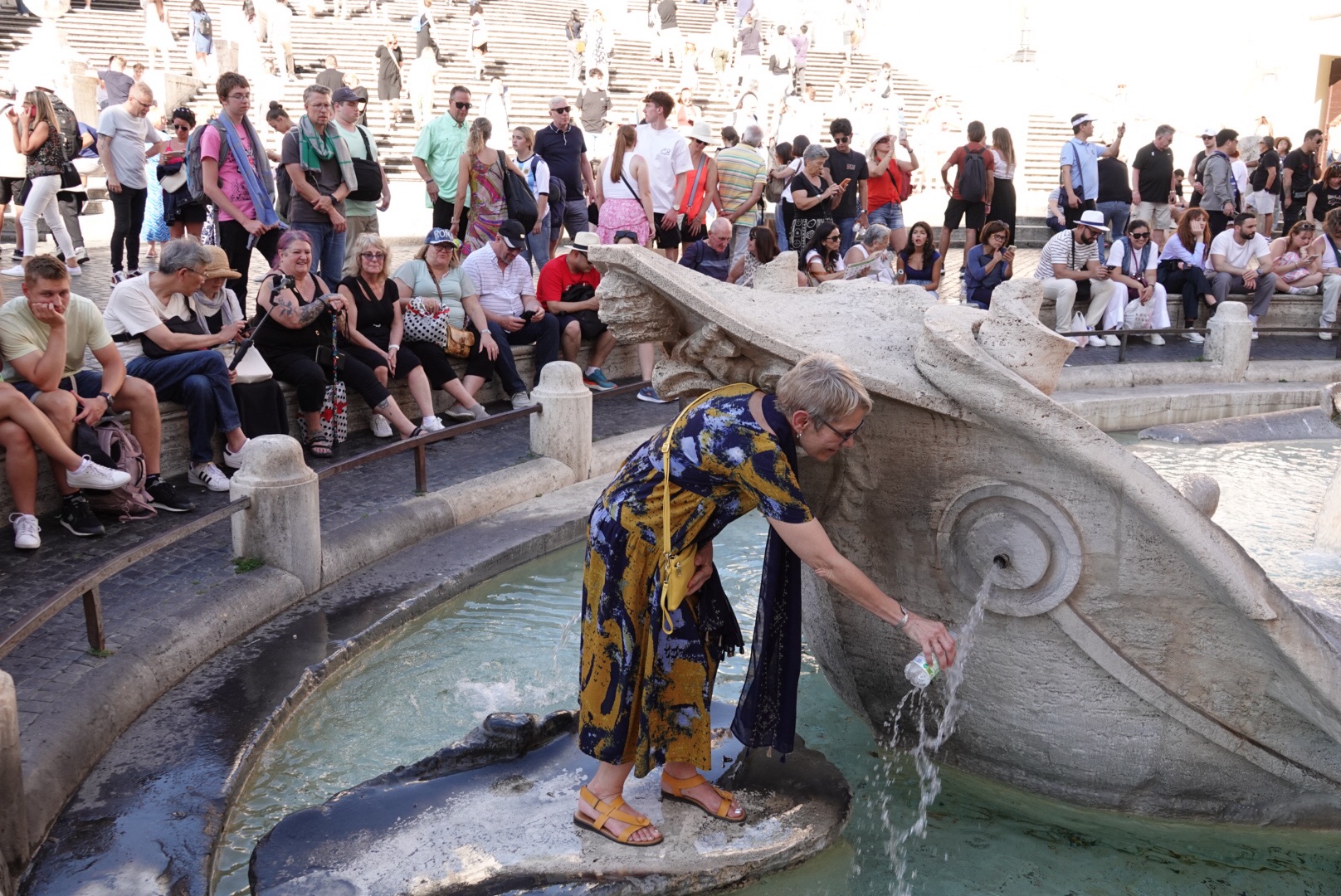
The weather continues to be sunny and hot, so we took our time, stopping to drink from the spring water taps dotted all through the city (one of the reasons Rome was founded where it is was the availability of fresh clean water from hundreds of springs – no need to drink what’s in the Tiber!)

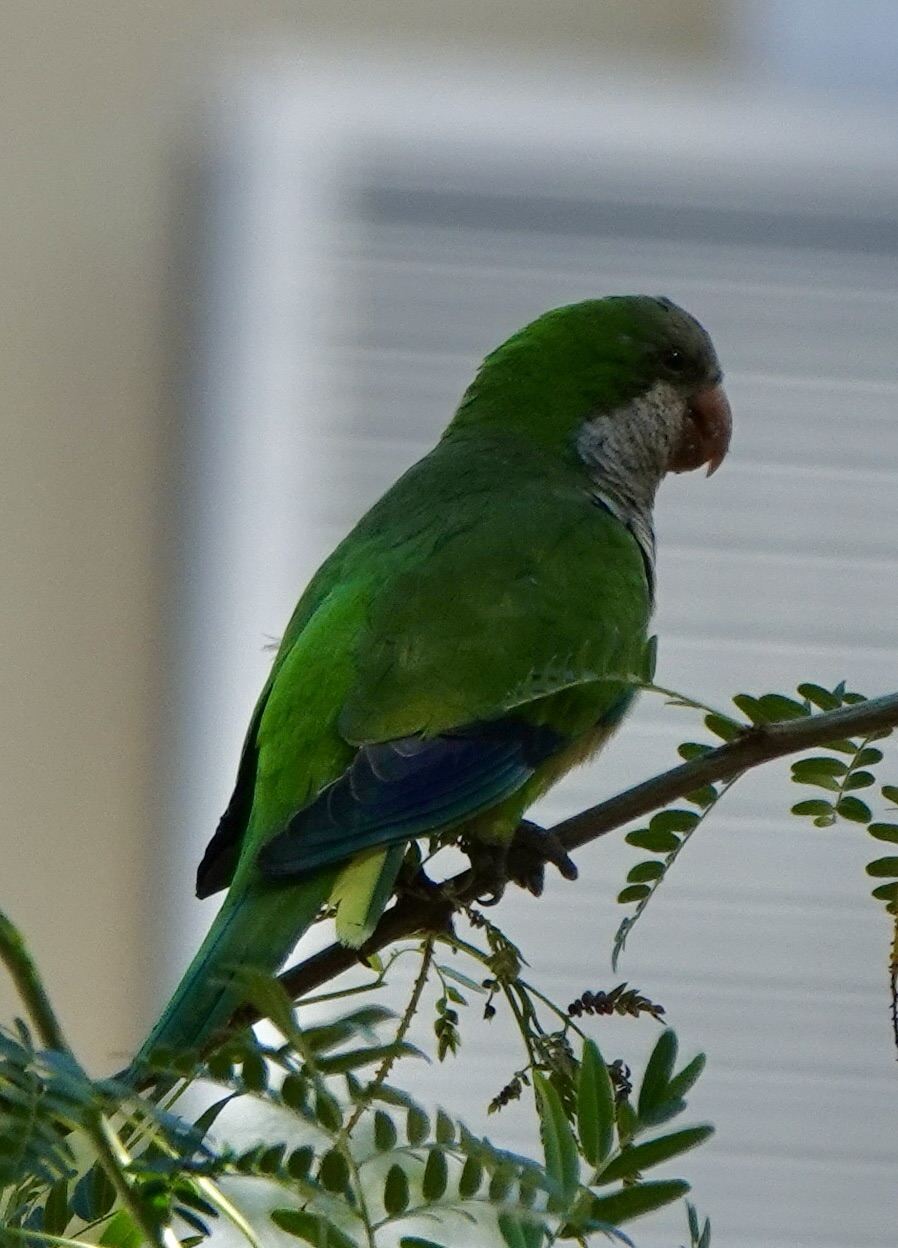
Then for a few minutes we simply sat in a shady park along the banks of the Tiber river before continuing to our destination. The park was noisy with birdsong, which turned out to be green monk parakeets!
We made a stop at the Trevi fountain where it was uncrowded enough that I actually got to throw a coin in over my shoulder. I tossed just one coin, which supposedly means finding true love this year. I’ve already got that so it might have been a wasted Euro.
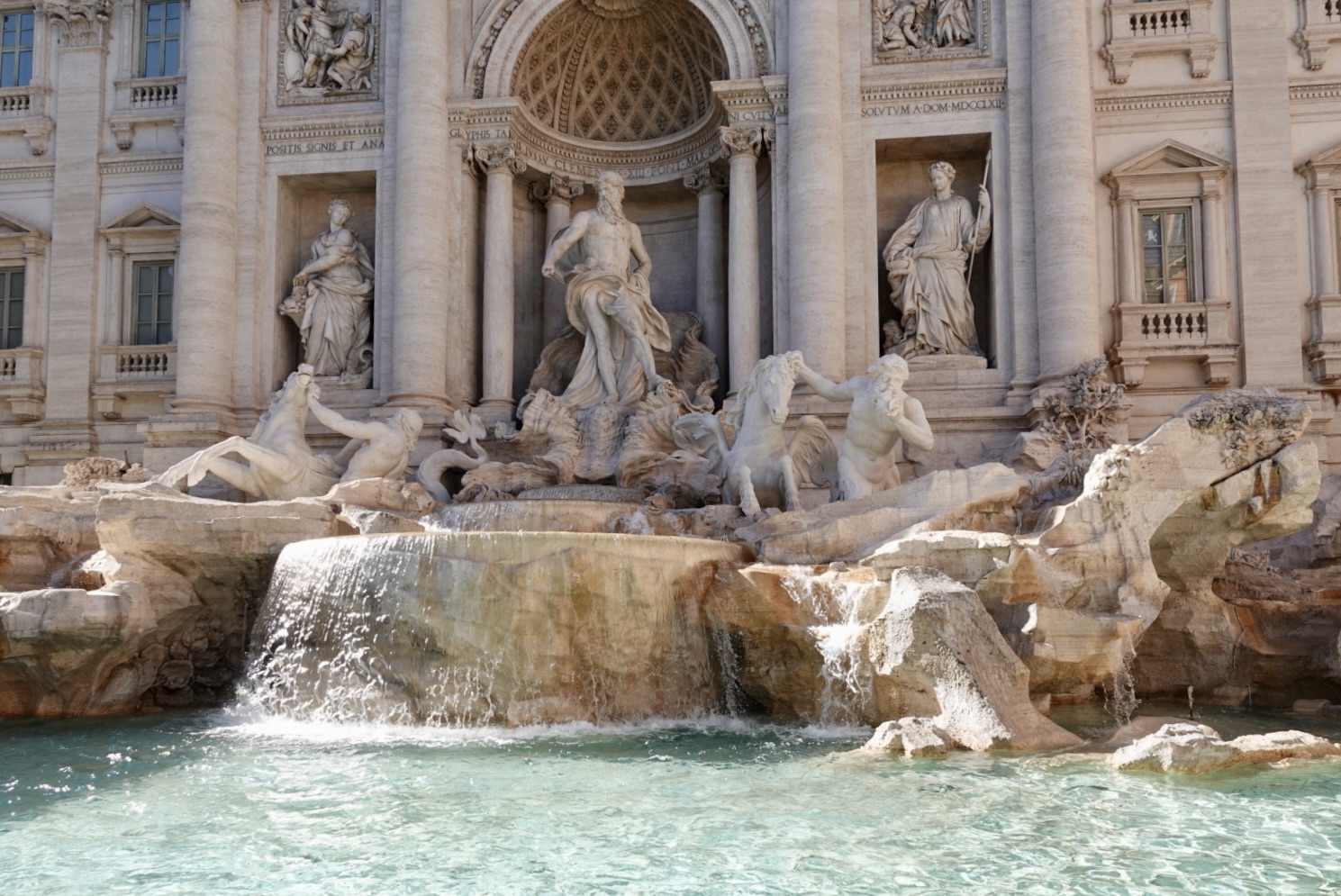
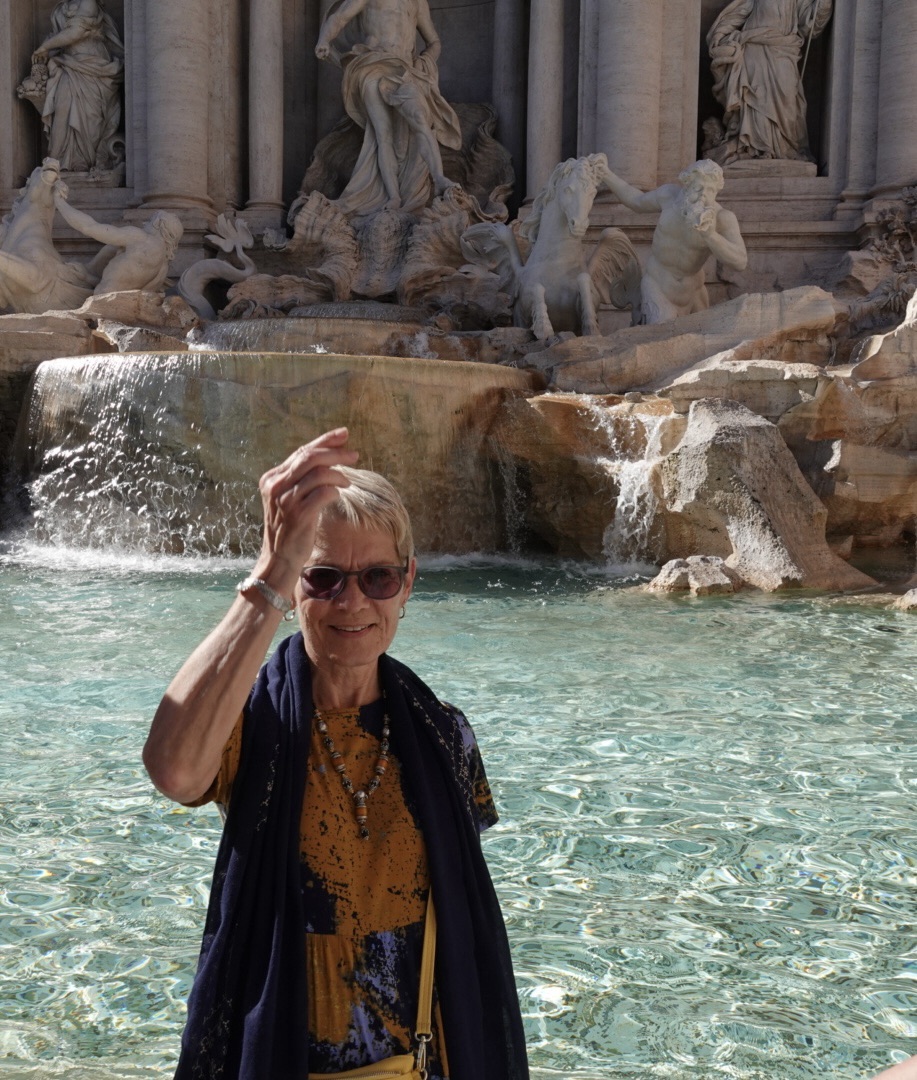
When we reached the steps, I had a good fortune to meet a local self styled “ancient Roman” named Theresa – an 82-year-old woman who also occasionally acts as a tour guide in Rome.
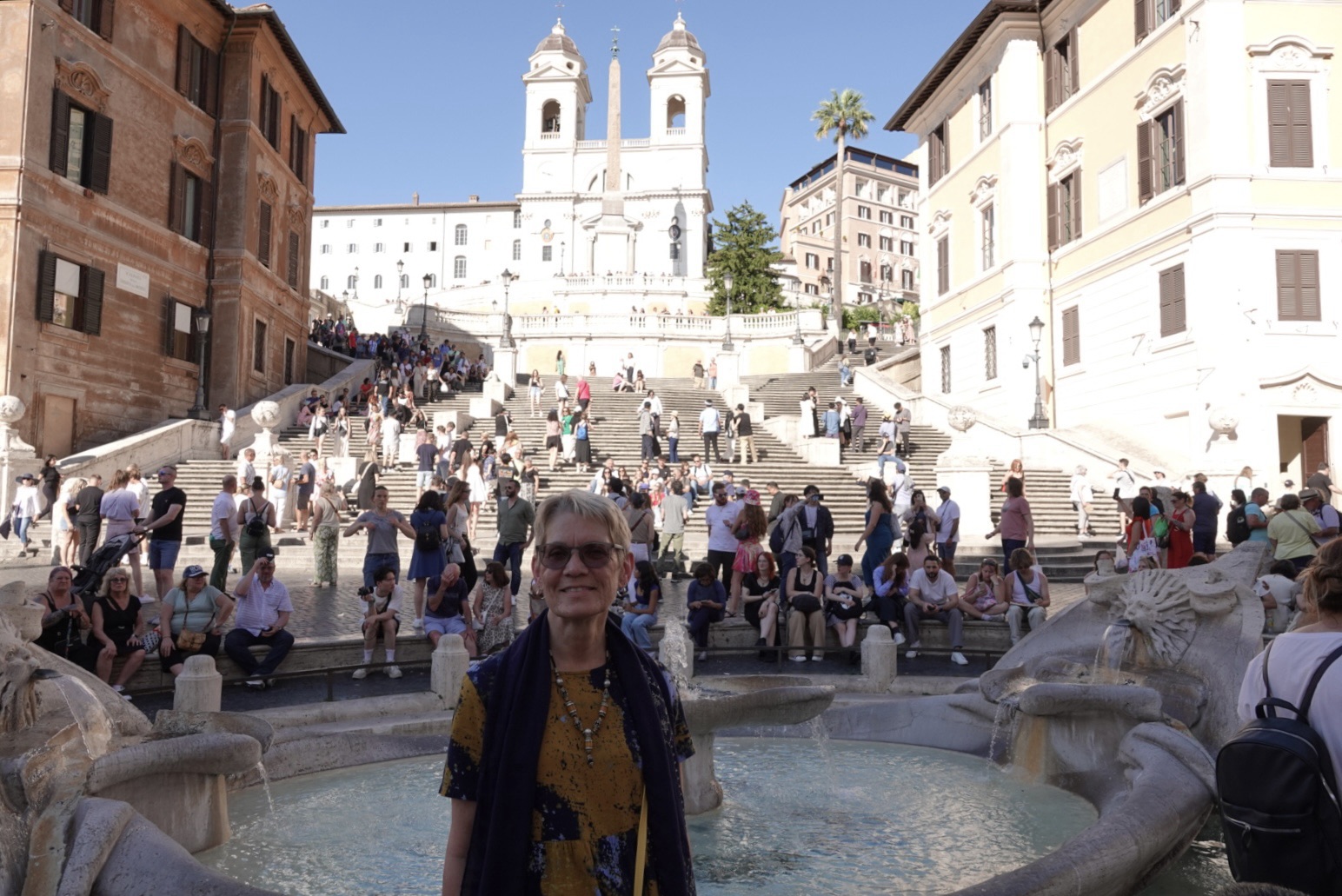
Theresa noticed my empty water bottle and pointed out that the water in the large fountain in the Spanish Square is x like most of the water in Rome flowing out of fountains and public taps – completely potable. In fact, at one end of the fountain is a well-worn marble step/platform specifically to give access to the stream of water without stepping in the pool. Ted got a good picture of me filling my water bottle in the fountain. After drinking several bottles of it, from several different taps, we can both verify that Rome’s springwater truly is cool and delicious.

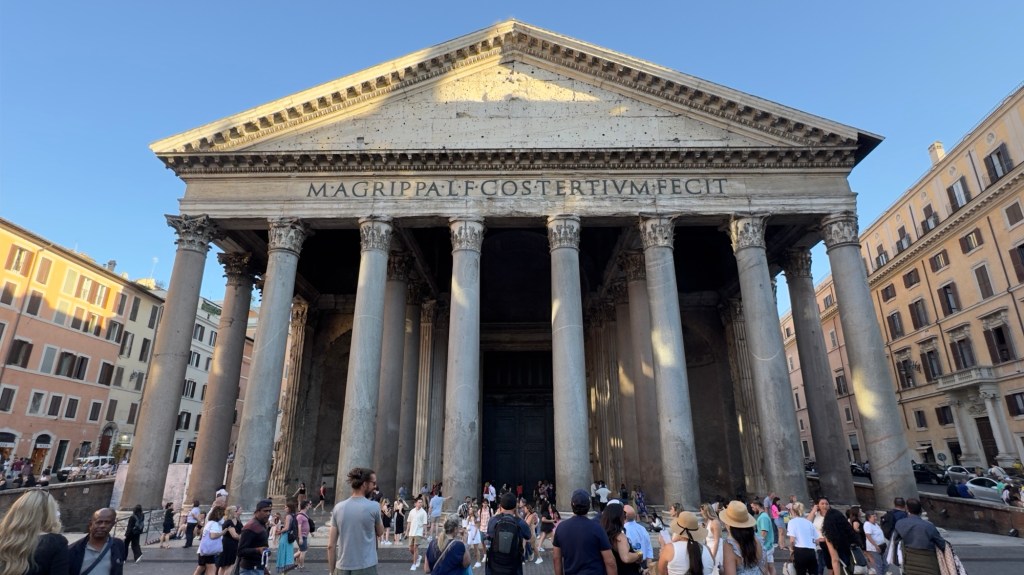
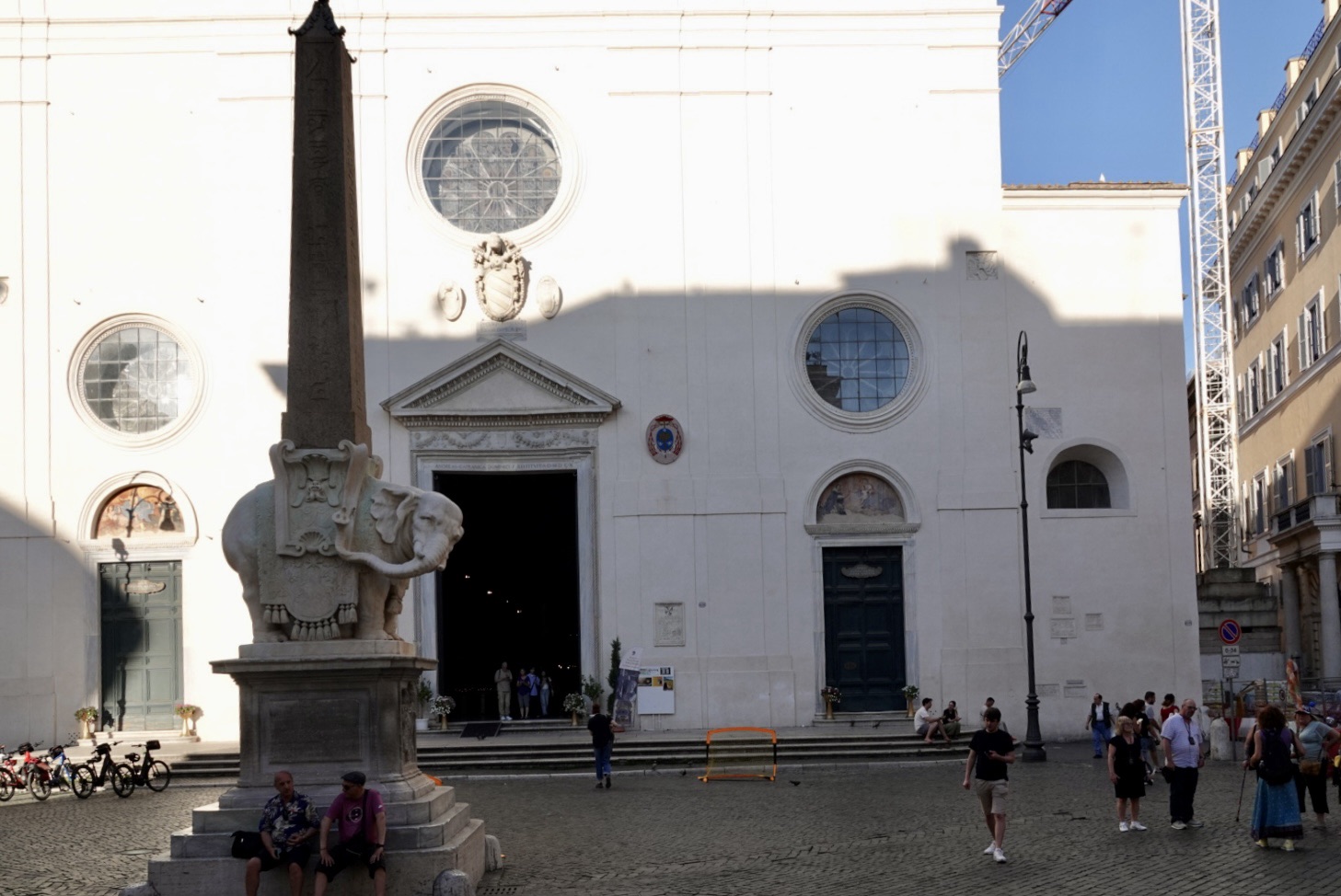
Our evening walk turned out not to be an illuminated night walk as advertised, but simply a partially narrated walk past some of Rome‘s famous monuments during a less crowded time of day. The reasoning was that walking around Rome after dark might not be safe, but if that was the case, why offer it? Only 6 of us had signed up for this experience (coincidentally just our table mates from last night), so it became a private walk. We stopped as a group at the Trevi fountain, the Pantheon, and the church where Galileo was interrogated and forced by the Catholic Church to recant his scientific theories. Legend has it that his parting words after being released were “it still moves” !

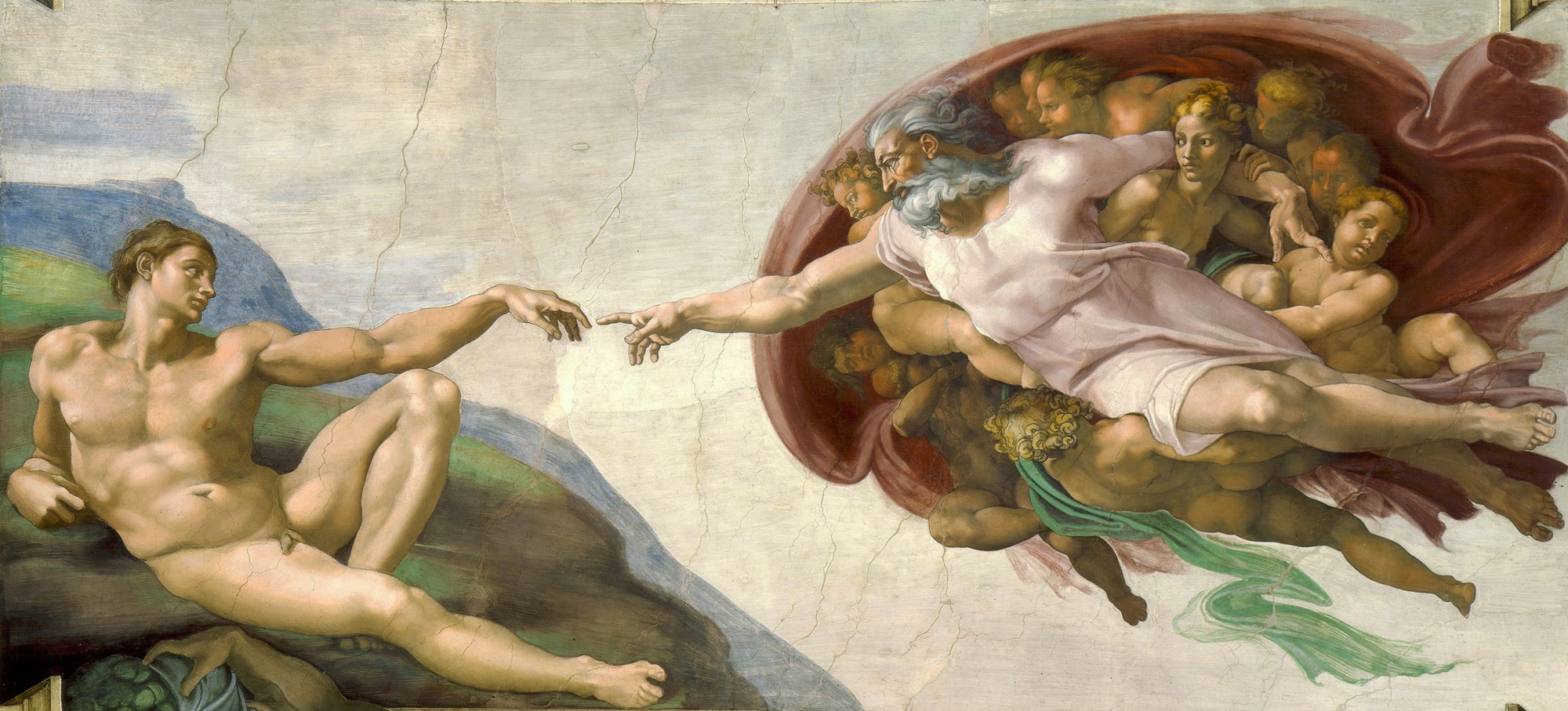
A gelato shop we passed had a humorous take on Michelangelo’s masterpiece: God creating gelato for man.

We paused at the square where Julius Caesar was actually killed. The ruins, currently a working archeological site and museum, are colloquially referred to as the cathouse because of the number of stray cats living in them.
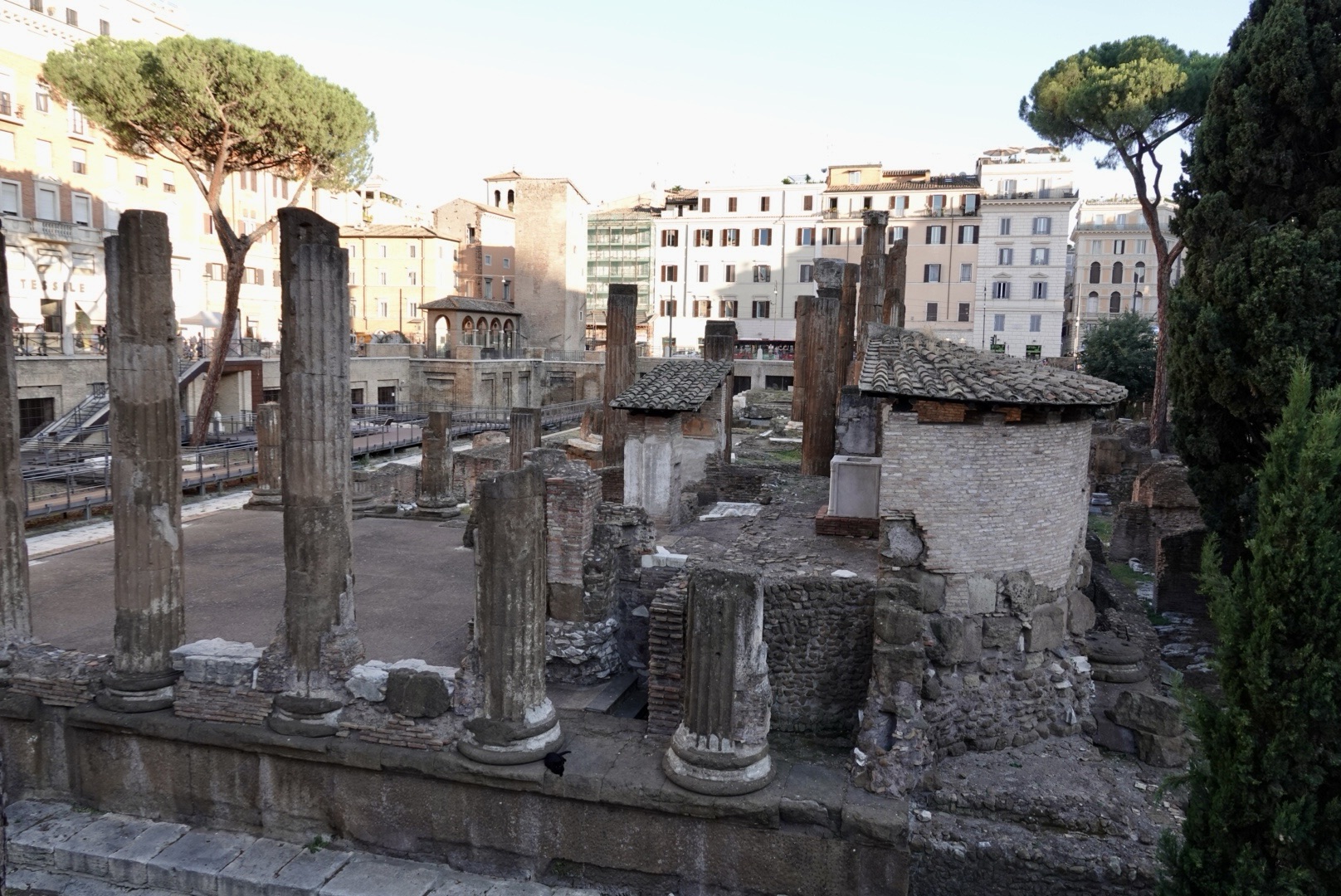
There is a legend that Julius Caesar’s ghost came back as a ginger cat, so maybe he gets reincarnated in this place over and over and over.

As we continued on our walk to this evening‘s restaurant, we all wondered why the restaurants that Exoticca tours has chosen for our dinners are so far from public transit, especially given that we have to arrange our own transport home after the dinner.
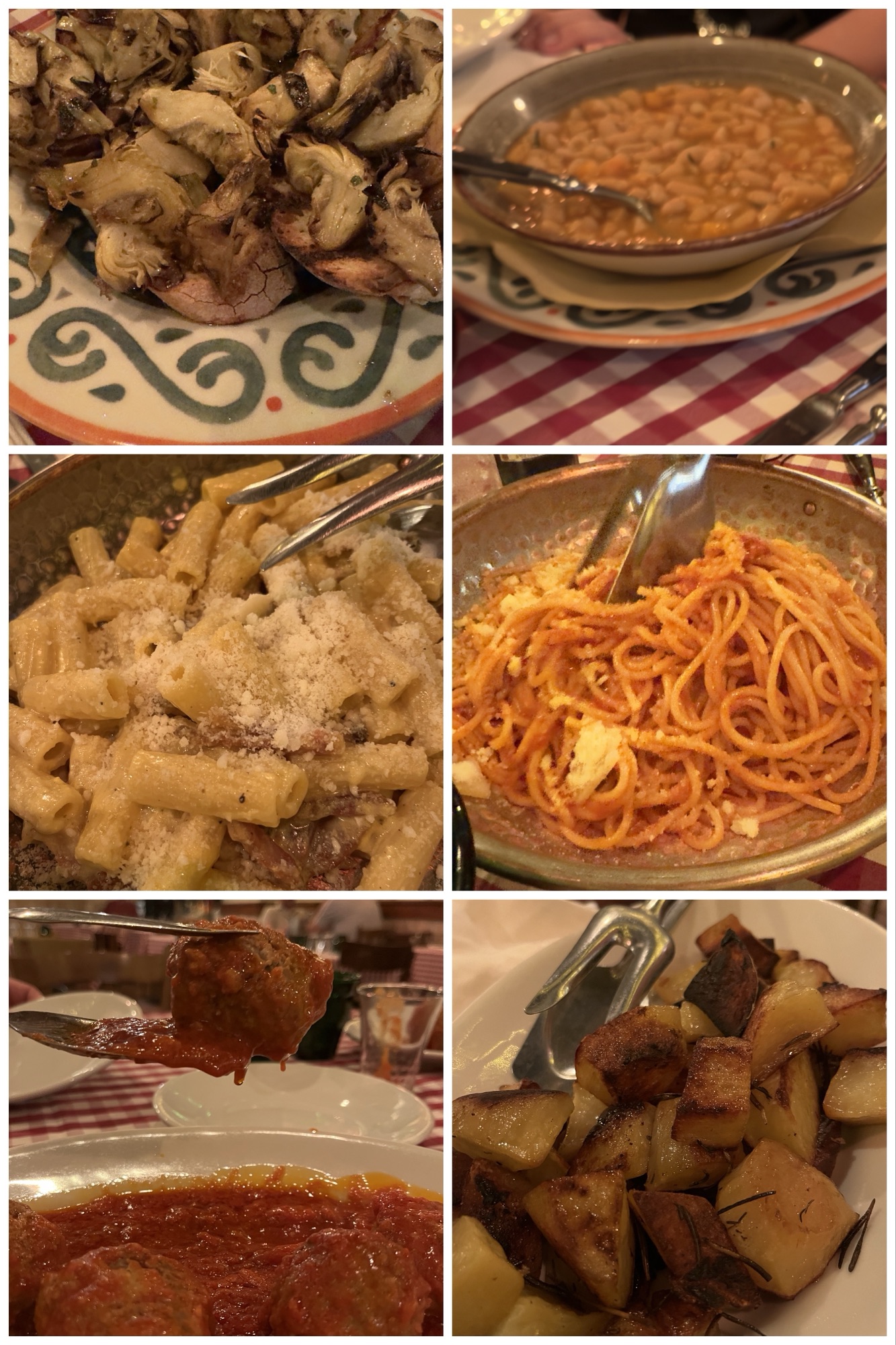
Everyone was pleased that tonight’s dinner was much better than yesterday’s: artichoke bruschetta and Roman style white beans as an appetizer; carbonara rigatoni and marinara spaghetti as first course; meatballs and herbed roast potatoes as second course; and tiramisu for dessert. Everything was served family style and accompanied by red and white wine, still and sparkling water. It was tasty, and the ambience really nice, but we all agreed that both of our optional food excursions so far were somewhat misrepresented and overpriced. We have 1 more group dinner coming up in Florence. Hopefully it will live up to its hype.
The 6 of us and our tour guide shared taxis bank to our hotel, anxious to pack and get some sleep. We leave for Florence at 7:30 a.m. tomorrow morning!
 Rose and Ted’s Excellent Adventure
I spent about 5 days in Rome nearly 40 years ago and had been looking forward to a week there last fall before our Viking Mediterranean cruise, but my husband’s shoulder surgery made it necessary to just go straight to the ship. I had done a lot of research, of course (!) and so seeing your tour days there was really eerie, like I’d gotten there and taken the pictures after all! I think your hotel was even in the neighborhood where our AirBnB was going to be. Thanks so much for the detailed tour. Even Ted’s sensitive photography couldn’t make St. Peter’s Basilica look anything better than than an overwhelming display of POWER — just intimidating. The Pieta you had to miss was about the only depiction of compassion and love I can recall. I’m so glad the current Pope’s influence runs counter to a lot of that history! The craftsmanship is amazing, of course. I look forward to coming along to Florence. Love your blog!
LikeLiked by 1 person
I completely agree with your comments about power – as we learn more and more here in Italy the idea of religion used as power is reinforced. Michelangelo’s Pieta, although we’ve seen many others, would have been my personal highlight.
LikeLiked by 1 person
Brilliant blog with great photos, thank you for showing me a place I will never get to visit.
LikeLiked by 1 person
Happy to share!
LikeLike
Thanks for your informative blog posts. Thought you might like to know that Italians call those pipes that deliver spring water to passersby are nicknamed “nasonis” because the delivery faucets appear to be big noses.
LikeLiked by 2 people
Neat! Thank you for that!
LikeLike