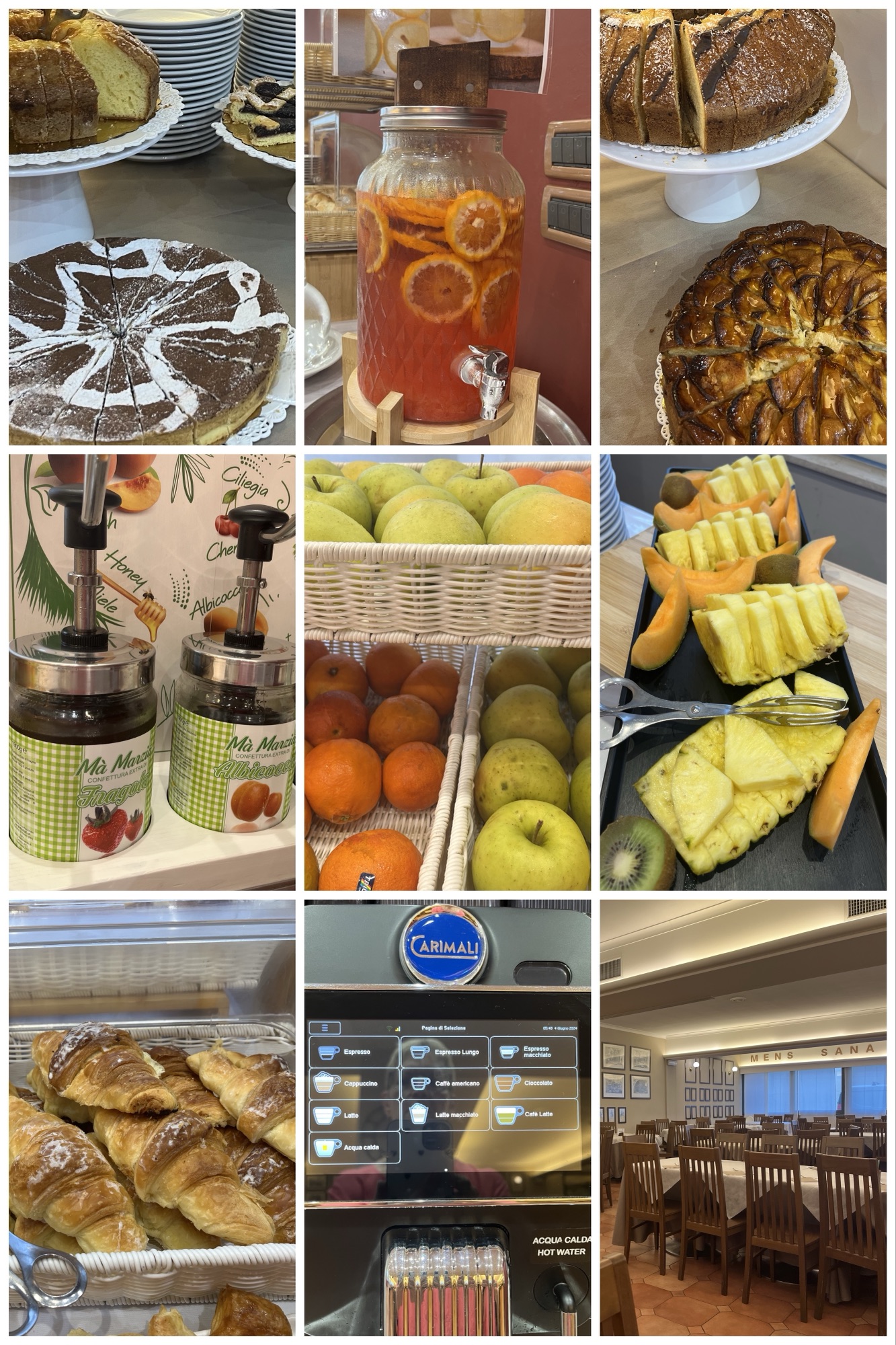
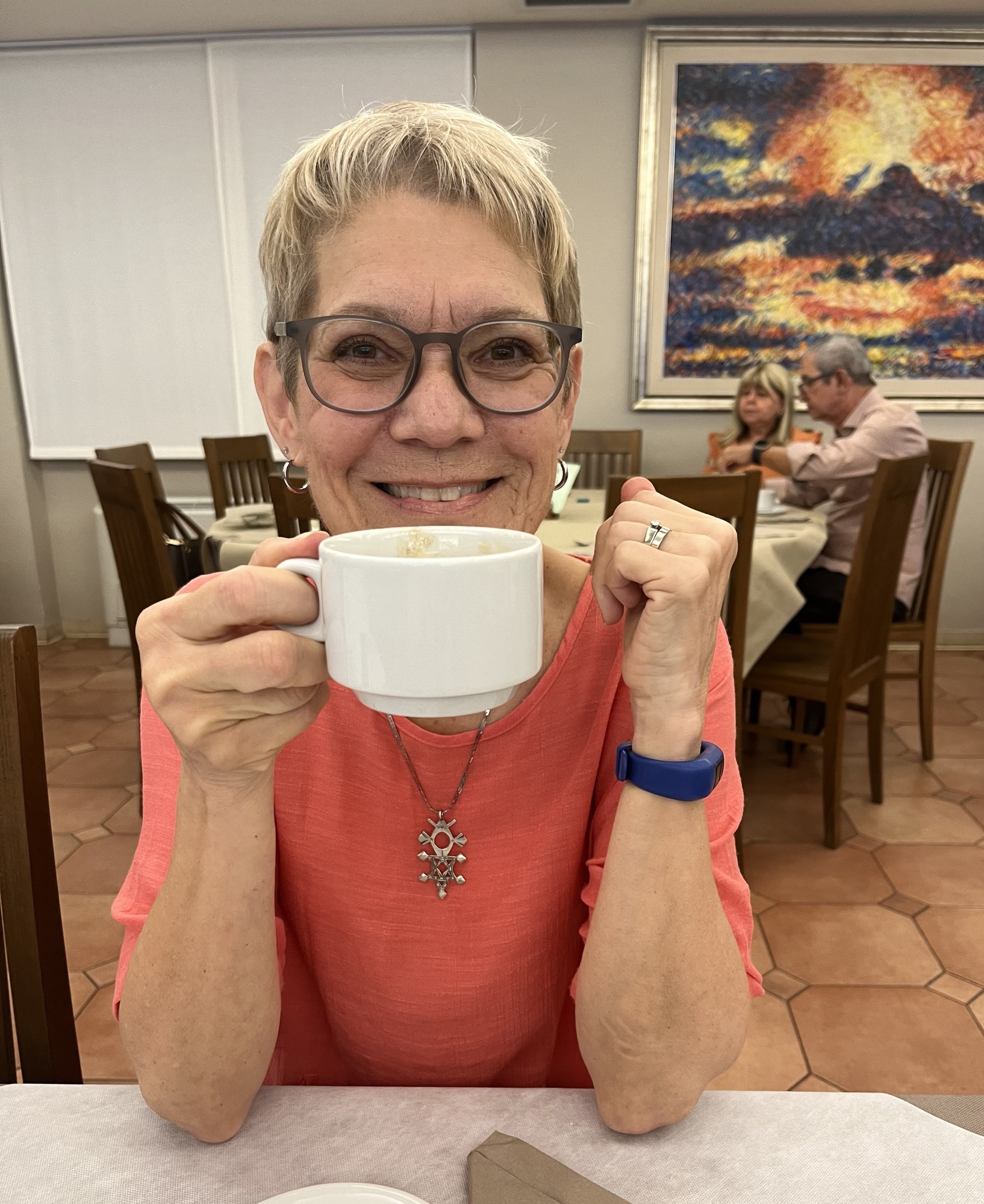
Breakfast is offered in the hotel from 6:30 a.m. until 9:00 a.m., and given our early night, we were up and ready to eat as soon as the restaurant area opened. There was a lovely selection of fresh baked goods, lots of both fresh and stewed fruits, yogurt, cold cuts and cheese, tomatoes and olives, fresh ricotta, cereals, and a variety of juices, plus an assortment of coffees from a machine. There were also a couple of hot items (scrambled or boiled eggs and sausages), but who needs those when there are so many other options? I resisted the urge to have just cake and coffee for breakfast – today – but will likely succumb tomorrow.
We were scheduled to meet our tour leader Tabata Santoro at 8:30 in the lobby, for what was described as our “welcome speech”. That was also our first opportunity to meet the rest of the group with whom we’ll be travelling and sharing some activities and meals.
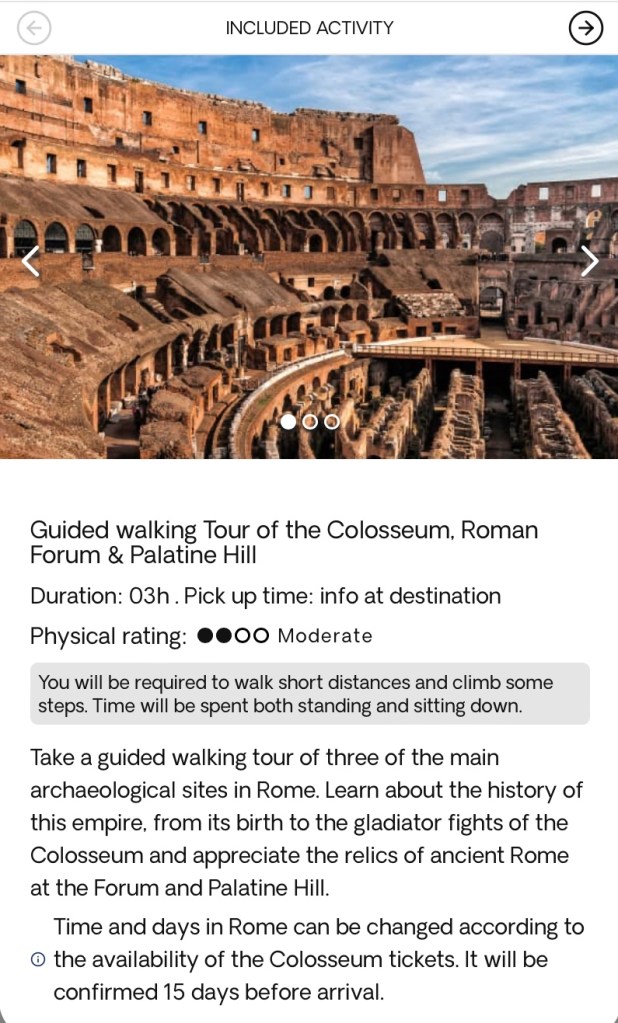
We departed for our Colosseum tour at 10:00.
Before we even got to the Colosseum, one of our group got lost, just unsuccessfully following our guide from the bus to the colosseum entrance. It took a few minutes, and a lot of stress and phone calls on his wife’s part for him to be found and directed back to join the group.
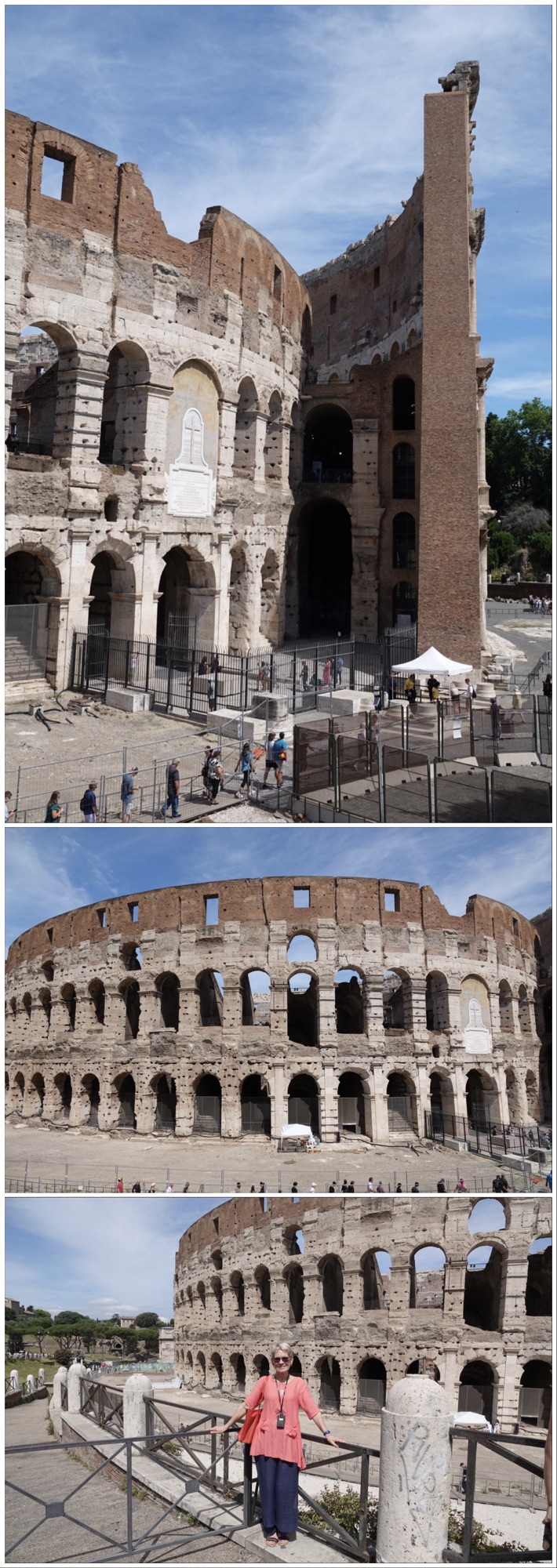
Once our group was complete, we were introduced to our wonderful tour guide for the day, Natalia.
She took us through the Colosseum and later the Roman Forum. Actually, she took most of our group through the Colosseum. One couple got delayed at security and separated from our group. They never did reconnect, and since it was our first excursion, AND we’d been split into two groups, AND we’d not had a chance to meet each other beyond the 20 minute bus ride, none of our group realized that they were missing. Natalia constantly counted group members, and yet….
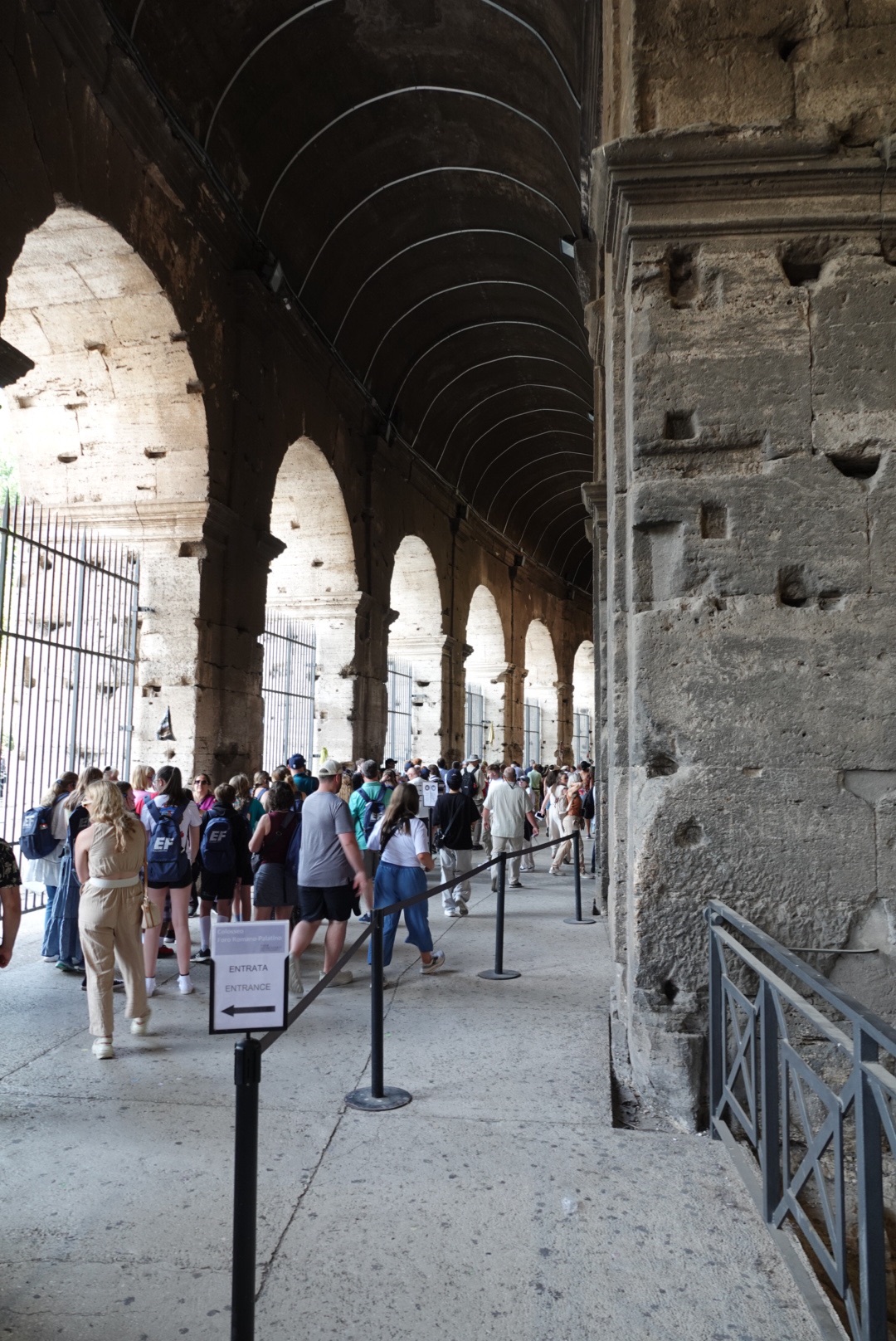
On to our actual tour, which was terrific. Even though we had been at the Colosseum before, Episode 259, Natalia had so much new information to share. She put it very well when she said that even history scholars when faced with just how much information there is about ancient Rome can end up feeling uninformed.
During one stop in the Colosseum Natalia told us more about the gladiators. We already knew that many of them were slaves from countries that Rome had conquered, and we knew that they had better lives than most because they could become celebrities. The analogy was to Italian soccer players was made. Then she told us though that the image perpetuated in movies of buff muscular men probably was not true. In fact, current research suggests that gladiators were likely what we would consider chunky. At a time when an infected knife wound could easily cause death, a wound cushioned by fat would be less likely to be fatal than one that reached muscle.
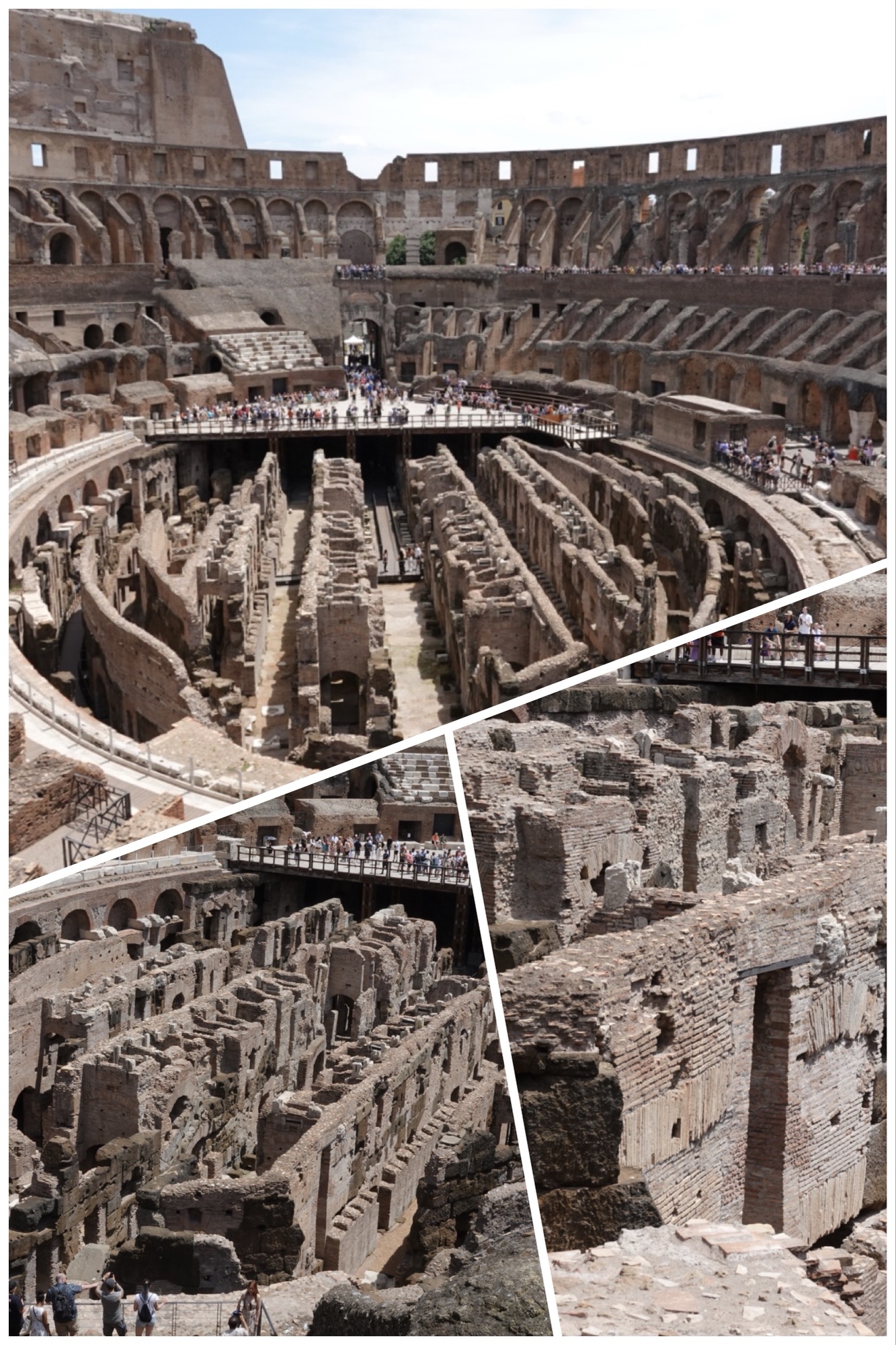
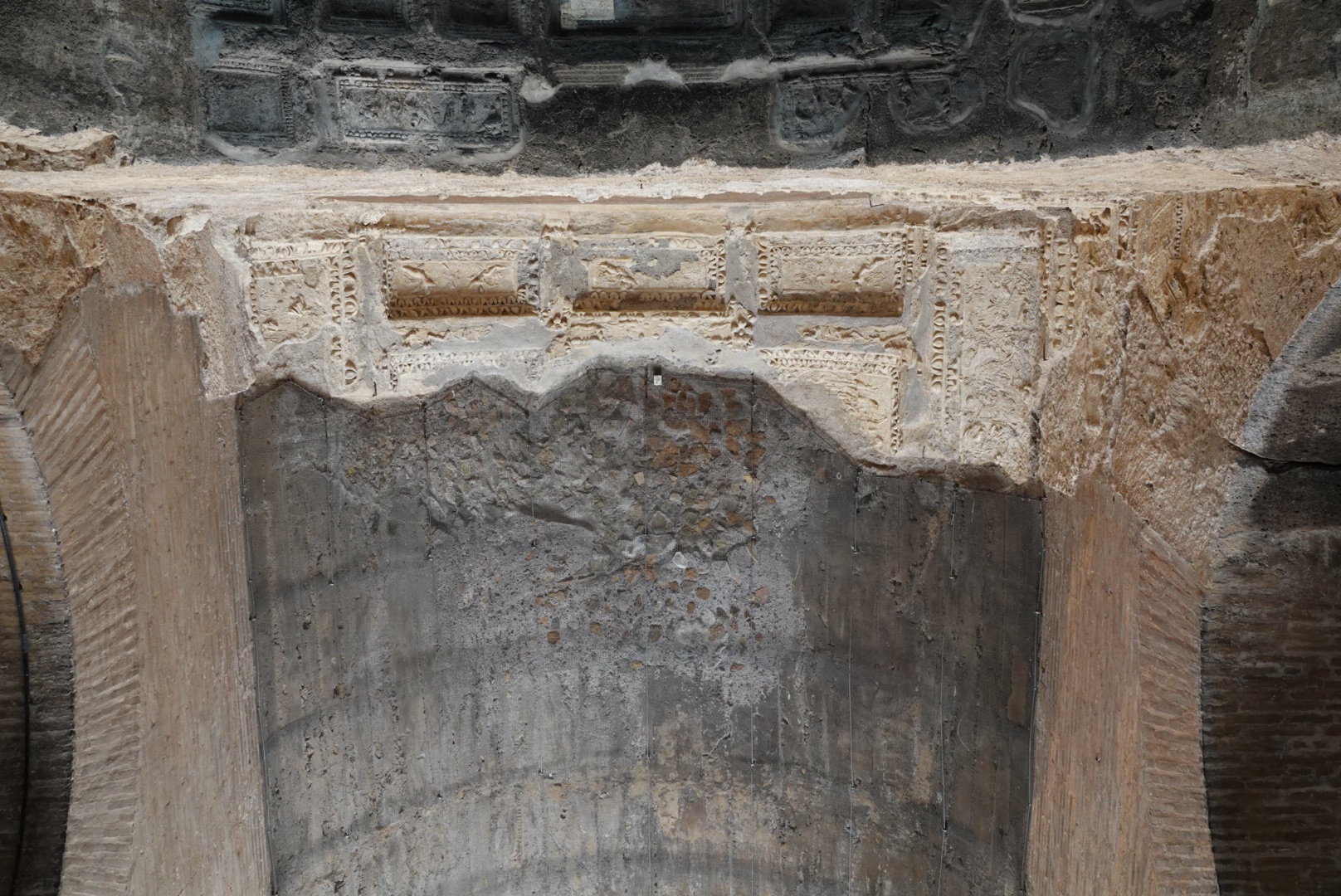
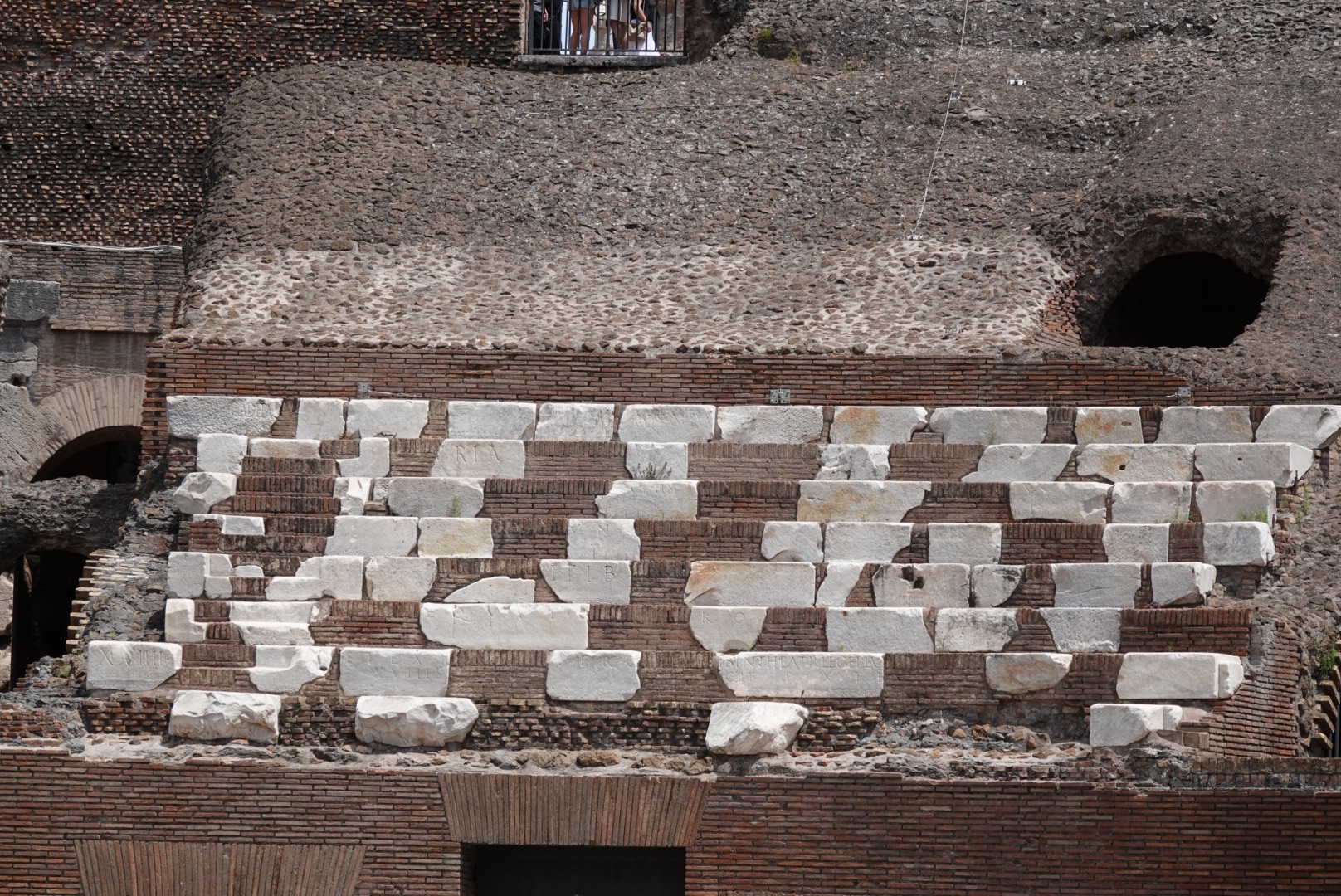
We also knew from previous visits that the Colosseum was not always just a beige stone structure, but was covered with travertine and marble, which would have made it glow in the sunlight, in the same way that we learned in Giza that the Egyptian pyramids were clad with marble. After the big earthquake around 500 A.D., the Colosseum was damaged to the extent that it was no longer suitable as an arena for events, so it became apartments/flats for use as residences, shops for vendors and butchers, and even eventually small temples and a public park and garden. But first, the Romans stripped the Colosseum of its marble for other buildings, its bronze statues and iron nails for weaponry , and its inlaid jewels to decorate churches and mansions.
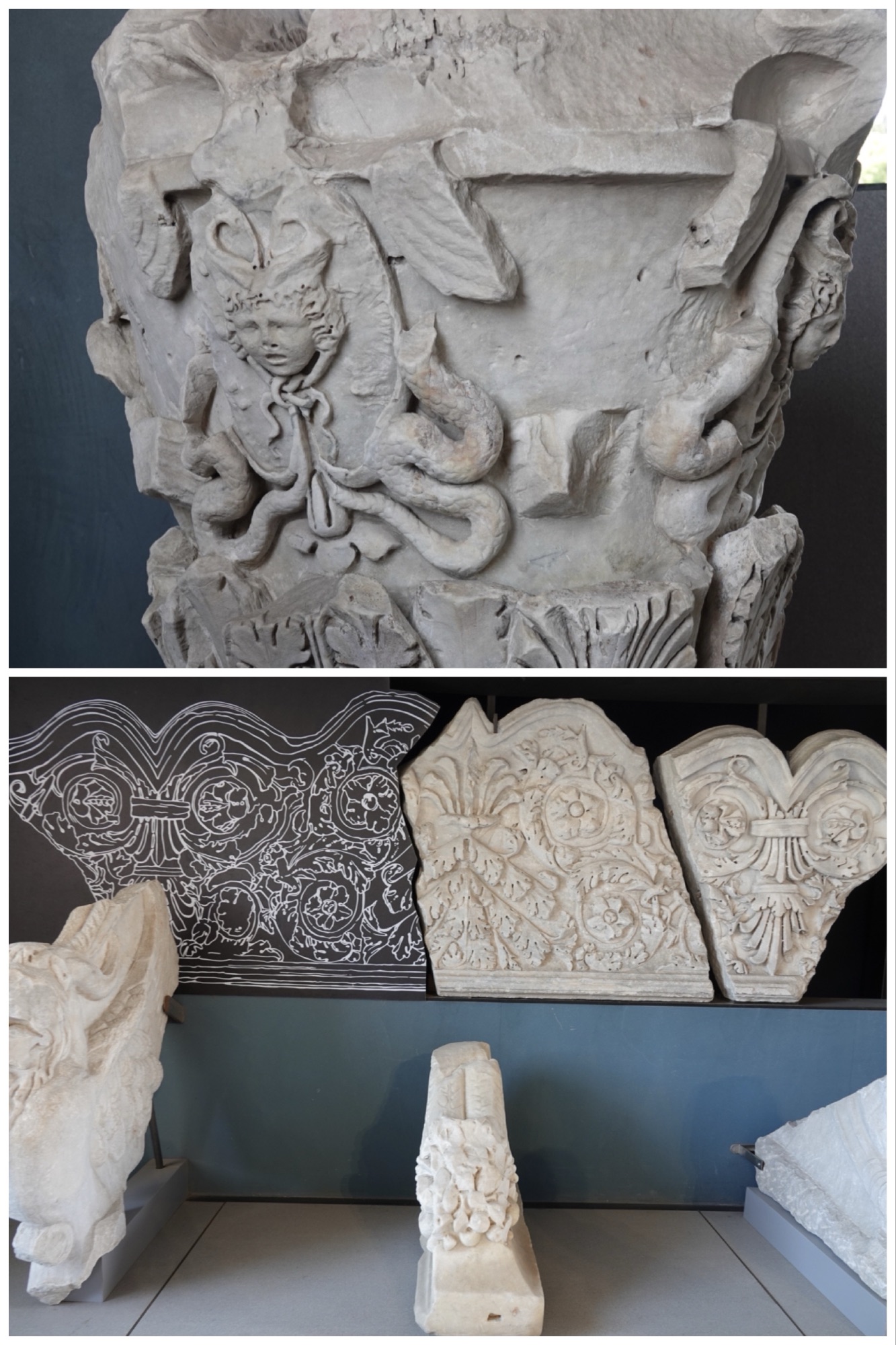
We made special note of what looked like holes in the side of the Colosseum. Those all represent where huge iron nails would have held on marble embellishments before they were scavenged.
Natalia had lots of really gory stories to share about the history of entertainment in the Roman Colosseum. We knew about things like animal fights, and men to men gladiatorial contest, but we had never before heard of things like the megalomaniac emperor Nero habit of burning Christians on crosses around the interior of the Colosseum as human torches.Natalia emphasized that things that were considered entertaining 2000 years ago almost all considered vile now.
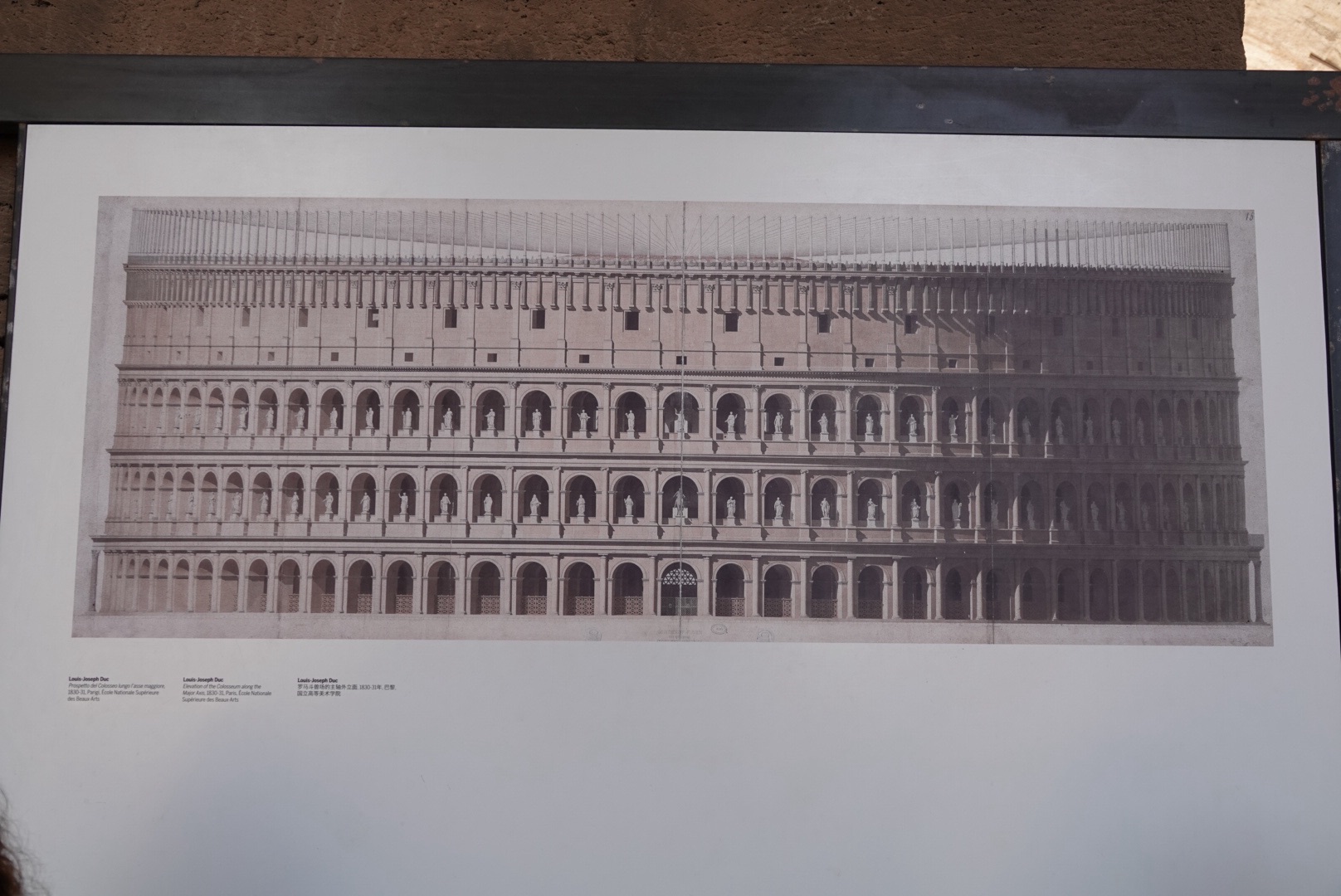
We learned that the colosseum was actually called simply the Flavian amphitheater, having been built by the Flavian emperors. The nickname “colosseum” came from the presence of a 40 metre tall gold statue that Nero had erected outside the amphitheater , depicting himself as the sun god. Romans began using the statue as a landmark and meeting place. “Meet me under the colossus” led to the entire area becoming the “Colosseum”.
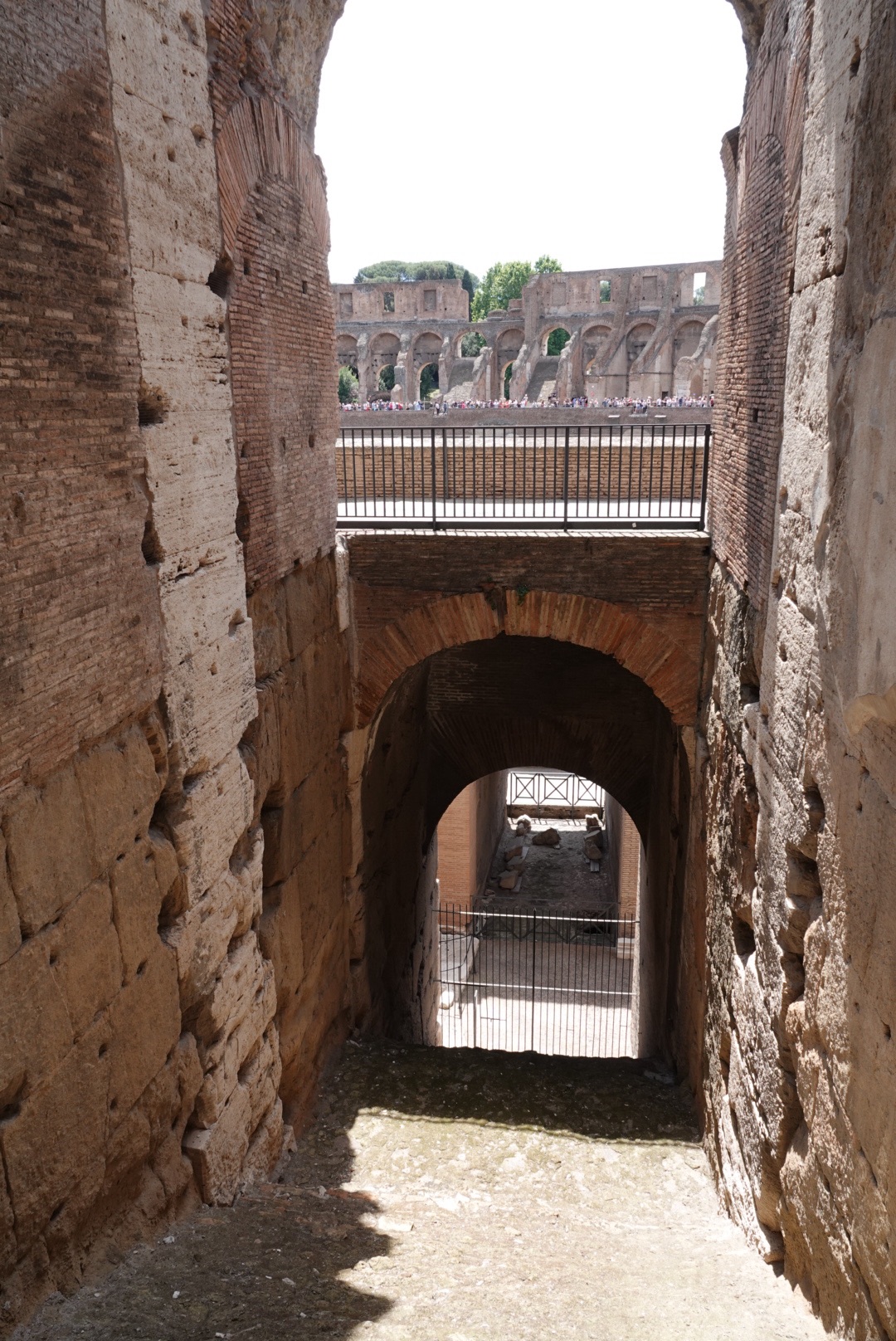
The idea of consecrating the Flavian Amphitheater, present since the Middle Ages, spread in the second half of the 16th century in the Counter-Reformation atmosphere. In 1750, Pope Benedict XIV ordered the construction of 14 shrines of the Stations of the Cross, arranged around the perimeter of the arena. They were removed during the Napoleonic occupation. In 1814 new niches were built, but dismantled in 1874 to allow for excavation of the underground levels.
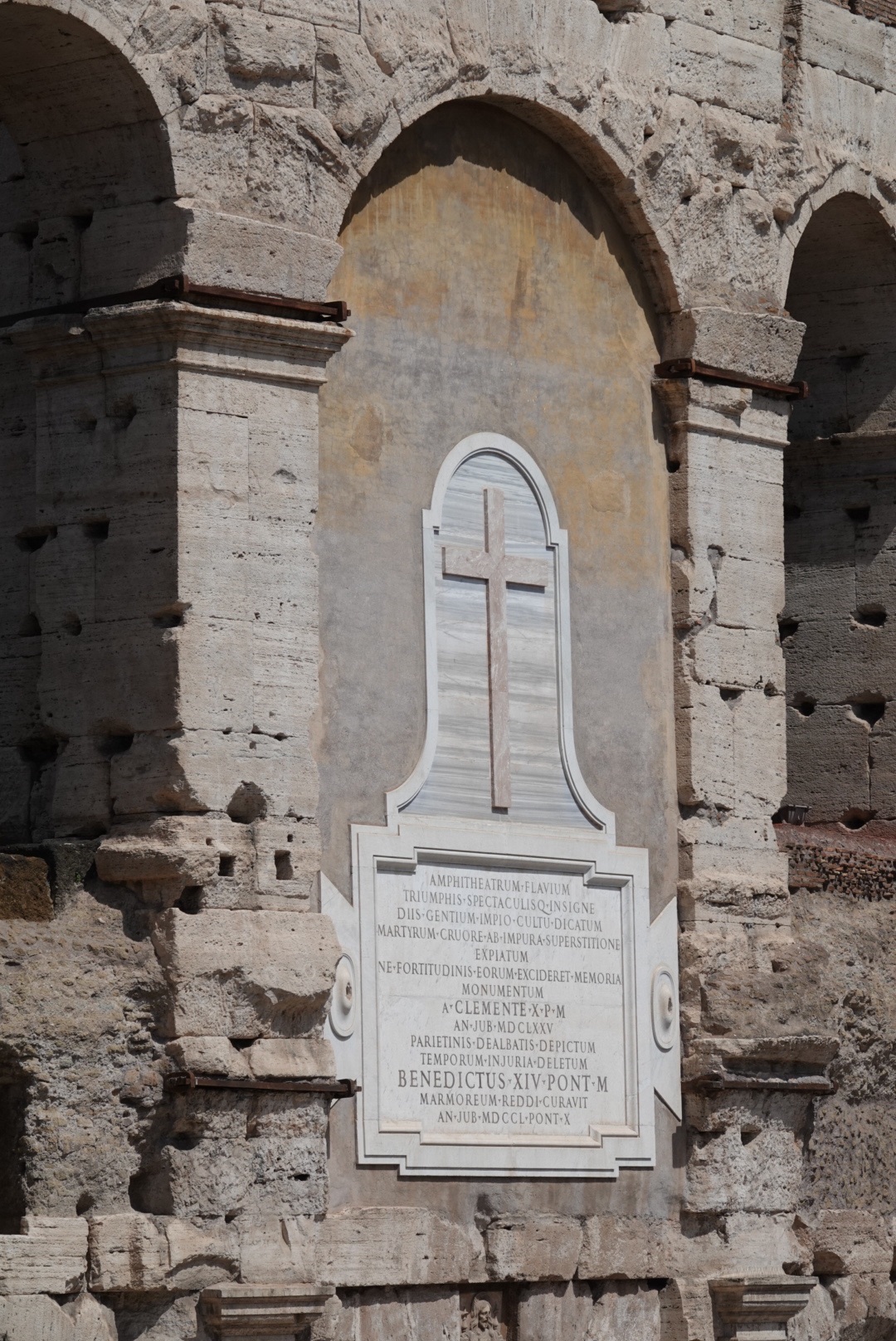
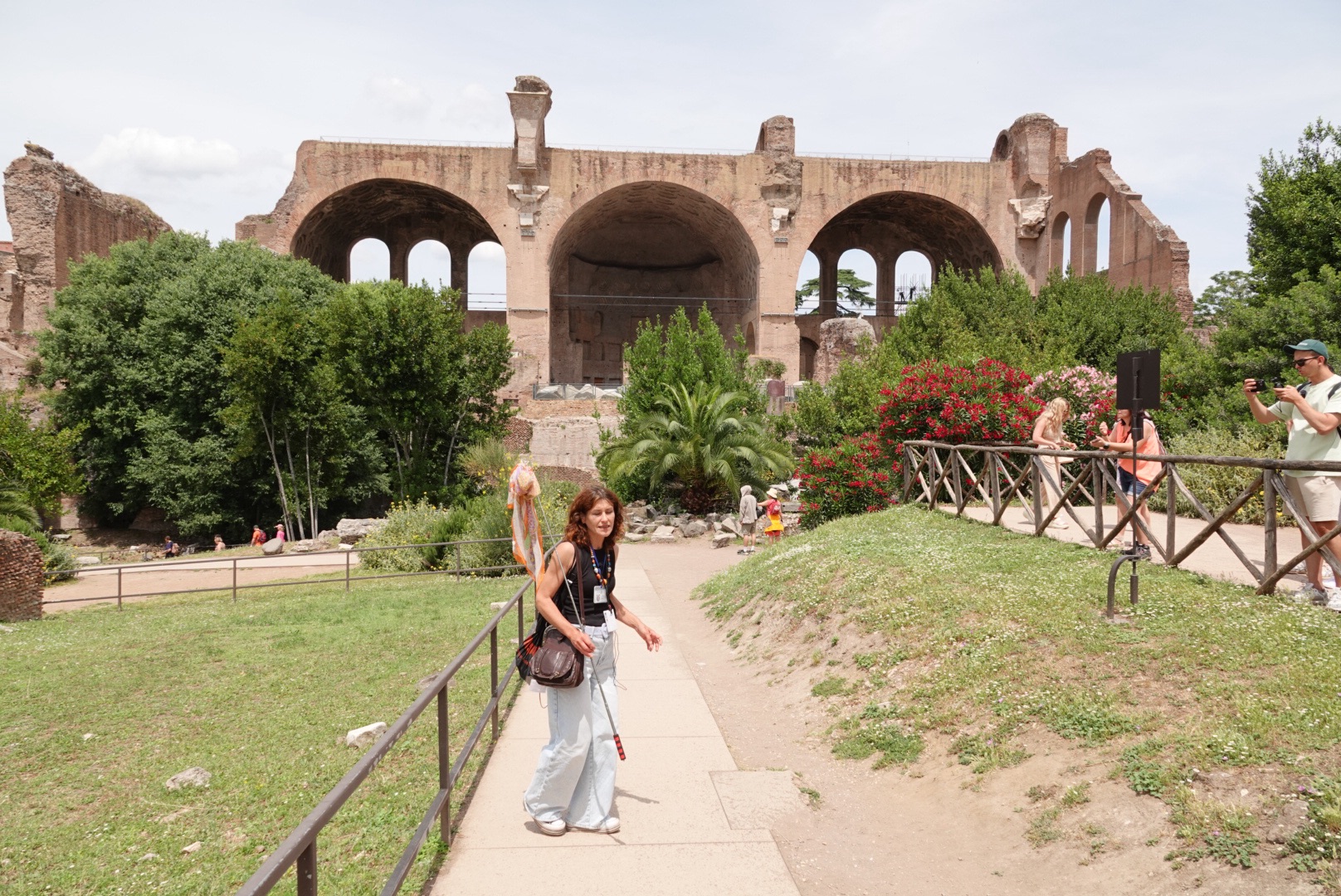
After leaving the Colosseum, we walked through Flavius Gate to the Forum which we learned was originally just a large outdoor area filled with shops and warehouses.
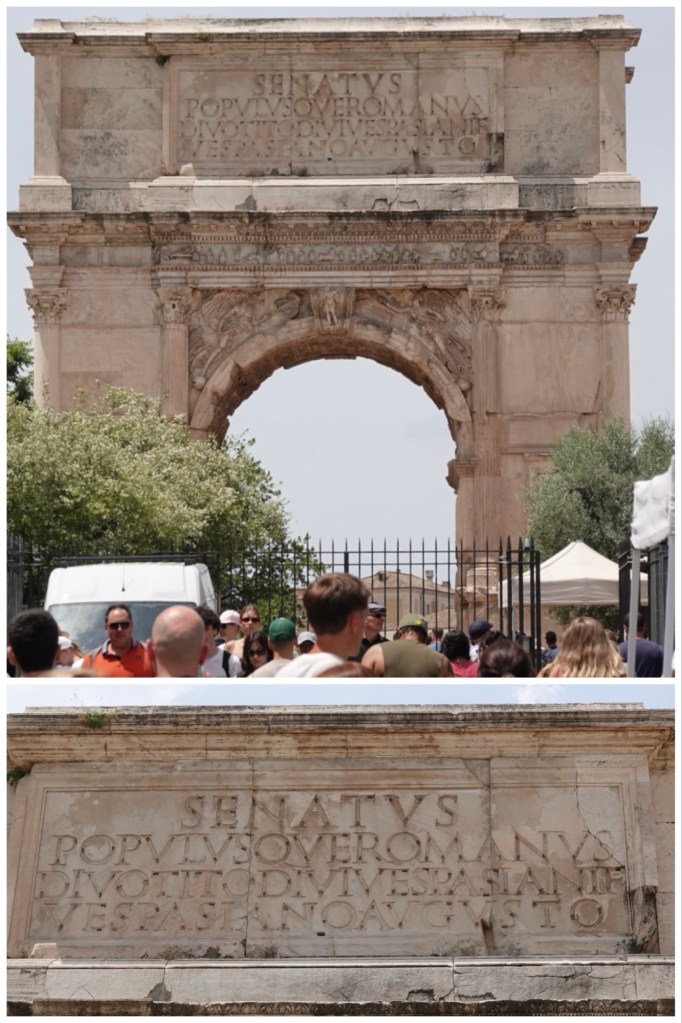
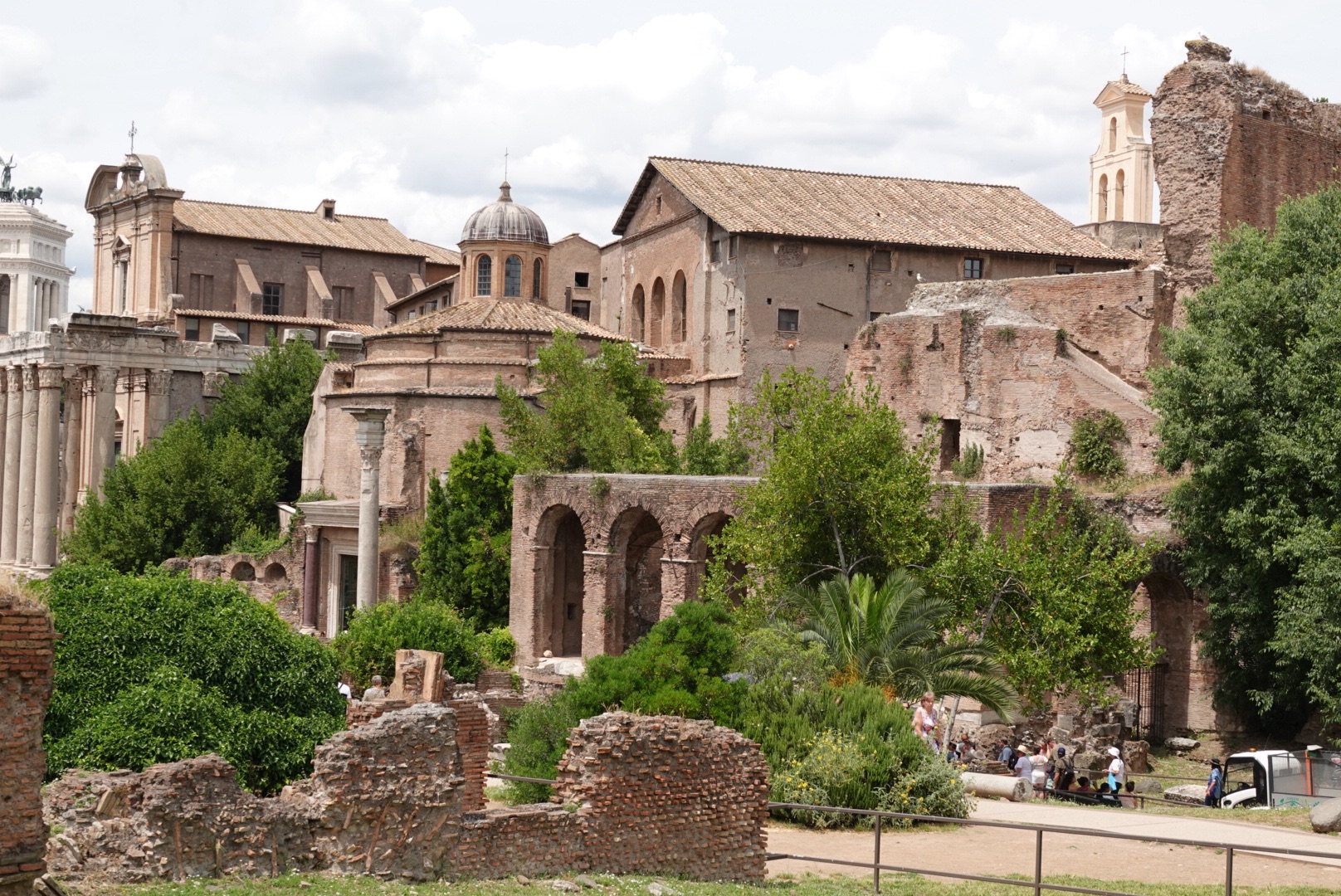
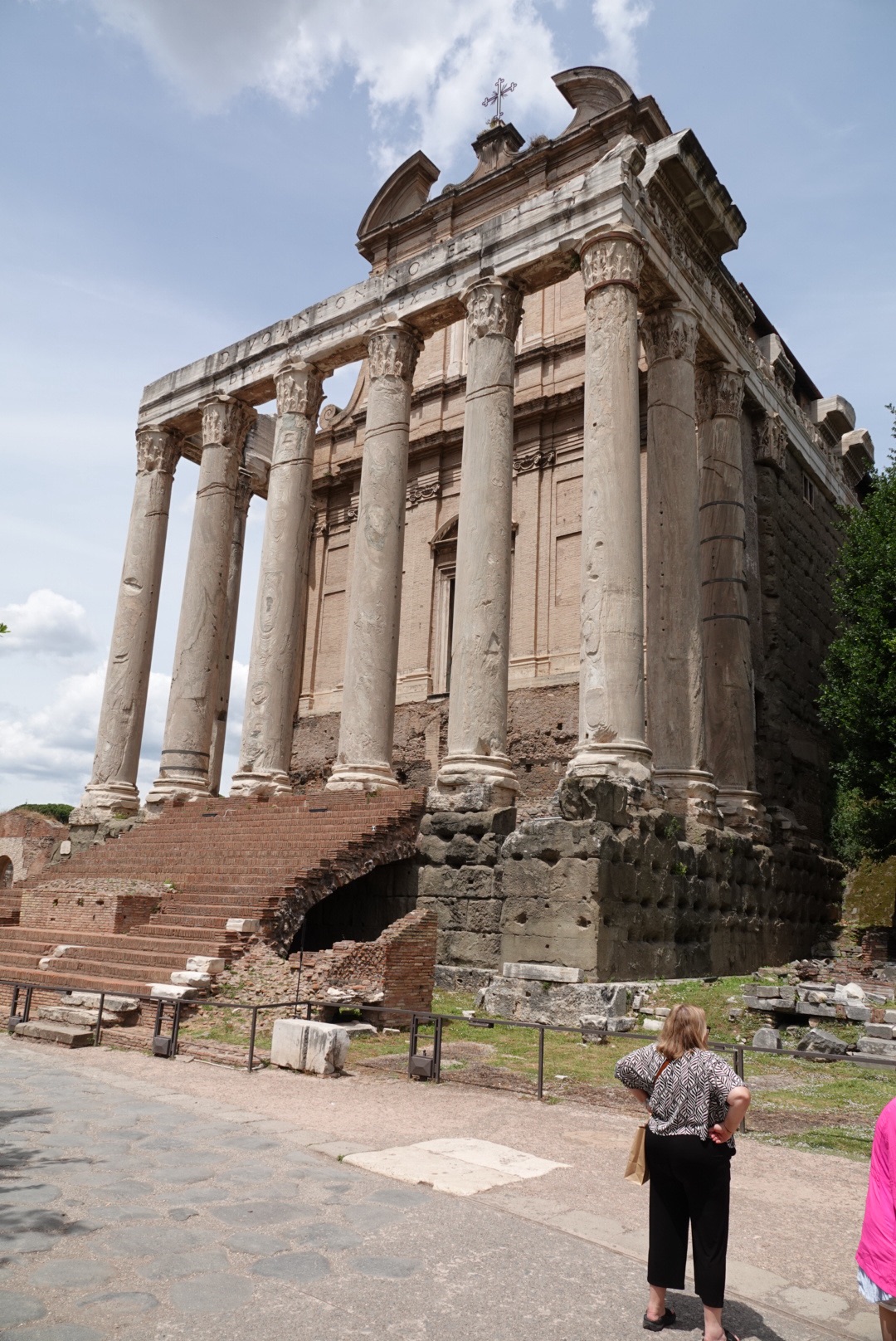
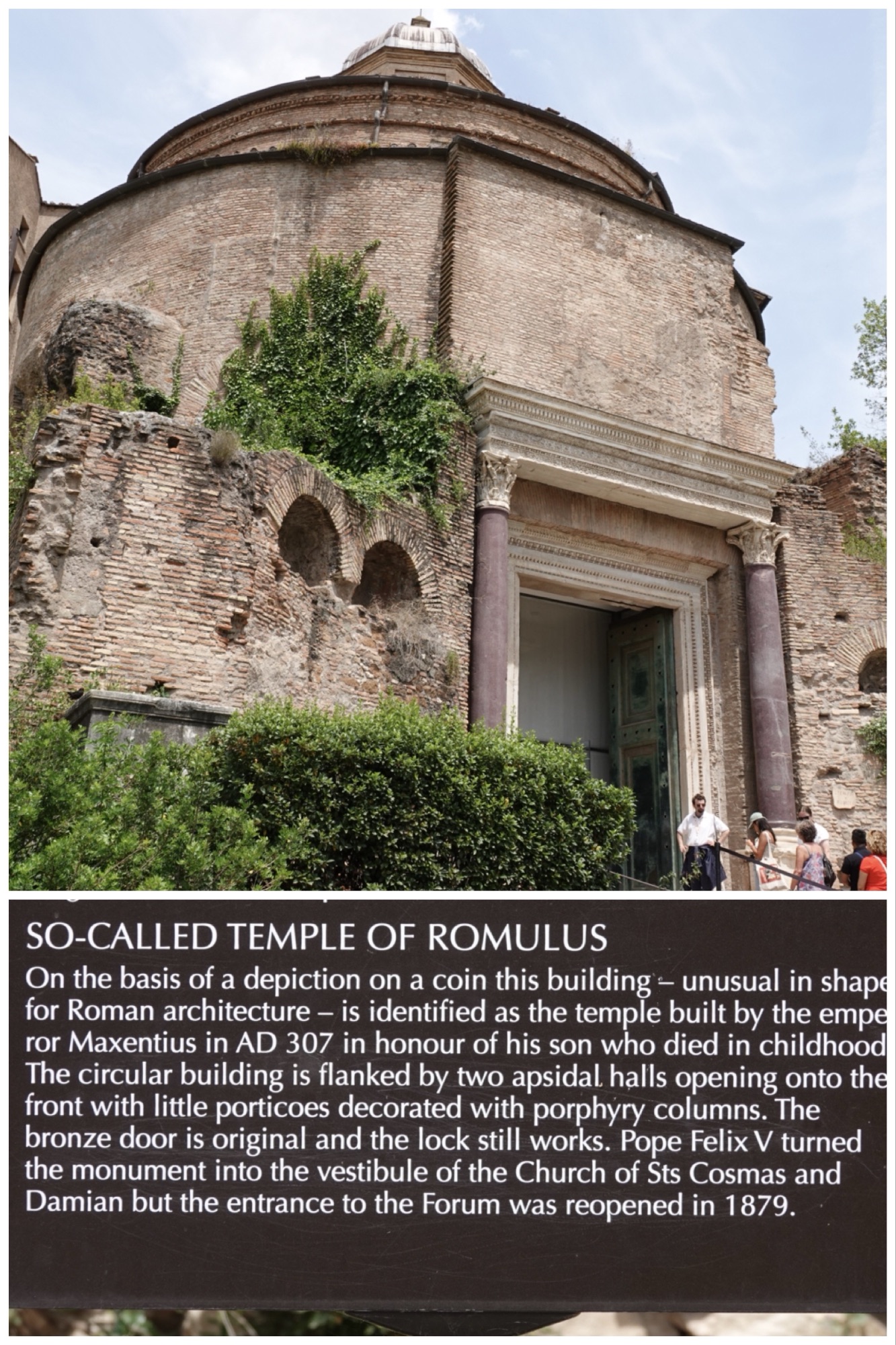
Eventually, the area became home to temples. The largest temple, which still exists because it was turned into a Christian church, is the temple dedicated to Flavia.
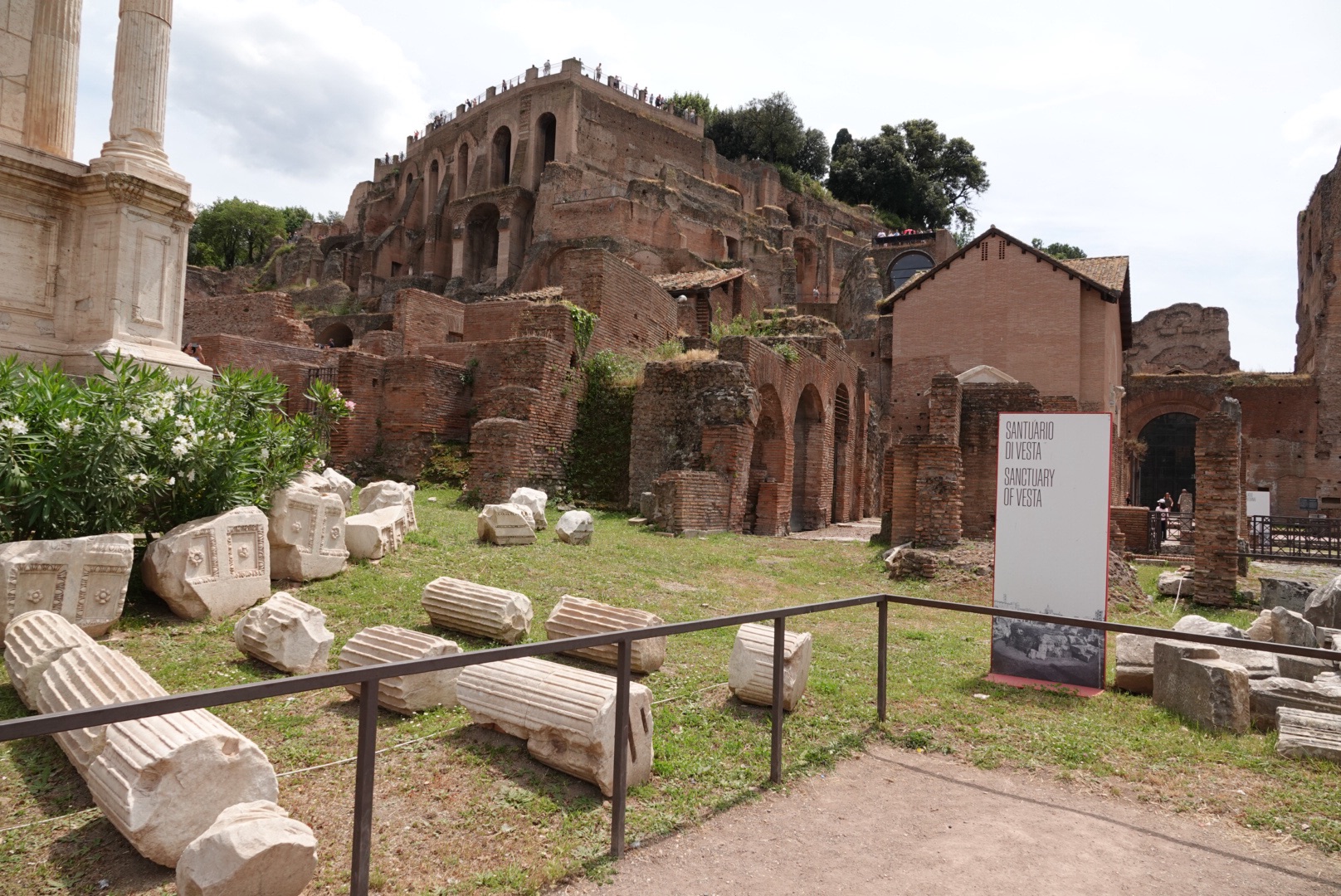
The smallest temple in the forum was actually the most important, being the temple of Vesta. We learned that the flame in the Vestal Temple was kept burning year-round 24 hours a day until each March 1 when it would be extinguished and relit to mark the new year. The original Roman calendar was based on a woman’s pregnancy term of nine months, beginning on March 1 and ending on December 21. The remaining days of the year were not assigned a month because it was believed that those 80 or so days were times when a woman was infertile after bearing a child. That calendar remained until the Julian calendar added July (Julius) and August (Augustus). Natalia told us that the six vestal virgins were chosen from patrician families at the age of 6 to 10 years old, and served for 30 years. In return for their vow of chastity, they received many privileges that other Roman women, and even other Roman men, did not have.
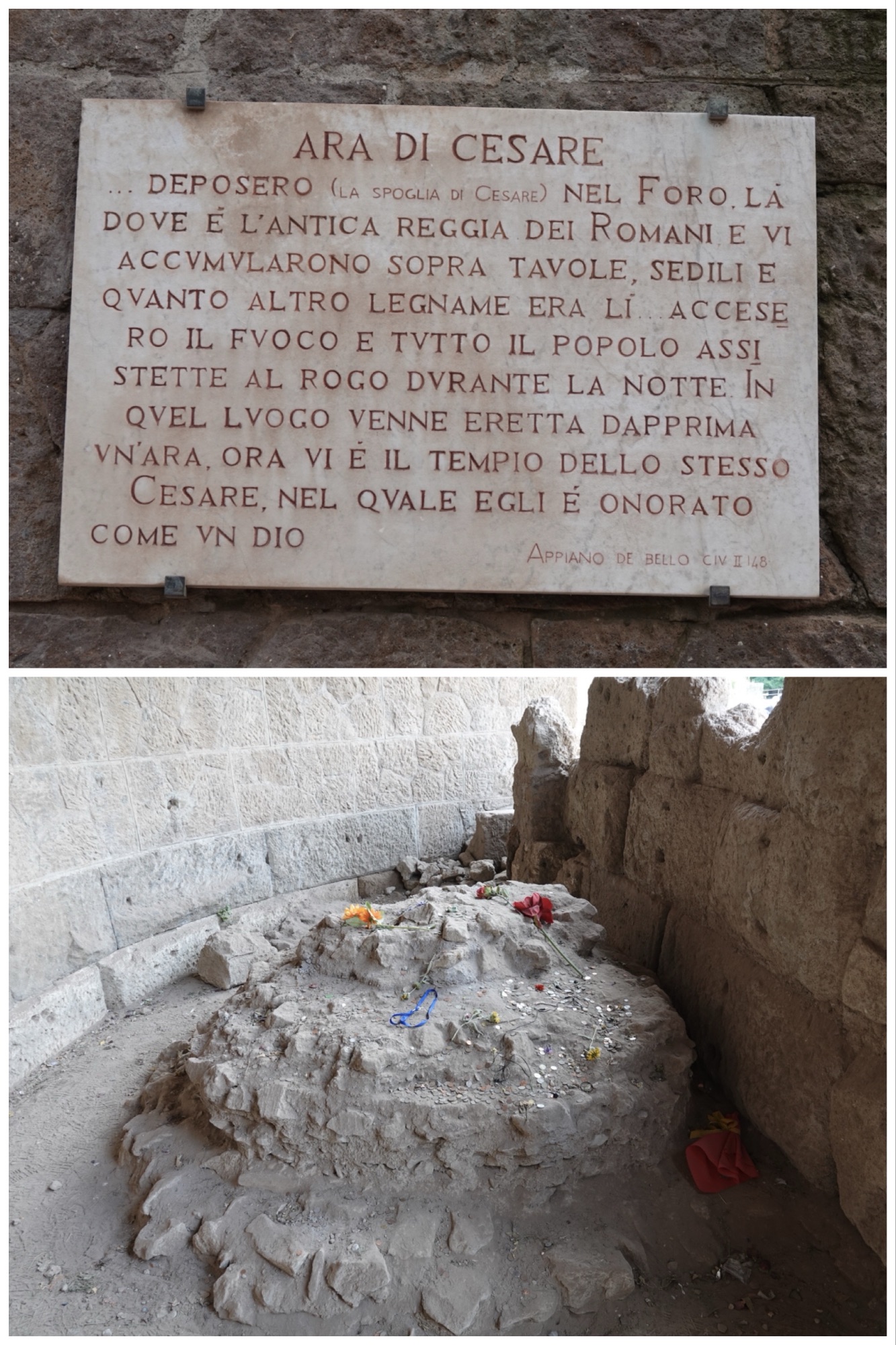
Behind a short wall that is all that remains of his tomb is a weather-worn stone altar which once held the urn containing Julius Caesar’s ashes. The excavated urn is now in a museum, but each March 15th hundreds of people leave fresh flowers here as tribute to the murdered Roman emperor.
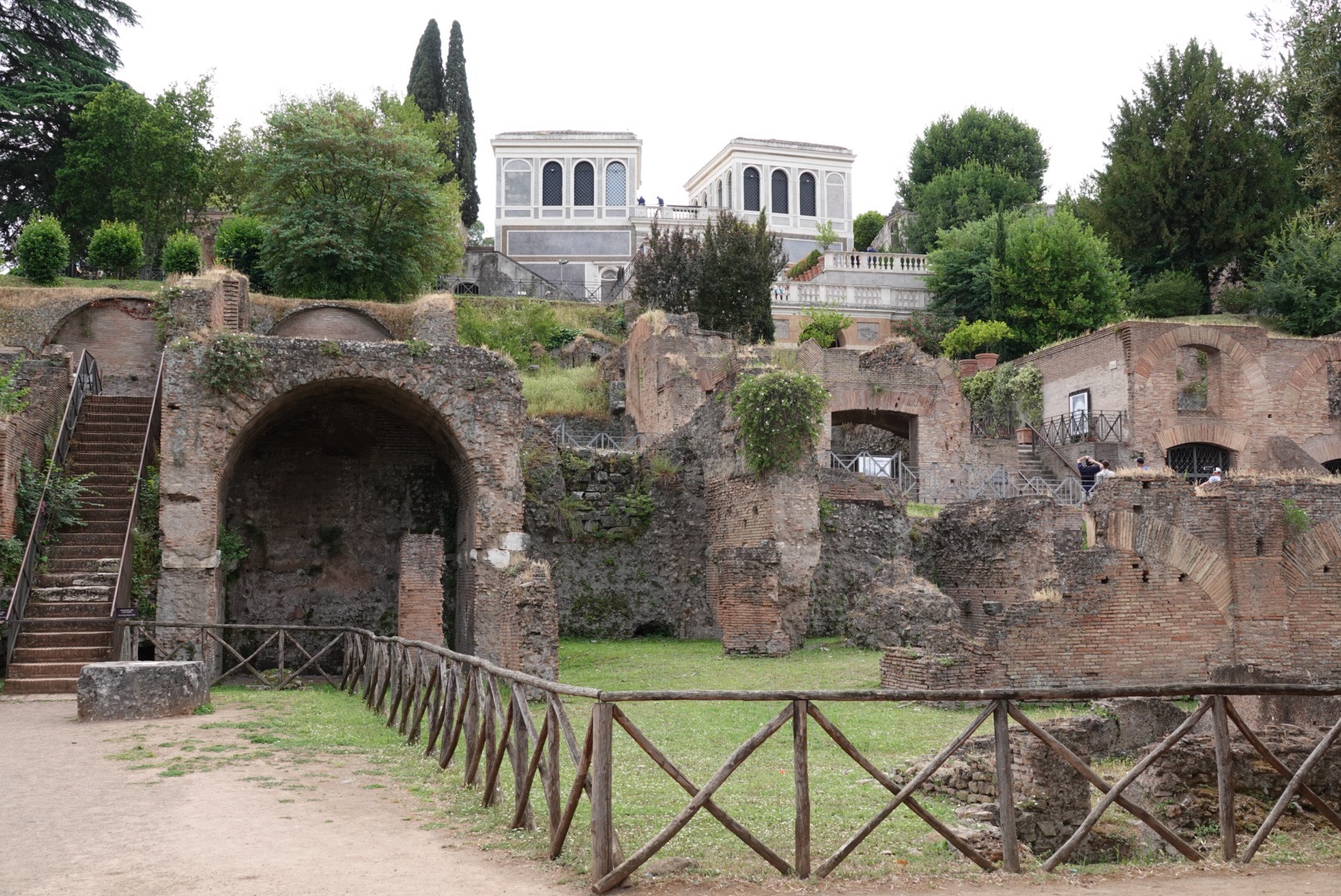
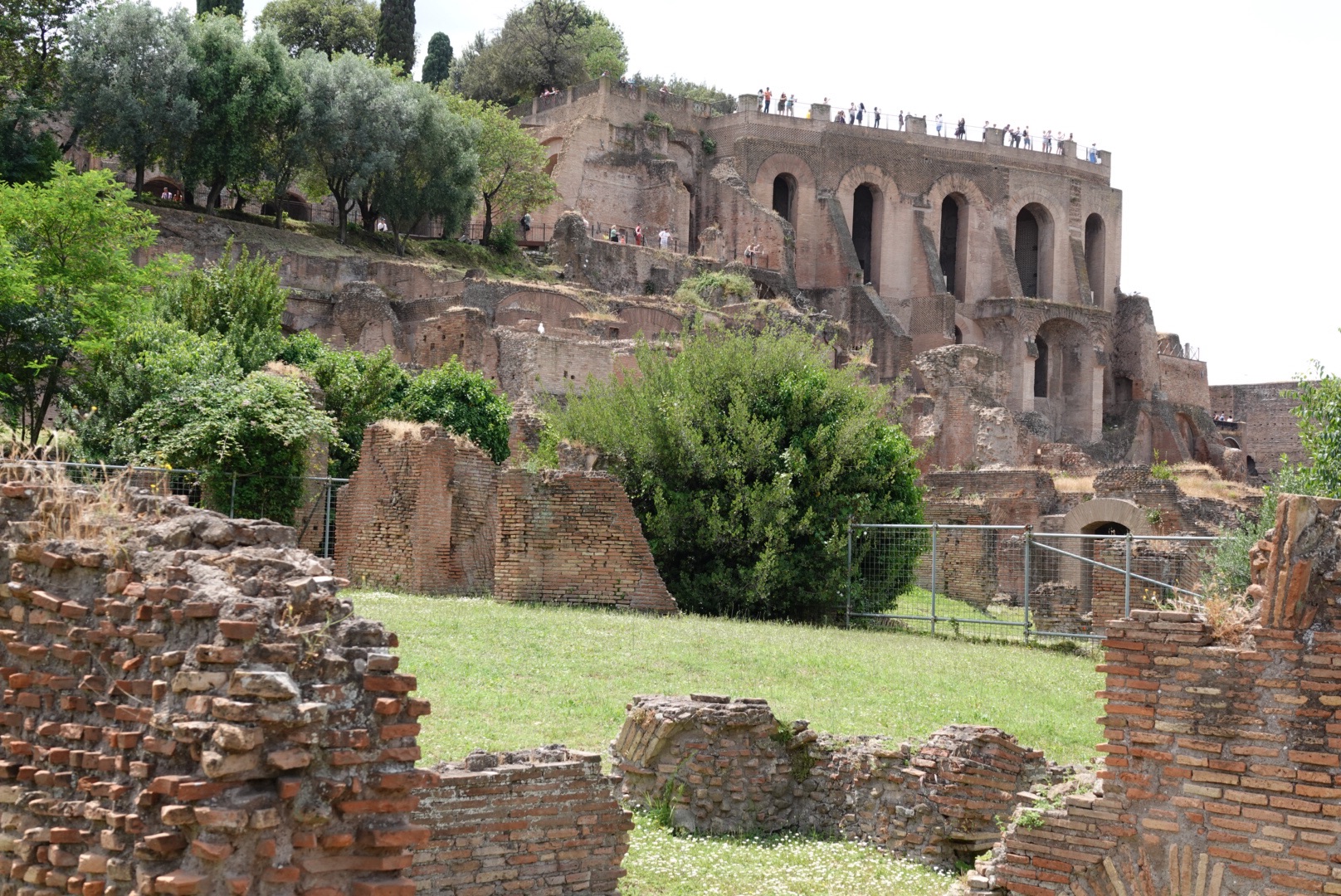
The Forum is still an active archeological site. As Natalia said, history scholars know there is still much to discover about Rome’s rich imperial history.
After over three hours under the hot sun in the Colosseum and the Forum we made a quick stop for our first gelato of this trip, coconut for Ted and nocciola for me. Delicious, but gone all too fast.
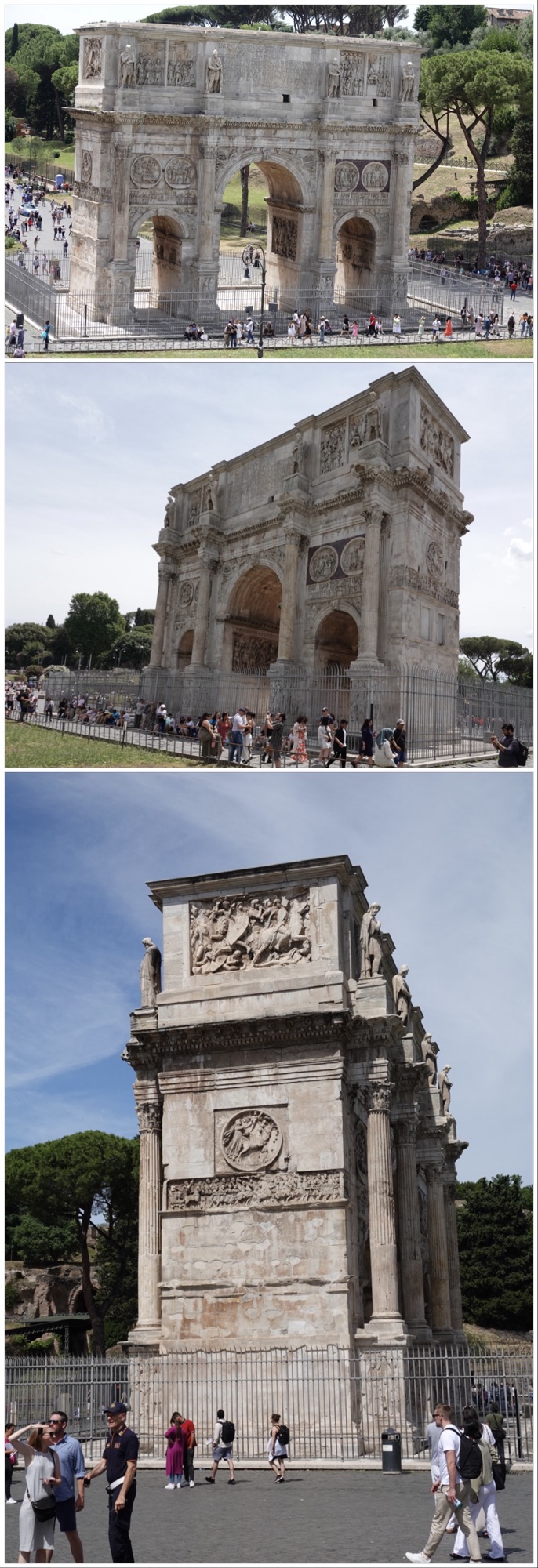
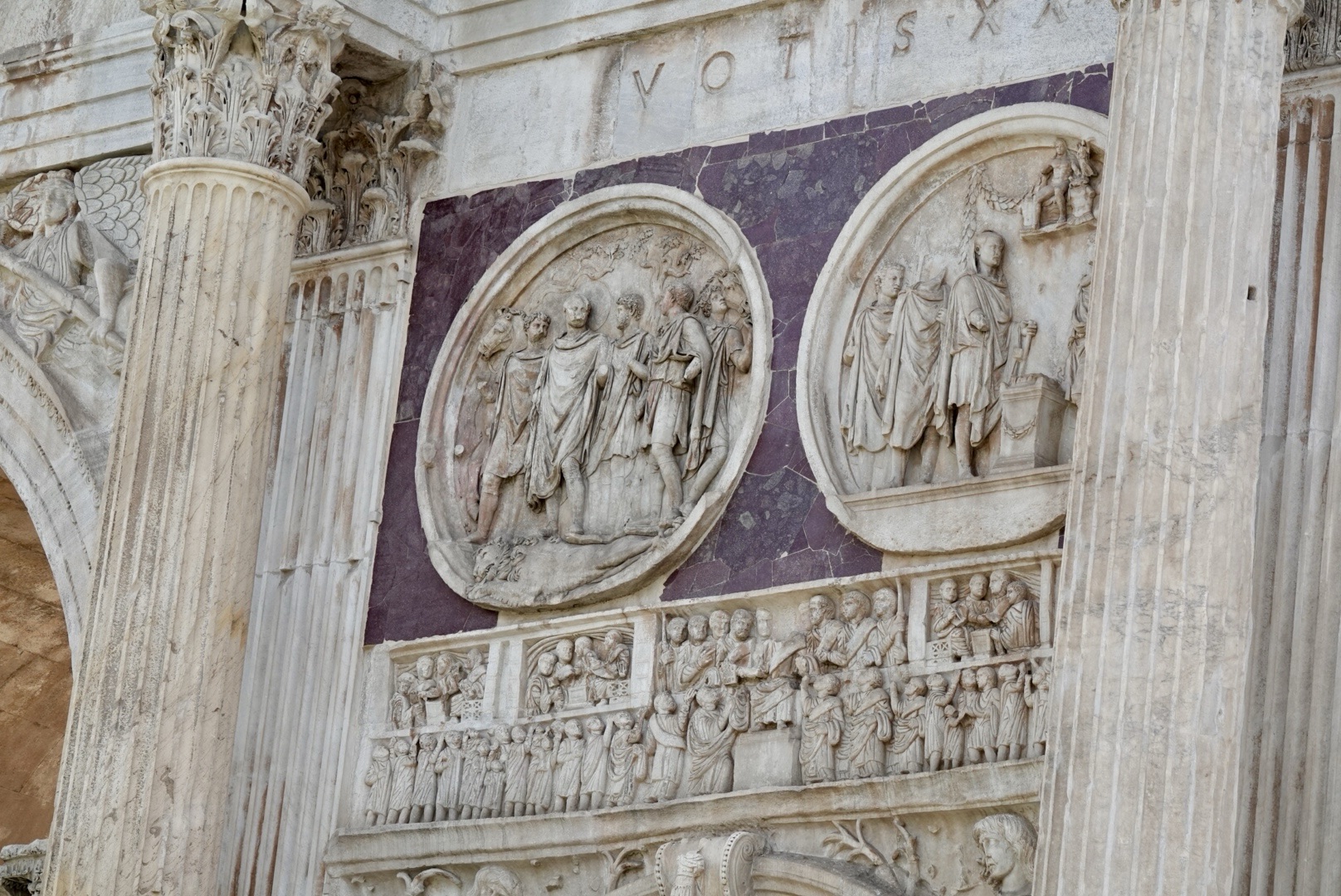
Natalia told us about the many ancient Roman triumphal gates, some of which have been excavated and are now completely visible. One of the newer ones was dedicated to emperor Constantine, who eventually moved the capital of the Roman Empire from Rome to Constantinople.
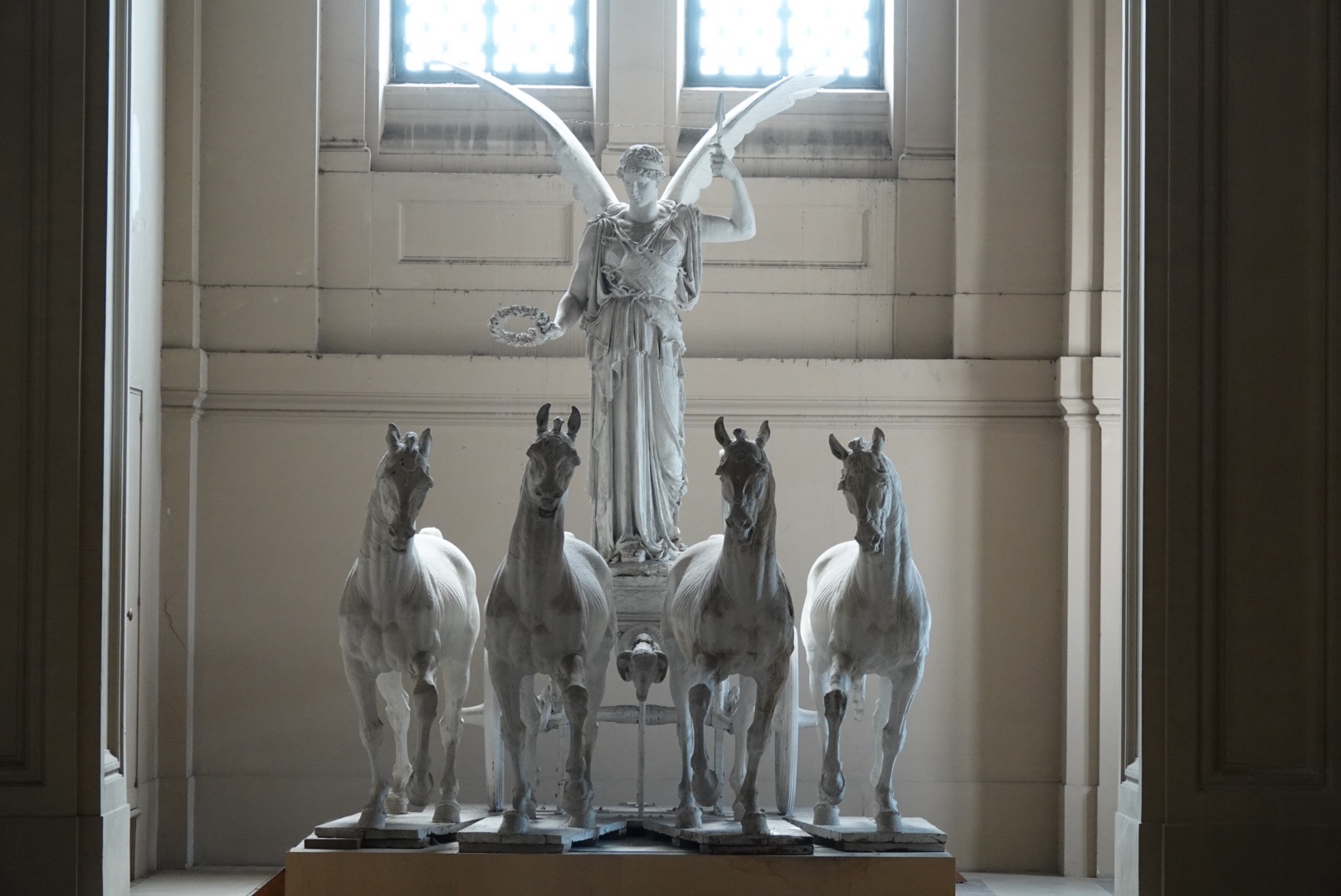
Our official tour was done around 2:30 p.m., leaving us just over 4 hours of free time to get to our dinner meeting place. We decided on a leisurely stroll, detouring to the Victor Emmanuel II Monument, also known as the Vittoriano or Altare della Patria (“Altar of the Fatherland”), built between 1885 and 1935 to honour Victor Emmanuel II, the first king of a unified Italy. It occupies a site between the Piazza Venezia and the Capitoline Hill.
Apparently Romans hate the monument, calling it the wedding cake, or the typewriter. Their main objection is that it is not “Roman”, but “Italian”. Go figure. We thought it was magnificent, although it had a LOT of stairs (243 external ones!) to climb up and back down.
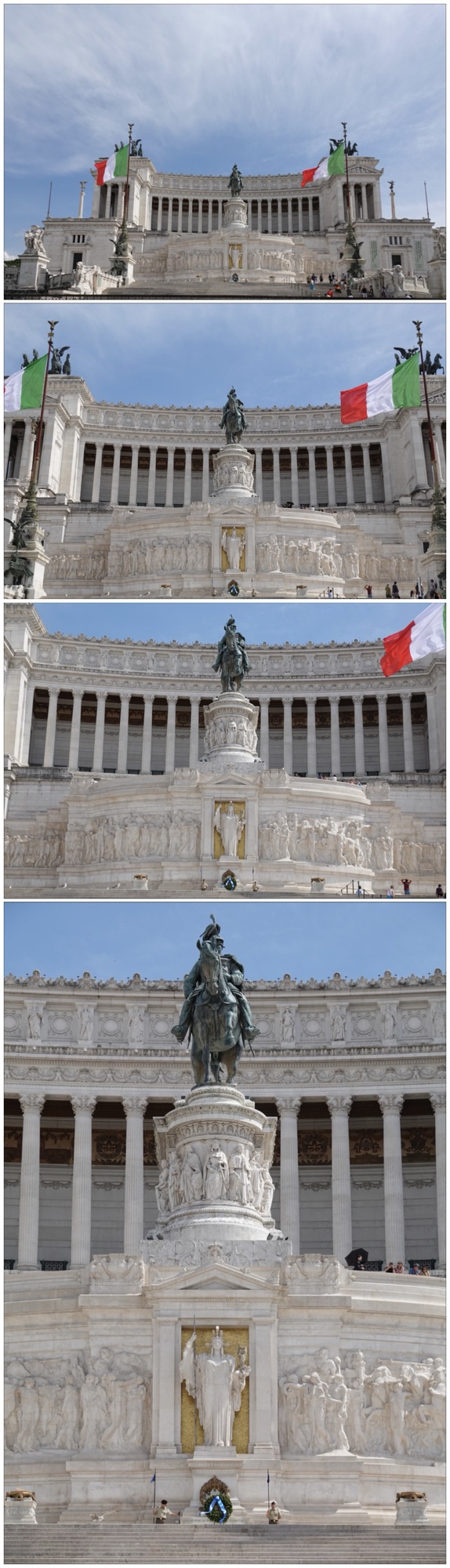
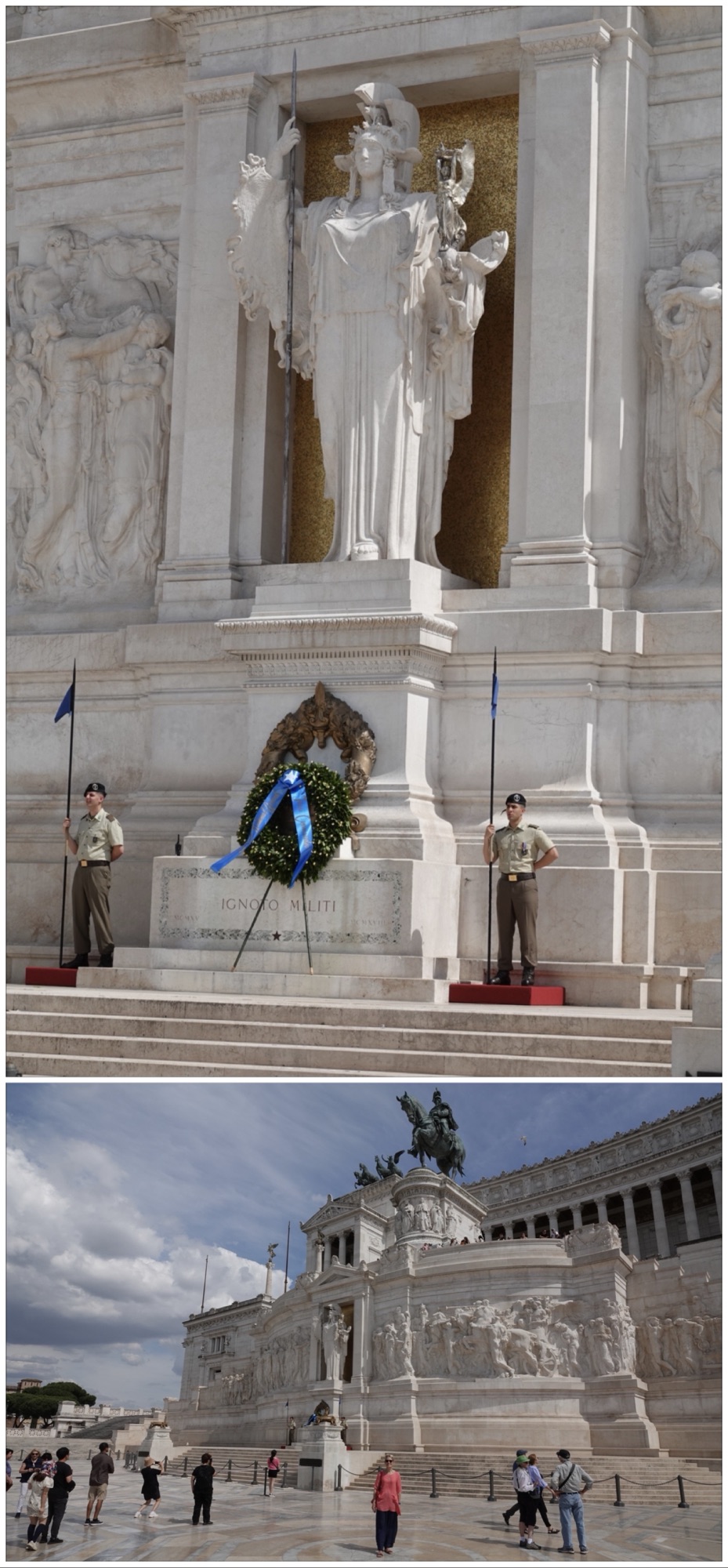
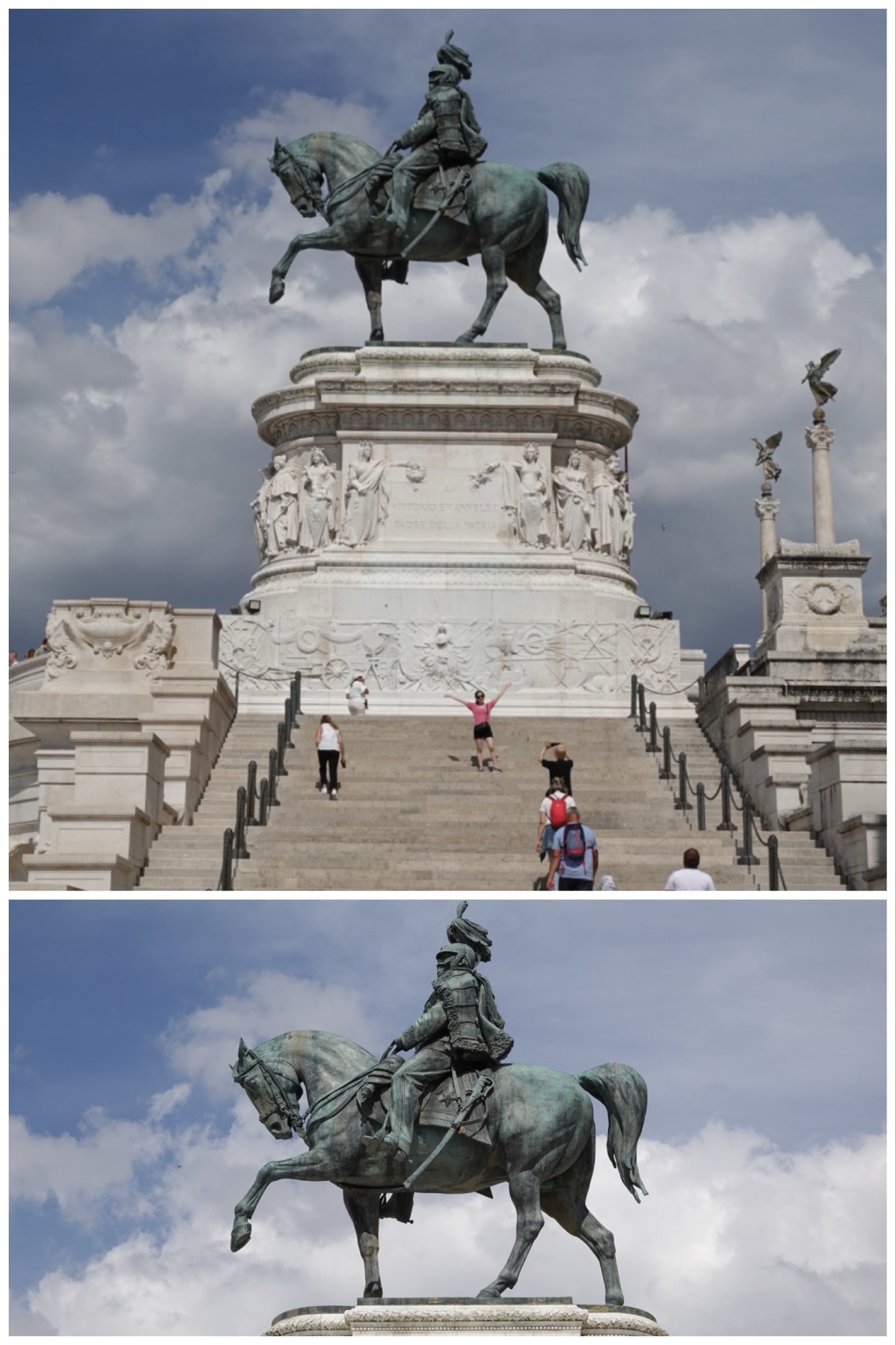
After climbing all those stairs, we were ready for an aperitivo , which means a drink and snack served late afternoon to tie us over until dinner. We found a small sidewalk café that offered a drink and wooden tablet of delicious foods for just eight euros each. Ted enjoyed a gin and tonic and I had a Prosecco (because spritzes were not being offered during this particular place’s happy hour.
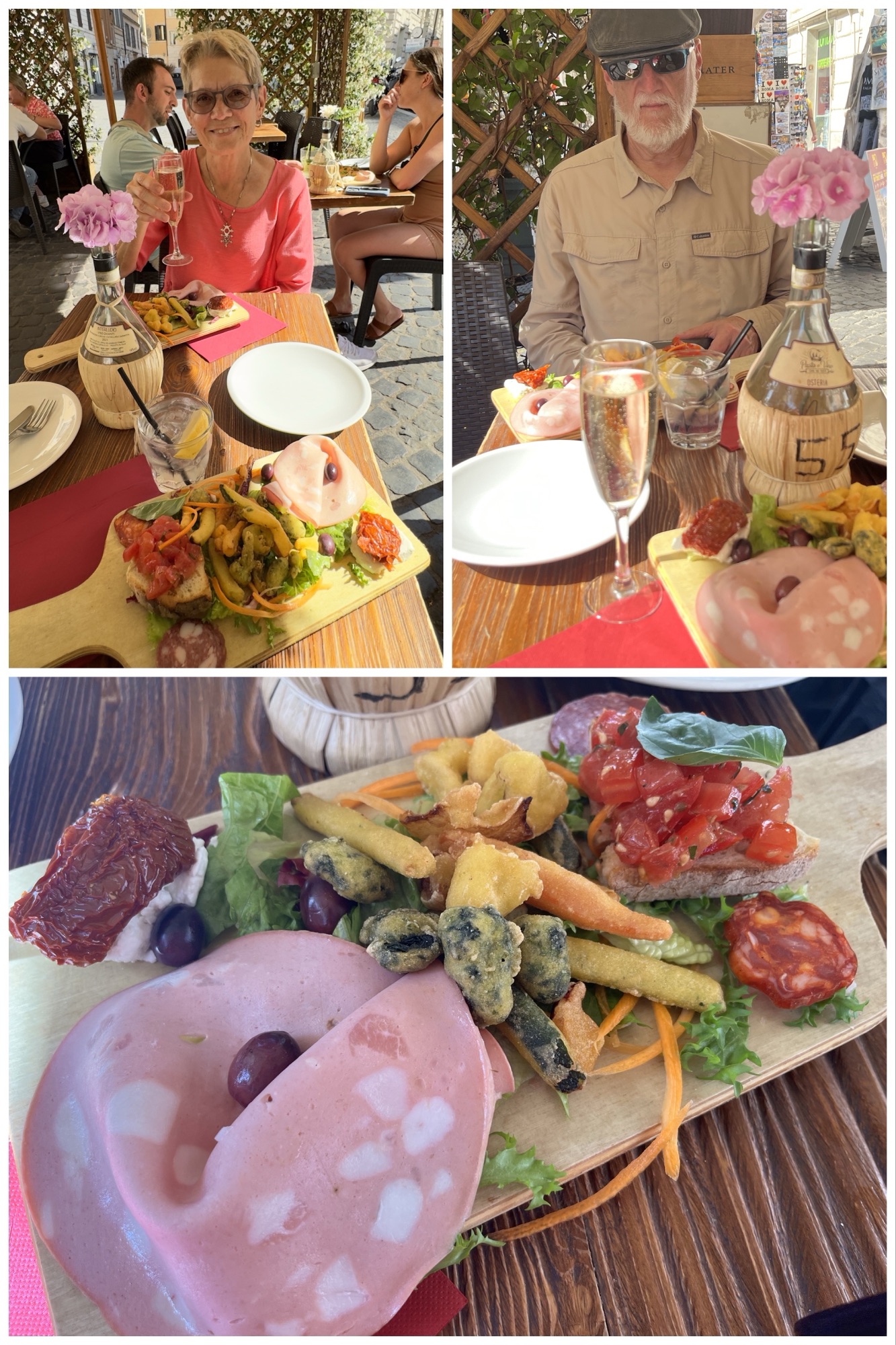
Then it was time for more walking. We headed in the direction of the Campo de Fiore where we would later meet Tabata and some of our group for an Italian dinner.
At every turn, there was beautiful architecture.
While wandering around, we discovered the beautiful Piazza Navona, with the Brazilian embassy on one side, two large impressive fountains under renovation, and a church that was hosting a concert. The Regent Choral Artists are the upper level choir of La Reina High School, an all girls Catholic Prep school in Thousand Oaks California. the choir was on an Italian Performance Tour, and lured us into the church with their angelic voices. We’re glad they did, because in addition to hearing lovely choral music, we also got to experience a beautiful church.
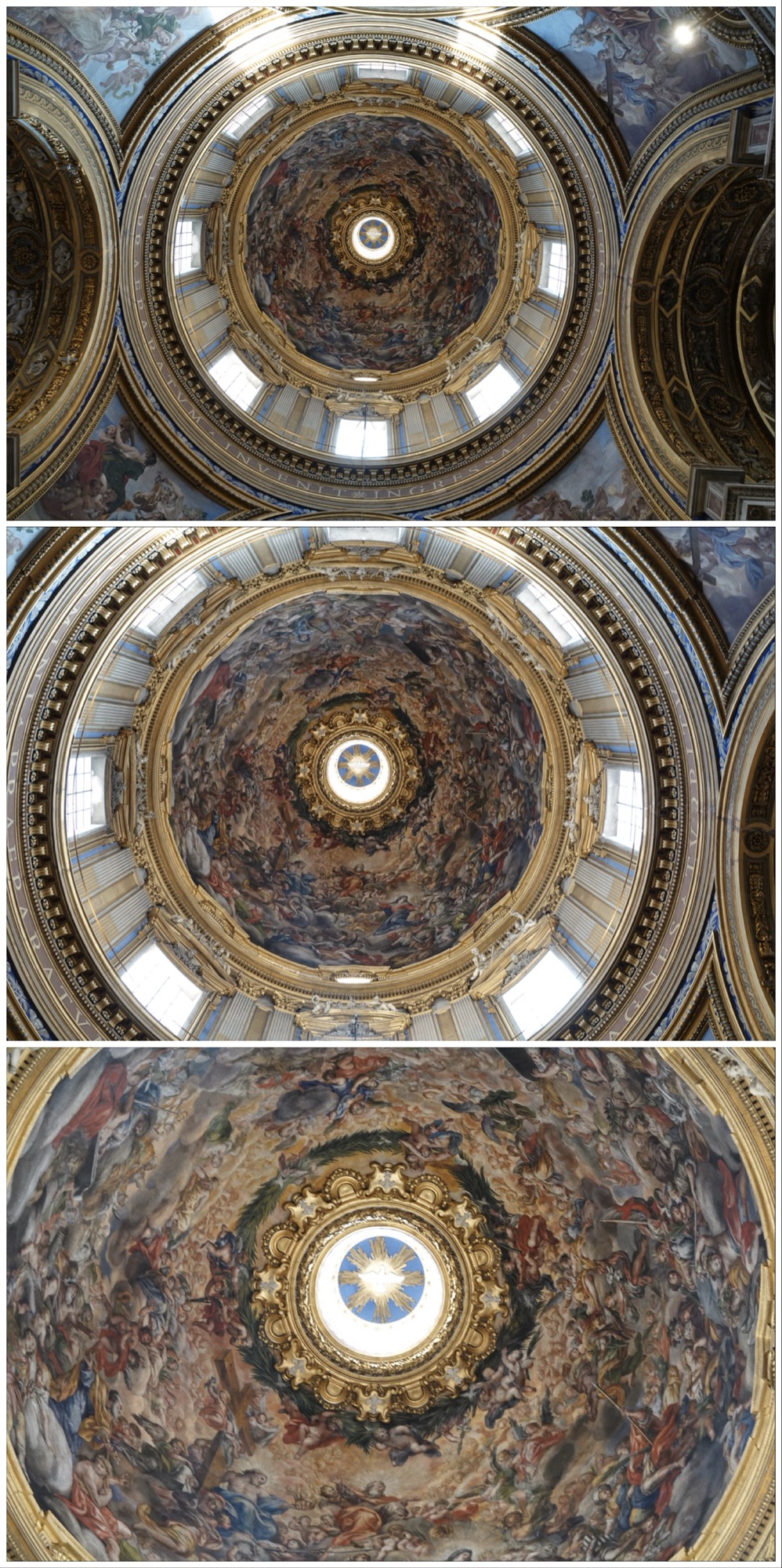
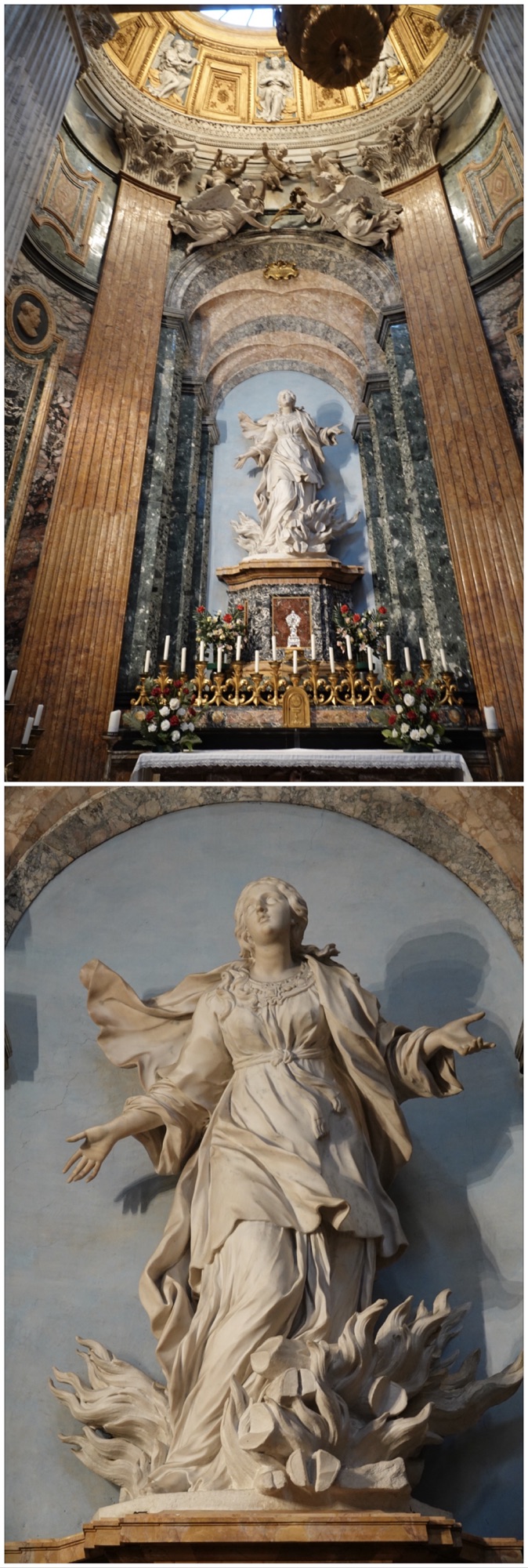
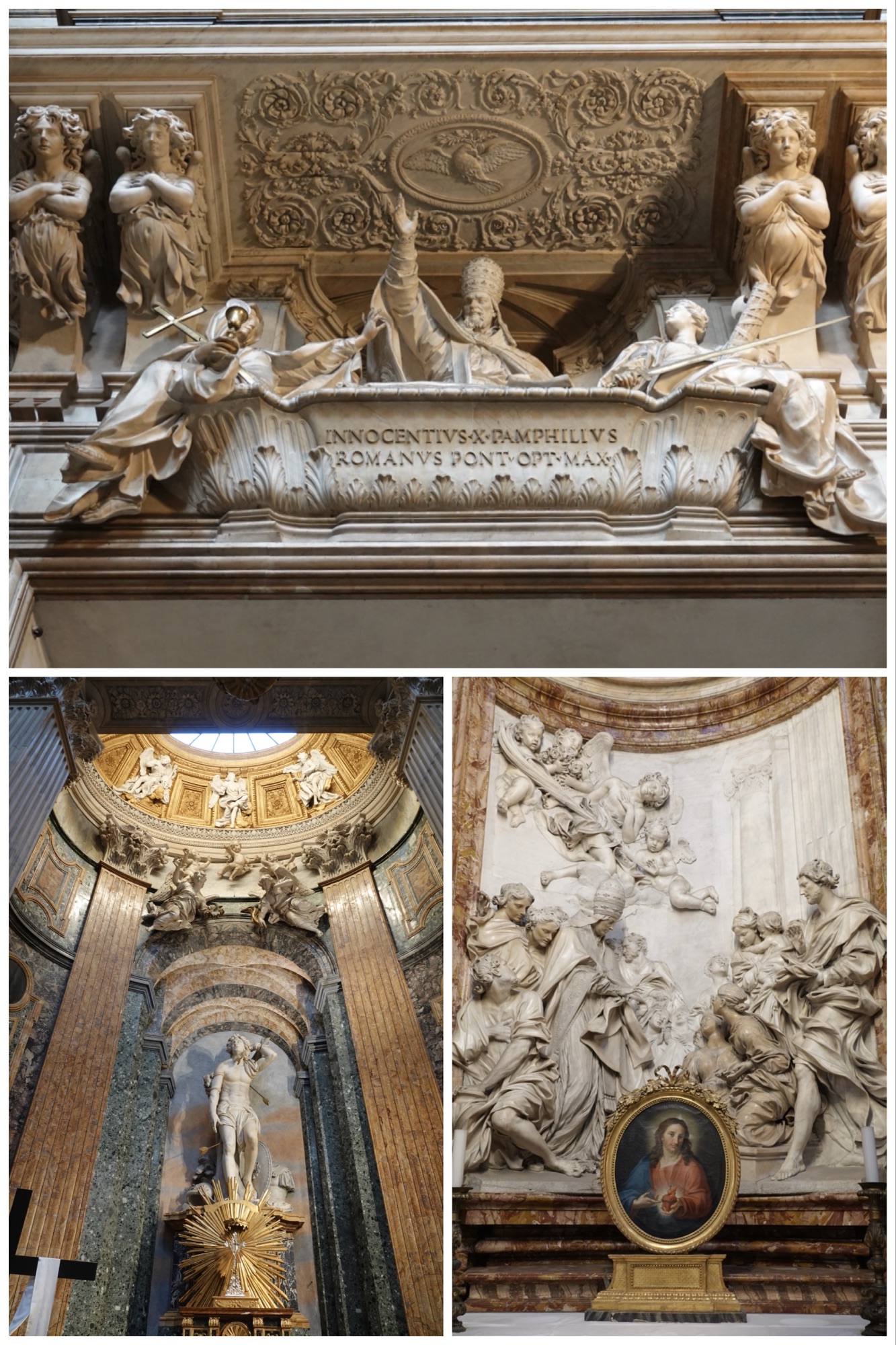
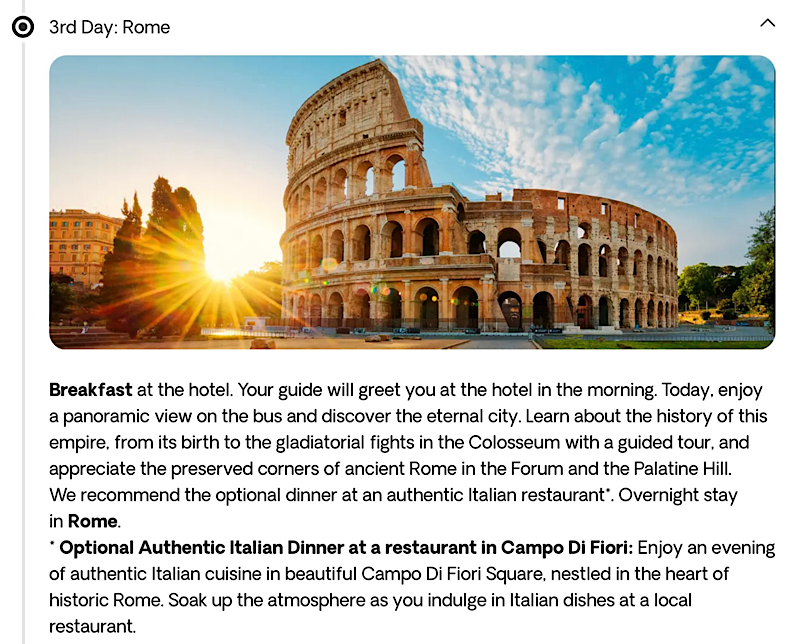
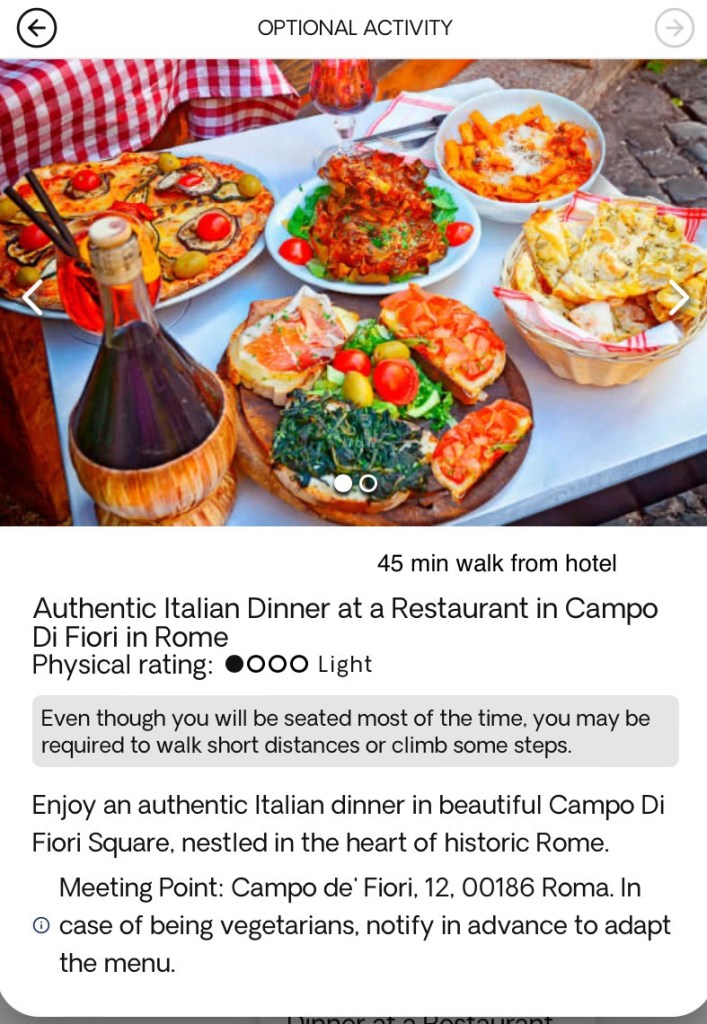
At just after 7 p.m. it was time to meet a small group from our tour for the optional evening dinner. While the dinner itself looked not nearly as good as the brochure picture below, we had an interesting and fun table group: a woman from Cold Lake Alberta, another from Hamilton Ontario, and a couple from Vancouver Island.
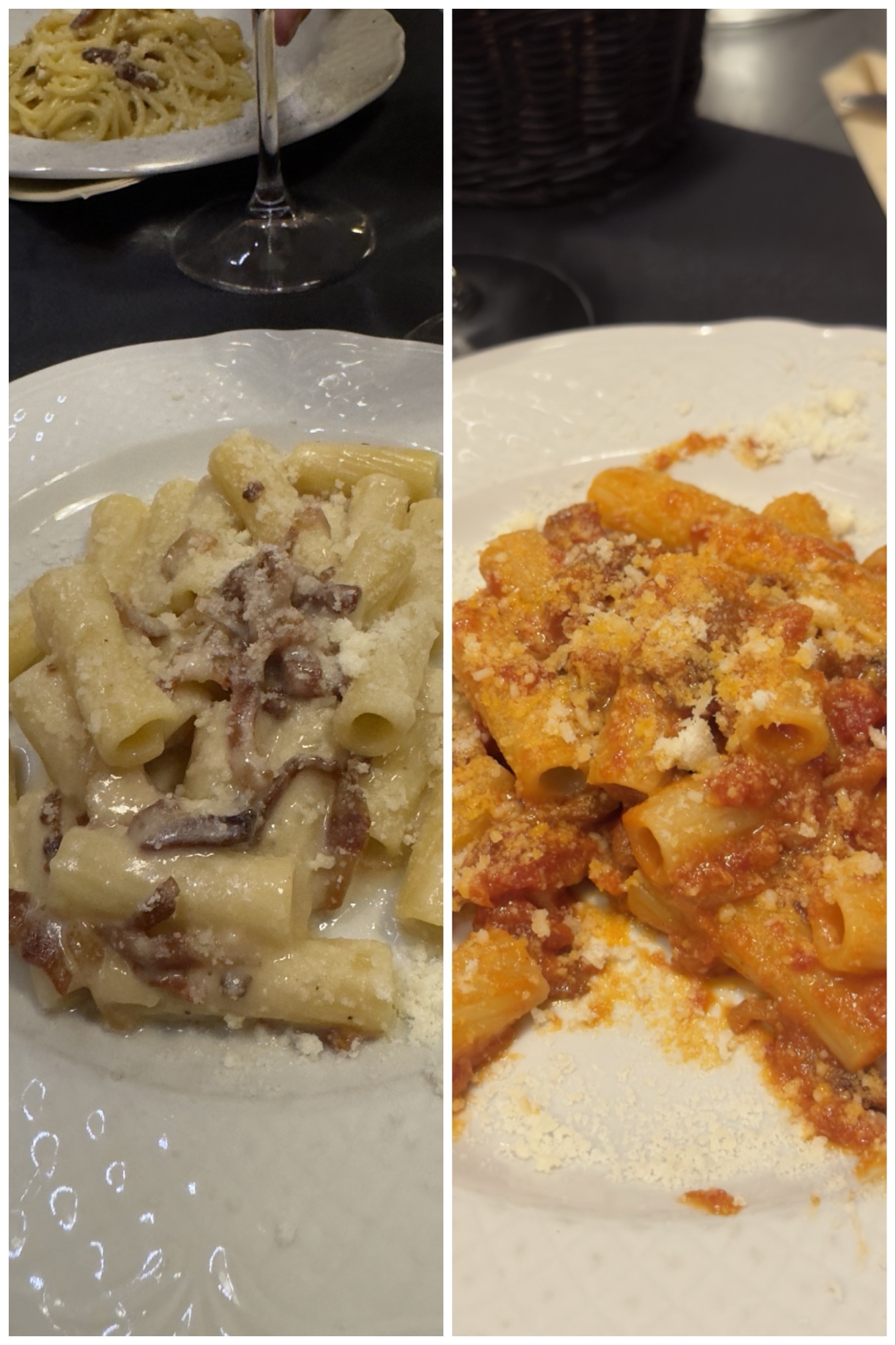
One of the interesting aspects of this exoticca tour is that because many of the activities are optional, transportation to and from them is not included. Today we needed to get ourselves from the endpoint of our walking tour to our dinner, and then get ourselves back to the hotel.
The daytime strolling was a bonus, because it allowed us to take the time to look at whatever interested us, and find things like that bonus choir concert. The after dark transit navigation is less fabulous. We left dinner before dessert planning to take a bus back to the hotel and have time to blog. That should have been a very economical half hour trip. Unfortunately, we got on a bus headed to a DIFFERENT Marc Aurelio Hotel, not realizing there was more than one in Rome with that name, and so not double-checking the address in Google maps. In the end, our trip was just as economical, but sadly took us almost 90 minutes.
We have an early start tomorrow to tour the Vatican, with our alarm set for 6, and yet somehow I’m awake at 4 a.m. finishing this blog. I may have a problem.
 Rose and Ted’s Excellent Adventure
Nocciola — my favorite, too. Very unusual where we’ve retired — the Willamette Valley, OR — which is strange considering the quantity of hazelnuts (or filberts as they are called by old timers here) produced in the region! Back in the days before google maps, I had all the best gelato places plotted out in Rome, Florence and Venice for a glorious R&R trip we made, starting where we were assigned in Antananarivo, Madagascar, and on the way “home” to NY for the first time out in 18 months. Madagascar was interesting, for sure, but it was also very isolated and poor. We were so ready for some smooth roads and gelato! Thanks for the memories!
LikeLiked by 1 person