Sadly, we won’t be seeing the Bilbao moon on today’s 5 hour excursion.

We sailed into the beautiful Bay of Biscay under drizzly grey skies and docked in the port of Getxo, the nearest place to Bilbao that can accommodate a cruise ship.

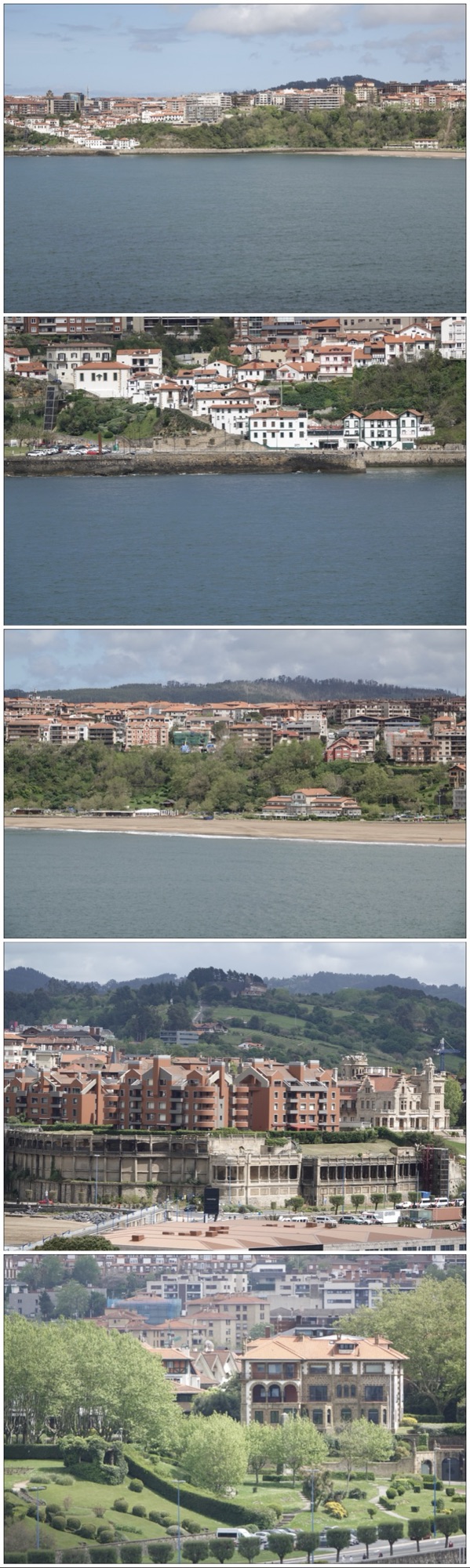
In the rain, Getxo looked unimpressive, but on our bus ride through we caught glimpses of real beauty in the historic mansions and green streets. We learned that Getxo (pronounced “get- show”) is the most exclusive – and expensive – neighbourhood in Bilbao, having originally been the seaside resort area for Bilbao’s wealthy nineteenth century industrialists. Only a few of the multi-million dollar summer mansions are still owned by the original families; many are covered in hoarding while complete restoration is being done. It has the potential to be a spectacular area for gawking at gorgeous homes!
The Basque region of Spain is one of 14 regions in Spain, each with a unique culture and language, and we noticed that all the signage here was in both Spanish and Basque (and sometimes English). The Basque spellings looked nothing like Spanish, having almost enough consonants and interesting looking letter combinations to resemble Welsh, but apparently the grammar is more closely related to Hungarian and Finnish. I’ve never really understood how those two languages connect, but apparently they do!
The Basque culture traces itself back to cro-magnon man in the region, a pretty ambitious claim to being one of the oldest cultures in Europe. The “national” costume including a bright red beret definitely doesn’t hail back to cro-magnon times, nor do the red and white flags flown everywhere in honour of the city’s soccer team, who are known for the fact that all of their players are local, AND for winning the 2024 King’s Cup in Spain!
Our guide gave us lots of information about Bilbao’s history as an important shipyard and iron processing centre. It was the kind of industrial city that would draw comparisons to Manchester England or Pittsburgh Pennsylvania in the USA. The purchase of riverfront property by the Guggenheim Foundation in the 1980’s was the catalyst in changing Bilbao from an industrial city to a world-renowned cultural centre. The influx of architects designing new buildings, and the restoration of the beautiful early 20th century art deco buildings in the city has created a really lovely cityscape.
Tour buses are no longer allowed in the Casco Viejo (old town) area of Bilbao, so we had to decide between staying at the museum for the entire duration of our excursion, or walking 30 minutes into town and another 30 minutes back, leaving just over an hour for independent exploration on foot. The grey and rain made being outside a pretty unattractive concept, so we made the decision not to explore the old city centre. Since our focus for choosing this particular excursion was the Guggenheim, that didn’t bother us. Based on our single day here, Bilbao is a place to which we’d like to return … so we’ll explore it then!
One of the big attractions to visiting the Guggenheim in Bilbao is the “Canadian connection”. Canadian American architect Frank Gehry designs buildings that are as much sculpture as architecture. The Guggenheim Museum Bilbao is touted as being a magnificent example of the most groundbreaking 20th-century architecture.
Ted and I have previously seen at a distance Gehry’s Biomuseo in Panama City Episode 151, walked around the stunning exterior of his Walt Disney Concert Hall in Los Angeles Episode 53, and looked over the night lights of Prague from his Dancing House there Episode 366, but the Bilbao Guggenheim is the most spectacular example of his work we’ve seen yet. There’s no question that we could design a world tour just focussed on his buildings. (Note to self: maybe part of our 25/26 project!)
We did tour a few of the Guggenheim’s art exhibits, but it was the architecture that wowed us – both inside and outside. Inside first, where it was dry.
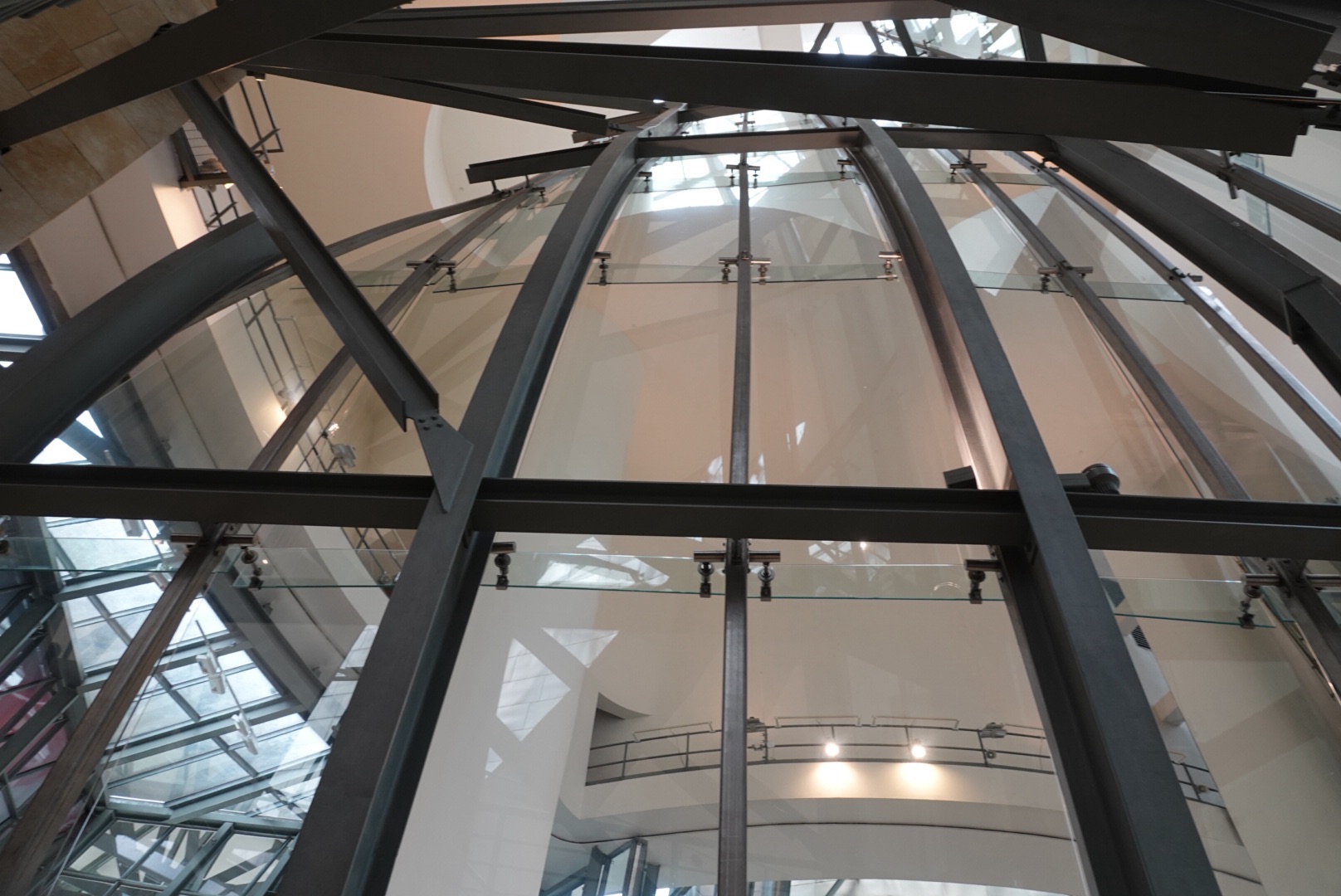

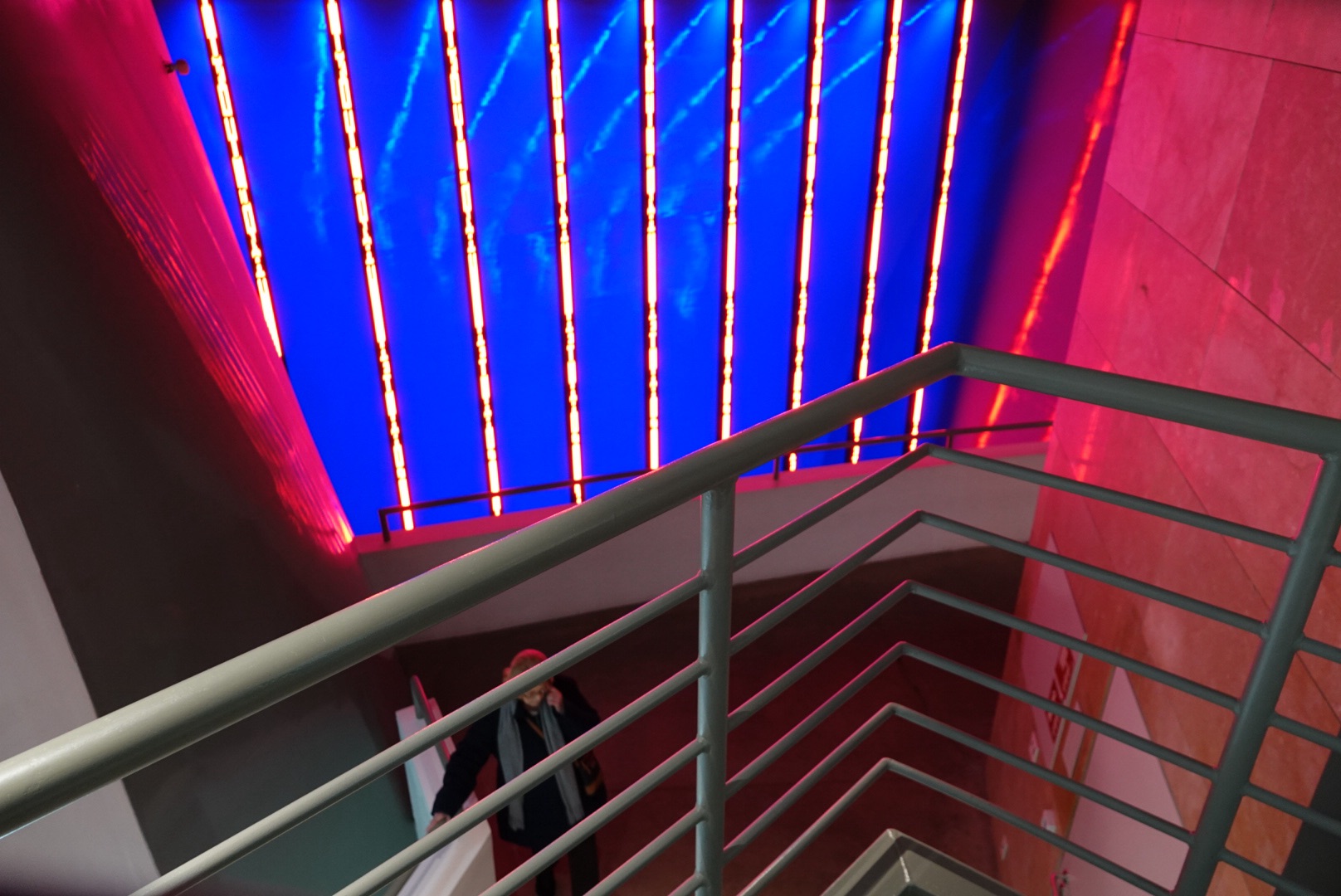

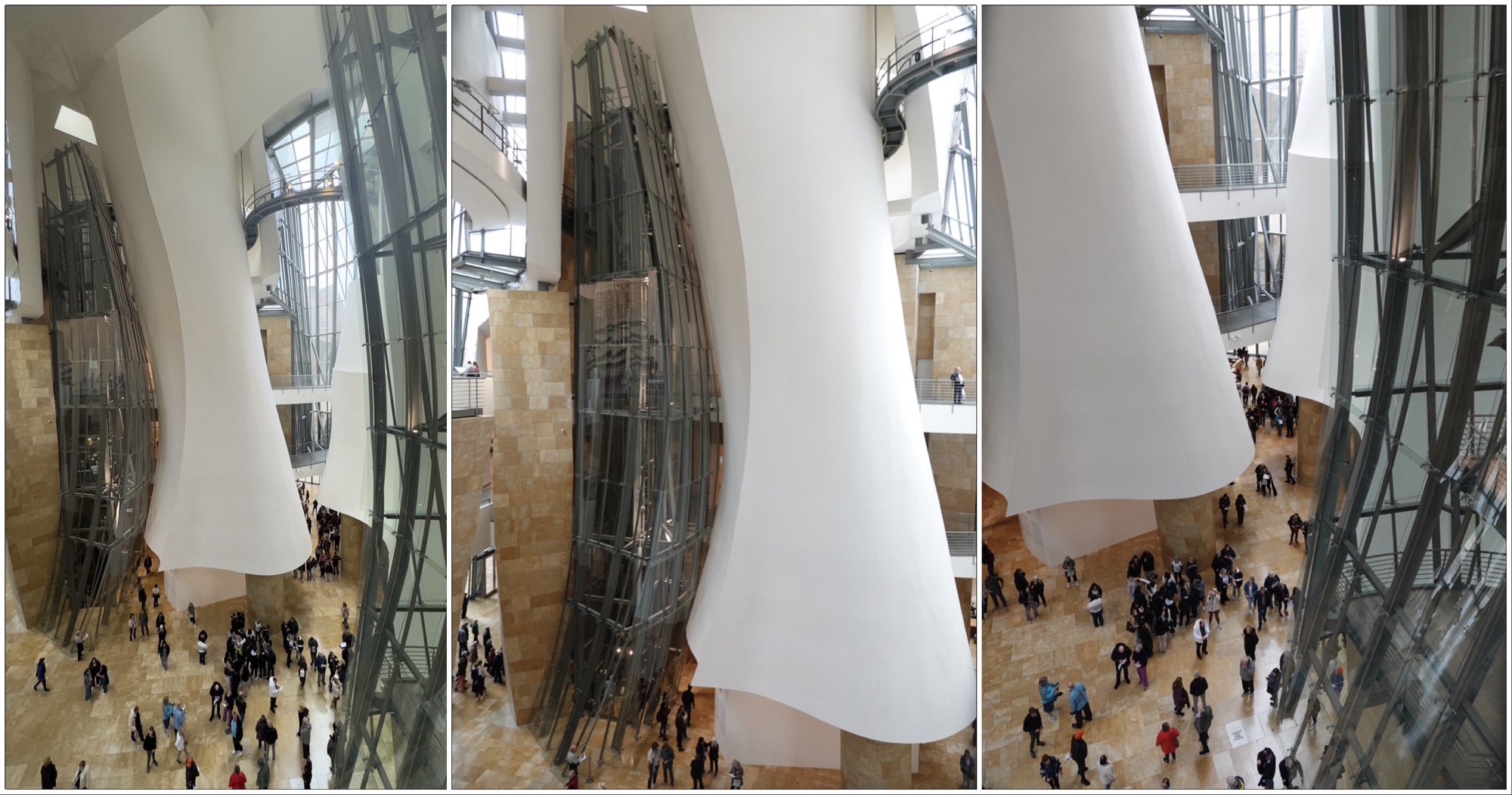
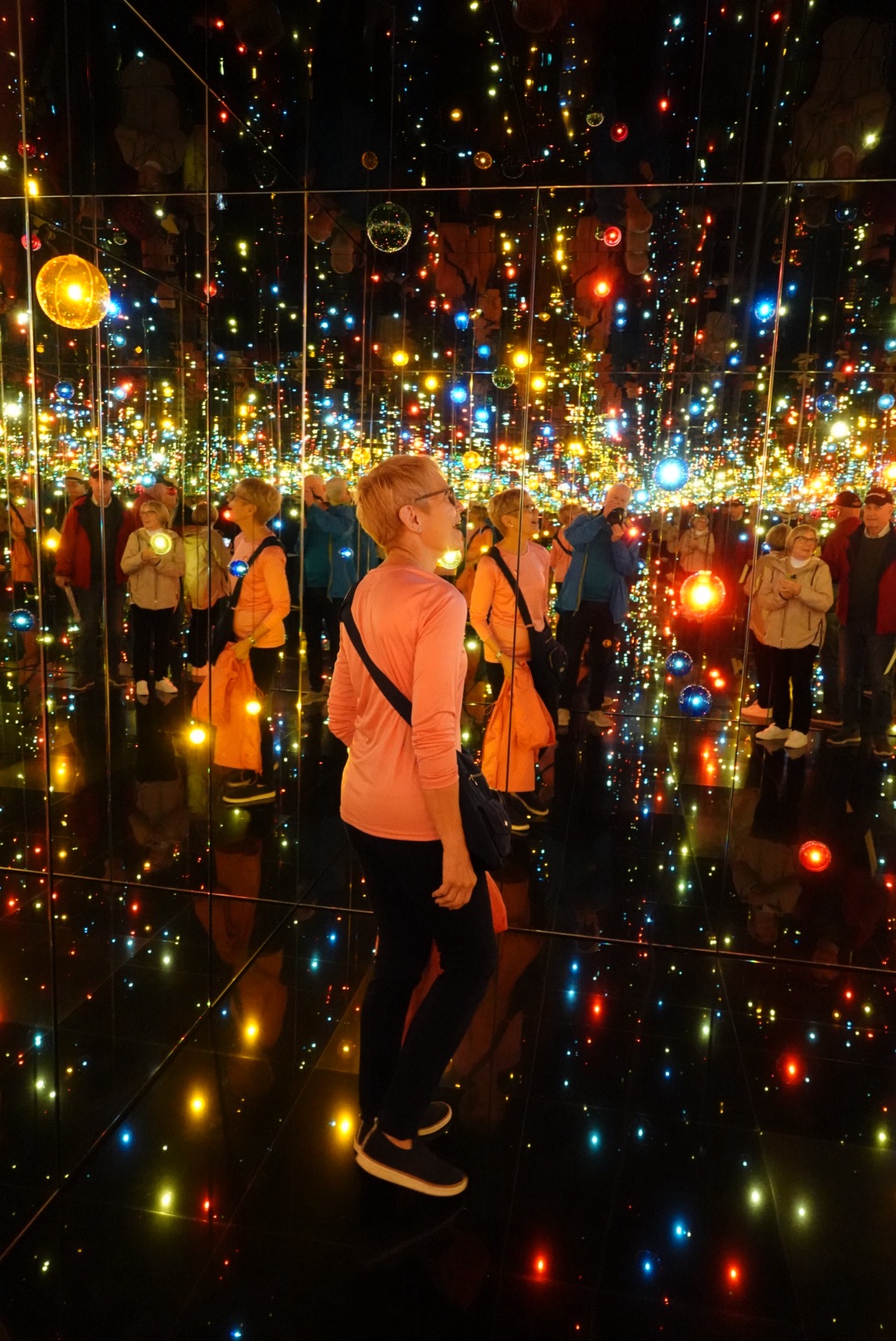
The modern art exhibits were spread over 3 floors, all connected by both elevators and open staircases! From which you could see the sweeping curves of the stone, steel, and glass construction. We didn’t explore the exhibits on the first floor, but headed right up to the third, where the first installation was Japanese artist Yayoi Kuzama’s Infinity Mirrored Room – A Wish for Human Happiness Calling from Beyond the Universe. I’m not normally a fan of “installation art”, but this closed room filled with coloured lights and mirrors (even the floor) made me feel as if I was floating in space, and it was exhilarating!
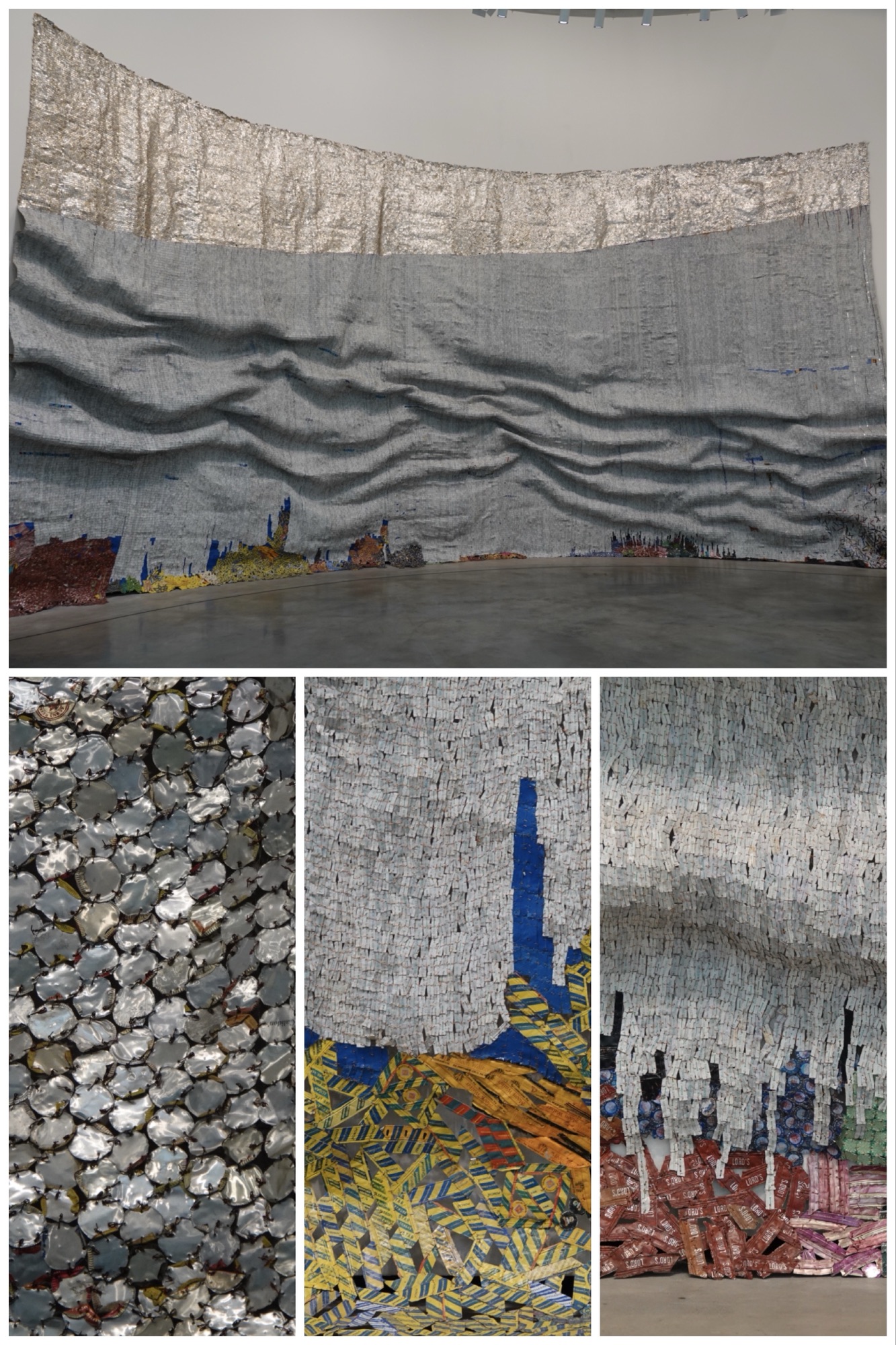
Rising Sea (below) is one of Nigerian artist El Anatsui’s most recently completed pieces and one of the largest. The swath of glimmering silver sky at the top is made of liquor bottle seals, significant because liquor was often traded to African countries in exchange for slaves. The fabric “waves” seem to be crushing the skyline that is being pushed into the floor. Riding Sea serves as a reminder, or perhaps a warning, of now nature and civilizations can be transformed in an instant.
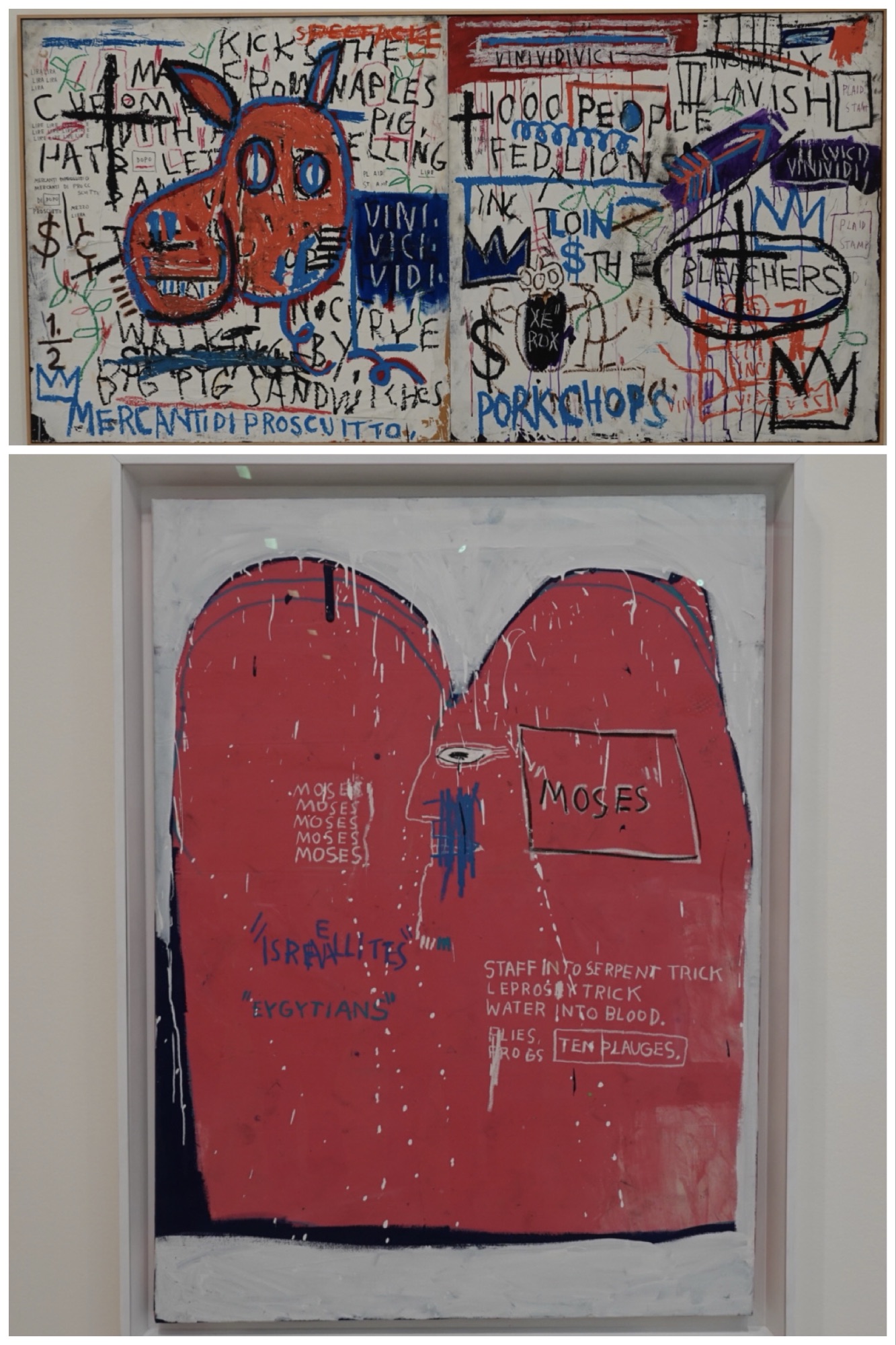
I had heard of Jean-Michel Basquiat’s graffiti art, but never seen it before. Art appreciation being very subjective, I’d rather see a Banksy.
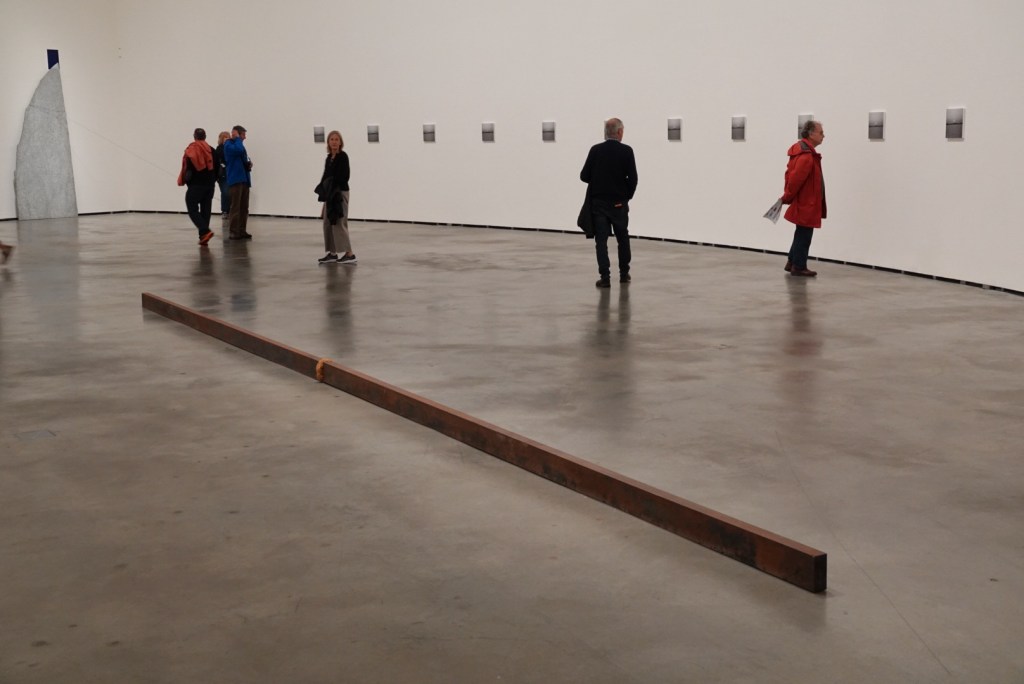
After I’d gotten down on floor level to peer inside Basque artist Eduardo Chillida’s How Profound Is The Air, cut from a block of alabaster, I made Ted do the same to photograph it. I’m not exactly sure why, but the way light entered the stone and created shadows in differing shades of light and dark fascinated me.

On the other hand, Italian artist Giovanni Anselmo’s Breathing, composed of a sea sponge between two iron bars, just left me confused.
My greatest moments of joy in the museum came in the “pop art” room. It may have been the bright colours on a grey day, or just the sense of familiarity, but I absolutely grinned when we turned the corner and entered this gallery.
What’s not to like about Warhol Marilyns?

Gilbert & George’s brightly colored graphic photo-based artwork called “Waking”.

I defy anyone to walk past Jeff Koons’ giant “balloon” Tulips and not smile!

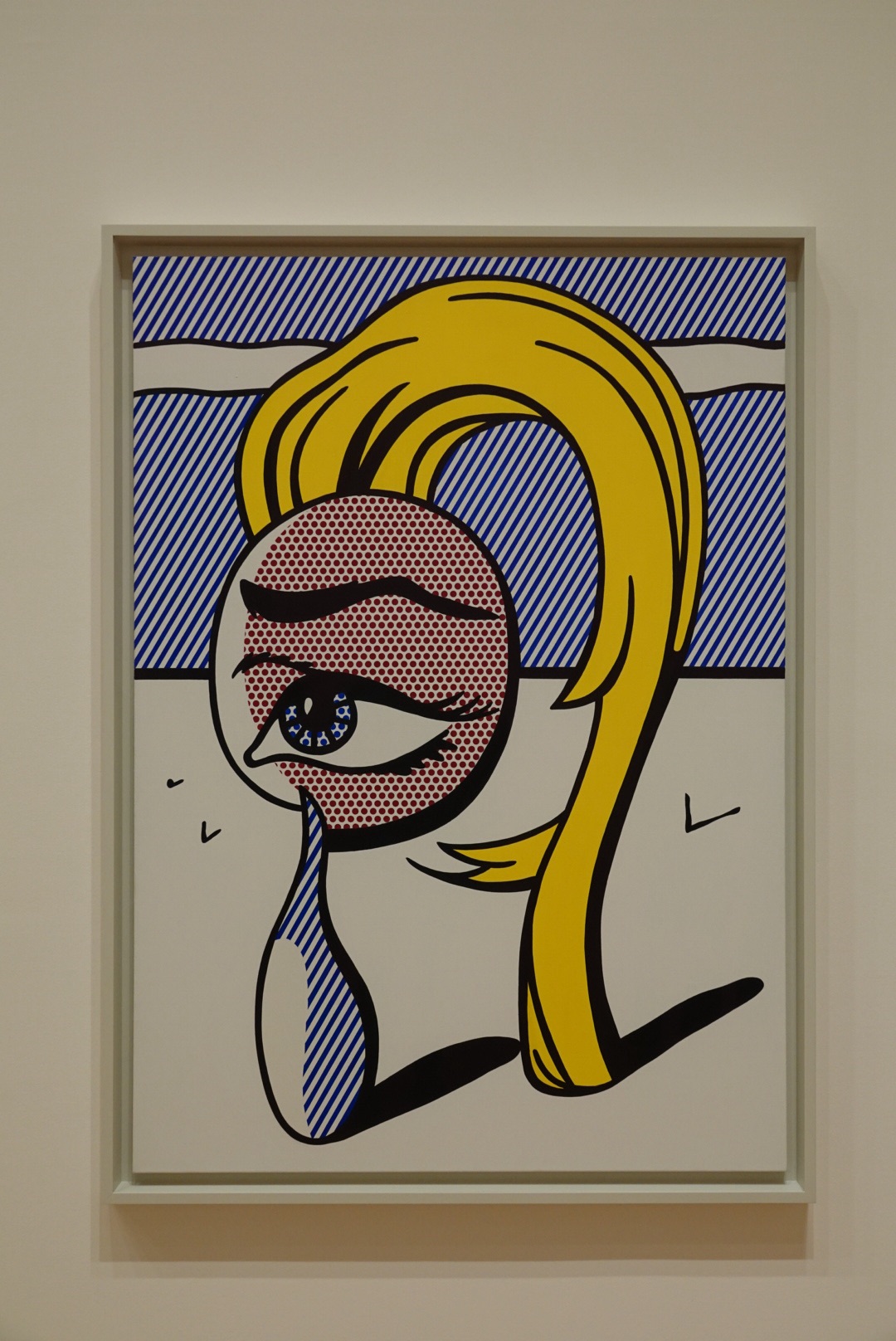
I learned a new term today: Benday dots. They’re the technique created in 1879 by Benjamin Day which places equally distant dots on a grid in order to cut costs of color printing, and used in vintage and retro comic books. The painting below by Roy Lichtenstein simulates Benday dots.
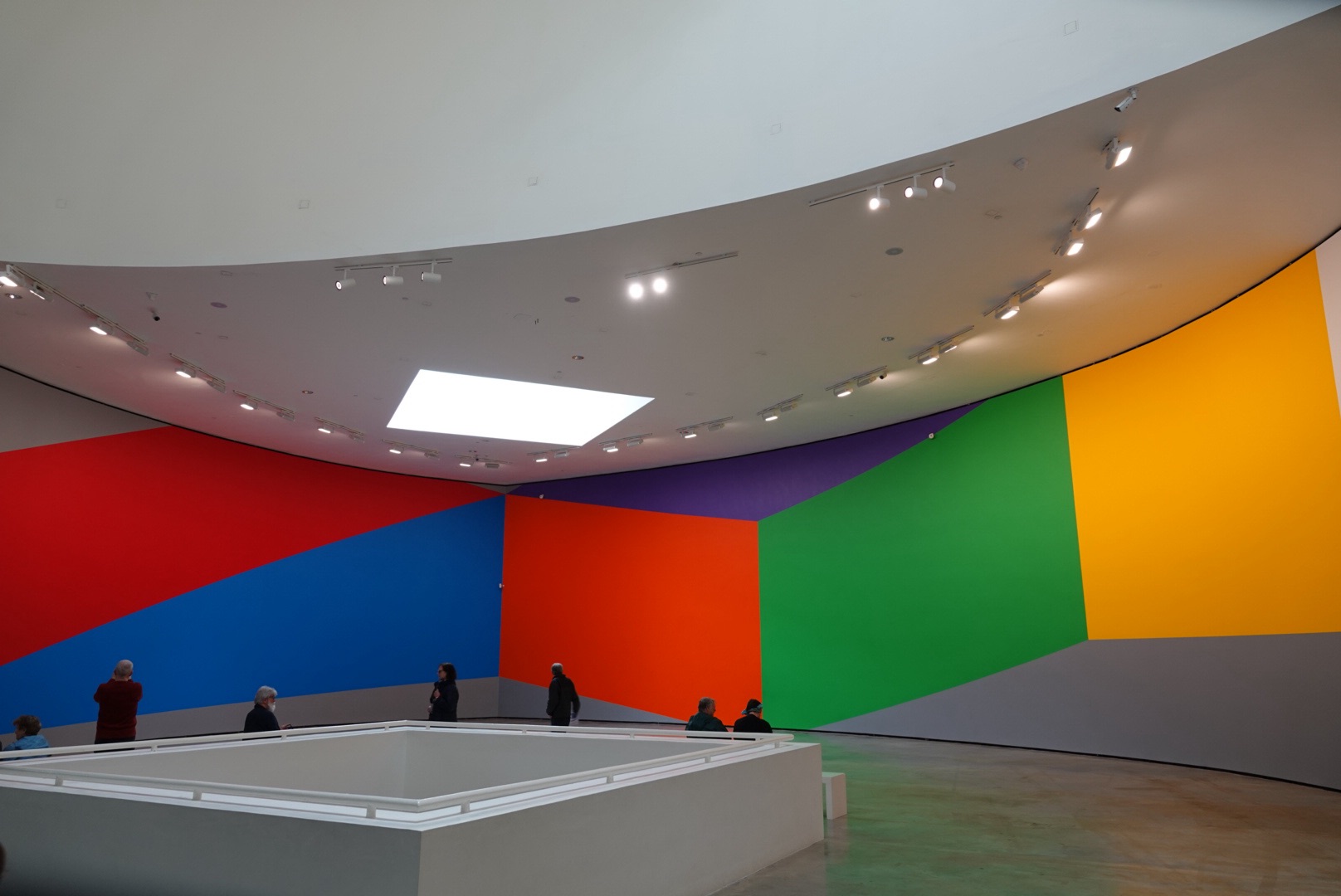
What gave me such joy about the coloured wall below was that I immediately recognized the artist: Sol LeWitt! If this doesn’t seem like “art”, think of it as geometry. When Ted and I saw our first multi work exhibit of LeWitt’s work at the MoMA in North Adams, Massachusetts, we learned that he had painstakingly measured out each of his works and put those details in notebooks to allow absolutely anyone with a large enough compass, protractor, and straight edge could duplicate it on any size wall. That meant, for instance that this Wall Drawing # 831, created for the Bilbao Guggenheim, could be recreated/exhibited anywhere in the world!
After a couple of hours wandering the galleries, we realized that the rain had stopped, so we headed outside so that Ted could photograph the museum’s spectacular exterior.
The museum is hard to describe in words. It gleams, changing colour from matte to shiny silver, gold the sunlight, and multi-hued with sunrises and sunsets. It flows and curves. It soars skyward and swoops downward to the river. It twists and bends, hiding surprises in its nooks and niches. It dominates the riverfront while somehow simultaneously blending in. It’s simply an architectural marvel, and I loved it – so I’m keeping far more photos than I would normally archive here.


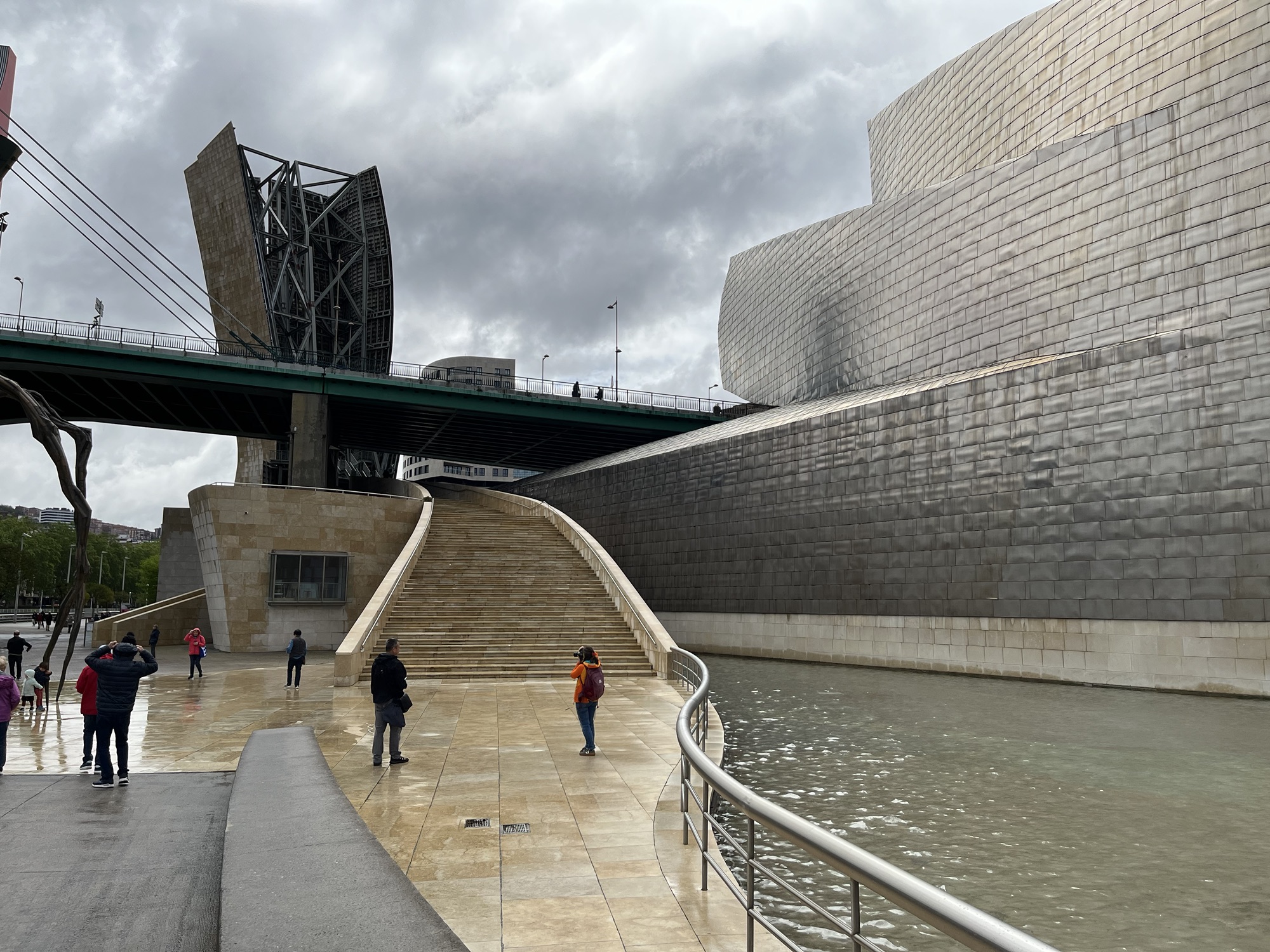

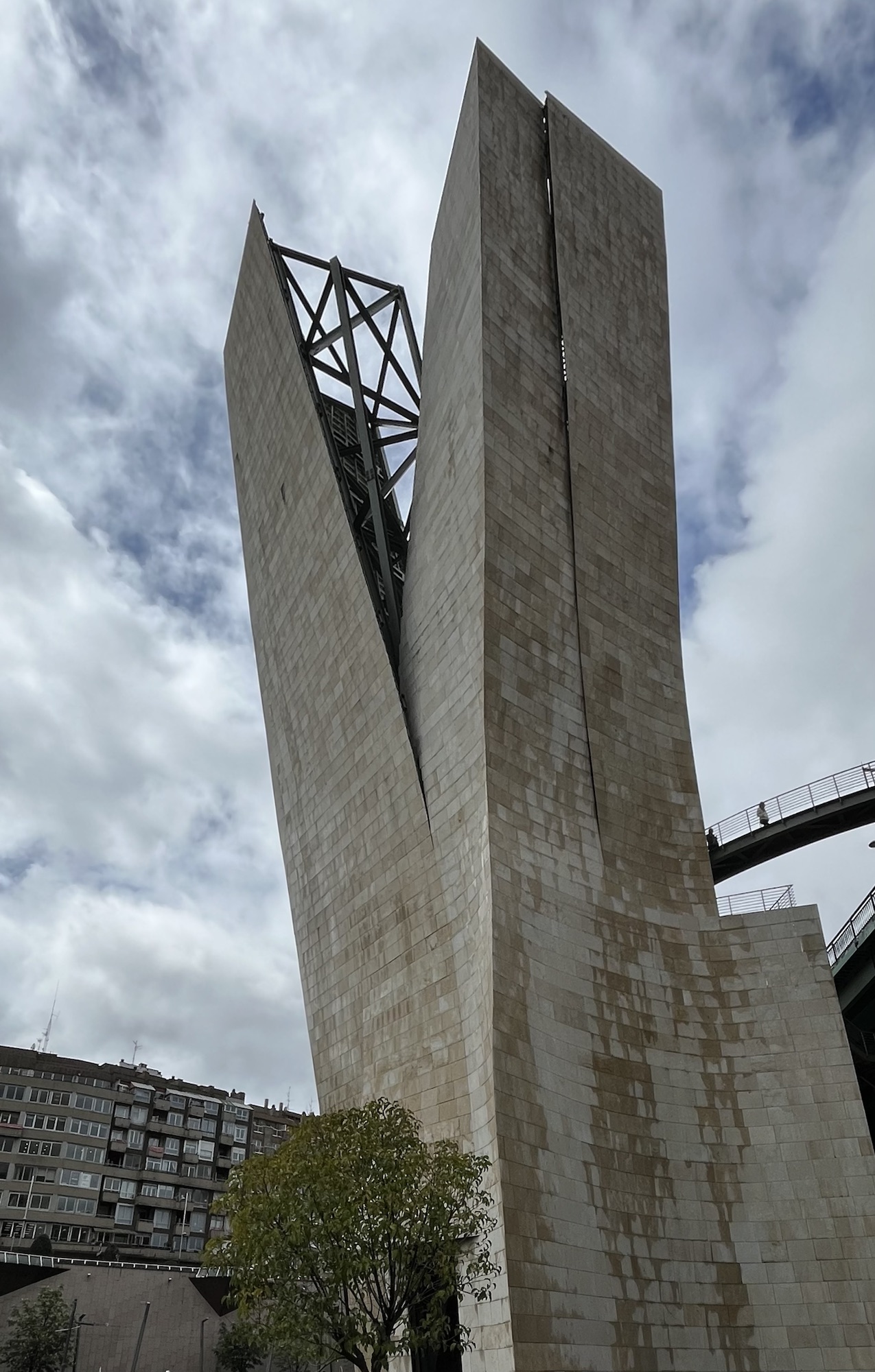
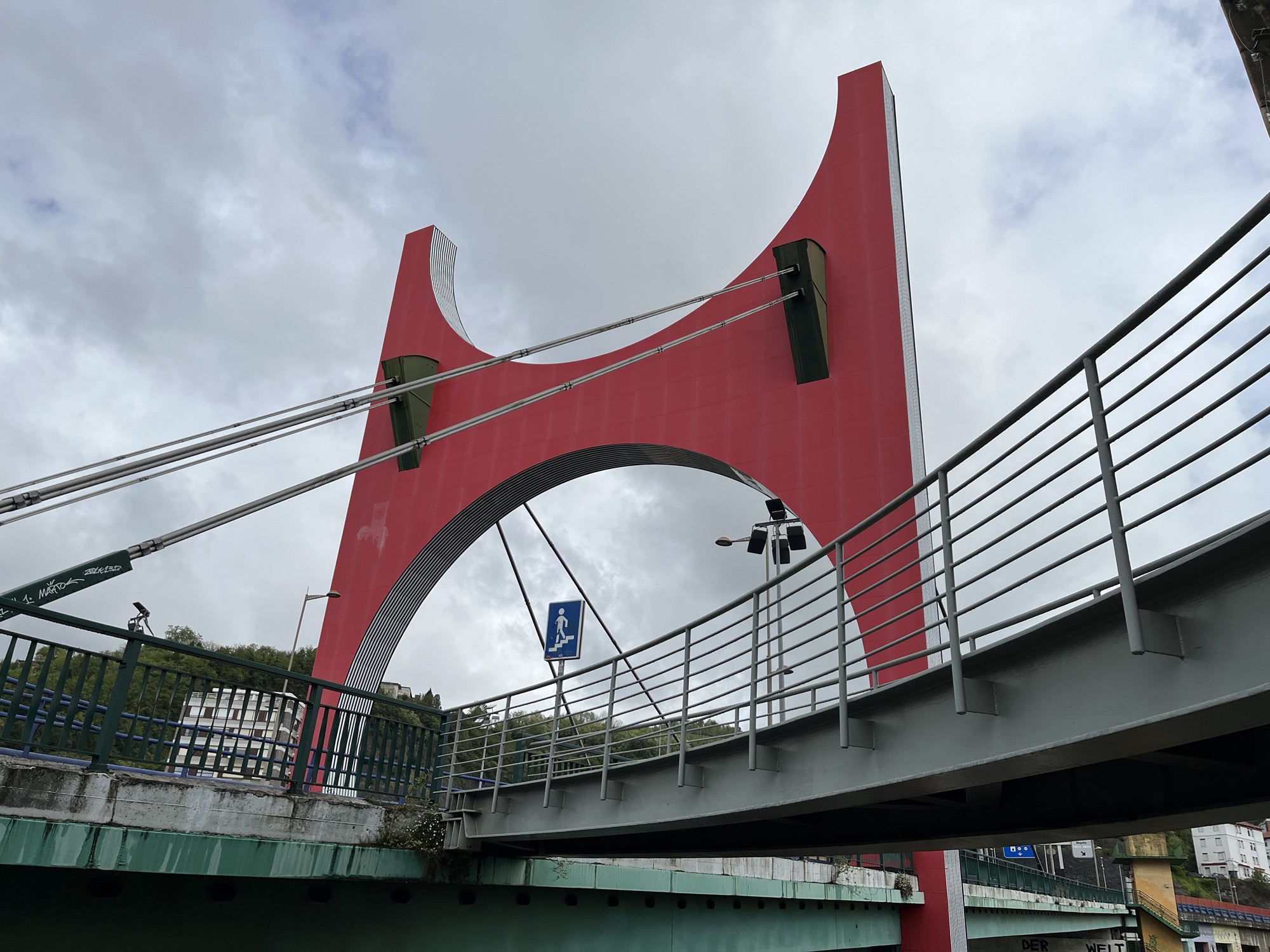
Bilbao’s modernistic red bridge over the river was not designed as part of the museum. It predates it by more than a decade, and yet blends seamlessly into the museum’s design (or perhaps the other way around).
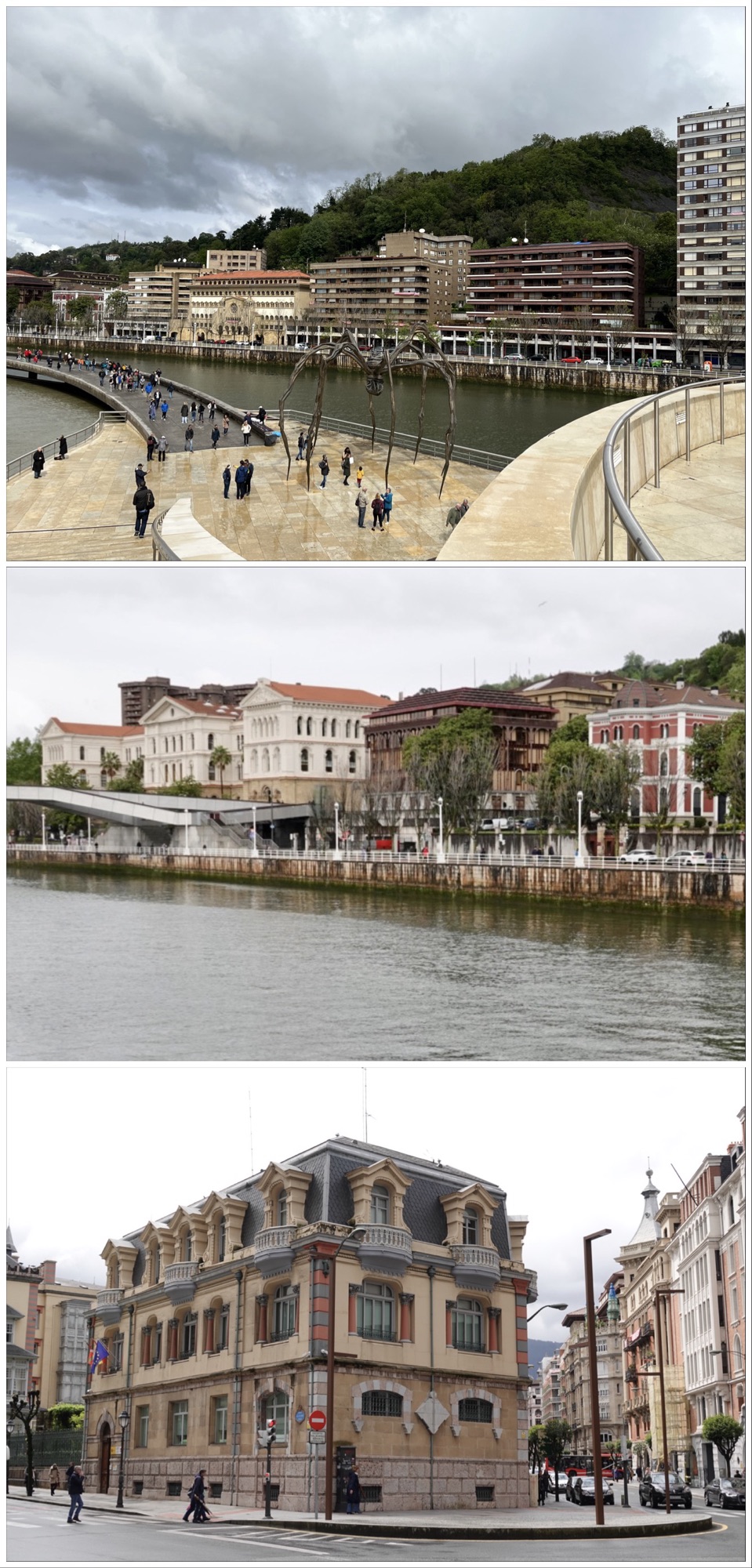
Outside the museum are several interesting art installations, including a very scary spider by Louise Bourgeois, entitled Maman, and the famous Koons’ “puppy”, in the act of being “groomed”!


We’d run out of time to walk to the old town, but since the rain seemed to be holding off, we wandered the neighbourhood around the museum long enough to realize it would be worth a return trip. Plus, there was a shop making chocolate, pralined nuts, and handcrafted torrone nougat (almond and orange!) that was absolutely the best we’ve ever had.

En route back to the ship, we were able to get a glimpse of what Getxo had to offer as well.
We had another lovely dinner, enhanced by wines and a terrific group of interesting table-mates.
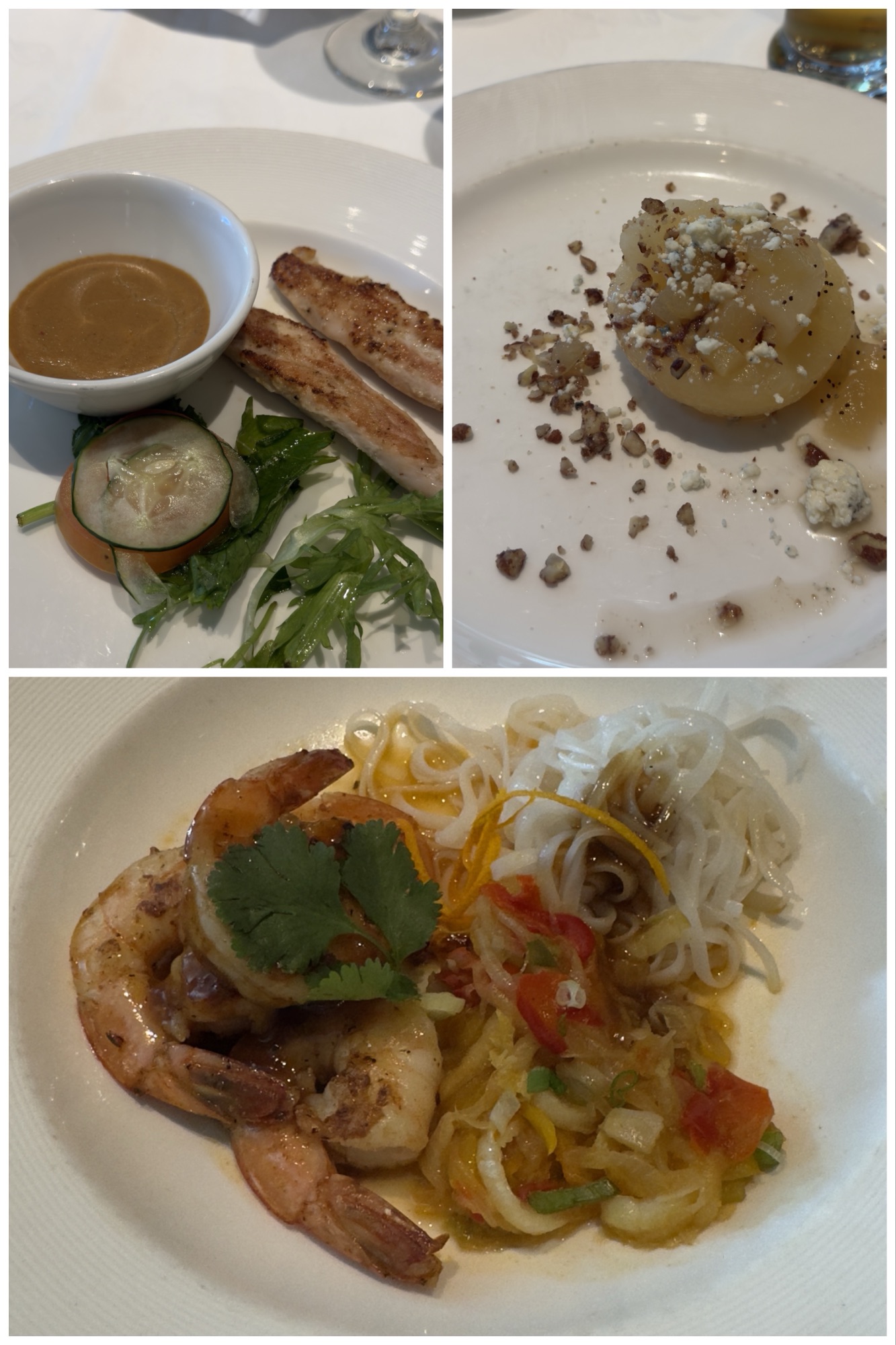
Top right: poached pear with blue cheese crumble, candied pecans, and poppy seed dressing. Bottom: Wok-Flashed Shrimp with Lehua Honey black bean sauce, chinese egg noodles, stir-fry vegetables.
Since we’re nearing the end of the transatlantic cruise, the dining room staff performed Princess’ “traditional” Parade of the Baked Alaska, during which the maître d’ encouraged us to recognize the waiters and galley staff with our applause and unfurled napkins.
We didn’t go to see the comedian in the theatre, instead opting to spend the evening in comfy chairs in the Wheelhouse Bar listening to piano music and putting today’s blog entry together… but not before enjoying a lovely sinking sun in the Atlantic.
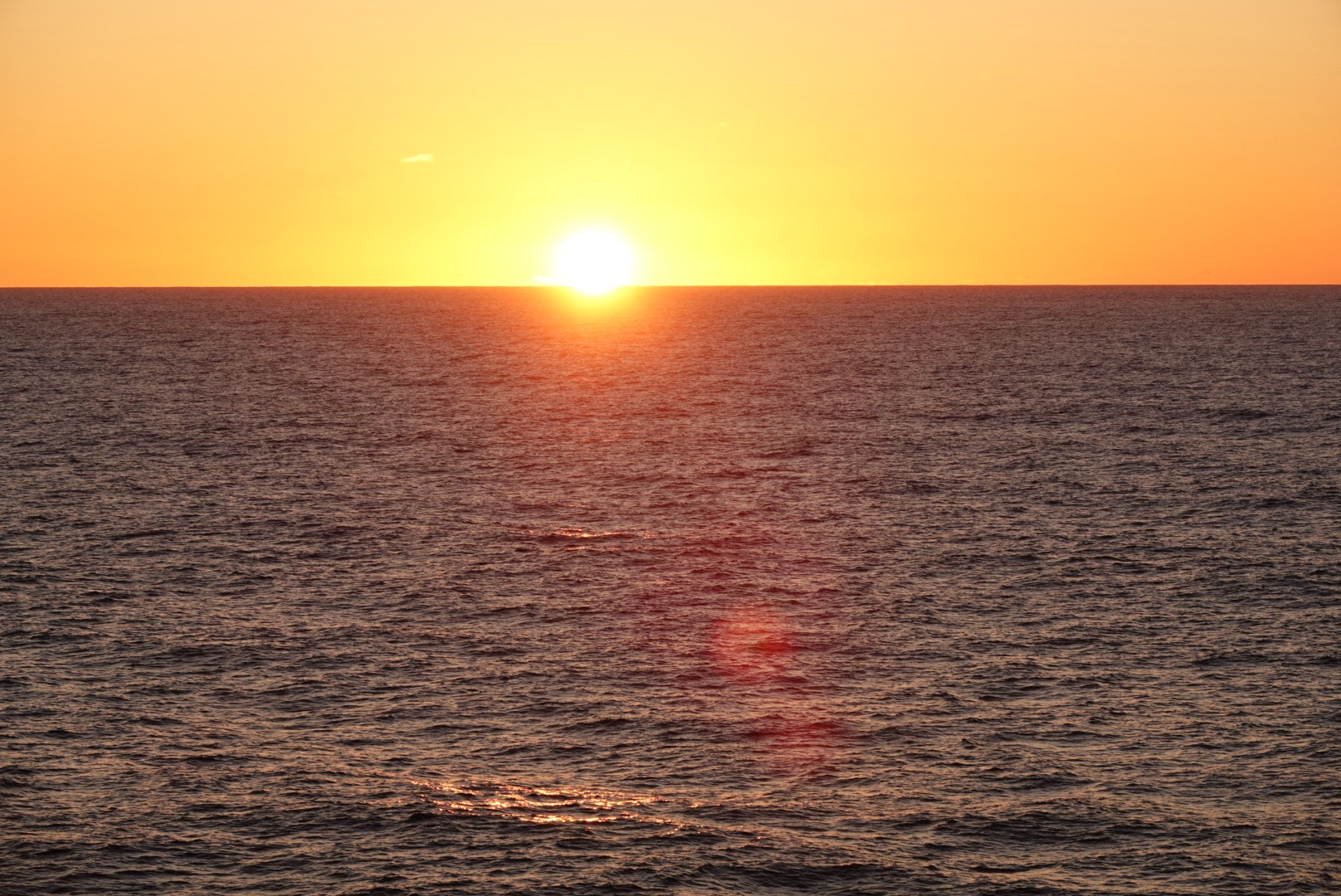
Still no “Bilbao Moon”, but a pretty wonderful day.
 Rose and Ted’s Excellent Adventure
wonderful photographs, thank you for taking us along on this trip, I’ve enjoyed your comments and travel log many days……………maybe someday I will walk where you are walking too. I recently traveled on the Regal Princess, in and out of Galveston and loved the ship.
Judy Harris
LikeLiked by 1 person
Enjoying your blog (as usual!) I’ll be in Bilbao (and other places in N. Spain and N. Portugal) in just a couple of weeks. I’d actually been to Bilbao and the Guggenheim way back in 1998 when it was pretty new. So two minor corrections. I believe you saw the LeWitt exhibit at Mass MOCA in North Adams, MA (I live in Williamstown, the town next door, home to the wonderful Clark Art Institute). And isn’t the animal outside the museum you refer to the famous Koons “Puppy”? Not a cat I think!
LikeLiked by 1 person
Oh, could definitely be a puppy! (Can ypu tell we’re cat people?) and yes, definitely North Adams – it was years pre-blogging, and I couldn’t look it up. Thank you so much – corrections made!
LikeLike
My pleasure. I remember seeing the Puppy and positively chortling with delight!
LikeLiked by 1 person
A wonderful day, for sure. I enjoyed sharing your the Guggenheim sights, too. I’m guessing this trip will go down as a grand success!
LikeLiked by 1 person
Thanks so much, both of you, for the excellent look at the Guggenheim in Bilbao. I’ve seen lots of photos, but Ted’s were so much more interesting. I think Bilbao needs to go on our bucket list. Safe travels, where ever you are off to next. Home, whatever that means?
LikeLiked by 1 person