
Today’s on-shore excursion was a 3.5 hour walking tour.

We had a really entertaining and irreverent young tour guide, Andre, who was born and raised in Lisbon and was happy to share both his pride in his city, and his acknowledgement that its history is not perfect. While he certainly had a lot of anecdotes that made our walking tour fun, I didn’t come away with a “story”, which means today’s memories are mostly just photographs with captions.
Ted and I both agreed we were underwhelmed by Lisbon. That could be because we’ve heard so many rave reviews that our expectations were artificially high, or because we’ve seen too many AI-enhanced photographs that created unrealistic expectations. Either way, we both agreed that Lisbon was a bit like “Trieste lite”: a nice harbour, but not as nice as Trieste’s harbour; a nice square on the water with ornate architecture and attractive restaurants, but not as nice as Trieste’s main piazza; hilly cobbled street and historic churches, but …. well, you get it. Episode 312 – Trieste
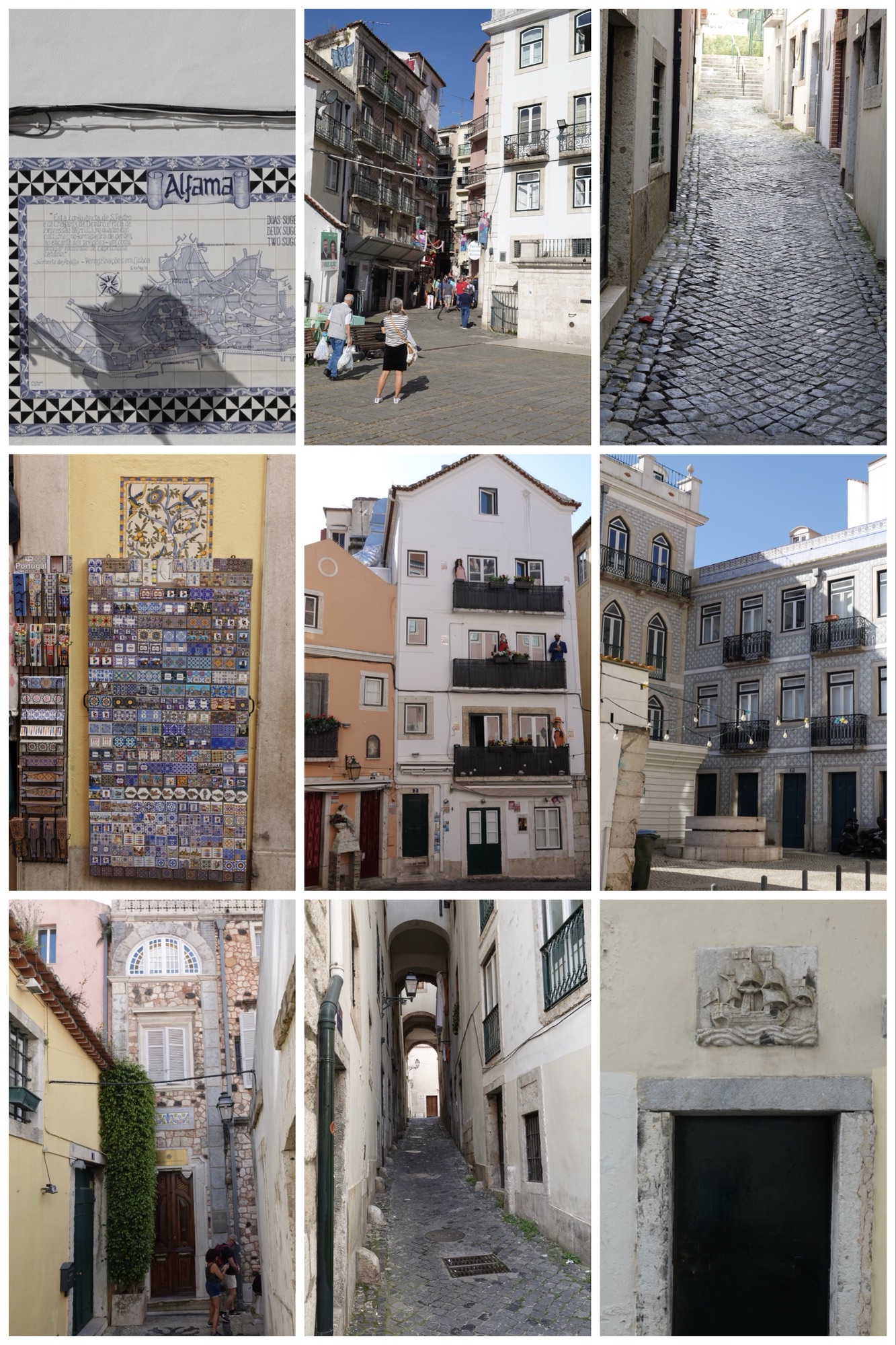
We first walked through the Alfama neighbourhood, a rabbit warren of serpentine streets and eclectic architecture, explained by the fact it was rebuilt in just two years after the devastating 1755 earthquake that pretty much levelled the city. (The same earthquake that destroyed the Roman ruins in Volubilis in Morocco). The area dates back to the 500 year long Moorish/Arabic/Muslim era that lasted from approximately 700 – 1200 AD.


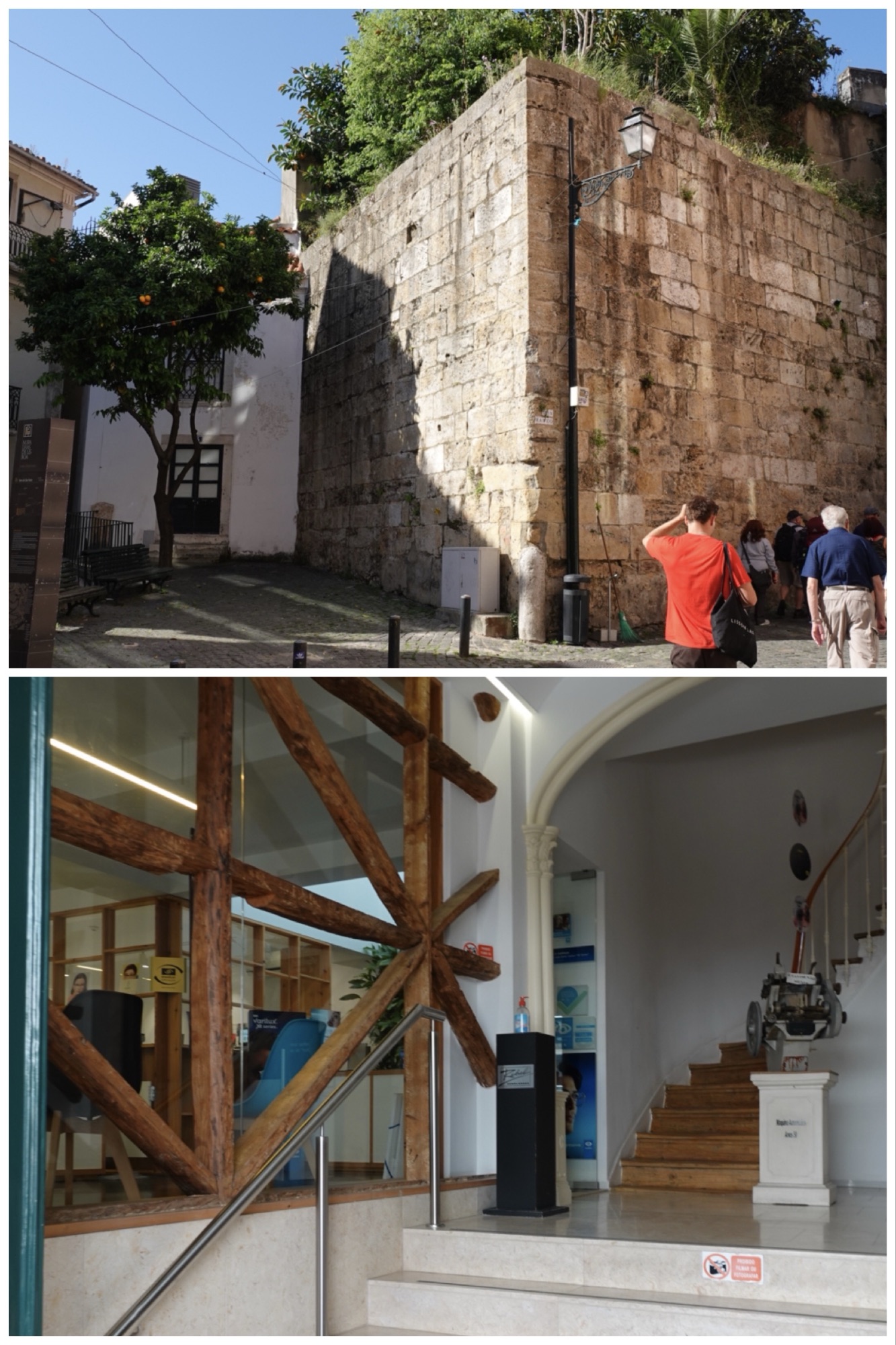
Our guide pointed out stone city walls that long pre-date the devastating 1755 earthquake (top photo below) and also pointed out “earthquake proof” construction in more modern buildings: that decidedly fragile looking wooden reinforcement (bottom left below).
Lisbon, and Portugal, are among the oldest permanent settlements in Europe, having been over the ages Phoenician, Roman, Visigoth, Moorish, and eventually what we now recognize as “Portuguese”. The city’s cathedral, called simply Se de Lisboa (or “the Holy See of Lisbon”) is a great historical record, incorporating Romanesque, Arabic, Gothic, and Renaissance Baroque architecture. It also looks a bit like a fortress, which was in fact one of its roles during various periods in history.




In stark contrast to Alfama, the streets of the “new” city are wide and straight, and serviced by streetcars, although there is no shortage of steep hills, and most of the streets are still cobblestone with patterned limestone and basalt sidewalks.


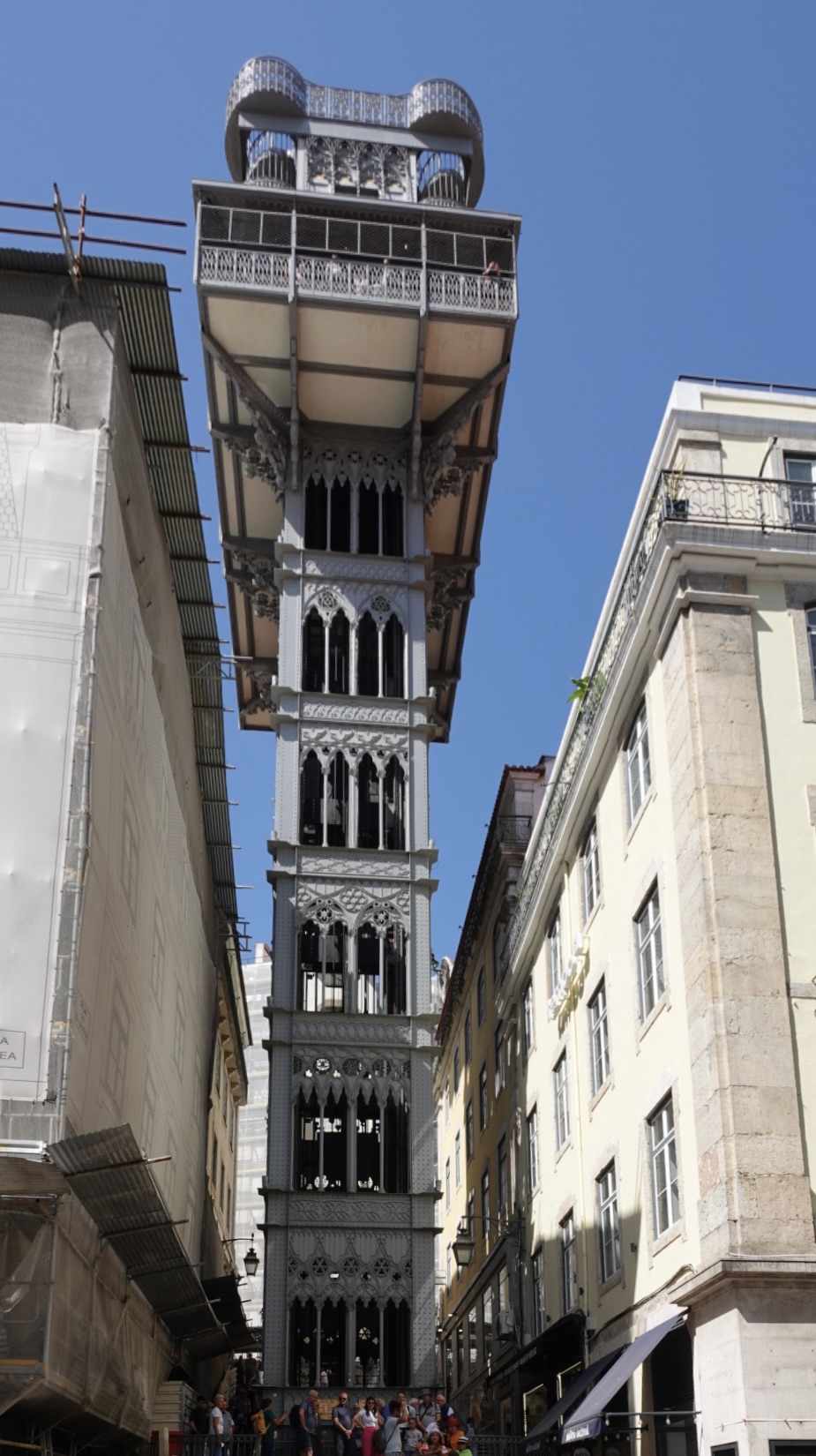
We bypassed the “overpriced tourist trap” (our guide’s words) Santa Justa Lift (the elevator below) …
… and took one of the funicular trams…

…to an overlook that was once the garden of nobility. It was a lovely quiet spot, not much frequented by tourists or locals, but a favourite of our guide.

That’s where we parted from our tour, in search of an authentic Portuguese lunch. Andre recommended O Triguerinho, a tiny family-run restaurant that we could only reach by going down several flights of stairs from the garden and then up several more flights of stairs to the restaurant. As promised, it was a place for locals, which meant no credit cards and almost no English. Thankfully, the waitress spoke Spanish and my paltry amount was enough to allow us to order lunch, compliment the cooking, and pay the bill. At least I know how to say thank you in Portuguese: obrigada (to females), or obrigado (to males).
Lunch was HUGE and left us no room for any of the yummy looking cheese flan on offer for dessert.

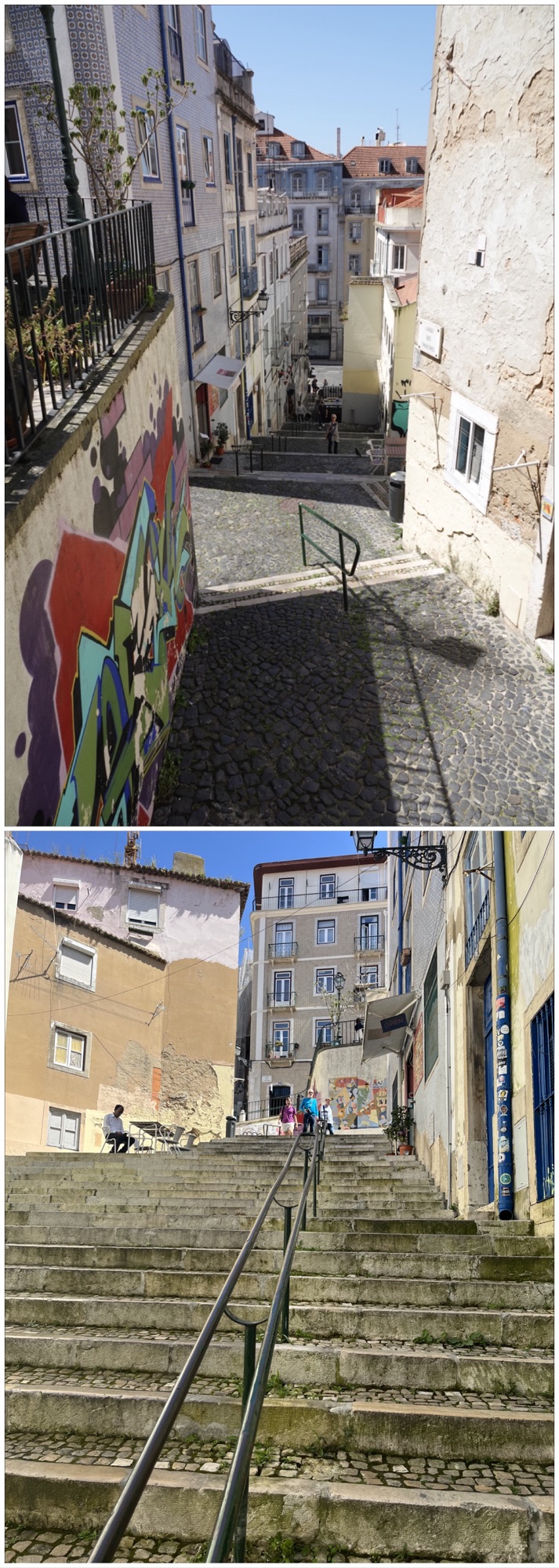
Then it was back down all those stairs …
…for a bit more wandering around the Praça do Comércio (commerce square)…


Notice the figure in shackles in the bottom photo.
He represents enslaved Brazil!
…and along the harbour front where there were some pretty “wild” sand sculptures!

We were absolutely parched from walking our 15000 steps, all up and down hills, so the little port café offering cold Portuguese beer – and warm freshly baked Pasteis de Nata (those famous flaky, eggy, Portuguese custard tarts), so we made a quick stop before re-boarding the Regal Princess.

As we sailed down the Tagus River to rejoin the Atlantic Ocean, there were some beautiful and interesting vistas – including the Belem Tower – that made us think that if we ever wanted to try living in Lisbon for a month or more we might try the city’s outskirts.
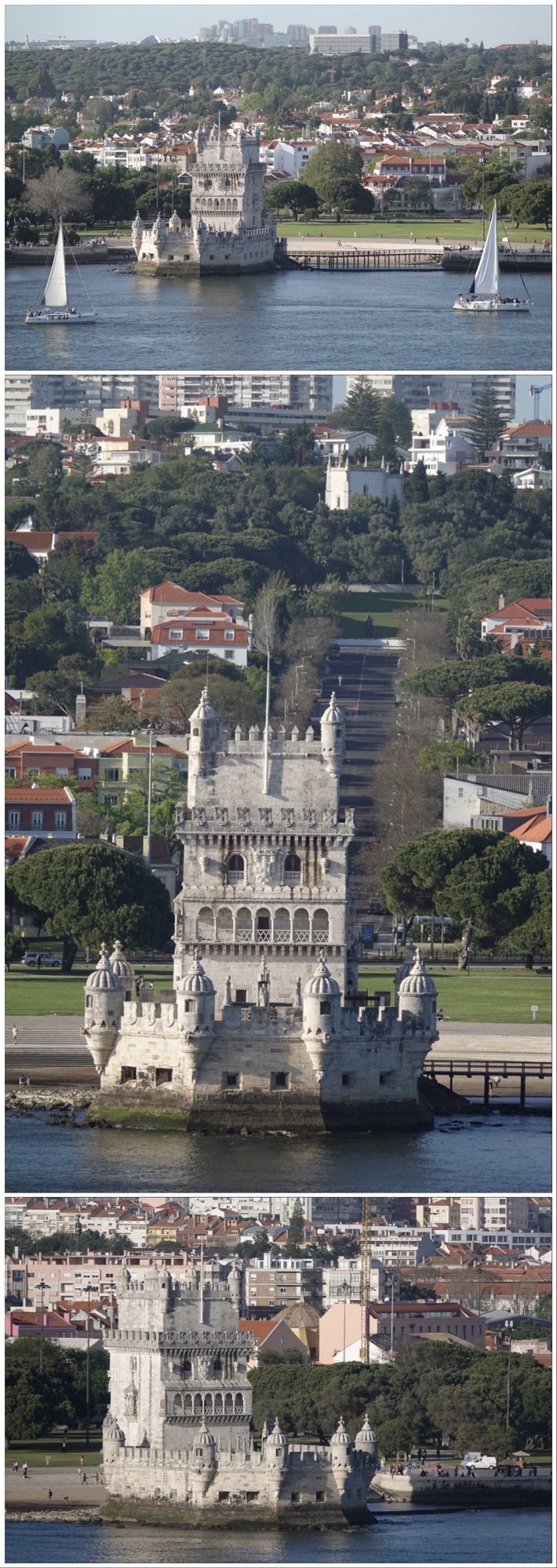
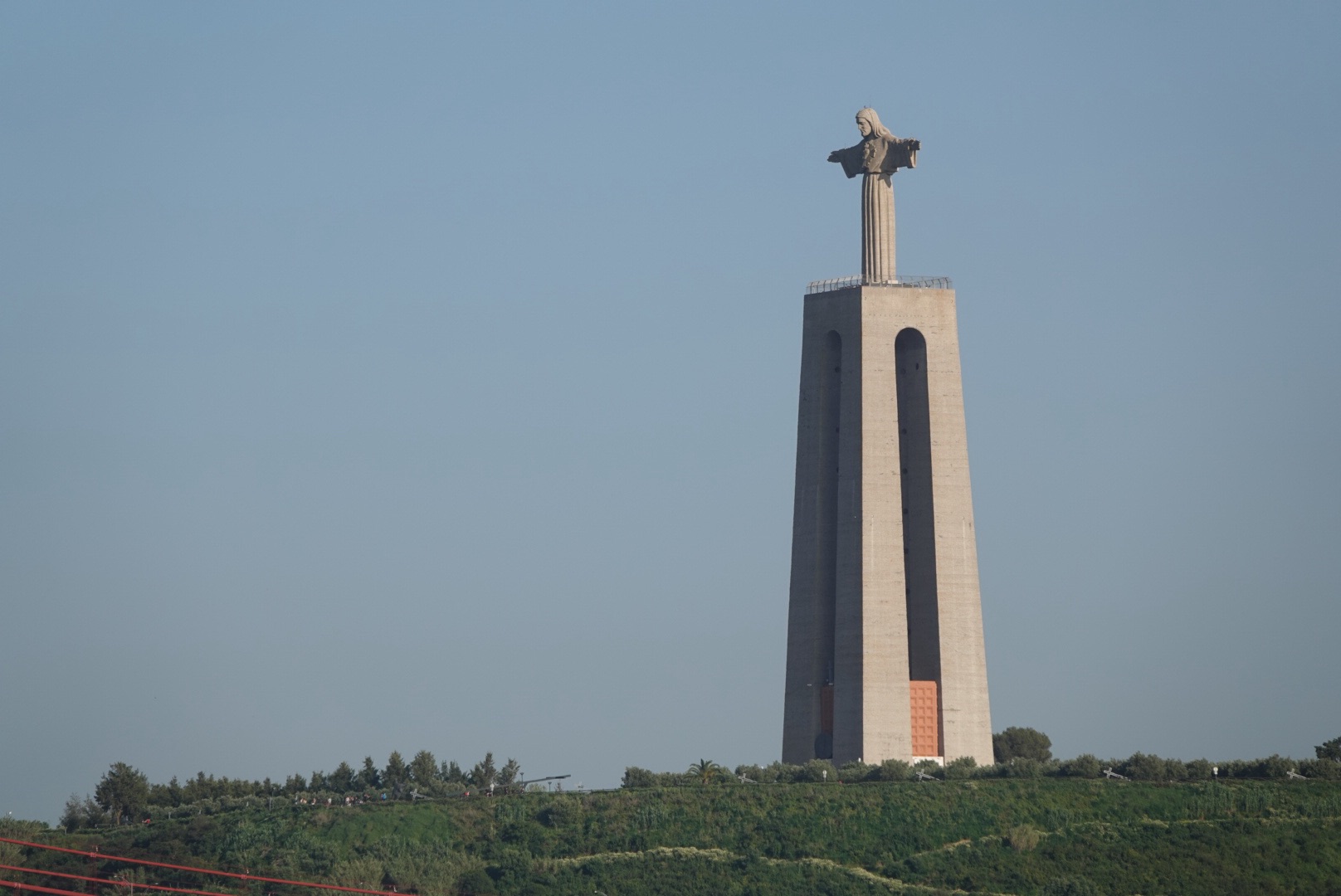


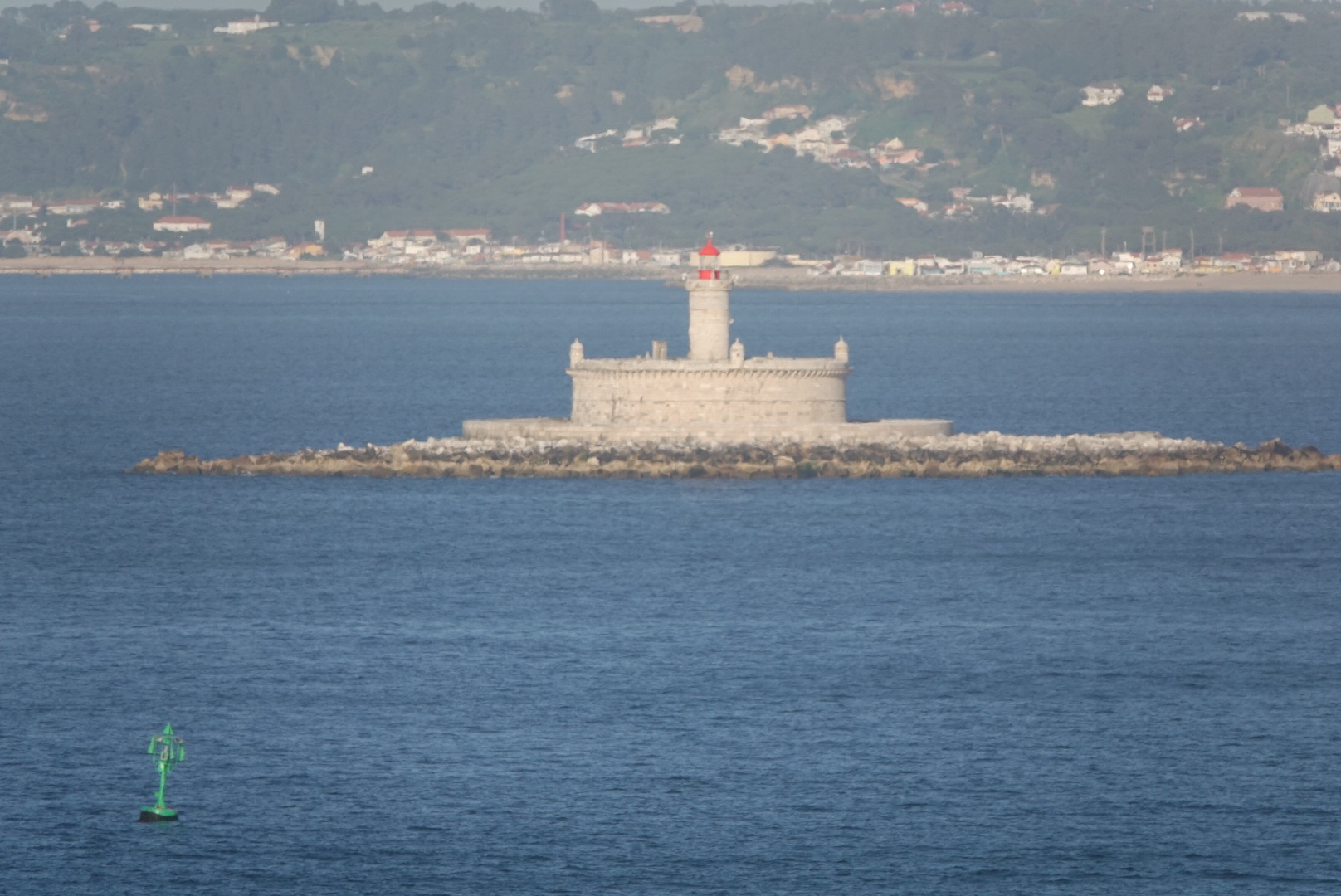
We didn’t need dinner after our big lunch, but did indulge in some refreshing frozen cocktails during the sailaway.


It was a beautiful day, and, even if Lisbon didn’t wow us, we certainly are glad we had the chance to visit it, however briefly.
Tomorrow we lose one more hour en route to Bilbao Spain.
FOOTNOTE: The evening’s entertainment was singer Jayson Keeler, from London England, who had a fabulous voice that delivered everything promised in renditions of big songs like The Prayer, Never Enough, and Queen’s The Show Must Go On. He received a well deserved standing ovation.
Ed Sheeran’s Perfect, done as a “duet” with Andrea Bocelli.
The Prayer.
 Rose and Ted’s Excellent Adventure
Sorry you didn’t love Lisb
LikeLike
Not everywhere can be Vienna! LOL
LikeLike
Interesting take on Lisbon. We, too, have only been there once but having a friend who has moved there helped us see a lot of interesting things. AND, to your point, we plan to stay a month on the outskirts of Lisbon next year (e.g. Sintra) and take day trips to the city. We’ll be coming from Miami on Oceania Vista, arriving on May 13.
I look forward to your experience of Bilbao. I was last there in the 80s while they were planning and building the Guggenheim. I even did a little consulting with their Ministry of Culture (I was also working on a cultural exchange between Idaho and the Basque government). Though the saddest part was the siphoning away of resources towards the new museum and away from local museums and culture. Thomas Krens, even the aggressive and expansion-minded Guggenheim leader had the government officials in his thrall. Morale at the Ministry of Culture was low. #oldnews #oldhistory
LikeLiked by 1 person
Very interesting! I’m most looking forward to the Guggenheim in Bilbao, but as a love of small independent museums I’ll be seeing it with that info in mind
LikeLike
I was looking forward to your Lisbon review. We will be spending a few days there and in Porto in a couple of weeks. One of the YouTube videos I watched warned to expect to find both cities “gritty”. At least we’ve been forewarned! I’ll look for the restaurant you ate at in case we are nearby and hungry.😋 Enjoy the rest of your trip!
LikeLiked by 1 person