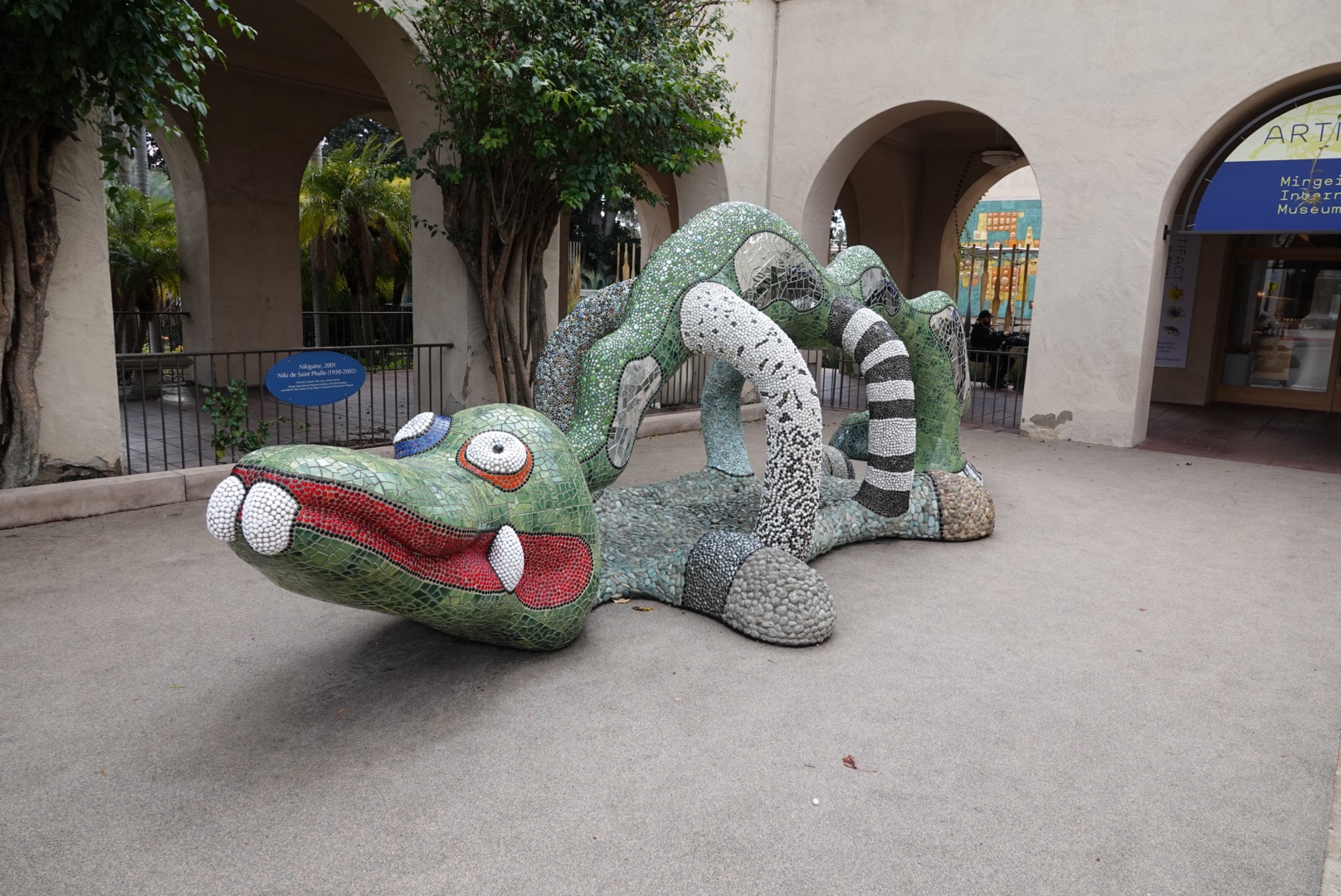
Along the south side of Balboa Park’s El Prado is the “House of Charm”, originally designed as a temporary exhibition building for the 1915 Panama-California Exposition. Because the public fell in love with the Prado Buildings, they rallied to preserve them, and they were reconditioned for the 1935 California-Pacific International Exposition.
The building has quite a hilarious history related to its naming. The full story is at San Diego Archives, but here’s a relatively quick synopsis (all excerpted from the website – it was just too convoluted to try to paraphrase):
Exposition officials called it the Mining Building when it was being designed in January 1913. The intention was to dig a mine from the floor of the Building to the edge of Cabrillo Canyon to show the wealth of mineral resources in San Diego. Someone realized the idea was ridiculous as there are no known mineral resources in Balboa Park.
Still trying to find a name, officials decided on the name Science Building in June 1913, which they changed to Science and Education in October.
While the provisionally named Science and Education Building was being constructed, an Arts and Crafts building was going up on the north side of El Prado. By January 1914, authorities switched the Arts and Crafts designation to the Building on the south side of El Prado and the Science and Education designation to the building on the north side.
Shortly before the expo’s midnight December 31, 1914 opening, Dr. Edgar L. Hewett, Director of Exhibits, changed the name of the Arts and Crafts Building to Indian Arts Building, as it contained artifacts sent by the Smithsonian Institute and the School of American Archaeology showing the customs and arts and crafts of native Americans.
For 1916, the second year of the expo, officials renamed the Indian Arts Building the Russia and Brazil Building, with the original displays removed to another building and new ones installed.
In 1917, the Science and Education Building became the Indian Arts Building and the Russia and Brazil Building (original Indian Arts Building) became the Science of Man Building.
The website explains that the changing of names gave rise to endless confusion as newspaper reporters, park commissioners, and even members of the San Diego Museum Association continued to refer to the buildings by their old names. For several years after the removal of Science of Man exhibits (to the current Museum of Us), flower shows were held in the vacated building, now referred to in the San Diego Union newspaper as “the building in the southwest corner of the main plaza in Balboa Park.”
For the second Panama-California expo in 1935, the Building was renamed the House of Charm, and housed concessions devoted to women’s clothing, jewelry, hosiery, shoes, cosmetics and perfumes.
In 1936 the women’s items were replaced with a display of gems and artifacts from all over the world in what was now called the Palace of International Arts, but “House of Charm” stuck, even when the building was used by the US Navy during WWII.
I couldn’t stop laughing as I read through the archive.

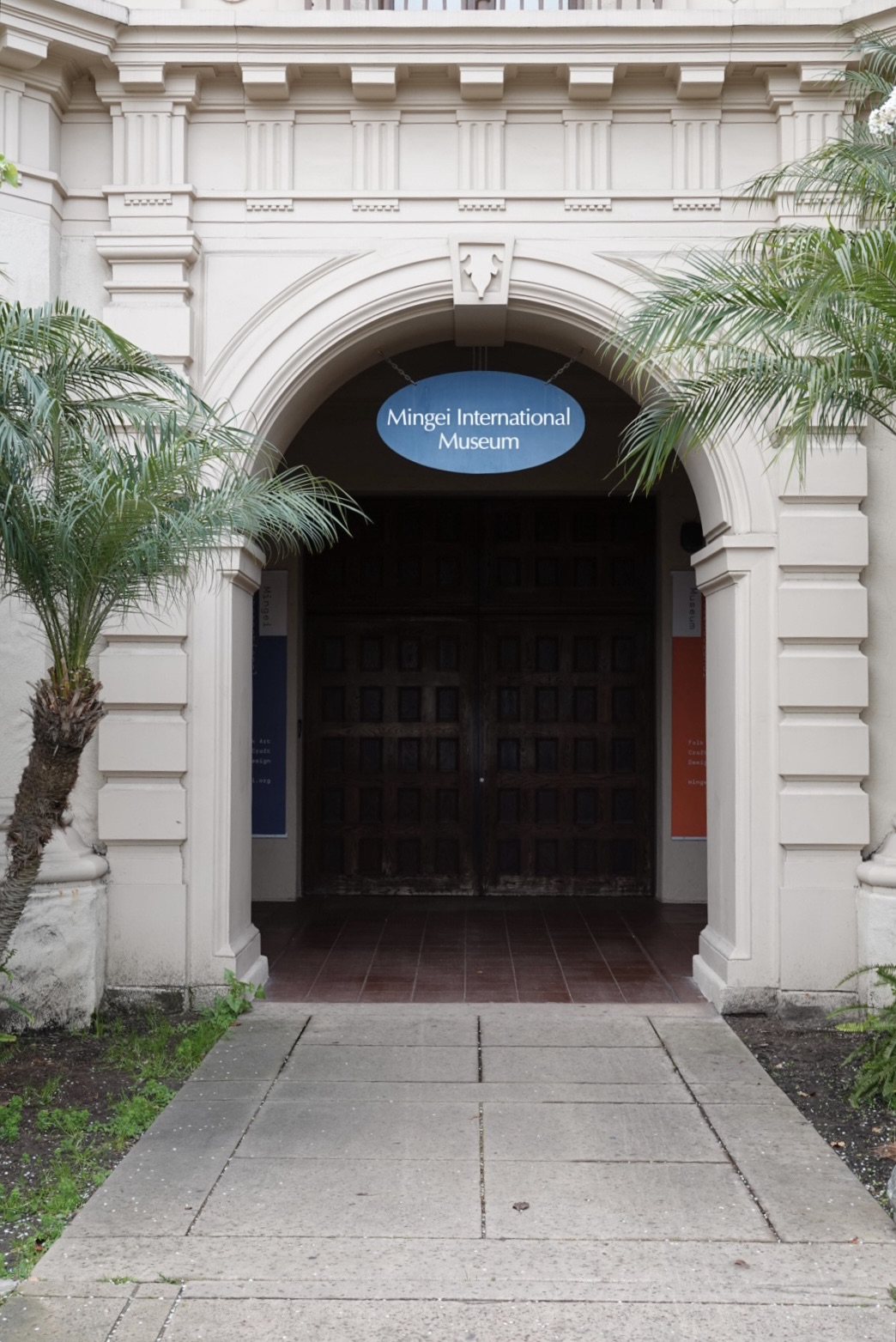
In 1993, The City of San Diego City Council approved replacement of the original “temporary” (is it really temporary at 98 years old?) structure with a historic reconstruction. The building exterior was carefully reproduced to match the historic facades while the interior was designed to provide modern “museum quality” spaces.
Today, the House of Charm is home to the Mingei International Museum, whose mission is to “inspire people to celebrate human creativity, as well as recognize, embrace, and cultivate their own creativity, in ways big or small through an inviting, fresh, sometimes surprising and always engaging look at a diverse range of thoughtfully designed, carefully crafted and passionately made objects from around the world, often created by unknown artists and craftspeople for everyday use.”
The word mingei, meaning art of the people, was coined by a revered Japanese philosopher named Sōetsu Yanagi. In keeping with the concept of “art of the people”, the museum’s exhibits feature what might otherwise be called handicrafts.
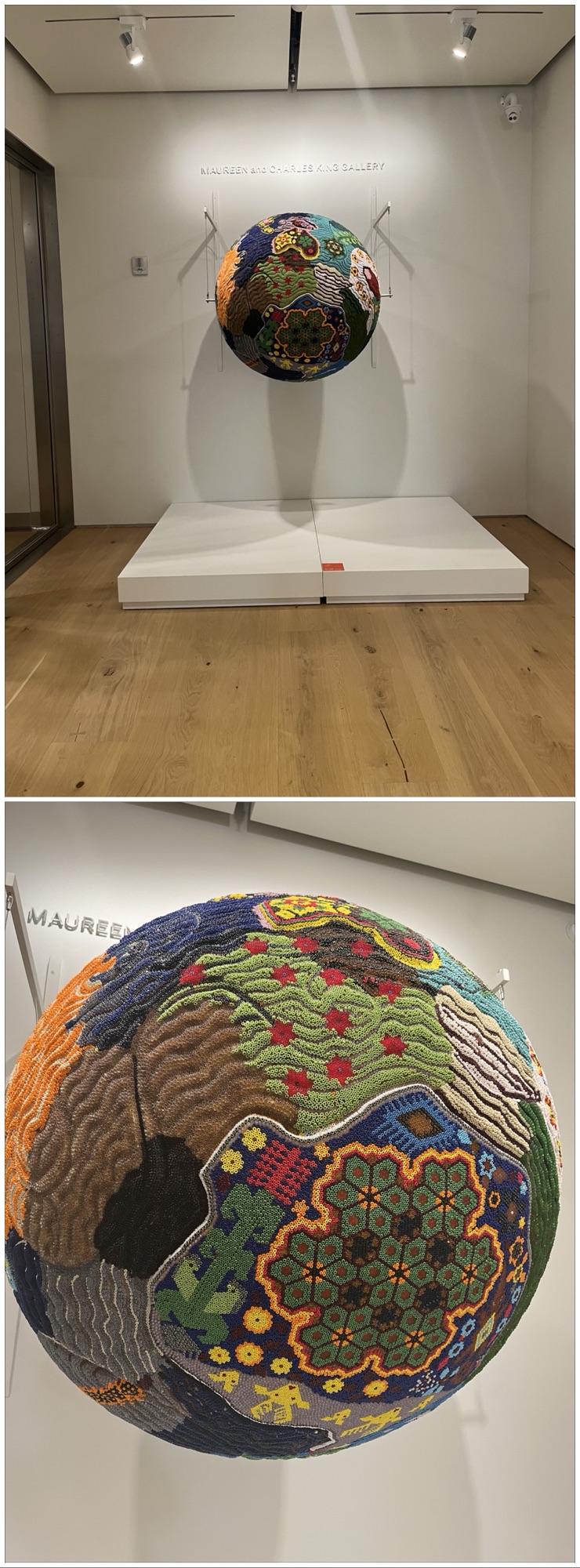
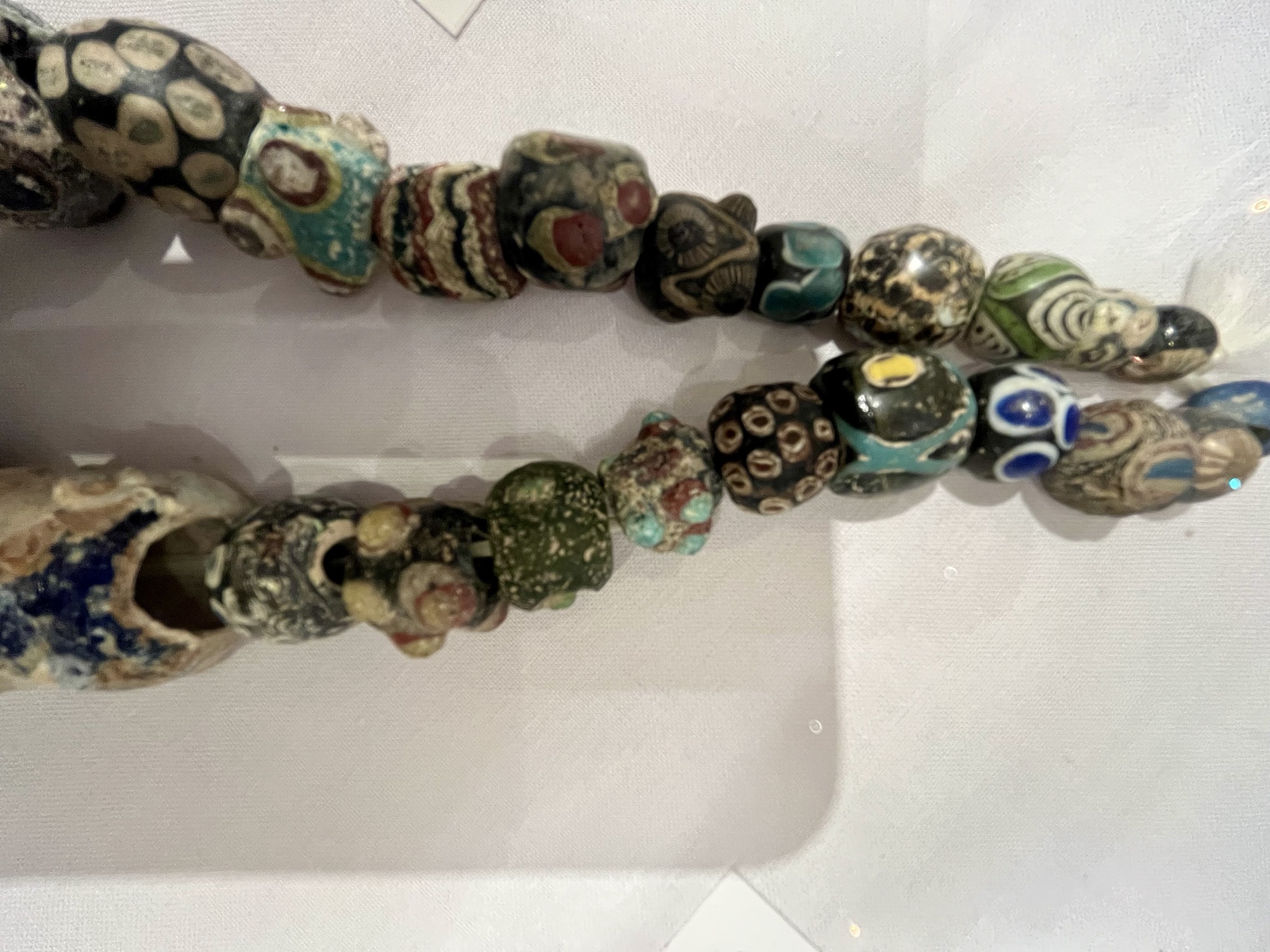
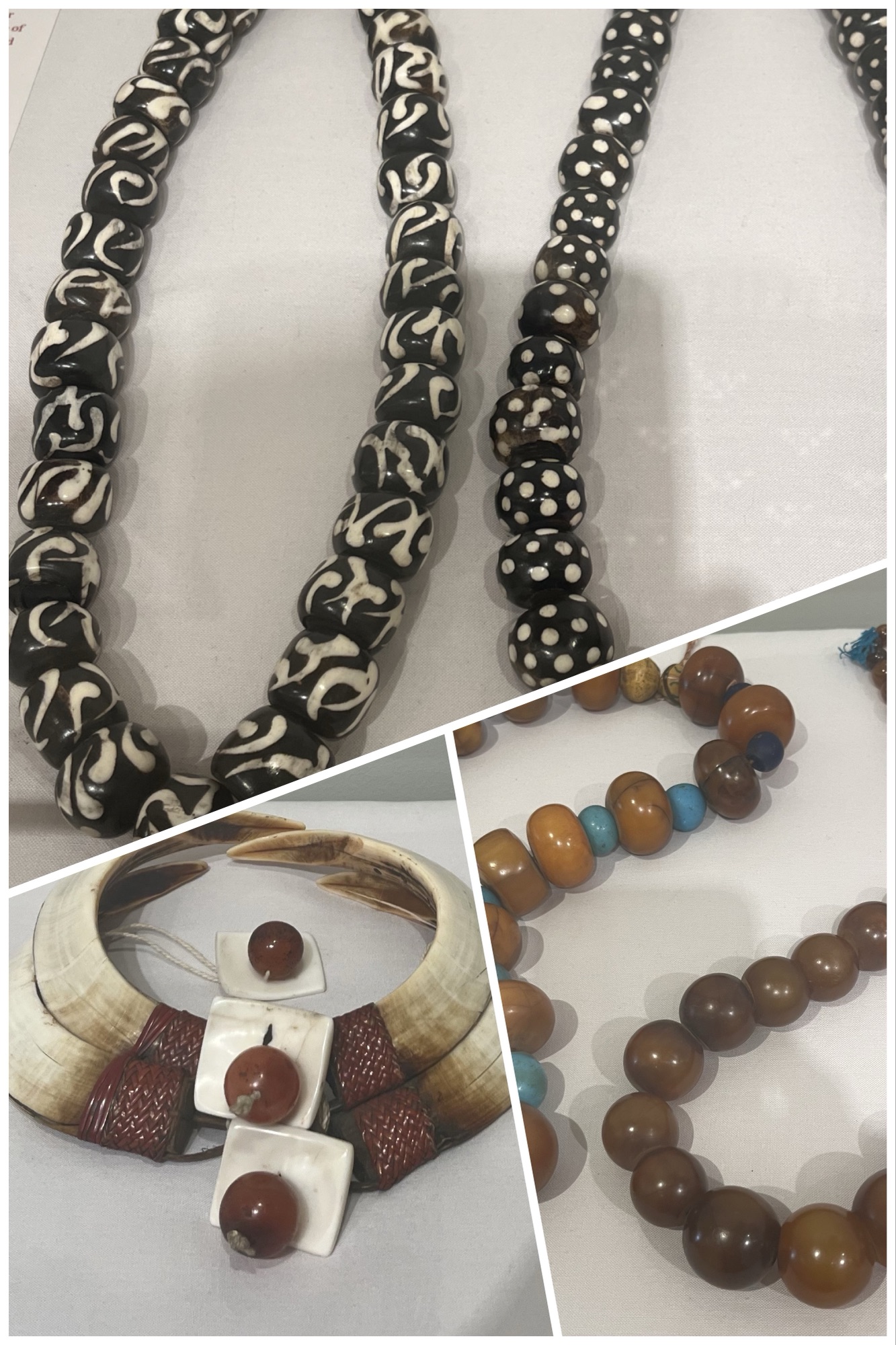
The current exhibitions are A World of Beads, Needles and Grass (Coiled Vessels), Over/Under (Woven Craft), and La Frontera (Jewelry from the US-Mexico border).
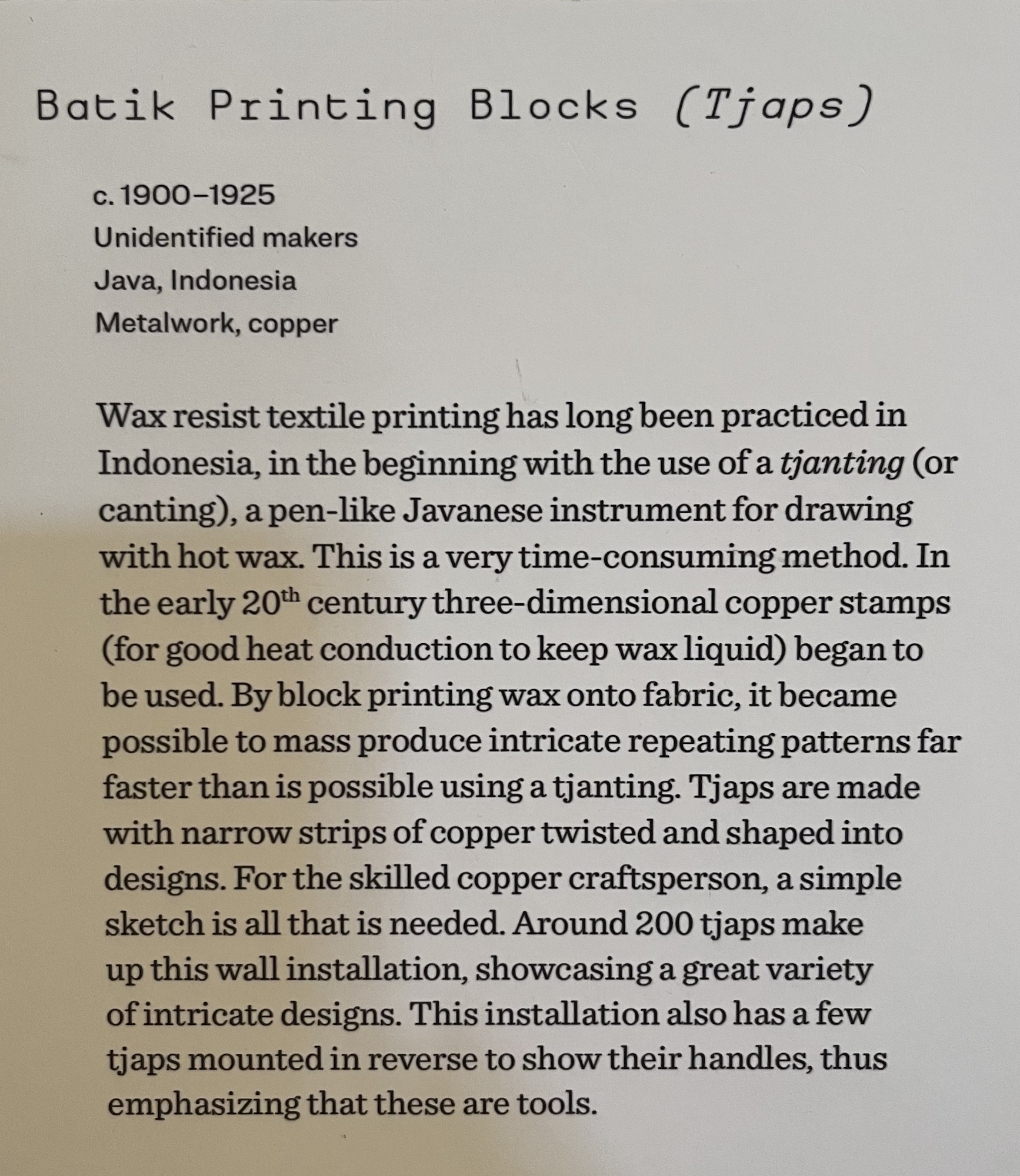
It was not Ted’s idea of a fun afternoon, so he found a bench to sit on in the centre of the galleries and sent me off to wander on my own. The iPhone pictures that follow are a few of my favourite pieces from each exhibit.
From A World of Beads:

From Needles and Grass:

And from Over/Under:


I took no photos in La Frontera, an exhibition described as exploring “the complexity of the U.S.–Mexico border as a physical reality, geopolitical construction, and state of being through the medium of jewelry – an object repeatedly used for communication throughout human history.” While the imagery of art created from barbed wire, torn clothes, confiscated water bottles, restraining devices, and identification tags may be powerful, when it takes several paragraphs posted beside an item to tell me how to interpret the artist’s vision, it loses its appeal.
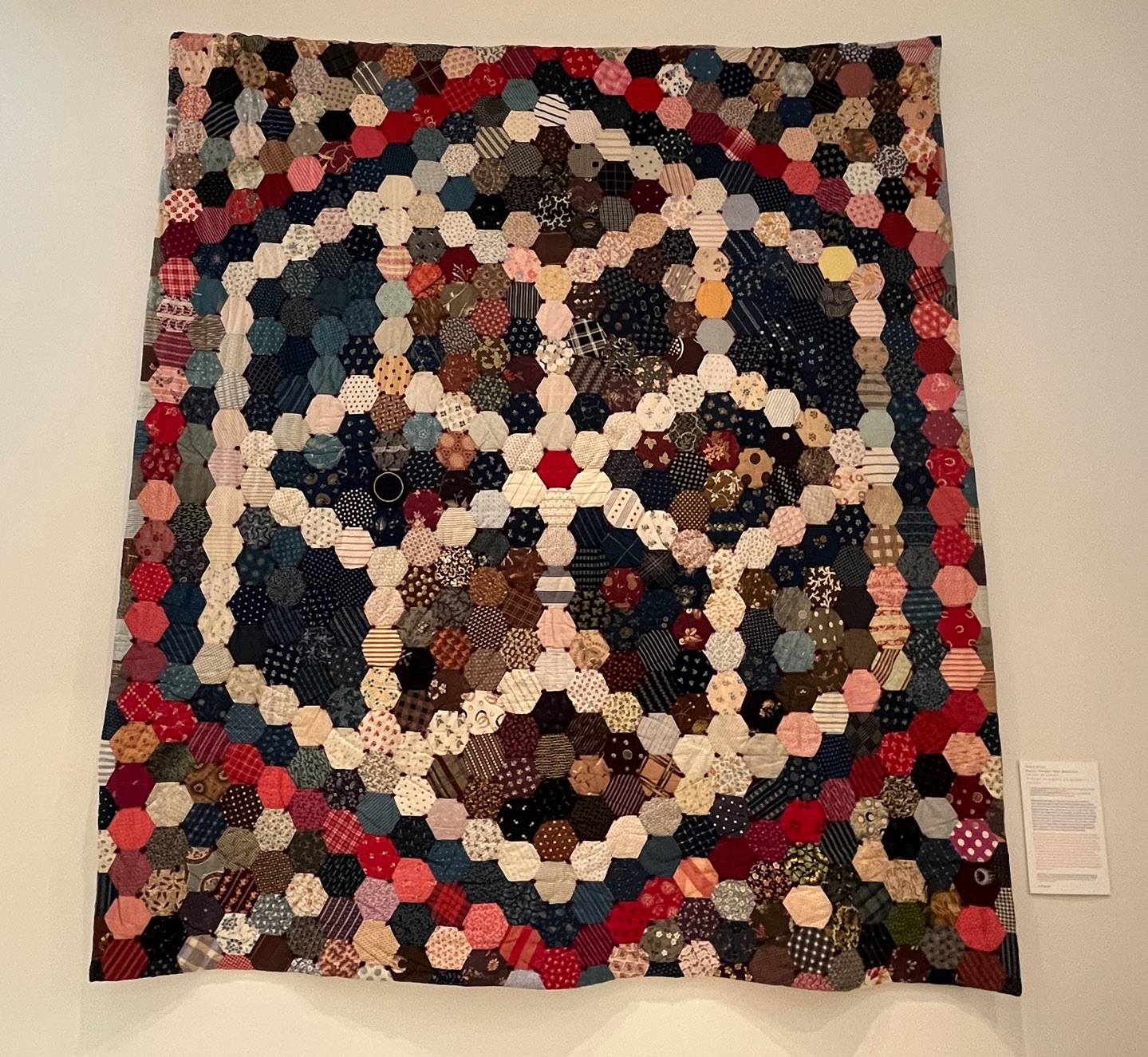
The last item I photographed was not part of the exhibits per se, but hung in an adjacent workroom. I was just really amused – after reading the archival records about the building’s name – that this 1880 Mosaic Hexagon Star Medallion pattern quilt is known as a “Charm Quilt”. It just seemed so appropriate for The House of Charm.
 Rose and Ted’s Excellent Adventure
<
div dir=”ltr”>As I was reading it I started to gigg
LikeLike
Talk about convoluted! I would have kept Ted company on the bench. Al
LikeLiked by 1 person
That may be the best reaction yet!
LikeLike