As so often happens, we‘re running out of time to see and do everything we’d hoped.
When we arrive somewhere for a month long stay, in the first few days it feels like we have all the time in the world to enjoy and explore. Then, around the end of week 3, we suddenly feel as if the time has just flown by, and there’s still so much unseen and undone.
To that end, our visits to these two museums at Balboa Park were cursory ones, focussed only on a small part of each; the exhibits we were most drawn to.
#1 The San Diego Museum of Art
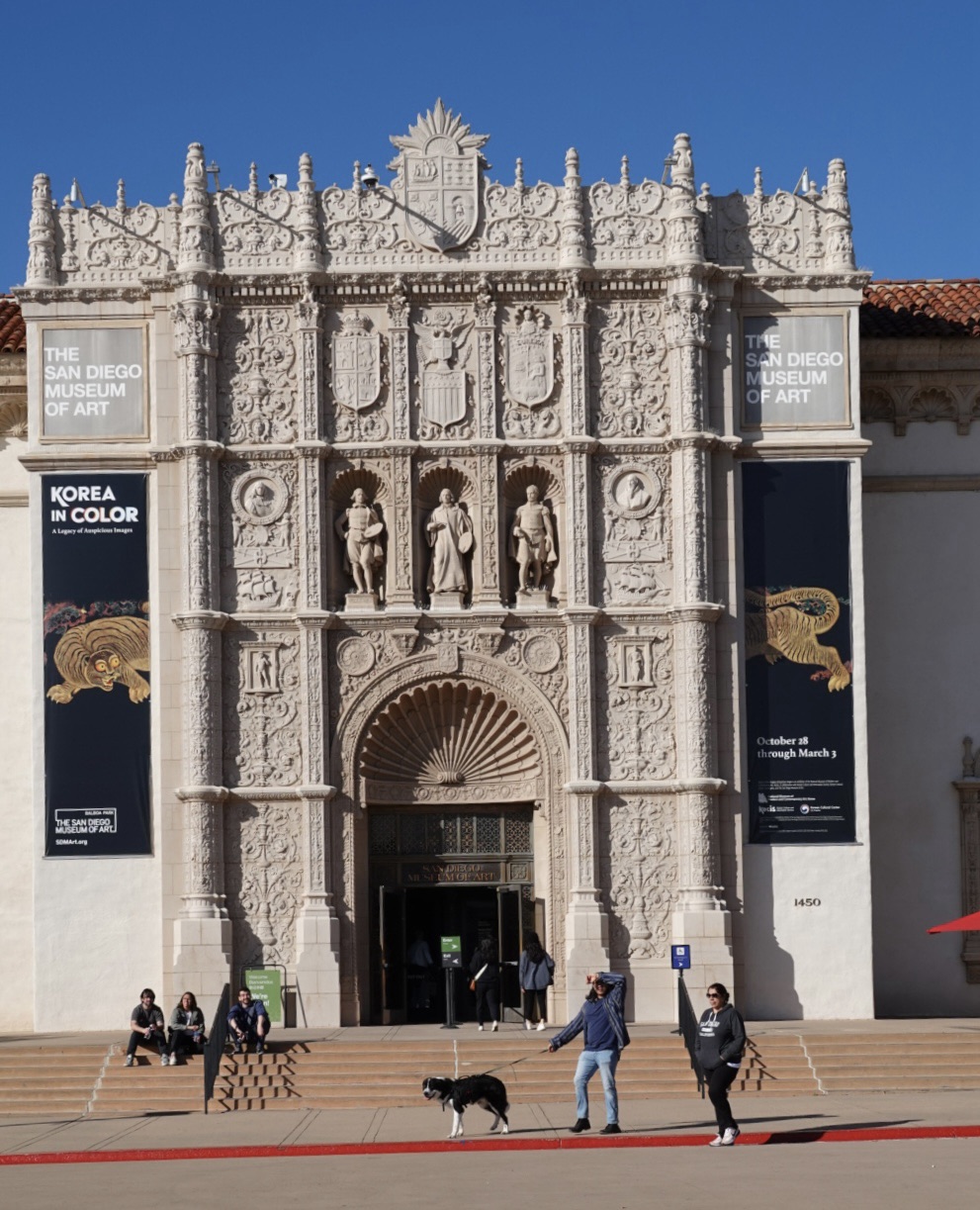
I found it easy to make our visit to the San Diego Museum of Art a fairly short one, since unlike at the Timken I did not feel compelled to linger over most of the artwork. True, there are famous painters on display here – Dali, Degas, Modigliani, John Singer Sargent, and Rembrandt van Rijn, for example – but none of the works “spoke”to me. In addition, despite the fact that the paintings were arranged in themed galleries, somehow none of them (with the exception of the religious paintings) felt cohesive. Plus, while there were lots of security guards, there were no docents available of whom to ask questions or get information. Overall, the permanent exhibits were a disappointment.
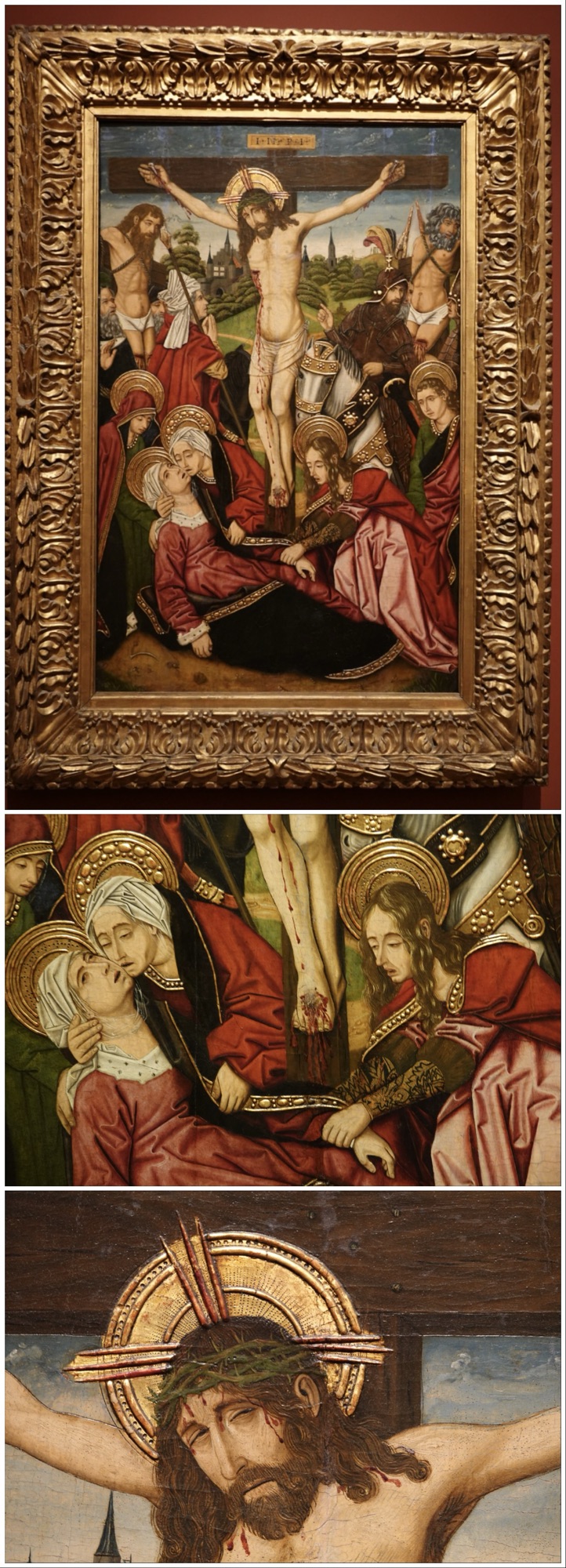
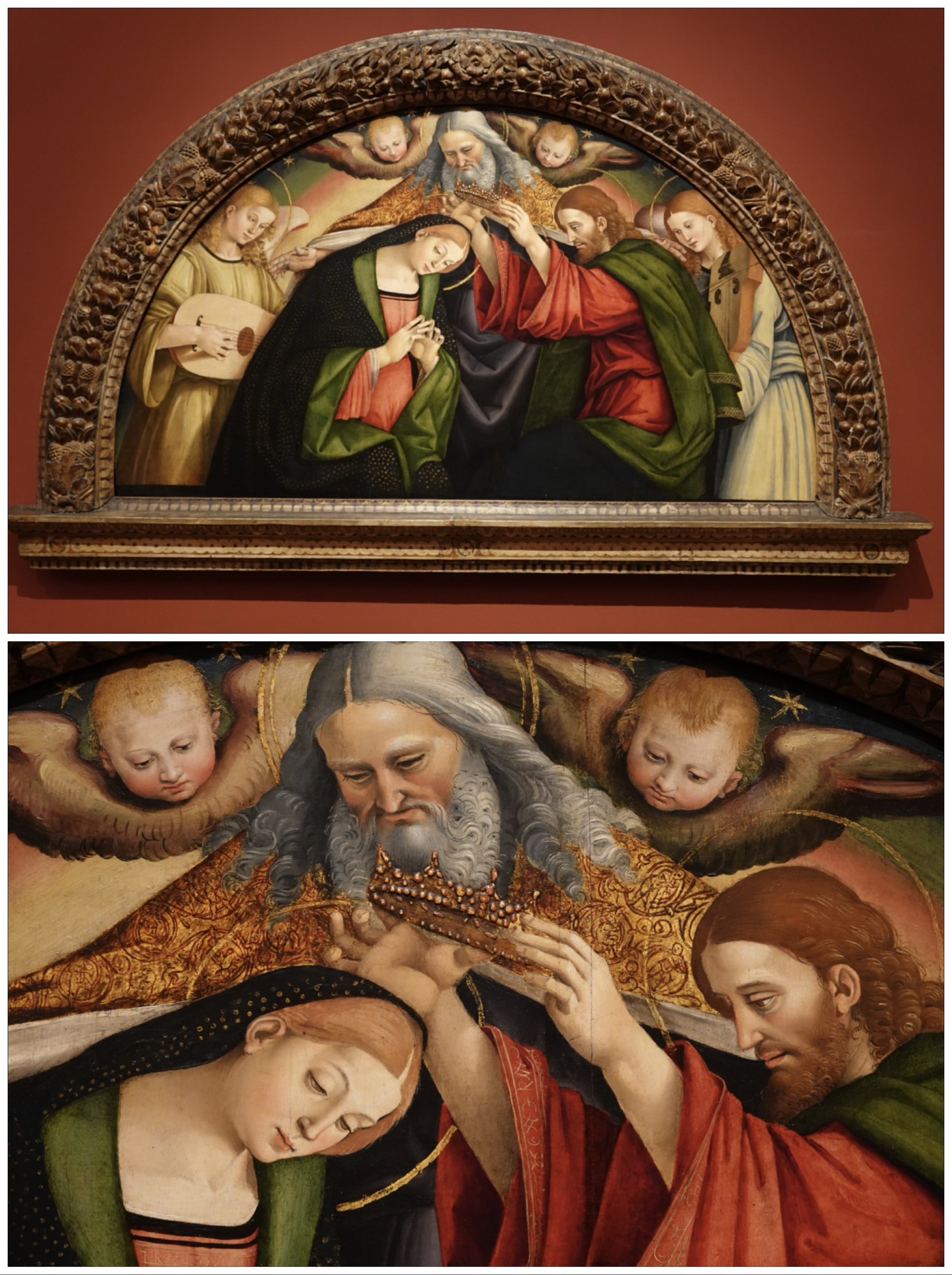
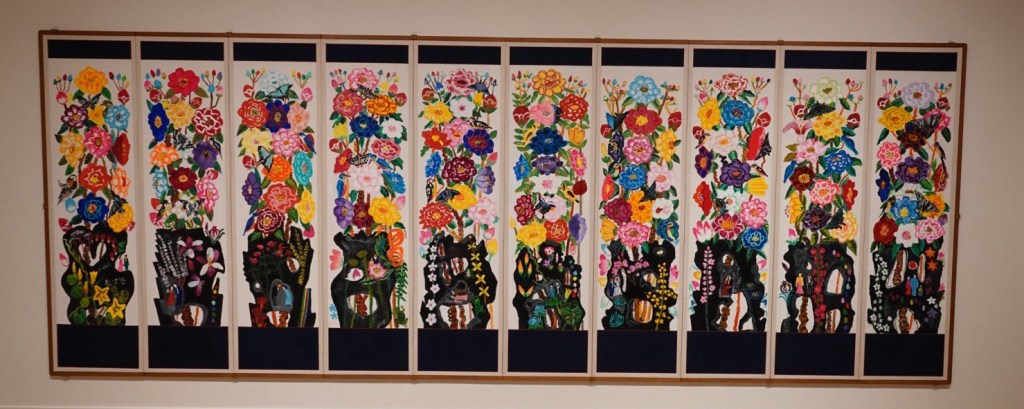
The museum’s current special exhibition is “Korea In Color”, and provided the most interesting artwork. Art is subjective of course, but these were what I enjoyed most.

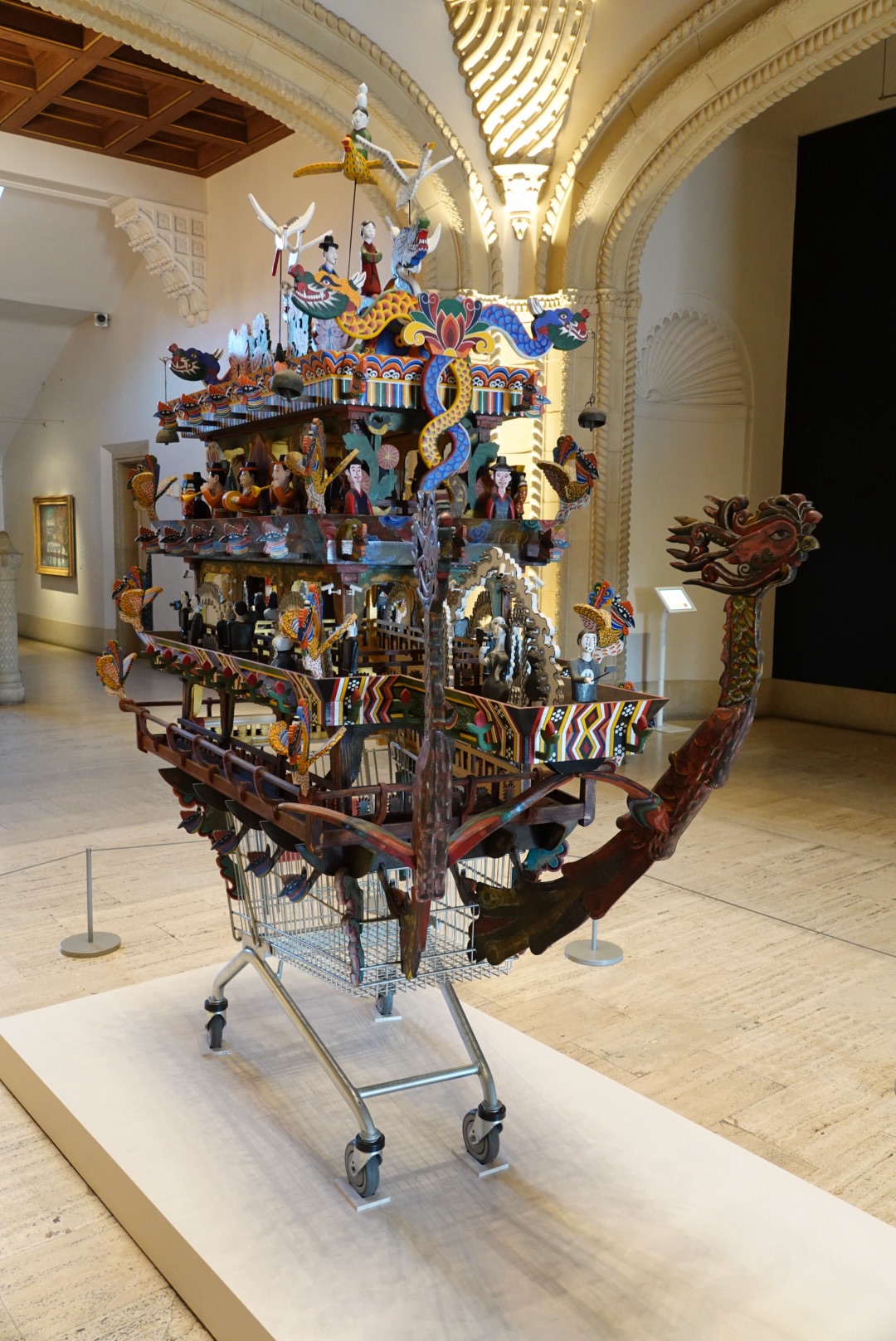


The most colourful area of the exhibit was called In the Garden: Ten Symbols of Longevity and Bird-and-Flower Paintings .


#2 The Museum of Us
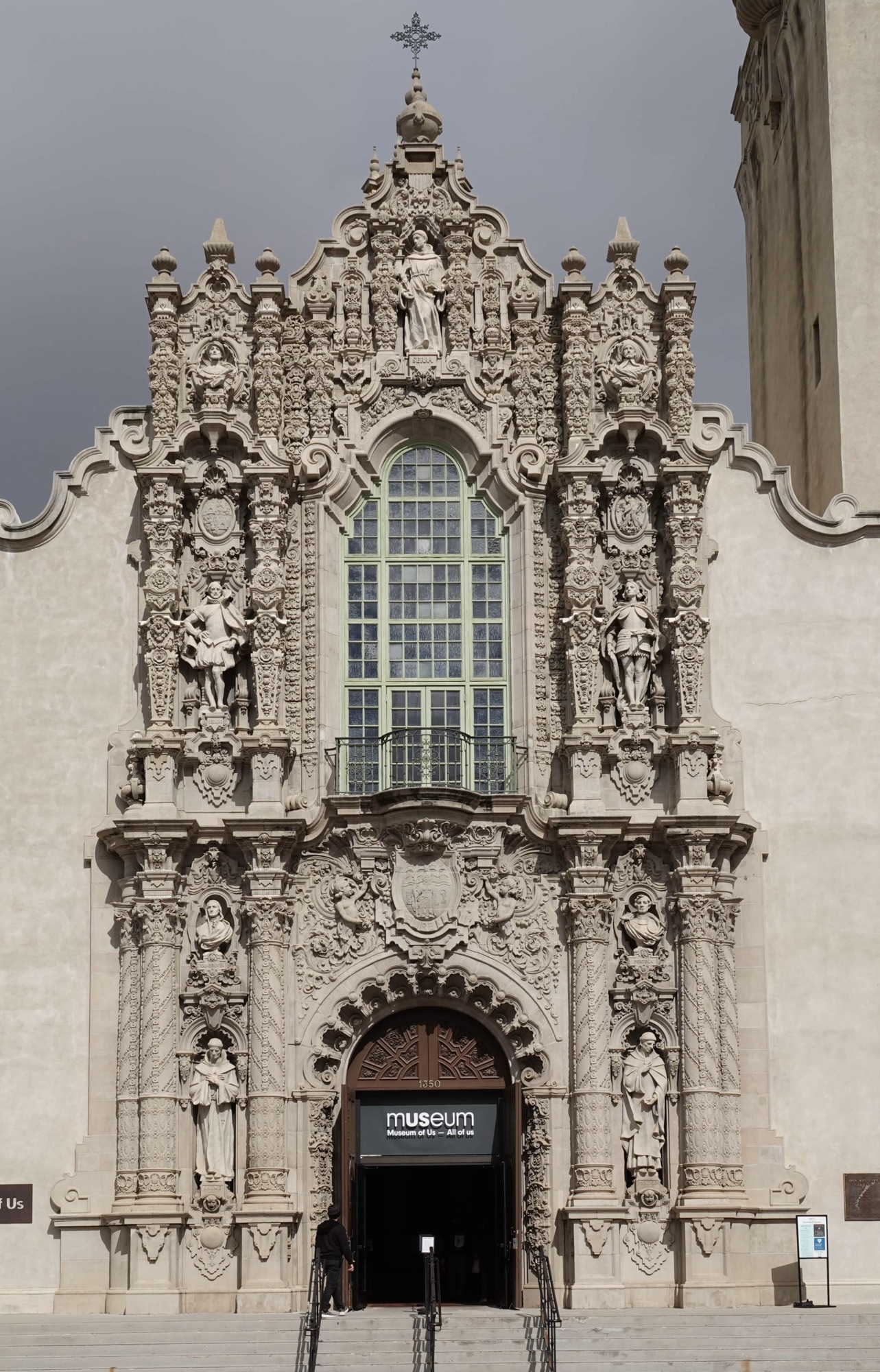
The Museum of Us is housed in the California State Building, which was completed October 2, 1914 in a design inspired by the church of San Diego in Guanajuato, Mexico.
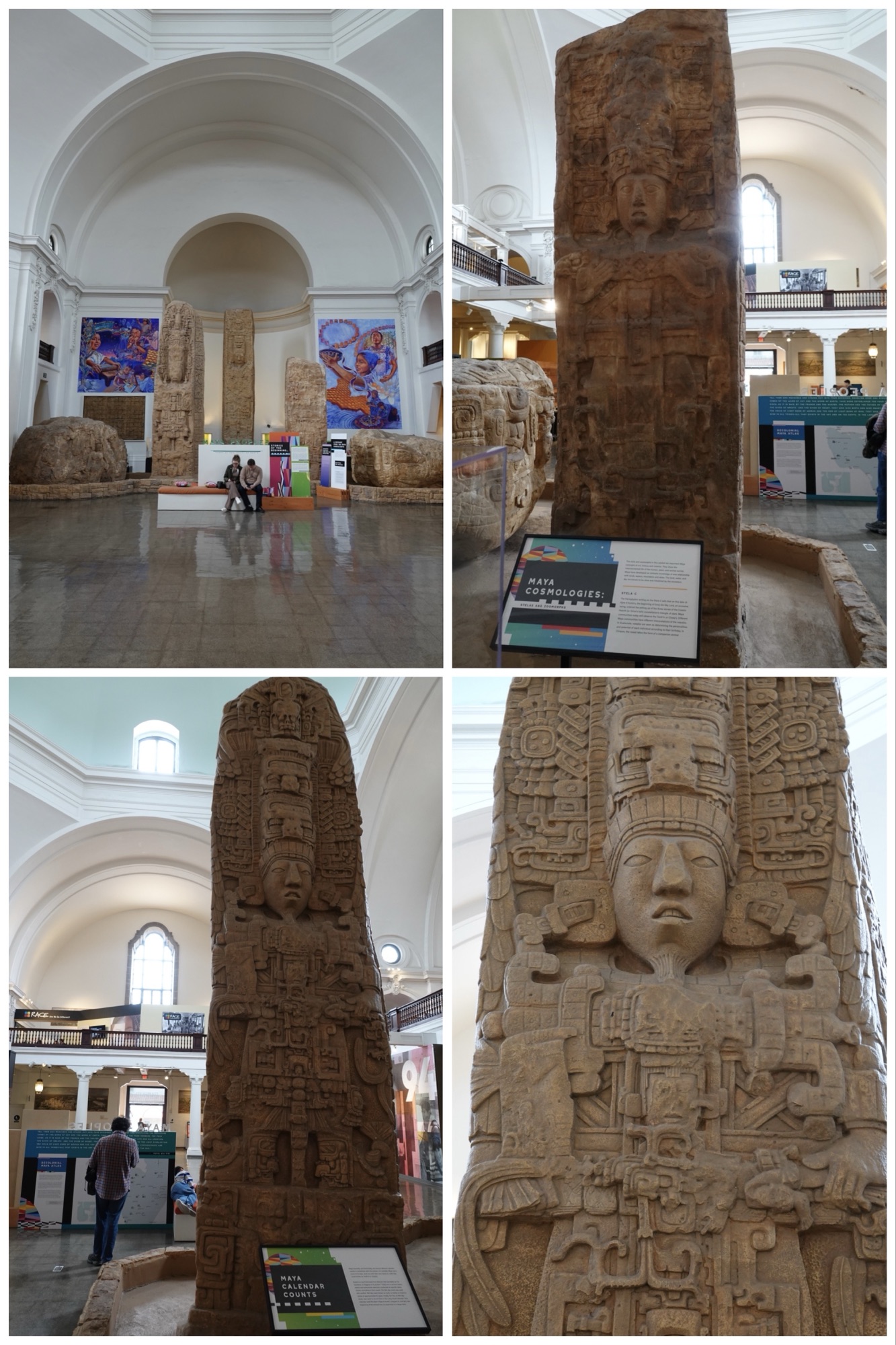
The museum houses several exhibits, including one highlighting Mayan culture, with several huge stele on display. We asked, and found out that they are full size replicas of originals located in Guatemala.
There were also areas focused on San Diego’s indigenous Kumeyaay people, a gallery containing Egyptian artifacts, an exhibit about the myth and reality of cannibals, an exploration of how wild animals eventually became pets, and more. We didn’t spend time in any of those except for a quick walk-through of the Maya and Egyptian sections, because it was the exhibit called “Race: Are We So Different?” that had me intrigued, since anthropology was the museum’s original purpose.
(From the museum’s website) “When the Panama-California Exposition opened in 1915, the Museum, then called the San Diego Museum, functioned as an anthropology museum defined by its wide-ranging ethnographic “collections” … The Museum’s inaugural exhibit in 1915, “The Story of Man Through the Ages,” amplified the dominant Western narrative of the time – that race was biological and that societies had a hierarchical “fitness for survival” based on race.”
It was incredibly interesting to me to see how the museum used items from the original 1915 exhibits juxtaposed with current research to create a vivid picture of how far most of us have progressed in the past century in acknowledging both the vast diversity and the commonality of humanity. (There is more in depth information about the museum’s current mission here: https://museumofus.org/history.)
For instance, the blue sign below precedes the display table holding the two children’s busts.
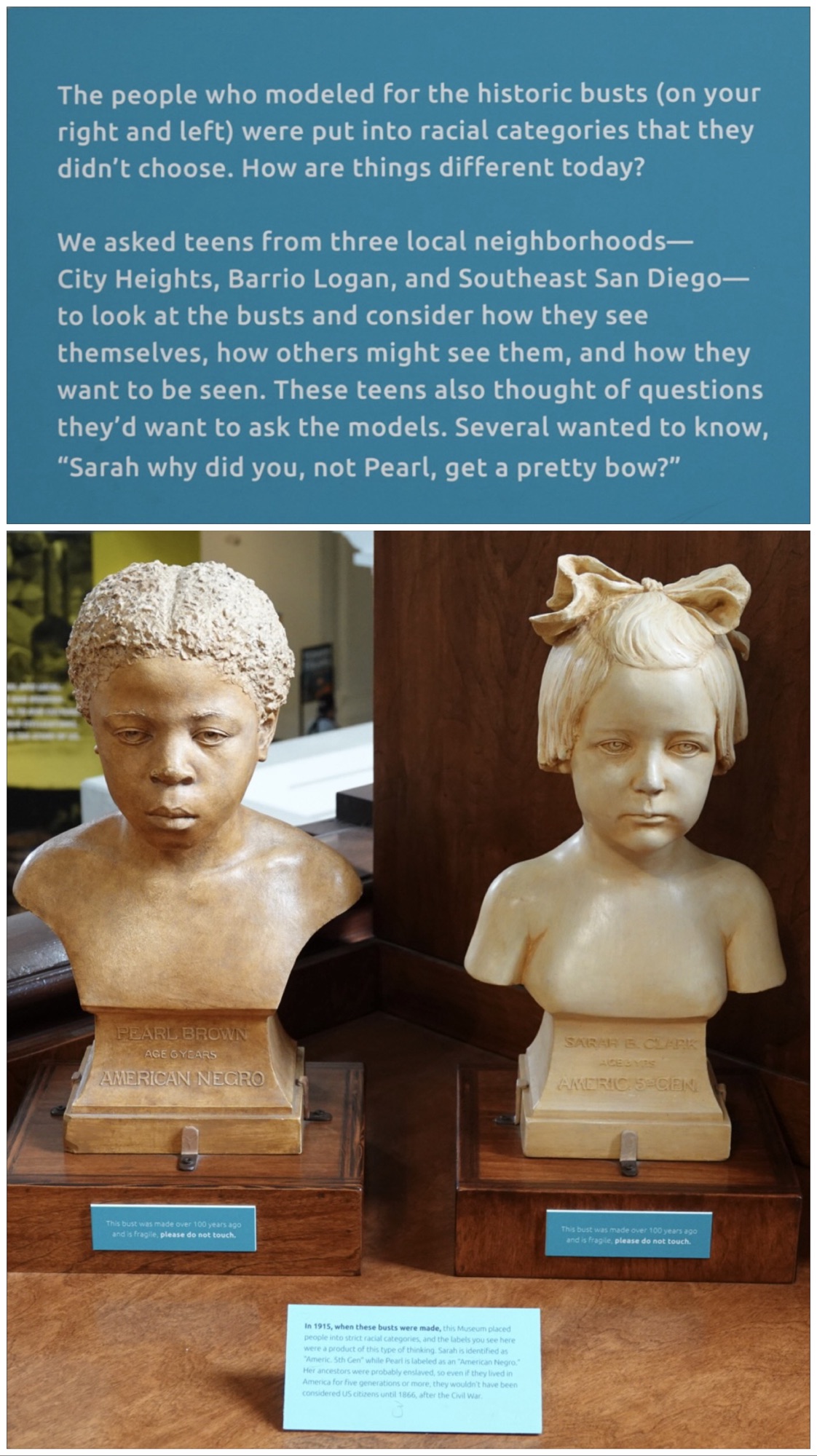
The blue placard in front reads: “In 1915, when these busts were made, this Museum placed people into strict racial categories, and the labels you see here were a product of this type of thinking. Sarah is identified as “American. 5th Gen” while Pearl is labeled as an “American Negro.” Her ancestors were probably enslaved, so even if they lived in America for five generations or more, they wouldn’t have been considered US citizens until 1866, after the Civil War.”
Ted and I both found the HAPA Project display wall fascinating. It really got us thinking. Could we simply “check one box” on a census to describe our ethnicity? And how would you describe your own origins, especially now in a time of ubiquitous ancestry DNA testing?

More than 1100 people participated in the HAPA project, each agreeing to be photographed from the shoulders up, with no clothing visible, and then describing their identity in a single paragraph. The descriptions were surprising, thoughtful, and funny. One man wrote simply, “I’m a grown man who just removed my clothing for a complete stranger.”
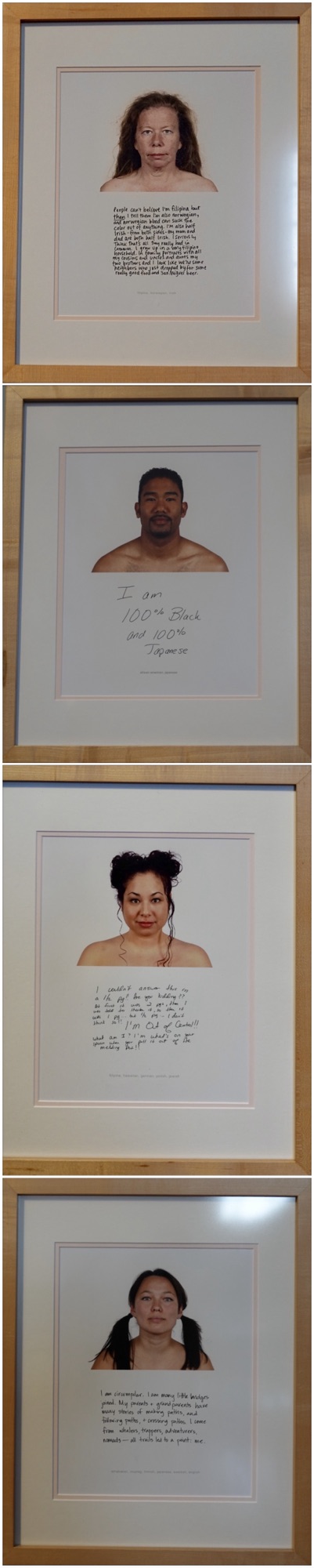
There was also an area of the exhibit about “creating” race as a concept used to divide and “rank” people, and trying to pinpoint when that really came about.
I’m not sure how people felt after touring the anthropology museum in 1915, but I felt a strange mixture of sadness and hope after our visit.
If we have time, and the rain that has returned lets up, there are still two more museums to visit in Balboa Park. We’ll just have to wait and see.


Wonderful post! I wish I could get to San Diego to see both the Korea in Color and the Hapa project, in particular. I lived in Seoul for two years — 1978-80. I’m sure it’s changed beyond recognition, but Korean art, including textiles and clothing has always been so colorful. I was fascinated to see this translated to the contemporary, but not abstract. Thanks so much.
LikeLiked by 1 person
You’re VERY welcome – we love having you along on our travels and museum visits. There’s always so much to learn as we move around. Writing about it helps fix it in my memory – having folks to share it with just makes it more fun!
LikeLike
Love Morgan Freeman’s outlook and comments about colour.
I’m not a Blackman; I’m a man.
Don’t object to African American but not for me. I’m American
A dear friend of mine said – we all belong to the Human Race.
Another dear friend said – sad but gives me hope
<
div dir=”ltr”>
<
blockquote type=”cite”>
LikeLiked by 1 person
As usual, your posts always find something interesting and provoke thought and enrich the experience of those who can no longer travel as you do – thank you
LikeLiked by 1 person
So happy that you can join our travels through the blog. When I started writing it as a diary, I never expected to have so many people following along. Thank you!
LikeLike