In the original animated movie Madagascar, it was all about escaping FROM the zoo to go exploring. In our case, yesterday was all about escaping TO the zoo – specifically the San Diego Zoo, located in Balboa Park.
The lion that “started it all” is memorialized by a massive bronze sculpture called “Rex’s Roar” at the zoo’s entrance gates.
I should preface this post by saying that, ever since I was a child and visited my very first zoo – in Detroit in the 1960s – I’ve been hooked. Back then, of course, zoos were still mostly just caged captured animals, but I didn’t know any better. I just wanted to get close to a real tiger, a real elephant, a real lion, a real giraffe! It’s possible that without that up-close experience I might never really have understood the majesty of those creatures, and why it is so very important to protect them.
Zoos are very different today, of course. Even the zoo at Schönbrunn Palace in Vienna, the oldest continuously operating zoo in the world, is no longer simply about showing off exotic animals in cages.
In fact, there are far fewer cages, and those that still exist are much much bigger than those I first experienced. The San Diego Zoo was a pioneer in the concept of open-air, cageless exhibits that recreate natural animal habitats, even though it’s origin is based in caring for the exotic animal exhibitions abandoned after the 1915 Panama-California Exposition.
Not only fewer cages, but also fewer animals, partly due to the recognition that each animal needs more space. The Detroit Zoo, for instance, no longer has elephants, because (from their website) “Elephants live in large social groups, and the pair of elephants living together may not have met all of their social needs. Based on these, and other factors, the DZS decided to transfer the elephants to a sanctuary in California, prioritizing their well-being over the expectation of finding elephants at the Zoo.”
Back in the early 2000’s, one of the San Diego Zoo’s biggest attractions was their giant pandas, and on our first visit to San Diego, back in May of 2010, the thing that had me most excited was the chance to see them.
One of Ted’s many panda photos from our visit in 2010.
The zoo received their first pair of pandas in 1996 as part of a research loan, at a time when pandas were considered officially an endangered species. On August 21, 1999, Hua Mei was born in San Diego, the first panda cub to survive in captivity in the United States. Since then, 6 pandas have been born at the zoo, and all of them returned to China. The last bears were returnedin 2019, so there are none here today.
While no longer considered an endangered species, pandas are still classified as vulnerable. According to the Smithsonian, in 2023 as few as 1,864 giant pandas were living in their native habitat, while another 600 pandas lived in zoos and breeding centers around the world (Schönbrunn, working in cooperation with the China Wildlife Conservation Association, still has a pair).
One of Ted’s pictures of a Schönbrunn panda, cooling off indoors, from our 2016 visit.
The San Diego Wildlife Alliance (of which the zoo is one part) mission statement is: “…committed to saving species worldwide by uniting our expertise in animal care and conservation science with our dedication to inspiring passion for nature.”
There is a TON of behind-the scenes work and research constantly taking place, but what we’re here to see are … the magnificent animals!
There’s no possibility in a single day of seeing all the animals, so I decided before going that we’d take it easy and simply do what we could in 5 solid hours of walking (sorry, Ted) and try not to regret what we missed. That meant choosing to prioritize mammals and birds over reptiles during our time at the zoo.
Ted’s frustration with photographing birds in a zoo environment is that many of them, of necessity, are behind mesh. In the larger aviaries, it’s a bit easier, but in trying to replicate natural environments, the birds are often well camouflaged.
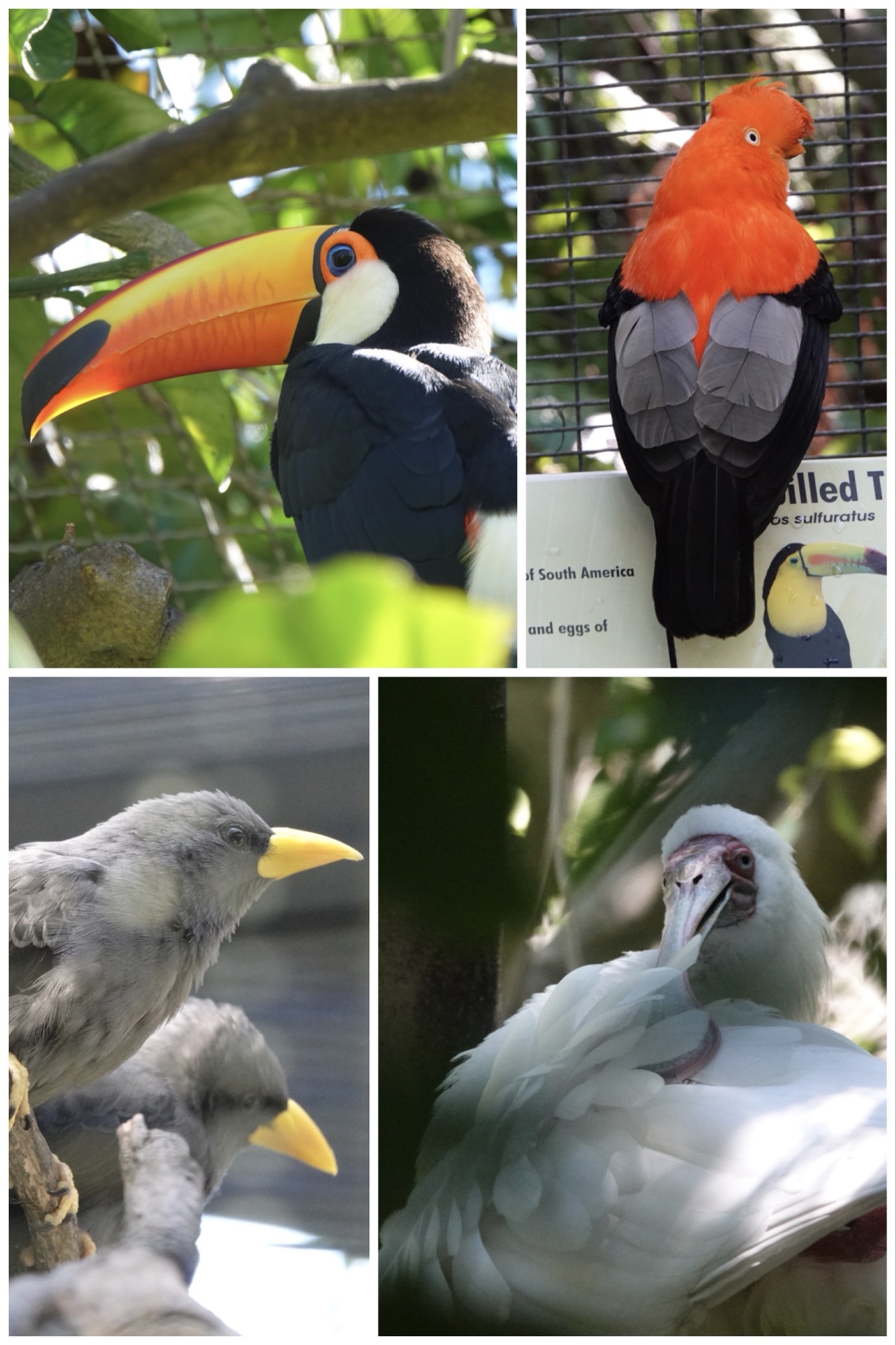
Clockwise from top left: South American Toco Toucan, Andean Cock-of-the-Rock, Finch-billed Myna, African Spoonbill (preening, and doing its best to hide the “spoon” in its feathers.
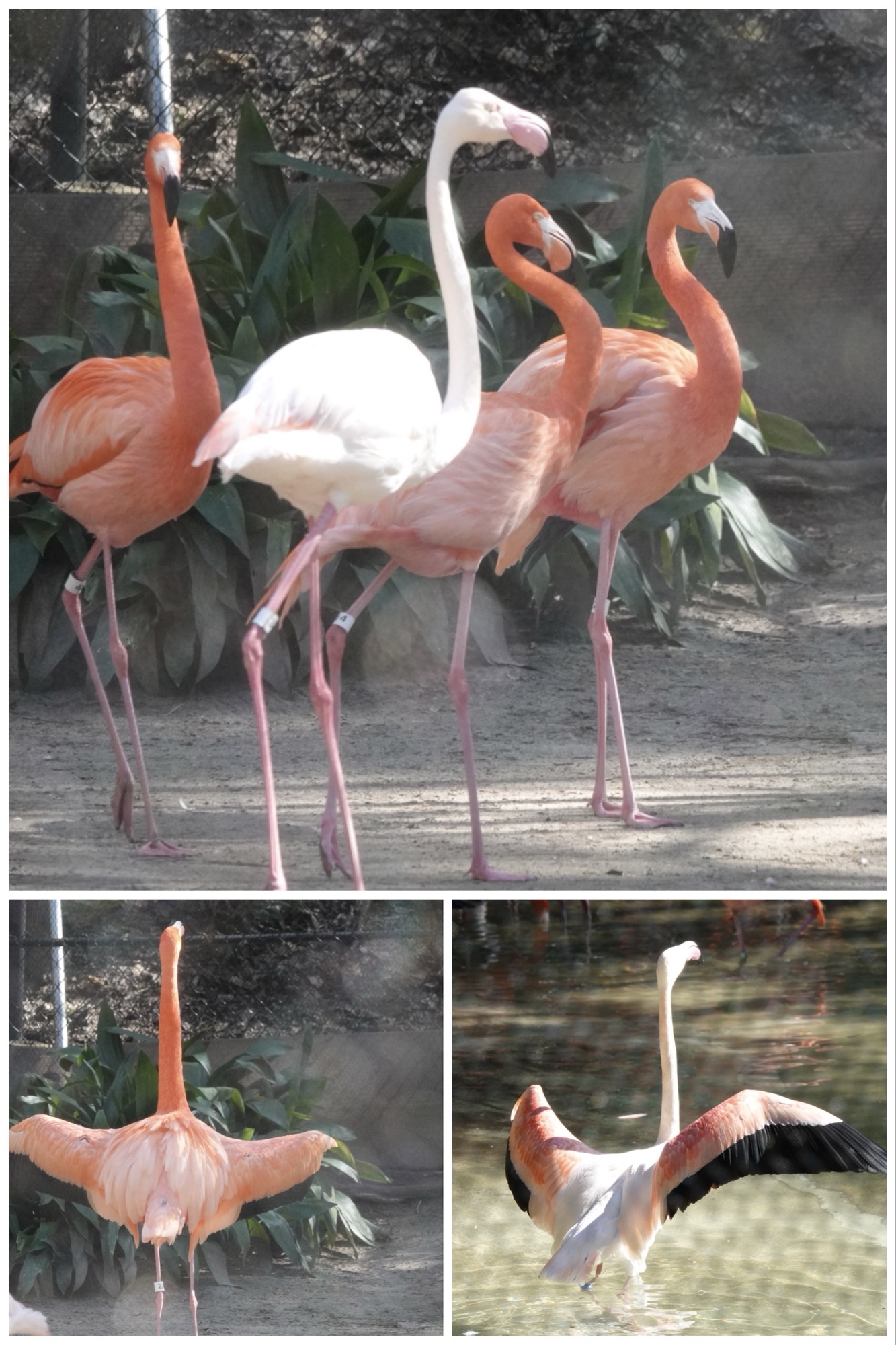
American (bright coral), Chilean (bottom left), and Greater (white) flamingos.
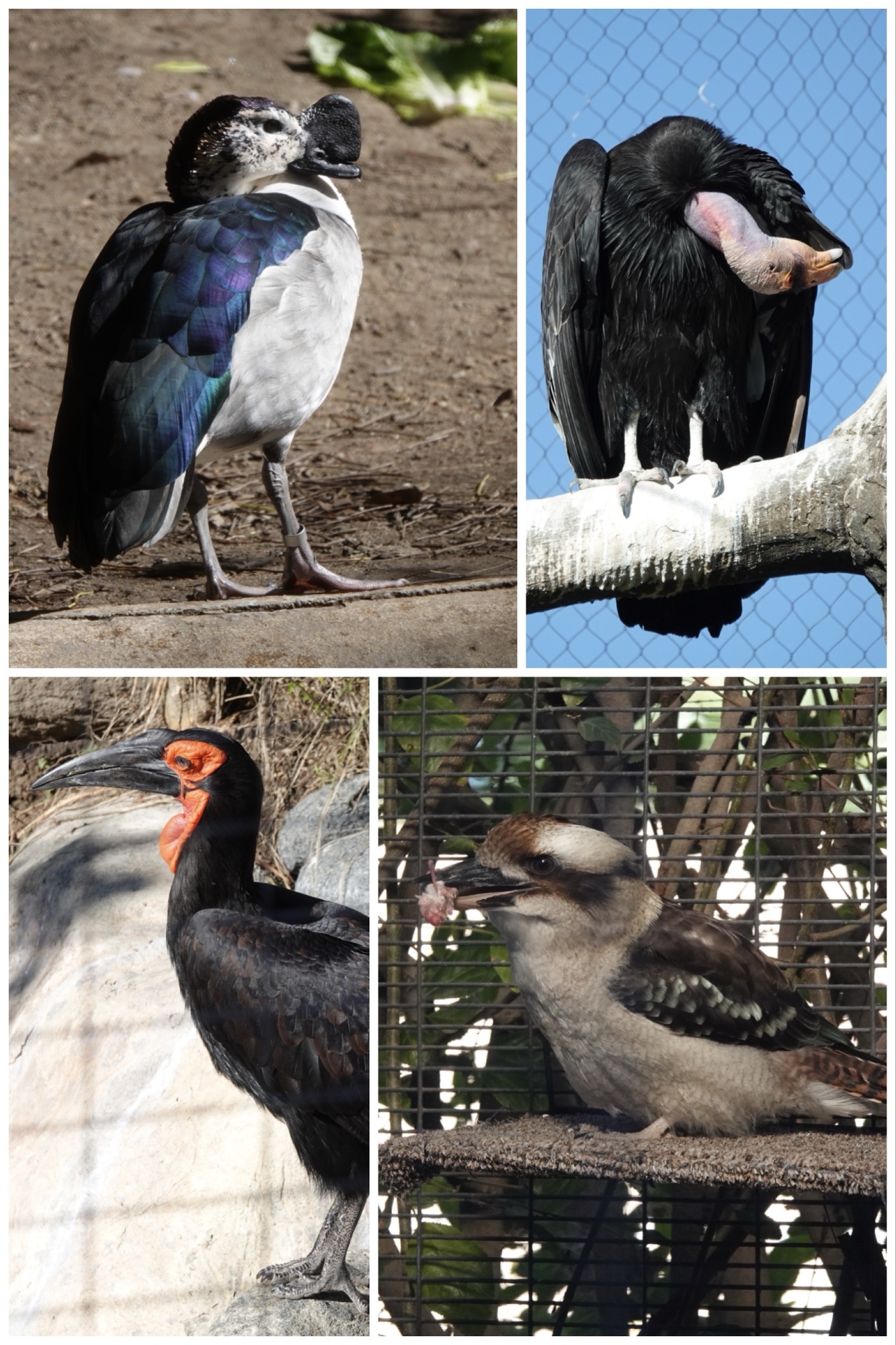
Birds looking silly. Clockwise from top left: African knob-billed (comb) duck, California Condor getting a different point of view, haughty African Southern Ground Hornbill, Australian Kookaburra.
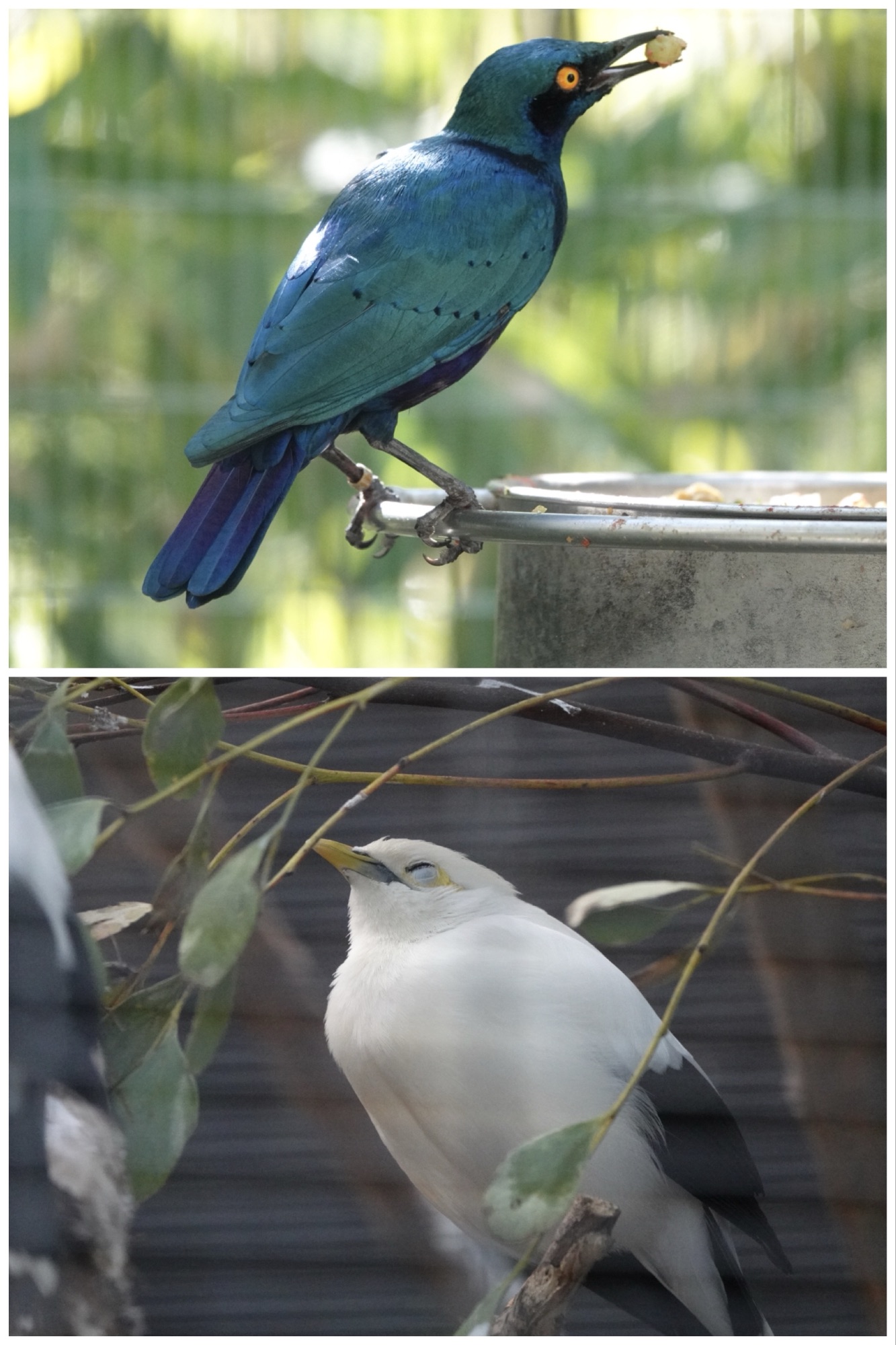
Top: South African Cape Starling. Bottom: Bali starling, aka Rothschilds Myna, a bird so cute it has almost been “loved to extinction” by people capturing and selling them as pets. It is now listed as critically endangered.
Challenge accepted! The zoo does have a hummingbird habitat, but that’s not where Ted captured these shots. A pair of hummingbirds were racing around the trees near the elephant area, and Ted was patient enough to get a couple of great flight pictures, as well as zoom in on one in the tree.
While the zoo, at just 100 acres, doesn’t rank among the world’s largest (Toronto, for example, is #8 in the world at 710 acres) it’s still big enough that it was nice to be able to climb into one of the Skyfari gondolas to get from one side to the other.
From the gondola, you can really see how very green the zoo is (they grow many of the trees and plants that feed their animals). You also get an overview of its size, and its proximity to the exhibition buildings in Balboa Park.
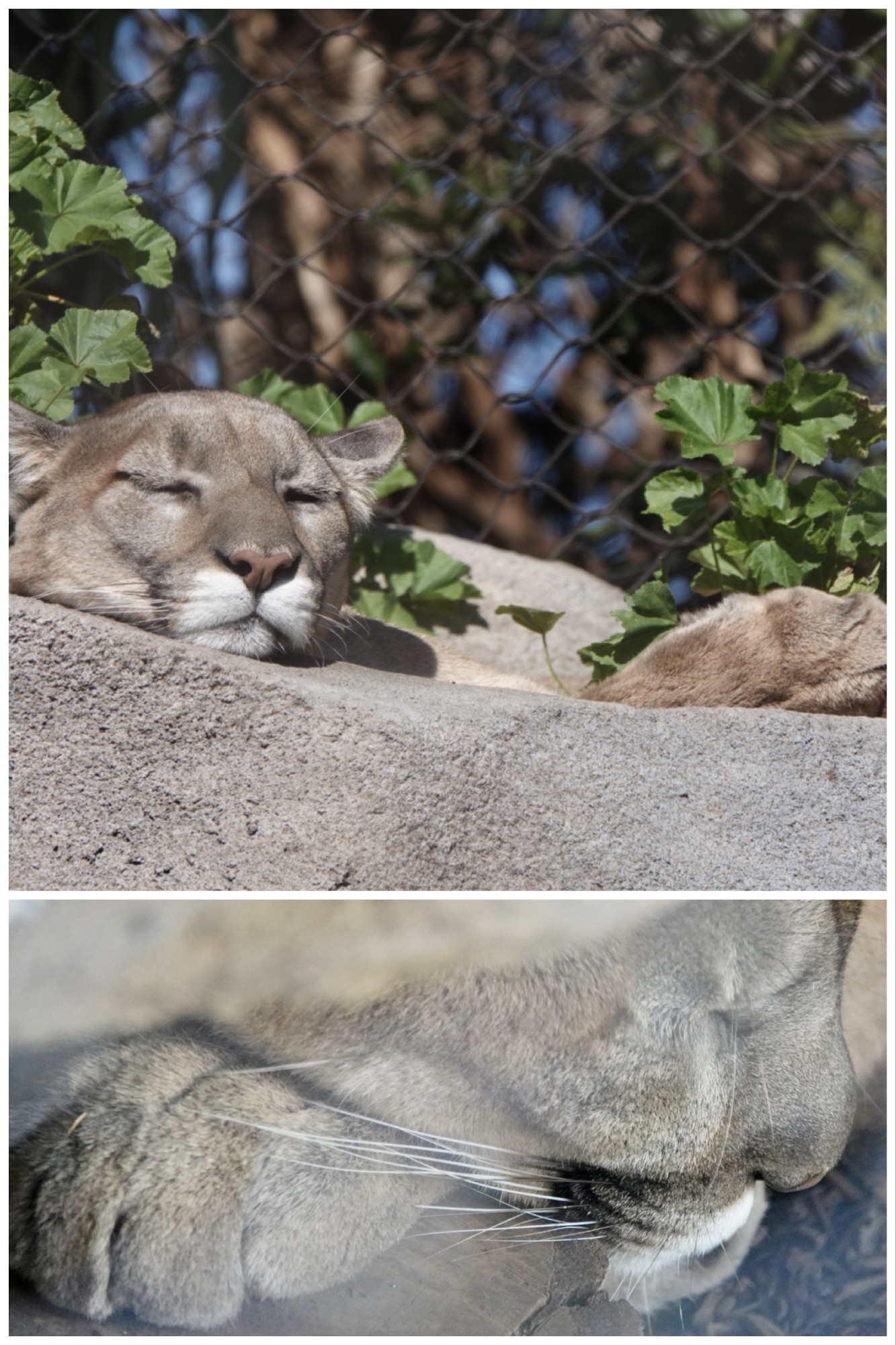
Mountain lion/cougar/puma – all the names are correct. There’s nothing as adorable as a sleeping kitty. Just look at that chin resting on a great big paw!
Even a warthog is kind of cute close up.
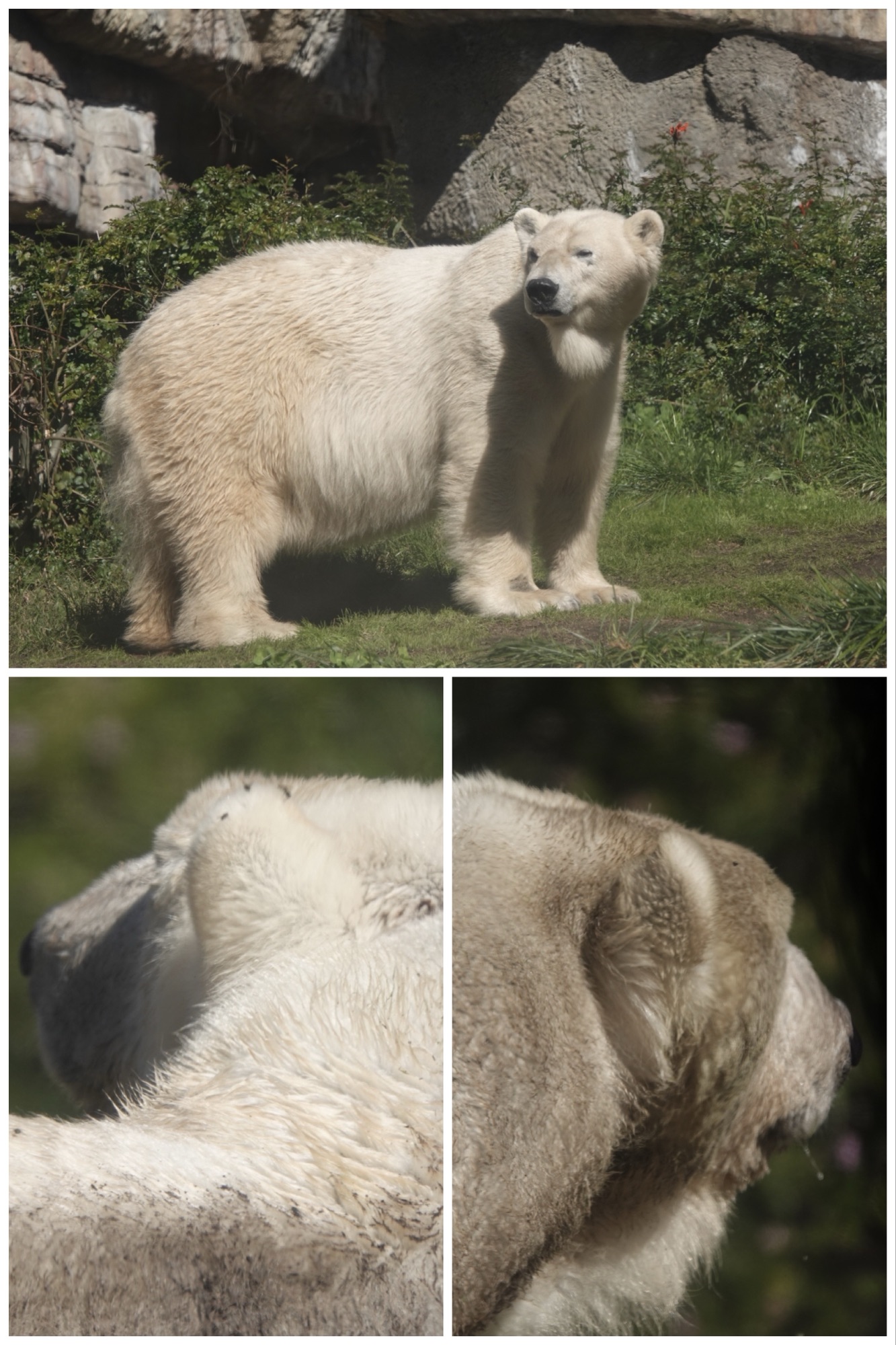
The zoo currently has 3 polar bears, two that were orphaned in Alaska, and a third found wandering and scavenging garbage in Churchill Manitoba after its mother died. Polar bears generally stay with their mothers for 2 years, but Chinook was only a year old when she was sent to the zoo, and would not have survived on her own.
Rolling in the dirt is apparently one of Chinook’s favourite pastimes. If the bears look a bit thin, its because in order to keep them comfortable in San Diego’s climate, they are fed a lower-fat diet than they would get in the wild, resulting in a thinner fat layer under their skin. That also means they prefer warmer water. Apparently if the water temperature in their habitat is allowed to drop below 62°F/17°C, they refuse to go into the water.
The silverback gorillas are always impressive. When they stop to stare at you, they ALWAYS win the contest.
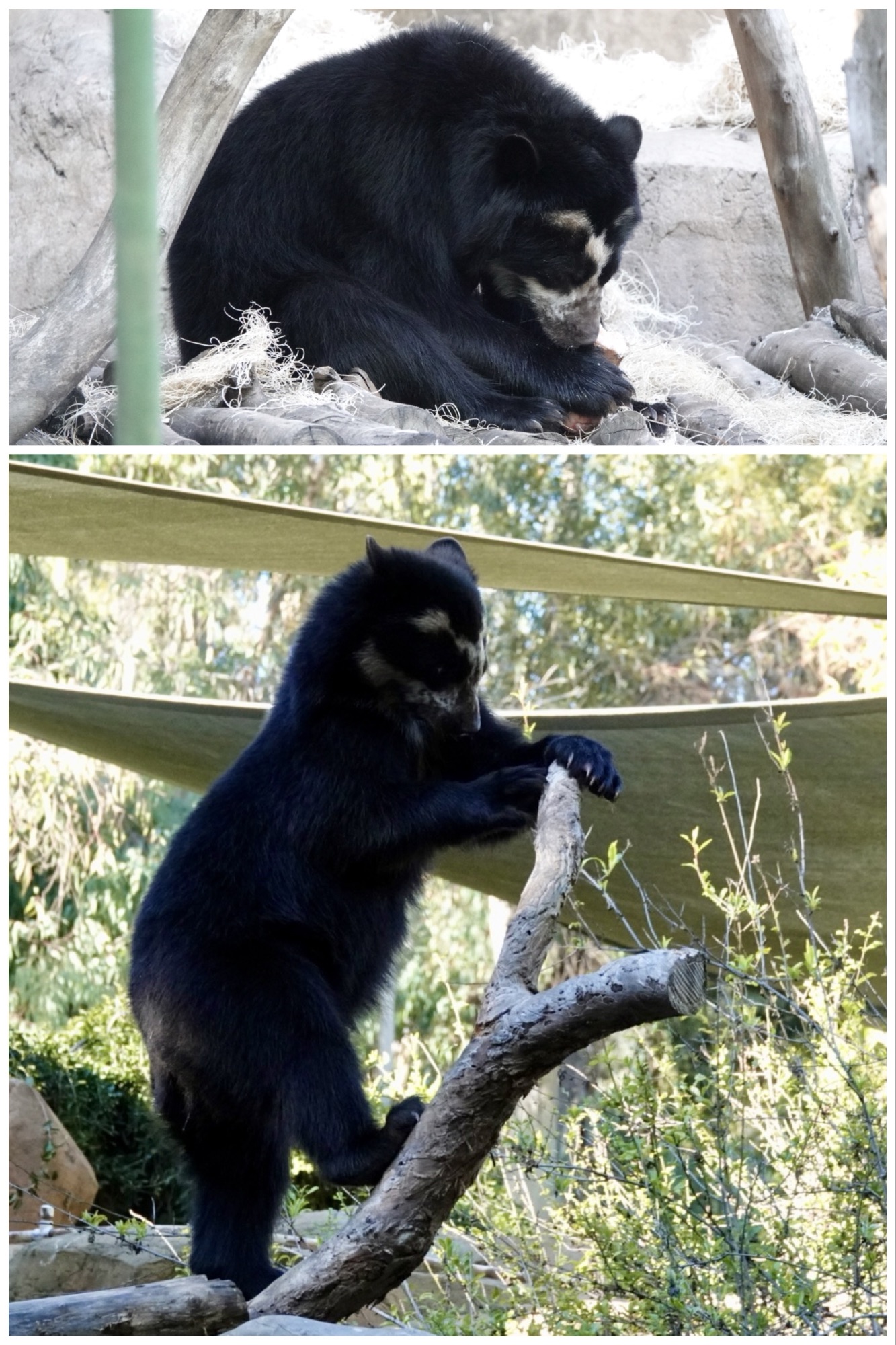
One of the Andean bears walked over to a branch and posed. “King of the Andes” obviously.
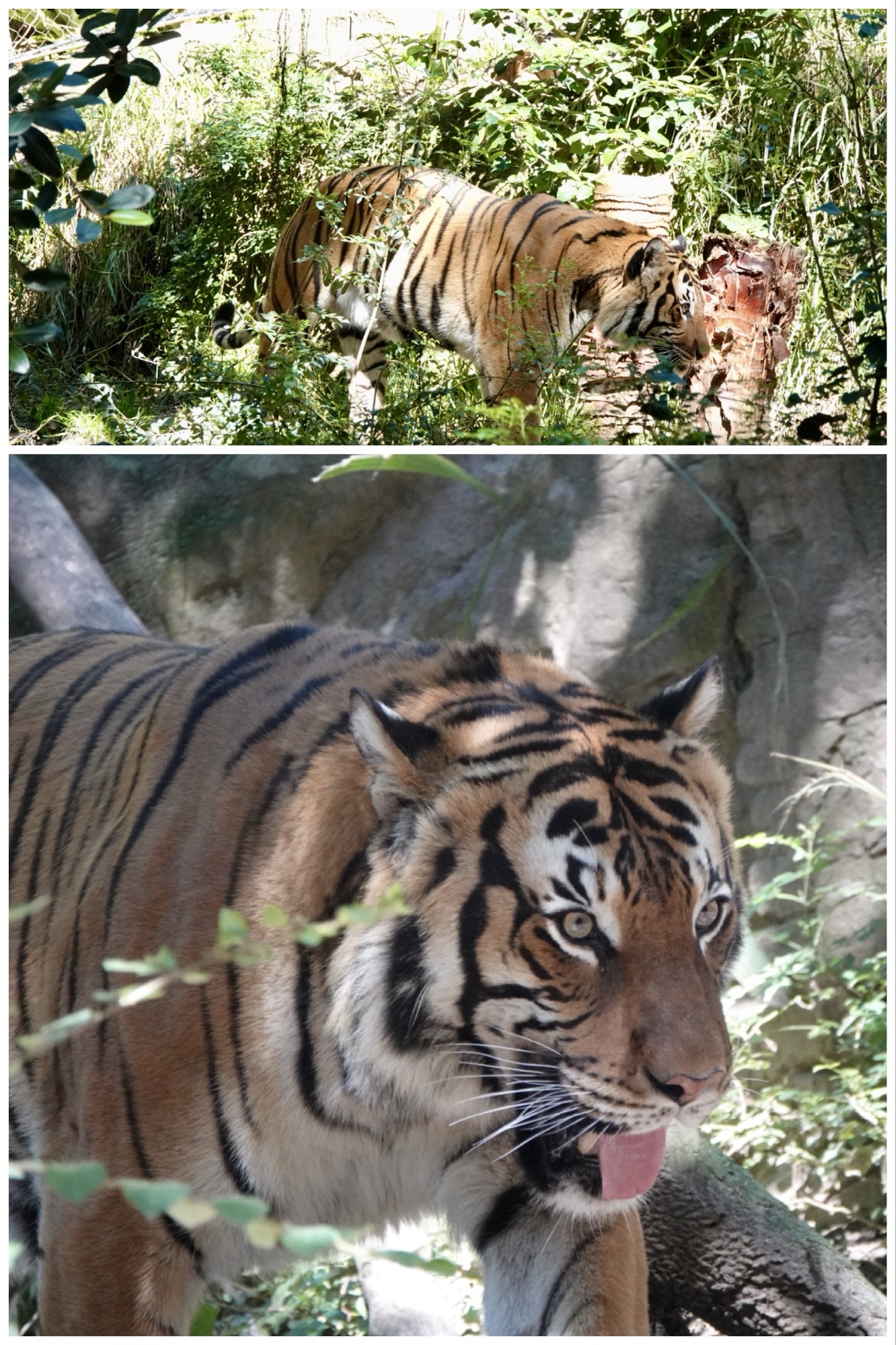
It took several tries to get a decent photo of the well-camouflaged Malayan tiger pacing at the back of his habitat…. and then we walked down to the glass viewing area and he came right up to the window in front of me!
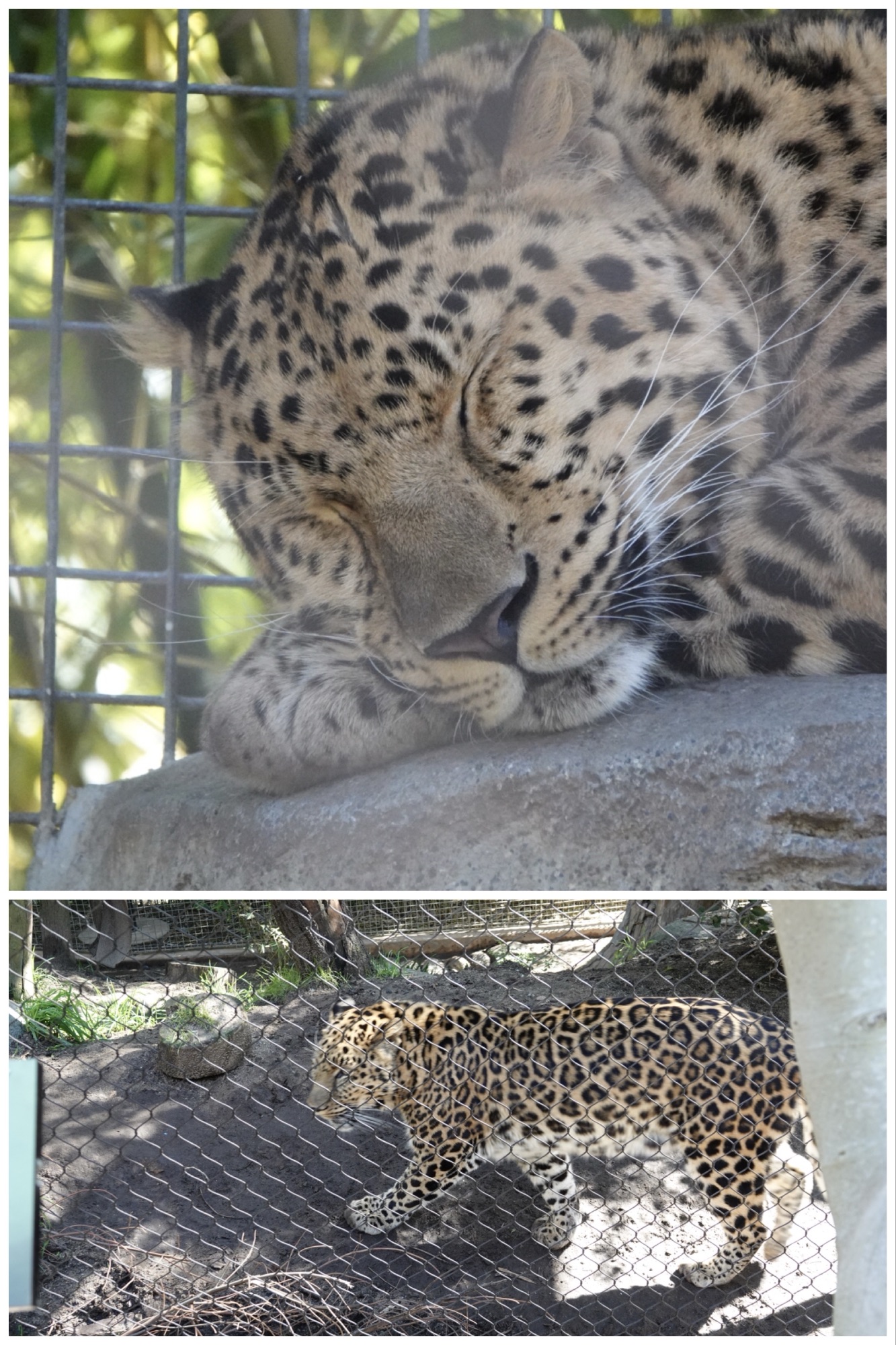
Leopards just look so huggable.
The cheetah habitat had signs warning people not to run. At one point, someone walked past fairly quickly and the cheetah immediately went into predator mode. Boy, do they move fast!
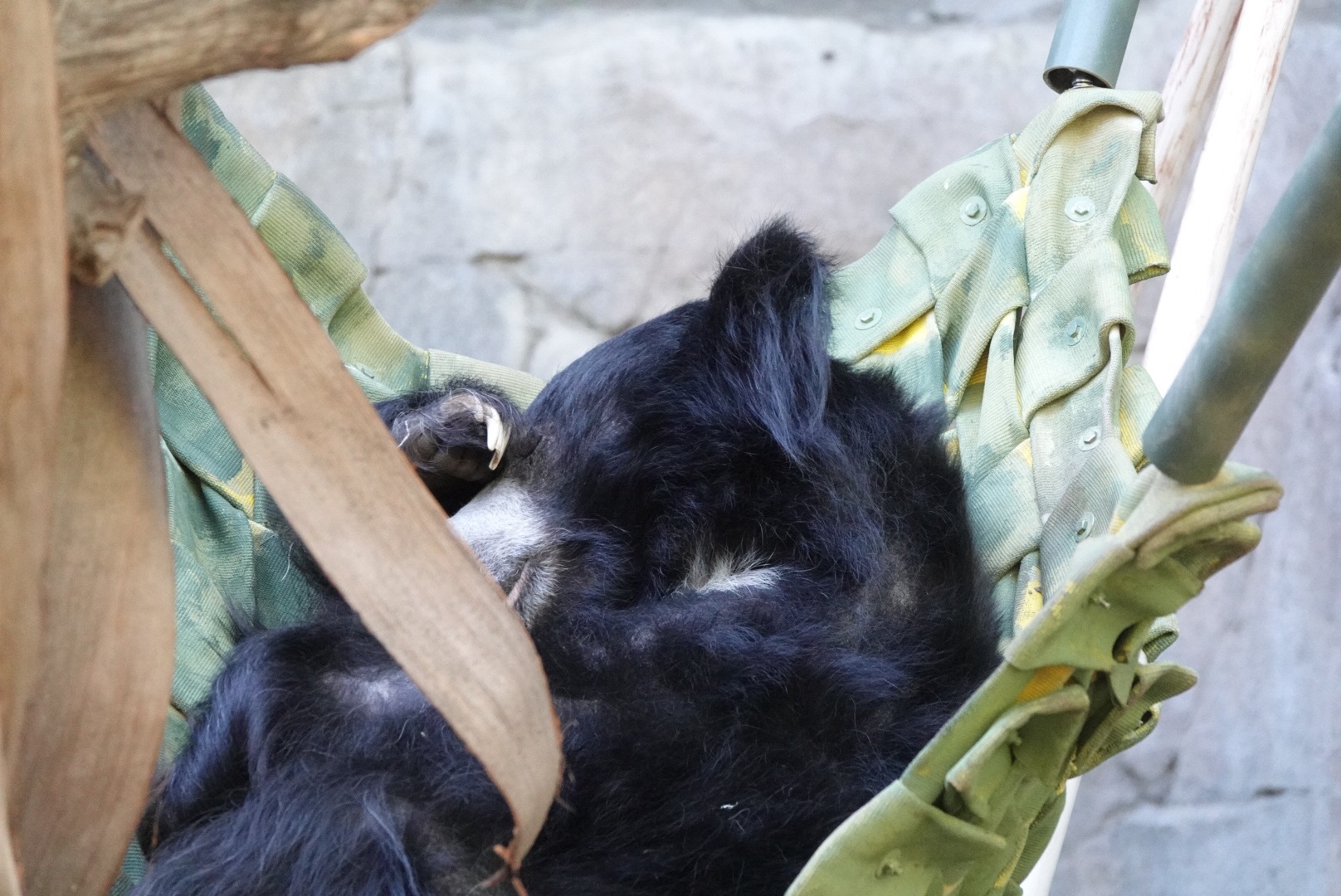
At the opposite end of the speed scale, a Sloth Bear doing what it does best.
The elephants are always magnificent. Interestingly, the SD Zoo does not call their vast area a habitat, but rather a “care centre”. At one point there were 9 elephants here, all rescued from unhappy environments (circuses, film industry, etc). Each elephant had to be gradually taught to trust their human caregivers, who not only attend to their physical needs, but also help to provide some of the emotional and mental stimulation that these intelligent creatures need.
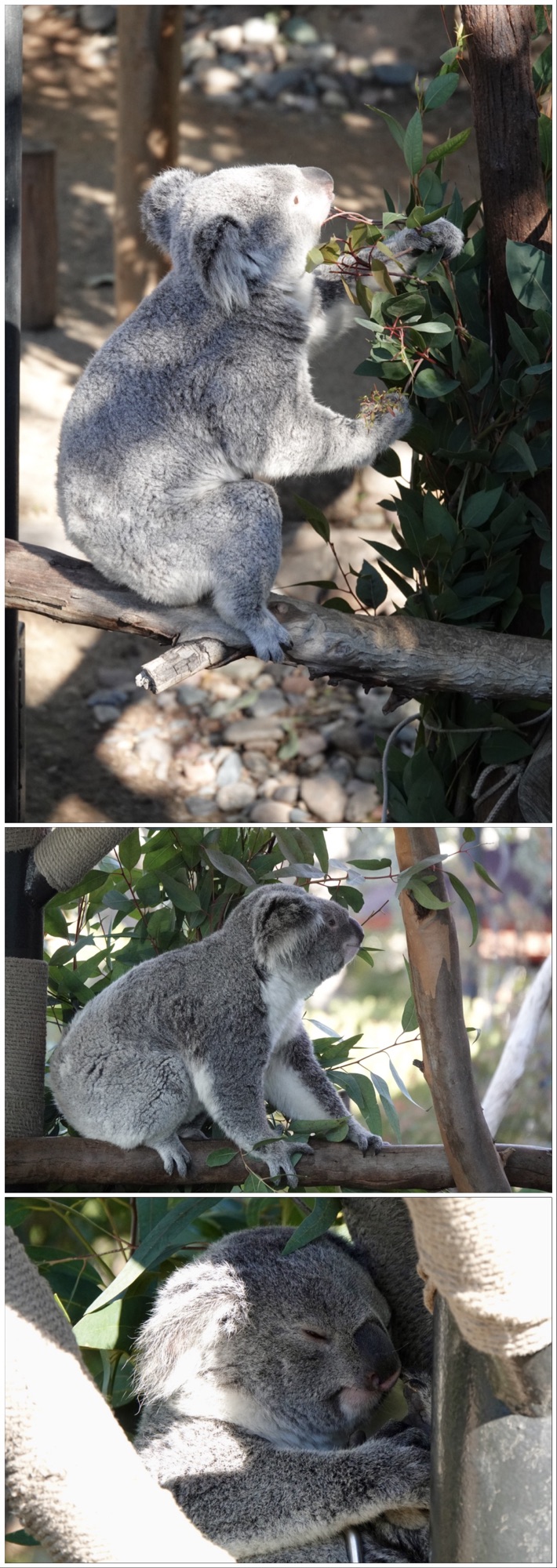
Koalas. Lots and lots of adorable furry koalas.
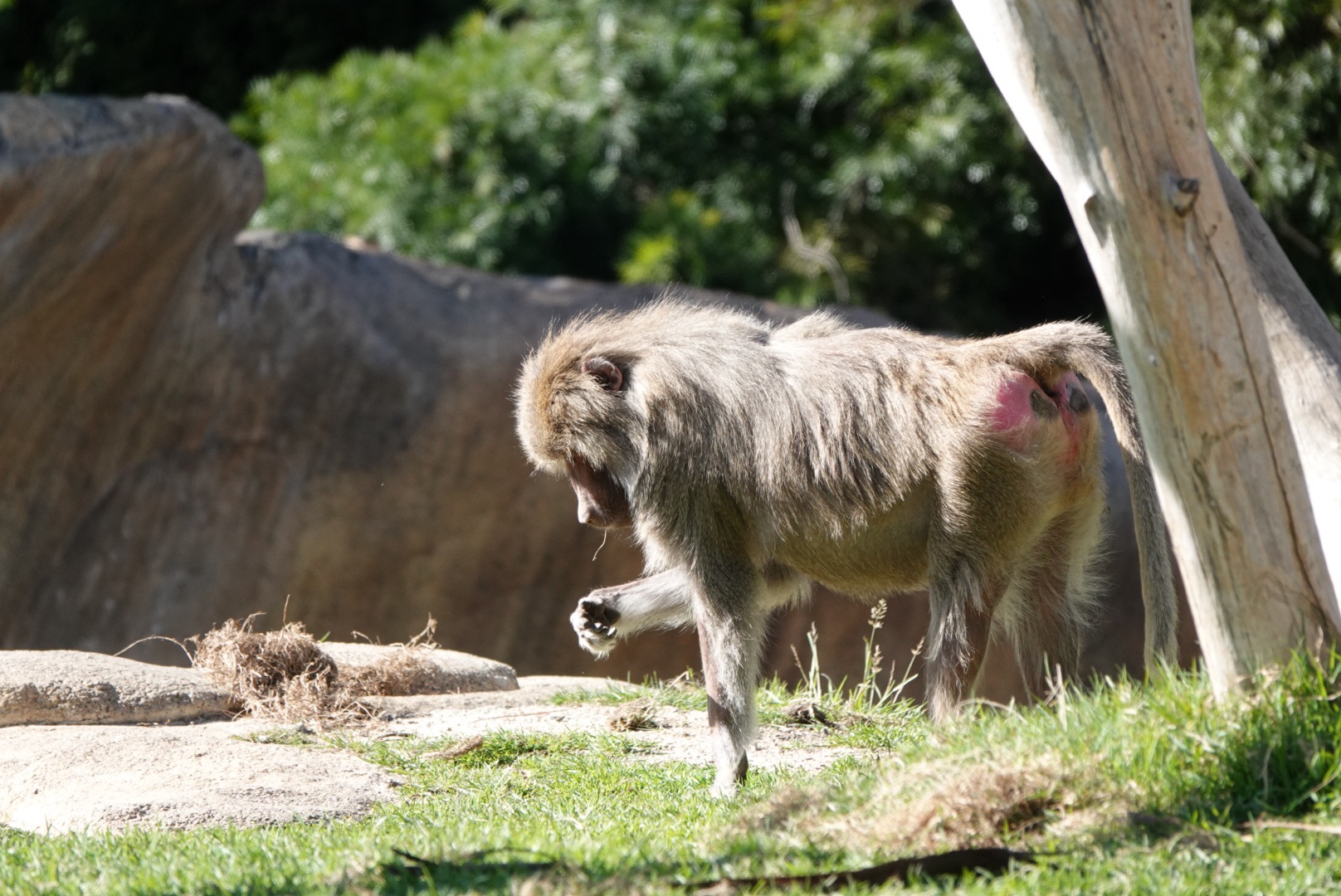
When we sat down for a moment to refresh ourselves with cold water and a bag of Lays chips, a large group of baboons were running around in their habitat. By the time we were ready to take photos, just one remained.
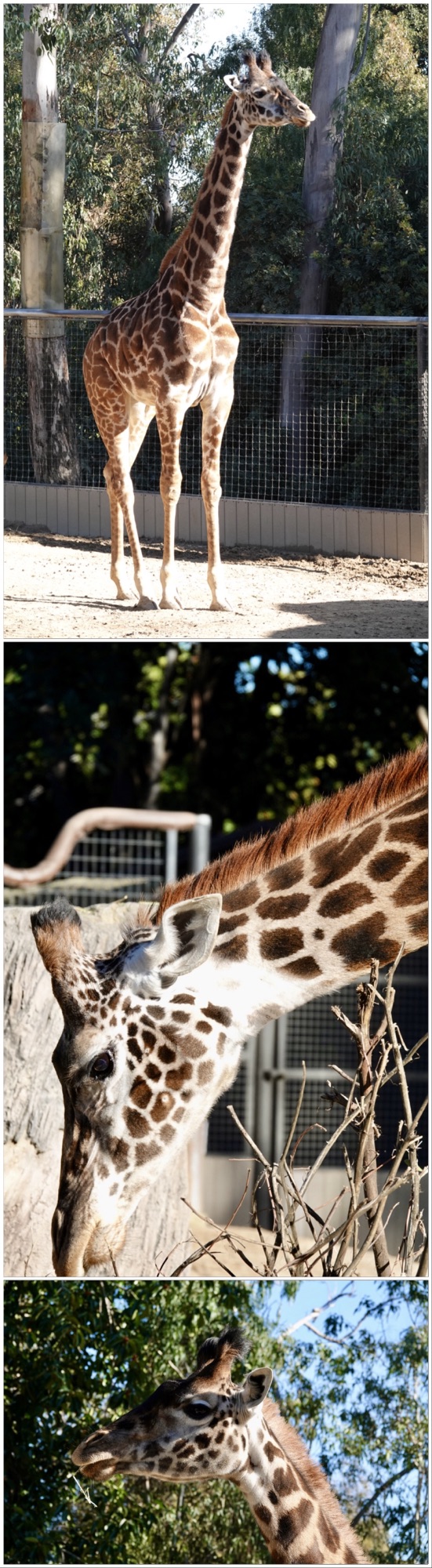
There are currently 4 giraffes in the zoo, all born here (1997, 2007, 2017, and the youngest in 2019). The very first giraffe pair came to the zoo in 1938. Giraffes are currently listed as vulnerable on The International Union for Conservation of Nature (IUCN) Red List of endangered species, with population declines of up to 40% in the last 30 years.
There was a single meerkat on duty today.
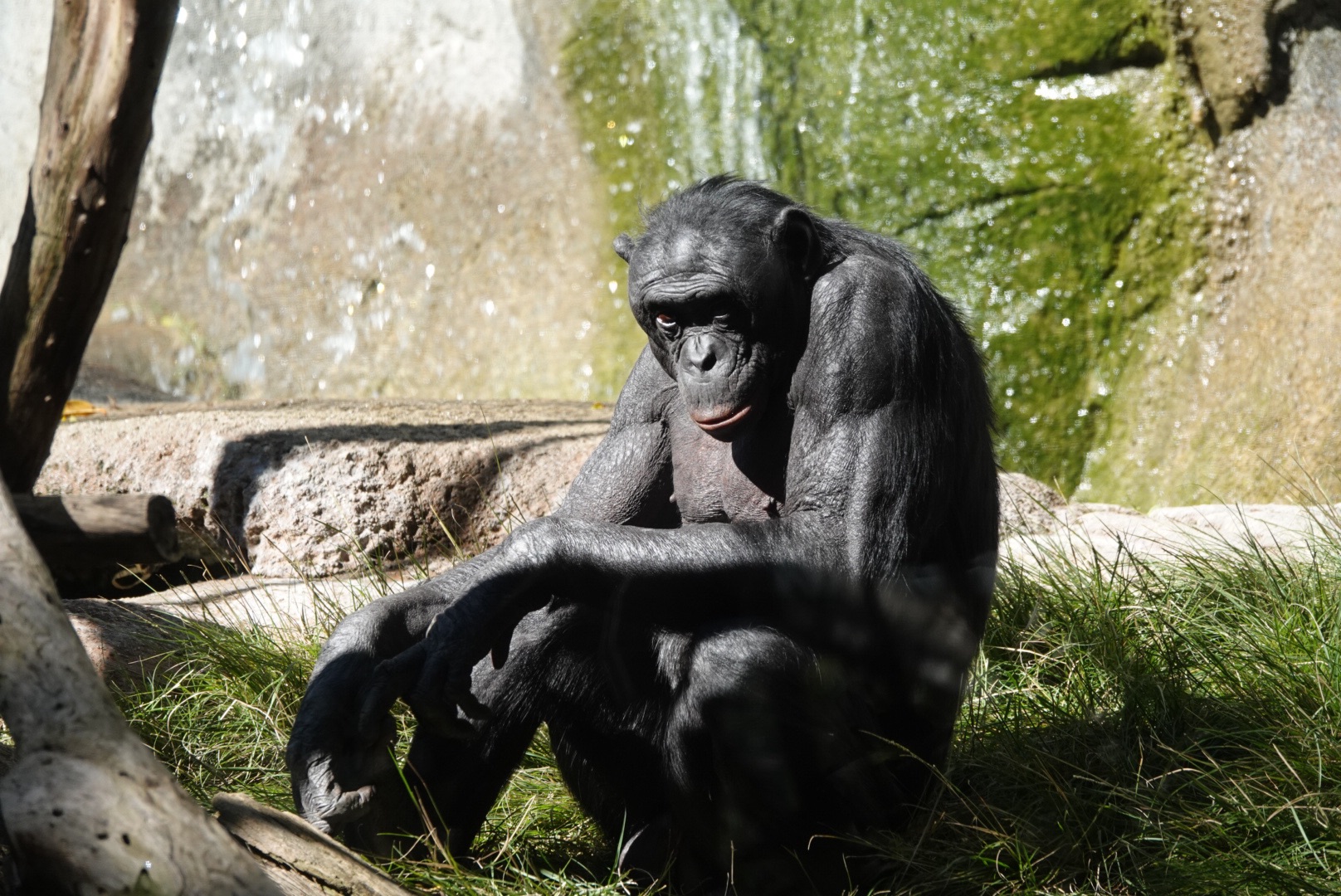
The bonobo was clearly far less impressed by us than we were by him.
And finally, the wise-looking De Brazza’s Monkey (below) would probably agree that you can’t do it all. We saw many more animals, and Ted took many more terrific photos, but these will have to do as our record of our 2024 zoo visit.
The zoo closes at 5 p.m., just before dark, so we had time to head back to our flat, get changed, and go out for a lovely anniversary dinner. It’s not our wedding anniversary, but the 48th anniversary of the day Ted asked me to go on a honeymoon with him (I extrapolated the marriage proposal from that and said yes), and our annual equivalent of Valentines Day.
We ate at La Puerta again, because their food manages somehow to be even better than their inviting ambience and stellar service.
Top left: a Gangster’s Paradise (high proof Mezcal, lime, grapefruit , simple syrup, & Campari.) and a spicy margarita made with serrano-infused agave liquor and garnished with a slice of fresh jalapeno. Top right: totopos with salsa verde and tomato salsa came with the drinks. Centre right: our appetizer of cochinita tostaditos (small black bean tostadas with pulled pork, picked red onion, tomato, lettuce, avocado and jalapenos). Bottom L to R: (1) trio pf tacos (pastor, cochinita, and carne asada) with rice, rajas con crema (spicy pepper strips in cream), and refried beans. (2) cochinita quesadillas filled with marinated pork and cheeses, accompanied by pickled onions and habanero salsa. (3) Dessert!! Warm cinnamon churros with dulce de lech3 ice cream. Not shown is the bottle of Spanish cava we celebrated with.
It was a lovely long day, that merits taking a day off to relax at “home”.
Happy Anniversary of your Honeymoon Invitation! Love the San Diego Zoo. Didn’t realize it was so small compared to other zoos. Last time we were there our youngest daughter who is now a college professor was in a stroller. The flamingos gave off quite and odor. Must have been the heat and the wind. Is it true that their feather colors are affected by their diet? Enjoying taking this trip with you. Thanks for bringing us along! Al












 Rose and Ted’s Excellent Adventure
<
div dir=”ltr”>Sent this to the kids. Tom talked about the S
LikeLike
I’d recommend: “West with Giraffes” by Lynda Rutledge, a wonderful story. Thanks for sharing your adventures. – Inga
>
LikeLiked by 1 person
Thanks for the recommendation!
LikeLike
Happy Anniversary of your Honeymoon Invitation! Love the San Diego Zoo. Didn’t realize it was so small compared to other zoos. Last time we were there our youngest daughter who is now a college professor was in a stroller. The flamingos gave off quite and odor. Must have been the heat and the wind. Is it true that their feather colors are affected by their diet? Enjoying taking this trip with you. Thanks for bringing us along! Al
LikeLiked by 1 person
Yes to the colour coming from carotenoids in their food, but no idea why they don’t all end up the same colour when being fed together in captivity
LikeLike