Episode 486 – Balboa Park’s Peaceful International Houses
It really is a one-of-a-kind place, this park.
The more we explore, and the more people we chat with, the more obvious it becomes that Balboa Park is a really special and unique public space.
Yes, it’s about museums and performance venues and stunning architecture and gorgeous green spaces, but it’s also truly a city park. You could come here every day without ever paying admission to the museums, and every day hundreds of people do just that.
There are couples walking, families walking, single people walking, and lots of folks pushing baby strollers. There are people walking their dogs, people playing with their dogs in the huge off-leash park, and (of course) people pushing their dogs in strollers. There are joggers, skateboarders, and bicyclists. There are people lawn bowling, people practicing in the archery field, people strolling the many gardens, and people just sitting drinking coffee. There are people taking in free concerts, and people listening to the buskers. There are lots and lots of people taking both photos and selfies, and even people using the park as a backdrop for wedding photos – or, as we saw today, pictures of a quinceanera.
An Iranian man we spoke with today told us that he had chosen to live in San Diego mainly because he’d fallen in love with the park, and that after 40 years of almost daily walks he was still noticing new things.
Today’s goal for our park visit was the International Village, which is only open on weekends, when volunteers man each pavilion/cottage. We had walked through it earlier in the week, but all of the buildings were closed.
Walking through the village on a weekday.
The village was built for the 1935 California Pacific International Exposition as “The House of Pacific Relations”, a collection of fifteen small tan red-tiled cottages which were dedicated to different foreign countries. In 2021, construction was completed on nine additional cottages.
The House of Pacific Relations website SDHPR explains the history more fully: “HPR was devised during the gloomy days leading up to World War II as a means to promote pacific (meaning “peaceful” in character or intent) relations among many fractured ethnic groups in the 1930s. As the spirit of peaceful mission captured in its name, the HPR is a place to invite nations “to live together and play together in the spirit of good fellowship that can knit them together more closely than societies that use the form of debate to provoke disagreements. Cohabiting in a small corner of the park, volunteering side by side, the HPR members shared their cultures — music, dance, art, and food — with each other and the community as a whole while cultivating tolerance, mutual trust, and solidarity in and outside the organization.”
Through Ted’s photos, I can be seen travelling the globe today. He tagged along, of course, but always on the other side of the camera lens.
In just under 3 hours today, we managed to criss-cross the globe and visit Mexico, the Philippines, Panama, Iran, Slovakia, Spain, Hungary, England, France, Israel, Germany, Finland, Ireland, Poland, the Ukraine, Sweden, Denmark, Norway, China, Scotland, Italy, and Puerto Rico. What a whirlwind tour! We somehow missed Lebanon, Peru, India, Türkiye and Korea, and Palestine was closed.
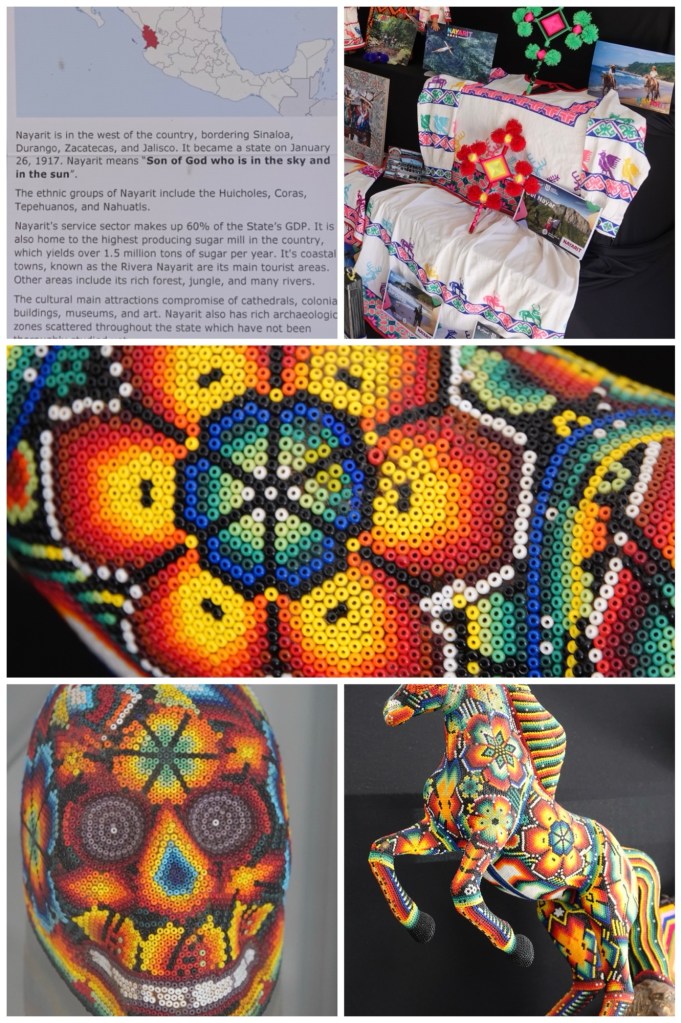
We started in Mexico, where the incredibly intricate bead art of the state of Nayarit was being featured. pieces are made by coating a piece of wood or a form with beeswax and then placing individual O-shaped beads on the tacky wax using a stick. There are approximately 144 beads per square inch!
The big attraction in the House of the Philippines was the yummy guava candies they were giving out!
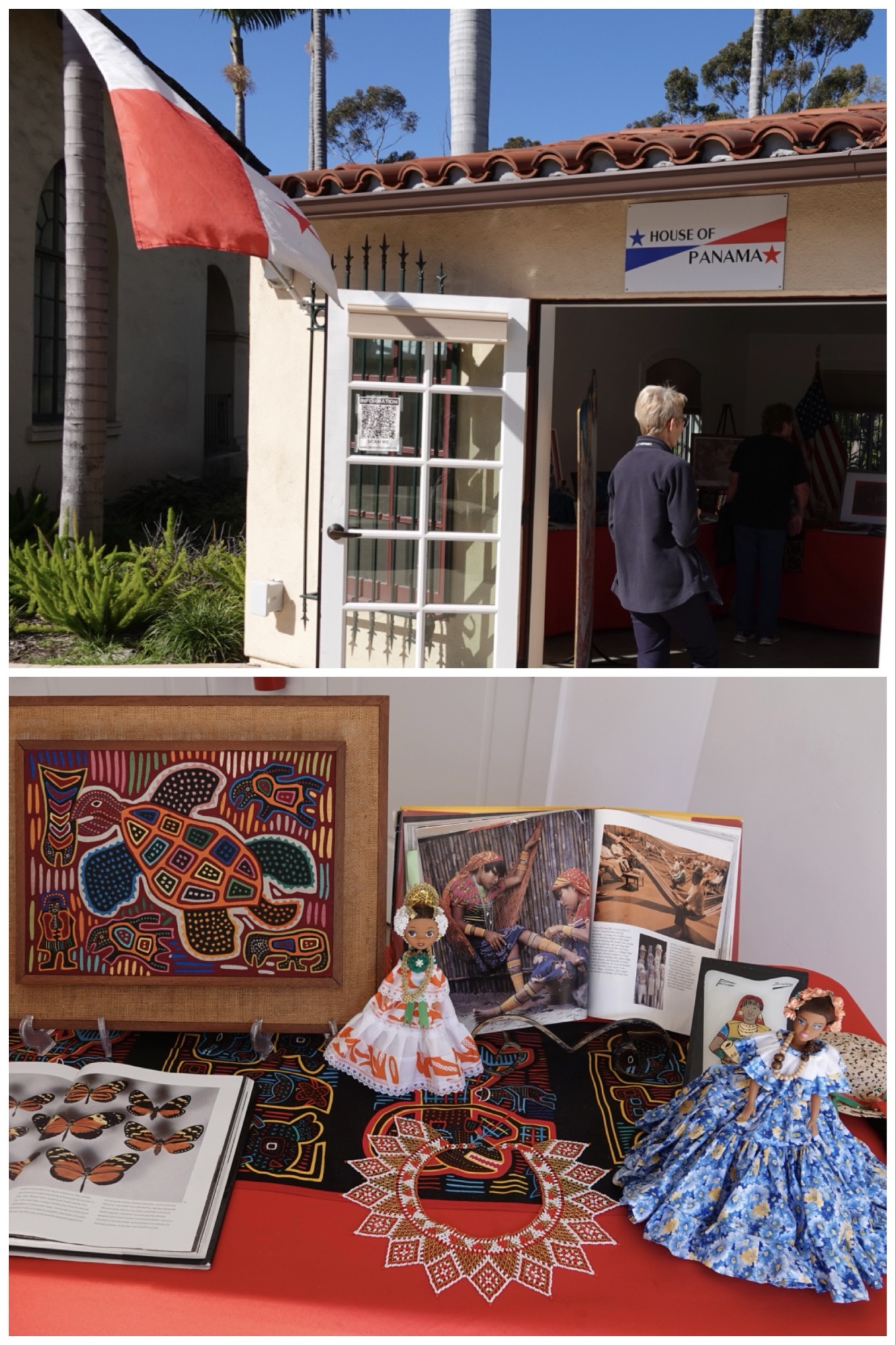
In Panama’s “cottage” textiles were also on display. The cutwork & quilted turtle (top left) reminded us of squares of hand-sewn fabric women were selling at market stalls when we visited Panama City.
In the House of Iran, we were offered tea, and spent quite a long time chatting with the gentleman hosting the house. The centre photo shows a piece of Iranian artwork using intricate Farsi calligraphy as decoration – we were told it’s a poem about embracing happiness. Outside the house was a plaque detailing Cyrus the Great’s Code of Human Rights from the year 538 BC, engraved on a cylinder only rediscovered in 1879.
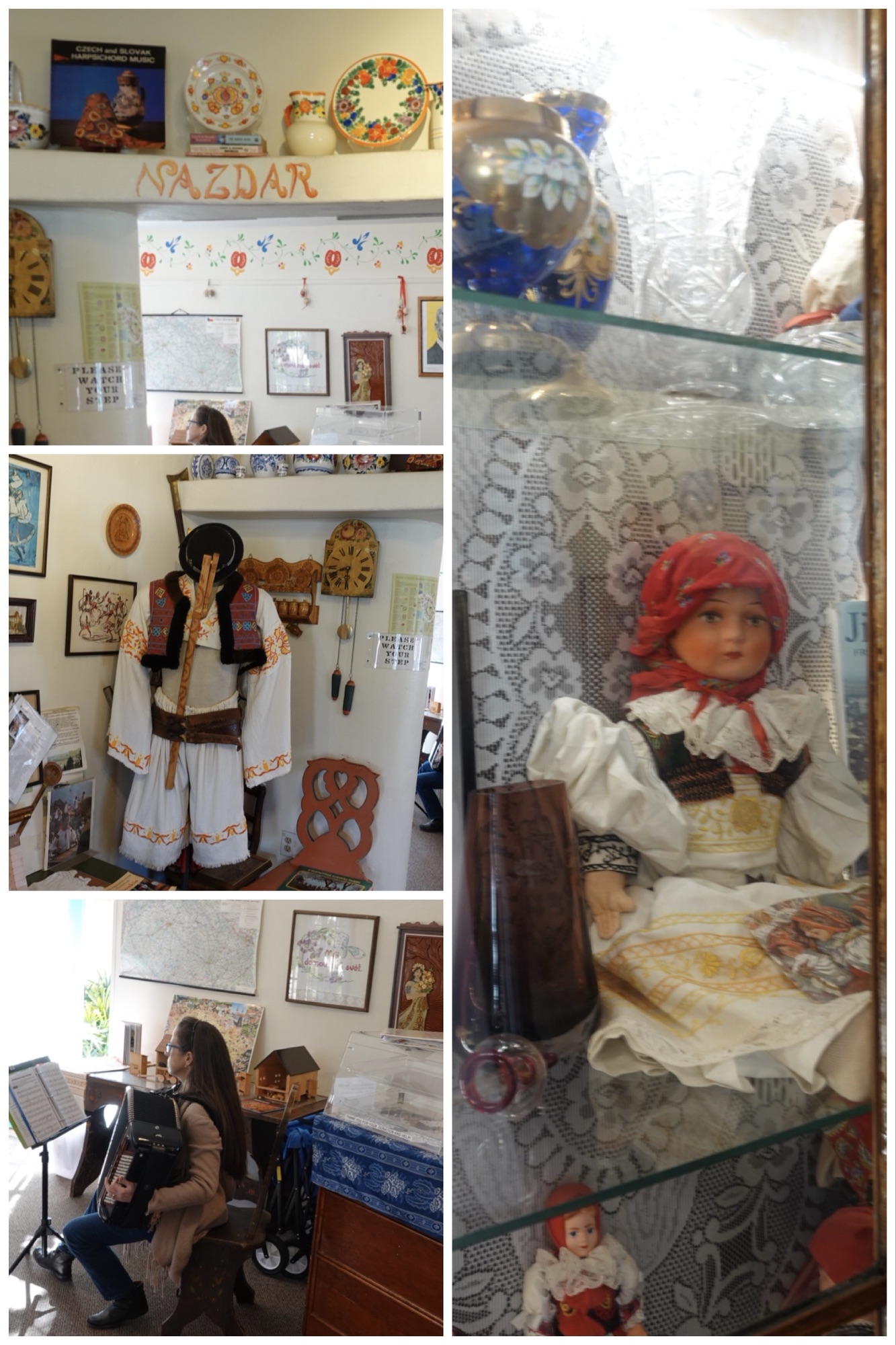
In the Slovakian house, not only were there costumes and porcelain, but also an accordion player!
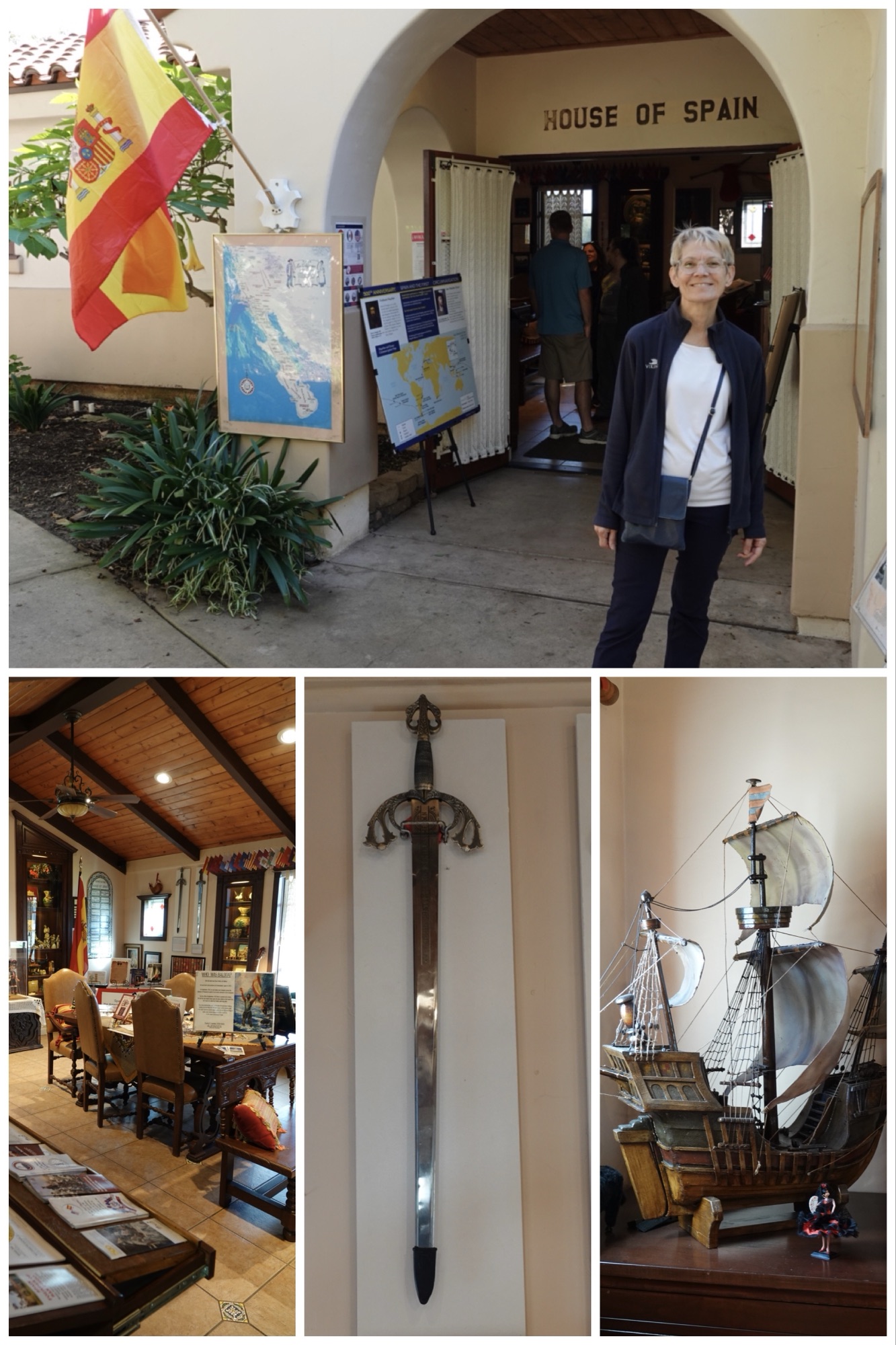
Spain’s house featured a replica of El Cid Campeador’s sword, and models of vessels that reached the New World from Spain in the 15th and 16th centuries.
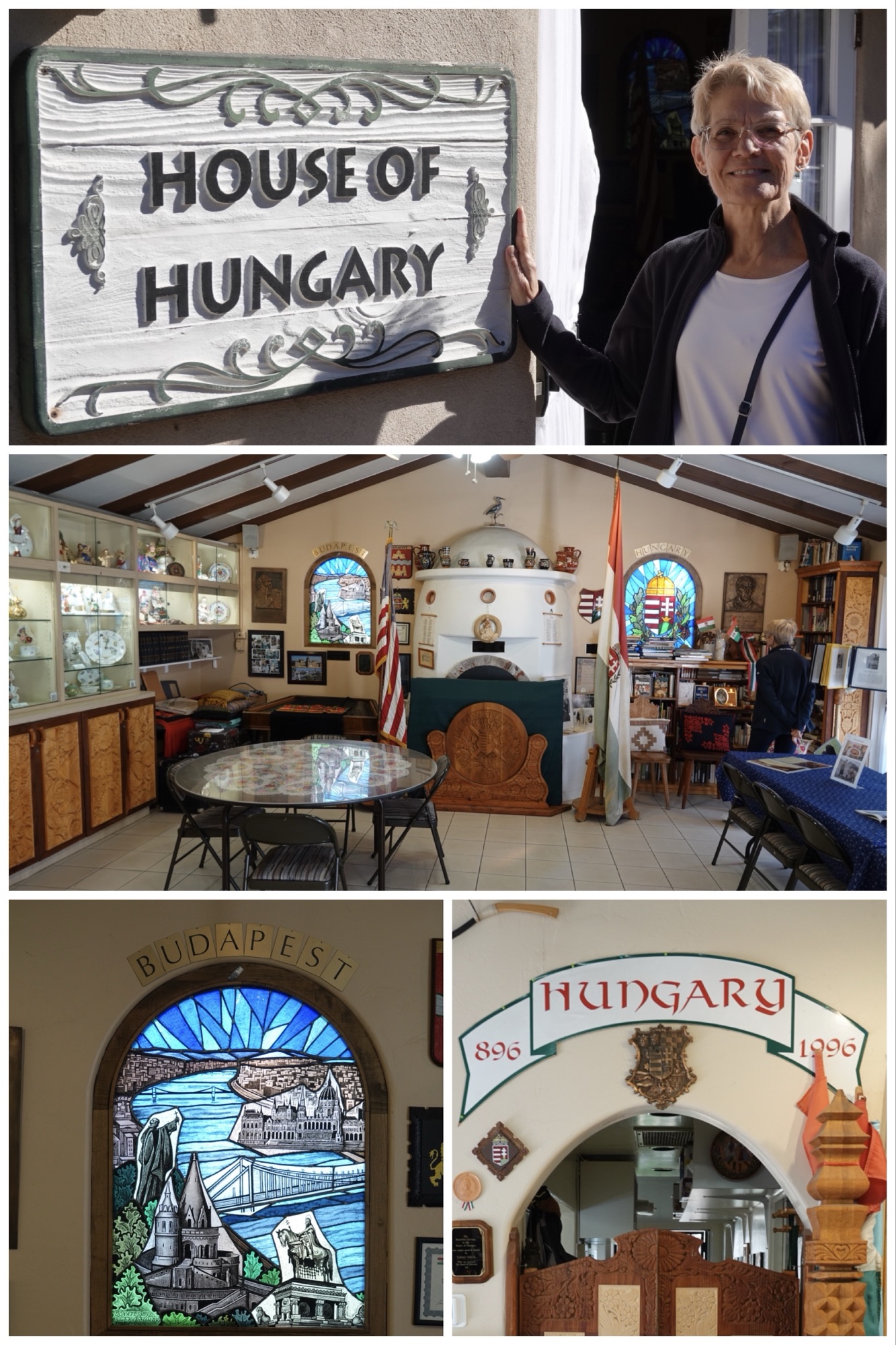
I was excited, given my mom’s background, to visit the Hungarian pavilion, where they were preparing palaczinta (Hungarian crepes), but – in an example of what over the years (based on lots of family social interactions) I’ve come to think of as typical Hungarian behaviour – the volunteers refused to engage with the cottage’s visitors, simply continuing their own discussion in Hungarian, with backs turned. Too bad, because the house held wonderful displays – especially the colourful crocheted tablecloth, and beautifully painted tableware.
England’s cultural identity, based on the cottage’s contents, is tea, the royal family, and Harry Potter!
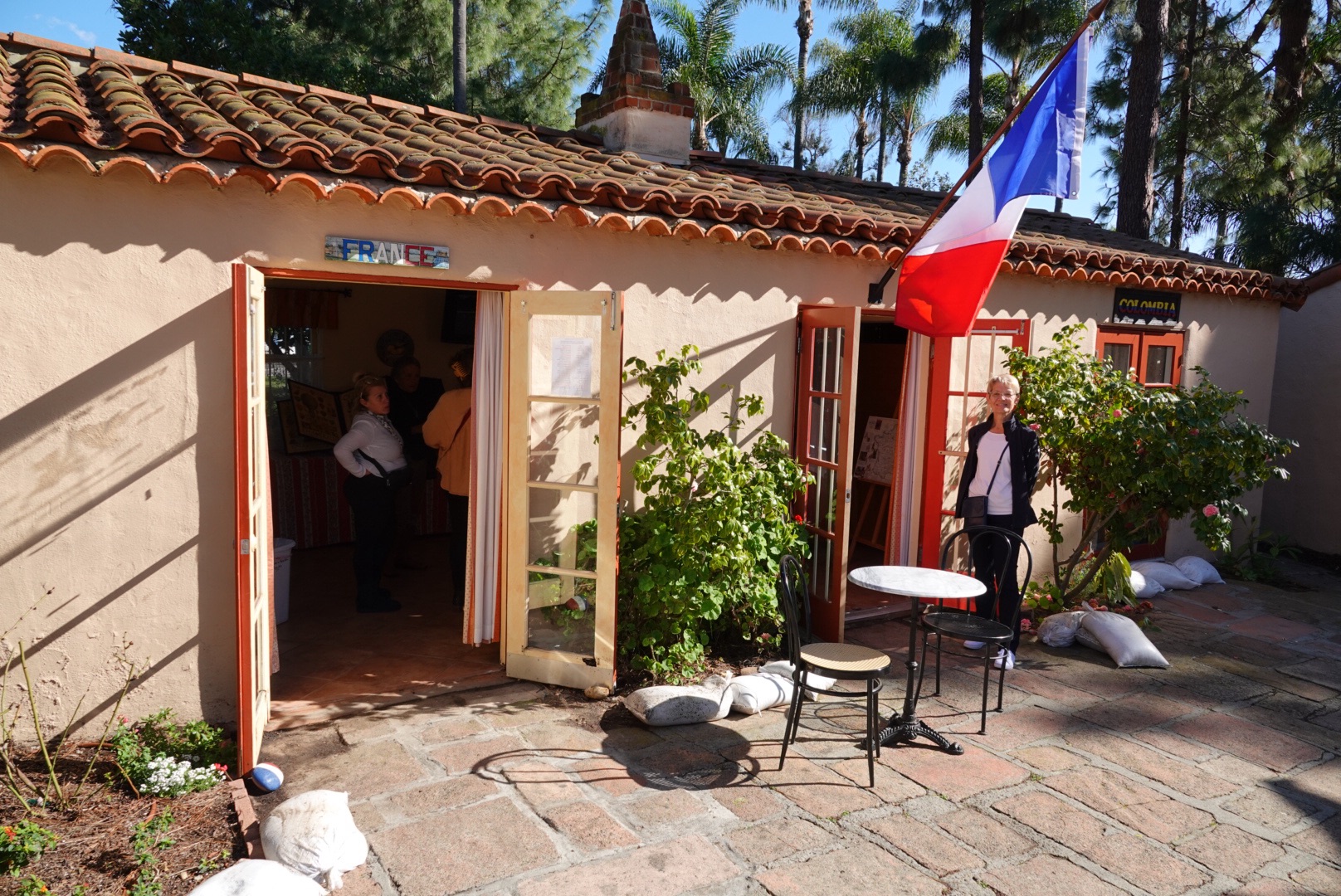
The House of France.
In Israel’s house, there were timelines, symbols (like the Hamsa, which is equivalent to the Islamic “hand of Fatima” and is used as a protection talisman), and an interesting story about how Spock’s “live long and prosper” was derived from a Jewish rabbinical greeting.
The most interesting thing about the Israeli cottage, though, was its warm welcome. We entered to the smell of fresh flaky boureka coming out of the oven, and were immediately exhorted to “eat!”. One of the volunteers explained that food is so integral to Jewish culture that they’d decided they had to greet visitors with a food item. As we chatted and laughed, and I told her that in some of the cottages we really didn’t have interactions, she reiterated the stereotype of Jewish mothers gossiping and “helpfully” interfering. Her parting words to us were a joke: Why do Jewish people close their windows when making love? So they can’t hear their neighbours yelling helpful hints at them!
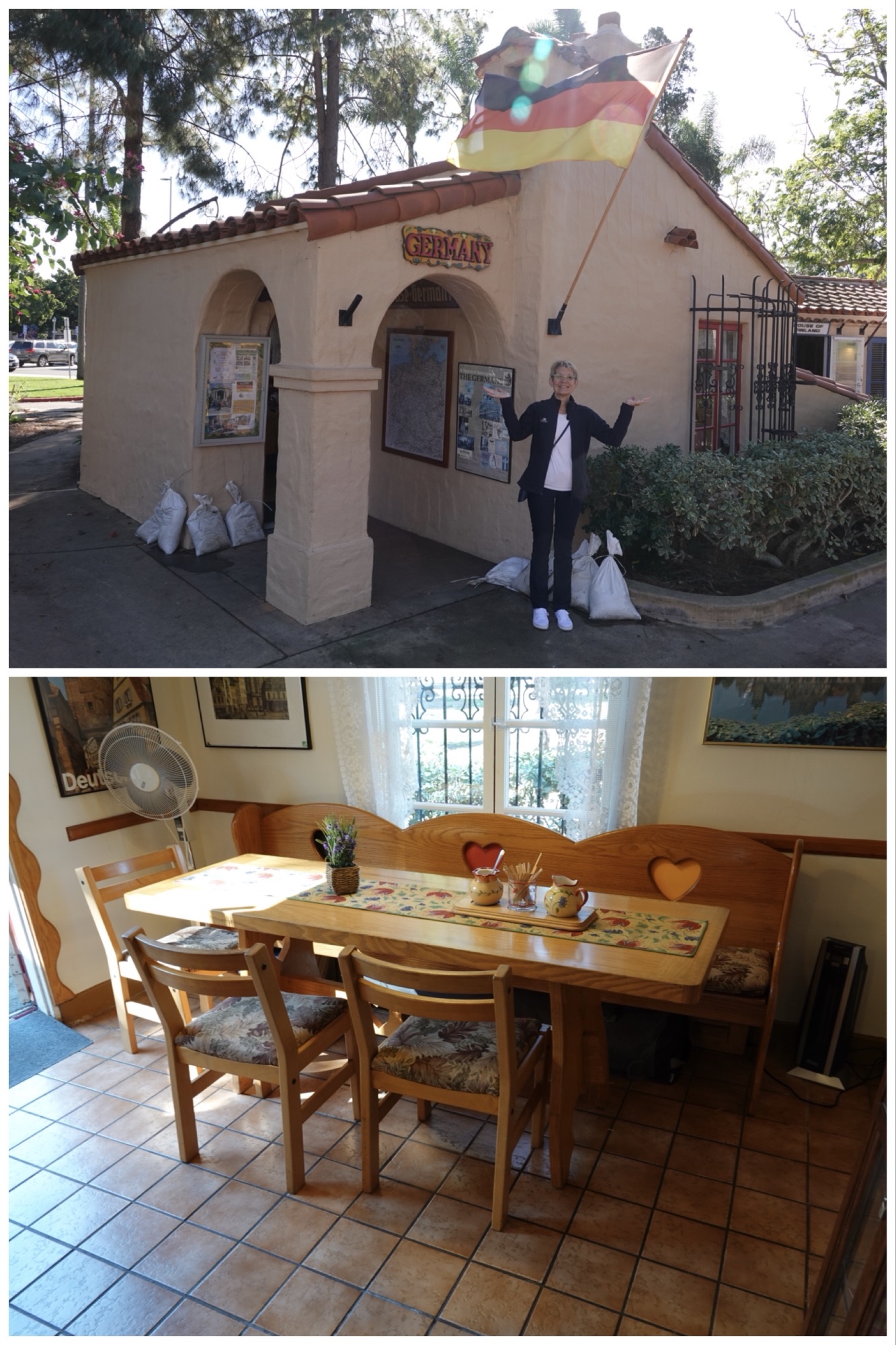
The House of Germany, of course, was set up like a Stube (a social space similar to a pub)
The House of Finland
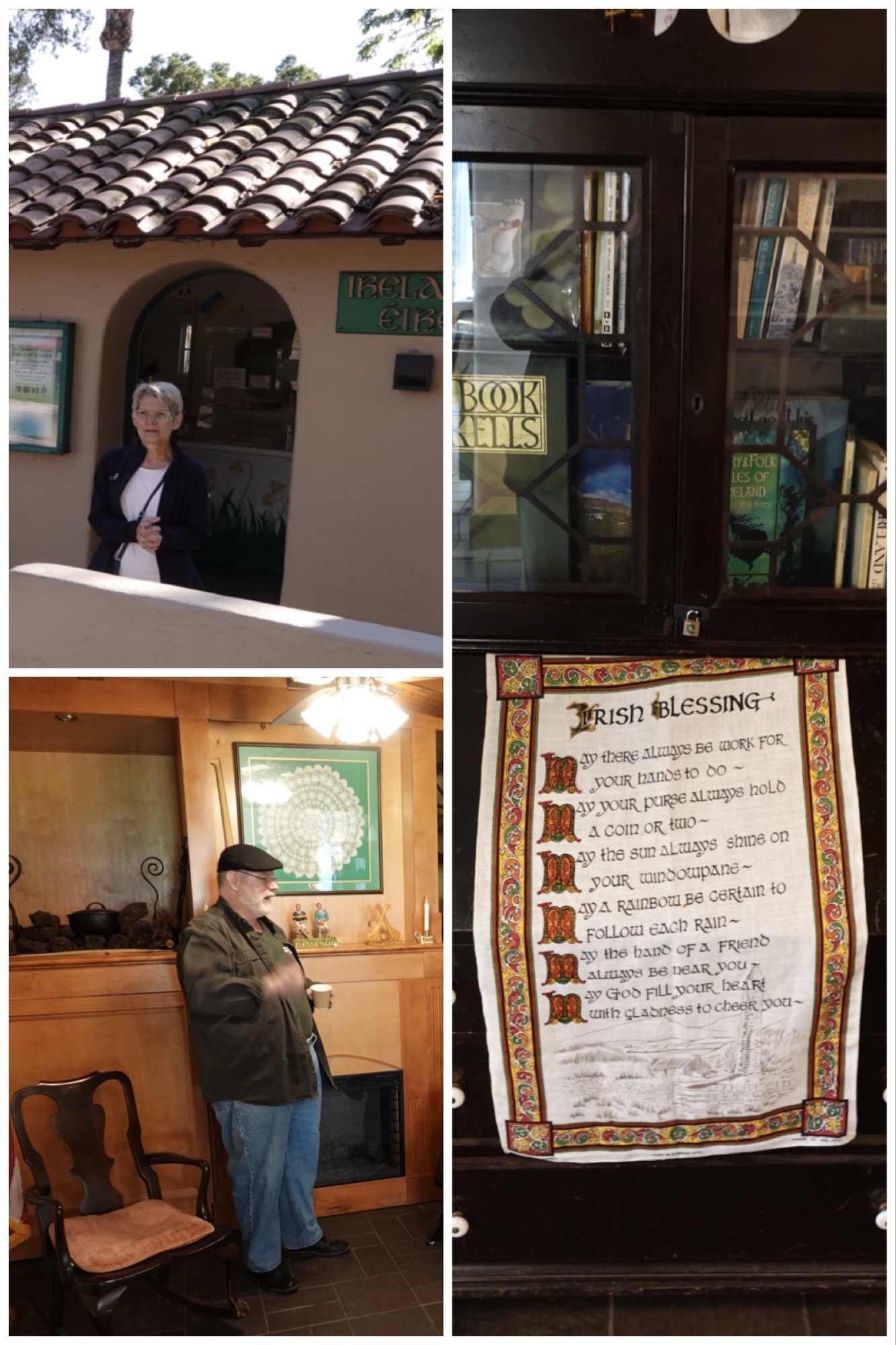
The House of Ireland, not surprisingly, was set up as an Irish pub.
Poland’s house featured intricately carved wooden furniture, lots of regional costumes, and a huge wall map. Unfortunately my Dad’s birthplace of Wilkow on the Vistula River was just too small to show up.
Ukraine’s house featured a display of intricately decorated pysanka in a glass-doored cabinet.
In Sweden’s cottage, the Swedish women’s social group were assembling floral crowns. The saying on the archway reads “love each other’s children because love is everything “
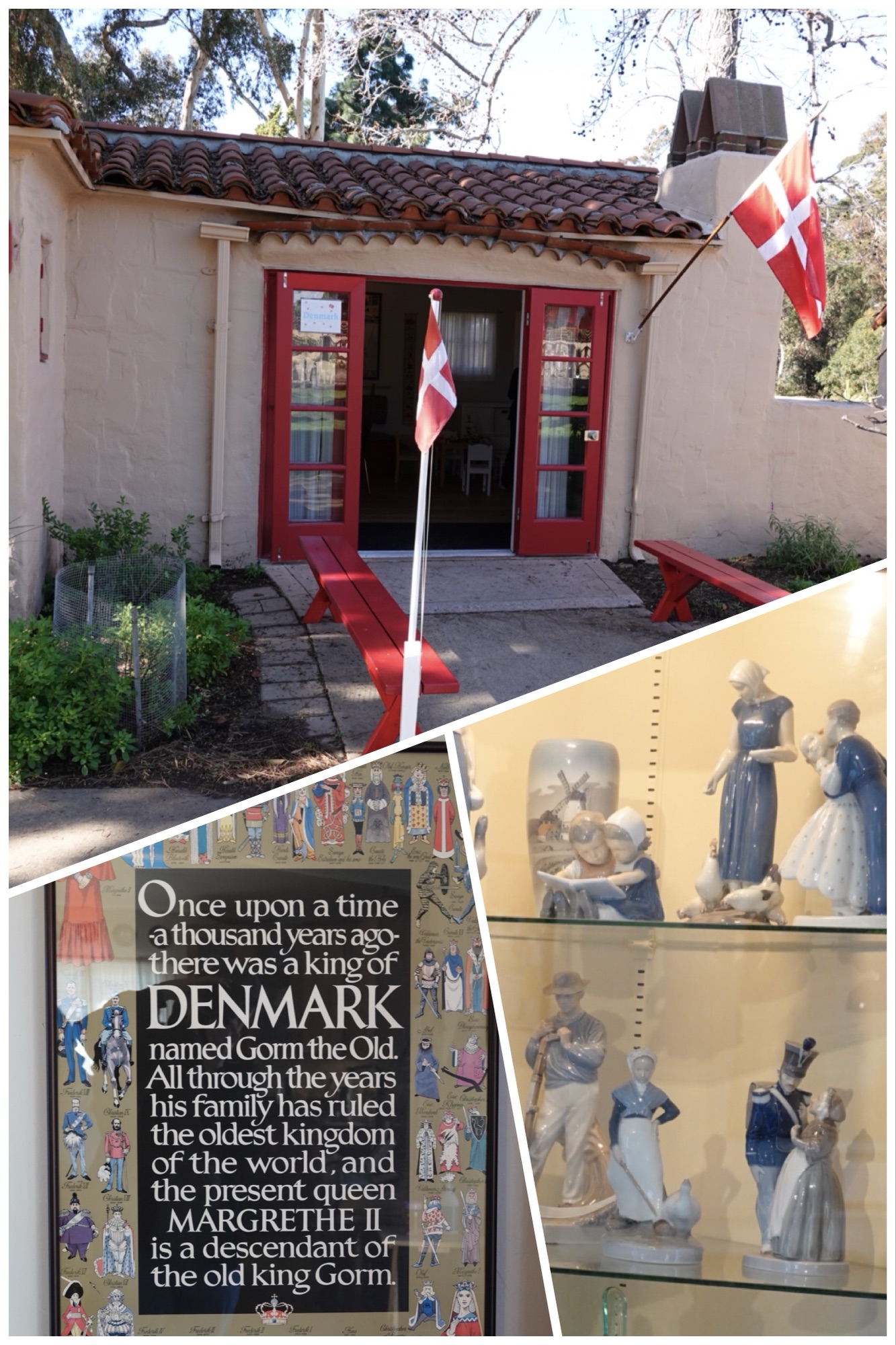
The young man hosting Denmark’s cottage offered us coffee and Danish biscuits, as well as tips on places to visit when we eventually spend time in Denmark. The poster bottom left is a reminder that Denmark’s is the oldest direct lineage monarchy is the world. Bottom right: examples of Royal Copenhagen pottery.
In Norway, we sampled waffles just like the ones we enjoy in Mamsen’s on Viking ships, and spent time talking to an enthusiastic ambassador for her country about how best to tour it. Her most intriguing suggestion? A Hurtigruten “mail boat” tour up the coast! She did say “after May” though, since May in northern Norway is still very much winter.
The House of China was furnished with highly decorated and inlaid wooden furniture (of the type copied in Europe and the west as “Chinoiserie”), and was filled with the smell of steaming dumplings.
In Scotland’s cottage, we saw a demonstration of making lace using bobbins, and met Daniel Murray, an ex-Marine who is (a long story, told with great enthusiasm) the official representative of Clan Kerr in California. He’s not actually a Kerr, or a Scot, but is left-handed, which is historically significant to the Kerr clan. Perhaps Ted could join them. Standing under the 175 pound caber mounted on the cottage wall, Daniel showed us a scale model of a 6 foot tall Scottish caber-tosser beside a typical 16 foot tall caber. Those Scots are STRONG!
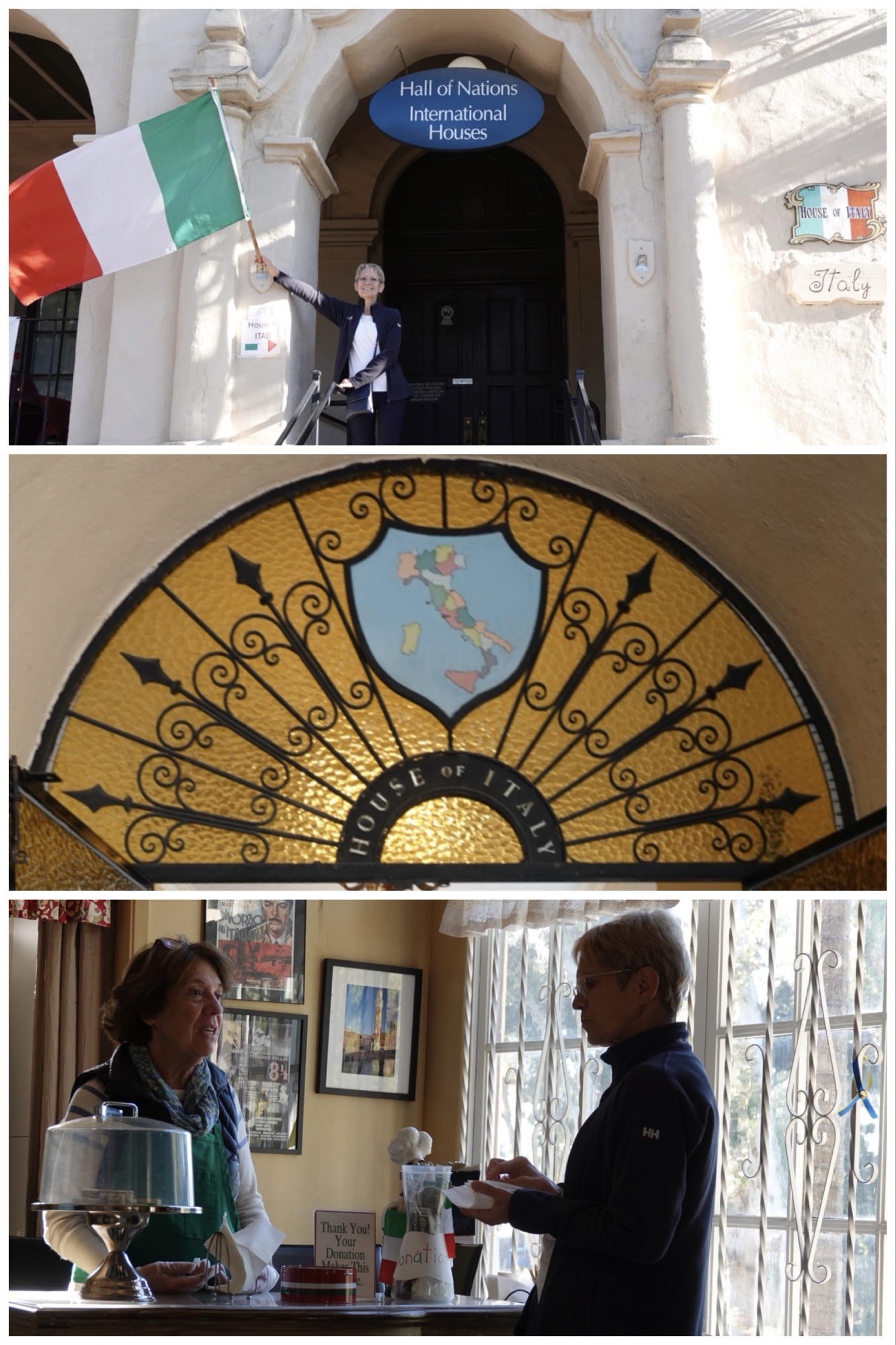
The House of Italy is located in a larger building that was once the Hall of Nations, since all the cottages are occupied. Like the Israelis, the Italians are all about food, so we enjoyed biscotti while chatting.
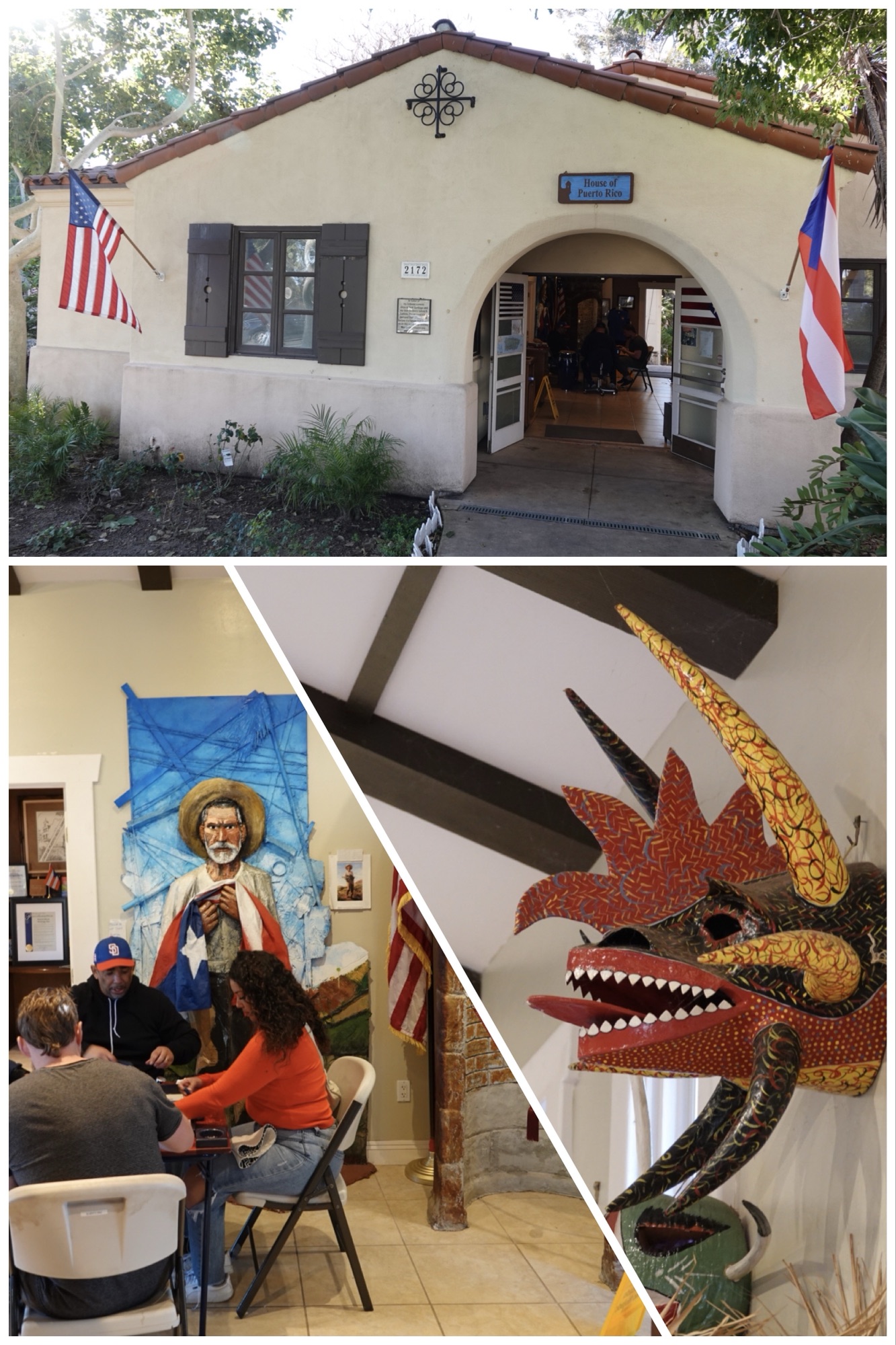
The volunteers in the Puerto Rican house were playing dominoes amid the pre-Columbian and colonial artifacts.
It was a fun round-the-world tour, and yet we also managed to visit the Timken Museum of Art AND have coffee and delicious lemon and lavender shortbread cookies in the main square (both actually before visiting the International Village). Much like turning the page in a photo album of our memories, the small but very interesting Timken will get a post of its own, to follow.
It does seem as though you had some authentic cultural experiences there — the unfortunate Hungarian cold shoulder (which three college girls lost in the dark on arrival in Budapest experienced at the Tourism Office where we were completely ignored by the staff who were busy giving each other manicures and make up makeovers!) but also Norwegian waffles! I second their recommendation that you take the Hurtigruten coastal ferry. We did a 7 night trip from Bergen to Kirkenes. (I would have happily turned around and done the other 7 days back — a different set of stops.) It was, as advertised, a floating piece of Norway. The ship made 35 stops for cargo, vehicles and passengers — many in the night but enough in the day to see a lot of life along the coast — with one longer stop each day and some tours offered. June was a great time to do it — light to some degree for 22 hours a day so you can see a lot!
I should say that the Tourism office sent us on a wild goose chase but we were rescued by some young Hungarians with whom we communicated entirely in sign language and using a 2 volume French-Russian Russian-French dictionary. (We had English, Spanish, French and German between us. They had Hungarian and Russian!) They put us up in their own bed and shared what little food they had. It was 1977 — long before the end of the Iron Curtain. Thanks for the memories!










 Rose and Ted’s Excellent Adventure
<
div dir=”ltr”>Omg. You VISITED
LikeLike
It does seem as though you had some authentic cultural experiences there — the unfortunate Hungarian cold shoulder (which three college girls lost in the dark on arrival in Budapest experienced at the Tourism Office where we were completely ignored by the staff who were busy giving each other manicures and make up makeovers!) but also Norwegian waffles! I second their recommendation that you take the Hurtigruten coastal ferry. We did a 7 night trip from Bergen to Kirkenes. (I would have happily turned around and done the other 7 days back — a different set of stops.) It was, as advertised, a floating piece of Norway. The ship made 35 stops for cargo, vehicles and passengers — many in the night but enough in the day to see a lot of life along the coast — with one longer stop each day and some tours offered. June was a great time to do it — light to some degree for 22 hours a day so you can see a lot!
I should say that the Tourism office sent us on a wild goose chase but we were rescued by some young Hungarians with whom we communicated entirely in sign language and using a 2 volume French-Russian Russian-French dictionary. (We had English, Spanish, French and German between us. They had Hungarian and Russian!) They put us up in their own bed and shared what little food they had. It was 1977 — long before the end of the Iron Curtain. Thanks for the memories!
LikeLiked by 1 person
What a great story!!!
And thanks for reinforcing the ferry option…. I think it something we’ll seriously consider in 2025
LikeLike