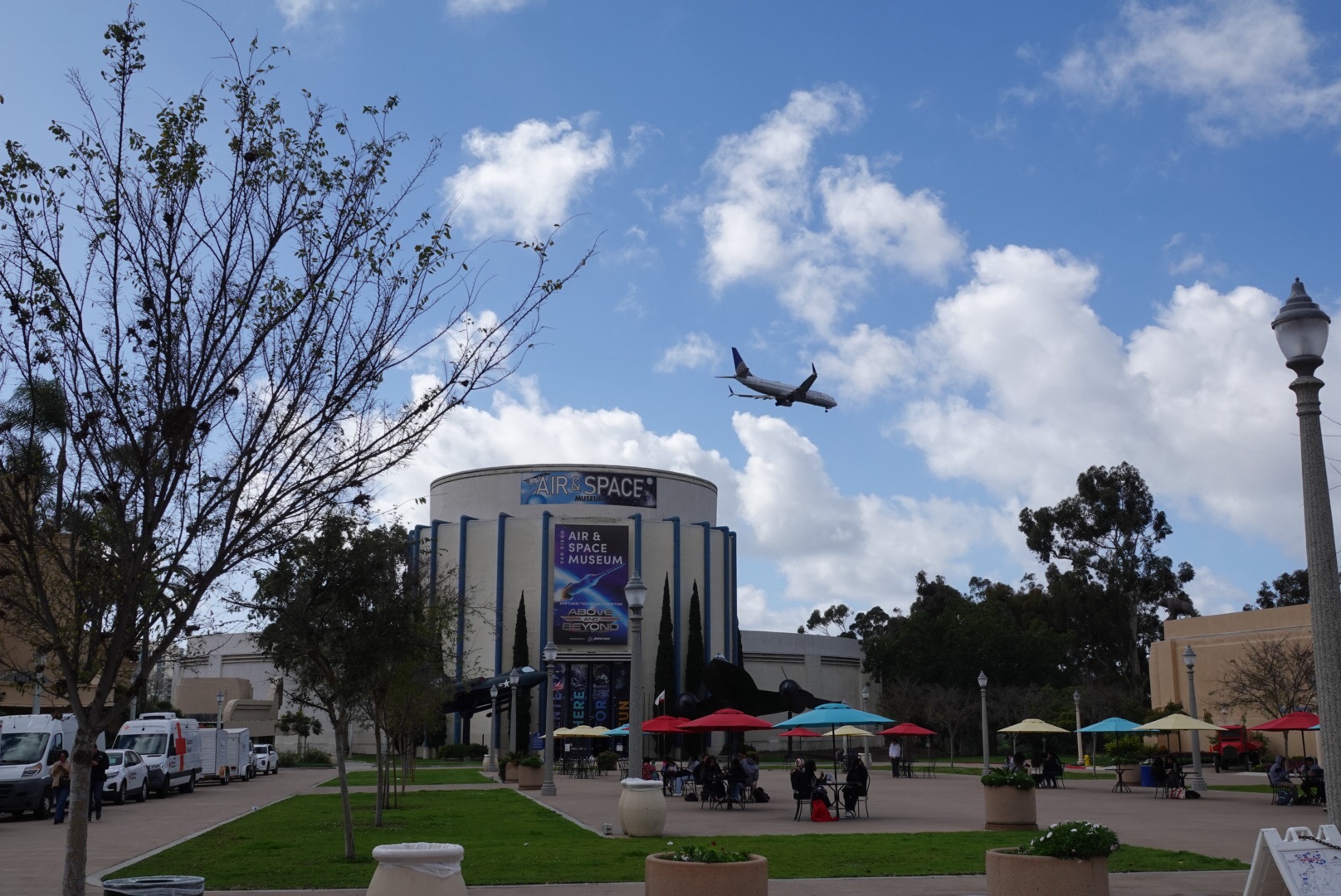
We spent part of our first day in Balboa Park in the San Diego Air & Space Museum, housed in what was the Palace of Transportation, built by the Ford Motor Company for the 1935 California Pacific Exposition.
During WWII, the building was used by the National Guard, the American Red Cross, and as a training facility for the 251st Coast Artillery. It later became a vocational school for aircraft construction and maintenance, and in 1973, the building was placed on the National Register of Historic Places.
In 1980, the restored building reopened as the new home of the San Diego Air & Space Museum after a devastating fire in 1978 destroyed the museum’s prior Balboa Park location along with almost its entire collection of airplanes, artifacts, and space exploration-related items.
The Ford Building is the only surviving example of five exhibit halls built in the 1930s by Ford Motor Company.

When you enter the museum, you walk immediately into the area called “Milestones of Flight”, where some early and unique flying apparatus are displayed, most hanging from the ceiling.

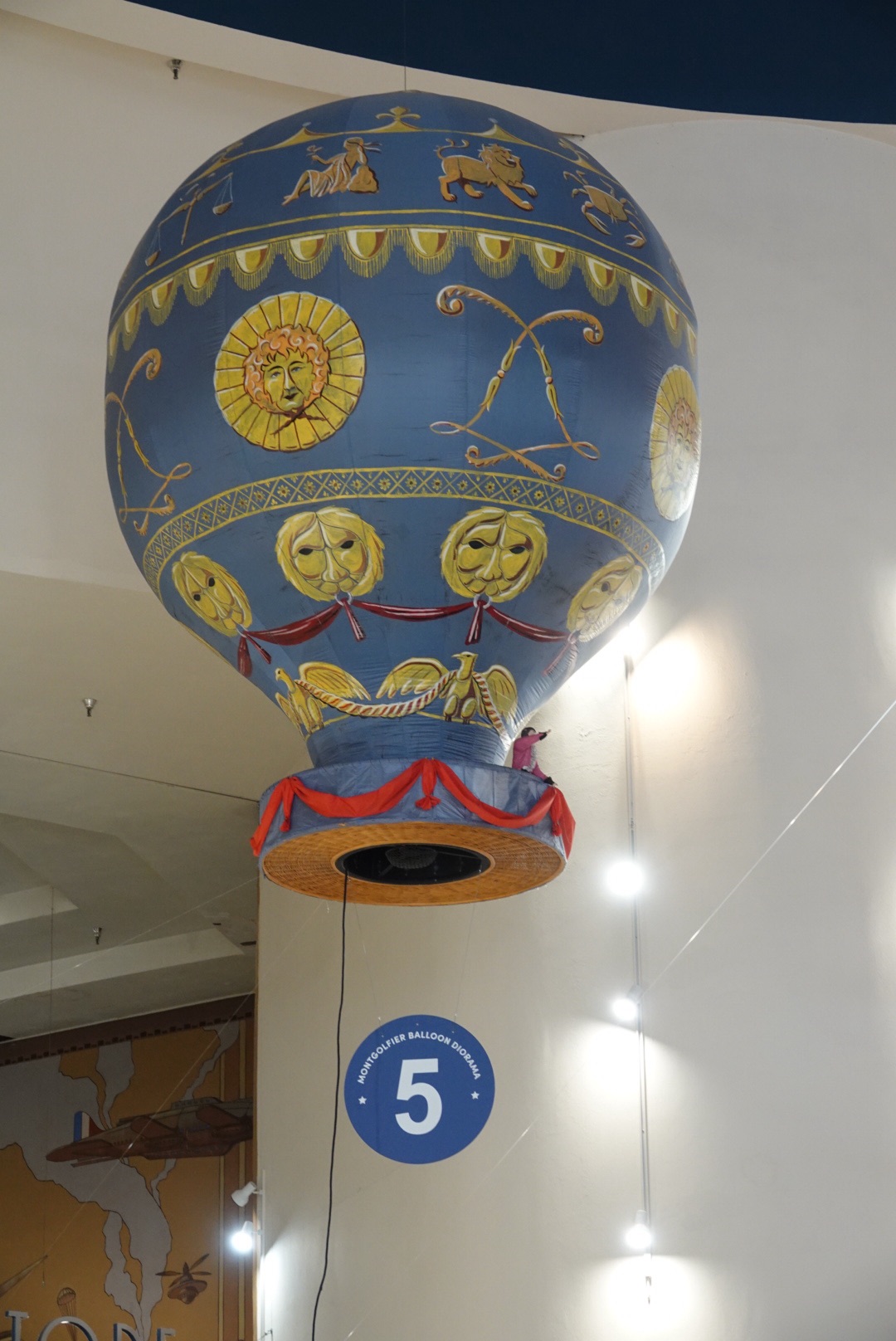

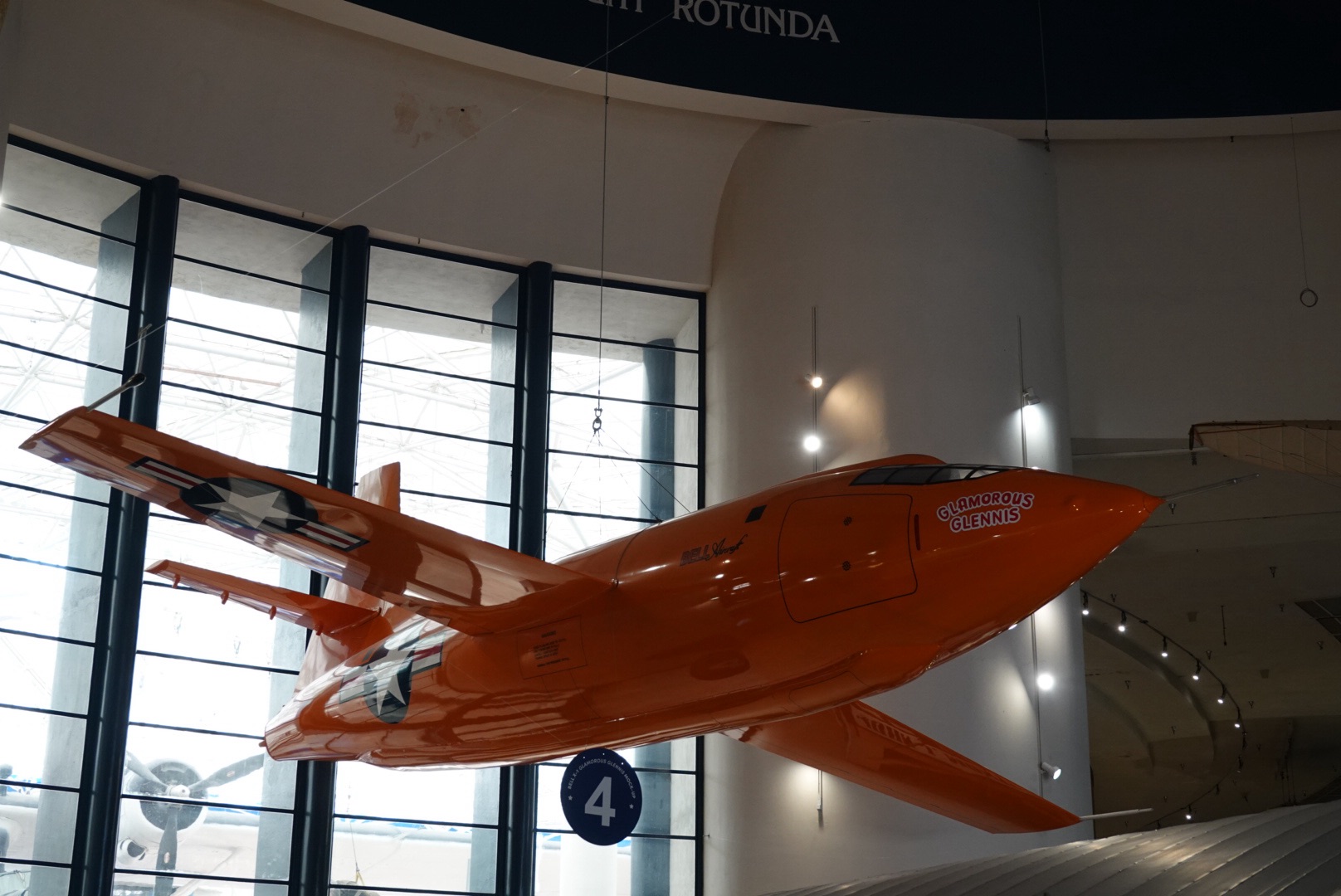

Once into the main exhibits, we spent about two hours in the museum, really not doing it justice. We didn’t even make it to the outdoor exhibit area where some of the largest aircraft are displayed.
To be honest, I found the sheer amount of information and number of items on display completely overwhelming. I hardly knew where to focus my attention. Ted said that what he felt was more a sense of having seen it all before. To be fair, we have spent many, many hours in air and space museums, and war plane museums, from huge museums like Washington’s Smithsonian, the Canadian Aviation & Space Museum in Ottawa, and London England’s Museum of War, to smaller ones like Hamilton Ontario’s Canadian Warplane Heritage Museum.
This museum is divided into several areas, each focusing on a specific time period in aviation, from gliders right through to the space shuttle and prototype/concept vehicles like flying cars. There were areas specific to each of the World Wars, with not only American but also German and British planes – some original and repaired, others full size working replicas, and areas showcasing innovations in modern non-commercial flight. There is also a huge interactive area, sponsored by Boeing, called “Above and Beyond” that made me wish we’d had our grandsons with us.
A large interior mural, “The March of Transportation” by Exposition art director Juan Larrinaga (1885-1947) was added to the building’s first rotunda in 1936. You can see part of it behind the Apollo 9 command module (the original, not a mockup!) juxtaposing Viking ships and an Egyptian palanquin against space travel.
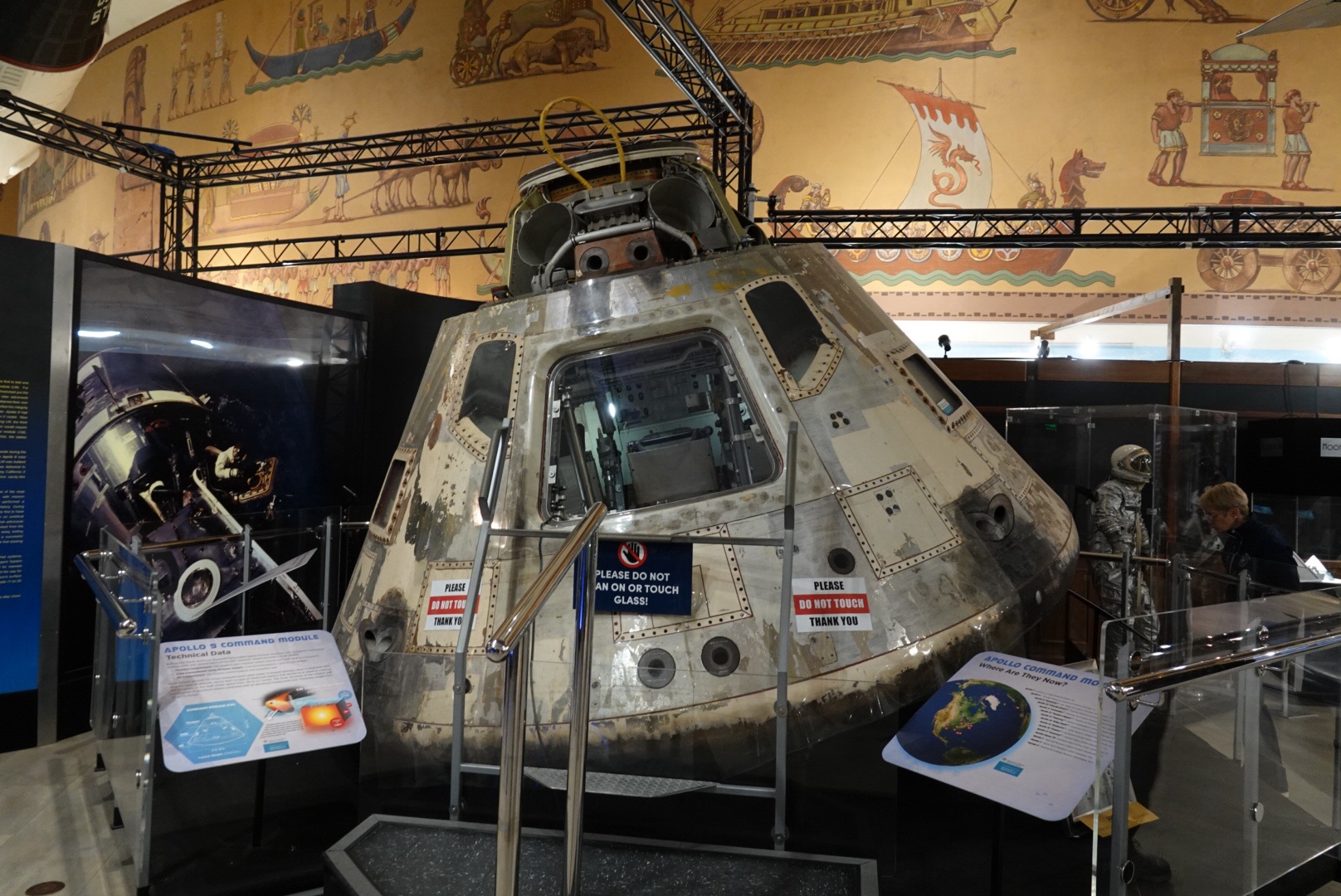

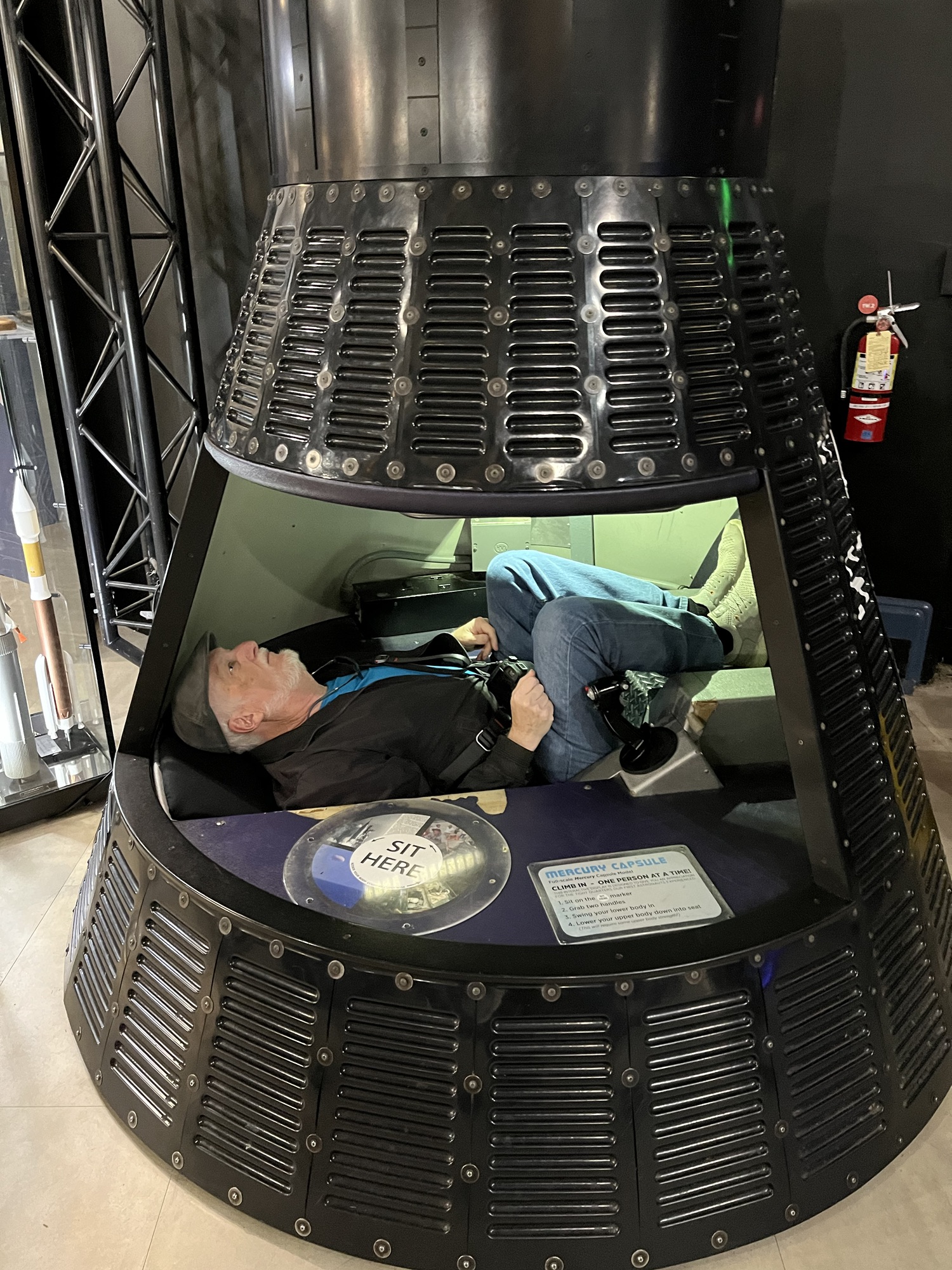
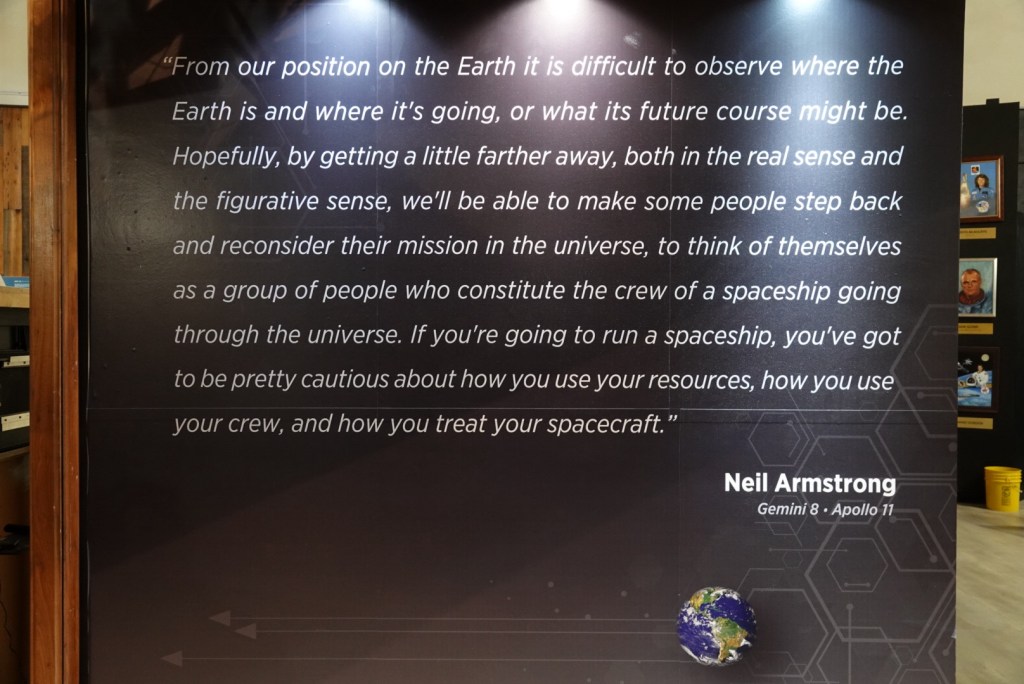
We’ve saved just a few photos to tweak our memories later. As I said, there was really far too much to take in during a single visit.
In the WWI gallery, neither of the two planes that caught my attention were American. One was the British SPAD VII (serial #B9916 and still 90% original!) built in Norwich England in 1917, and sold to the US for advanced fighter training. The plane took part in the 1919 Armistice celebration flyover of downtown San Diego.

The other plane that attracted me was a German Fokker Dr 1, the plane associated with the “Red Baron” Manfred von Richthofen. Only 320 of these planes were built, and no originals exist. And yes, his plane really was painted red!
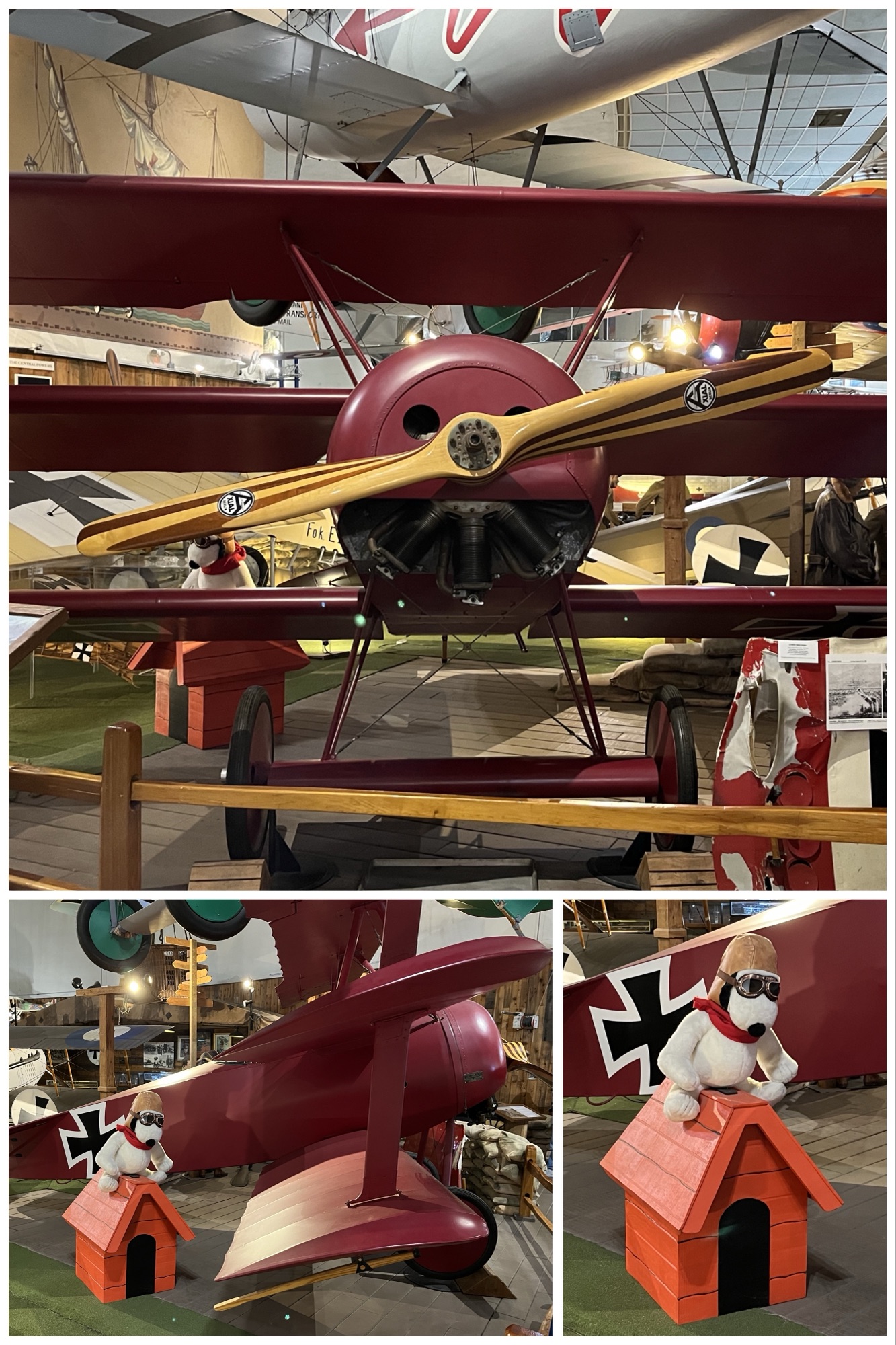

Over 70 planes in total are on display in the museum, ranging from biplanes to Navy fighter jets with folding wings that allow them to take up less space on the flight deck of an aircraft carrier.

There are all kinds of artifacts, engines, flight suits, a 3D theater, flight simulators, a gallery with hundreds of portraits of famous aviators and astronauts, and an area dedicated specifically to American women of flight.
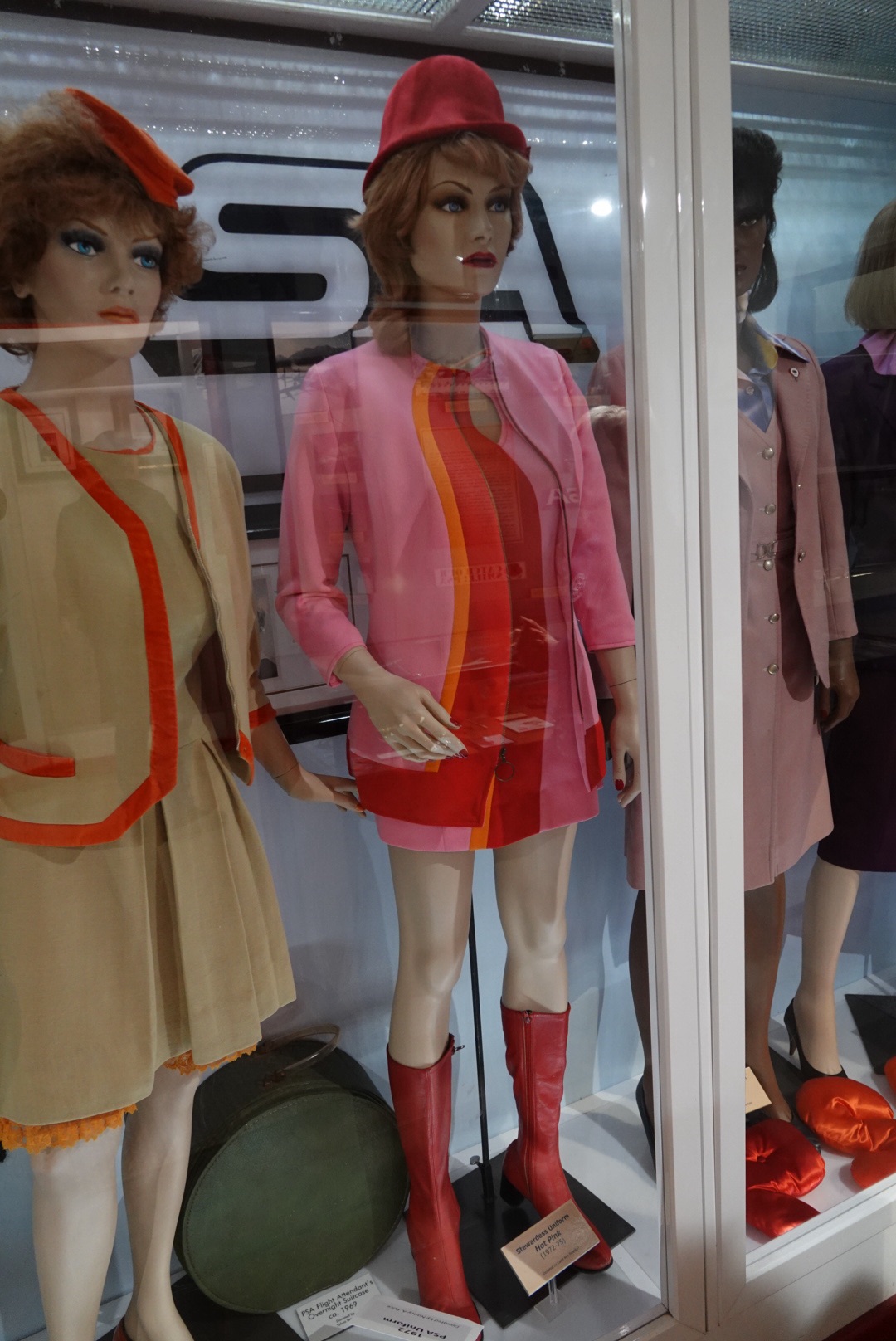
There is an interesting small exhibit of San Diego-based Pacific Southwest Airlines (PSA), also known as the Poor Sailor’s Airline, in the museum. The airline operated short-haul flights in Southern California from just after WWII until 1988, giving jobs to ex-military pilots. A replica of the airline’s first ticket office has displays about the “airline with a smile” and includes stewardess uniforms from the 1950s through 1980s, including the hot pink, red, and orange hot pants worn during the 1970s.
While it was interesting to think about what WWII pilots did after that war, it was even more fascinating to look at what WWI American pilots did.
The sign in the Barnstorming exhibit read: “They were a surplus commodity of the Great War: out-of-work aviators flying out-of-work airplanes, and during the restless years following that war they found a unique and satisfying way to survive, as showmen of the air. The barnstormers, as they called themselves, were a largely American phenomenon…”

Really, you could spend an entire day – and more – just in this one museum, taking your time to read all the signs, watch all the videos, and check out every plane, but we only have 3 more weeks in San Diego, and so much to see!!
 Rose and Ted’s Excellent Adventure
My first day on the job as assistant Curator was Opening Day, 1980. There were 25 aircraft sitting on the exhibit floor… some donated, some loaned, some purchased with fire insurance claim monies. 10 years later, we had over 60 a/c on exhibit, with an overflowing hangar at an airport. I stayed for 20 years. 💗
LikeLiked by 1 person
Balboa park 1 month pass
Get Outlook for iOShttps://aka.ms/o0ukef ________________________________
LikeLiked by 1 person
We actually found the unlimited annual pass to be a better value, even though we’re only using it for a month.
LikeLiked by 1 person
I loved this post! Being a Dayton, Ohio girl, and after reading your comments about being overwhelmed in a museum that size, I had to turn to Google to be certain of my memory. “The National Museum of the U.S. Air Force is the oldest and largest military aviation museum in the world, with more than 360 aircraft and missiles on display. – Wikipedia. With an estimated 1 million visitors a year, this tourist attraction in Dayton Ohio is worth exploring.” It has grown SO much since I was a girl, and you could get lost for weeks there (all for free, I might add!). You also quoted Neil Armstrong, who was born close to my hometown and who spent his post-NASA career teaching at the University of Cincinnati and living on a farm about 15 minutes from my current house. I still love “anything aviation” because of my childhood proximity to the Museum, the Dayton Air Show (still magnificent), and my father’s fascination with space, which he instilled in me. Thanks for the “memory nudge”! Jayne Bonzella Viking World Cruise 23-23, and follower of yours for a few years now.)
LikeLiked by 2 people
Thanks Jayne! Dayton, eh? May need to be future exploration!
LikeLike
Orville and Wilbur’s bicycle shop is still in Dayton! I know it hardly seems like a tourist mecca, but lots to do in the southern Ohio/northern Kentucky area (horse farms and bourbon trail). Our area is actually listed in the Top 10 in the US for family vacations…VERY hard to believe, I know! Let us know when you’re visiting…hahaha!
LikeLiked by 1 person
I too have spent many, many hours in air and space museums across the country – but not the one in San Diego. Too much other stuff to do there I guess.
My husband enjoys them and I can usually find an interesting story or two behind a couple specific aircraft. I chuckled when I saw the photo of the stewardesses – that was something I would have gravitated to as well.
LikeLiked by 2 people
0ne of our favourite stories about Bruce’s mother Catherine is that she took a ride with one of the barn stormers when she was a young woman. It was very interesting for us to see the picture of the plane with the sign on it. Thanks for sharing! She asked for and went on a hot air balloon ride for her 90th birthday, perhaps wanting to experience being up in the open air again. She died just short of her 100th birthday. A well loved and remarkable woman!
Glad to see that the heavy rains do not seem to have affected your stay.
LikeLiked by 2 people
What an adventurous soul! Good for her!!
LikeLike