Once you start looking, information is everywhere: Wikipedia, of course, but also more traditional physical books, museums, historic markers, TV documentaries, information pamphlets, even on the borders of tourist maps – literally everywhere.

We’ve become adept at fact-checking Wikipedia against written sources and with recognized experts; Wiki is not infallible, and all those “citation needed” footnotes should give pause. Researching and learning has become one of the joys of travel; that, and finding more and more interconnections between places, cultures, and people.
In 1835, the Mexican government of Alta (upper, as opposed to Baja/lower) California set aside 1,400 acres of pueblo land in San Diego to be used for public recreational purposes. We learned while we were enjoying Mérida’s public spaces last winter that Spain for centuries had made a practice of setting aside large tracts of land for the common use of citizens, and Mexico later adopted those practices.
In 1848 that donated land was part of the territory ceded to the US after the Mexican-American War, making present-day Balboa Park one of the oldest places in the United States dedicated as public parkland.

In 1870, a new law was passed by the state legislature, ensuring that those lands were to be held in trust forever by the municipal authorities San Diego for the purpose of a park.


Until around 1909, it was called simply “City Park” and was mostly just open green space, until the San Diego Chamber of Commerce suggested that the park hold a world exposition to coincide with the 1915 opening of the Panama Canal.
The park’s current name was the result of a 1910 contest to rename the space ahead of the fair. Vasco Núñez de Balboa was the first European to cross Central America and see the Pacific Ocean.
San Diego would be the smallest city to ever hold a World’s Fair, but just how impressive that fair was is attested to by the fact that much of the city’s present-day look hearkens back to the fair’s design. The architectural style chosen for the fair’s buildings was a blend of highly ornamented Spanish Baroque with Mexican Spanish Colonial and Mission Revival, combining to create a new “Spanish Colonial Revival” style. Not only San Diego, but much of Southern California still reflects that style.
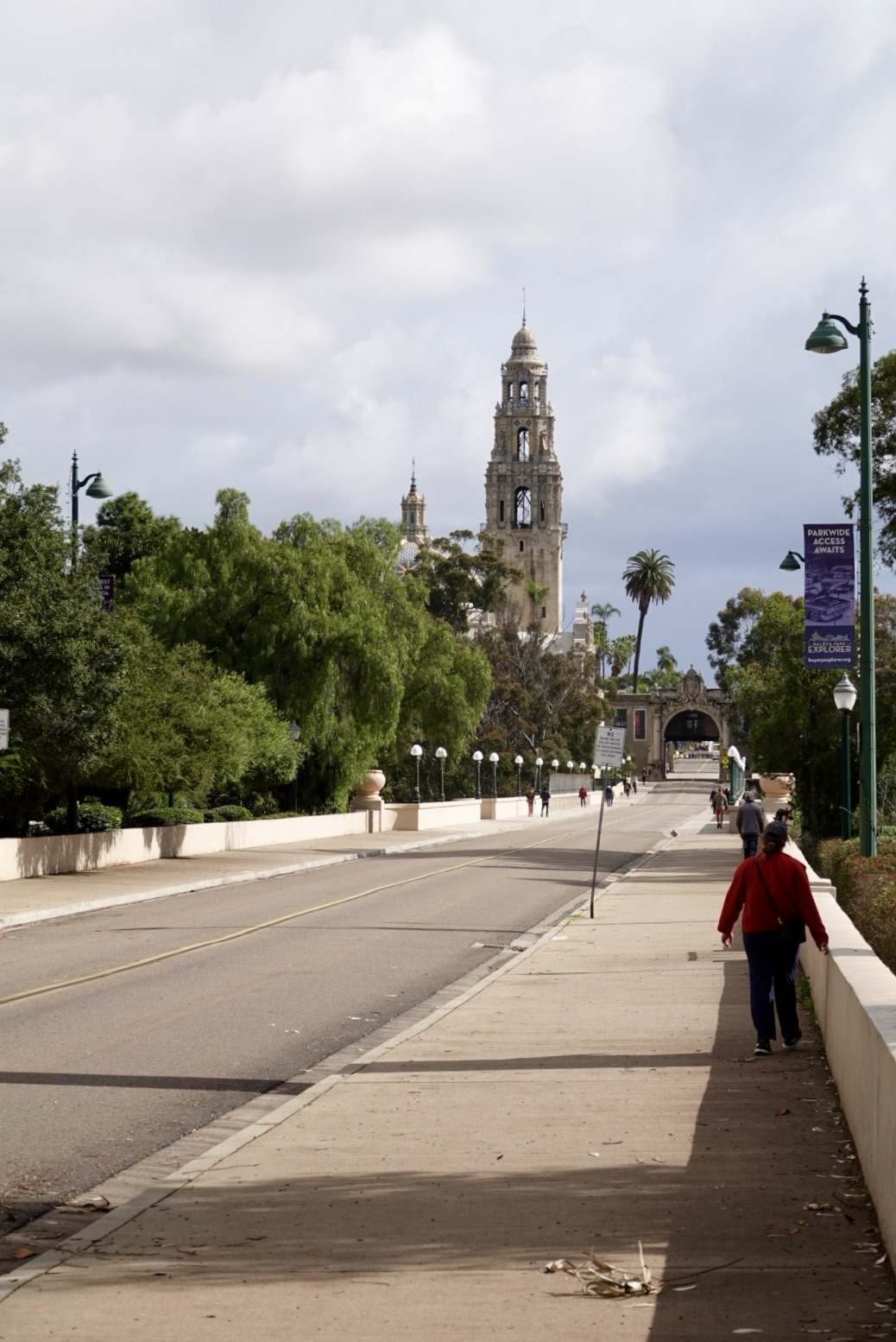

And, unlike many world’s fairs and expositions, San Diego’s was not dismantled – the buildings attest to its elegance more than a century later. The story goes that President Roosevelt loved the buildings so much that he suggested them becoming a permanent exhibit, despite the fair’s architects’ suggestion that they be demolished due to the temporary nature of their construction. In the end, the cost of bringing them up to standard was only marginally more than the cost of demolition, and the fair itself – unlike most – had actually turned a profit.


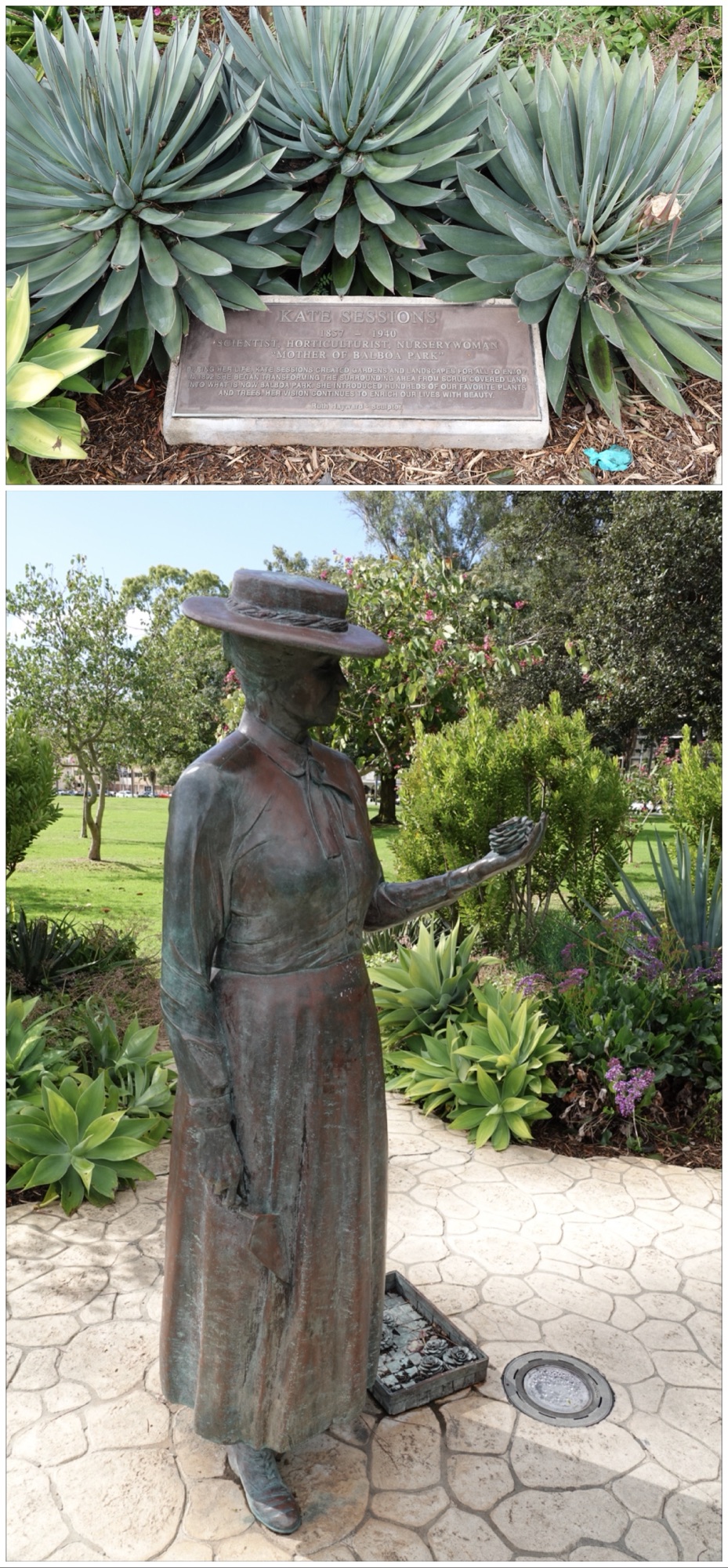
Not only were the buildings gorgeous, but the park was turned into a horticultural gem under the guidance of horticulturist and “nurserywoman”Kate Sessions, who introduced hundreds of varieties of trees and flowers into the green-space.
The site was used again, with additional buildings added, for the California Pacific International Exposition in 1935. Balboa Park was reconfigured and this time some of the new buildings were designed to be permanent.
One of the things added between the two expositions was this statue, EL CID CAMPEADOR, by the sculptor Anna Hyatt Huntington. It was presented to the city of San Diego and Balboa Park by the trustees of the Hispanic Society of America on July 9, 1930. Ted and I are familiar with her work from our visits to Brookgreen Gardens in Myrtle Beach South Carolina, as well as from touring the Huntington Beach State Park. Episode 19 – The Huntington Legacy in South Carolina

The US Navy used many of Balboa Park’s buildings as barracks in both World Wars; Naval Base San Diego, the largest Navy Base on the West Coast and the principal home port for the powerful Pacific Fleet Surface Navy is less than 8km/5miles from the park. The park was temporarily renamed Camp Kidd during WWII.
During the rest of the 20th century, many of the buildings were allowed to deteriorate, some were demolished, fire claimed others, and the park became known for vandalism, vagrancy, and crime before being reclaimed as both a city treasure and a tourist attraction (although we did notice a few homeless people getting ready to bed down as we were leaving).
All this research made me even more grateful that many of the beautiful buildings were eventually rebuilt in their original style, and that half a dozen structures from the 1915 world’s fair – including the California Building, and the organ pavilion that we’ll visit on Sunday – survived. By 2001, over 12 million people visited the park each year, and I remember our brief one-day visit back in 2010 with great fondness. We’re looking forward to spending several days at the park this time, exploring the many museums and enjoying the grounds.
To that end, we bought annual passes to the park, which will give us unlimited access while we’re here.
Lots of memories are just waiting to be created!
 Rose and Ted’s Excellent Adventure
such a beautiful park and great area to explore.
LikeLiked by 1 person
<
div dir=”ltr”>So impressed ! Makes me wonder (angry )
LikeLiked by 1 person
Oh so green with envy! We had such a wonderful day there! 🥰 x
LikeLiked by 1 person
When going to Balboa Park, stop for breakfast at Parkhouse Eatery. Share a mimosa flight! I love their açaí bowl with house made nut butter 😋 on a nice day, enjoy their lovely patio.
https://www.parkhousesd.com/menus/#brunch-copy
LikeLike
Thanks for the recommendation!
LikeLike