We had a beautiful sunny day today ahead of several impending rainy days, and our February transit passes are not yet active, so we decided to stroll to the edge of San Diego’s Old Town today. It’s an area with lots of things to do, so will merit more than one.

We walked 2.57km/1.6 miles, mostly downhill, as far as Heritage Park Victorian Village and the Mormon Battalion Historic Site. You can probably infer that that meant we knew our walk home would be mostly UP hill, and goes part way to explaining why we only ended up exploring a very small part today.
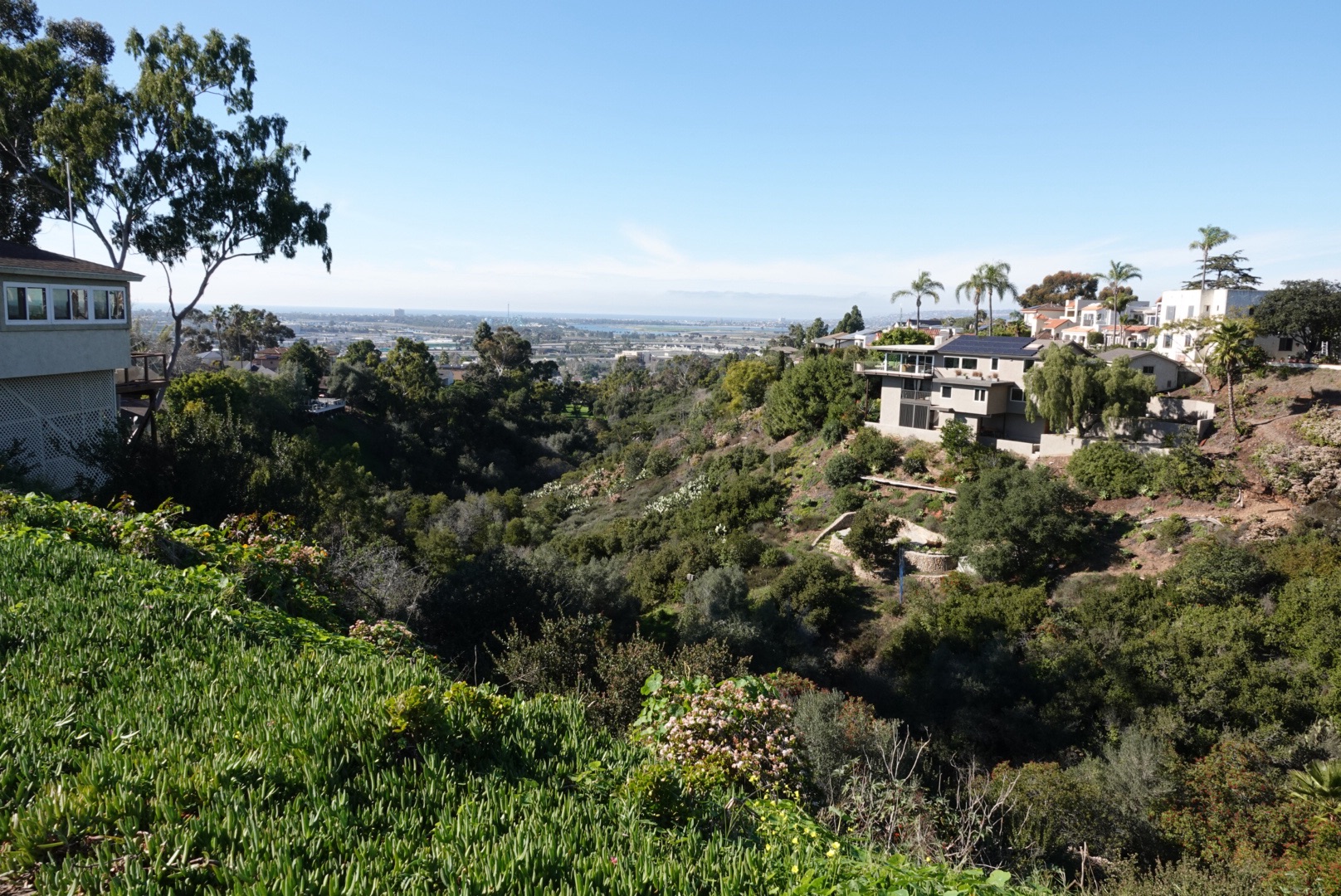
Old Town is the location of the first European settlement in California. That makes it the oldest neighborhood in San Diego, covering an area of about 230 acres. It currently contains Old Town San Diego State Historic Park and Presidio Park, both of which are listed on the National Register of Historic Places, more than 35 historic sites and museums to explore, plus a large retail and restaurant area.
(From Wikipedia) Old Town was the heart of the city of San Diego until the 1860s, when a newcomer to San Diego named Alonzo Horton began to promote development at the site of present-day Downtown San Diego. Residents and businesses quickly abandoned “Old Town” for Horton’s “New Town” because of New Town’s proximity to shipping. In 1871, government records were moved from Old Town to a new county courthouse in New Town, and Downtown permanently eclipsed Old Town as the focal point of San Diego.
Not everyone deserted their old neighbourhood, though, as evidenced by the building of the lovely Church of the Immaculate Conception in 1917, and the addition of streetcar lines connecting the area with the rest of the city.

Walking in from the east, we first reached the very picturesque Heritage Park Victorian Village, a 7.8 acre urban park within the Old Town. Within it are 6 Victorian era homes and San Diego’s first synagogue, all of which were significant historically but in danger of being demolished to make room for “new” downtown San Diego’s rapid expansion. Between 1971 and 1981, the houses were moved from their original locations and moved into their new “neighbourhood”. The exteriors have all been restored, but only two are accessible inside: the cottage, and the McConaughy House which has a tea room and gift shop on its ground floor.
Temple Beth Israel was built in 1889 in the Classic Revival style. It was also used as temporary quarters for many other religions before they established churches of their own!

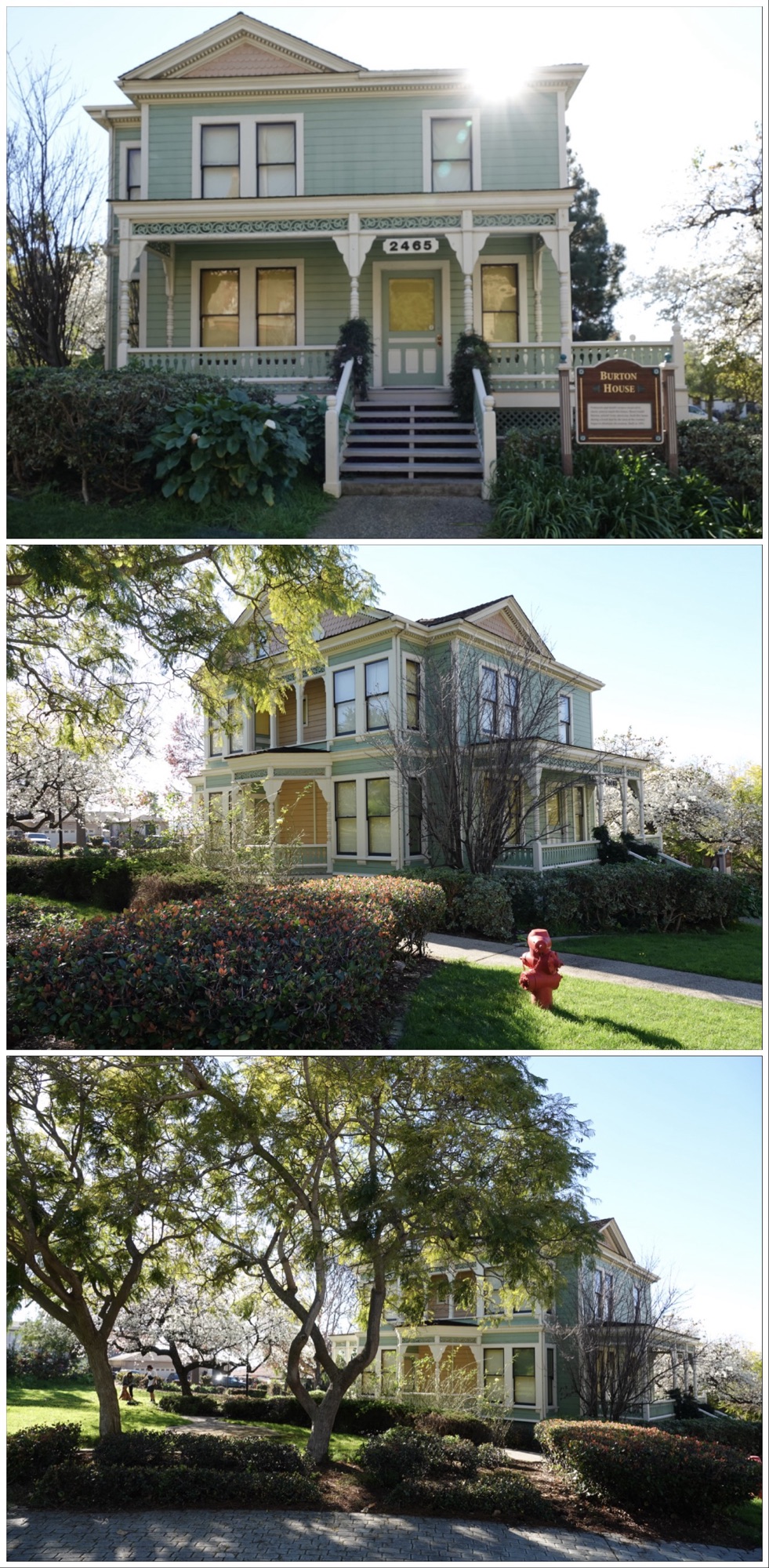
Lovely mint green Burton House, built in 1893 by retired Army physician Dr Henry Guid Burton, is also Classic Revival style, which was part of a trend for homes to be less “fussy” than the elaborate Victorian houses.
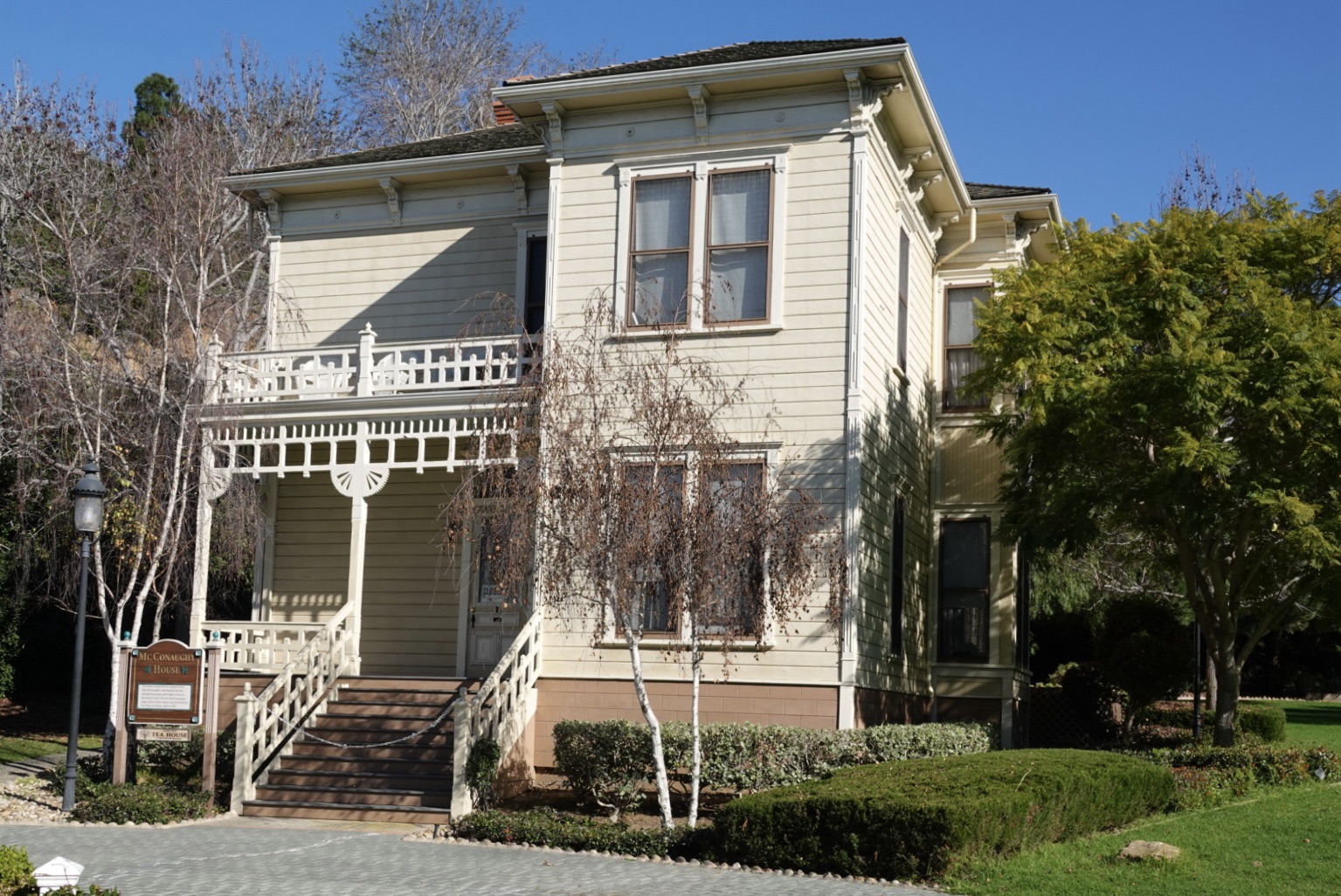
McConaughy House was built in 1887 by John MConaughy, a rancher from Northern California who founded the first scheduled passenger and freight service in San Diego County: 4-horse passenger stages and 6-horse wagons, respectively. What makes the house architecturally interesting are its decorative Eastlake brackets, the low pitch of its roof, and the bay window (off to the right, hidden by the tree).
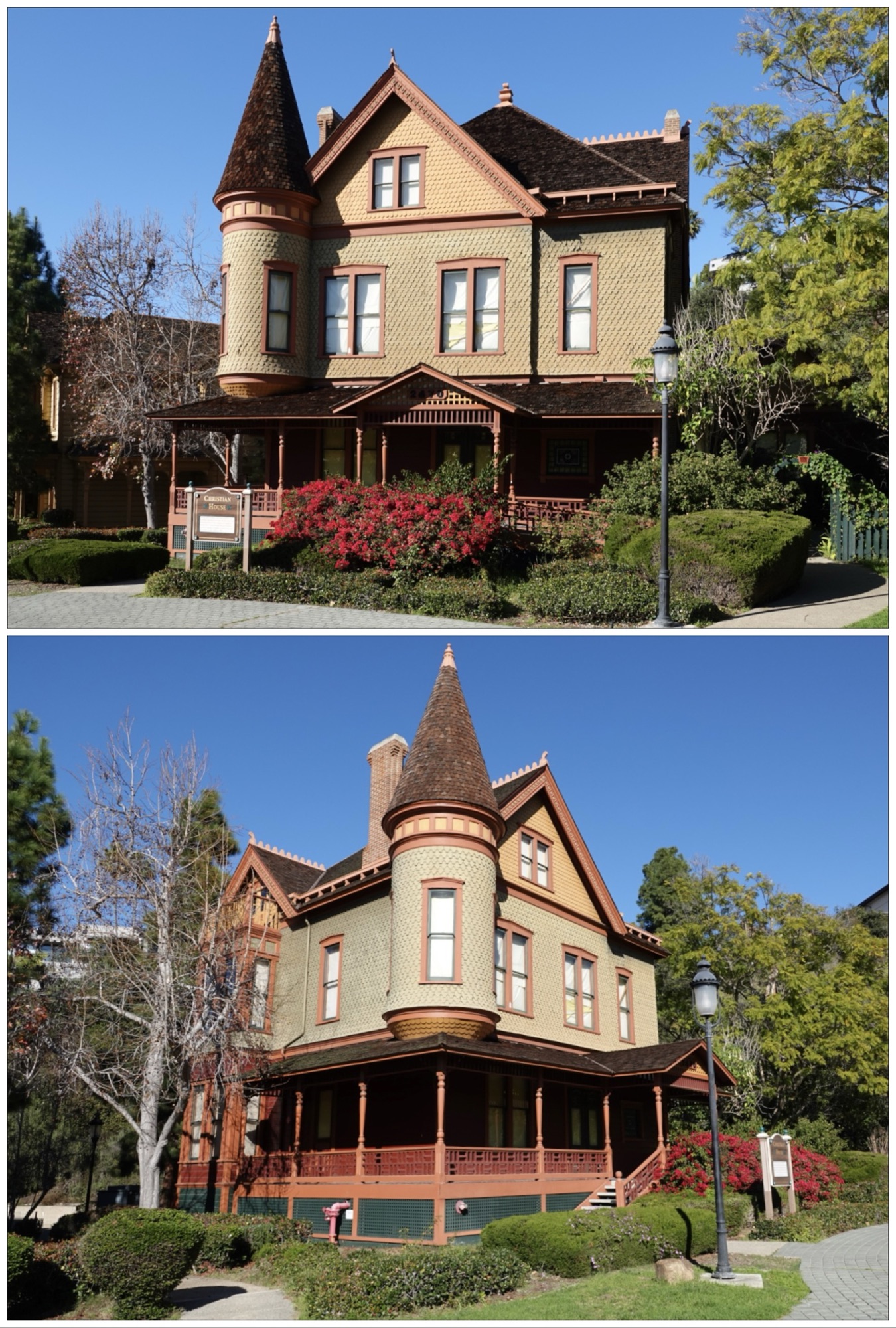
Christian House, in Queen Anne late Victorian era style, has all the embellishments: turret, chimneys, shingles, wraparound porches, and lots of decorative cutwork. Its owner, Harfield Timberlake Christian was founder and president of the San Diego Title Insurance Guarantee and Trust Company (a name almost as impressive as his own!) and a commissioner for the 1915 Panama-California Exhibition (which was responsible for all the gorgeous buildings still standing in Balboa Park).
Bushyhead House was built in the Italianate style (with double doors), in 1887 by Edward Wilkerson (Ned) Bushyhead. I’ll bet no-one made fun of his last name; he was San Diego County Sheriff, Chief of Police, AND owner of the city’s newspaper. As Ted commented: “he ran the city”.

The most visually interesting of the houses was Sherman-Gilbert House, built in 1887 by San Diego Master Builder John Sherman in 1887. The eclectic style is called Stick Eastlake, and typically includes a widow’s walk, a circular window, and asymmetrical decoration.

The smallest house in the “village” is the Senlis Cottage, built in 1896 for a horticultural worker. The style is called 19th Century Vernacular, and while it looks quite decent from the outside, it had no amenities – no gas, electricity, water, or sewer, which the other houses represented here would have had. It seems ironic that now it’s one of just 2 of the buildings with an accessible interior space, and houses the public restrooms!

After wandering through the heritage village, our original intention was to head to the State Park, but we (okay, I) got distracted.
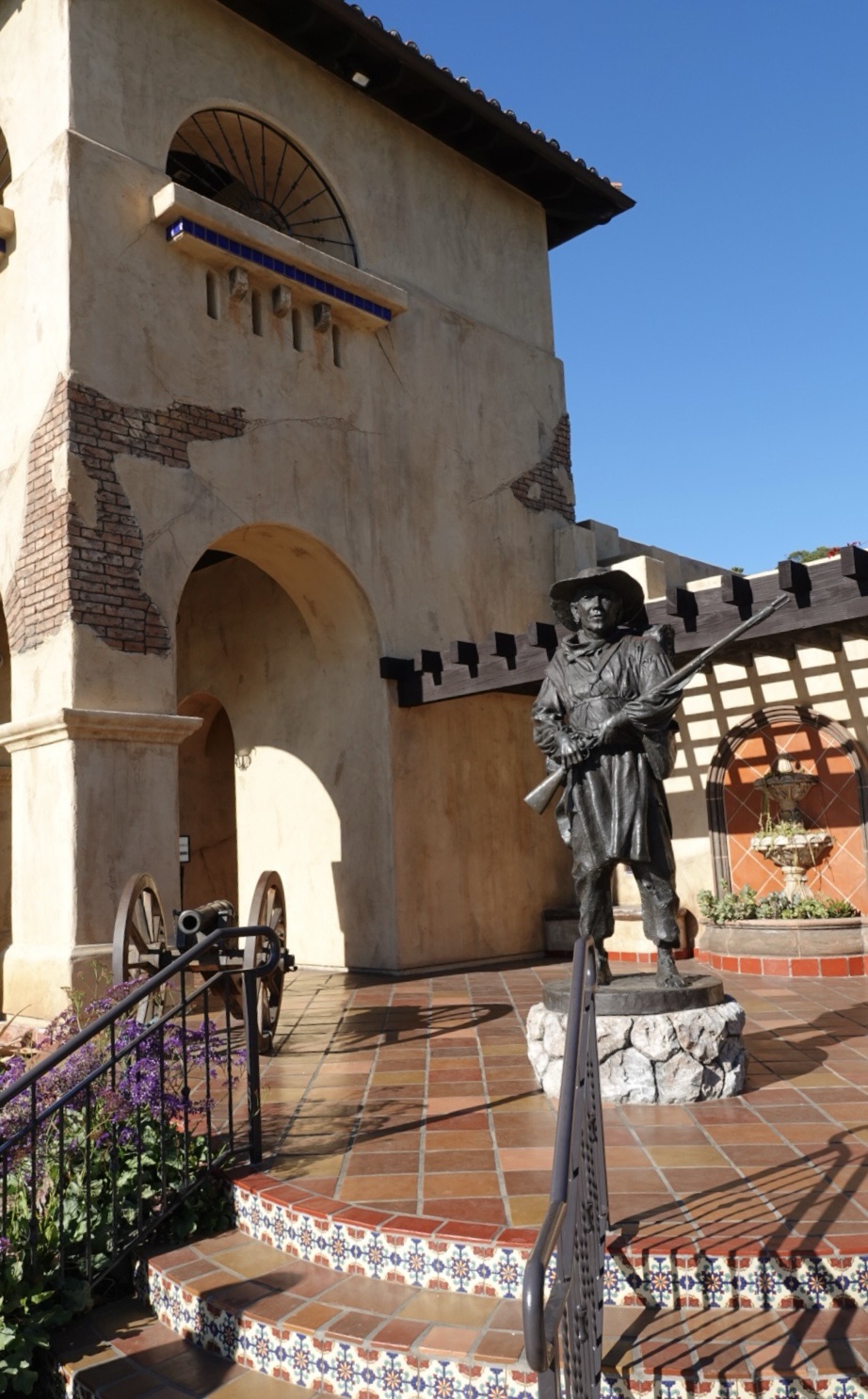

Guided by two young women in historical costumes from the period, we were taken on a very interesting journey following the battalion (in just 35 minutes!) on their 6 month 2000 mile trek from Council Bluffs, Iowa to San Diego. The trip is still one of the longest marches in U.S. military history, and included not only the men who were convinced by Brigham Young to answer the US government’s call for volunteers, but also women and even a few children. It’s amazing that only 27 of the group members died due to illness (malaria, mostly) and accidents. When they reached Pueblo, Colorado, most of the remaining women and children were left there, while 335 men and four women continued on to San Diego.
The battalion arrived in San Diego on January 29, 1847, by which time the war had ended. We were told through the presentation that the men never really wanted to have to kill anyone, and felt that God had used the arduous journey as a way to provide them with the funds and the skills they needed to reach the coast. In San Diego the members of the battalion found work doing things like building, digging wells, blacksmithing, repairing wagons, and brickmaking. They built the first fired-brick structure in San Diego, which became the city’s first courthouse. Most of the battalion eventually returned to their families and were integral to later creating a new settlement in Utah.
We really enjoyed the presentation. Not only did we learn something new, but we were really entertained. The way the videos “spoke” to us, through windows and paintings, and “moved” from room to room, was worthy of a Disney ride, only on a very much smaller scale. We even got “shaken” on our wooden crate seats when our “camp” was stampeded by longhorn cattle!
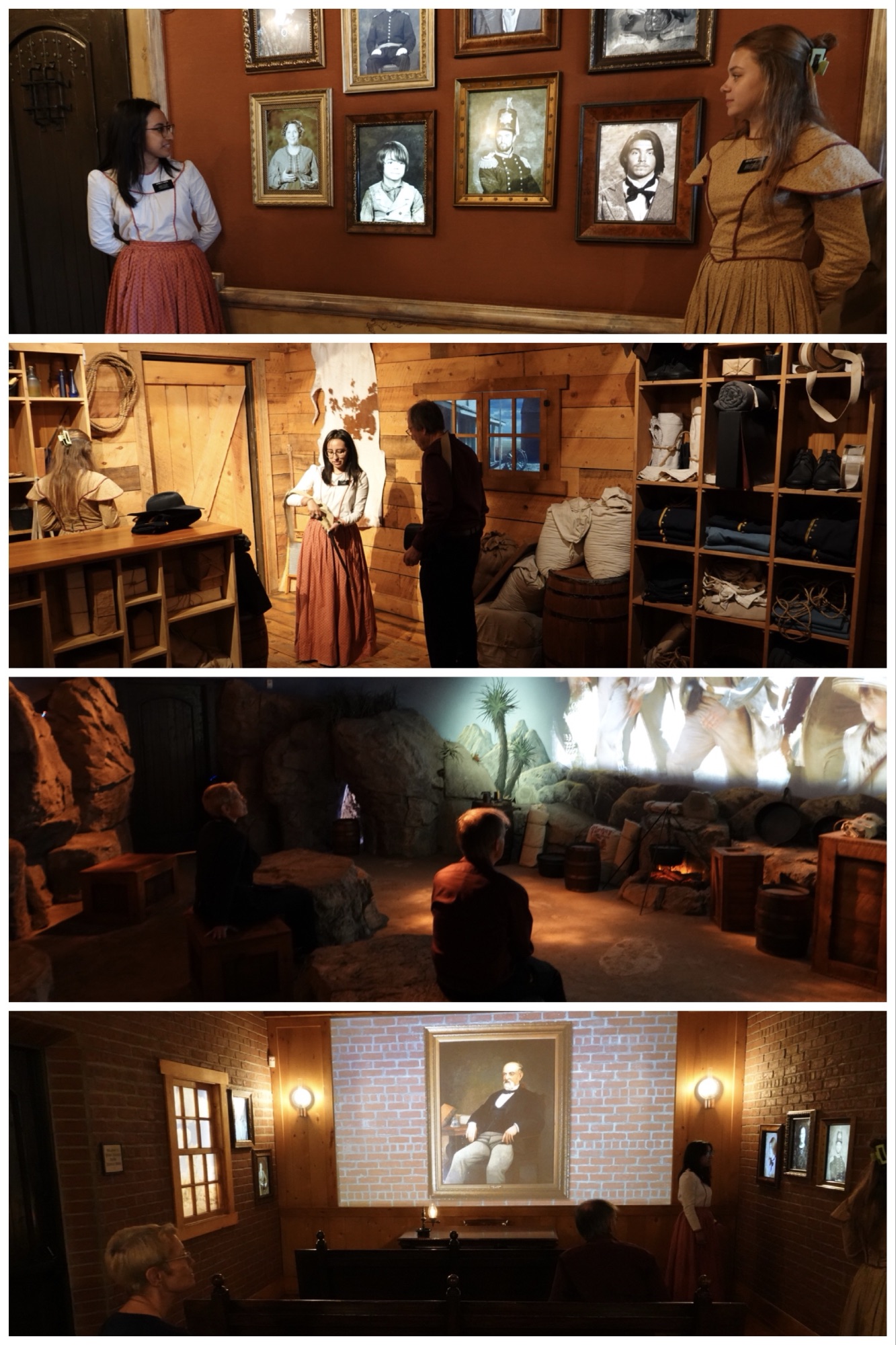
2. On our “arrival” at Fort Leavenworth, a volunteer from our group was outfitted with rucksack, canteen, haversack, ammunition bag, bayonet, rifle, broad-brimmed hat, and identifying white leather belt – almost 50 lbs to carry over 2000 miles!
3. Our temporary camp in the desert – where the cattle “attacked”!
4. Finally in San Diego, in our newly built courthouse, with a painting about to come alive.
I wished our grandsons could have been there. I’m sure they’d have been fascinated by the show, and the chance afterward to pan for gold (as some of the battalion’s men did at Sutter’s Mill, kicking off the California Gold Rush).
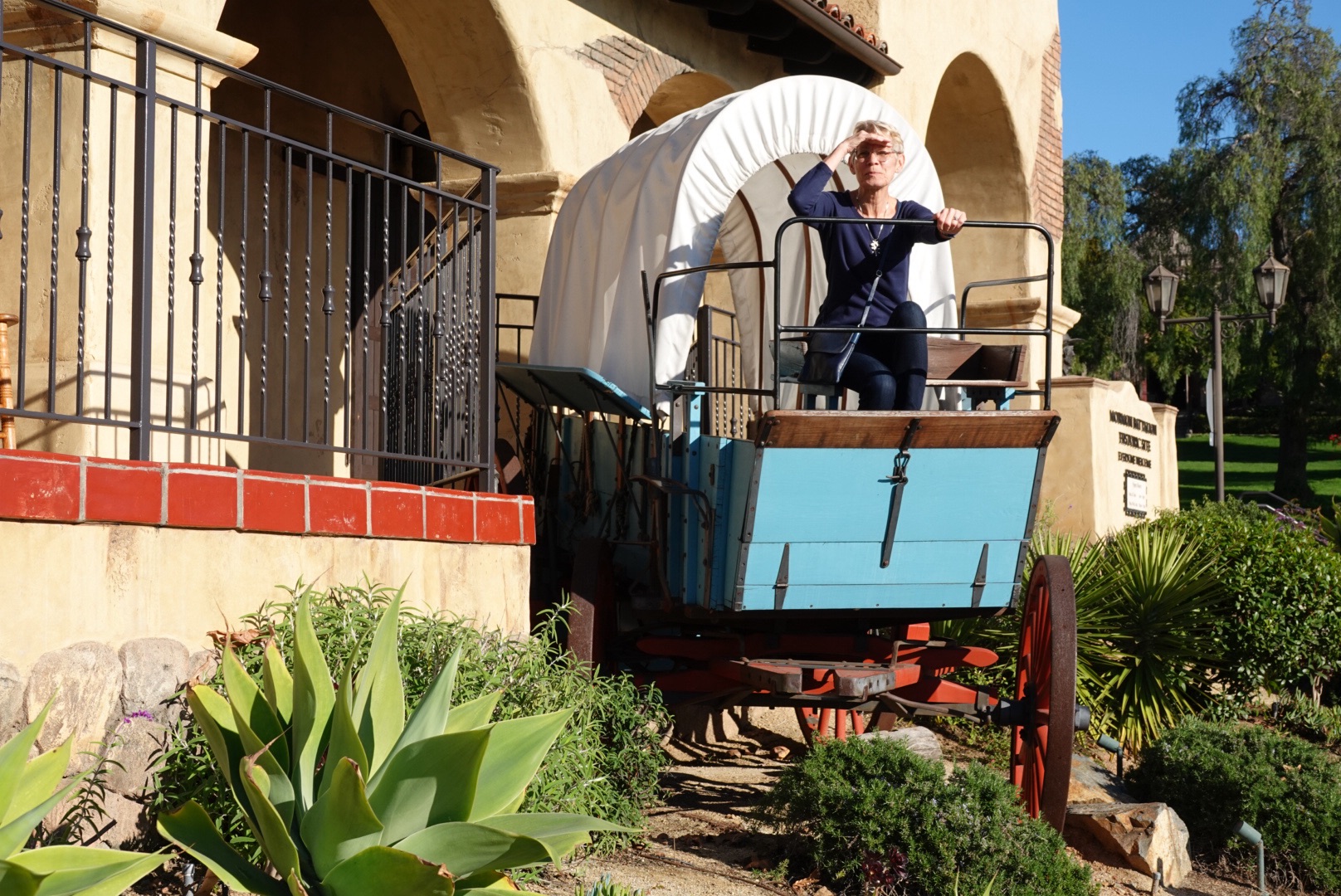
There was just time for coffee before heading back to our flat, since we wanted to be back before dark. There’s no doubt at all that we’ll be returning to explore more of Old Town San Diego in the coming weeks.
 Rose and Ted’s Excellent Adventure
This district looks far more settled and tidy than I remember in the 70s — good to see. Thanks — and good luck through the coming “atmospheric river.”
LikeLiked by 1 person
Gently raining right now, which is making everything look even greener (if that’s possible) in “our” canyon.
LikeLike
Rose,
I learn so much from your travels! You make the reader feel like they are there. I love the way you and Ted explore and experience new things!
Thanks for taking us along!
Carol
LikeLiked by 1 person
Glad to have you with us!
LikeLiked by 1 person
Thank you for sharing – great architecture in the houses you saw
LikeLiked by 1 person