(And yes, I know it’s pronounced “Hee-Lo”)
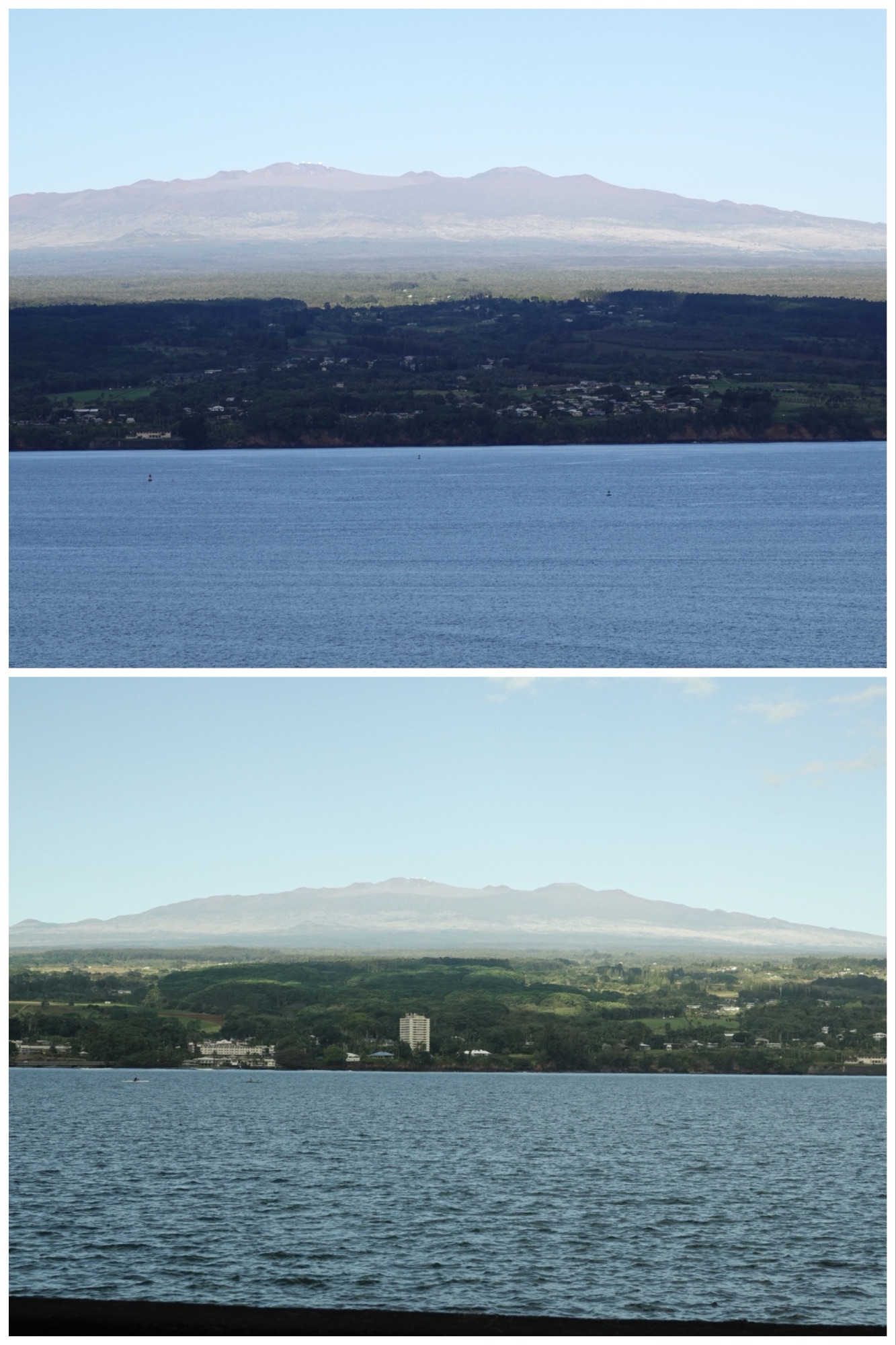
Maunaloa (“long mountain”), the largest active volcano on earth, and Maunakea (white mountain, named because it can be snow-capped) were both visible as we pulled into port this morning. If they don’t look like what most of us picture when we think of volcanoes, it’s because Hawaii’s volcanoes are shield volcanoes, not cinder cone or composite/strato volcanoes. Shield volcanoes have long sloping sides and overflow with bubbling lava that may also bubble out of side vents; when not erupting, steam and sulphur dioxide are released through vents. The stereotypical conical stratovolcanoes like Mount Saint Helen’s, Mount Vesuvius, and Mount Etna violently expel lava, ash and rocks from their tops and from side fissures.
Today we were at the top of a waterfall, at the rim of a crater, above a volcanic steam vent, and inside a lava tube. It was AWESOME!
Today’s excursion description:

I have to revise my opinion about our best day in Hawaii, because today’s experience topped yesterday’s.
As usual, though, HAL’s organization was lacking. Even though all excursions had to be confirmed no later than 72 hours before their date, none of the tour operators were given lists of who their passengers would be. That seems, to us, unprofessional. No tour guide should have to guess how many people they are waiting for, or delay on-time departures “just in case”.
But, back to our tour. First, our guide Sam, a young environmental scientist for whom guiding is a second career after working in his field all over the United States, was fantastic. His passion for geography, geology, and botany – combined with a birding hobby – made him the perfect guide for our day.
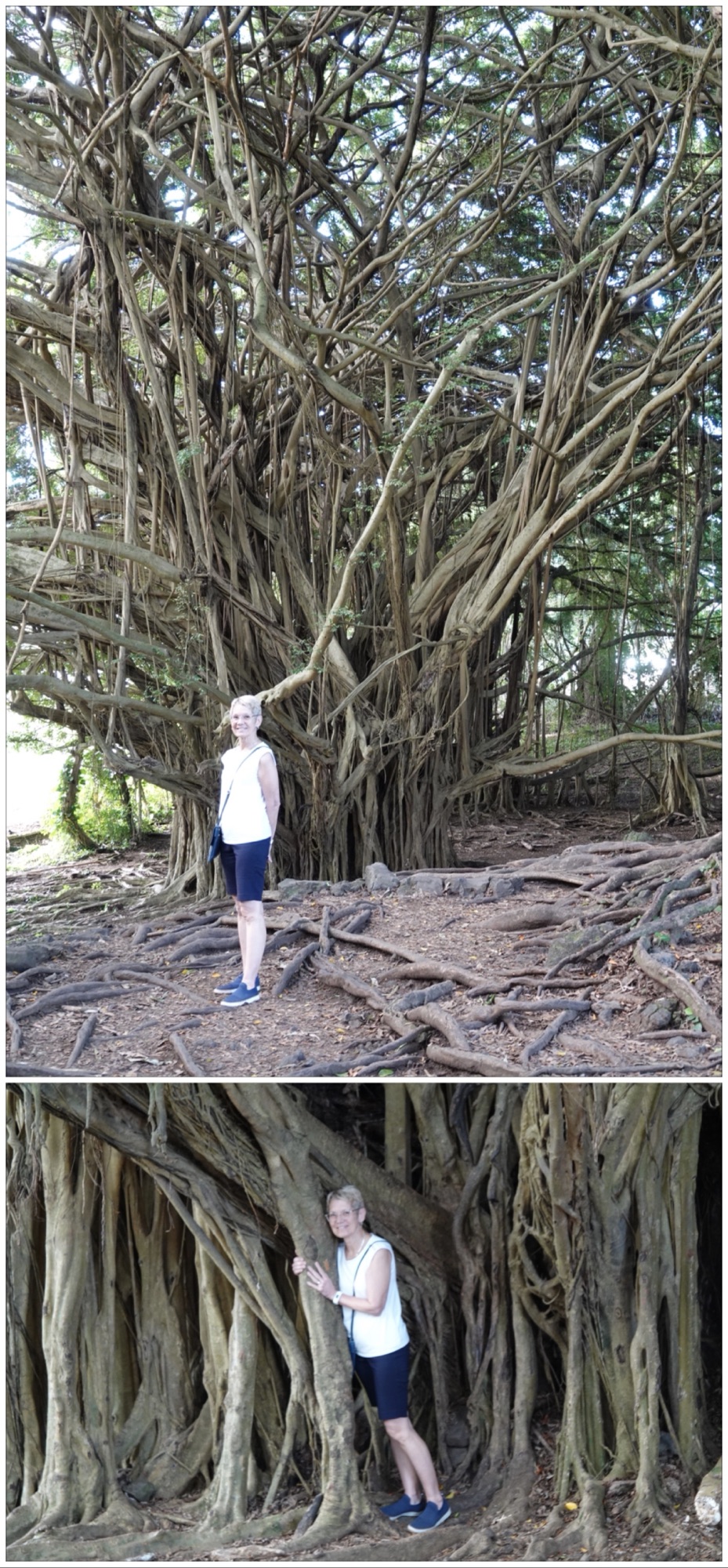
We headed out along Banyan Avenue, so named because of all the banyan trees lining the street. Banyans were imported to the island from India.
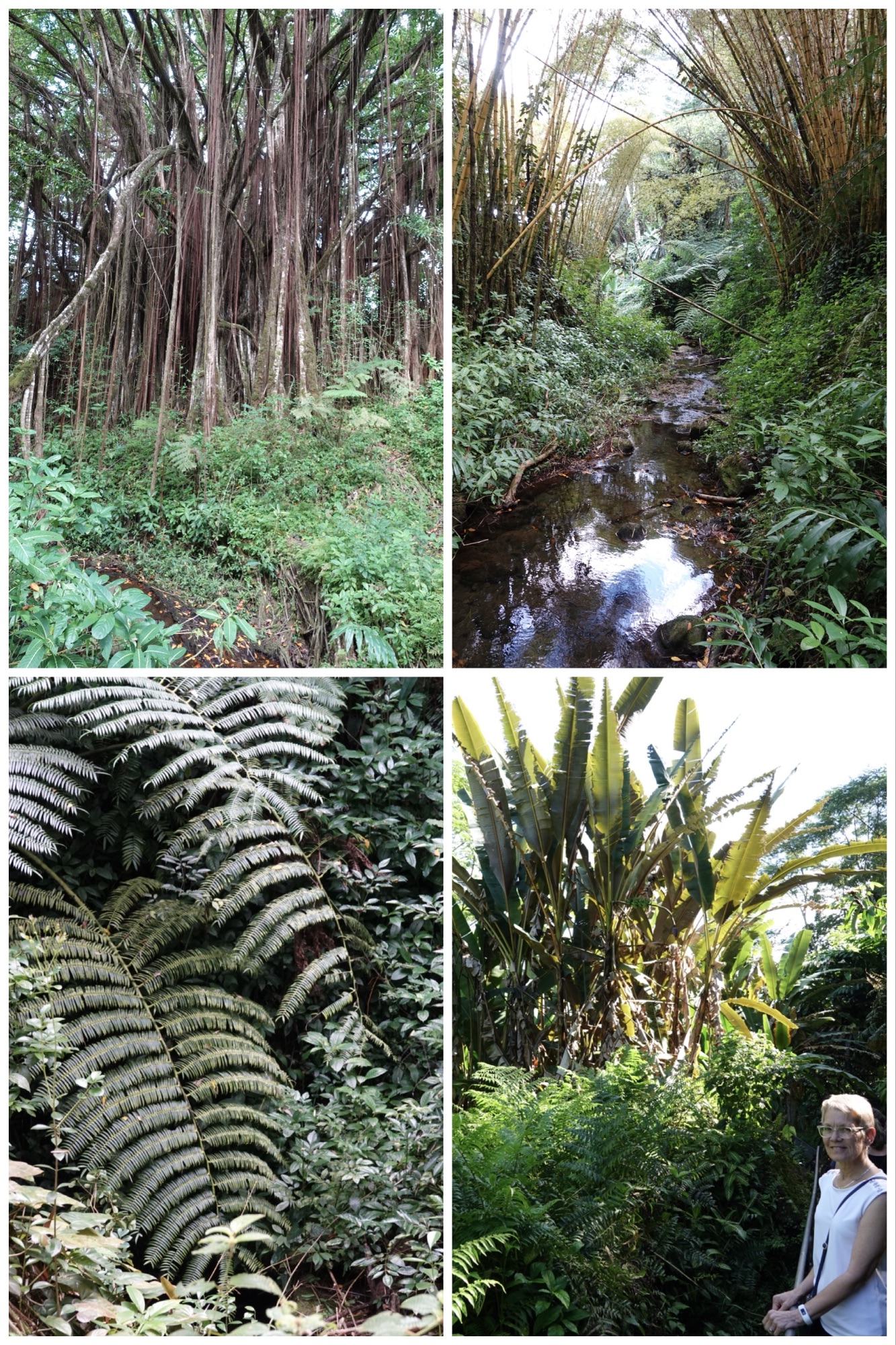
Our first destination was the 80 foot Rainbow Falls. One of the things that continue to impress us on the “wet” side of the island of Hawaii is how large the plants grow.

created by lava flows.
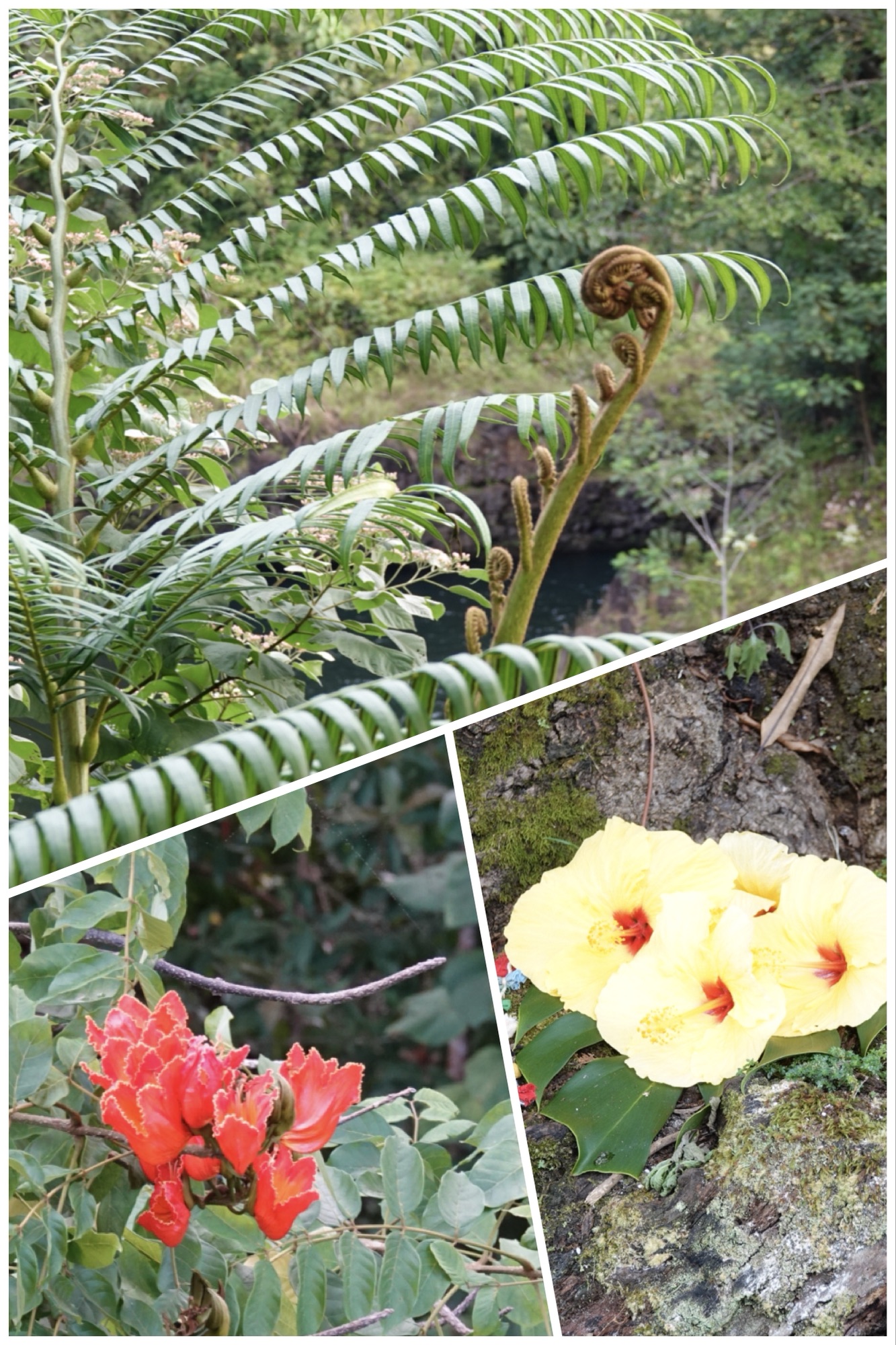
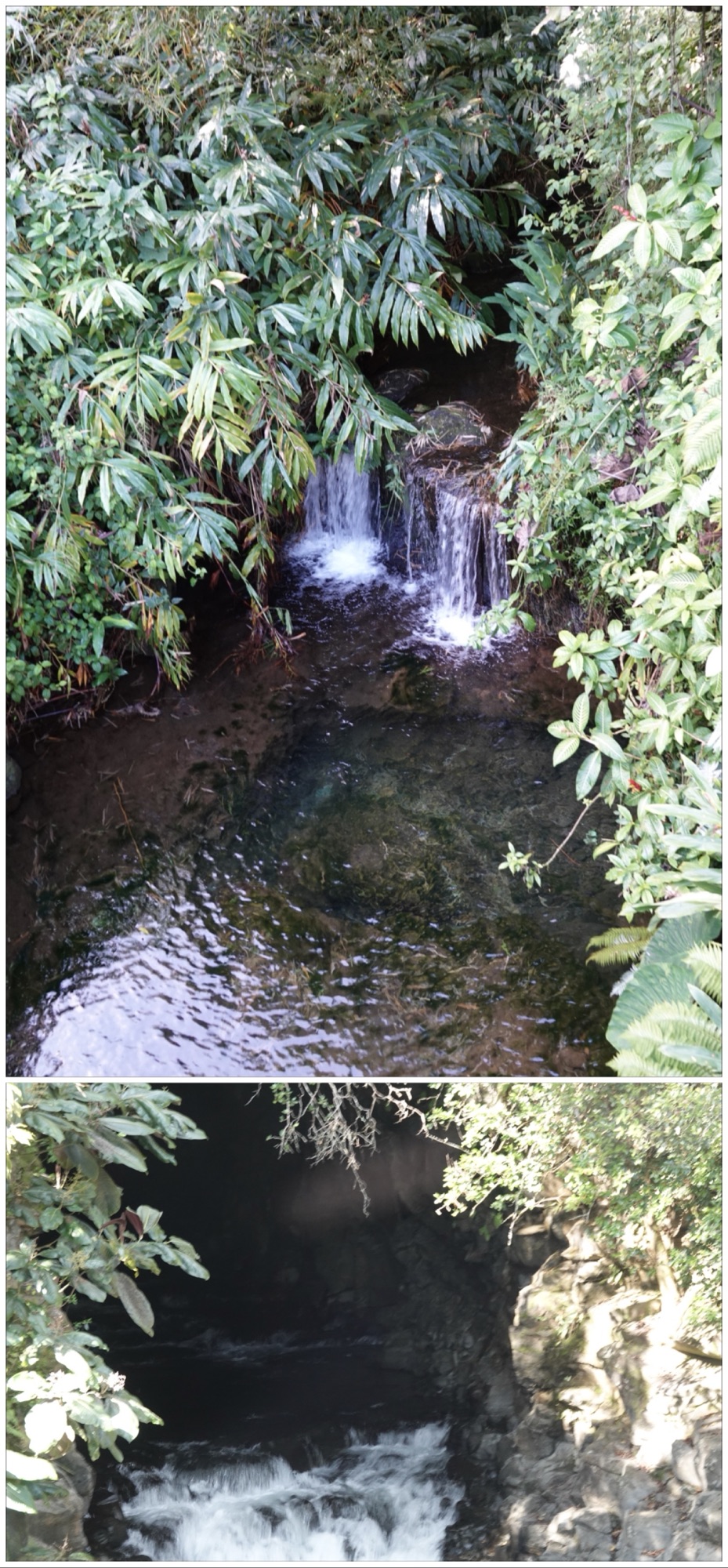
Our next stop was at Akaka Falls. While only a narrow flow, with their drop of 442 feet these falls are twice as tall as Niagara’s Horseshoe Falls.
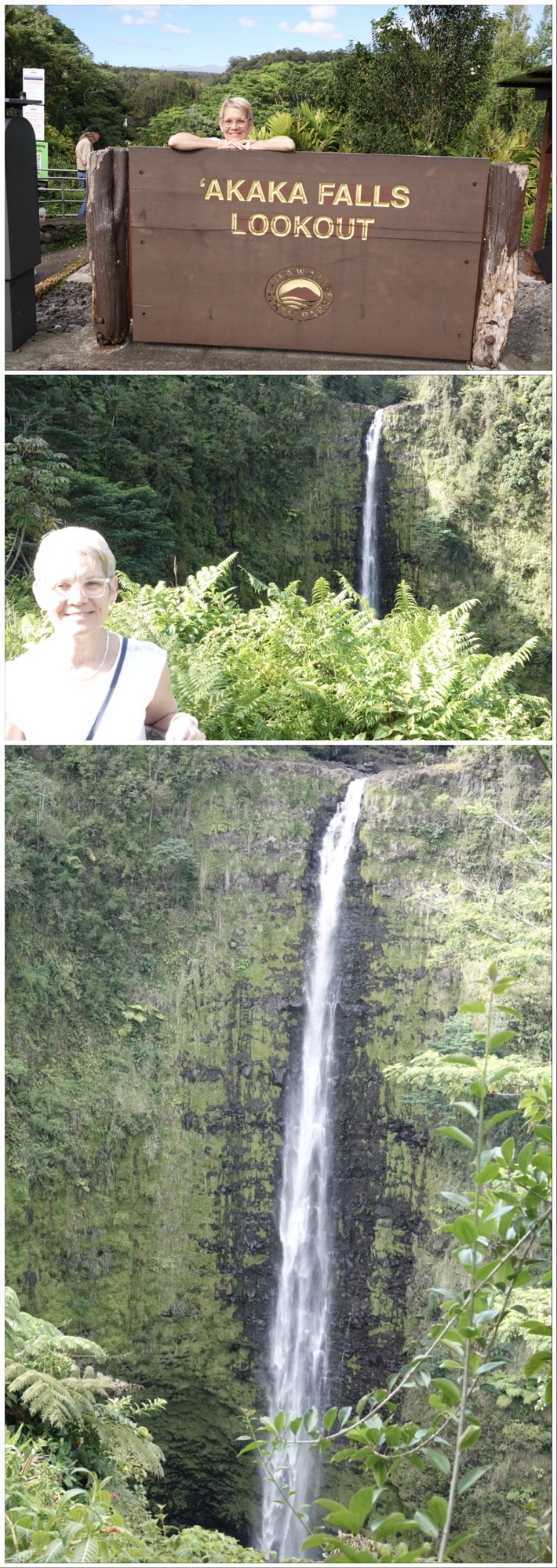
Once again, it was the size and lushness of the vegetation that wowed us almost as much as the beauty of the falls.


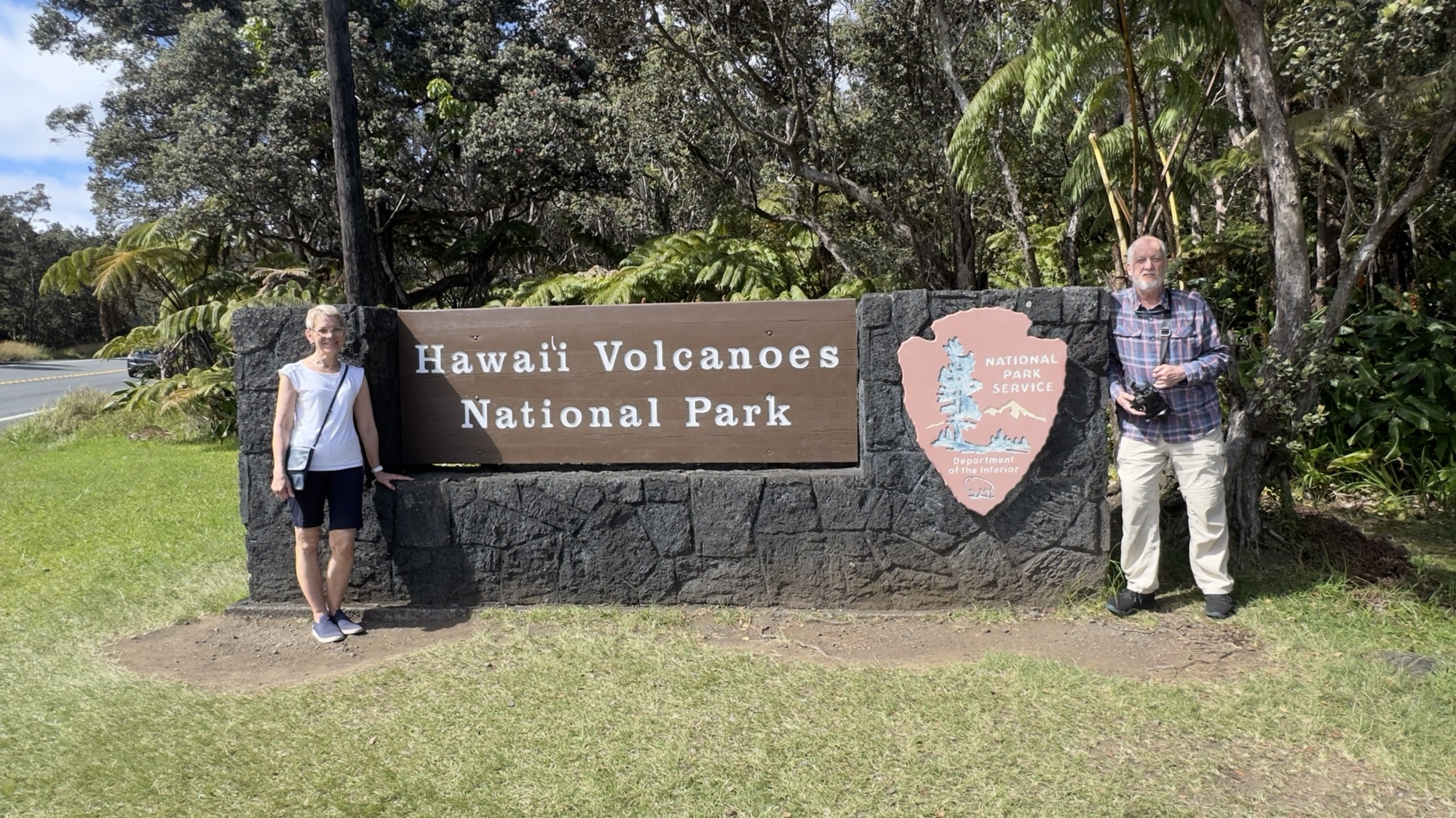
Next it was on to the day’s main attraction: Hawaiian Volcanoes National Park! Our friends Judi and Joe highly recommended this, and I’d forgotten that we’d booked an excursion which included it.
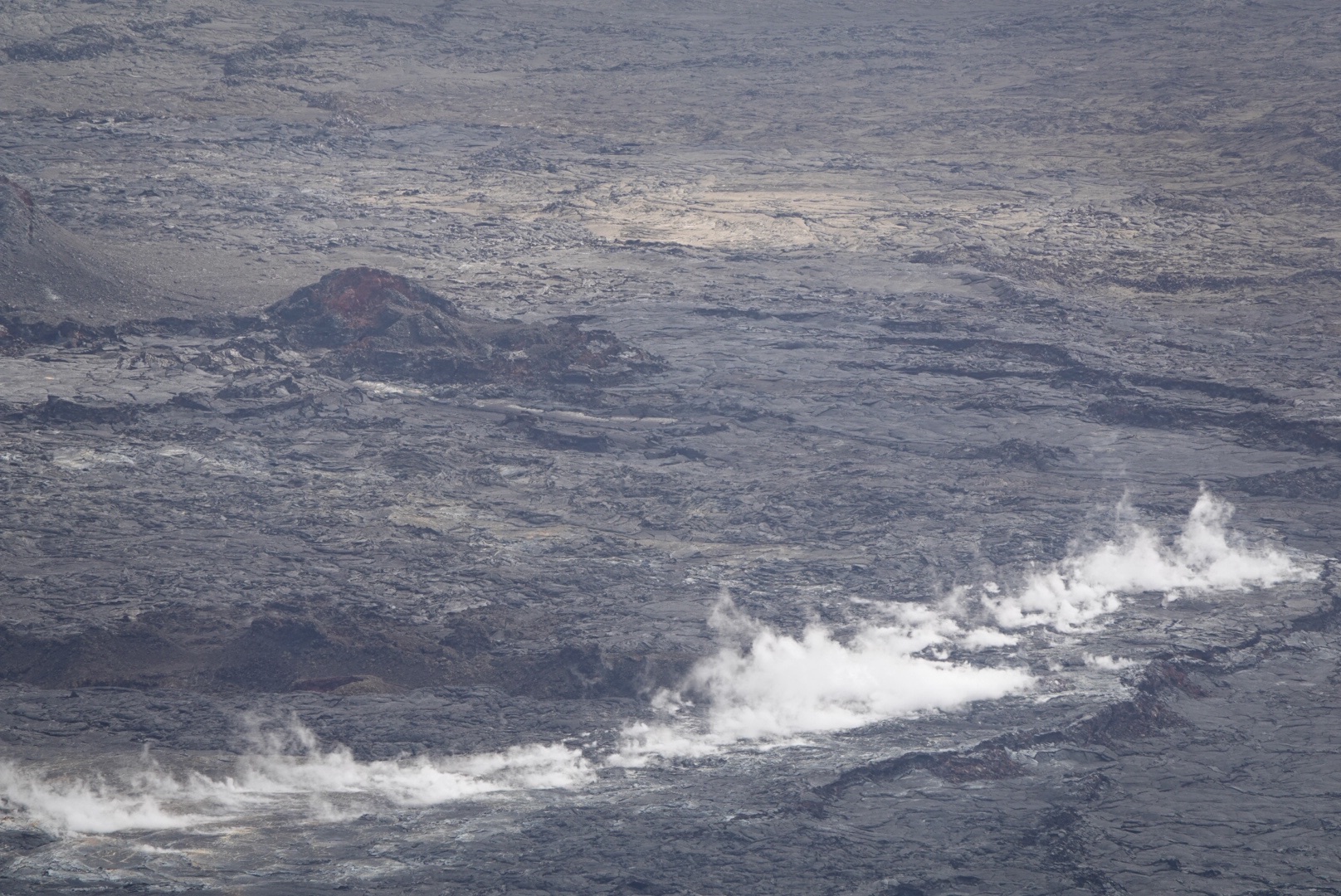
After a quick sandwich lunch outside the visitor centre, Sam drove us to the edge of Kīlauea caldera (crater). “Awe-inspiring” would be understating things, and – as is the case with being at the Grand Canyon – photos really can’t do justice to the blacks, greys, and brown colours of lava at different stages of cooling, or to the sheer size of the crater, which measures 2-1/2 miles long and 2 miles wide (3.2 km x 4 km) . Its floor has an area of approximately 2,600 acres (4 square miles/10.5 sq km).


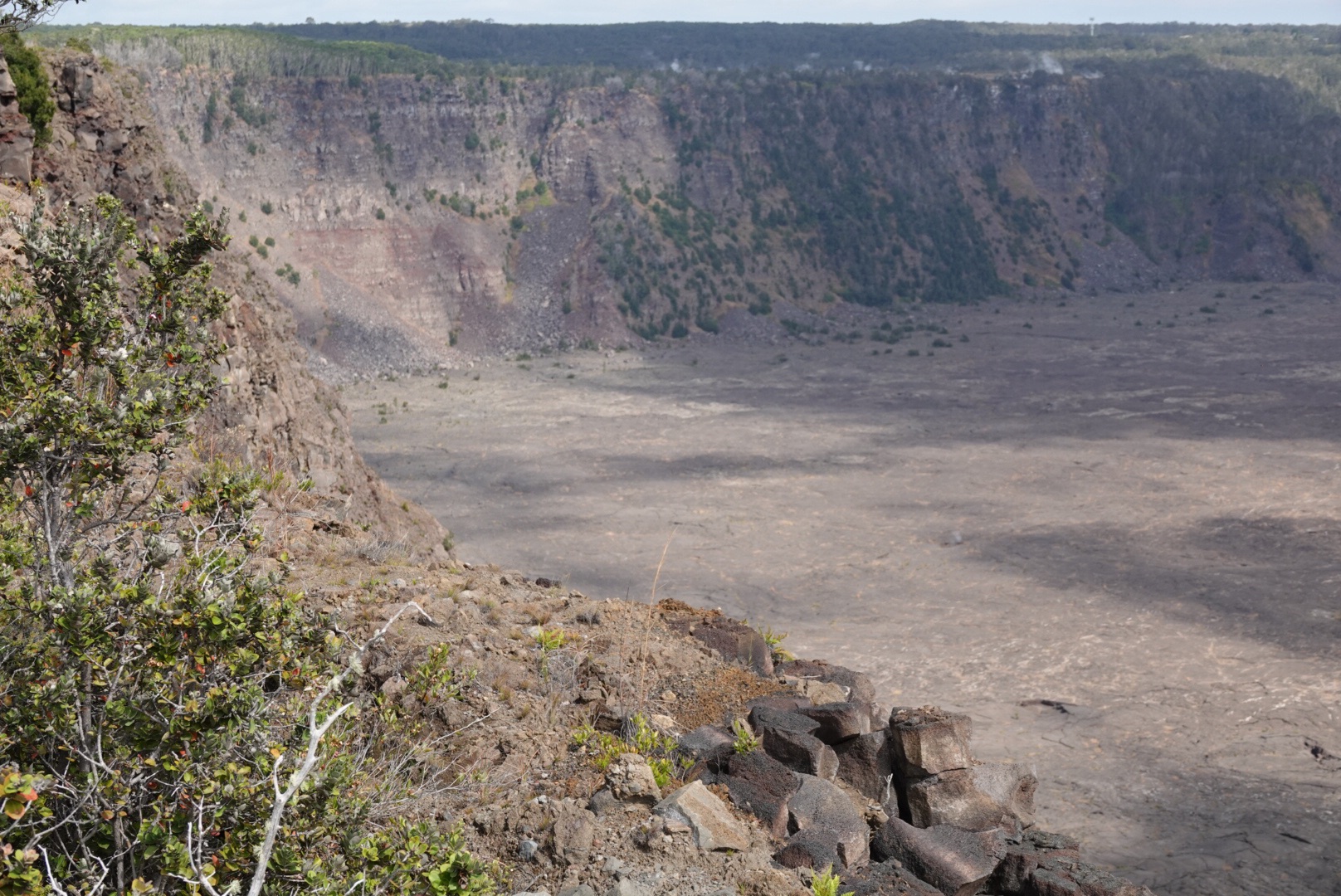

Based on seismic data, Kīlauea is set to erupt again any time. Sam thought it would be beyond amazing if it happened while we were there, given that this kind of volcano does not “explode”, but just bubbles slow-moving lava. I’m not 100% in agreement, but it was more than a little bit thrilling to see the sulfur dioxide gas actively venting in the crater.
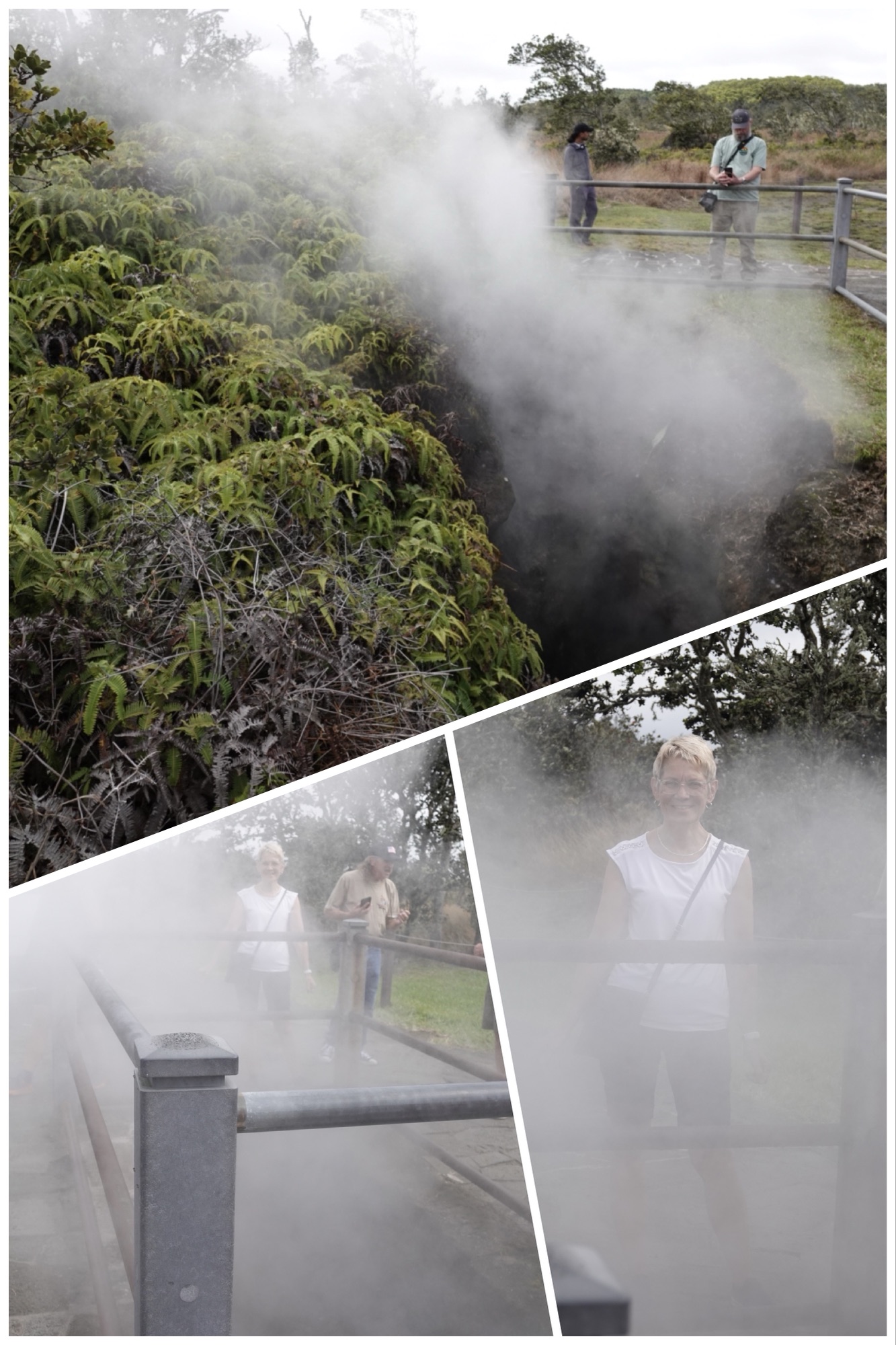
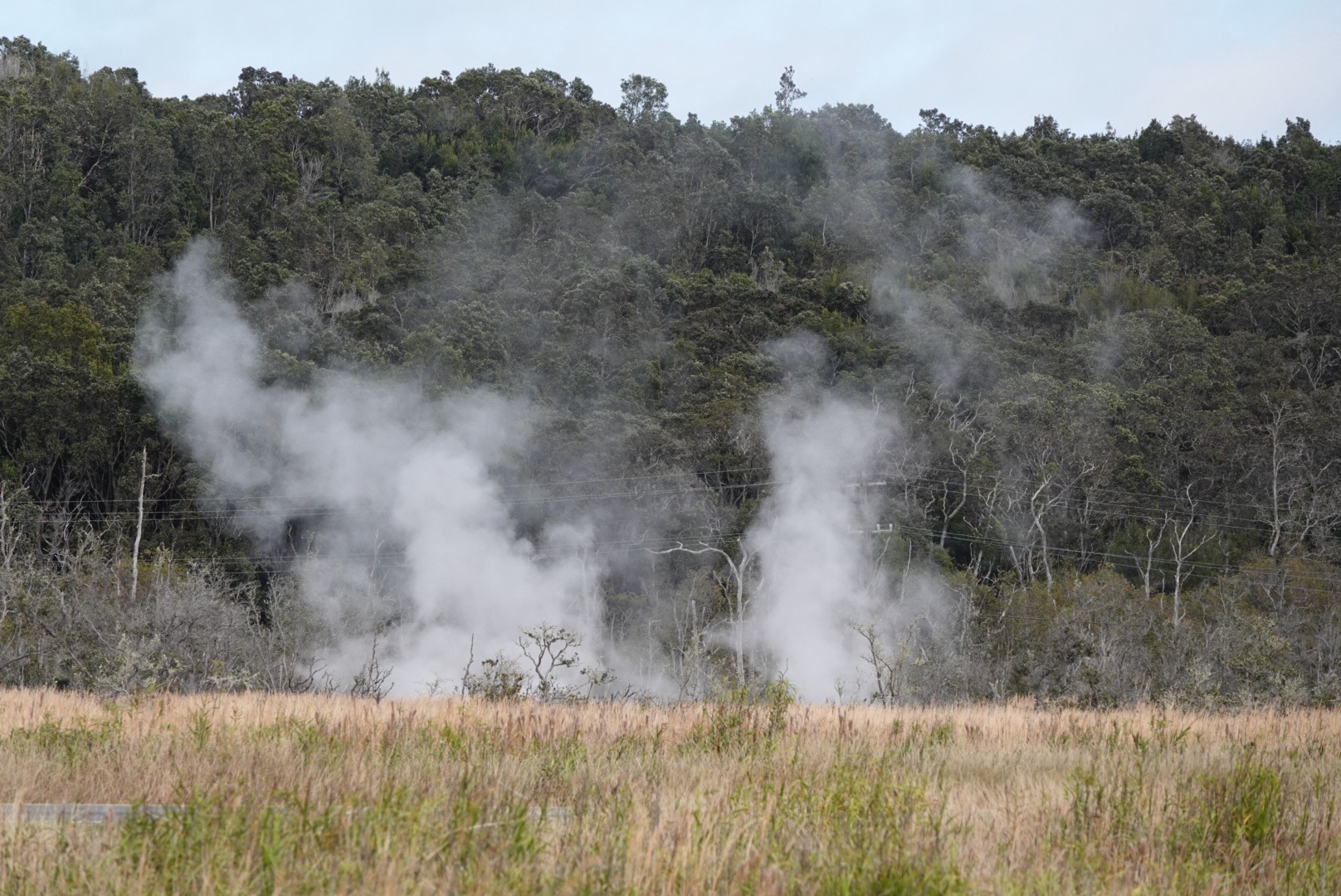
Speaking of gases venting, after leaving the crater’s rim we drove about a kilometre along the road to the Kūkamāhuākea (steam vents), where steam is venting from the volcano. This happens because hot magma is boiling the water in underground aquifers. Standing above a steam vent is like being in a sauna, or maybe in a “schwitz” (steam bath).
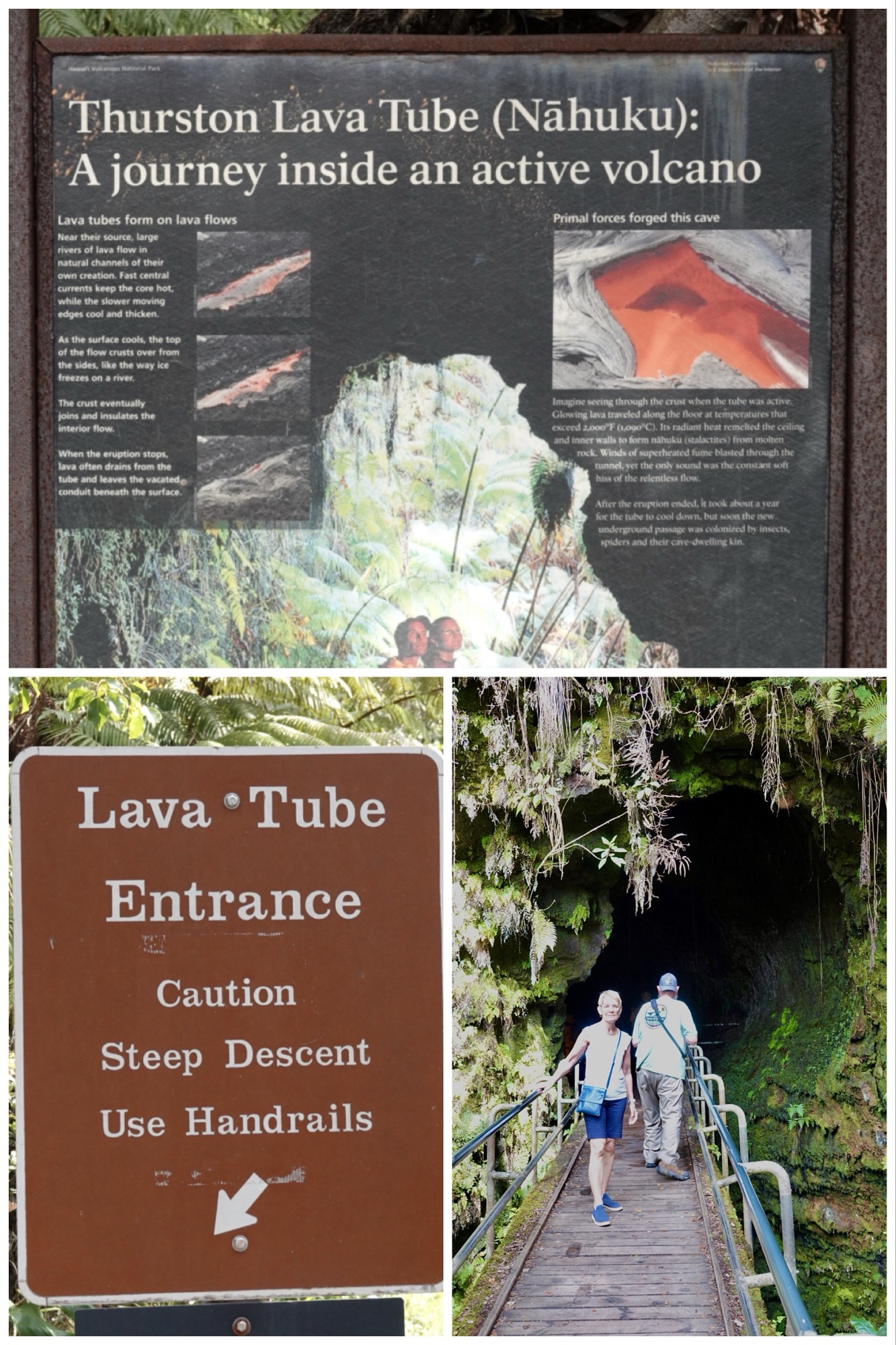
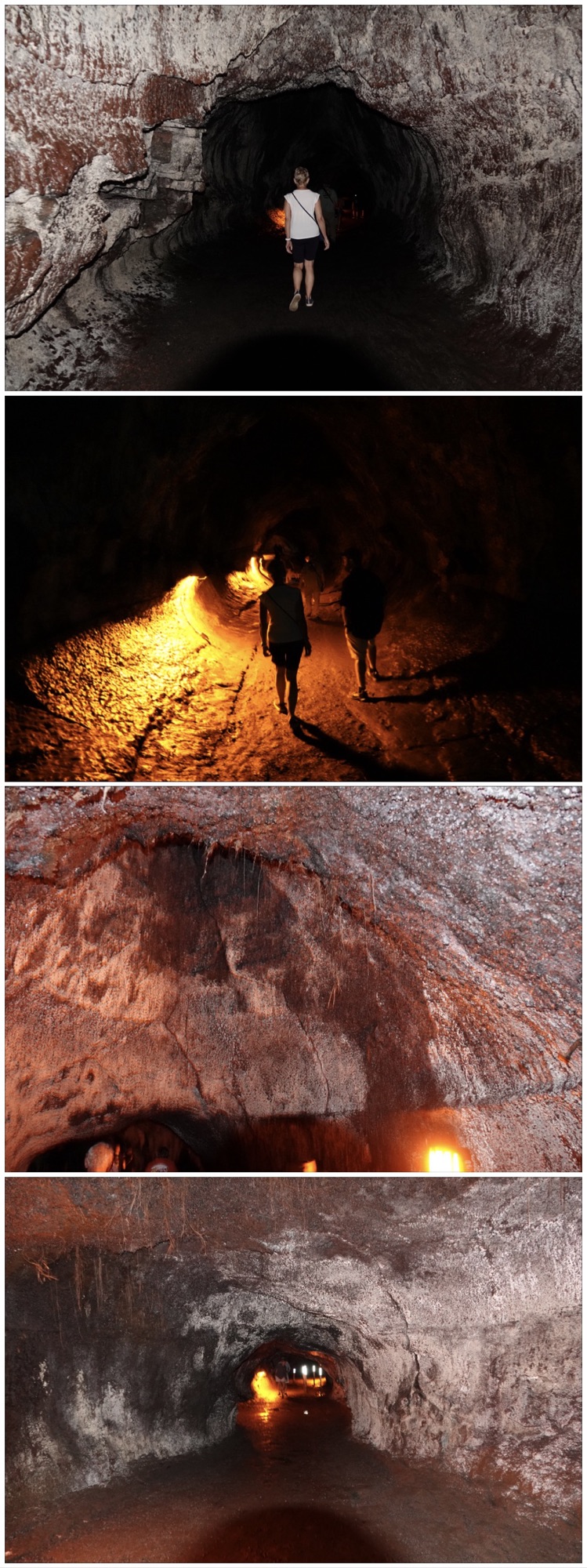
Just when we thought the day couldn’t get better, we found out that we’d be able to walk through a lava tube!
Our grandsons play a game where they need to avoid things designated as lava. We, on the other hand, have spent the past few days living on lava!
Just imagine layer after layer of molten lava flowing across the land. As the upper layer cools and forms a crust, the lava underneath continues to flow, forming a tunnel. Decades – or centuries – later, the cooled lava is a solid rock tube, big enough to walk through! Thurston Lava Tube was named after a prominent family of missionaries who later became powerful landowners, and part of the group who overthrew the Hawaiian monarchy. In Hawaiian, the tube is called Nāhuku, literally “the dogs”, but referring to the points (teeth) that were the stalagmites and stalactites in this damp tube. There are currently no formations growing here, because … people.
It was a long tour, 7 hours, that left us tired and stuffed with information. That meant pizza (and margaritas) for dinner. No food photos. No energy.
Tomorrow we were not able to get a tour in Maui, so will just wander on our own. I’ve seen volcanoes, though, so all’s good.
FUN FACT: The written alphabet for the Hawaiian language has only 5 vowels (a, e, i, o, u, with only the o pronounced the same as in English) and 7 consonants (h, k, l, m, n, p, w), and NO words end in a consonant!!
 Rose and Ted’s Excellent Adventure
Sounds like a fabulous day, Rose! Tons of fun, too. “Caving” in the lava tube, especially!
I never knew you actually owned a pair of shorts? LOL!
B.
LikeLiked by 1 person
Funnily enough, on the one day I chose to wear them we were at high elevation and I was chilly!
LikeLike
LOLOLOL!!!!!
LikeLike
I love waterfalls !!
<
div dir=”ltr”>I’m so glad th
LikeLike
On Maui in December I took an Uber to the aquarium. It was really nice, and next door to it was an outdoor mall. I walked over there and booked a Pacific Whale Watching excursion for a couple of hours later. Had lunch outside. Didn’t see whales, it was early in the season. I bet there are plenty now. I then called the Uber driver and was brought back to the ship.
LikeLiked by 1 person
Wow what a fascinating day! thanks for sharing
LikeLiked by 1 person
We were a day or so different from you on your trip. We did Hilo on Thursday, Kahului on Friday, Honolulu Sat/Sun and Nawiliwili on Monday. Rainbow Falls was great… did your guide tell you to stare at the falls for 10 seconds and then look left out right? It caused the stuff in the side to look like it was moving up. A little freaky. Glad you’re having a good time… we’re off to American Samoa with 7 Sea days. Thanks for your great updates.
LikeLiked by 1 person
We didn’t get that visual trick.Too bad, because it sounds fun!
LikeLike