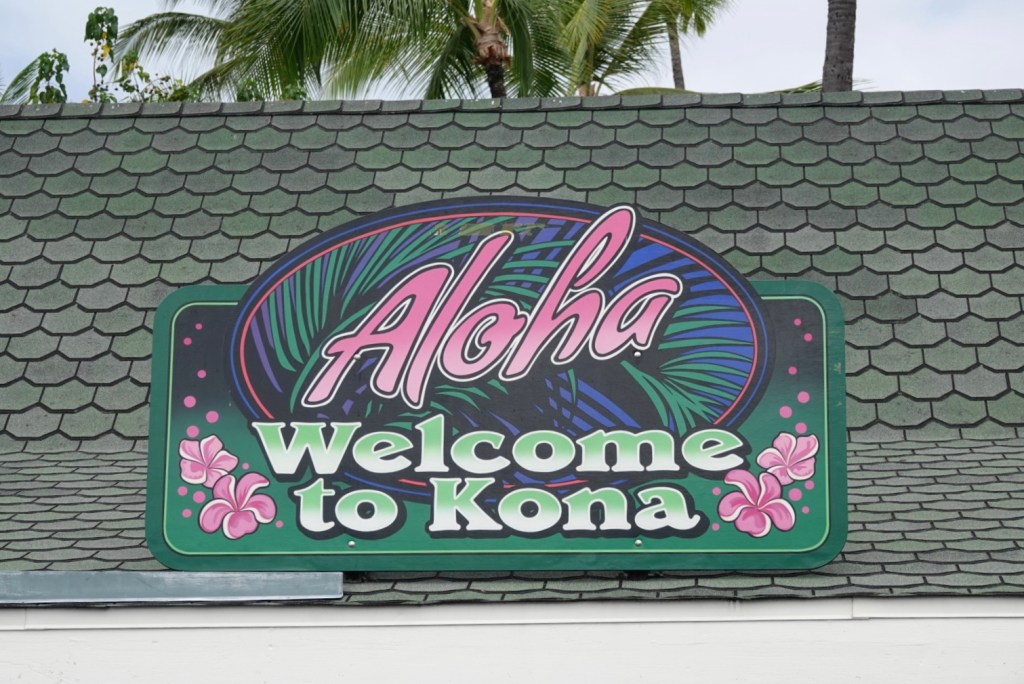
Today was our best day yet in Hawaii, despite an uncertain start.
Captain Jutten’s announcement at 8 a.m. today was that there were high swell conditions which would make tendering ashore “challenging”. Folks with mobility issues were forewarned that going ashore today would not be possible, since embarking and disembarking the tenders was unsafe. People who had booked glass bottom boat or submarine tours were told that those excursions had been cancelled and would be refunded.
For us … well, taking the “challenging” tender ride or forfeiting our excursion cost were the only two options. Ashore, the weather was predicted to be 79°F/27°C and partly cloudy.

I really didn’t want to be the reason we missed today’s outing, so …meclizine to the rescue.
And as it turned out, we’d experienced much rougher tender transfers on our World Cruise. I probably needn’t have taken anything.
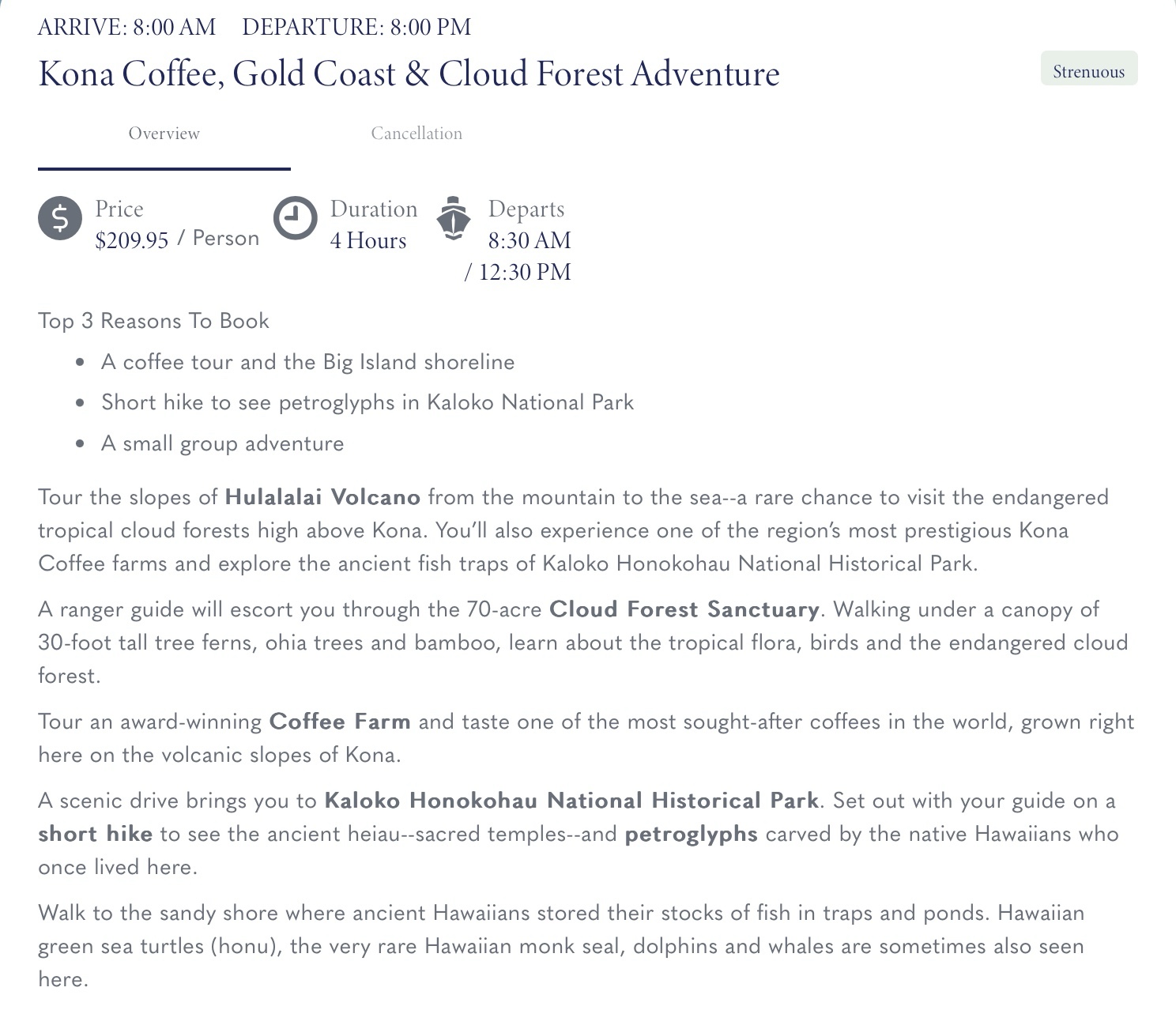
Today’s excursion description:
Ted and I decided to head ashore early, before the possibility of the Captain changing his mind about tenders, so had an hour or so to walk around the waterfront tourist area, full of shops and restaurants. While there was one charming off-street plaza, the overall feel was similar to Cabo or Puerto Vallarta – kind of tourist kitchy. The waterfront strip is, however, home to one of the Hawaiian royal family’s smaller palaces, and the first Christian church in Hawaii, currently being renovated as part of its 200th anniversary.
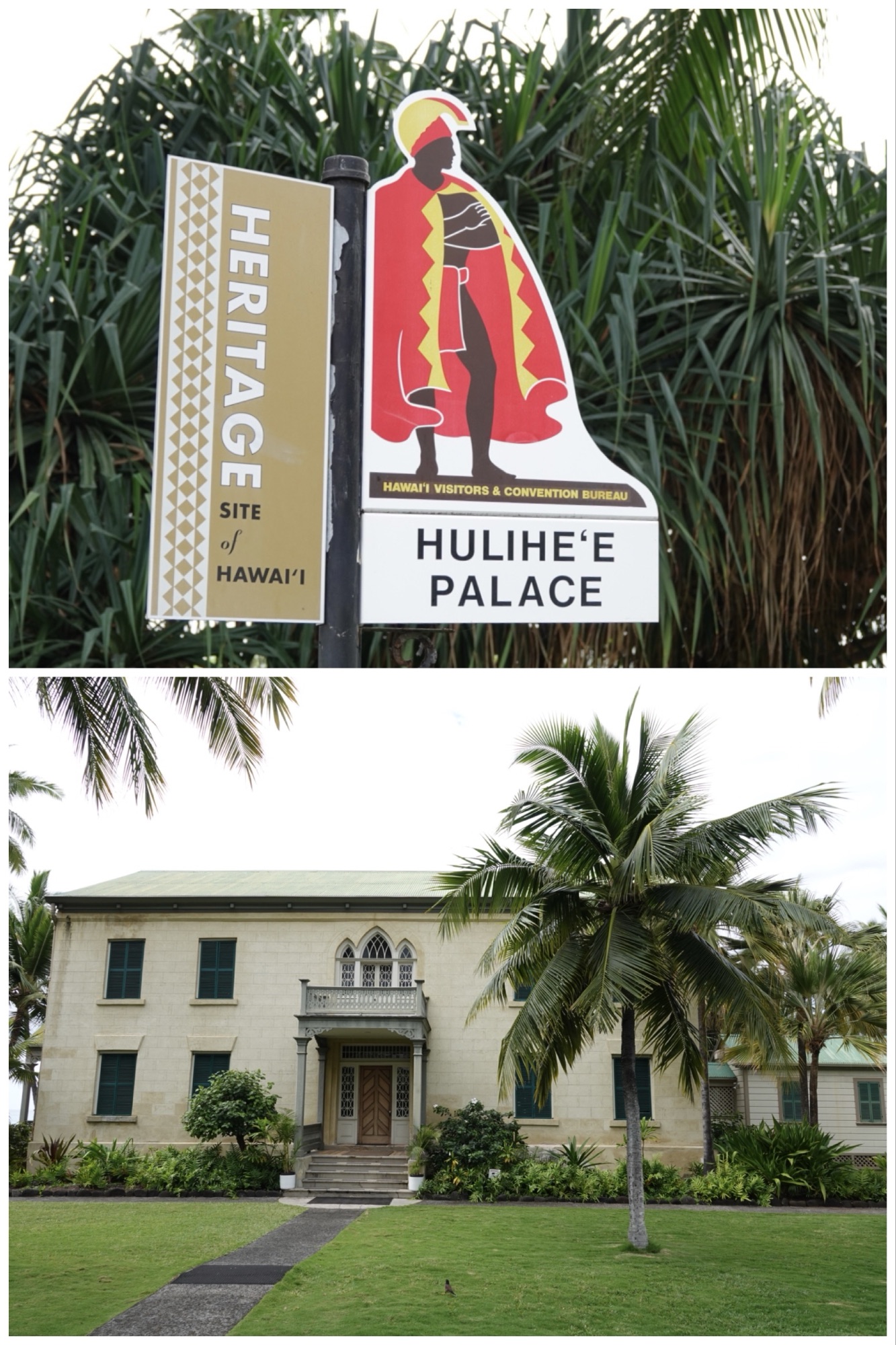

Very near the harbour is a reconstruction of the home in which King Kamehameha spent the final years of his life on this island.

There was also the option to watch the waves breaking on the shoreline.

After wandering for a while, we met our tour group which today consisted of only 12 people, with an absolutely wonderful guide (Jen) on the pier ashore. The tour left 30 minutes behind schedule, but we got the full experience since there was no rush to be back on board, with a sailing time of 7:30 p.m.
Our first stop was at the very small 25-acre Oka coffee farm, where we met the family that are now into a 5th generation of running the growing and roasting operation. This is one of more than 650 individual Kona estate coffee farms in Hawaii, ranging from just 1 or 2 acres all the way up to the largest at 3000 acres.
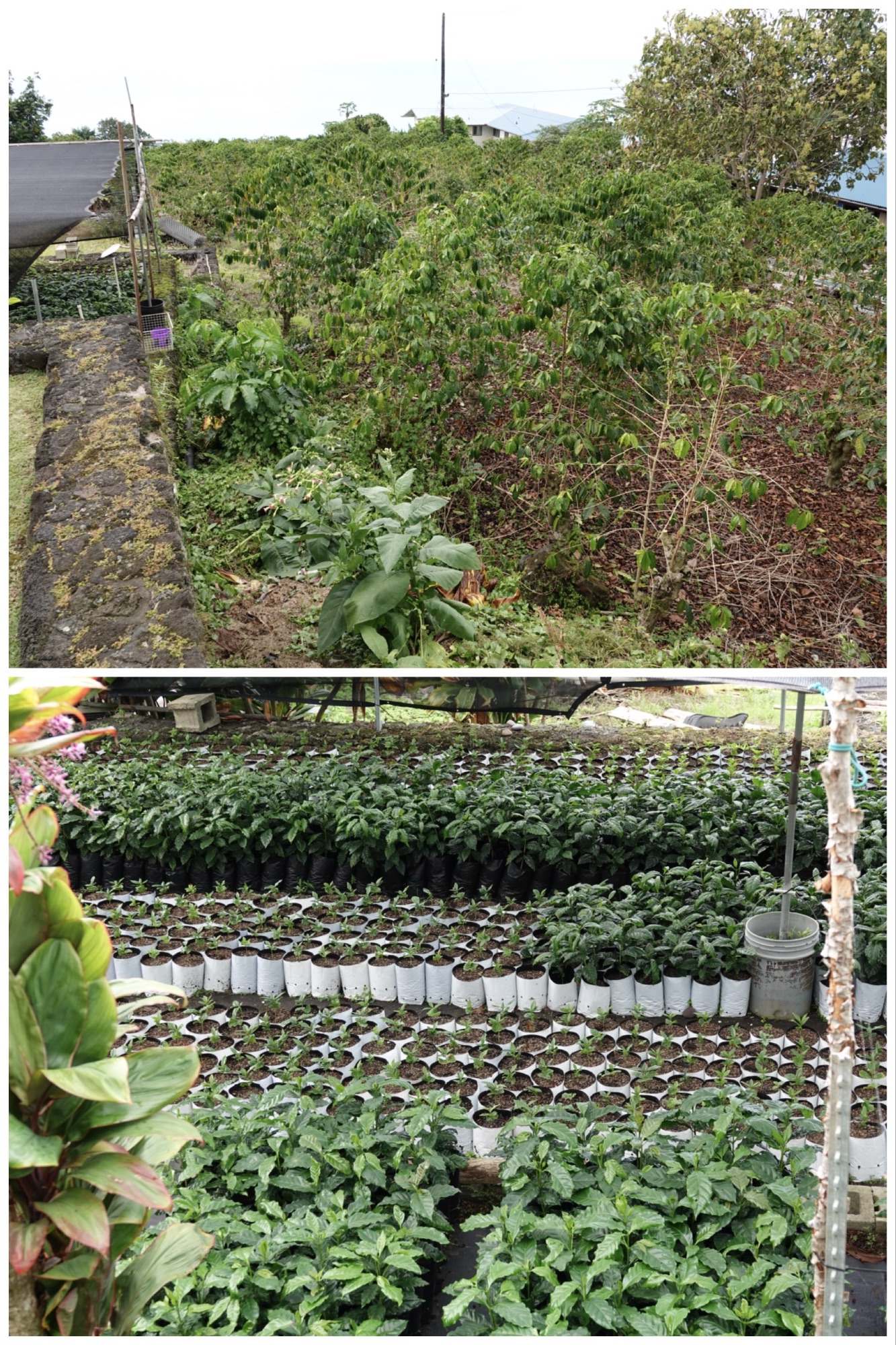
We got up close to the trees, fruit, beans, and the air roaster.
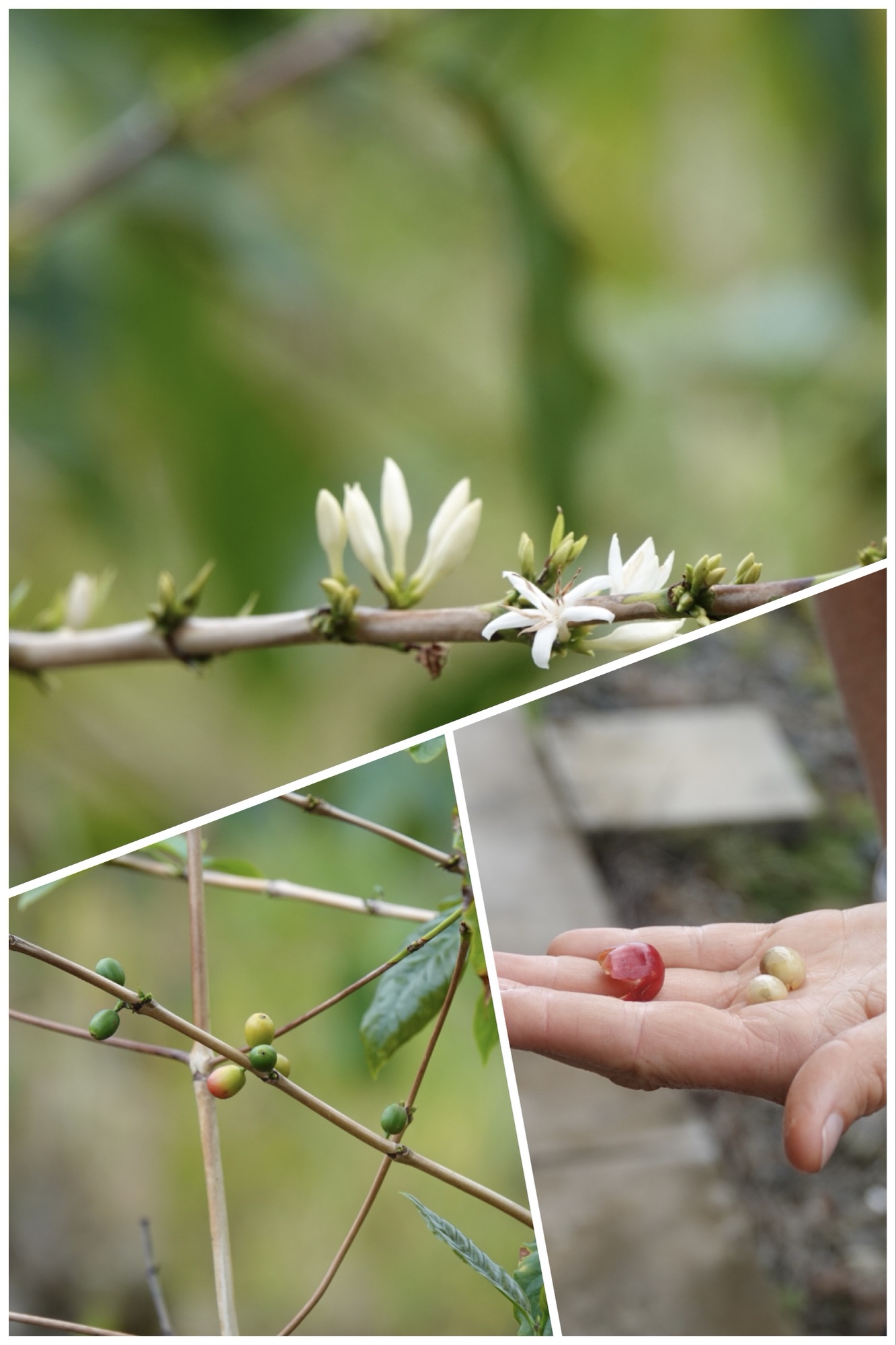
Unlike huge commercial roasters, Oka use a smaller machine, which they explained is similar to an air popcorn popper, except that it can be set to specific degrees of roast – in fact, they know a batch is done when the beans stop making a “popping” noise!
Of course we had the chance to taste the coffee, and buy beans.

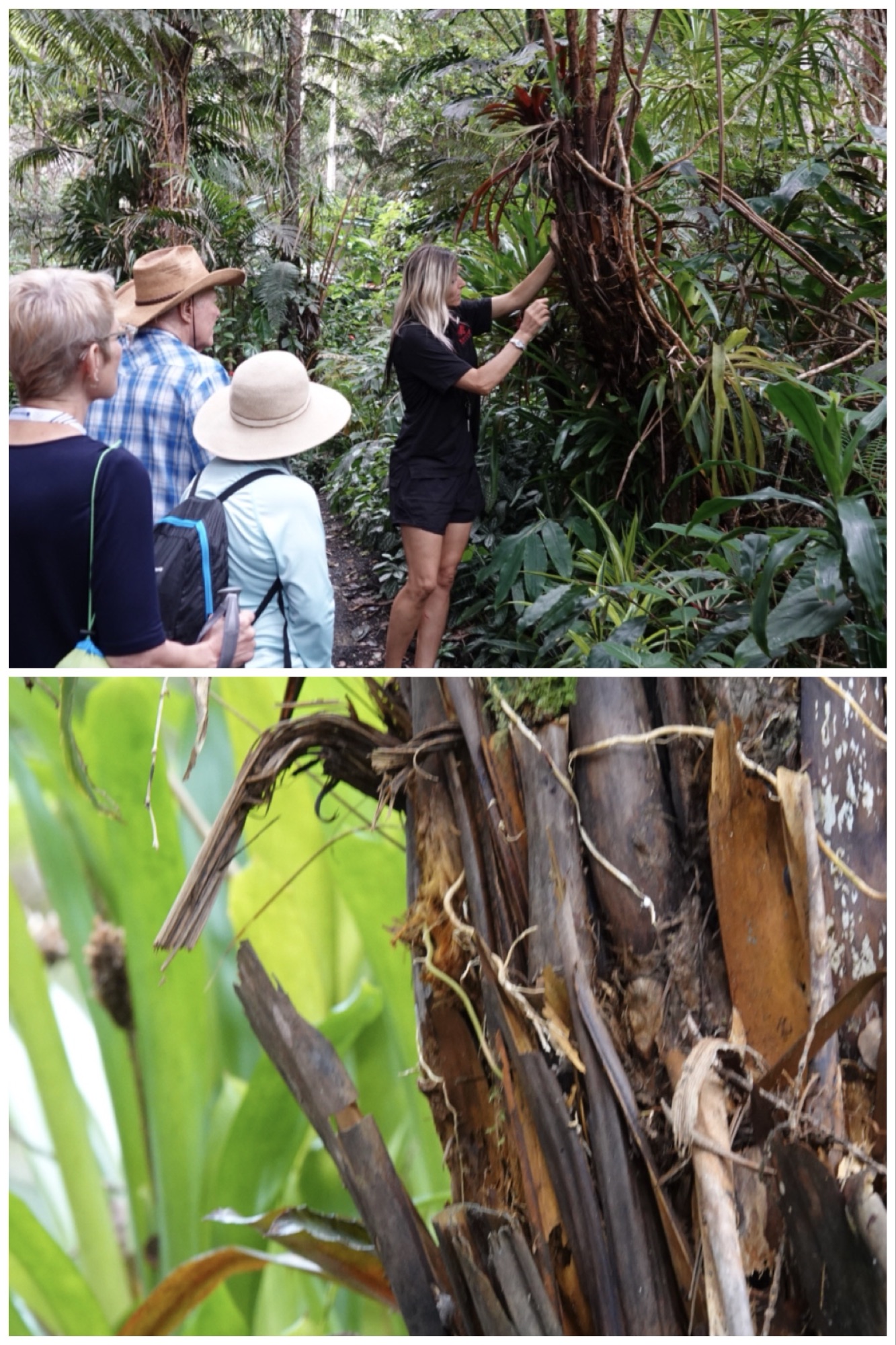
From Oka, we climbed to an elevation of almost 3000 feet to hike part of the 35-acre Kona Cloud Forest Sanctuary on the still active Hualālai Volcano. At one time, much of this part of the island was clear-cut to provide grazing for cattle, but in 1982 a project of reforestation was begun, and it’s truly remarkable how quickly a true cloud forest has re-emerged.


We learned that many of the trees and plants currently in Hawaii were not native to the islands prior to people arriving here from Polynesia. The plants brought by those people are referred to as “canoe plants” and include huge fan palms, ferns, bamboos, bromeliads, eucalyptus trees, and more.

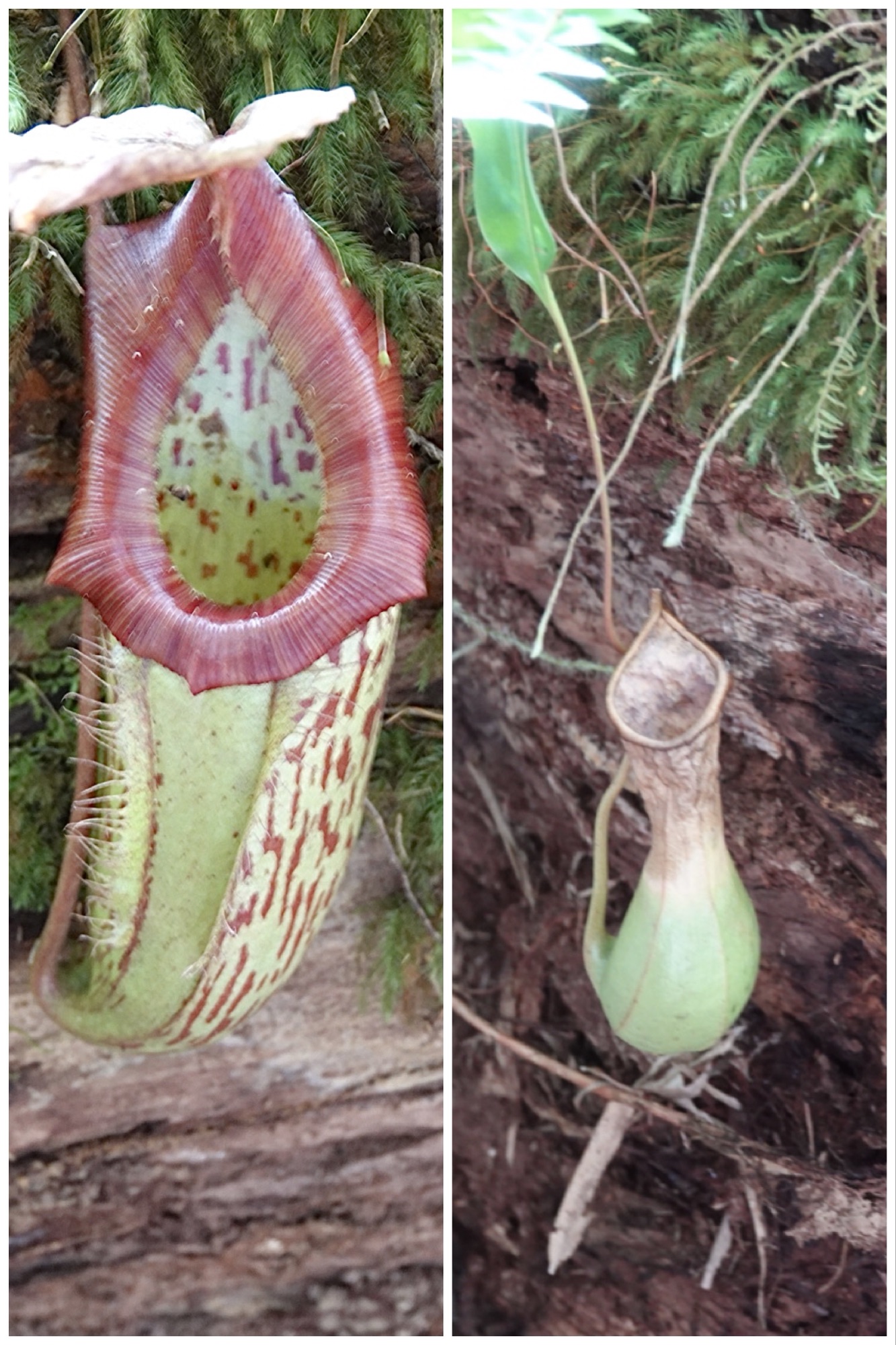
The waxy pitcher plants were stunning.
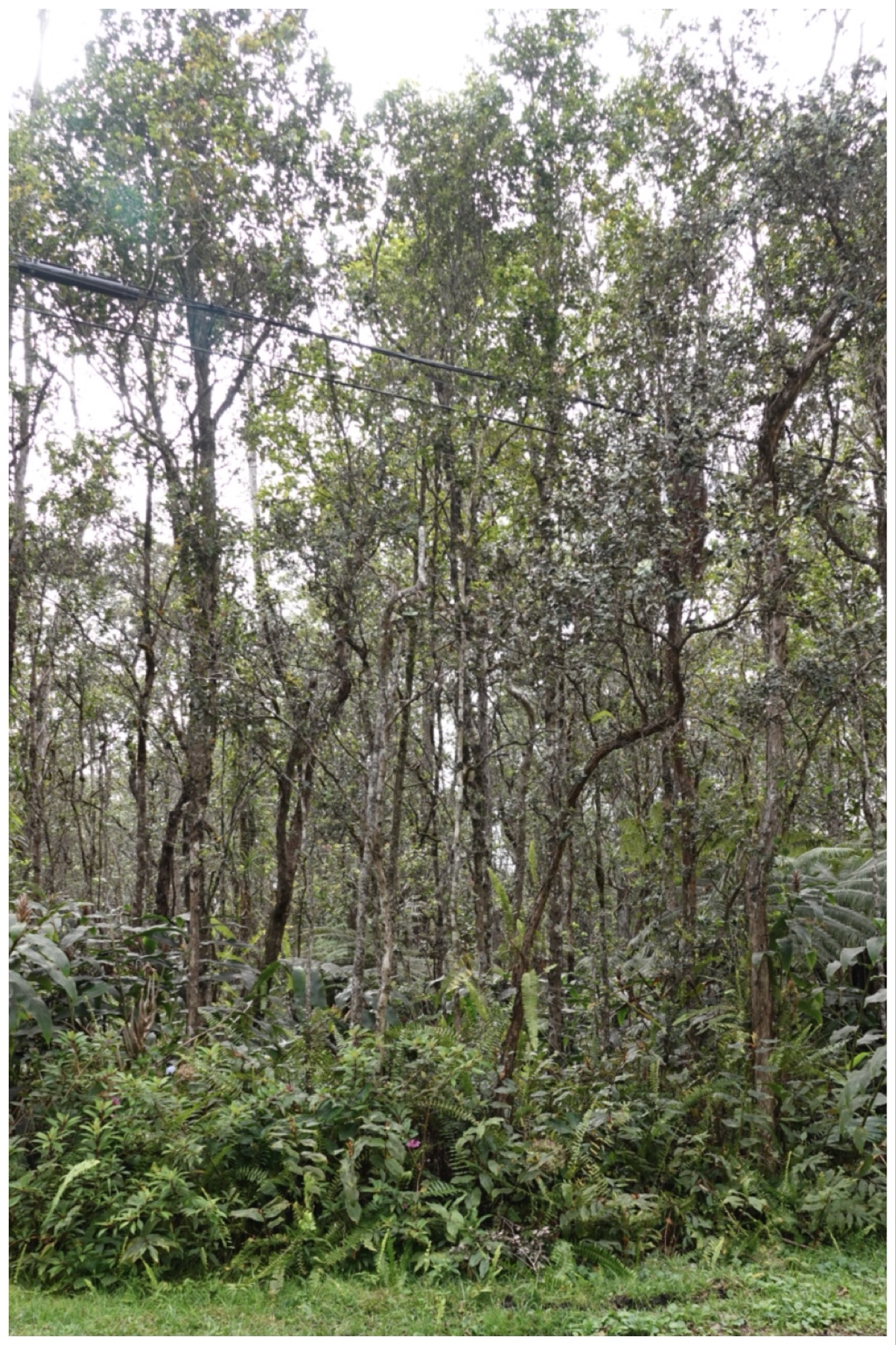
One of the trees most key to reforestation in Hawaii is the ohia-lehua, a tree that not only thrives in volcanic areas, but whose roots actually help transform lava rock into soil, creating fertile ground for other plants. The tree is also unique in that it can close its stomata (breathing pores) for up to 3 months, so that toxic volcanic fumes do not damage it.
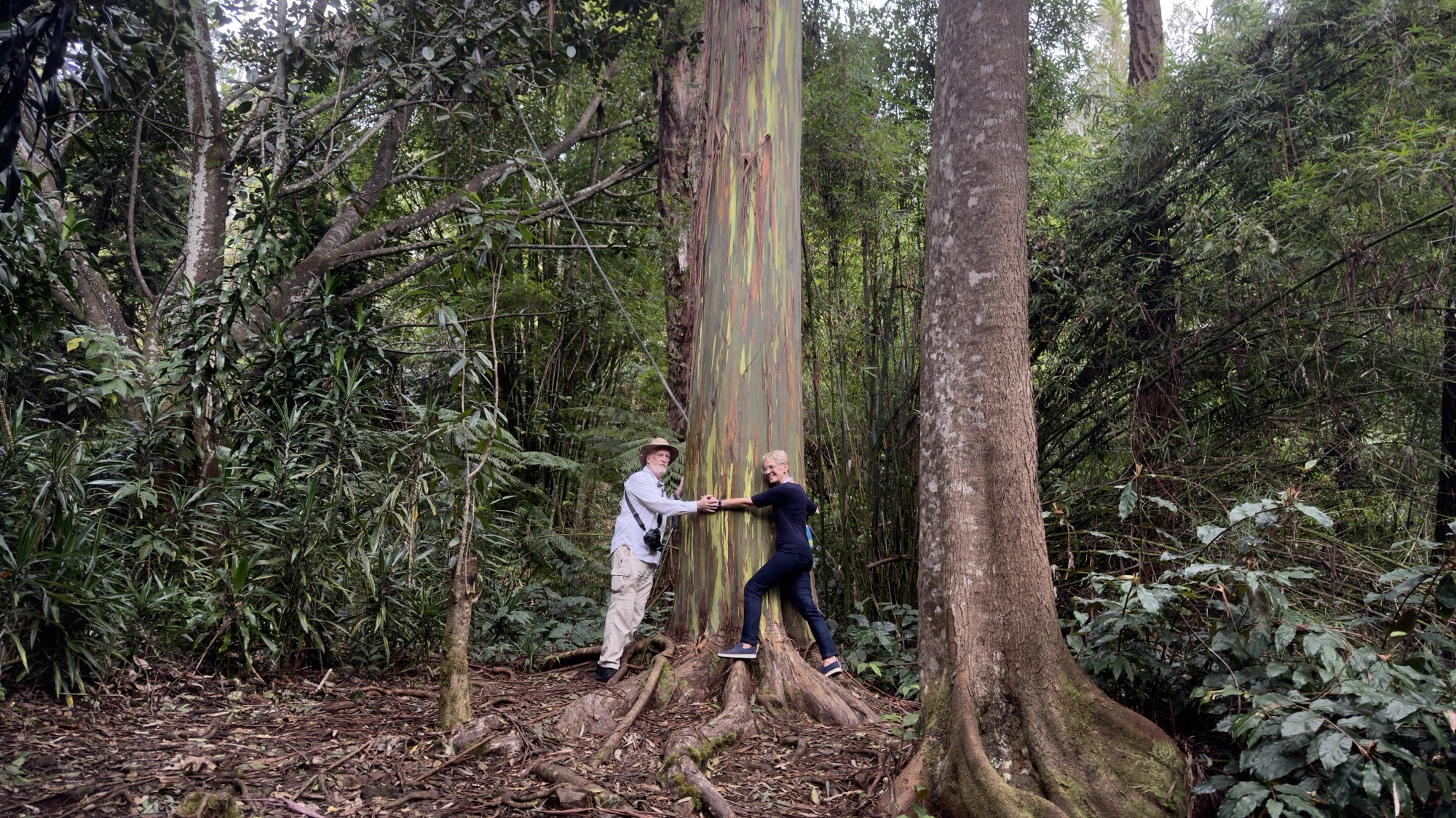
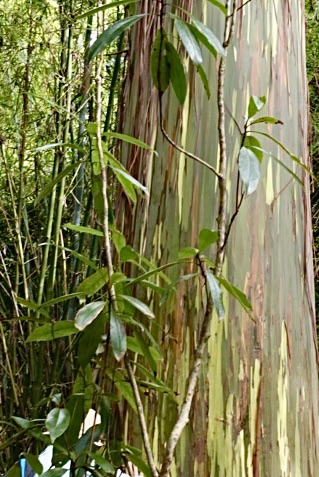
The cool surface of the rainbow eucalyptus turned us all into tree huggers on a hot humid day.
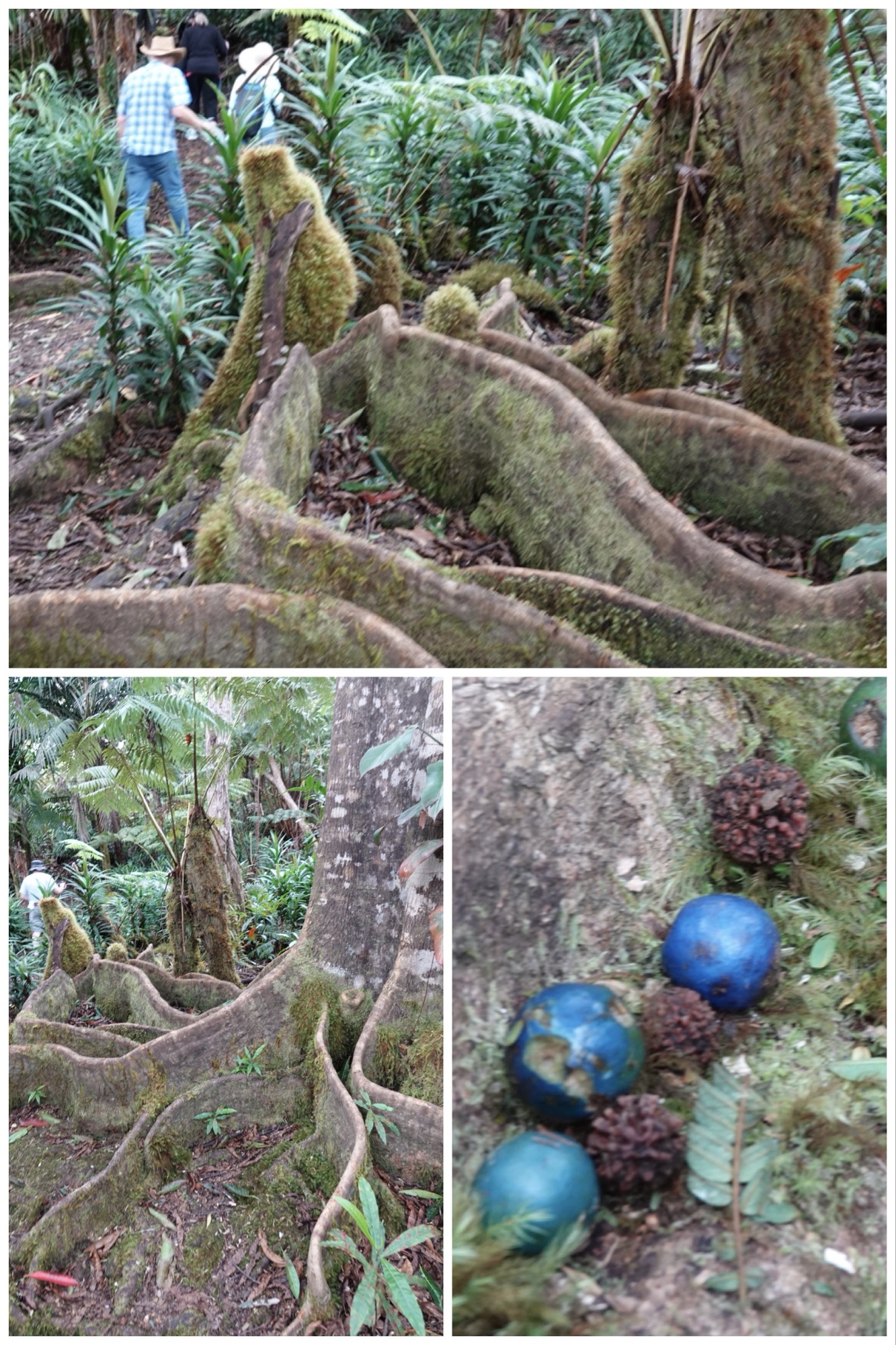
Another truly fascinating tree was the “blue marble tree” (Elaeocarpus angustifolius), native to Australia but “canoed” to Hawaii, with its “buttress” roots and blue fruits that really do look like opaque bright blue marbles. We’d never seen anything remotely like it these huge walls of roots. Our guide told is that the spiky brown nut inside the blue fruits is used to make Rudraksha prayer beads.
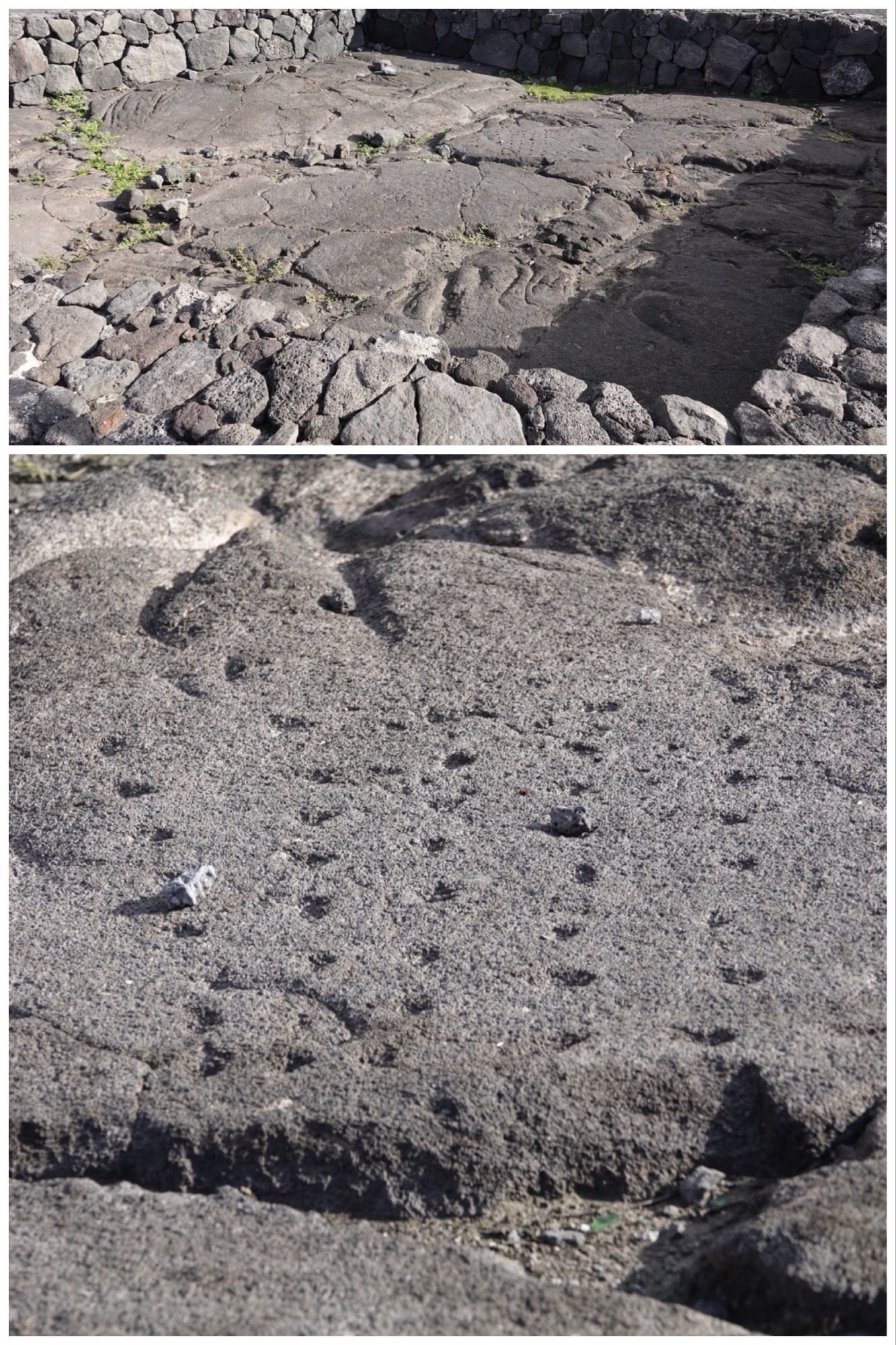
From the high elevation of the cloud forest, we descended to ocean level and Kaloko Honokohau National Park, where we saw ancient petroglyphs on lava rock…
…green sea turtles lazing just below the surface of the harbour waters
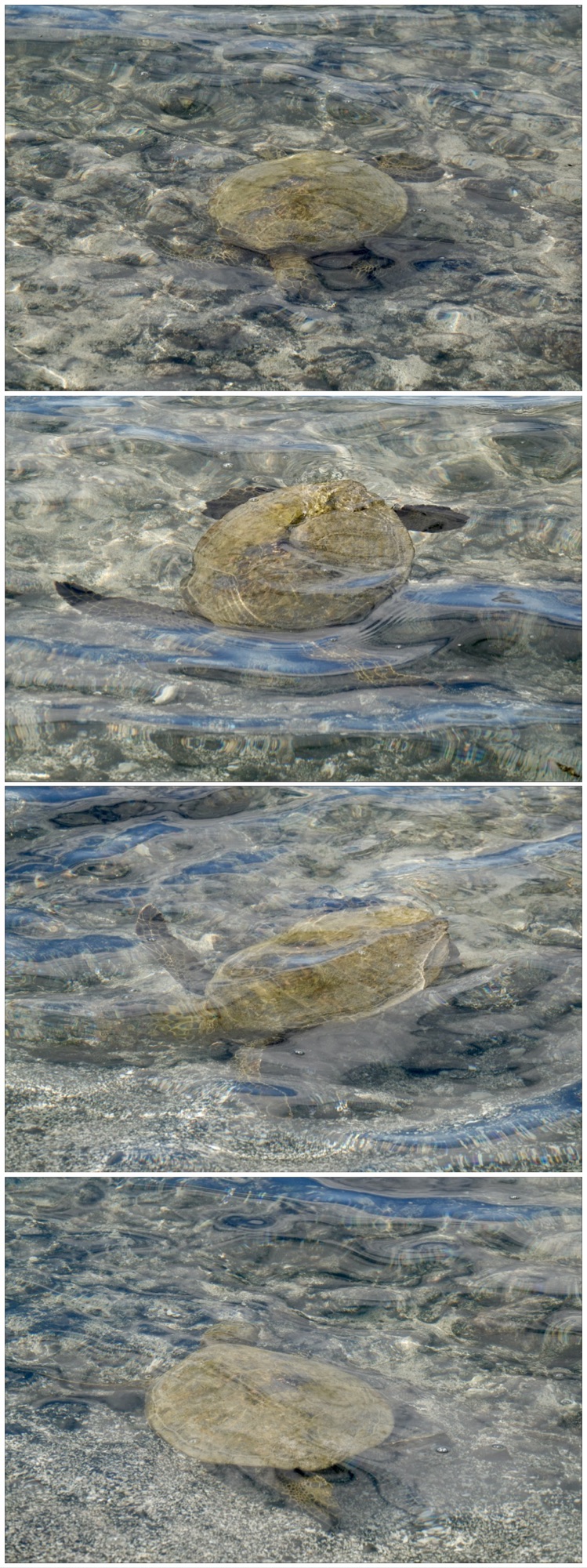
… and the beautiful black and white sand (volcanic rock and coral, respectively) beach.

Just offshore were the man-made rock wall “fishing” ponds, where Hawaiians would “trap” fish at low tide to make catching them easier.

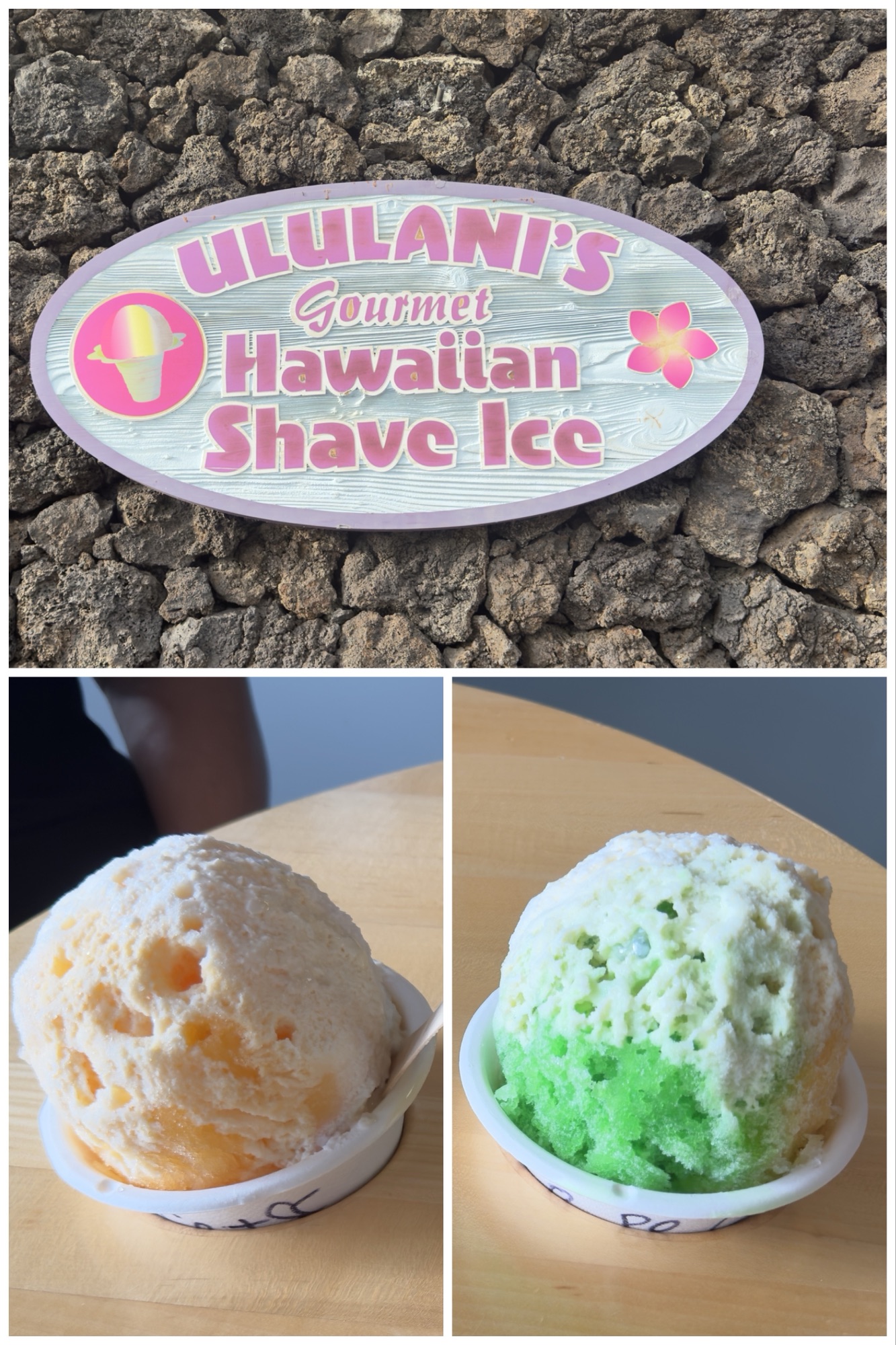
That ended the guided portion of our tour, but I had a culinary priority before re-boarding the tender for our transfer back to the ship: Hawaiian shave ice! Start with a generous scoop of creamy vanilla ice cream. Surround that with a firmly packed ball of freshly shaved ice. Now poke lots of holes in the ice so that the fruit syrups (3 flavours!) that get poured over it will also reach the ice cream. Add a “snow cap” of sweetened condensed milk on top. Not cheap ($26USD for 2 big bowls), but definitely delicious!!
We took in a Beatles tribute show before dinner, which was a quick meal in the buffet. There are no dinner photos when it’s plated in the buffet!
Tomorrow we’re in Hilo, and looking forward to a non-tender port and more volcano exploration.
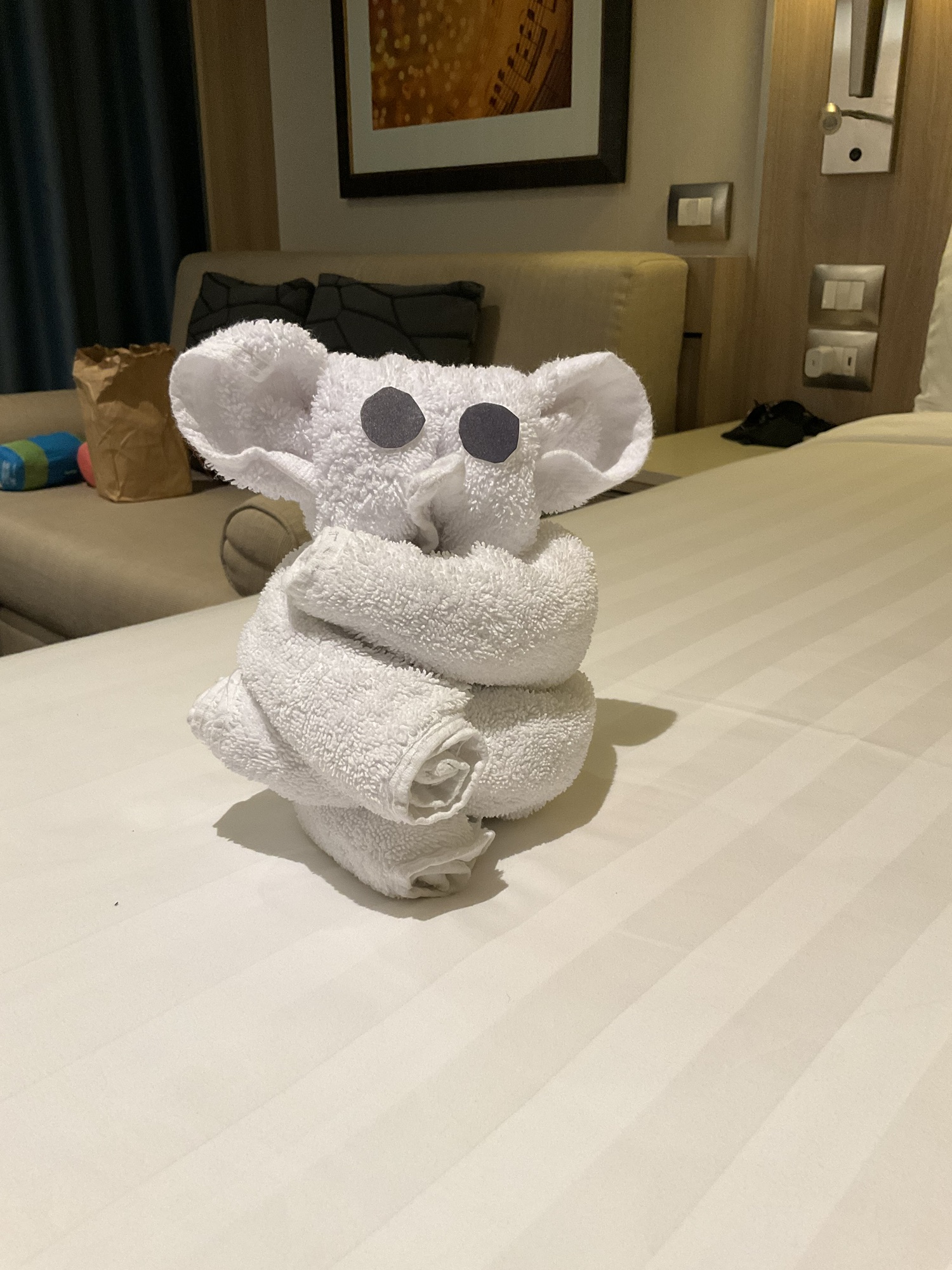
For now, good night from the towel koala that our steward Putu left for us…
 Rose and Ted’s Excellent Adventure
So glad you had a better day! Those blue berries were unreal — so little real blue in nature.
LikeLiked by 1 person
Hey Rose, I’m glad that you had a good day in Kona – your descriptions brought back fond memories of our honeymoon trip there many years ago. Since you will be in Hilo tomorrow you may want to visit this museum – the Pacific Tsunami Museum, right in the middle of the town:
https://tsunami.org/
We thought it was interesting; perhaps you might also.
Jeff Barnes
LikeLiked by 1 person
Thank you for the recommendation, but as you’ll be able to read in the next day or two, we had a VERY full tour day!
LikeLike
That was a very “energetic”day! Sounds just delightful, too. I think I noticed you with poles in one of the pictures; I’d be intetested to know what you thought of that…
LikeLiked by 1 person
Didn’t really need the poles, but they are mandatory on that tour. Not sure I loved using one, but didn’t hate it either. Ted certainly found it awkward with his camera though.
LikeLike
A wonderful day of exploring the Coffee plantation & the “Jurassic “ forest “ with its’ unique foliage/ roots…did you find the Kona coffee to be exceptional in taste?
Thanks for sharing….
LikeLike
Delicious, but perhaps not totally worth the $50USD plus price per pound! We understand paying for small farming practices though.
LikeLike
ROSE:
<
div>Nice tour. Even nicer with 12 people. Seems as if the forest was a larger attracti
LikeLiked by 1 person
The cloud forest really was the highlight!!
LikeLike