#MyVikingStory
First, our ship moved today! I think anyone who was awake at 06:00 gave a silent cheer that, for the first time on day 6 of our 8 day cruise, we’re actually cruising.
Ted and I have been in Köln (Cologne) twice before, but never when its incredible Gothic cathedral is the centrepiece of the city’s largest Kristkindlmarkt (Christ child’s market), the Dom Markt. (Cathedral market). The organisers expect over 4 million visitors to the 150 stands in the Roncalliplatz over the 4 weeks of the market’s run this year!
Köln, being Germany’s 4th largest city, has several Christmas markets. https://www.christmasmarketsgermany.com/cologne.php. I was surprised to learn that in contrast to many other German cities, it only opened its first Christmas market in 1820. (Nuremberg’s Christmas Market on the Main Market Square is purportedly the oldest, dating back to the mid 16th century!)
Our original itinerary had us visiting the Christmas market in Düsseldorf this evening, but last month we received a note from Viking deleting Düsseldorf and extending our stay in Köln. There’s no question that Köln has much more to offer than can be done in a half day, but I was disappointed at the thought of not seeing – however briefly – a city we haven’t visited before, especially because its Christmas market (with 6 themed areas) is considered one of Germany’s best.
After being able to spend a leisurely day in Köln, I’m no longer disappointed.
Our included 90 minute tour in Köln: Celebrate the festive season in Germany at Cologne’s Christmas Market and savor traditional Spekulatius.You will head into the historic city center to visit the largest Christmas market in the city, as your guide explains the important customs and holiday traditions in the region. During a stroll amid the colorful market stalls, take in the aromas of the festive foods on offer, such as roasted chestnuts and cinnamon-infused glühwein, and pause to sample a taste of Spekulatius, a traditional German holiday treat. Continue through the Old Town and soak up the atmosphere as you admire the city’s festive twinkling lights. Be in awe of the Gothic masterpiece that is the Cologne Cathedral, a UNESCO World Heritage Site; pause to view the ornate design of its impressive exterior as it towers majestically over the city.
I debated joining the walking tour, but then remembered that we always seem to learn at least one or two new things about a city from the excellent guides – and with the whole day to spend here, 90 minutes of “free time” was not much to give up. I’m really glad we decided to do the tour, because our guide Oliver Herrmann (he explained to non-German speakers that herr”= mister and “mann” = man, so he is Mr. Misterman, and his wife is the completely ridiculous Mrs. Misterman) was absolutely hilarious. He seemed to enjoy trying to shock us by pointing out examples of Köln’s reputation for enjoying the rudest forms of humour (he said true Köln humour refers most often to sex and bodily functions), and skewering their very atypical (for Germans) traits of lack of punctuality and laziness. There’s a local legend about that – wait for it.
Since this is a Christmas Market cruise, our guide tried not to give us TOO much history, but it’s impossible to be in a city founded on Roman ruins and not to mention that! The city’s earliest name was Colonius, followed by Cologne while under French influence, and now the German Köln.
Köln is famous for its Kölsch beer (there’s a microbrewery on every corner, some of them hundreds of years old, and some only pretending to be – because Köln’s businesspeople are also well known for inventive marketing.
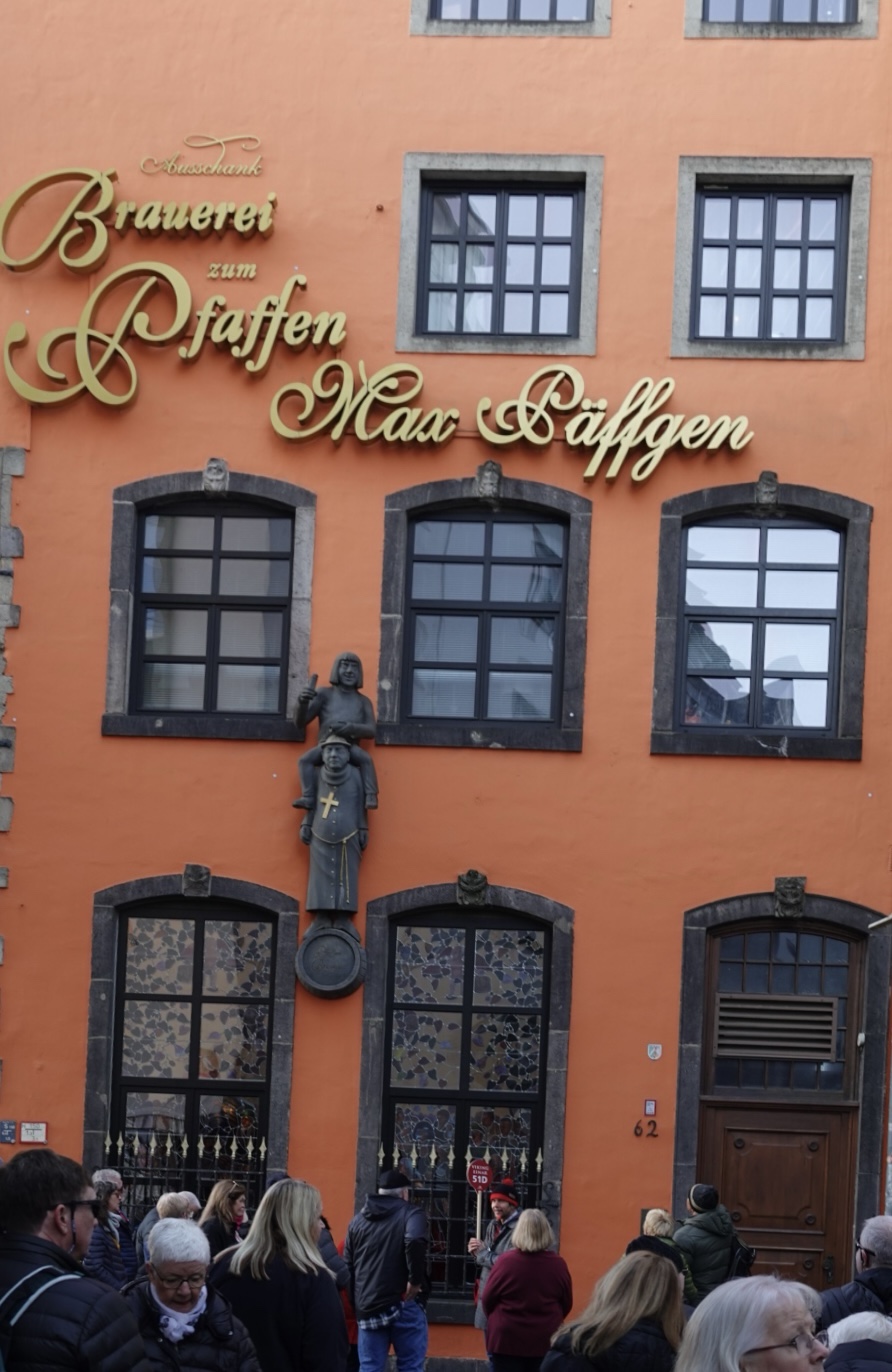
German surnames have meanings (like “Herrmann”) – the family name attached to this brewery is Päffgen, which in the local dialect is “son of the priest” (think about it). Rather than being an embarrassment, it’s been turned into a badge of honour, and the brewery’s wall proudly depicts a priest carrying his son on his back, while his son holds two typical Kölsch beer glasses.

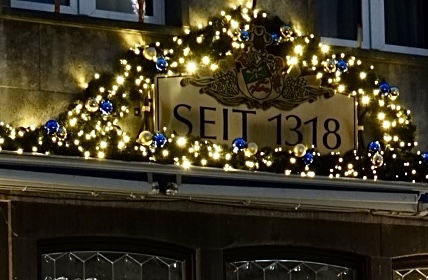
Another brewery, Sion, prominently features a sign stating “Since 1318”, despite the fact that the Sion family only started brewing here in 1912. To be fair, there were breweries “in the neighbourhood” in 1318, so that counts, right?
Speaking of self-promotion and marketing, former 2014 World Cup winning German national team soccer player Lucas Podolski is a Cologne native, and owns several bars and restaurants in the city, all of which are decorated with life-sized statues and posters in his likeness – modesty famously not being a Köln characteristic. Above one of his bars, our guide pointed out this interesting “gargoyle”.
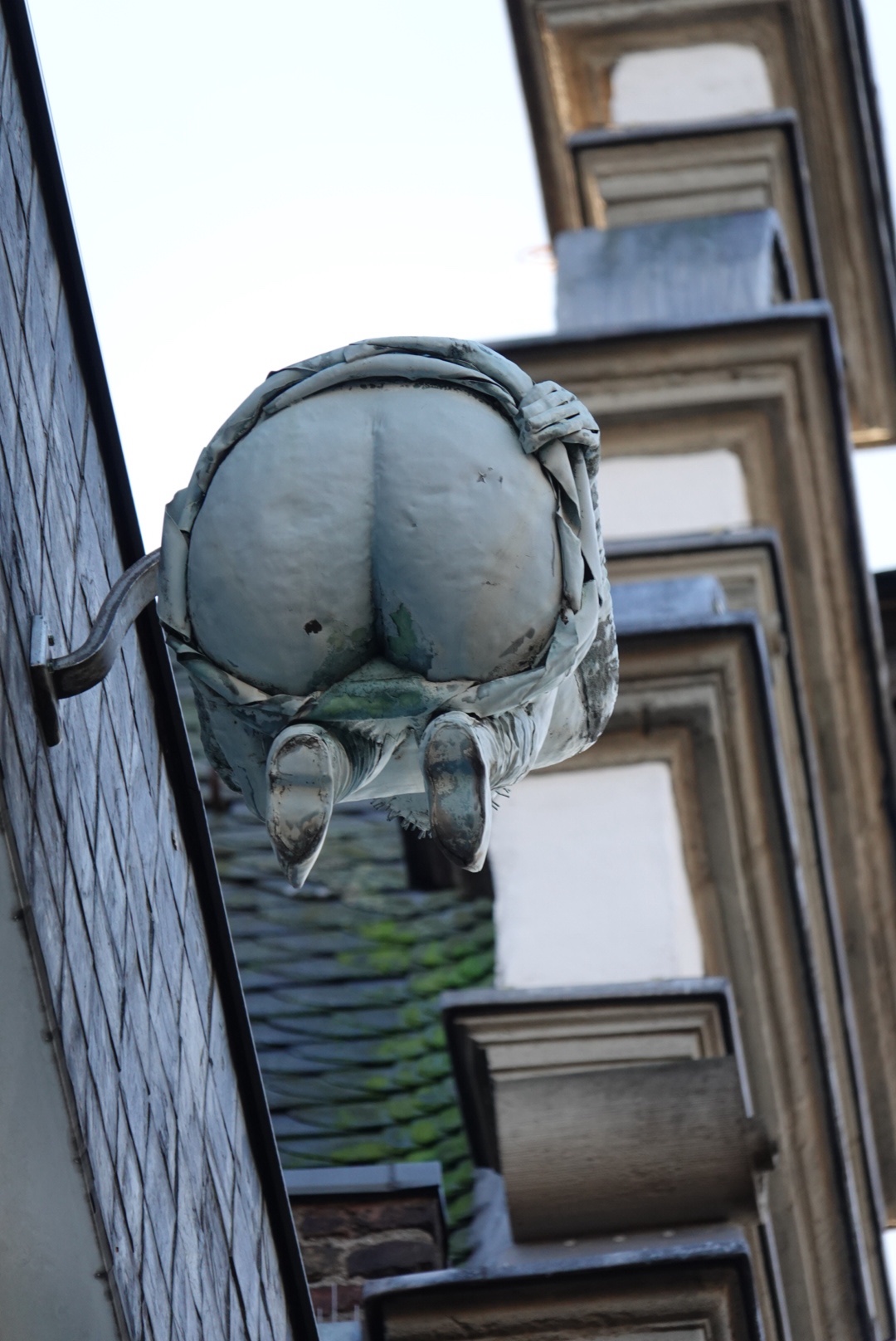

No, the eave cleaner is not mooning the building. It’s much worse. Apparently when buildings were completed, the youngest roofing apprentice was sent to the top to poop into the eaves, and wash it down with buckets of water. Think that’s a rude image? Just wait.
Below the statue of the Bishop Conrad von Hochstaden on Köln’s city hall, instead of a gargoyle there is a man performing an anatomically impossible sexual act. Such was the hatred for the corrupt ruling bishops that when they were ousted the building’s stoneworkers still left this permanent insult.

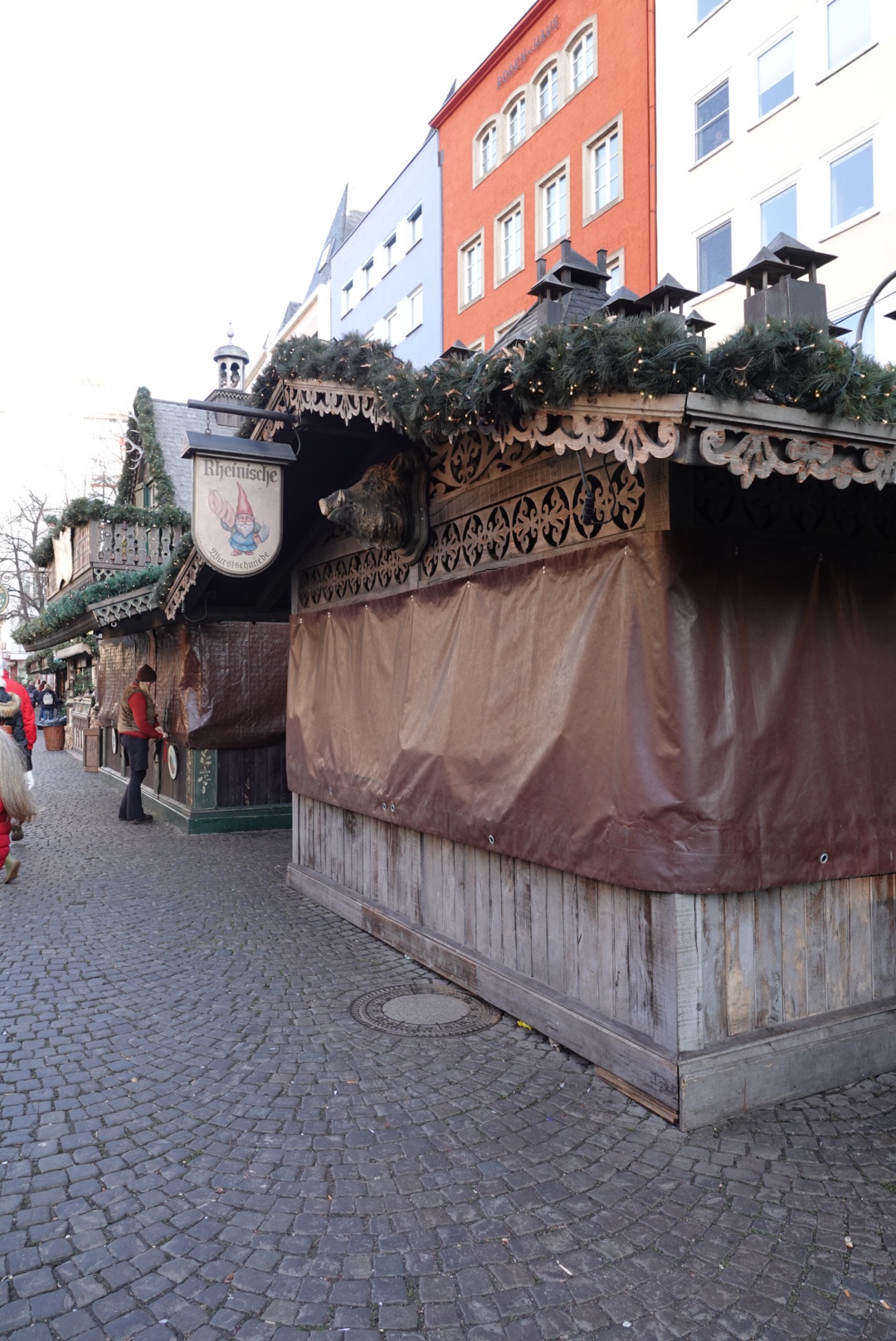
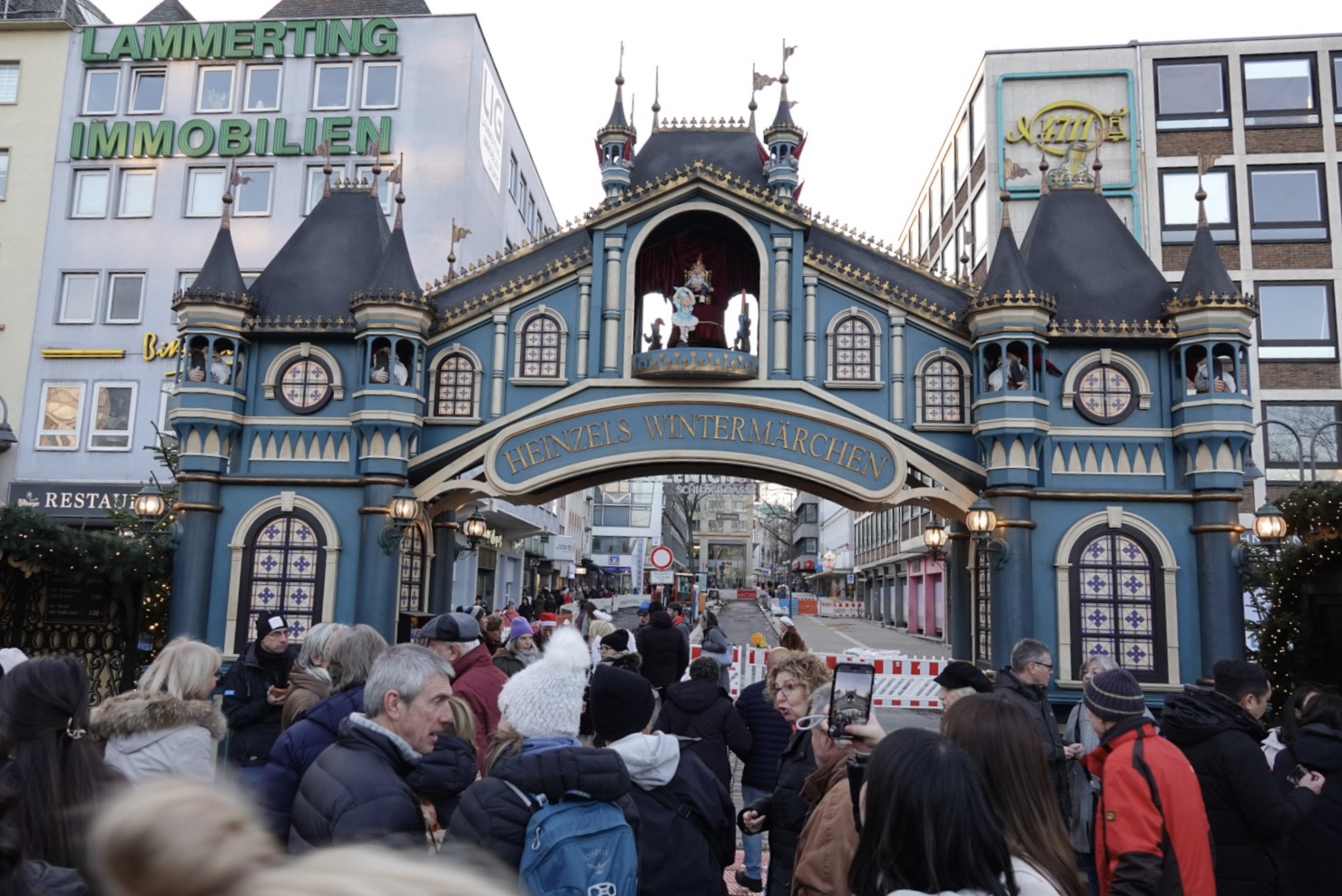
We walked very quickly along the Heumarkt (hay market) area, which hosts the market themed Heinzels Wintermärchen (Heinzel’s winter fairytale). A Heinzelmann, abbreviated to just Heinzel, is a mythical Köln elf/gnome/dwarf that figures prominently in the legends of the city. Mid-morning the booths were still shuttered and there were none of the crowds we’d see in a couple of hours.

Neo-Romanesque Saint Martin’s was completely rebuilt after WWII. On our last visit we toured the Roman ruins underneath it, so did not go inside today. Episode 354 . It is the oldest church in Köln, and was the main church before the Dom’s completion,
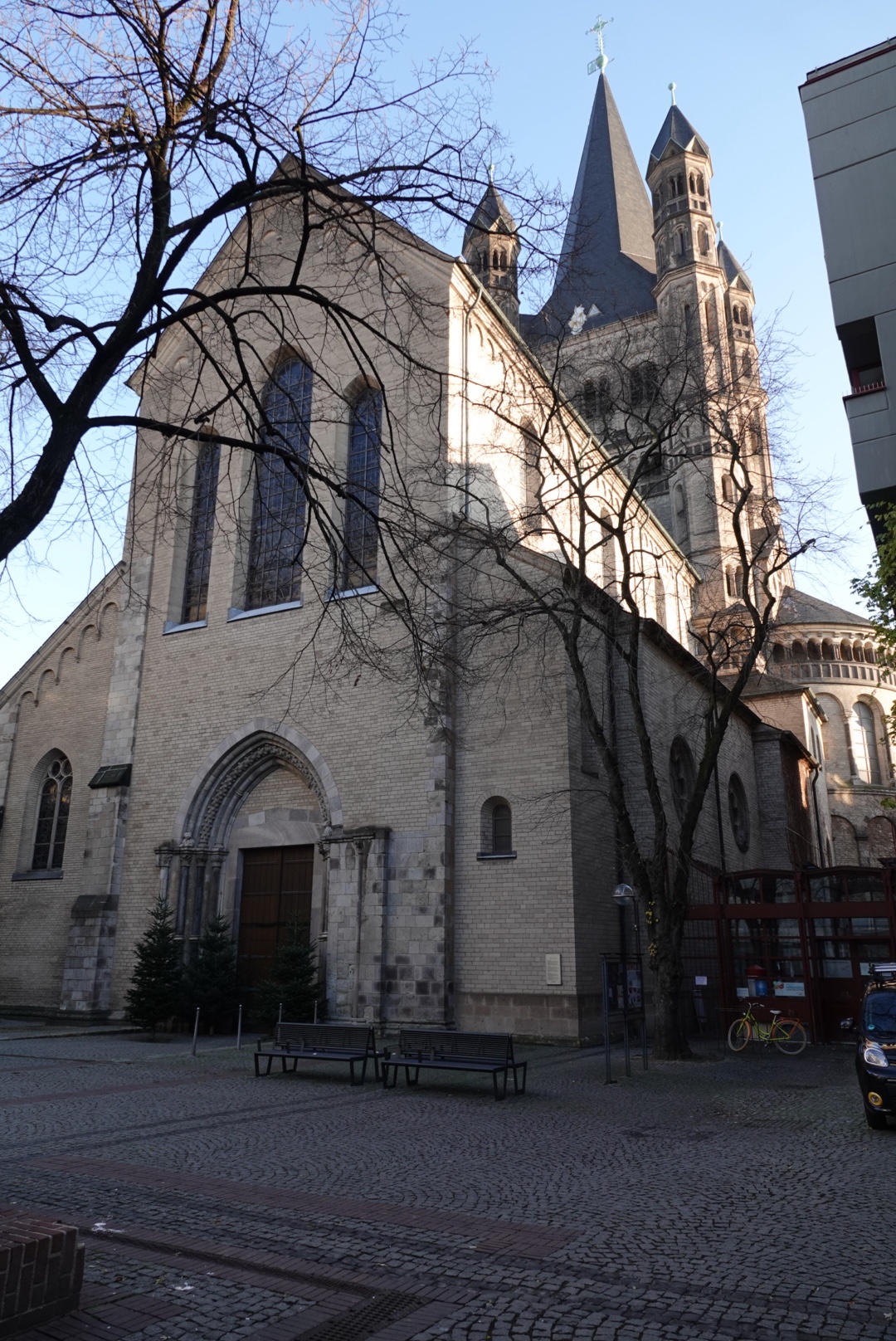
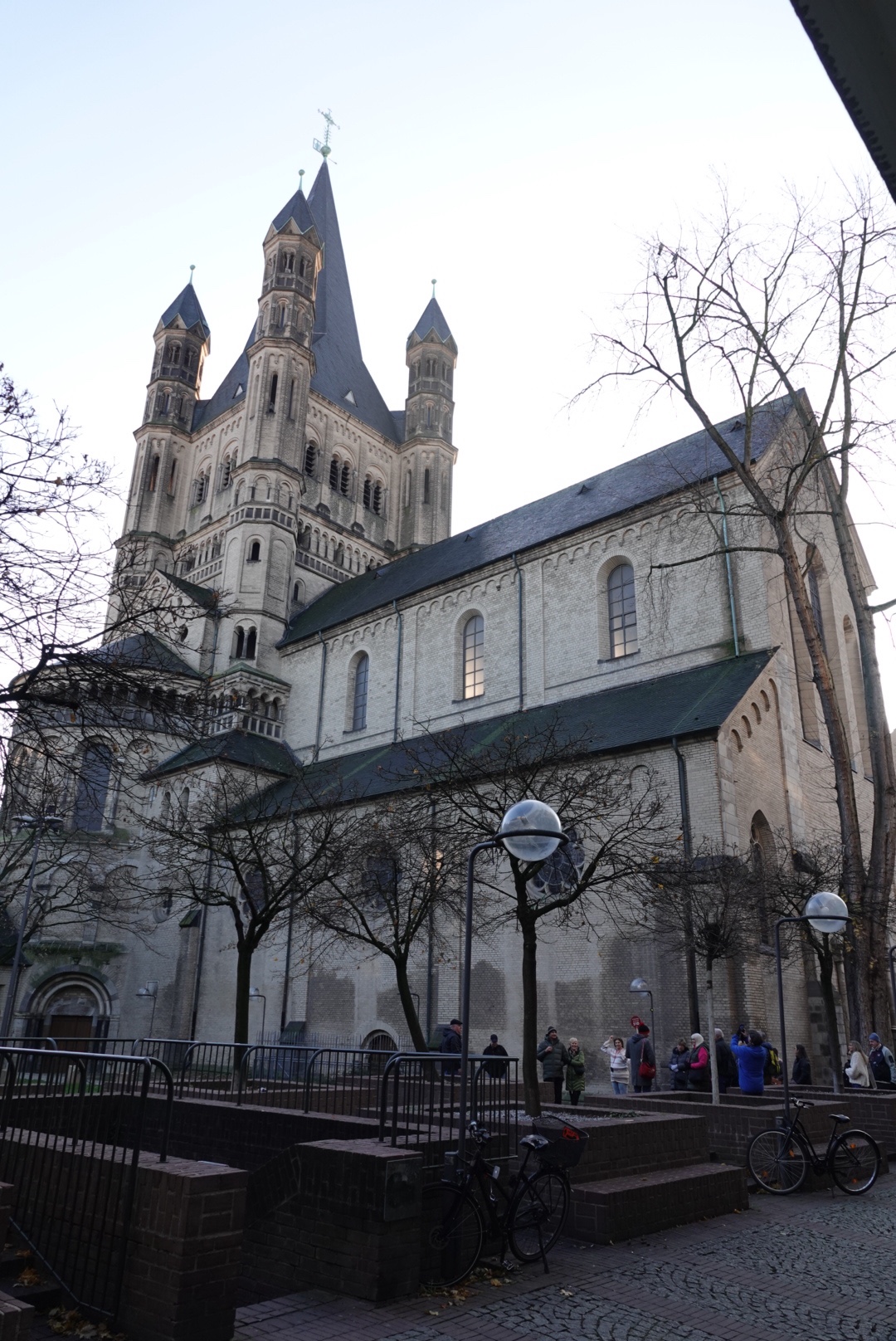
We walked past several ongoing work sites, for a new museum incorporating the archeological evidence of a mediaeval Jewish community and Roman praetorium, for a new hotel, and a major 19th century hotel renovation. In each case, the completion date had already passed – in some cases by several years. Oliver used this lack of punctuality and industriousness as a preamble to explaining the city’s statue of Frau Schneider and the Heinzelmänner (below).
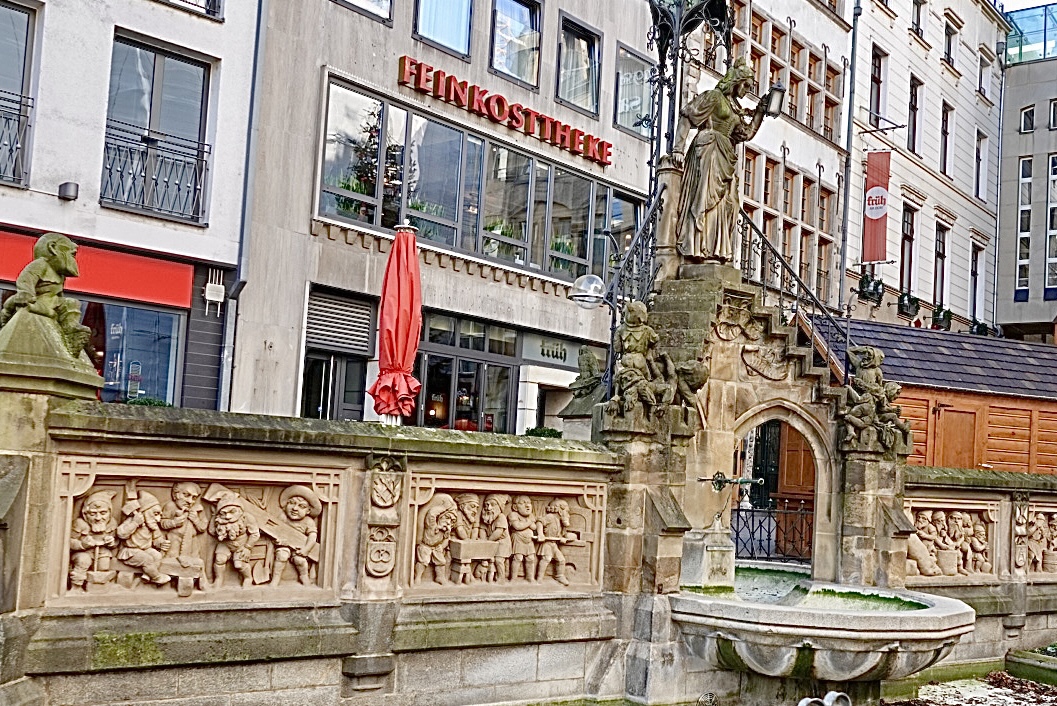
Apparently in the not-so-distant past, people in Cologne had nothing to do but drink and party all night and sleep all day. All their unfinished chores were magically done overnight by elves (Heinzelmänner) living under the houses. A certain Frau Schneider, not content with her good fortune, threw peas on her cellar steps in an attempt to trip up the elusive elves and see who was living in her cellar. Her strategy worked: the dwarves slipped on her stairs, were hurt, and she actually saw them! Unfortunately, her trick backfired by making the elves so angry that they left Köln en masse, leaving people who had become quite lazy to do their own work. Oliver says some Kölners are still just sitting around waiting for the dwarves to return.
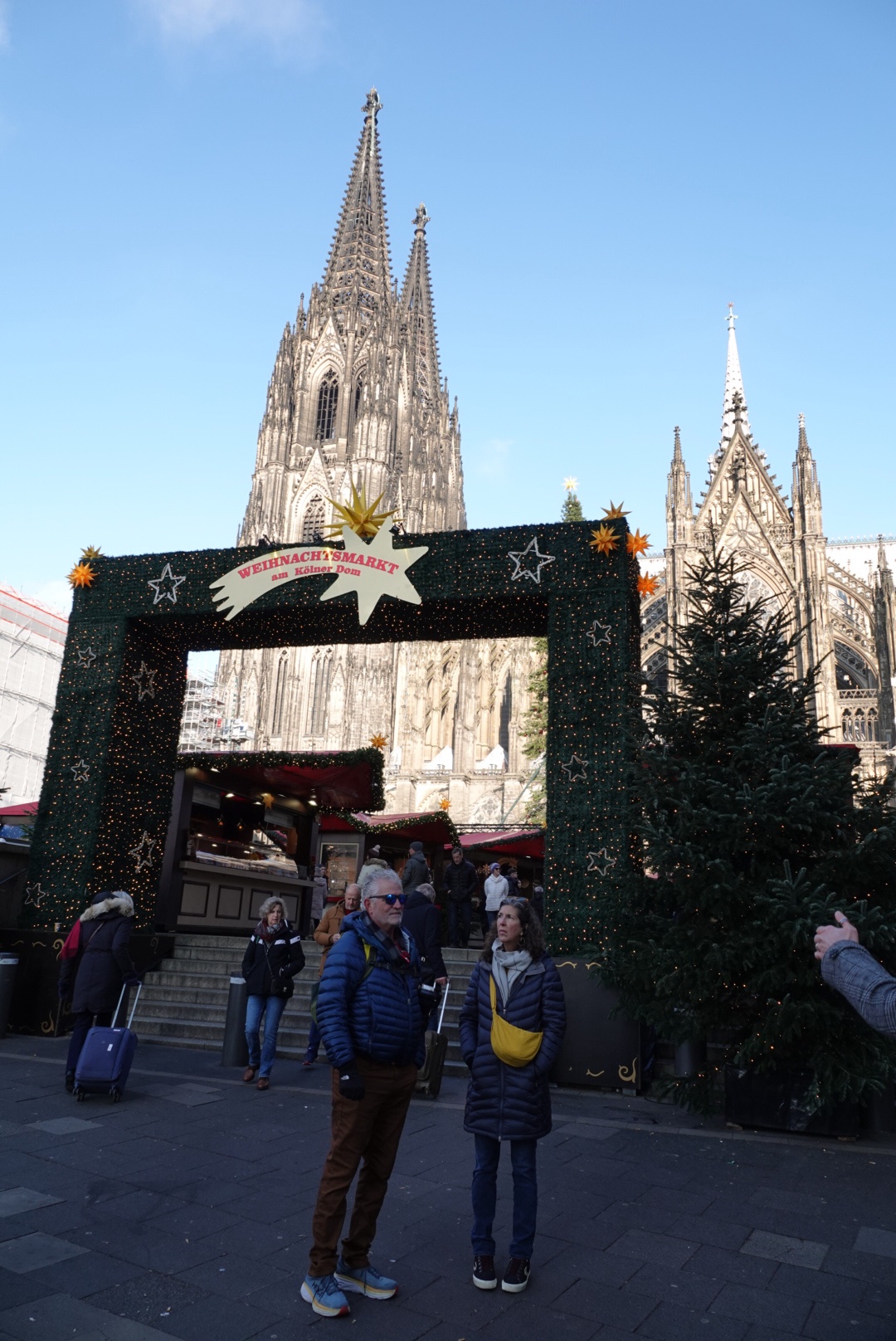
Our group then headed for the city’s central Christmas market, located at the cathedral (Dom), which was where – after each being gifted a bag of crunchy delicious Spekulatius to munch on – we parted from Oliver.


Ted was still feeling what my late sister-in-law used to refer to as “poochy”, so finding a pharmacy for some ibuprofen (somehow we left his in the hotel back in BC, and haven’t seen an open pharmacy since) was a priority. After the morning’s tour, our guide directed us to a pharmacy (“Apotheke”) where we were able to get both ibuprofen and an antihistamine to help, dry Ted’s sinuses a bit.
Pharmacy run done, we took some time to explore the Dom Markt, which had lots and lots of artisan stalls. Oliver had told us that (with the exception of the ubiquitous glühwein and food sellers) booths can only be leased by people selling handmade goods, although there is no stipulation that they must be made in Germany.
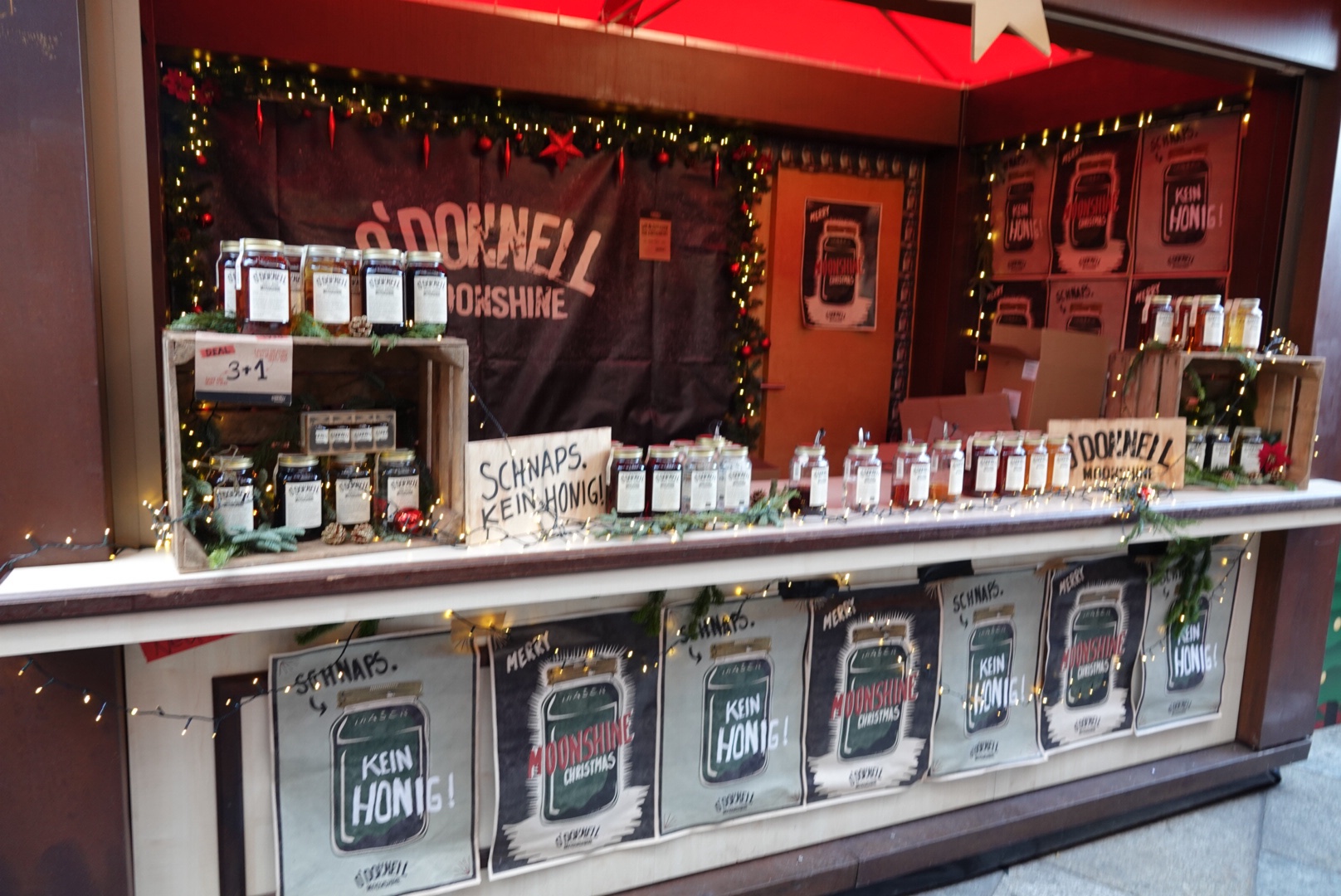
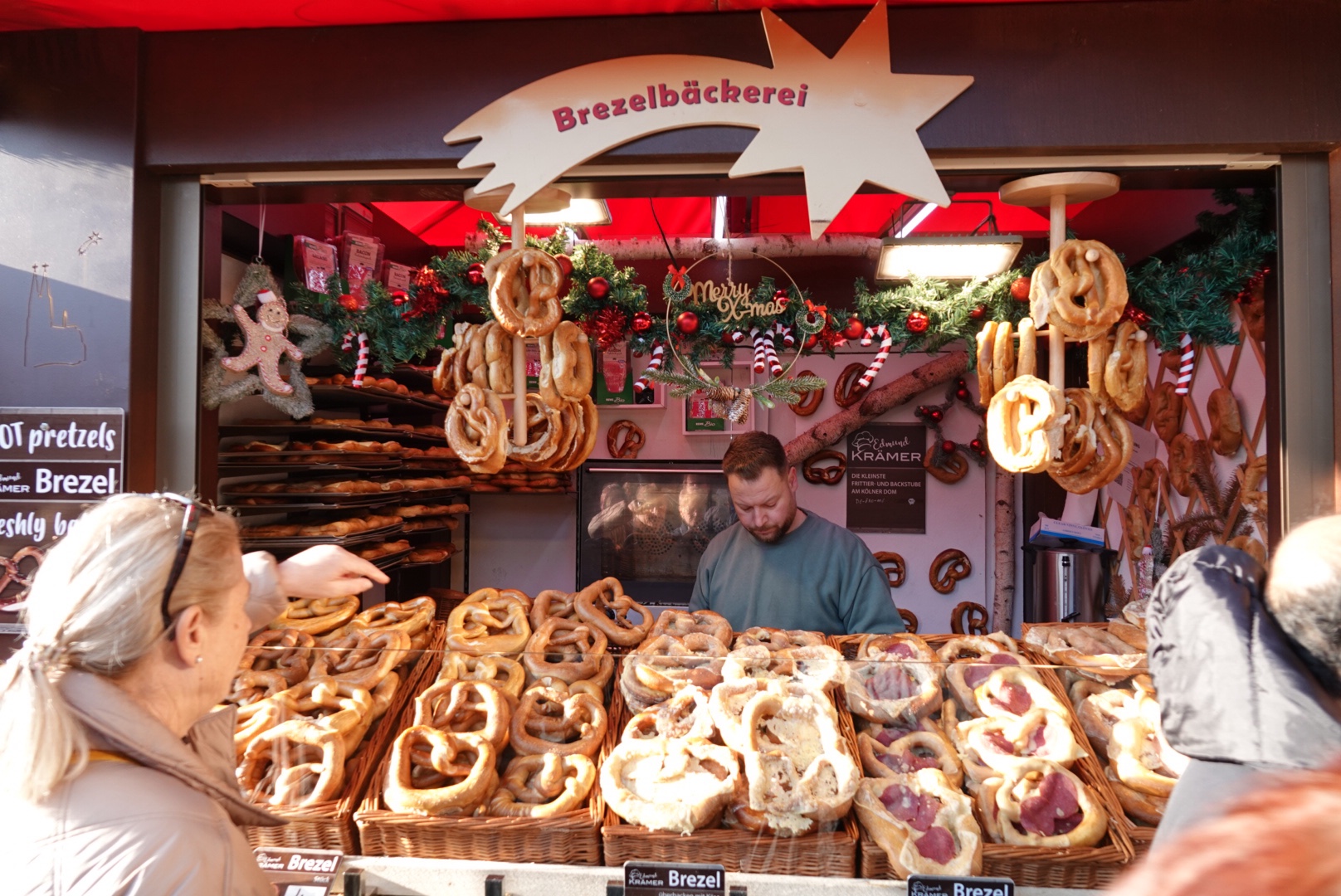
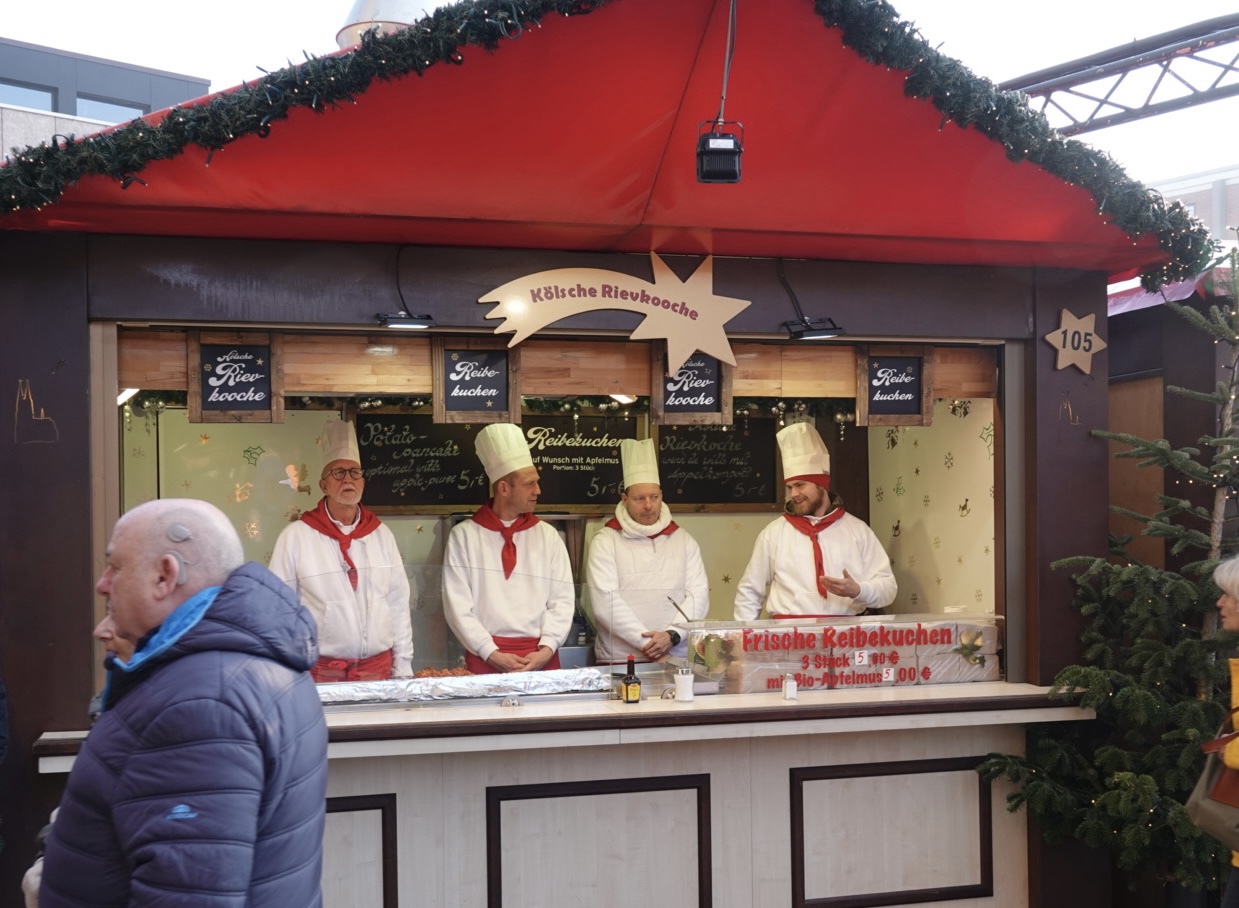

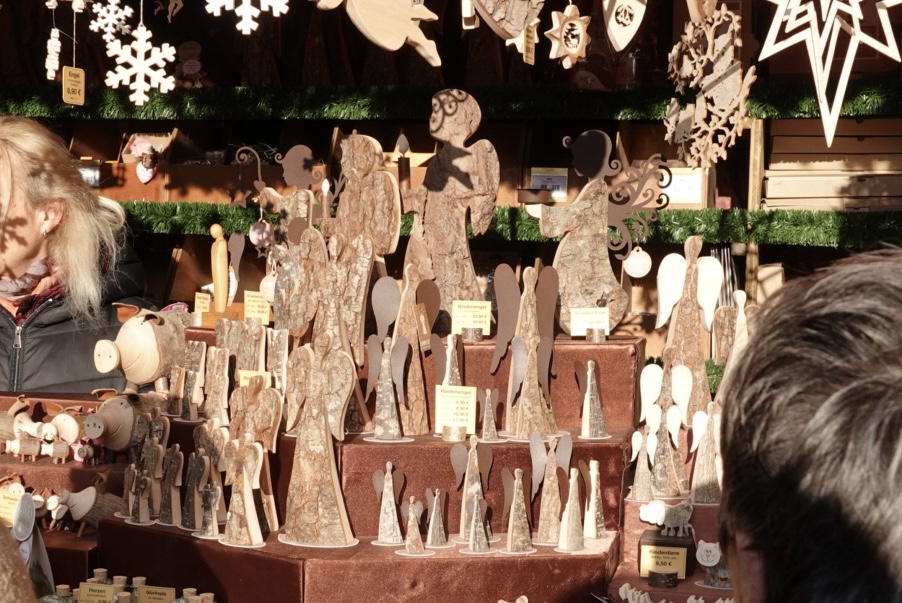


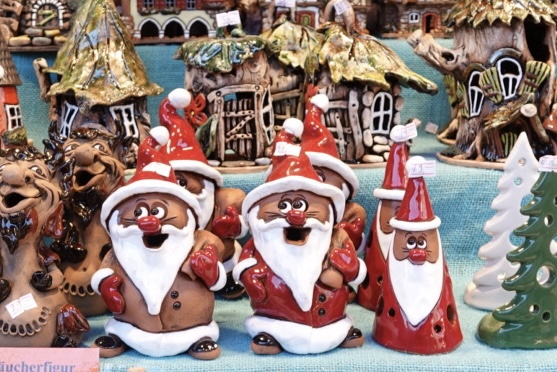
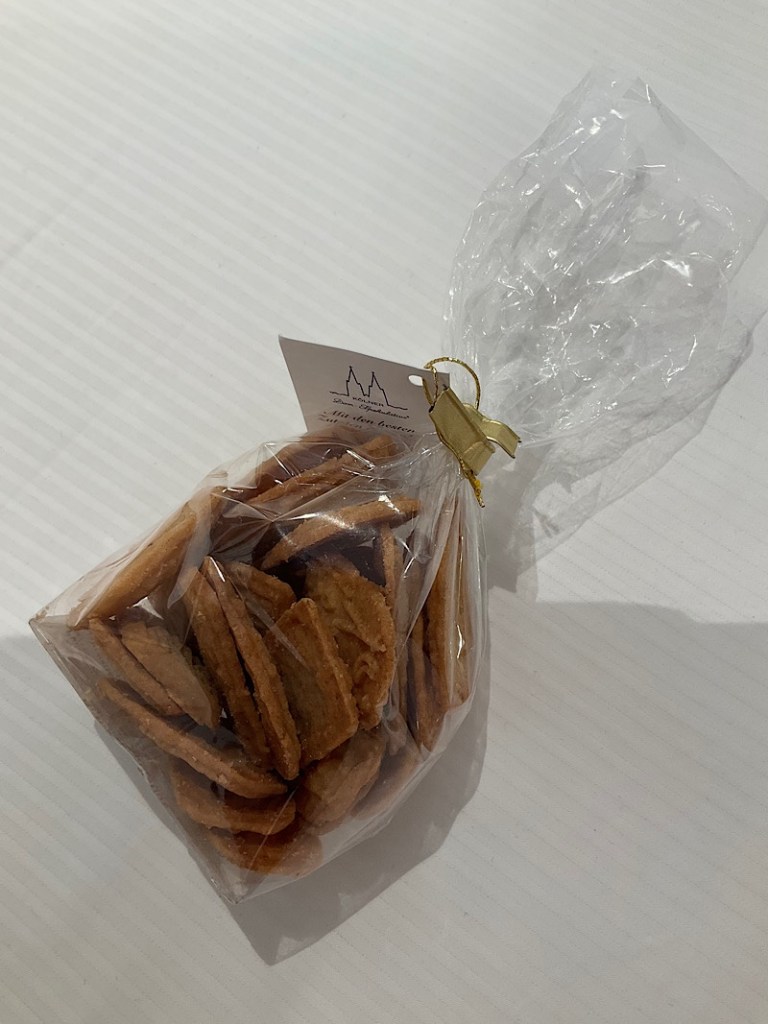
We returned to the ship for lunch and to warm up a bit, and then headed back out.

Our first priority after lunch was the Heinzels Wintermärchen for photos of the huge skating rink, and the booths lit up for the evening. There’s truly a special extra festive atmosphere that is created once the Christmas lights go on.

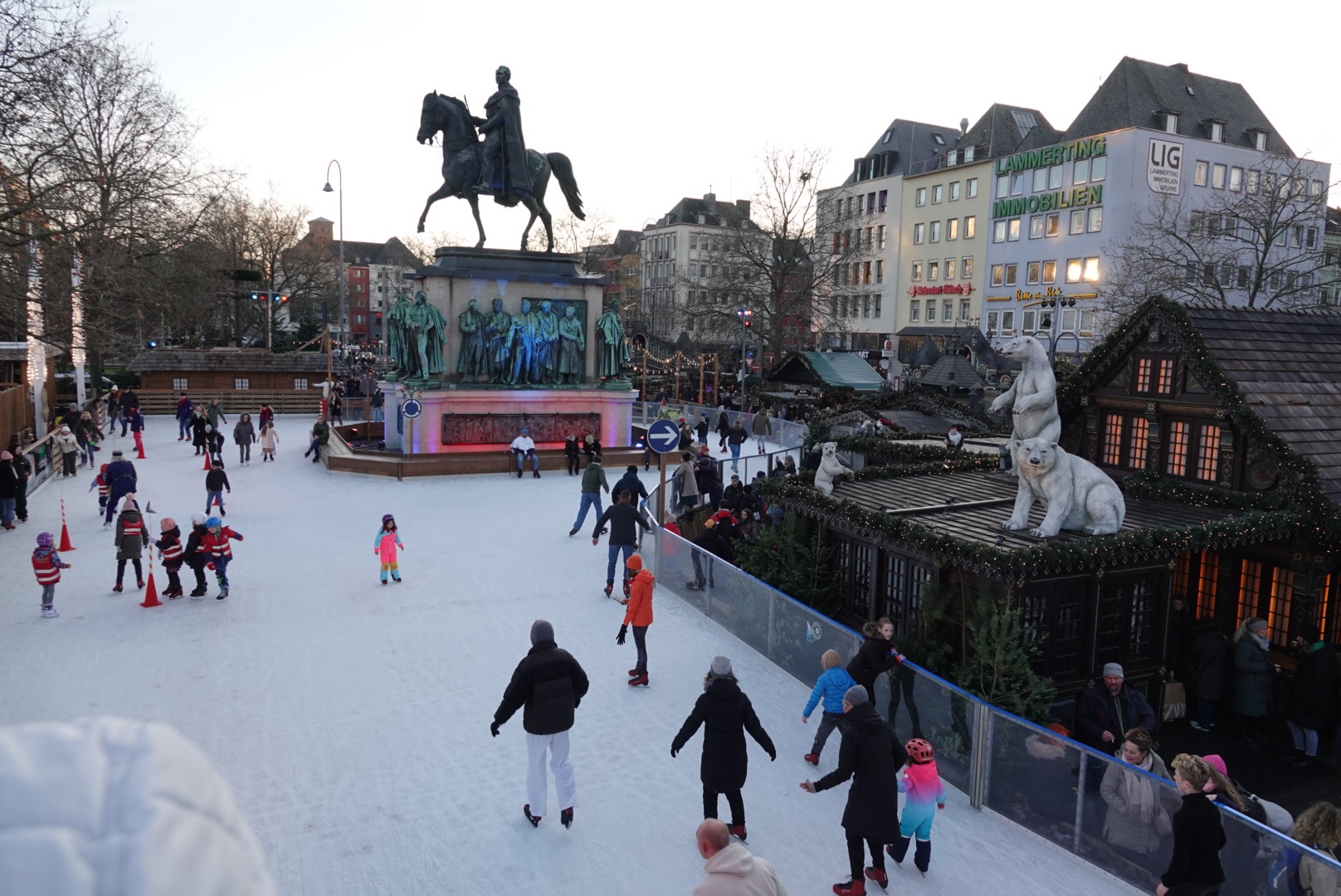


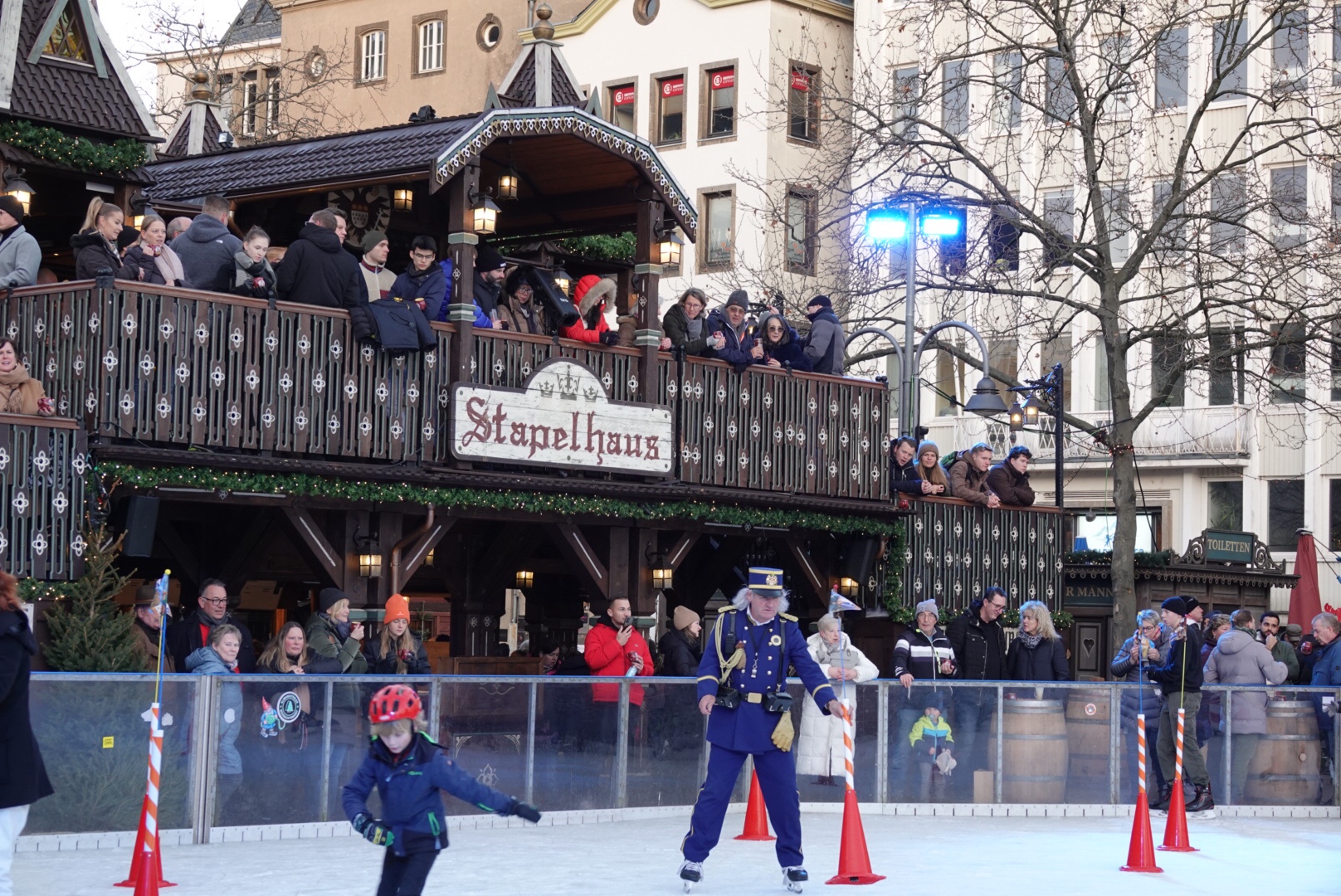
This was by far our favourite market, and almost exactly what I’d been expecting when we came to Germany. The booths were stunning, the many unique vendors were costumed, and although there was a larger variety of foods, it was the vendors that were highlighted.


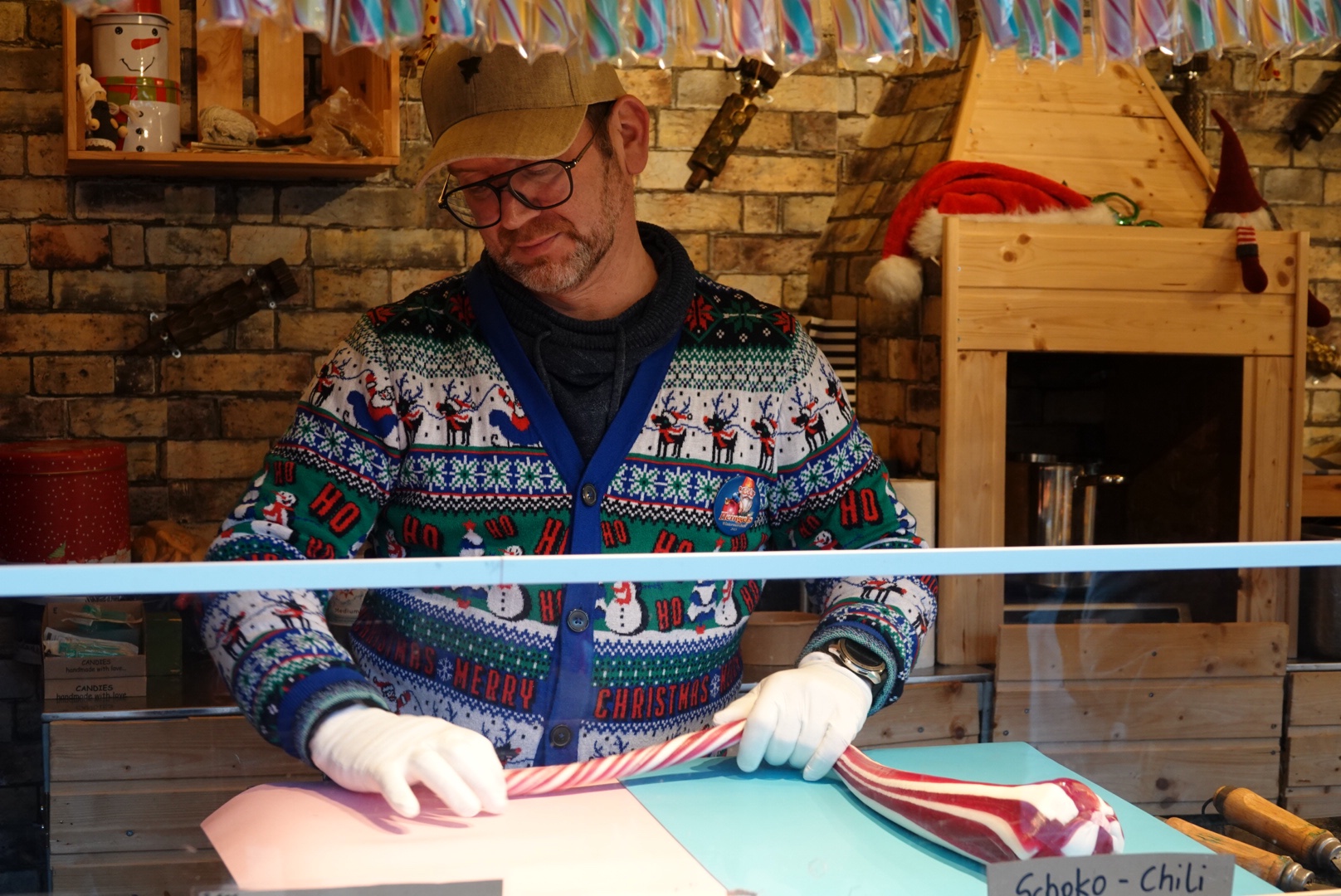

The market was organized into “alleys”, each with an identifying sign held by a helpful elf: Toy Alley, Vintage Alley, Woodworking Alley, Jewelry Alley, etc. that gave a sense of organization at the same time as making it very attractive.

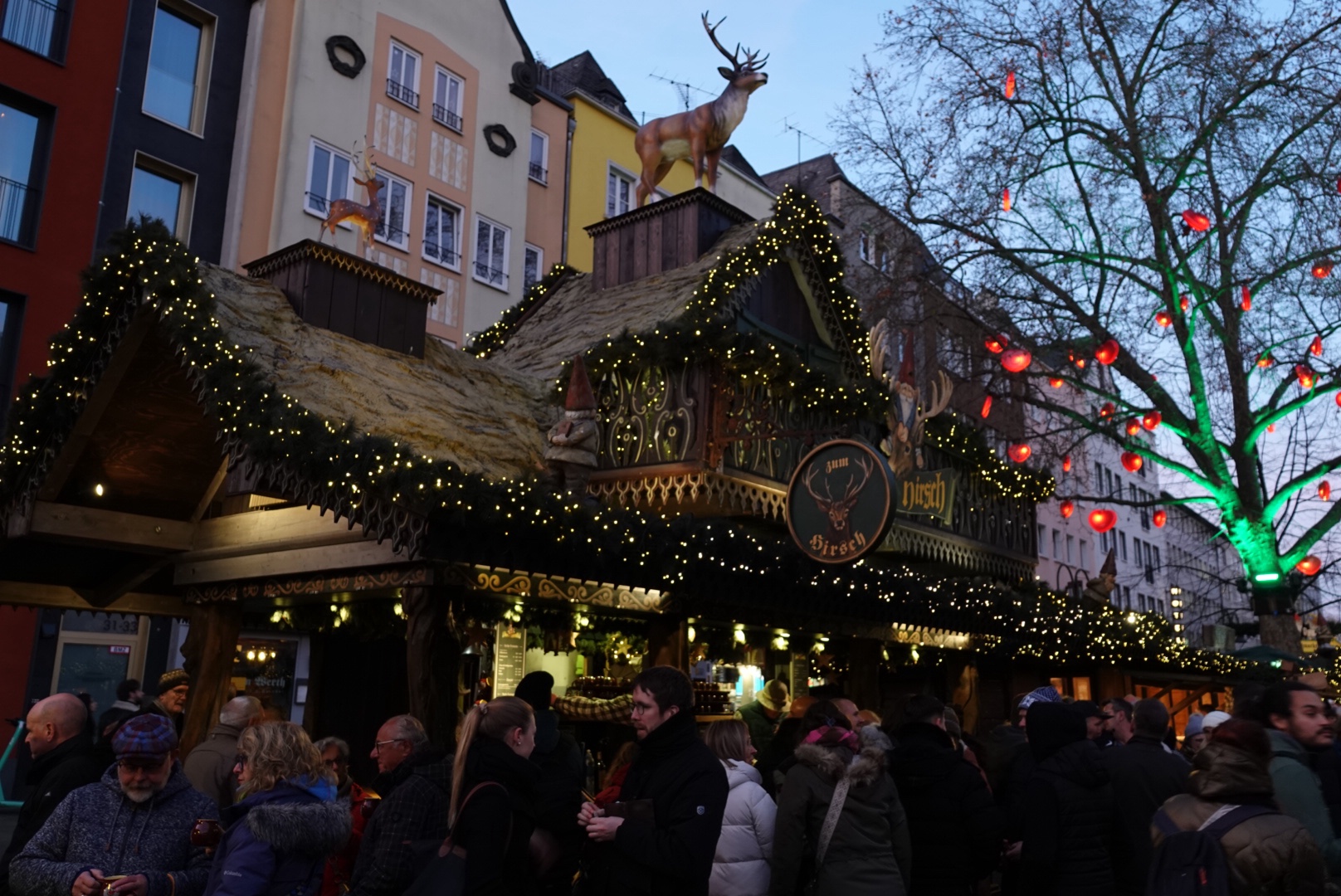
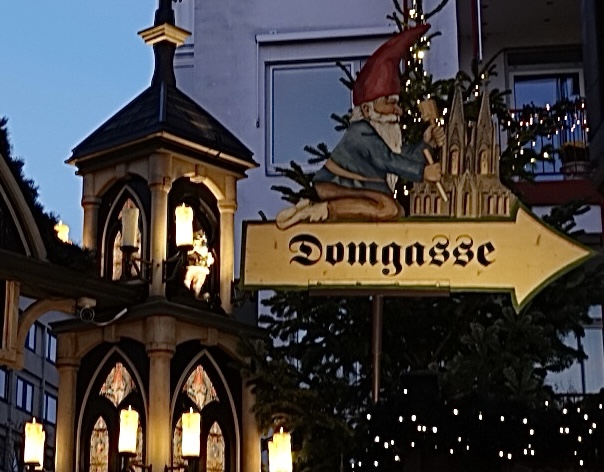
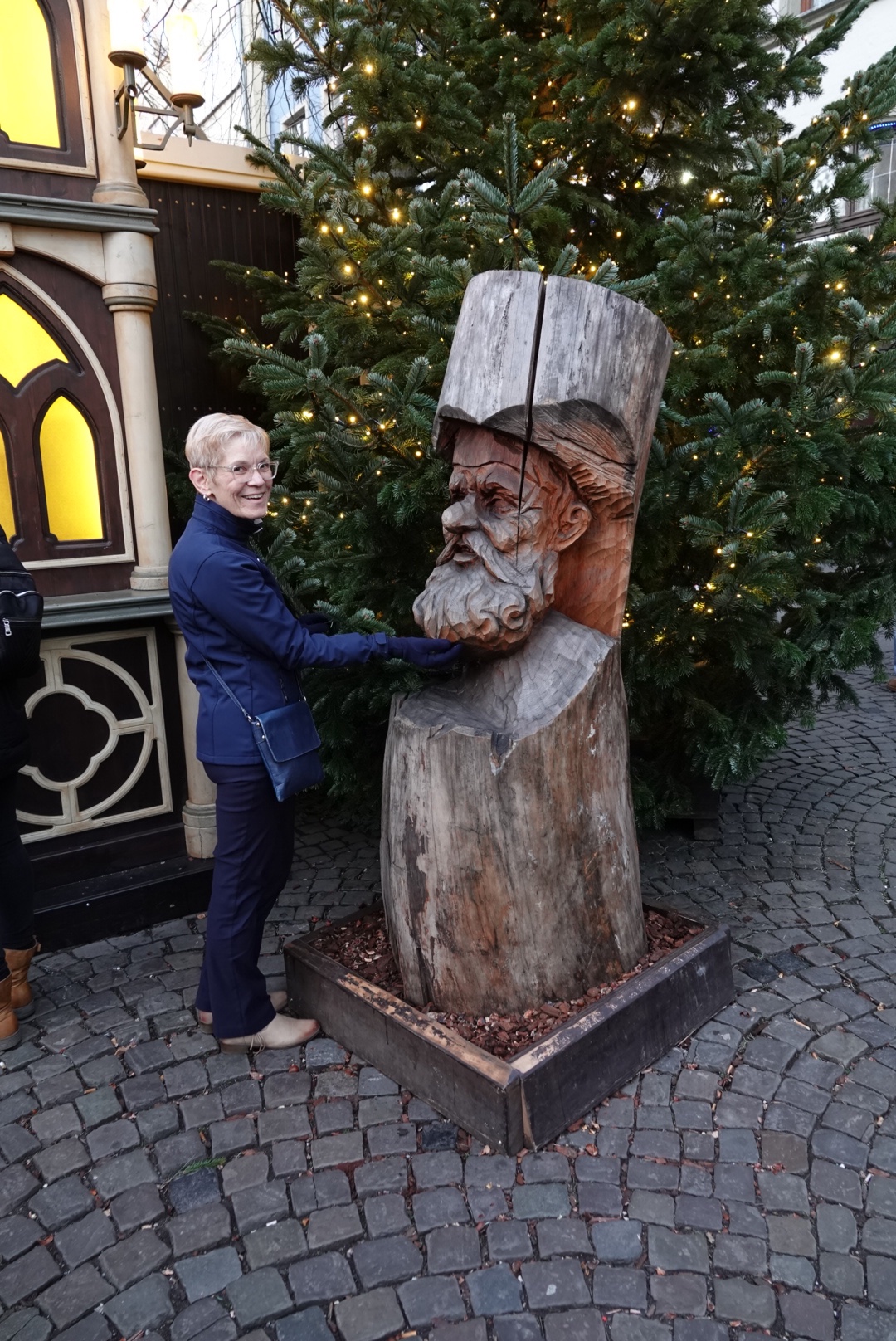
We loved the gates at the market’s perimeter, and even more when we realized they lit up after dark!

Of course, there was glühwein, all kinds of meats and breads, waffles, crepes, spaetzle, chocolates, gingerbread and stollen, flammkuchen, reibekuchen (those wonderful potato pancakes), and much much more. The delicious smells were almost overwhelming. And yet, all we ate was a cornet full of scrumptious hot freshly roasted almonds glazed with cinnamon sugar.

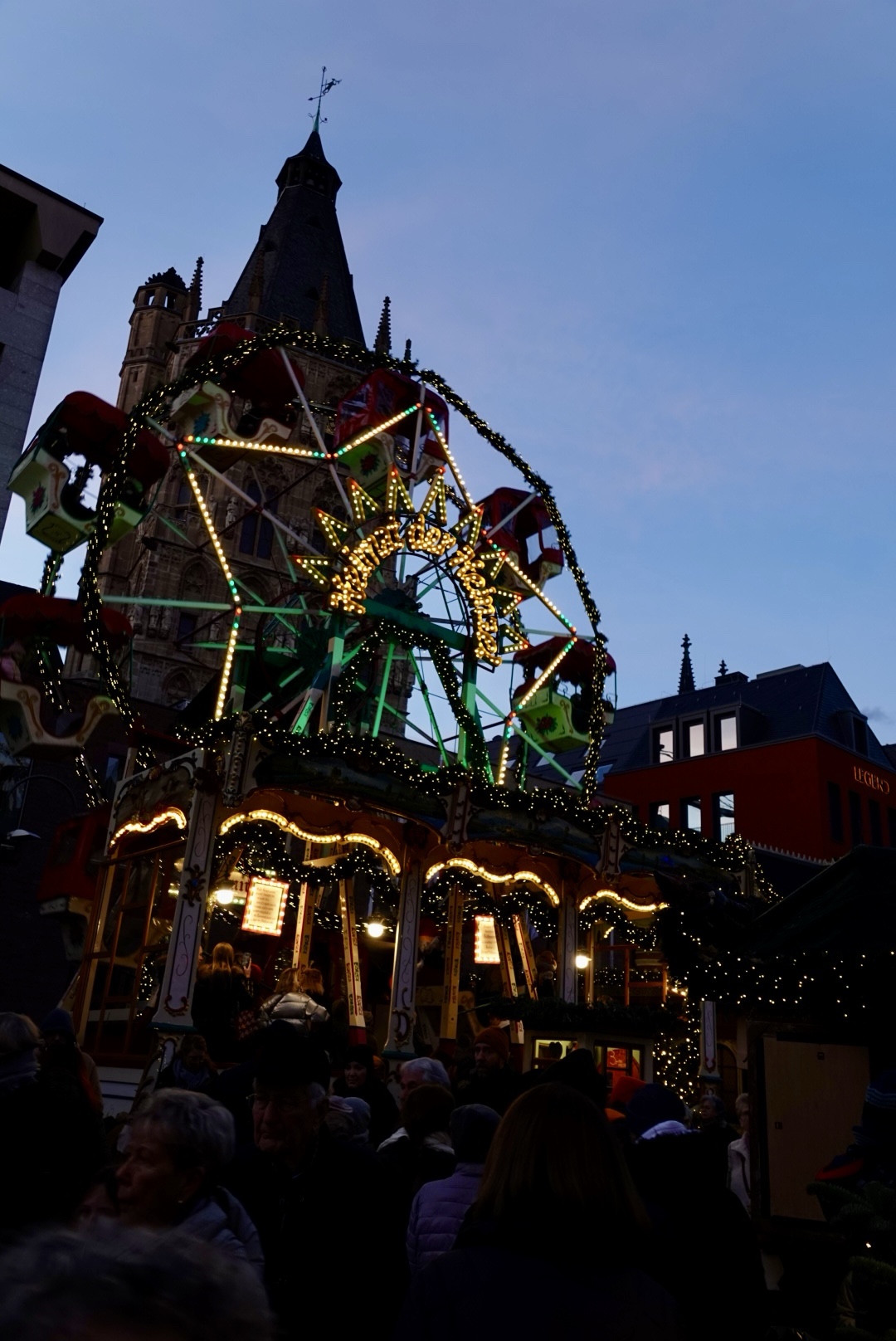
We walked past the Advent pyramid we’d seen earlier in the day. The difference in its effect on us was – literally – day and night!


We also made a quick return to see the Dom Markt lit up, but in our opinion it was nowhere near as lovely as the Heinzel Wintermärchen in the Heumarkt.
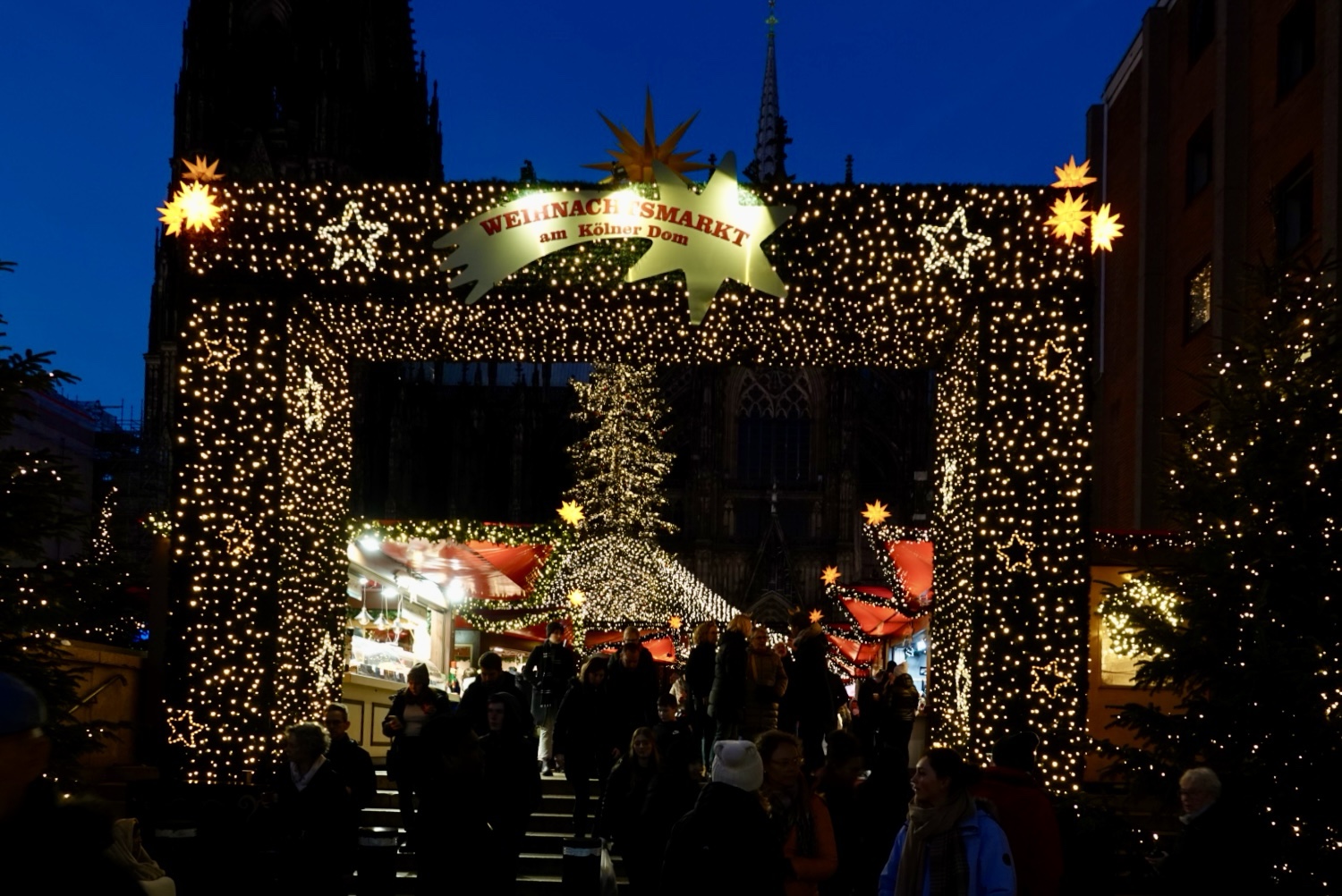
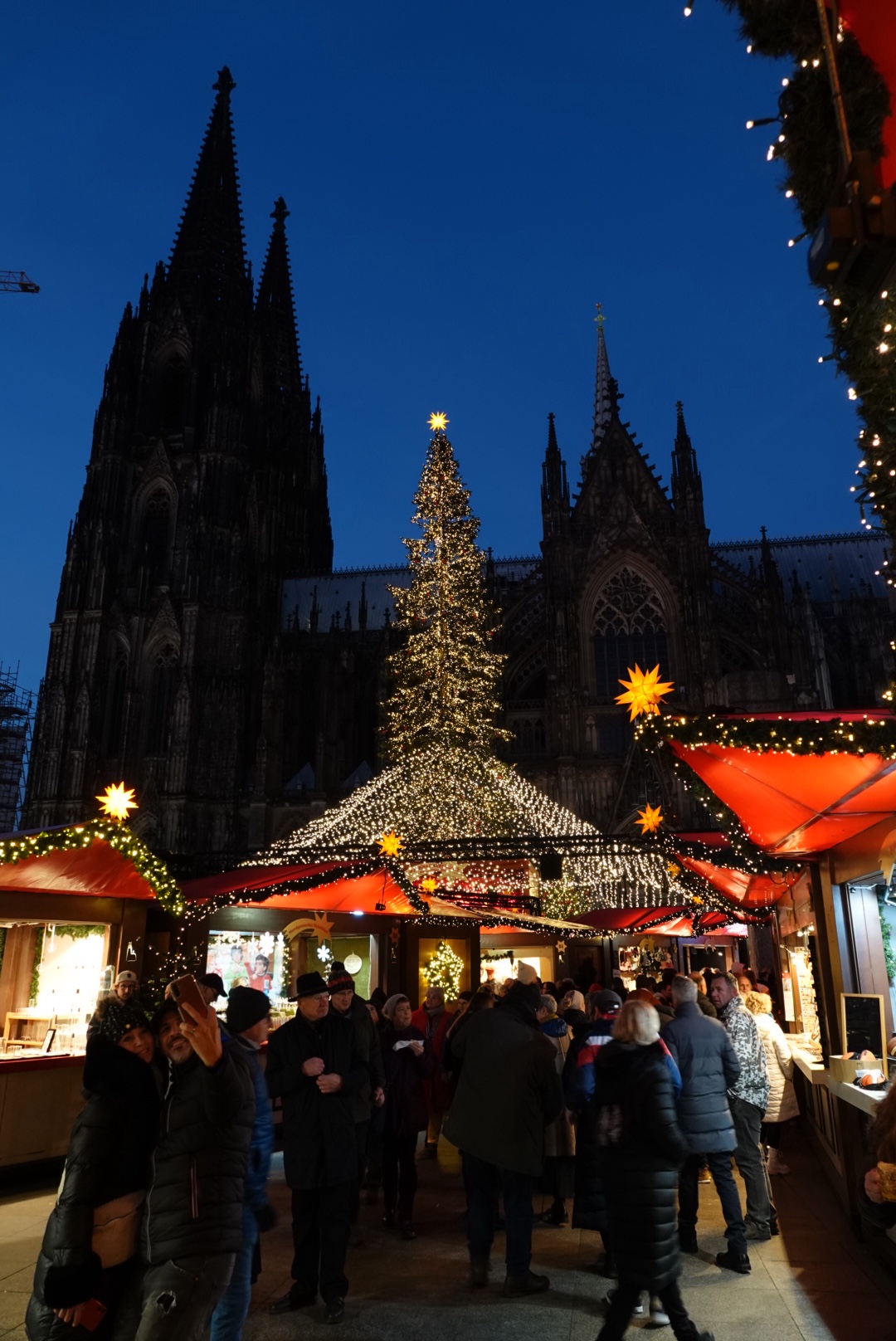
It’s hard to believe we returned to the ship for drinks and dinner after all that, but we did! I even had one of Viking’s famous espresso martinis, which completely lived up to its hype.
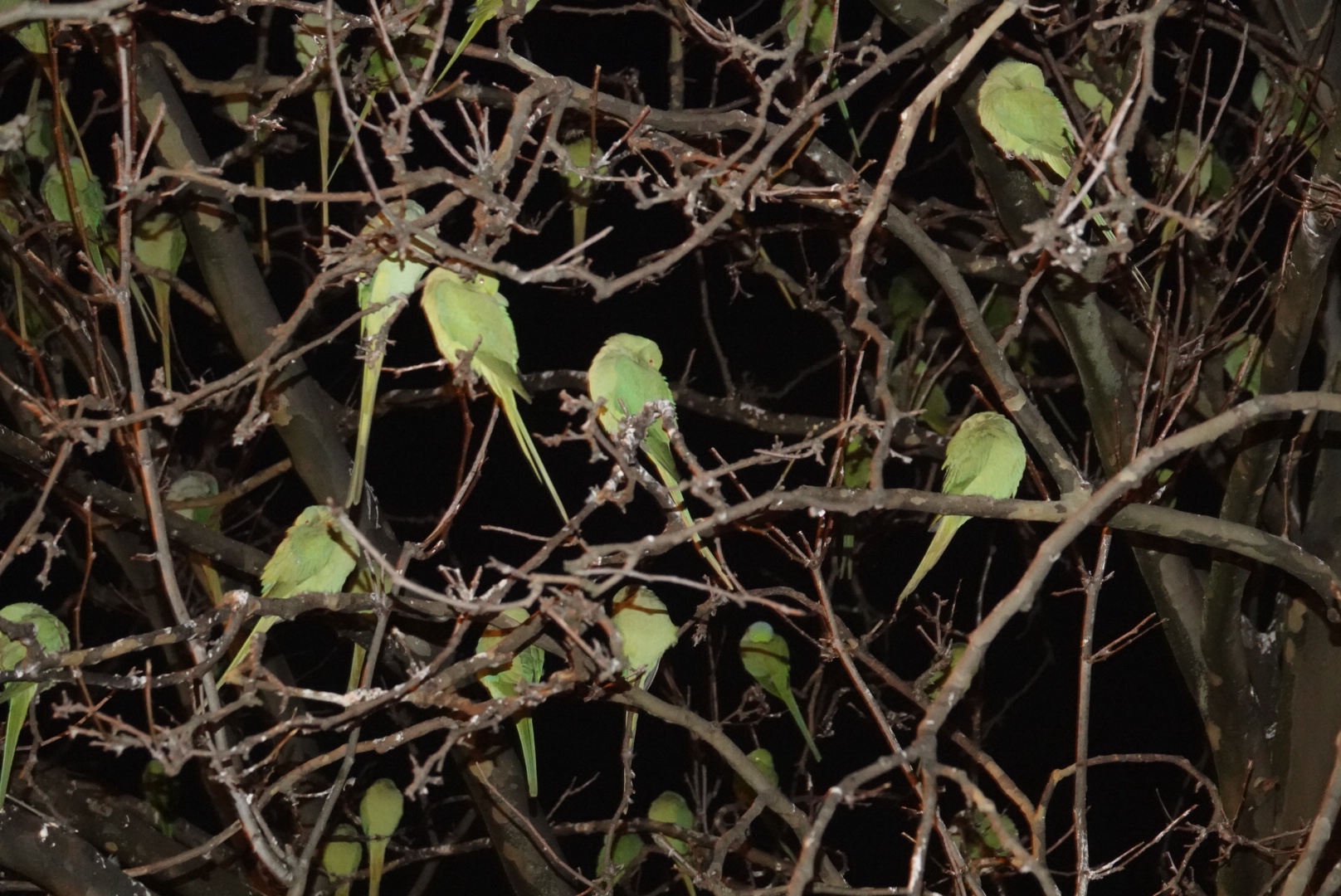
On our walk home, we passed under the trees in the harbour where hundreds of green parakeets roost. The birds are the offspring of pet birds released years ago, and have made a year-round home here. During the day, they fly around the city, but at night they return to the same 4 trees, where they look like live fruits! With some inventive use of his flash, Ted managed to capture a photo of a few of them.

I’m really glad that Köln’s Christmas markets lived up to the hype, since we cruise to Dordrecht in the Netherland tomorrow, where there are no more Christmas markets to tour. Overall, the markets on our tour – with the exception of Köln – have not lived up to my high expectations. That said, it has not discouraged me from wanting to see more Christmas markets in Dresden, Berlin, Vienna and Budapest sometime in the future.
 Rose and Ted’s Excellent Adventure
Sorry this trip disappointed you a bit, but you seem to have made the most of it. Hope Ed is feeling better soon! Merry Christmas!
LikeLiked by 1 person
That’s the problem with super high expectations! LOL. After hundreds of years, I guess Germany’s Christmas markets are allowed to evolve…. they just forgot to ask my permission!!
LikeLiked by 1 person
Oh, such a fabulous day, Rose! I do hope Ted starts to feel better soon to enjoy the last few days.
LikeLiked by 1 person