Up by 07:00. Luggage out by 08:00. Off the ship by 09:00 and onto the buses for the 60 minute drive to Speyer. City tour, lunch on our own, free time to explore the Kristkindlmarkt, and back on the bus at 14:30 for a 3 hour transfer to Cologne and the Viking Einar – our originally scheduled ship. The folks from the Einar are doing our transfer in reverse today and will board the Sigrun tonight.
While we’re on the road, the crews of both ships will be working their magic getting ready for new passengers. Bar and wait staff all pitch in to help housekeeping distribute luggage and prep rooms. It’s definitely an “all hands” situation.
Our stop in Speyer while all that work was going on was a delightful surprise. While the area we explored was physically compact, there were lots of interesting things packed into it: an amazing Imperial Cathedral dating back to 1060 AD, a truly unique Protestant Church, remnants of a sturdy mediaeval wall … and of course a Christmas market!
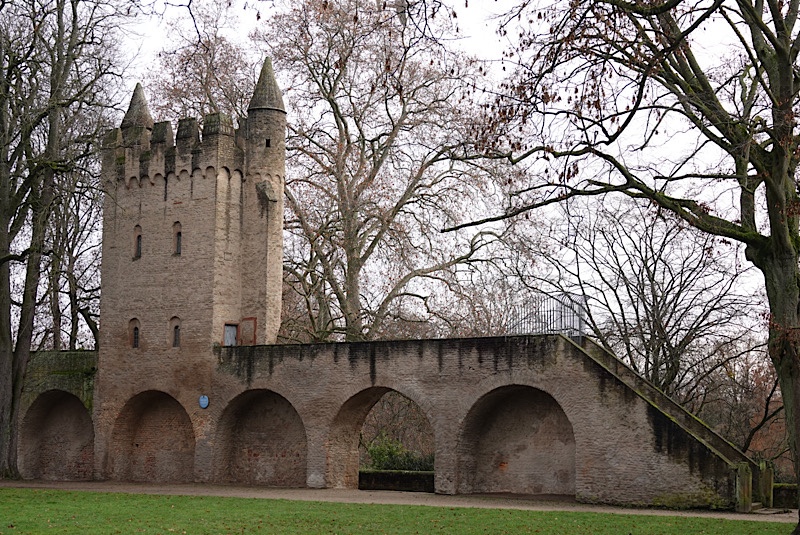


The Speyer Cathedral was, at the time of its construction, the largest cathedral in the world, and still today is the largest Romanesque church in the world. Holy Roman Emperor of the Germanic Palatinate, Conrad II, intentionally wanted to overshadow the cathedral in Rome, and reinforce the fact that the emperors were more important than the Pope.

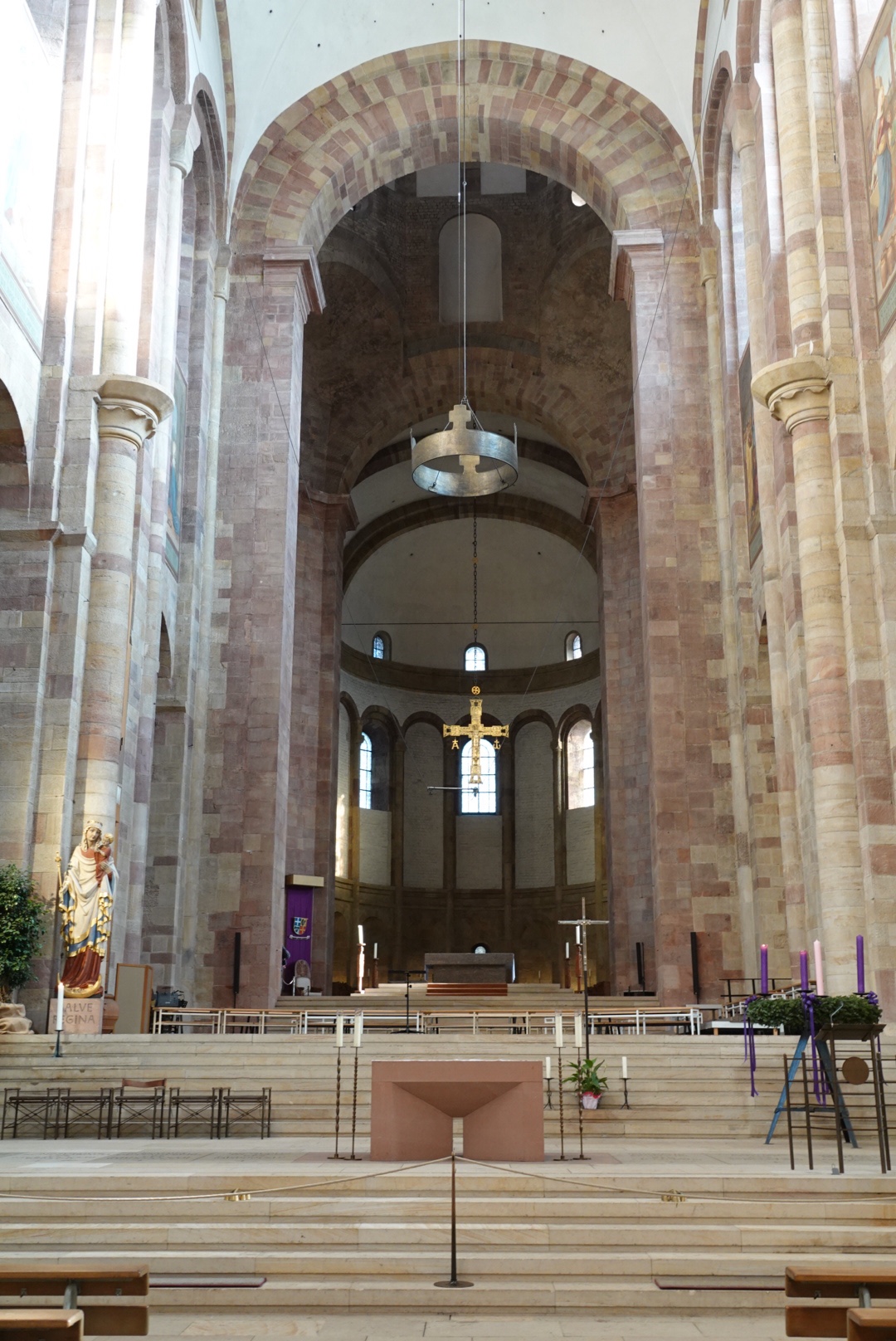
The massive building’s original structure was consecrated in 1061, built in true simple Romanesque style, with soaring unadorned columns and almost no ornamentation beyond arches. The material used was pink and yellow sandstone, each colour unique to one side of the Rhine valley.
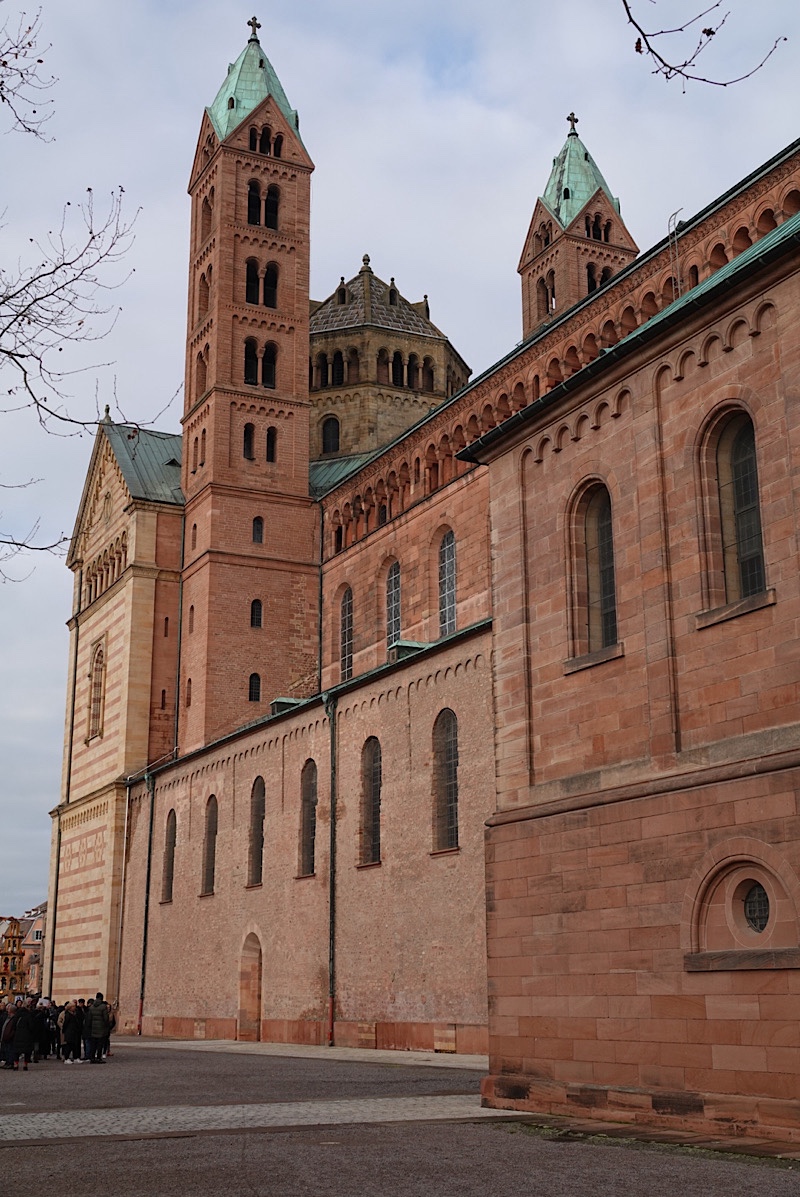

About 30 years later, Emperor Henry IV had portions of the original structure demolished, the foundations strengthened, and the cathedral made taller, as well as adding more towers. The building was then 134 metres/440 ft tall and 43 m/141 ft wide. Its sheer size was seen by the Pope as an affront, and Henry IV was eventually excommunicated.
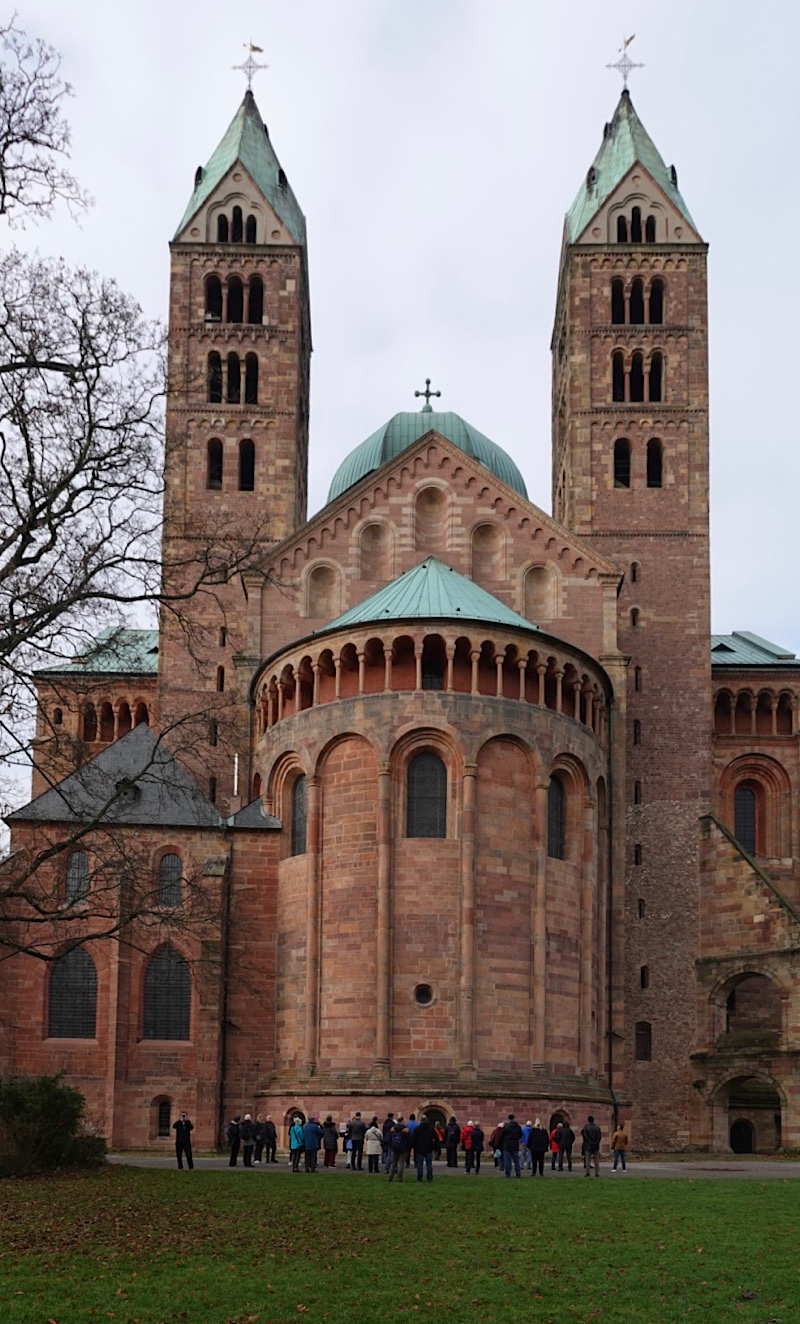

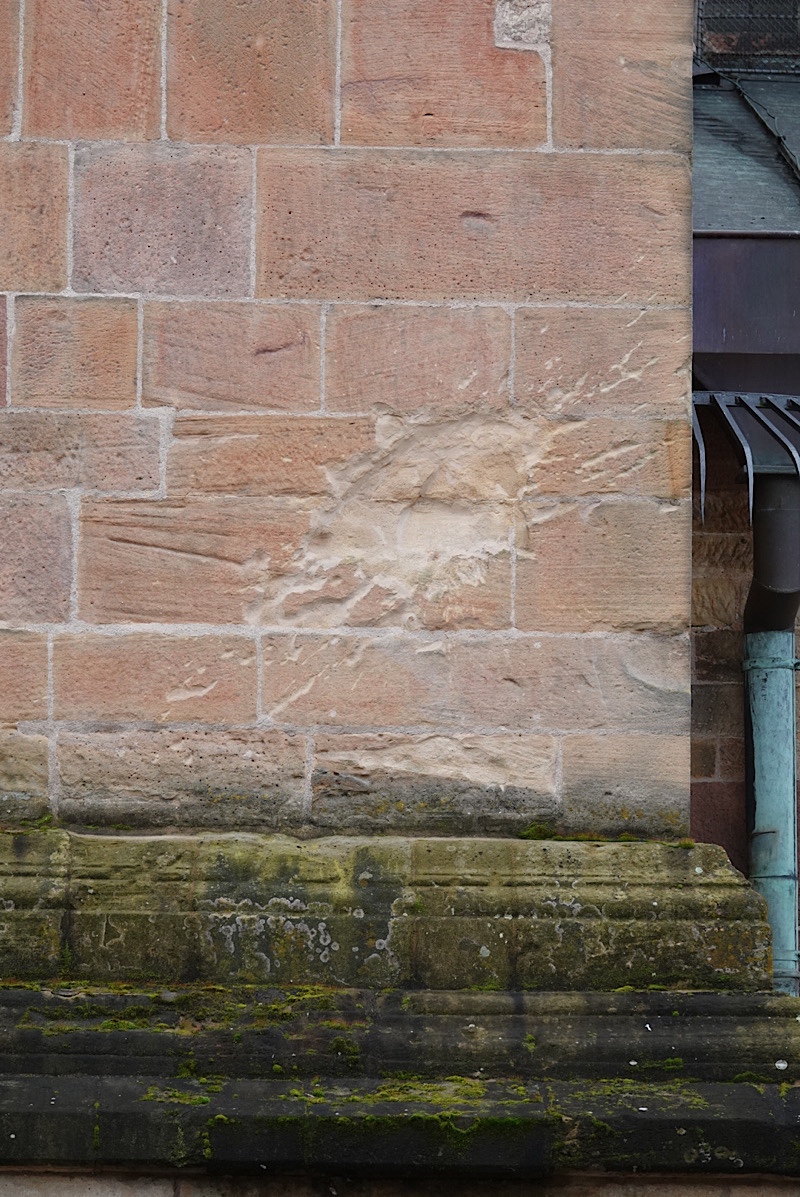
In 1689, during the Nine Years War with France, Louis XIV’s army set the town of Speyer on fire – apparently ordering his troops to “burn the Palatinate” – and even though the stones of the cathedral did not burn, its lead roof melted. The building was restored in the mid 18th century, much of that restoration done in the Baroque style. Those same fires destroyed all of the cathedral’s adjunct buildings: the cloister, clergy residences, stables, etc.
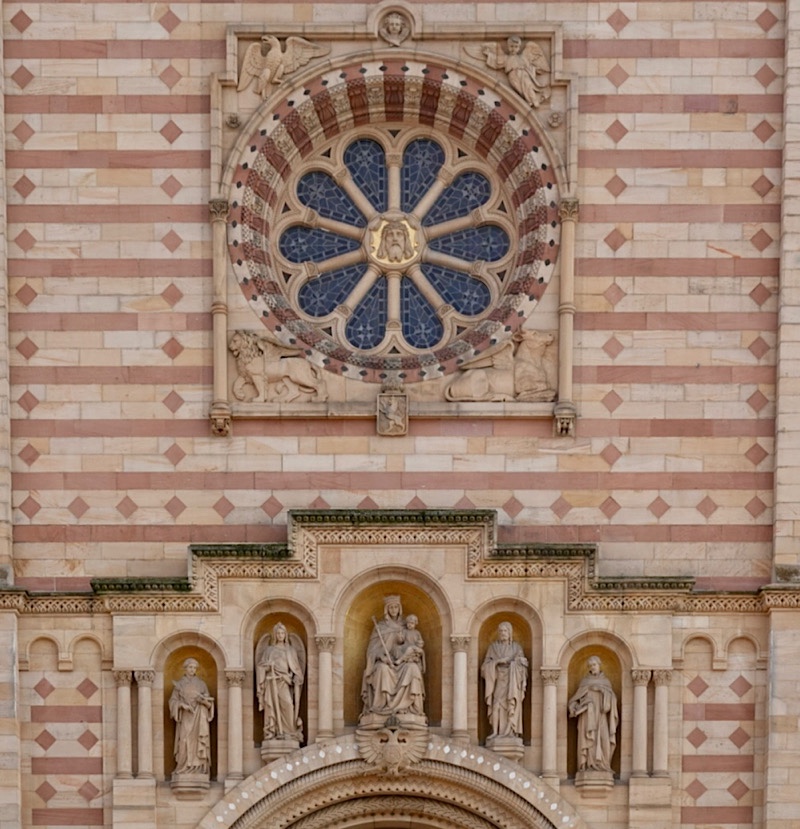
The western facade (below), also done in the mid 1800s, is Neo Romanesque. We were amazed by how brand new the almost 200 year old stonework looked.


The cathedral’s crypt consists of 4 rooms, including its own chapel, and holds the bodies of 8 kings of Germany (four of whom were also Holy Roman Emperors), 2 Queen consorts, and many of Speyer’s bishops. The last ruler was put to rest in the crypt in 1308 AD.
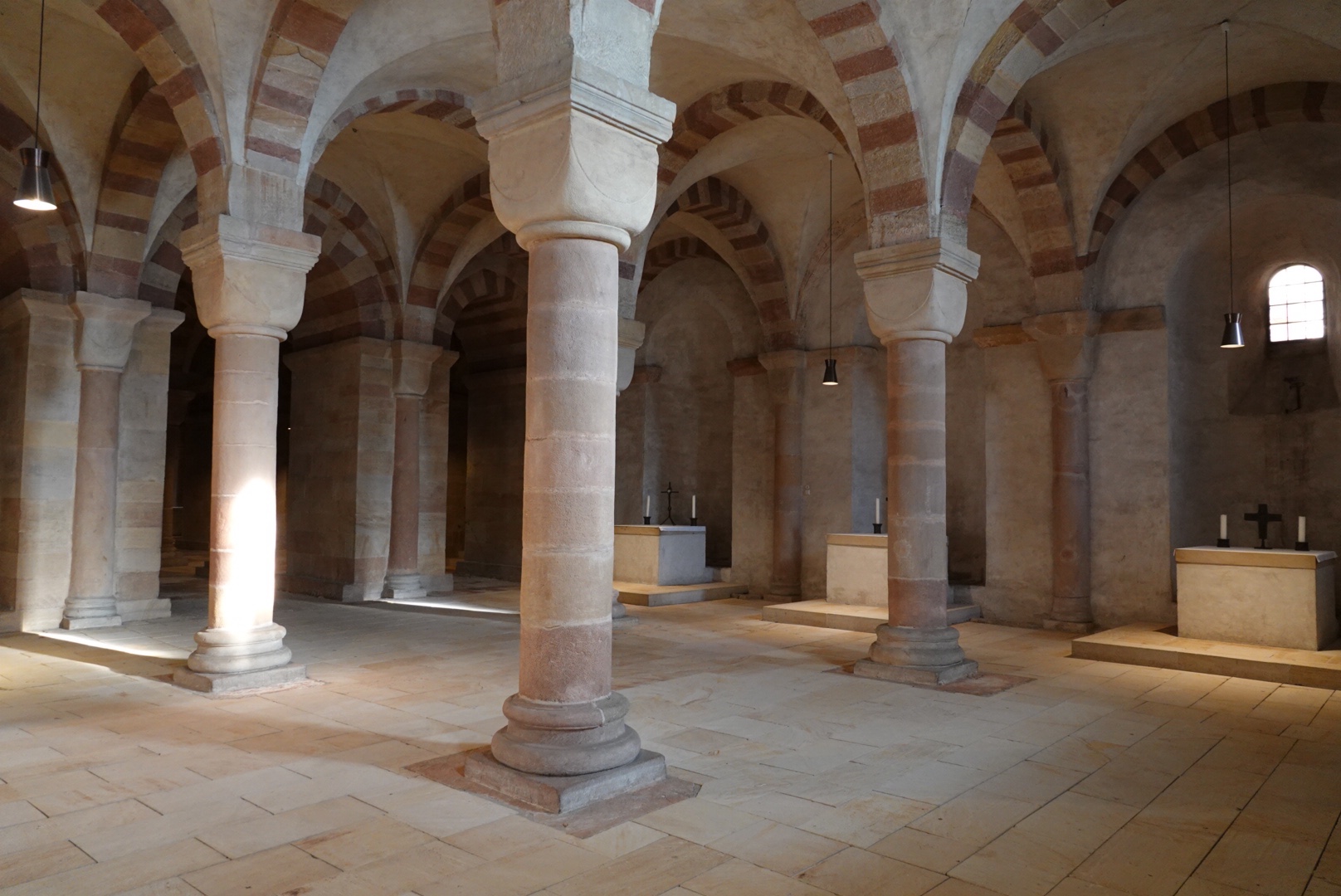

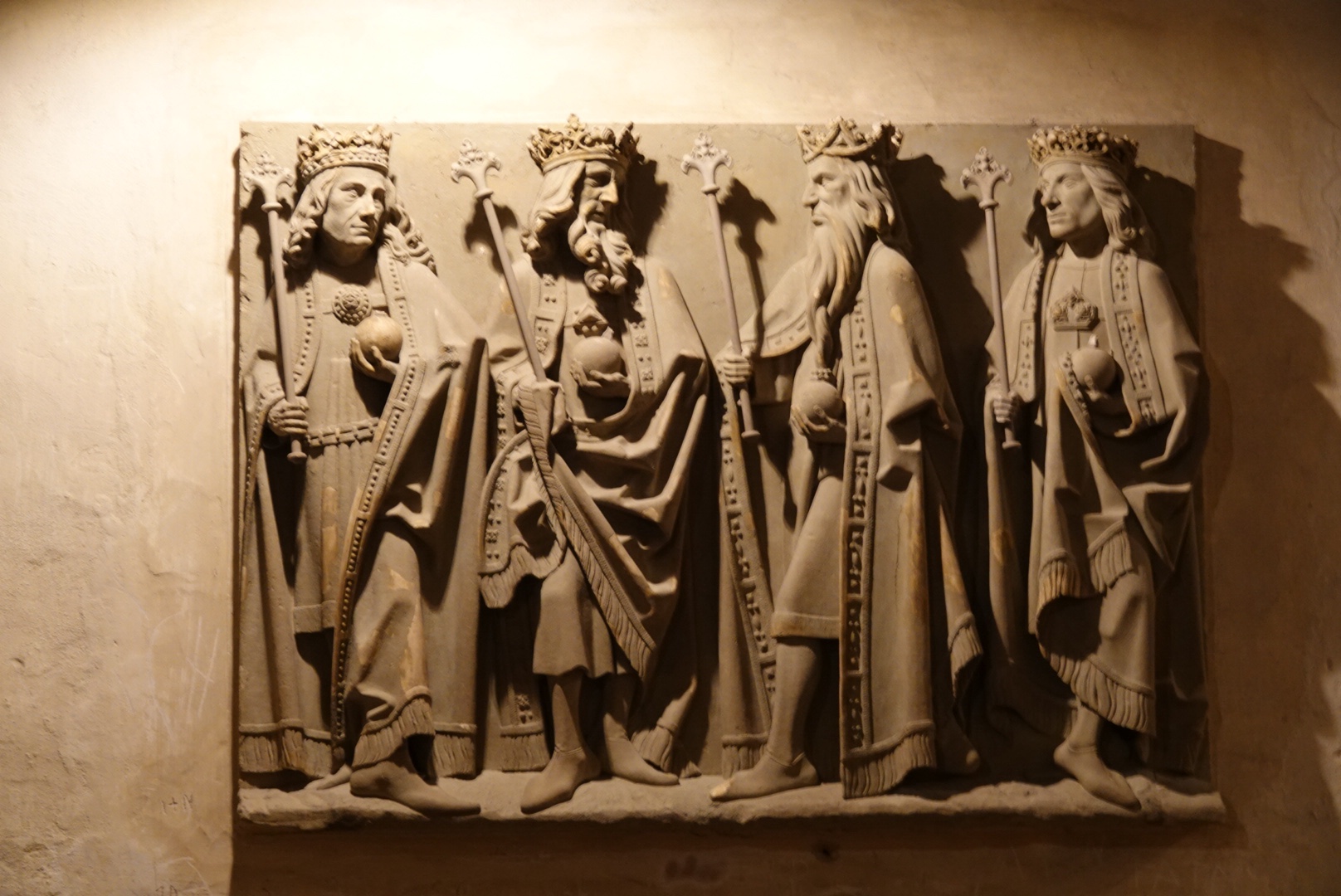

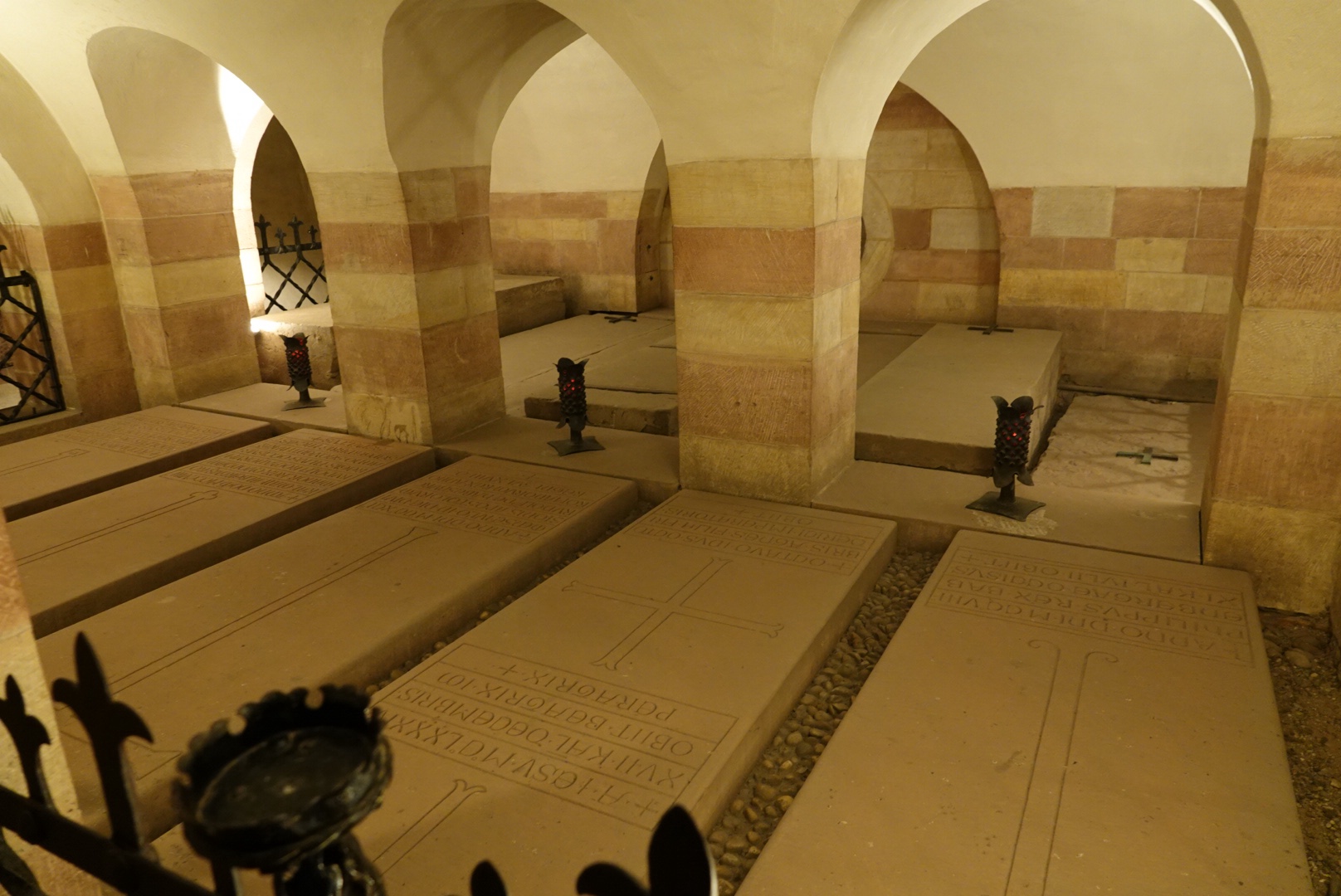
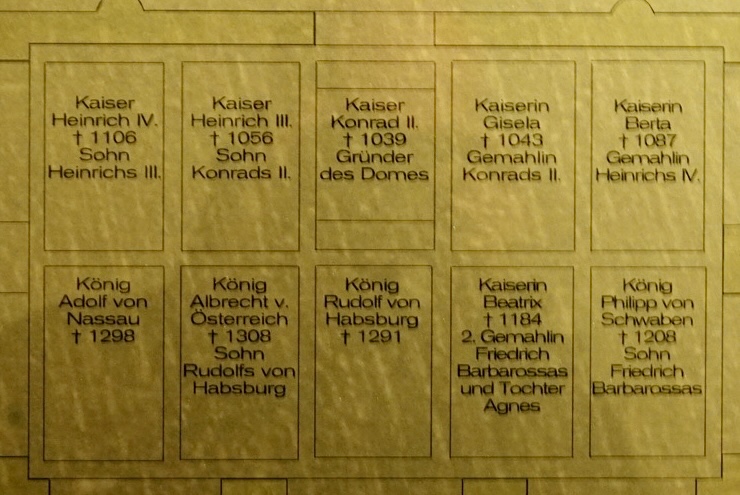

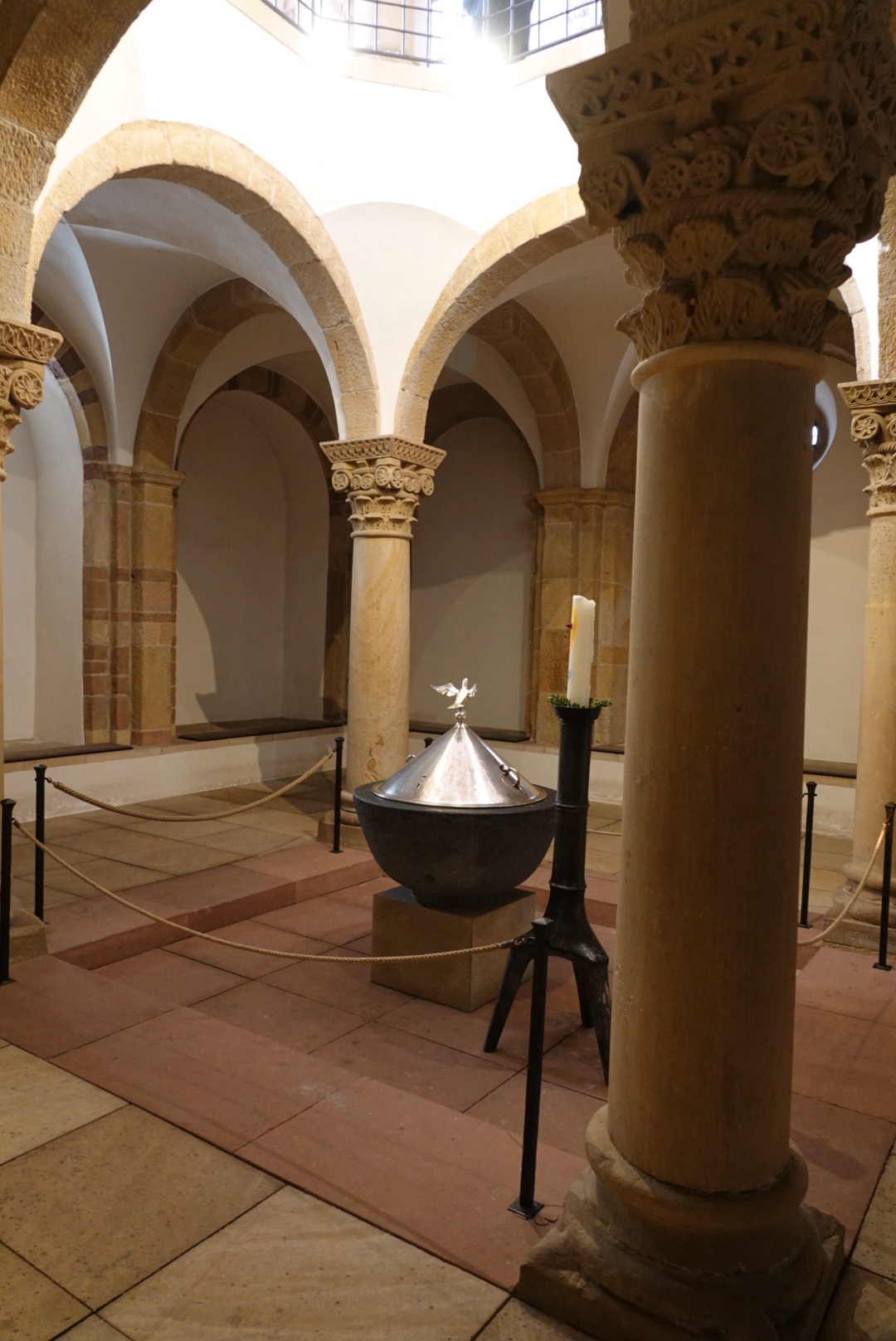
While the cathedral does not have any side chapels, we were able to go upstairs to the Doppelkapelle (double chapel)l the upper of which holds the church’s collection of relics, and the lower of which is a baptistry.


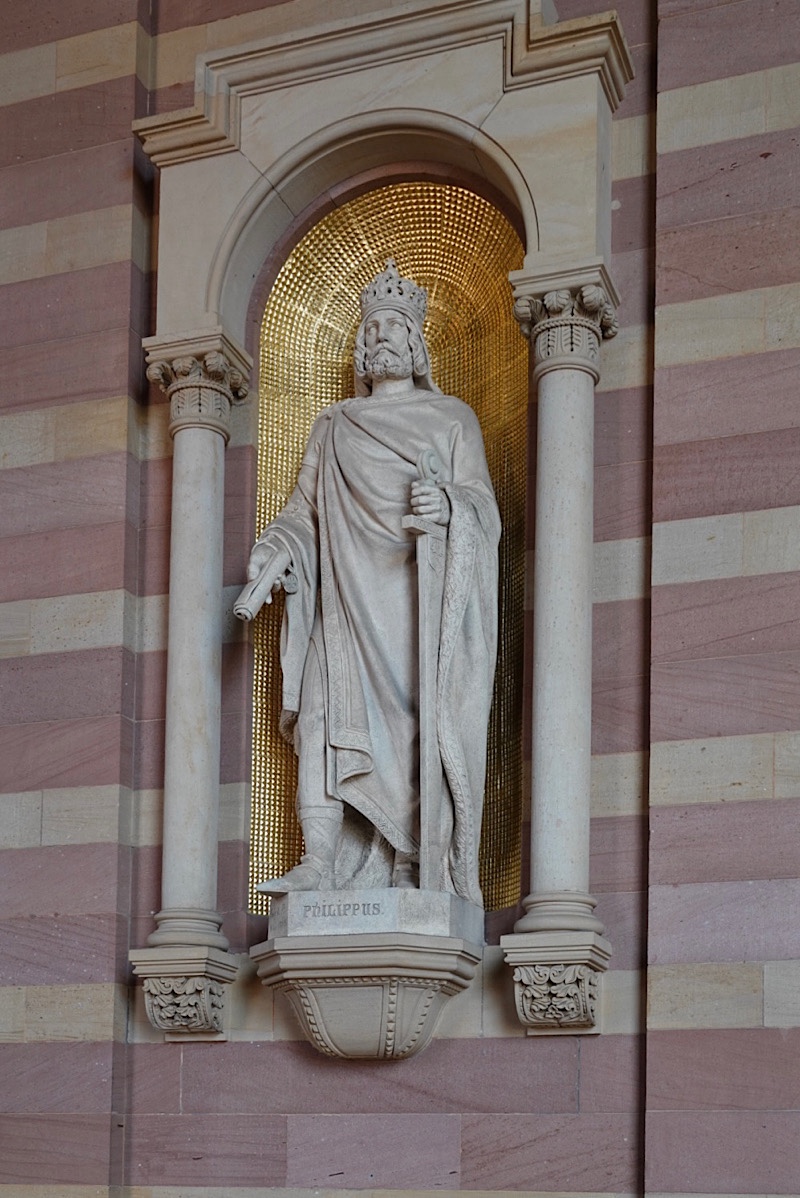
Outside the cathedral was a collection of statues commemorating the Germanic rulers of the Palatinate. While they looked old, they actually only date to the years of Nazi rule. Hitler had them created as part of his Third Reich (empire) propaganda scheme. I found it fascinating that instead of removing the statues, the city has decided to give them context; it’s a learning opportunity. The photo below has a VERY long caption, because I particularly wanted to remember the story.
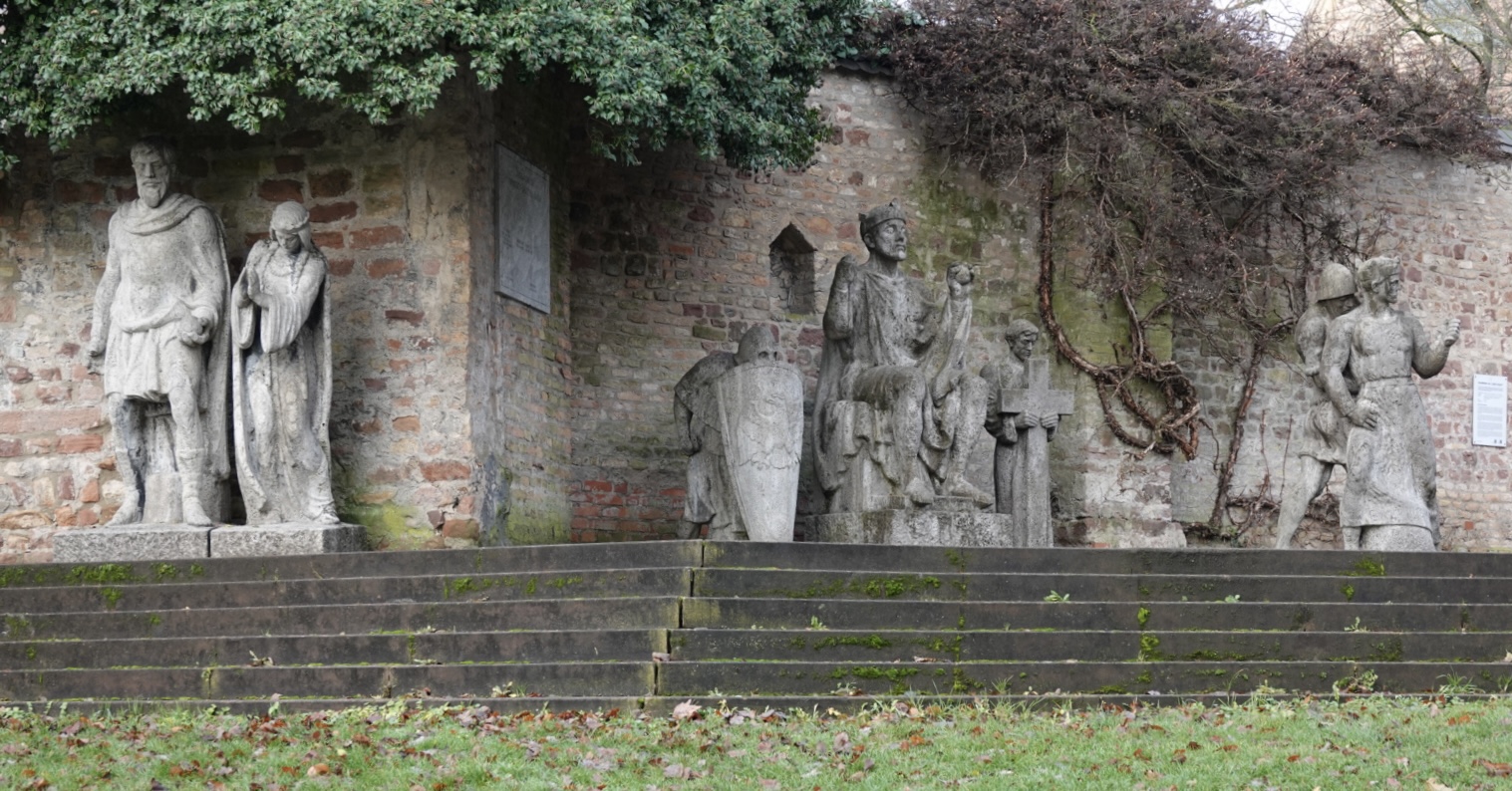
The Salians were a medieval noble family from the area around Worms and Speyer. Four Roman-German kings and emperors emerged from it between 1024 and 1125: Conrad II, Henry III, Henry IV and Henry V. The Salian emperors had the Romanesque cathedral built in Speyer and chose it as their burial place.
The sculptural group of the emperors with accompanying figures installed here was designed by the sculptor Ludwig Cauer from 1930 onwards and commissioned in 1940 by the Nazi Reich Minister of the Interior, Dr. Wilhelm Frick completed. Wilhelm Frick, among other things, played a key role in the adoption of the Nuremberg Laws that formed the basis for the discrimination and persecution of the Jewish population. He was sentenced to death as a major war criminal by the International Military Tribunal in Nuremberg in 1946 and executed in the same year.
Ludwig Cauer came from an extensive family of sculptors, a member of the NSDAP and was listed in 1944 in the list of “God-given” published by the Reich Ministry for Public Enlightenment and Propaganda under Joseph Goebbels.
After their completion, the Reich Minister of the Interior assured the then mayor of Speyer that he would bequeath the sculptures to the city as a gift. The aim was to transform Speyer Cathedral into a National Socialist shrine. The bishop and cathedral chapter refused to install them, and the statues were stored in boxes in the courtyard of the state archives. After long and heated discussions in public and in the city council, the decision was made that they could because tourist attractions, and they were finally installed in the cathedral garden at their current location in 1964.
Speyer has one other very famous religious building: Trinity Protestant church. The city was the site of the signing of a letter of protest against the Roman Catholic Church by 14 representatives of Free Imperial Cities during the Diet (legal assembly ) of Speyer in 1529.
Built between 1701 and 1713 AD, it was conquered and plundered during the French Revolution, and then used as an army hospital by Napoleon. The facade destroyed during the French occupation was replaced by the current Baroque one in 1891.
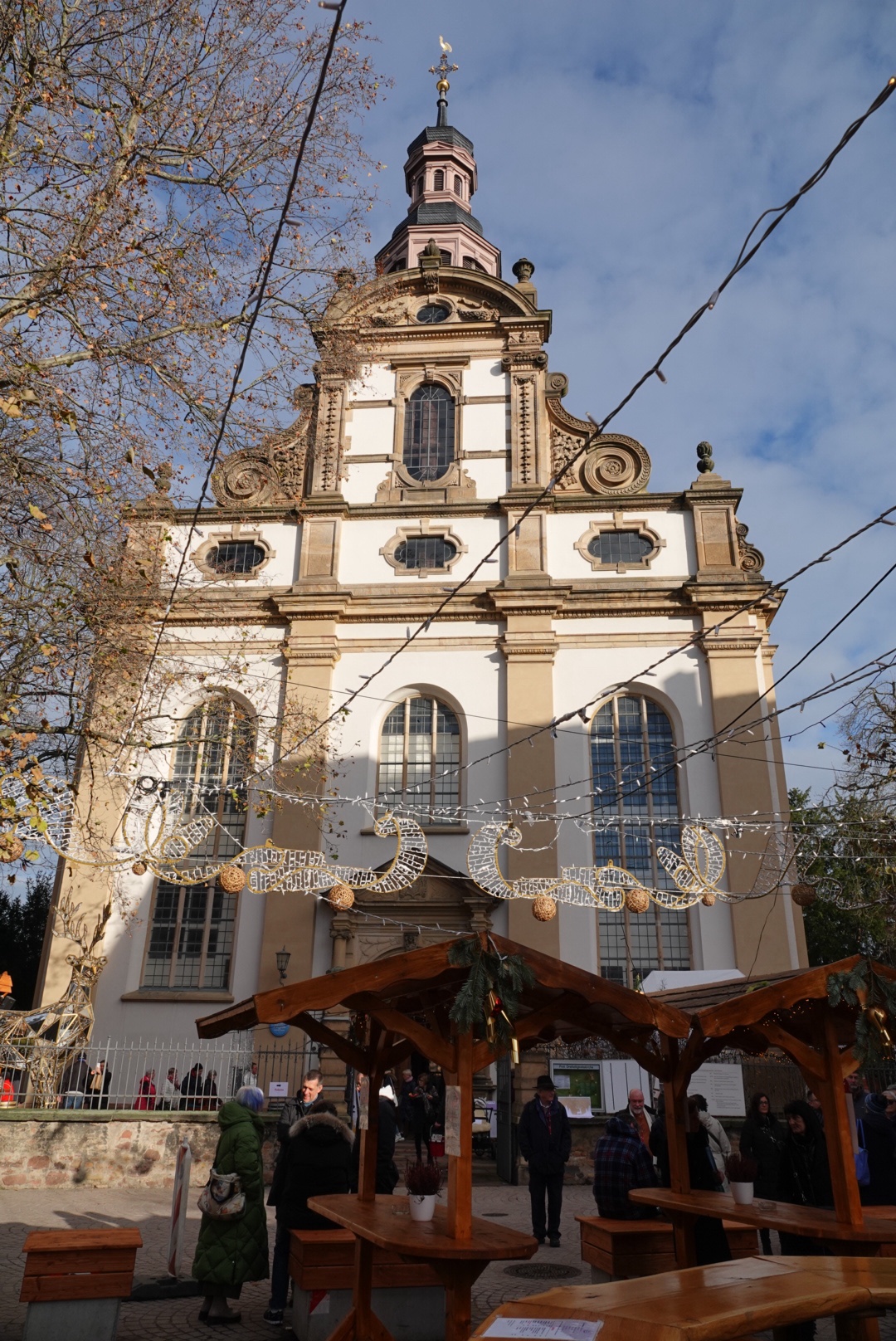


The early Protestant churches were notoriously plain, without any kind of gilding, carving, or iconography – only a plain cross – since one of the things the Reformation brought was a move away from the worship of “images”. Even stained glass windows, when they appear at all, are geometric in design rather than including figures of people or animals. Trinity seems like the complete antithesis of those values.
The ceiling is beautifully painted with biblical scenes, but unlike the usual Baroque ceiling paintings in churches, they are not aligned with a line of sight. Perhaps that made them less distracting from worship?


The 20 fresco scenes above the pews reference the picture bible of Matthew Merian, a Swiss-born engraver and publisher, and were added to serve the understanding of the word of God, completely in line with the Lutheran faith.

After all that heavy religious history, we clearly needed some Christmassy diversion.

Speyer’s Christmas market is not particularly large, and is 90% focussed on things that can be eaten or drunk, with the city’s main street stores providing the Christmas sales. (Goal accomplished: new navy blue winter gloves)


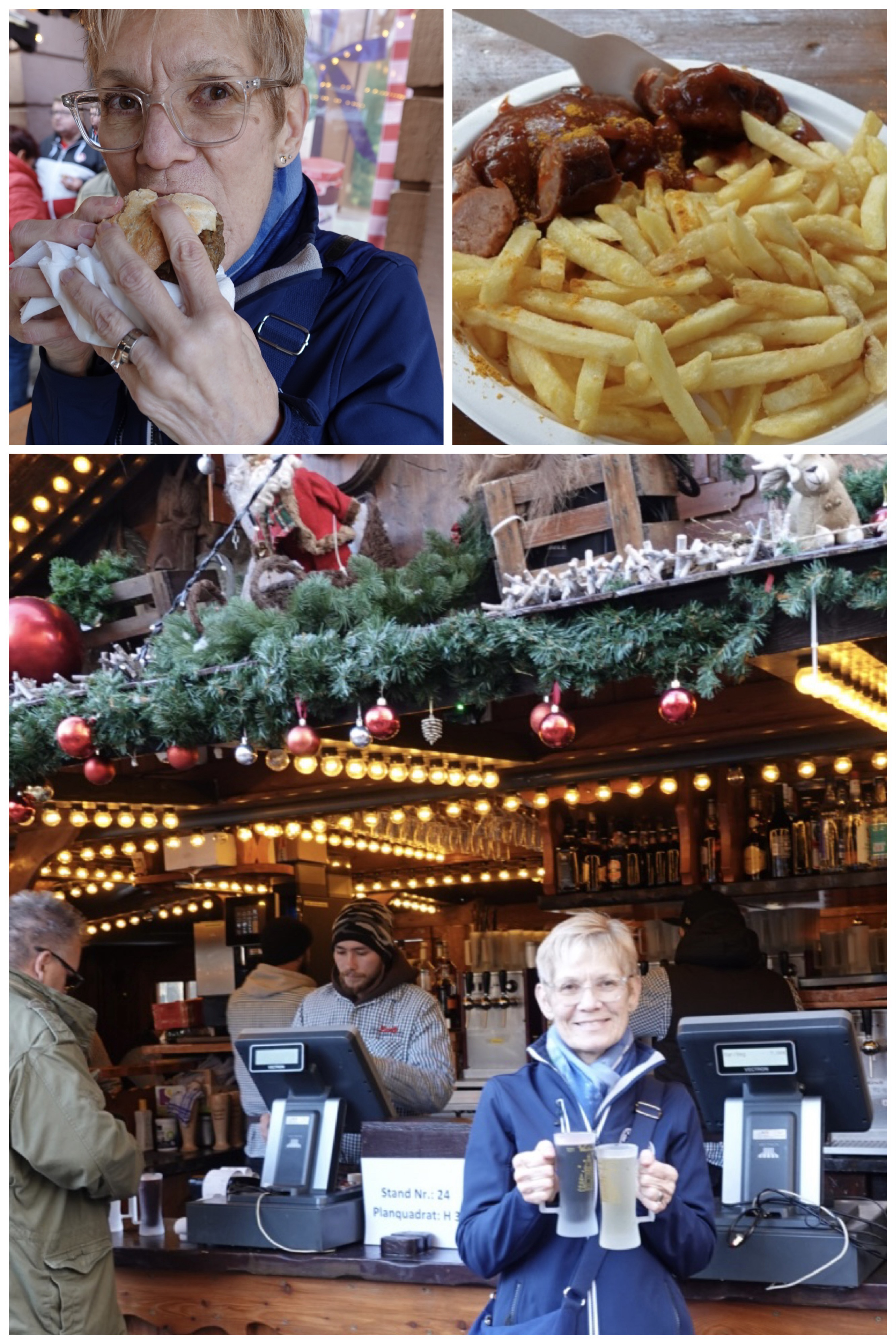
Ted and I both thoroughly enjoyed today’s food choices: curry wurst with pommes (the German slang for French fries, pronounced “pom-ess”), and Frikadellen mit Zwiebeln and einem Brötchen (a grilled and sauced ground pork patty with sautéed onions on a crusty roll).
And of course there was glühwein: white for Ted and red for me.
Back to the bus for our 3 hour drive to Cologne, where we docked beside dozens of Viking longships already prepped for their winter storage here. Yes, it was a long time on the bus, but made much more pleasant by interesting conversation with fairly recently retired educators Sinde and Malcolm, originally from Modesto California but now Portland Oregon residents.
Speaking of conversational distraction, Ted and I have been really enjoying dinner conversations with a group of four “kids” from Texas: Hayden, Marcus, Leslie and Eli, 3 of whom work at the same architectural firm. Their enthusiasm and curiosity is absolutely contagious, and for some reason they think we’re cool old folks. That’s flattering, but oh to be 30 again and able to experience Germany with fresh eyes and nimble limbs!
During dinner tonight we also got the exciting news that on the day after tomorrow we’ll dock directly in Cologne, within a 10 minute walk of the famous cathedral, and be able to spend the entire day exploring until 10 p.m. when we CRUISE TO DORDRECHT!!
Tomorrow we travel to Koblenz, and take in a scenic cruise on the middle Rhine through the vineyards and castles before exploring Koblenz itself. We’ve been here before, most recently just prior to Christmas Market season last year (Episode 355) so are excited to experience the town in full festive mode.
 Rose and Ted’s Excellent Adventure
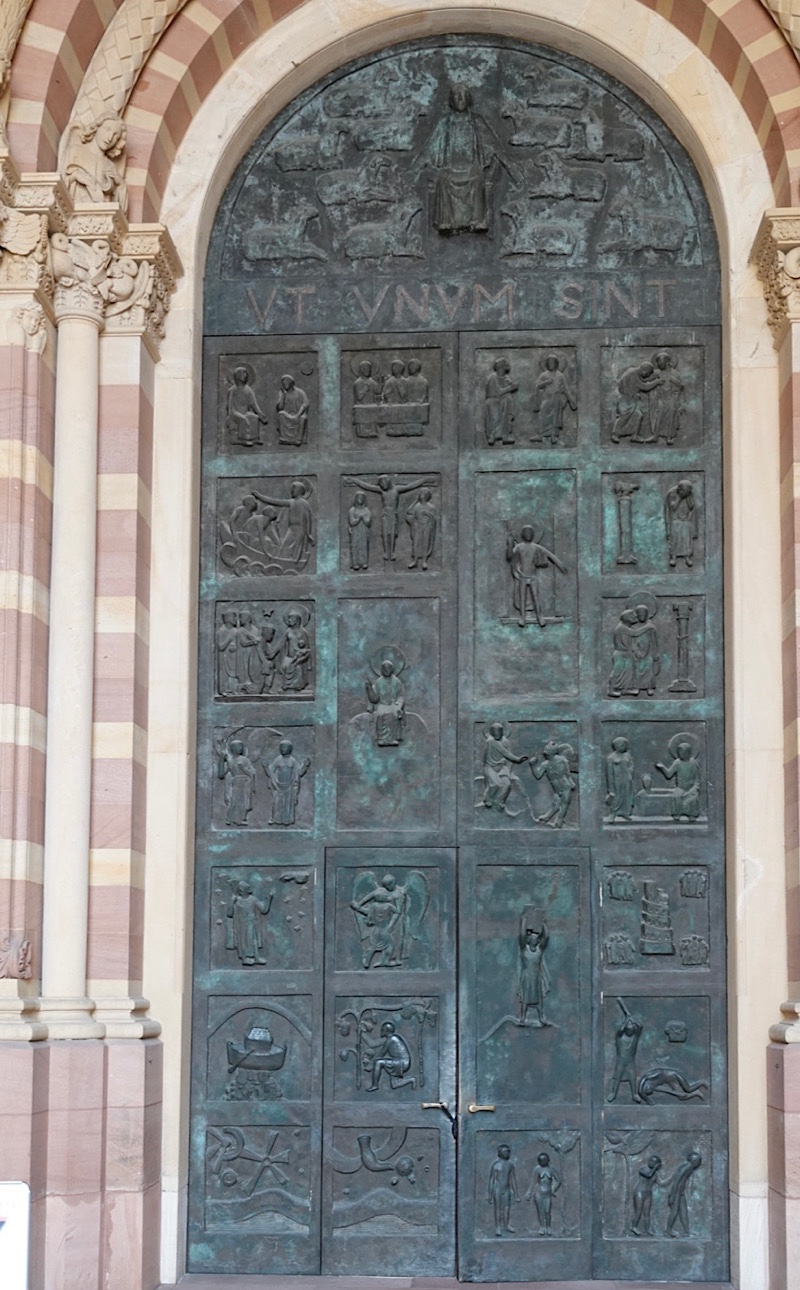
Gorgeous, and those doors are incredible— even the heavy ones! Raise a Glühwein for me on the middle Rhine where our daughter lives near Rudesheim, we’re there in spirit!
LikeLiked by 1 person
… or maybe a Rudesheimer coffee!!
LikeLike
There is an excellent museum of modern art in Cologne, just catty corner from the Cathedral and across from the train station. I think it might be called the Ludwig Museum. It made a change from so much older art and I really enjoyed my time there, though I spent most of it in a special exhibit of botanical art. There was also a temporary museum display somewhere southwest of city center in the Neumarkt area of the amazing Roman glass and other items which are usually displayed in a big Roman museum (ruins there too, I think) near the Cathedral but which was under renovation in October 2022. I walked forever to get to the temporary exhibit along the pedestrian main shopping street. A taxi would have been a good idea… Also, don’t miss the cable car and the interesting viewpoint above Koblenz. It was easy to take from right near where we docked. (Budapest to Amsterdam on Viking in October 2022 — with one change of ship due to low water, and quite a bit of bus. I was happy about the bus at least one time because we got up off the river and travelled through beautiful autumn color in the vineyards.) It is really important to have the right mindset — and you clearly do! Enjoy! Eat a frikadelle for me — I haven’t heard of those since the children’s poolside snacks my daughter loved in Belgium.
LikeLiked by 1 person
We visited that temporary glass exhibit last fall too. Since this is our third visit to Koblenz and Köln, I appreciate your suggestions for different things to do …. Although you can probably guess I may just get lost in the food markets!
LikeLiked by 1 person
You always seem to adapt well to the Viking itinerary shuffles – which, as we see, always turn out well. Another fun day – and no rain??? BONUS! I glommed onto the “rooster” thing which is quite neat – and very old, historically. Helped explain the symbol on weather vanes, too!
Have fun tomorrow back on the “big boat”…
LikeLiked by 1 person