October 13 Itinerary: We travel to the Ourika Valley, enjoying views of the snow-capped Atlas Mountains and tiny villages clinging to the steep hillsides, with rocky landscapes merging with the desert.
🐪 🐫 🐪 🐫🐪 🐫🐪 🐫🐪 🐫🐪 🐫🐪 🐫🐪 🐫🐪 🐫🐪 🐫🐪 🐫🐪 🐪 🐫🐪 🐫🐪 🐫
We had a big evening ahead, with a visit to crowded and bustling Djemaa El Fna Square to see snake charmers, acrobats, and scribes writing letters for the illiterate – followed by dinner and a “fantasia”: belly dancers, musicians, and even Moroccan horseback riders! Yesterday I was frankly starting to fade a bit with our non-stop pace, long bus rides, and a regime of “same every day” food that has my tummy out of sorts , so I opted to take today off and then rejoin the group when they return to the hotel before heading to the square. It’s the advantage of having more than one day in a city – the option not to get on the bus.

Ted forewarned me that he absolutely was not going to take on my role as listener and scribe, but nonetheless he had some beautiful pictures from the day’s outing in the mountains.
While he had the enviable opportunity to visit with a Berber family, I played poolside kickball with a delightful 10 year old and his grandmother, both from Casablanca, and visiting here because his mother is attending the IMF conference.
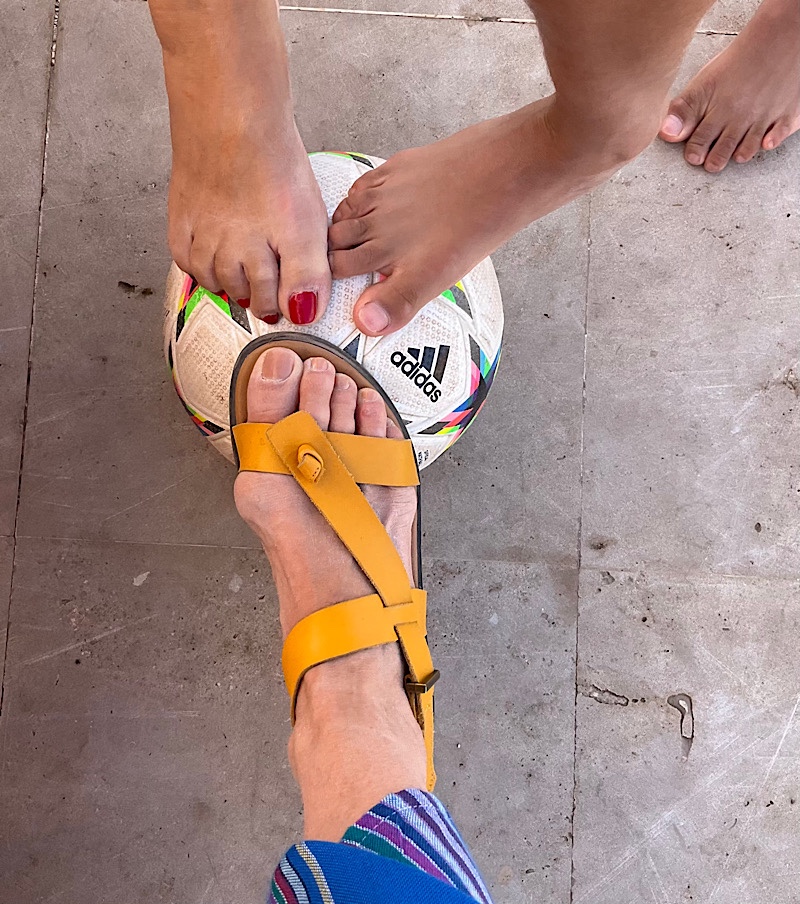
Grandma spoke only French, but the young man attends an international school and is already fluent in both English and Arabic in addition to his French mother tongue. We had a lovely time conversing in “Franglais”, mostly about soccer (so for a change I was not the one doing most of the talking!) As the morning warmed up, his grandmother even tried to insist that I borrow her extra bathing suit so that I could take a dip in the pool – an offer I graciously declined.
Here’s what I missed today:
Our tour group travelled into the mountains to Ourika, a small town and rural commune in Al Haouz Province of the Marrakesh-Tensift-El Haouz region of Morocco. About 27,000 people, mostly Berbers, live here in just under 5,000 households. There were lots of mountaintops in view, but none that were “snow-capped” .
Ted described the Berber homes as “rough”.
Cooking is all done in wood-fired ovens, but that’s about traditional methods, not because there is no alternative. King Mohammed V has gone to great lengths to get electricity to these mountain communities.
The home the group visited was down below the road level, beside a water channel that had an offshoot to provide water to the house.

Grandma and family matriarch Fatima hosted the group, and the 2 men living in the house greeted our guide Fouad and were apparently not seen again.
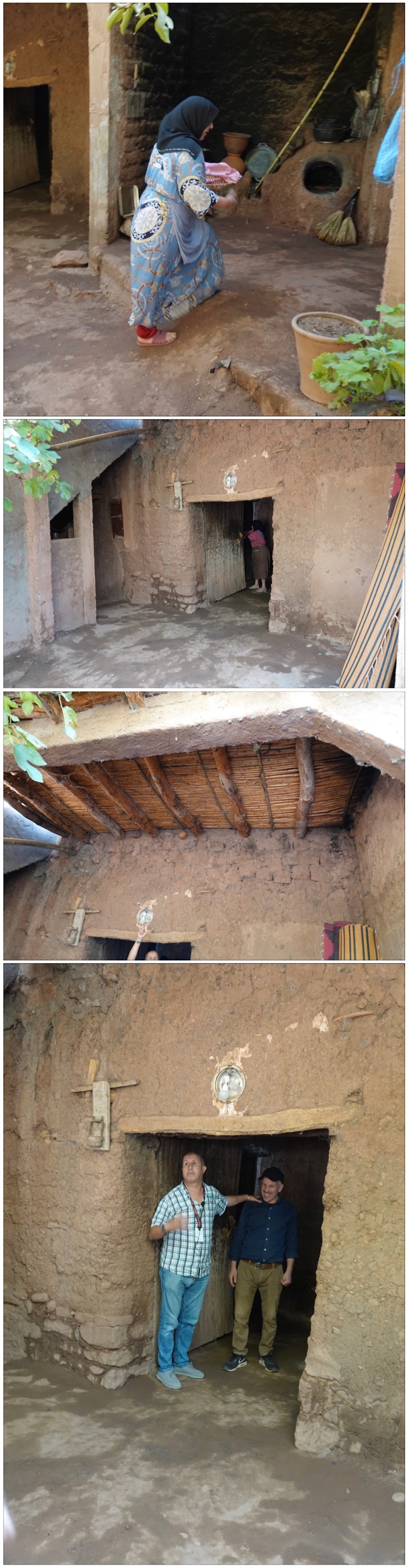
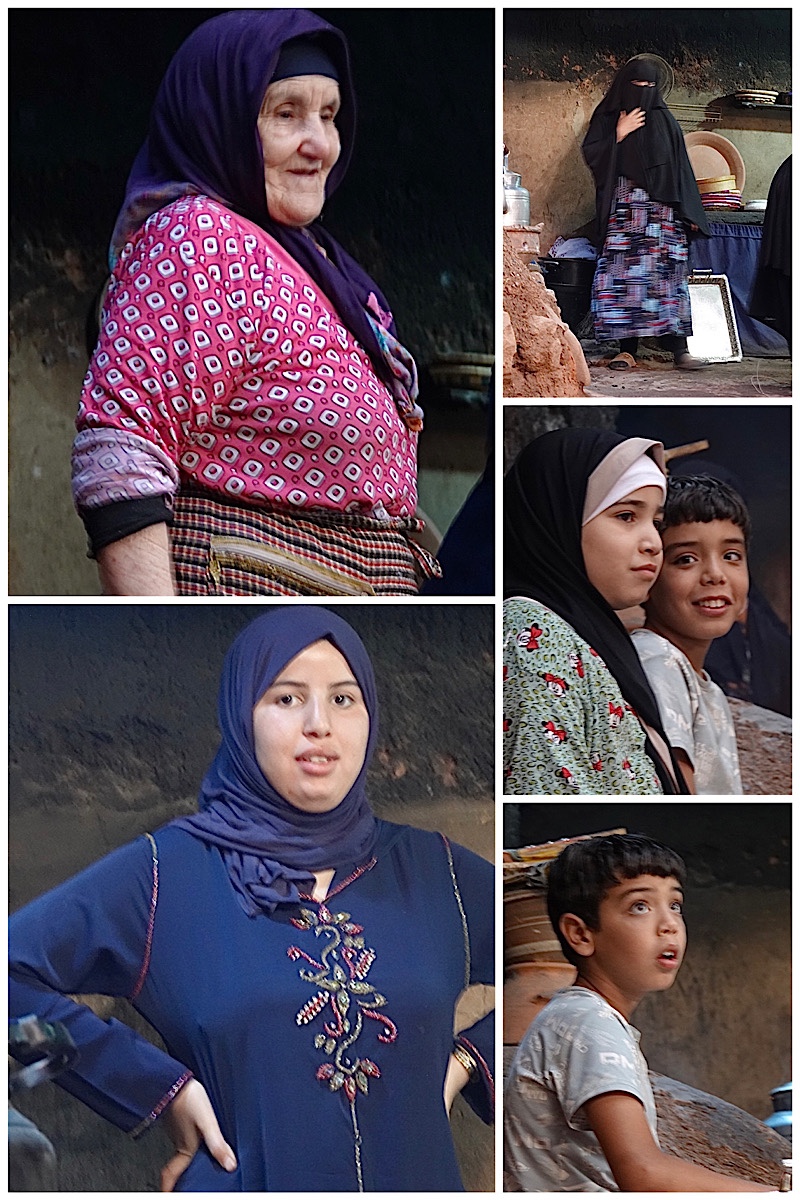
The group was told that Fatima had 6 children: 3 boys and 3 girls, and that she might have been 78 years old, but her age was not formally documented – the case for many mountain dwellers who are not born in hospitals. Instead, approximate age might be determined by something like a memory from the age of 5 of a significant documented climate event, or something notable the Sultan did that year.
Fatima’s current home is multigenerational, with sons, daughters-in-law, and grandchildren all in evidence in Ted’s photos. It was interesting to me when I saw the photos that the women’s dress varied from quite stylish, to very covered. Fouad had told us earlier in the tour that in Morocco it is only a few of the Berber women that choose a black or white “cloak” and face covering, harking back to centuries old customs. Most women we’ve seen have adopted modern but modest dress, with a scarf.
The same tools are still used as have been since the 11th century. Here Fouad shows the group the family’s grinding mill for grain.

The group was served freshly prepared mint tea, with sugar cut from a cone, plus flatbread and msemmen fresh and warm from the wood fire.


Exiting into the yard, people also had a chance to see the back of the house with its open balconies, plus a few of the family’s chickens, rabbits, and sheep. Their cow was busy grazing elsewhere.

En route back to the hotel, via a stop for Thai food (!?) for lunch, the group passed several other Berber dwellings and businesses.

I’m really sorry that I missed what looks like it was an amazing experience, but I have to admit to feeling much refreshed after a quiet day mostly on my own, and ready for an entertaining evening.
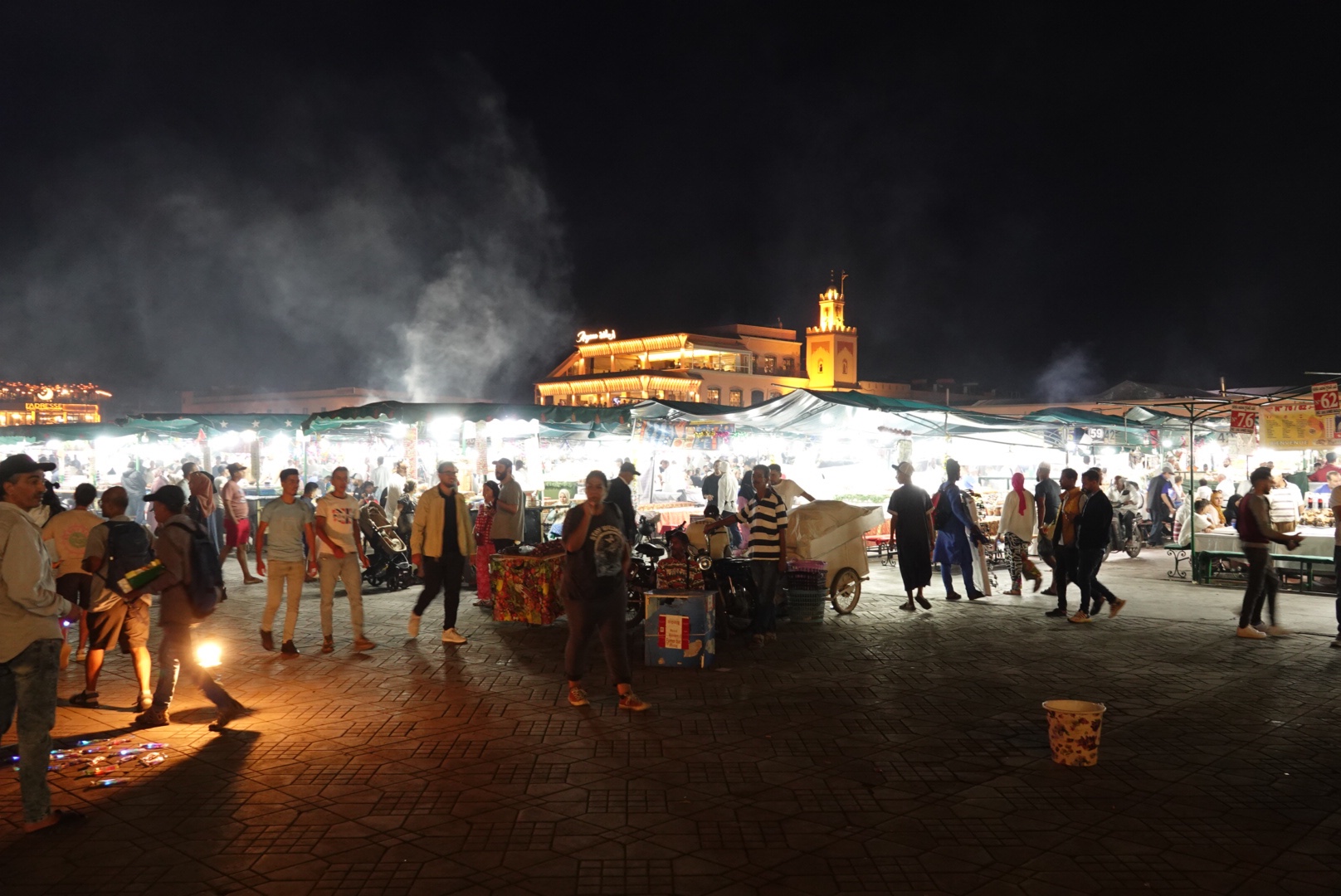
Our first stop was Marrakesh Square, with its outdoor market and indoor souks. It was a cacophony of sound, a kaleidoscope of colours, and a cornucopia of foods and their mingling smells. We arrived at the market in daylight, and watched it light up as the sun set.


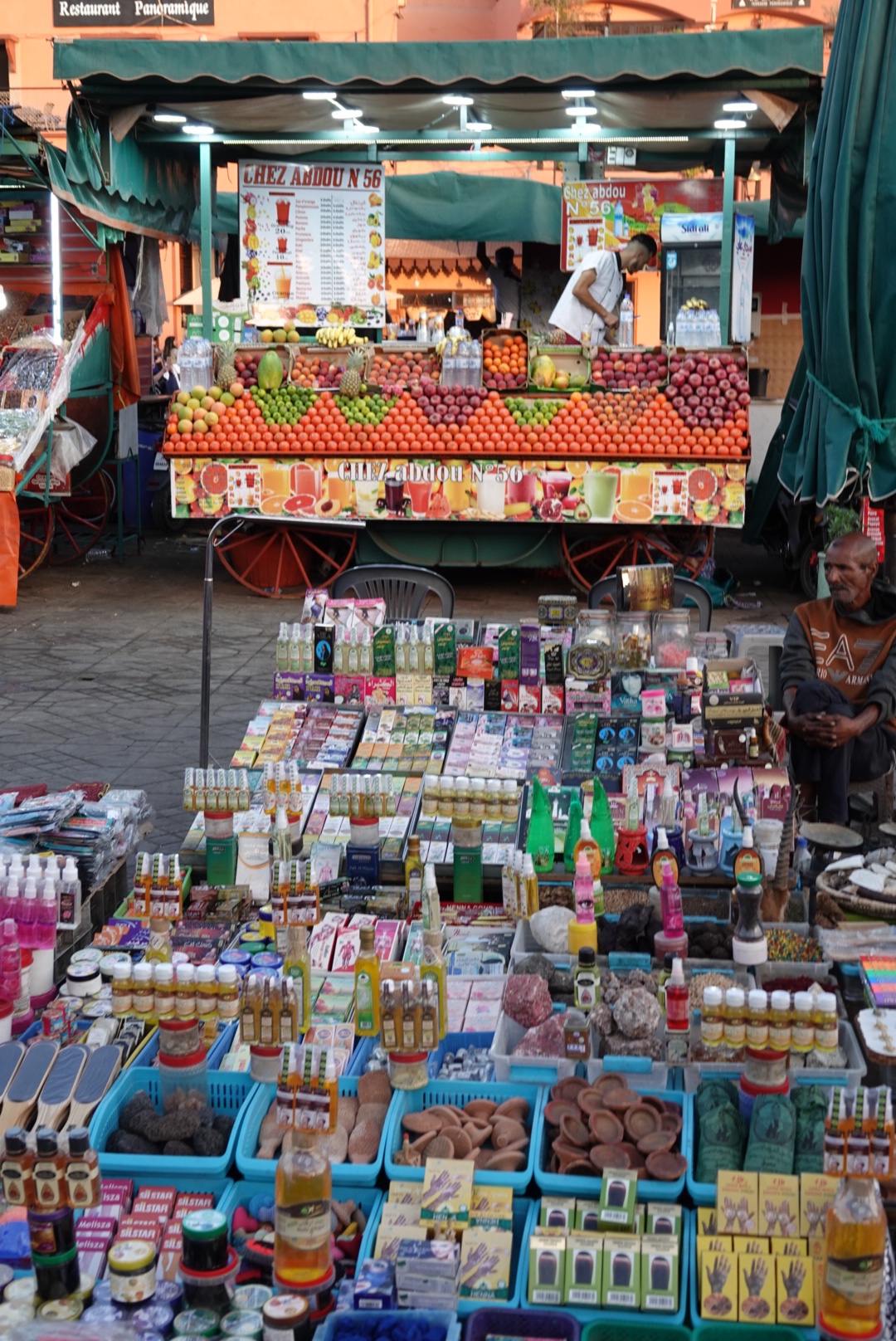
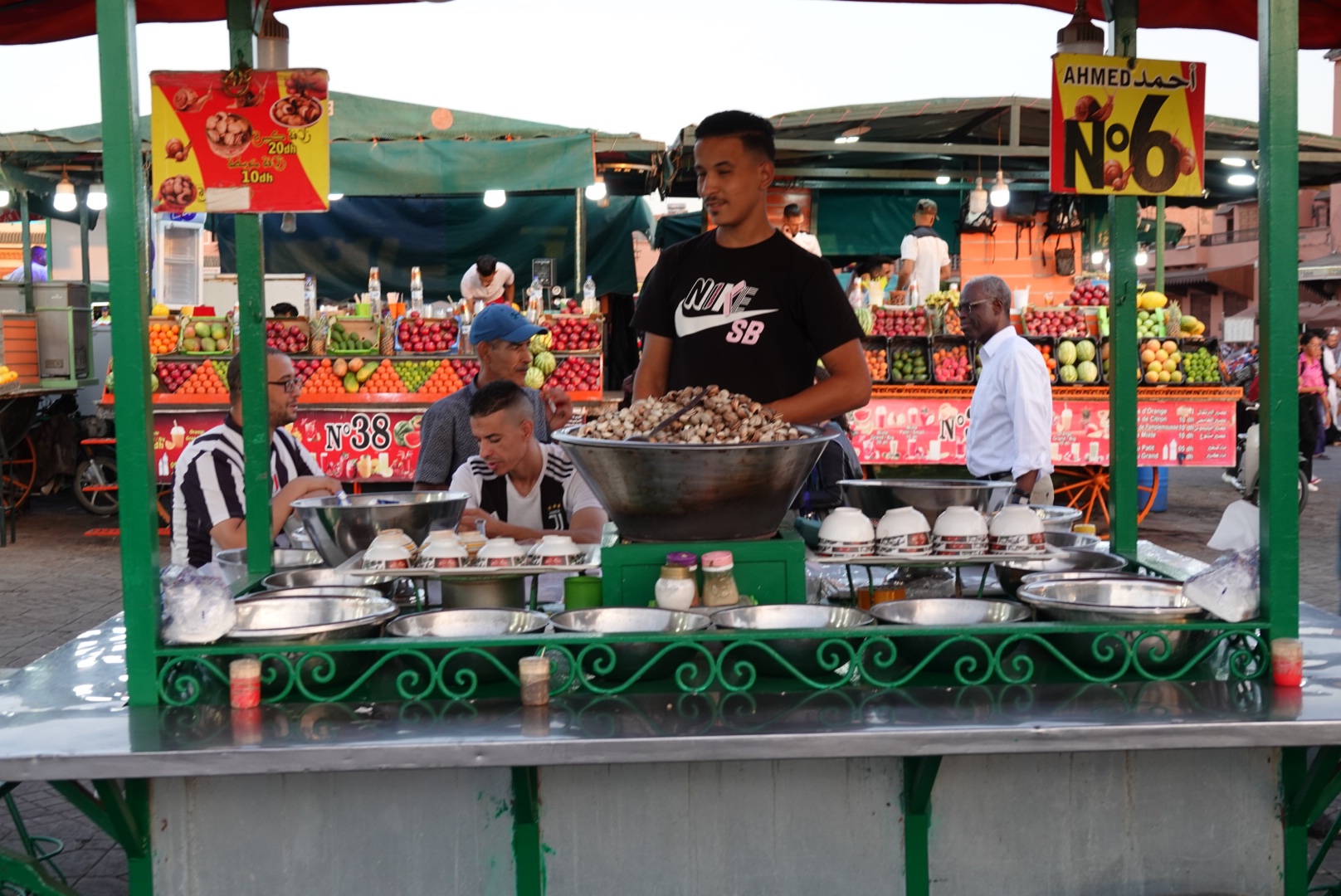


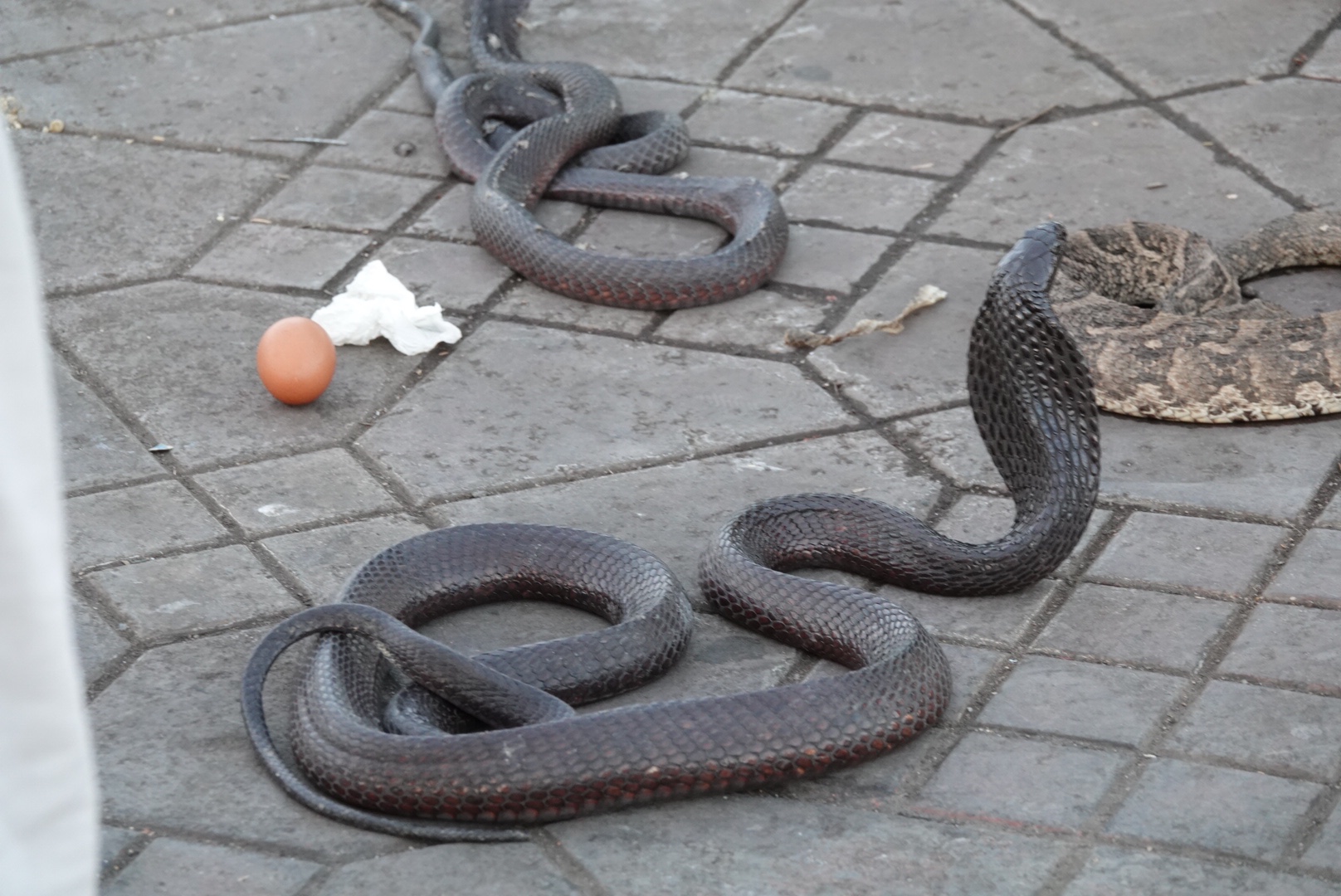
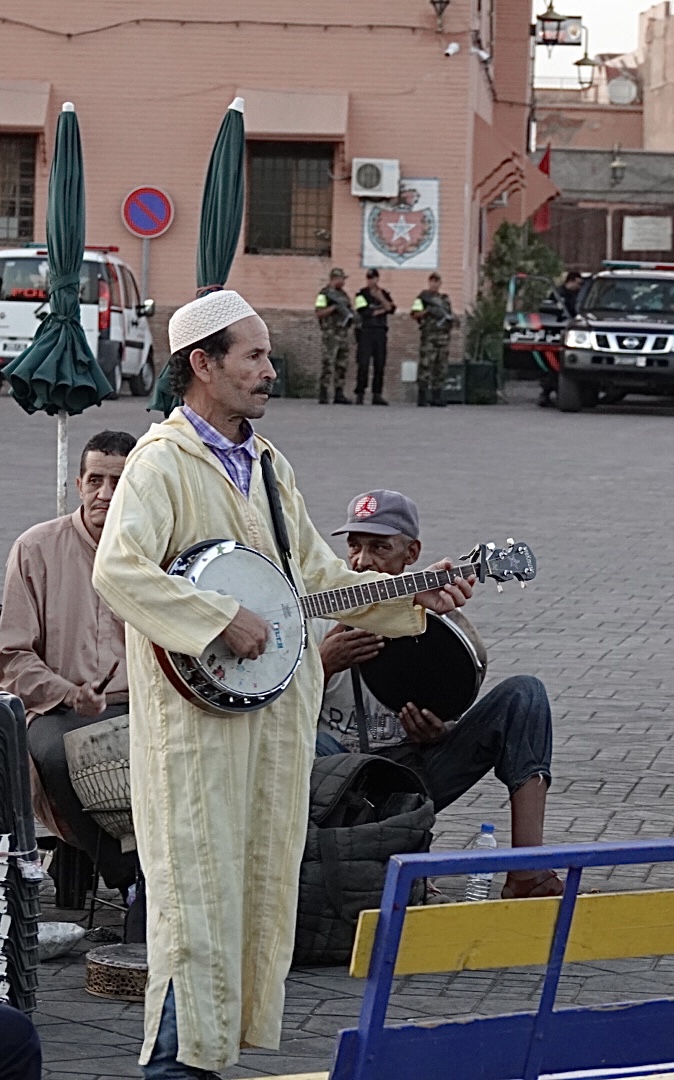


As night fell, the market took on a completely different atmosphere.
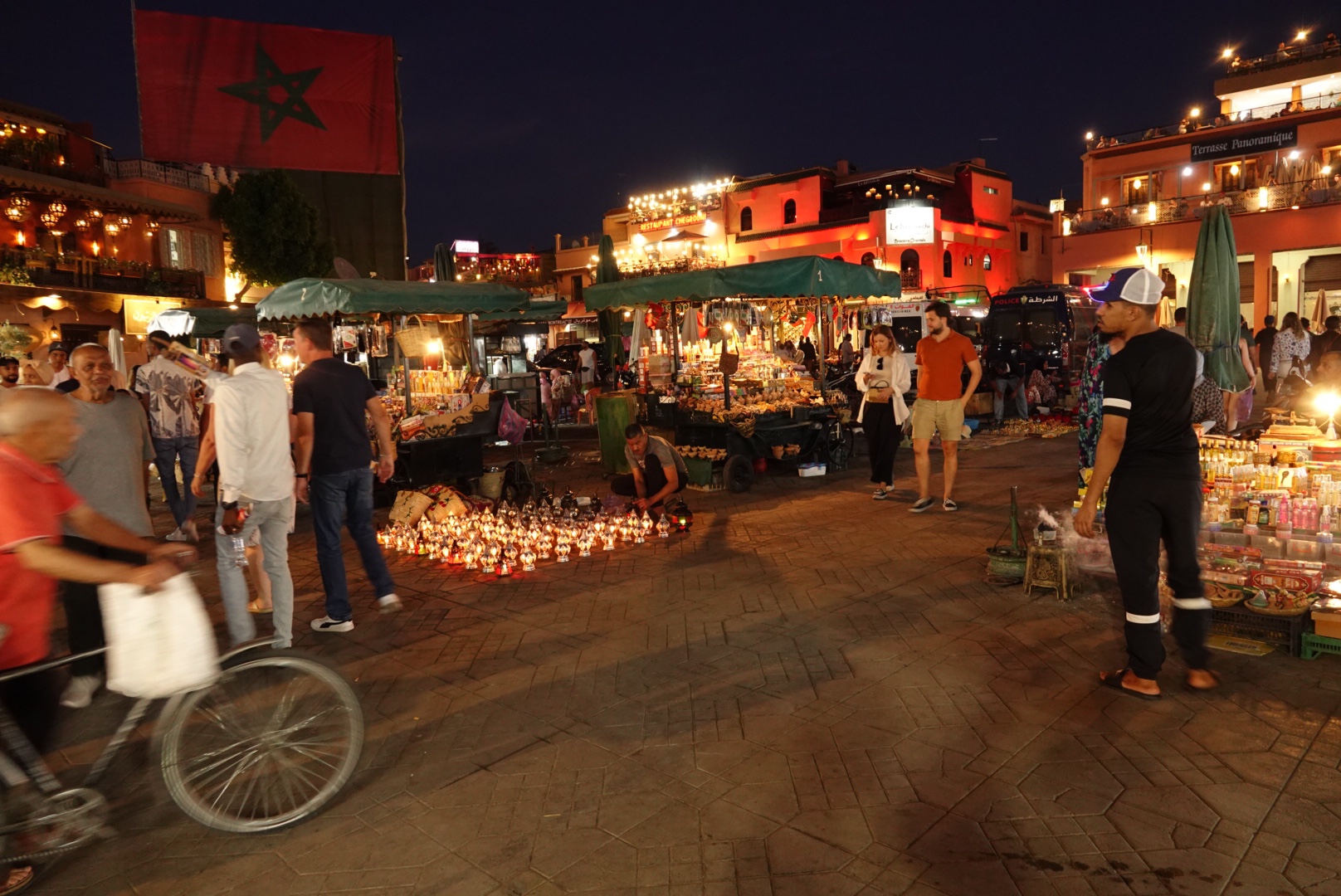
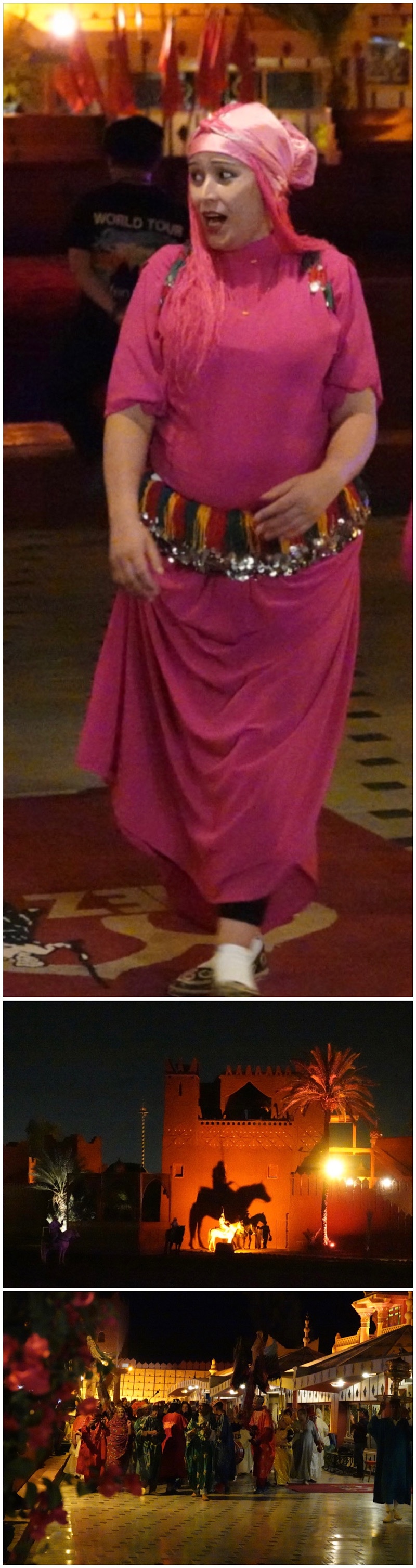
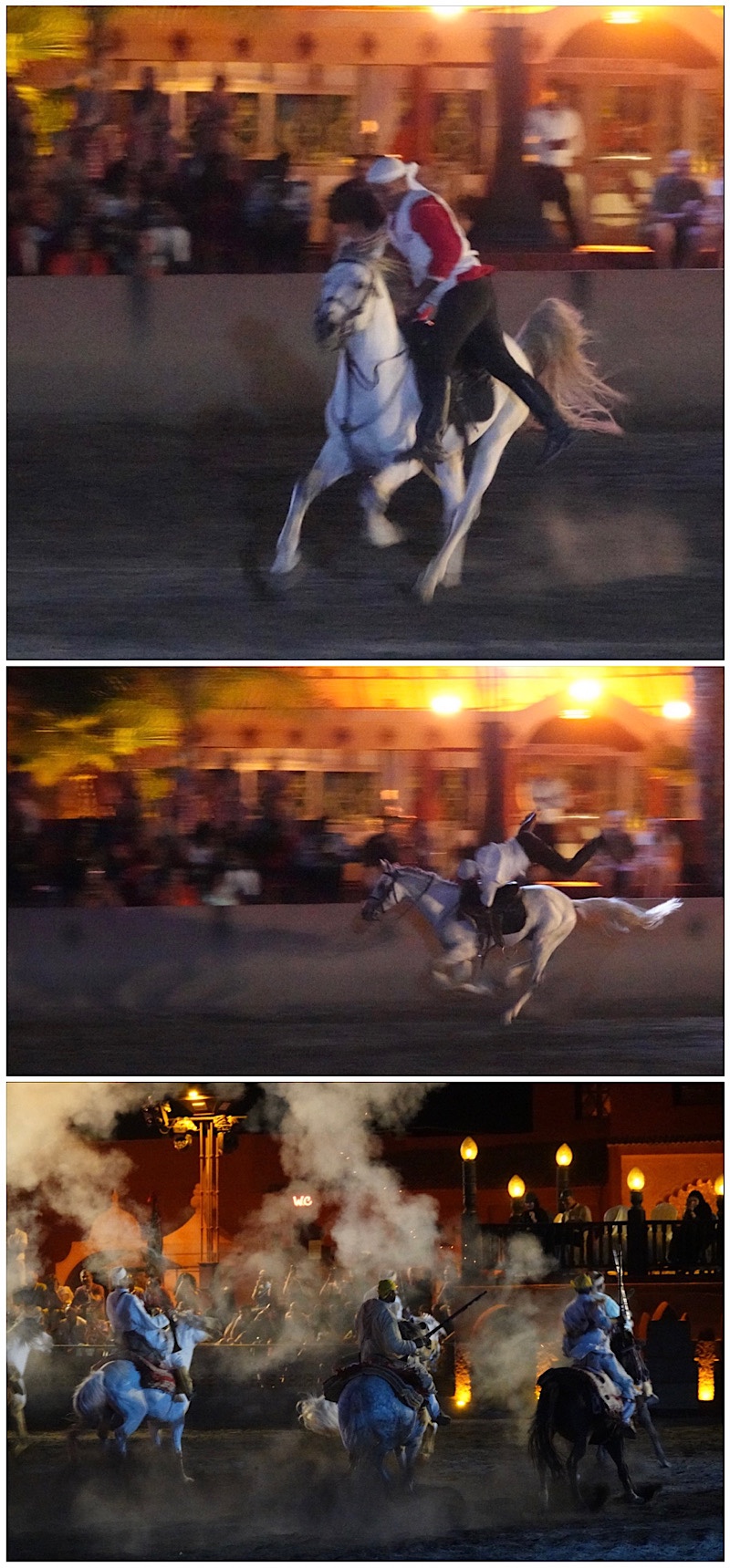
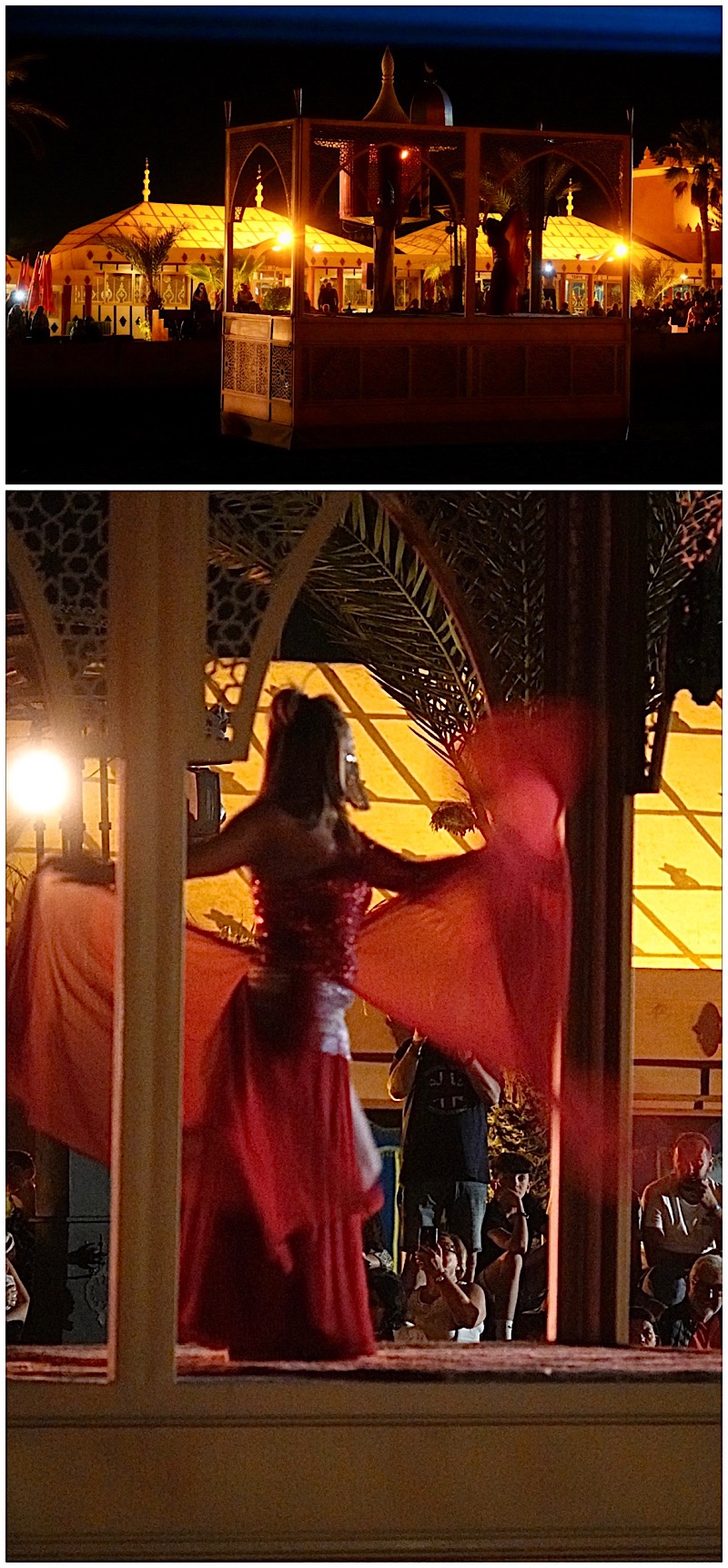
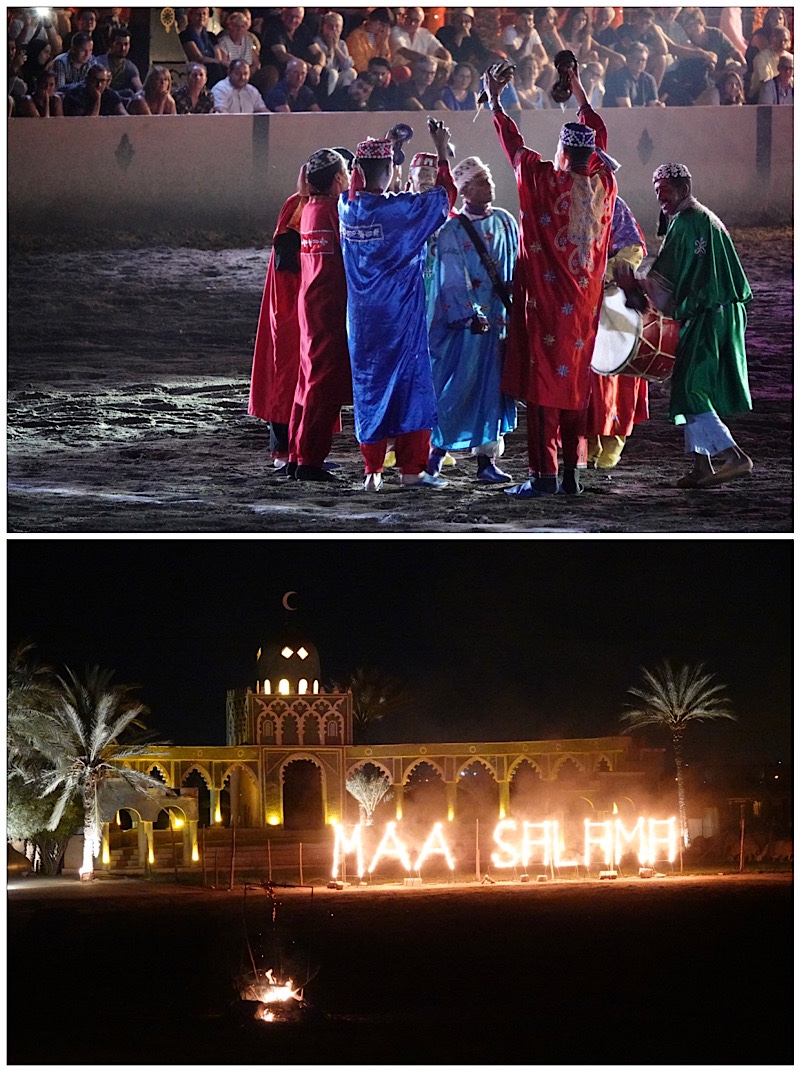
After wandering Marrakech Square and the alleys and shops of the souk, we were off to our evening’s entertainment: a “fantasia” at Chez Ali. Think an Arabian Nights dinner show set in a real palace – which was frankly spectacular – and featuring singers, performers, and riders who are not actors.
We began with communal dinner of soup, tagine, couscous, fruit, tea and cookies in huge “tents”, followed by the show staged in a large horse arena. Unfortunately, there were problems with the venue’s lighting system, so we were unable to see portions of the show,including the belly dance who performed in virtual darkness.


It made for a late night. Tomorrow is fairly low key: a drive to Essaouira on the Atlantic coast, via an argan cooperative.
Our Moroccan adventure is almost over.
 Rose and Ted’s Excellent Adventure
the snakes are definately the deal breaker for me, apart from the food, this is one part of the world that makes me hesitant to visit. Now how do they feel if a Christian would visit and you openly wear your cross. Is this something to be concerned about?
LikeLike
Morocco is very liberal, with other religions tolerated as long as you’re not proselytizing, and tourists very welcomed. But as tourists we probably want to acknowledge that there is a long history in both Africa – and the Middle East dating back to the Crusades – of Christians not acting in a particularly “Christian” way. My personal advice would be to wear symbols nearer your heart (i.e. under your clothing).
LikeLiked by 1 person
Christians not acting in a particularly “Christian” way. LOL, I think we can attribute this comment to ‘caste ye the first stone that has not sinned”, but that being said,
definitely there seems to be no ‘forgive your enemies’ here. So that being said, I would not visit there.
LikeLike