Itinerary: We pass through beautiful Connemara National Park and the rugged mountain ranges of Twelve Pins. We stop at Kylemore Abbey, with its dramatic setting overlooking Kylemore Lough (now a convent for Benedictine nuns). We overnight in Westport, a charming Georgian town with a delightful tree-lined mall and quaint shopping area.
☘️☘️☘️☘️☘️☘️☘️☘️☘️☘️☘️☘️☘️☘️☘️☘️☘️☘️☘️☘️☘️☘️☘️☘️☘️☘️
High 26°C/Low12°C
Unlike tours we plan independently, this one has not focussed on churches/cathedrals – until today.
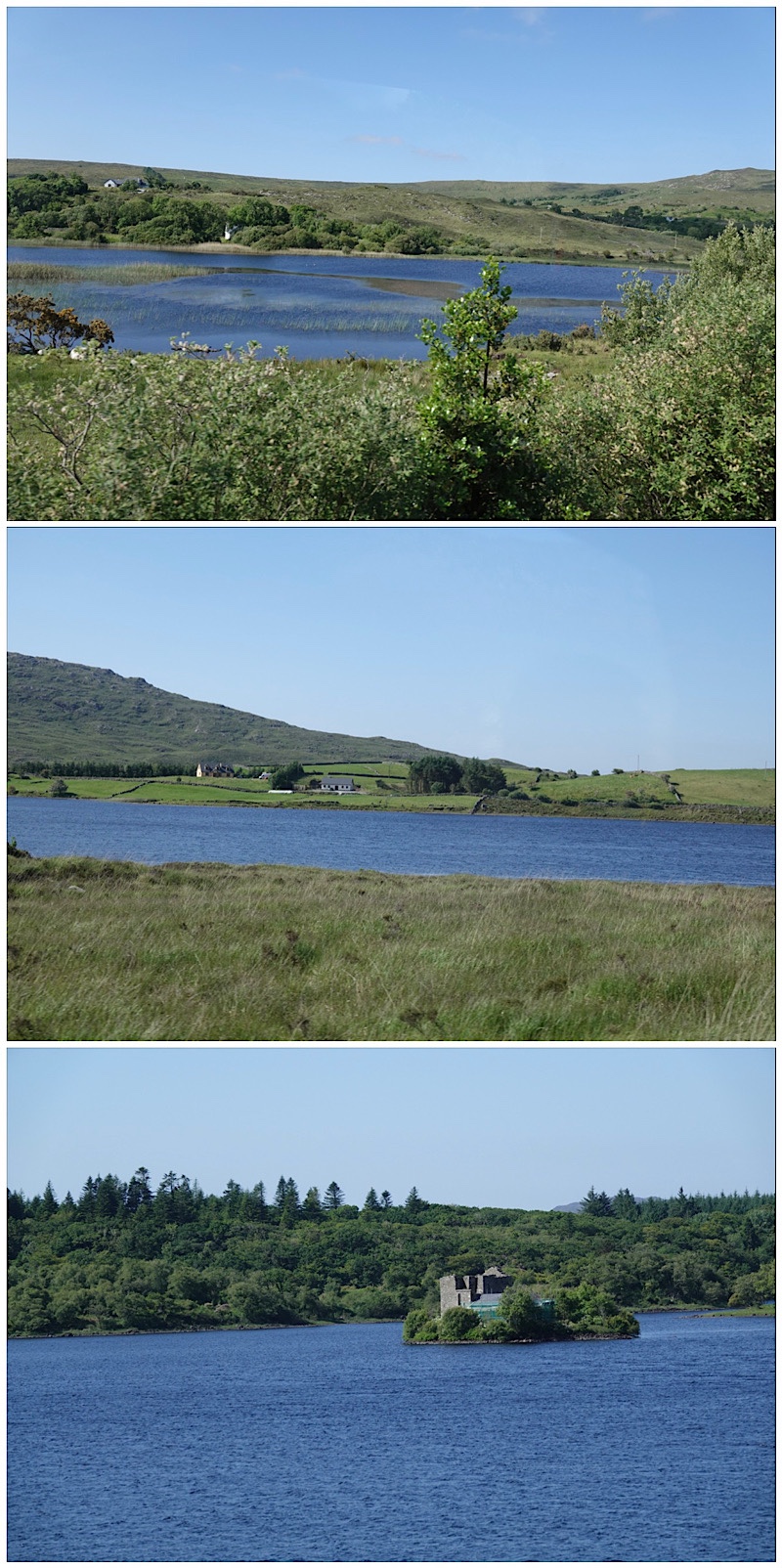
We began our journey from Galway County into Mayo County the way we’ve begun most days: with green mountains and clear blue lochs.
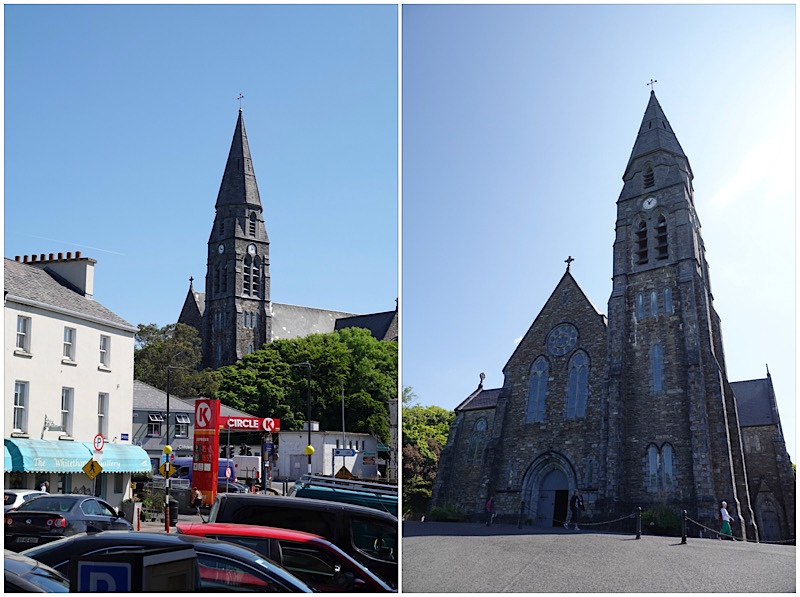
Our first short stop was in the town of Clifden, where St. Joseph’s Church is a commanding presence from its location atop the hill.
Unique to St. Joseph’s were the medallion style depictions of modern saints above the pillars, supplementing the lovely stained glass windows.


A tiny side chapel yielded these beautiful statues: a piéta, a nativity scene, and Mary crowned as Queen of Heaven holding the infant Jesus.

From Clifden we headed to Kylemore Abbey on Kylemore Estate in the heart of Connemara.
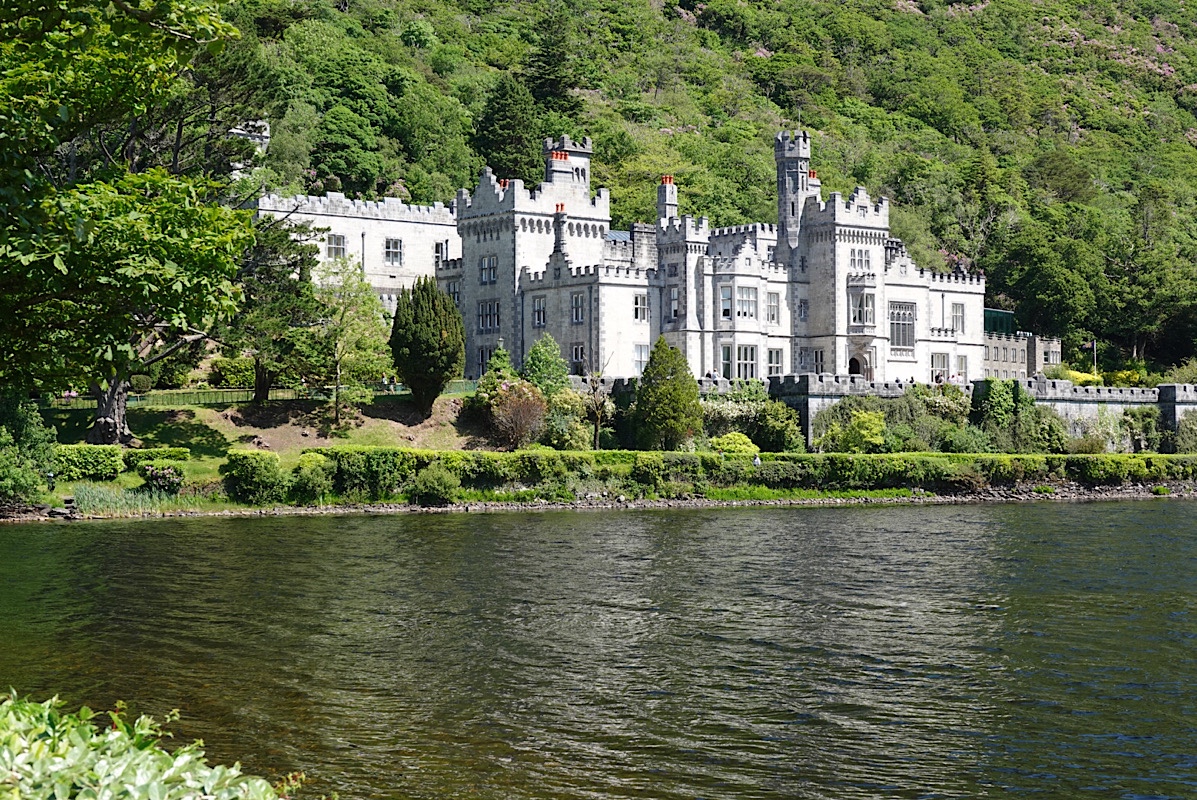
The Abbey was originally Kylemore Castle, built in 1868 by Mitchell Henry for his wife, Margaret, and their family. Its 33 bedrooms and lavish entertainment areas hosted parties for gentry, but the Henrys were better known for their treatment of and support for the Irish working class. In addition to employing more than 300 of the area’s poor, at wages well above the norm, Margaret Henry provided food and assistance to the women, and Mitchell Henry advocated for the Irish as a representative in the Westminster Parliament.

After the early death of Margaret in 1874 from an illness contracted while on holiday in Egypt, the family remained at Kylemore until their fortunes waned. In 1903 it was sold to the Duke of Manchester and his wealthy American-born wife. The Duke and Duchess removed the beautiful German stained-glass window from the staircase hall, and ripped out large quantities of Italian and Connemara marble, replacing it with oak panelling. The intent was to make the castle more “modern” for the lavish parties they planned to throw, including one for their friend King Edward VII. Apparently the local people were unimpressed, seeing the changes as disrespectful to their beloved Margaret Henry.

The Duke and Duchess has trouble maintaining the castle, and in 1914 it became the home of an order of Benedictine nuns originally established in 1665 in Ypres Belgium. Until 2010, the nuns continued to run a school here. In March of 1921 the rights and privileges of the Abbey at Ypres were officially transferred to Kylemore Abbey, making it the first Benedictine monastery established in Ireland since the 1600s.
Currently, Notre Dame University has a facility here, occupying the portions of the castle not used as a museum. A modern abbey/monastery is in the process of being built.
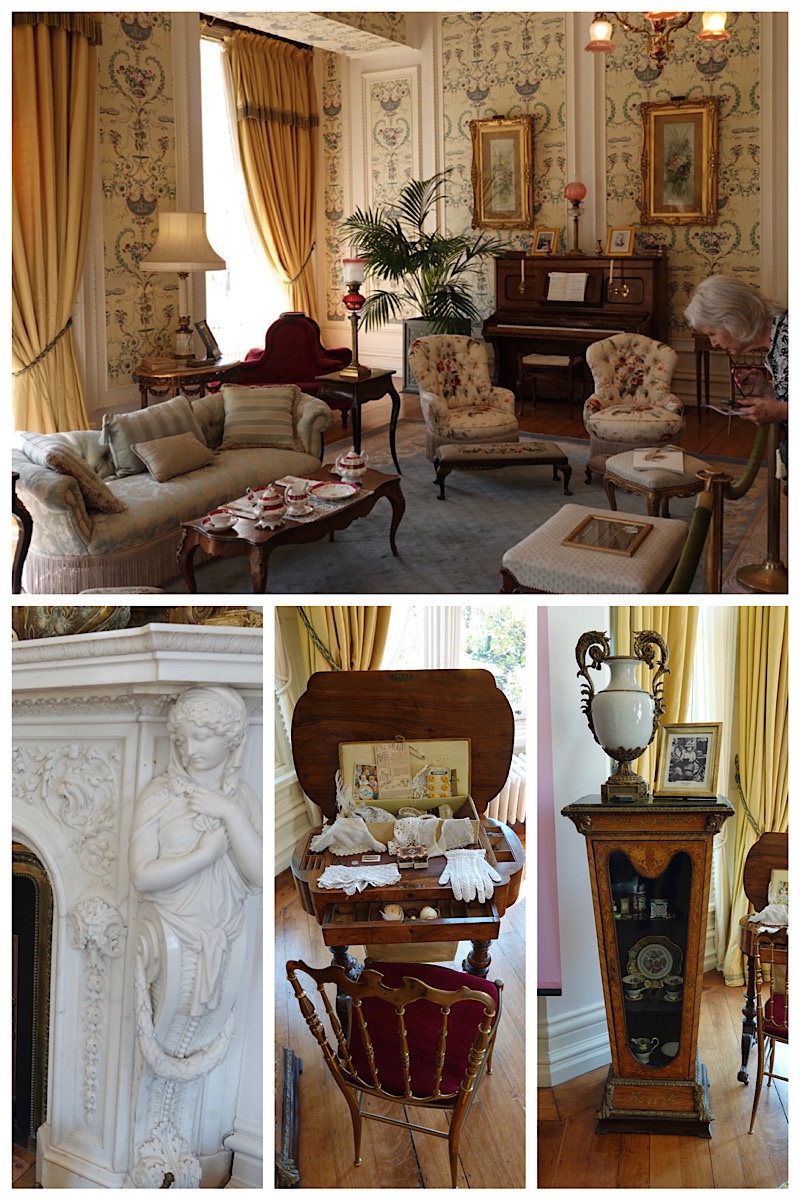
Because of its multiple uses, there are no rooms that look the way they did in the Henrys’ era, but there were some neat individual pieces of memorabilia.
In the Ladies’ Drawing Room, the Carrera marble fireplace is original, and the furniture, writing desk and needlework table are of the period.
There is a replica of the pink and white ballgown featured in Margaret’s portrait which hangs in the room.

The Henrys’ morning room and breakfast room were combined into one larger space by the Duchess of Manchester, and now houses artifacts related to the Henrys’ children, including their daughter Geraldine’s 1887 wedding dress.

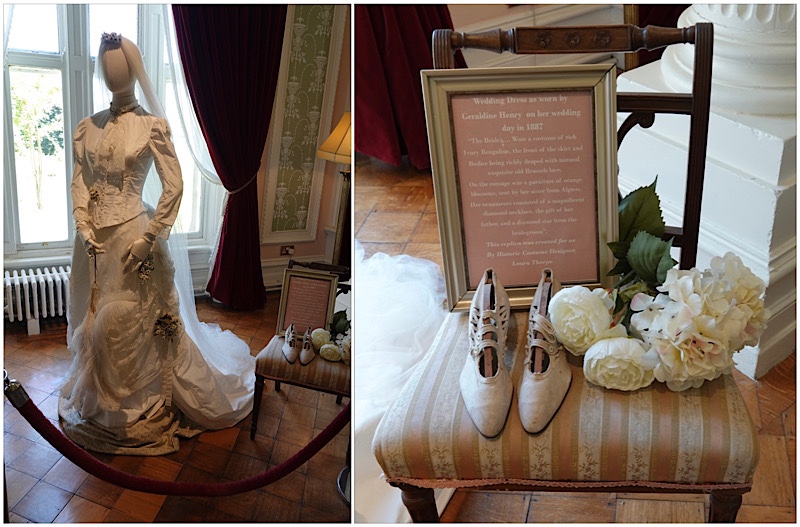
In the dining room, each place setting has the name of a famous guest who was entertained here, including the 5th Earl of Spenser, and Oscar Wilde’s mother. The dining room fireplace is made of black marble.

When Margaret Henry died, her husband built a neo-Gothic chapel in which she was interred.
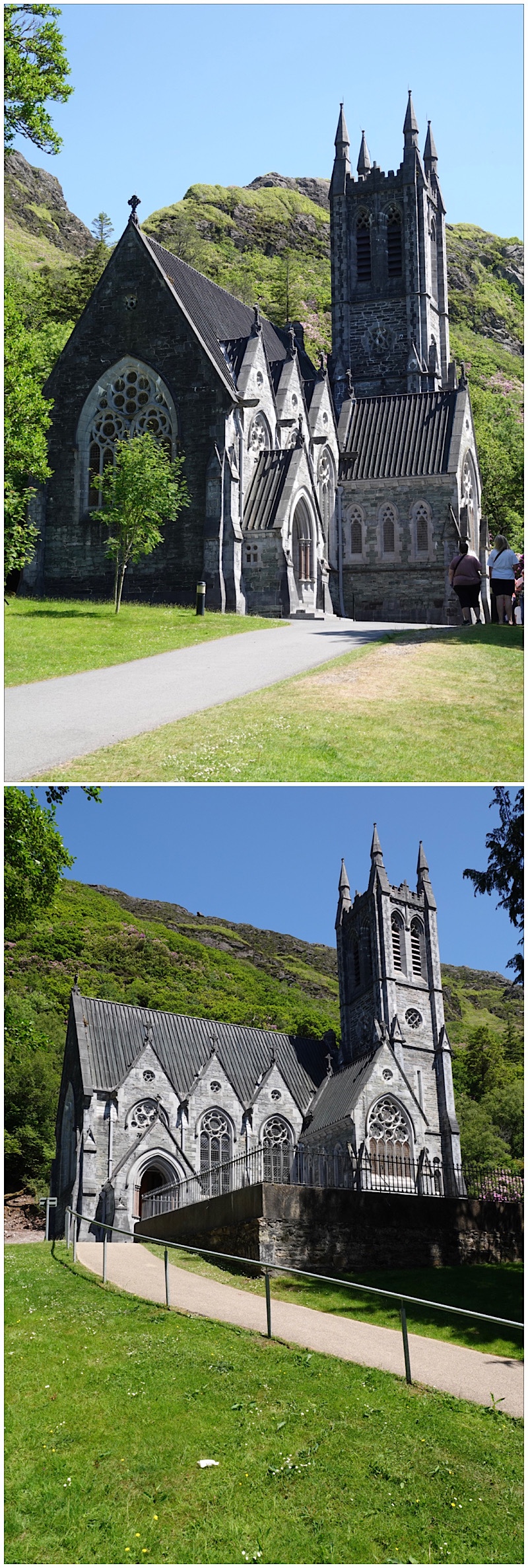
Notable in the chapel is the lack of male imagery, except for Christ on the cross. All the decoration is “feminine” – predominantly flowers and vines – and the sole stained glass window depicts the 5 graces: fortitude, faith, charity, hope, and chastity.
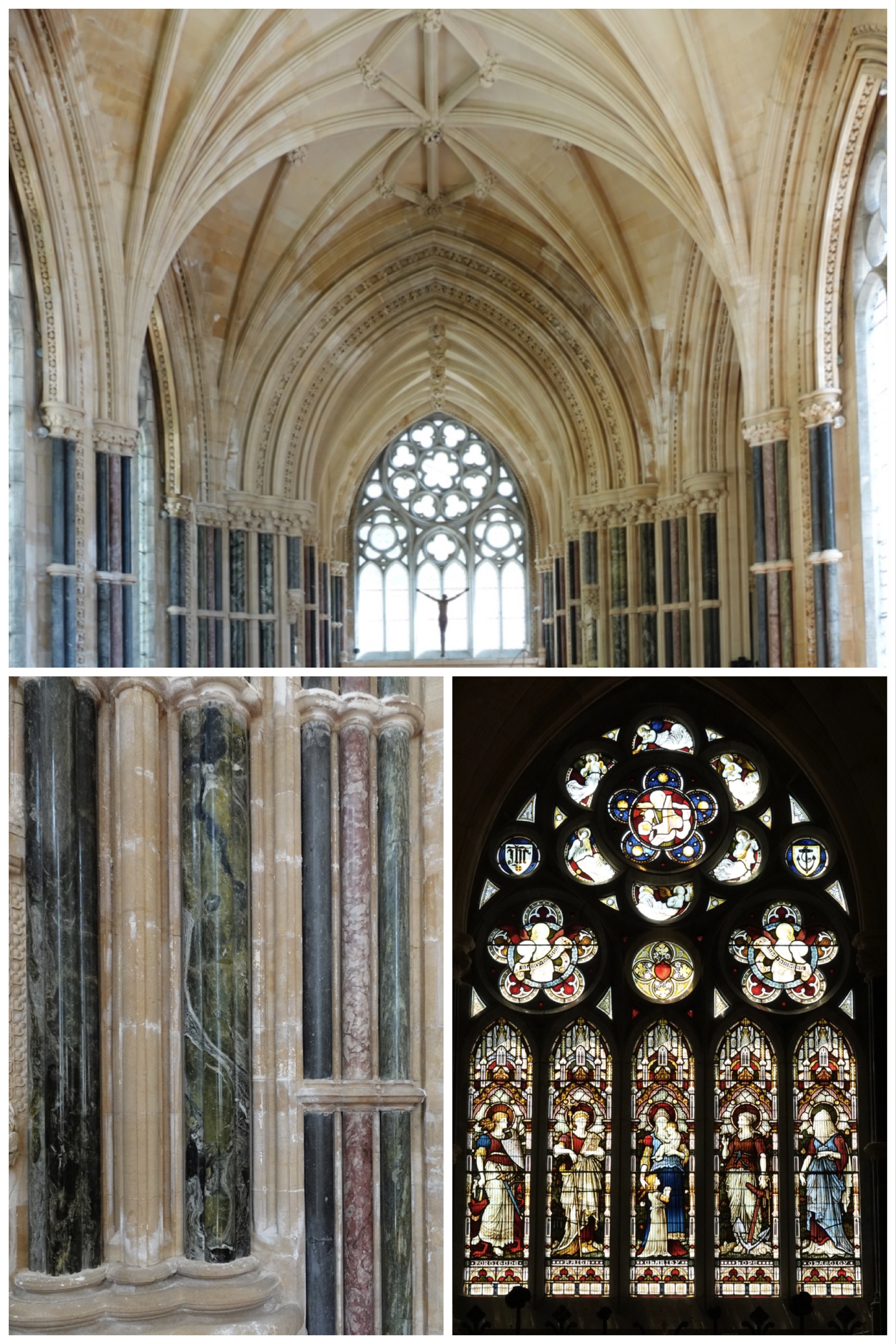
The interior pillars (lower left photo above) feature all 4 colours of marble native to Ireland: Connemara/Connaught green, Cork/Munster rose, Kilkenny/Leinster black, and Armagh/Ulster grey.
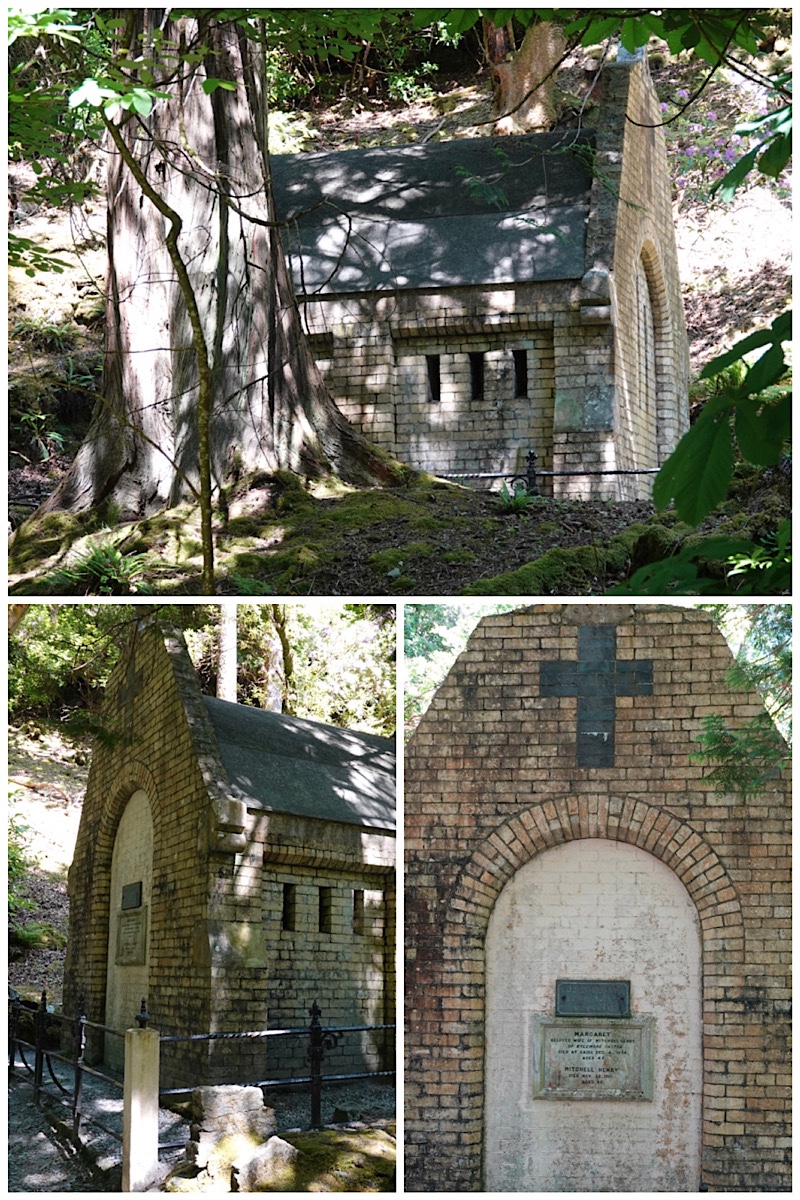
After the castle became an abbey, the chapel became the order’s church, and Margaret’s remains were moved into a mausoleum, where her husband’s body was also later laid.
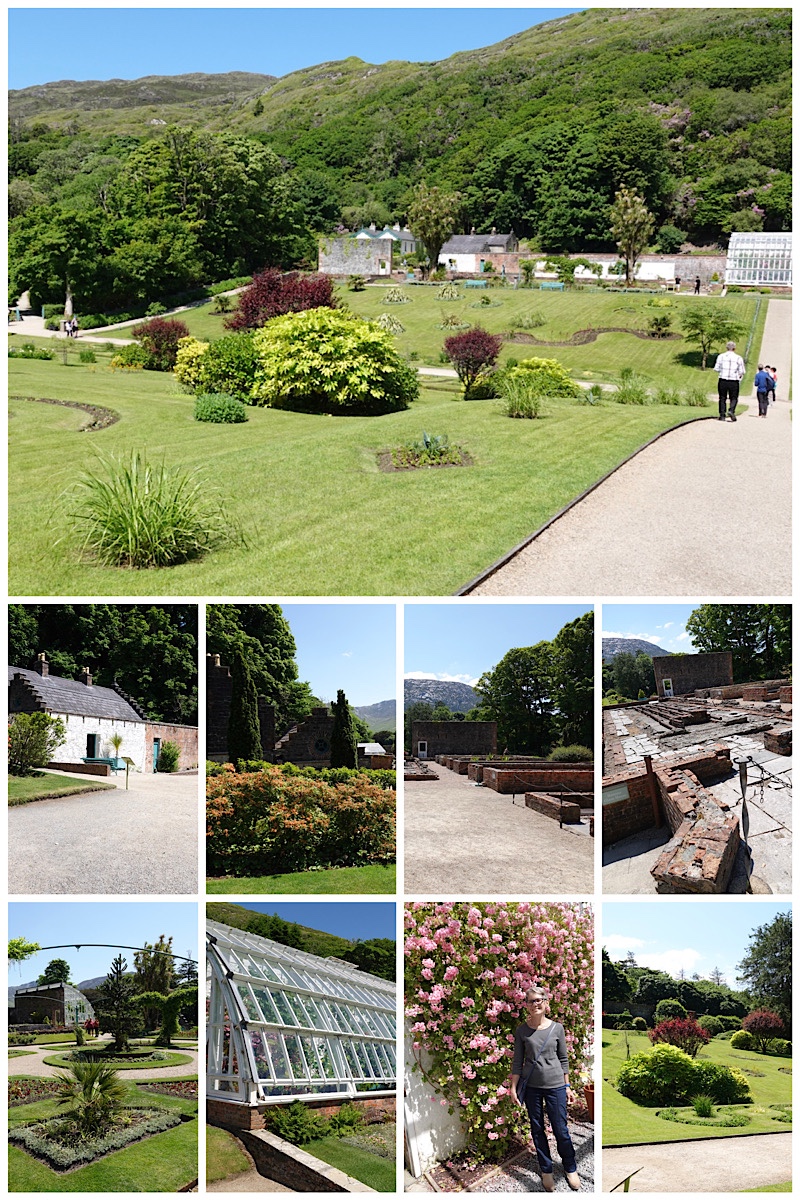
The estate also had a 6 acre walled Victorian garden, which originally included 21 glass houses, growing tomatoes, peaches, melons, and even bananas. Only one remains intact, but their foundations remain, layout of the gardens has been maintained.

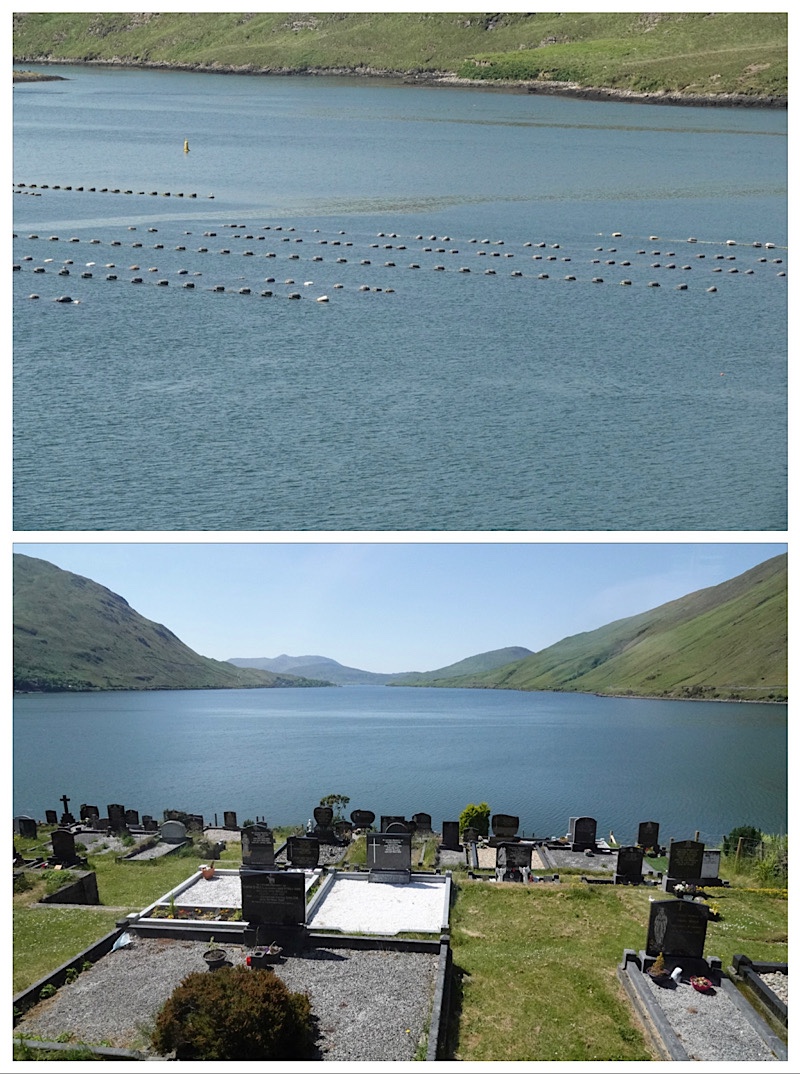
Leaving Kylemore, we drove past mussel farms (not to be confused with muscle beaches!) in Bundorragha, and Ireland’s only fjord, Killary, viewed from the cemetery in Letterbrickaun.
We arrived in Westport, County Mayo, late afternoon. Before checking into our hotel, we had time to explore this very attractive town.
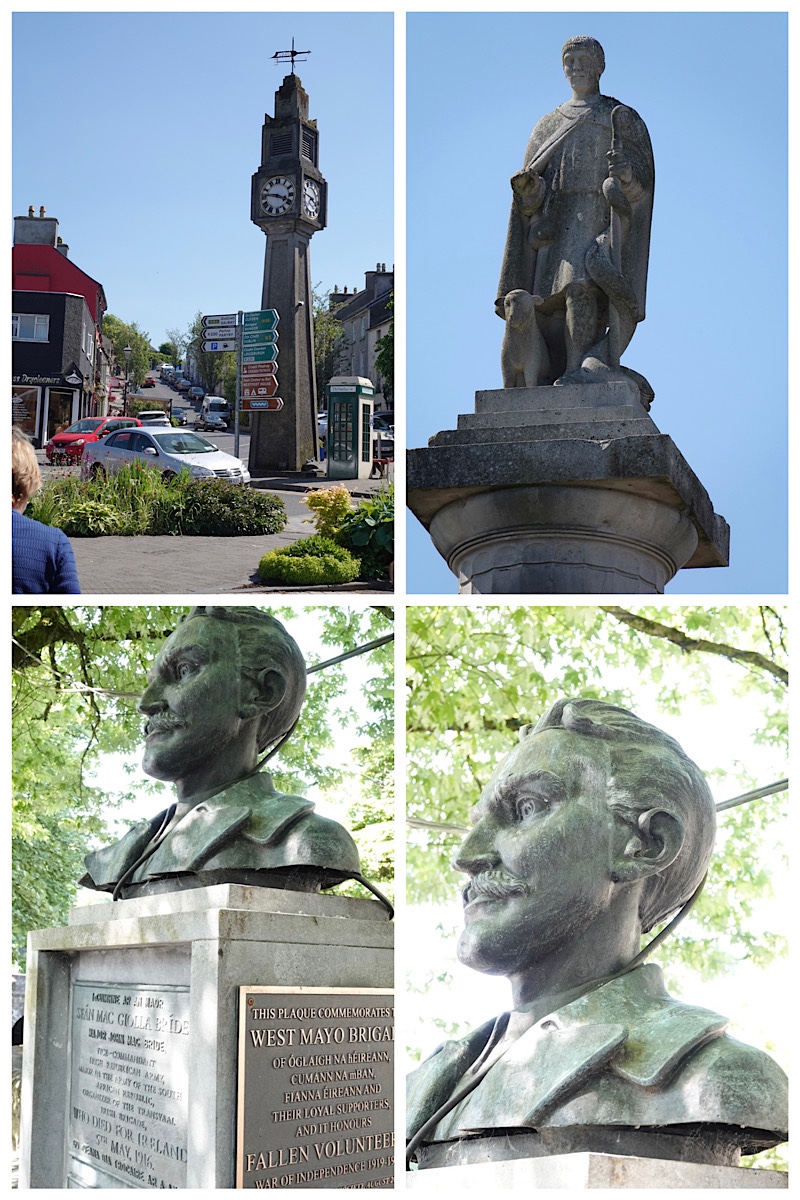
There are three significant monuments near the town centre: a stone clock, a large statue of Saint Patrick,and a bust of Major Sean MacBride.
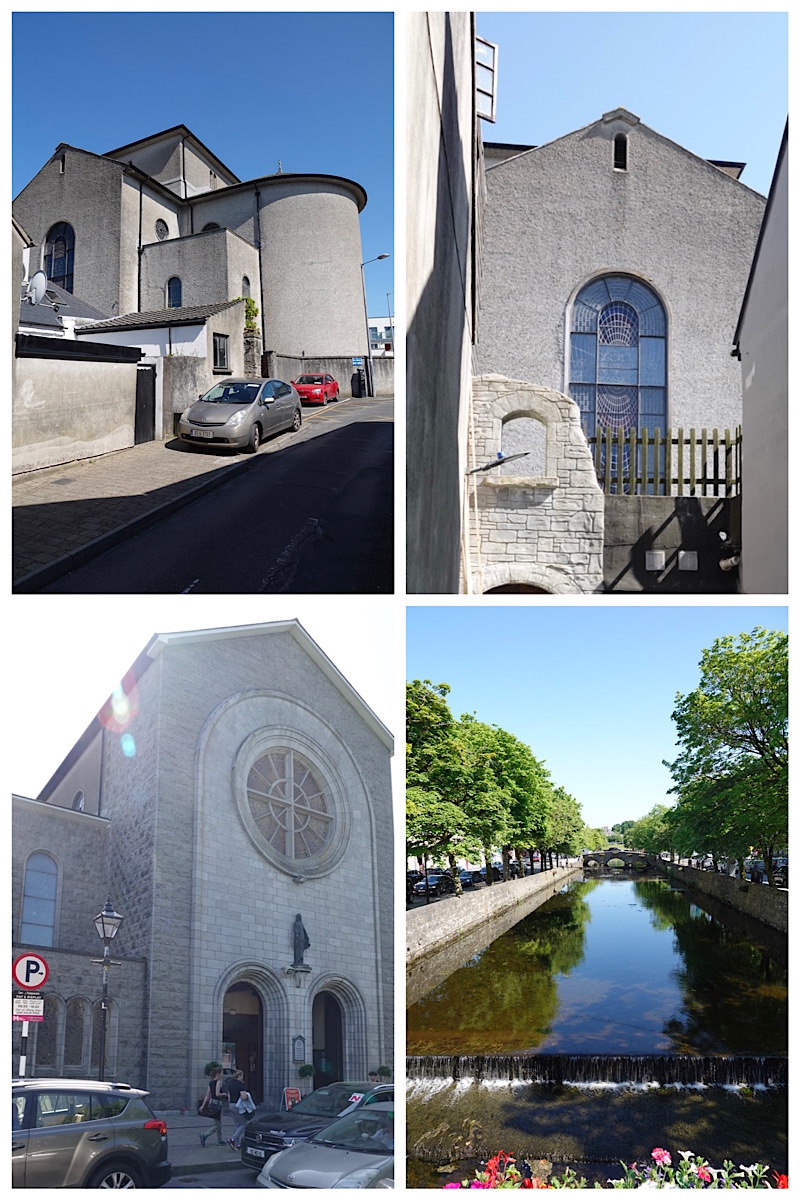
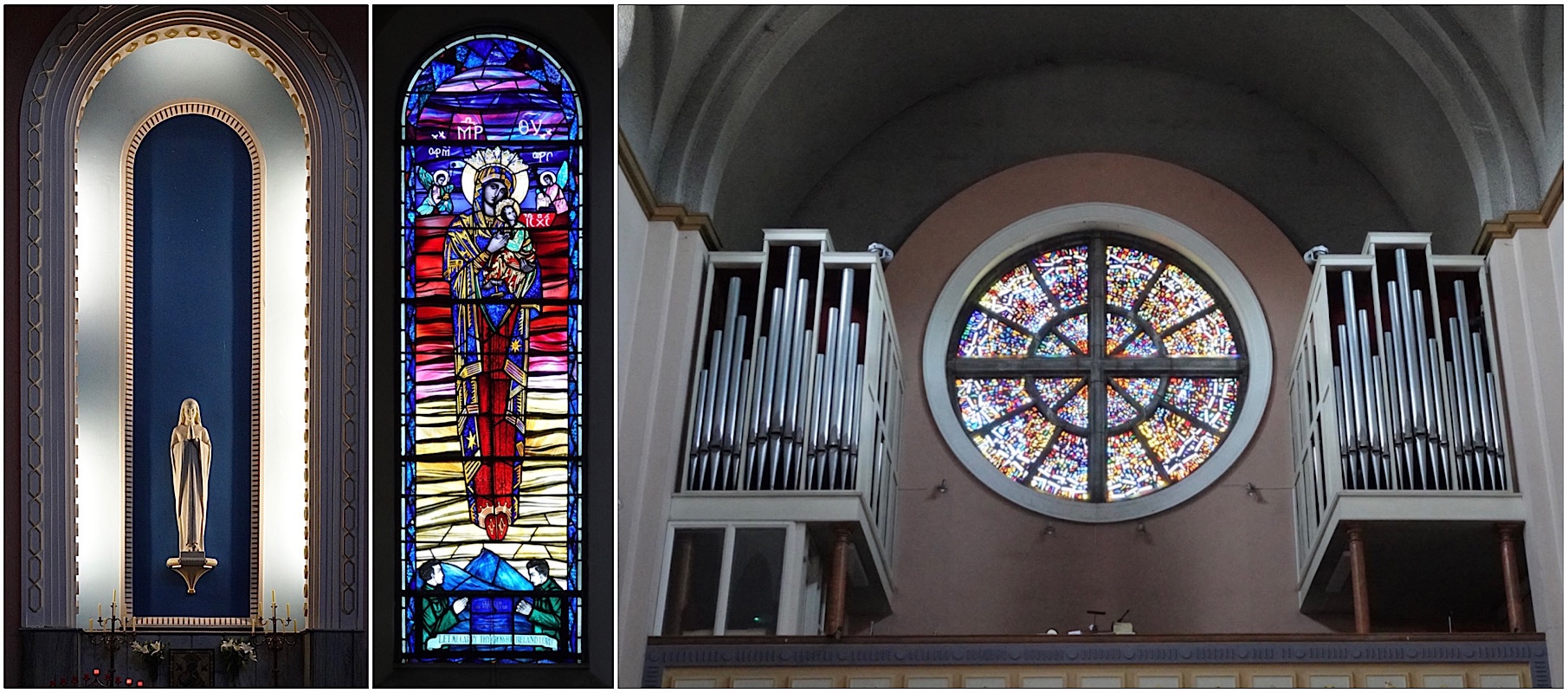
St. Mary’s Church, situated beside the Carrowbeg River, held a particularly lovely statue of Mary, a stained glass window dedicated to Major MacBride, and a stunning round window centred between the pipes of the church organ.

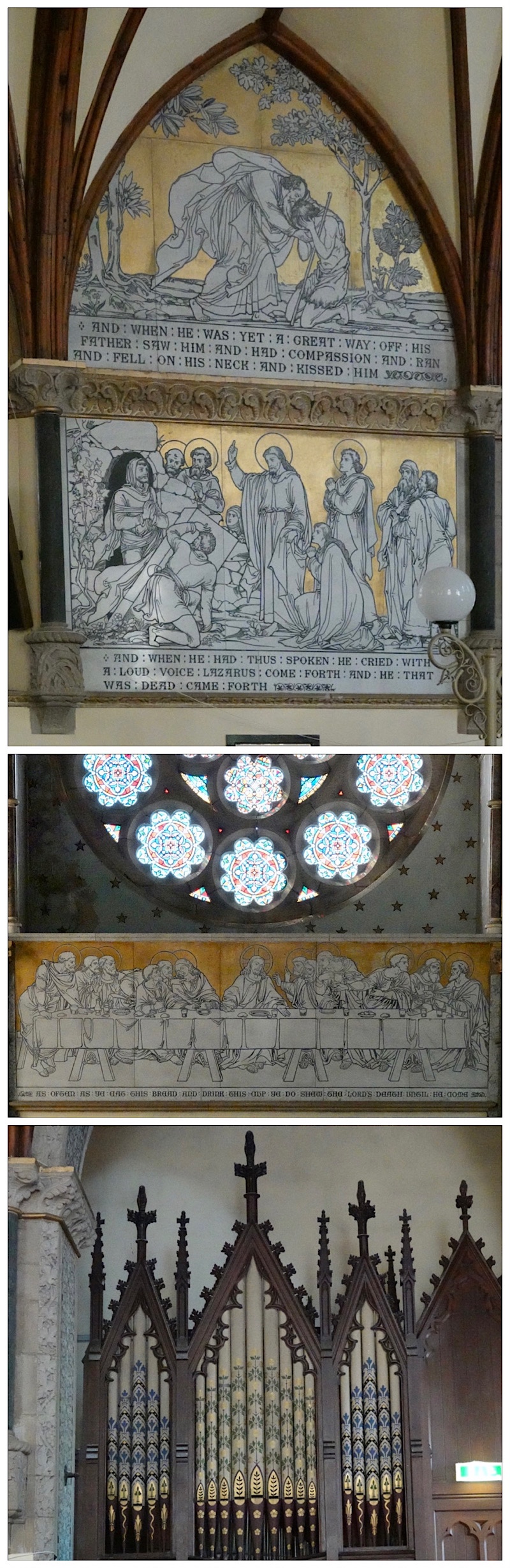
Further down the main street, we were intrigued by the narrow spire of Trinity Anglican Church.

Ted and I have visited probably a hundred or more churches and cathedrals on 3 continents, but the decoration inside Trinity was unlike anything we’ve ever seen before: gilded drawings on marble covering the wall space between the stained glass windows, plus a Last Supper below the church’s rear rose window. I can’t remember ever seeing ornately painted organ pipes either.
On one wall of the church were memorial plaques for entire lineages of English nobles who lived and died here in Ireland. Again, something we’d never seen before.

We finally reached our hotel for tonight, the Westportcoasthotel, in time for another dinner of huge Irish proportions. I expect we’ll be coming home heavier than we’d like. Sigh.

 Rose and Ted’s Excellent Adventure
Thanks for the fascinating stories of your experience and sights of Ireland. I think if you keep up the same pace you have been keeping you won’t have to worry about any weight gain from the wonderful meals. Your just bound to walk it off tomorrow 🥳
LikeLike
That’s a lovely thought. Sadly, there’s a lot of sitting on the bus……
LikeLike
Hi Rose (and Ted), we love your blog. Would you please ask your tour manager if they accept US travelers? Thanks
LikeLike
Check the Senior Discovery Tours website for the definitive answer. What I do know is that they only fly out of Canadian airports, and only provide the included insurance to Canadians.
LikeLike
This day was right down your alley. I wonder if the medallions in St. Joseph are from a similar inspiration as icons in Episcopalian churches. An influence of the Church of England? Btw, been meaning to ask if you have done any Road Scholar tours. This sounds rather what I envision a Road Scholar tour might be like.
LikeLike
Interestingly, what the UK calls Church of England, and Ireland calls Church of Ireland, Canadians call Anglican, and you call Episcopalian! (Hmmmm…. Hadn’t heard of Road Scholar tours…..)
LikeLike
We too have seen many ornate and extravagant cathedrals. To find something unique after 100 or more must have been quite a surprise. Loved the decorated organ pipes is something new!
LikeLiked by 1 person
May 2017!!! Enjoyed our day!
<
div dir=”ltr”>
<
blockquote type=”cite”>
LikeLiked by 1 person