Itinerary: We head west to the quaint town of Killarney. This afternoon we take a jaunting car ride to the lakes, and visit Muckross House, an old Irish estate. This evening we enjoy a performance by the National Folk Theatre of Ireland.
☘️☘️☘️☘️☘️☘️☘️☘️☘️☘️☘️☘️☘️☘️☘️☘️☘️☘️☘️☘️☘️☘️☘️☘️☘️☘️
High 23°C/Low 10°C. Glorious sunshine all day.
Our morning bus ride took us from Blarney in County Cork to Killarney in County Kerry. We drove almost two hours along winding roads, bordered by tall green cedars; flowering bushes; oak, maple, birch, chestnut , and towering fir trees; glistening lakes; and shiny/leaved cherry laurel hedges. The drive featured picturesque Irish towns dotted with castle ruins and brightly coloured buildings, none of which we photographed through the bus windows.
Along the way, our driver kept us entertained with trivia about Ireland. We learned that Kil = church, Mac/Mc = son of, and Bally = town, which helped us understand some of the interesting town names.
Our goal for the day was one of the grand old Irish homes, located inside Killarney National Park: Muckross House.
We made a brief comfort stop at our beautiful downtown Killarney accommodation, the Dromhall Hotel, before climbing into “jaunting cars”, which are multi person, horse drawn vehicles. Our driver, called a “jarvey”, Mark, introduced us to his draft horse, Rosie, who pulled us for the 20 minute ride to Muckross House.
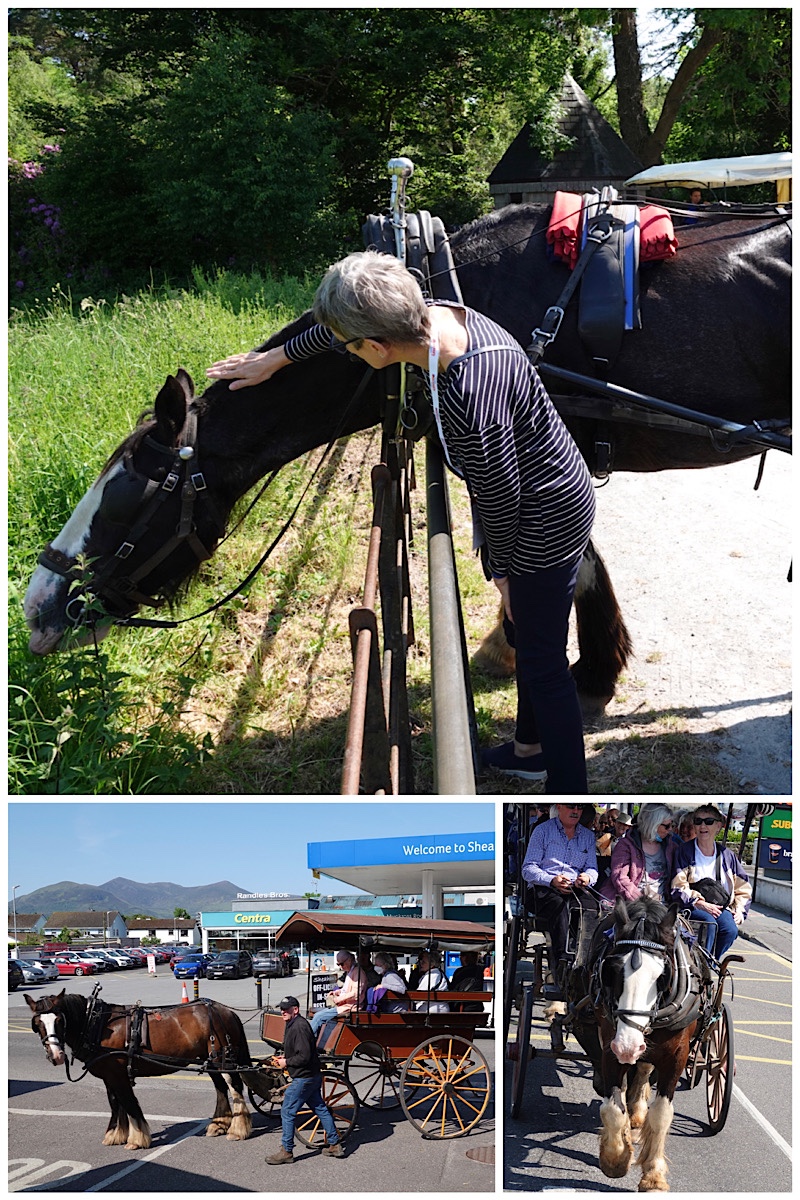
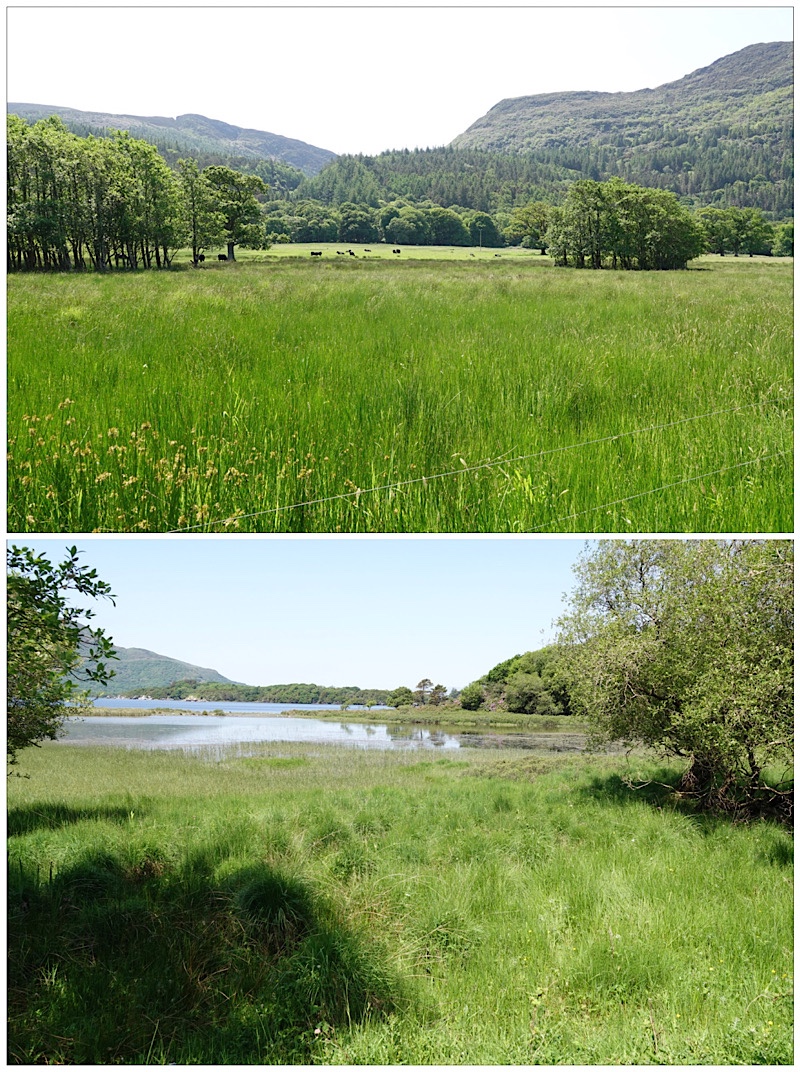
The scenery in the national park is spectacular. Huge trees and greenery surrounded us, and we had a view through the trees of the sun glinting off the lake, as well as the ruins of Muckross Abbey.

Muckross House dates to 1843 when it was completed for Henry Herbert and his Scottish wife, Mary Balfour. The Herbert family hosted Queen Victoria in 1861 but were bankrupt by the end of the 19th century. In 1899 the house and its lands were purchased by Lord Ardilaun, a member of the Guinness brewing family, who rented it out as a hunting lodge. In 1911, it was bought by a rich Californian, William Bowers Bourne, as a wedding present for his daughter Maud and her husband, Arthur Rose Vincent, an Irishman from County Clare. When Maud died unexpectedly in 1929 her husband and parents gifted the house and its entire estate to Ireland. It became Ireland’s very first national park on January 1, 1933.
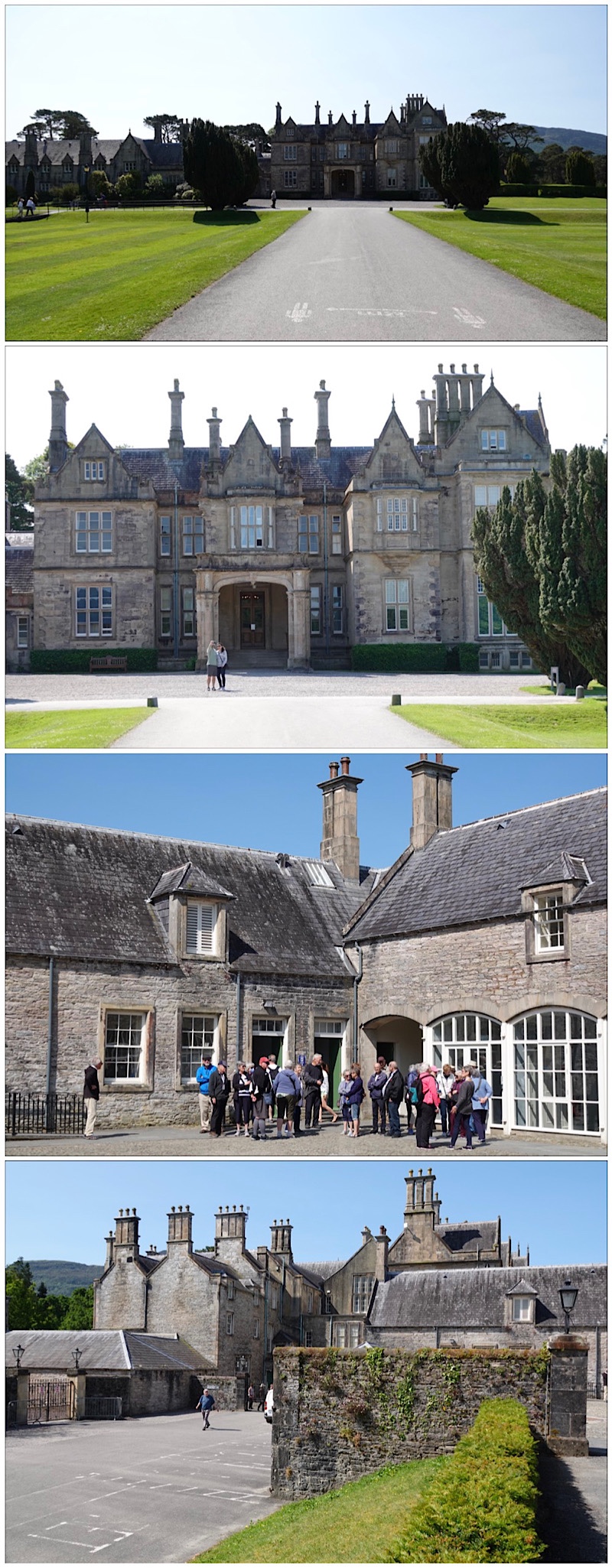
We took a self guided tour of the interior of the house.
The entrance hall is filled with hunting trophies, except for the central set of antlers, which are those of a Great Irish Elk, which became extinct over 10,000 years ago.

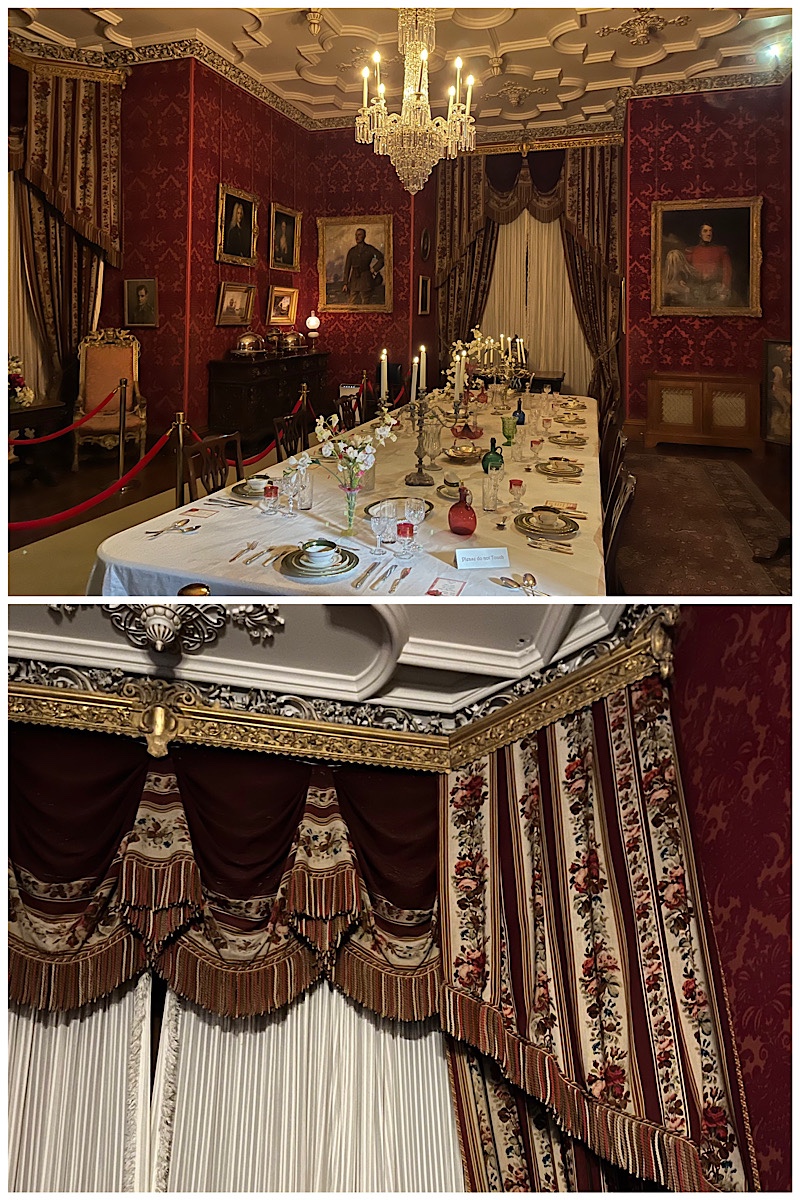
The dining room with its huge walnut sideboard (off to the right of this view) was used for entertaining and family meals. The opulent curtains are believed to have been woven in Paris, France and were installed for Queen Victoria’s 1861 visit.
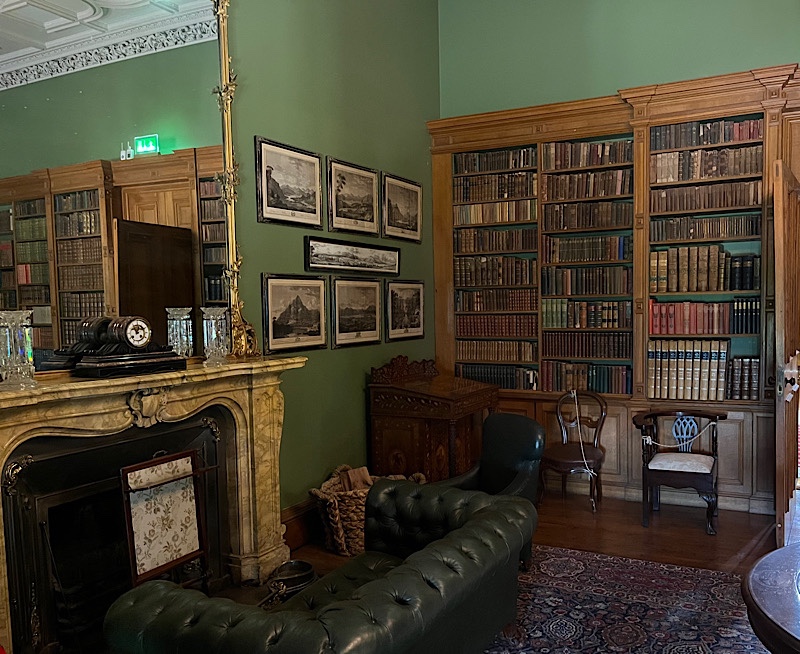
The library has oak bookshelves, holding a variety of reading materials. The furniture here in the house is about 60% original.
The view from the library window over Dundag Bay on the Muckross (or Middle) Lake is gorgeous.

The drawing room reflects the wealth of the owners, with rich fabric upholstery, draperies, and intricately patterned rugs.
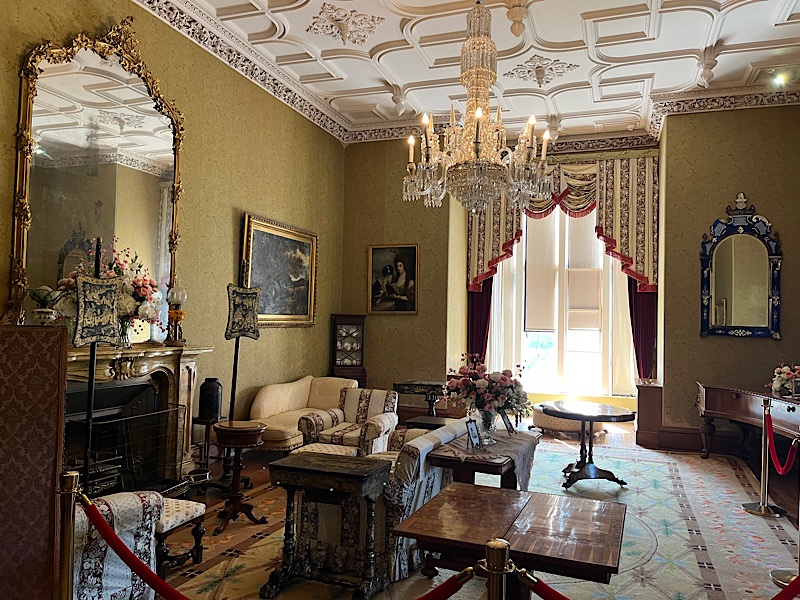
The main hall features a Waterford crystal chandelier that was installed in 1970 when the house was first electrified (electricity came late to rural estates).
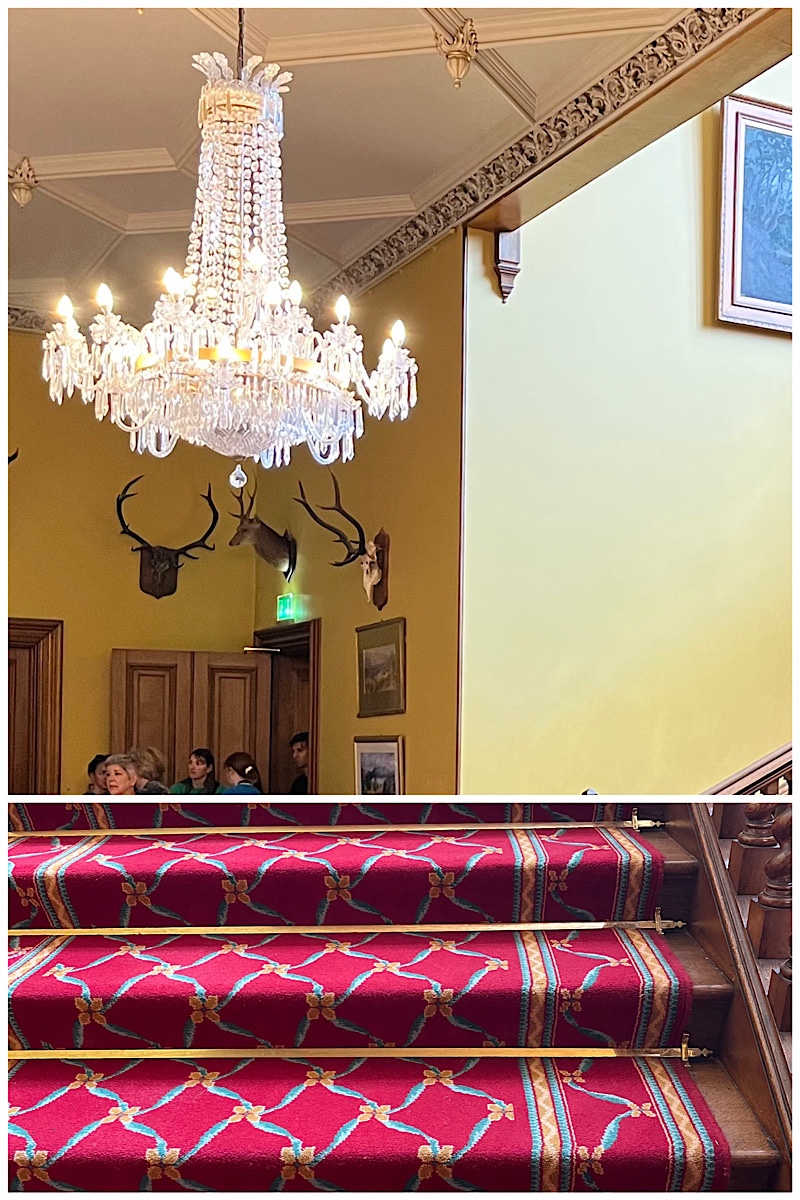
The billiard room walls are decorated with handpainted Chinese silk.

On the upper landing, the early 1900s large, frosted window is of old English crystal. The whole contains portraits of members of the Herbert family.

The master bedroom overlooks the lake. There is an adjoining bathroom which was installed in the early 1900s.
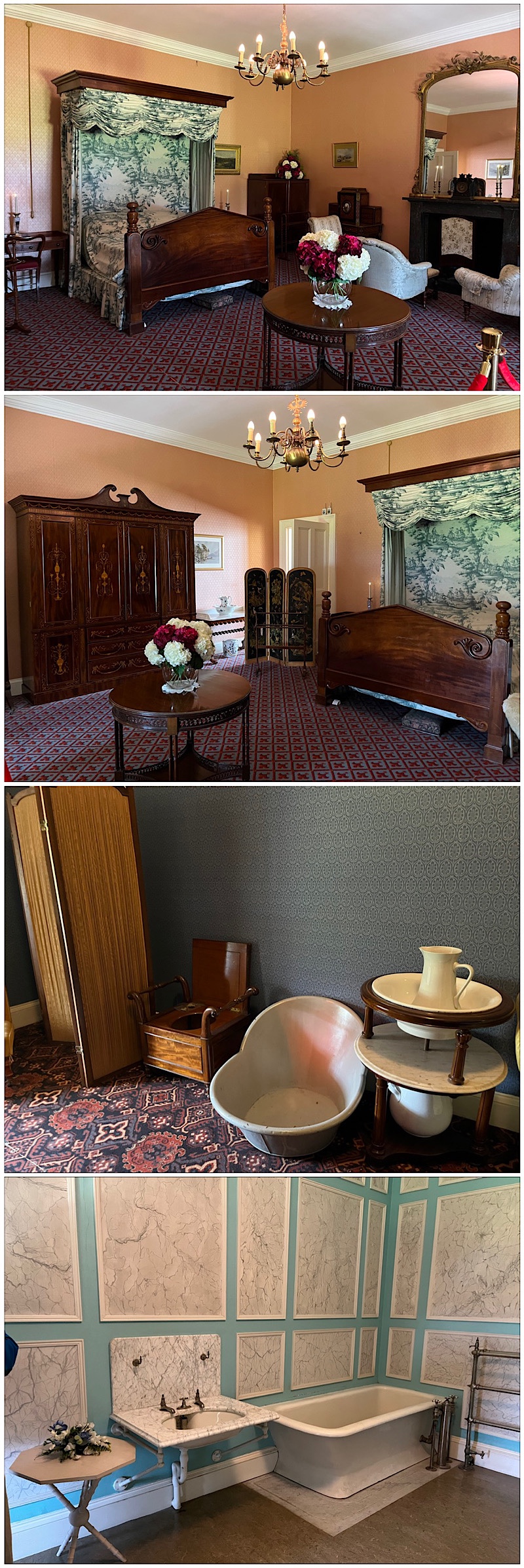
The children’s bedroom displays child size furniture, some of which was used by the Vincent family between 1911 and 1929.

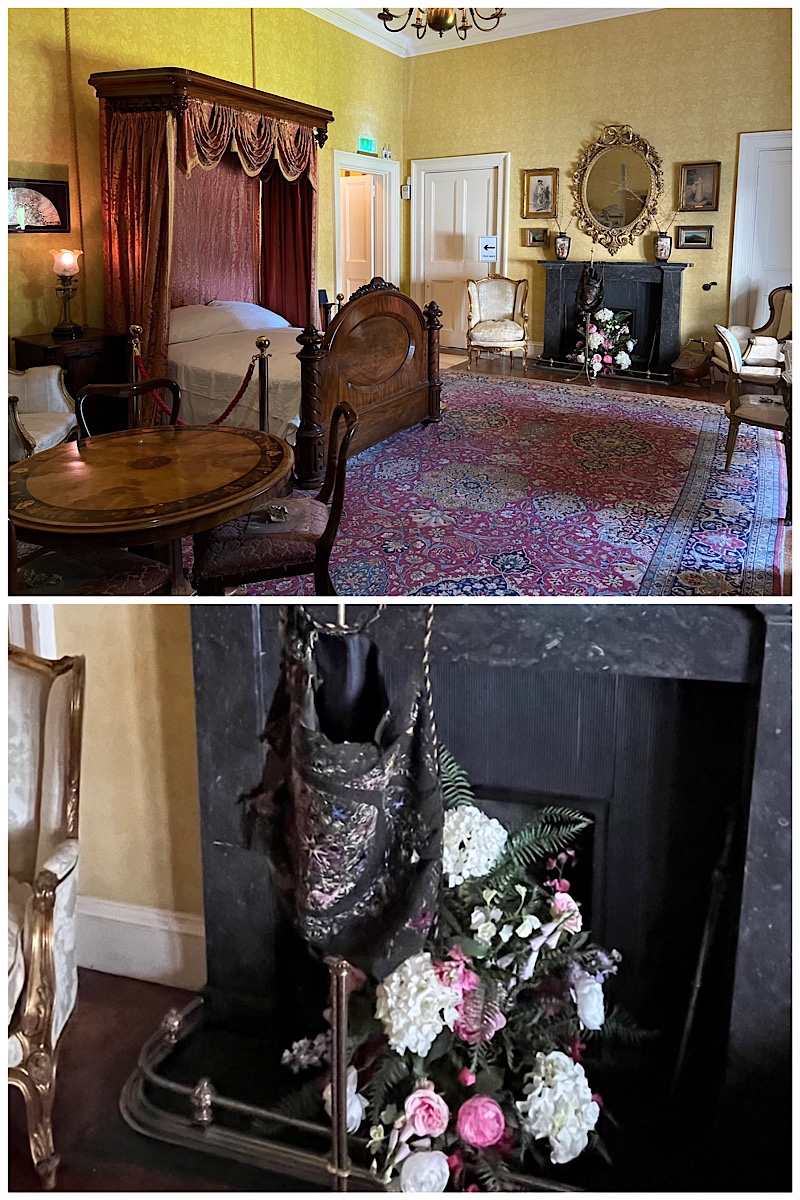
We also got to tour part of the suite of the rooms reserved for Queen Victoria’s use in 1861. The furnishings and decor of the boudoir are based on photographs taken out of this room in 1865. The harp in her sitting room was made by Sebastian Erhard and dates to the late 1830s.
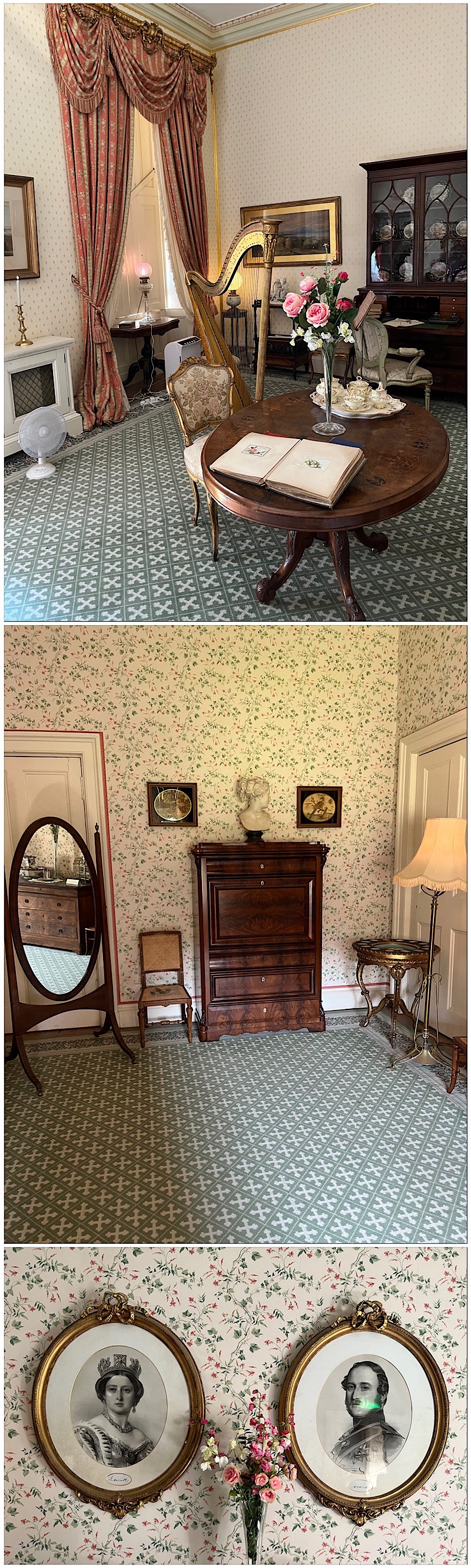
In the bedroom that the queen used, the bed is mahogany, and the draperies are pink and gold silk damask.
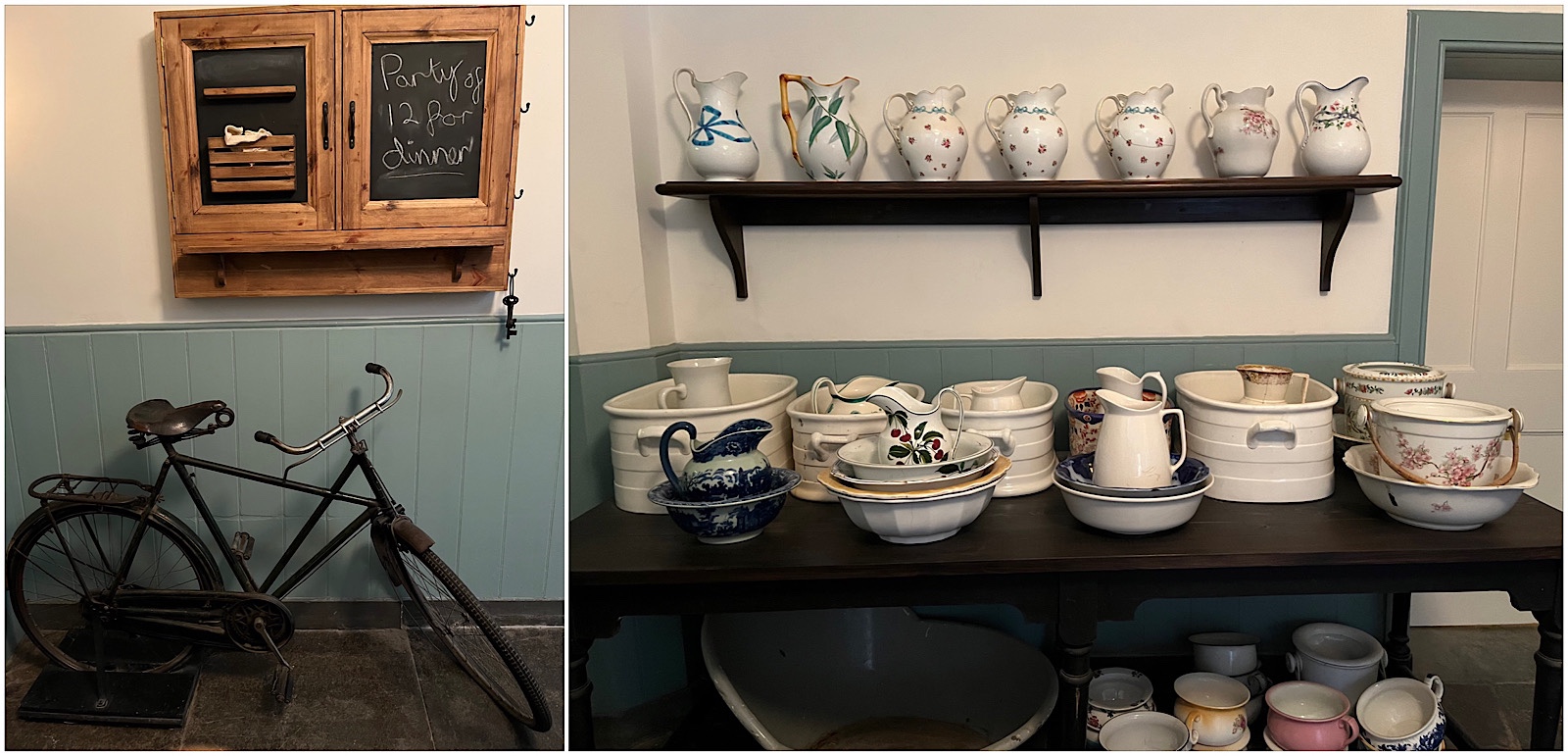
Then it was time to visit “downstairs”, although most of the basement is above ground level. Behind the green baize door is the area where the servants would have worked.

Right away, the work of the household is evident: dinner for 12, and a bicycle for running errands into town,
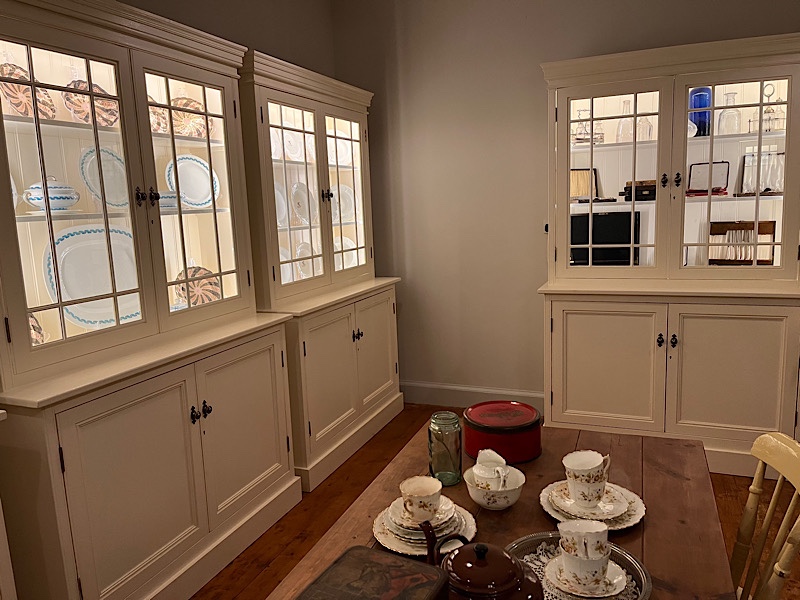
The first room below stairs is the servants dining hall.

We marvelled at the bell corridor. Each bell has a different tone, so that servants new, almost without looking, which room was summoning them.

We also got a glimpse of the boot room and the luggage pile.

The still room is where light teas and refreshments were prepared before being brought upstairs.
The large kitchen is located outside the main block of the house to help ensure that cooking smells, did not permeate through the building.

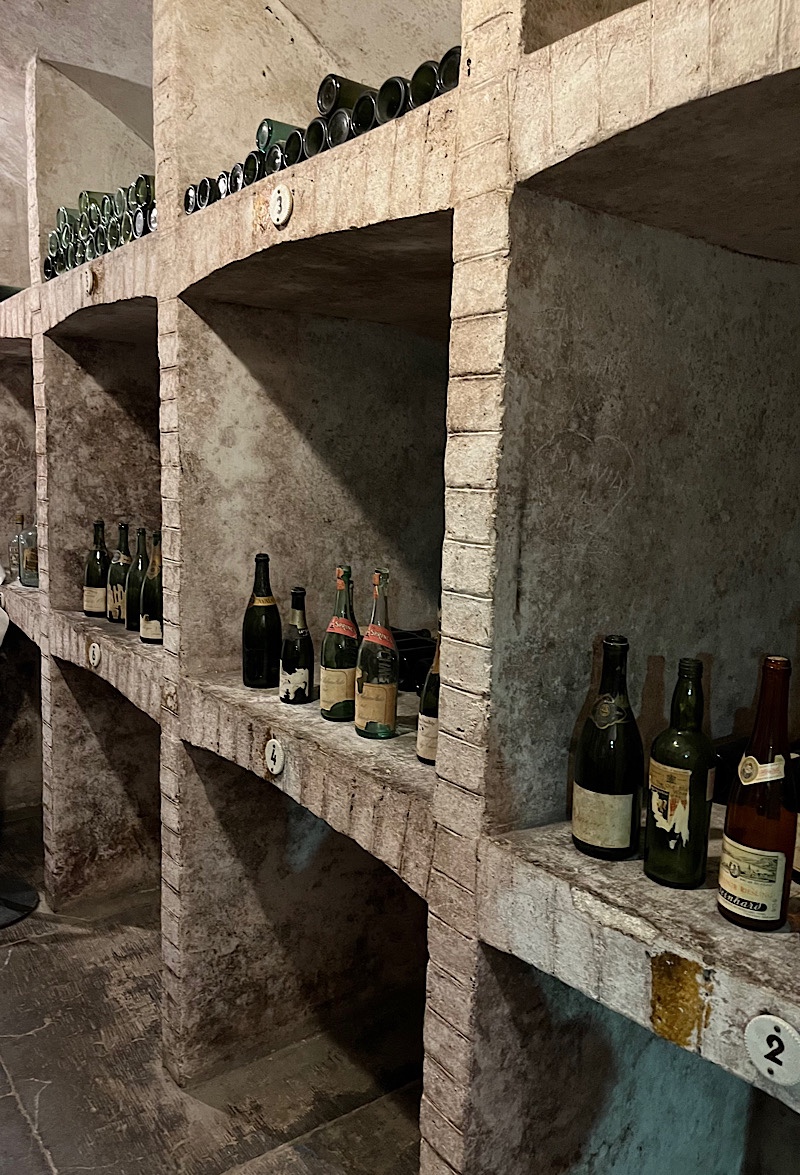
Was the wine cellar my favourite room?
After leaving the house, we had a couple of hours of free time to tour the vast gardens, hike some of the national park paths and trails, and have a late lunch.
We attempted to hike to Torc waterfall, but none of the direction signs indicated the distance. After about 1 km, we realized that the waterfalls were partway up the mountain, so we turned back into the gardens.

The rhododendrons here grow taller than we have ever seen, reaching height of up to 10 metres (approx 33 ft), and spreading almost infinitely horizontally. The particular species of rhododendron here in Ireland is actually considered an invasive plant because it is so prolific, so large, and so difficult to remove once it has rooted in a farmers field or forest. This link is to an article that describes the problem: Rhododendron poniticum, its effects on habitats and biodiversity in the U.K.

Bottom: I’m in the yellow circle, surrounded by rhododendrons.
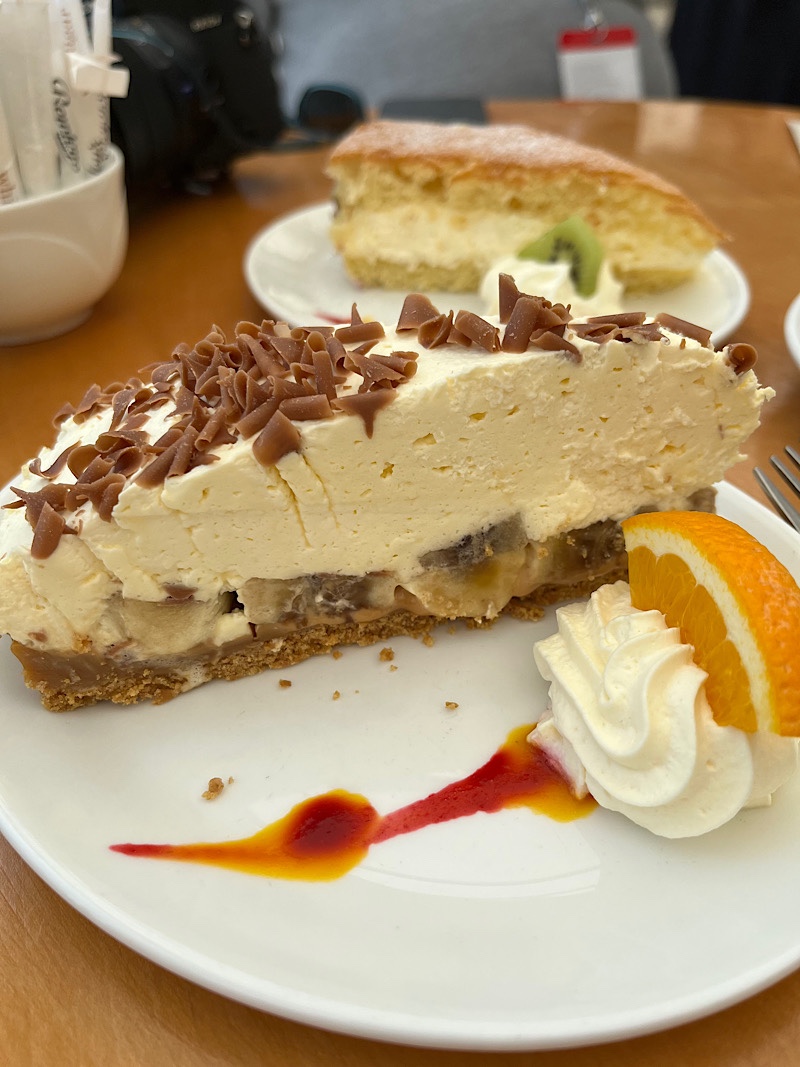
Lunch was delicious Irish pastries, and a pot of tea. As requested by one of our acquaintances, I made sure to have a slice of Banoffee pie.
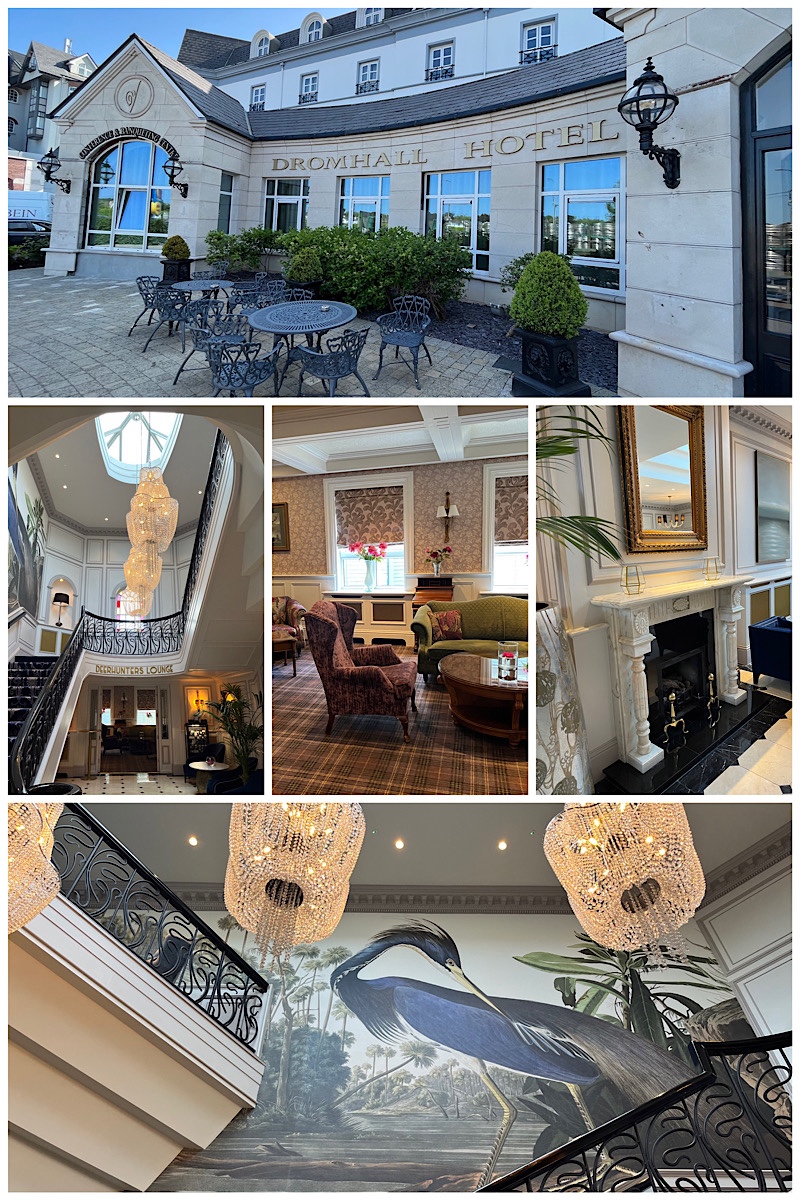
For the next 2 nights we’re staying at TheDromhallHotel , by far the nicest place we’ve stayed so far, and with a terrific in-house restaurant, Kayne’s.


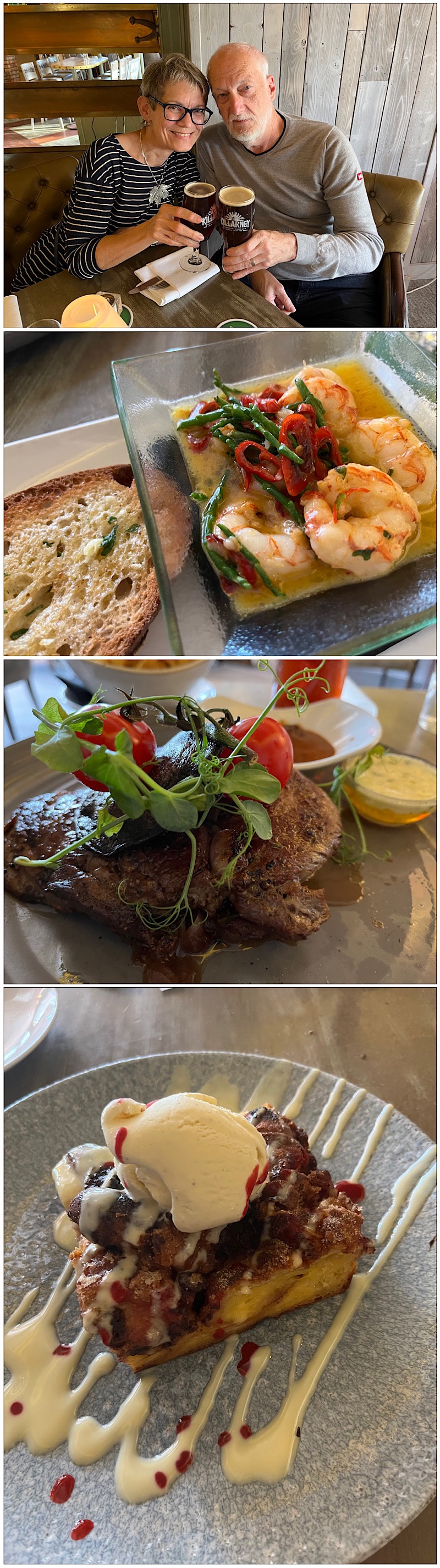
Although we could easily have slipped into a food coma after dinner, our tour had other plans.
Siamsa Tíre (Siamsa, pronounced “Shee-am-sa”, comes from the Irish language, the word itself expressing mirth and music, and Tíre means ‘of the land’) is the National Folk Theatre of Ireland, located in Tralee. It was our destination for a private group information session, backstage tour, and performance of numbers from their current show “Anam”, which is Gaelic for “soul”.
The very charismatic Jonathan Keller, Artistic Director of the theatre, has studied the “Munnix” dance his entire life, and was our guide through the history of this theatre which has been instrumental in reviving traditional Irish dance since the mid 1950s. As Canadians used to a strong tradition of Irish song and dance in eastern Canada, it was surprising to learn that those traditions were fading in Ireland.
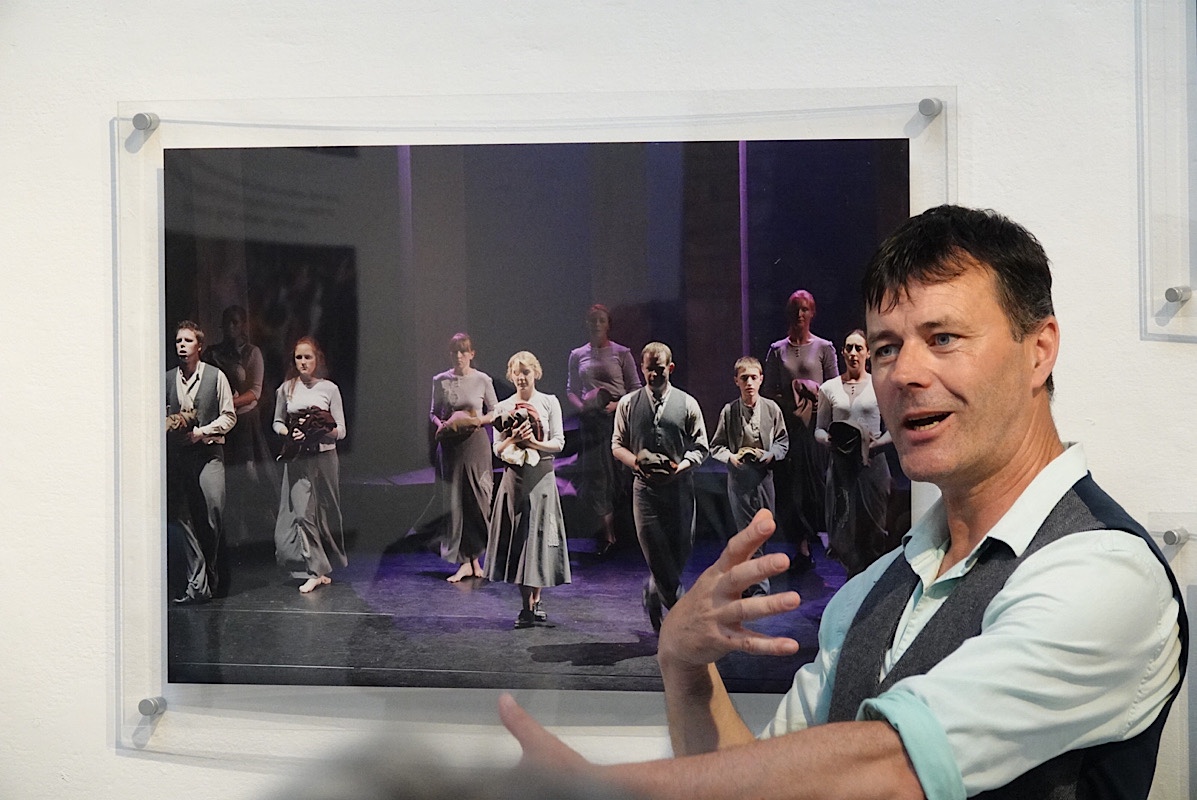
Beginning in the 1970s, a vital element of the theatre became the fostering of traditional Irish folk culture in a series of Tithe Siamsa or Folk Academies located in strategic, tradition-rich parts of rural Ireland, where training in music, dance, song and movement was delivered to selected students over a period of three years, free of charge. Those students who showed significant promise then graduated to an advanced class in Siamsa Tíre in Tralee, and from there to the Community Cast of the company. That education program continues to this day.
In 1991, the current building opened. The exterior is designed to look like a ring fort surrounding a village. Inside, there is a 335 seat state-of-the-art theatre that is widely regarded as one of the best arts facilities in the country. In recent years, the theatre has been modified to become Ireland’s first Green Certified Theatre.

It was interesting to learn that in 1992, the original lead dancers for what eventually became Riverdance trained and workshopped here.
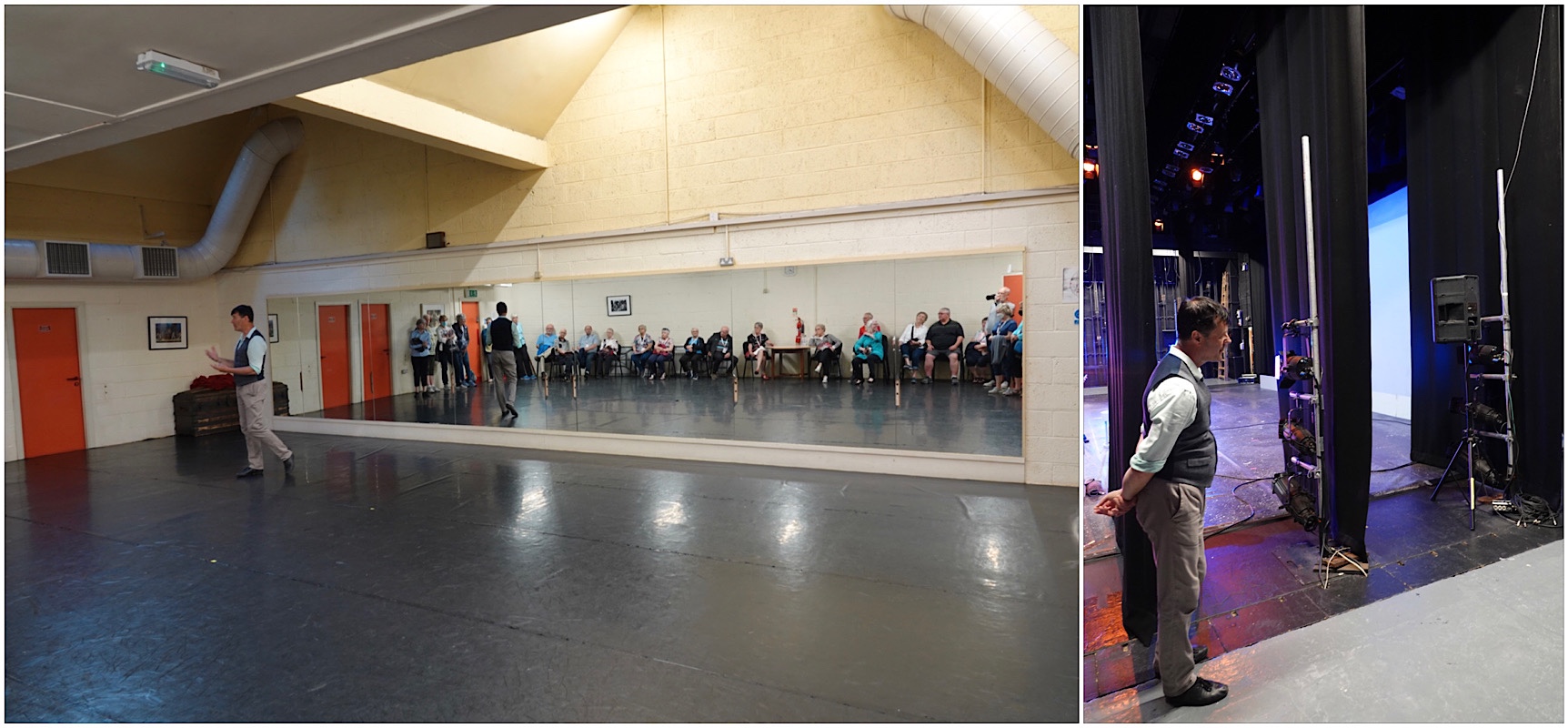
After our tour, we were treated to a 40 minute abbreviated version of Anam, featuring a trio of fabulous dancers: our Irish host, Jonathan Keller; Nathan Pilatzke from Ontario’s Ottawa Valley, who danced with The Chieftains for 17 years; and Matthew Olwell from Virginia, who toured for 9 years with Riverdance. To describe the show as energetic, and the footwork as mind boggling, is to understate it.
Here’s part pf the footwork demonstration that accompanied the show:
To further enhance the show, vocals, guitar, and the fiddle music were all supplied by acclaimed musician Fergal O’Murchú.

What a day! Thank goodness we get to “sleep in” until 7 tomorrow!


Enjoying Ireland, especially learning the wonderful word ‘skirl’ perfectly onomatopoetic, the details of Waterford production and the fact of Guinness’s IPA type beer’s existence! We haven’t been able to enjoy UK beer nearly as much after getting spoiled by PNW IPAs. Thanks!
LikeLiked by 1 person
What a wonderful day ( with sunshine). I was reminded of Downton Abbey when you went downstairs in Muckross House. I wonder how much the Waterford chandelier is worth. That invasive rhododendron is horrible. I think you mentioned it is 28m or 30 feet. I hope it’s the latter. It’s terrible as an invasive plant. Doesn’t sound as if it would be any better as a native plant. The dancing and music was a perfect way to cap such an exciting day!
LikeLiked by 1 person
Beautiful pics and interesting stories, as usual! Julee and I were in Ireland for a couple of weeks several years ago. We flew into Shannon, rented a car and toured western Ireland for 5 days, then did a self-guided “walk” through Hillwalk Tours around the Dingle Peninsula. I know you two prefer the dark Guinness, I don’t drink a lot of beer typically, but I discovered Guinness “Hop House 13”, a very hoppy, citrusy, pale ale while I was there! Every night in the pubs along with dinner, so refreshing and thirst quenching after walking all day long. You might want to at least try it? You used to be able to get it throughout the UK, but now only Ireland has it so I am told.
LikeLiked by 1 person
While Ted really likes Guinness, I prefer a lighter beer. I/we have been trying a different one (just one!) each night: Harp, Smithwicks, HopHouse 13, and Rockstone, but last night’s was my favourite so far: Killarney Red Ale. At a pint a day, we’ve had more beer this week than in months at home!! “When in Ireland”….
LikeLiked by 1 person
Got so emotional So many places have been familiar from reading, lore and song! Made me feel nostalgic.
>
LikeLiked by 1 person