Itinerary: We travel to County Cork, site of Blarney Castle. En route we tour Cork City and visit Cobh Heritage Centre, a portside display depicting the exodus of potato famine victims to America in the 19th century. We continue to Blarney for an opportunity to kiss the Blarney Stone, an act that bestows the “gift of the gab”.
☘️☘️☘️☘️☘️☘️☘️☘️☘️☘️☘️☘️☘️☘️☘️☘️☘️☘️☘️☘️☘️☘️☘️☘️☘️☘️
High 17°C/Low 9°C and sunny…again!
We started our day with a hot table-service breakfast in the Granville Hotel’s Bianconi dining room, named for Charkes (Carlo) Bianconi who founded the first public transportation system in Ireland and established his headquarters here when the house was known as “The Commercial Hotel”.
My favourite parts of breakfast were the porridge, topped with local Waterford-distilled Muldoon Whiskey and fresh cream, and the black pudding (Ireland’s version of the Hungarian hurka sausage we enjoy so much).
Then it was a short jaunt down the street to tour the Waterford Crystal factory. Waterford nearly went under in 2009, but now produces crystal in Slovenia, the Czech Republic, Hungary, and Germany. It’s not the first time the iconic company has come back from the brink. Established as the Waterford Glassworks in 1783, it closed in1851, with the loss of almost 100 jobs. It was not until 1947 that it was finally re-opened under the ownership pf Karel Bacik, a Czech glassmaker – not totally surprising considering the world renown of Czechoslovakian crystal- and designer Miroslav Havel. It eventually became Waterford Wedgewood, which went into receivership in 2009, and in 2015 was bought by Fiskars (the scissor people).

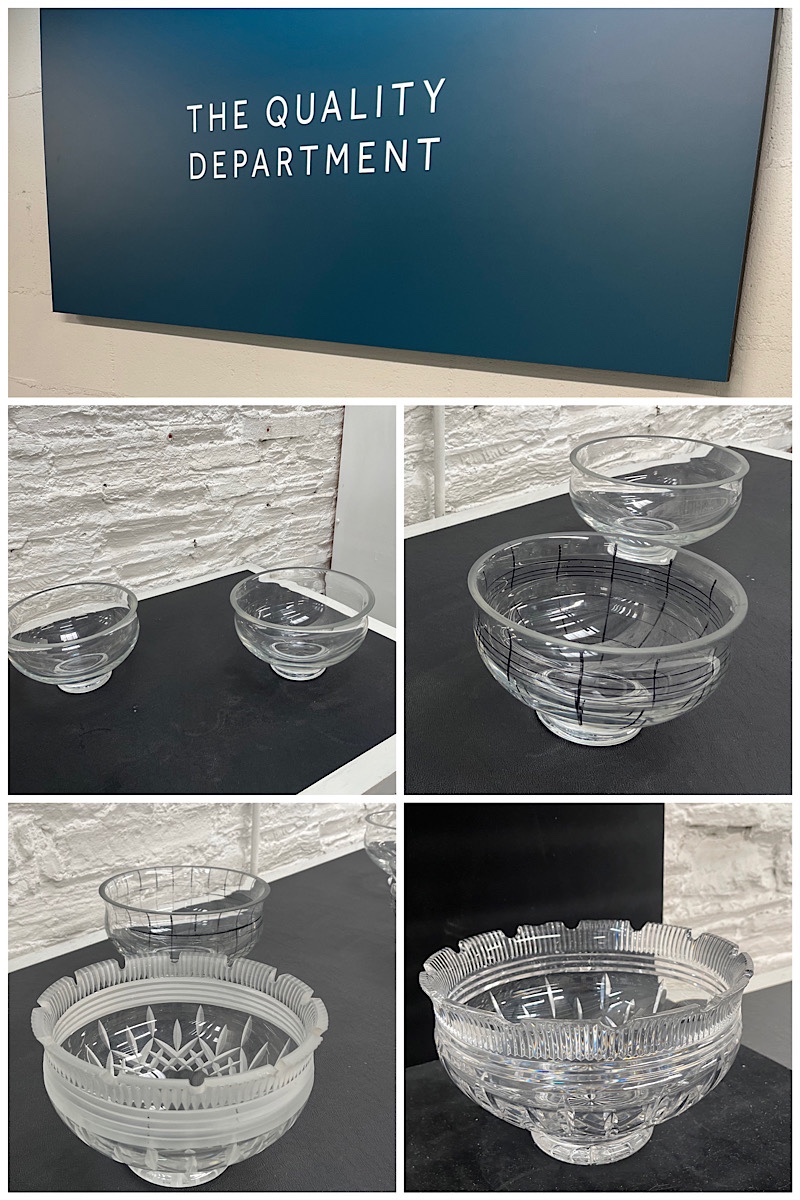
The Irish factory, manned 100% by “master” craftsmen, produces exclusively special commissions and trophies. It takes 8 years from apprentice to master; one of the pieces we saw was the “Apprentice Bowl” which each cutter must make to pass their master exam. It incorporates all 8 of the classic cuts used on crystal, for a total of 600 individual cuts done on 10 separate wheels. There’s a great article about the most recent master cutter here: Meet our master craftsman

For our 5th anniversary, Ted bought me two tiny exquisite Waterford liqueur glasses. That was all the Waterford our budget ever allowed in those years of having a mortgage and a young family. I was excited to see how those special glasses were made!
The tour took us through each state of the crystal making process, from seeing the bags of raw materials (white silica sand from Belgium, lead from Holland, and potash from Germany), through the making of moulds, blowing and firing the crystal, quality control, surface finishing, marking, cutting, and acid washing.


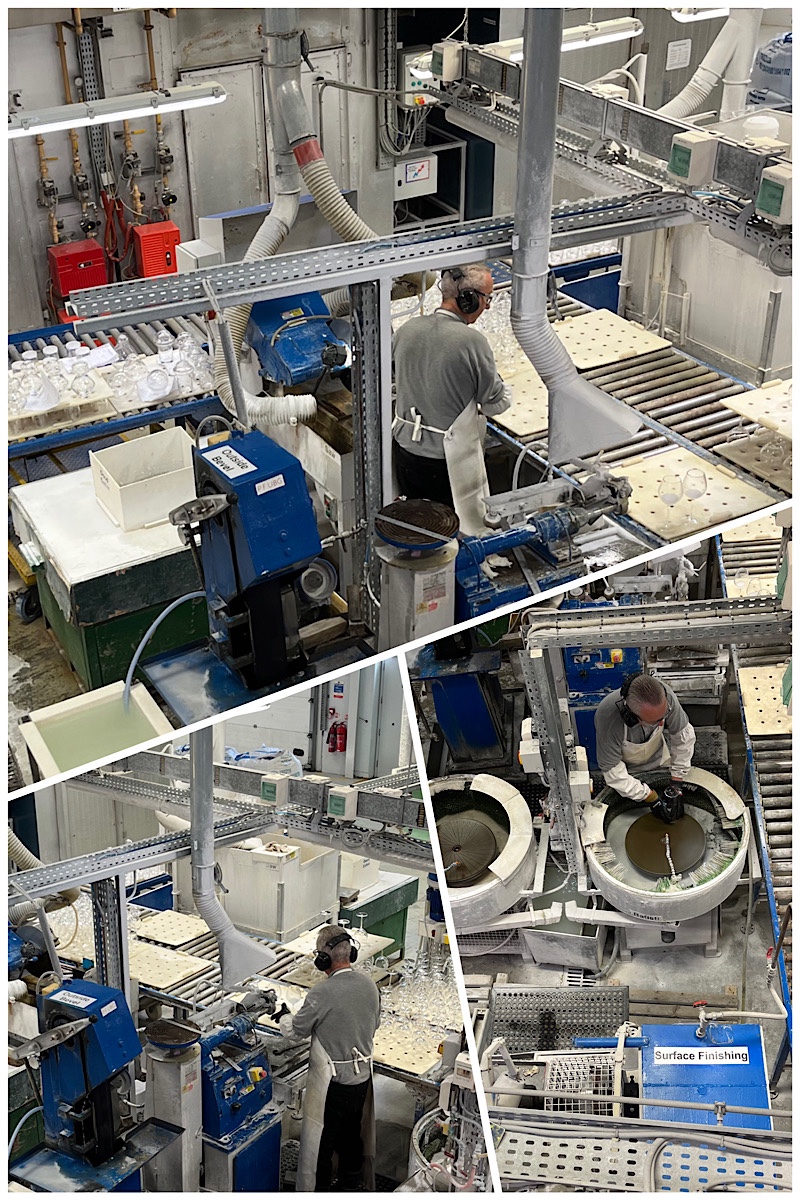



We also got to watch the engraving masters who create unique one-of-a-kind pieces. One of the design masters invited me into his workstation to see the drawing he was using to create the crystal stand and football he was creating for the Keough-Naughton US-Ireland College Football tournament.


Naturally, we also got to peruse the showroom, where items like a crystal violin that took four to six months to complete, and a crystal gramophone, were on display but not for sale.


With sparkles still in our eyes we headed to the Irish harbour town that was the last port of call of the Titanic in 1912: Cobh (pronounced “cove”, since the Gaelic language has no written letter “v”).
Our destination was the Cobh Heritage Centre, where there was lots of information about that famous ship, but the main focus was on how Cobh became an embarkation point during Ireland’s mass emigrations, from the 1600s right through to the 21st century.
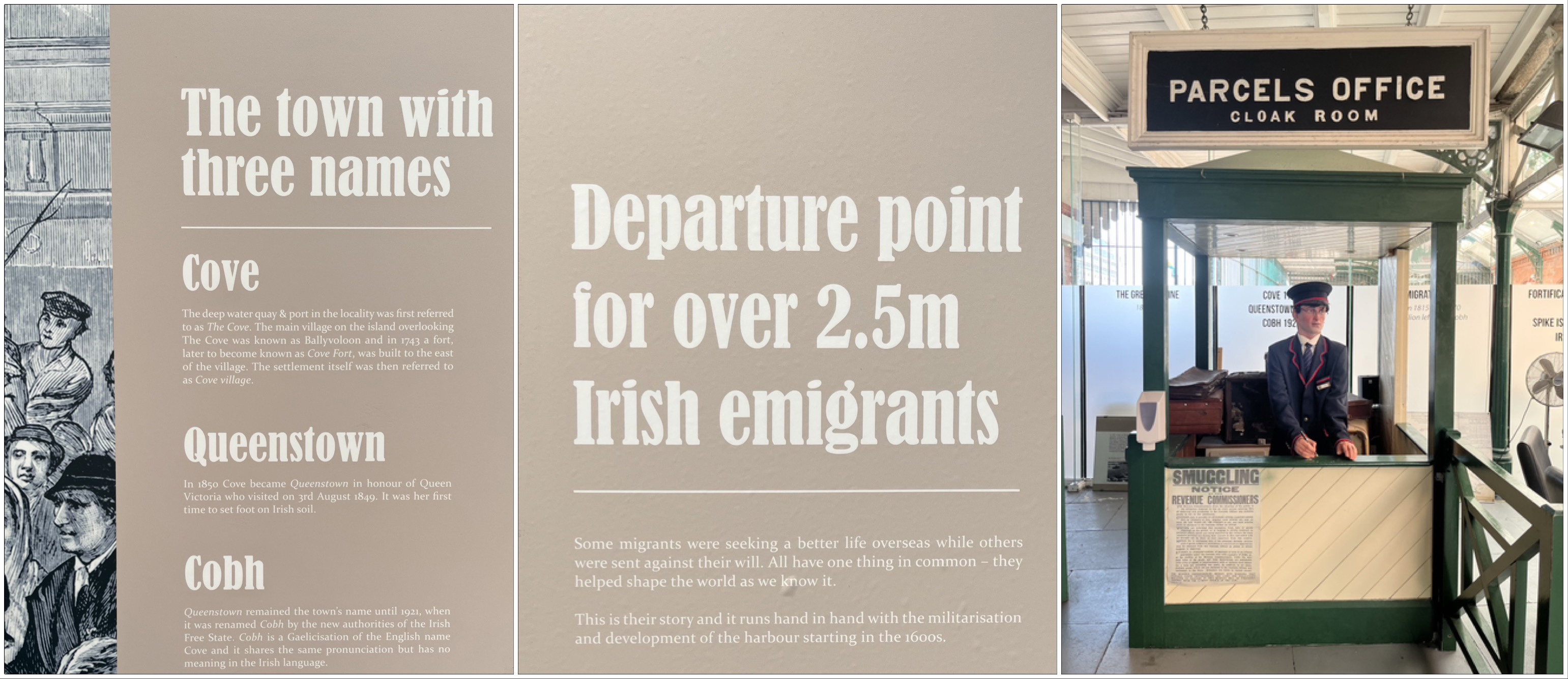
The centre’s displays consisted of plaques, artifacts, videos, models, and lots of life-sized dioramas.

As we entered, we were given the name of a passenger that sailed from Cobh, and were able to find their story in one of the “century” rooms.

Not only did the ill-fated Titanic sail from Cobh, but so did the Lusitania, as well as the SS Atlantic, all of which didn’t reach their destinations.


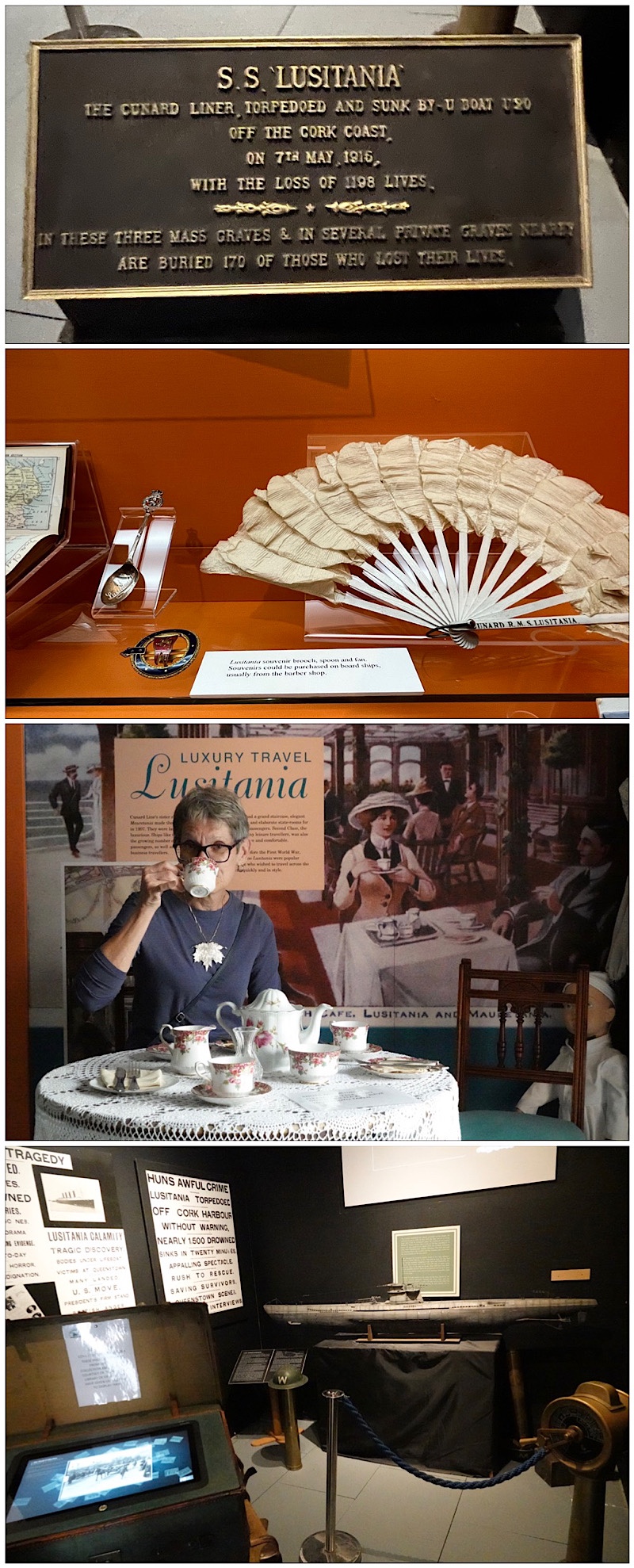
Most ships that sailed from here did of course make their crossings, including, likely, the ship on which Ted’s great-grandmother sailed to Canada some time in the 1840’s. We found 2 possibilities, but unfortunately the archives had passenger lists for neither.
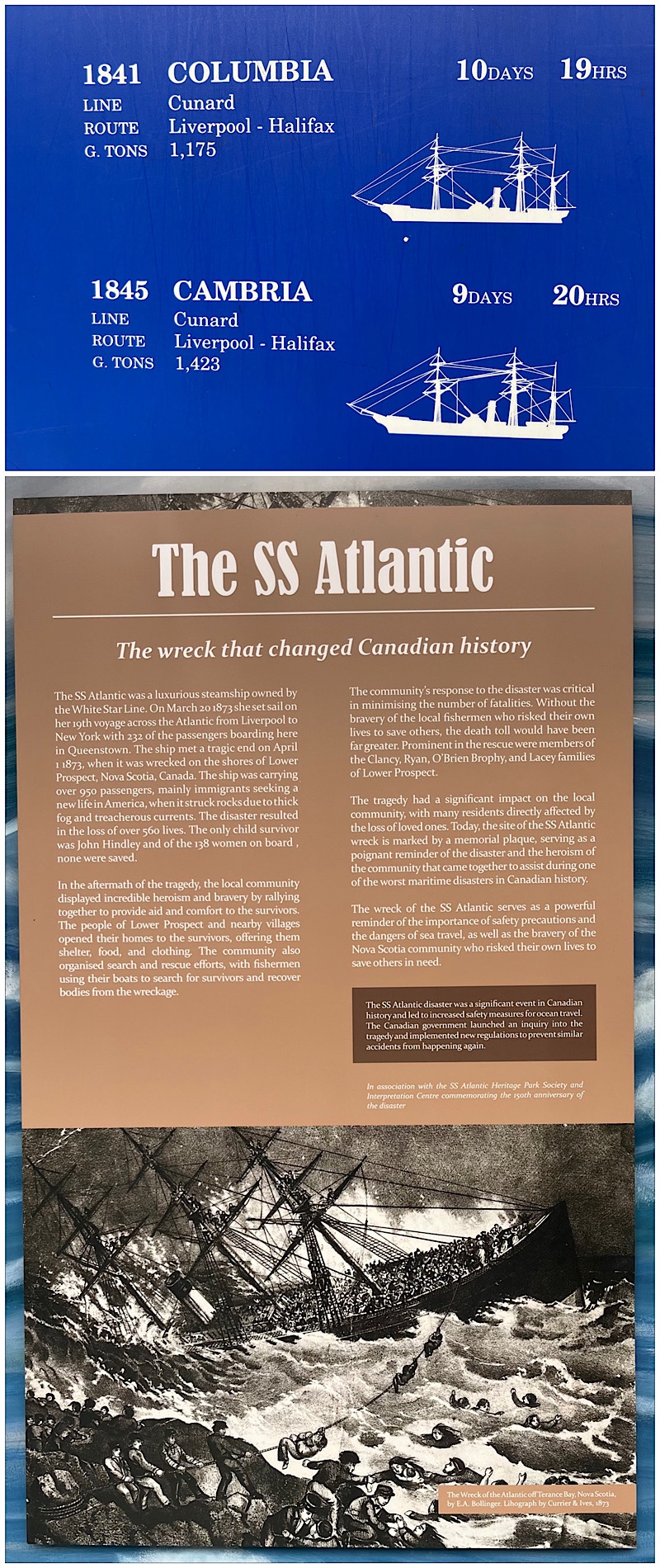
Bottom: a disaster with a Canadian connection.

Then it was on to Blarney Castle! The castle is certainly imposing, and the view from the top spectacular, plus the gardens and grounds are lush and green, with trees tall enough to rival those in British Columbia.


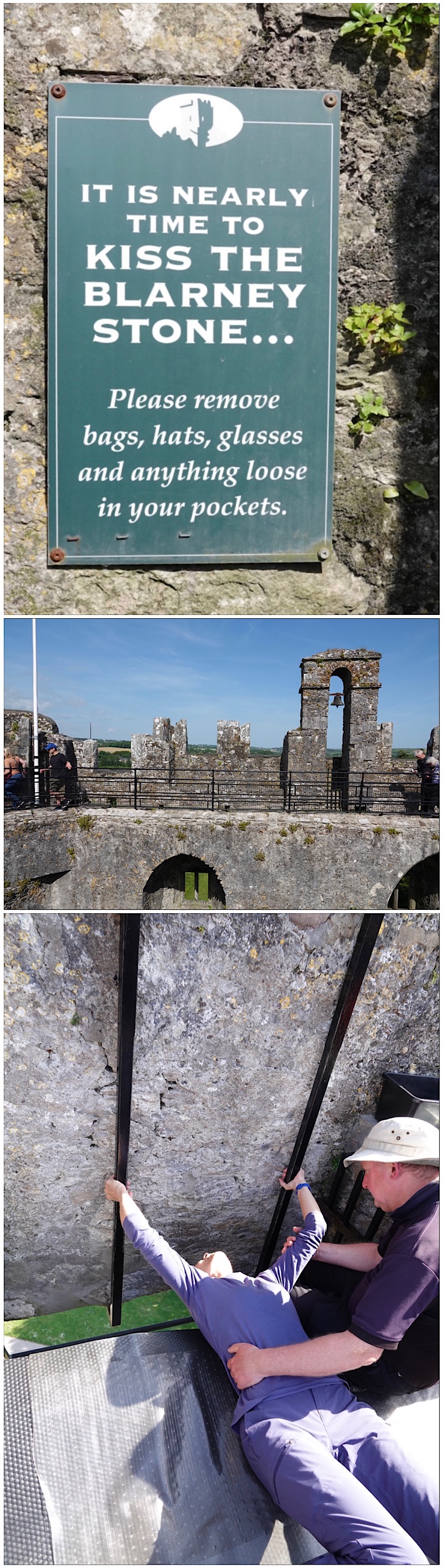
Unfortunately, I failed in my attempt to kiss the Blarney Stone. Ted is undoubtedly grateful. I did make the attempt, but in the end just couldn’t make myself lean far enough back to accomplish the task.


Our rooms tonight are in the blarneywoollenmillshotel

We’re having a great time so far, seeing lots, and meeting interesting people. Further Irish adventures await!
 Rose and Ted’s Excellent Adventure
Well of course….didn’t we buy them together at the Joseph Brant Museum?
LikeLike
I’m sure not kidding the Blarney Stone will not inhibit you.
LikeLiked by 1 person
Ted says you know me too well!! LOL
LikeLike
“Kissing”, not “kidding”. Thanks spell check.
LikeLike
The photos are all fabulous and fun! Always loved Waterford so I enjoyed seeing the photos of your visit. Makes me feel I’m along for the ride. Love seeing you both in the photos here and there. Enjoy your adventures. Hopefully our paths will cross again one day!
LikeLiked by 1 person
Too bad about the Blarney Stone. But your Sky Pilot bridge crossing has earned you all the bragging rights! I love hearing about this trip – and especially your day in Waterford. You make me want to go even more, now!
I totally love your maple leaf necklace. Can you believe that I have one too?
Anxious to hear about tomorrow…
LikeLiked by 1 person
I’m curious… do you still have your Waterford glasses in the new scaled down life? I’ve downsized once and my sugar and cream set made it but I never really use them.
LikeLike
They’re somewhere among son #2’s “stuff” now.
LikeLike
We did a cruise to Cobh and got an independent tour to Blarney Castle. We went straight to the Blarney Stone. We both did it…but now Rick suffers even more cause it was my second time! We thought the grounds of Blarney castle were amazing! I’d go back but skip kissing the Blarney Stone (BS – coincidence? I think not!) I think we need to add Ireland to our bucket list. Rick’s never been and it’s been 30 years for me. Enjoy the rest of your trip!
LikeLiked by 1 person
I hadn’t thought about the initials before!
LikeLike