Itinerary: On our full-day city tour we see the beautiful 18th century Georgian squares and houses, the 12th century St. Patrick’s Cathedral and Leinster House (the Irish parliament). We continue to Trinity College, home to the Book of Kells. Tonight enjoy a rousing evening of Irish food and entertainment at an Irish cabaret.
☘️☘️☘️☘️☘️☘️☘️☘️☘️☘️☘️☘️☘️☘️☘️☘️☘️☘️☘️☘️☘️☘️☘️☘️☘️☘️
High 19° C, overnight low 9°C. Sunny.
We had a leisurely start today, with breakfast at 7 a.m. and our tour not leaving until almost 10.

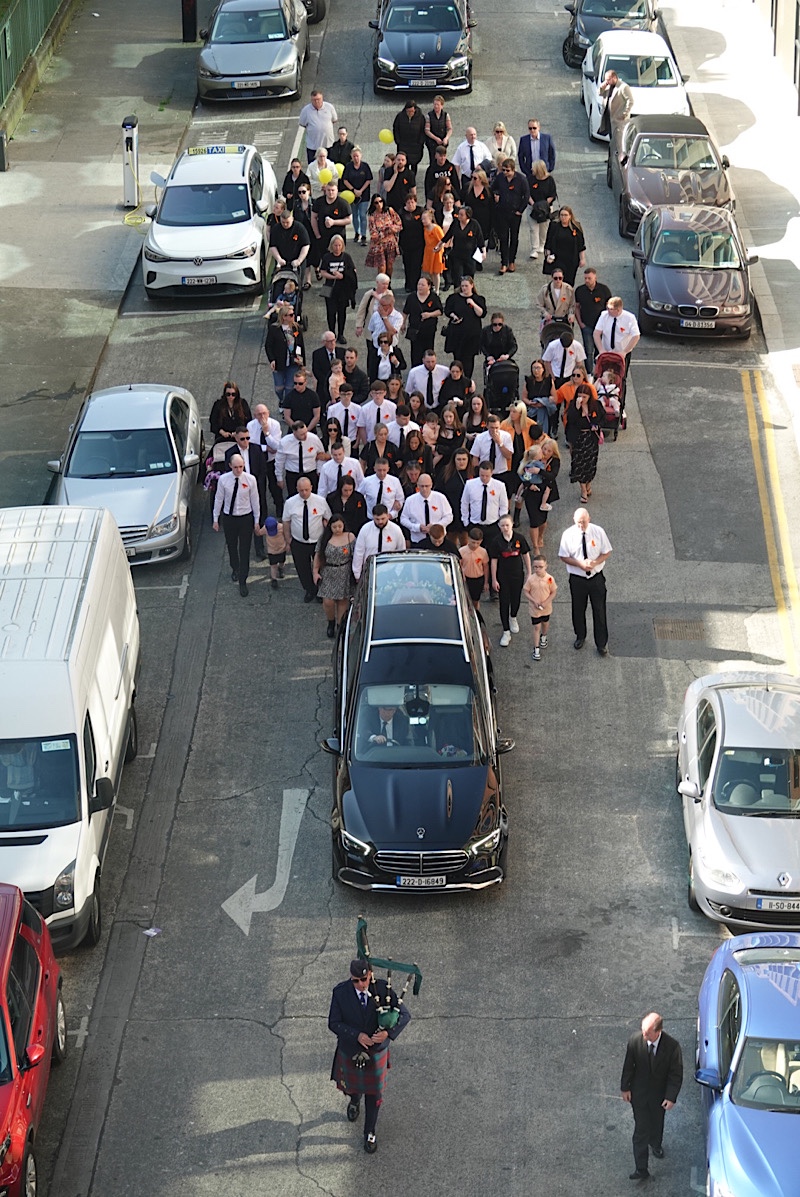
When we returned to our room, we could hear the skirl of bagpipes. On the street below was a funeral procession, on foot, led by a piper.

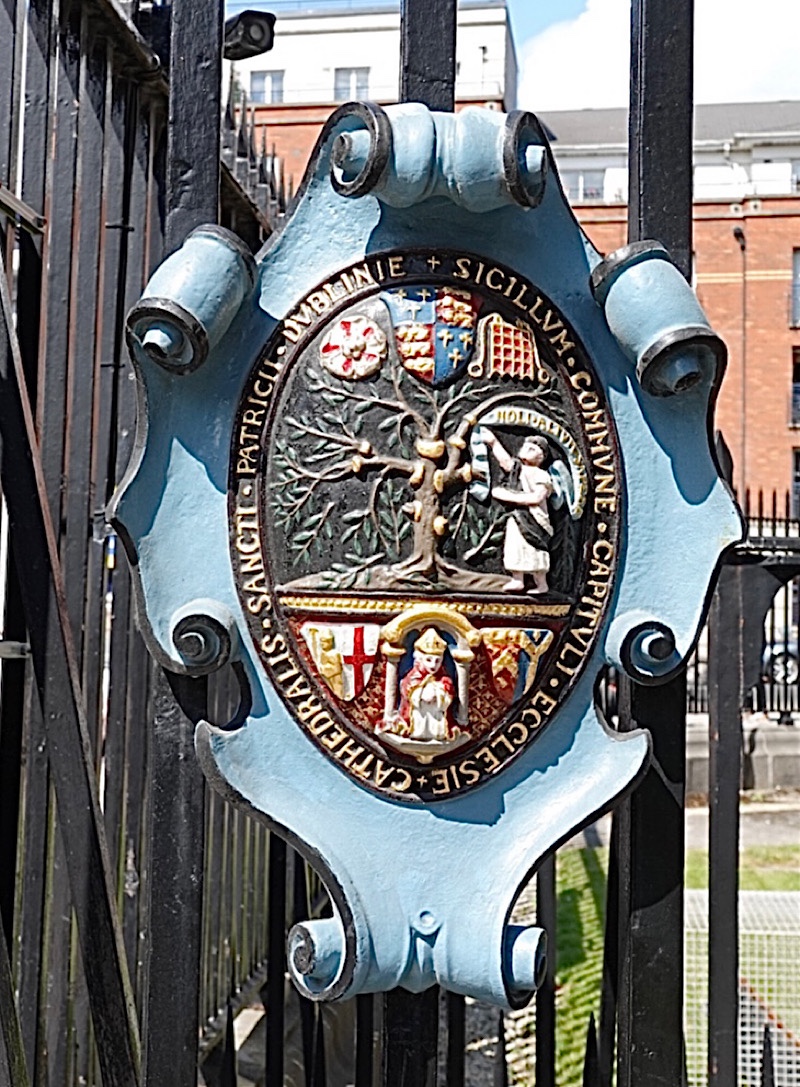
Our first tour stop for the day was at St. Patrick’s Cathedral, founded in 1191 as a Roman Catholic cathedral, and currently the national cathedral of the Church of Ireland. The actual Gothic structure was built between 1220 and 1260, and is one of only a very few Medieval buildings left in Dublin. We learned that none of the Catholic churches that were forcibly converted to Episcopalian/Anglican/Church of England under Henry VIII , like both St Patrick’s and Christ Church Cathedral here, were converted back, so all of the Catholic churches now in Ireland are quite new (mostly 1900’s).
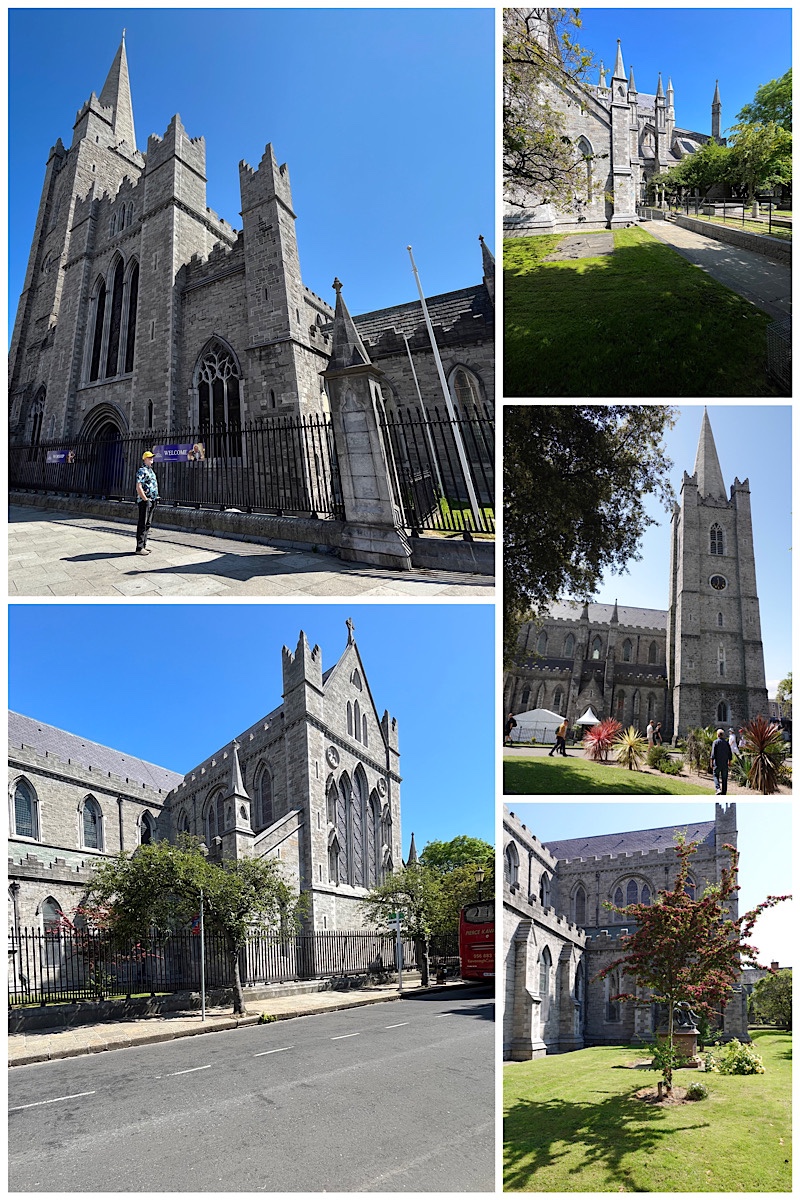
The current congregation of St. Patrick’s is only around 200 people, so it is maintained by tourism. It was certainly crowded today!
The “choir” area reserved for Knights, complete with banners, helmets, swords and shields at each seat, reminded us of the similar area in St. George’s Chapel at Windsor Castle.
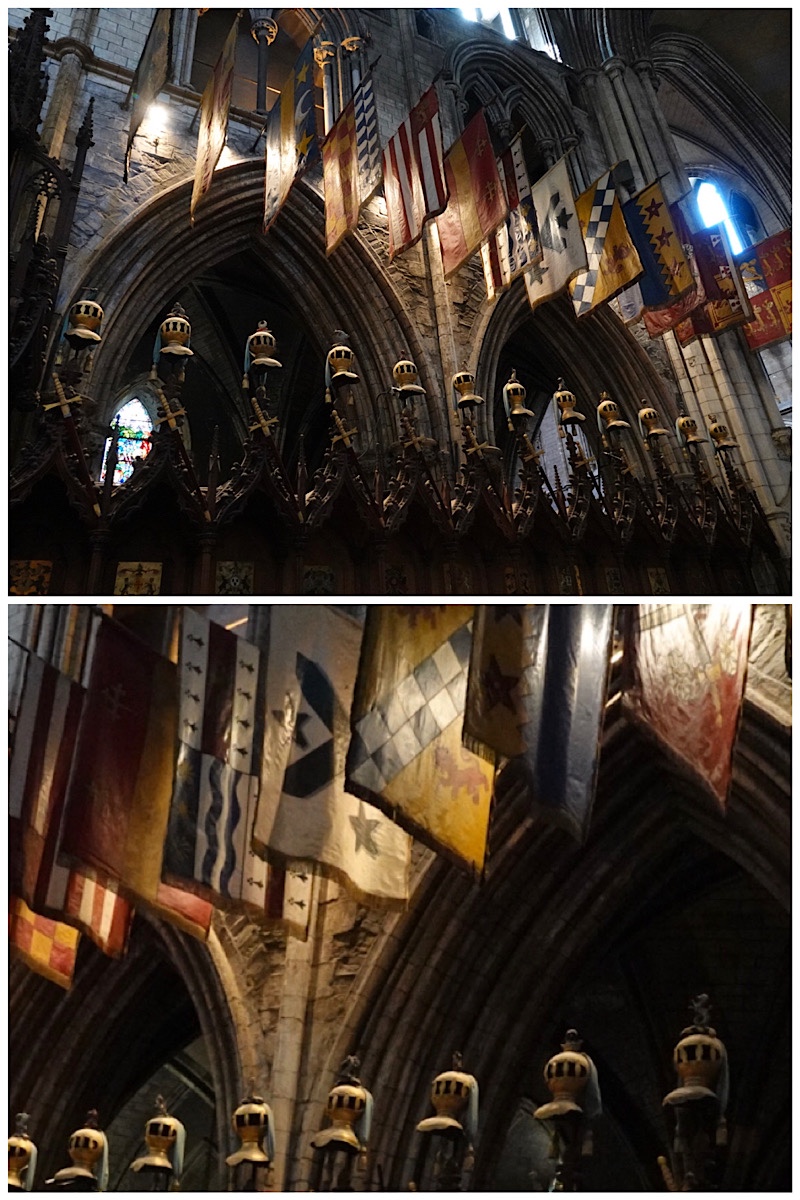
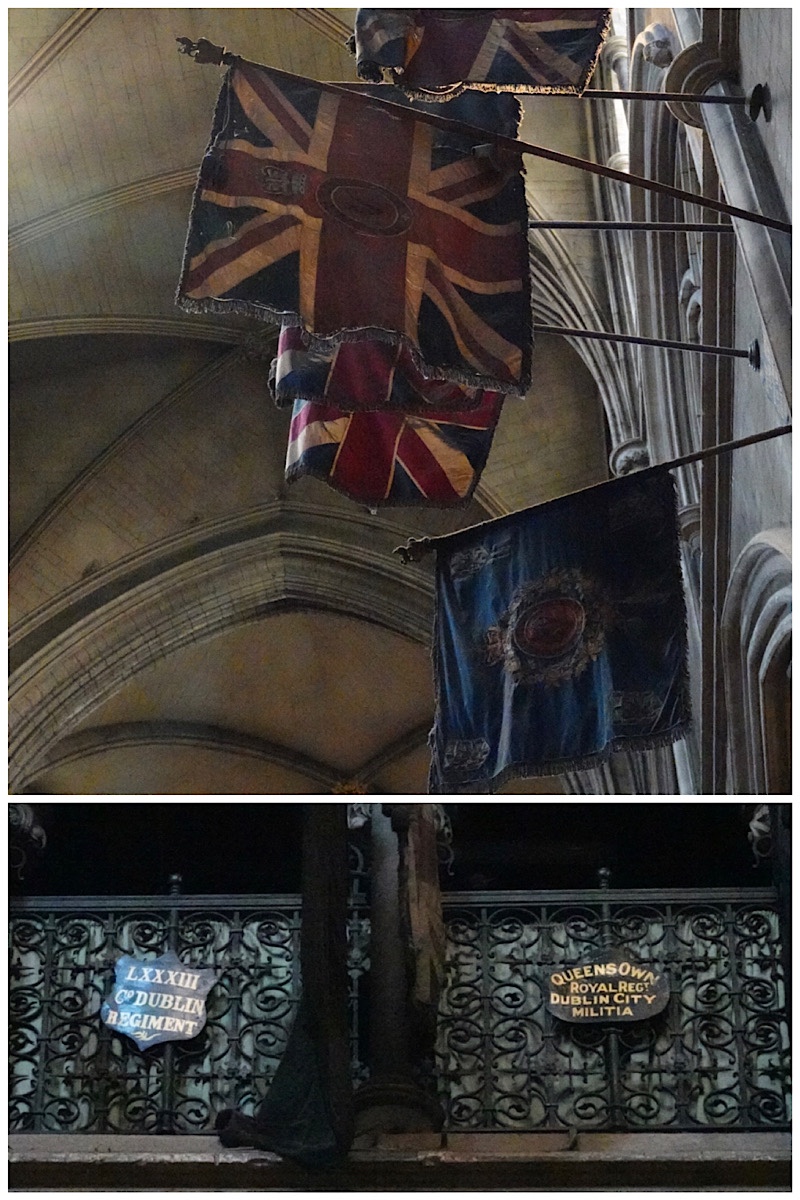
One side chapel is dedicated to fallen soldiers, some memorials dating back to the 1600’s when England under Cromwell cruelly conquered Ireland. Those honoured in this church were the English fallen, not the Irish. Our guide, Mary, suggested that the dusty condition of the flags might be due as much to hatred of those conquests as to the extreme age of the flags.
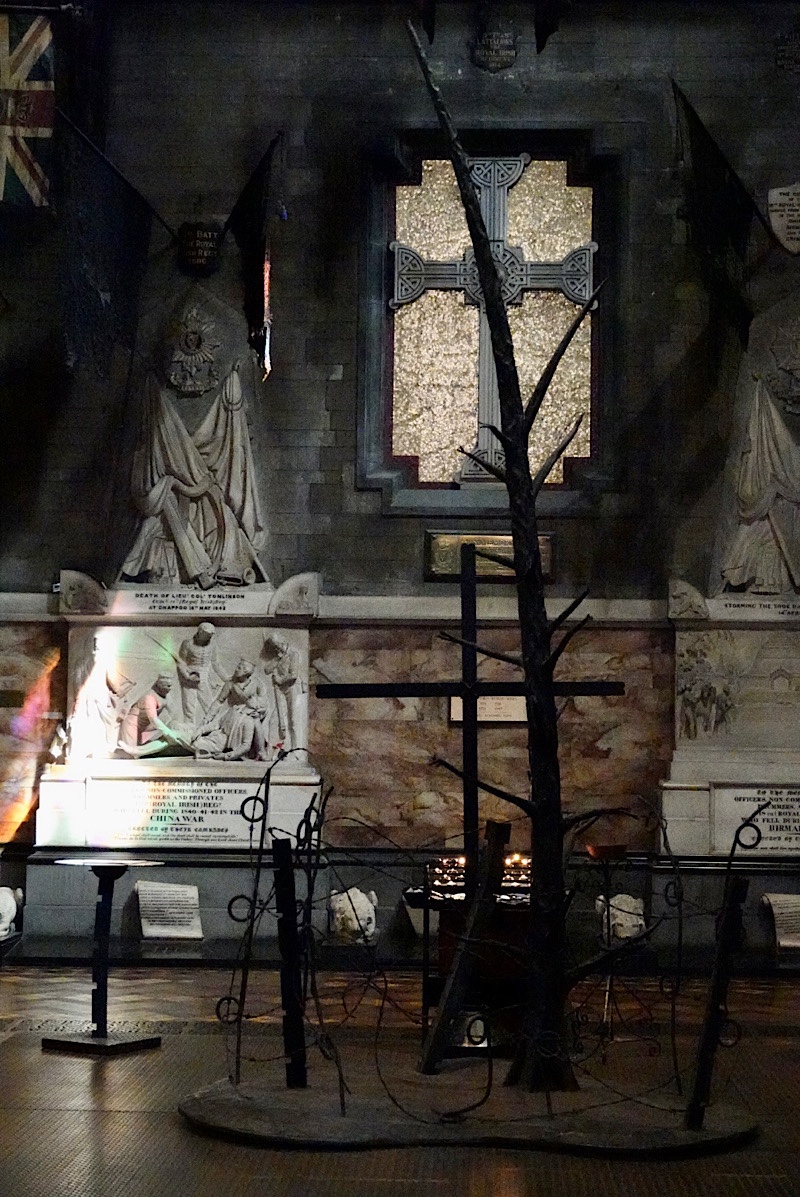
There is a quite unique memorial created in 2014 for the centenary of WWI in the shape of a steel tree. the intent was for people to add paper “leaves” in memory of fallen soldiers. No one expected that over 1 million leaves would be inscribed! As a result, the church is now looking for an eco-friendly alternative to all that paper, and the tree is currently bare. Mary did not know what had happened to all those paper leaves. There is also a book listing all those lost in war, with a different page displayed each day (exactly like the book in the Canadian parliament buildings in Ottawa).
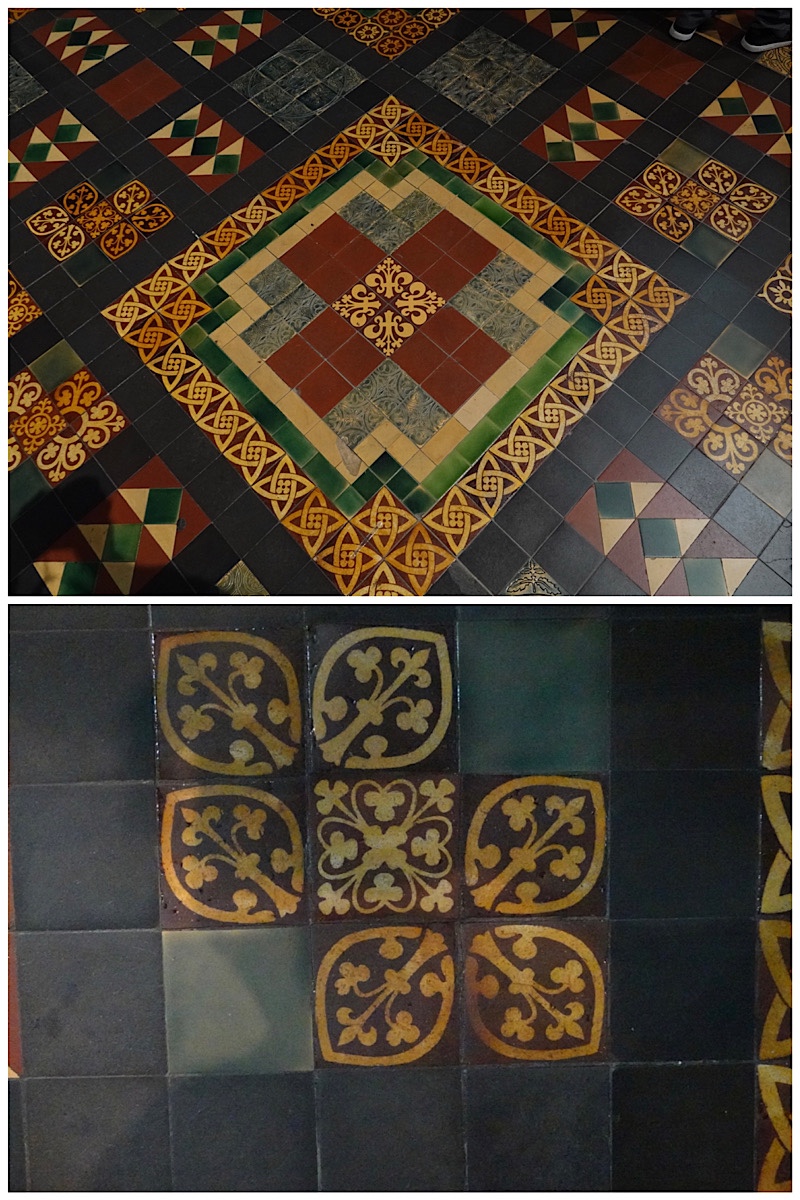
The cathedral’s floors are gorgeous, but not original. During Cromwell’s time, after destroying all the Catholic imagery, he stabled horses in the cathedral. The floors were eventually replaced in their original style by the Guinness family around 150 years ago, at which time Guinness also funded a complete renewal of the cathedral’s slate roof.All that beer money is evident throughout Dublin, notably in social housing (originally employee housing) and historic restorations.
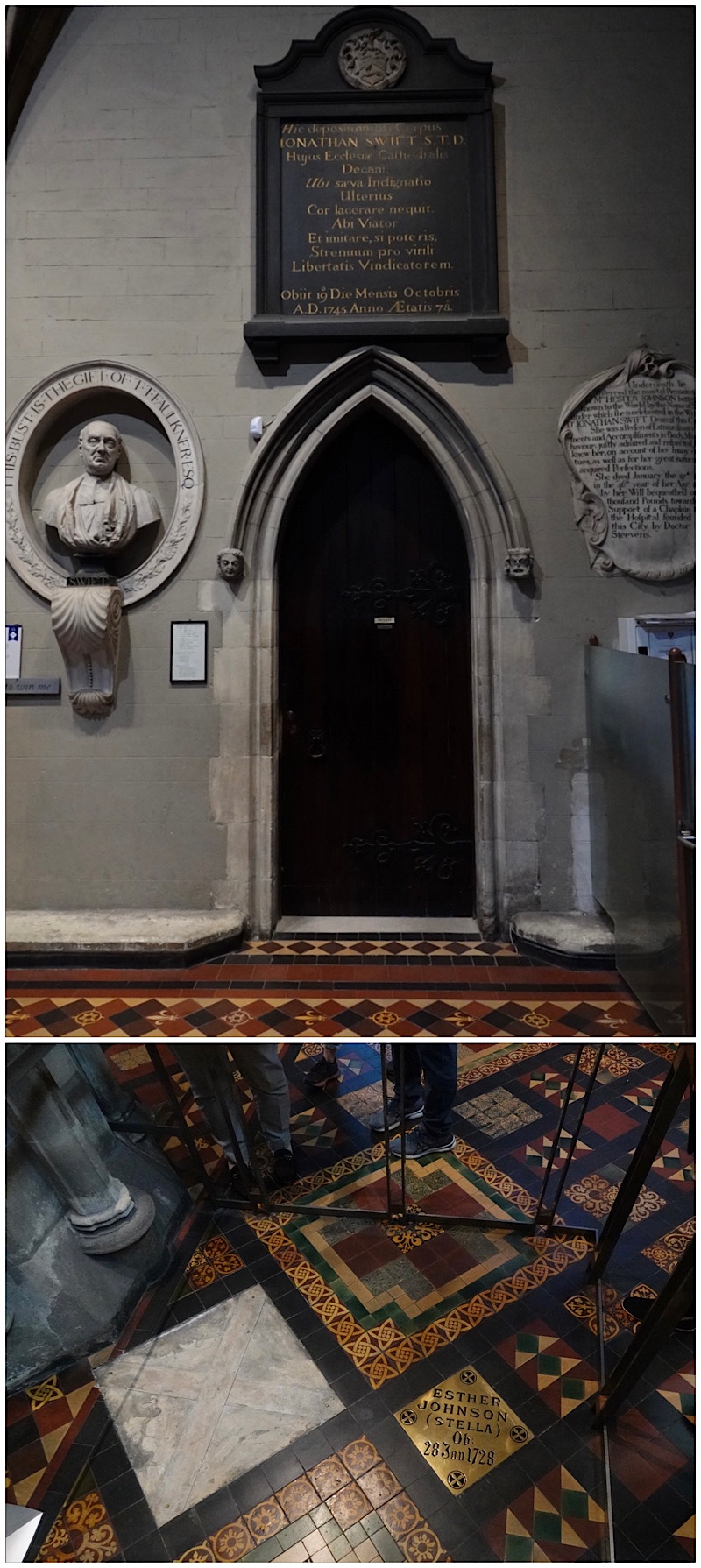
Jonathan Swift, author of Gulliver’s Travels, is buried here. The Irish satirist served as probably the most famous Dean of St.Patrick’s.
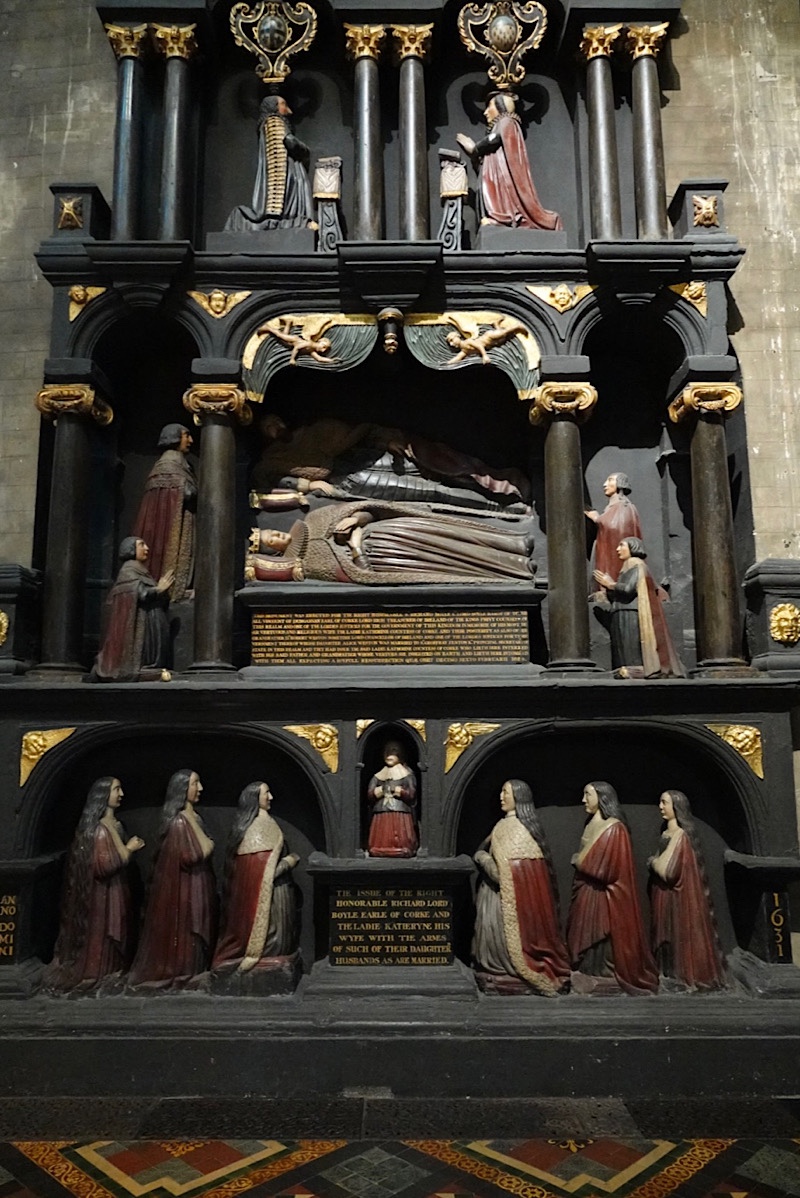
The most impressive monument in St. Patrick’s belongs to the wealthy English Boyle family, and was originally mounted, in 1632, directly behind the altar. Its four tiers now tower over the rear portion of the church.
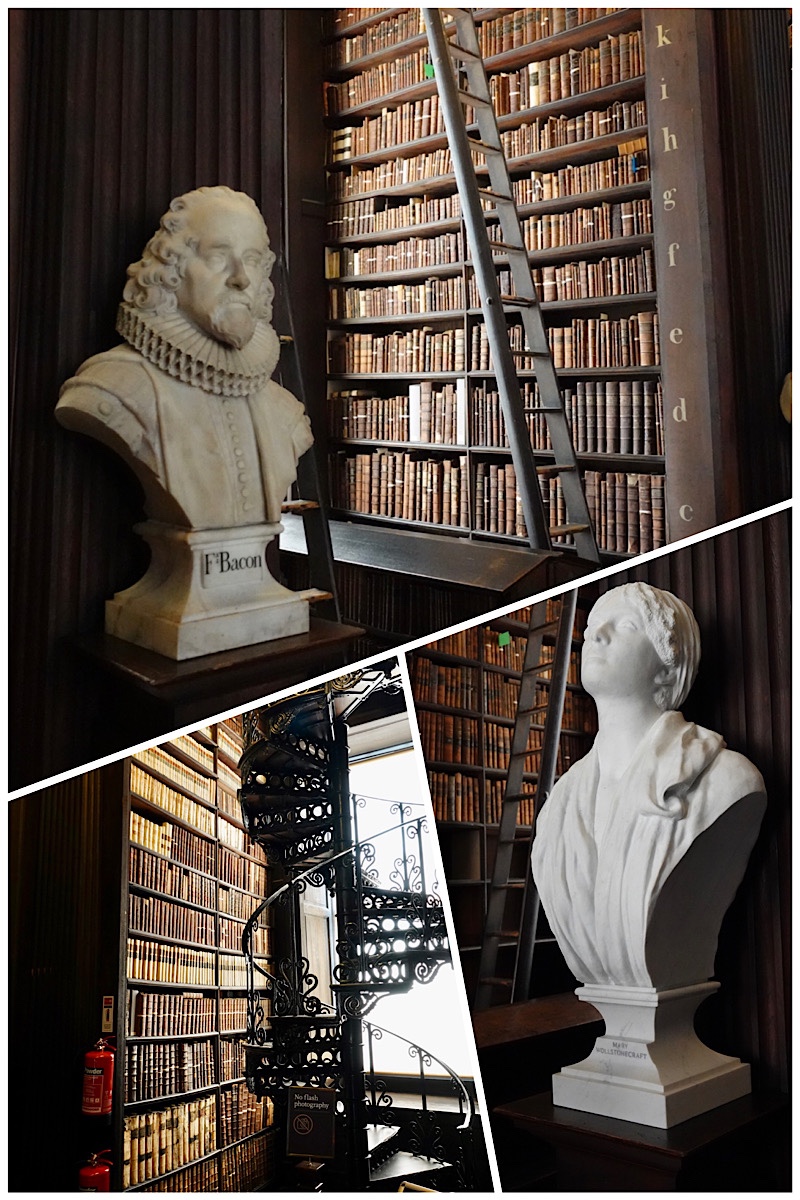
Our next stop was the Trinity College Old Library, to see The Book of Kells and the library’s famous “long room”.
A fellow traveller on this tour recommended How the Irish Saved Civilization: The Untold Story of Ireland’s Heroic Role from the Fall of Rome to the Rise of Medieval Europe, a non-fiction historical book written by Thomas Cahill, which focuses on, among other things, Saint Patrick, Saint Columba, and The Book of Kells. After today’s tour, I may just have to read it! Of course, like most western authors, Cahill defines “civilization” as western/Christian civilization, and ignores the rest of the world.
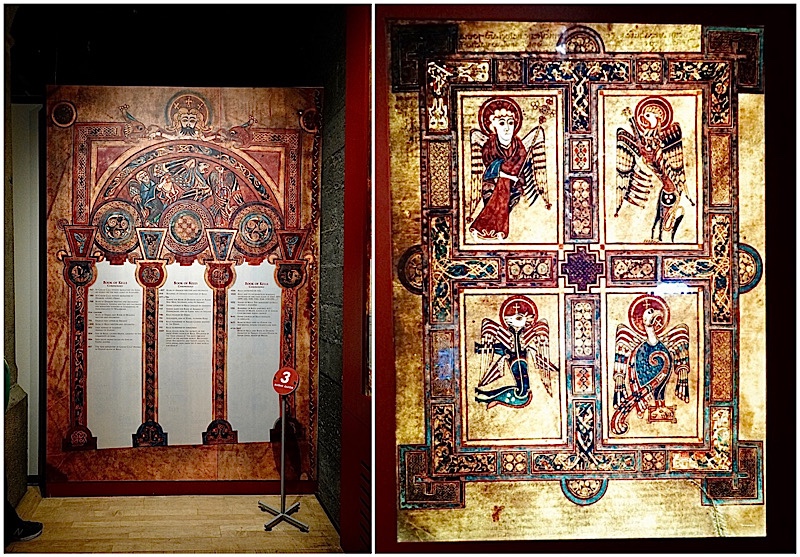


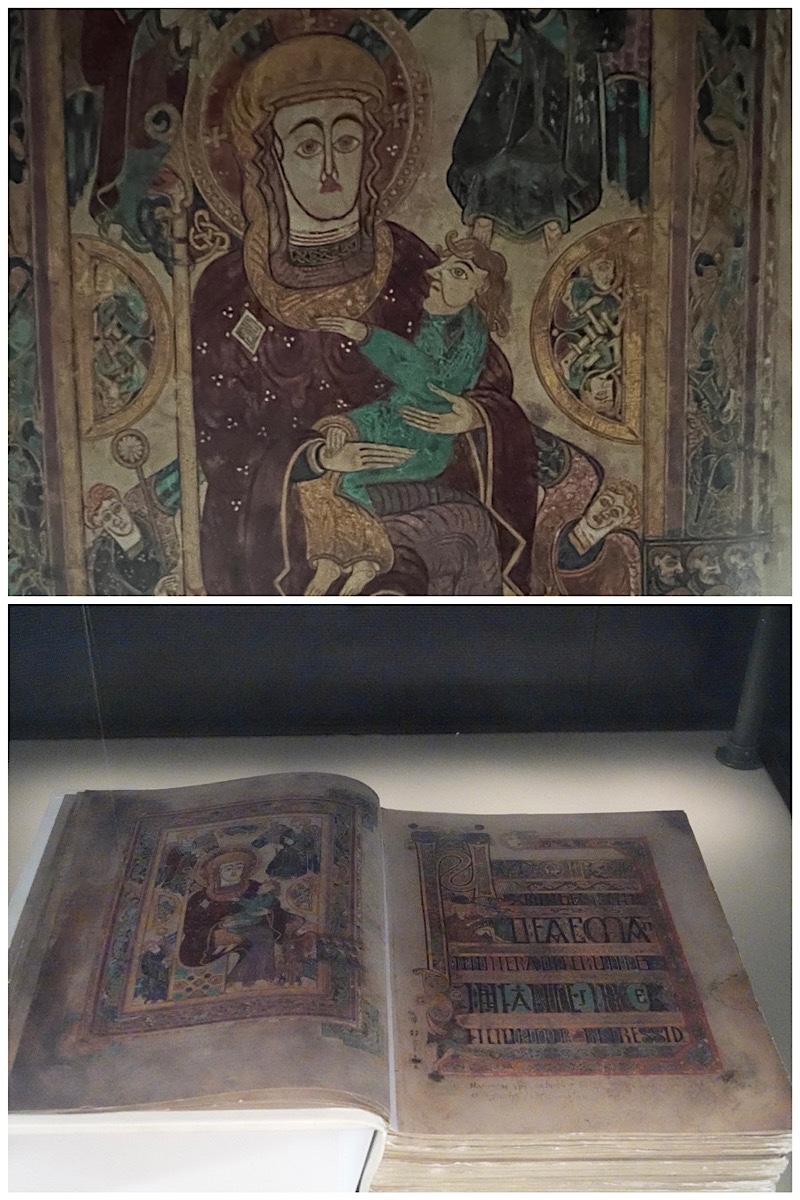
The Book itself, a stunningly illuminated 9th century Gospel, is definitely a wonder, but after seeing gorgeous religious manuscripts all over Europe, I was somewhat underwhelmed by what was on display: one open page from one of the gospels. Due to the thickness pf the vellum, the book was so heavy that it was broken into 4 pieces, and the book itself is only about 5 x 7. Photographs of the open page, even withoit flash, are strictly prohibited, but there was a facsimile in the library that we could take a picture of.
I have to admit to being more wowed by the library building, where portions of the Harry Potter movies were filmed (although that’s certainly not it’s real claim to fame!) The library is Ireland’s equivalent of the U.S. Library of Congress, in that it houses a copy of every book published in Ireland. Over 7 million volumes are housed in its buildings, 6 of which are here on the Trinity College Campus.
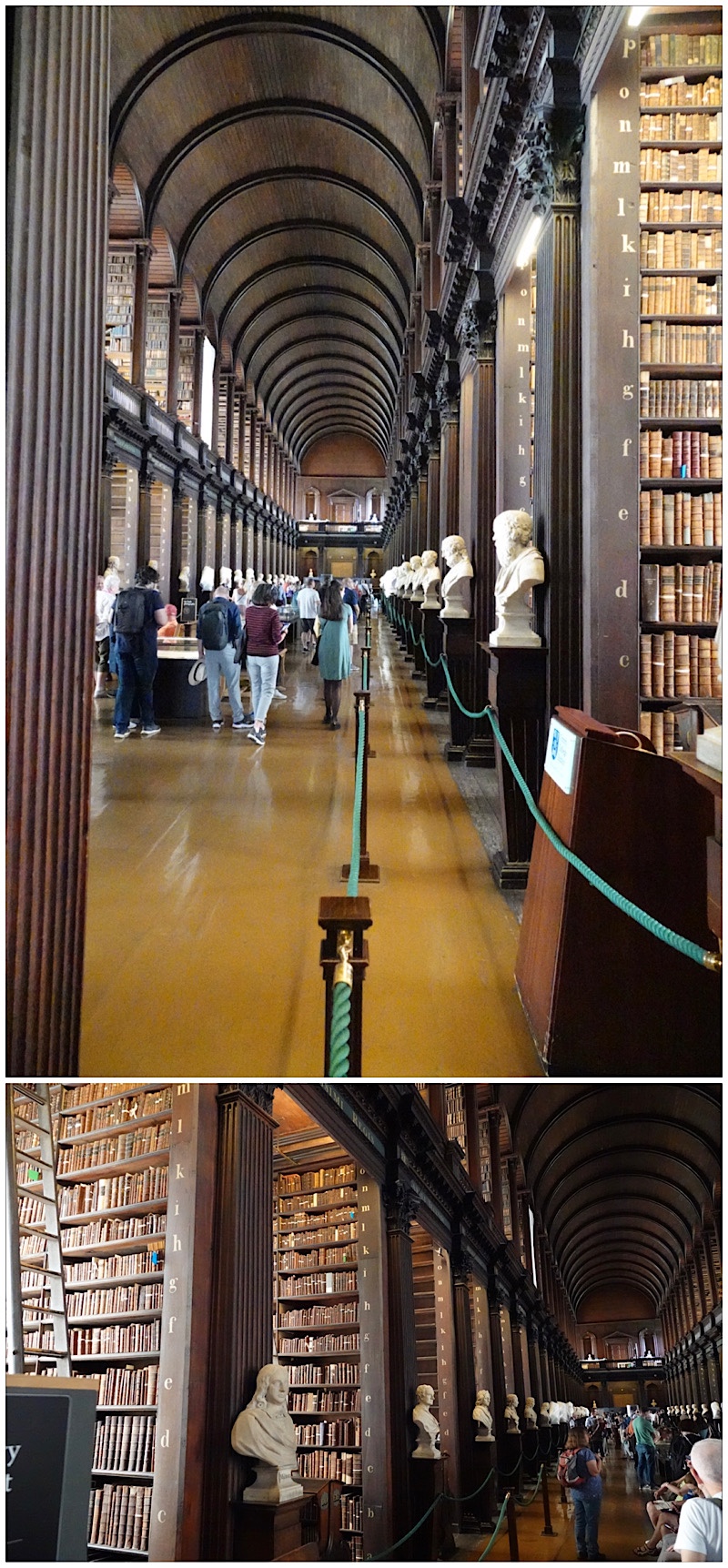
Of the 200,000 books shelved in the “long room” alone, we only saw about 25%. By next week, they will all have been carefully removed and catalogued for cleaning, and the library closed for much needed maintenance, so we were lucky to be able to seeing it at all!
The library also houses the Brian Boru harp, one of the three surviving medieval Gaelic harps, and a national symbol of Ireland.

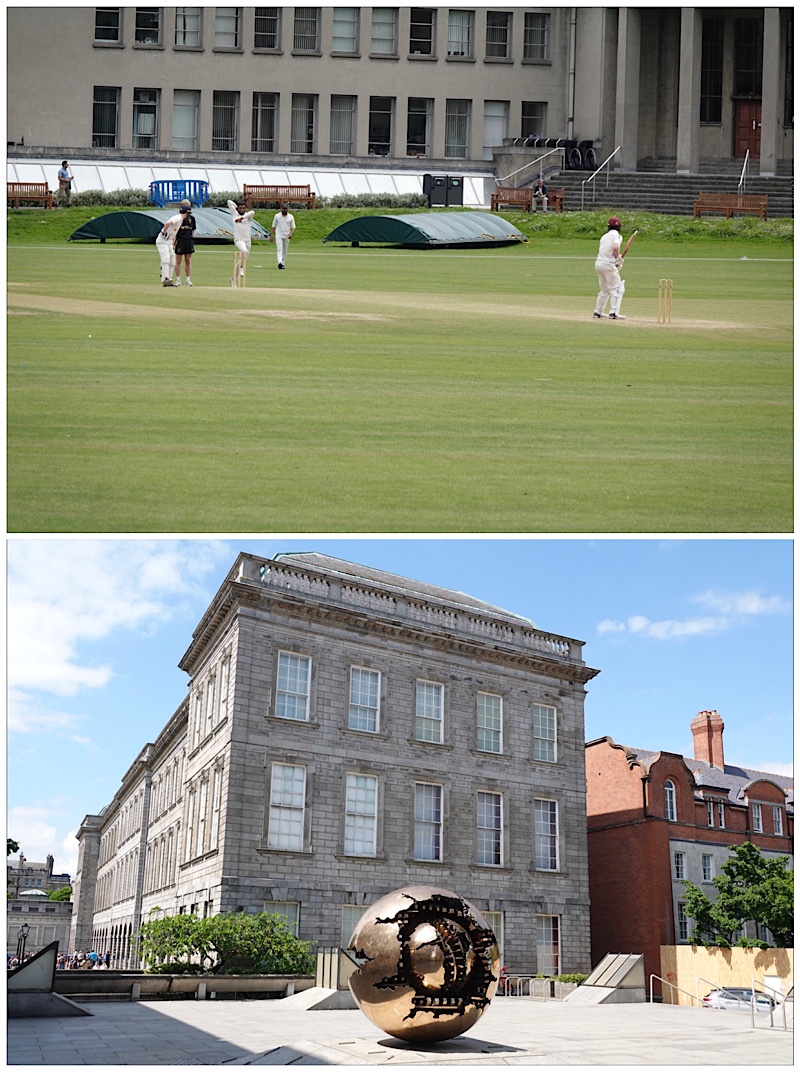
Leaving the library, we caught part of a cricket game on the Trinity College pitch, and an interesting sculpture in one of the quadrangles.
We then had a free afternoon in which to explore downtown Dublin.
First, we passed by Leinster House, built in 1745–48, the seat of the Irish Free Parliament since 1922, was originally the home of the Duke of Leinster. It was initially called Kildare, but took on its current name in 1766 when the Earl of Kildare was made Duke of Leister. After 1815, when the house was sold to the Royal Dublin Society, it was expanded with two large wings to house the National Museum and National Gallery of Ireland. There have been several further expansions for parliamentary offices, but the central building retains its original appearance. While the museum and gallery are open to the public, Leinster House and its grounds were not.

We next took a walk around Merrion Square, one of Dublin’s Georgian parks. One of our world cruise friends suggested we pay special attention to the Georgian doors on buildings here in Dublin, and they certainly are imposing.

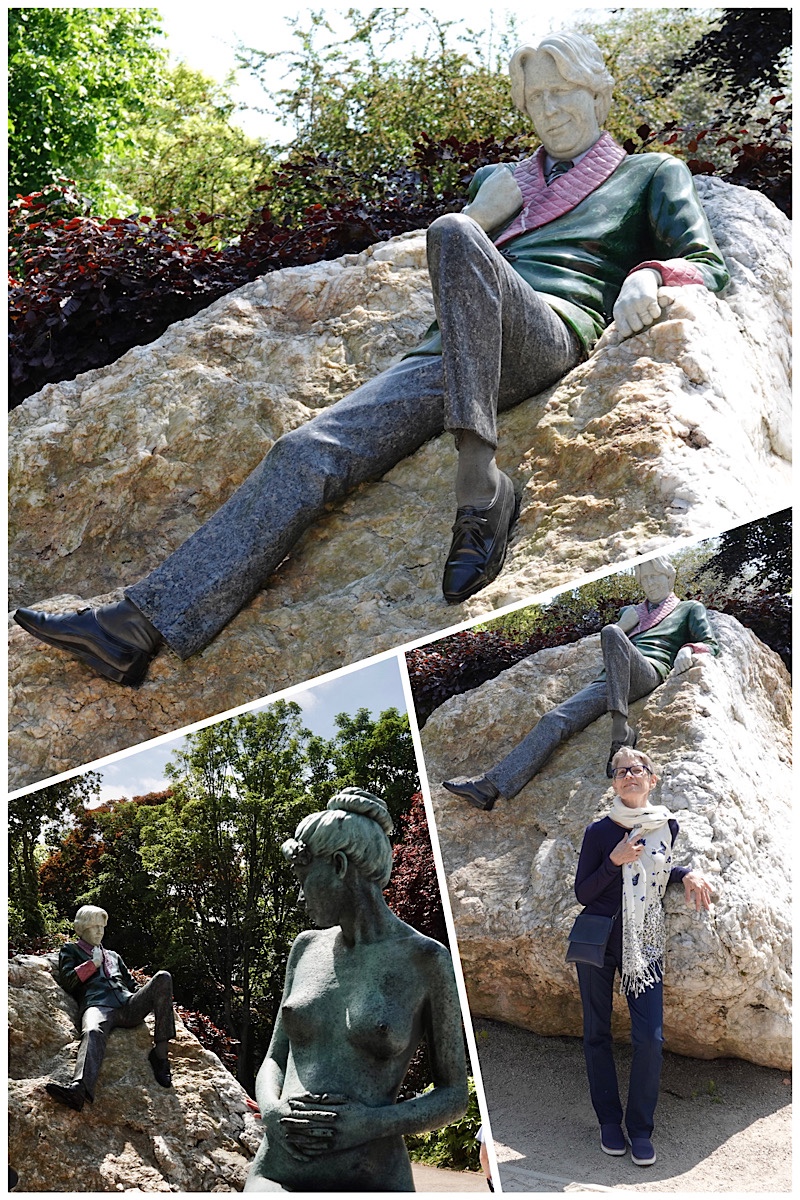
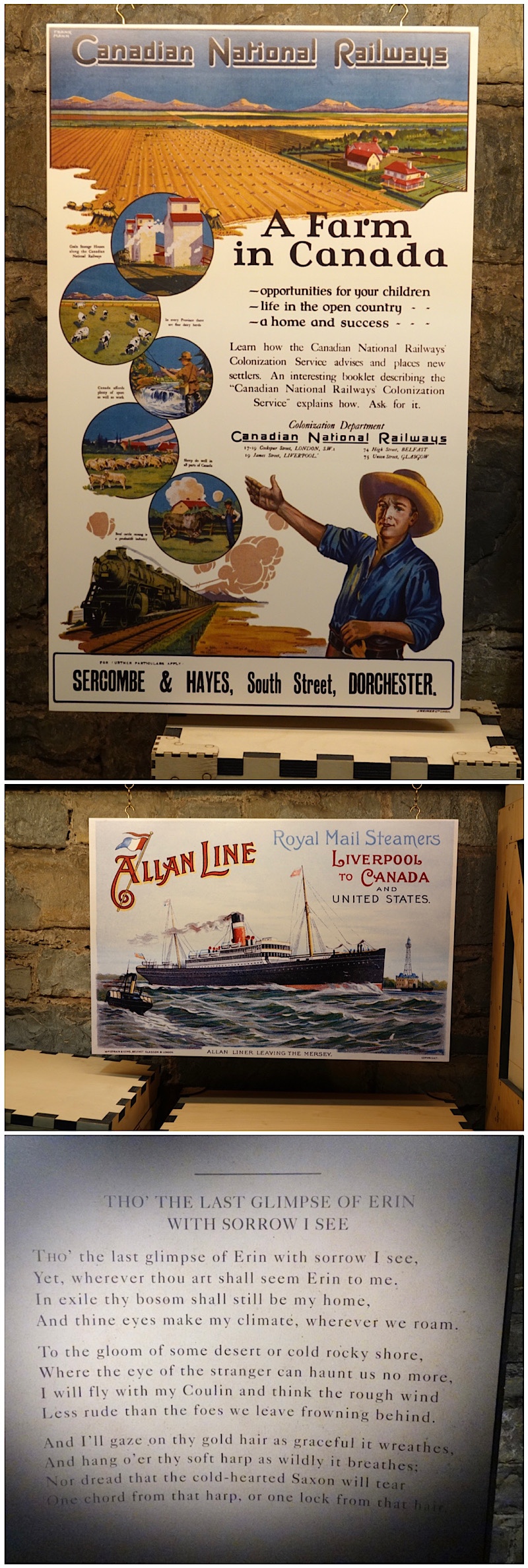
One corner of Merrion Square features a colourful statue of a lounging Oscar Wilde, along with a couple of plinths into which a few of his famous sayings are inscribed. His home is also on the square, and open as a museum, but we didn’t tour it because we wanted to visit the Irish Emigration Museum, EPIC.
Ted and I visited Pier 21 in Halifax, the port through which many Irish immigrants came to Canada, so visiting EPIC allowed us to learn about the beginning of their journey.

The museum is a really wonderful learning centre, comprised of 20 large exhibits which are each treated like a “destination” on a passport which you can stamp after enjoying the exhibit.

We were familiar with the mass emigration during the potato famine in the 1800’s (which is likely the reason for Ted’s maternal great grandmother Bridget Ryan leaving Ireland for Canada), but less familiar with the events of the 1600’s when Irish families were forced out by the English (much like what happened in Scotland when land was “redistributed” to English noblemen and soldiers); the 1700’s when Irish “criminals” were sent to penal colonies in Australia and the Caribbean; the wave of emigration in 1950 due to an economic collapse; or the large number of Irish who left their country during “the troubles” in the 1970’s and 80’s. The museum also touched on the many infants born to unwed mothers who were “sold” to families overseas by the Magdalene Laundries run in Catholic convents.
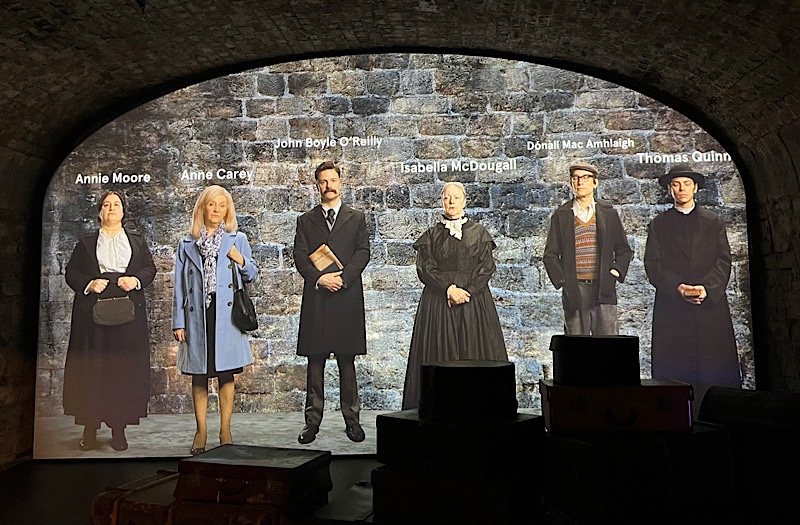
It’s probably obvious, but there are far more Irish spread around the world than are in Ireland. The Republic of Ireland has a population of only 5 million, with almost 1/3 of those living in Dublin; worldwide about 70 million people claim Irish heritage!
After all that learning, we quenched our thirst with a couple of half pints of Guinness in a local pub, and then returned to our hotel to change for dinner.

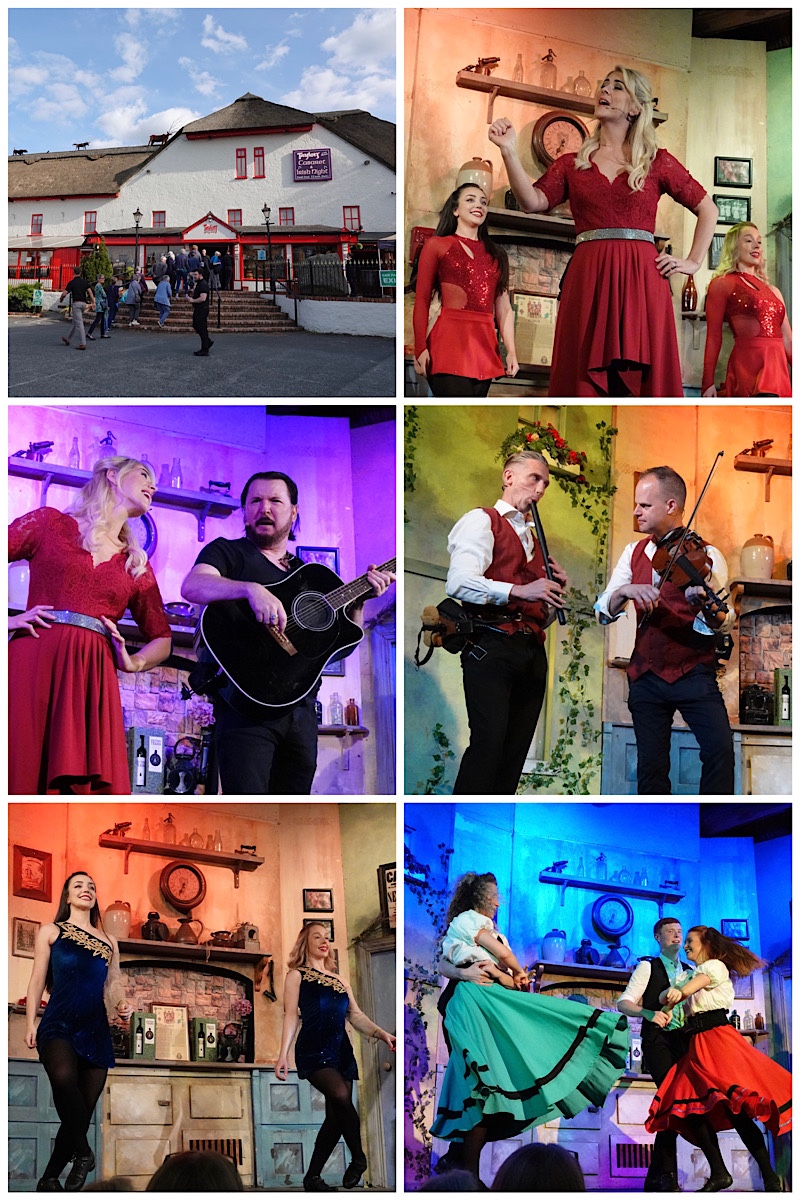
And what a great evening it was! We were taken to Taylors Three Rock for dinner and a fabulous stage show filled with song and dance. Before the show we had a 3-course dinner that finished with apple cake and Irish Coffee. Then, for over an hour we were treated to a spectacular show. Headlining as vocalists were Rob Vickers (who played Jean Valjean in the 25th anniversary version of Les Miserables in London’s West End) and Susan McFadden of Celtic Woman.
The dance was provided by 6 members from the touring casts of River Dance and Lord of the Dance who are now the venue’s in-house dance troupe. In addition, there was a fabulous piper, and a traditional fiddler.
It was a really full, fun day. Tomorrow we check out of our hotel and head to Waterford.
 Rose and Ted’s Excellent Adventure
What a fabulous experience!
LikeLiked by 1 person
Enjoyed this post Rose. Enjoy your trip and we look forward to seeing your next posts. Hola to Ted as well. Ann and Vern
LikeLiked by 1 person
Well, Rose, I could not find the damn tile mistake…. But I tried!
Sounds like you had a very interesting day. I am proud to be one of those 70 million, as you know. Even though I can find nothing about what went on before that potato famine migration – or prior to 1842. But, you never know…
So glad you are enjoying the “homeland”.
Domhnach sona, a chara.
B.
LikeLiked by 1 person