We (okay, I) tend to associate Greece with ancient Greek history – the Parthenon and Acropolis immediately spring to mind – but here in Heraklion there are much more recent and yet still incredibly old structures to explore, the largest of which are the city’s fortifications.
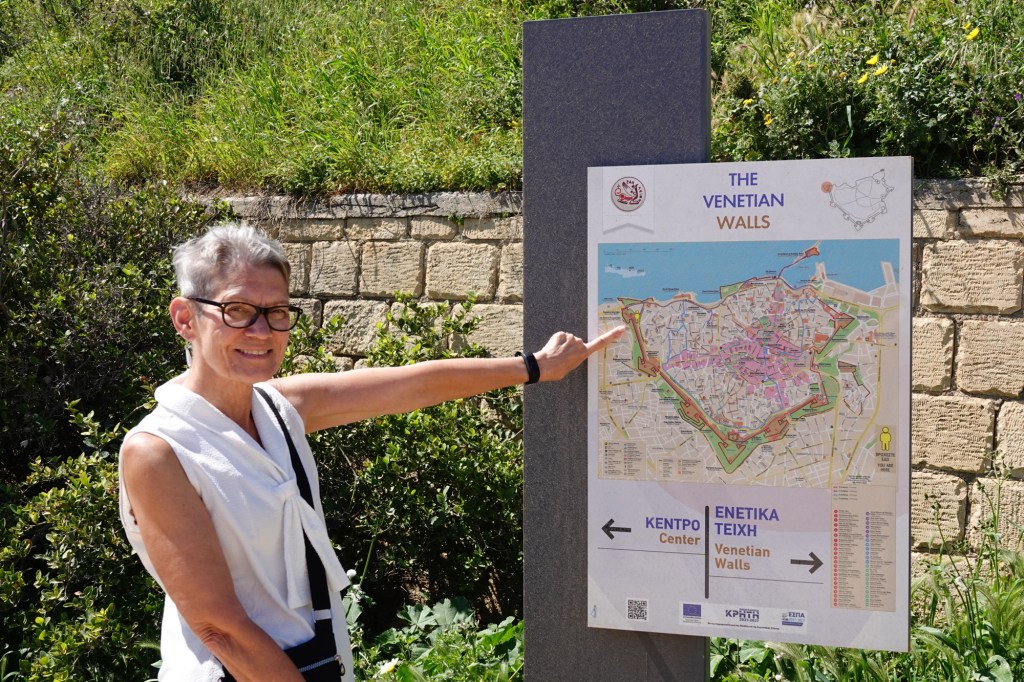
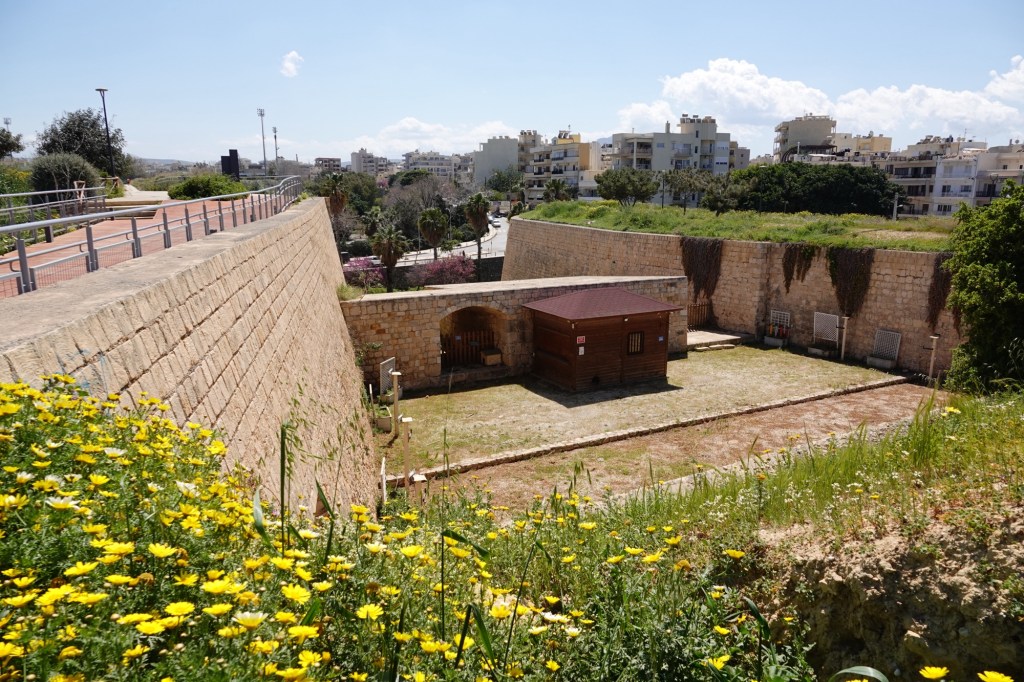
Heraklion’s series of defensive walls, originally built of unbaked bricks in the Middle Ages (late 8th century century) by the Byzantine Empire, were more recently (a relative term here in Europe) rebuilt by the Venetians between 1462 and 1562 CE, a century-long project.
Half a millennium later those walls remain mostly intact. They withstood a 21 year siege by the Ottomans before the Venetians finally surrendered and left in 1669CE, and were only significantly damaged through bombing by the Germans in WWII. Fortunately, the decision was made to repair the walls instead of demolishing them.
These walls qualify Heraklion as one of the best fortified cities in the Mediterranean, and one of the best preserved Venetian fortifications in Europe.
On what is Orthodox Good Friday here, and a reasonably quiet day, we decided to walk half of the wall.
Mike, who along with Kristy is the reception team at Kipos Suites, is enthusiastically passionate about his city, and gave us all kinds of advice and information about walking the wall.
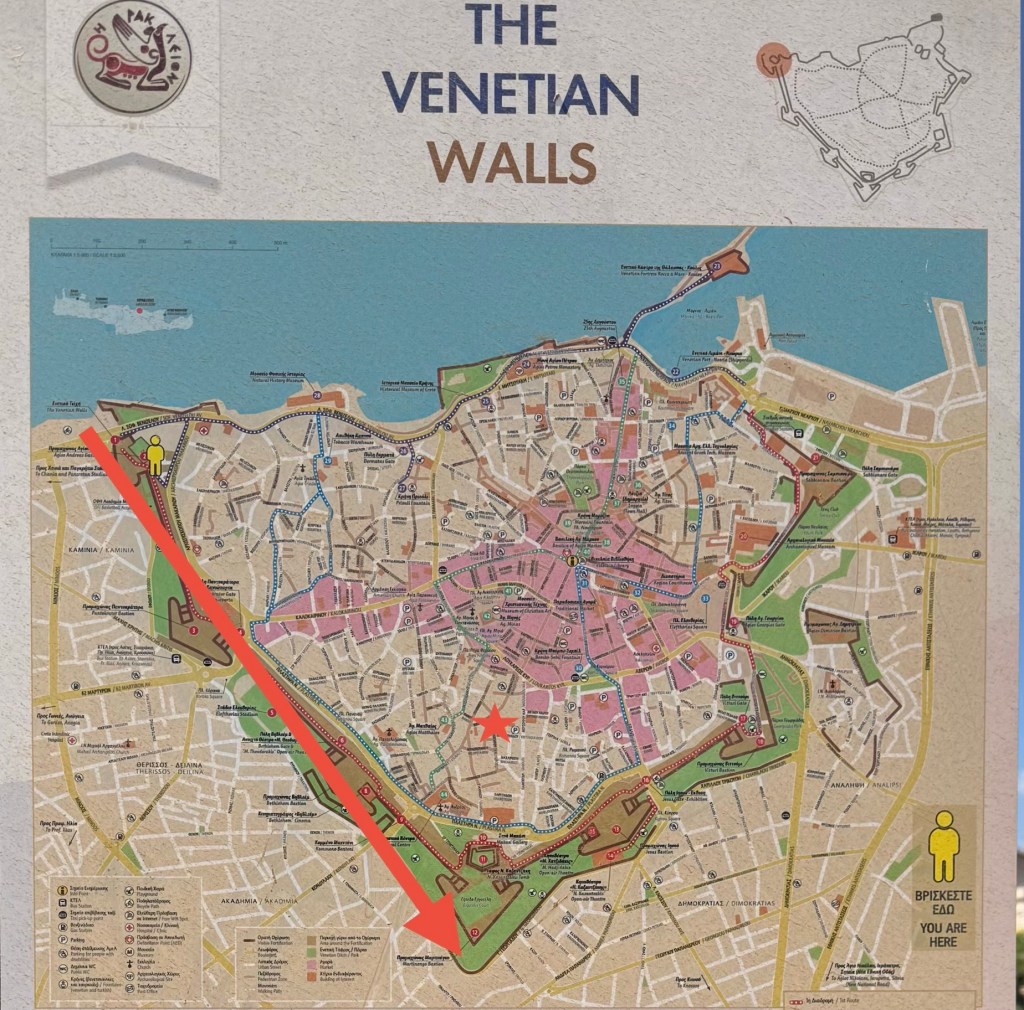
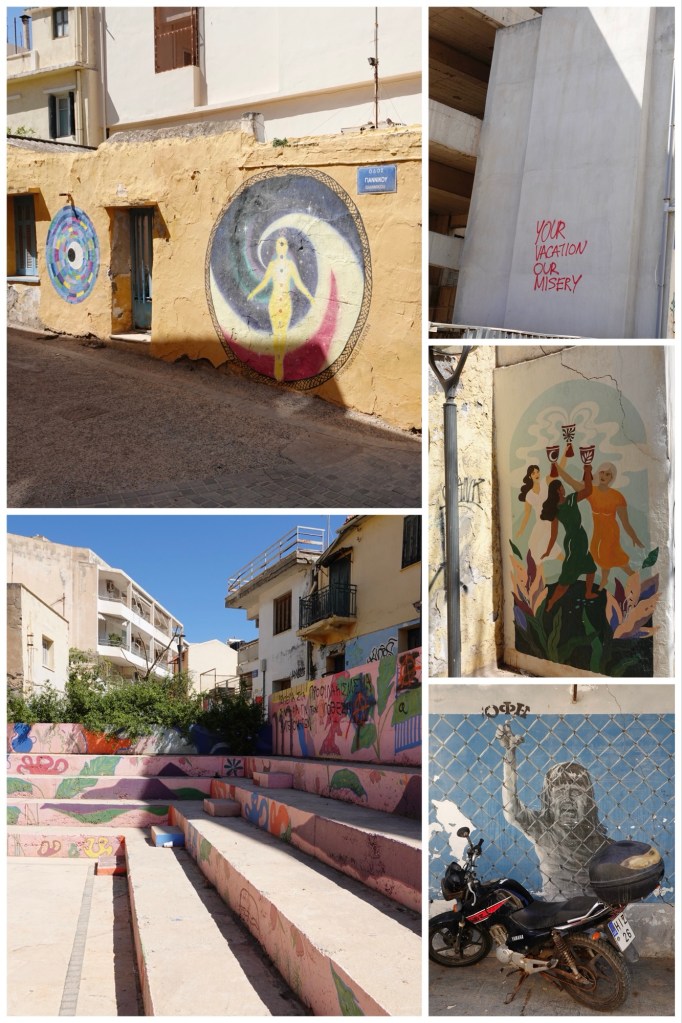
En route to our starting point, more street art and graffiti.
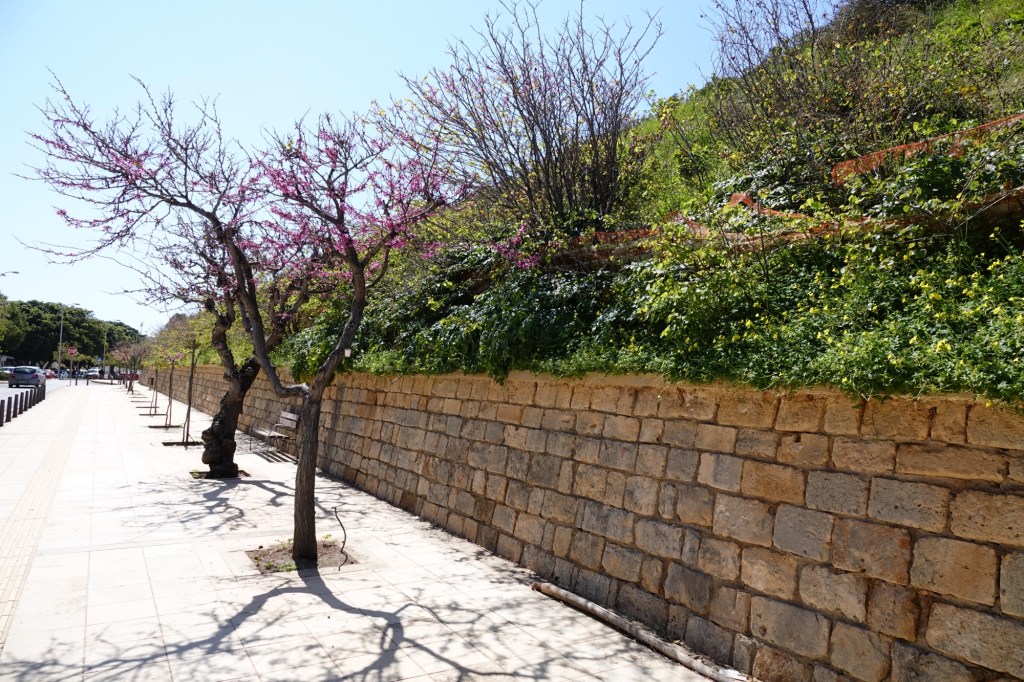
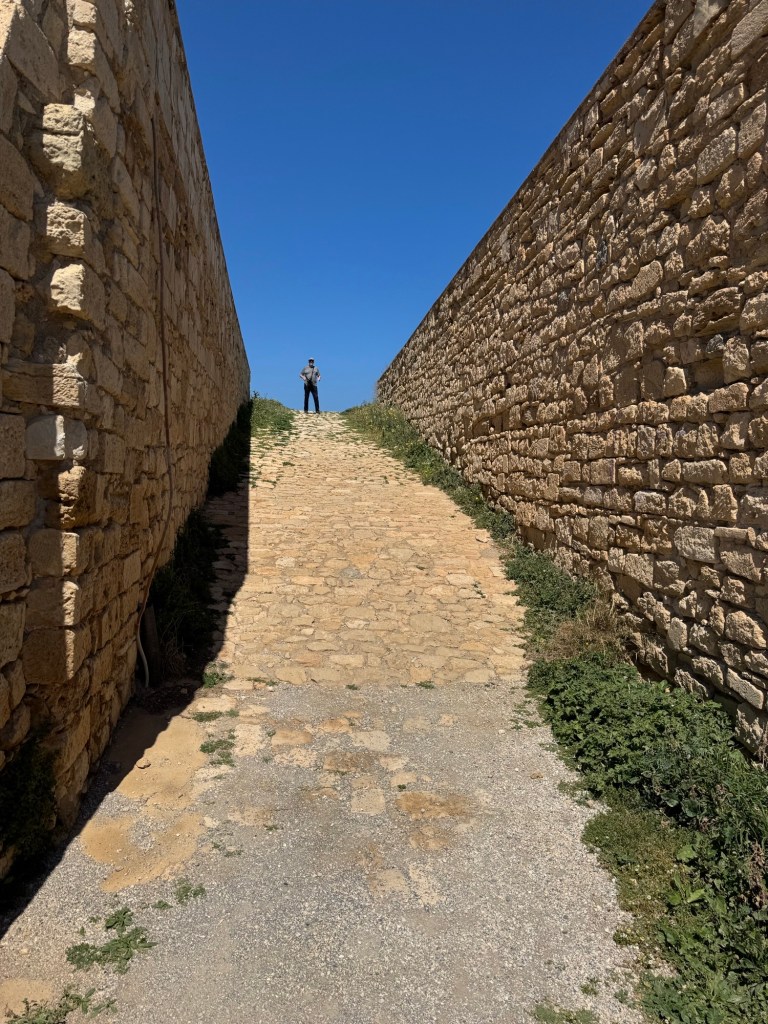
Imagine just walking this route to the grocery store every day and taking it for granted.
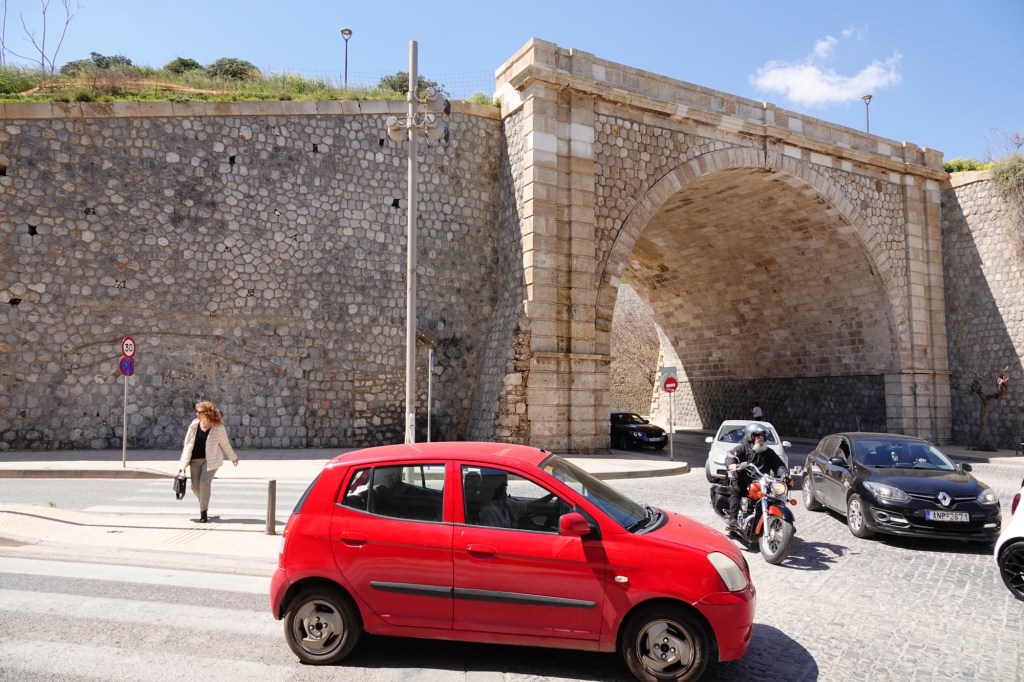
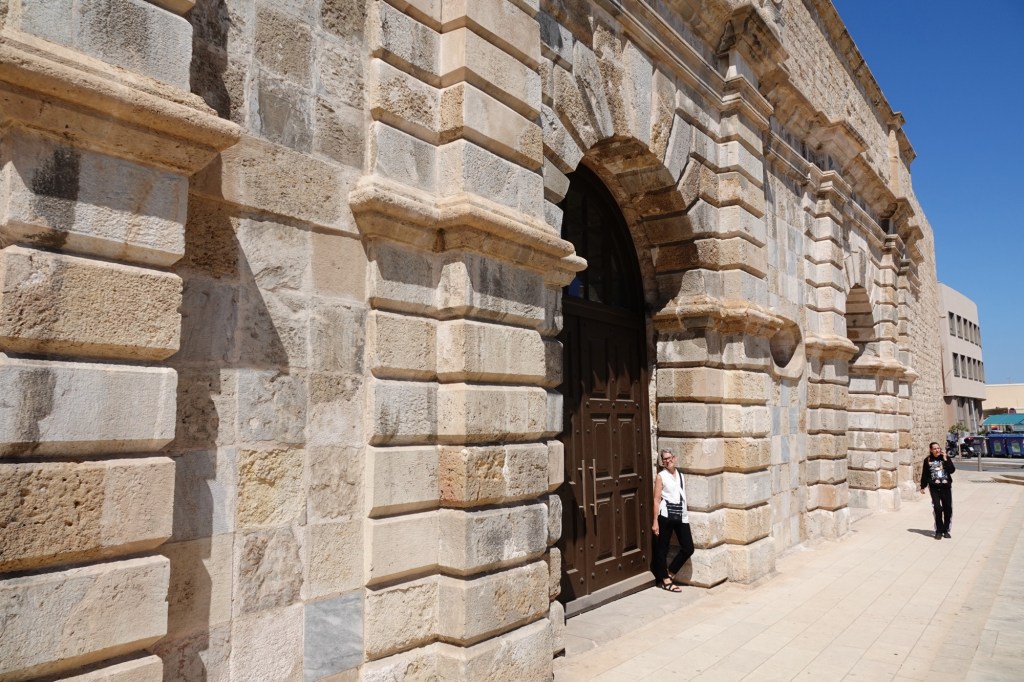
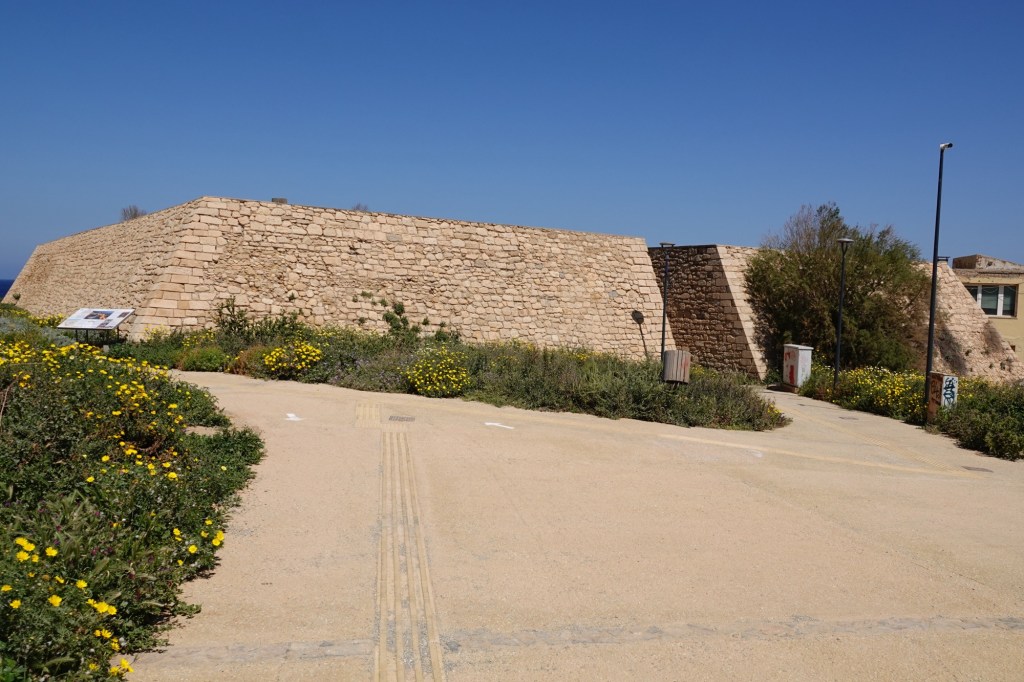
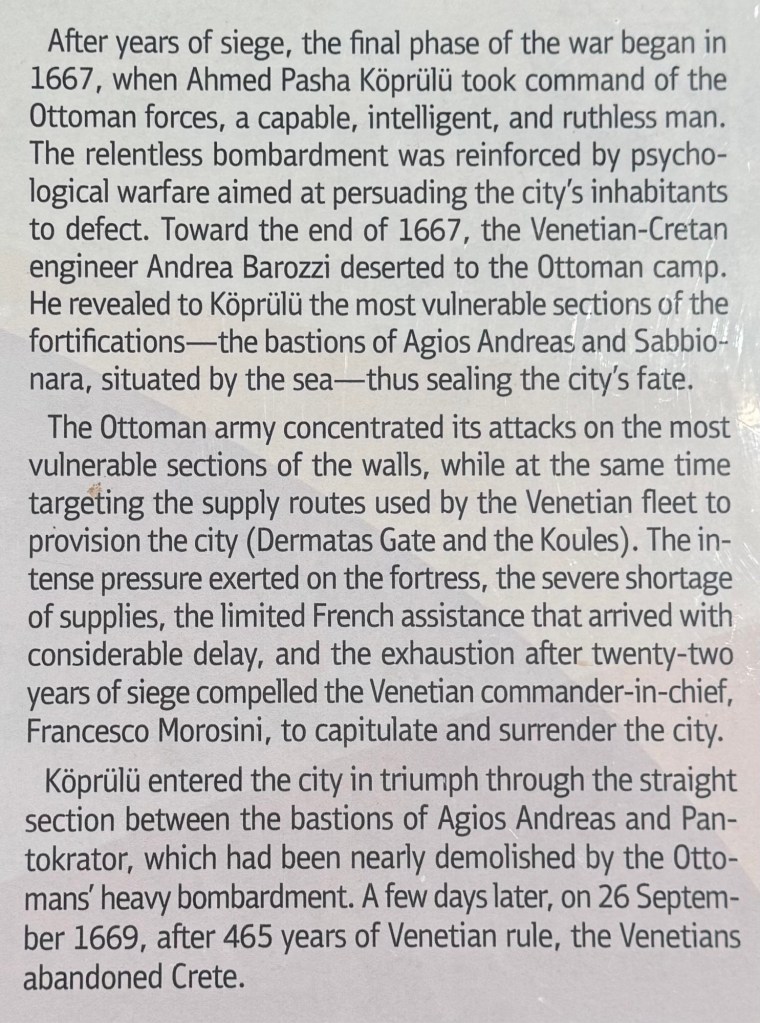
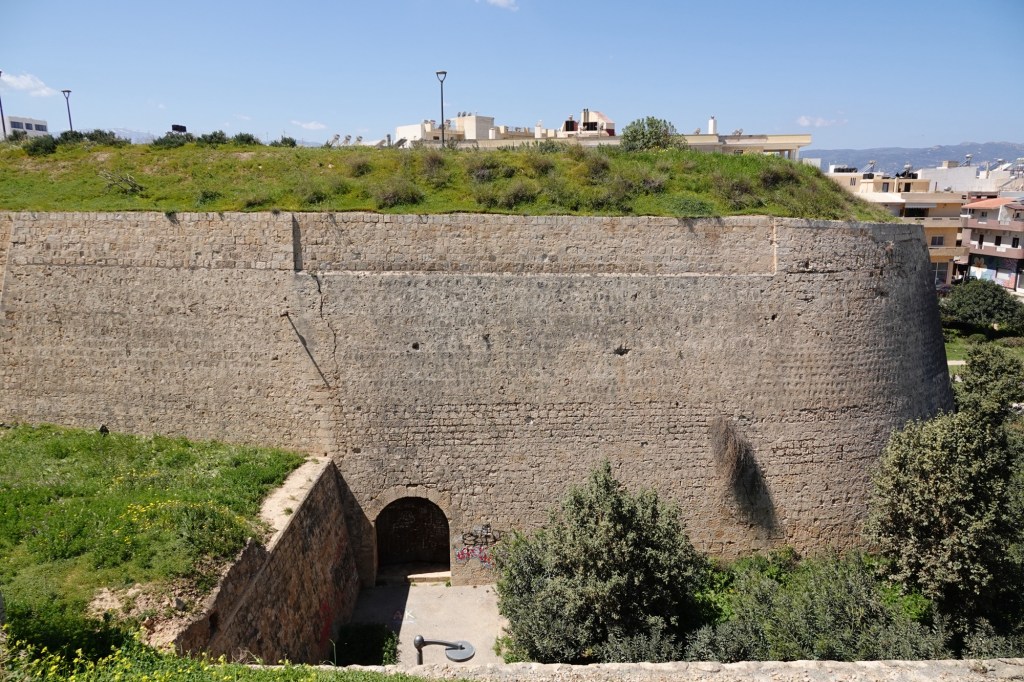
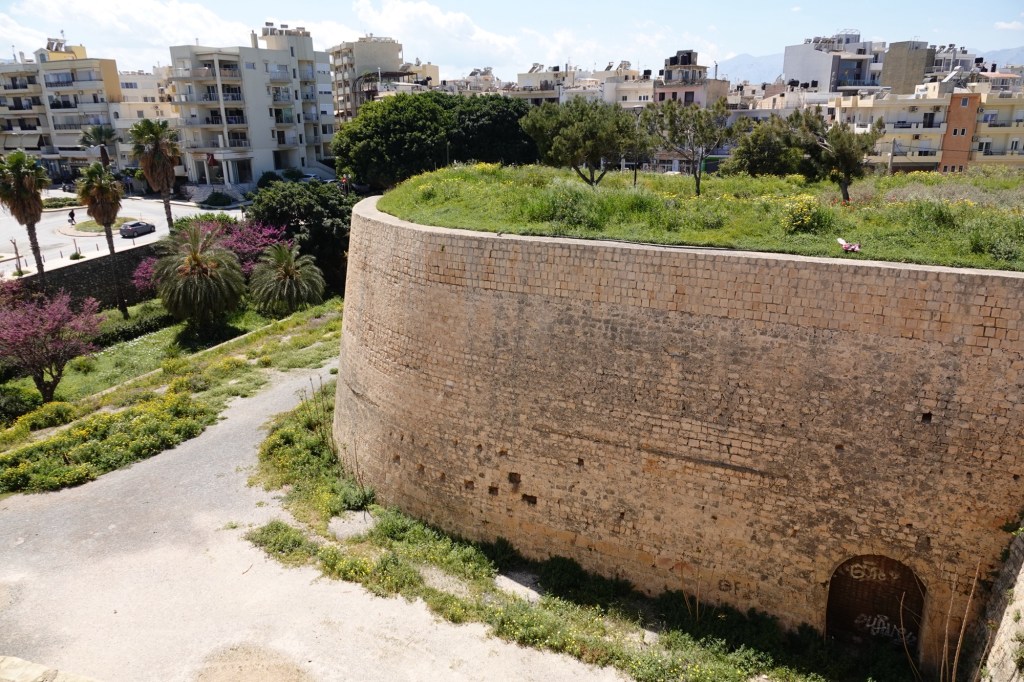
As sturdy as those bastion looks, it was apparently the weakest point in the Venetian defences when the Ottomans attacked.
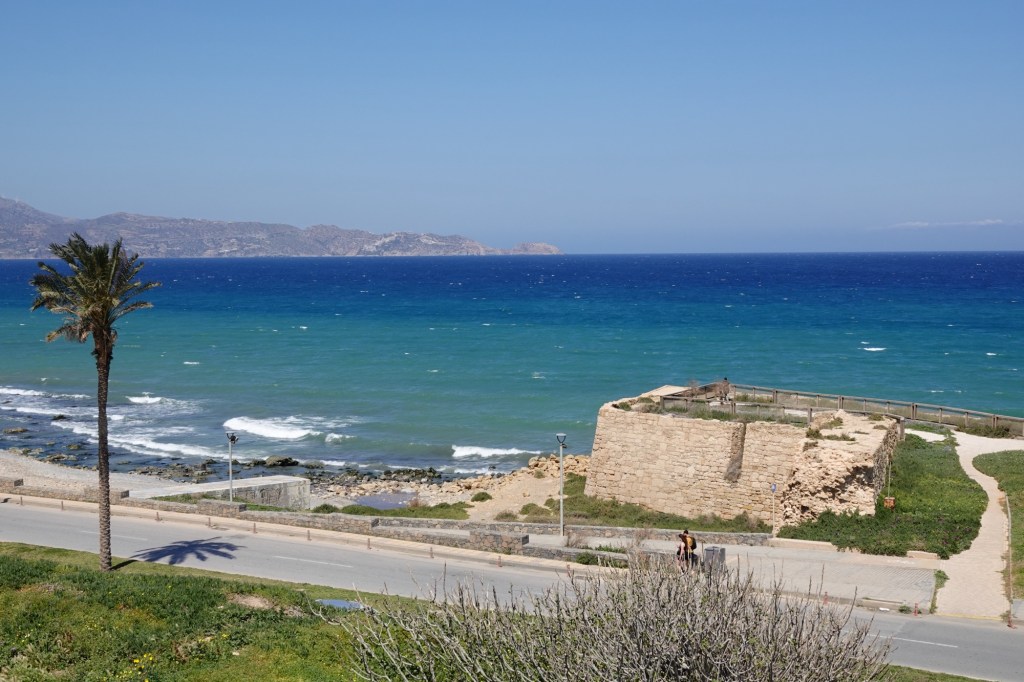
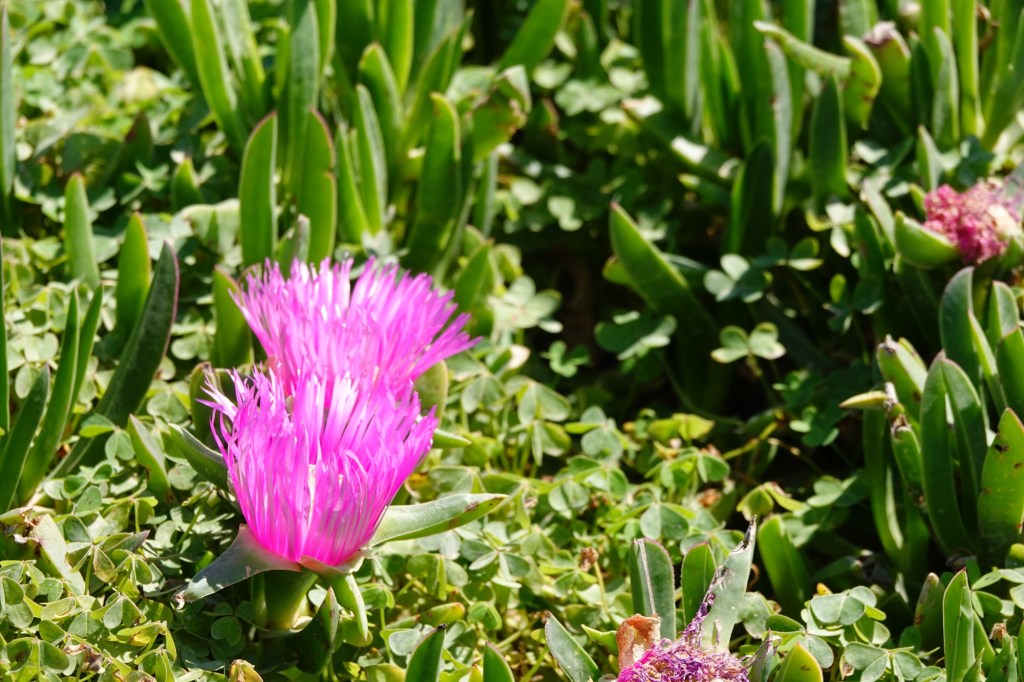
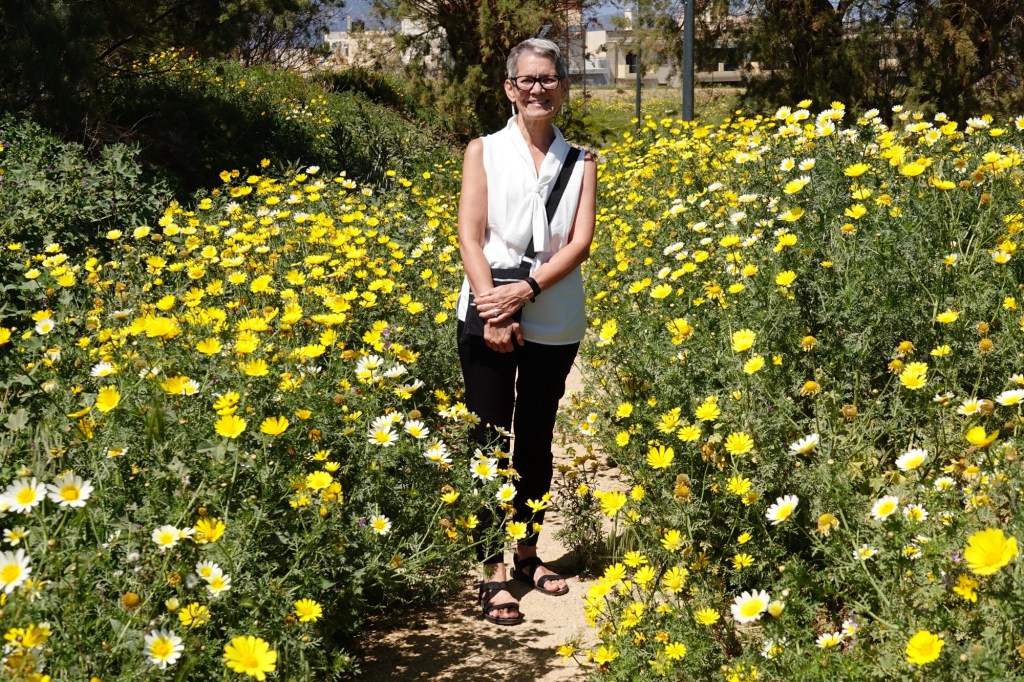
There were lush wildflowers all along the top of the wall, and abutting each bastions’ walls.
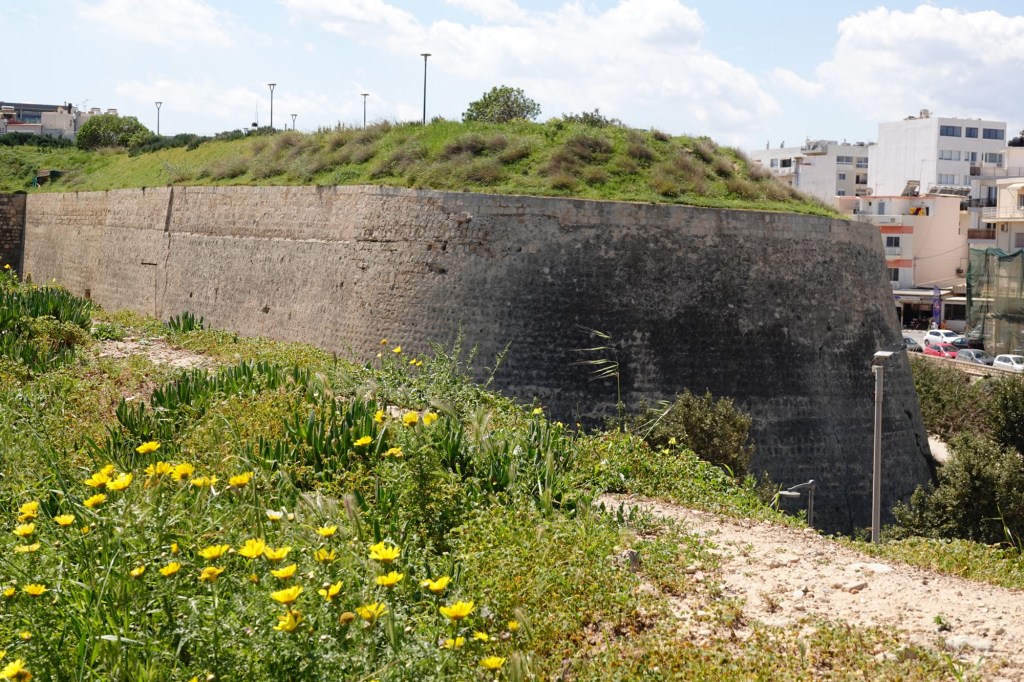
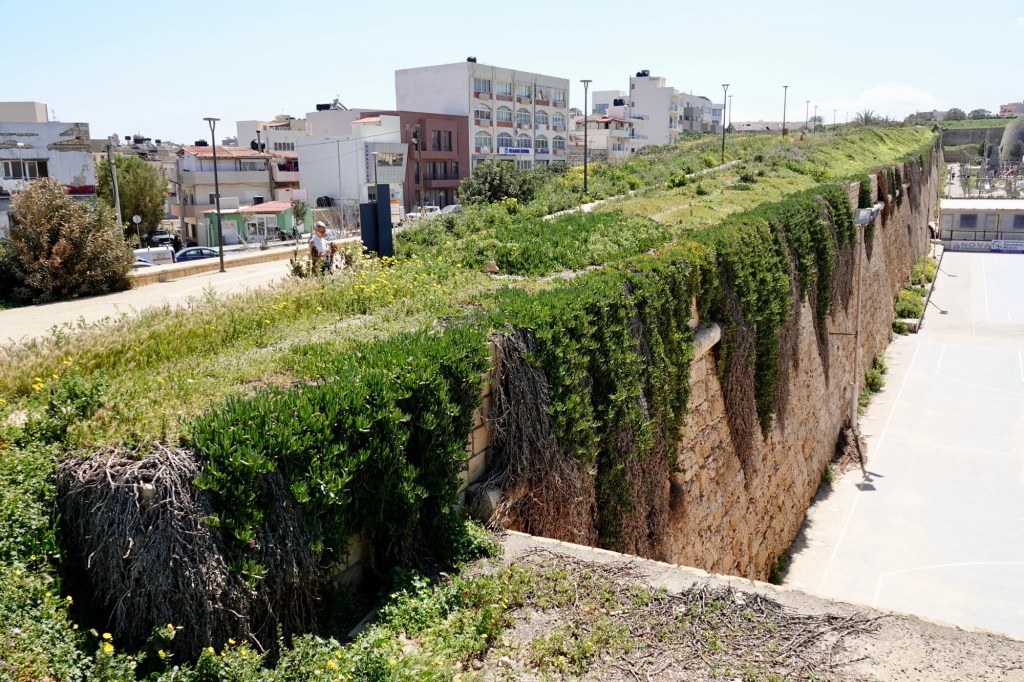
We reached the Pantokrator Bastion next. Each bastion has an access gate, but those are down at street level.
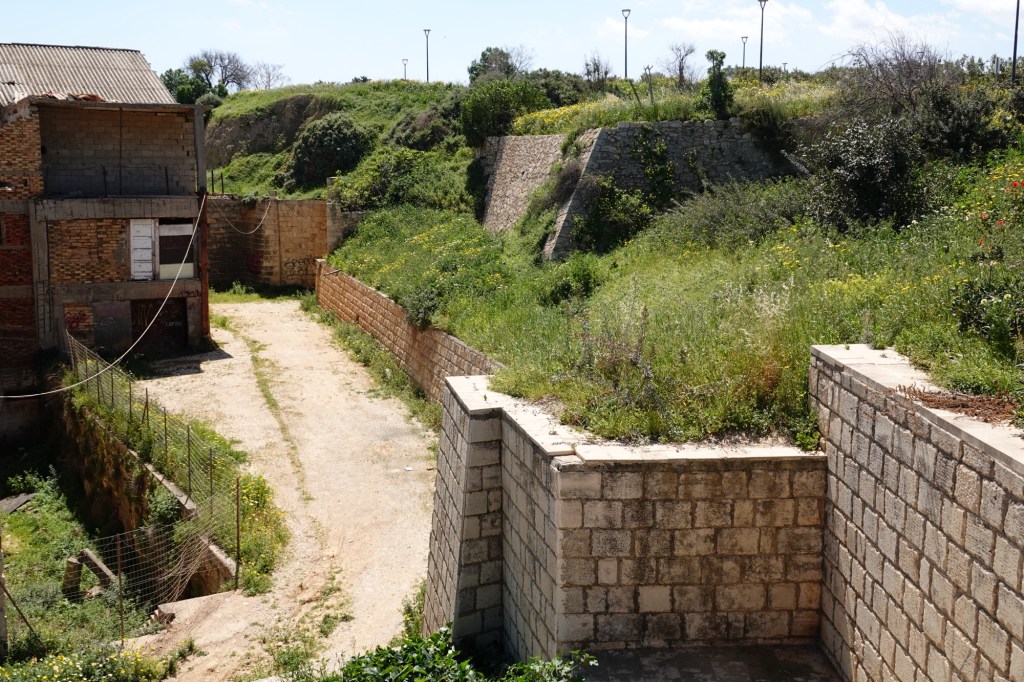
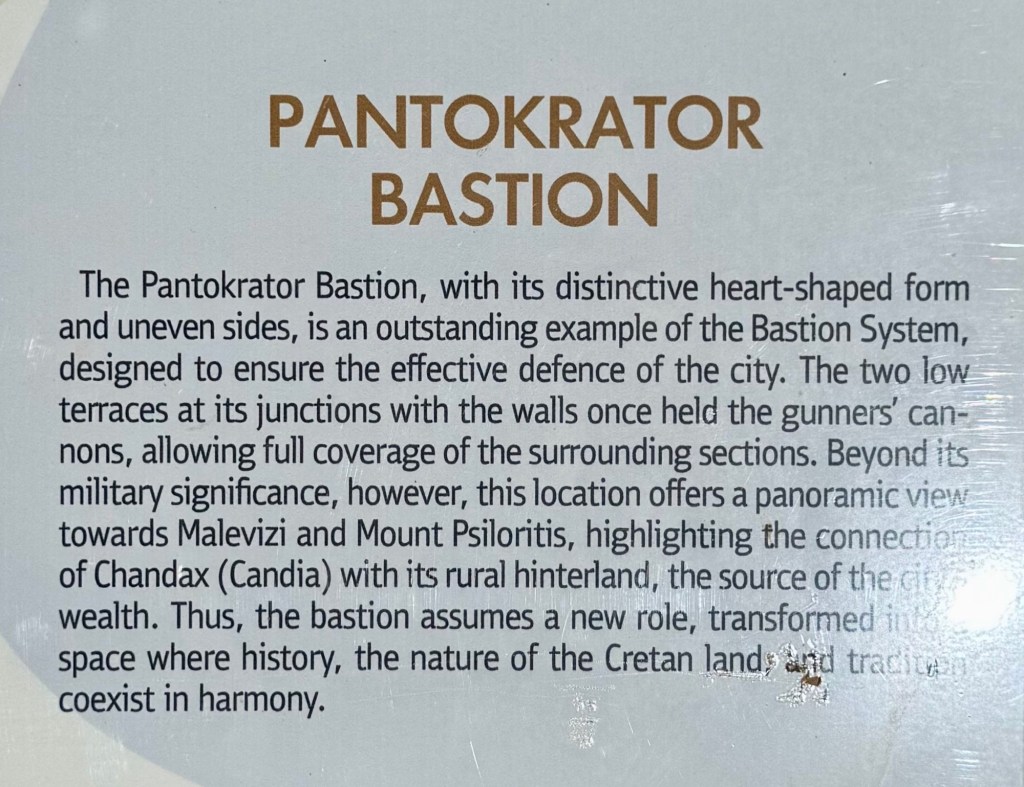
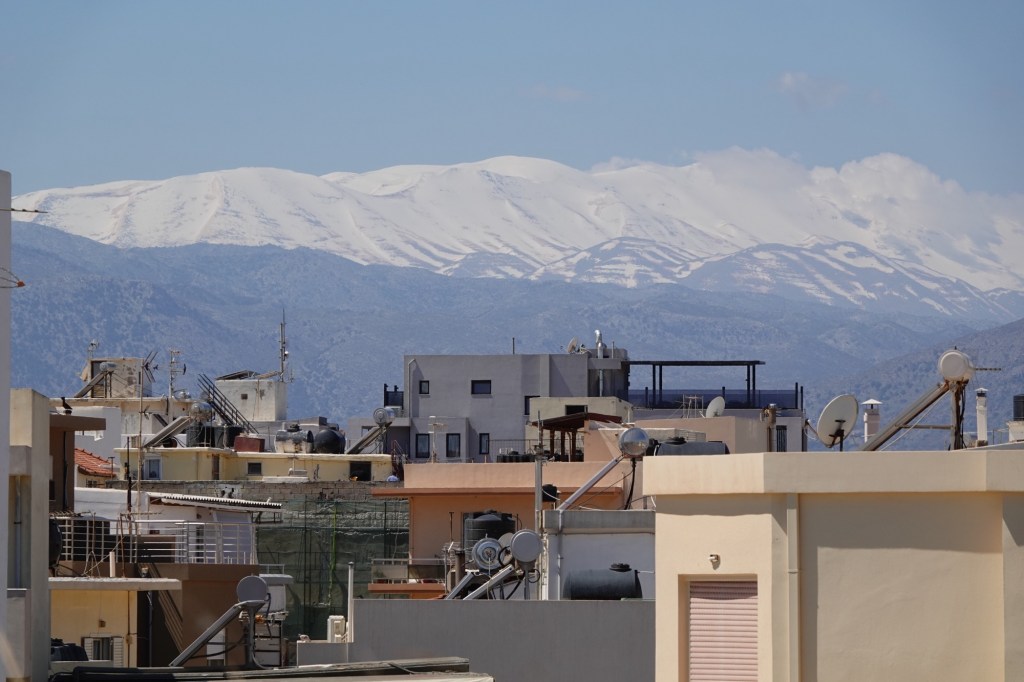
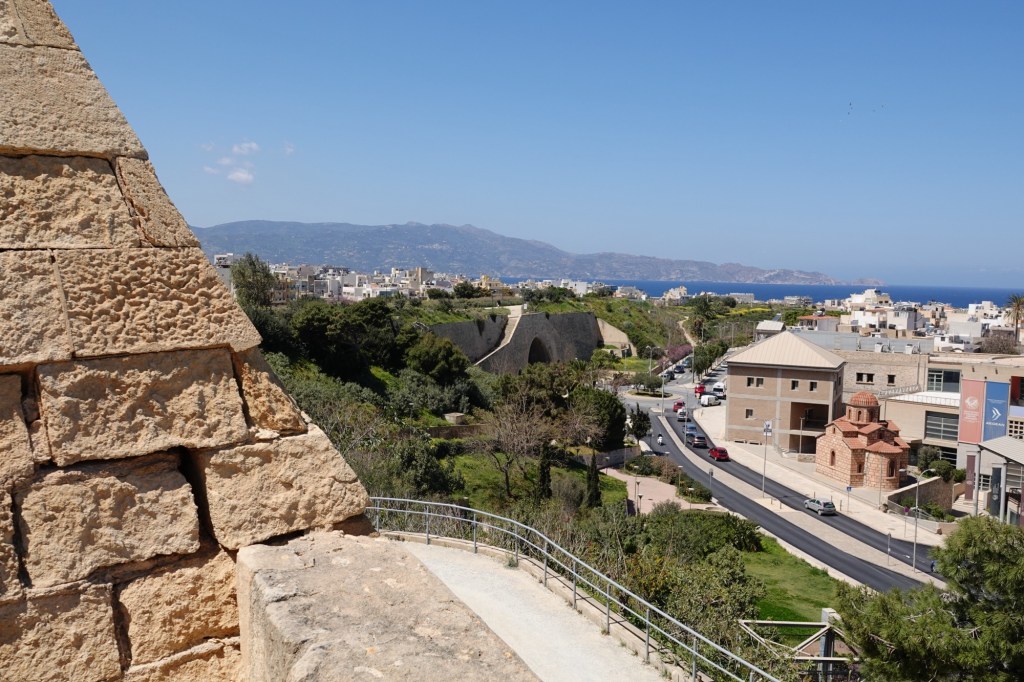
We got an amazing view of Crete’s highest mountain, Mount Ida (Mt Psiloritis) still covered in snow. I’d been convinced it must be sand, but no.
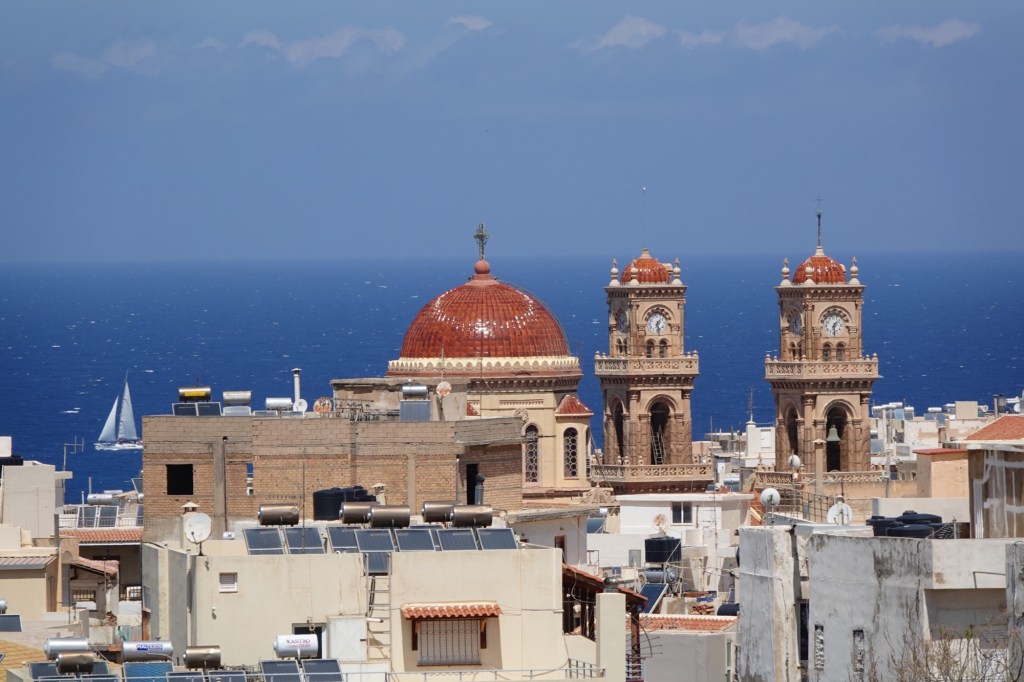
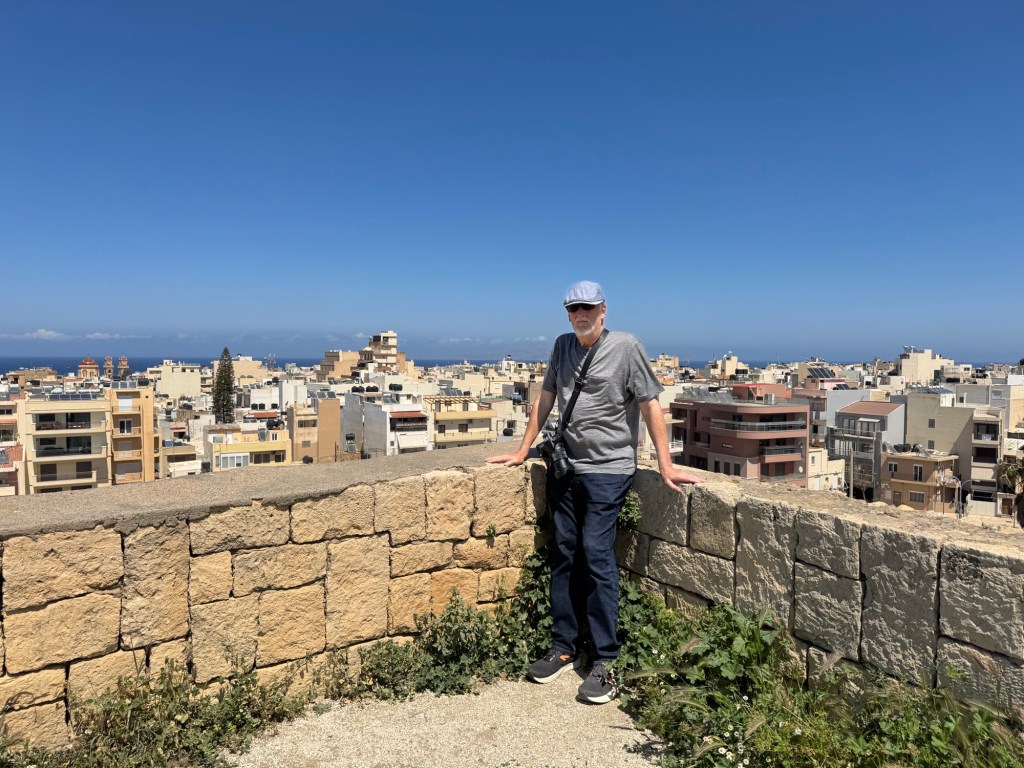
In the other direction, the city.
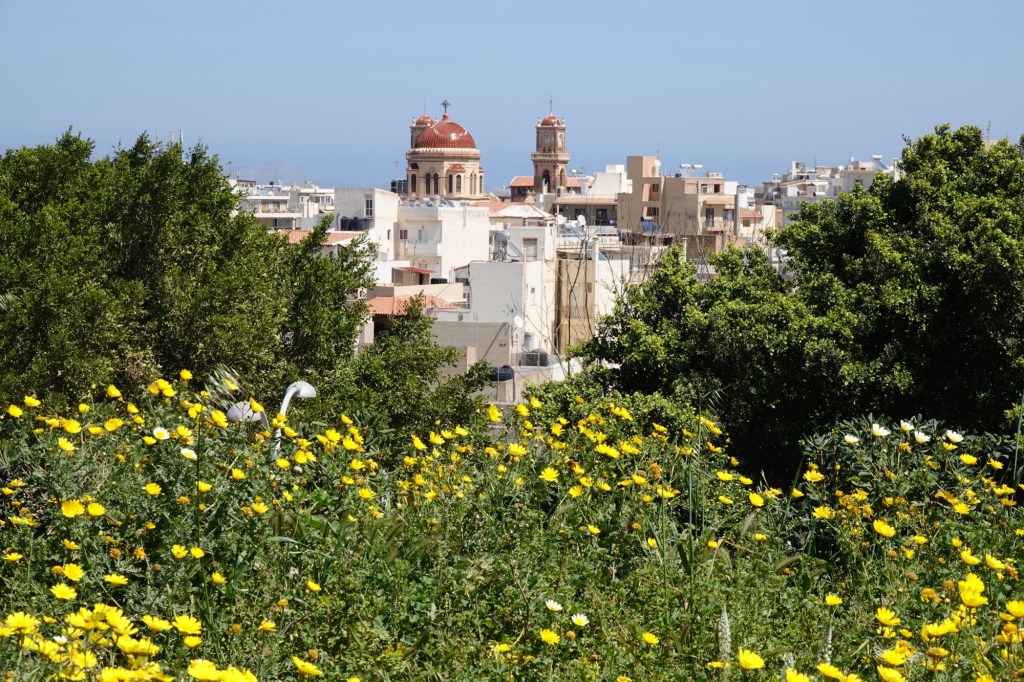
More wildflowers everywhere.
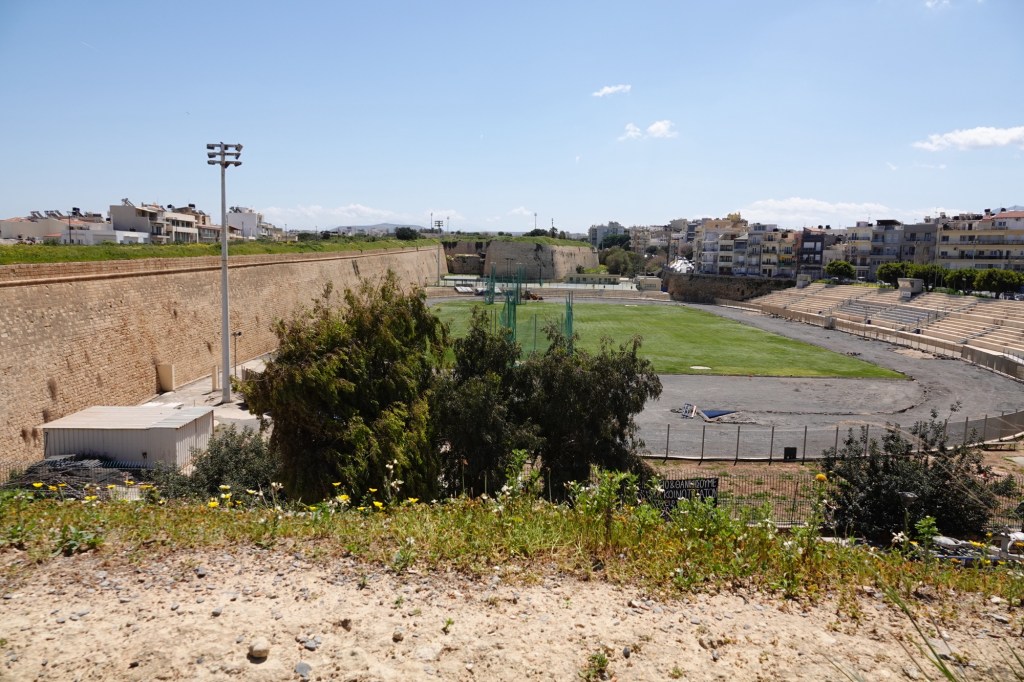
Part of Bethlehem Bastion, named for a nearby church.
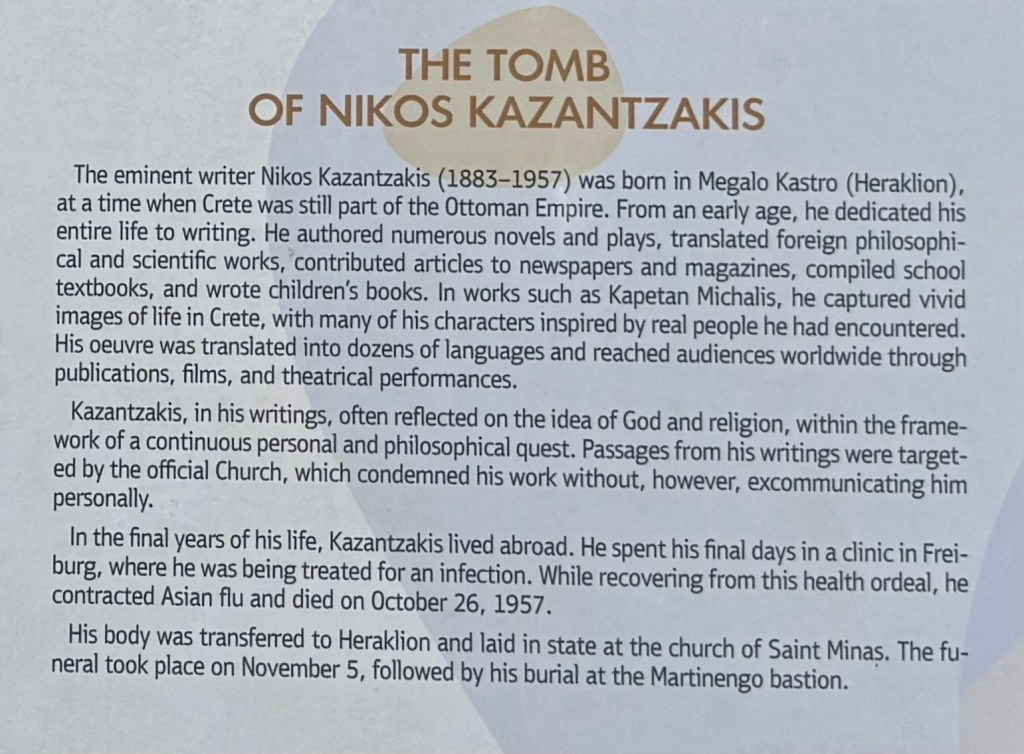
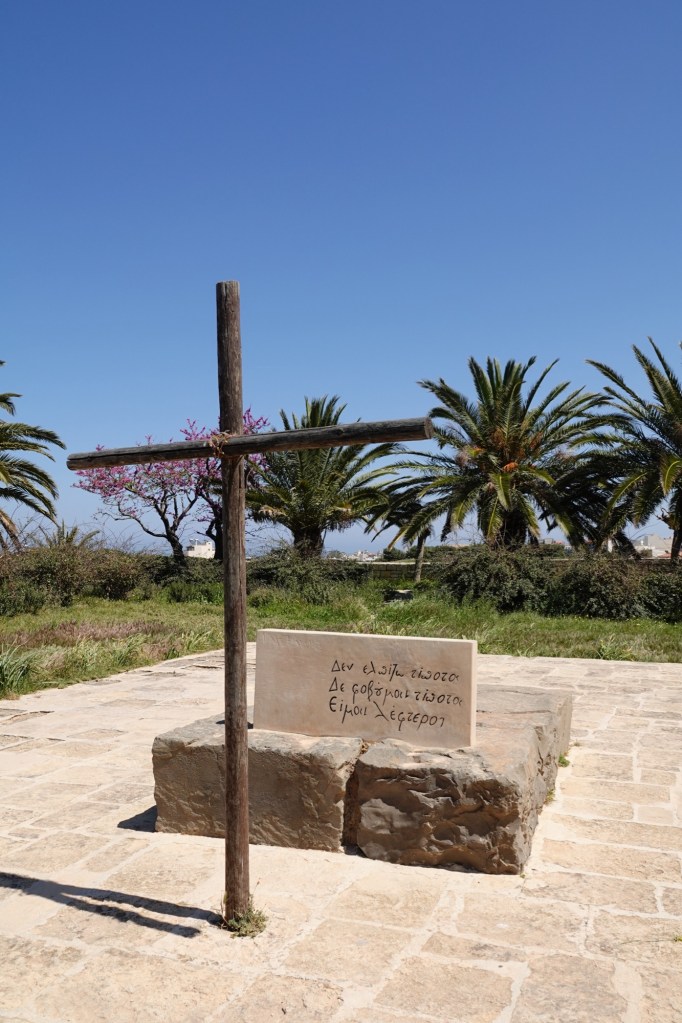
Our walk for today ended at Martinengo Bastion, site of the tomb of Nikos Kazantzakis, a famous Cretan writer. This bastion is the highest point on the Venetian walls, and ostensibly the best place for panoramic views.
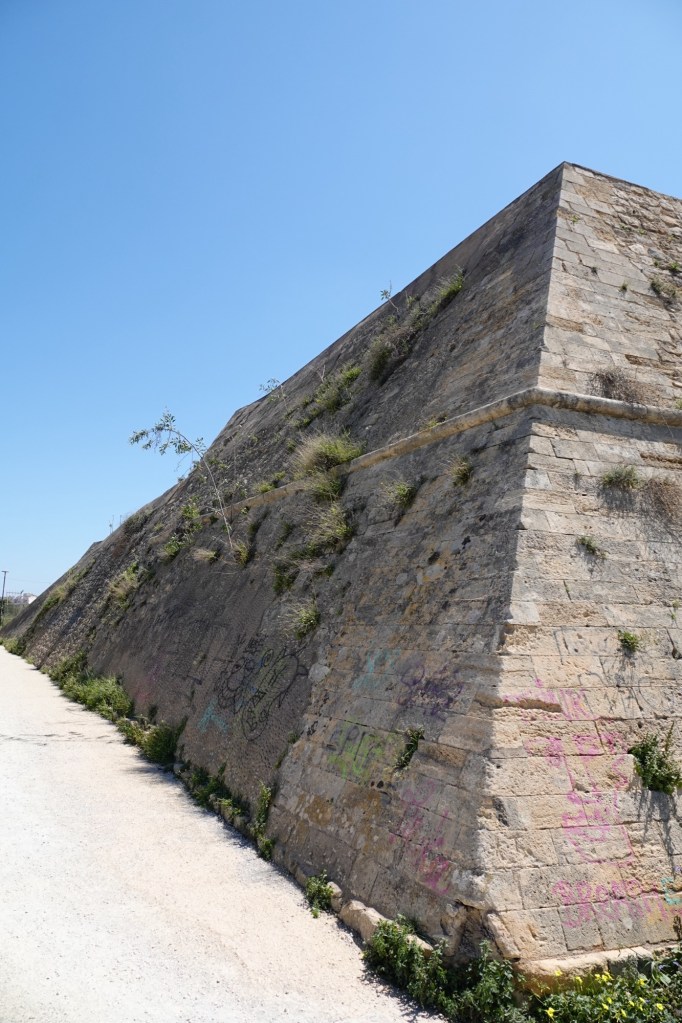
We descended the stairs back to street level, where we had hoped to enter the wall via the Martinengo Gate (Makasi Gallery) but it is being reinforced and restored as part of the same multi-year project as the restoration of Saint Minas Cathedral. An interpretive sign explained that “The Makasi Gallery is associated with one of the darkest moments in both local and world history, as in 1943 prisoners captured by the Germans from across Crete were temporarily held here before being transferred to concentration camps. On November 4 of the same year, a number of them were sent to Mauthausen in Austria. On 8 June 1944, hundreds more individuals boarded the steamship Ta-nais, bound for Athens and from there once again to the concentration camps. The vessel was torpedoed and sunk, with the tragic outcome of the loss of almost the entire Jewish community of the island, along with many members of the Resistance. Today, it stands as a Place of Remembrance for the city.”
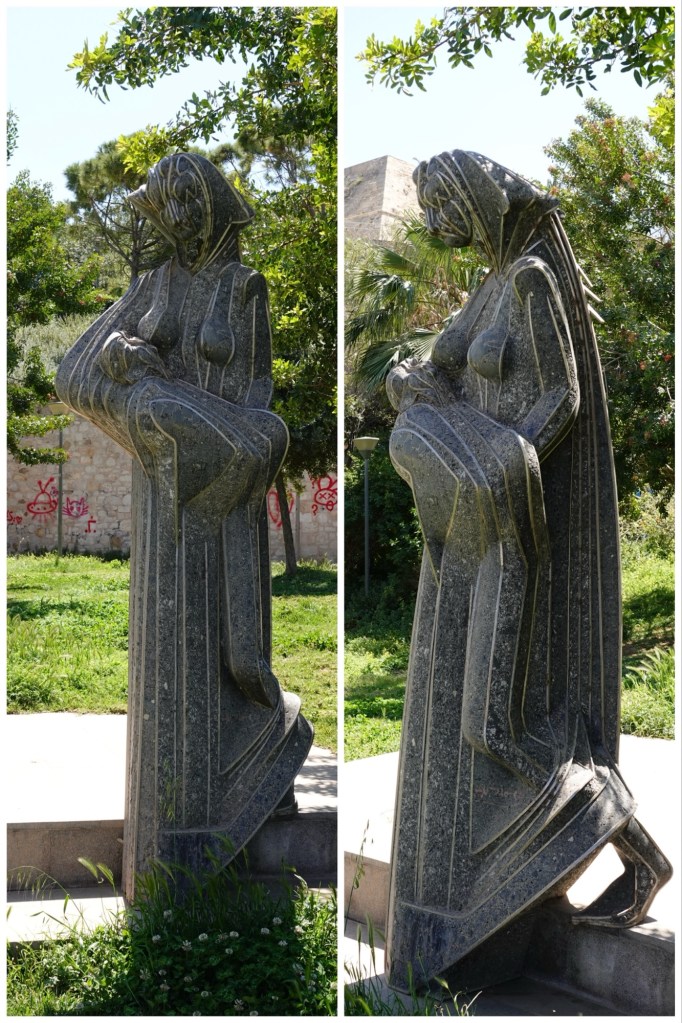
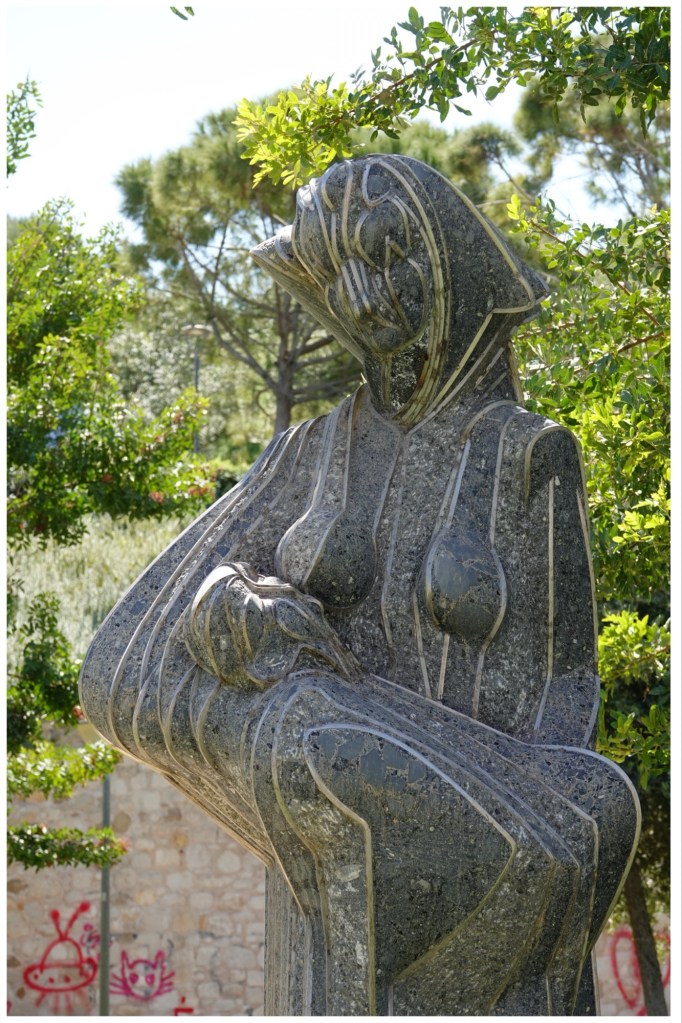
What we did find at street level was this quite beautiful stone and metal statue, called Máva (Greek for Mother), created by Cretan artist Emmanouil Tzompanakis and unveiled in 2013.
It was a lovely relaxing walk in the sunshine, and well past lunch time by the time we got back to the hotel. Somehow we’d managed not to pass a single bakery along the top of the wall!
Apparently a few remains of the original Byzantine walls still exist on the section of the wall near Heraklion’s harbour, which is also home to Rocca al Mare (the Koules Fortress), the stronghold was built to protect the harbour.
That second half of the wall, and visiting the fortress, will be tomorrow’s walk.
 Rose and Ted’s Excellent Adventure