Ah, the life of leisure.
After another lovely breakfast, we had the library area all to ourselves (again) to enjoy a second cappuccino, catch up on emails and send pre-Easter messages to our grandsons, and just enjoy the quiet bustle of the housekeeping staff and the fresh smell of lemon polish on gleaming wood.
The big advantage of a boutique hotel with only 12 rooms is that the common areas are never crowded. In fact, with most people staying just a couple of nights and intent on sightseeing, we are often the only guests here during the day.
We still wanted to visit the oldest mosque in Penang, which is open to “respectfully dressed” non-Muslims, as well as revisiting the colonial town centre close to Fort Cornwallis that we walked around last year (Episode 635), and maybe even get as far as Swettenham Pier, the pretty cruise ship terminal that we sailed into last year.
We have dinner plans tonight at Bottega, a nearby upscale Italian restaurant, with our Mérida friends, but we’d have time to freshen up and shower before our 8:00 p.m. reservation, so off we went into the heat…
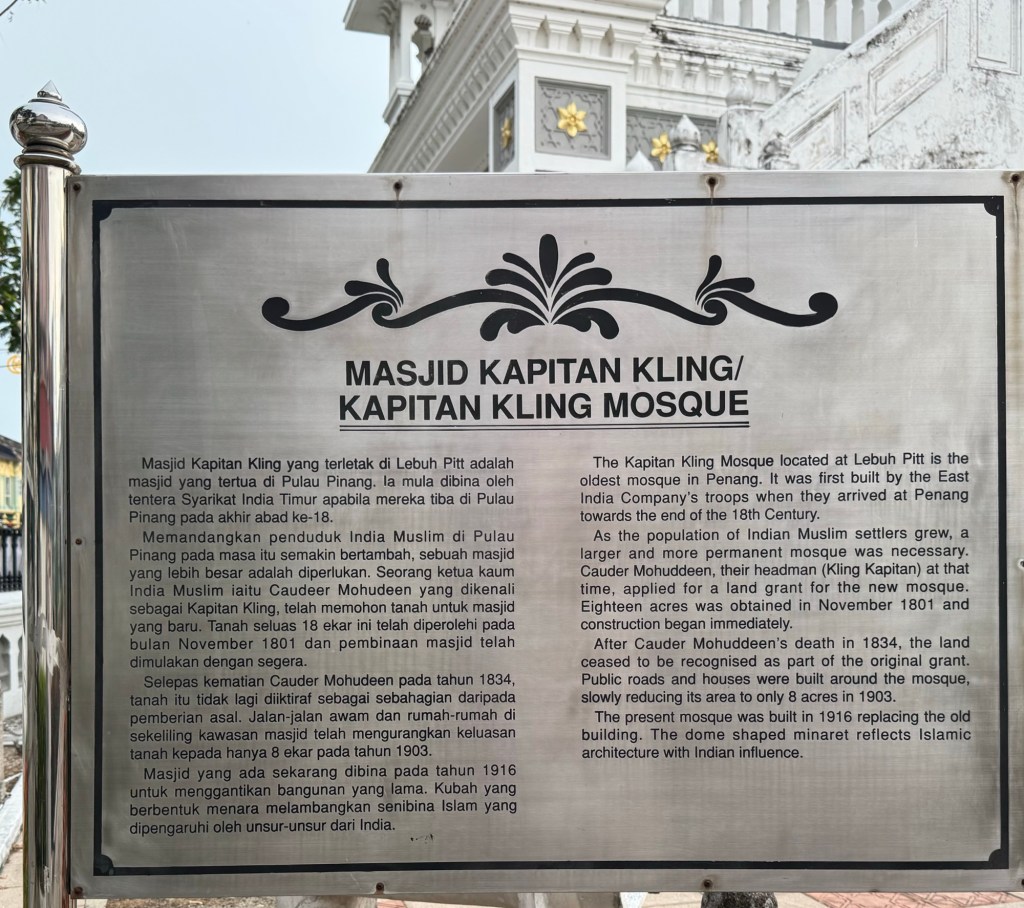
This is the same mosque Ted took pictures of the other night when it was closed to non-Muslims during evening prayers. We only realized after getting home today that we had no external daytime pictures.
Oh well.
It is always fascinating to me how much we receive in return for small gestures. I knew we planned to visit the mosque today, so I brought a scarf (also very useful in lieu of a hat for keeping the top of my head from burning on our subsequent walk), and put it on before we approached the entrance.
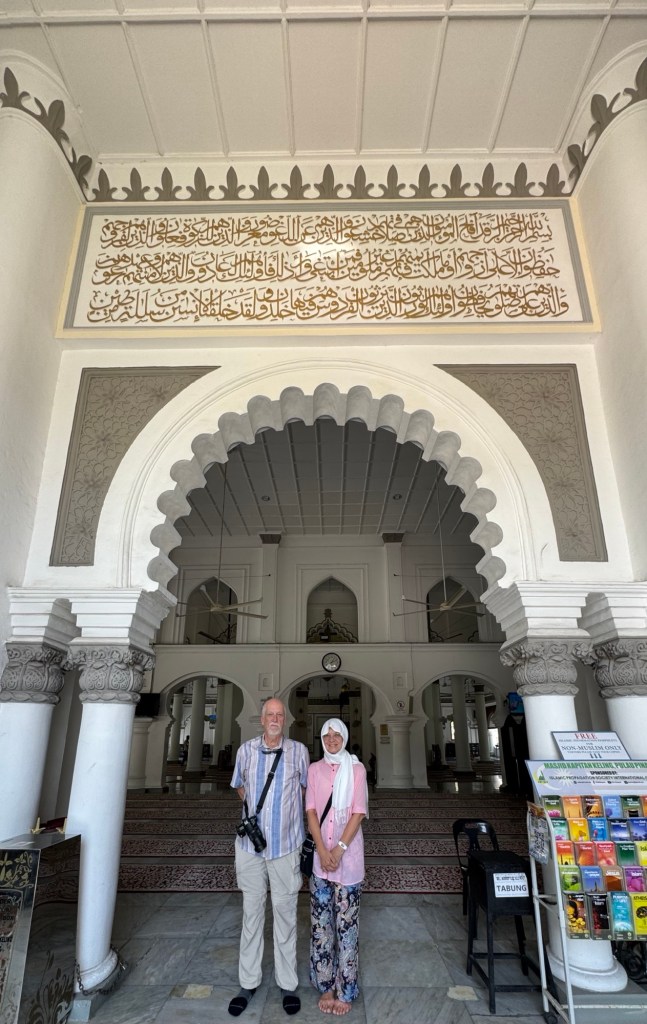
We were greeted with a warm “Welcome, sister and brother. Sister, you must have Muslim friends.” From that initial welcome we were offered a short personal tour that included not only a translation of the call to prayer we hear several times daily, but also being allowed to take a photo of the verses with which each of the day’s prayers begin. The young Chinese man who guided us, himself a convert from Catholicism to Islam just 6 years ago, sang the verses to us. He explained that setting them to music makes them easier to memorize, which made complete sense to us.
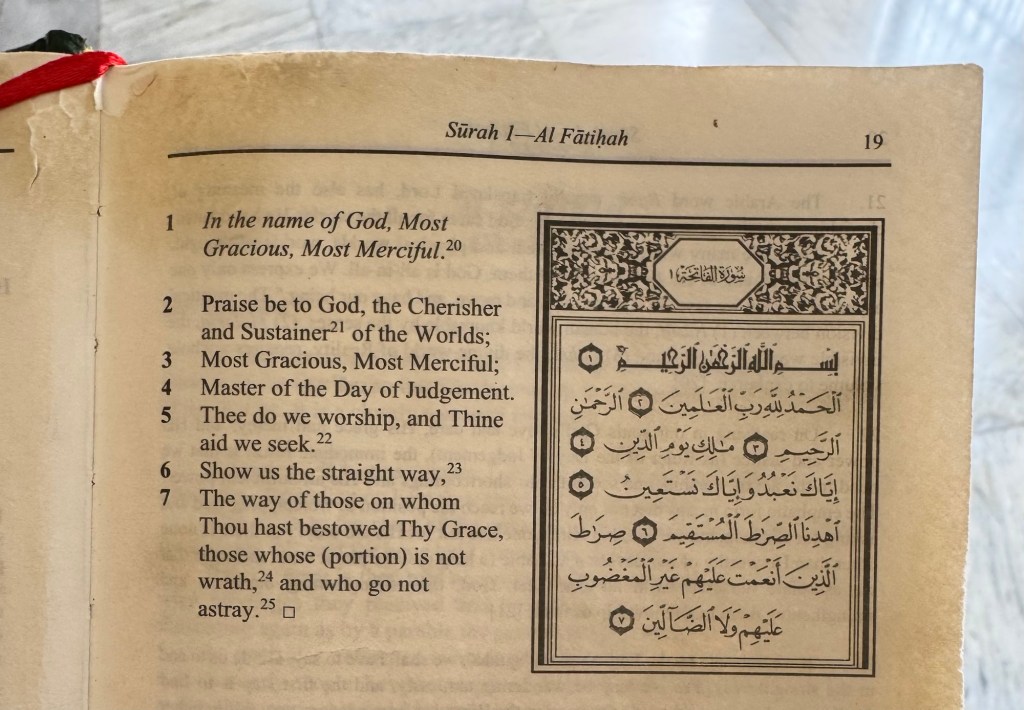
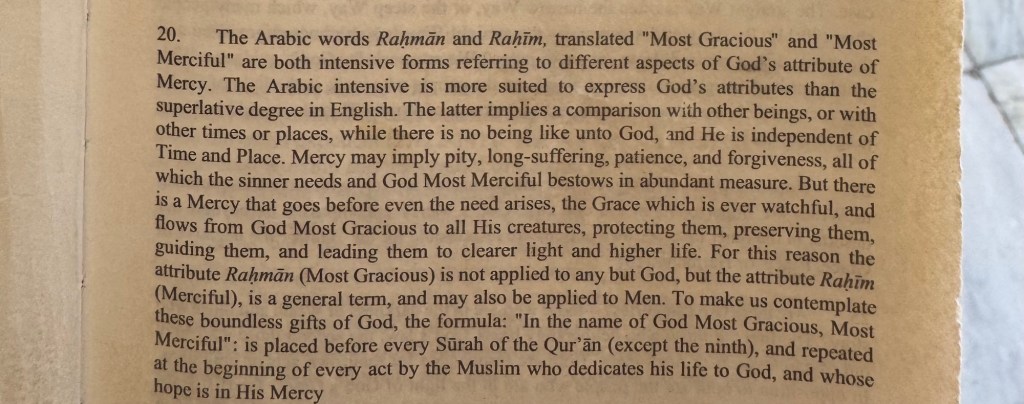
The note 20 beside the words Most Merciful is explained on the bottom half of the page.
Translation of the call to prayer, which emanates from speakers in the minaret, sung live 5 times each day by a muezzin who no longer has to actually climb to the top of the tower:
- Allahu Akbar (4 times): Allah (God) is the Greatest.
- Ashhadu anna la ilaha ill Allah (twice): I bear witness that there is no God but Allah.
- Ashhadu anna Muhammadan rasul Allah (twice): I bear witness that Muhammad is the Messenger of Allah.
- Hayya ‘alas-Salah (twice): Come to prayer (rise up for prayer).
- Hayya ‘alal-Falah (twice): Come to success/salvation.
- Allahu Akbar (twice): Allah is the Greatest.
- La ilaha ill Allah (once): There is no God but Allah
There is a special addition to the early morning call to the first prayer that must be completed before sunrise: Assalatu khayrum minan-nawm (twice): Prayer is better than sleep.
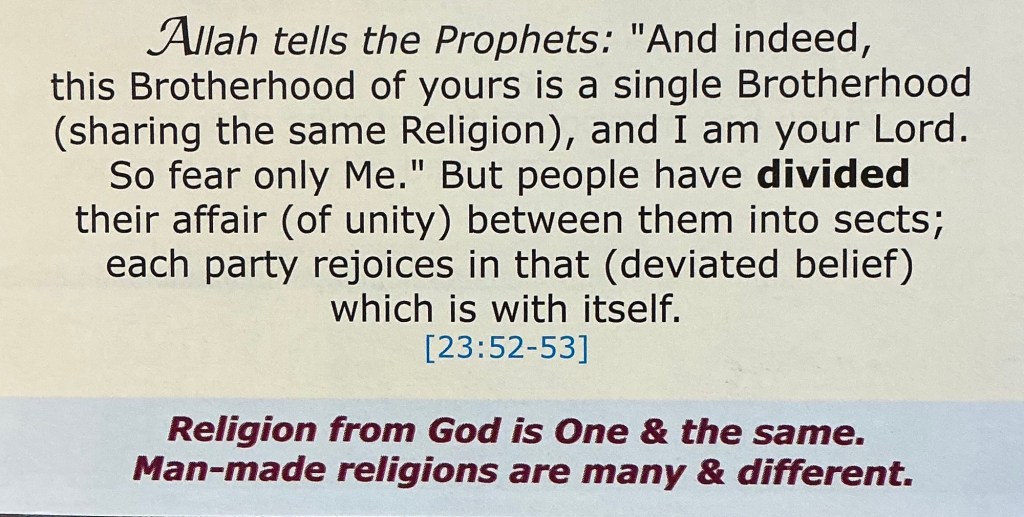
Lest we think otherwise, it was emphasized to us that there is no difference between Allah, Jehovah, or God except for the language of the words. The concept is “One God, one humanity, one religion, many prophets.”
As non-Muslims we were not allowed to enter the area where worshippers gather, but were allowed to take photos from the perimeter.
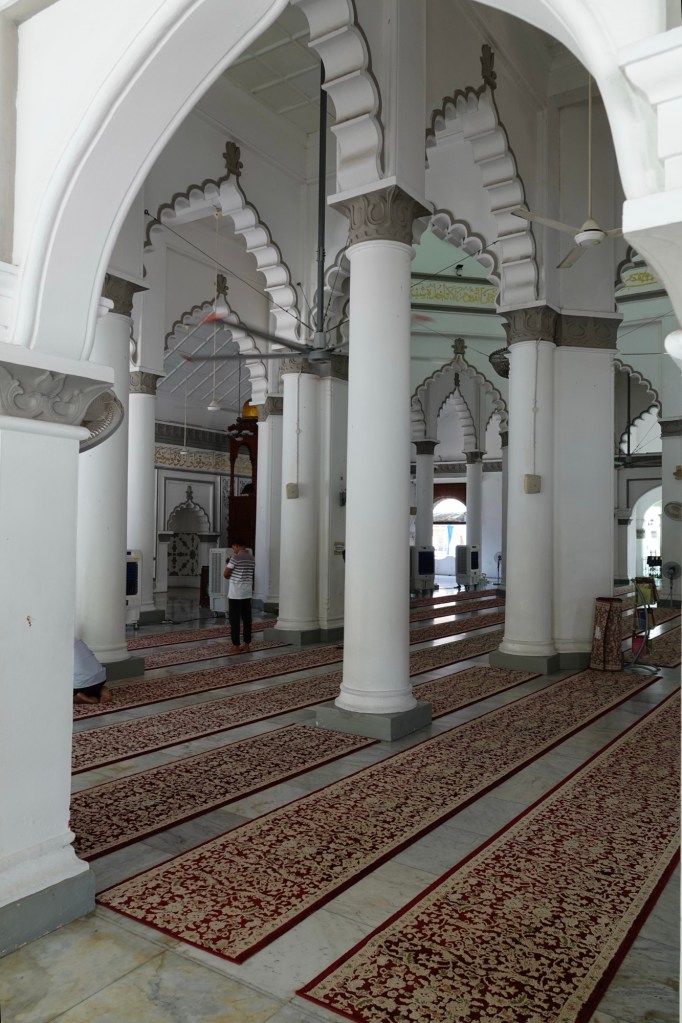
The floors and rugs were being cleaned in preparation for the next prayer. Everything gleamed, and it won’t get “dirty” per se during prayer, because no one can enter without performing strict ablutions. That said, even freshly washed noses and foreheads leave something behind on the floors that requires cleaning.
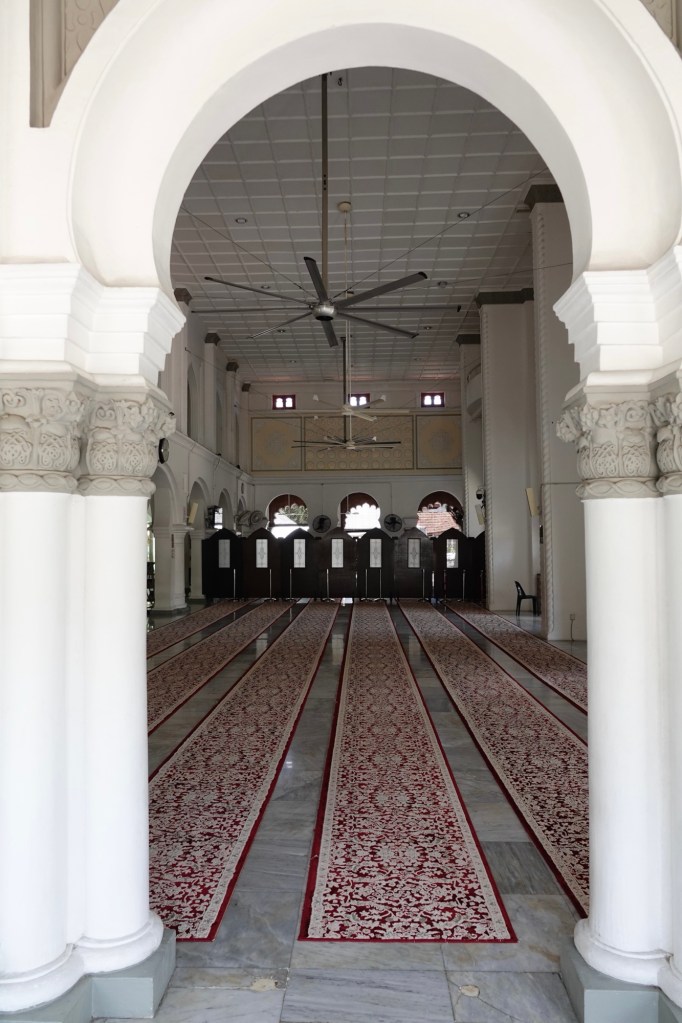
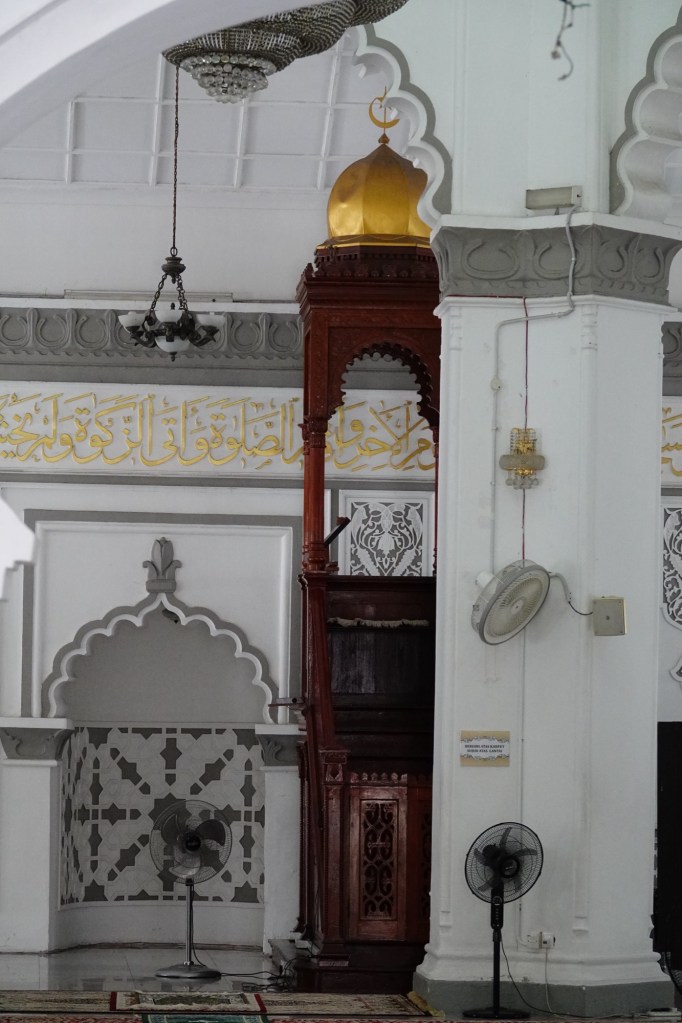
As noon prayer time approached and we needed to leave, our guide asked if we’d like a photo at the mosque’s entrance.
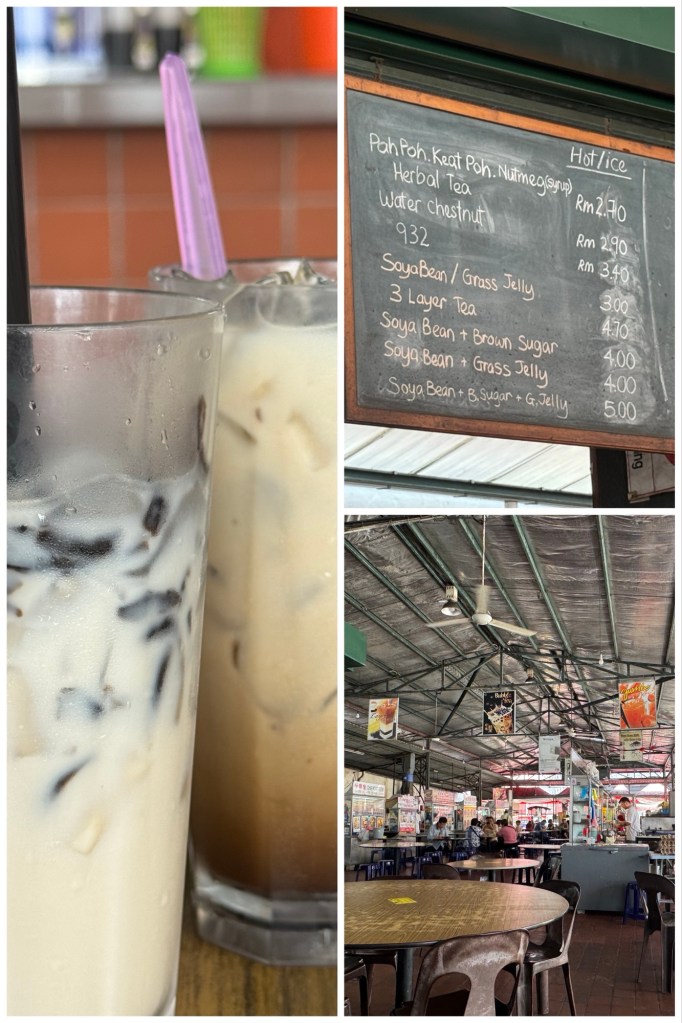
From the mosque we took a circuitous route to Swettenham Pier, passing a much smaller mosque, several Chinese clan temples, several more Hindu temples, lots of street art, and colonial era buildings, stopping at one point in a food market for iced soy bean milk with palm sugar and grass jelly.
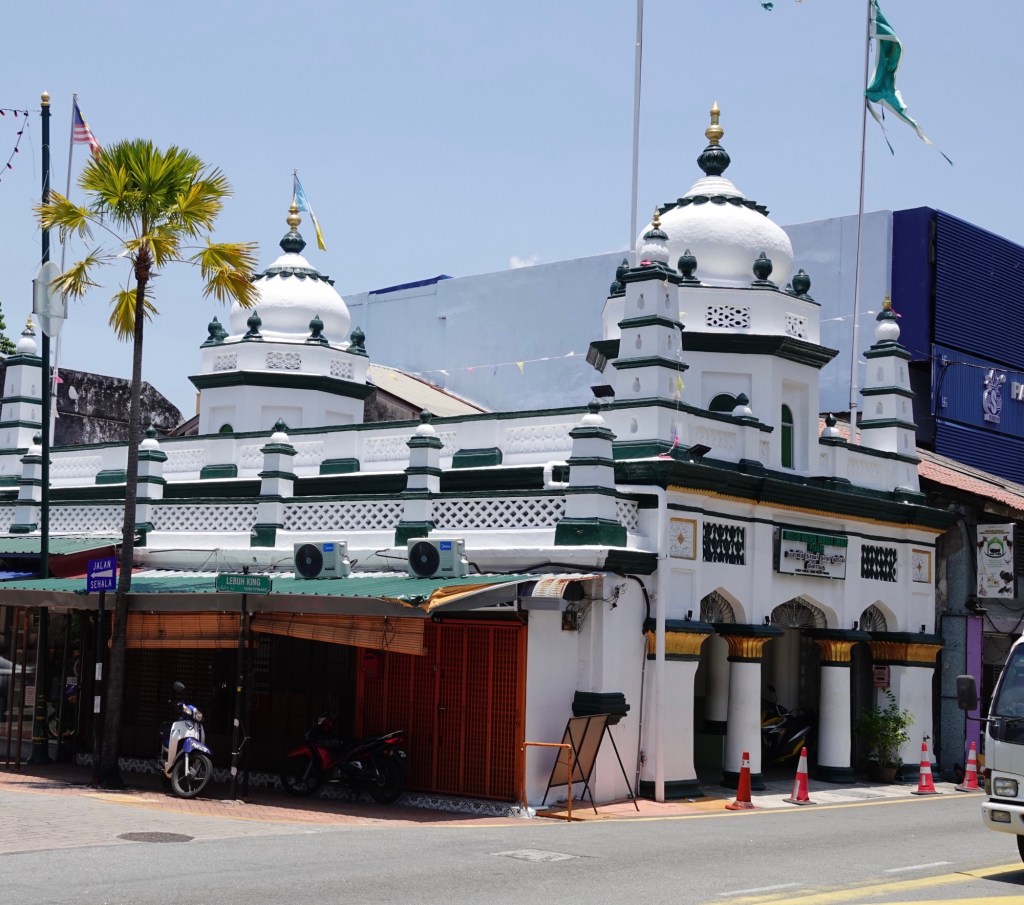
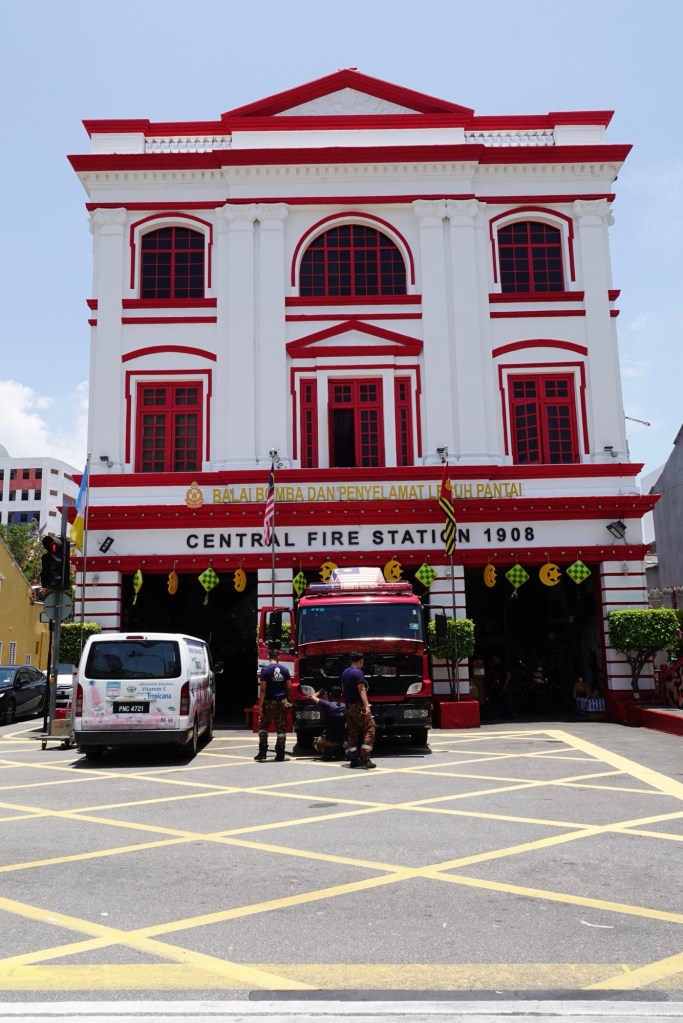
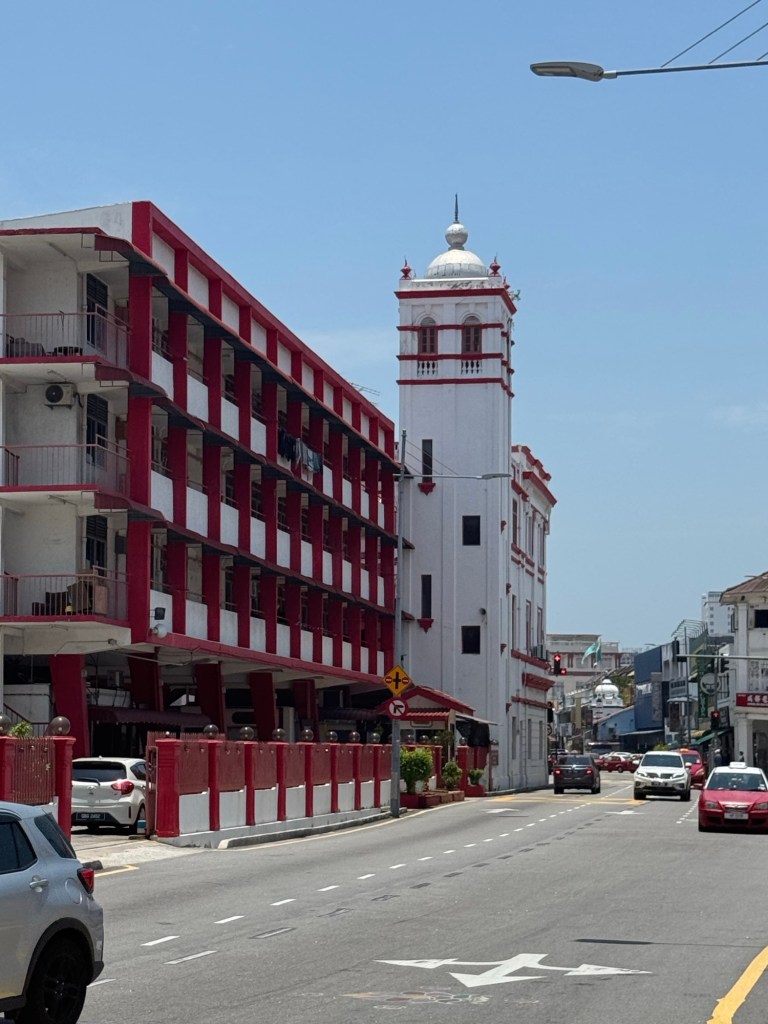
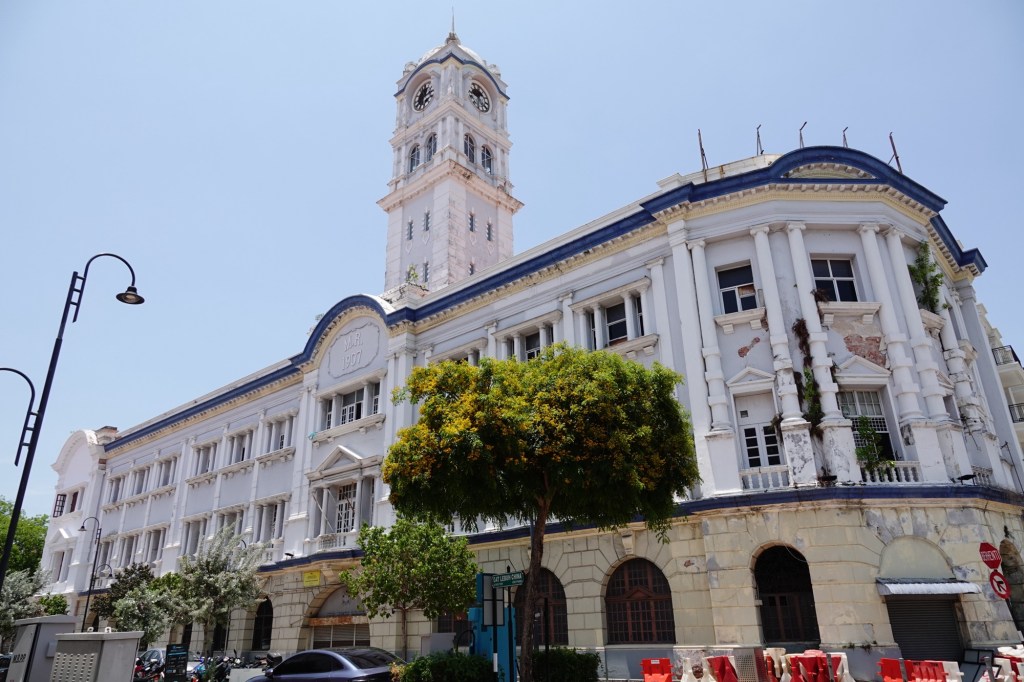
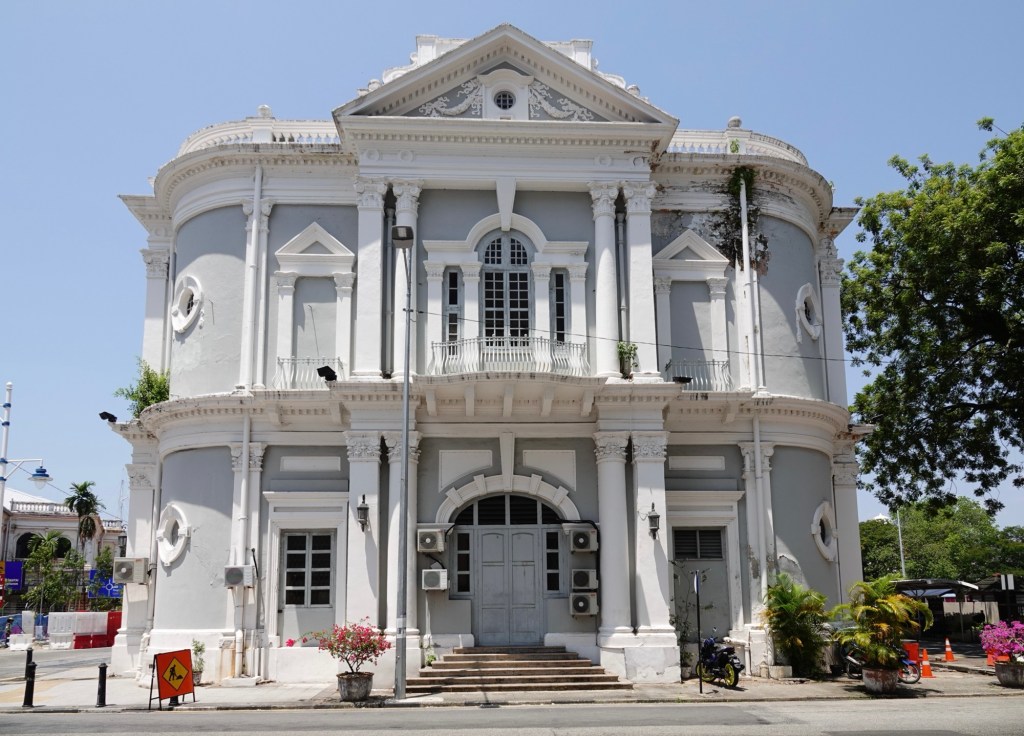
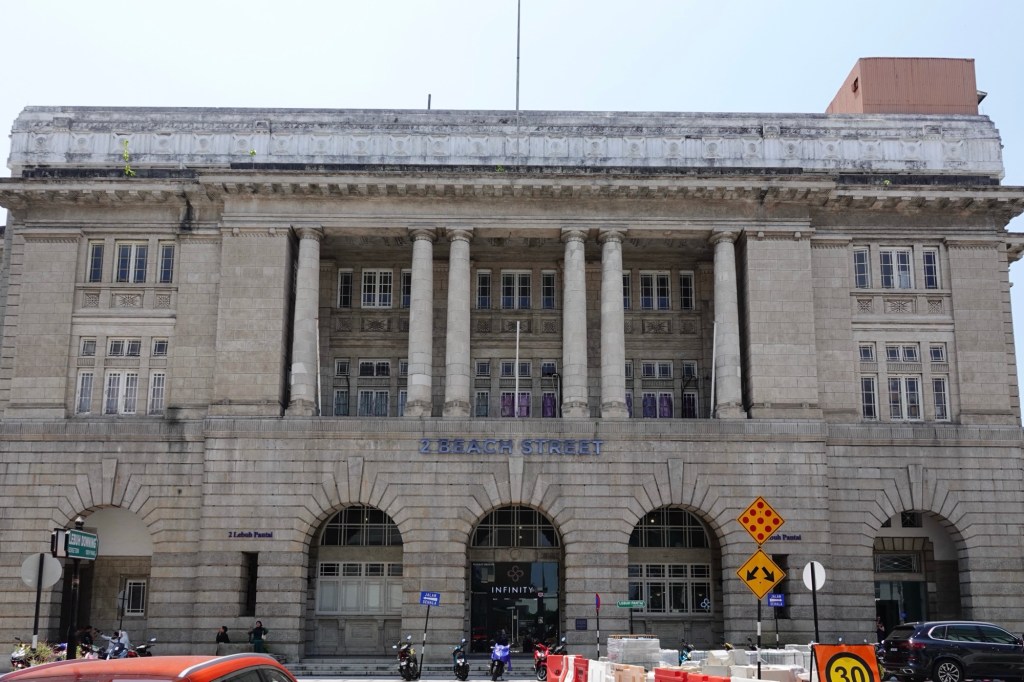
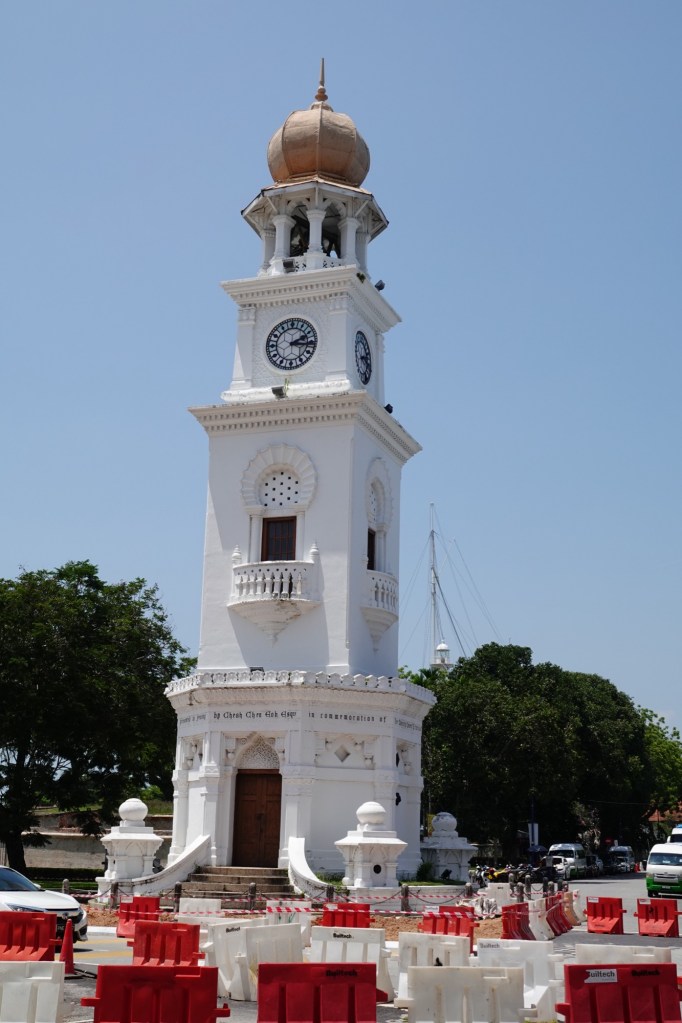
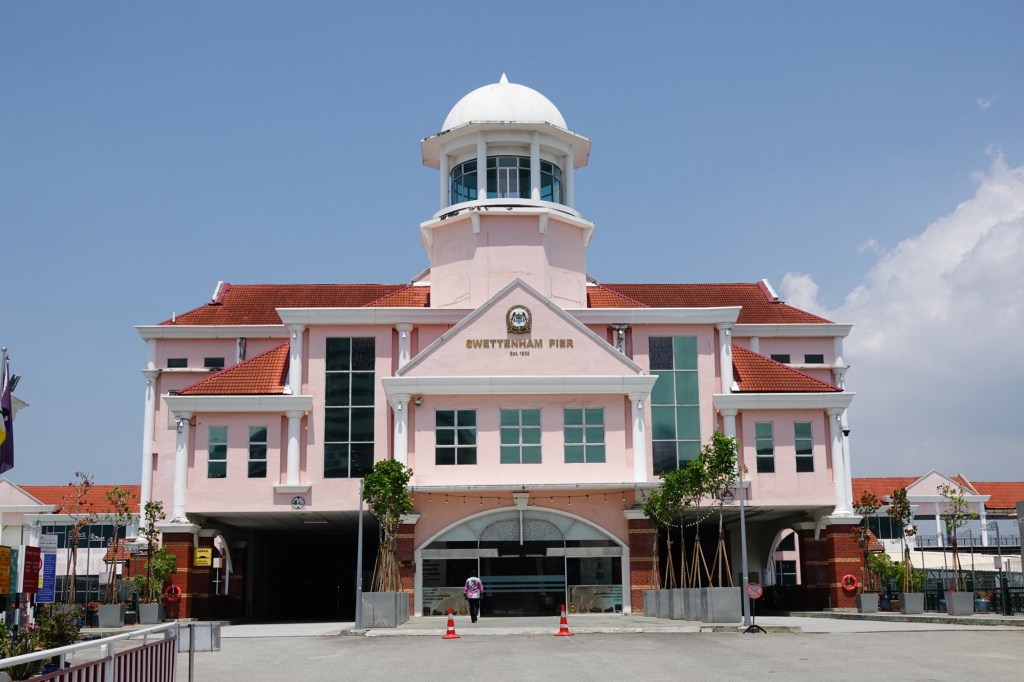
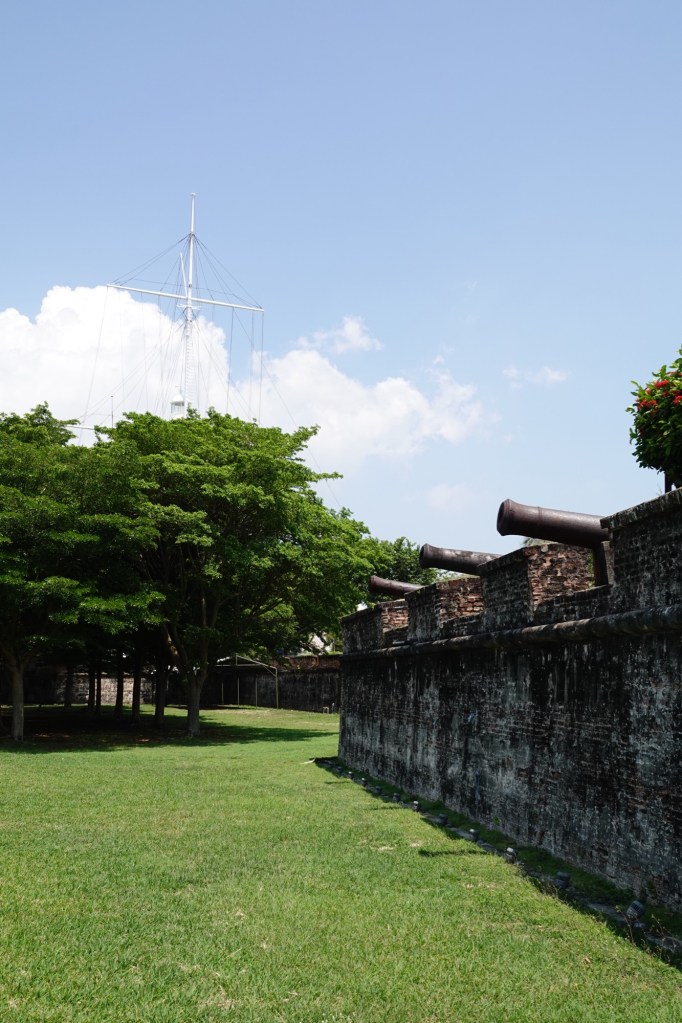
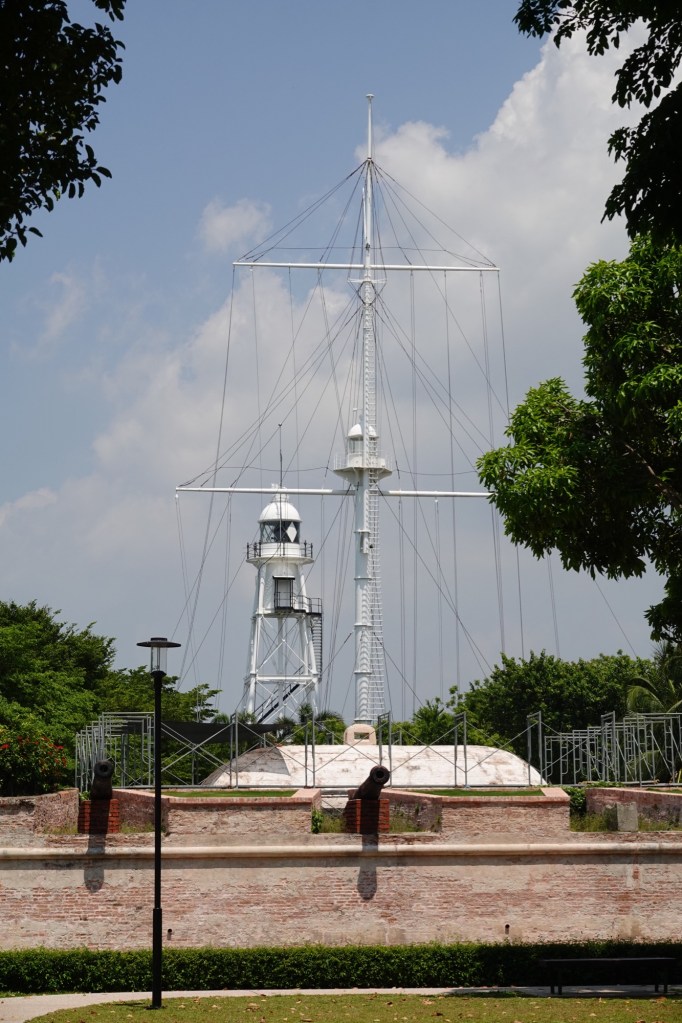
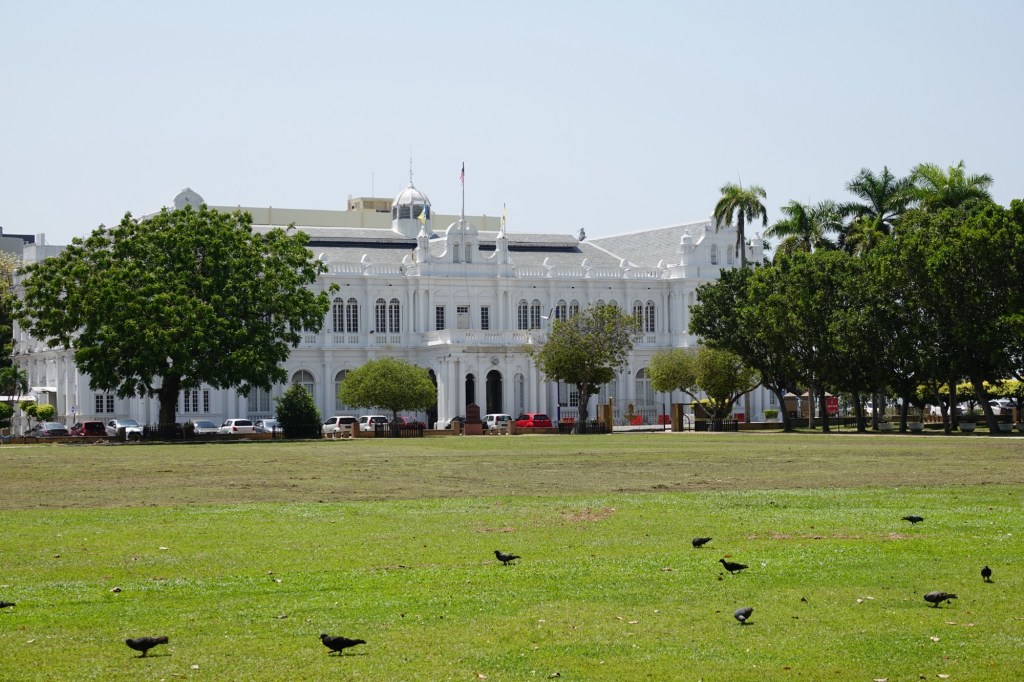
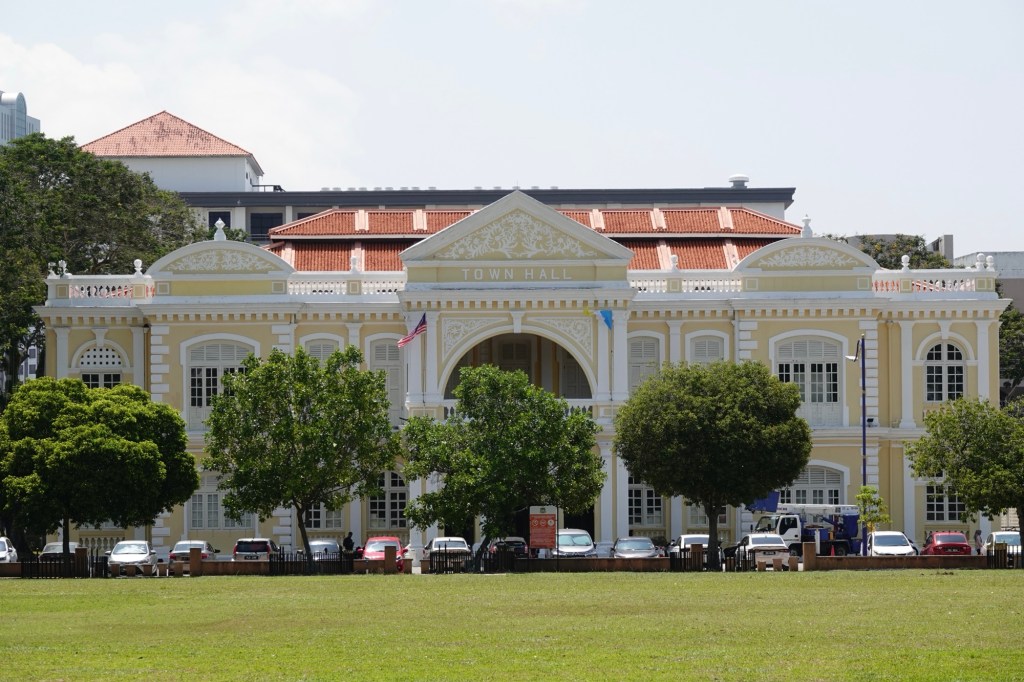
By the time we got back to the hotel mid afternoon we were more than ready for that freshening up and shower we’d predicted needing, plus a couple of hours off our feet before dinner. We’d only done about 7500 steps but, as Ted keeps reminding me, it’s all about “degree of difficulty” when it’s this hot.
It was a treat to have dinner with people we knew. While the downside of our semi-nomadic life is that we’re almost always long distances from family and old friends, a bonus is the connections we make with fellow travellers around the world.
 Rose and Ted’s Excellent Adventure