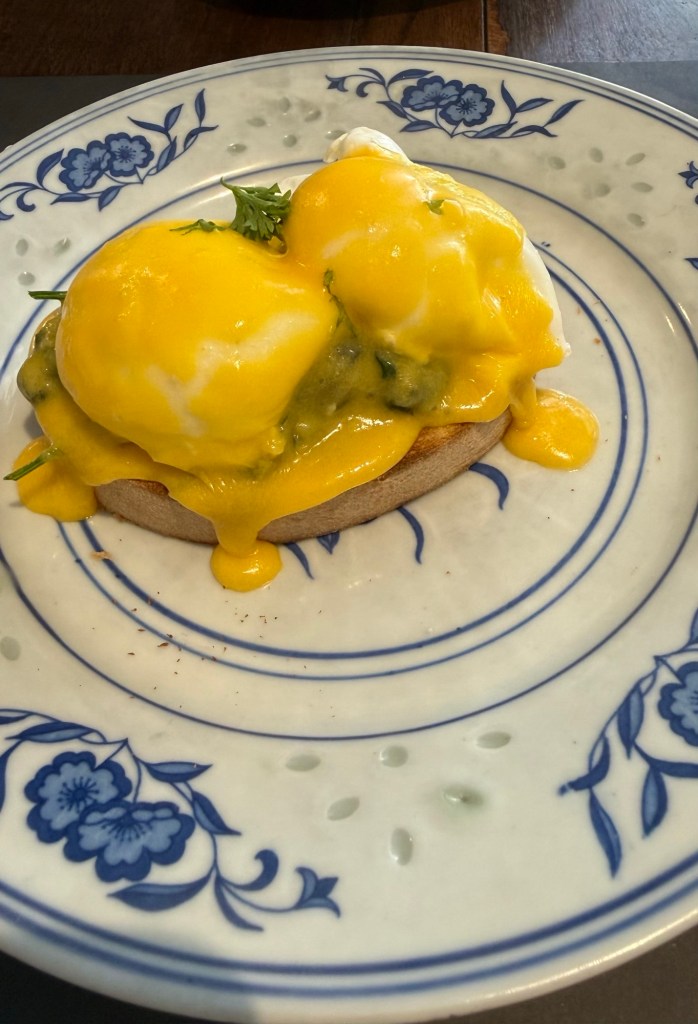
Today I remembered to take a picture of my breakfast.
We spent the morning lazing: Ted curating photos and updating month-end finances, and me reading Elizabeth George’s Payment in Blood, having decided that I would start re-reading all of her Inspector Lynley mysteries in order before reading her newest, number 22 in the series, just published in 2025.
Our afternoon outing was to the Pinang Peranakan Mansion, a faithful recreation of a centuries old Strait Chinese mansion.
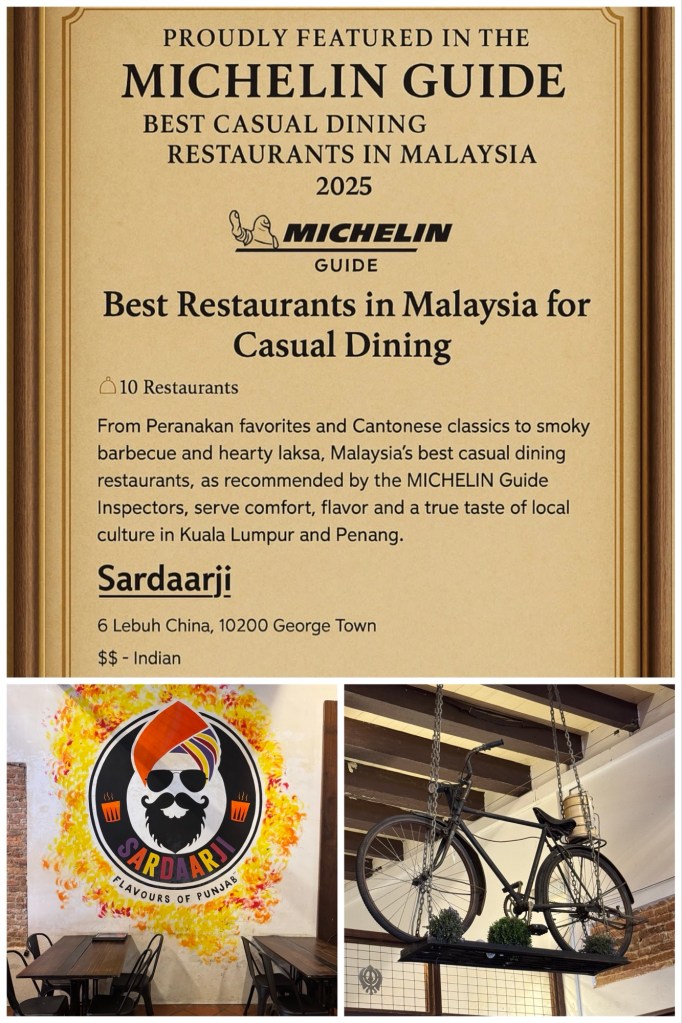
But first, lunch – which today would be our main meal – at Restaurant Sardaarji, recognized 4 years in a row with a Michelin Bib Gourmand. The Michelin Bib Gourmand recognizes restaurants and street food vendors offering high-quality food at a great value. Established in 1997, it highlights “inspector favorites” for exceptional, yet affordable, culinary experiences rather than fine dining.
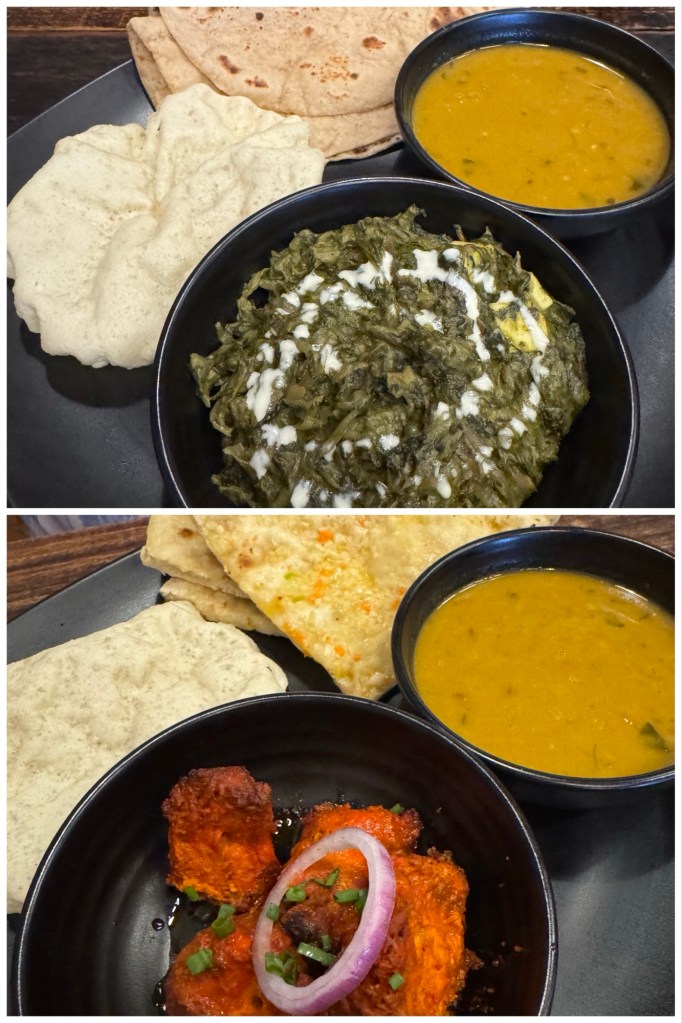
Fortified with delicious food, we headed off to learn something – and we did.
Today we learned what Peranakan means, when we took the English language tour at the Pinang Peranakan Mansion.
Peranakans, more correctly Peranakan Chinese, and often referred to simply as “Strait Chinese”, are an ethnic group descended from the 14th – 17th century Southern Chinese immigrants to the Malay Peninsula who intermarried with the local people. “Southern” Peranakans, those in Thailand, Borneo, Java, and Sri Lanka have developed a distinct language from “Northern” Peranakans in Penang, Malacca, and Singapore.
Northern male Peranakans are called “Babas” and females are “Nyonyas”.
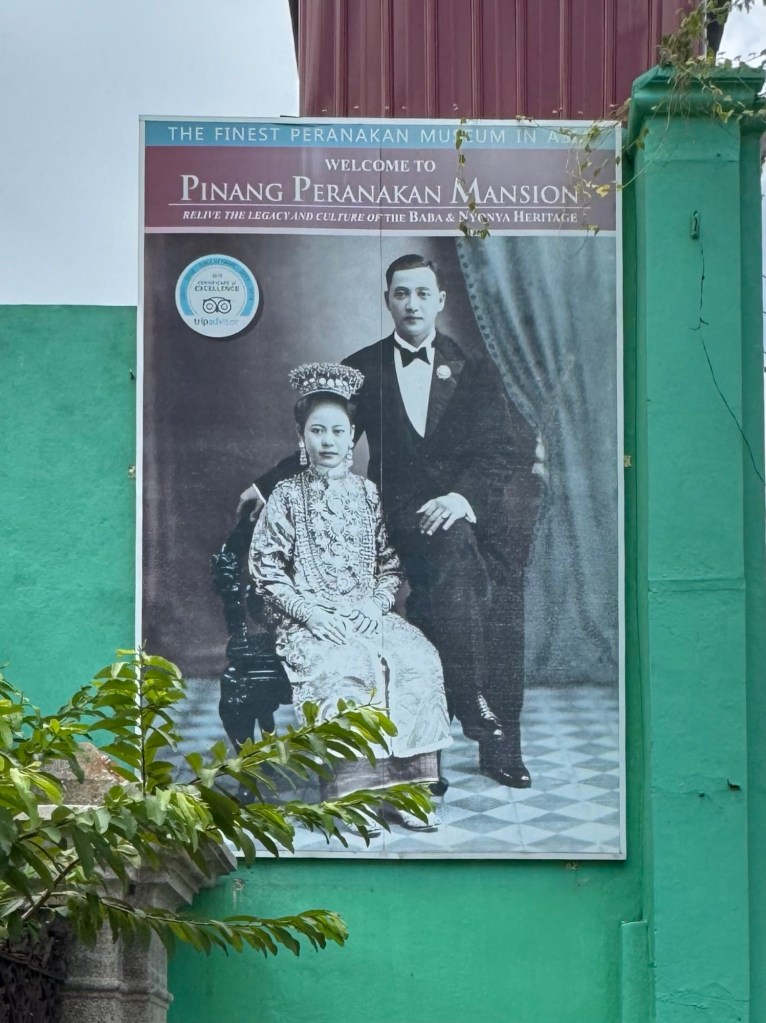
This mansion was built between 1893 and 1895 for 19th-century Chinese tycoon Kapitan Chung Keng Quee, a millionaire philanthropist and tin-mining magnate millionaire appointed “Captain China” by the British in 1877. We’ve seen “Kapitan” on various buildings, including mosques, named after prominent individuals. It has nothing to do with naval or military service, but is simply an honorific. Our guide today described Kapitan Chung Keng Quee as “gangster” capo, based on his role as leader pf the Hai San, a Chinese secret society in British Malaya.
Chung was not himself a Peranakan, but he built his mansion in that typically ornate style.
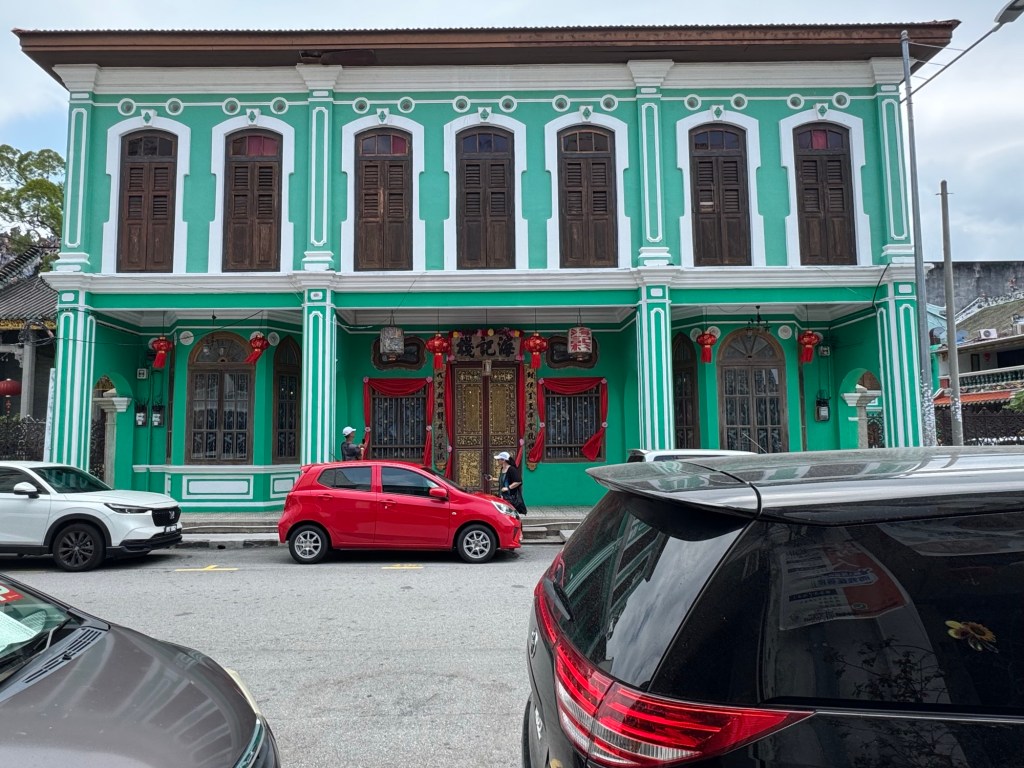
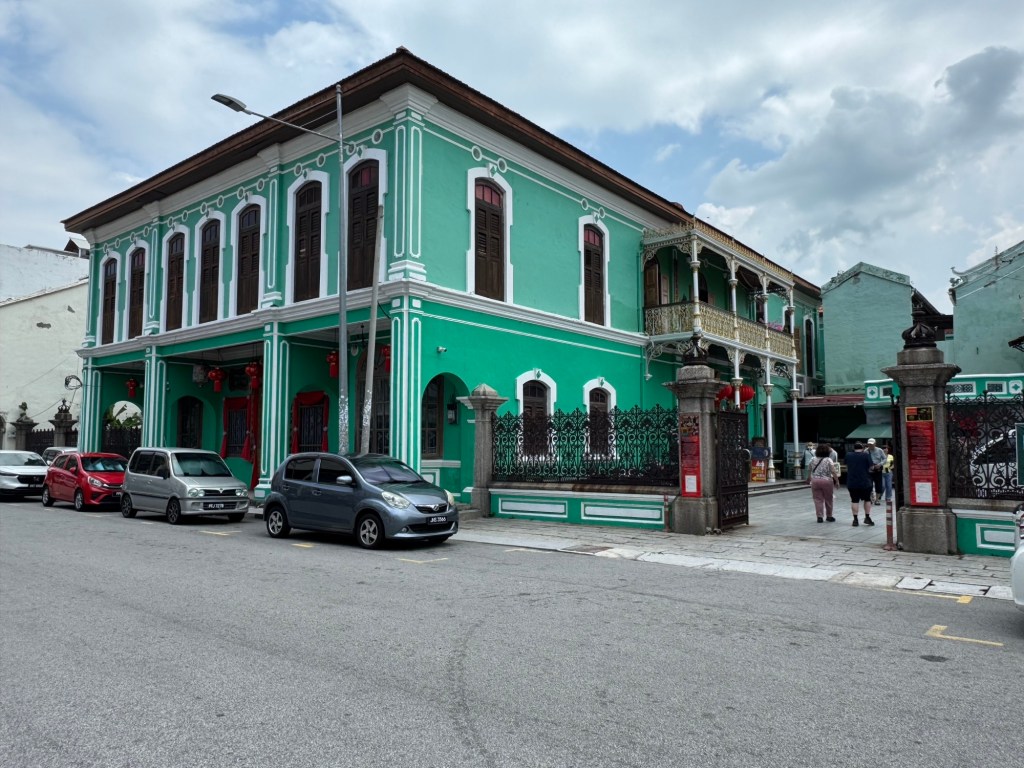
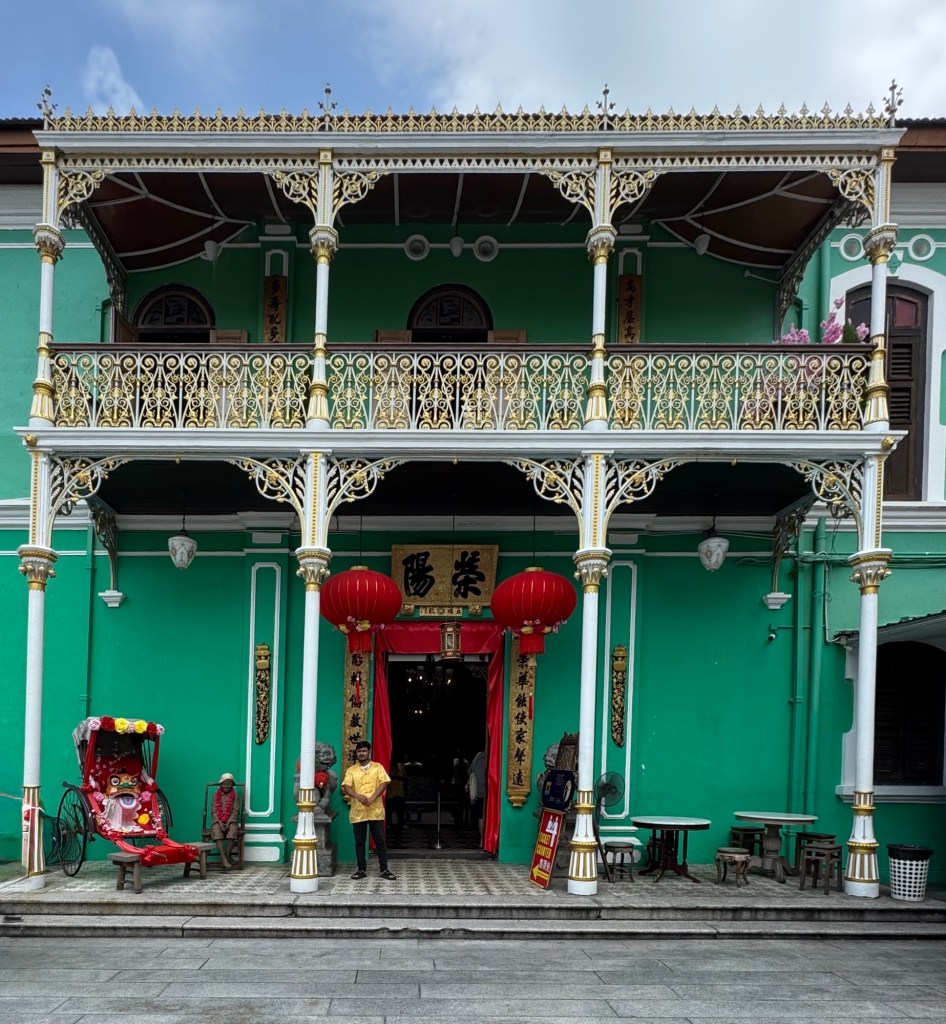
The mansion remained in Chung’s family for 5 generations before falling into a state of disrepair. Our Peranakan guide, Stanley, said that a five generation span is considered rare in Chinese communities, where if one generation accumulates wealth, the next generation finds ways to spend it lavishly, and the third generation uses up whatever is left.
Hmm.
Peter Soon, a Penang-based Peranakan property developer and avid antique collector, purchased the property in the late 1990s, restored it, and filled it with over 30 years of his own collection, turning it into a prominent Peranakan museum which houses over 1,000 artifacts including Peranakan gold, silver, jewelry, and fine china.
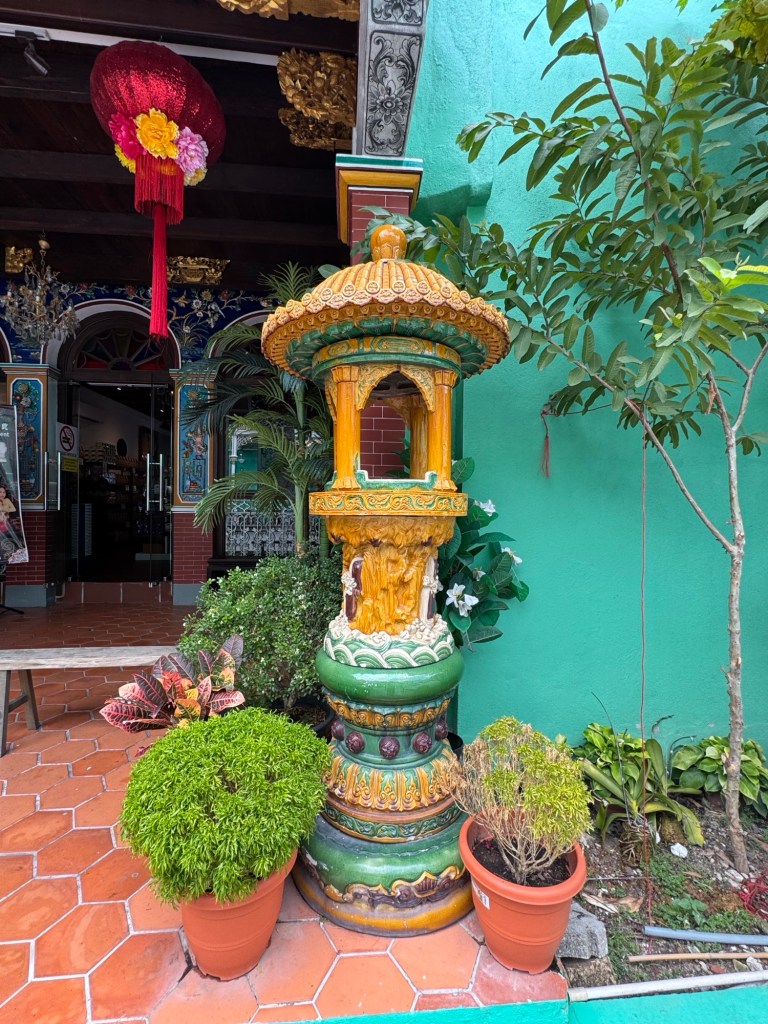
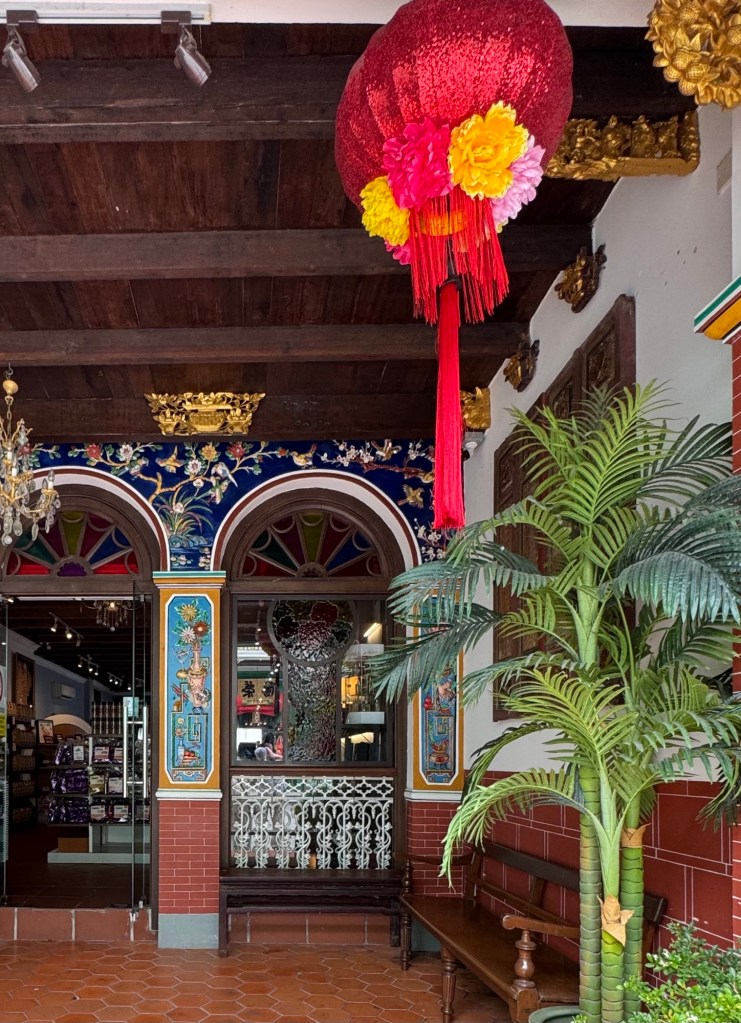
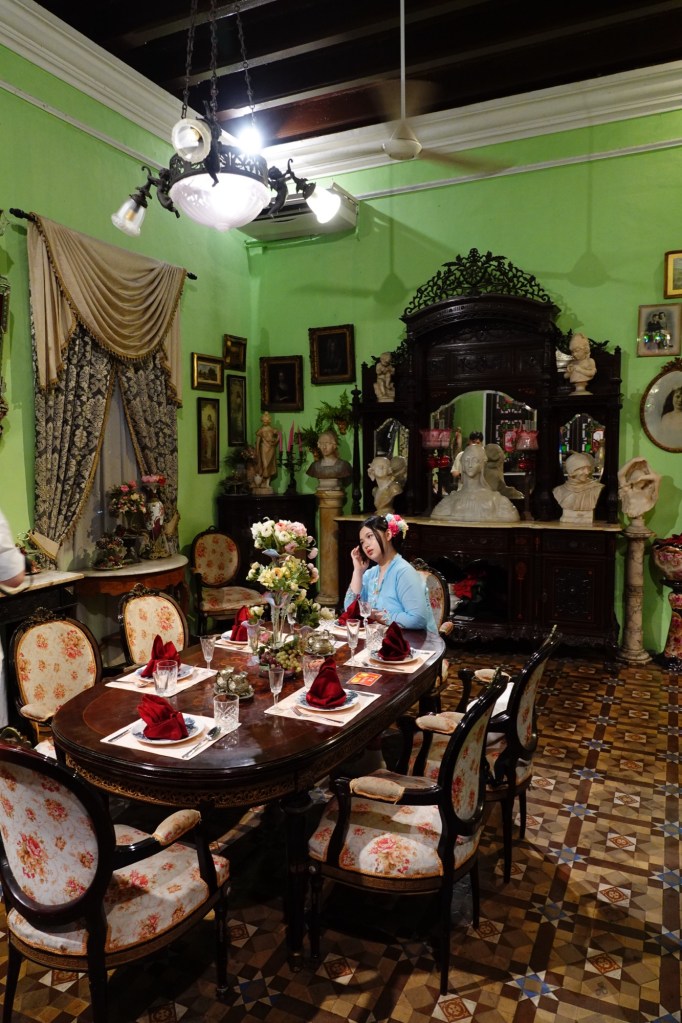
When I asked our guide why the mansion was green, he said it was originally light blue, and that Peter Soon chose green to differentiate it from Penang’s “Blue Mansion”, but Wikipedia says the mansion was originally painted white, and the only older photos I could find verified that, so perhaps Soon just liked green.
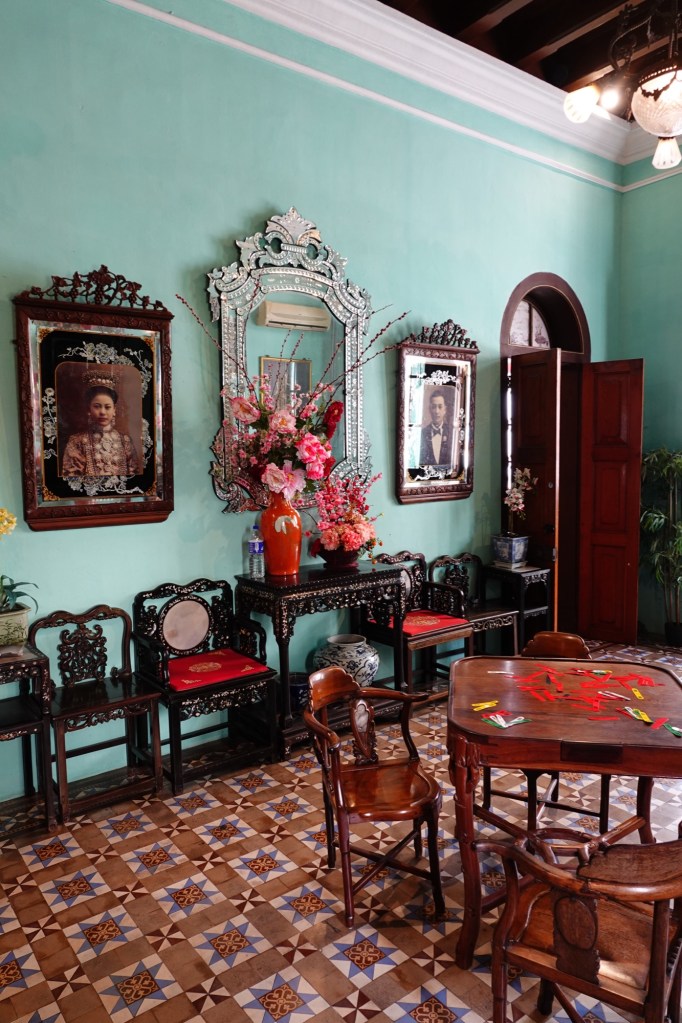
We had a few minutes to wait for the tour to start, during which we wandered around the ground floor foyer, Ted taking pictures and me trying out chairs. It was quite surprising that we were allowed to sit on much of the furniture.
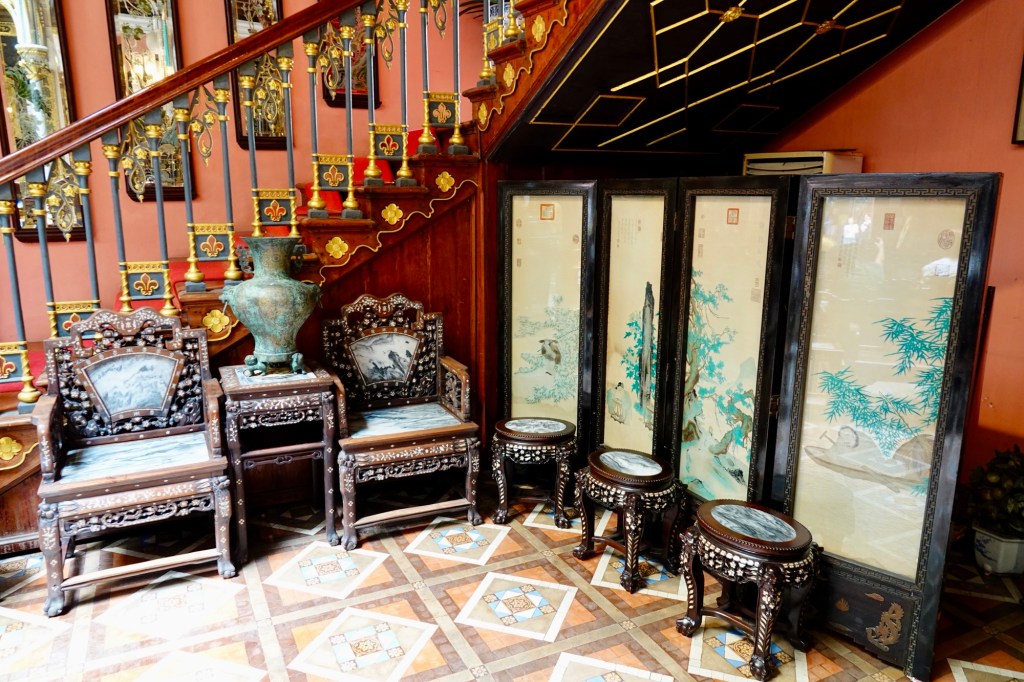
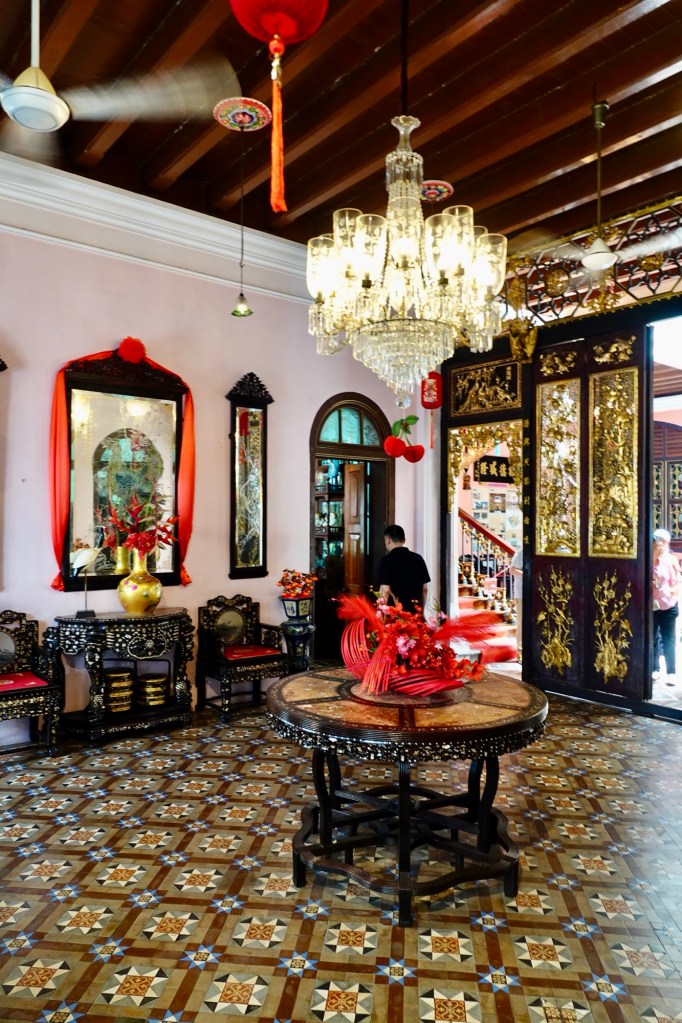
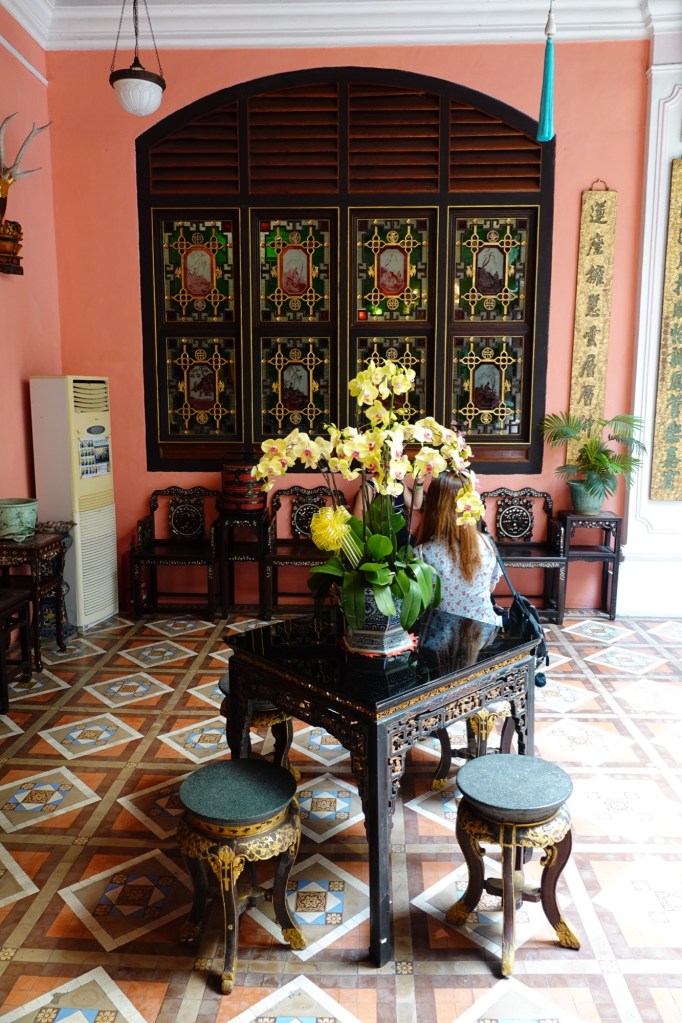
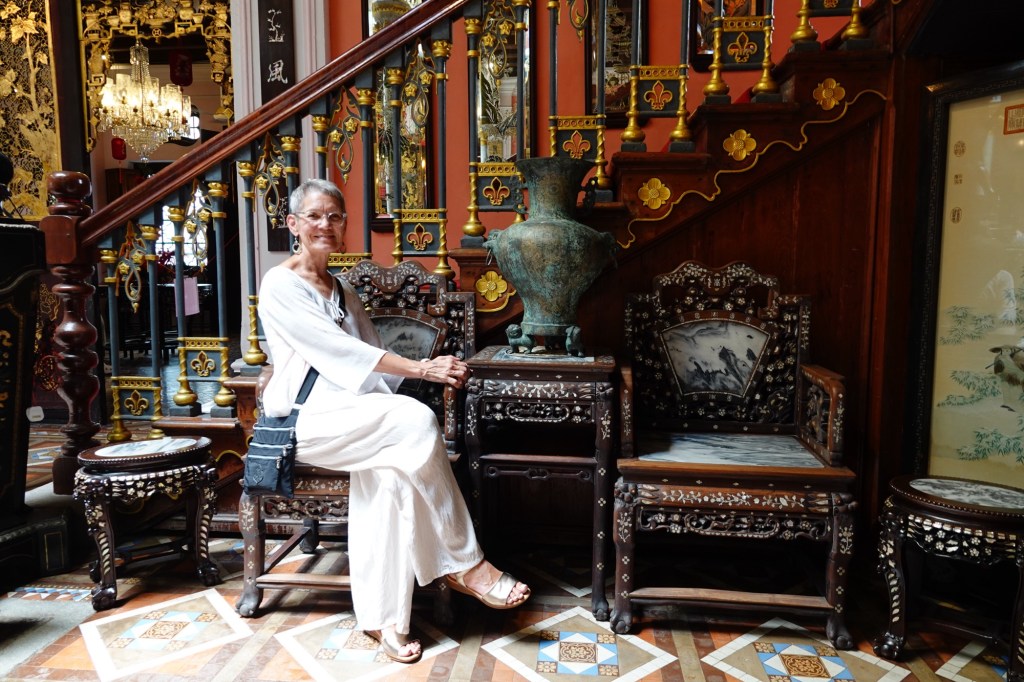
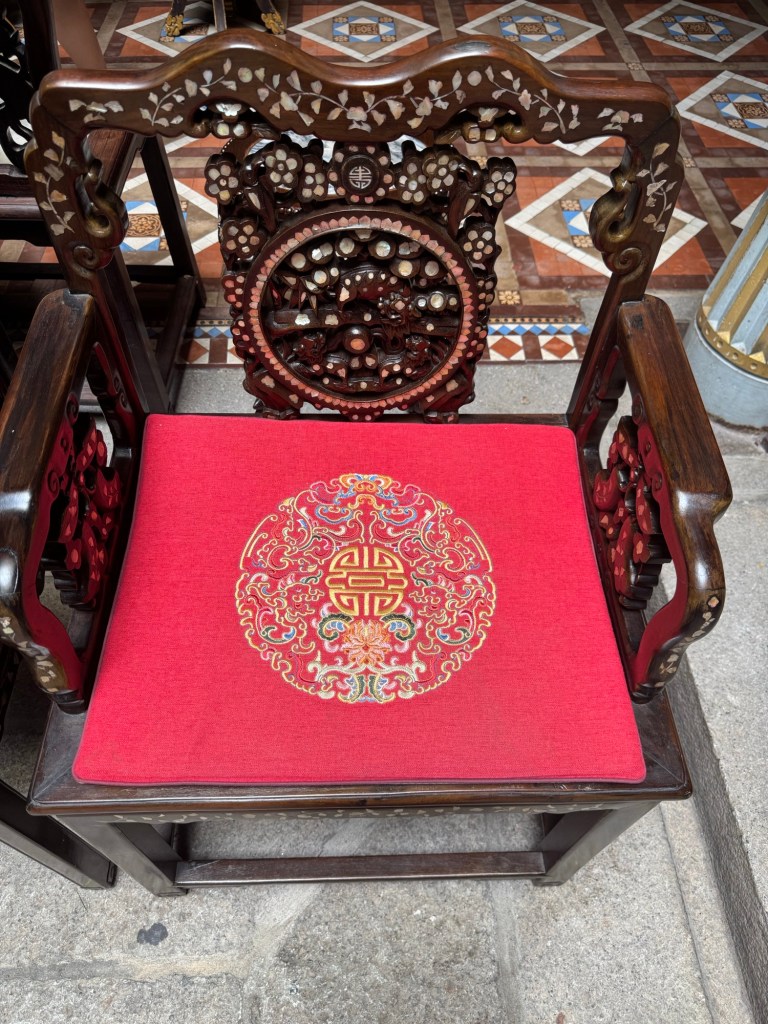
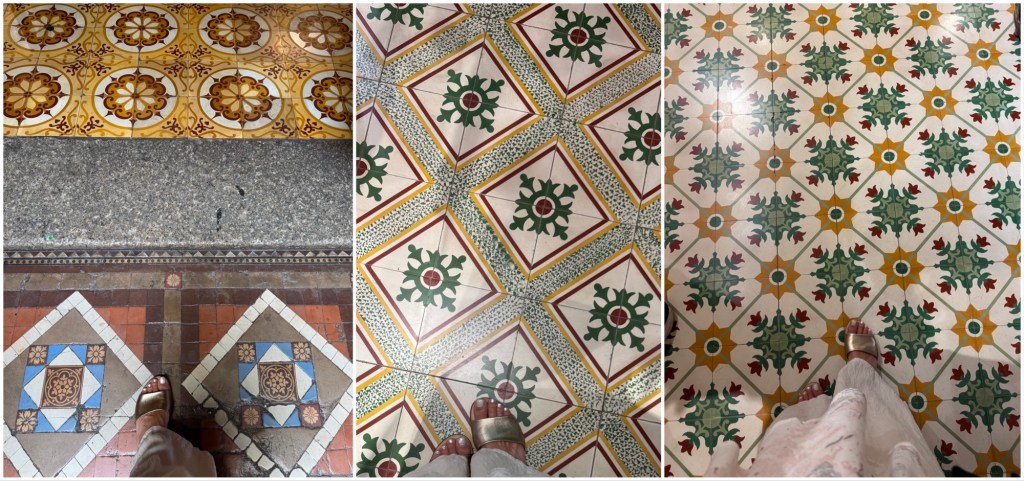
I’m always fascinated by decorative floors, so the variety and colours of the mostly original English Stoke-on-Trent ceramic floor tiles were really interesting.
The fact is that between items of historical significance to the mansion’s original era, and Peter Soon’s vast collection of antiques and jewellery, everywhere we looked had something that was fascinating.
The main dining room was set up with a long table and 12 chairs, although it could be lengthened even more. Chung had four wives and 16 children!
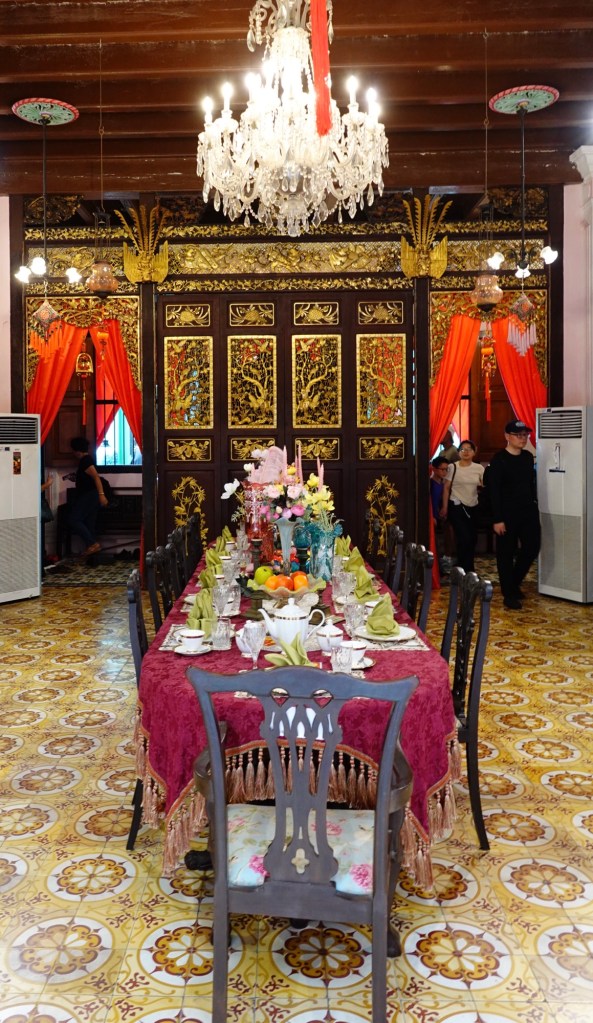
As was the fashion in England, Peranakan mansions also had separate men’s and ladies’ withdrawing rooms for after dinner.
The ladies’ room was set up almost like a smaller dining room.
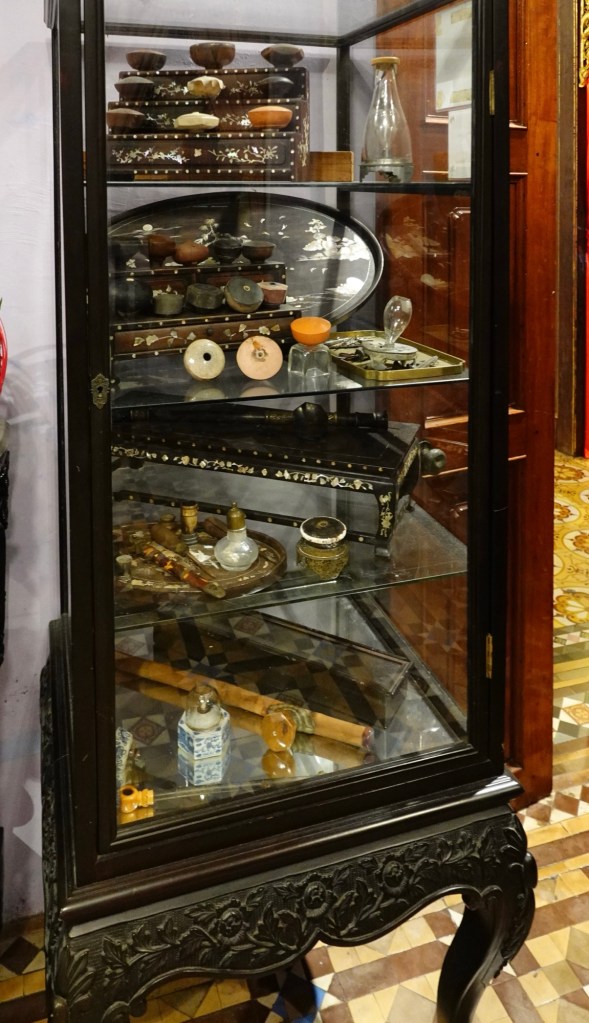
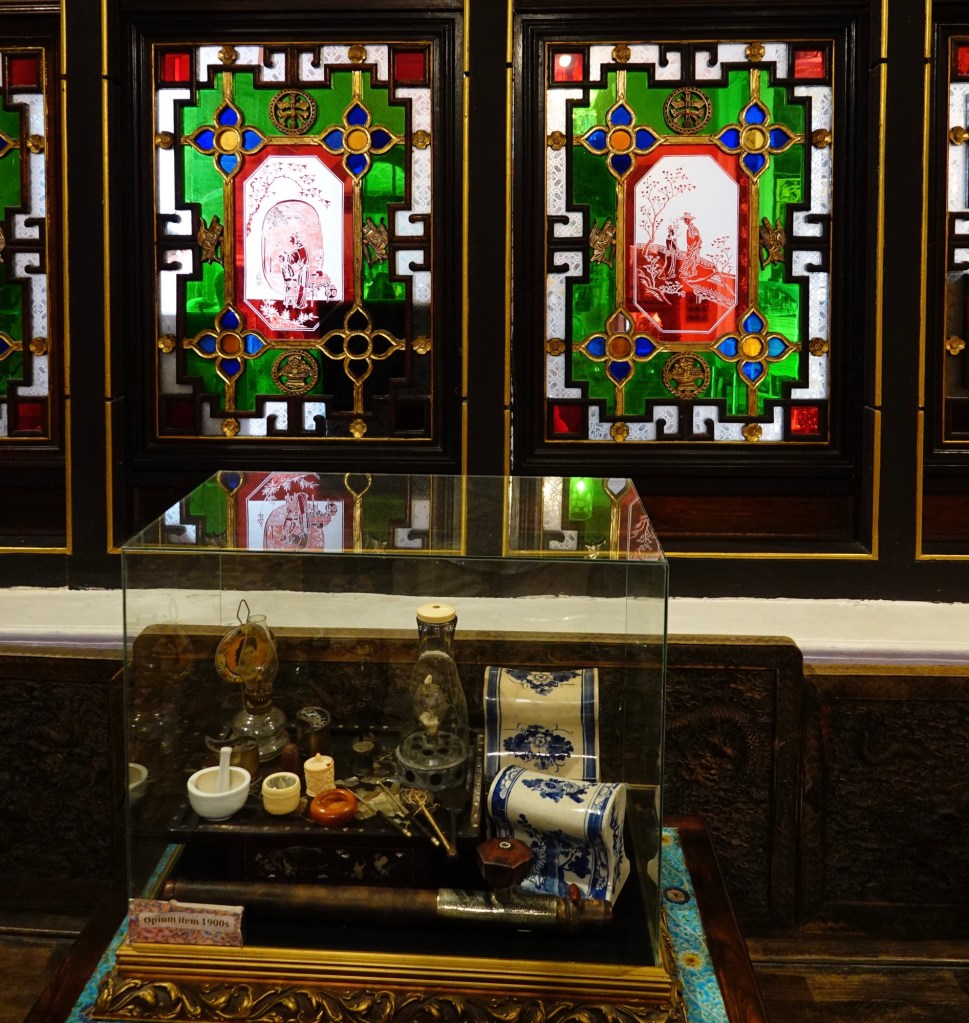
The men’s area was a smoking room, complete with opium beds and displays of opium paraphernalia. Originally used just as a painkiller, it became, for a while, fashionable.
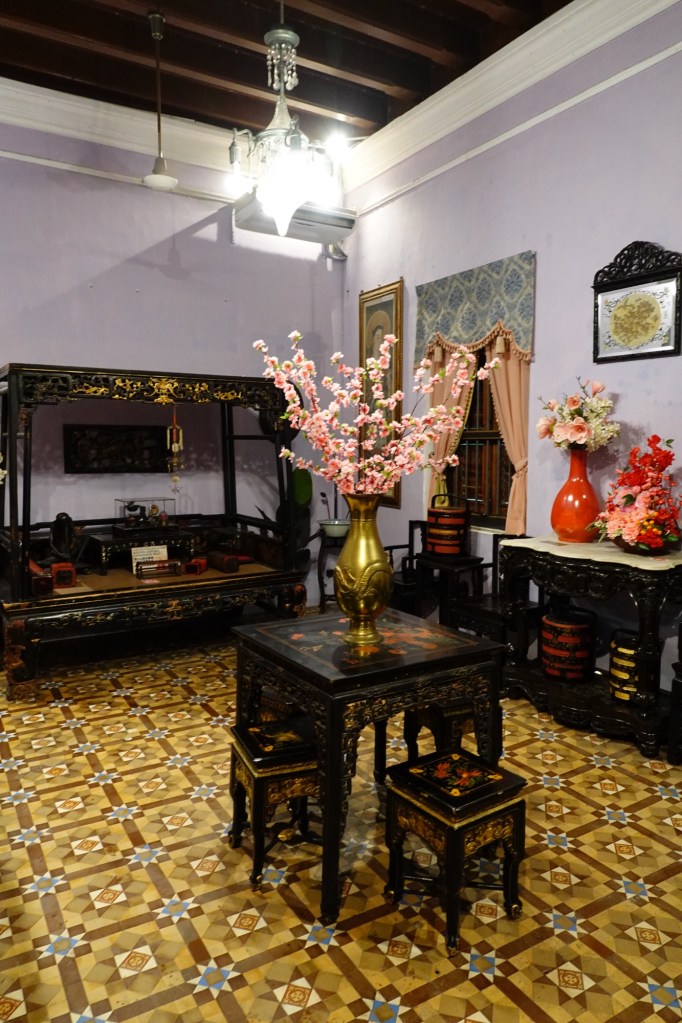
There was also a parlour.
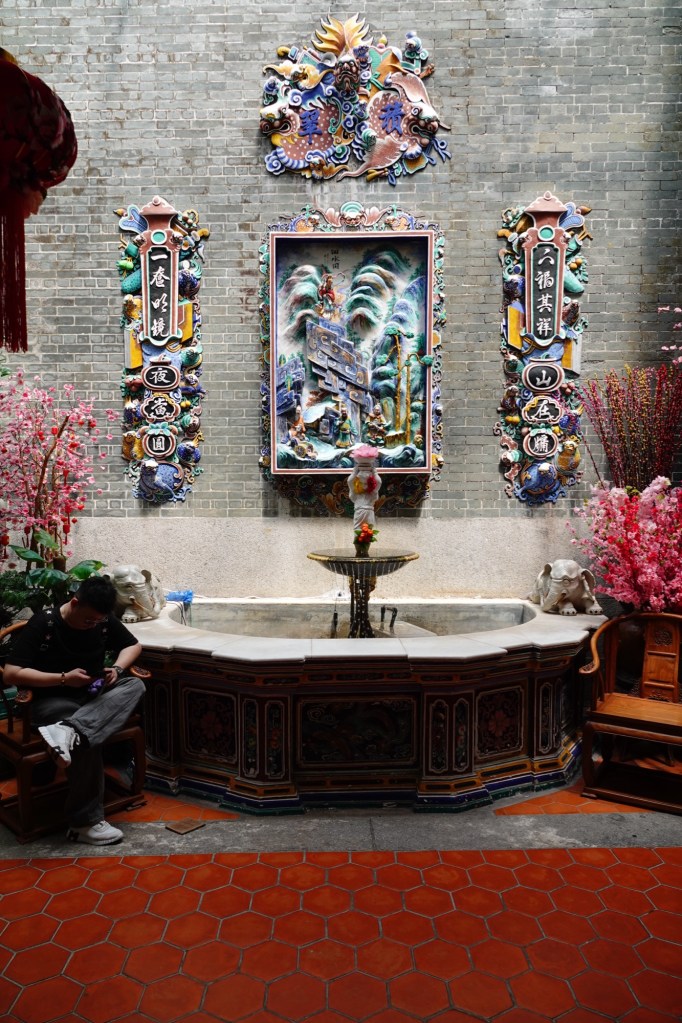
We passed a fountain in the hallway that led to the separate male and female servants’ quarters. A household like Ching’s would have had a staff of about 100.
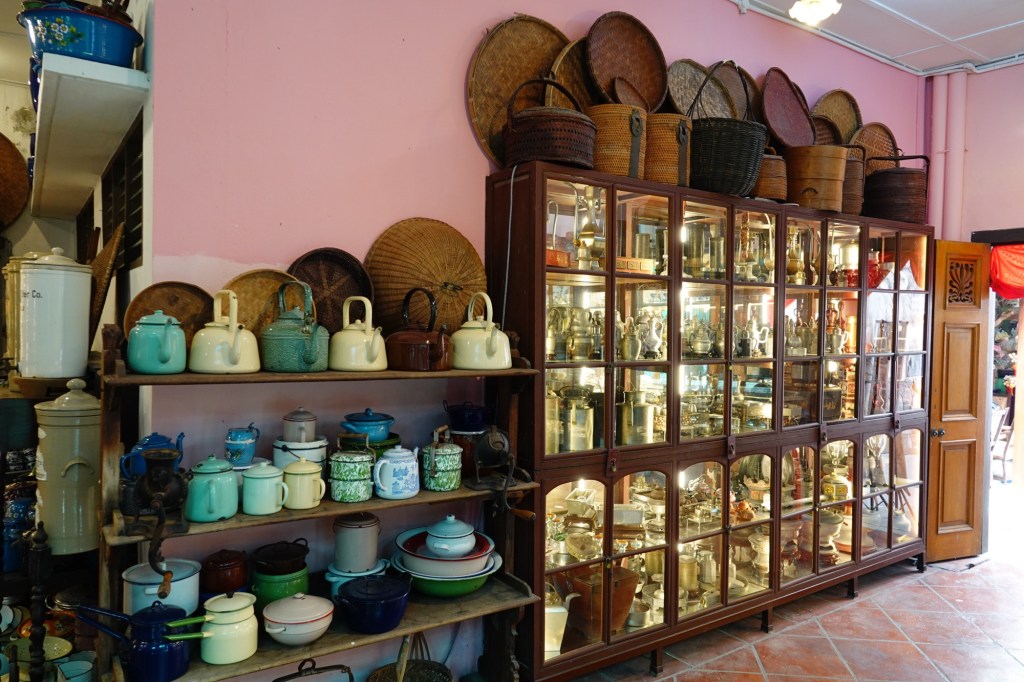
What was the kitchen now houses a display of antique cookware, china, and Royal Selangor pewter (which I didn’t realize was a Malaysian company, founded in 1885).
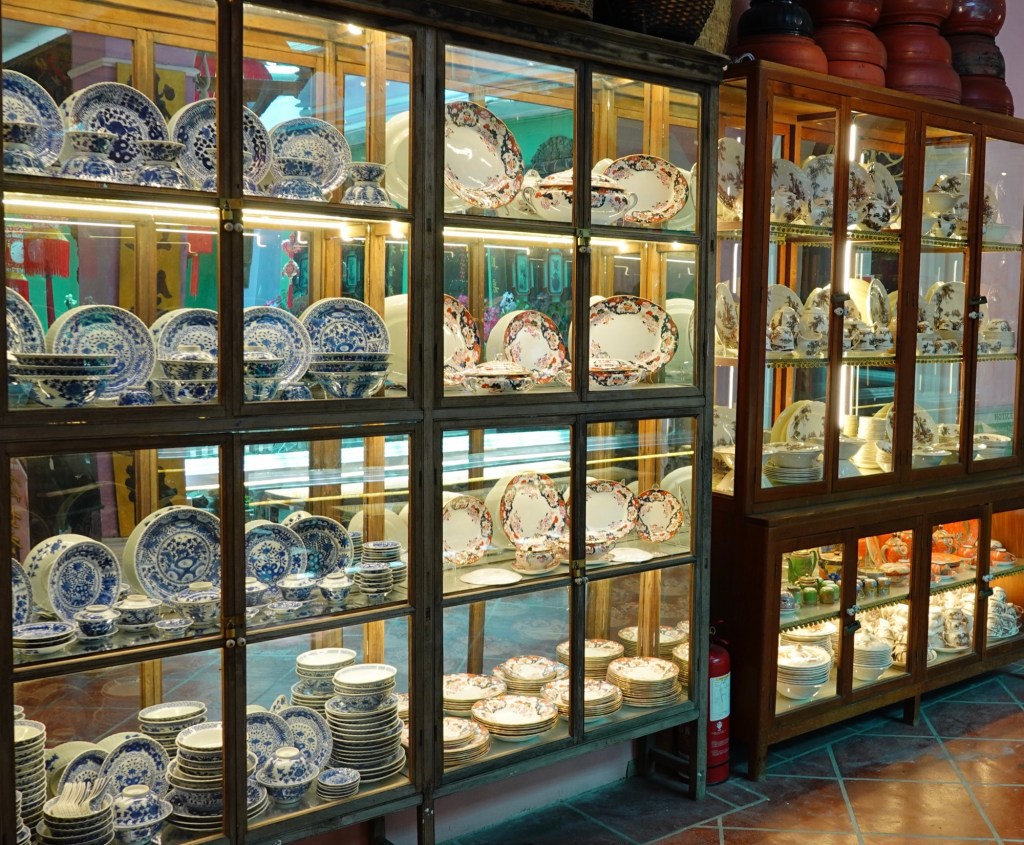
Stanley told us about the tradition that every Nyonya must know how to do three things: sew, embroider, and cook. In former times, girls began learning those things, in that order, at around age six, and were often married by age 13 or 14. The size dowry that the groom’s family paid, which could be in the hundreds of thousands of dollars in wealthy families, was determined in part by a girl’s skill in those three critical arts.
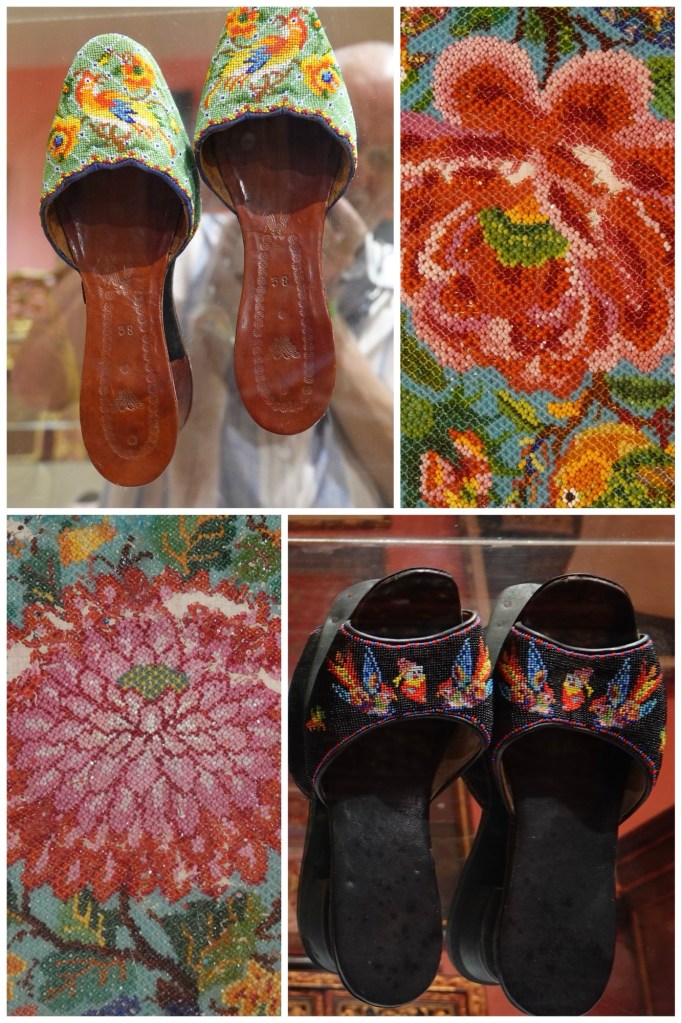
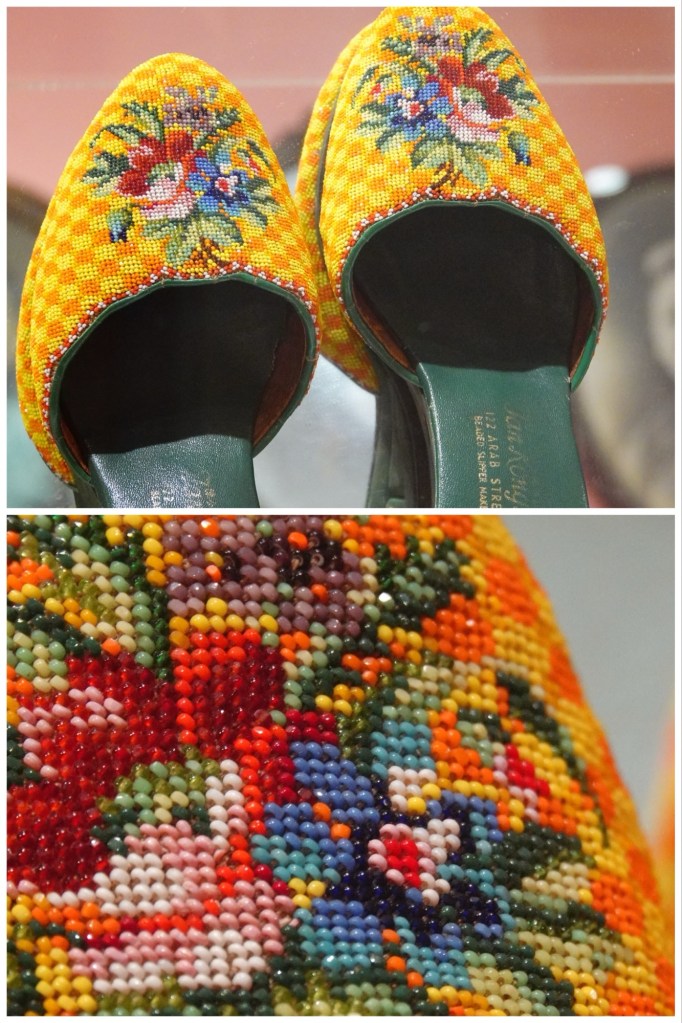
A prospective bride also had to make a pair of beaded slippers to present to her prospective mother-in-law, who would arrange for four friends to join her in critiquing them. If they were not deemed perfect…
We were shown an extensive display of antique beaded slippers. The beads are glass, imported from France, and seem impossible tiny.
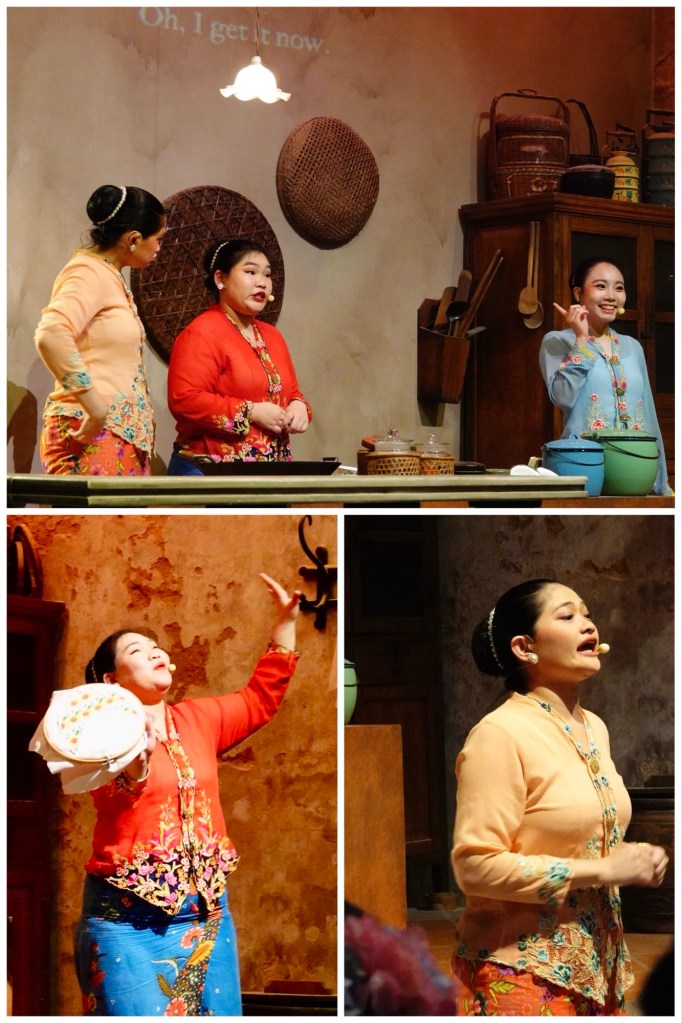
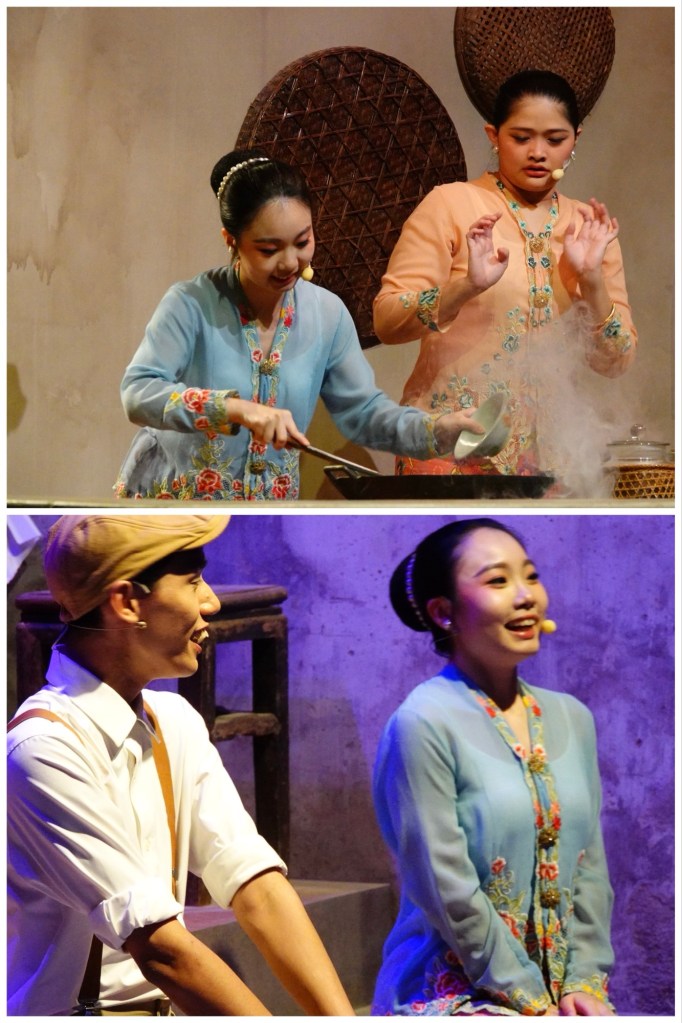
Part of the experience at the mansion is a humorous play, performed in Chinese (although with some surtitles projected on the stage backdrop), on the theme of a a Peranakan wife being able to sew her own sarong, and cook delicious food. Two older sisters try to “rescue” the cooking skills of their newly wed younger sibling, whose husband is lovestruck but cannot stomach her cooking.
After the play, we had almost an hour before the museum’s closing time to wander around. Stanley advised us not to miss the mansion’s upstairs rooms, but we also wanted a second look at the spectacular jewellery collection. Fortunately, we were able to do both.
Just like at our hotel, we had to remove our shoes before going upstairs onto polished wooden floors.
By perking out the window from the upstairs hallway, we got an up-close look at the ornate painted plasterwork framing the roofline.
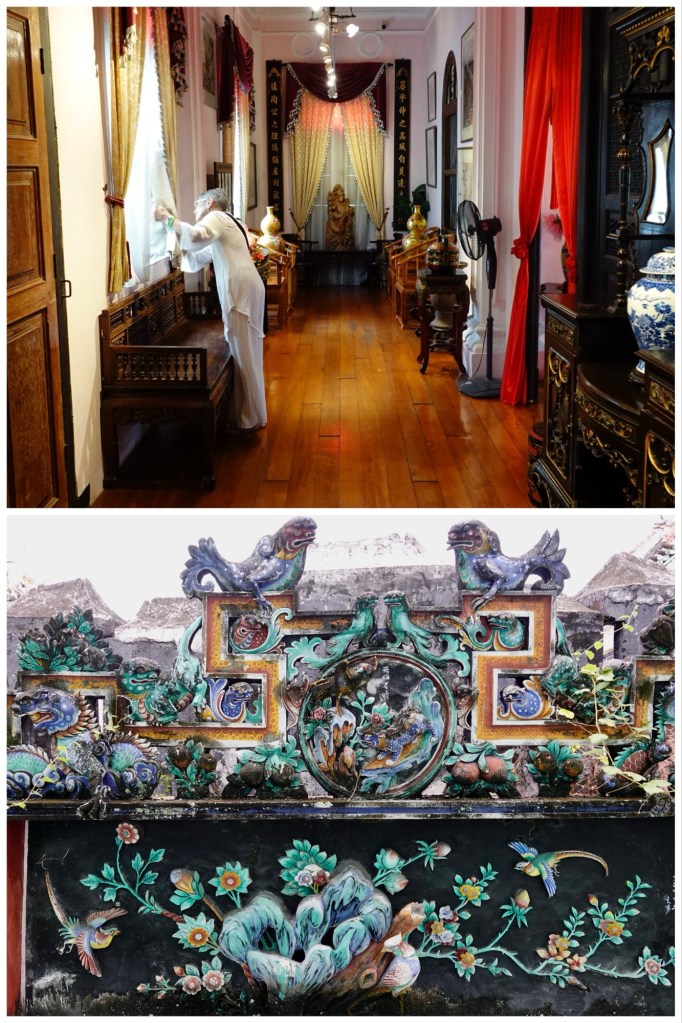
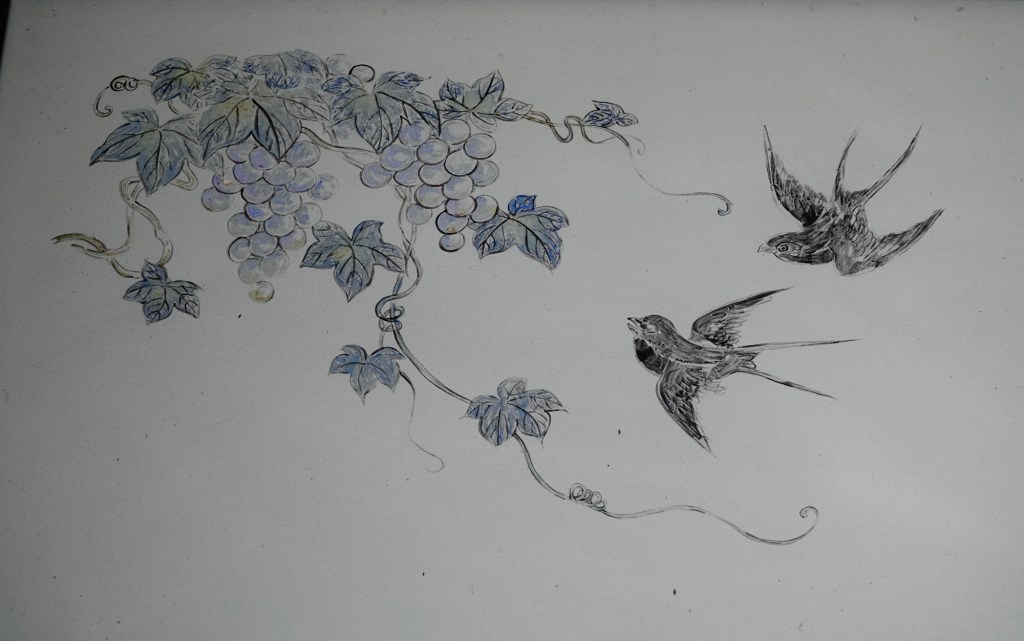
The upper level is open to the first floor, and both are open to the elements from above. That design allowed both air circulation and collection of rainwater into a square pool on the ground floor. Surrounding the open area are panes of frosted glass painted with birds and flowers in delicate pastel colours.
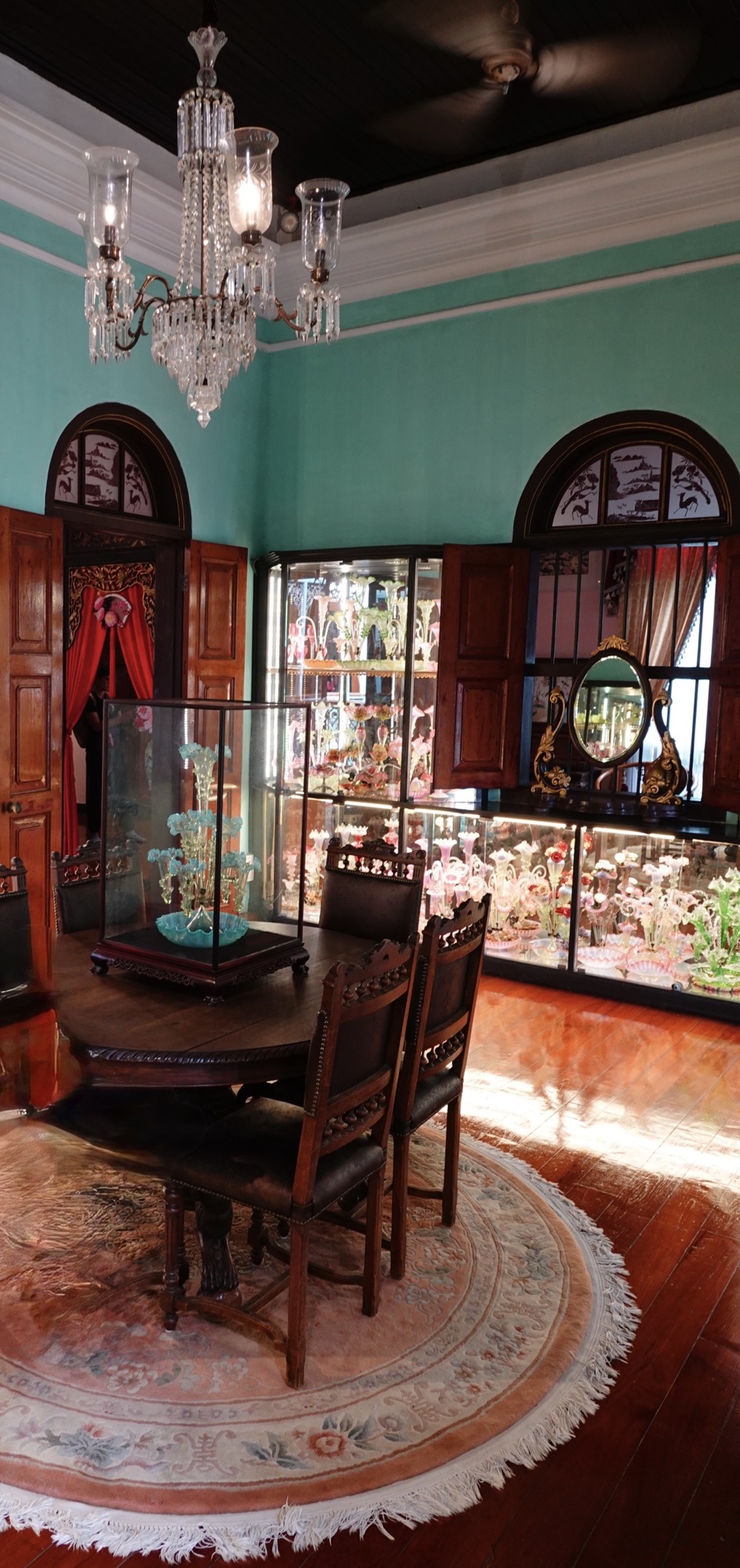
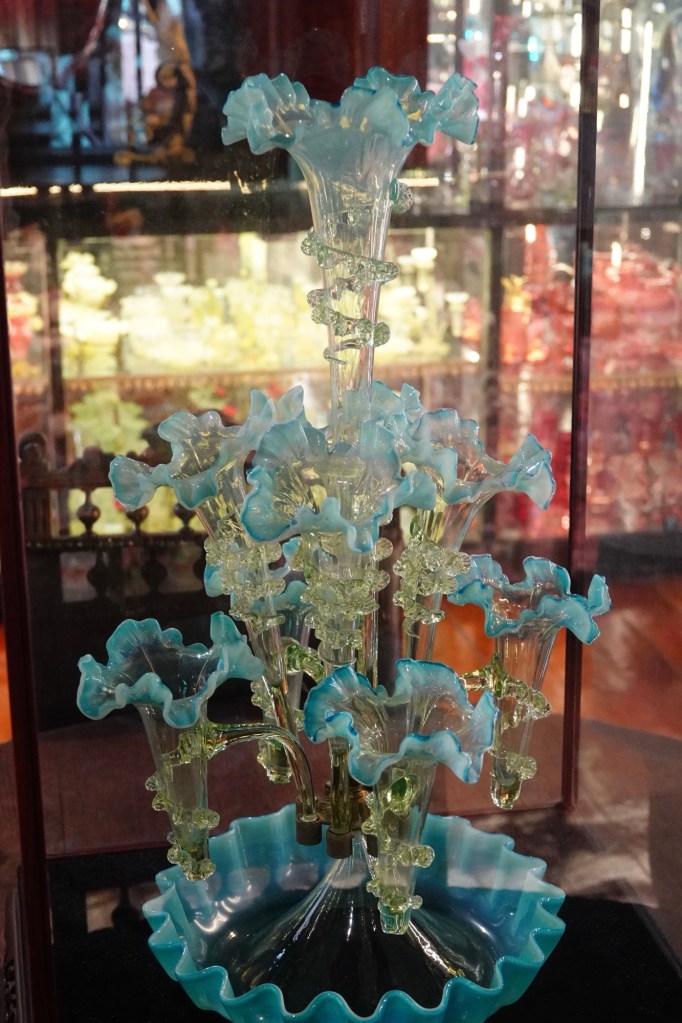
On one side landing was a room filled with antique glassware.
On the opposite side, a sitting room filled with more antiques. There is so much stuff on display that it is almost overwhelming.
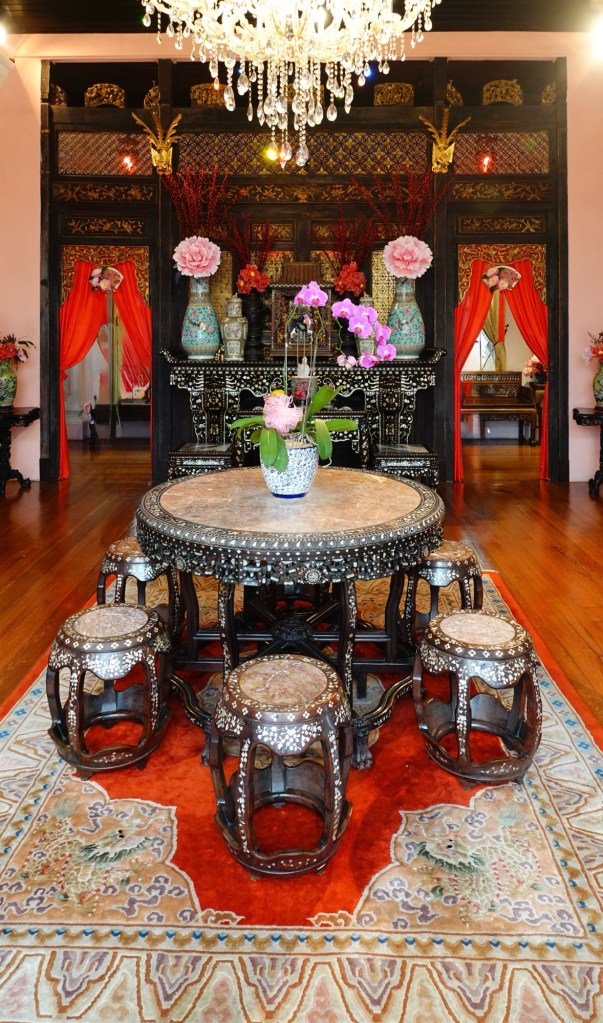
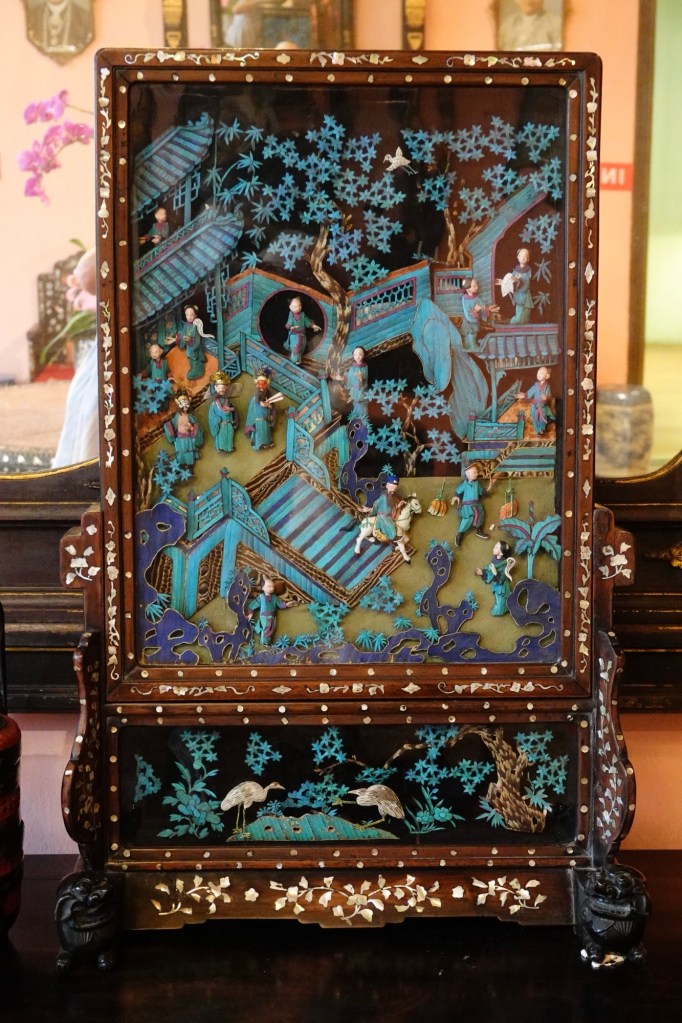
Looking across the opening, we got our first glimpse of the large landing outside the main bedrooms.
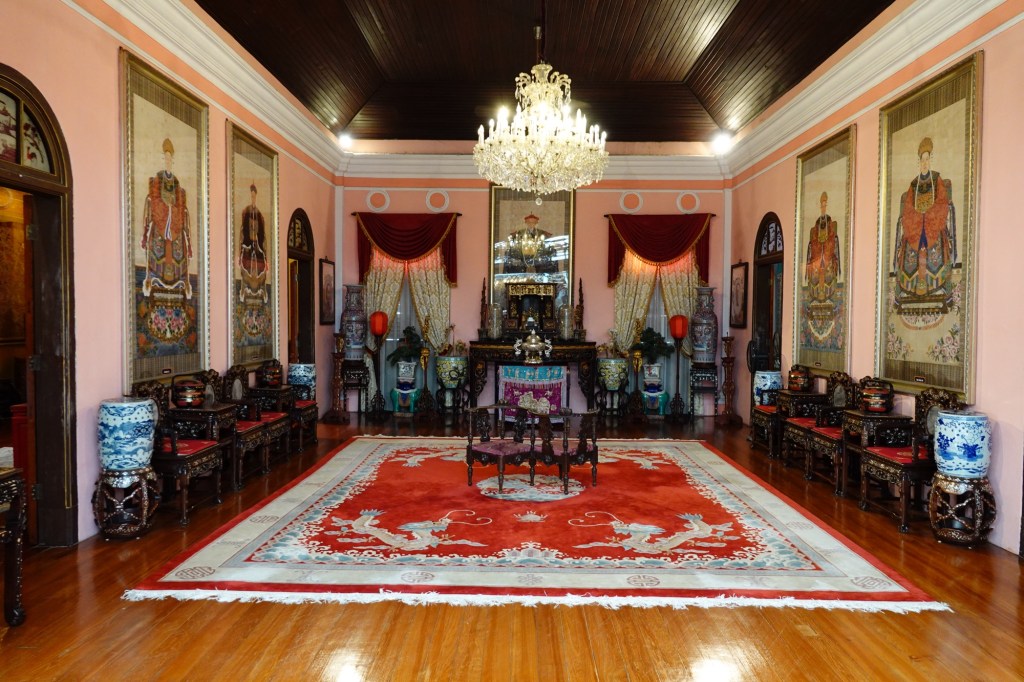
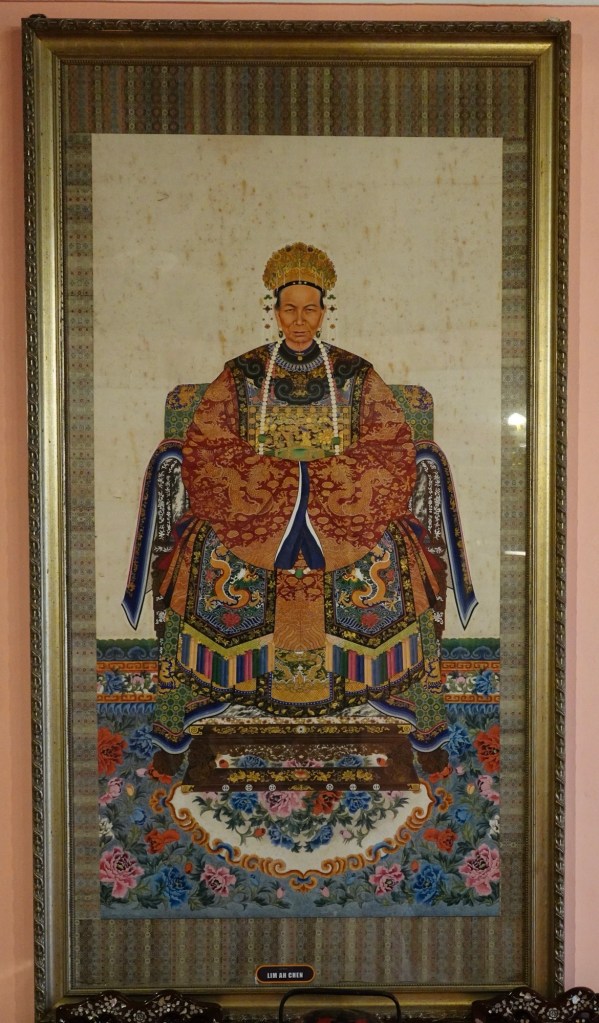
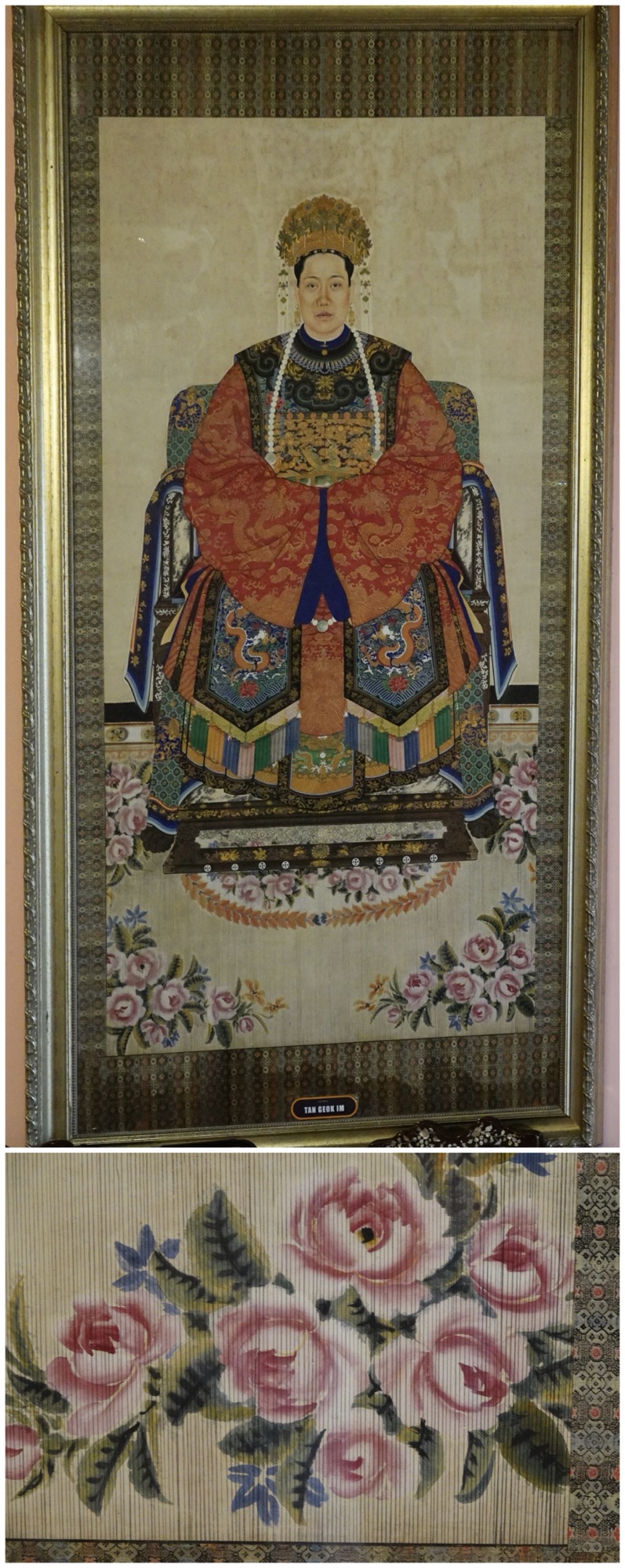
On the walls hang large painted portraits of Babas and Nonyas.
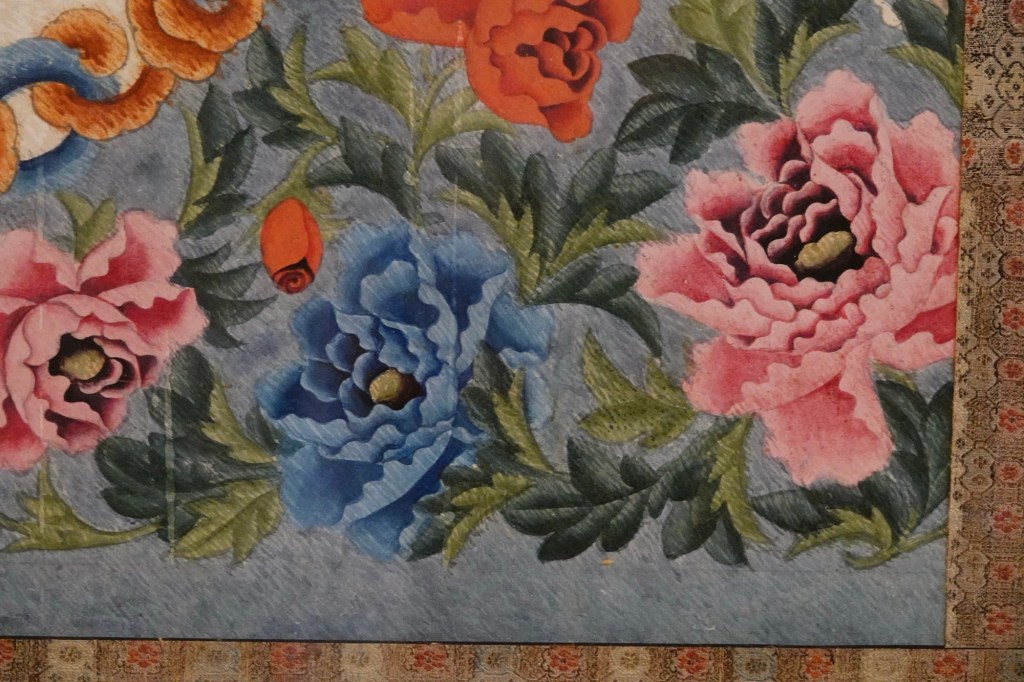
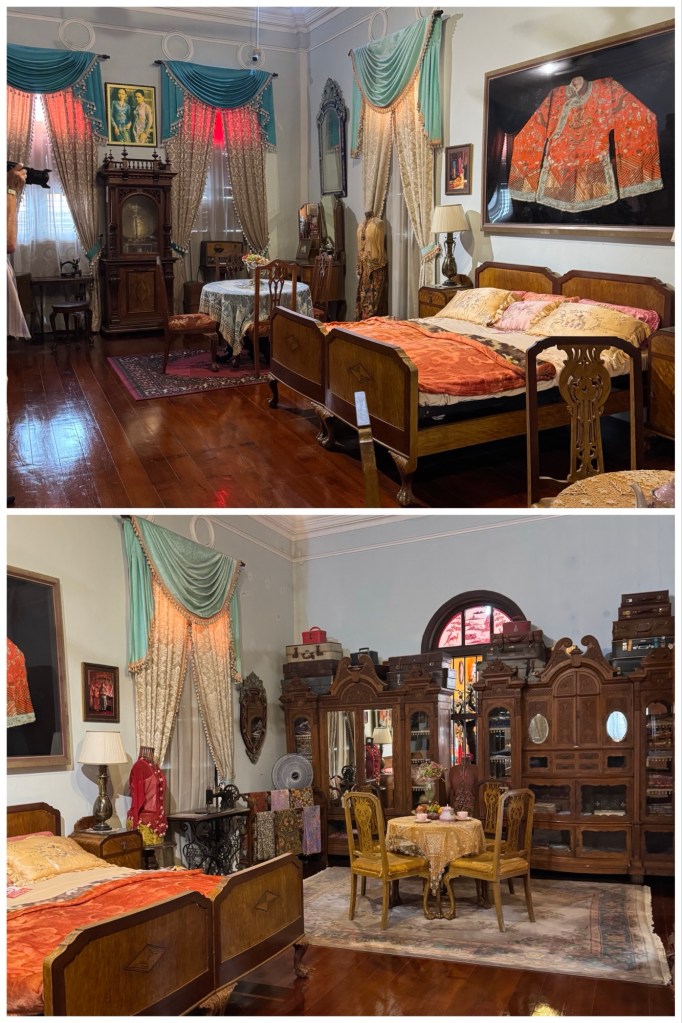
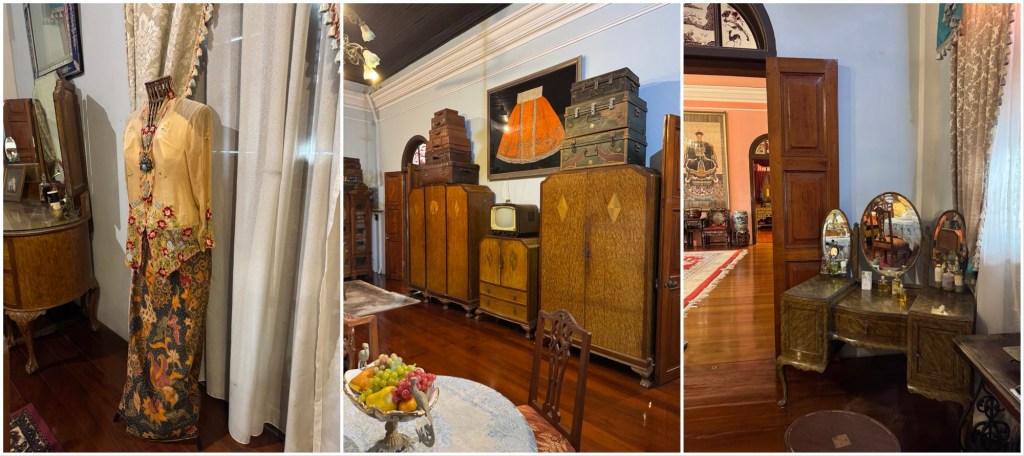
The bedrooms were as ornate and full of embellishments as everything else. I’m such a minimalist that all these delicate dust-collecting decorations would make me crazy. The photos below are all different angles taken of just ONE bedroom!
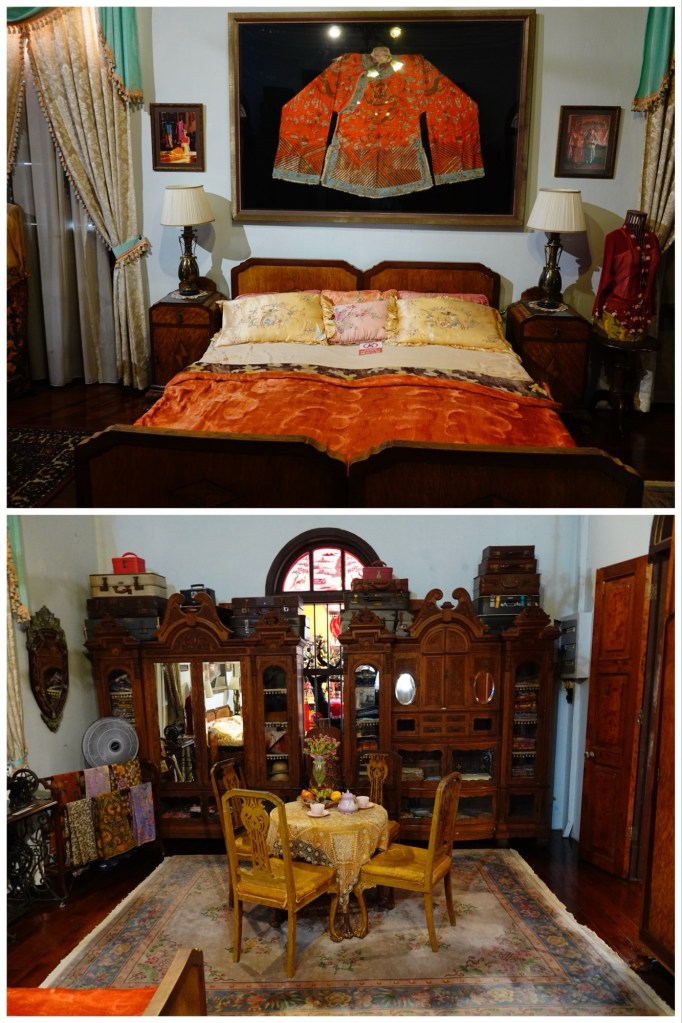
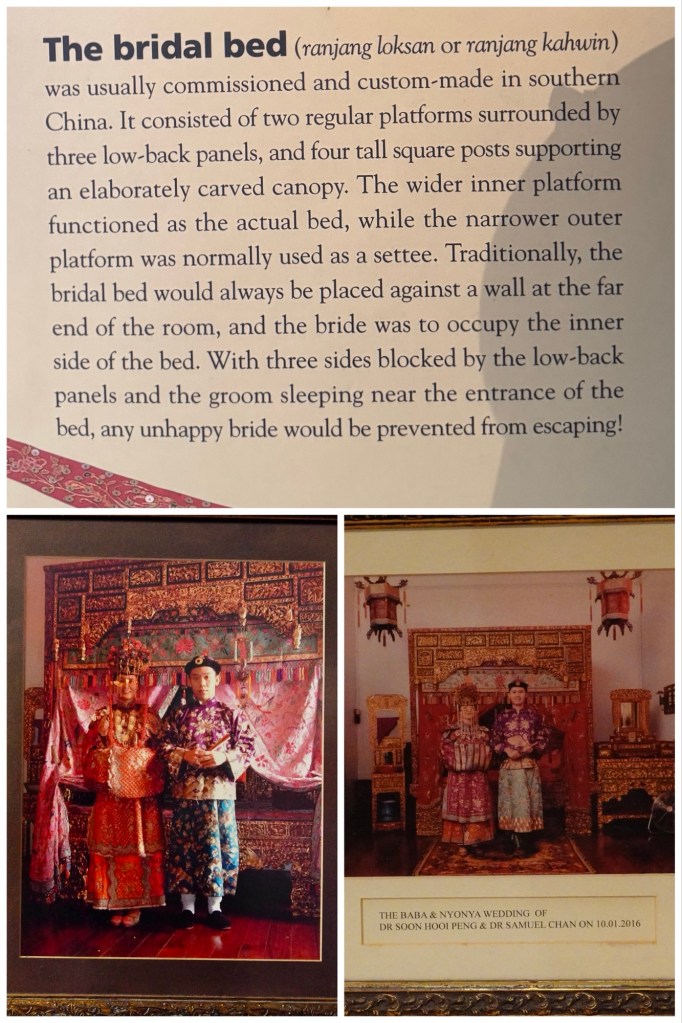
The most ornate decoration was yet to come. The furniture in a bridal chamber, which was part of the bride’s trousseau, was usually of namwood, lacquered in auspicious red, and gilded. No expenses were spared as the bridal chamber was the quintessential symbol of a family’s wealth and status.
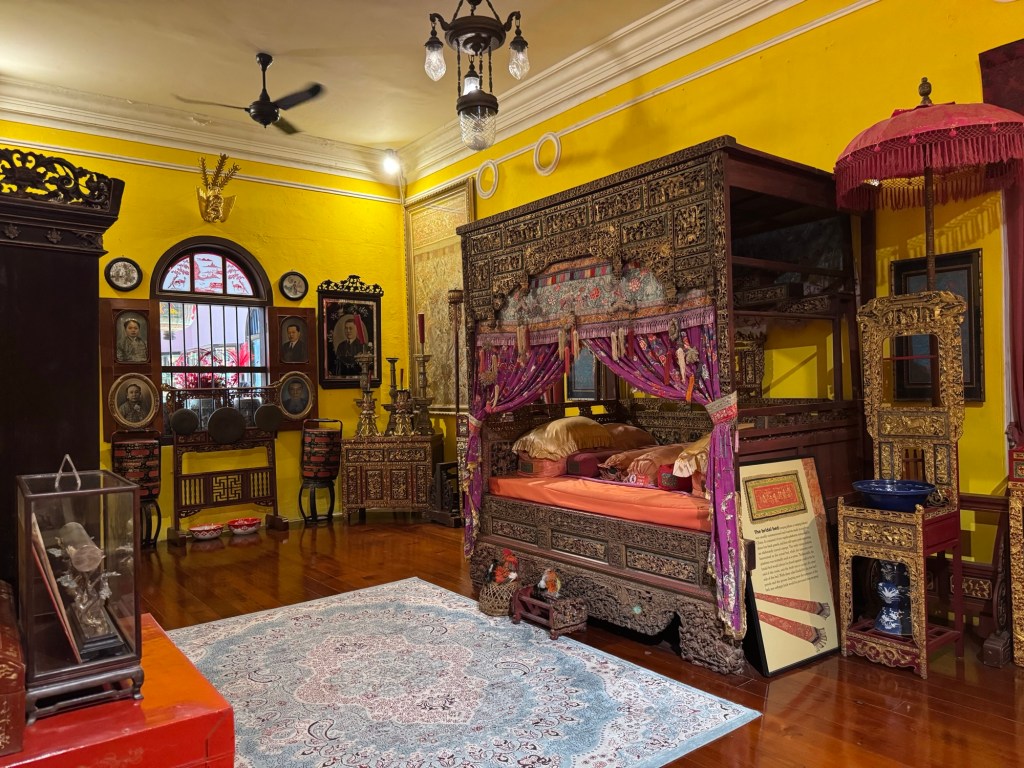
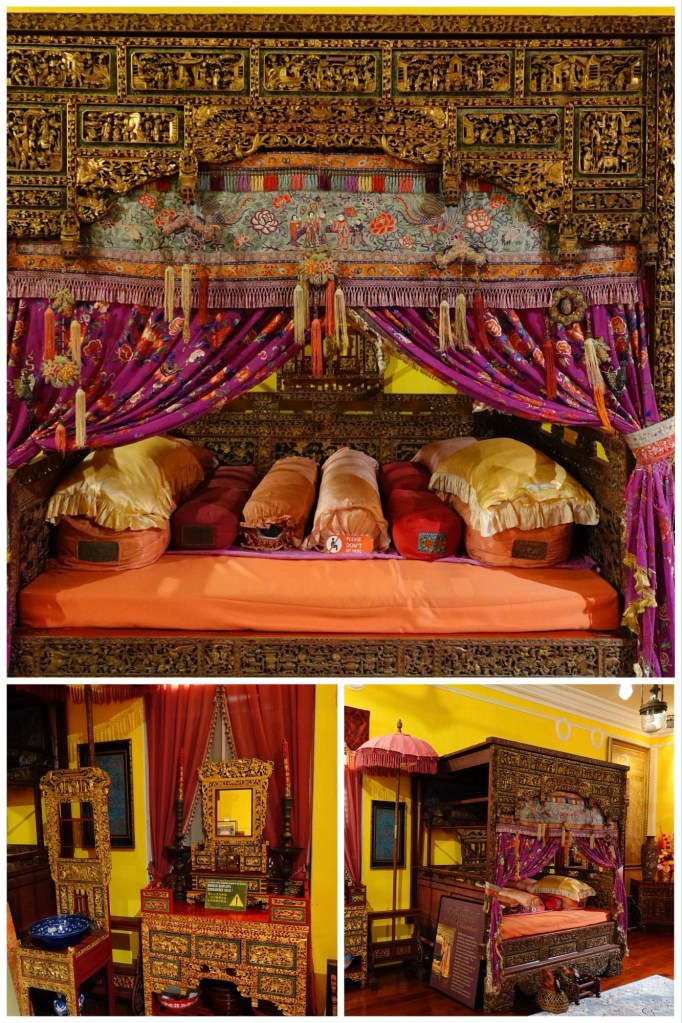
After all that opulence, we might have thought things couldn’t get any more impressive, but we were wrong.
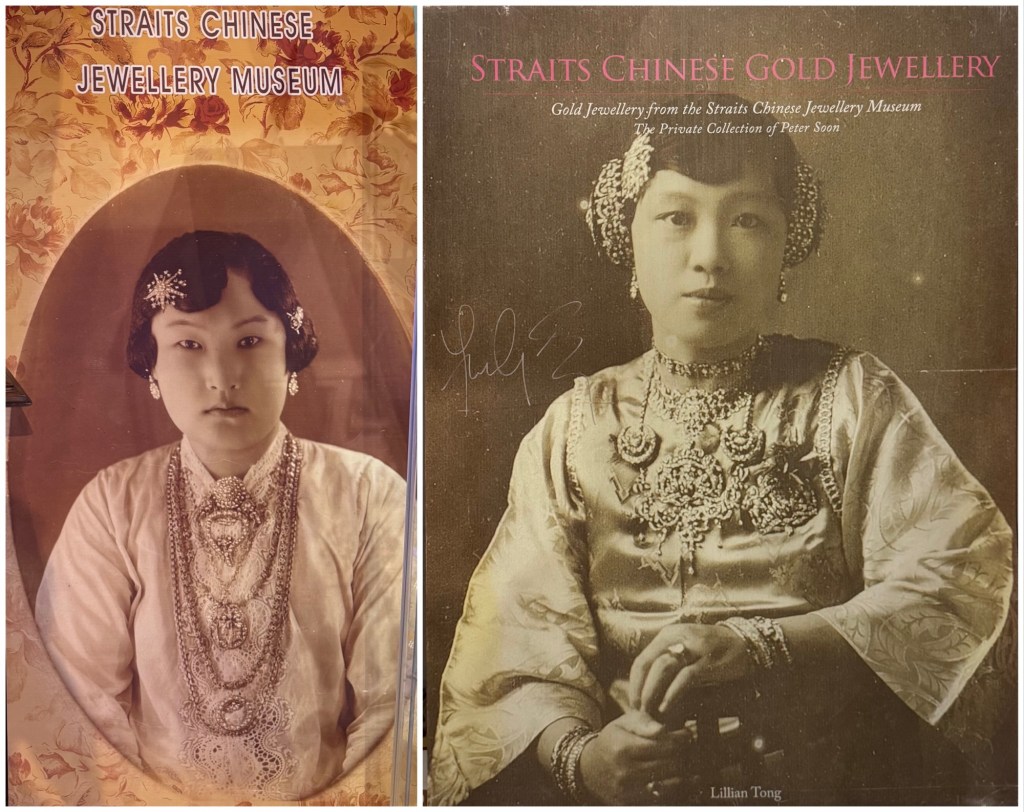
Once again, there were so many items – literally hundreds – that it was overwhelming. I chose just three to represent what is a collection worth millions of USD.
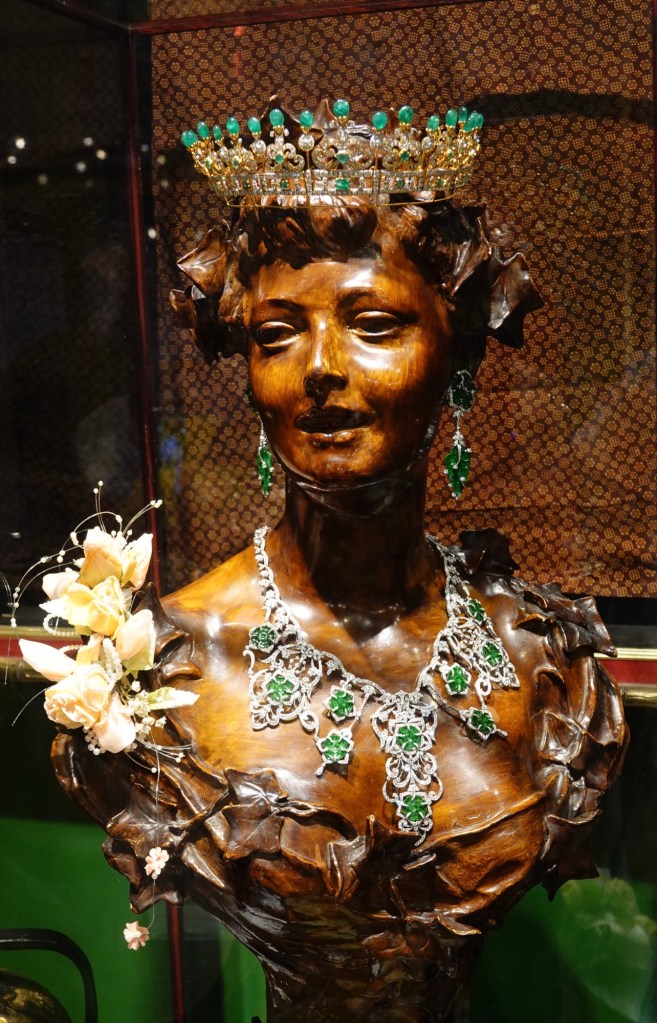
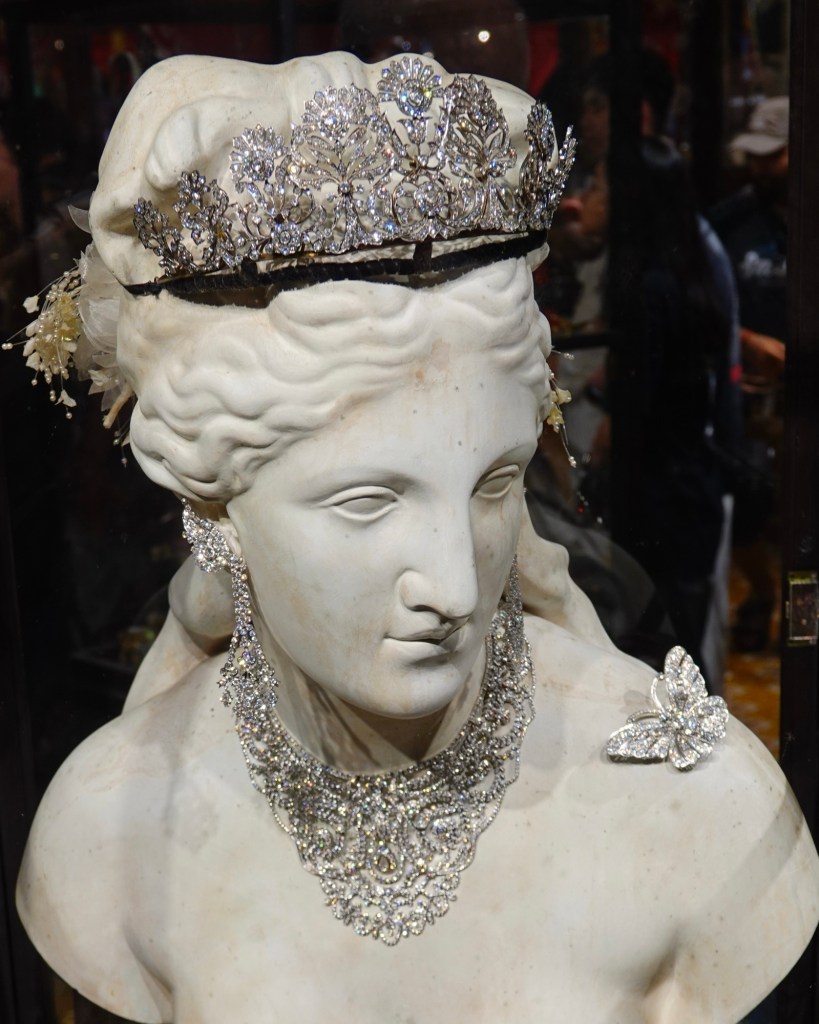
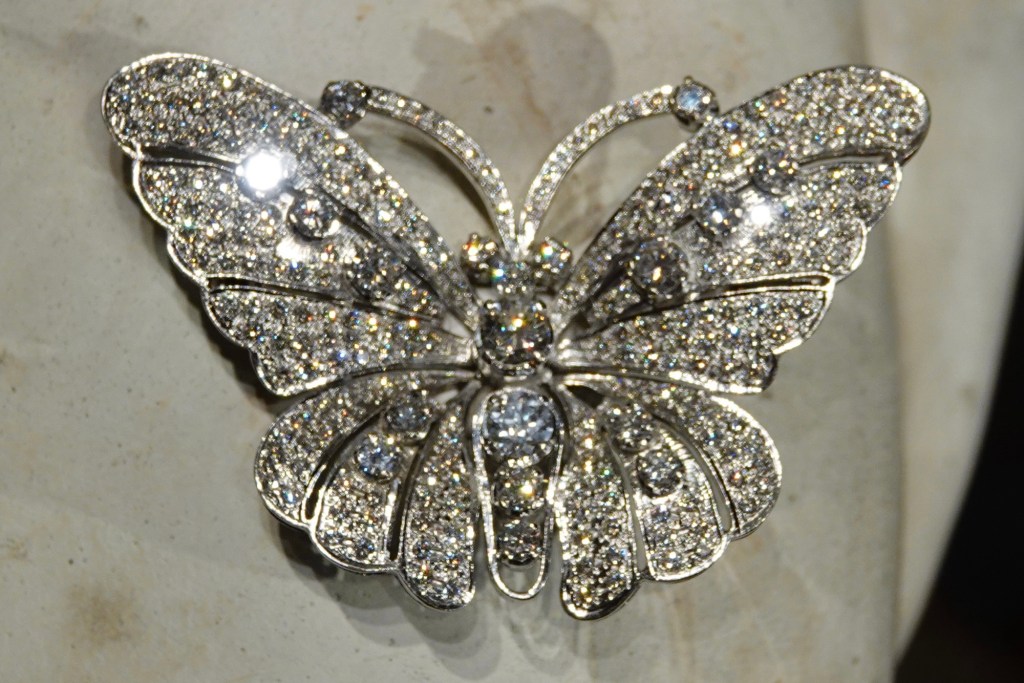
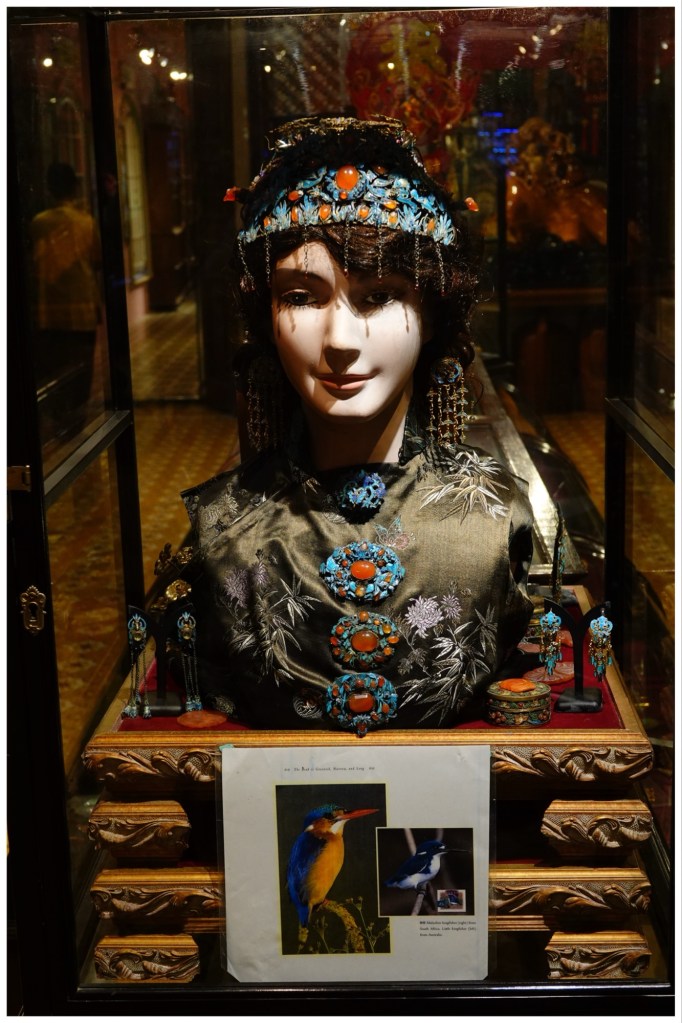
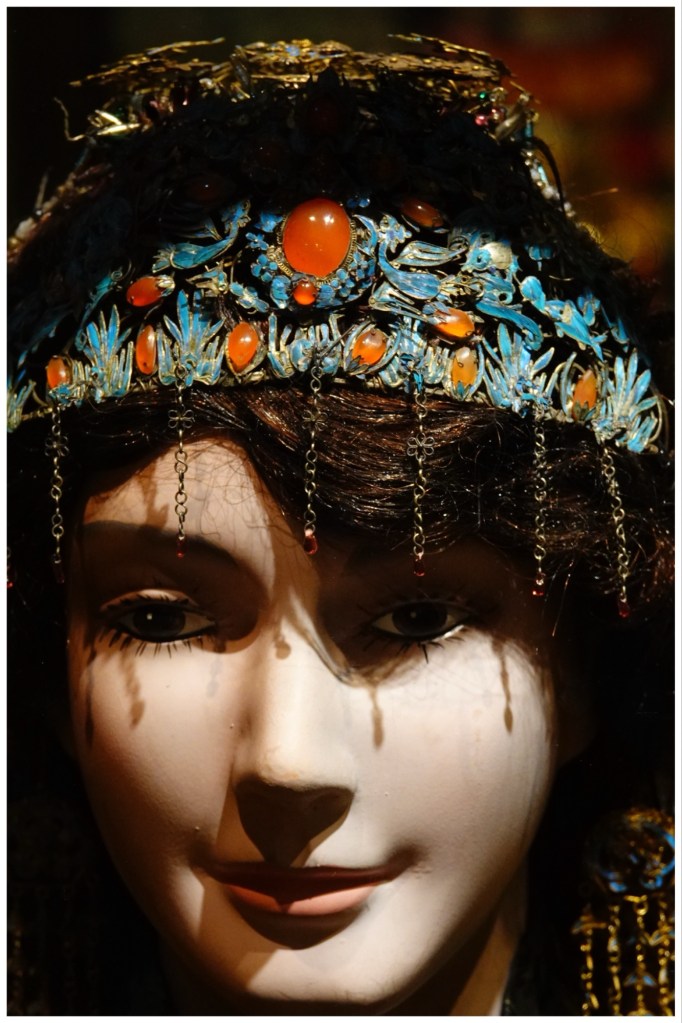
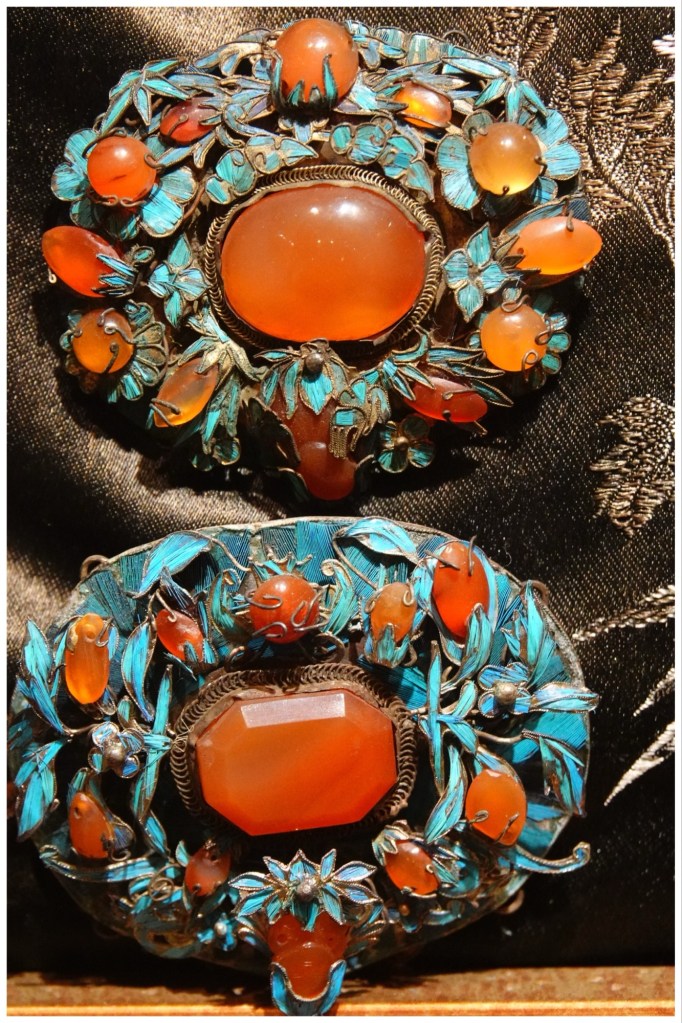
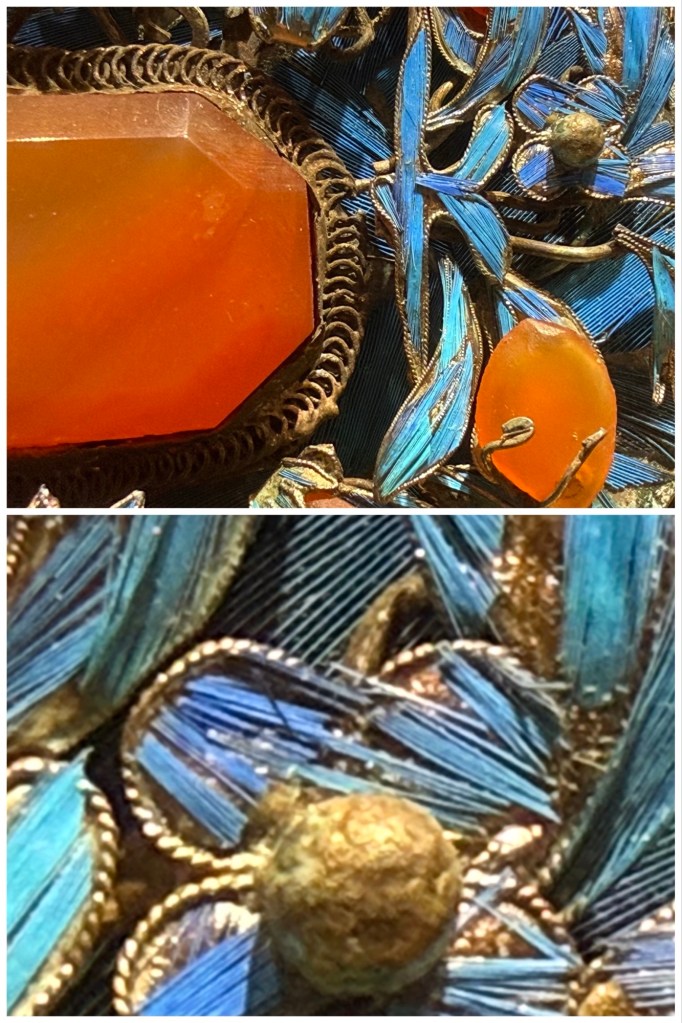
We weren’t told the value of the diamond butterfly brooch, but we were shown the museum’s truly priceless pieces (below). There is, as far as we know, not another set of this quality in the world, and it would be impossible to duplicate.
This jewellery set is made of individual Kingfisher feathers set with carnelians in gilt silver. It is estimated that it would have taken up to two years to craft, using only one or two feathers from any bird caught. The birds were never “plucked” or killed since, as Stanley put it, “you don’t kill the goose that lays the golden eggs”. The technique of separating each feather into its individual barbs, and then interweaving them has been lost. Plus, Kingfishers are a protected species.
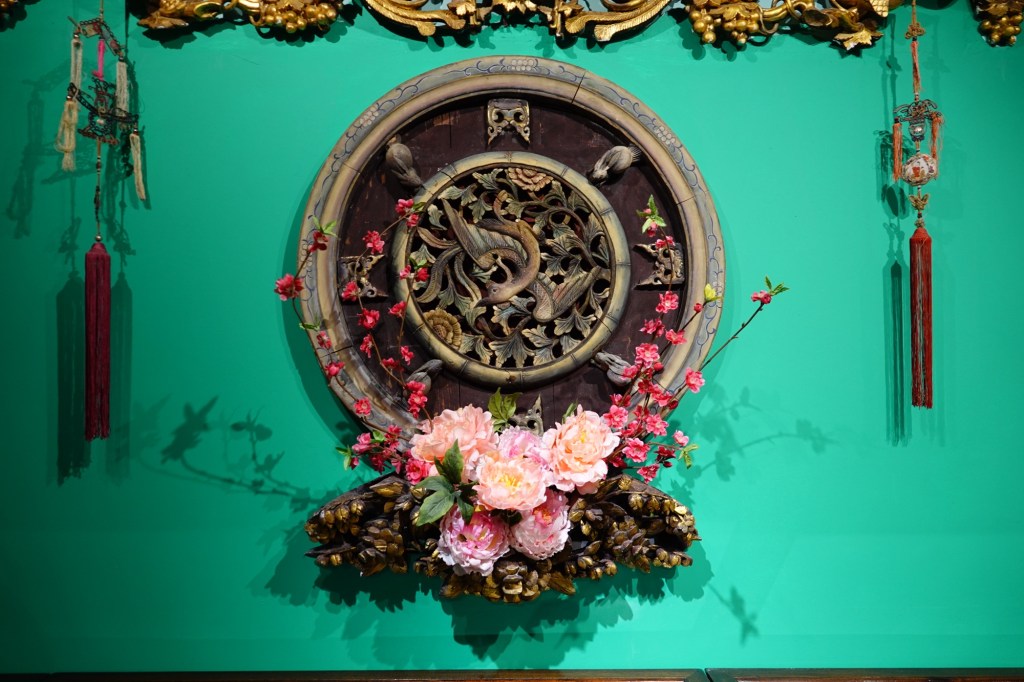
We left the museum by photographing one more portion of its iconic green walls. In my opinion, this is an experience not to be missed if visiting Penang. Our pictures only cover a fraction of what we saw, and when I look back at them I hope I will recall how wonderful this place was.
 Rose and Ted’s Excellent Adventure