It’s a travel day today as we fly Malaysia Air on a commuter flight from KL to Penang.
Despite being on a short domestic flight, we git a message from the airline requesting that we be at the airport 3-4 hours before our flight time to check baggage and clear security be ause it is a busy travel week for Malaysians.
That makes it a good time to look back at the foods that were such a big part of our KL stay.
We knew after the single day here on our world cruise last year that trying the local foods was one of the things we wanted to do more of when we returned – and the city certainly has a wide range of food cultures and restaurant styles.
Right across the street from us is BetaKL, which has received a Michelin star for the past three years in a row. They offer a 2-1/2 hour “Tour of Malaysia” experience with beverage pairings at 960MYR/$335CAD per person.
That’s NOT the way we ate while we were here.
DAY ONE
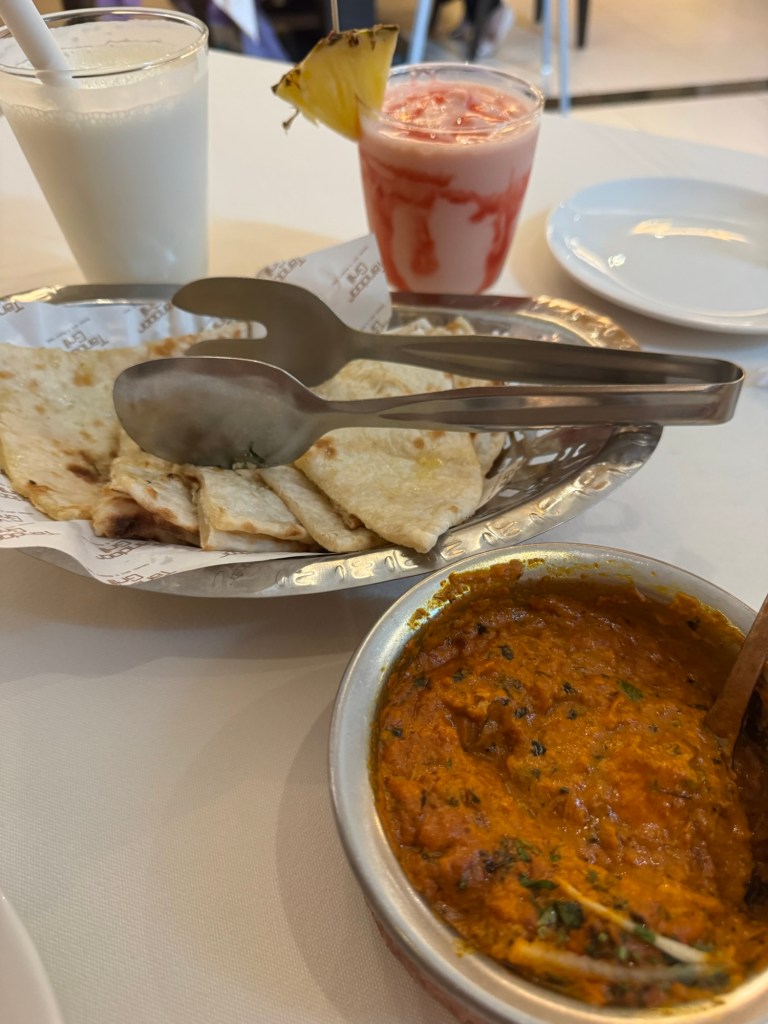
Our first lunch in KL was at the Tandoor Grill, a traditional white tablecloth Indian restaurant. I was so focussed on eating that I forgot to take a photo before messing up the presentation, but the naan basket (plain, garlic, and cheese naans), spicy chicken tikka masala (in a hammered copper dish), lassi, and fruit smoothie were all delicious. Because it was a fancier restaurant, our bill was a whopping 96 MYR, equal to $34CAD.
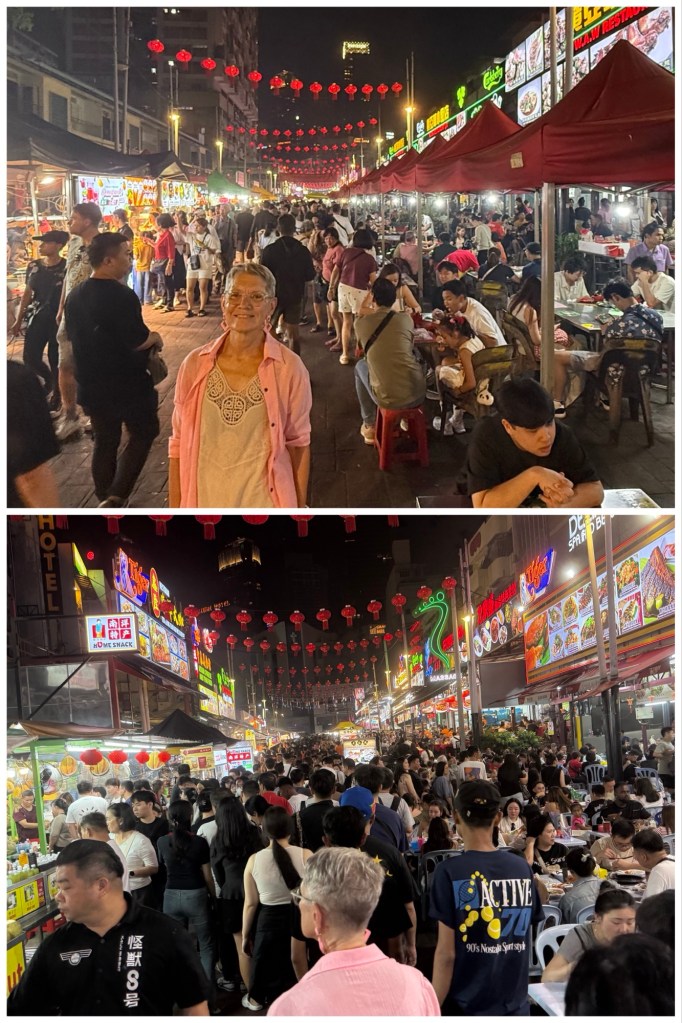
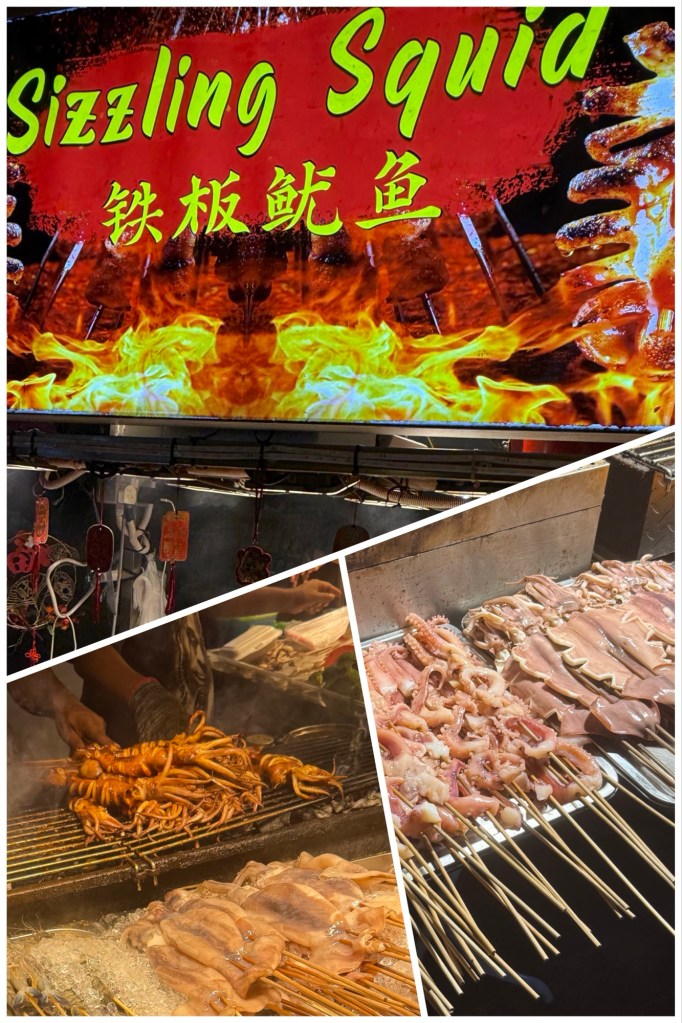
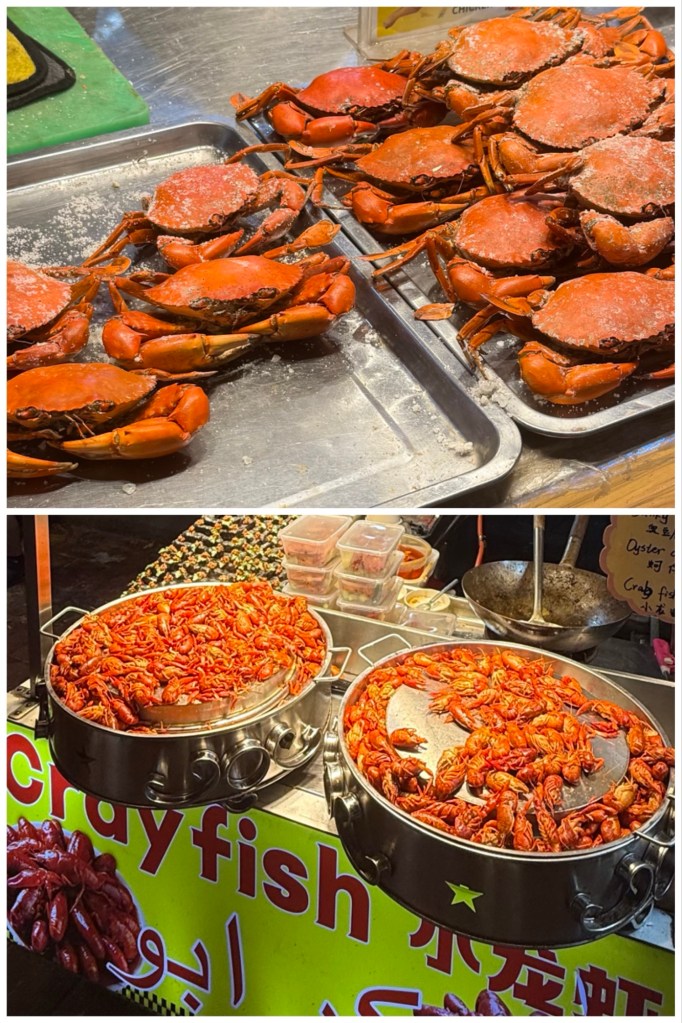
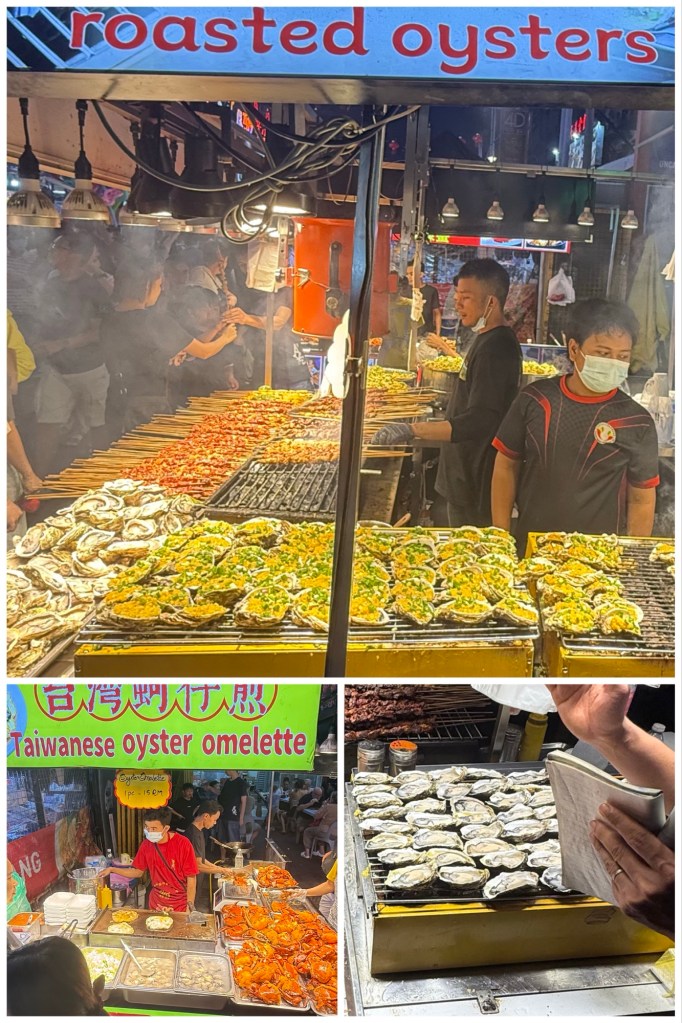
On our first night here we night we joined the throngs of people on Jalan Alor, the city centre’s food street night market. Honestly, the crush of people was insane: hundreds and hundreds of people all pushing around each other in 31°C heat, each intent on finding the most tempting foods.The smells of grilling were everywhere.
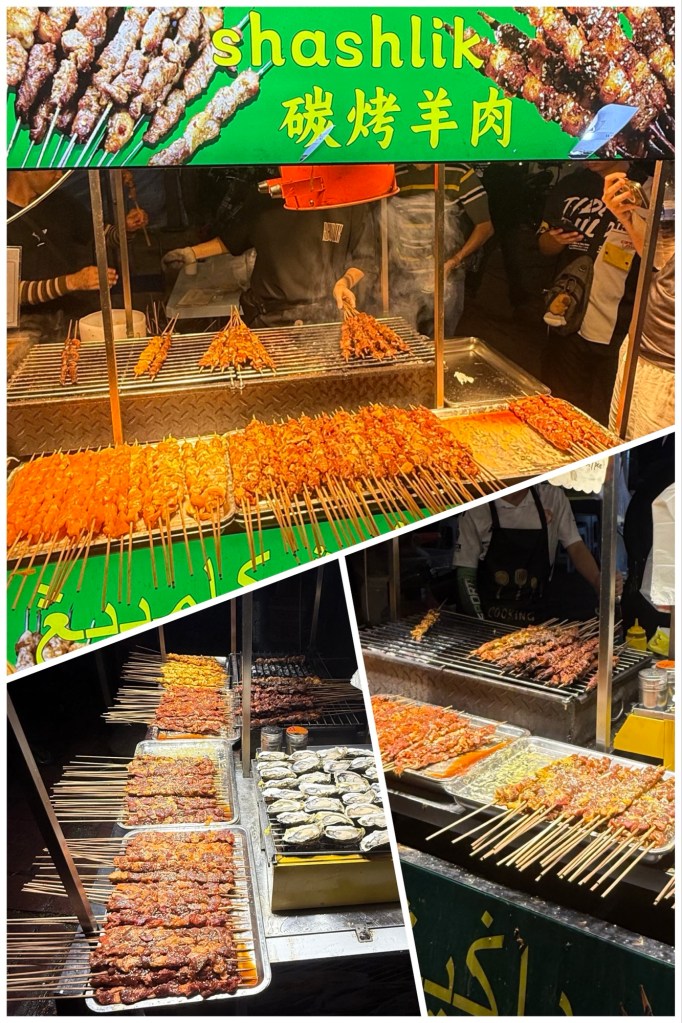
Kuala Lumpur’s mix of cultures was on display: Shashlik (skewers) of meats and seafood being grilled, potatoes being turned into deep fried spirals, dumplings and dim sum, Taiwanese oyster omelettes, sliced fruits and freshly made fruit smoothies, and even battered durian. A few restaurants have seating (although that is right up against the crowds walking by) and those serve soups, and curries, and fancier things like plated whole grilled fish.
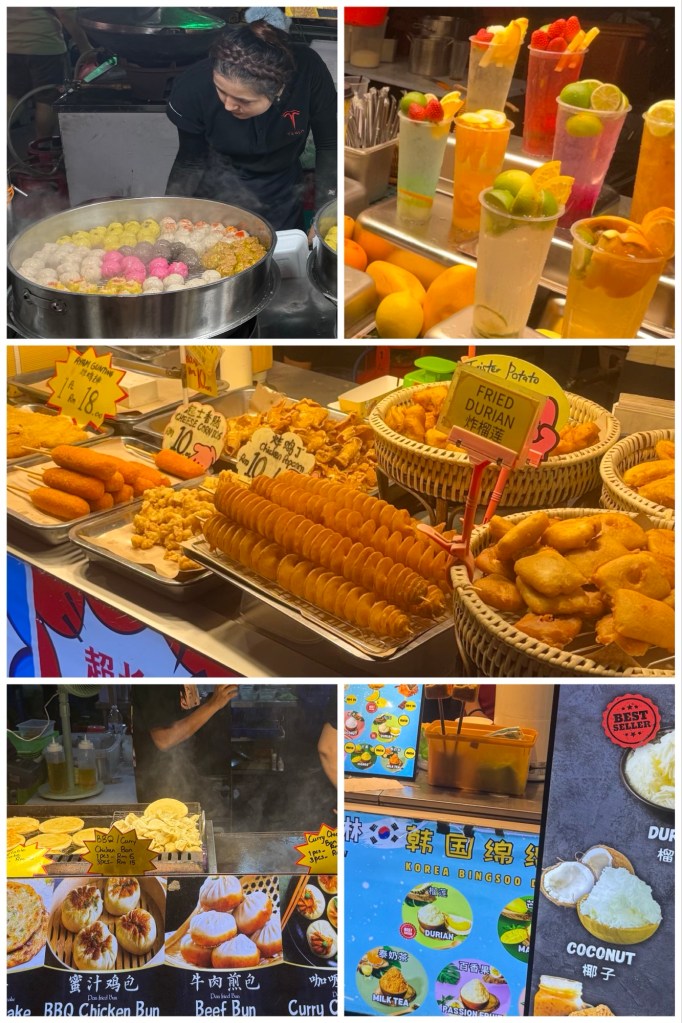
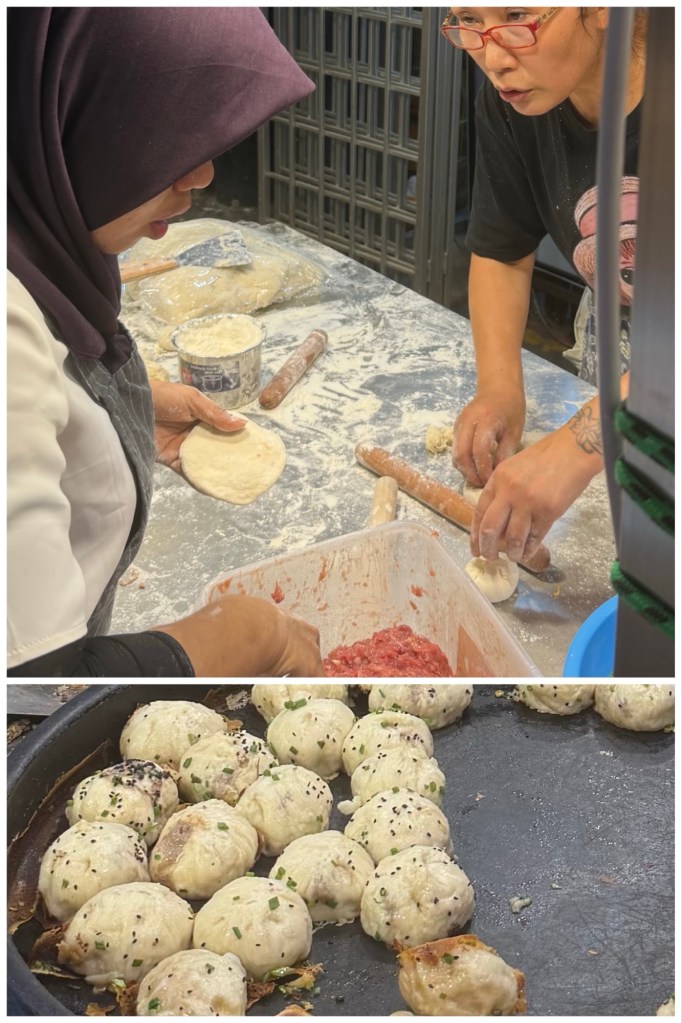
We watched the women making the juicy meat-stuffed pan-fried yeast dumplings that we brought back to our apartment as an evening snack.
A big part of why we didn’t return, or eat at more outdoor venues, wasn’t the crowds but the smell … of durian! It truly does smell like garbage, and it’s easy to understand why it is banned from hotel rooms.
Nonetheless, Malaysians are so obsessed with it that there is even a month-long durian festival. We walked past people eating it fresh, as ice cream, and as cakes, and even drinking durian smoothies.
Ted bought a frozen durian “creamsicle” to try one night. He said it didn’t taste as bad as it smelled, which is faint praise since I could smell it all the way across the room as it began to thaw.
DAY TWO
We started our day with yogurt, granola, orange juice, and instant coffee.
With the exception of the juice, the availability of those foods is largely due to demand from tourists and expats. A typical Malaysian breakfast would be a melding of Malay, Indian, and Chinese flavours, and likely involve rice or noodles and spicy egg, meat, or vegetable components. There’d probably be strong tea or coffee, but it would be a served with condensed milk. Malaysians don’t drink black coffee.
Honestly, “real” coffee is the one thing we’ve been gradually missing more and more ever since heading out on this trip. In New Zealand, each place we stayed in had a plunger (what we call a French press), and there was a fairly wide selection of plunger-grind coffees in the grocery stores. When we got to Australia, there were kettles and packets of freeze-dried coffee. We were able to ask for a plunger in Adelaide, but then couldn’t find ground coffee even in the full-sized supermarkets. In Melbourne we simply gave up and bought a jar of freeze-dried coffee, which wasn’t actually all that bad once we got used to it.In Sydney, there was a Nespresso-style machine, and the hotel provided plenty of pods.
Of course, we could go to a coffee shop, but at an average of $6CAD for a long black or a medium flat white, that would have become ridiculous given that we each drink 4-5 cups of coffee per day. $6 x 4 cups/day x 2 people x 7 days/week = $336/week just in coffees !!!
So now we’re in Malaysia, in an apartment with just a kettle, and staring at the coffee options at the grocery store: instant with the powdered creamer already added (yech), instant “cappuccino”, instant hazelnut, instant vanilla, pre-sweetened instant … we opted for a brand whose ethics we don’t particularly like, but it seemed like the best option available.
Unfortunately, when we got it home I realized that “Tarik” means with milk and sweetener. That’s what happens when you shop tired and don’t read carefully. The word “premix” was right there on the bag.
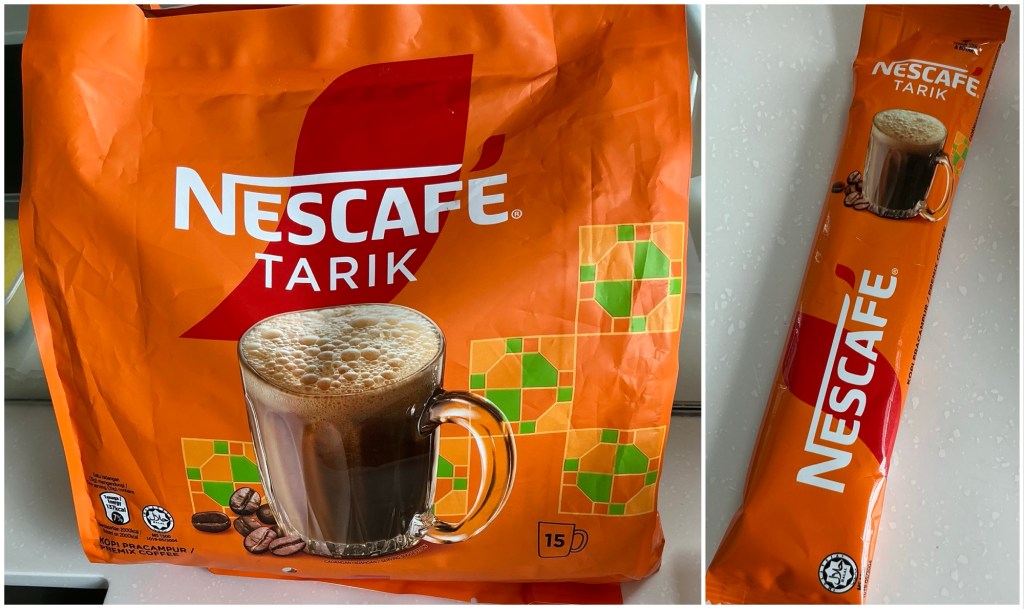
Sigh. We’ll drink some of it anyway, and leave the rest for the property manager, because waste not/want not, but we did end up finding some freeze-dried Nescafe Gold in one of the convenience stores that make a much better (and less calorific) cup.
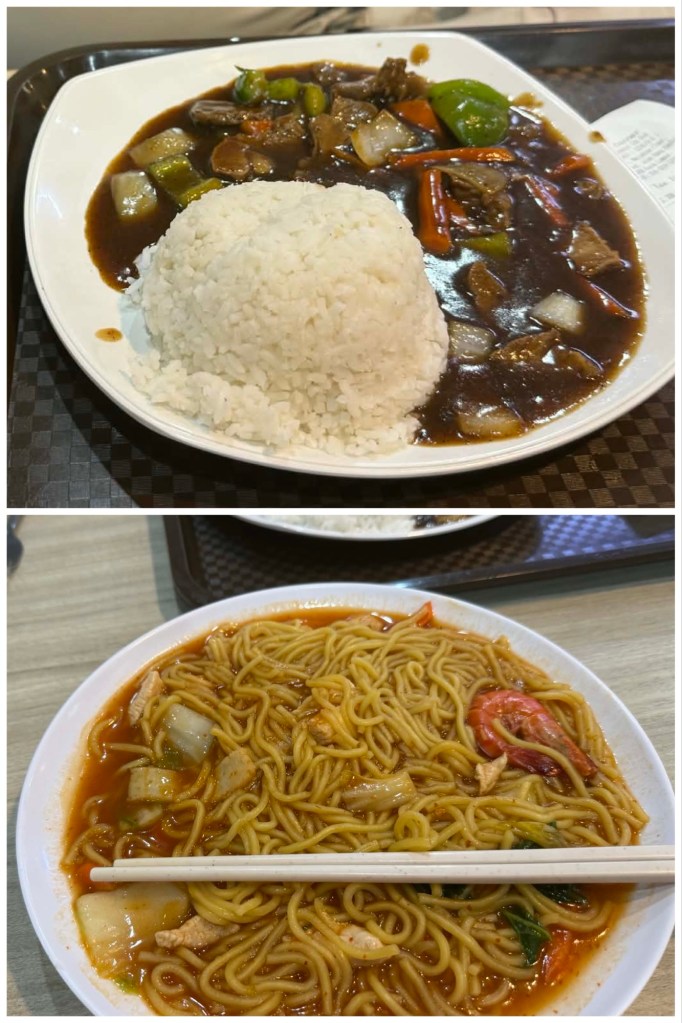
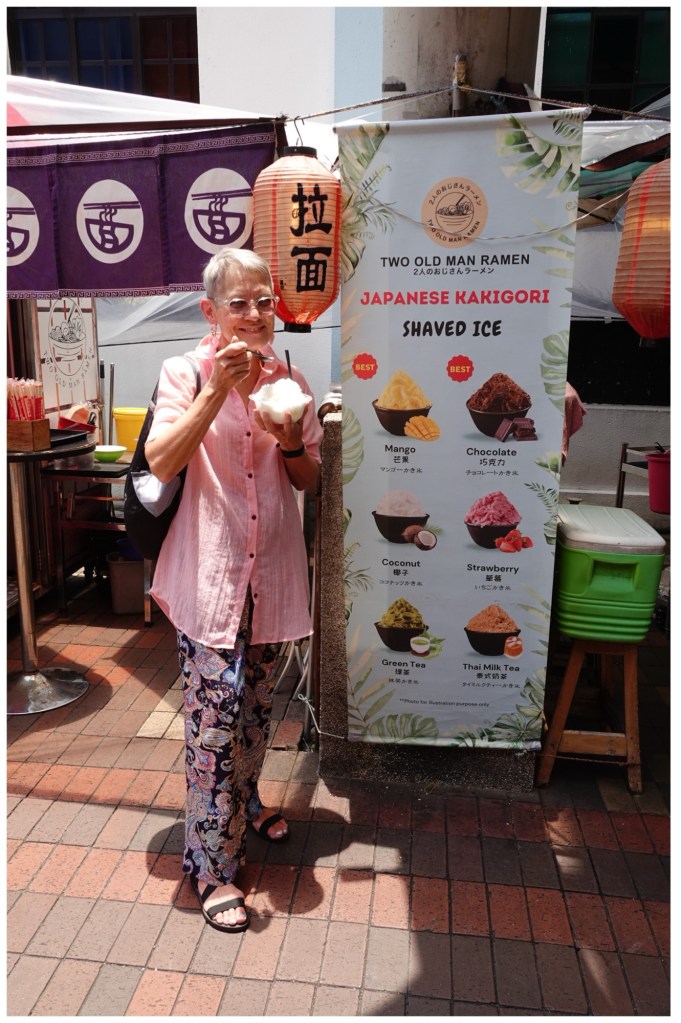
On our full day guided tour we stopped for lunch at Central Market in Chinatown where we were left to our own devices. After plates of black pepper beef with rice, and spicy Bandung noodles with chicken (total bill 24MYR /$8CAD) we treated ourselves to a generous portion of creamy shaved Japanese ice (10MYR/$3.50CAD) in the coconut flavour.
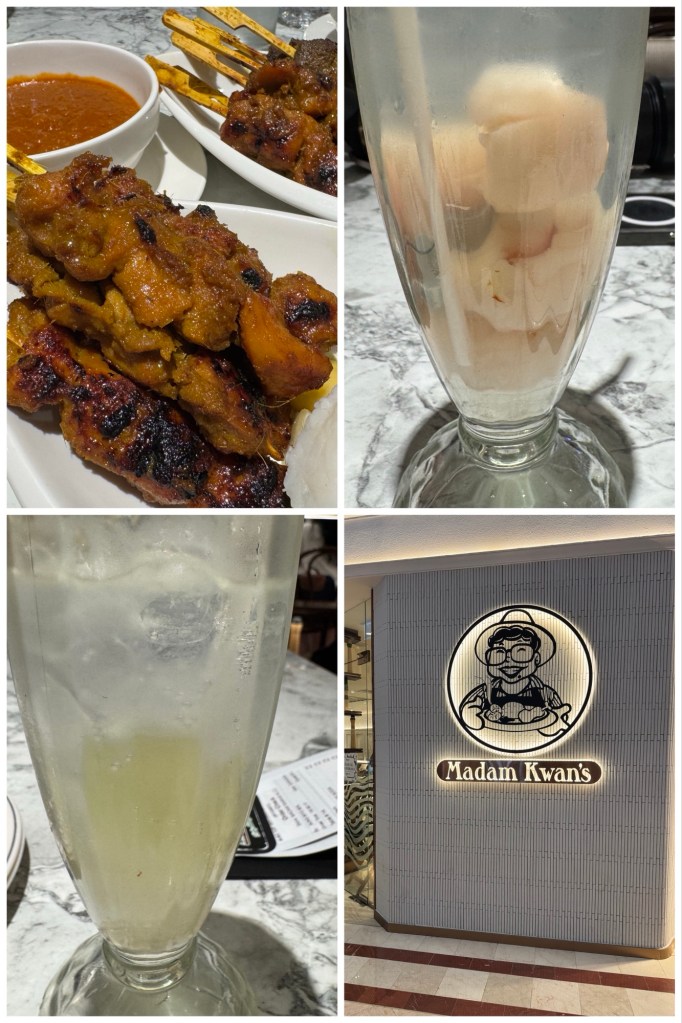
We had no specific plans for dinner, but after our long guided tour which ended at the Petronas Towers we grabbed a light supper of chicken and beef satay with peanut sauce, plus refreshing lychee and lime sodas, at Madam Kwan’s in the attached Suria Mall.
DAY THREE
After an exhausting hot day yesterday on our 9 hour tour Day Two, we opted to stay “home” and just go out for lunch at Lebanon Rose, just two doors down from our building, where a wide variety of set menu lunches are available, including beverage, at 19.90MYR with chicken ot 29.90MYR with lamb.
We began with drinks: a lemon iced tea and a Vimto.
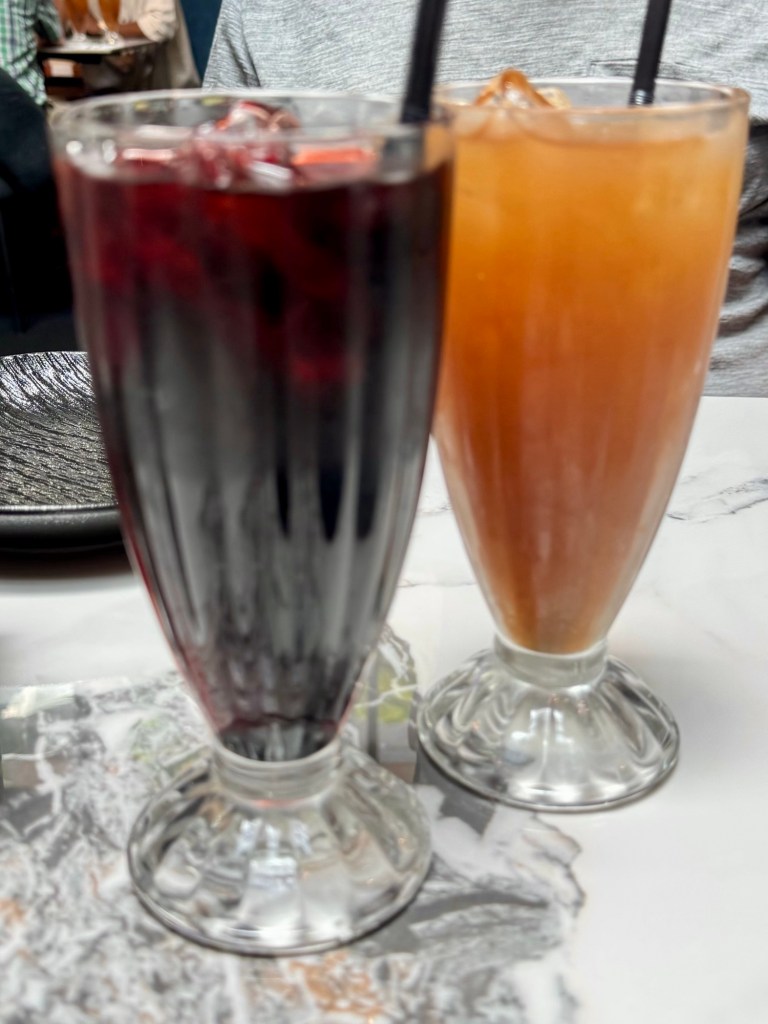
The purpley blue drink is the Vimto. Our waiter described it as “blueberry and a bit sweet”, but when I looked it up the description was “a 110 year old British fruit drink brand famous for its unique blend of grapes, raspberries, and blackcurrants (plus a secret mix of herbs/spices). Primarily known as a sweet, concentrated syrup (cordial), it is widely famous in the Middle East, particularly for breaking the fast during Ramadan, and now also available in Malaysia”. It was slightly sweet, but still yummy.
As our mains I chose a kofta-like lamb kebab with rice, which came with Lebanese style tabbouleh (where the main ingredient is the parsley and cilantro instead of the traditional bulghur wheat) and a cup of chicken soup, and Ted chose lamb shawarma which came with fries and a sesame dip similar to tahini that tasted like melted Halvah (i.e. delicious).
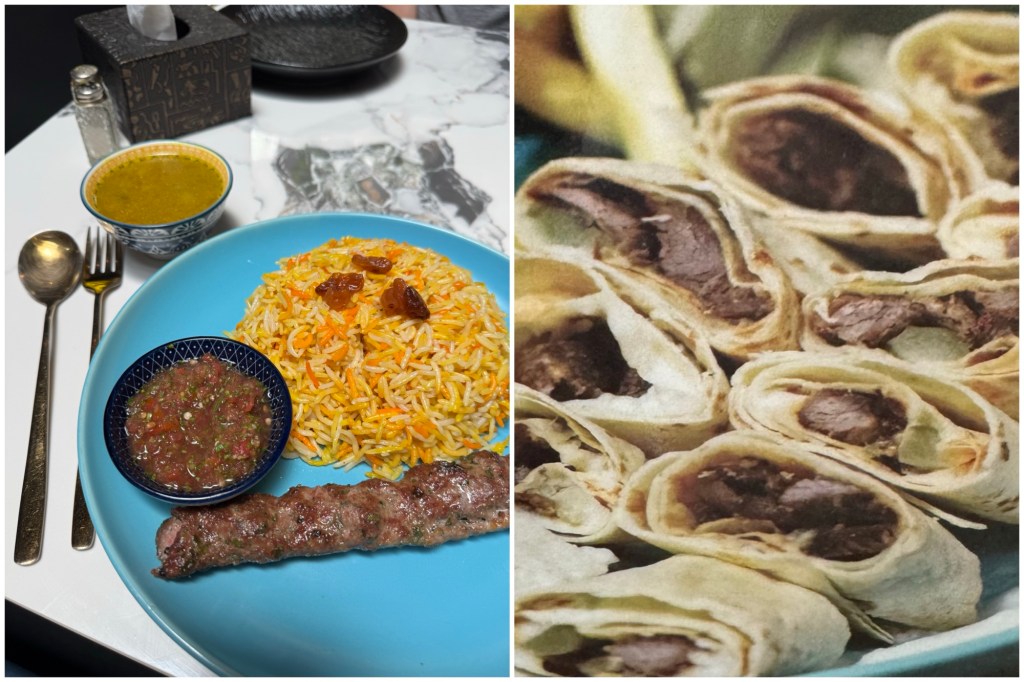
Notice that there is no knife provided, which is something we just realized has been the standard here. Malaysians eat with just a fork and spoon (like in Thailand), where the spoon is held in the right hand and does double triple scooping rice or sauce, cutting soft items, and holding down larger pieces of meat so that bite-sized chunks can be pulled off with the fork. The fork is used to shred and to push food onto the spoon. It works quite well, since most meats served are either eaten from a skewer, ground, cubed, or tender enough to fall apart.
DAY FOUR
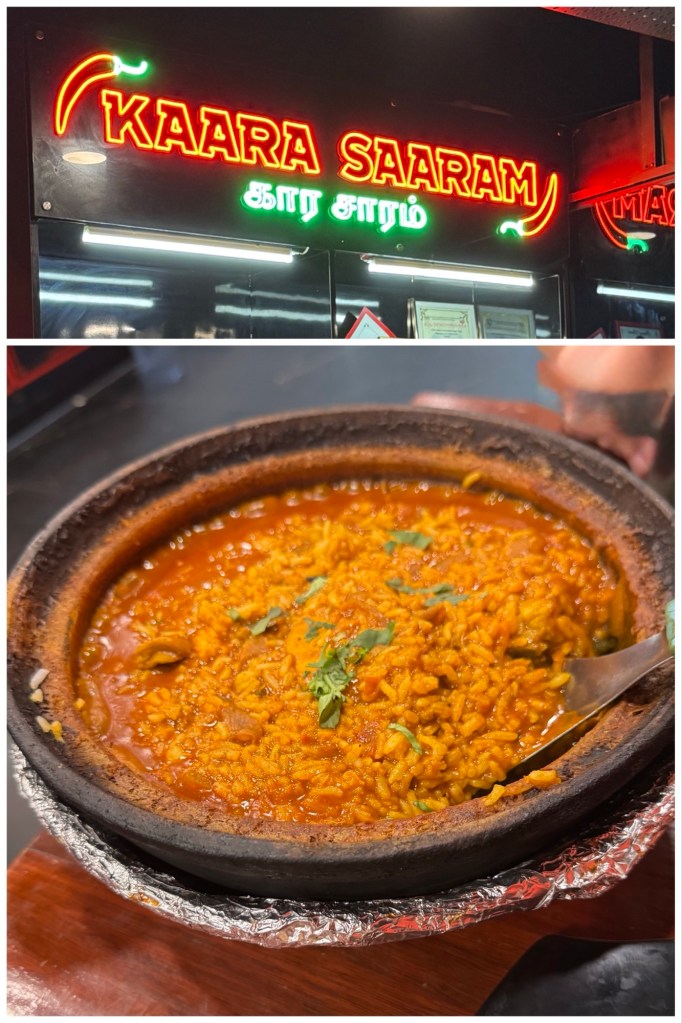
We ventured into Brickfields/Little India for dinner, and had spicy clay pot rice flavoured with bits of chicken. We were advised to order the large pot, and it was truly plenty to feed the two of us. To cool our tongues we ordered iced teh tarik to drink: strong brewed black tea with condensed milk. Yes, condensed, not evaporated, but more lightly sweetened than what we’re used to getting in cans in Canada.
In its hot (un-iced) iteration teh tarik is considered Malaysia’s unofficial national drink.
Total cost for dinner for two: 40MYR ($14.03CAD)
DAY FIVE
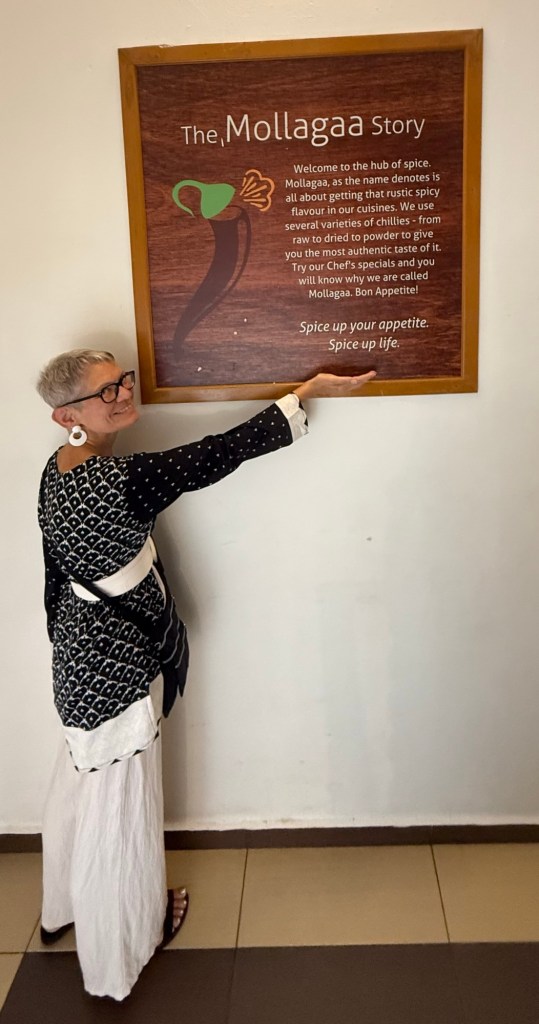
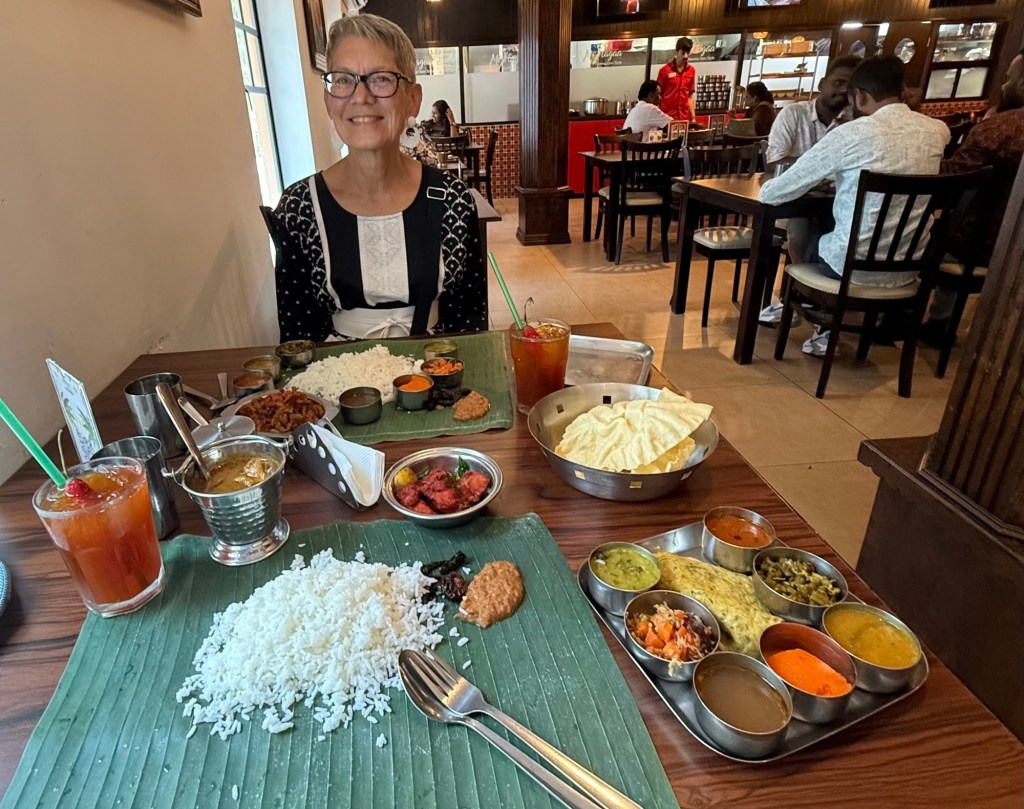
We had a wonderful lunch today at Mollagaa.
The restaurant specializes in South Indian, particularly Tamil cuisine. Ted and I went specifically for the banana leaf meals, on the recommendation of a friend’s son who has visited KL on diplomatic missions.
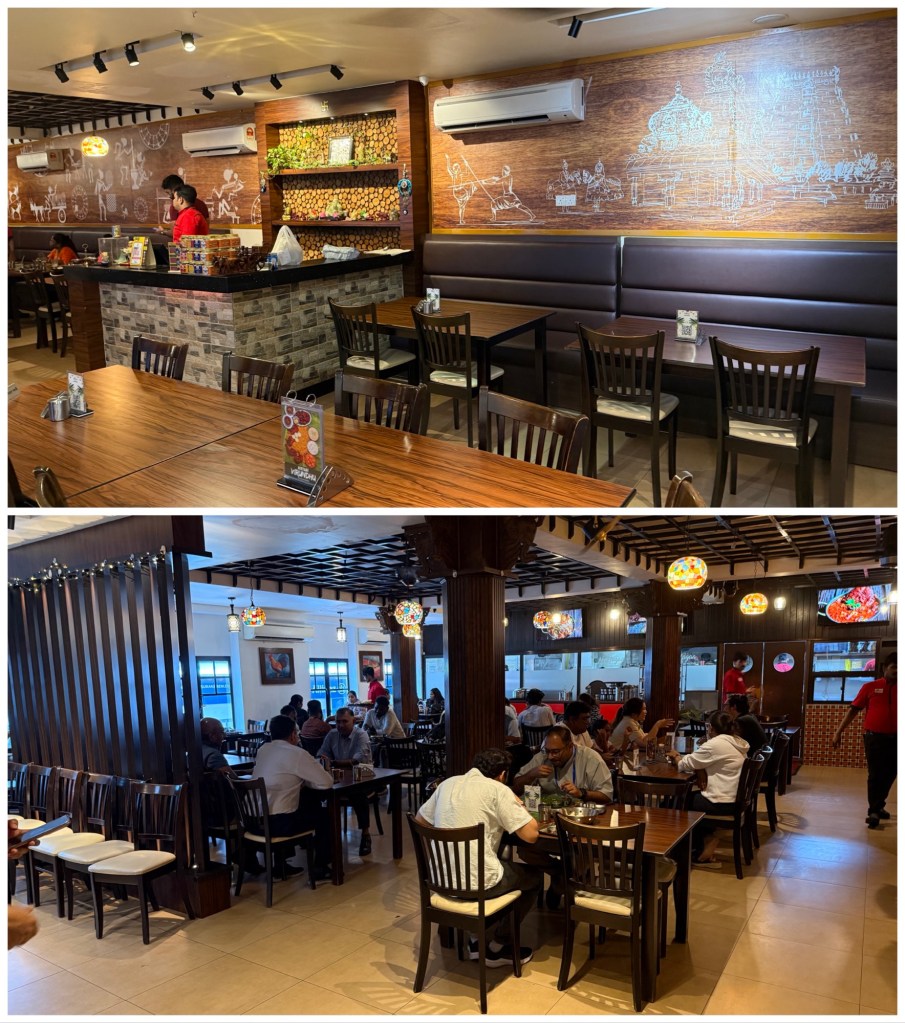
The restaurant is on the second and third floors, in a lovely space above a ground floor take-out counter that serves Indian street food and fresh fruit drinks.
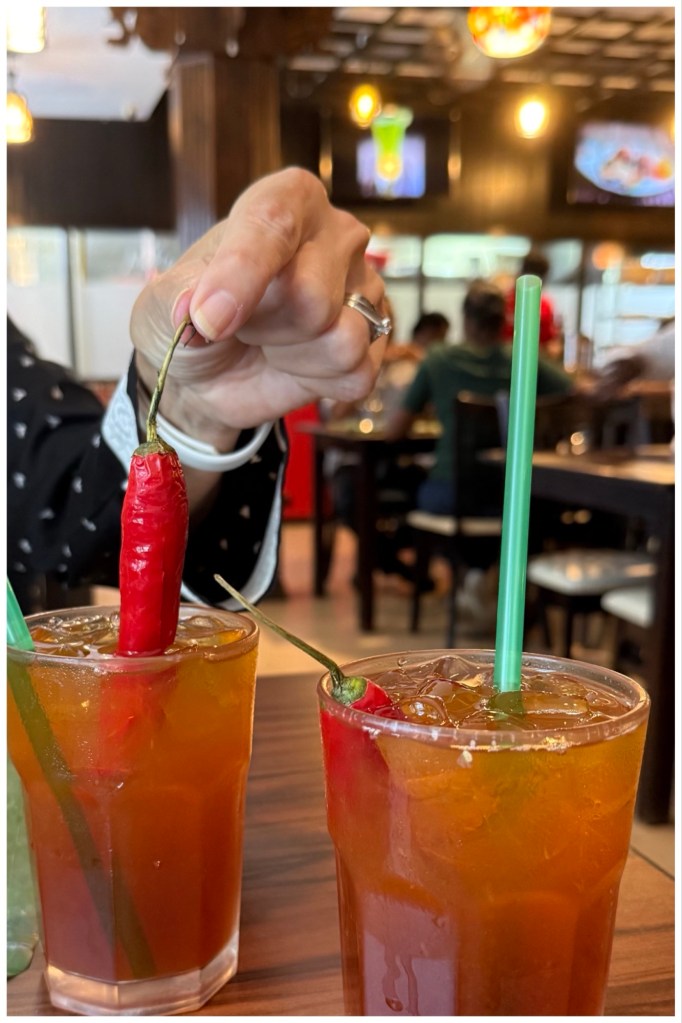
We ordered Mollagaa’s signature sweet iced tea as our beverage, and it came garnished with a pickled sweet chili pepper.
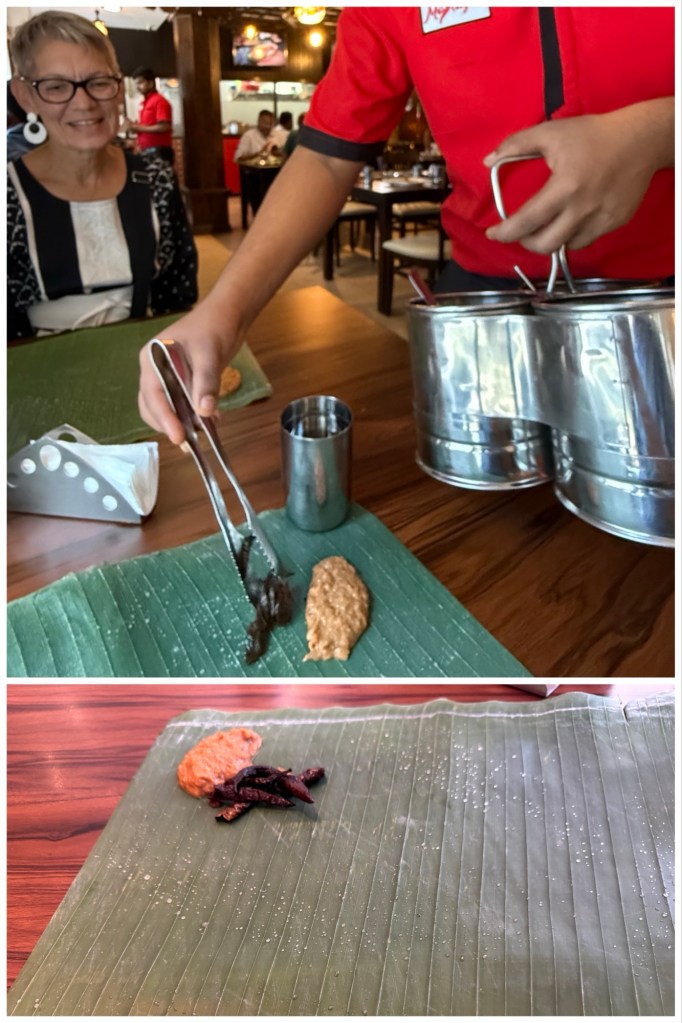
The first thing that went onto our banana leaves were several Moor Milagai, green chillies soaked in thick curd plus salt for few days and sun-dried (we both agreed they were crunchy and delicious) and a scoop of Thovaiyal, South Indian Chutney made with lentils and fresh coconut.
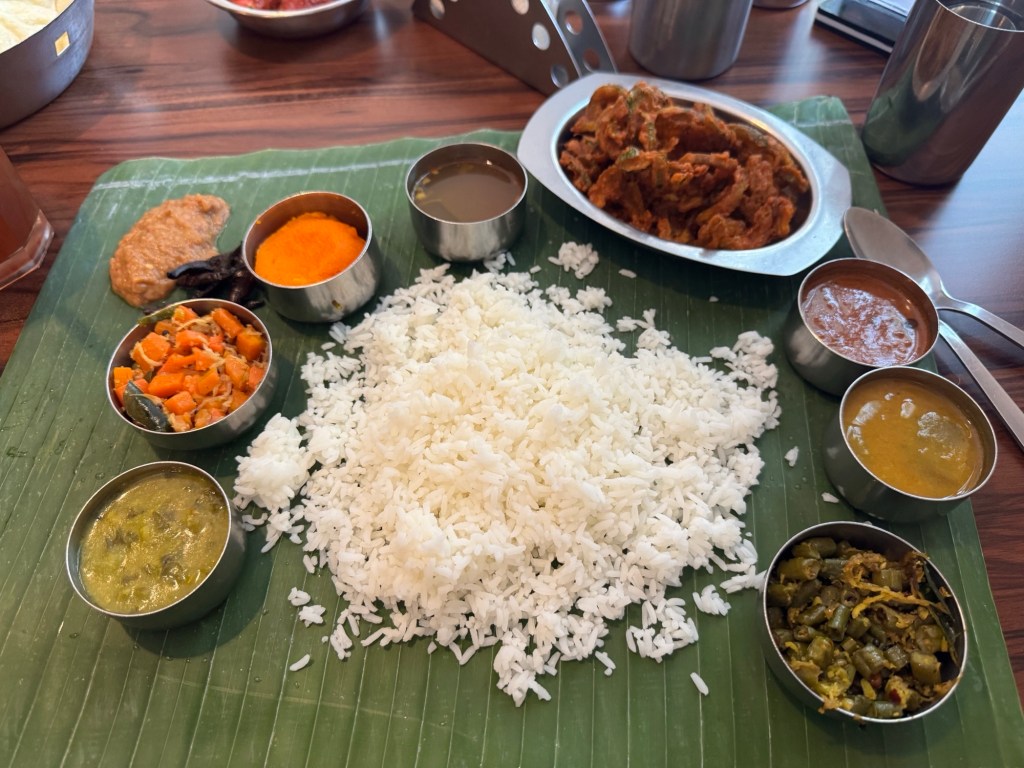
Ted’s Kozhi Kuzhambu Sappadu (chicken curry meal) in the foreground below included Rice, Chicken two ways (curried in the silver bucket and tandoor in the silver dish), plus an herb omelette in the centre of his tray surrounded by, clockwise from top right : Kootu, Kara Poriyal, Kaara Kuzhambu, Gajar Ka Halwa, Rasam, Poriyal, Paruppu Podi.
Everything tasted amazing, but I needed translation.
- Rasam is a typical clear South Indian soup which uses tamarind as a base. The flavours of the soup are from the various spices such as cumin, chilli powder and turmeric.
- Kootu is a lentil and spicy vegetable stew in South Indian, particularly Tamil and Kerala cuisines.
- Kara Poriyal, is a South Indian coconut stir fry made with chopped green beans. (The other Poriyal was carrot and peas)
- Paruppu Podi is a dried spice and lentil powder mixed into Ghee (clarified bitter) to make a sauce for rice.
- Kaara Kuzhambu is a tamarind-based curry made with shallots.
- Gajar Ka Halwa (carrot halwa) is a sweet made by simmering shredded carrots with ghee, milk, sugar, and cardamom and served chilled.
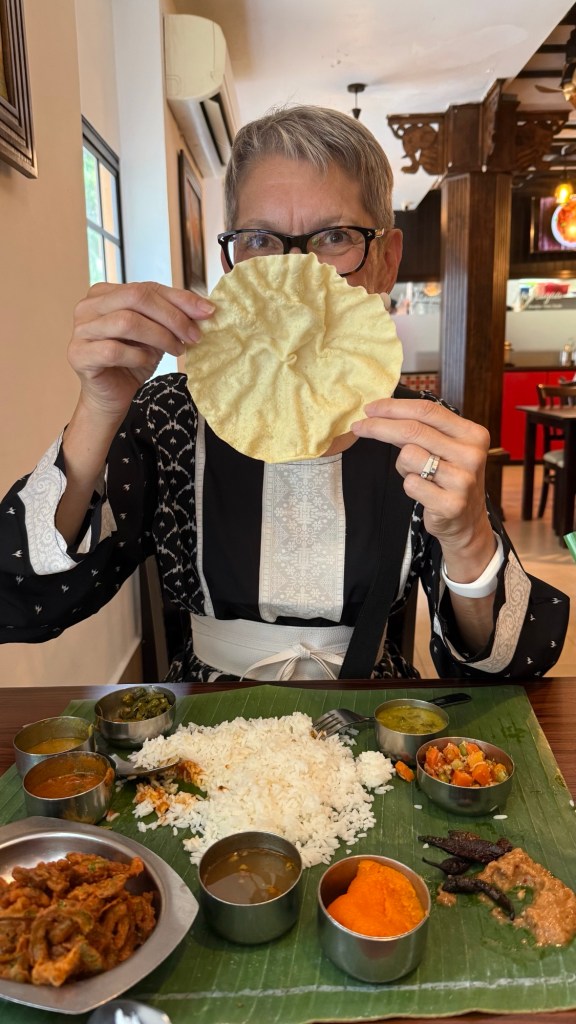
That entire wonderful lunch for both of us, including drinks, came to 45MYR ($15.99CAD). Crazy!
DAY SIX
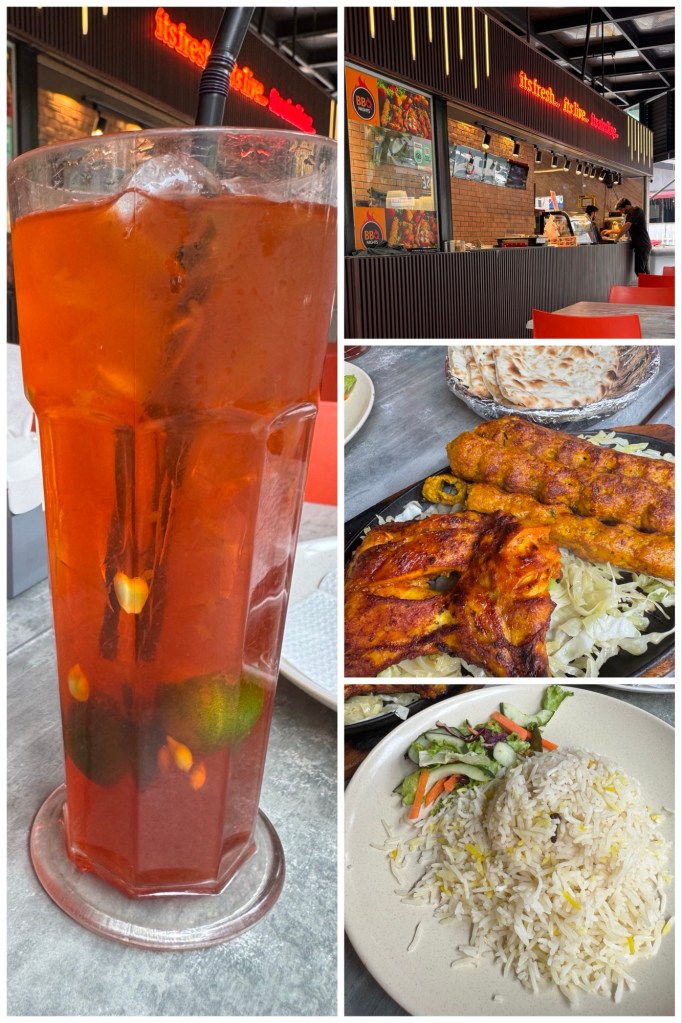
For our final local food meal we opted for something a bit heavier on the protein, which meant it was also a bit more expensive. BBQ Grill grills their meats to order over charcoal in an open kitchen. The seating is all al fresco, but under a roof with plenty of fans.A whole chicken leg tikka style, three large chicken seekh kebabs, two large servings of rice with a side of fresh cucumber, an order of naan and two large lime ice teas came to 73.15MYR($25.66CAD).
That’s it for KL.
We’re looking forward to the flavours of Penang!
 Rose and Ted’s Excellent Adventure