Today we learned that the Malay word for excursion/tour is persiaran.
After a quick breakfast, we were ready for today’s, to Putrajaya.
Our second Get-Your-Guide tour this week was a half-day experience, operated by East Asia Tours, at $81CAD total. We understood that we would not get to go inside any of the Malaysian government buildings, but hoped that the photo ops would still make the trip worth it to us.
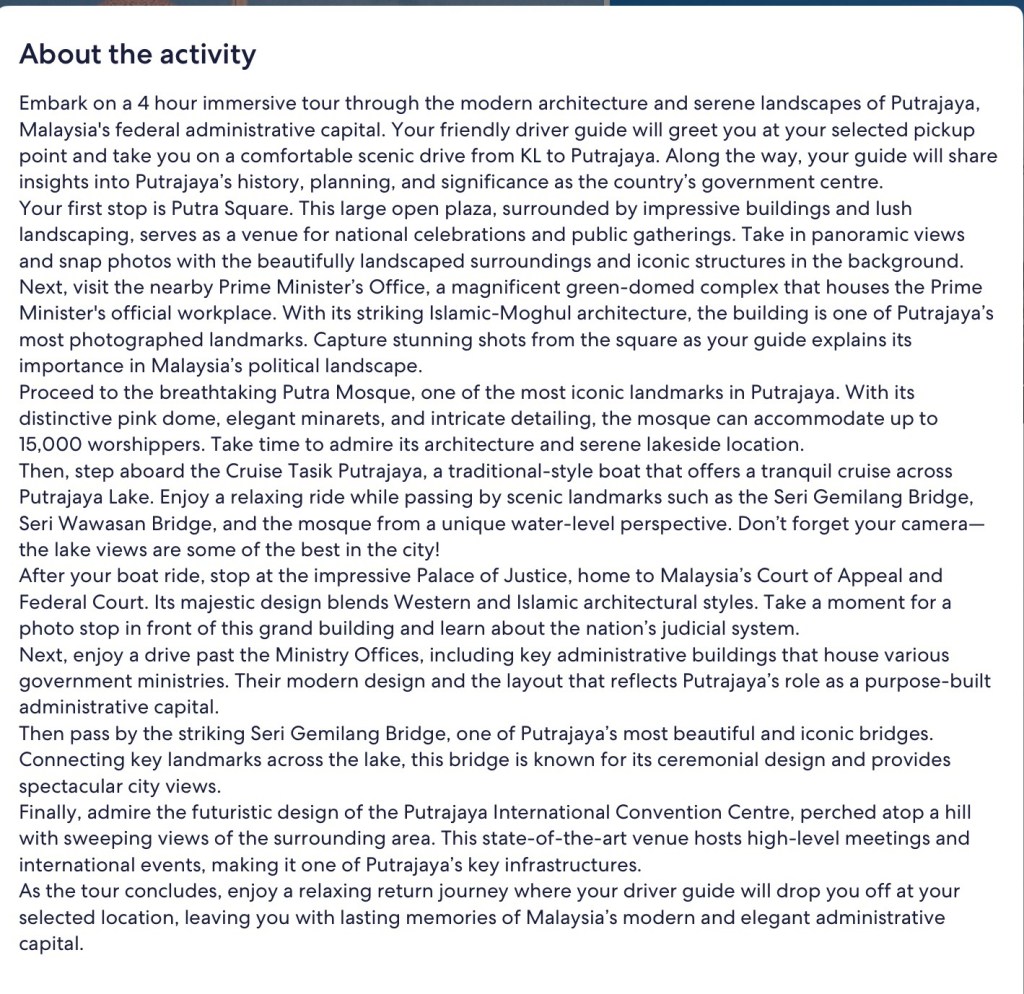
Malaysia’s seat of government was not always located in Putrajaya, and in fact the move from Kuala Lumpur of all the various ministries is not yet complete. KL remains constitutionally Malaysia’s capital, but since Putrajaya’s establishment in the 1990s the workings of government have been moved to a less crowded environment.
A purpose-built government city was the brainchild of much-loved former Prime Minister Mahathir Mohamad. Our guide today, Alan, told us anecdotally that after being the country’s longest serving PM (24 years) Mahathir had to “officially resign from politics in order to get people to stop voting for him”. He will turn 101 this July, and still gets called upon to advise the government. During his premiership, Mahathir was granted the title Bapa Pemodenan (Father of Modernisation) for his role in transforming the country’s economy and infrastructure.
The city with its man-made lake are in a location that was once palm plantations and a deep valley, transformed into a bright modern city surrounding a large lake.
Note: While pictures taken on the street were fine, many of the pictures Ted and I took during the boat cruise ended up unusable without a lot of colour correction, and some were simply irreparable. While being on the water gave us the best possible view, the boat’s polarized windows turned absolutely every photo a disconcertingly bright blue, and there was only a very limited outdoor viewing deck.
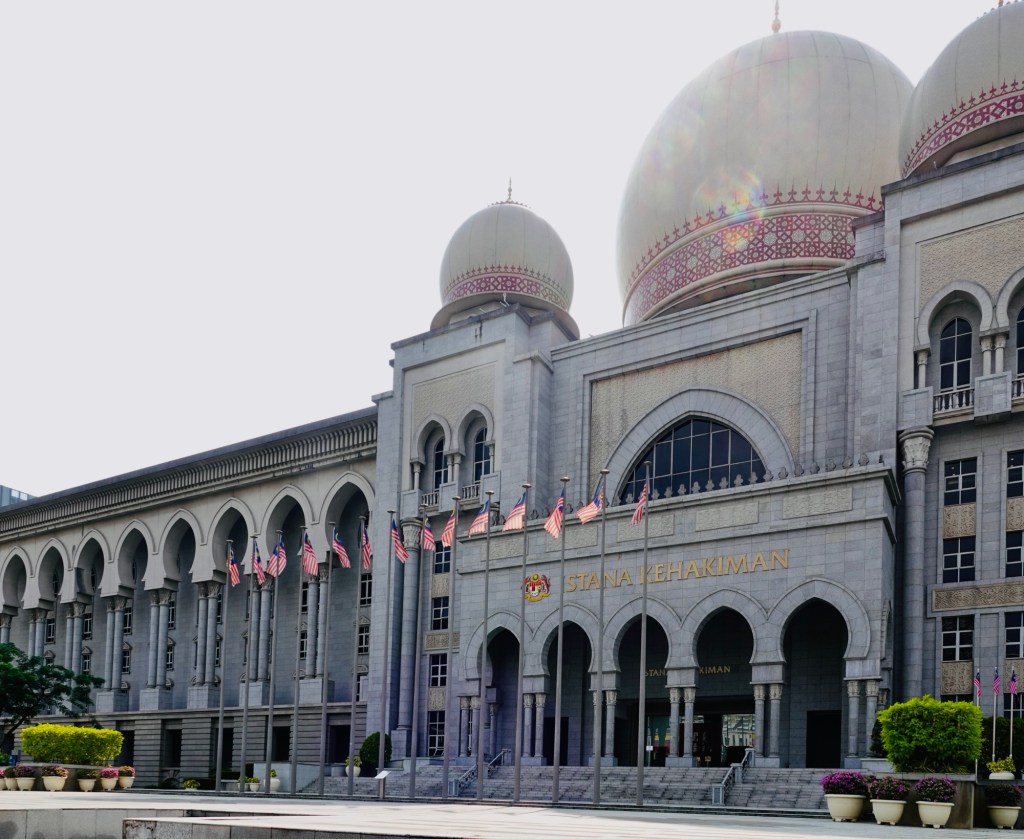
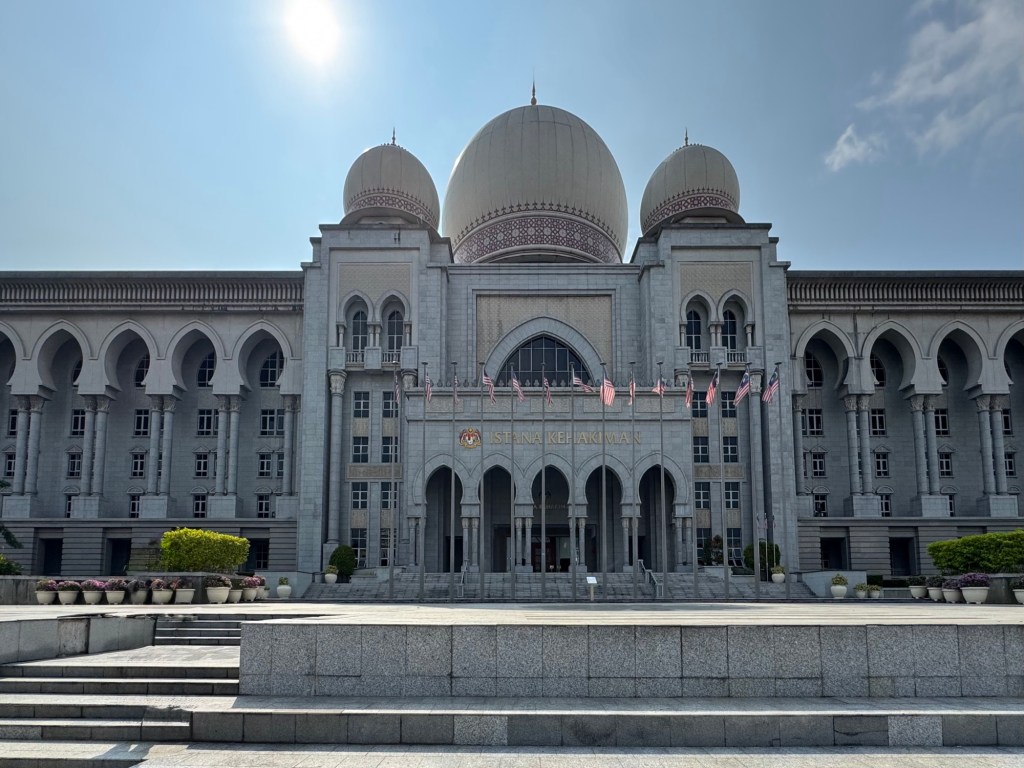
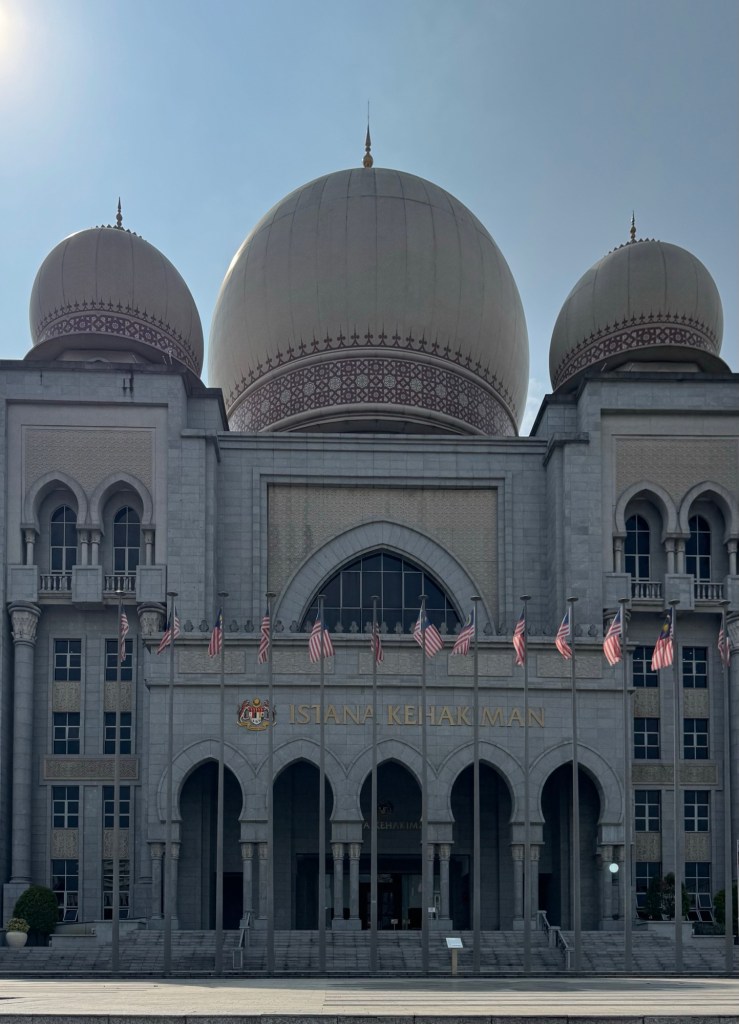
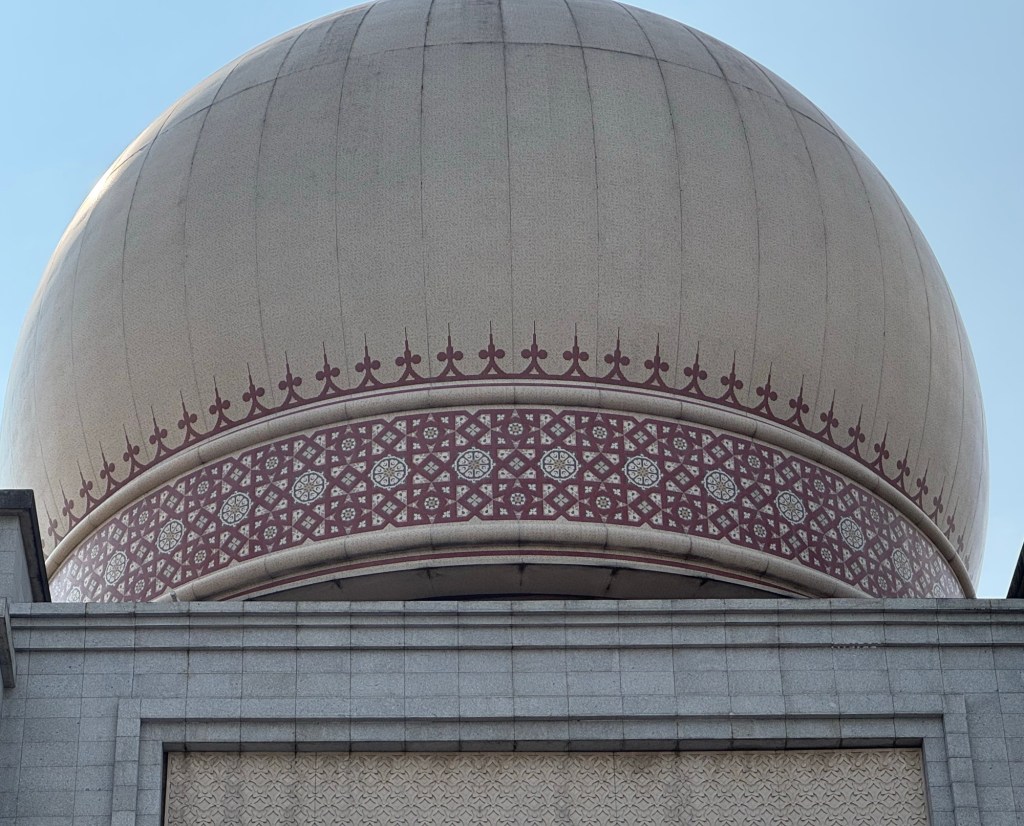
Our first photo opportunity off the tour van was outside the Palace of Justice.
The Istana Melawayi (Guard’s Tower Palace) is the second home of Malaysia’s constitutional monarch (ceremonial head of state).
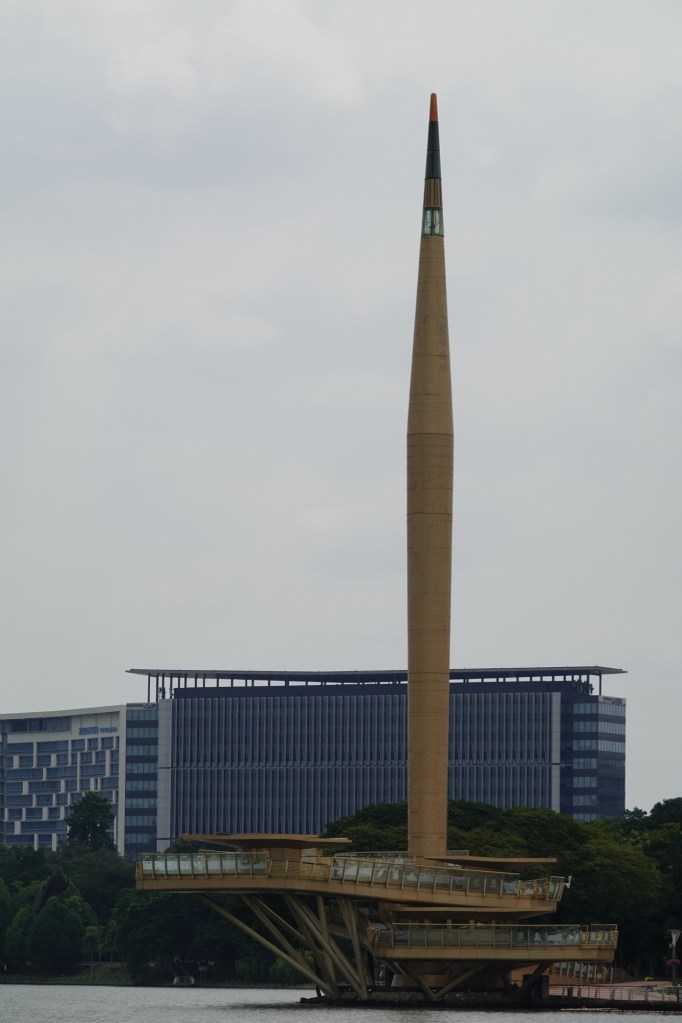
The Millenium Monument, a 68m/223 ft tall monument shaped like an obelisk with etchings denoting important periods and milestones in the nation’s history.
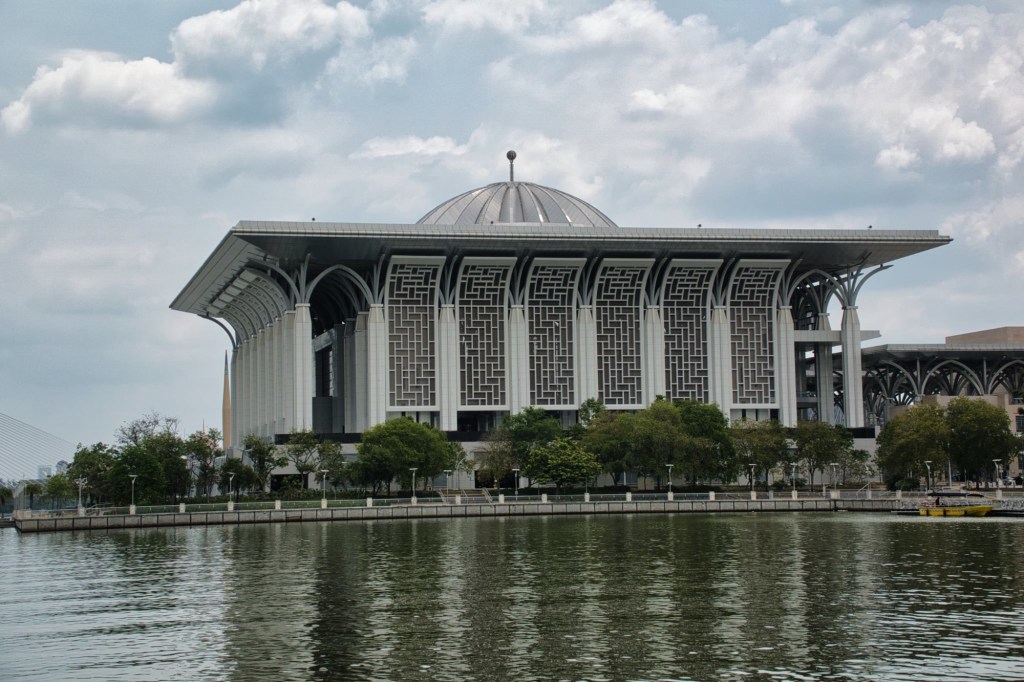
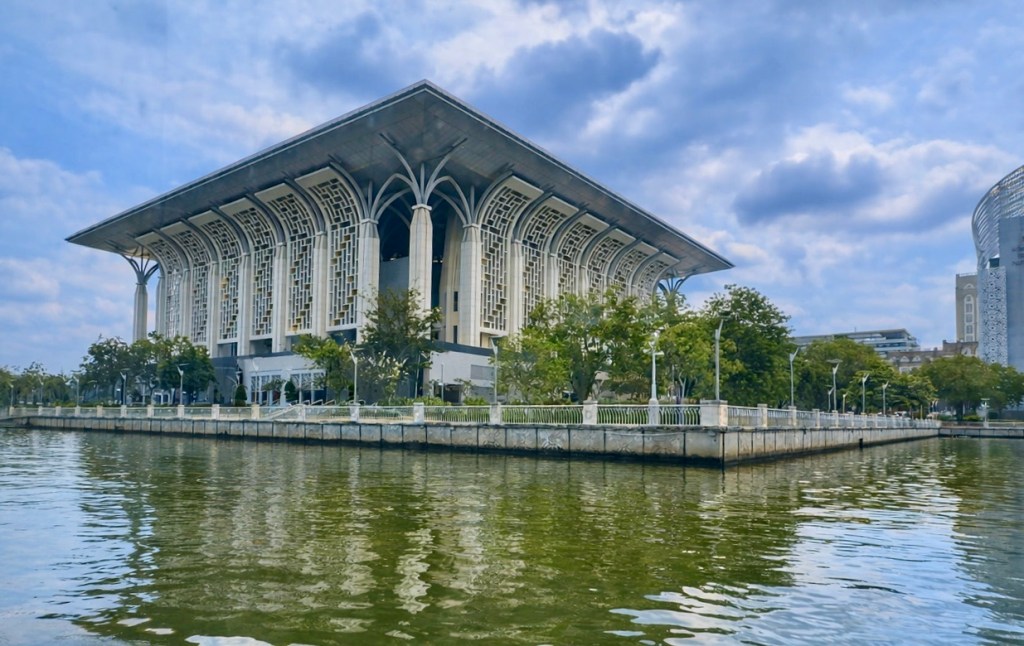
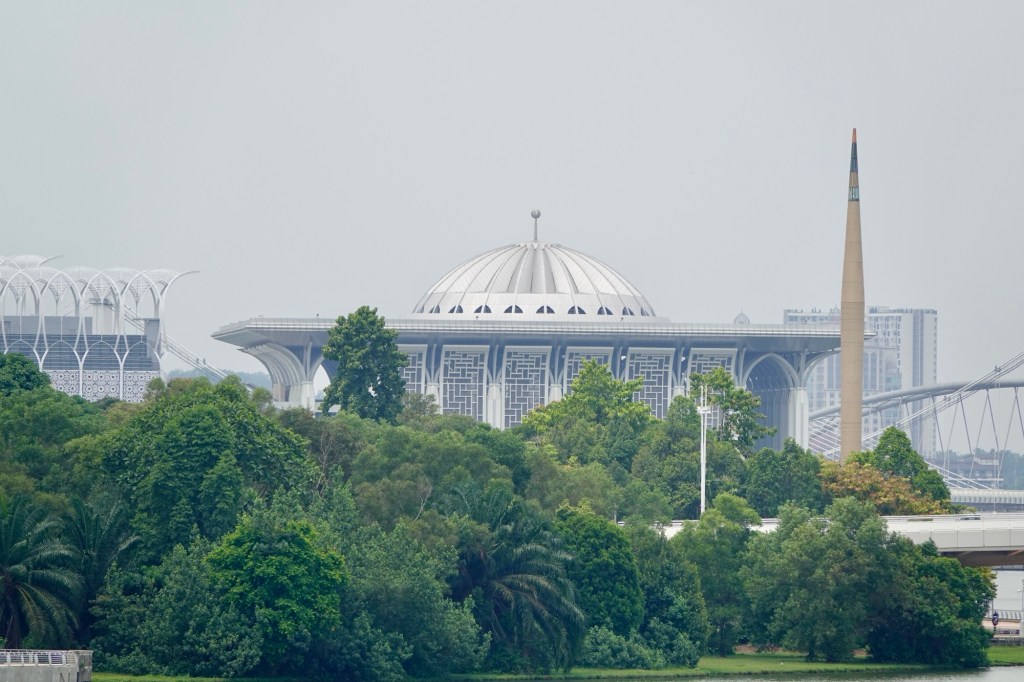
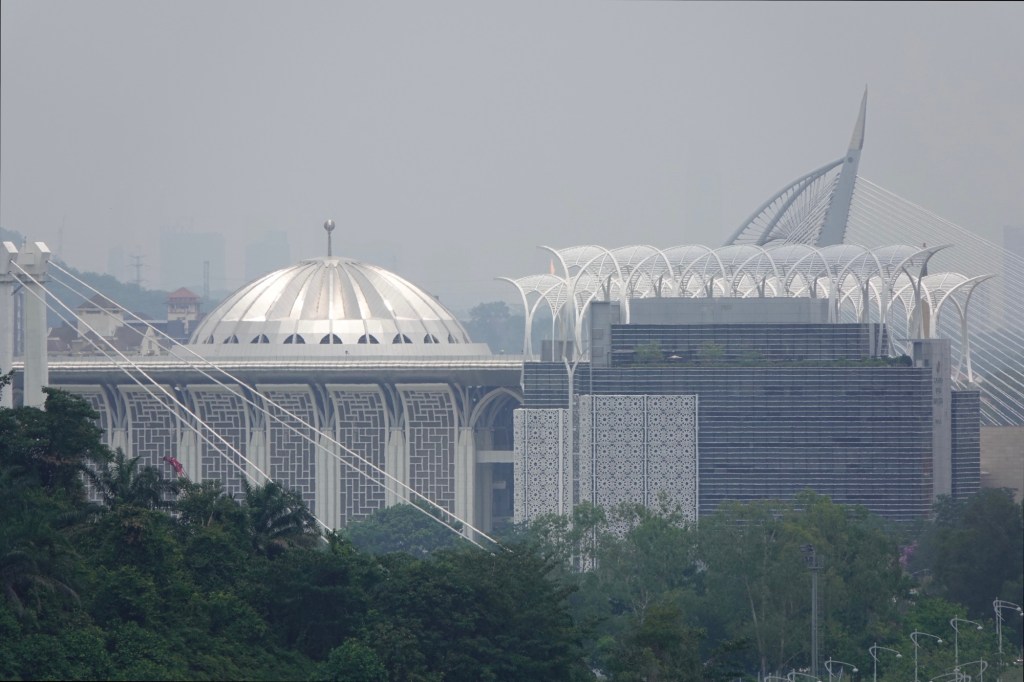
The Sultan’s Mosque, also known as the Iron Mosque (which is a bit of a misnomer since it is constructed of stainless steel) can welcome 24,000 worshippers. We got our first glimpse of its steel dome from the road in front of the Palace of Justice.
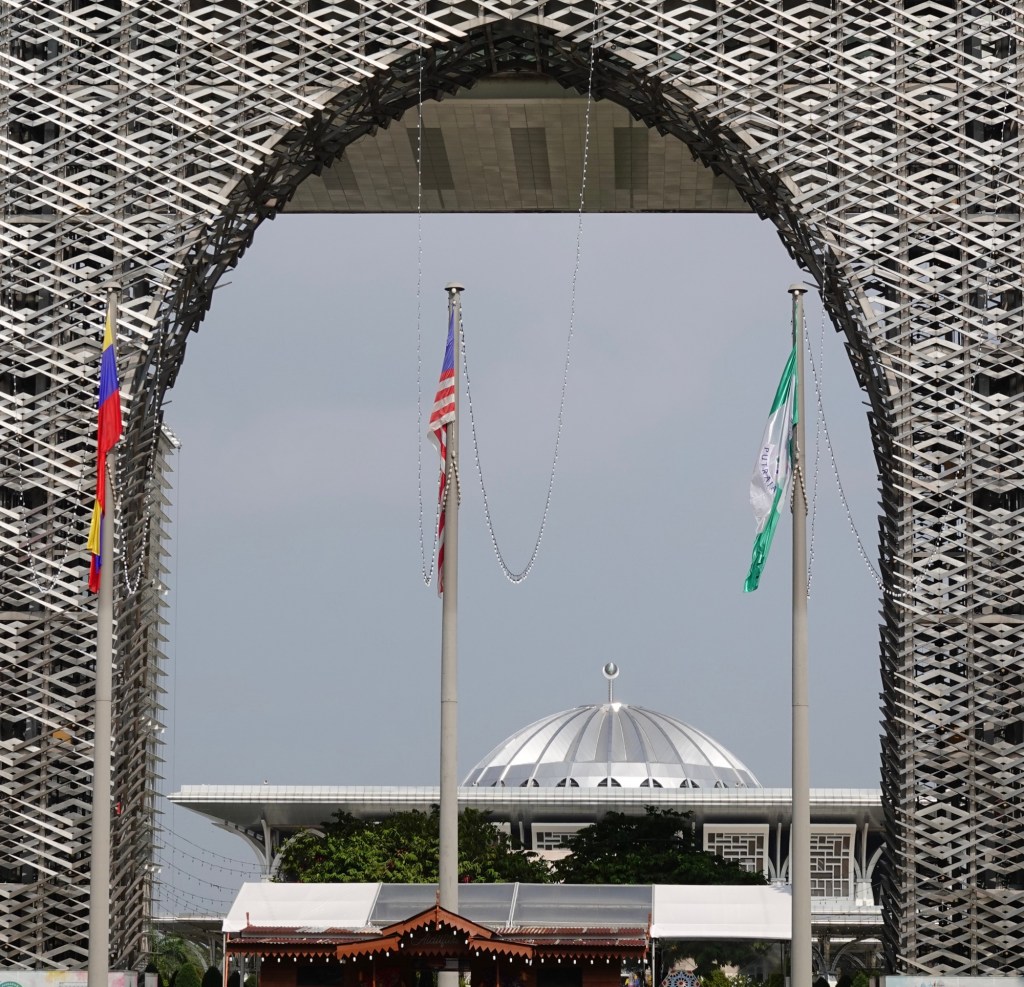
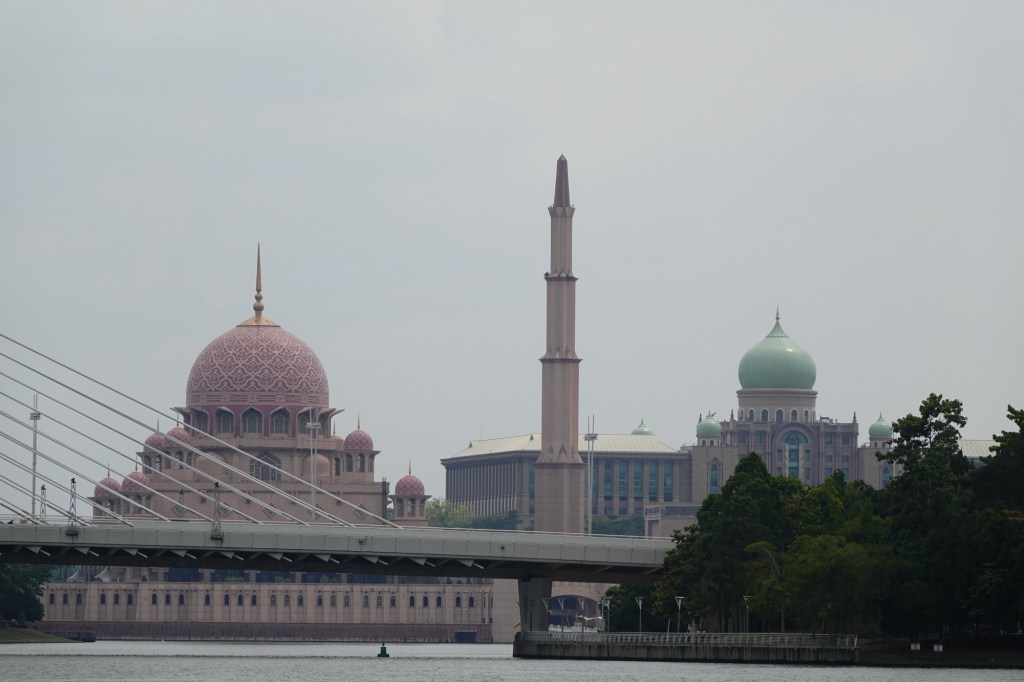
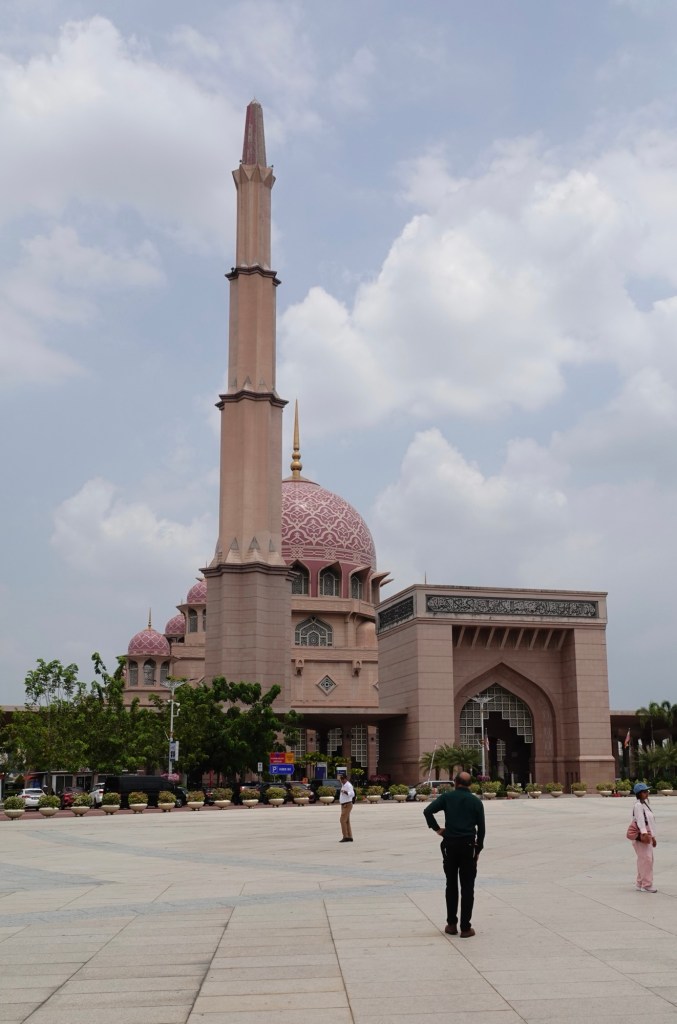
Much better views were to be had from the water, and looking back from the Putra (Pink) Mosque. The wire mesh makes the mosque look almost white, and I can imagine that it must be stunning when it is lit at night and reflected in the lake.
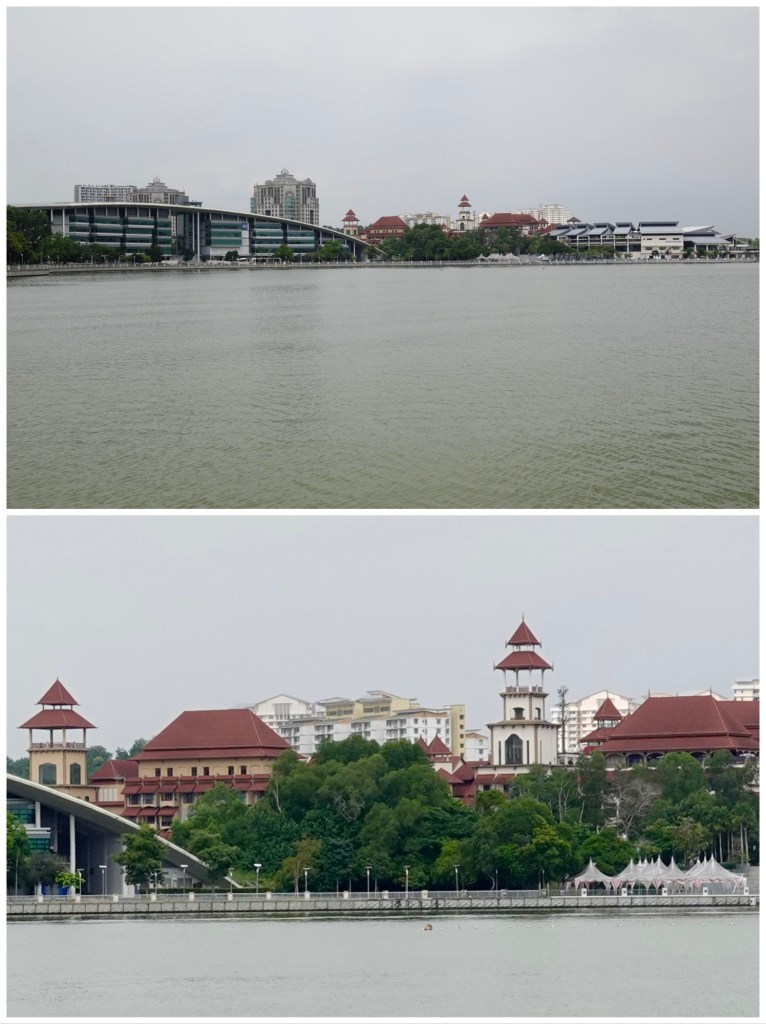
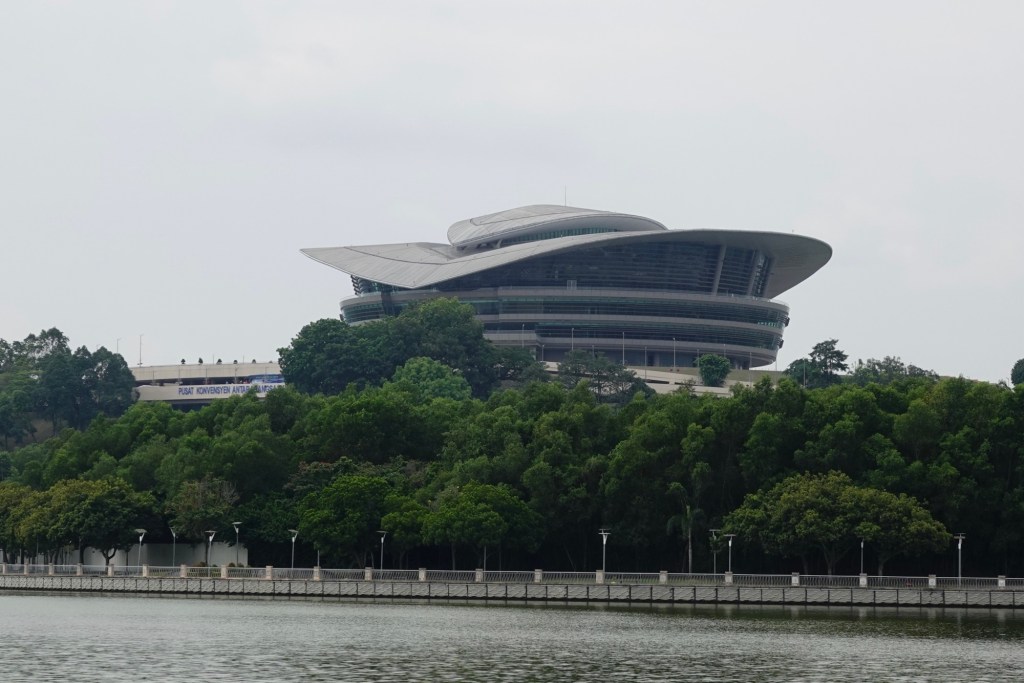
A view of the PICC (Putrajaya International Conference Centre (below), which can accommodate 8,000-10,000 people, and where last year’s ASEAN Conference was held. Although our guide told us its design was intended to be reminiscent of a Japanese hat, the centre’s own website explains that it was meant to look like the eye of a pending perak (a silver Malay royal belt buckle).
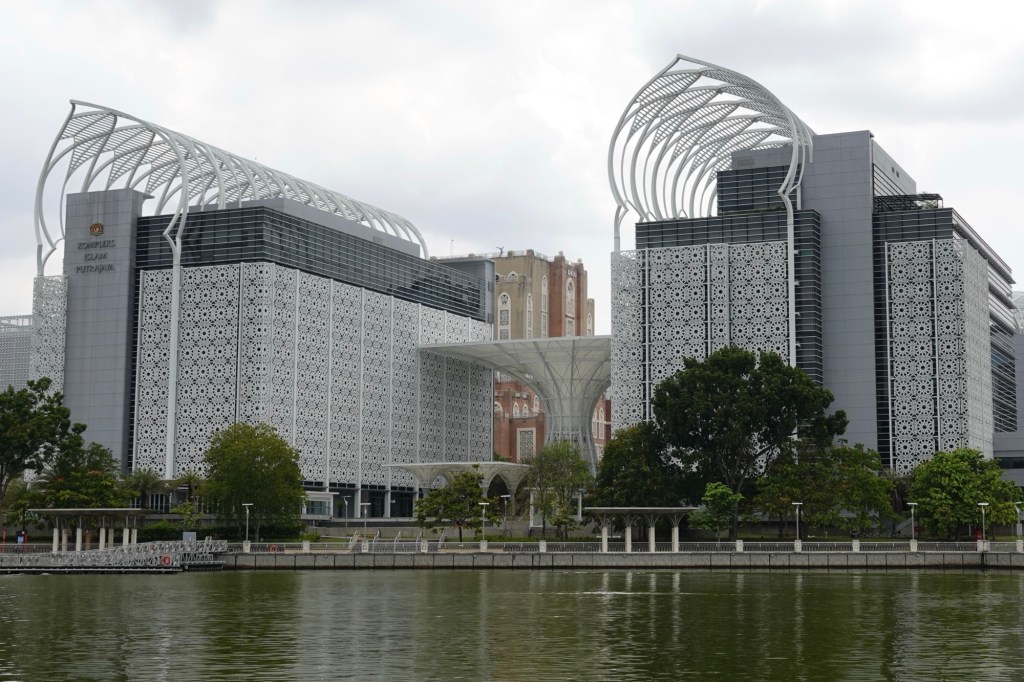
The Putrajaya Islamic Complex, below, houses specifically religion-related government agencies. So, halal certifications as opposed to infrastructure, for instance.
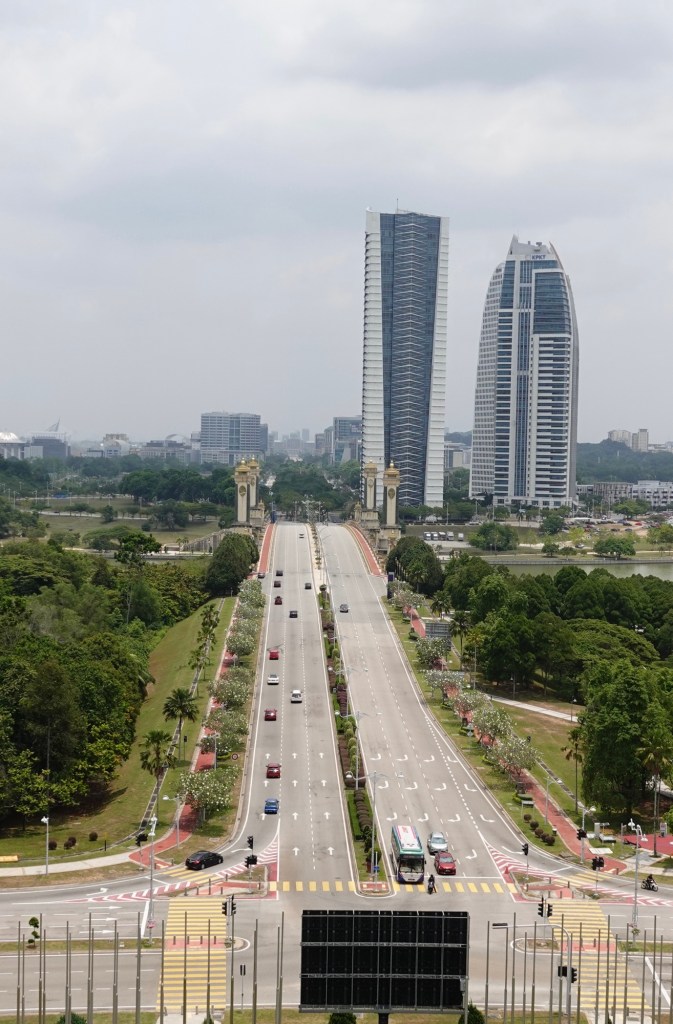
I was impressed by Putra Bridge, with its typical geometric Islamic decoration looking like the concrete has been crocheted.
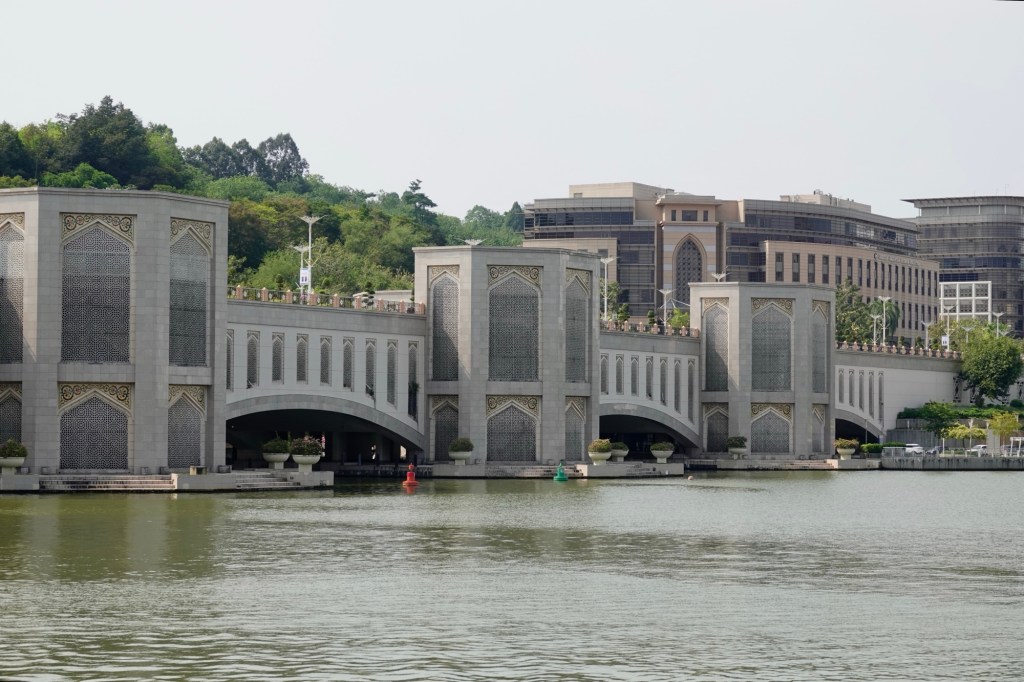
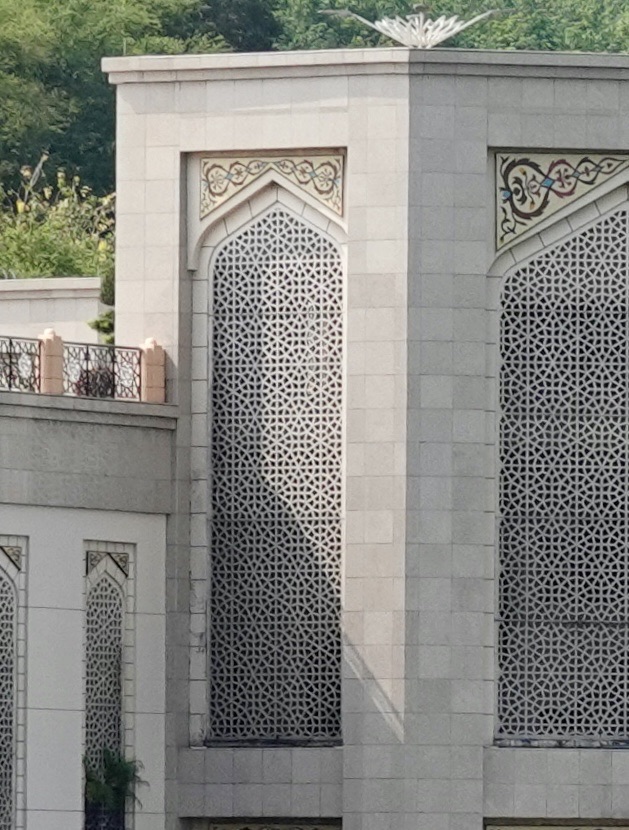
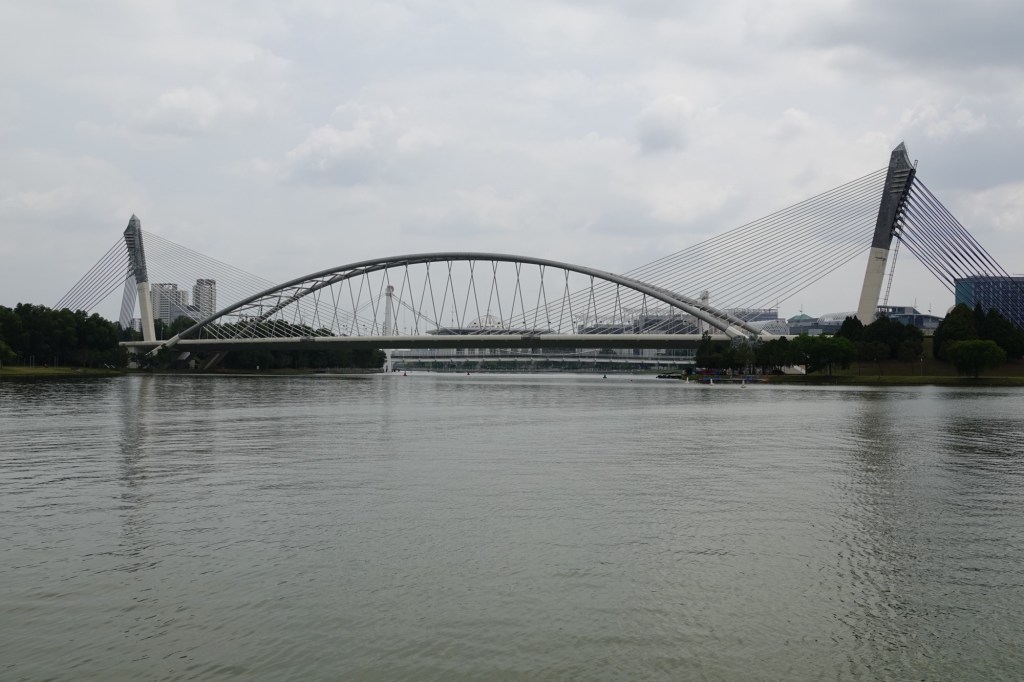
There are three specific white bridges (among many others) spanning the lake that were inspired by – although they are not copies of – an iconic bridge from another country: Rotterdam’s Swan Bridge, San Francisco’s Golden Gate, and Sydney’s arch. That fact was in keeping with the original vision for this city: architectural styles drawn from allover the world, but given an Islamic spin.
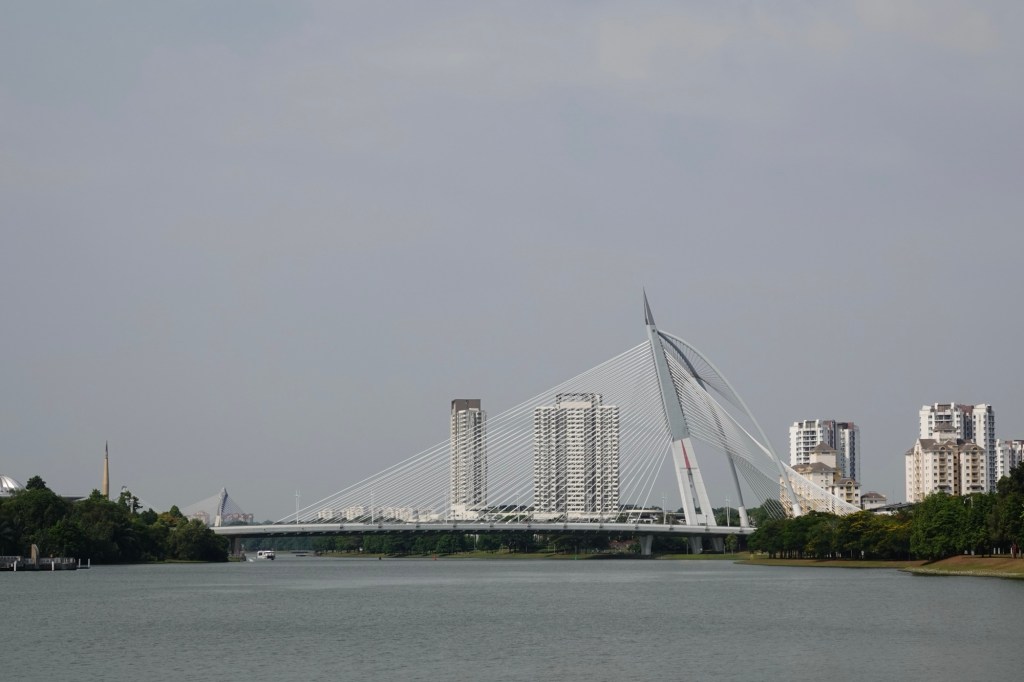
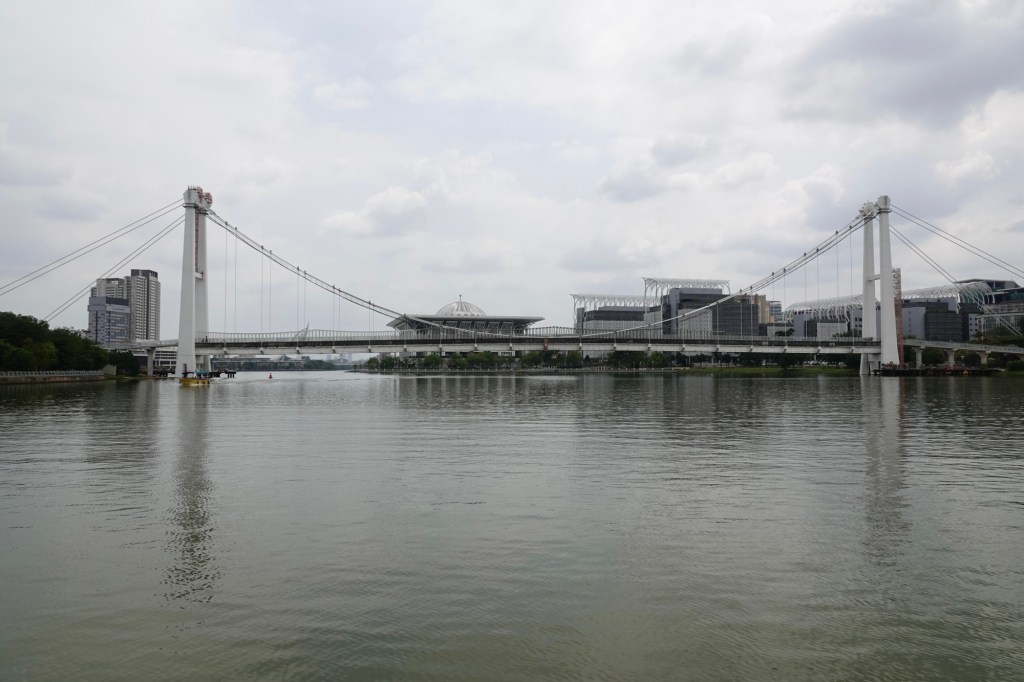
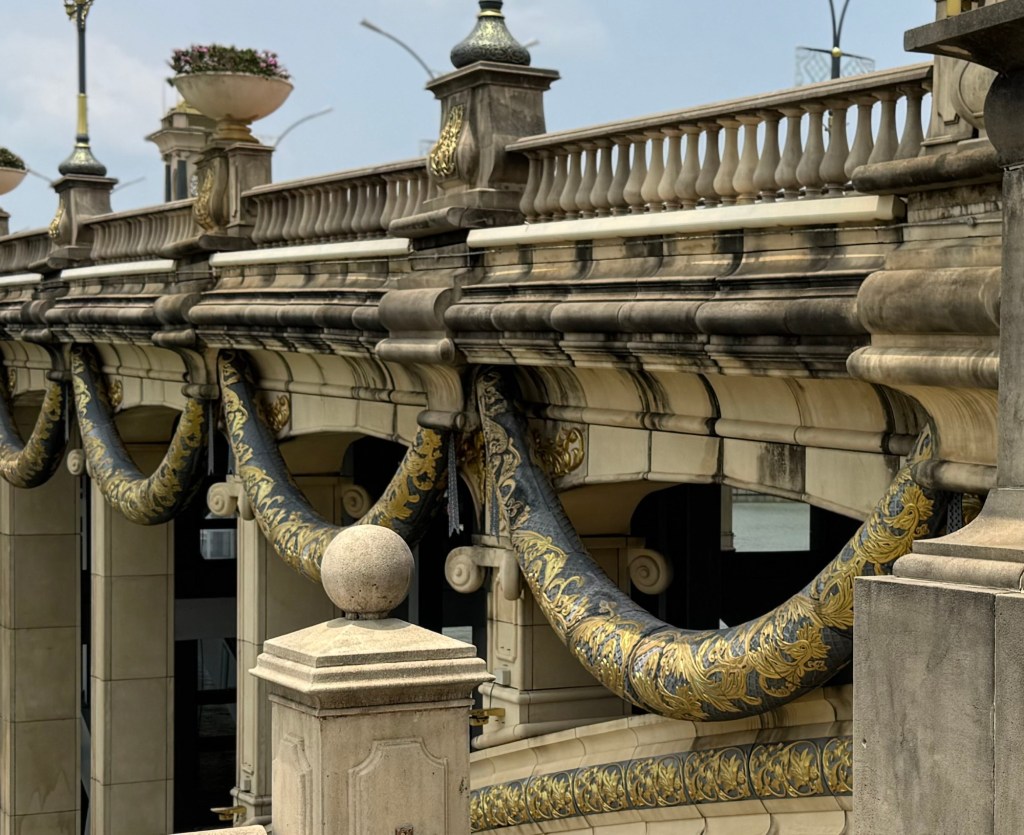
The prettiest of the city’s bridges (in my opinion, anyway ) is Seri Gemilang Bridge connecting the government administration complex to the convention centre looks old, but was only completed in 2003.
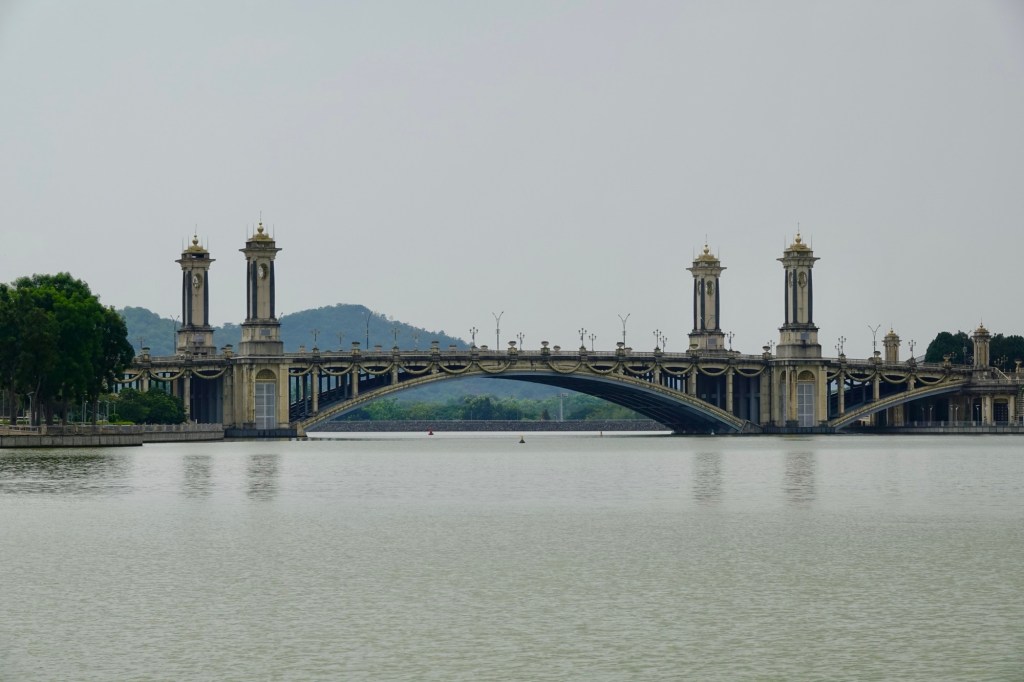
A sign near the bridge explained, with the help of Google Translate after we got back to our hotel, that the design of this bridge was inspired by the Pont Alexandre III on the Seine River, Paris, but reflecting the characteristics of Malay Islamic and local architecture with intricate moldings and detailed decorative work incorporating traditional Malay plants and flowers.
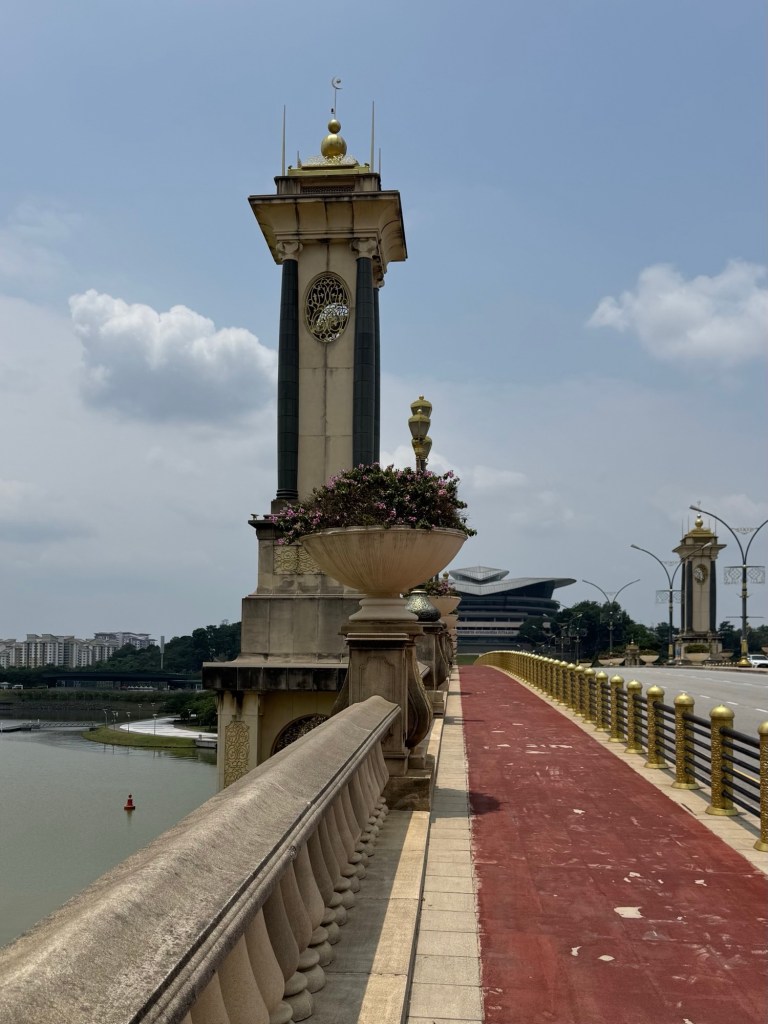
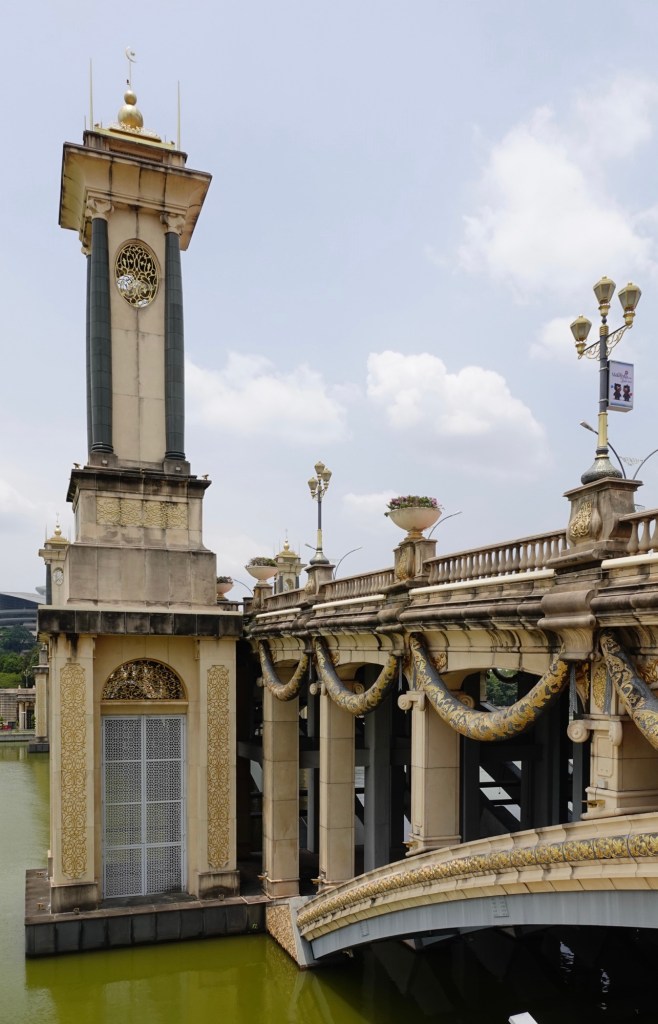
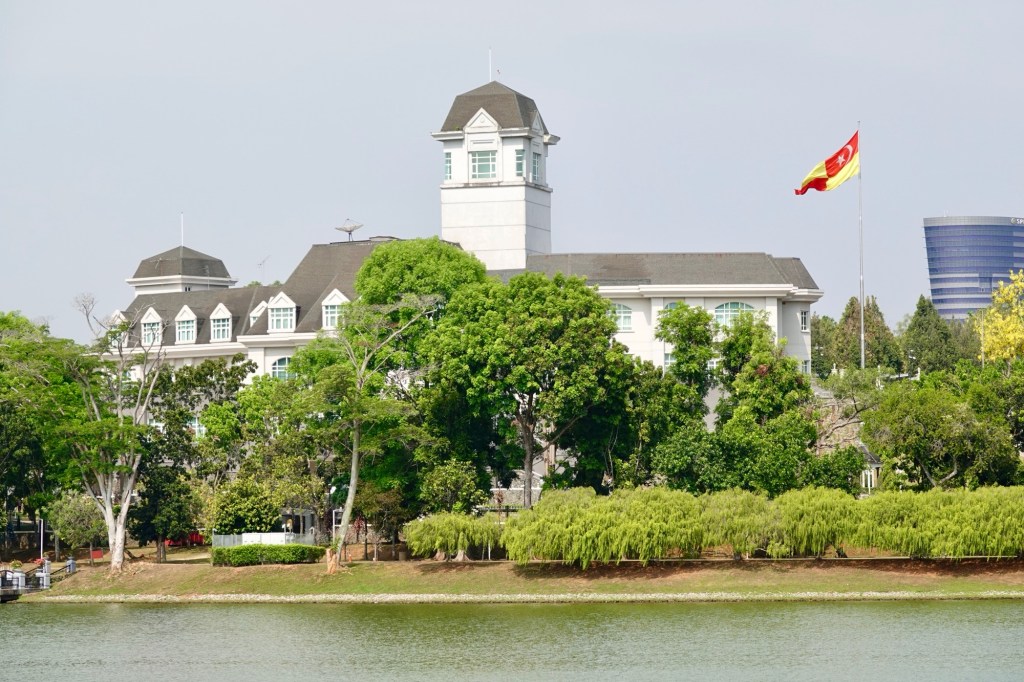
We got a glimpse of the Istana Darul Ehsan, one of the royal residences of the Sultan of Selangor.
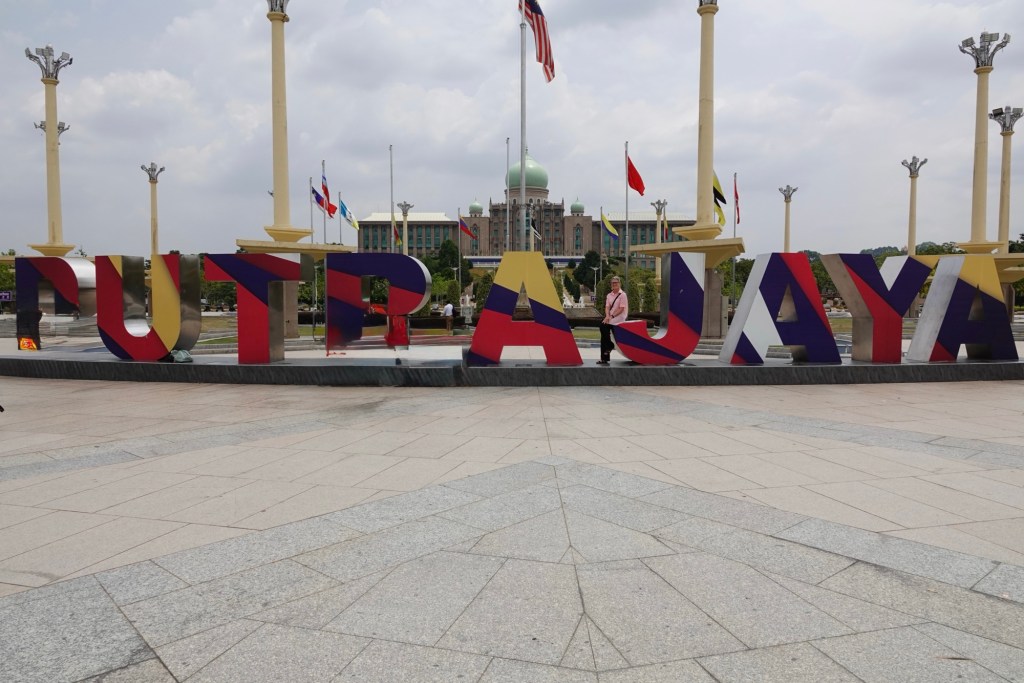
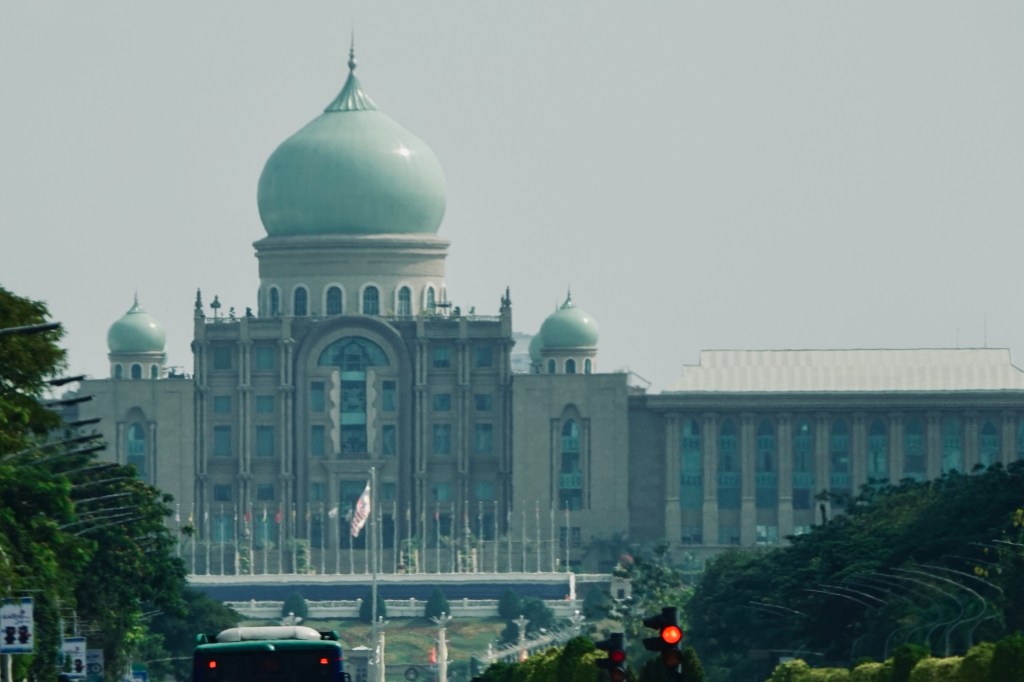
The green-domed Perdana Putra (bluish due to being seen through the van’s windshield) is the Prime Minister’s residence and office complex.
We saw again from our boat, showing its orientation in relation to the Putra Mosque, and a truer colour palette.
We were given half an hour of free time, which we spent at the mosque. This magnificent building was built on pylons so that it “floats” on the man-made lake.
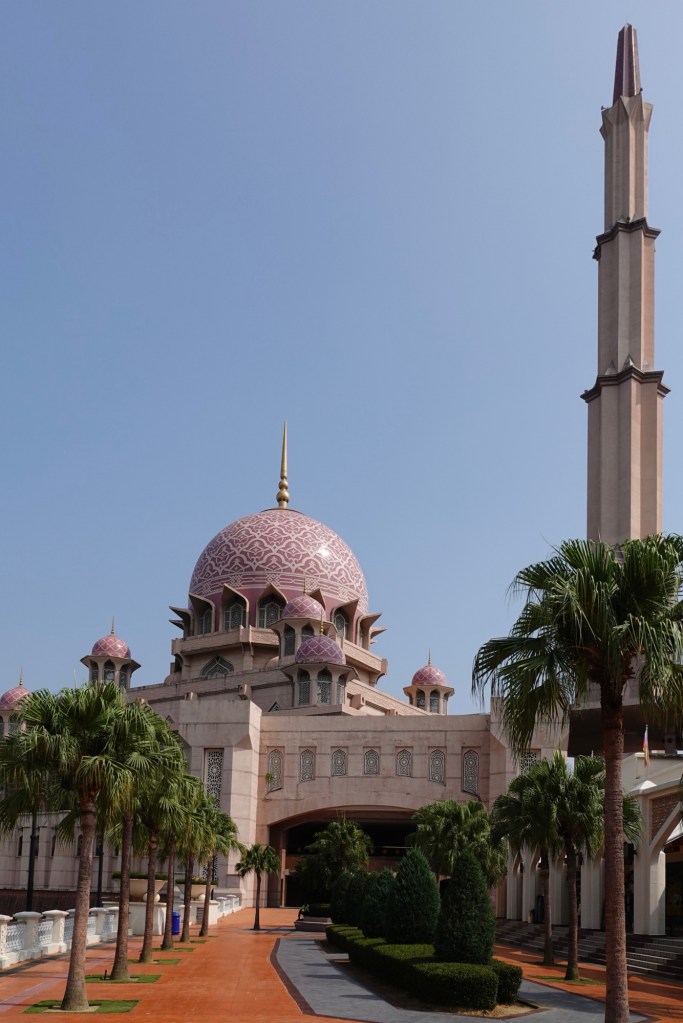
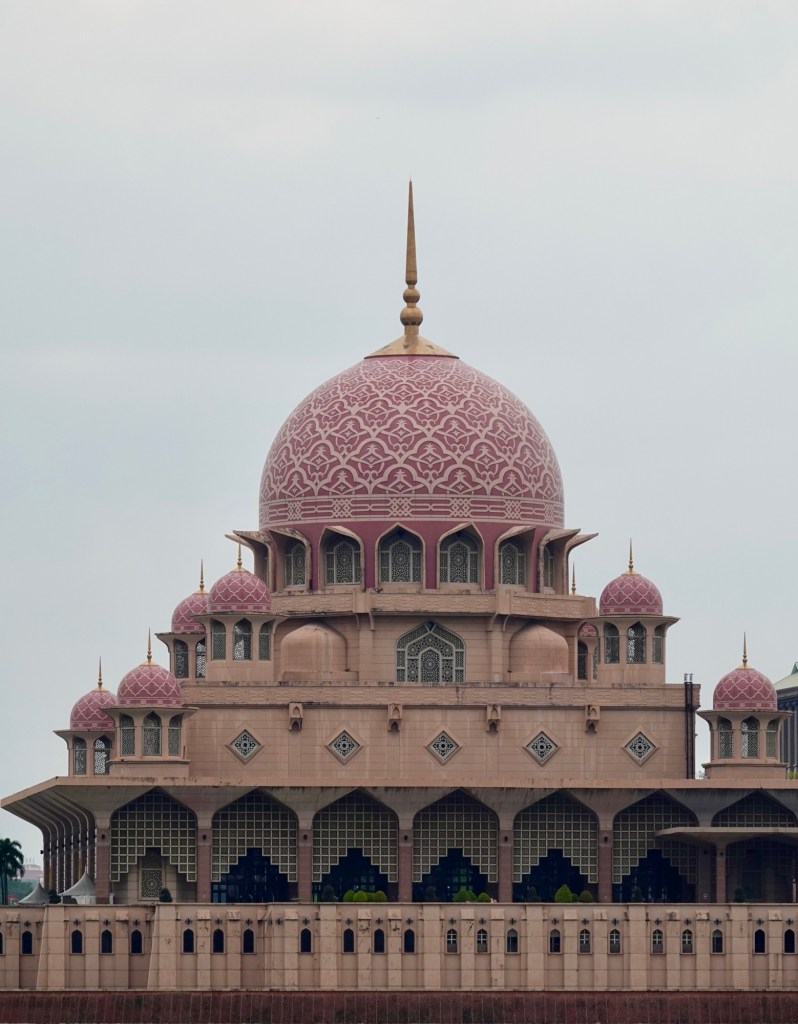
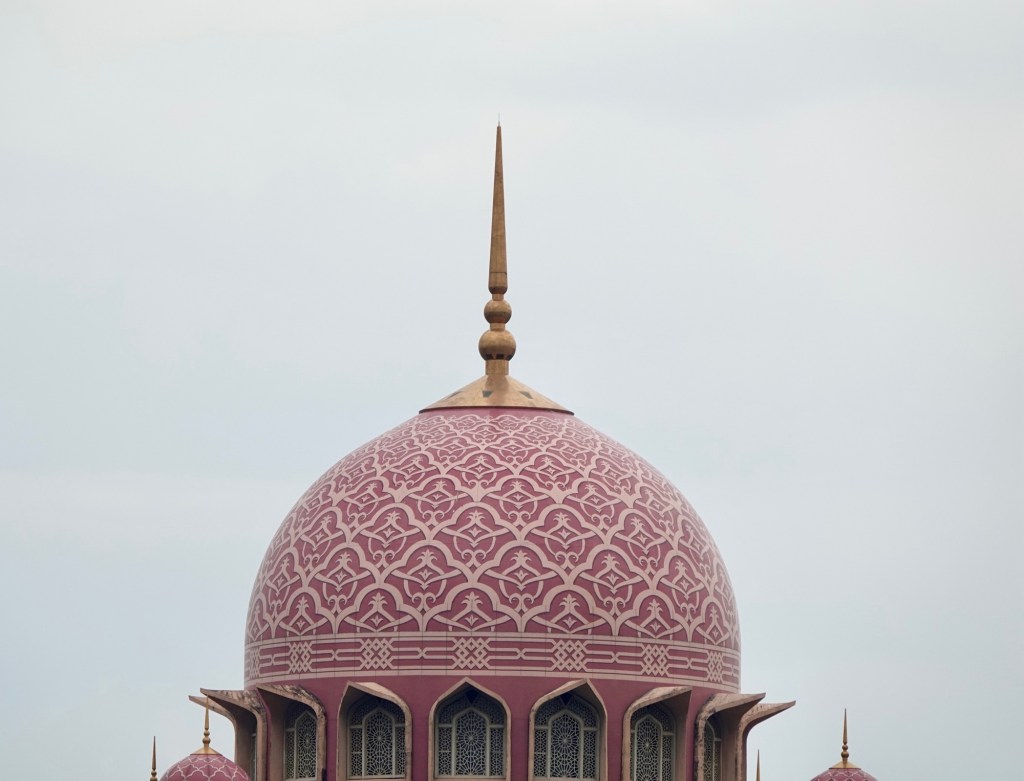
The highlight of the tour for me was being allowed to enter the Putra Mosque. Non-Muslims are not always allowed into mosques; in Turkey only one or two are accessible, in Morocco only one, and on our recent trip to Egypt currently none.
I was told that even if I had my own scarf, as a tourist I needed to don one of their hooded robes (Ted did not need to) – and ensure that it was fastened to cover all of what little hair I have.
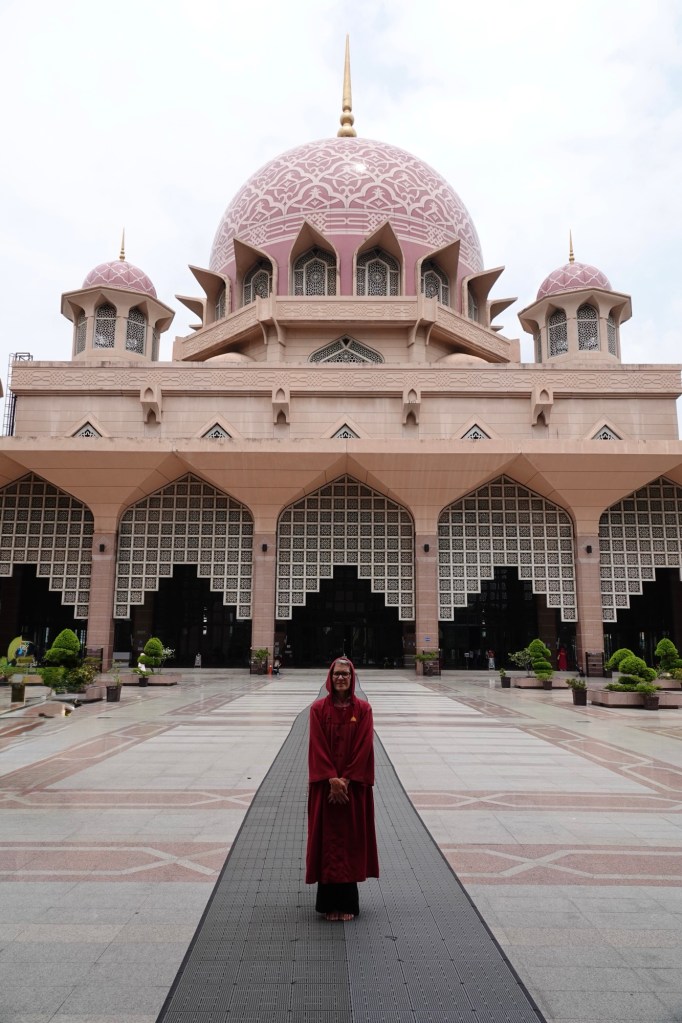
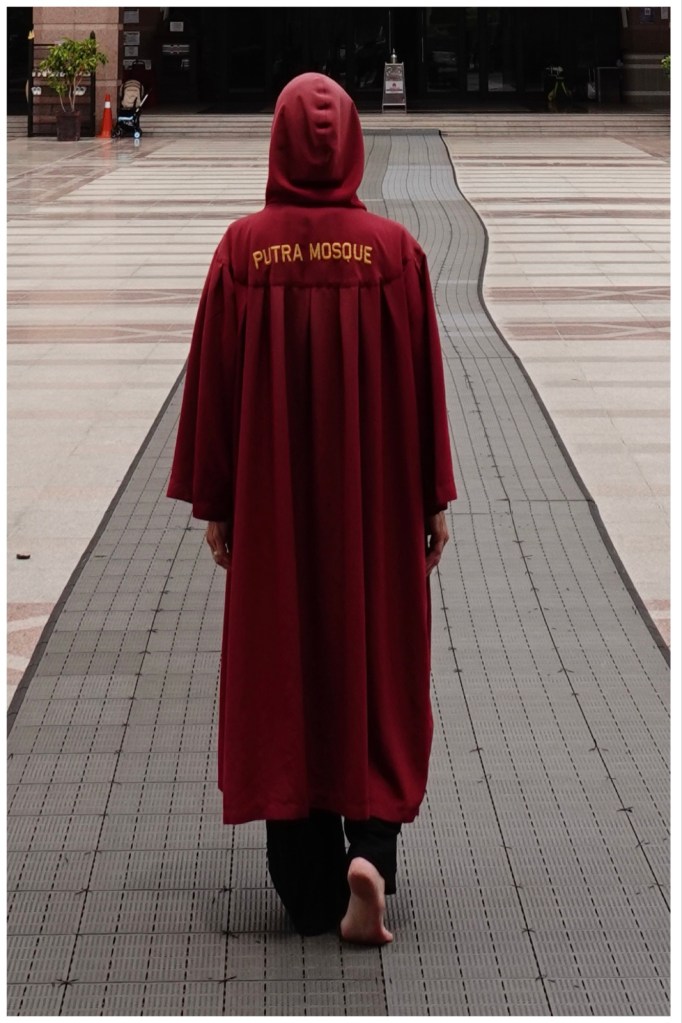
Both inside and out, it earns its nickname “the pink mosque” even more than Istanbul’s Blue Mosque. There’s a lot of rose-tinted granite, pink marble, pink ceramic tile, pink plaster, pink paint, and even pink carpet.
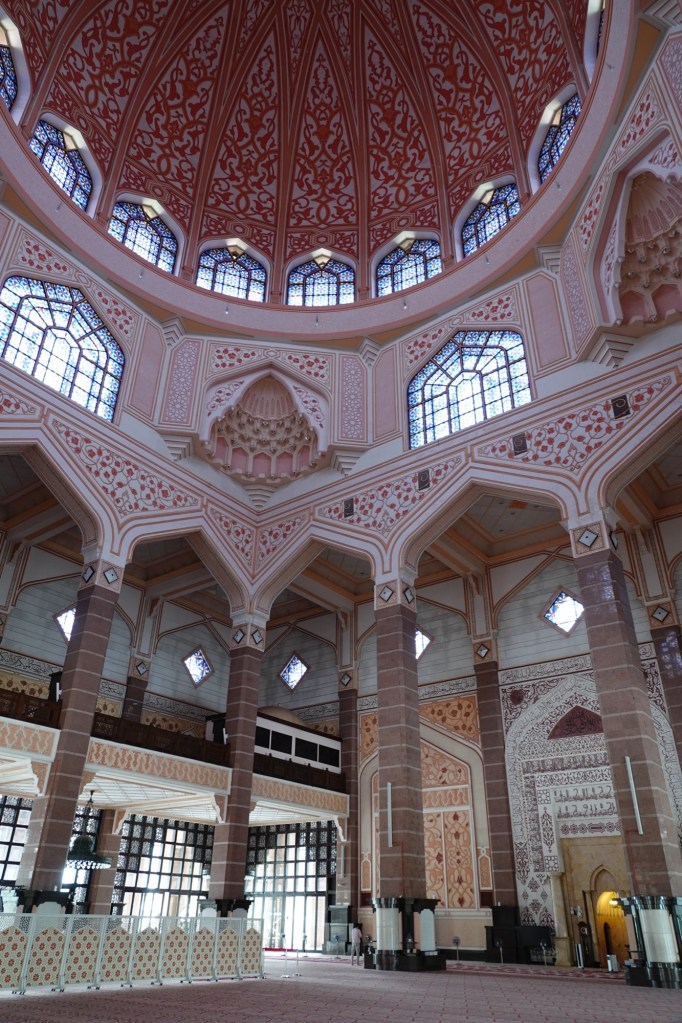
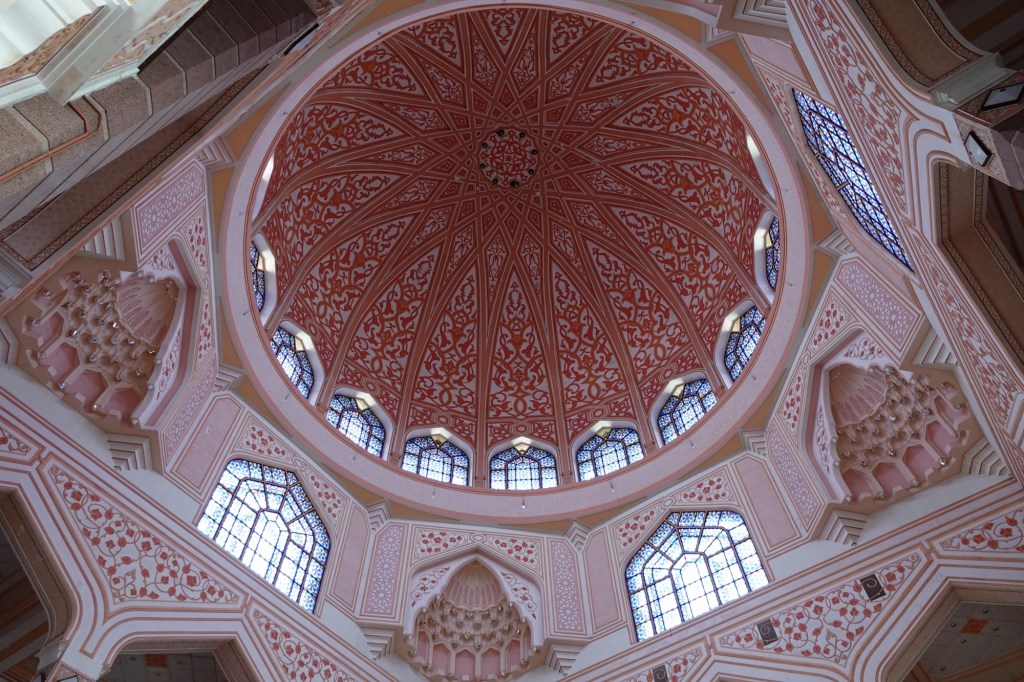
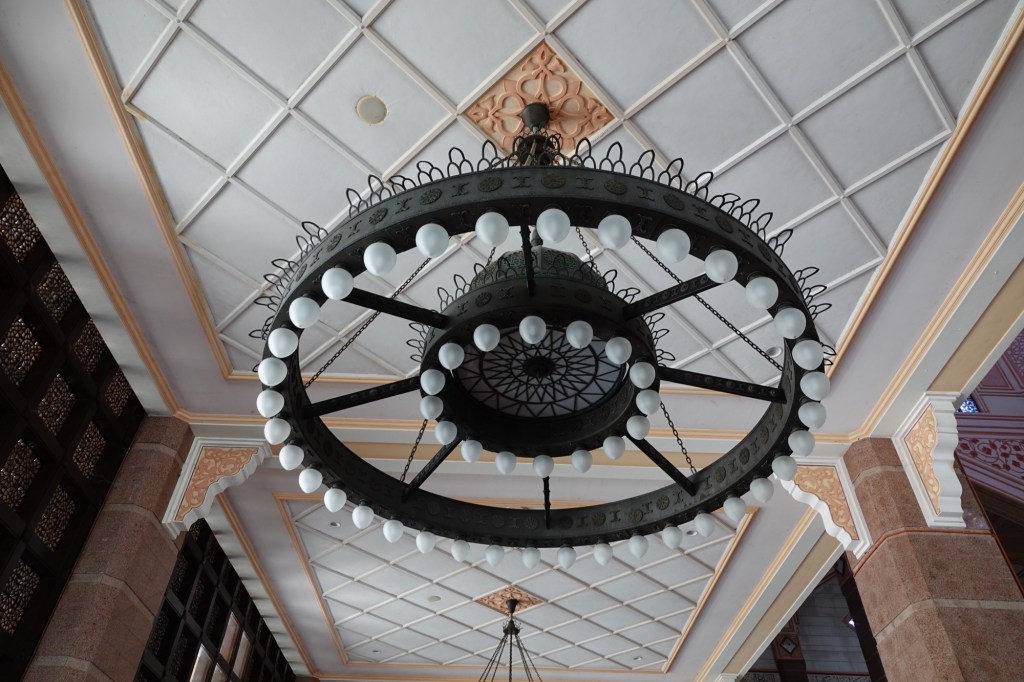
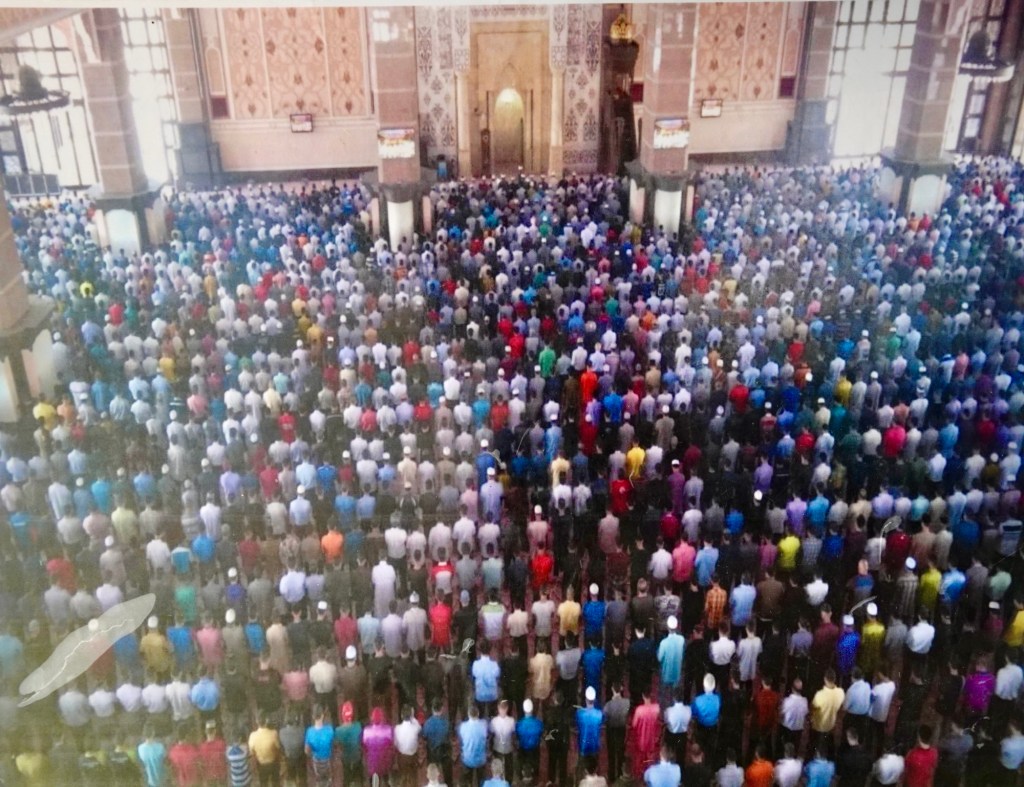
The mosque can welcome 15,000 worshippers on Fridays: 8000 men on the ground floor, 2000 women in the upper galleries, and another 5000 men in the courtyard. A volunteer in the mosque shared this photo with us of what a typical Friday prayer looks like, and explained that the men pray while touching shoulder-to-shoulder.
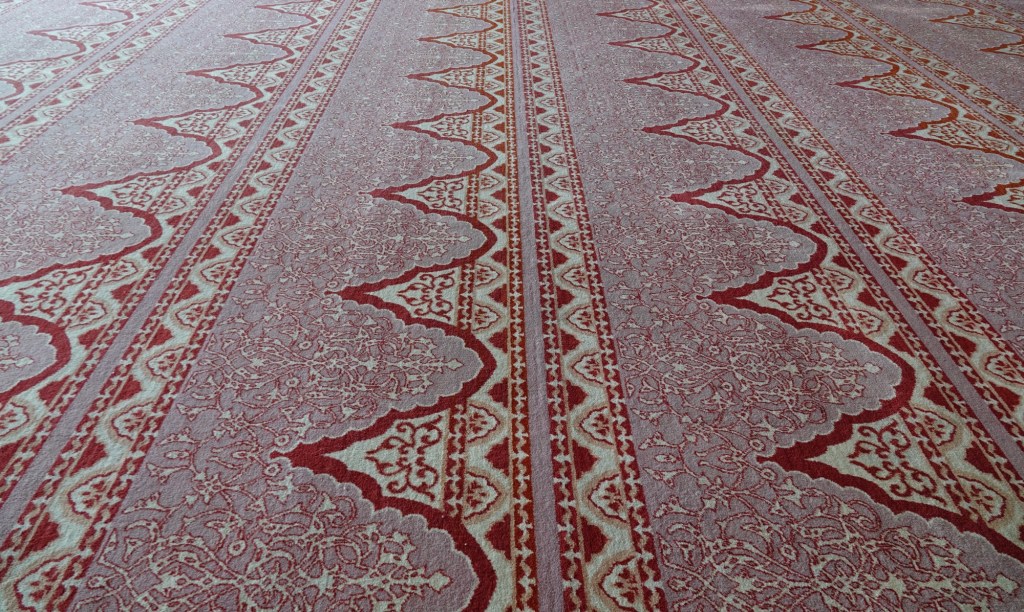
The lines on the carpet are more than just decoration; they mark the space for each worshipper to stand and allow enough space to prostrate themselves in prayer.
While I would have been happy to get even more information about Malaysia’s government, and definitely would have preferred a boat with clear windows or a large open deck (although in full sun and 40°C/101°F I understand the need for UV protection), I was glad we took the tour. Putrajaya was not a place we’d have reached on our own.
 Rose and Ted’s Excellent Adventure