We’ve learned that sometimes it’s just best to have a guide to ensure we don’t miss the highlights of the place we’re visiting, especially when we’re only staying for a week.
This morning we were up bright and early to join a 9 hour guided tour offered through Expedia by Ivy Holidays,one of KL’s largest tour operators with a fleet of buses and lots of independently contracted guides. At $67CAD total for both of us it sounded more than reasonable, even expecting that a lot of the things we’d see would be very cursory drive-bys or overviews.
We were picked up at our hotel by a small van that shuttled us to the collection spot where we met our guide and boarded a full sized tour coach.
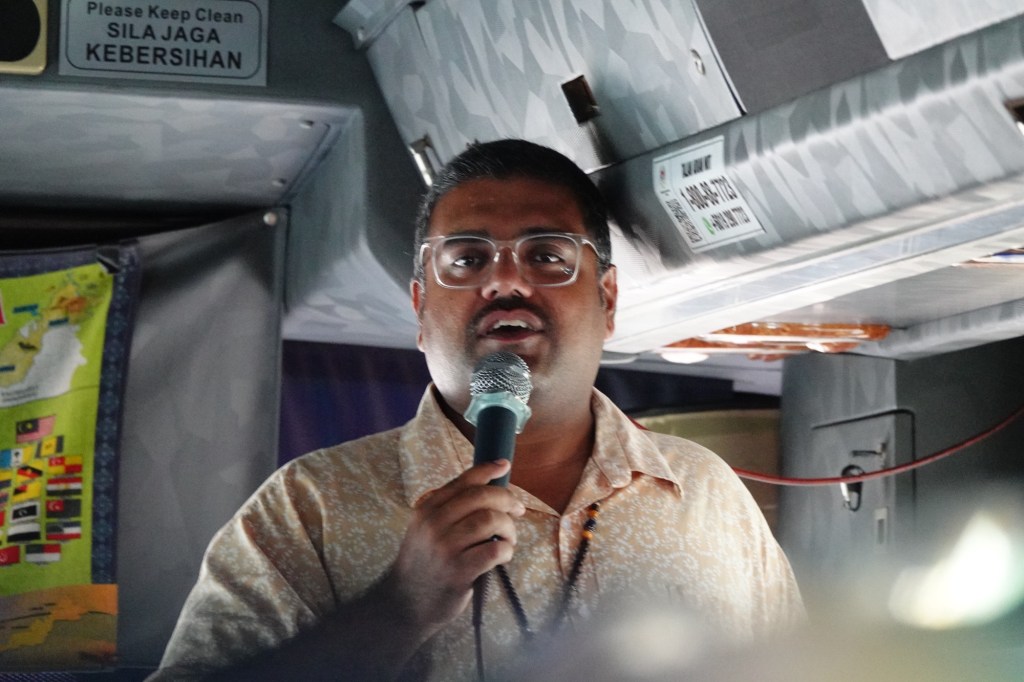
Over the course of the day we made 11 stops, seeing around 20 different attractions – some fairly extensively, and others as quick photo stops.
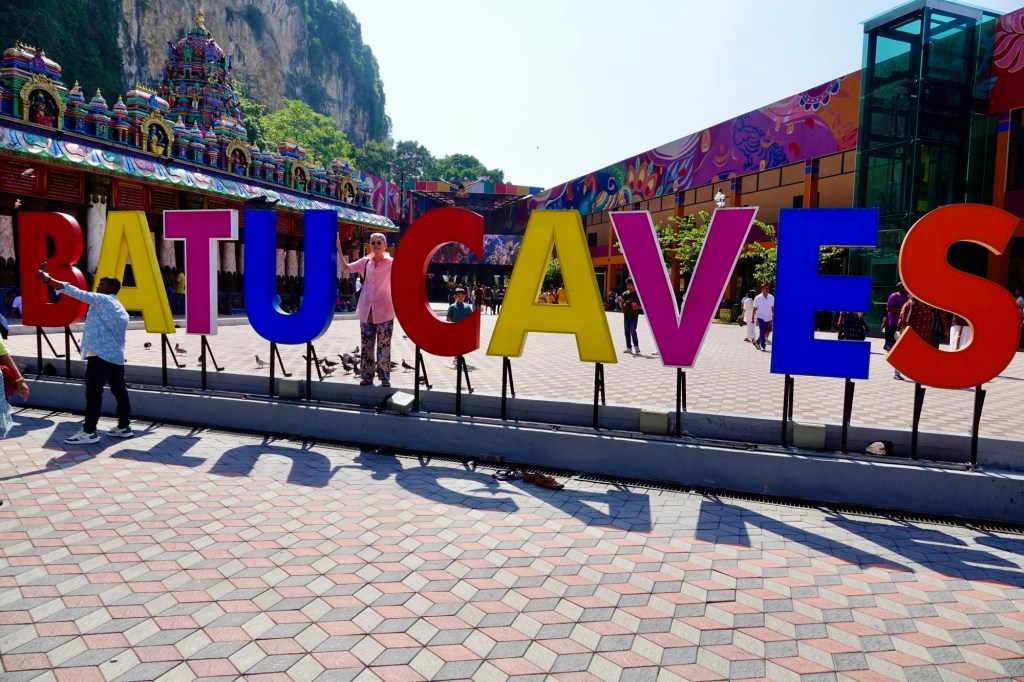
Stop 1: The Batu Caves
Sasi gave is a brief history of why these Hindu cave temples exist in a Muslim country.
Although the Tamil Indians traded with what was then Malaya as far back as the 11th century, most of the Indians now living here can trace their roots to the late 18th/early 19th century when their ancestors were brought here by the British East India Company as skilled labour, but also as much needed manual labour to clear the native forests for rubber plantations- using trees imported from Brazil. (Aside: most of those plantations have been converted to palm for palm oil, and increasingly for bio-diesel.)
Sasi explained that Malaysia has four seasons: very hot, rainy, very very hot, and very heavily rainy, but no natural disasters like earthquakes or volcanoes. However there is the intense heat, and jungle, and there are insects that carry diseases. That combination killed 2 million Indian workers, whose families and coworkers commemorated them at first with simple statues and later with temples.
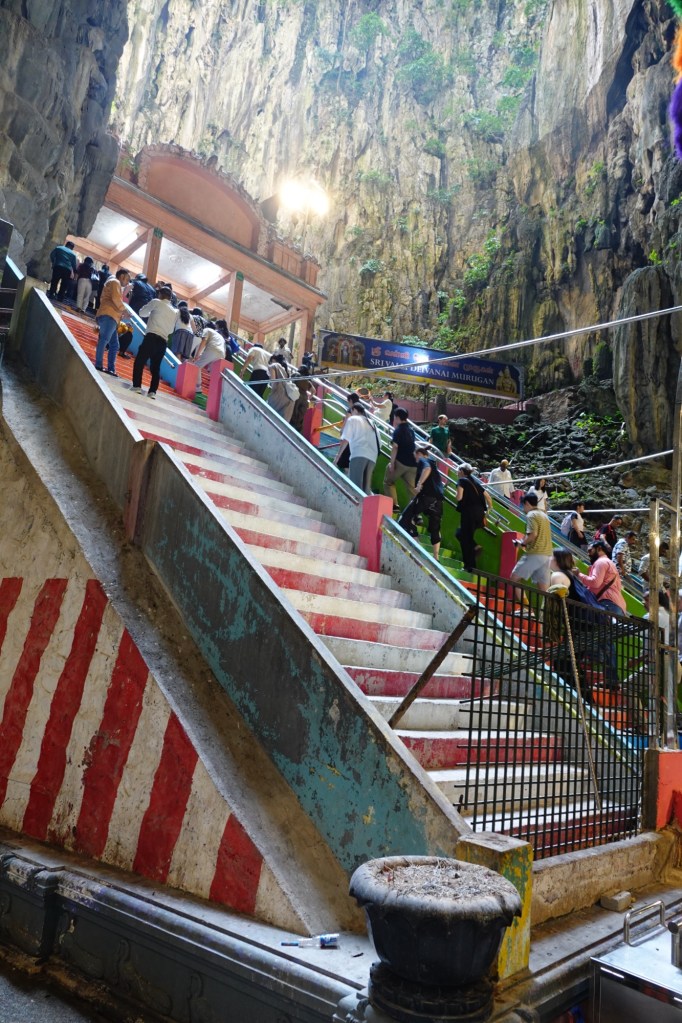
The limestone cliff at Batu is 400 million years old, and contains at least 80 caves. This particular cave became a temple because of the way the wind circulating in it sounded like a meditative “ohm”. It was originally accessed by ropes, but eventually the now famous 272 stairs (the equivalent of about 18 storeys) were built in 1921 by the British who donated the brick.
Currently only 6.6% of Malaysia’s population is Indian, and not all are Hindu, but the Batu Caves temples are the country’s second most popular tourist site after the Petronas Towers.
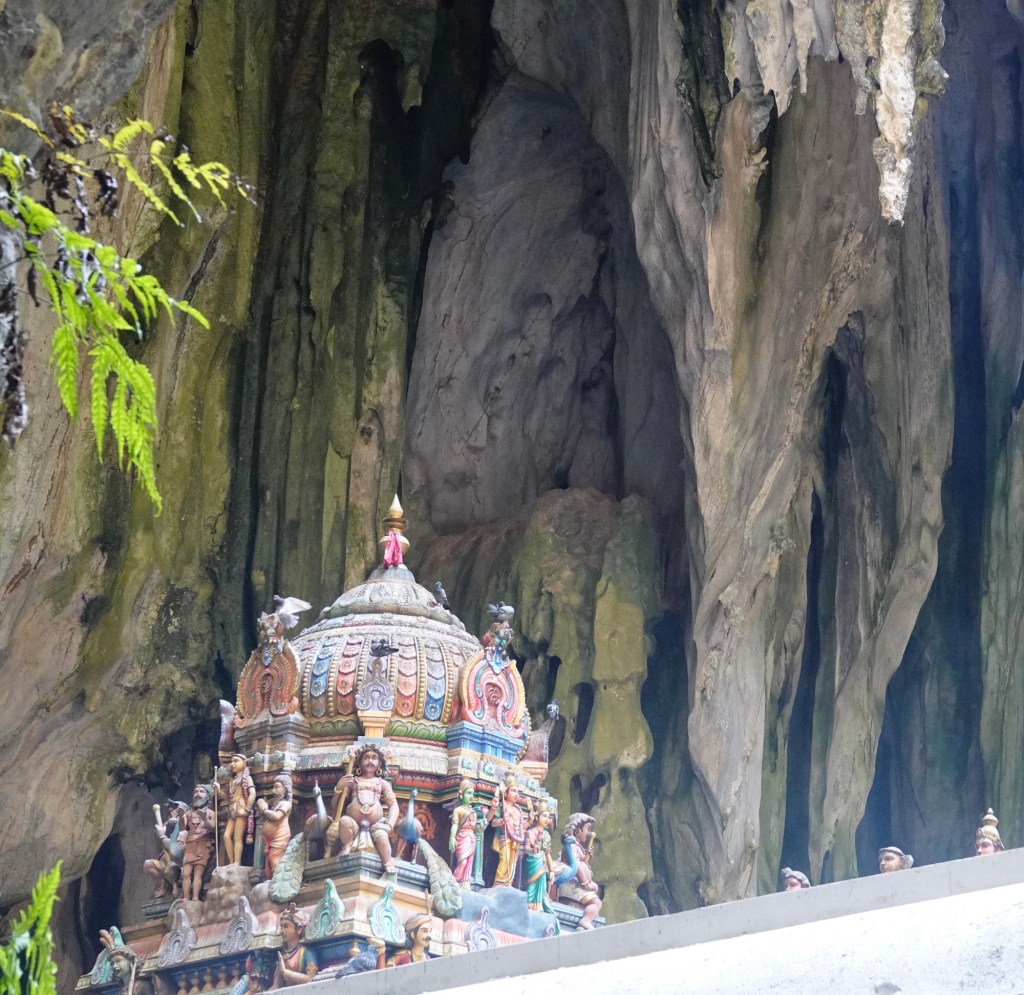
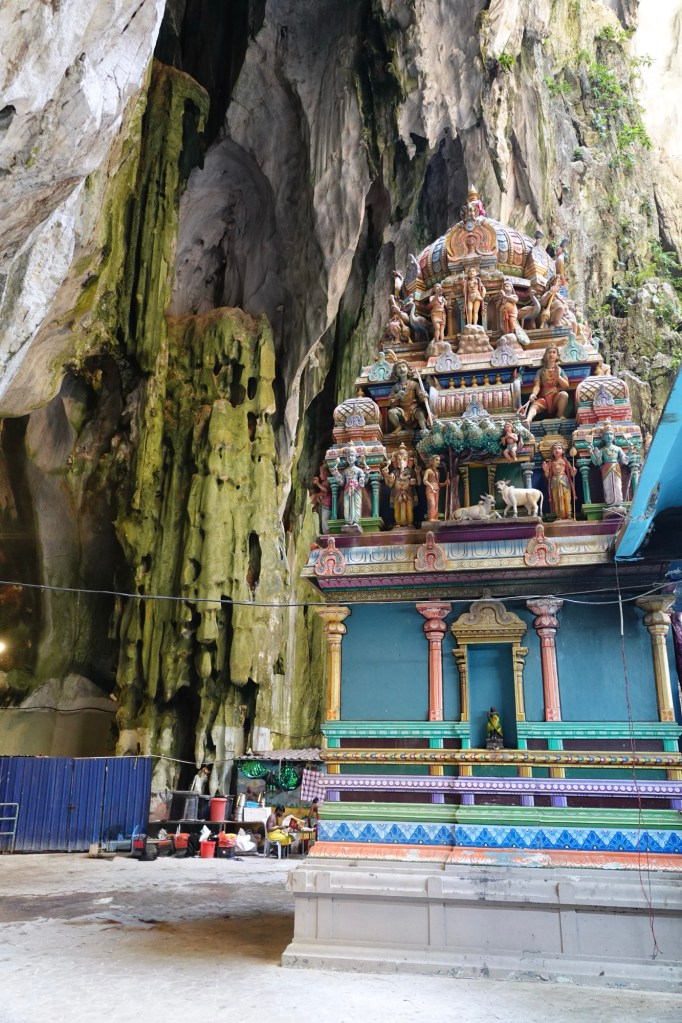
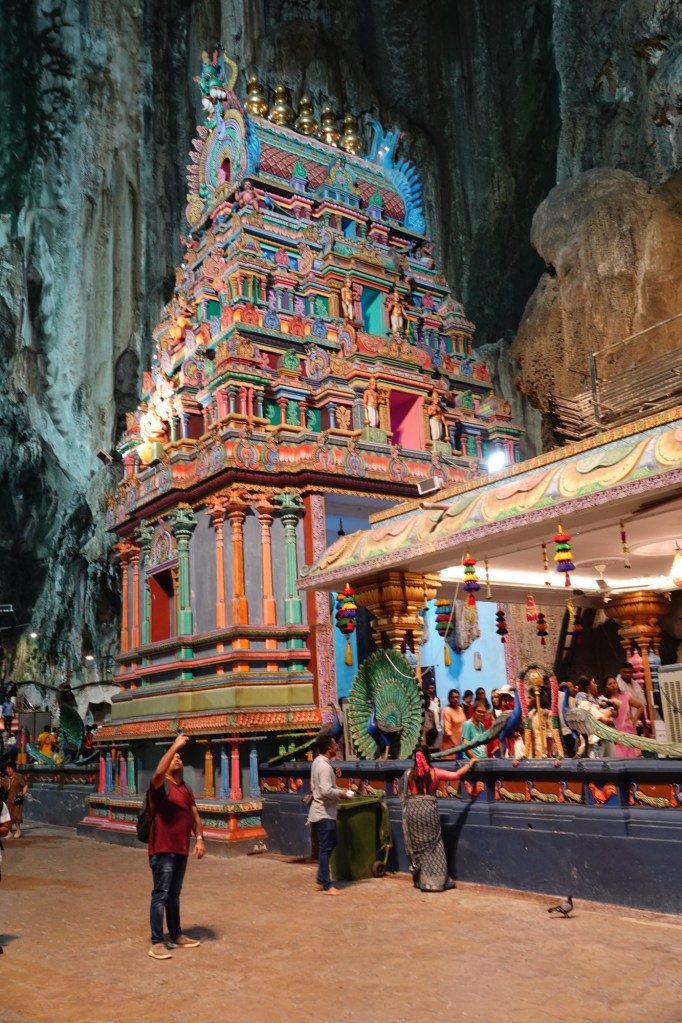
The cave originally housed just one small temple, but now has several.
Sasi, who is a practising Hindu, explained that all the Hindu “god” statues are not actually separate gods but are avatars for the single God in which to come to earth; each is based on different stories of God coming to earth.
Our guide shared a grainy black and white photo of the temple access in 1945, when there were just 2 staircases: one up and one down.
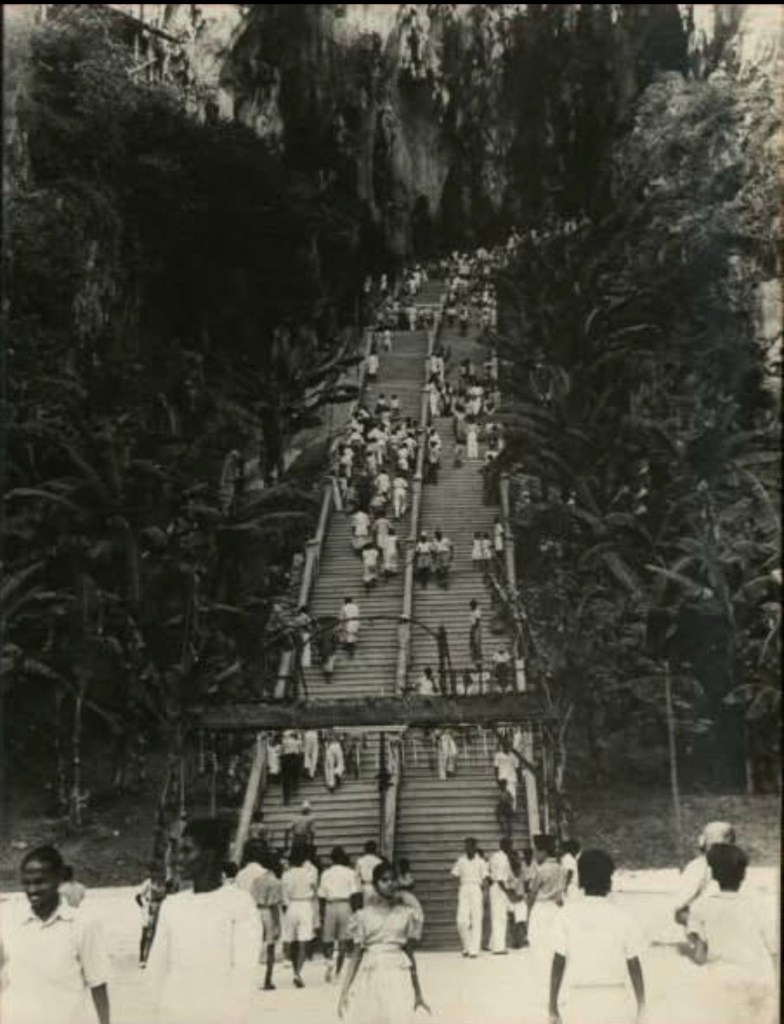
Around 1990 the cave access was expanded with the addition of a third staircase, and in 2017 the fourth flight of stairs was added, and the edges of all the steps were painted with rainbow colours to replace the original red and white.
The gigantic gold statue in front of the cave was only added in 2006, with government permission. While Malaysia is a Muslim country and Islam does not allow the worship of statues, but Malaysia allows freedom of religion so the Hindus may have them.
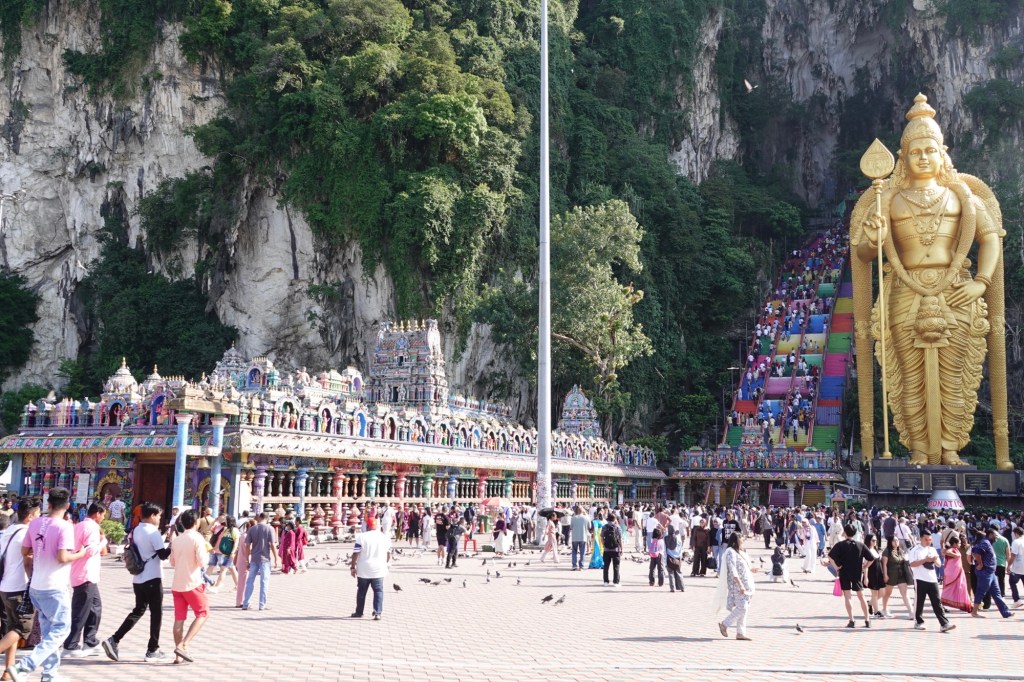
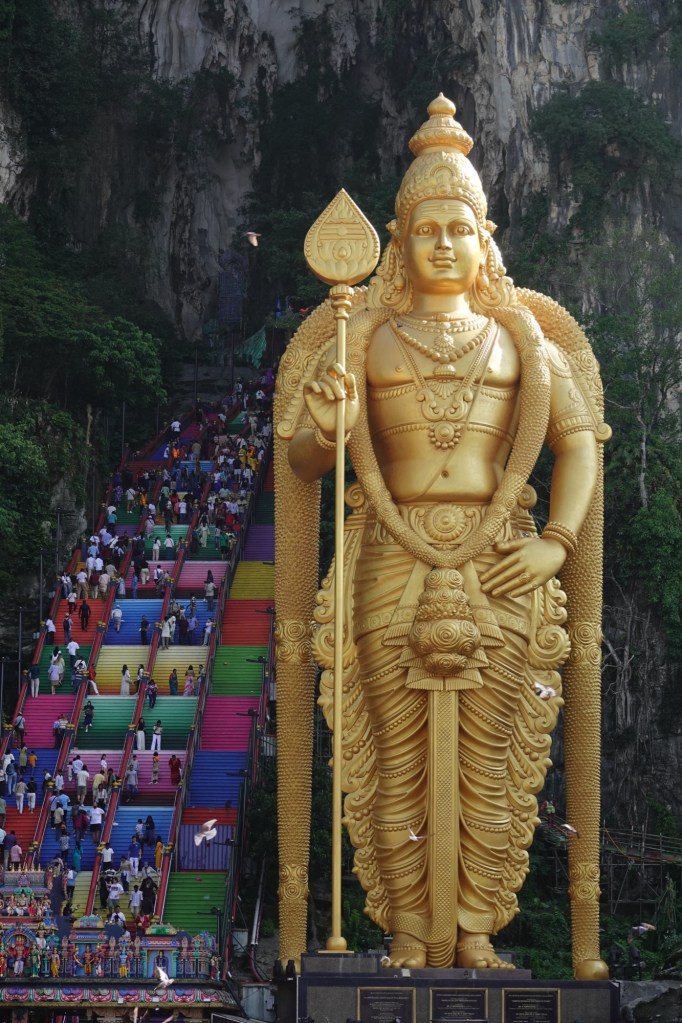
The stairs are steep, and strewn in places with garbage and banana peels. That’s a problem when a sacred site becomes a tourist attraction. It’s also a problem for a scared old lady (me) clinging to the railings with every step like her life depended on them.
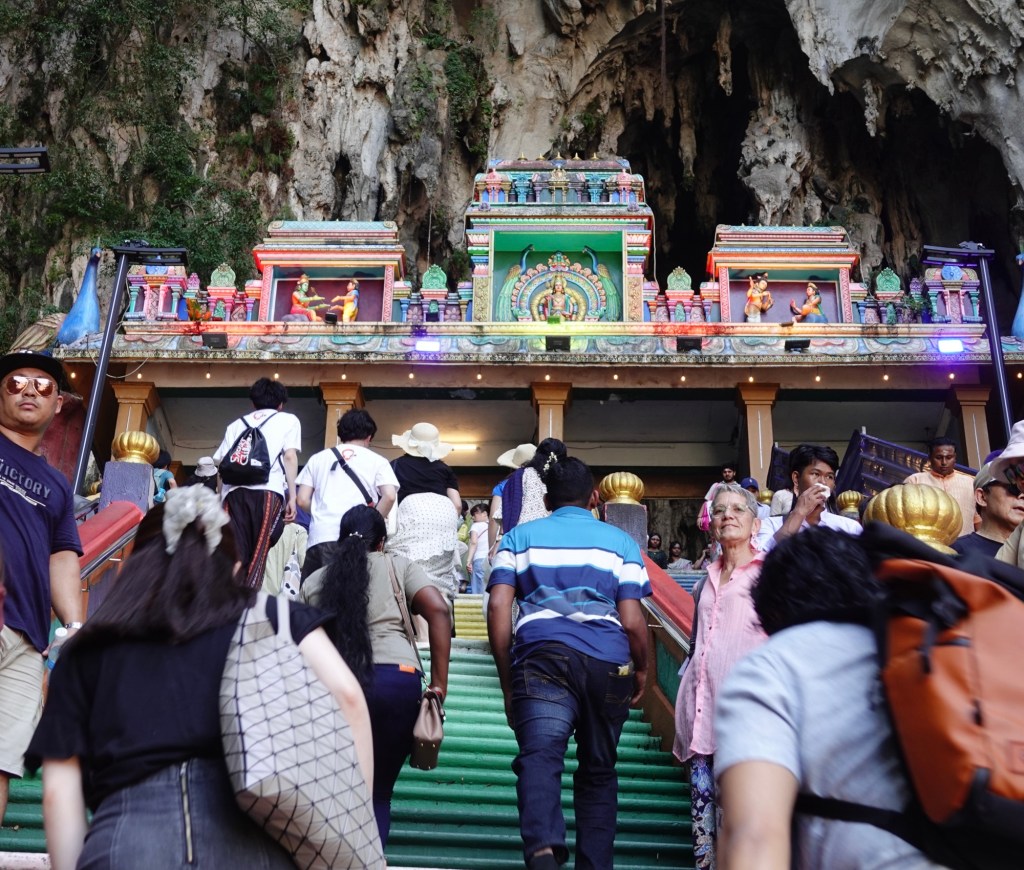
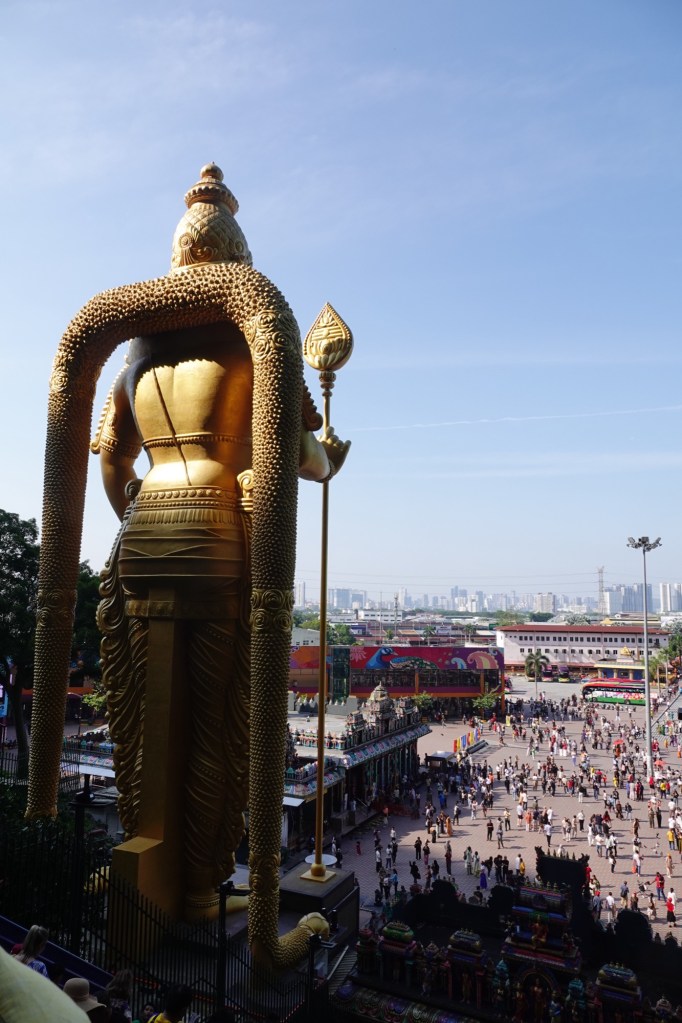
At about 150 ft up the staircase there is a side temple, but the interior is inaccessible. Only the exterior statue can be photographed.
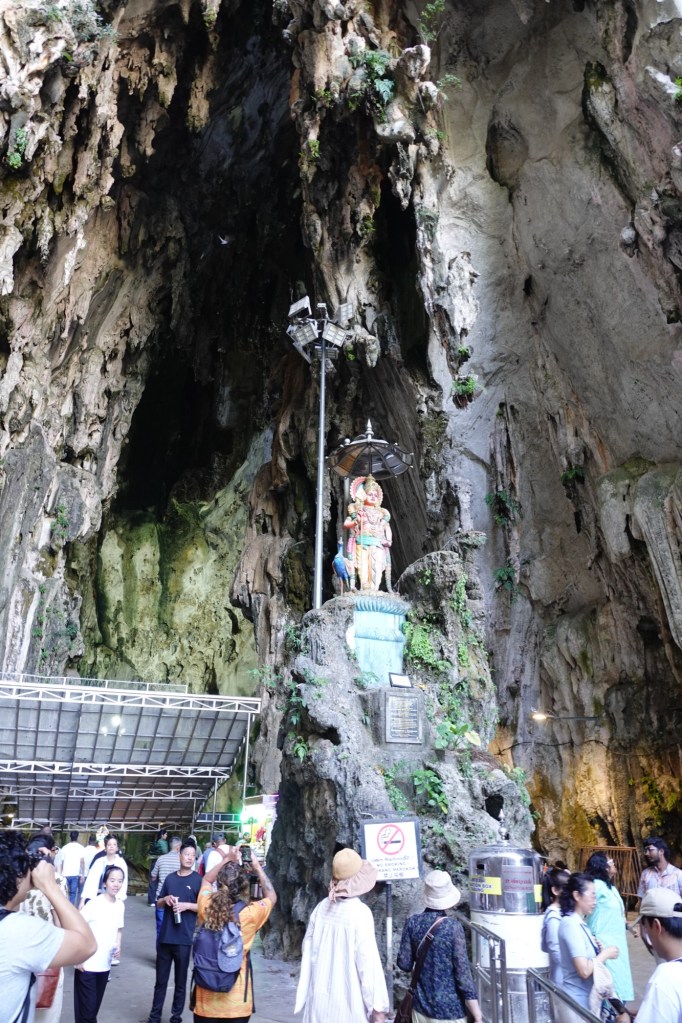
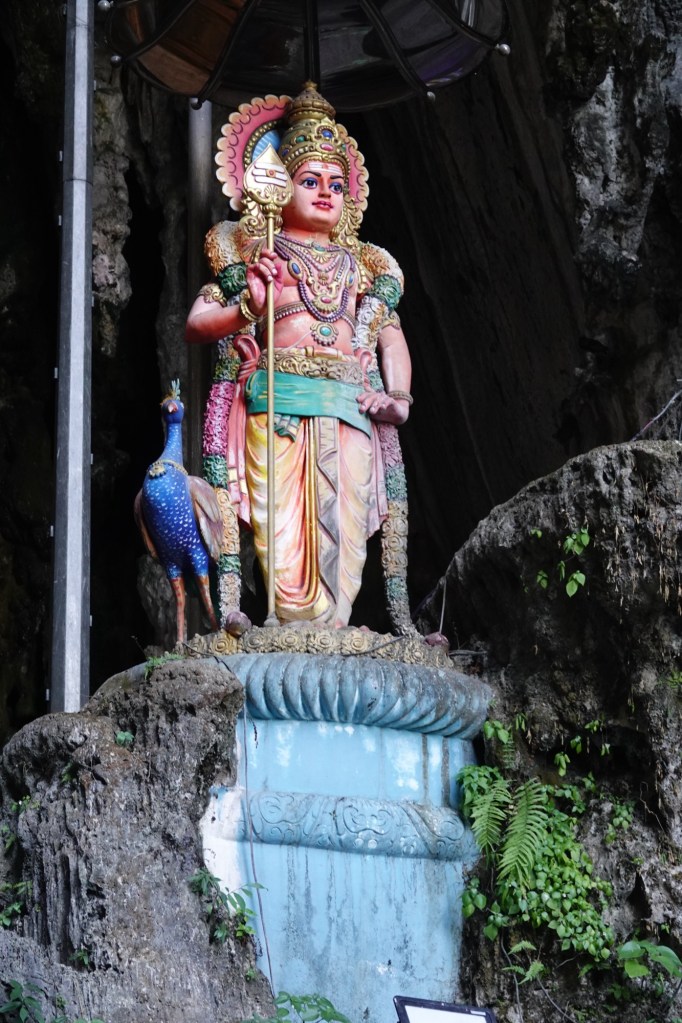
We had to remove our shoes to enter the temple at the top of the stairs. (I actually left mine off and felt more secure that way when we walked back down.)
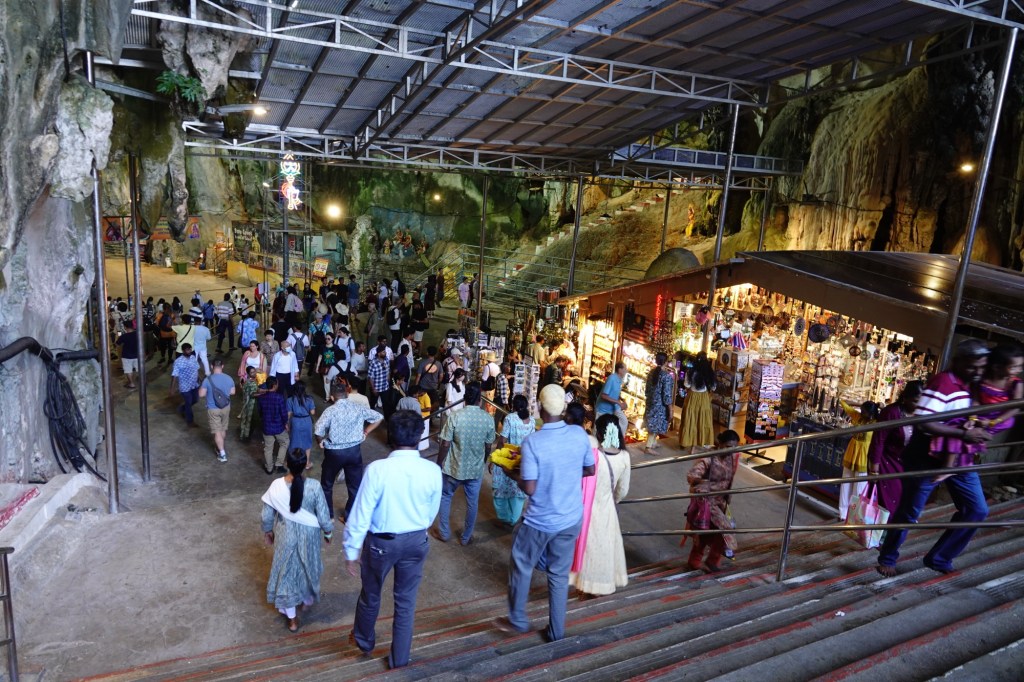
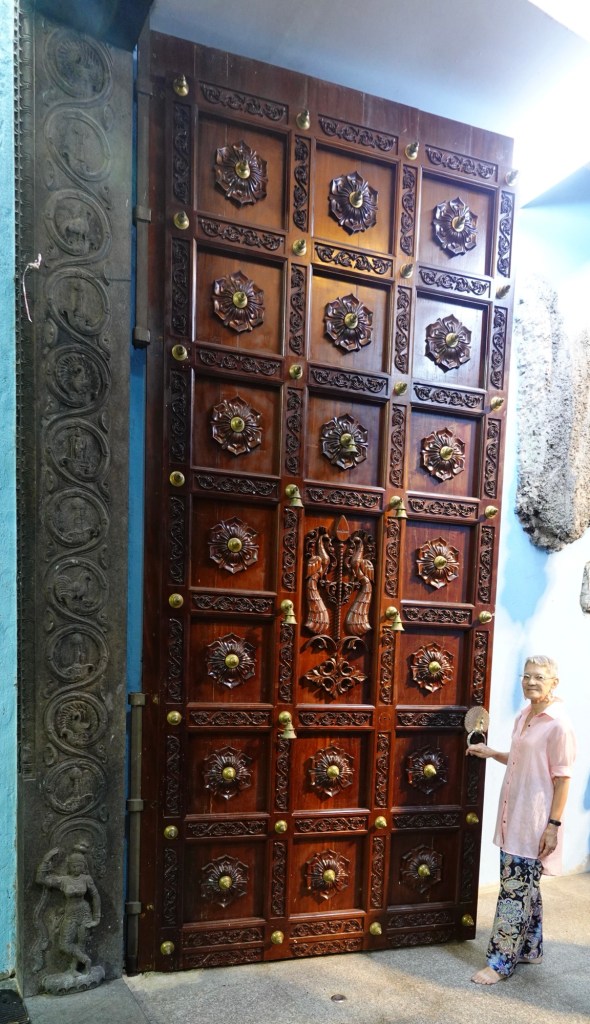
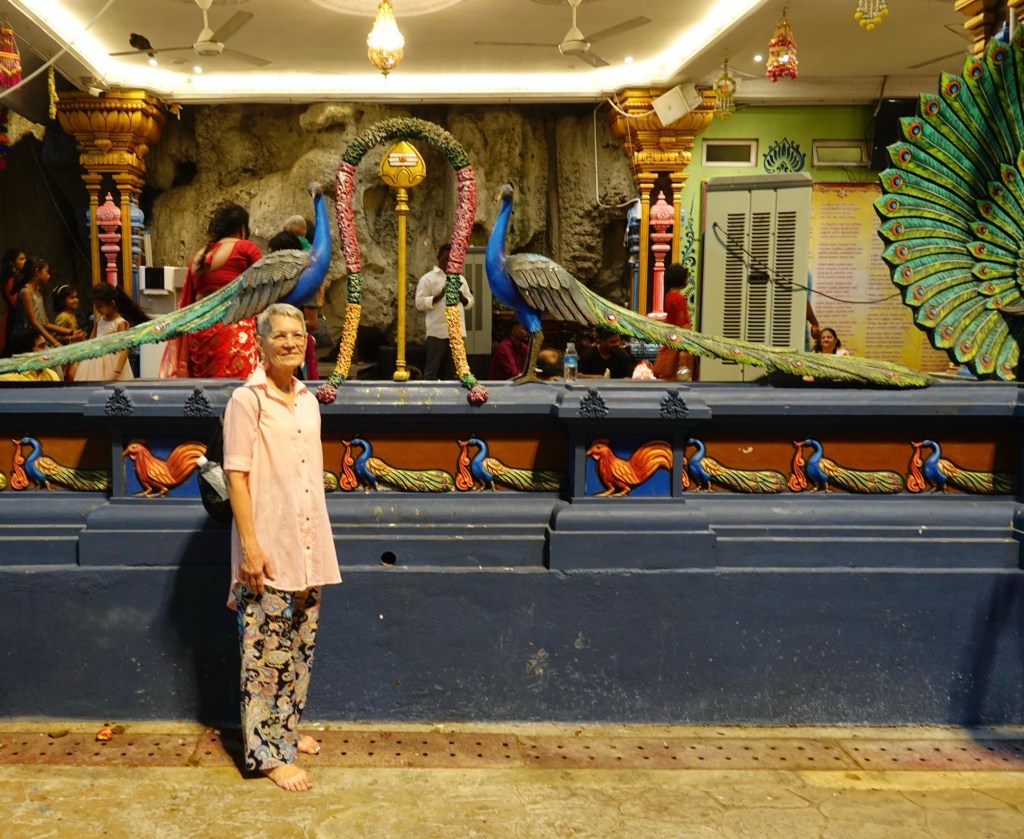
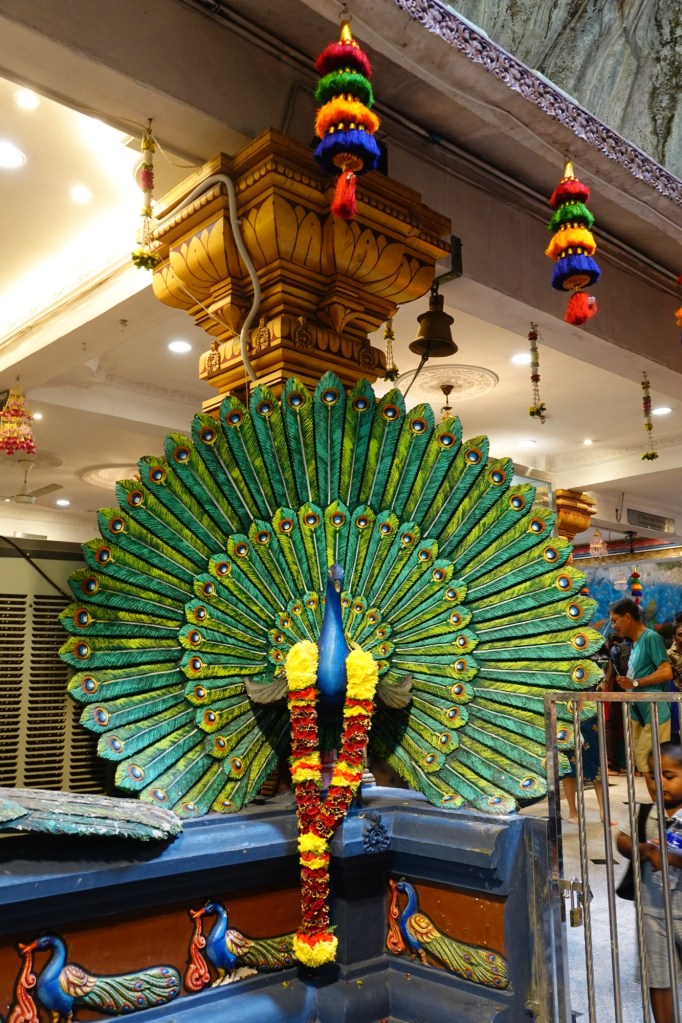
We saw many active worshippers amid the tourists.
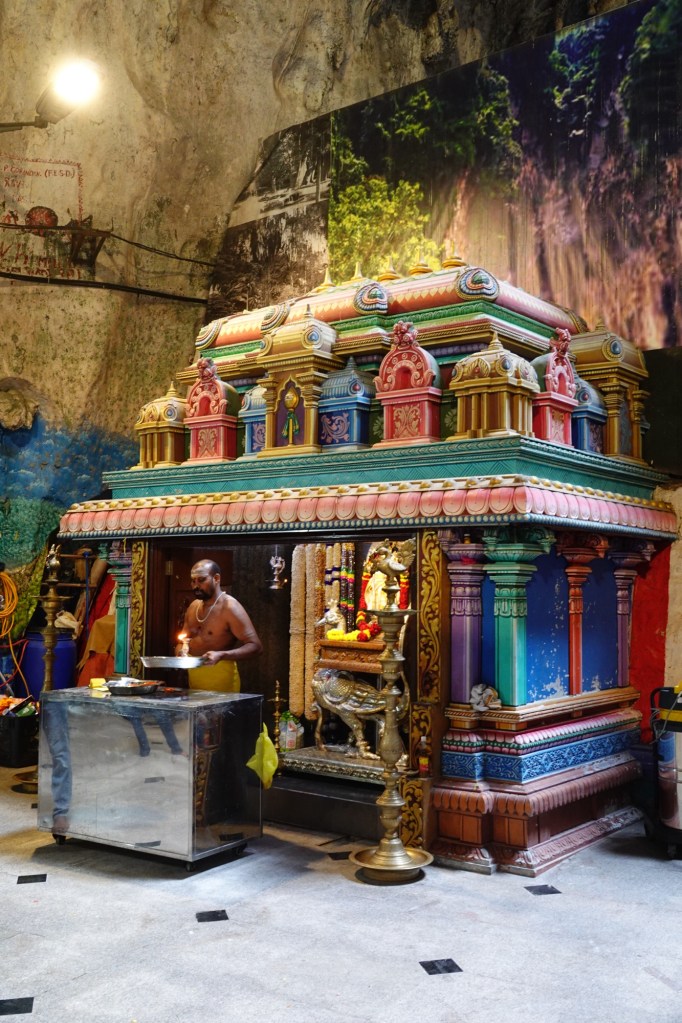
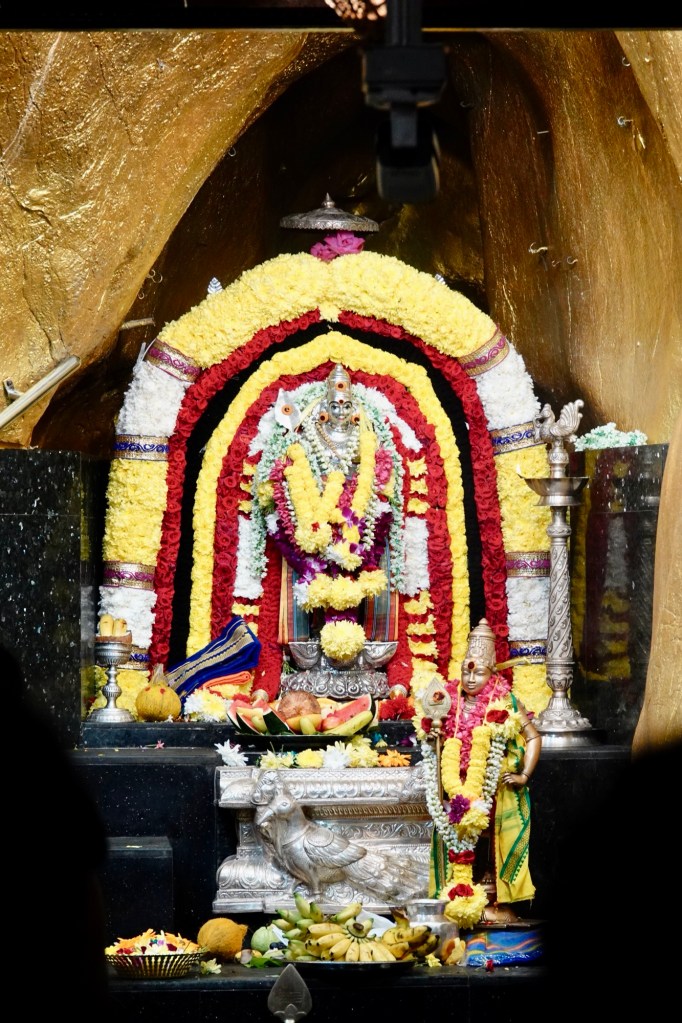
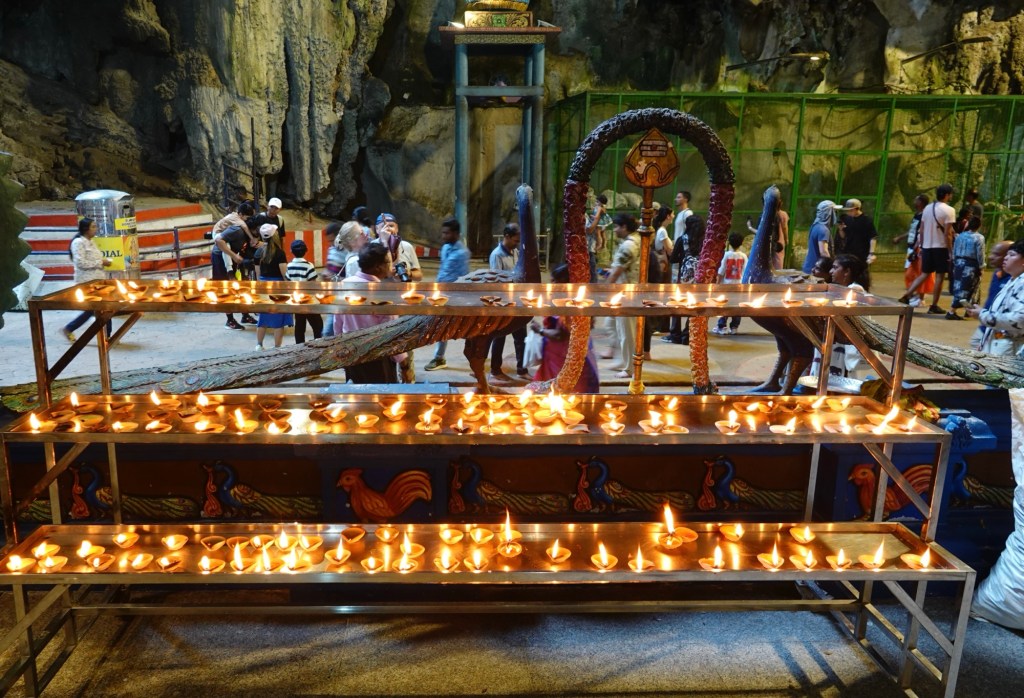
Three more storeys of stairs at the back of the cave led us into another temple shrine.
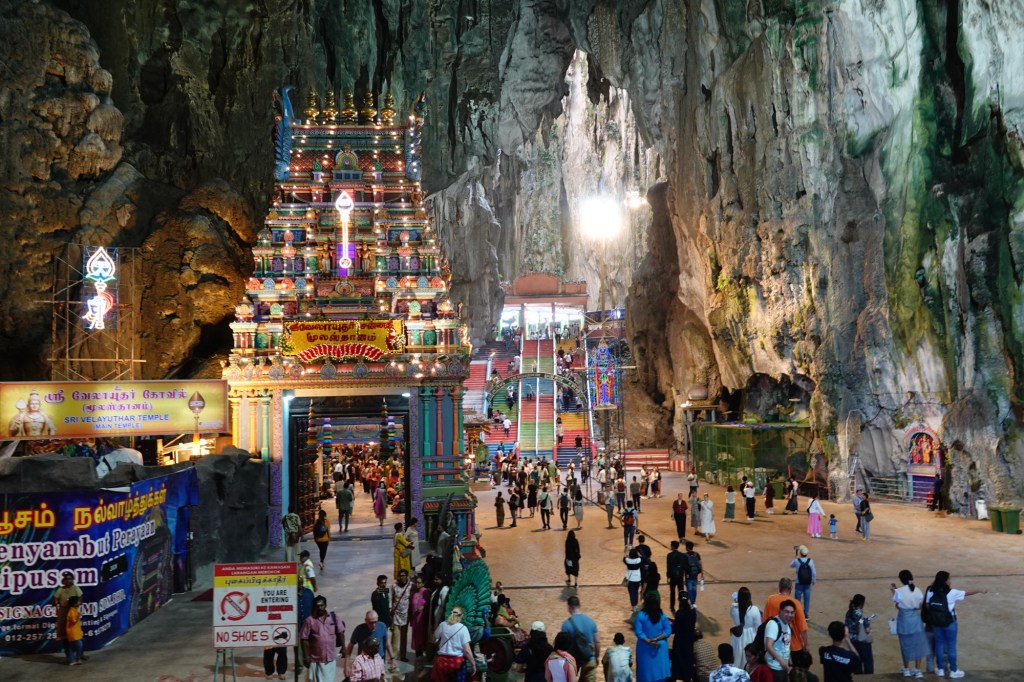
Beside the rainbow stairs were some that had been left their original colours.
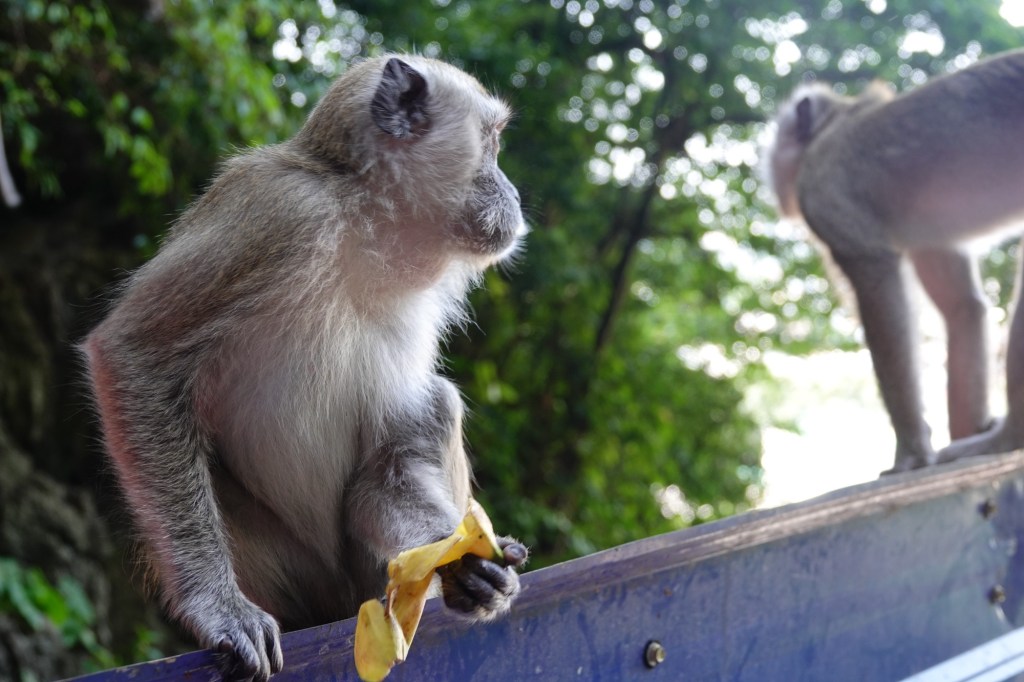
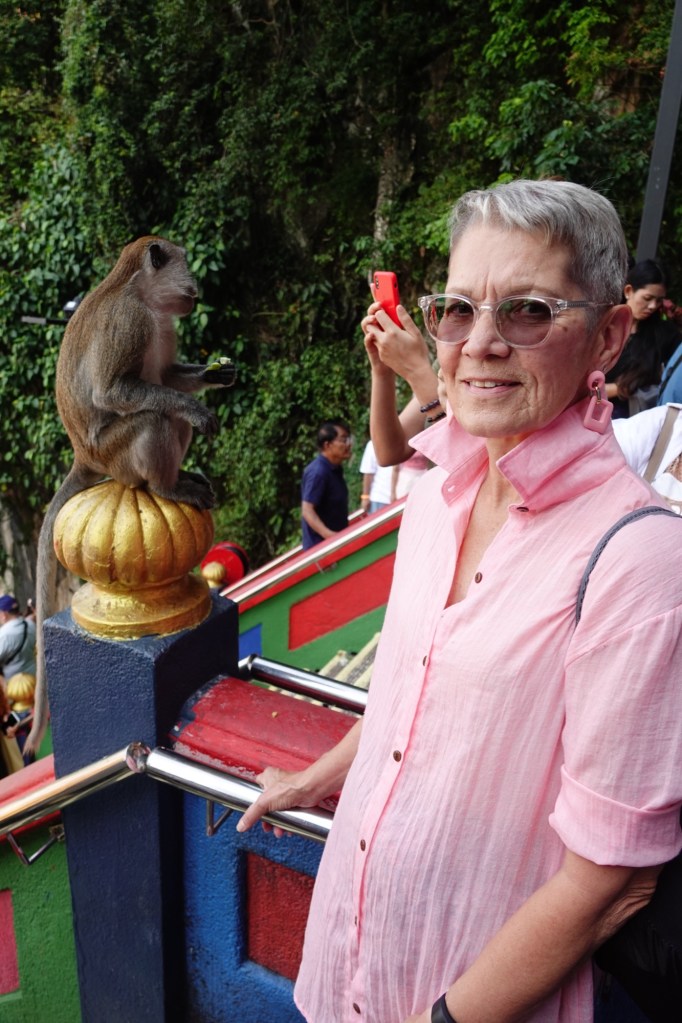
In the upper area we also found dozens and dozens of long-tailed macaques!
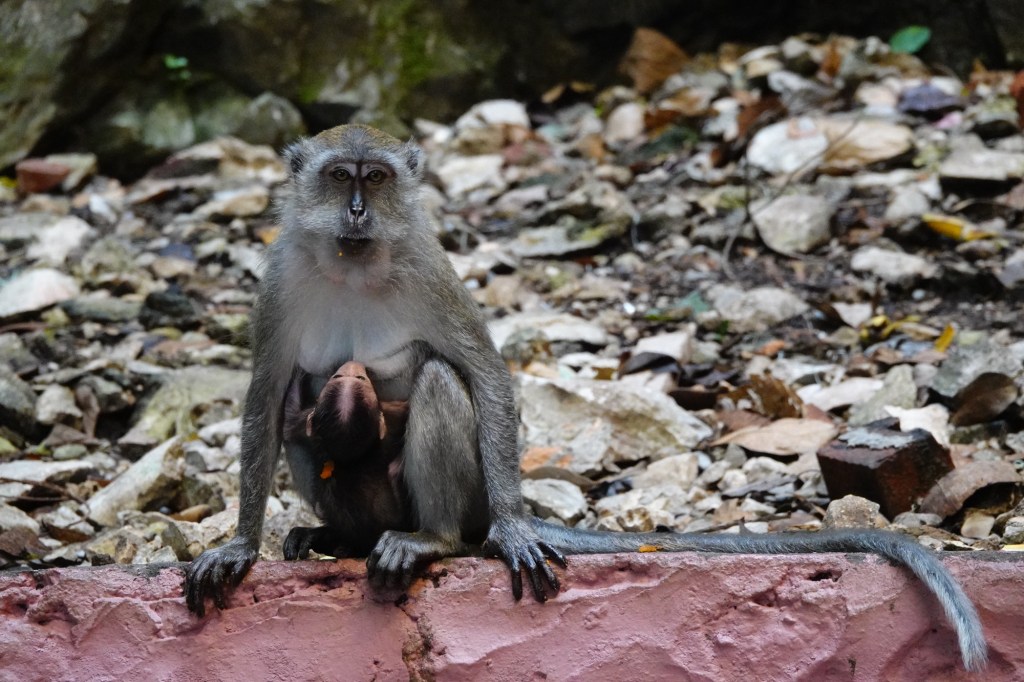
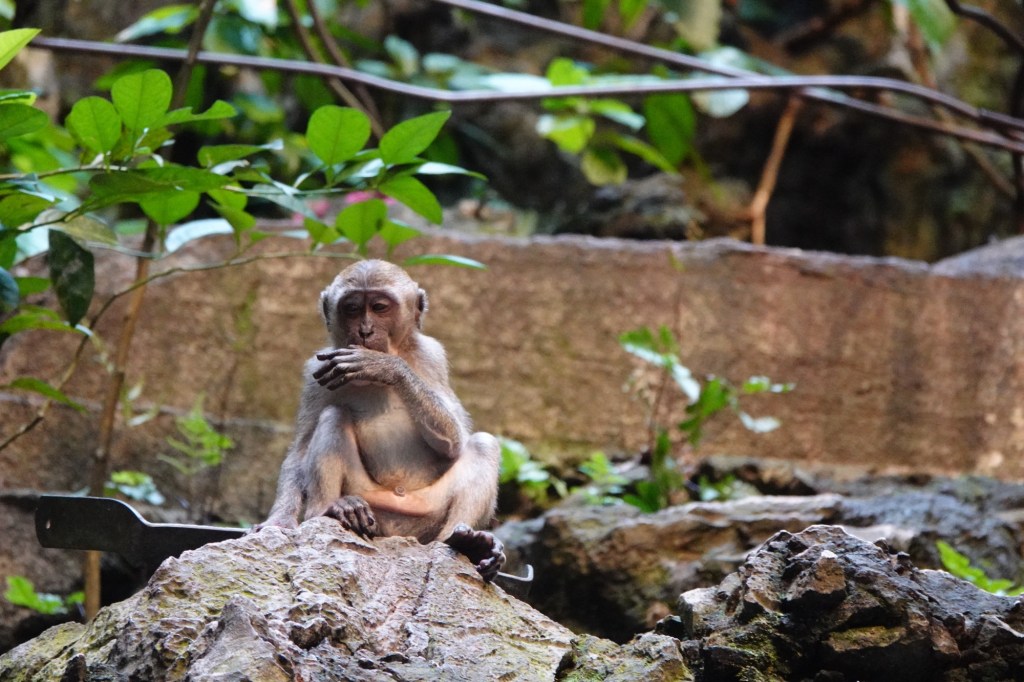
The staircase from the upper temple was significantly less scary to navigate, because looking down 3 storeys is much less stressful than looking down 18.
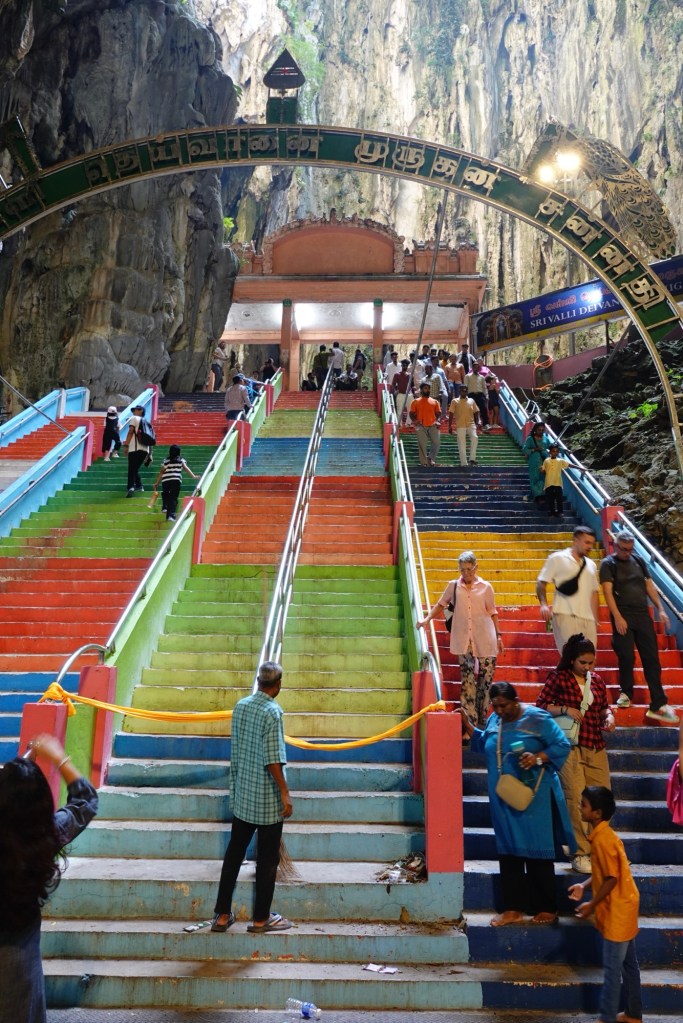
Seeing macaques again on the walk back down the stairs (which means we did 18 storeys in both directions) might explain some of the garbage and fruit peels.
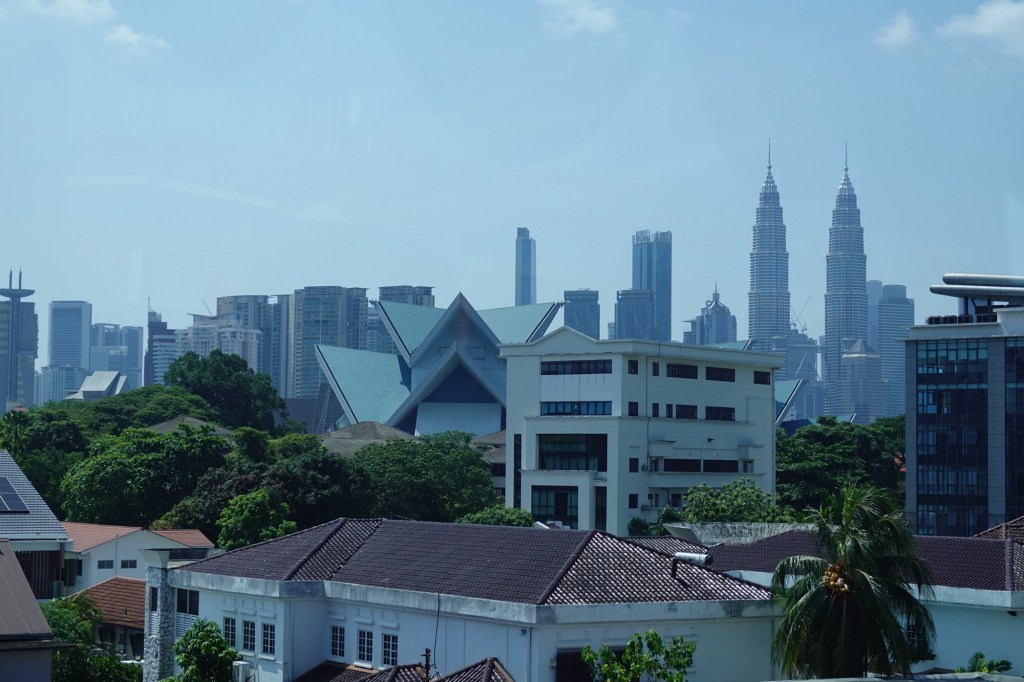
En route to our next stop we got a panoramic view that included the Petronas Towers, giving perspective to their size.
Stop 2: Chinatown
We did a very quick guided walk here, specifically to see an alley of murals and the historic “sin” quarter that was once home to opium dens, gambling, and women of ill repute.
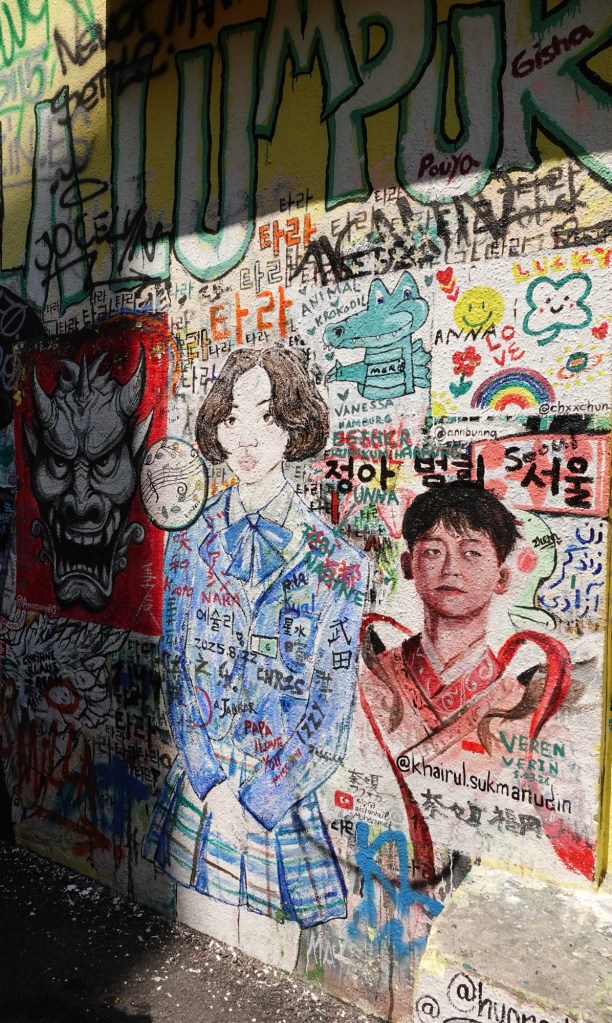
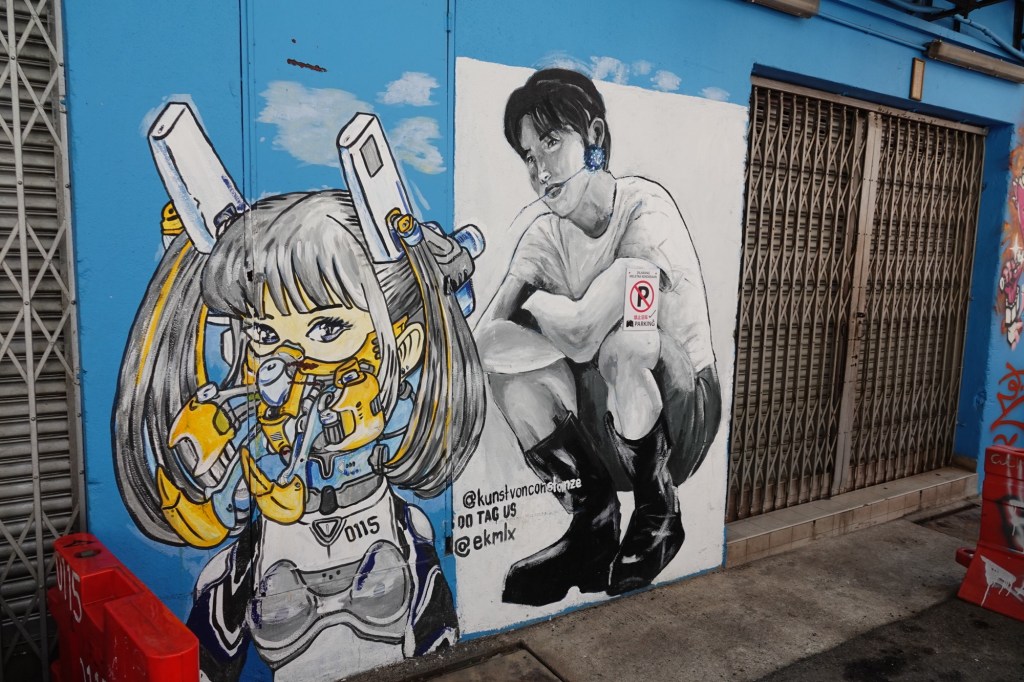
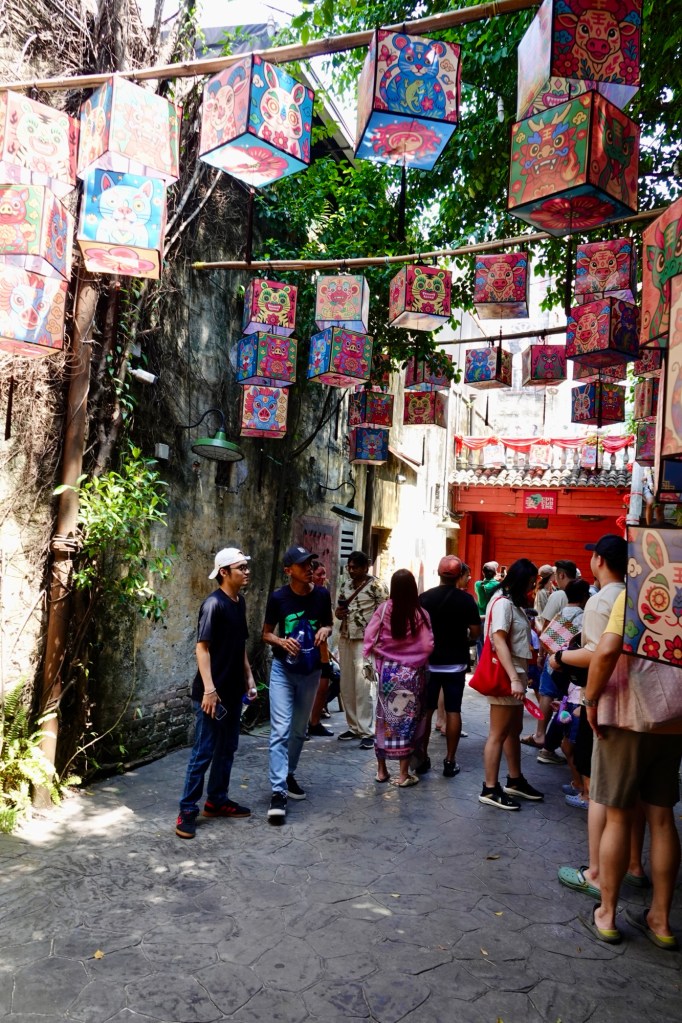
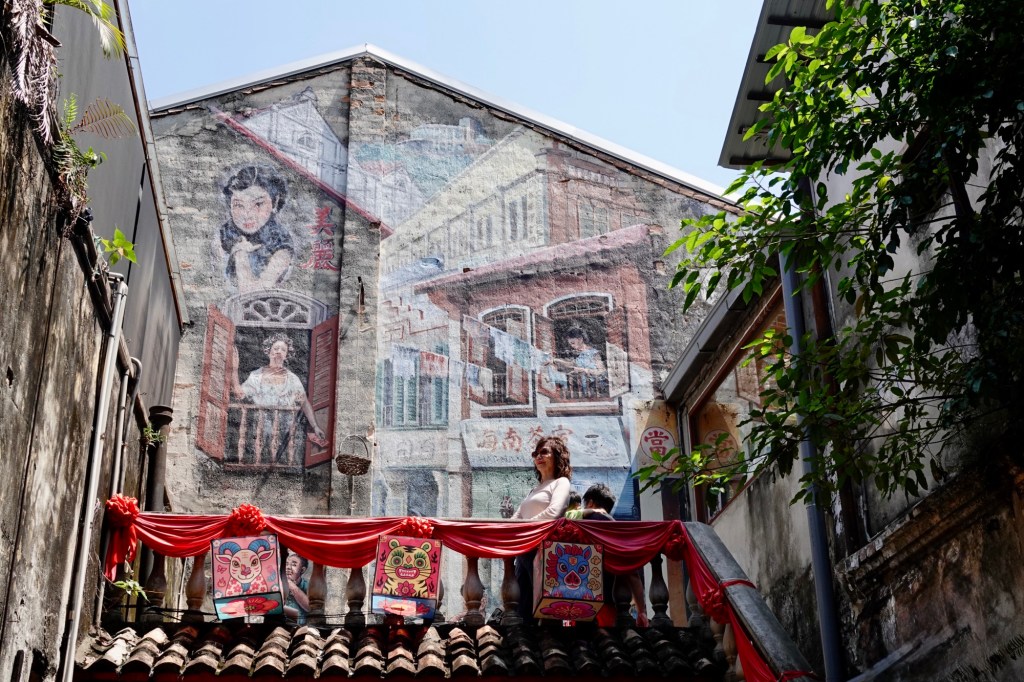
Sasi opined that Chinatown is pretty boring during the day, but well worth visiting at night, especially for the food.
Stop 3: Central Market for lunch and shopping.
This huge commercial building dates to 1881 when it was the city’s primary fish market. It was converted in 1985 into a retail space specializing in souvenirs and traditional Malaysian batik, with a large food court.
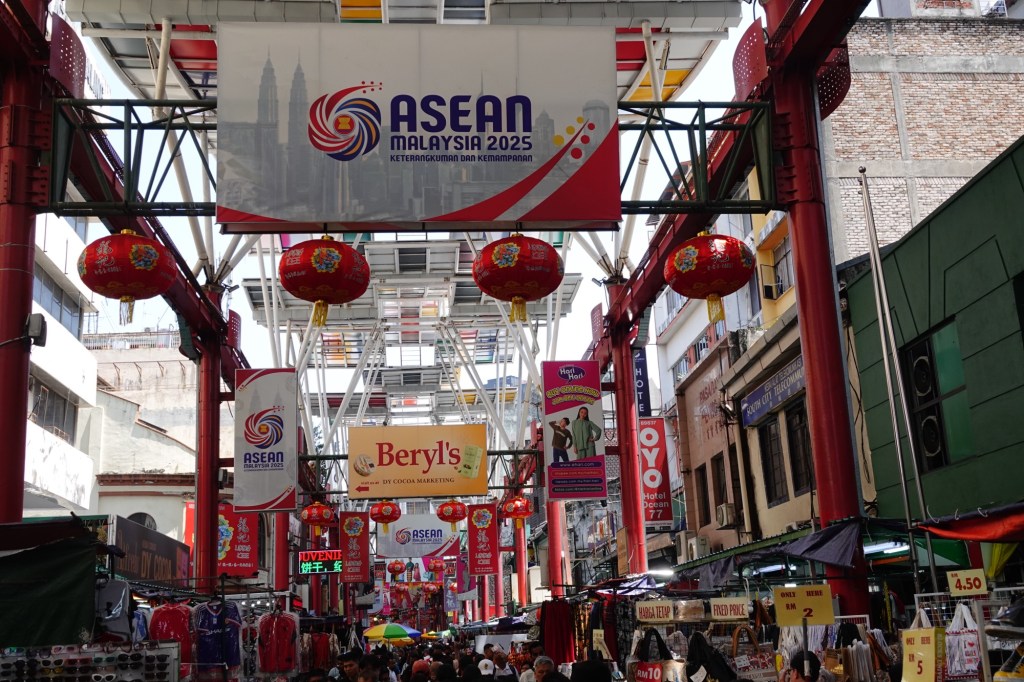
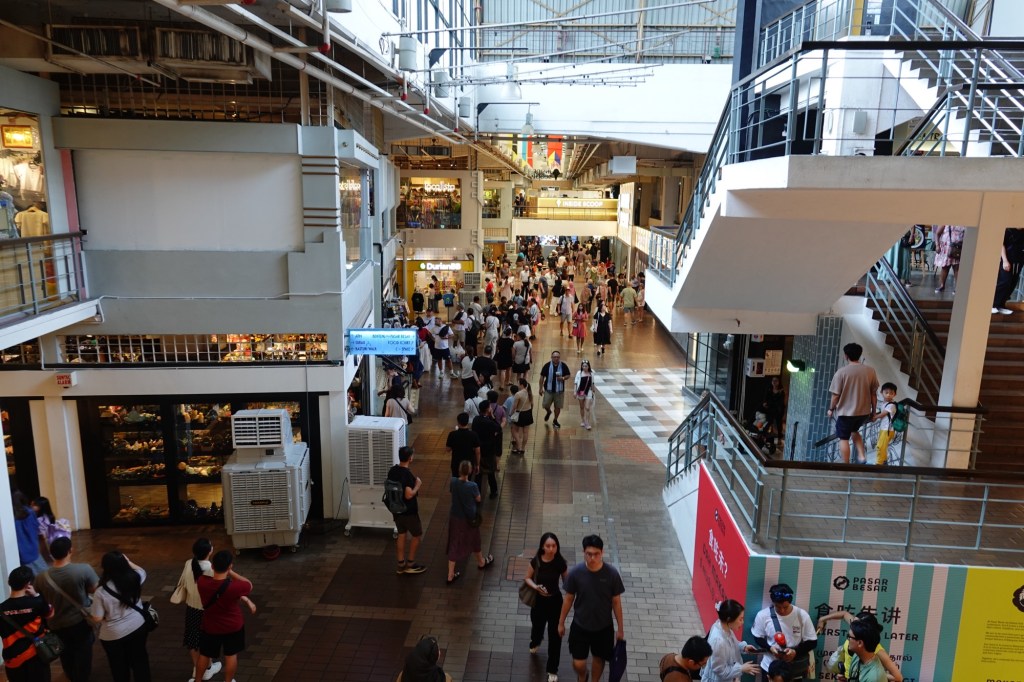
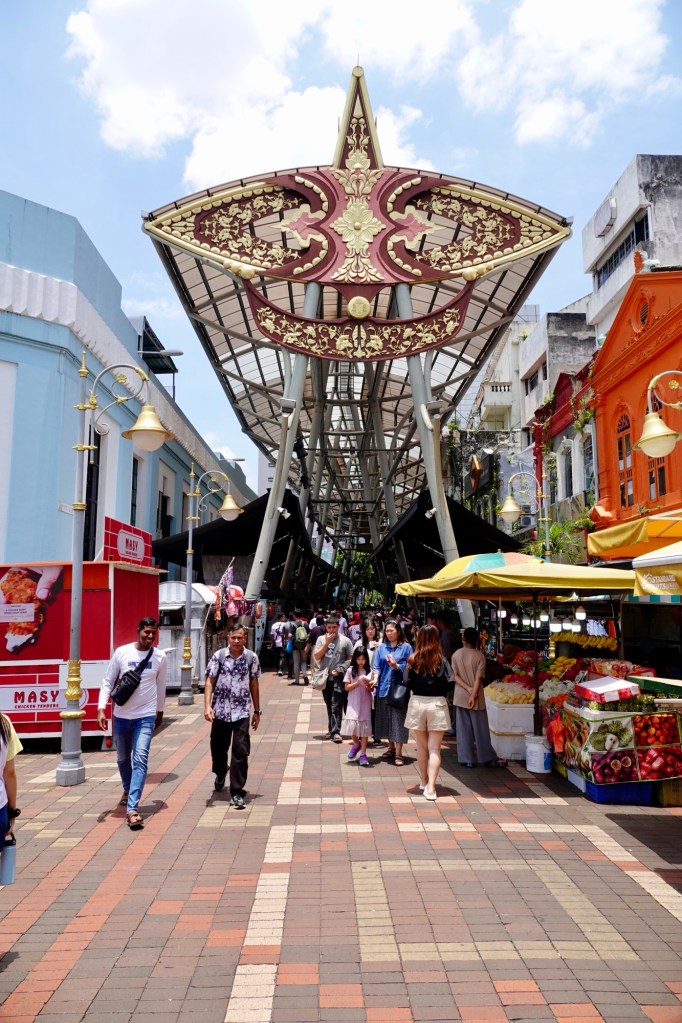
We had enough time after eating for a walk along the covered Laluan Kasturi (Kasturi Walk) where I enjoyed a bit of retail therapy to replace a silk blouse whose sleeve has torn (probably while trying to pull it off my sticky sweaty body) and we shared a dish of creamy shaved coconut ice.
Stop 4: Thean Hou Temple
This amazing temple may look traditionally historic, but it was newly built in 1986.
The first floor is a food court. The second floor is a community centre. We skipped both of those.
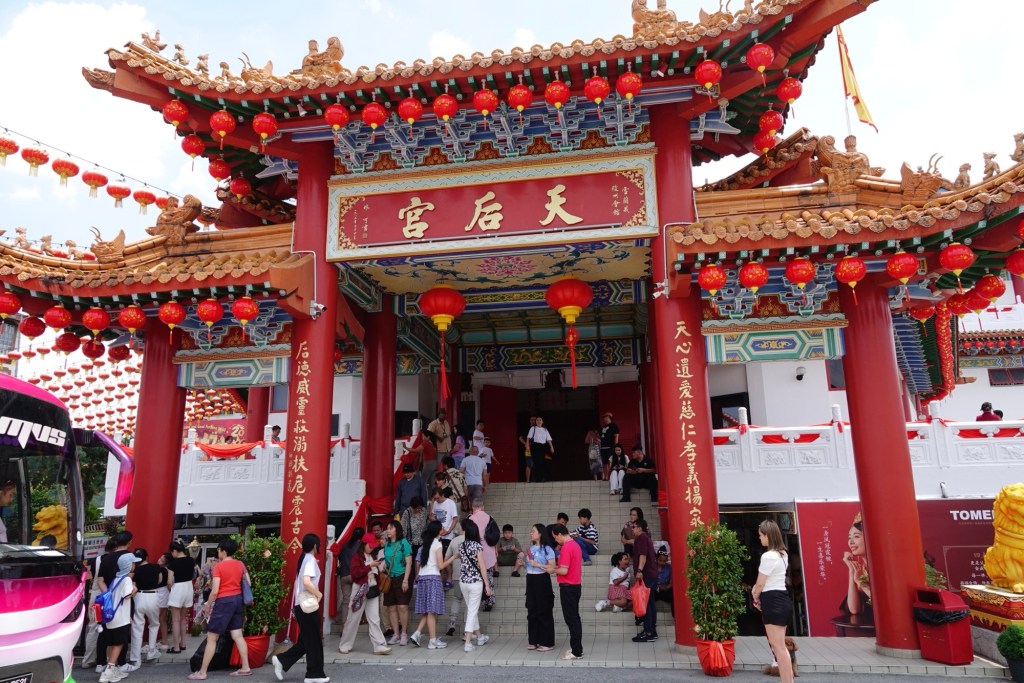
The third floor is the temple, and is visually stunning.
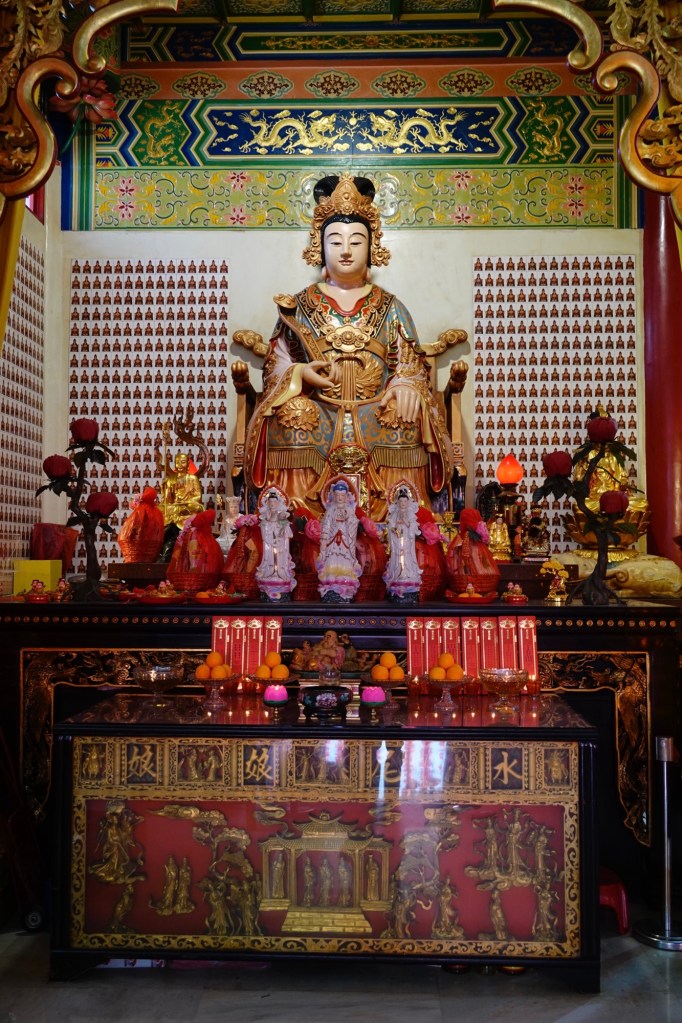
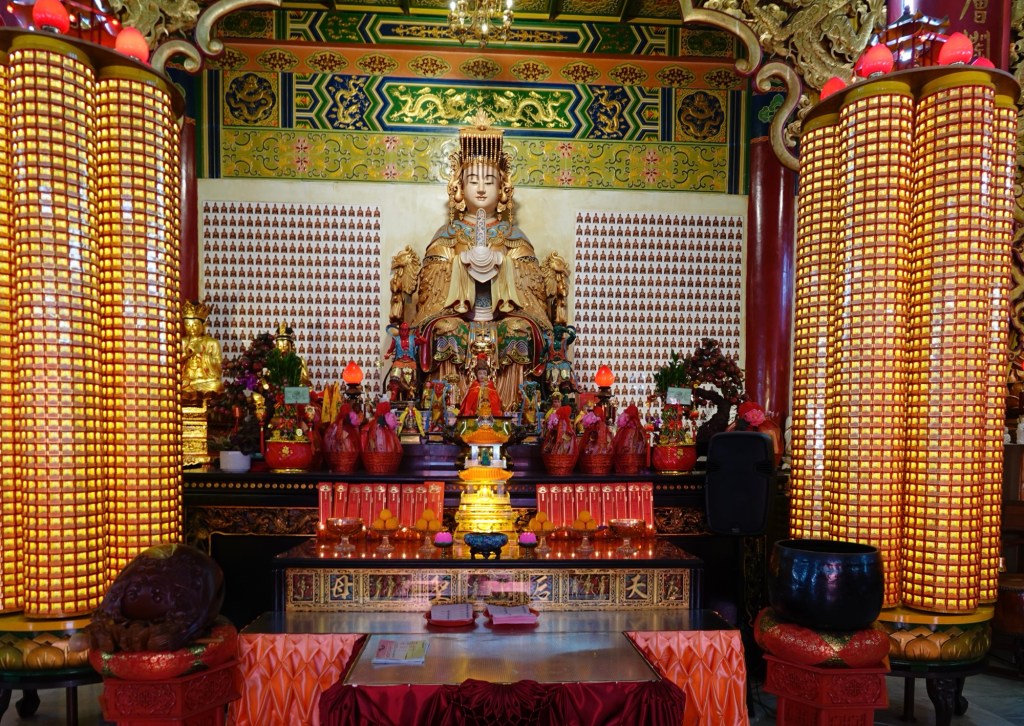
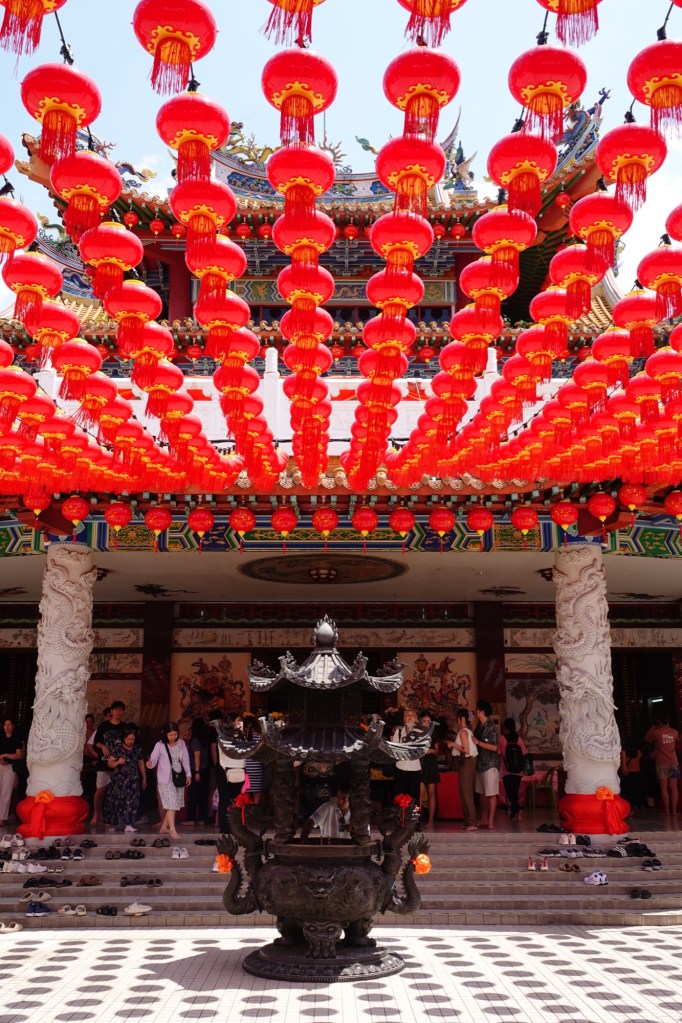
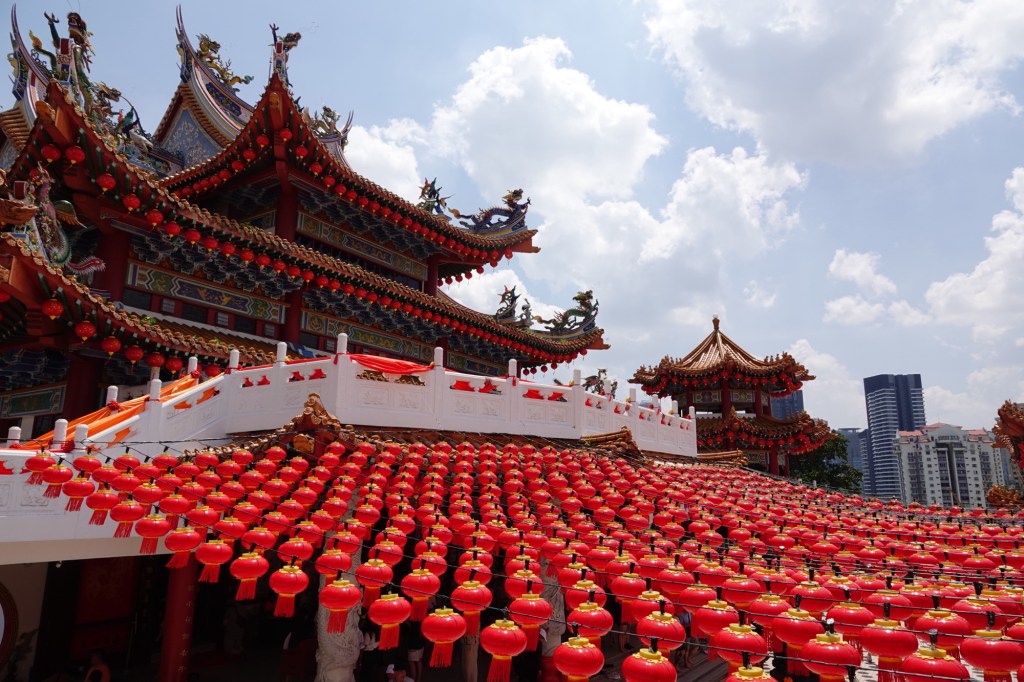
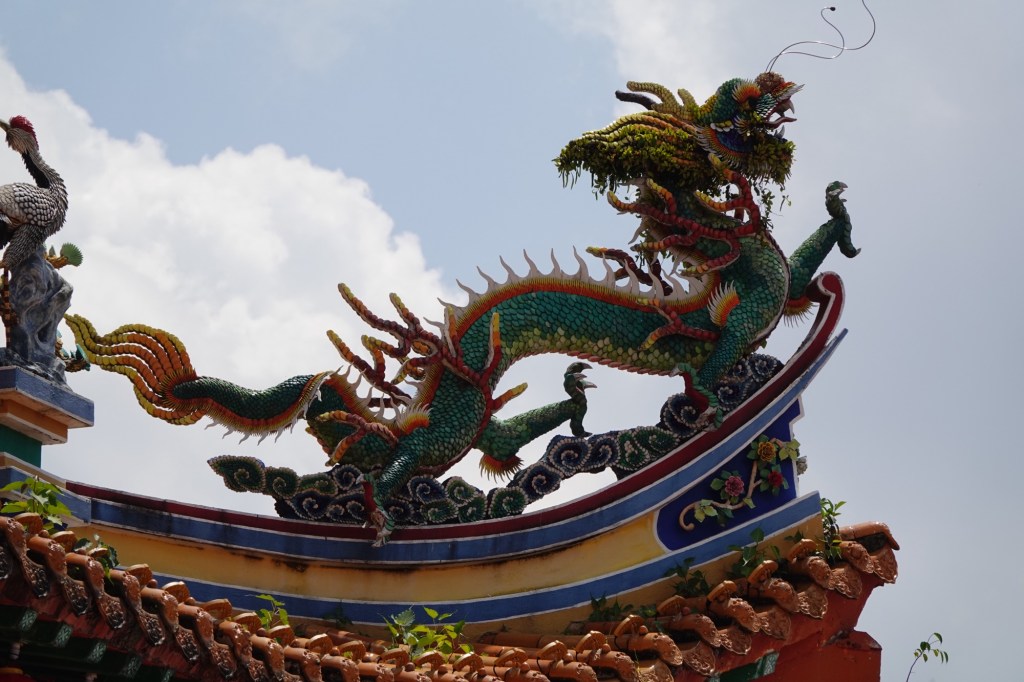
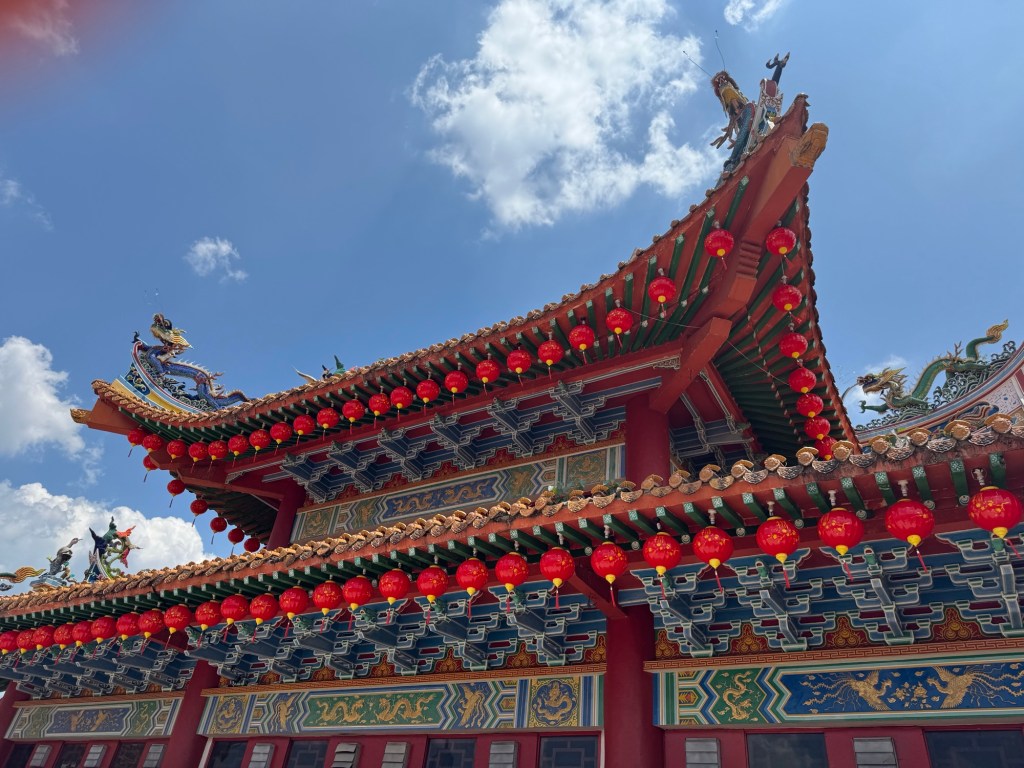
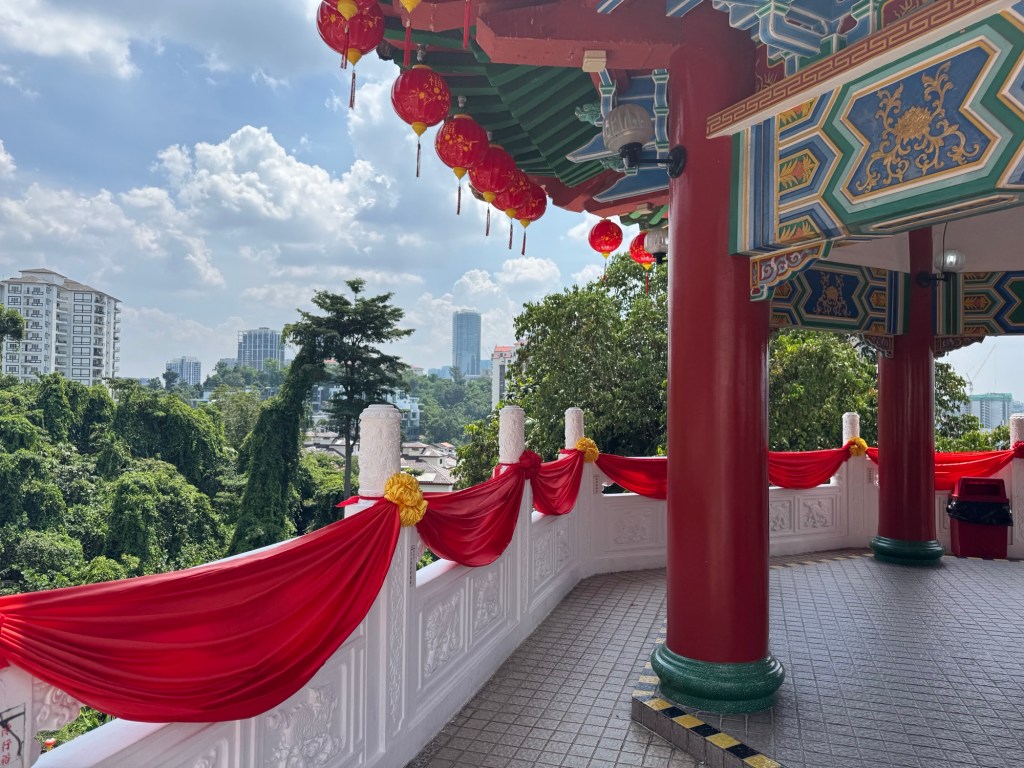
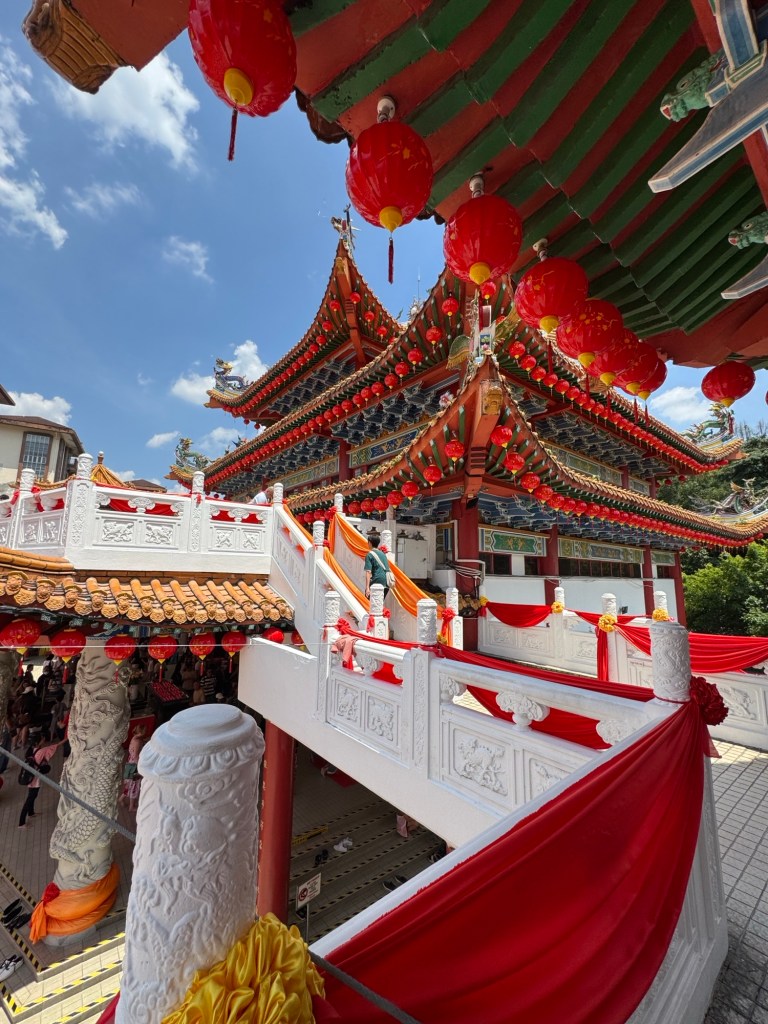
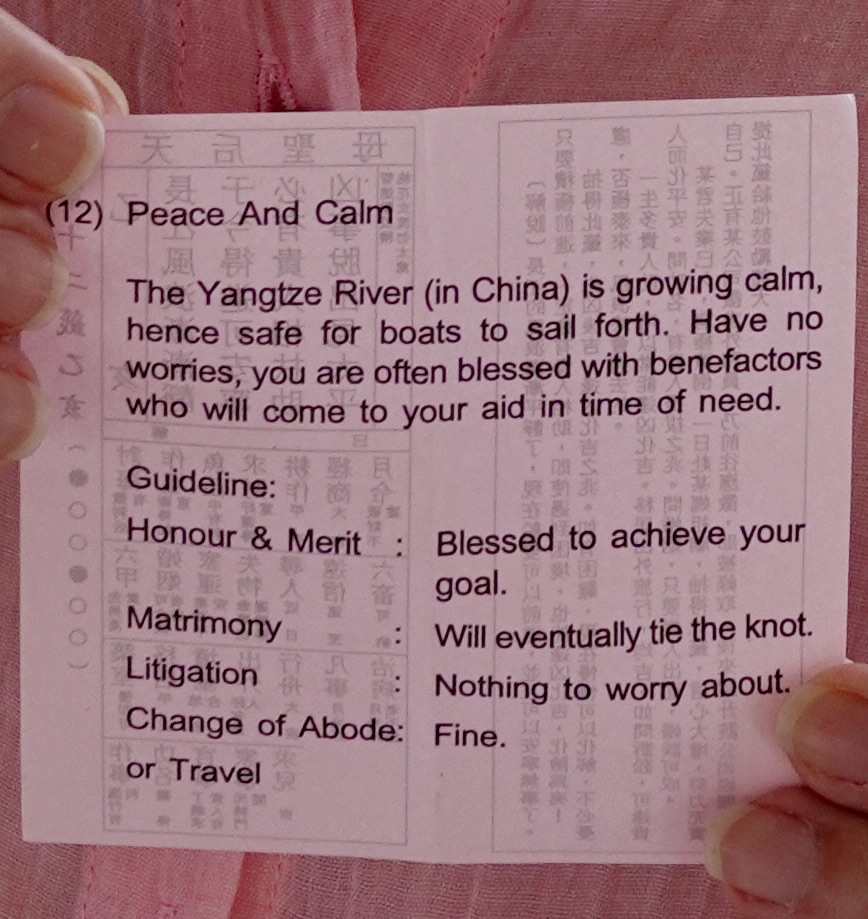
One of the things that visitors to the temple can do is get their fortune. For a donation of any amount, the donor (me) rubs, shakes, lifts, and drops 50 numbered sticks into a metal container. The stick that protrudes slightly from the batch gets pulled, and its number matched to a drawer containing typed fortunes. After several tries after which no sticks protruded, I was finally successful in getting number 12.
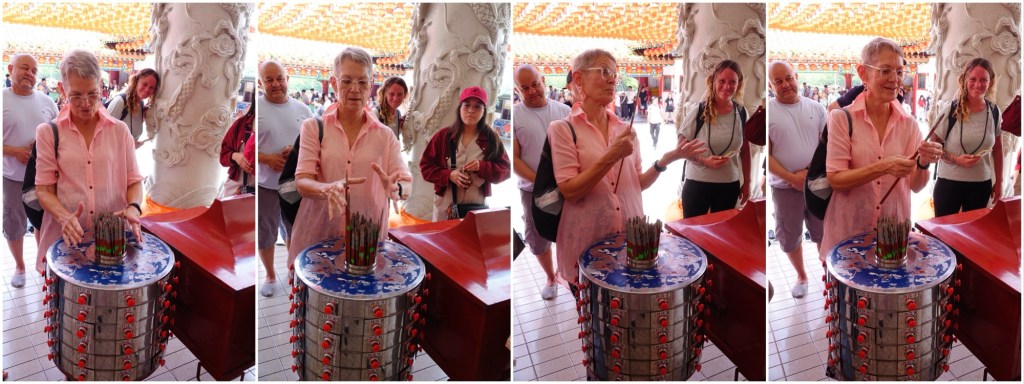
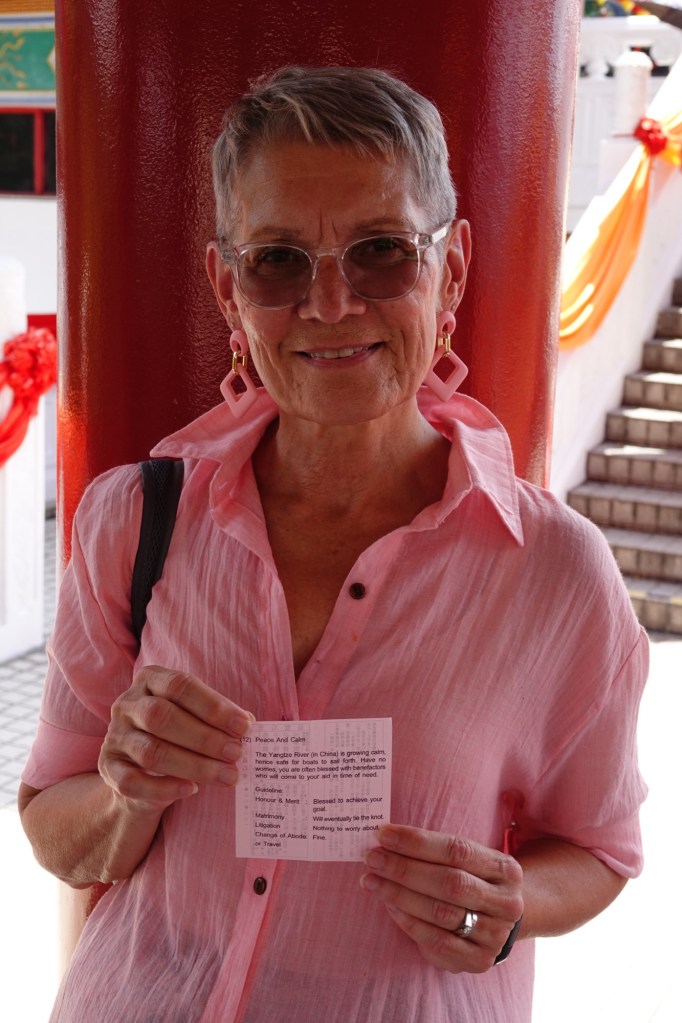
I was pretty pleased with my predictions for the year: safe travels! Somehow though, despite renewing our vows 4 years ago, it seems Ted and I might need to do it again…
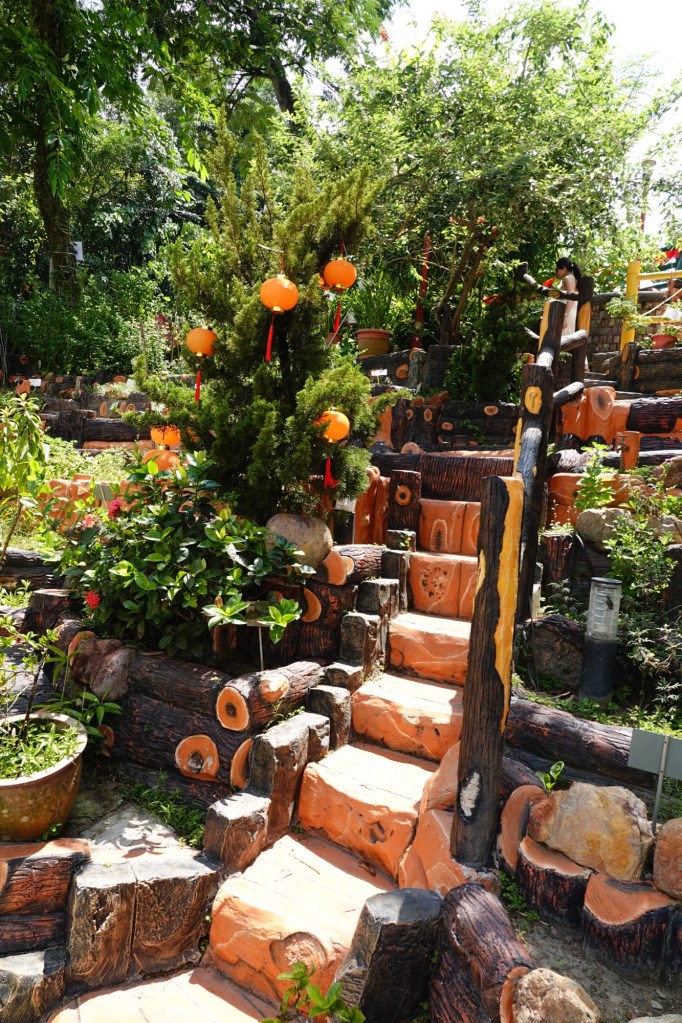
We had very little time to explore the temple gardens, but those we did see were lovely.
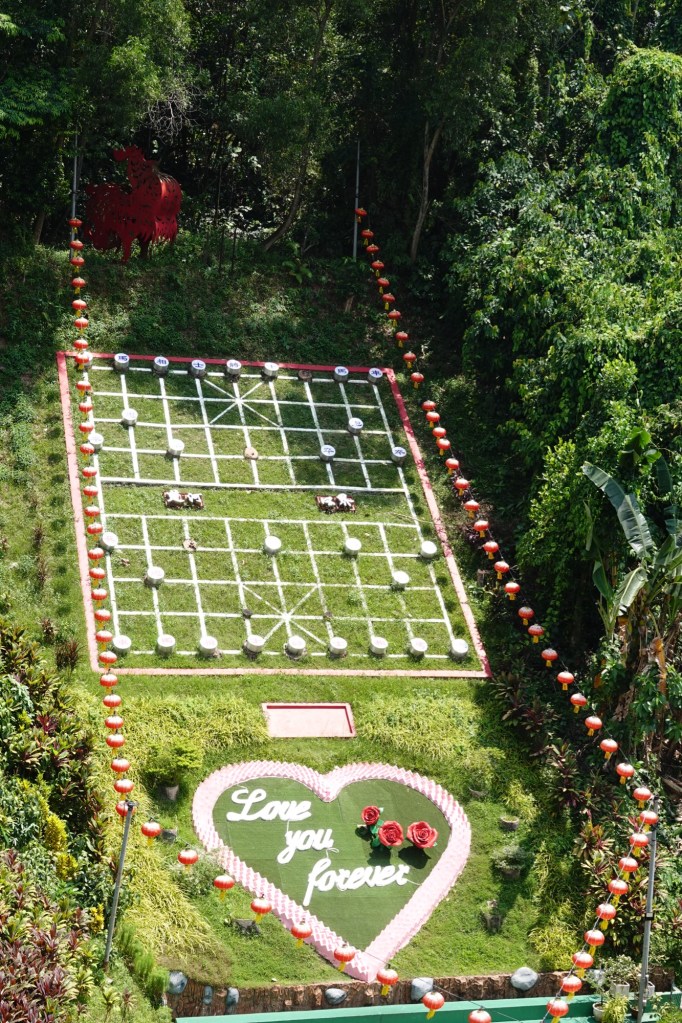
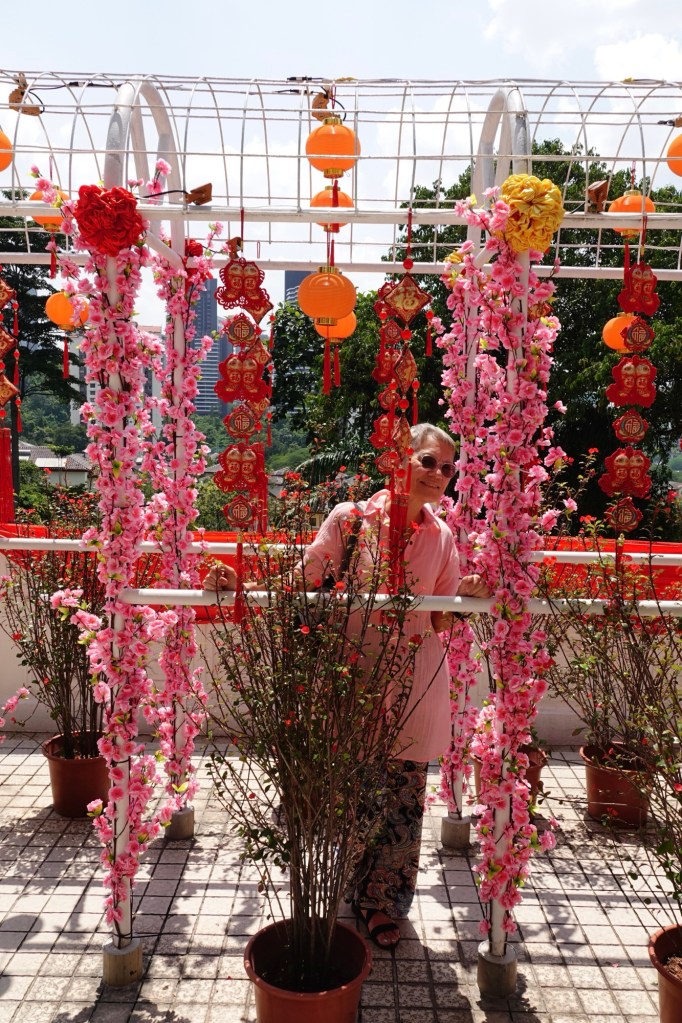
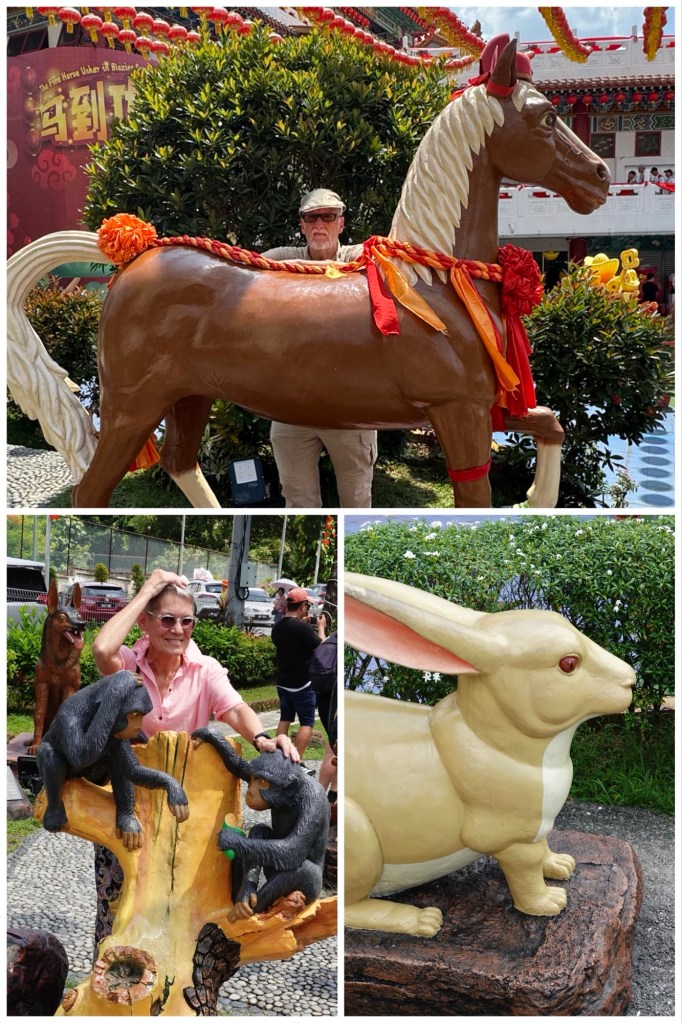
On one side of the temple’s exterior in a small garden are depictions of the animals of the Chinese Zodiac.
I am a fire monkey. Grandson #3 is also a monkey. Ted and grandson #2 are both horses. Grandson #1 is a rabbit.
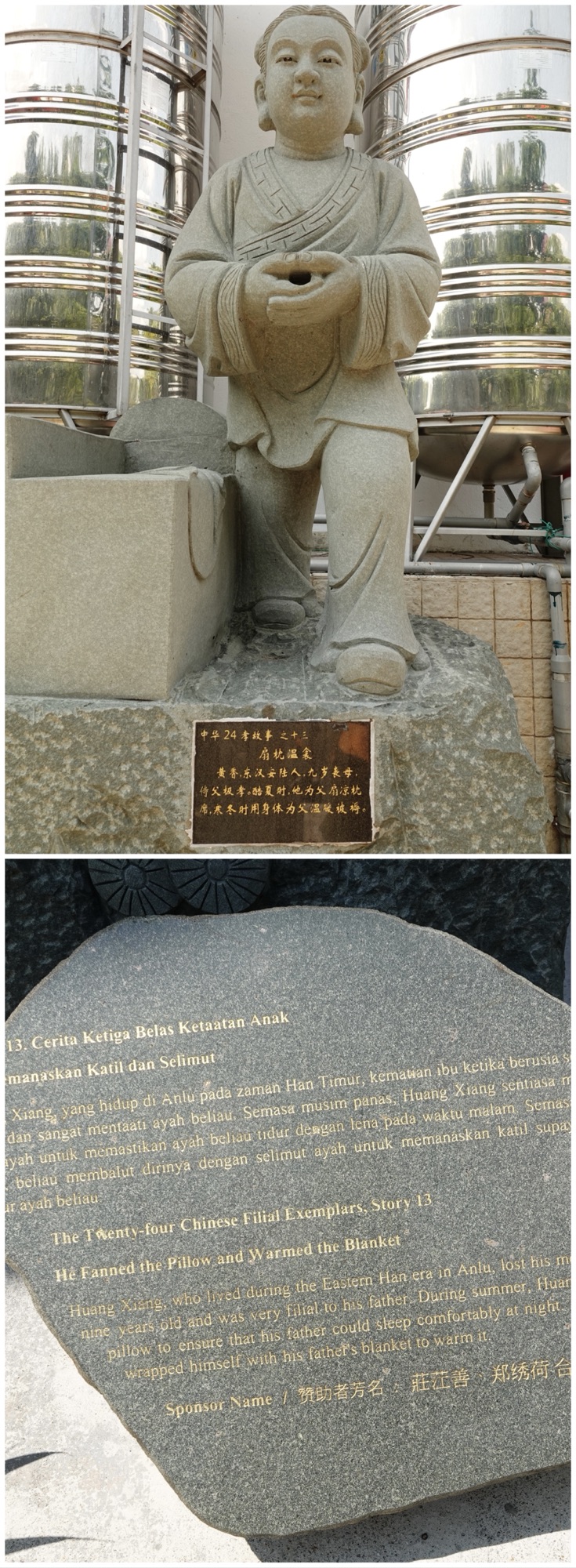
There were also 24 statues demonstrating the Chinese ideals of filial duty. I’m not sure our boys quite lived up to these…
Stop 5: Little India
This was a panoramic drive through as opposed to a stop, and somewhere we’ll have to figure out how to return to on our own. The area was nicknamed Brickfields because of the clay bricks made next to the river and used to construct the homes and businesses. As was the case for much of Kuala Lumpur, there was no electricity until 1930, so before that every well-to-do household carried on the Indian tradition of having servants or indentured people to operate fans and light and douse candles and oil lamps.
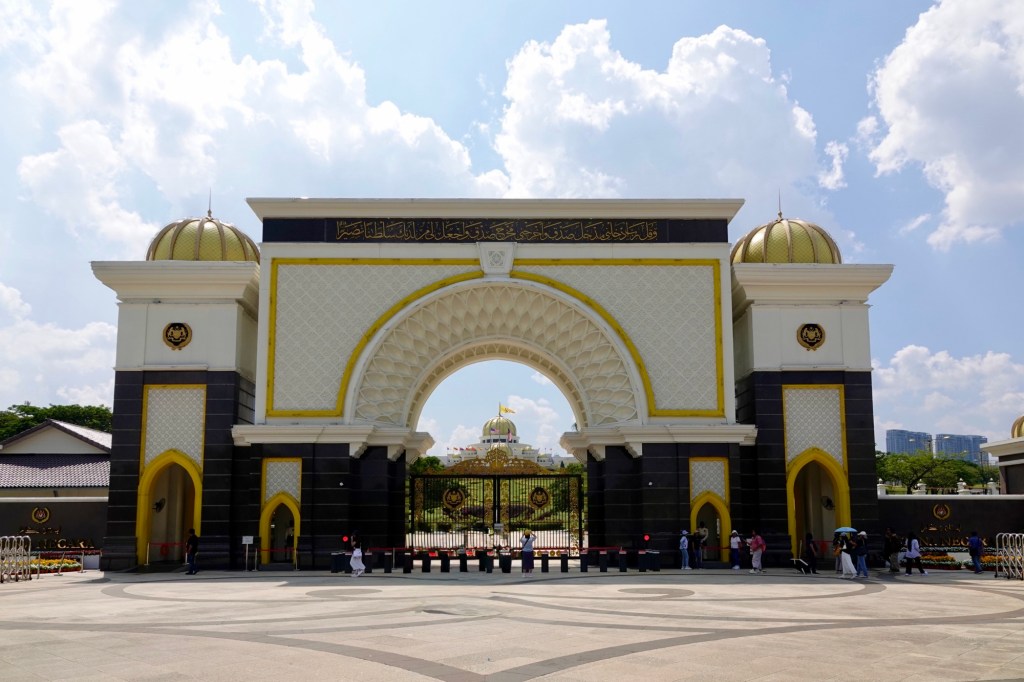
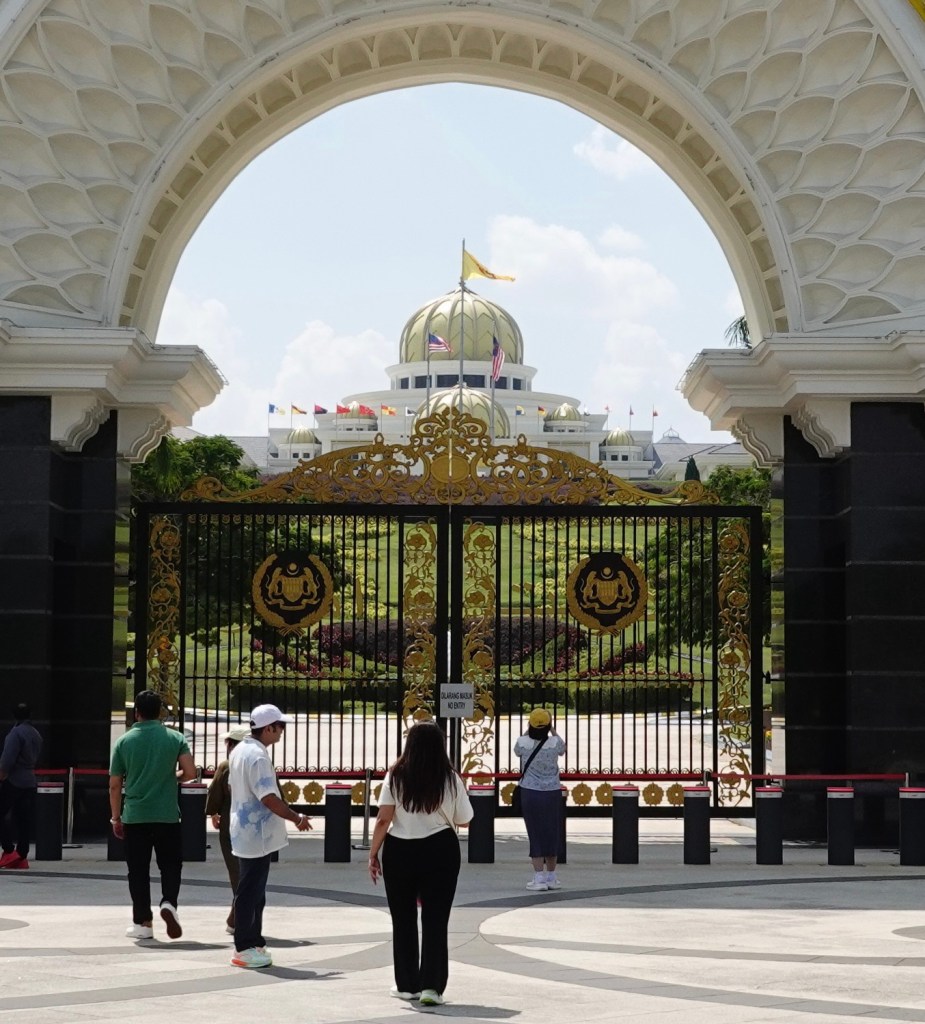
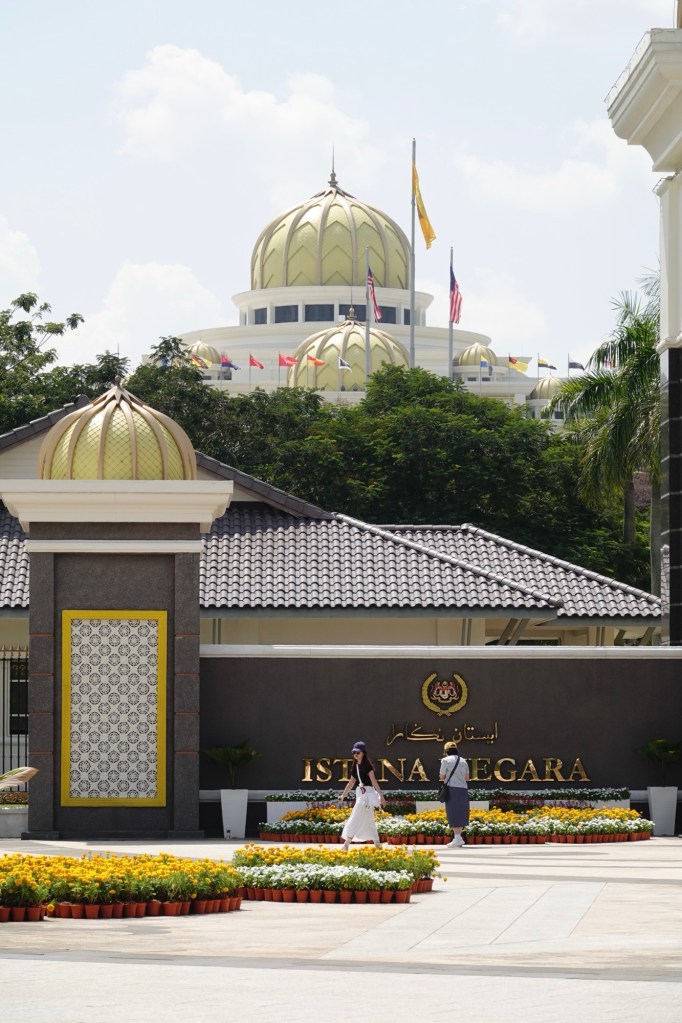
Stop 6 The Royal Palace.
Just wow.
We only had a short photo op at the Malaysian Royal Palace. Tours are not offered, and four Royal Guards are on duty at the gate at all times. Malaysia’s King is chosen on rotation from each of the provinces, and serves a fixed term. Since each of the rulers of Malaysia’s nine provinces are Sultans in their own right, dating to the centuries before unification of the country, they each already have a palace or two of their own. This gorgeous place is empty most of the time, only used for official receptions and functions, since the Sultans prefer to live in their own palaces.
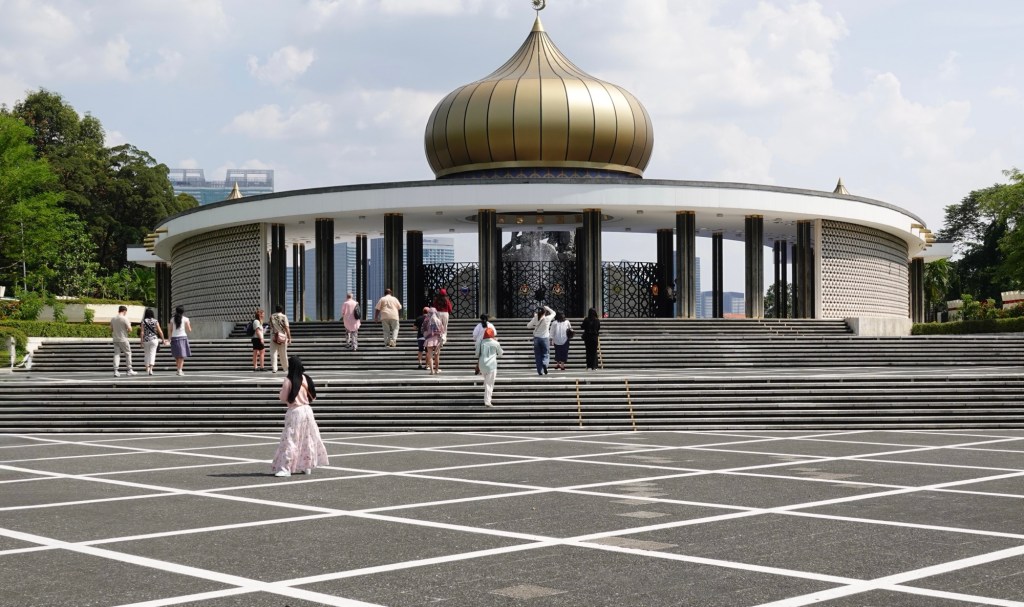
Stop 7: Botanical Garden, the Victory Monument and British Monument
147 acres were set aside by the British as a botanical garden, but we only spent about 10 minutes walking in the heat and humidity. Sasi quipped that every time we left the air conditioned bus today we were stepping over the threshold into hell, and then returning to heaven.
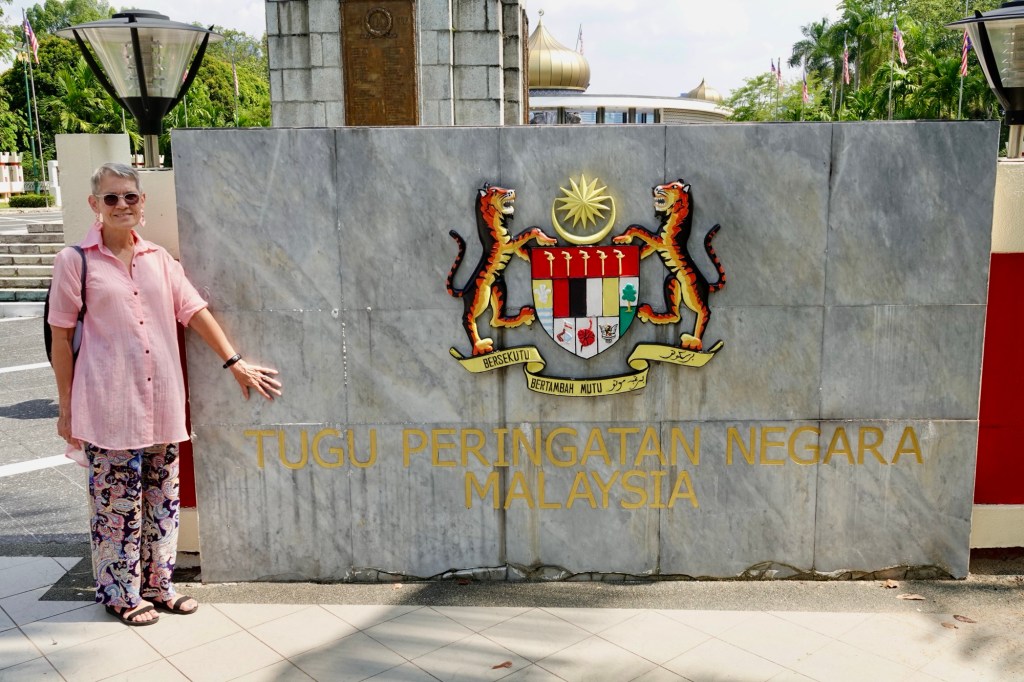
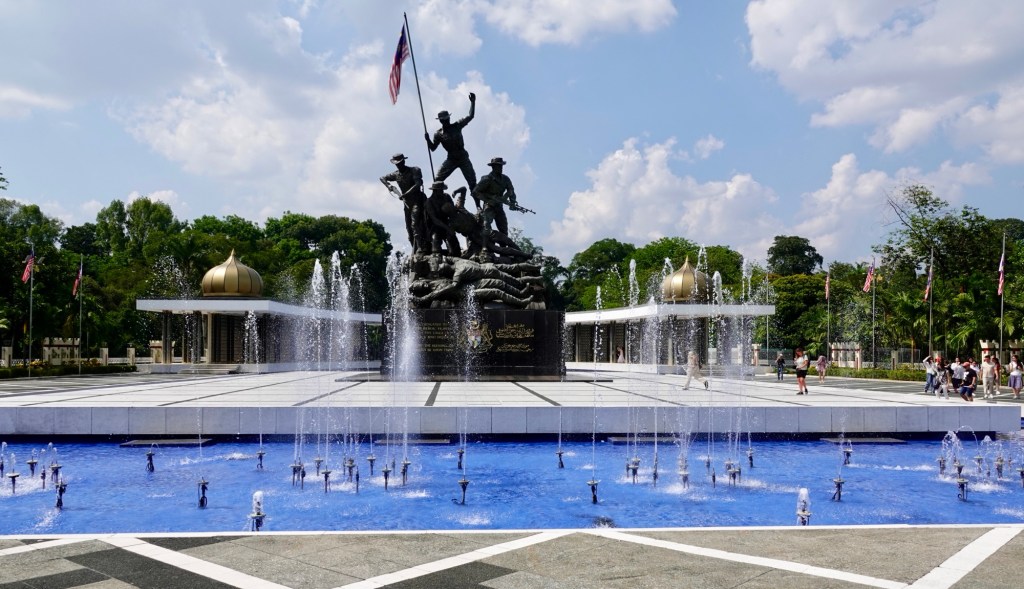
The highlight here was the victory statue modelled on the Iwo Jima Memorial, right down to soldiers with American features instead of Malaysian ones. We remember that story from last year’s visit, when Ted took lots of photos of it.
Stop 8: The National Mosque, 1926 British Railway Station, and Maybank Tower.
This really was just a photo stop. The mosque itself is not visible from the street except for the top of its iconic turquoise pleated roof, and of course its minaret, but we did see it last year from the top of the KL Tower.
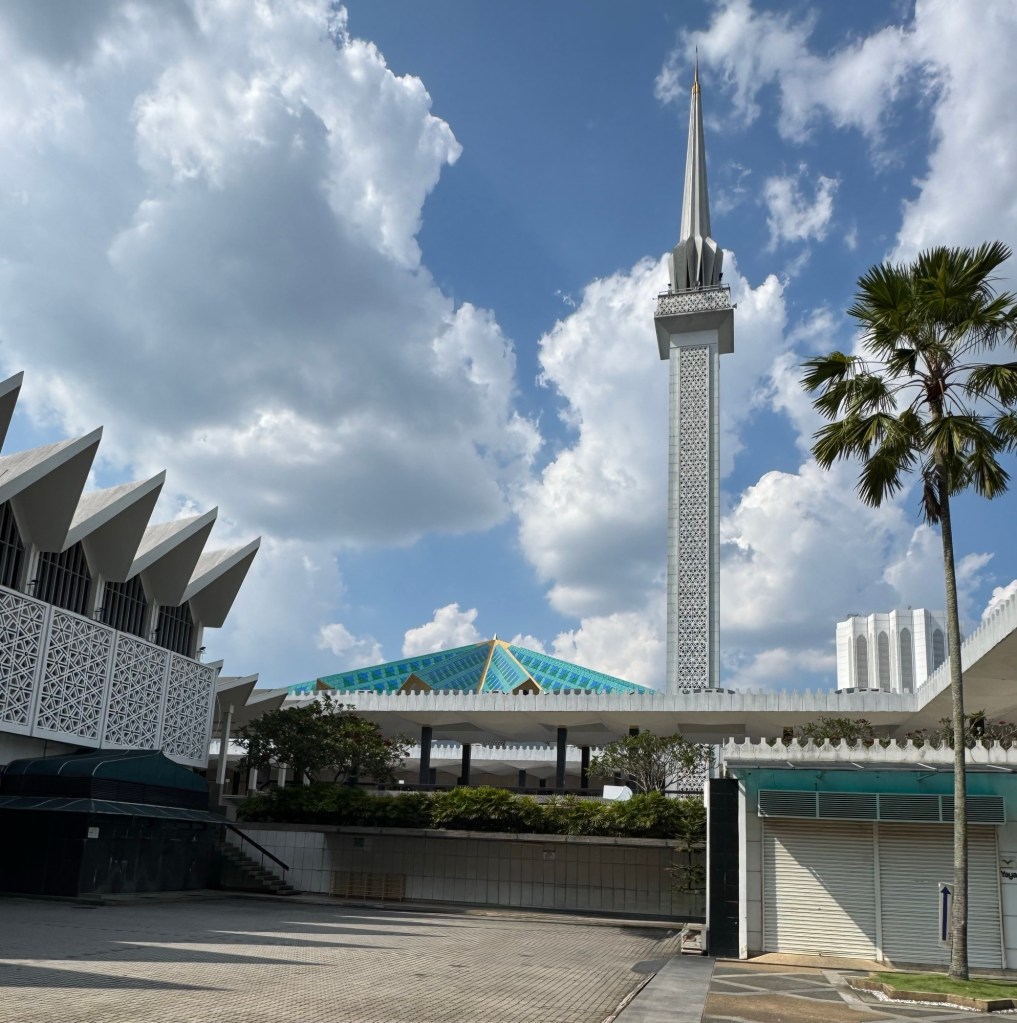
The mosque is unique for not having a dome.
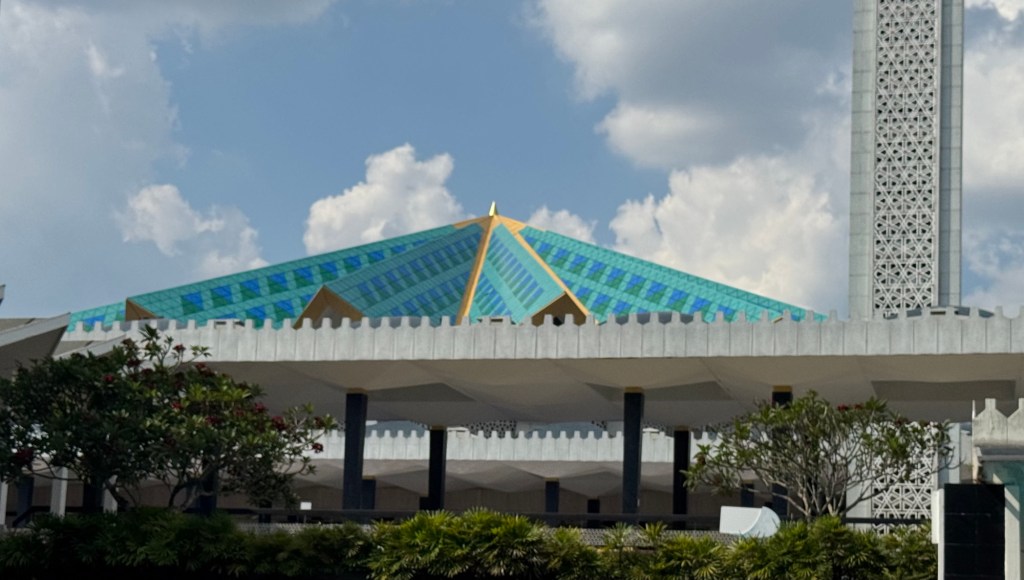
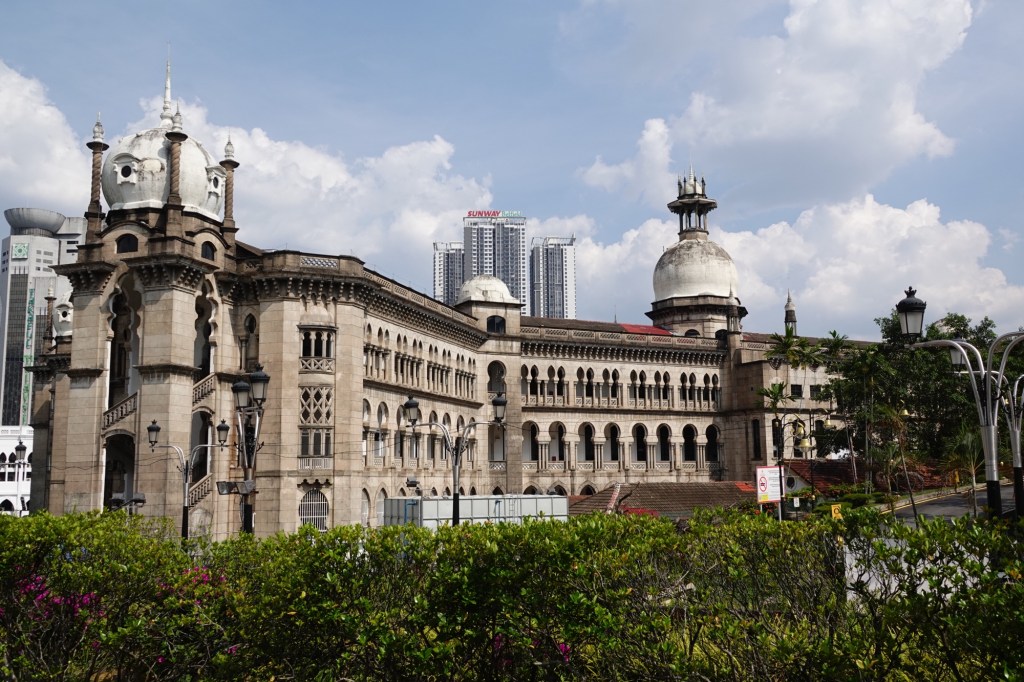
The 1926 Railway Station is still an impressive piece of architecture.
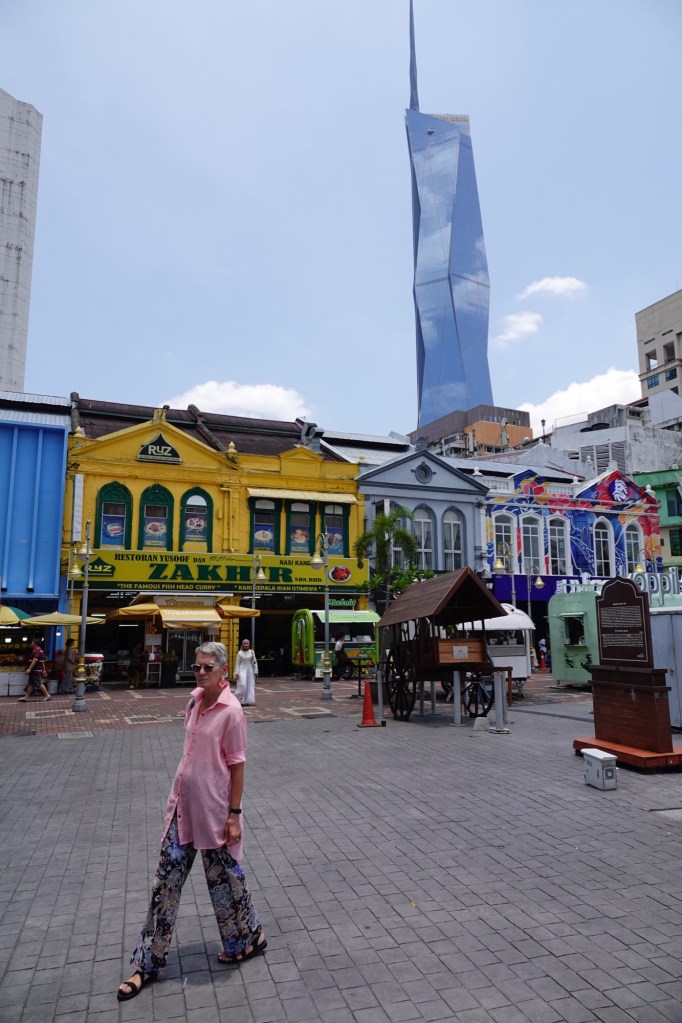
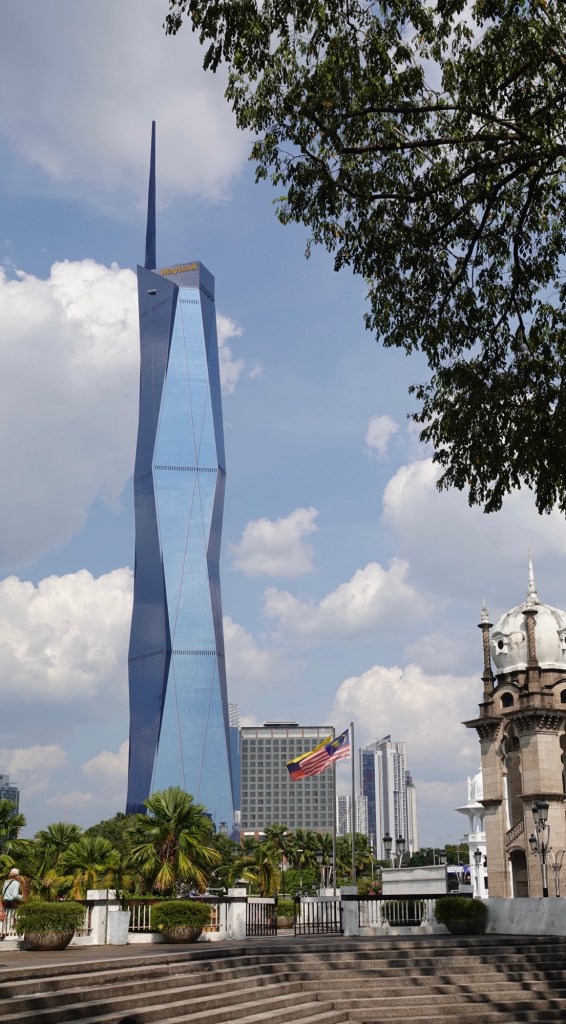
When we were here last year, we photographed the almost brand new (opened January 2024) Merdeka 118/Independence Tower, which at 118 storeys and 680m/2230ft high is the world’s second tallest building. Just last September, Maybank, the anchor tenant, secured exclusive rights to place its branding on the building.
Stop 9: British Headquarters Building from 1864 and the River of Life (where the Chinese once mined for tin)
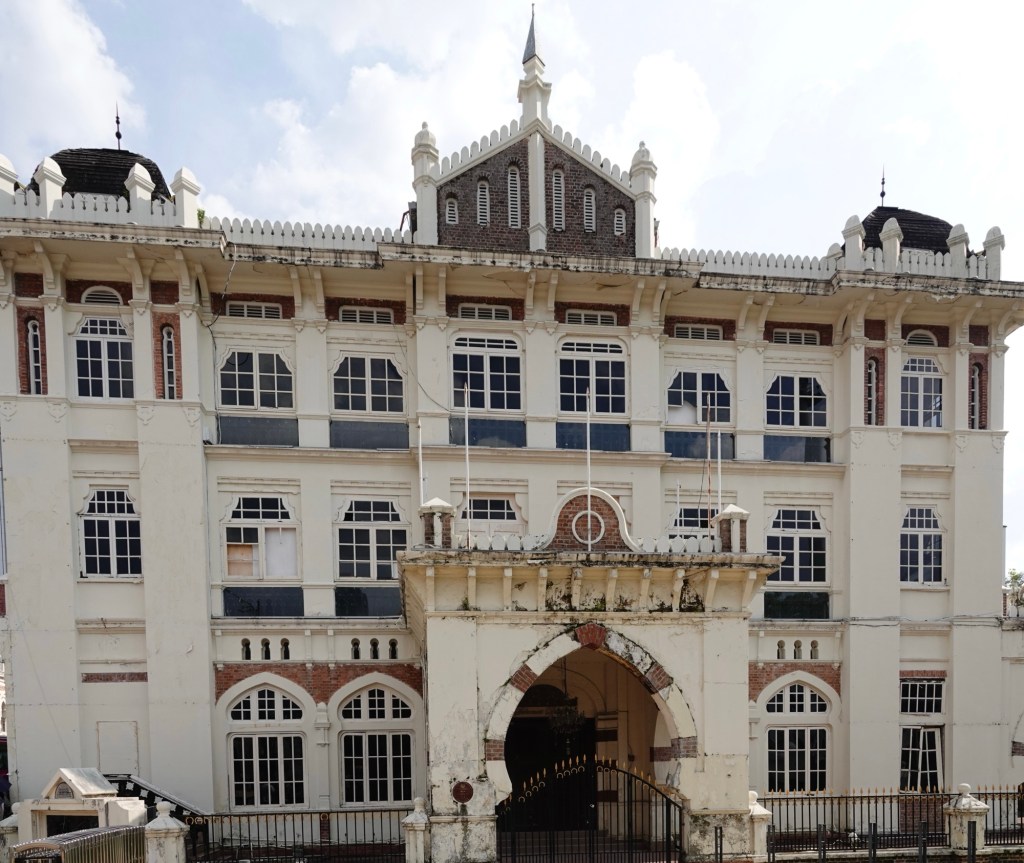
Before we were completely awed and distracted by the former British Headquarters, Sasi pointed out the building below that is in a state of some disrepair with the plaster cracked around the brick arches. It was the very first chartered bank of the British in Malaysia. It only dealt with money being transferred back-and-forth between what was then Malaya and India.
Cleaning and restoration of the absolutely stunning British headquarters building was completed just last month; I had to look back at what it looked like when we were here last year on the world cruise. It is amazing how much whiter the newly cleaned brick is, and how much more brightly its copper domes gleam. The building was unused for decades, but is coming back into use for galleries, cafés, and public spaces.
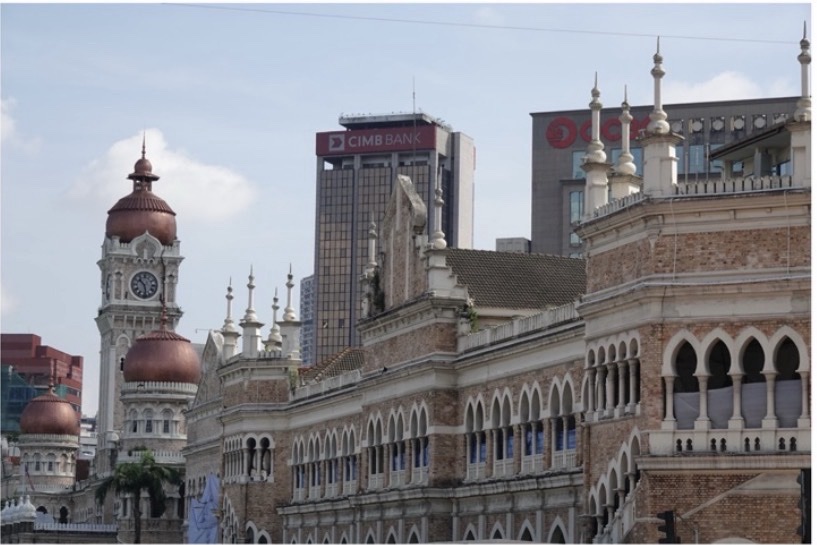
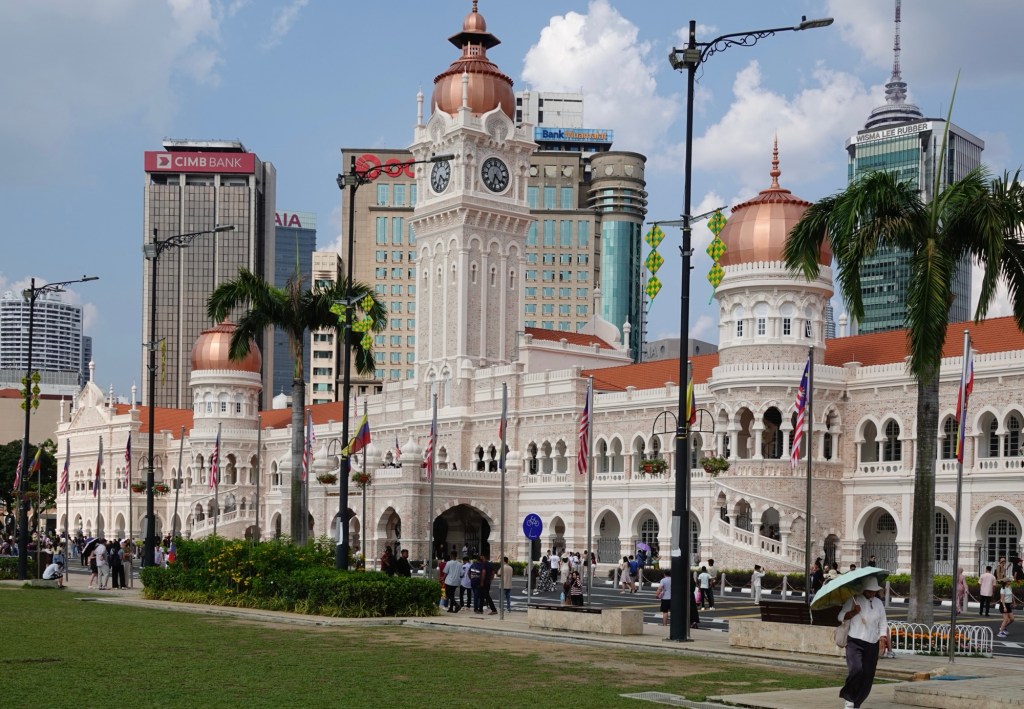
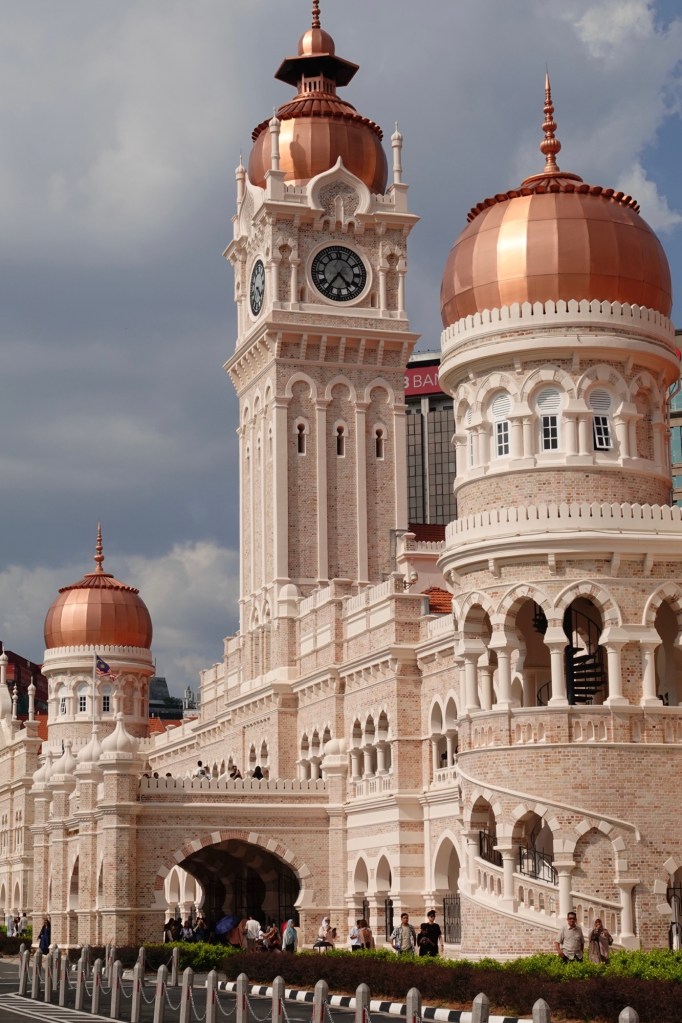
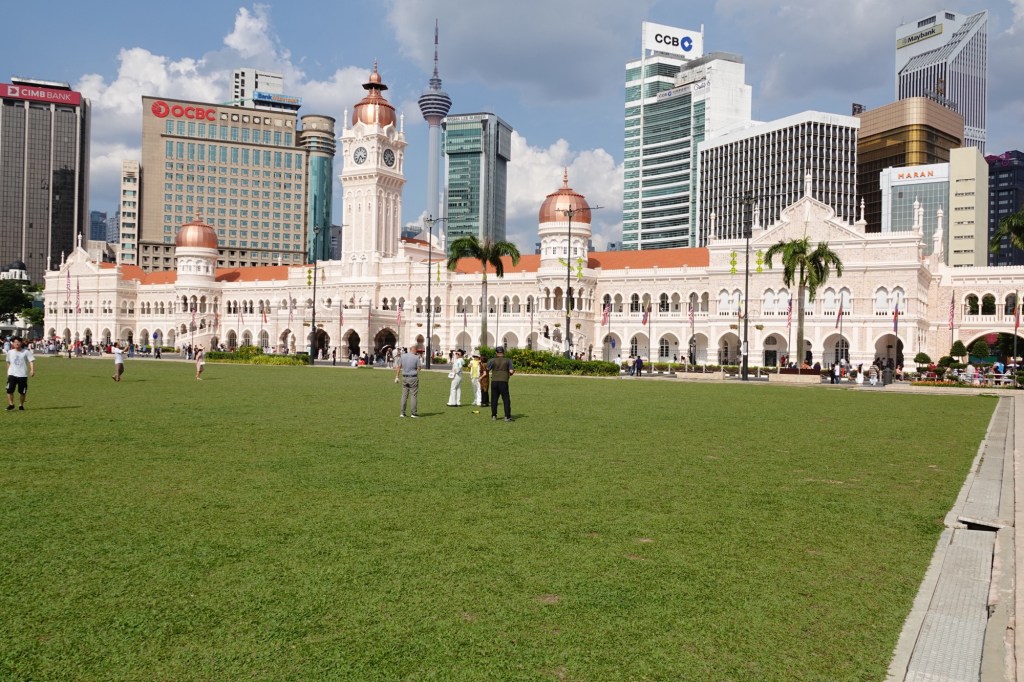
Directly across from the British Headquarters Building is a huge cricket pitch and gentlemen‘s bar. It seems that nothing has changed and bureaucrats still feel the need to have a break in their day to play and have a drink.
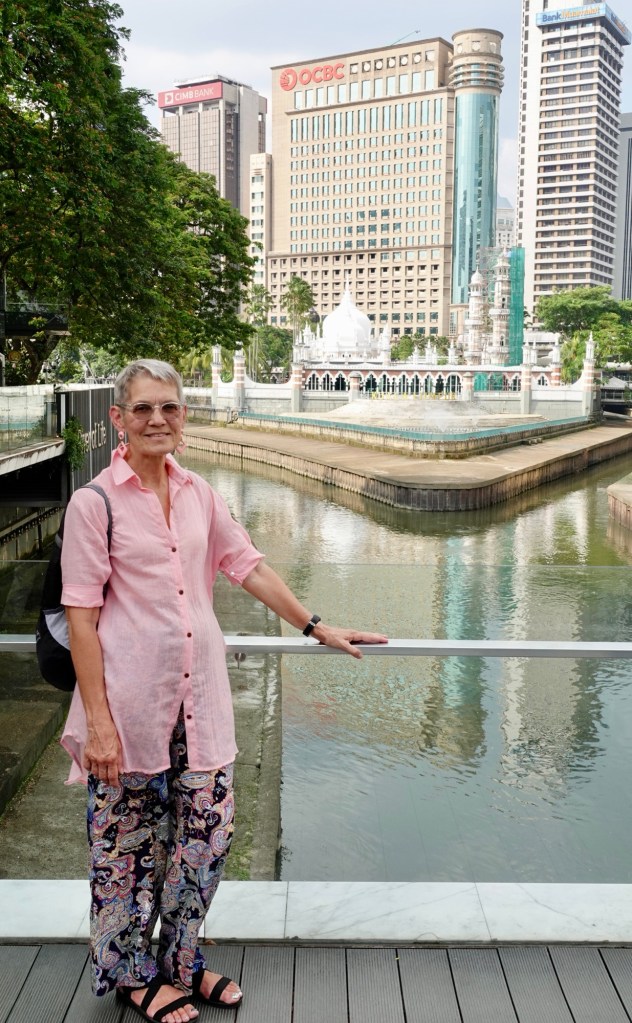
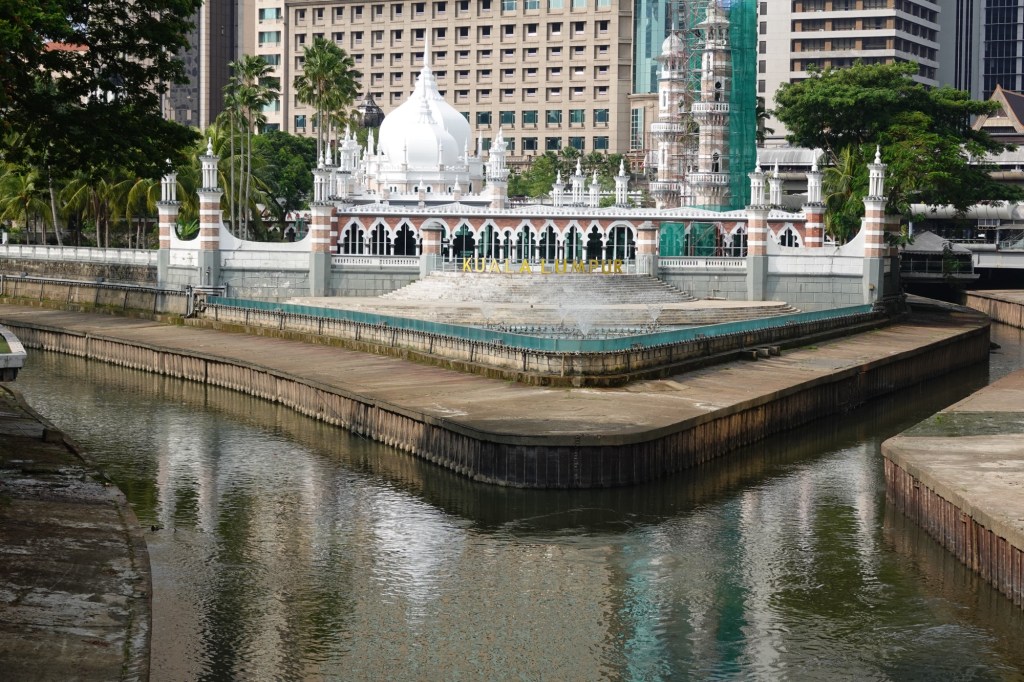
The mosque at the point where the River of Life’s two branches join was built in 1905 as a way to convince the Muslim community to move out of an area that the British wanted to use for commercial purposes.
Stop 10: Chocolate
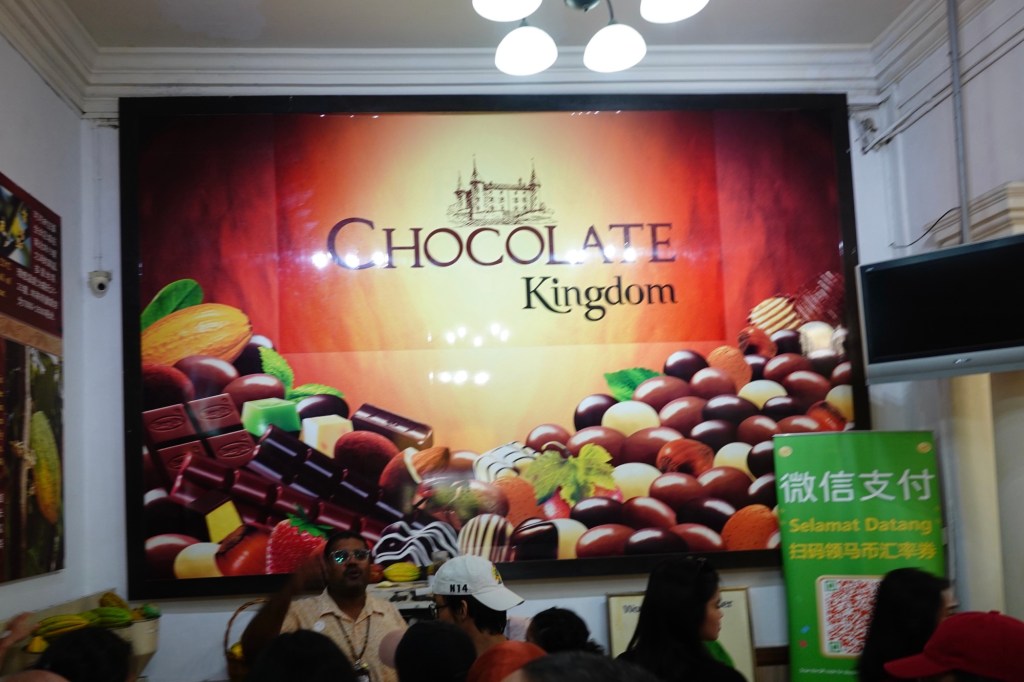
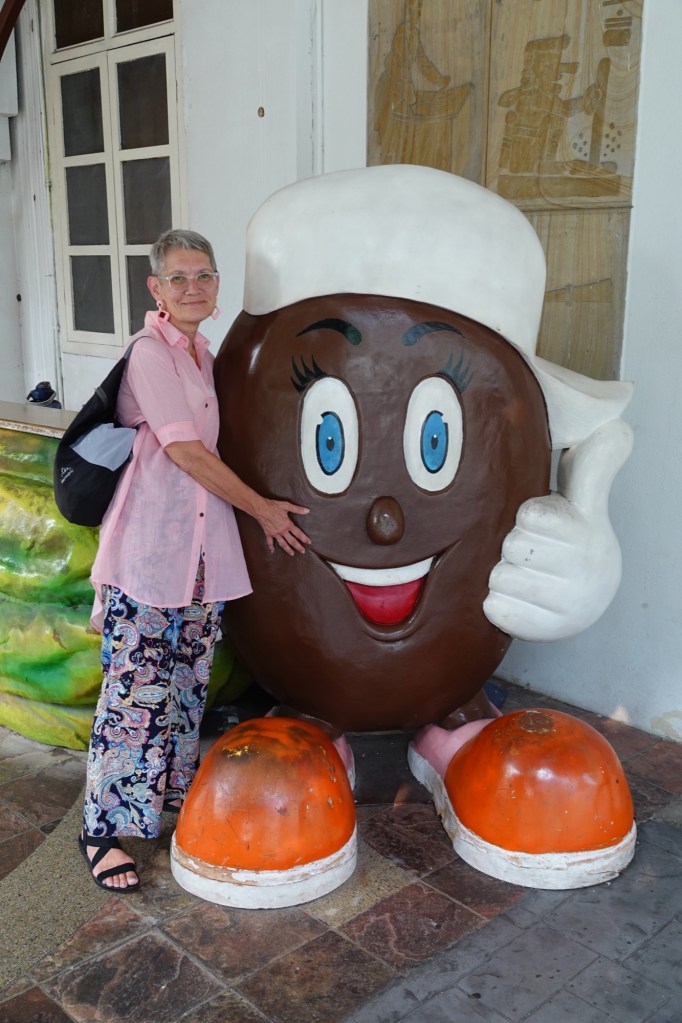
Belice is not a mass market chocolate brand. It’s expensive, only available in Malaysia – and extremely high quality. We got to taste even if we didn’t buy and, honestly, it was delicious but not delicious enough to justify the price.
Stop 11: The Twin Towers
The towers were begun in 1992 intended to be completed for the 1998 commonwealth games. Everyone who submitted tenders to build the twin towers project insisted it would need 10 years, so in the end the contract was given to two competing countries’ architectural firms as a kind of competition: South Korea and Japan. They managed the job ahead of the required timeline, although the official opening ceremony took place in 1999.
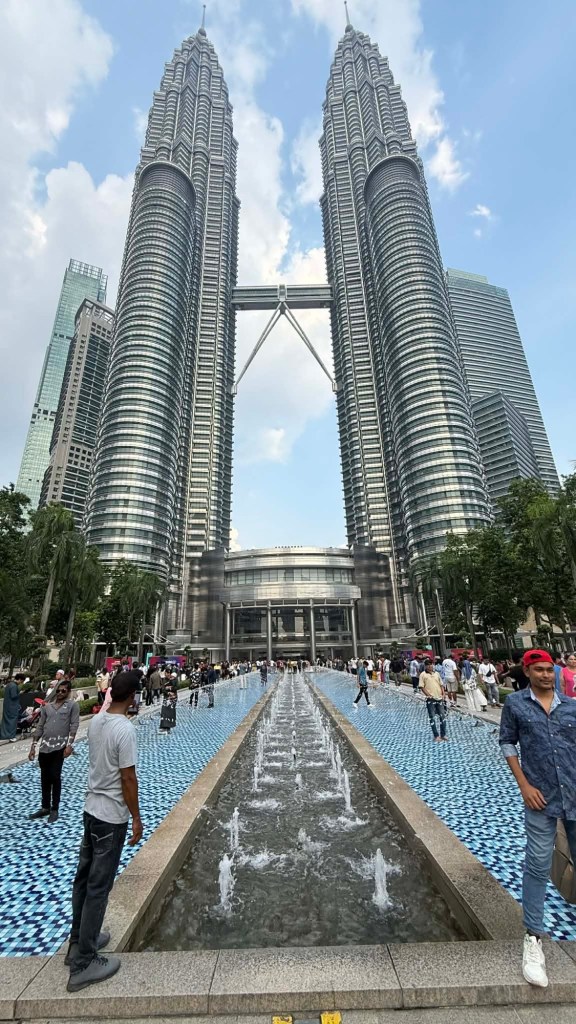
Being at the towers would have made for an easy 15 minute walk right back to our hotel, but it started to thunder loudly and then the skies opened, so we deked into the Suria Mall attached to the towers and, on a friend’s recommendation, grabbed a light supper at Madam Kwan’s.
It was a wonderfully full day.
Sasi was a great guide. He and his whistle kept 44 tourists of all ages from about 6 years old to ….well, us… and from over 10 countries organized and on time so that we got the best possible overview of KL’s highlights. He also rearranged the published itinerary to ensure that we had the energy to do the more strenuous sites in the morning, and the option for those who wished to skip the afternoon photo stops.
 Rose and Ted’s Excellent Adventure