Episode 827 – Sydney’s Grand Buildings Part 3: The Cathedral
We rarely miss the opportunity to go inside an open church, and never bypass an open cathedral.
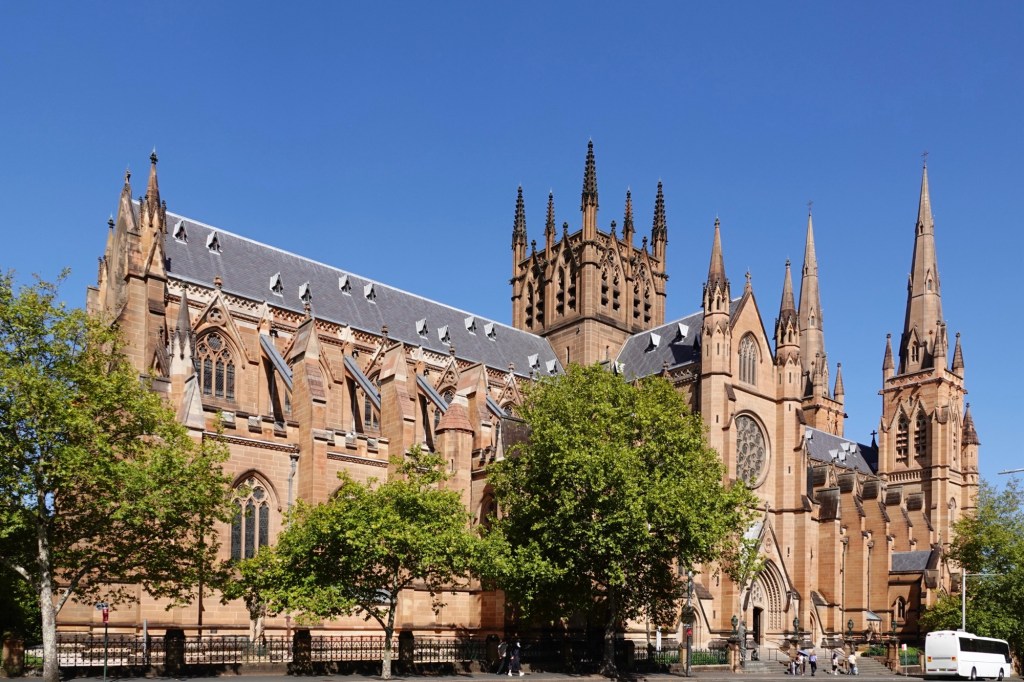
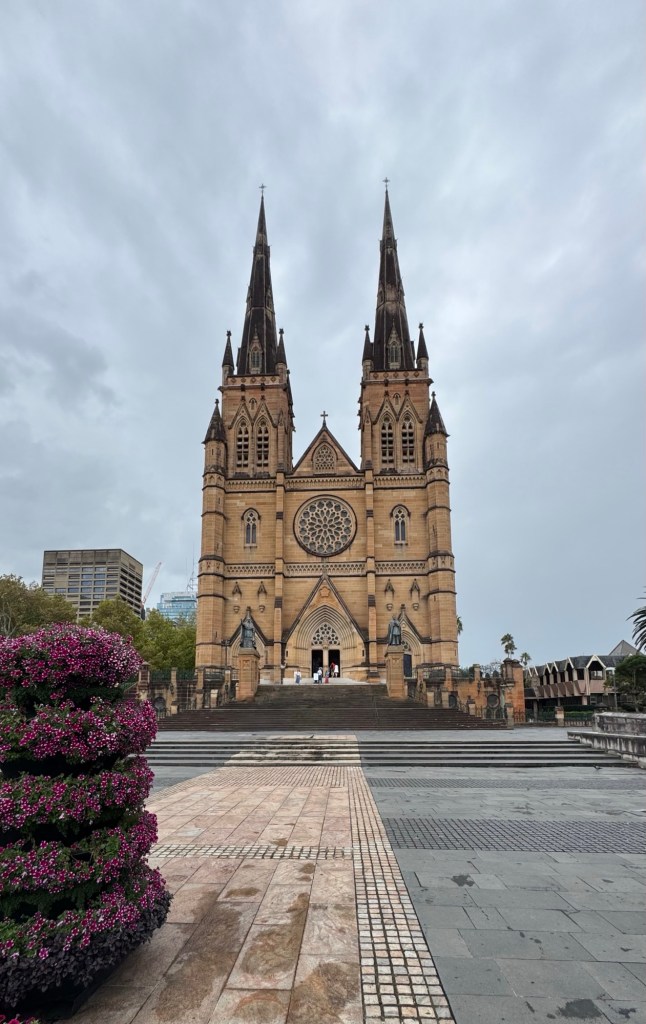
St. Mary’s Cathedral, located beside Hyde Park, is the largest cathedral in Australia.
The west side of the cathedral, facing Hyde Park. Notice the rose window above the west entrance.
While most European cathedrals are located on narrow streets in the centre of built-up cities, making their exteriors very hard to photograph (think Florence or Seville), here the cathedral is surrounded by enough land to allow it to be photographed from almost every side (more like the Sagrada Familia in Barcelona).
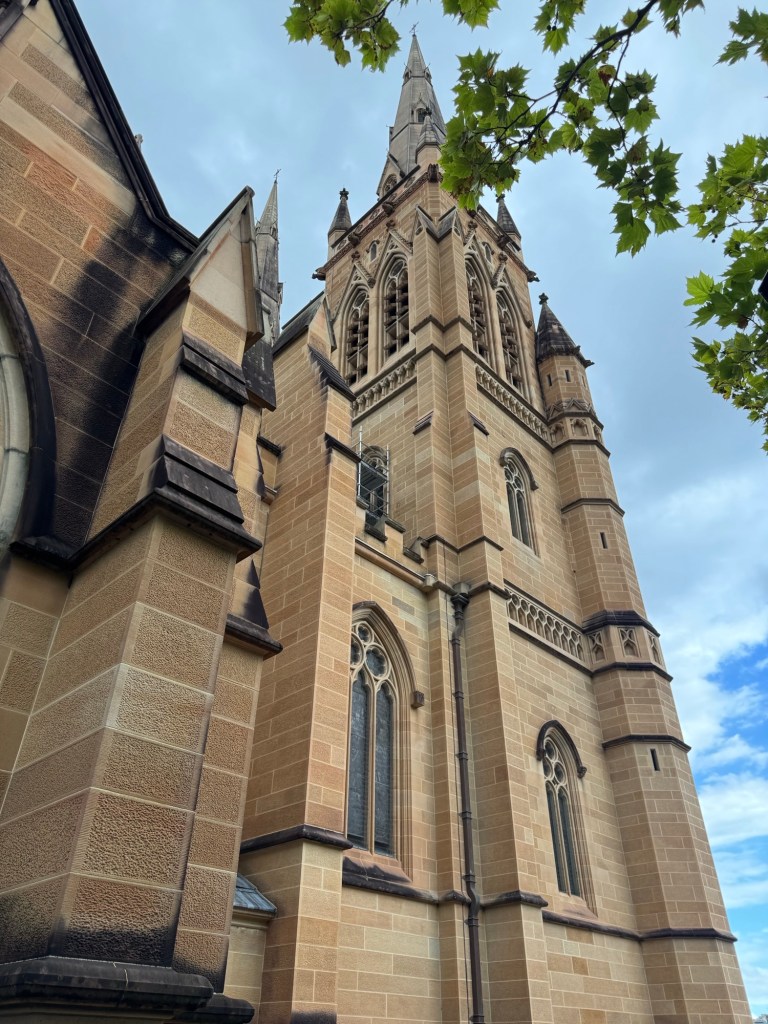
Looking straight up from the southwest corner is almost dizzying.
The northwest aspect. The square centre tower is 46.3m/152ft tall.
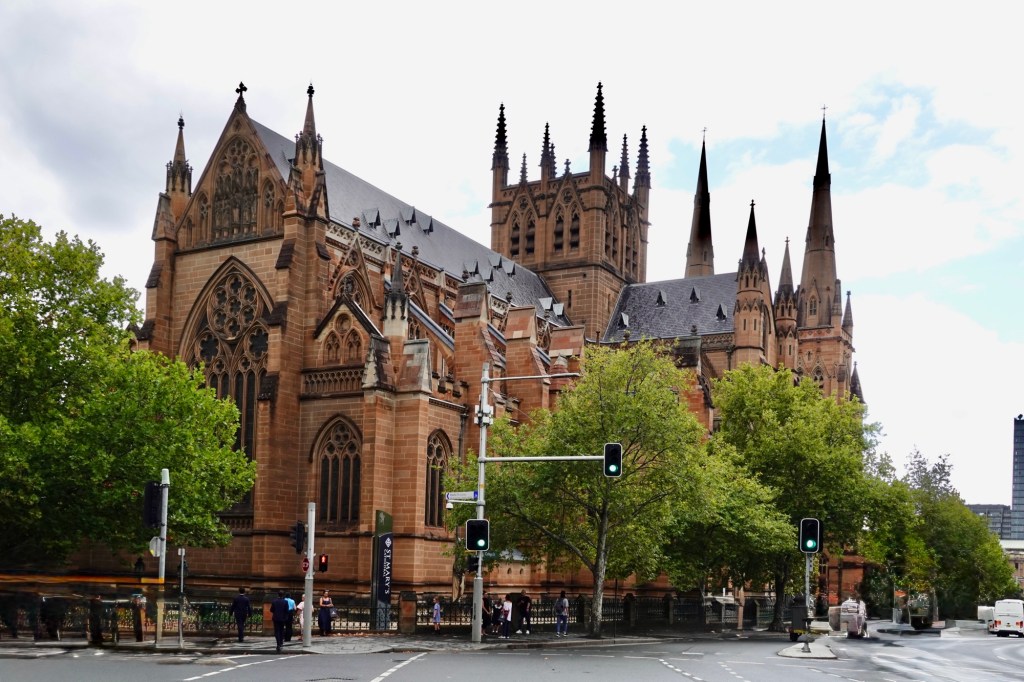
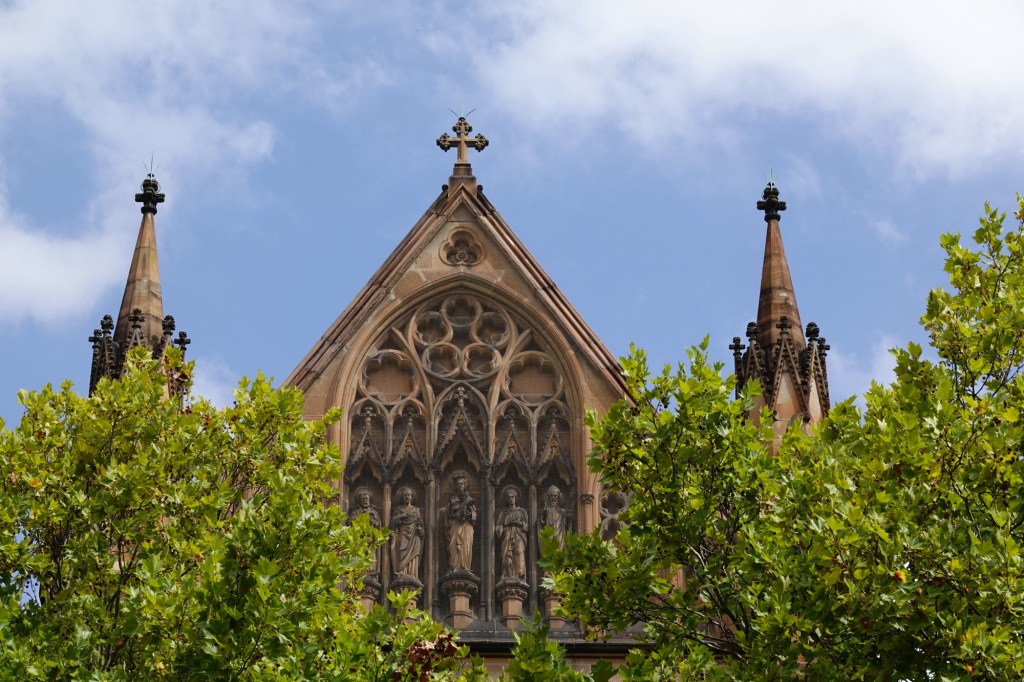
The north façade is the most obscured by trees, but it is still possible to zoom in on the design from just across the street.
The cathedral was designed by William Wardell in Gothic Revival style to replace the original 1821 church lost in an 1865 fire: construction spanned from 1868 to 1928, although on the cathedral’s website we learned that “the original Wardell design was only finally completed in June 2000 when the metal frames of the imposing Southern Spires were lowered into place by helicopter and then sheathed in Gosford sandstone.”
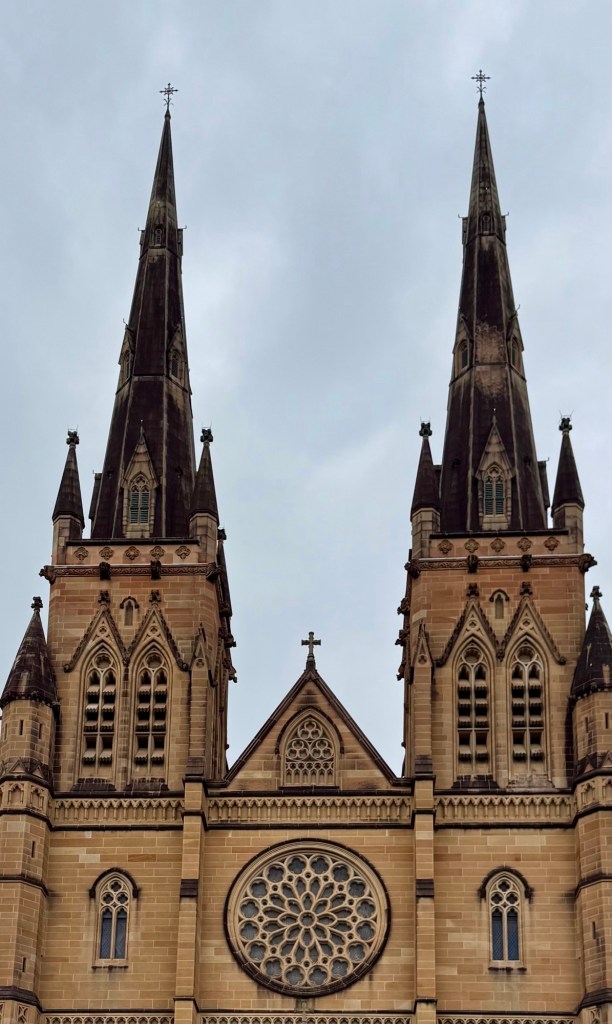
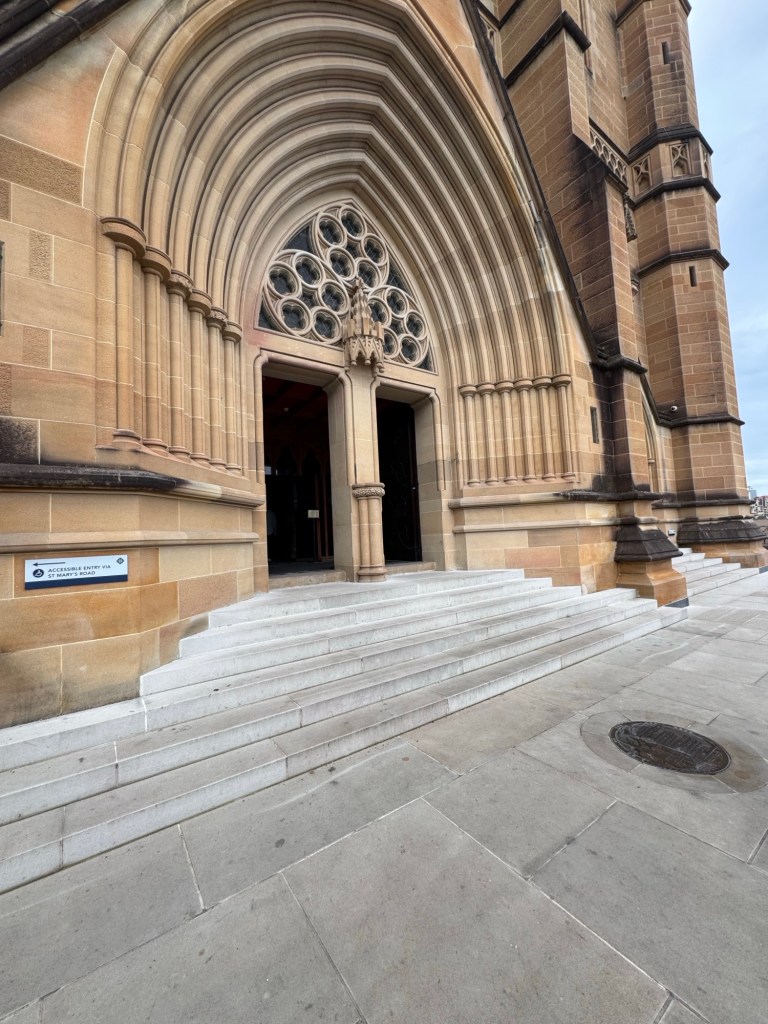
The south (main) entrance with an even larger rose window. The southern spires reach 76.4m/250.6 ft into the sky.
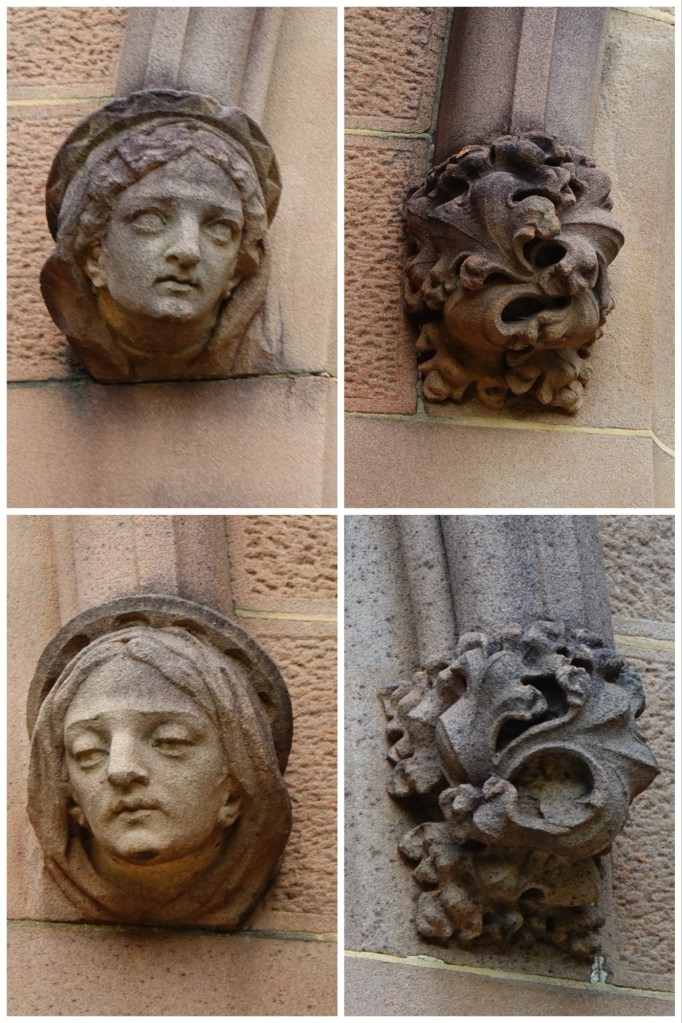
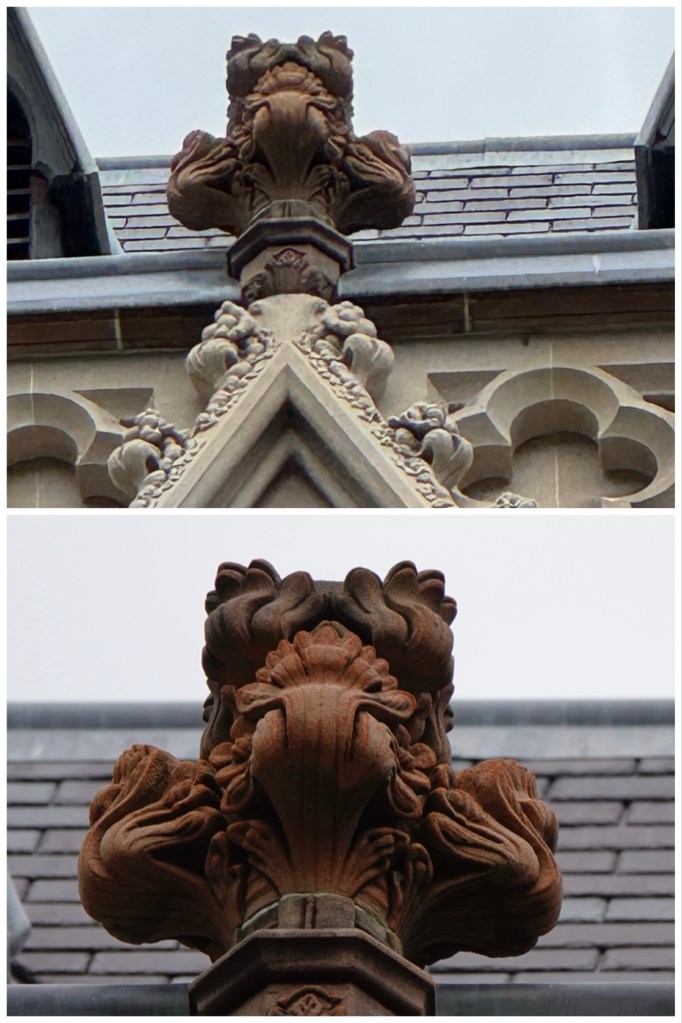
There were definitely elements that brought to mind my favourite Gothic (not “revival”) Dom, in Köln (Episode 354) although Sydney’s St. Mary’s is not nearly as large. In fact, overall it is only about 2/3 as long and 1/3 as wide as Köln’s cathedral, and its spires are less than half the height of Köln’s. What was so lovely here was the fact that the past 150 years in Sydney has obviously produced much less accumulated pollution on the stonework than 800 years in Köln, so the details in the sandstone carvings and statues are relatively unmarred by soot and grime.
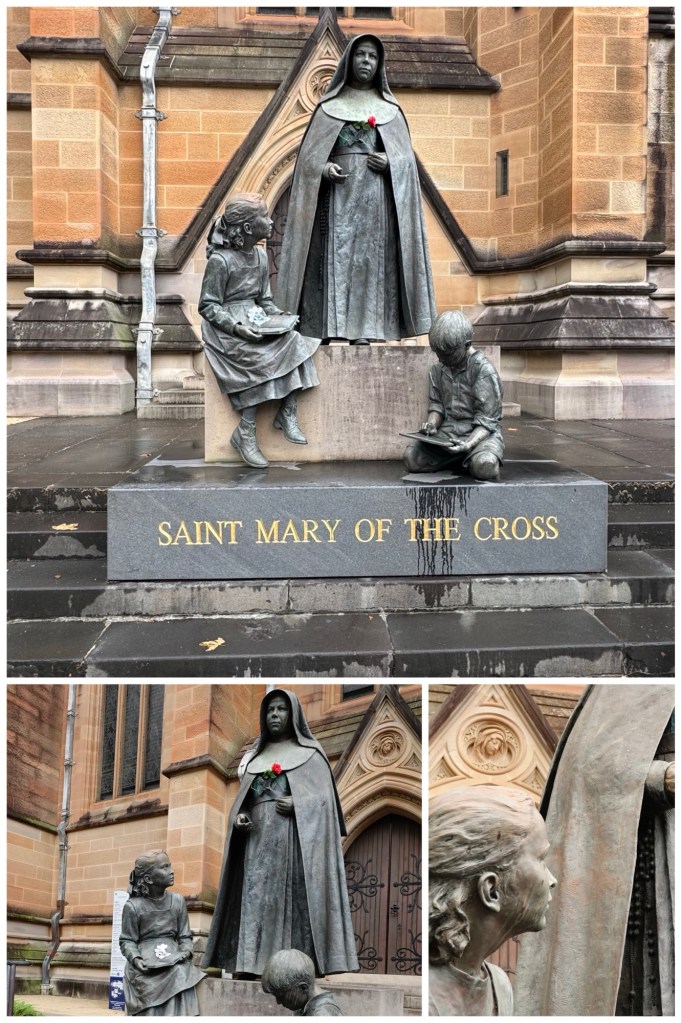
The cathedral is surrounded by statues, and has a half height wall dedicated to its Archbishops.
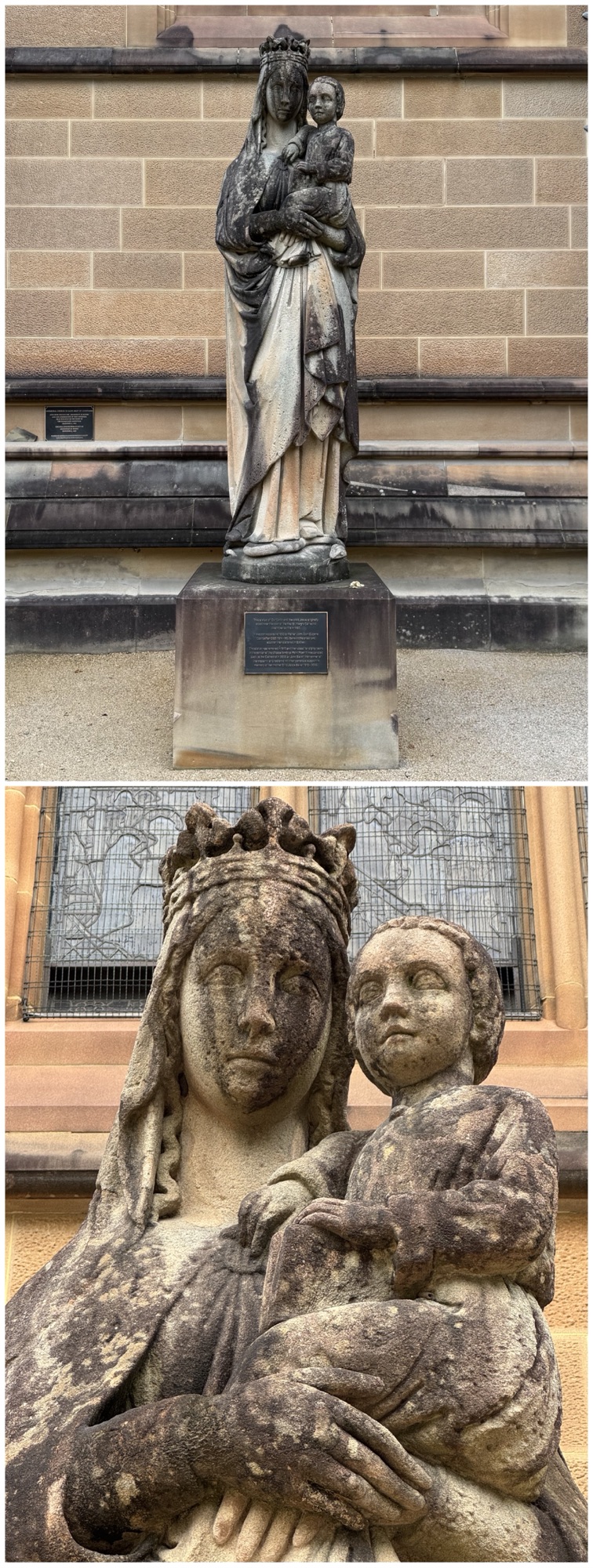
This statue of Our Lady and the child Jesus originally stood near the door of the first St. Mary’s Cathedral destroyed by fire in 1865. The discolouration is from fire, not pollution. It was carved around 1850 by Father John Dom Eugene Gourbeillon, a Benedictine priest and sculptor then stationed in Sydney.
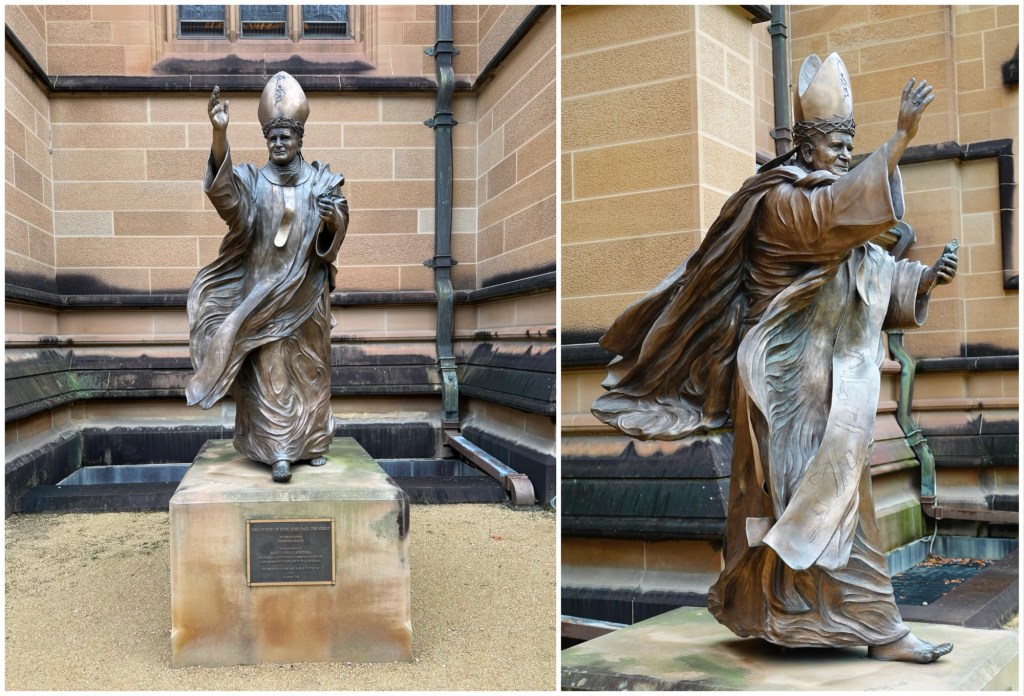
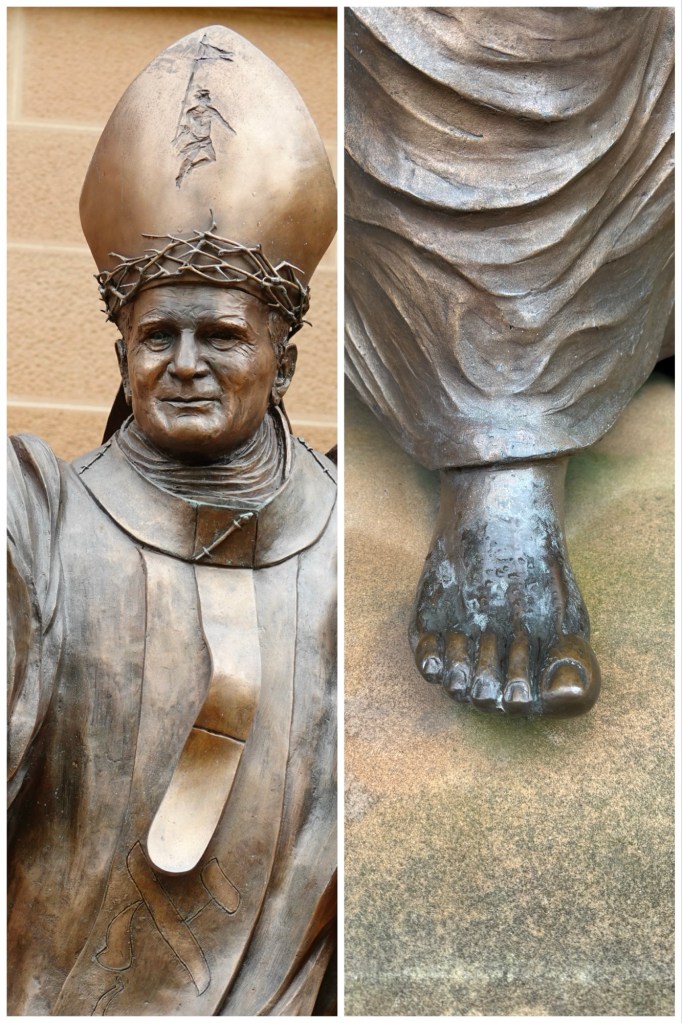
The plaque reads: THIS STATUE OF POPE JOHN PAUL THE GREAT BY THE SCULPTOR FIORENZO BACCI WAS DONATED TO SAINT MARY’S CATHEDRAL BY THE ITALIAN AUSTRALIAN COMMUNITY OF SYDNEY AND GENEROUS DONORS LED BY ITALO MAZZOLA IN THE YEAR OF THE 23RD WORLD YOUTH DAY ON 19 APRIL 2008
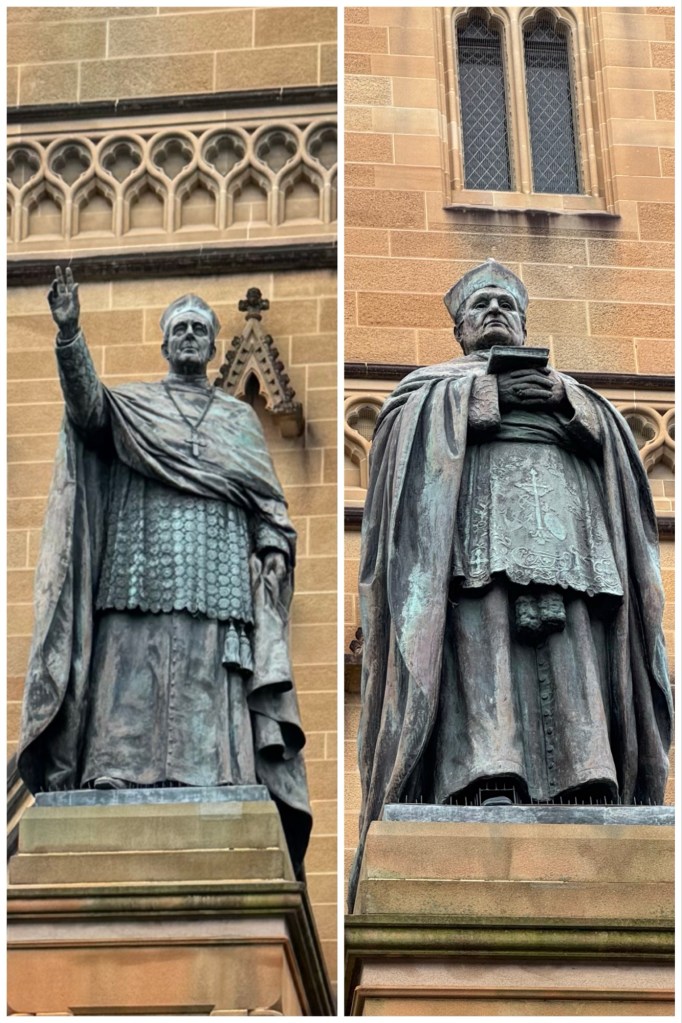
On either side of the main south entrance, the statues that greet visitors to the Cathedral are of Cardinal Patrick Francis Moran (L), Australia’s third Archbishop and first Cardinal, and his successor Archbishop Michael Kelly (R)
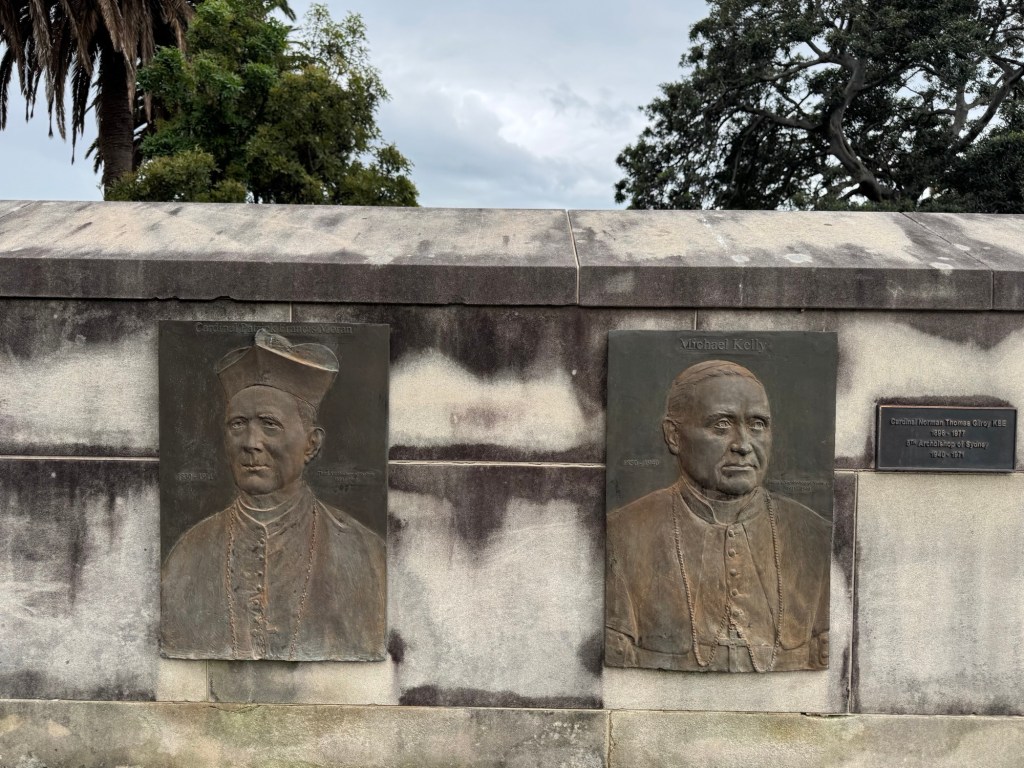
Just two of the bronzes from the southeast veranda of the Cathedral. on the left is Archbishop Michael Kelly again. On the right is Australia’s first Australian-born Cardinal, Sir Norman Thomas Gilroy, who led the church here through WWII and until 1970.
Without being on a formal tour (I missed the booking deadline for the only weekly tour) we could not go into the crypt or the bell tower, and there would be no one to ensure we understood what we were seeing, but we went inside nonetheless.
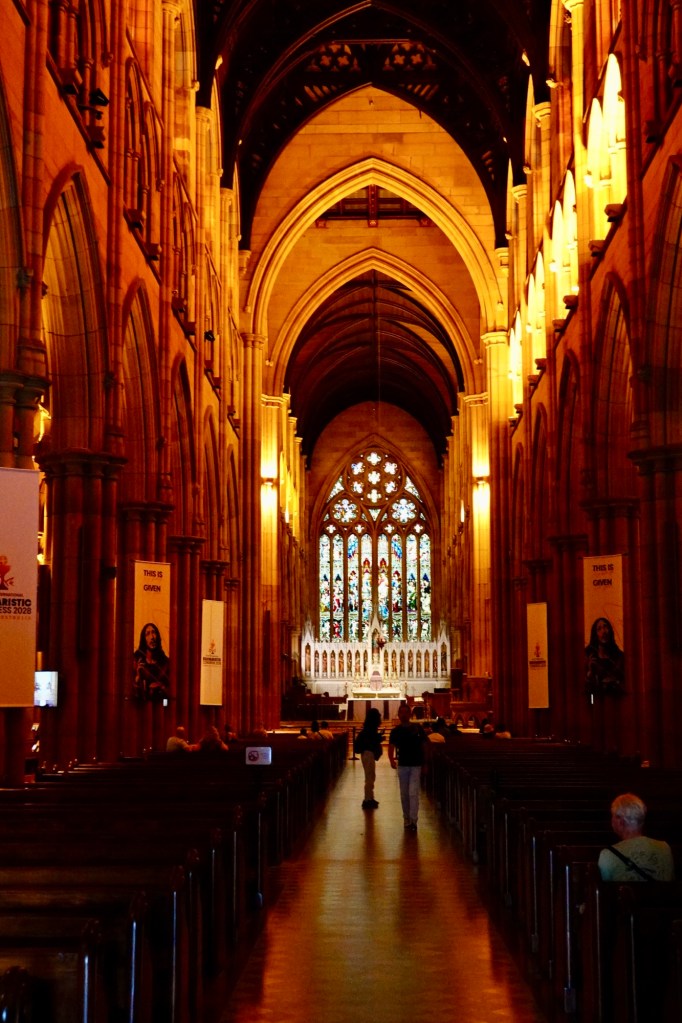
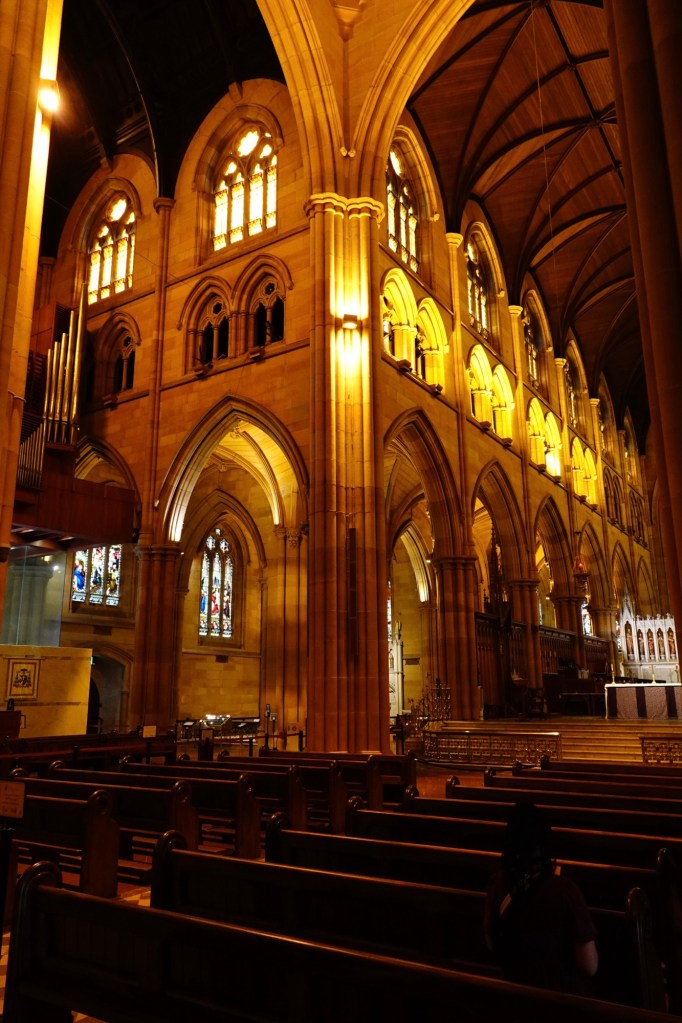
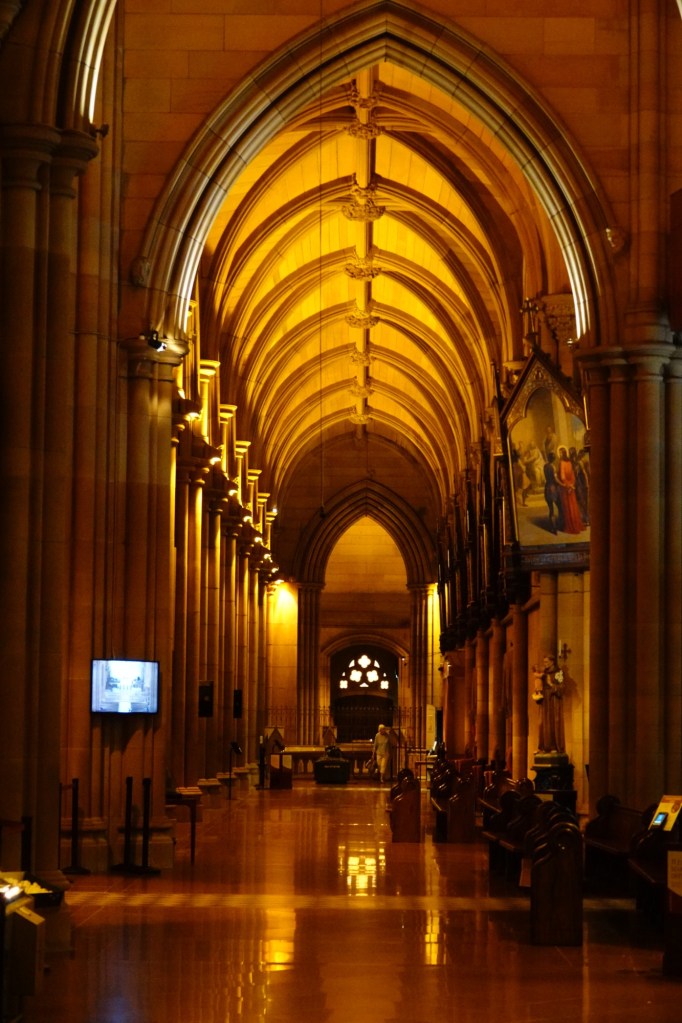
There was plenty to be in awe of, which of course is the entire point of the great cathedrals: “we” are small.
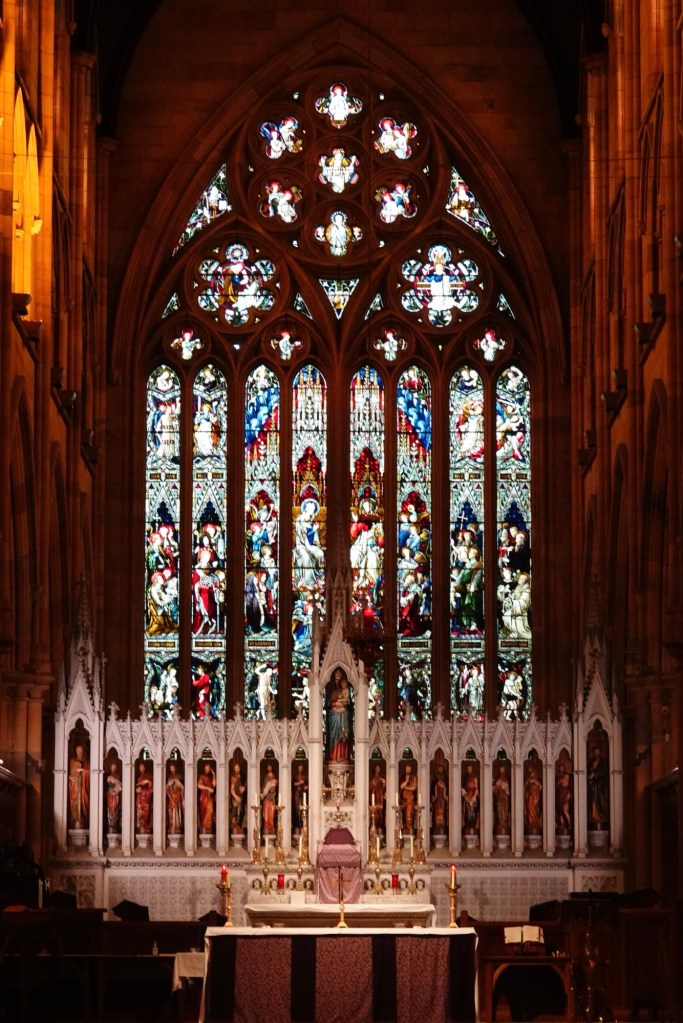
The main altar, at the north end, viewed from the south entry.
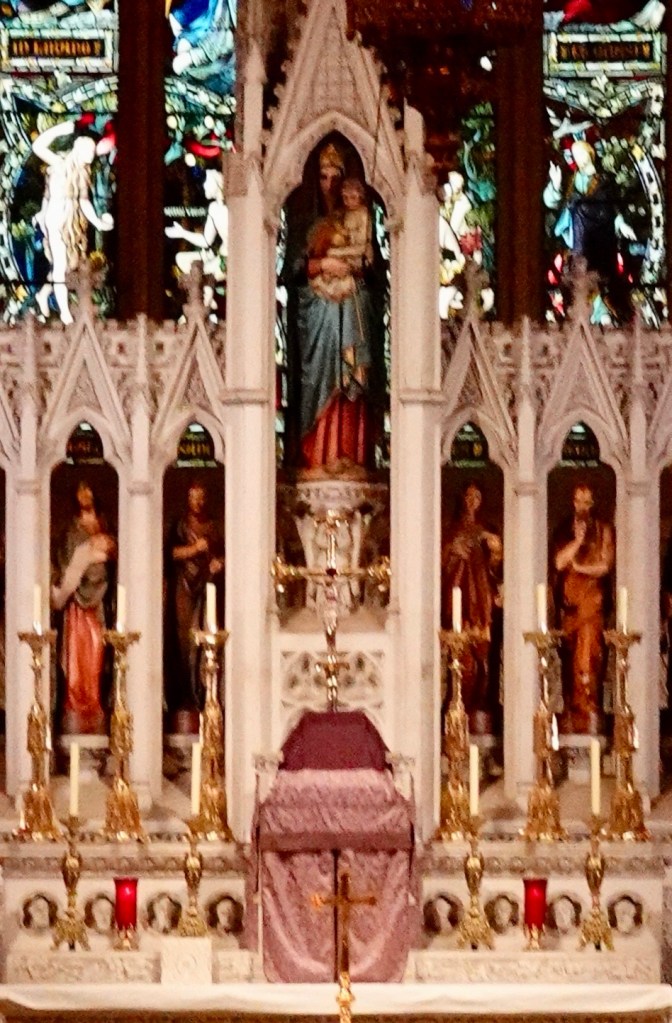
We couldn’t approach the altar area, but this detail is pulled from Ted’s photo.
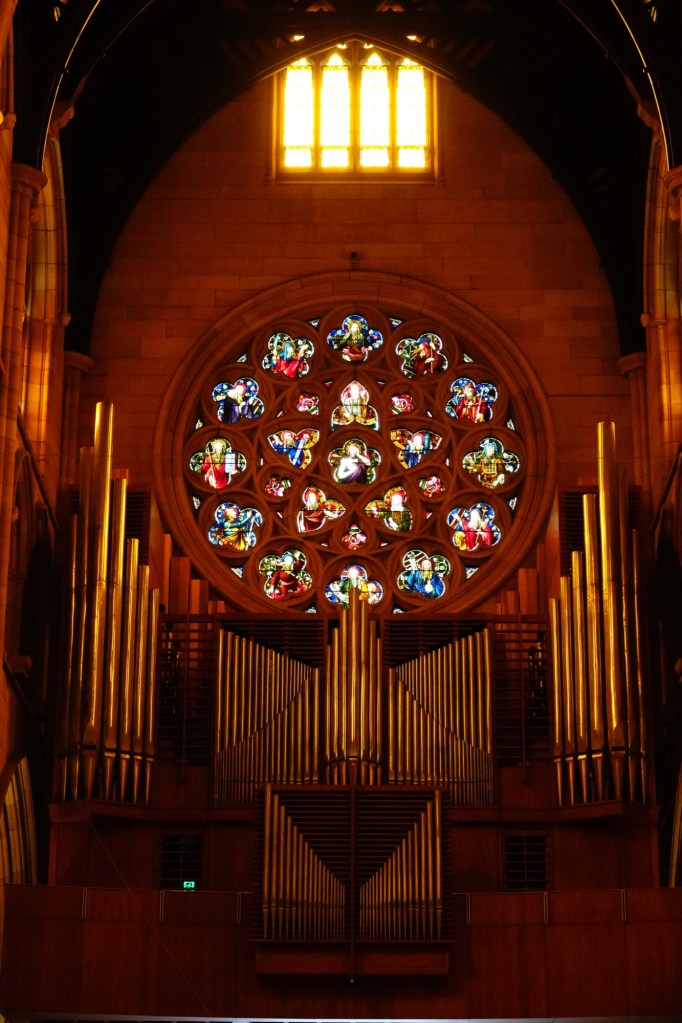
The rose window above the organ pipes on the west wall.
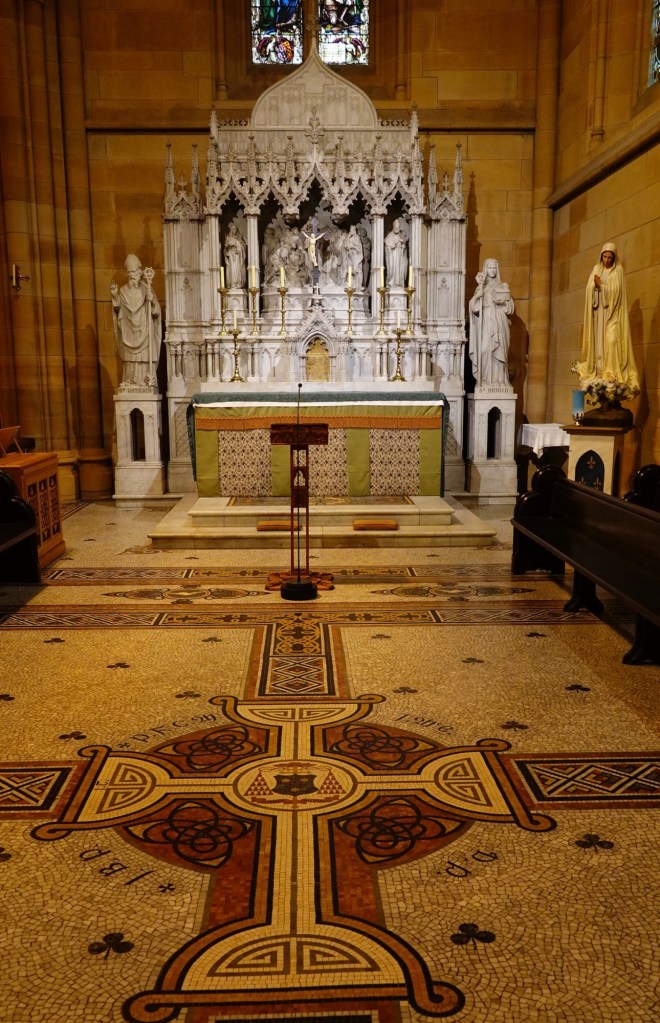
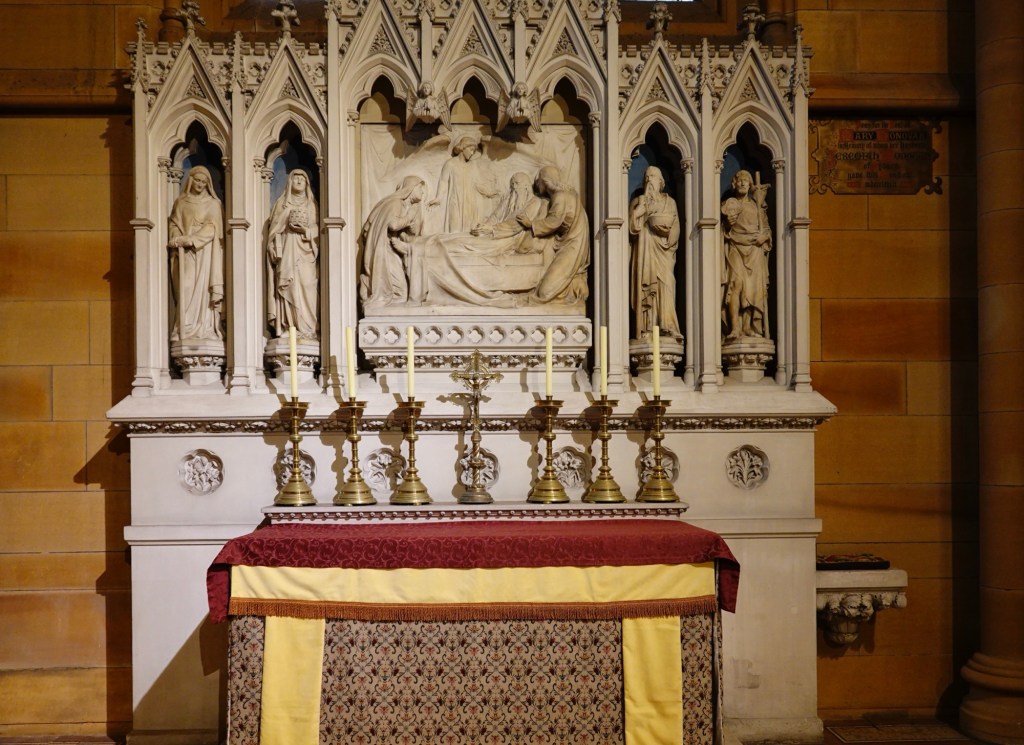
The Chapel of the Irish Saints.
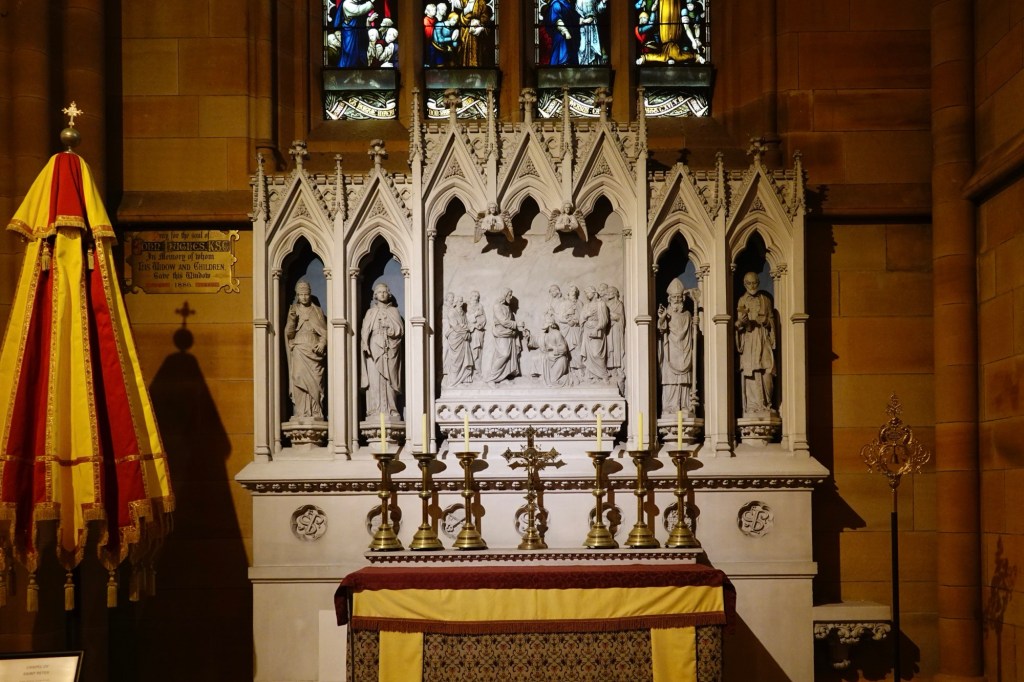
The Chapel of Saint Peter, complete with a red and gold Papal Umbraculum.
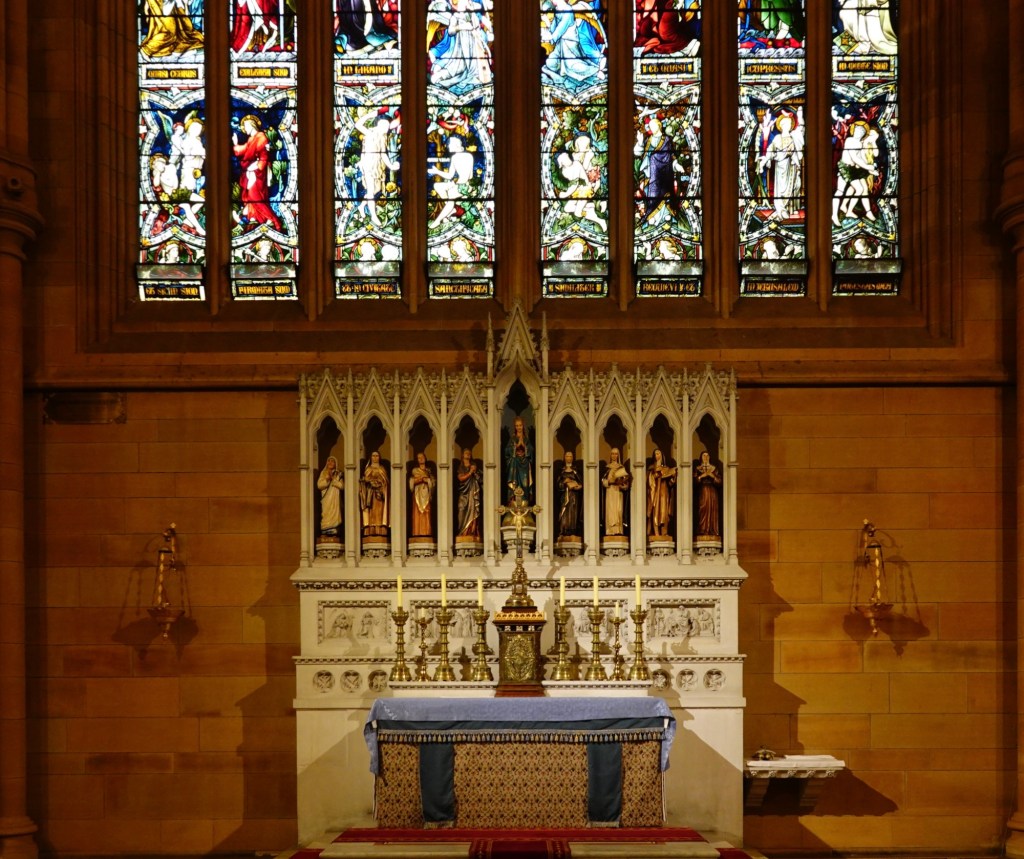
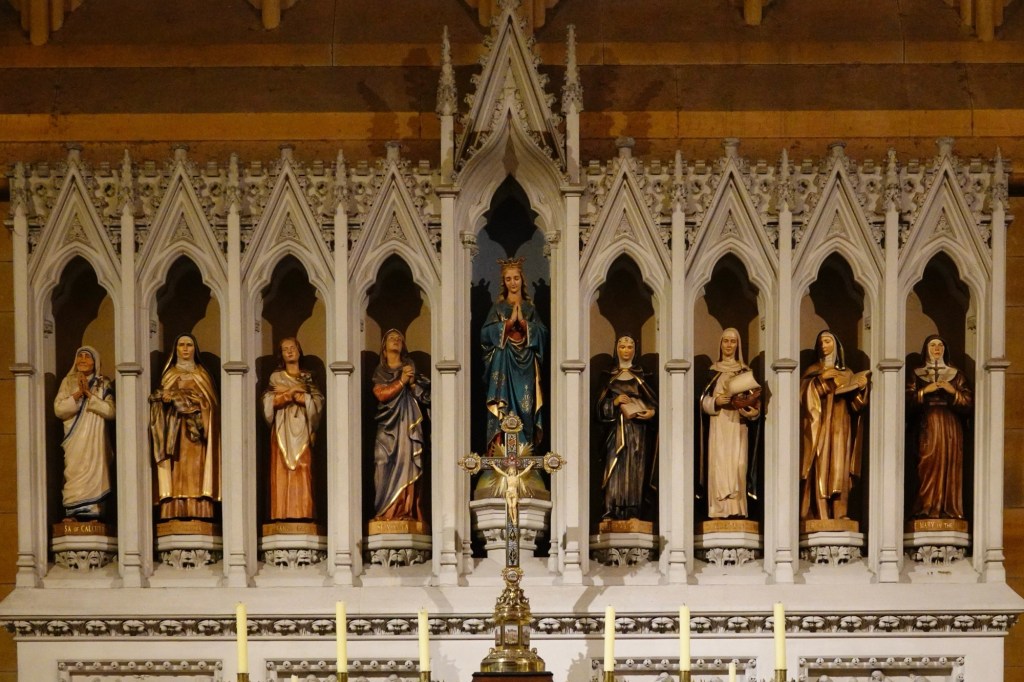
Even though the entire cathedral is dedicated to Mary, there is still a specific separate Chapel of Saint Marys Cathedral.
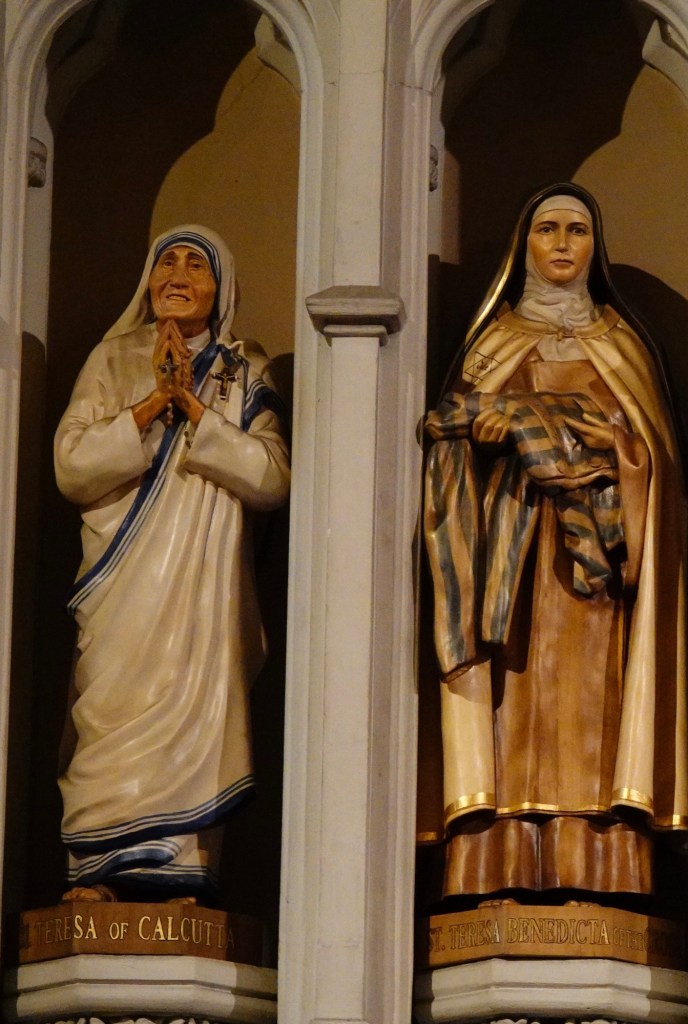
The saints surrounding Mary each have their name in gold on their pedestal. From L to R: St Theresa of Calcutta, St Theresa Benedicta, St Maria Goretti, St Monica, (Mary in the centre), St Hildegard of Bingen, St Mary of Siena, St Thérèse of Liseux, and St Mary McKillop of Australia.
The statues are beautifully rendered. I couldn’t find out how recently they were added, but St Theresa of Calcutta was only beatified in 2016.
The Chapel of St Joseph
The Stations of the Cross along the aisles were some of the largest and most detailed I’ve seen (outside, perhaps, of Italy). They were painted in oils by artist L. Chovet of Paris and selected for St Mary’s by Cardinal Moran in 1885.
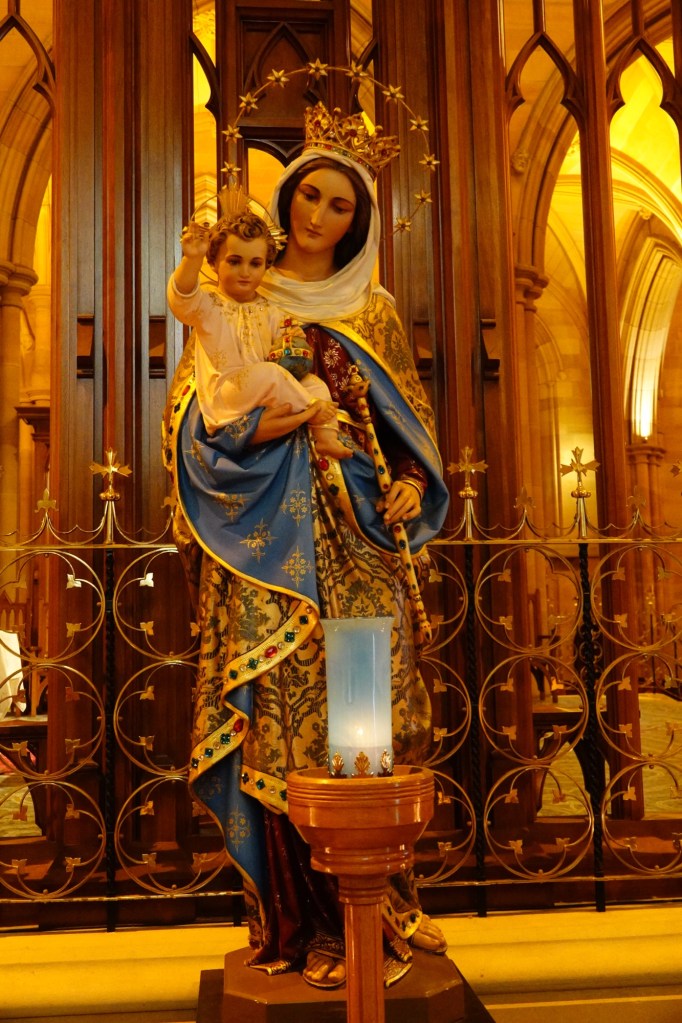
We admired this bejewelled Mother and Child, but completely missed the replica of Michelangelo’s Pieta in the western transept.
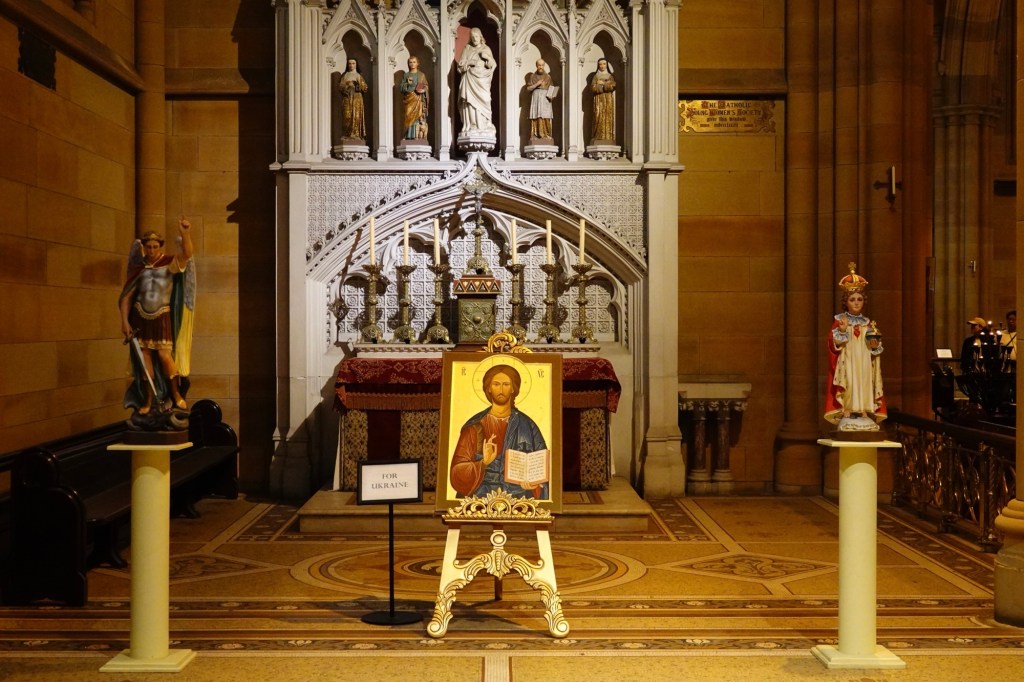
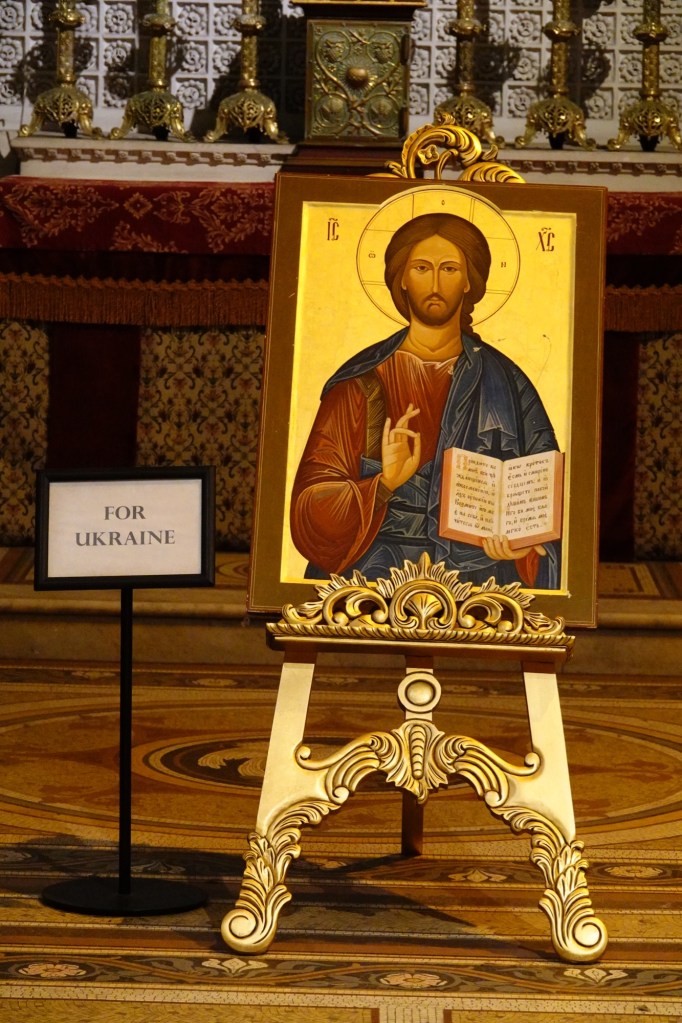
A sign outside the Chapel of the Sacred Heart reads: “THIS ICON WAS PRESENTED IN 1969 TO CARDINAL SIR NORMAN THOMAS GILROY, ARCHBISHOP OF SYDNEY BY CARDINAL JOSYF SLIPYJ, MAJOR ARCHBISHOP OF LVIV, HEAD OF THE UKRAINIAN GREEK CATHOLIC CHURCH”
Looking at the cathedral’s website, and in Wikipedia, I realize that there was much more we could have seen if we’d known what to look for. Hindsight is great. In this case, it reinforces how much we like guided tours.
 Rose and Ted’s Excellent Adventure