Lachlan Macquarie, who the street we’ve been exploring is named after, must have been an interesting character, in addition to being a bit of an overachiever.
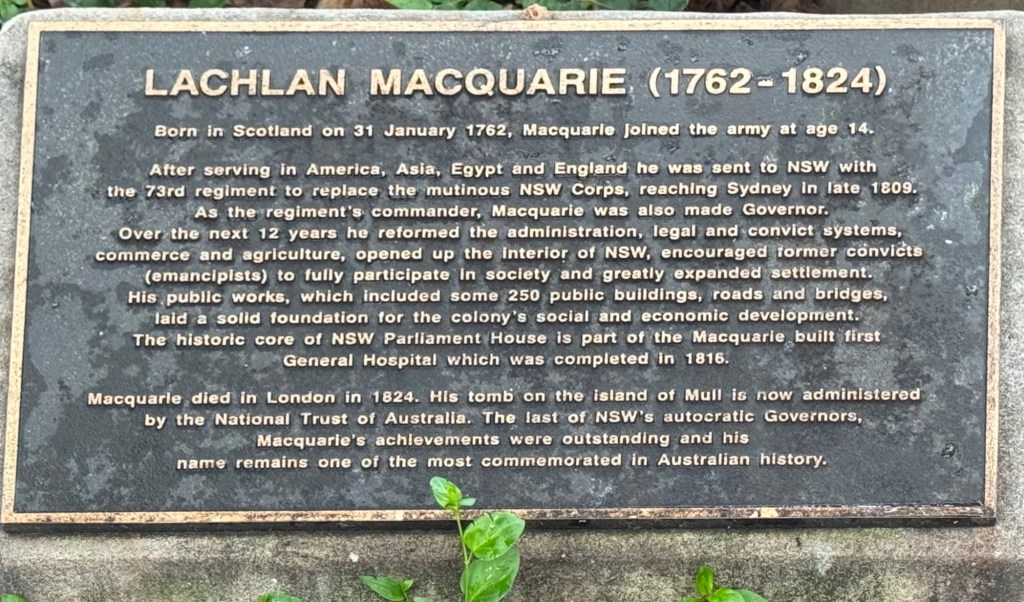
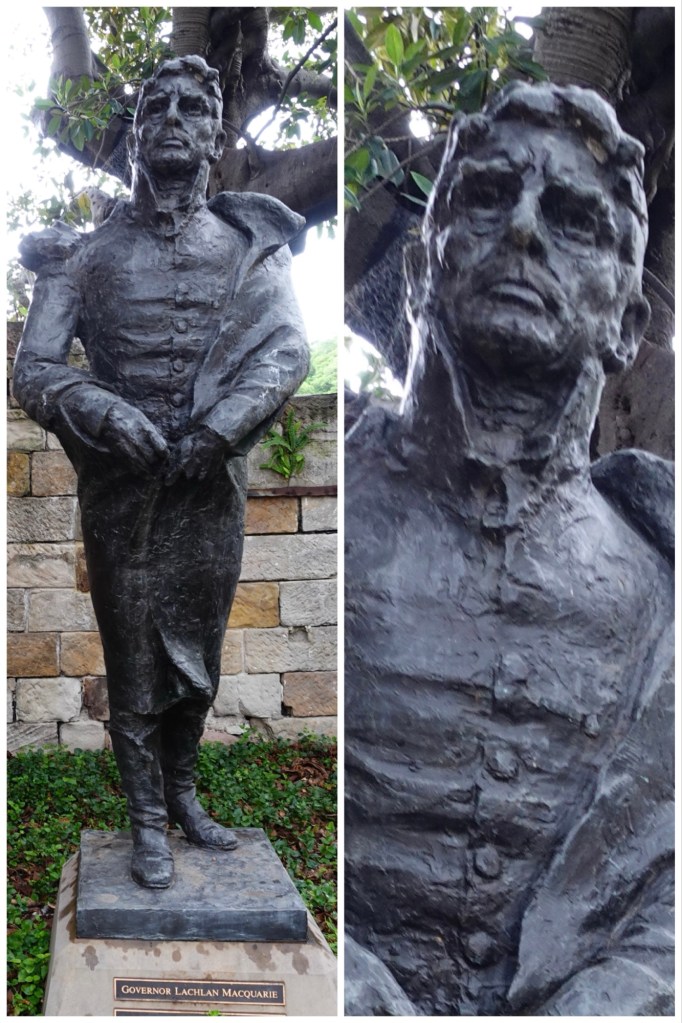
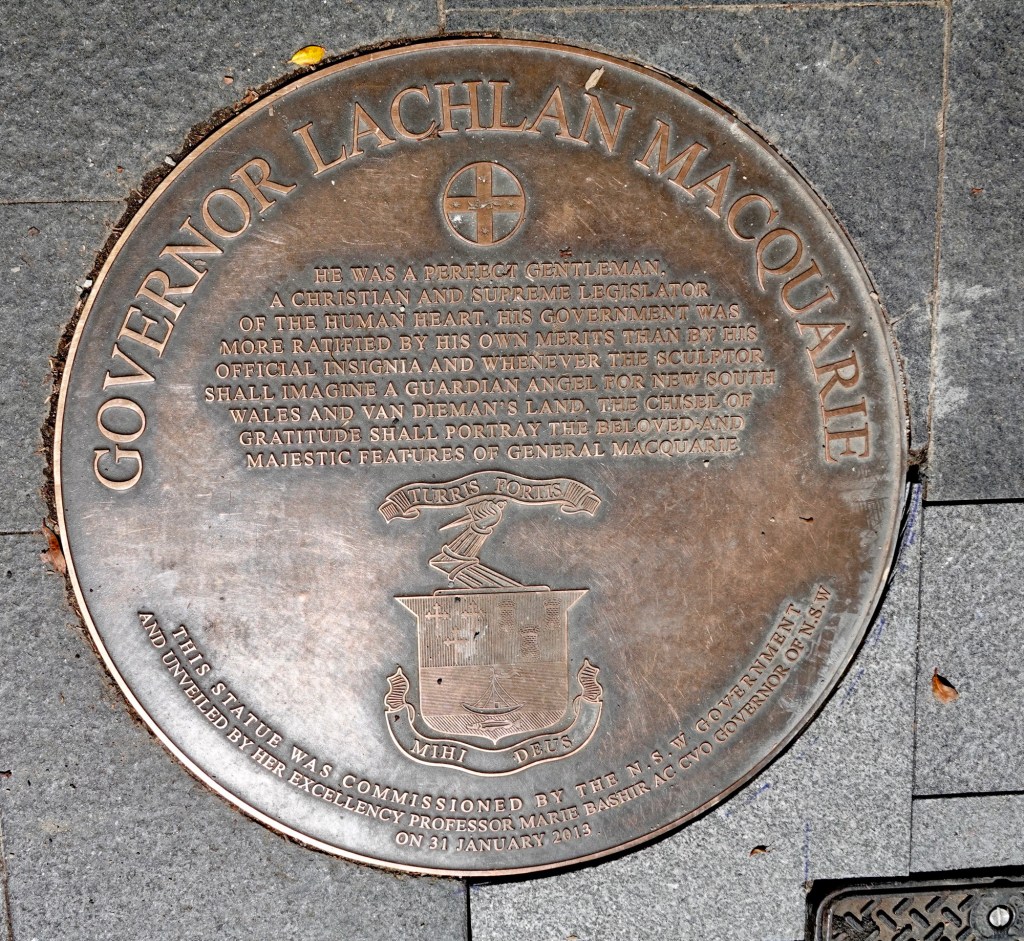
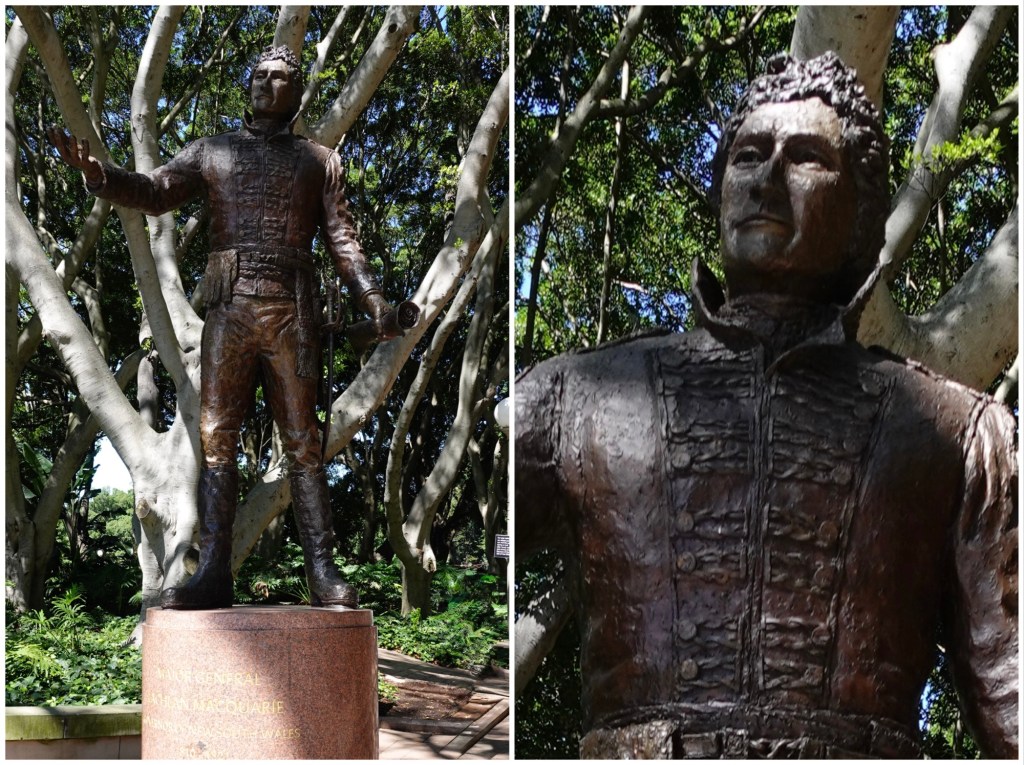
A second statue of Macquarie, in Hyde Park, expresses the sentiment that “THE CHISEL OF GRATITUDE SHALL PORTRAY THE BELOVED AND MAJESTIC FEATURES OF GENERAL MACQUARIE”. And yet, we learned in subsequent days that, like all revered historic figures, his legacy is not all selfless acts and valiant endeavours.
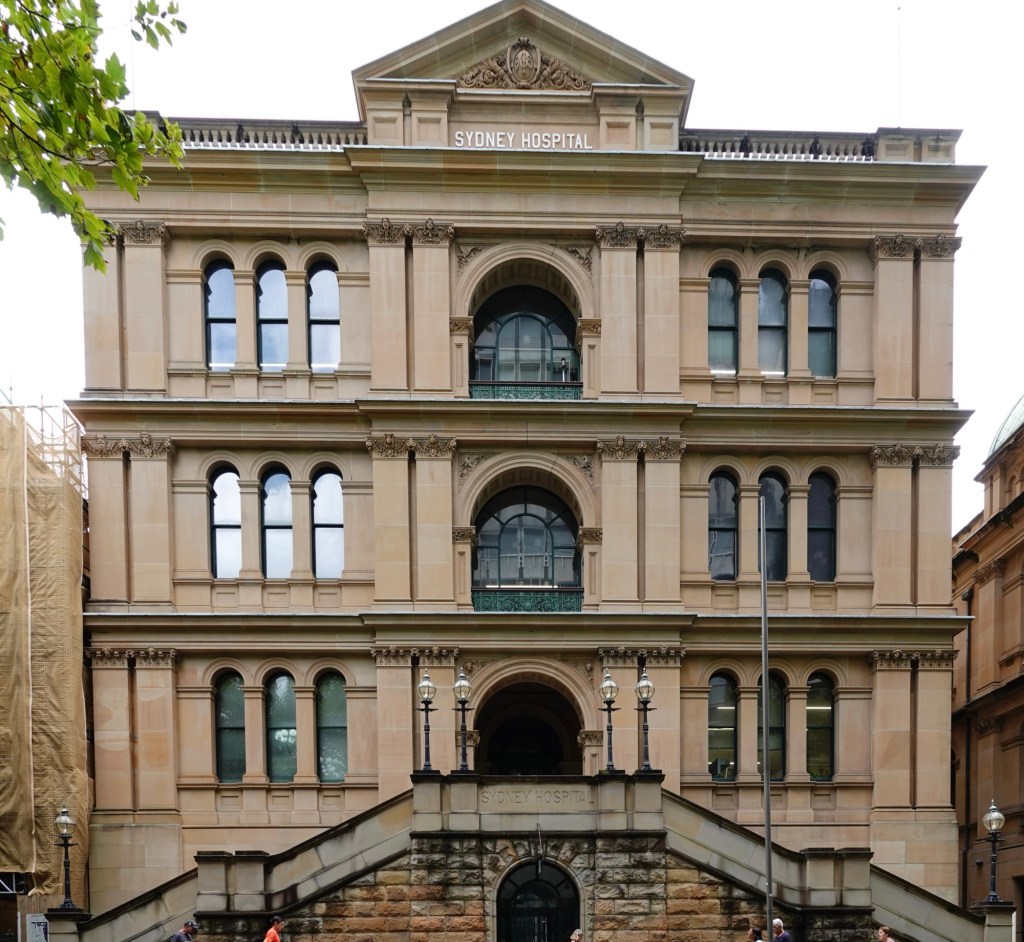
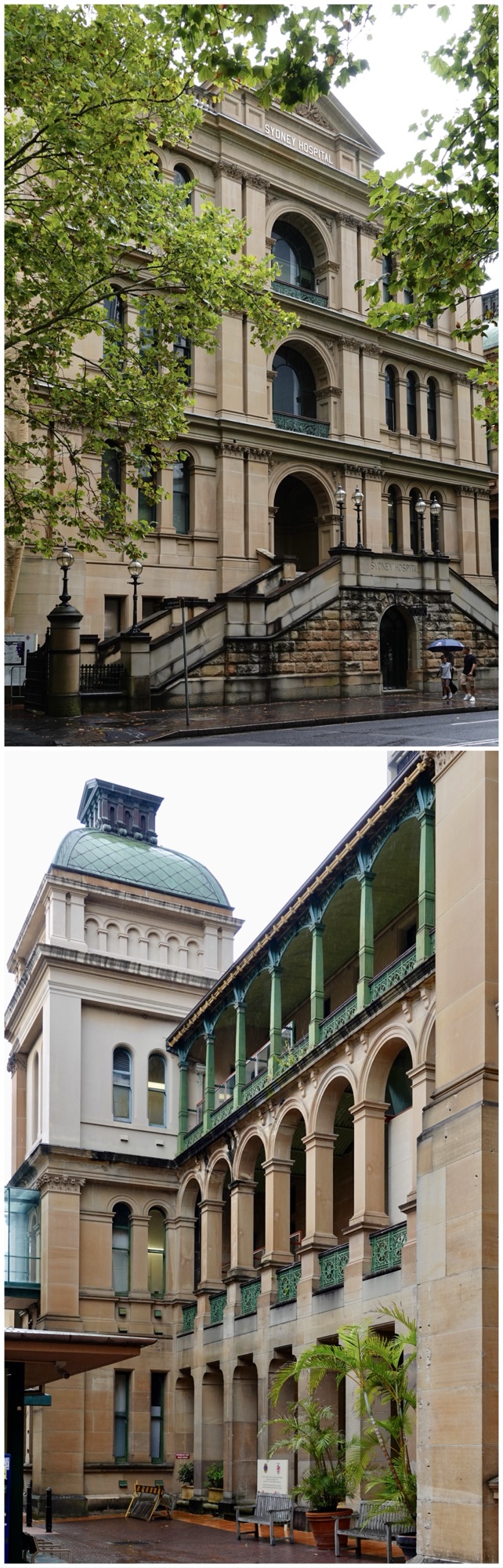
The city’s main street bears his name, and one of the most impressive buildings along this street is the Sydney Hospital.
We learned, though, that the current gorgeous hospital edifice was not built until 1879, well after Governor Macquarie’s death.
The original hospital (in the drawing below), which was grand but on a much different scale, is the real story.
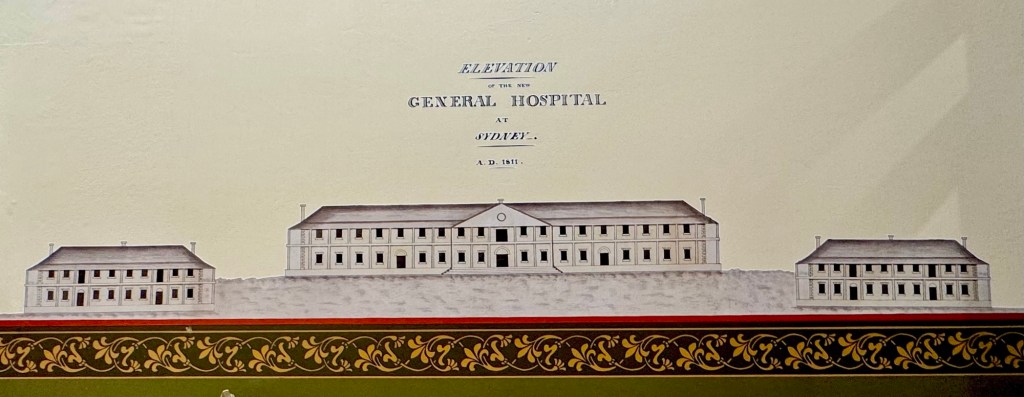
Governor Macquarie, having been denied government funds to build a hospital, coerced three wealthy rum merchants into funding it in return for the 3-way monopoly on the alcohol industry in New South Wales. That “deal” is a testament both to Macquarie’s commitment to the colony and his resourcefulness.
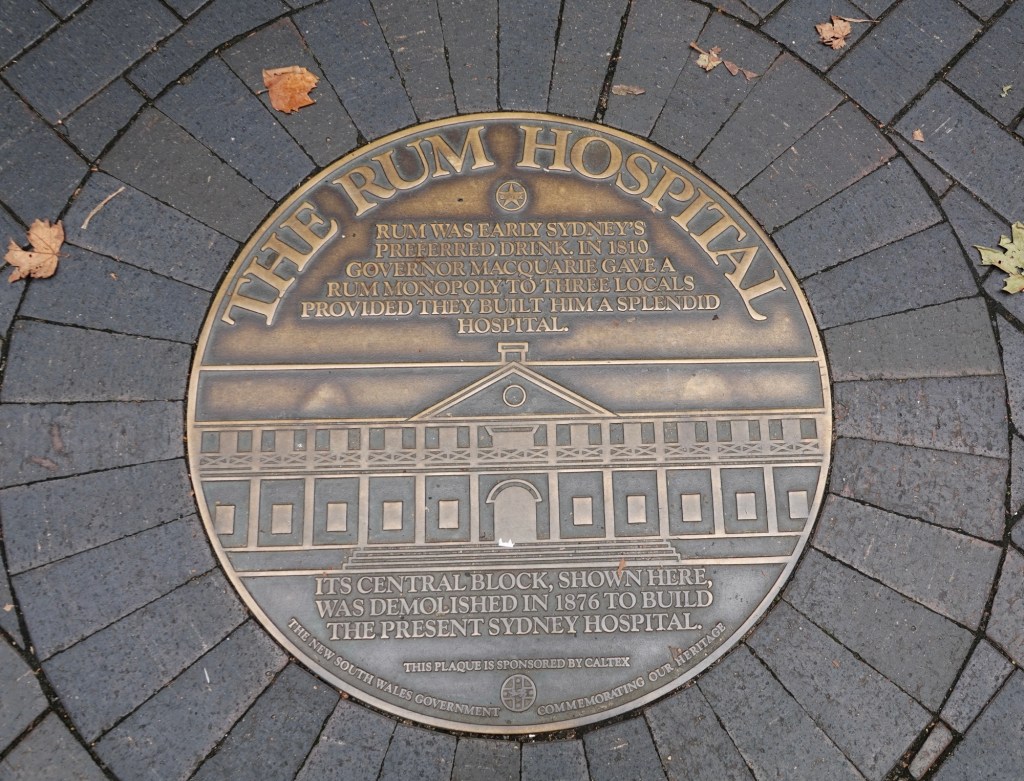
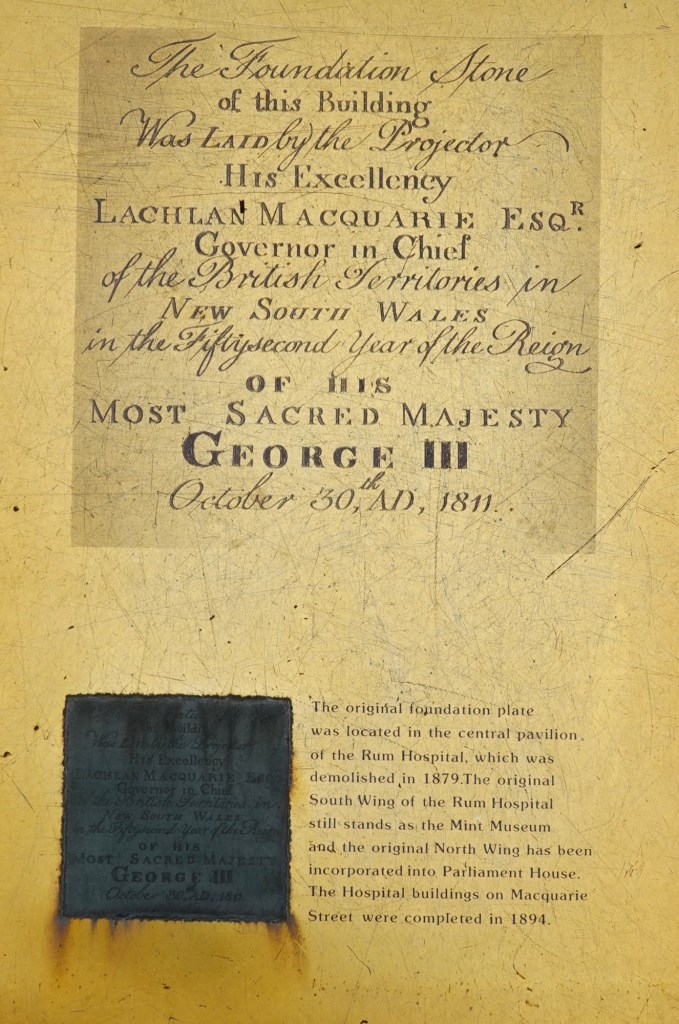
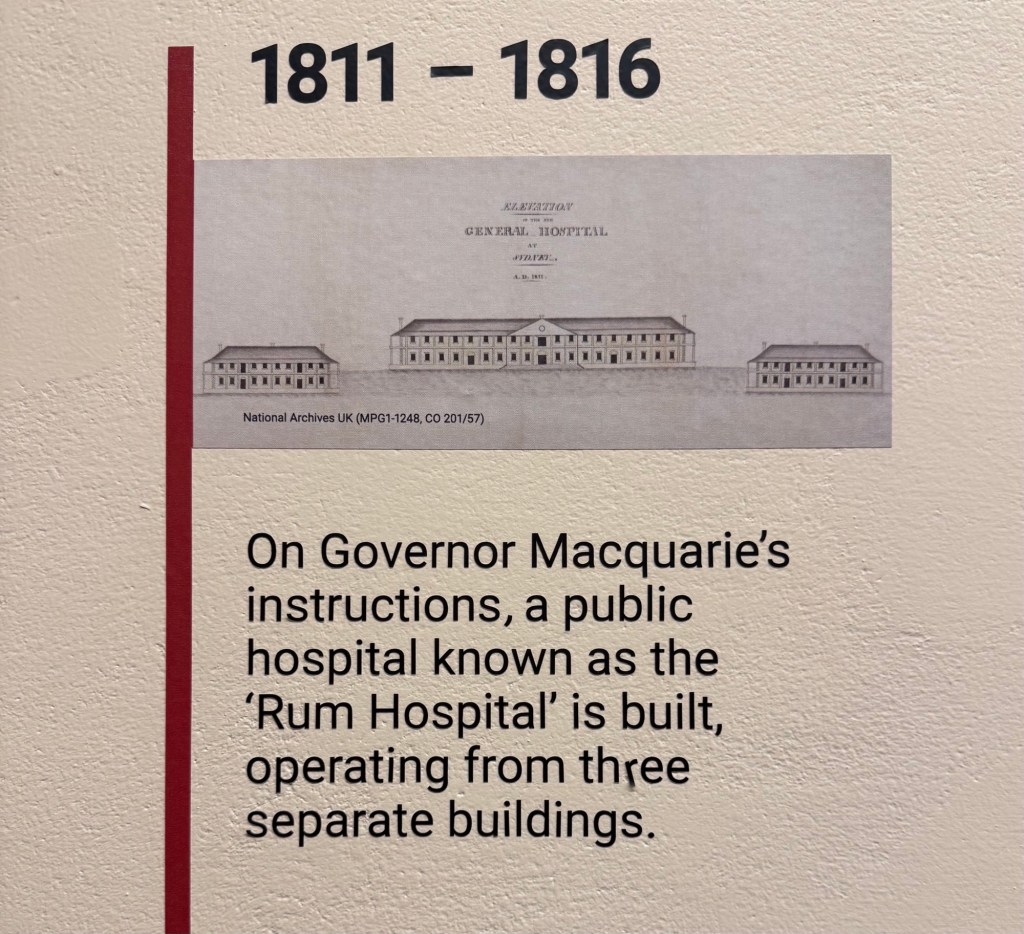
The South Wing of the original “splendid hospital”, completed in 1816, still stands. It is Sydney’s earliest surviving public building.
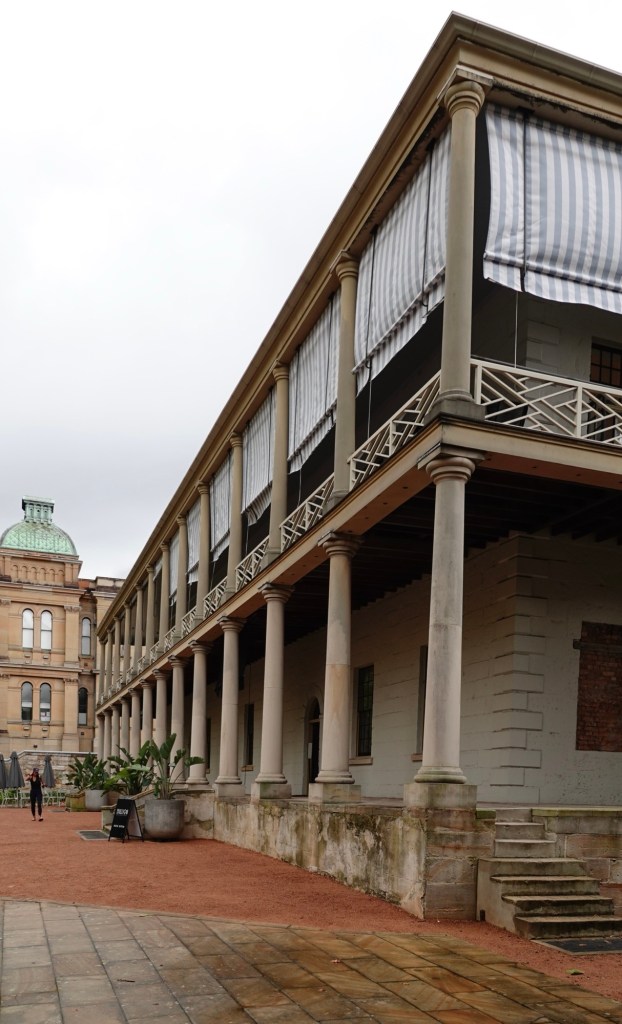
Most of its patients and staff – including respected assistant surgeon William Redfern – were current or former convicts. Post-mortems were performed here, and the building later housed a military hospital and the Sydney Dispensary and Infirmary, which provided medicines to the poor.
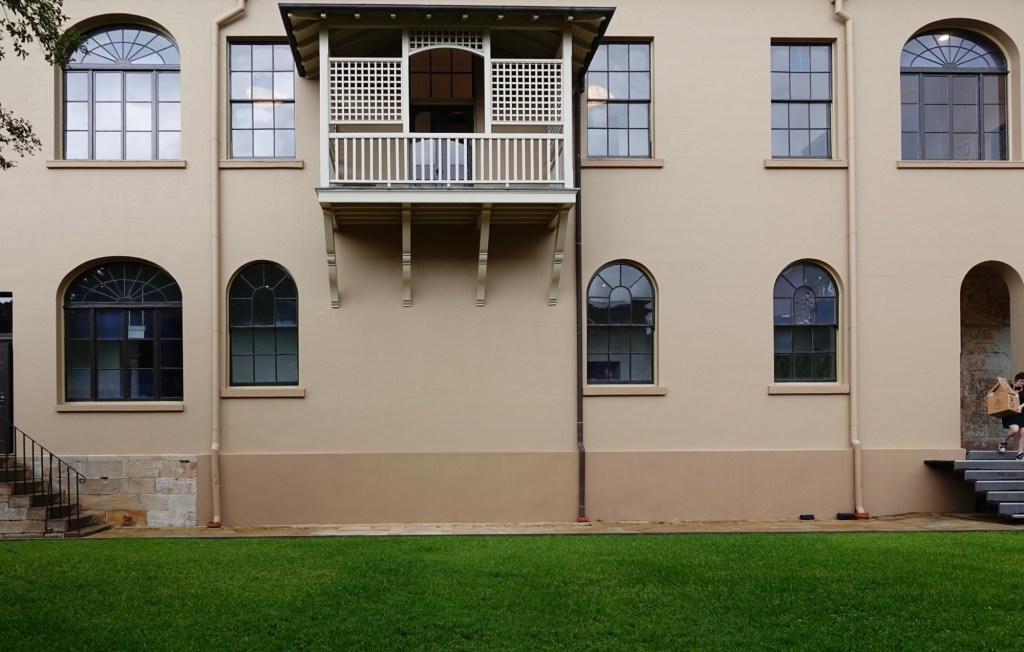
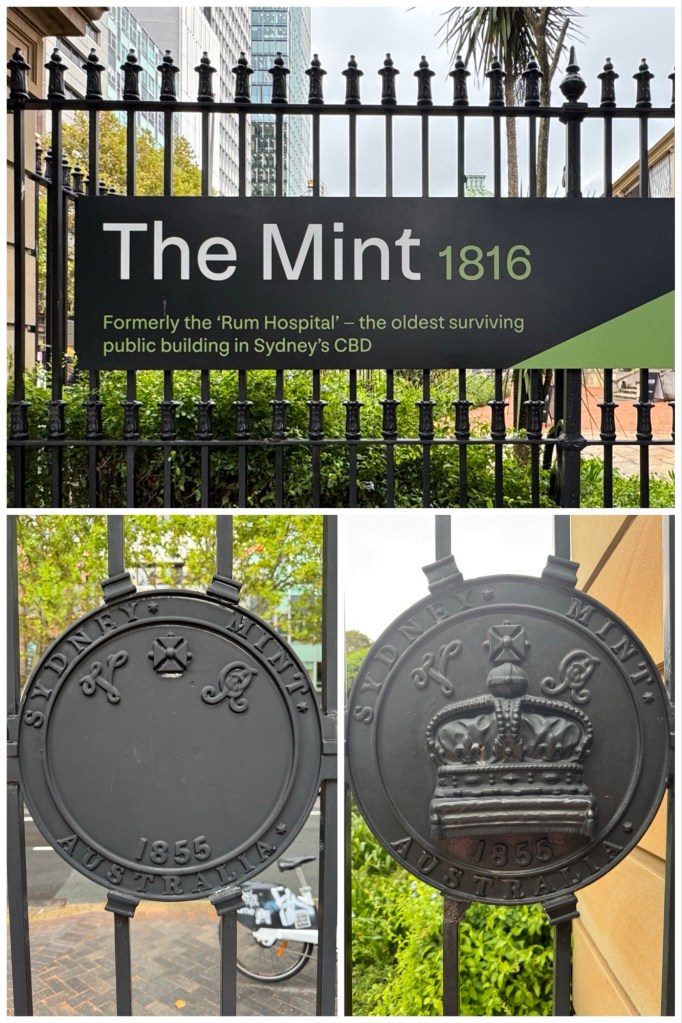
In 1854-55, the site was repurposed as the Sydney Mint, which employed specialist staff including assayers, chemists, engineers and mechanics. This workforce processed over 1200 tonnes of gold into 150 million coins during the Mint’s operation.
The original hospital may have been considered “splendid”, but its replacement is beyond splendid – it is magnificent.
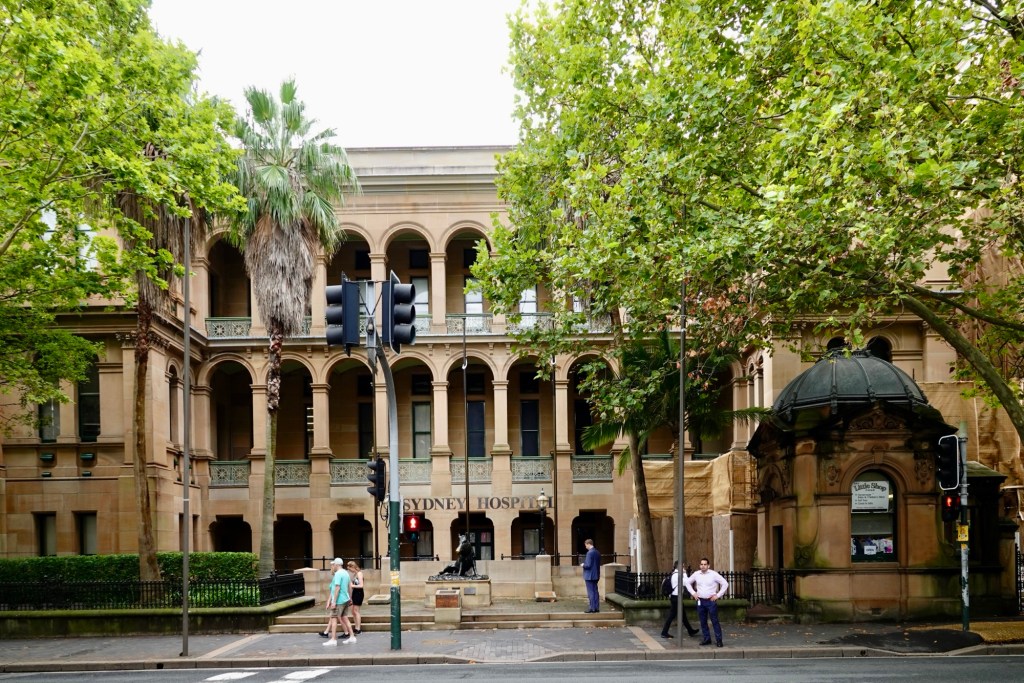
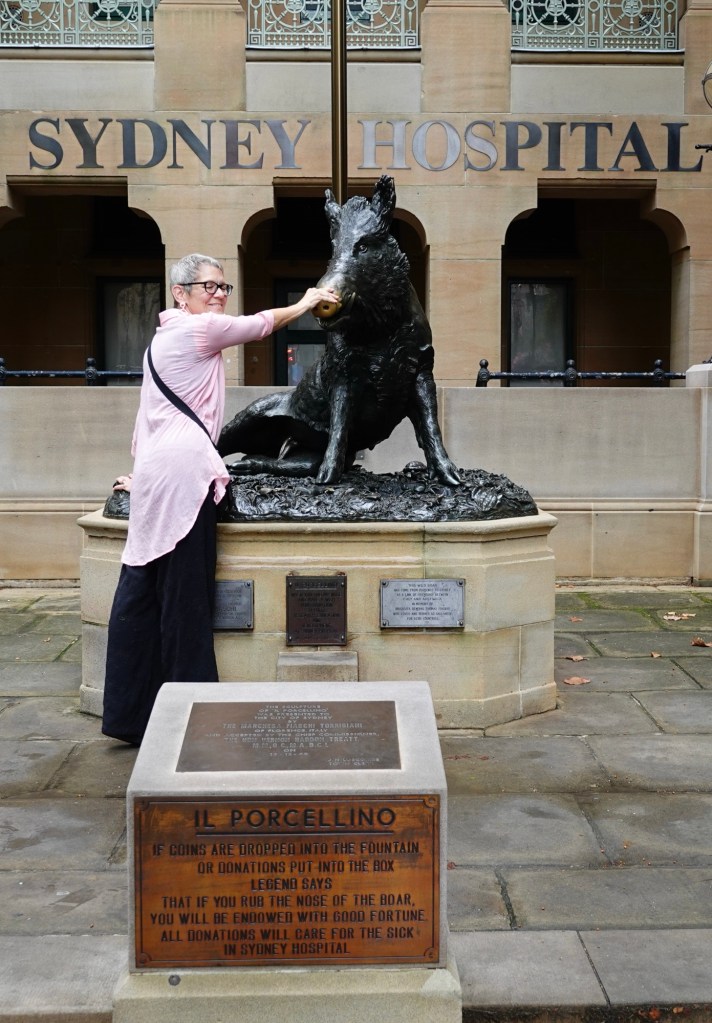
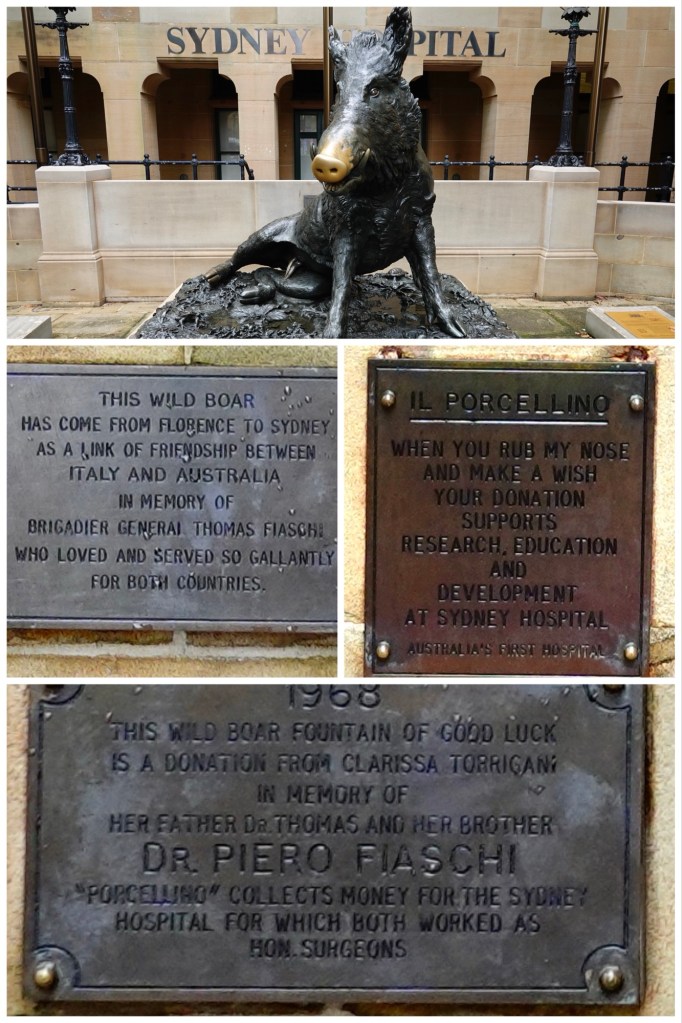
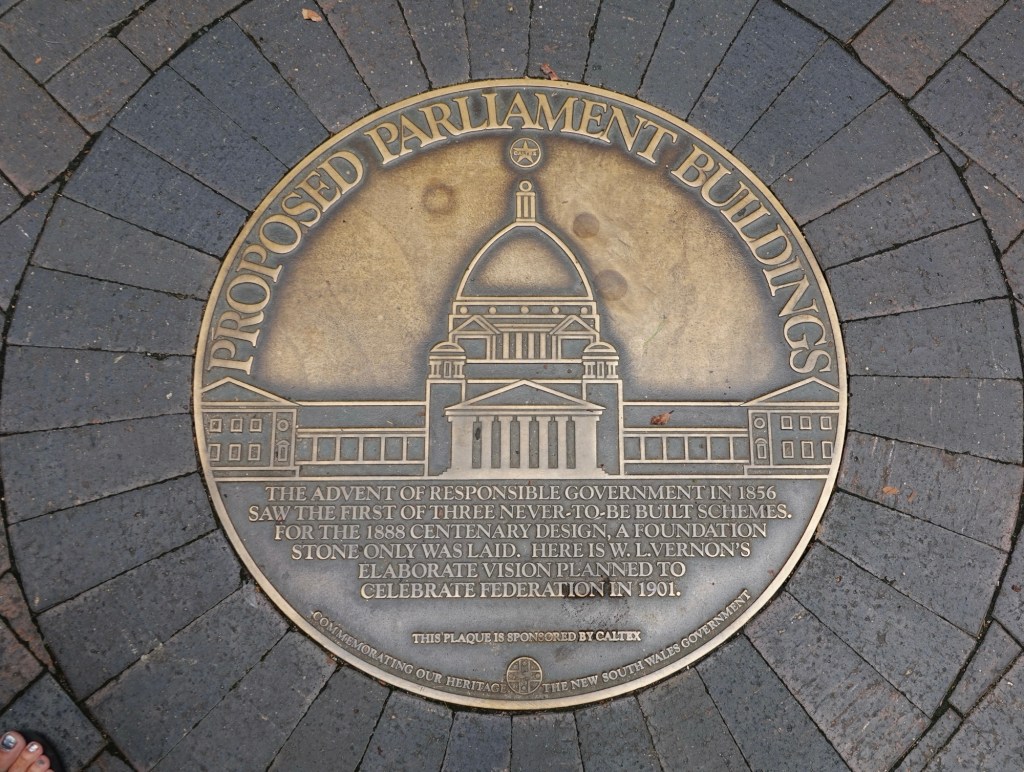
Given how gorgeous and imposing this building is, the information on the plaque below was surprising.
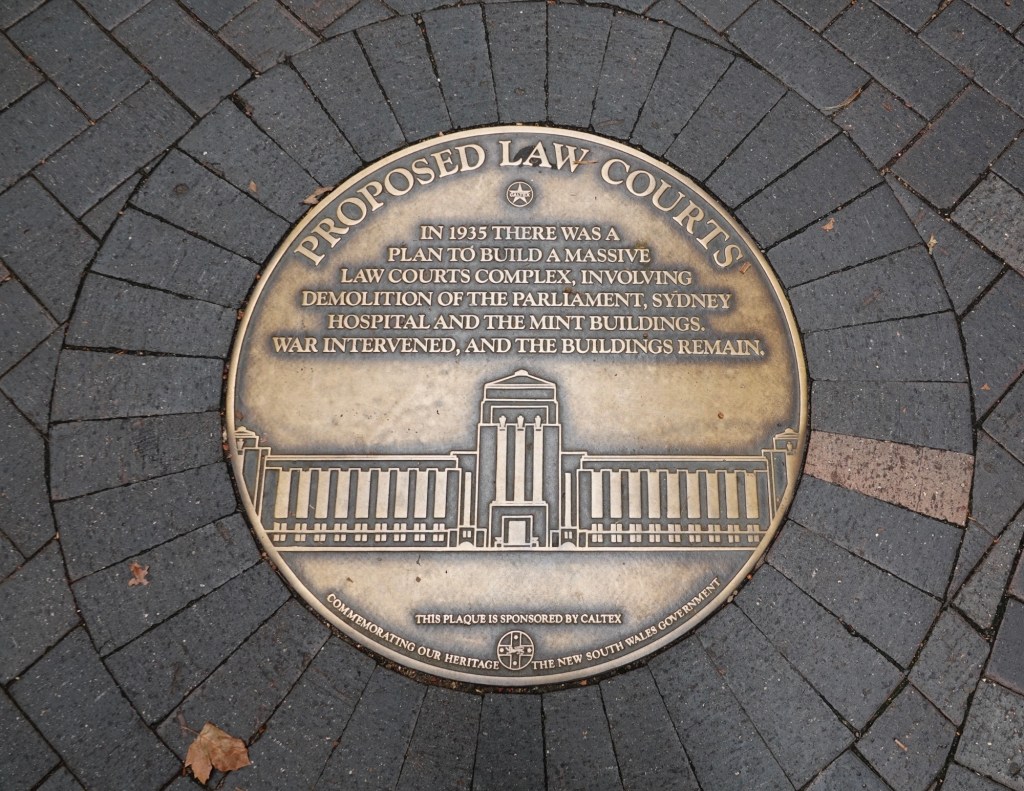
The city did eventually get a huge modern law court complex, but it was built further down the street.
But back to the mid 19th century.
How the north wing of the “Rum Hospital” and the Chief Surgeon’s residence became New South Wales’ parliament is quite an odd story, which we heard during a 90 minute public tour.
The original penal colony had a Governor, who ruled on behalf of – and for the benefit of – the English monarch. As non-convict settlers began arriving in Sydney and its environs, a more “British” style of government was expected, to which end the Governor took on four (wealthy, white, male) advisors as his “council”, although his responsibility to England first remained unchanged, and he could still choose whether or not to accept their counsel; they were not elected, and he appointed them himself.
The five men met, not in the Governor’s home, but in the parlour of the Principal Surgeon, who lived in quarters that were part of the hospital.
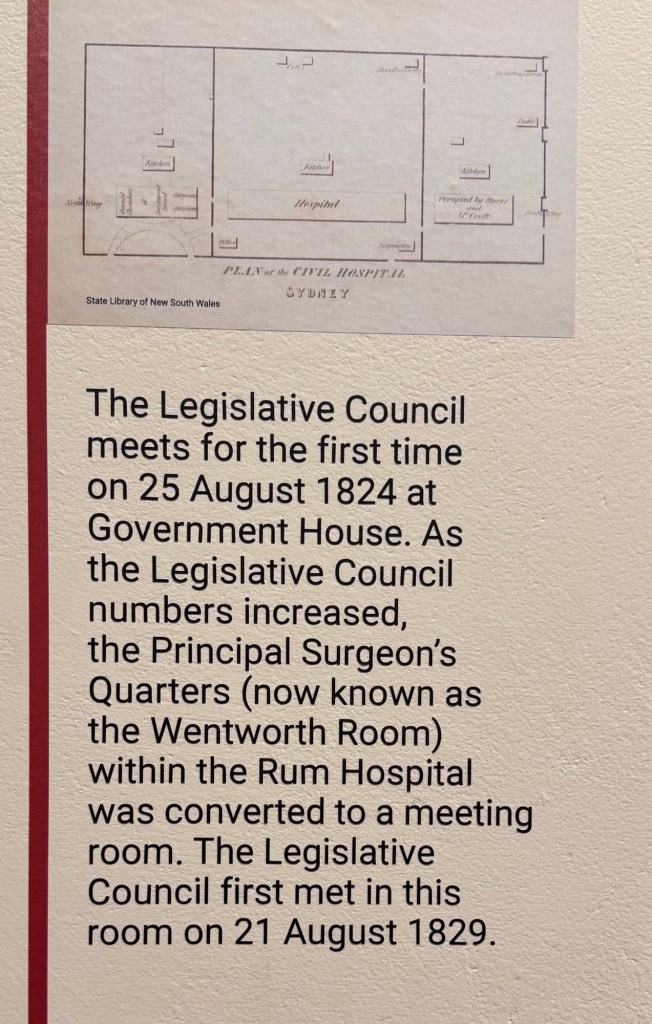
The joke that parliamentary guides tell is that the council moved into the surgeon’s house temporarily … and never left.
In 1843, with convict transportation to Australia finally ended, and both free colonists and freed convicts expecting some kind of representation, the very first Legislative Council elections were held, allowing 24 of what had now grown to 36 council members to be elected by landowners and wealthy renters. The Principal Surgeon’s quarters had been outgrown.
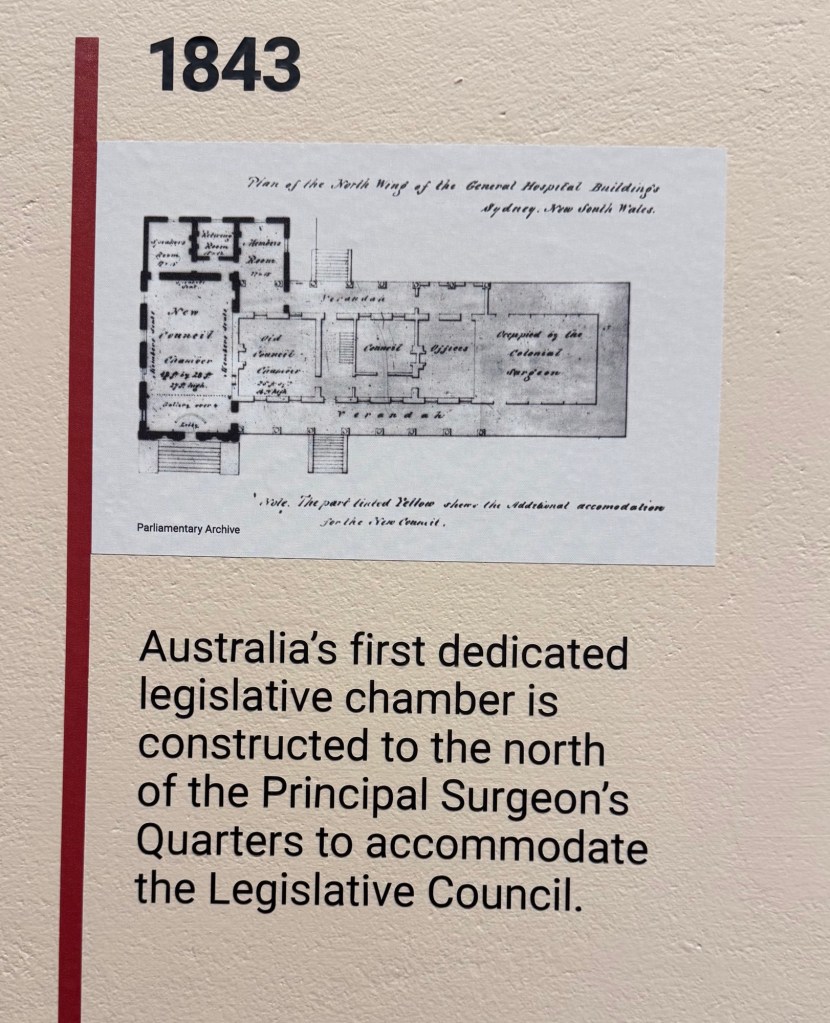
In 1856, New South Wales was granted “responsible government”, which meant that its priorities changed from monarchy first, colony second to the exact opposite: government was responsible to the colonists first, and the monarchy second.
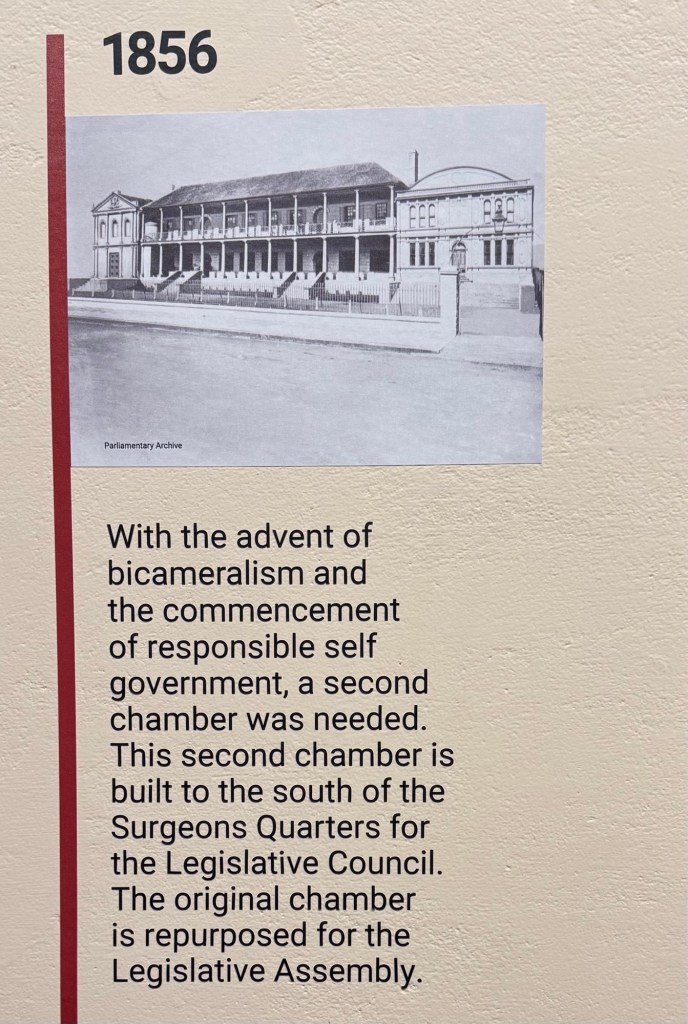
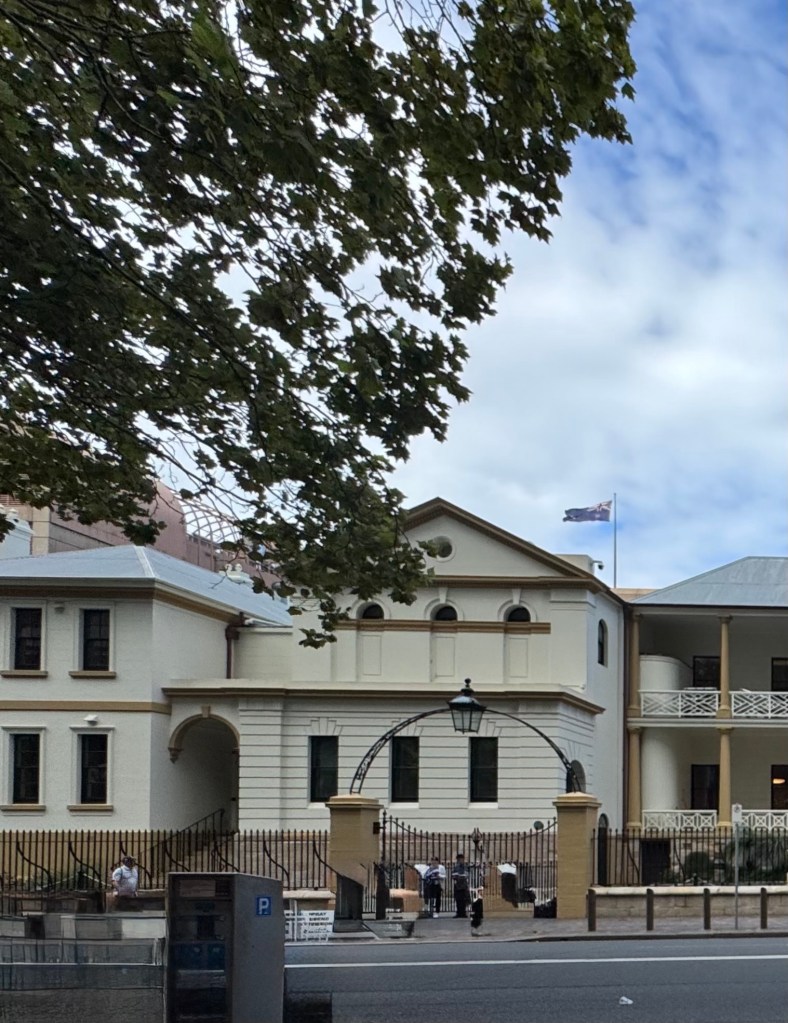
The building depicted on the poster above looks almost unchanged today. It is incredibly plain compared to the stunning Victoria State Parliament in Melbourne. It is also pretty unimpressive compared to the State Library, new Sydney Hospital, NSW Art Gallery, or Australian Museum – all of which are within a short stroll.
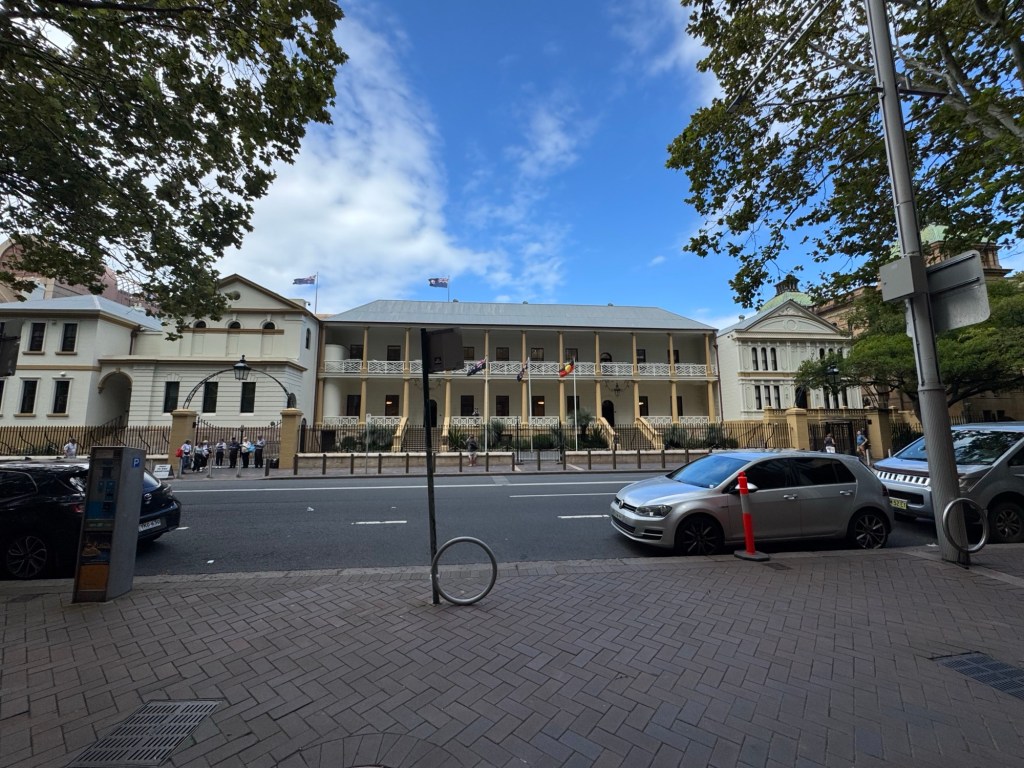
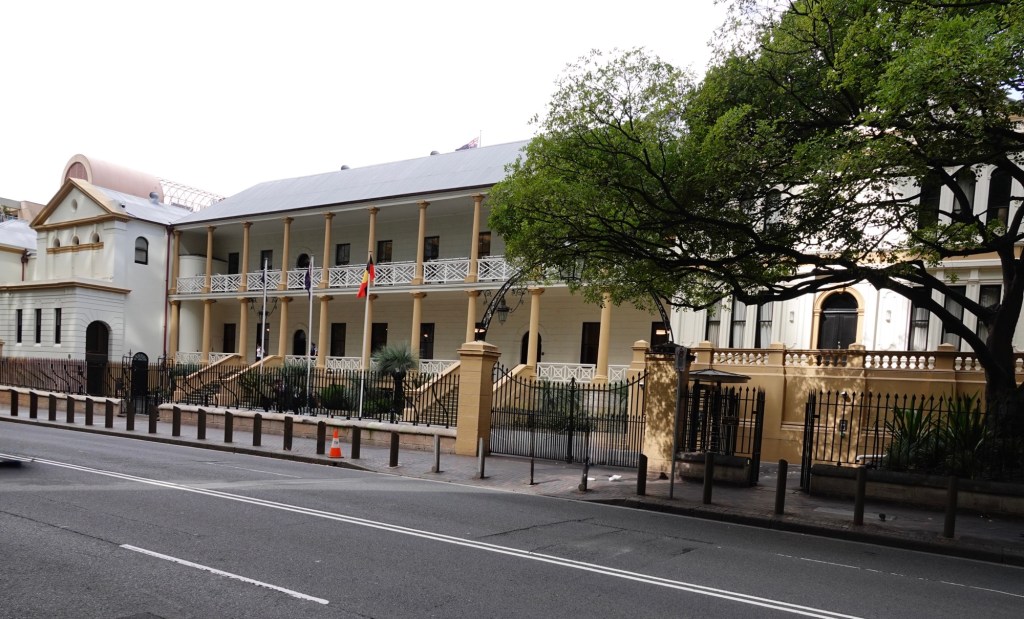
We got a look inside the walls of the chamber – it was what our guide described as “the original IKEA flatpack”. The framework is an iron building, shipped from Glasgow. A sign in the Mint explained it: “Most significant are the prefabricated cast-iron columns and girders that support the structure over two levels. The form and decoration of these elements are similar to those of the Crystal Palace building that housed the Great Exhibition of 1851 in London, and they represent a rare and remarkable example of mid-Victorian-era technology.”
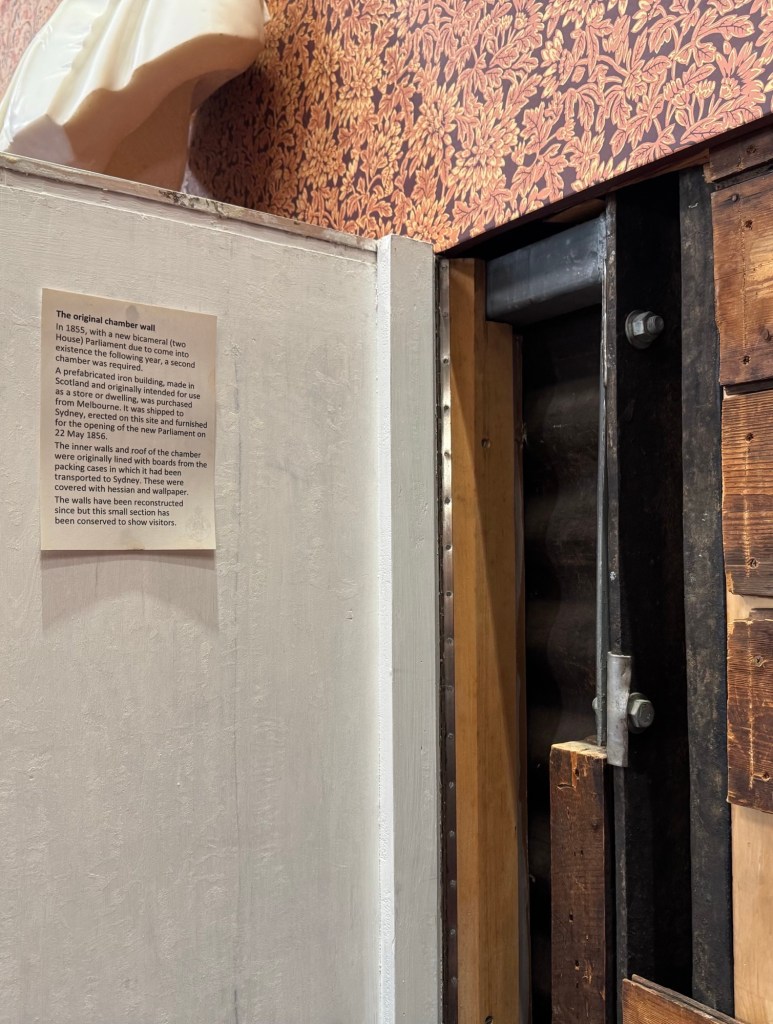
The iron prefab building was ordered by someone in Victoria State to use in Melbourne, but the advent of the gold rush in Victoria meant that Melbourne had both the money and craftsmen to build fancier homes, retail shops, and a magnificent parliament building (Episode 814), so Sydney was able to buy the iron building cheaply.
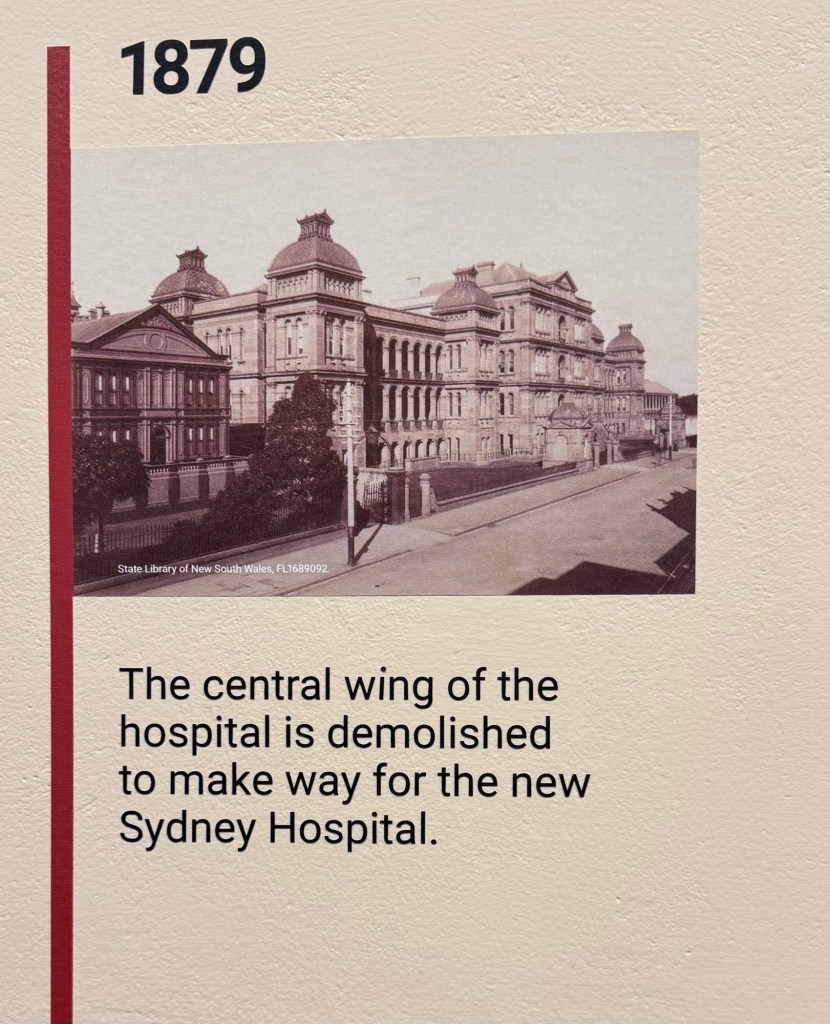
Compared to how grand the adjacent 1879 hospital is, the 1891 parliamentary addition fails to impress.
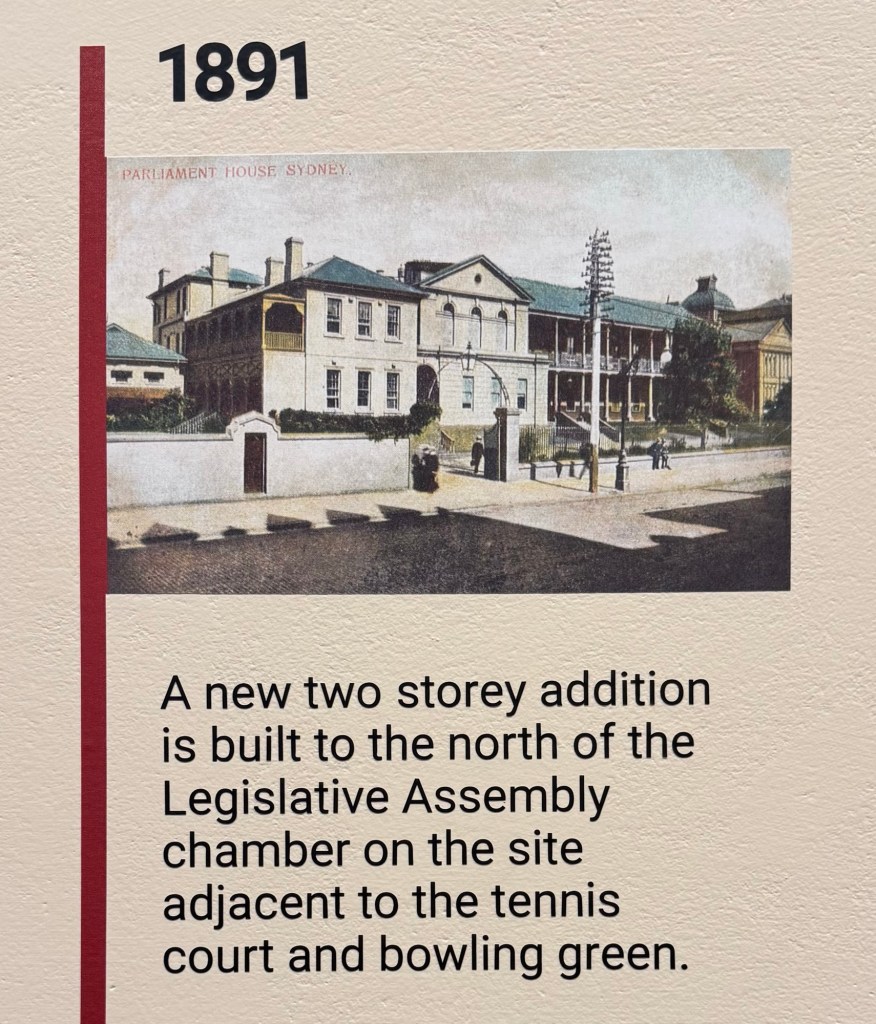
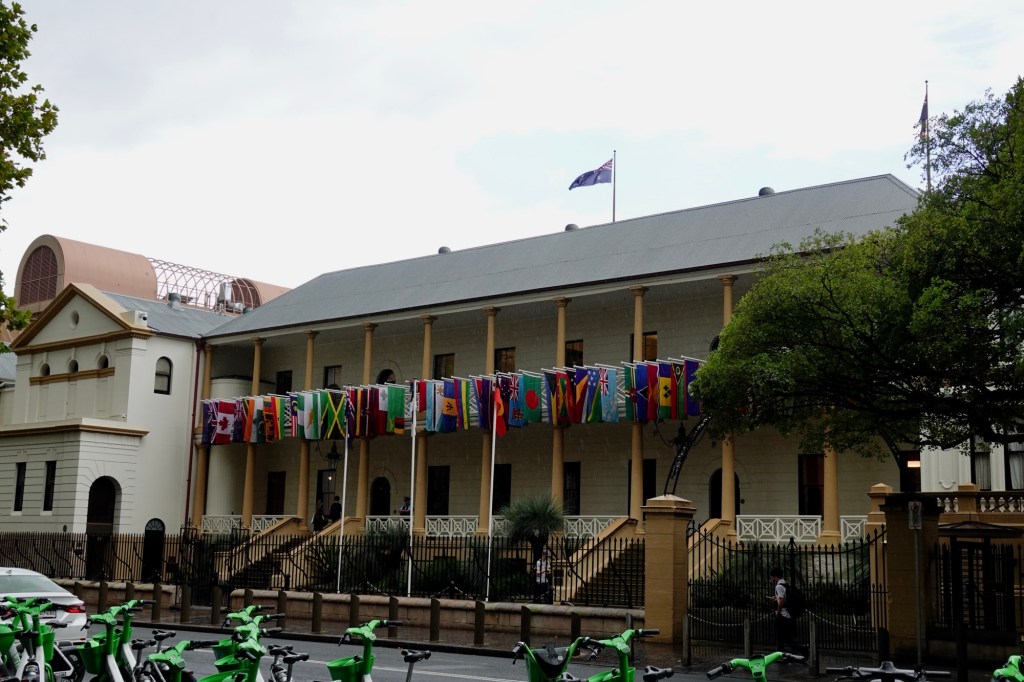
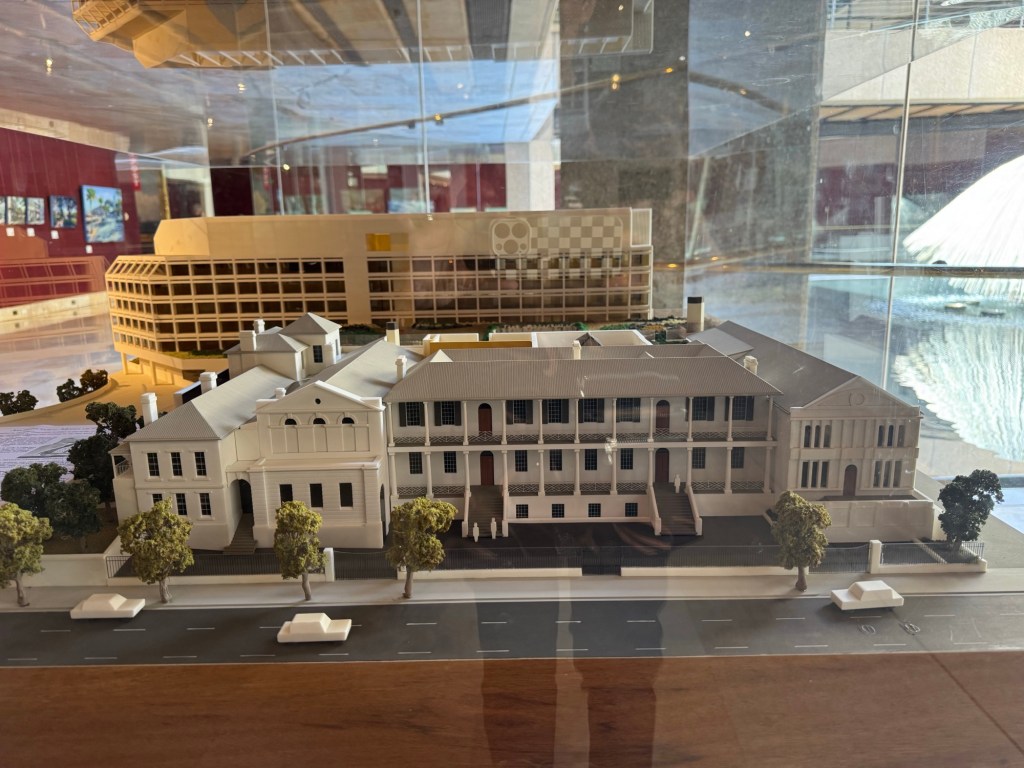
Parliament House today is an amalgam of the “Rum Hospital” and 1970s almost brutalist concrete.
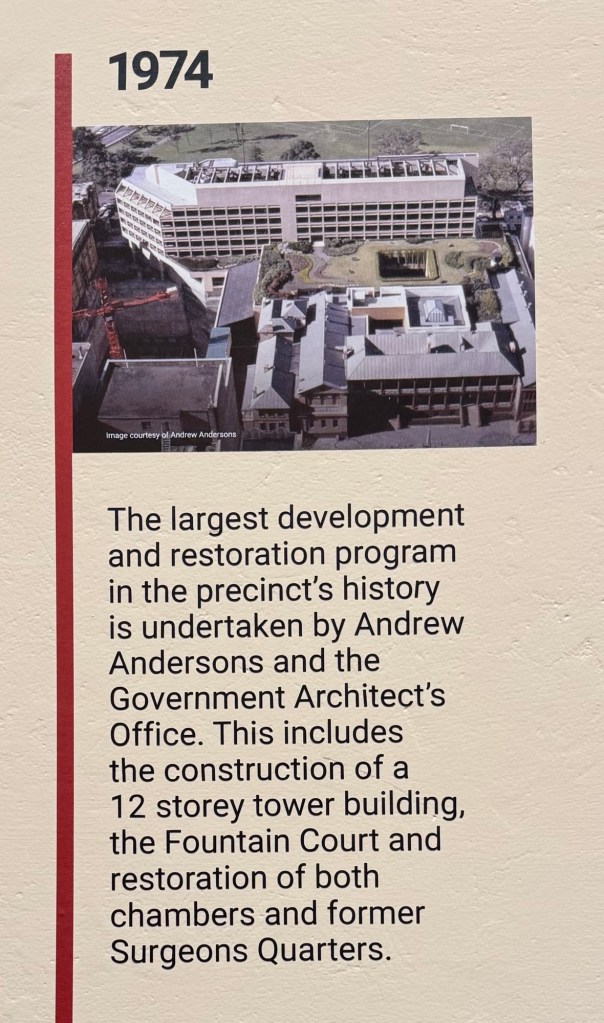
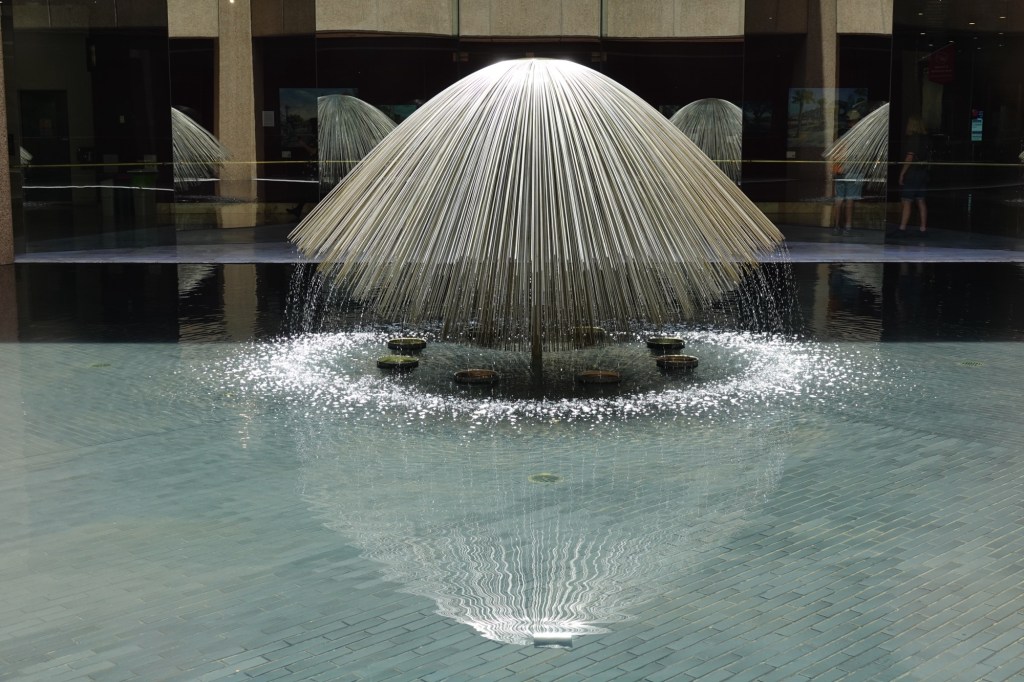
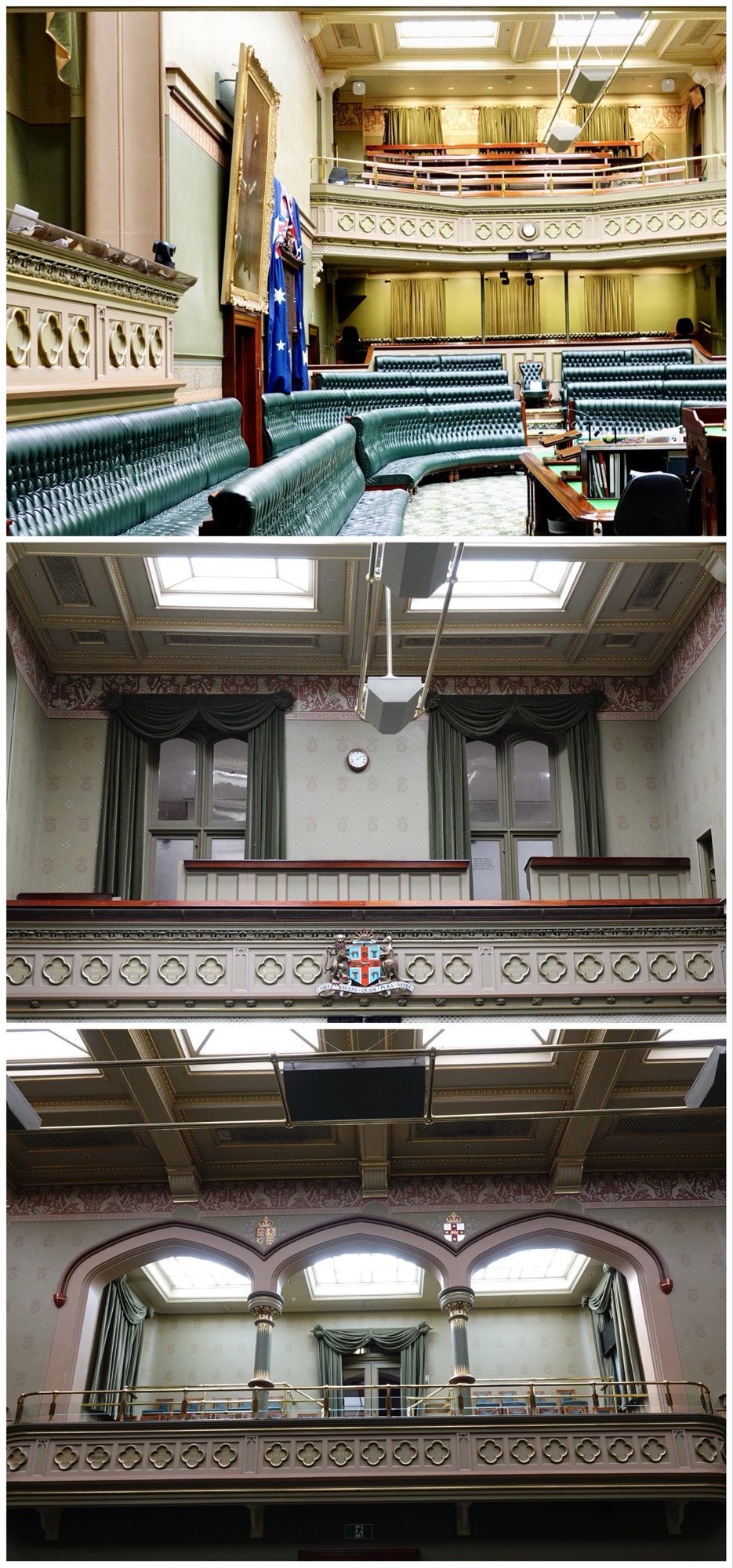
Fortunately, inside Parliament House the two legislative chambers and the 1906 Jubilee Library have been maintained with their 1906 features.
The green-hued lower house, the Legislative Assembly Chamber, seats 93 members elected on a preferential ballot, with each responsible for a single electorate (what we would call a constituency or riding).
The Speaker sits in the central chair.
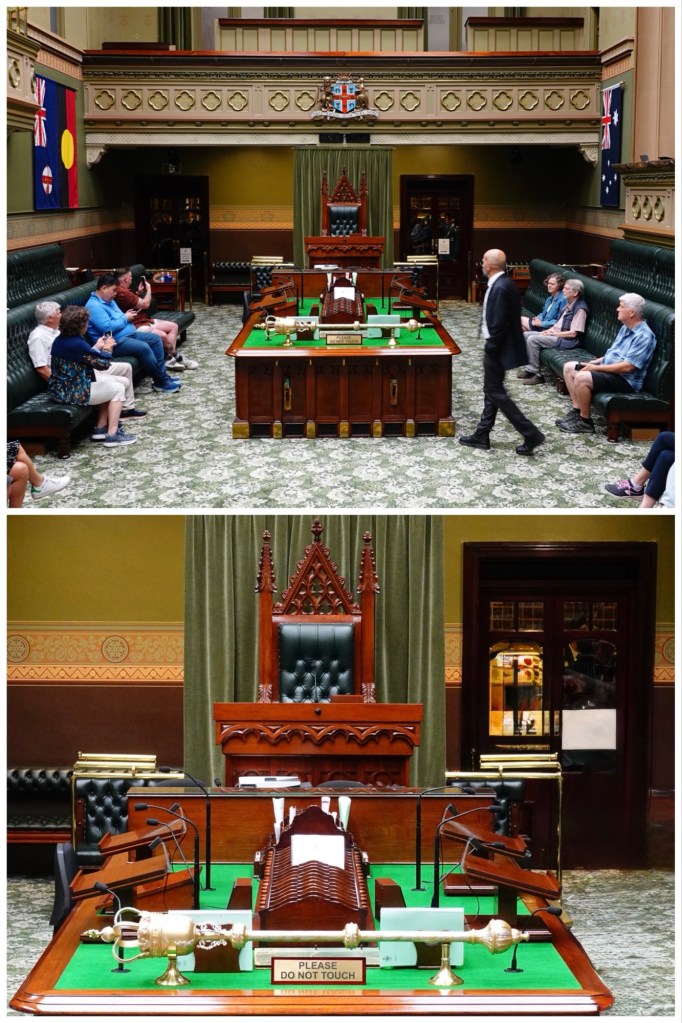
The red-hued upper house, here called the Legislative Council Chamber, has 42 members, elected via proportional representation, serving for 8 years (21 seats are up for election every 4 years) with state-wide responsibilities vs local riding responsibilities.
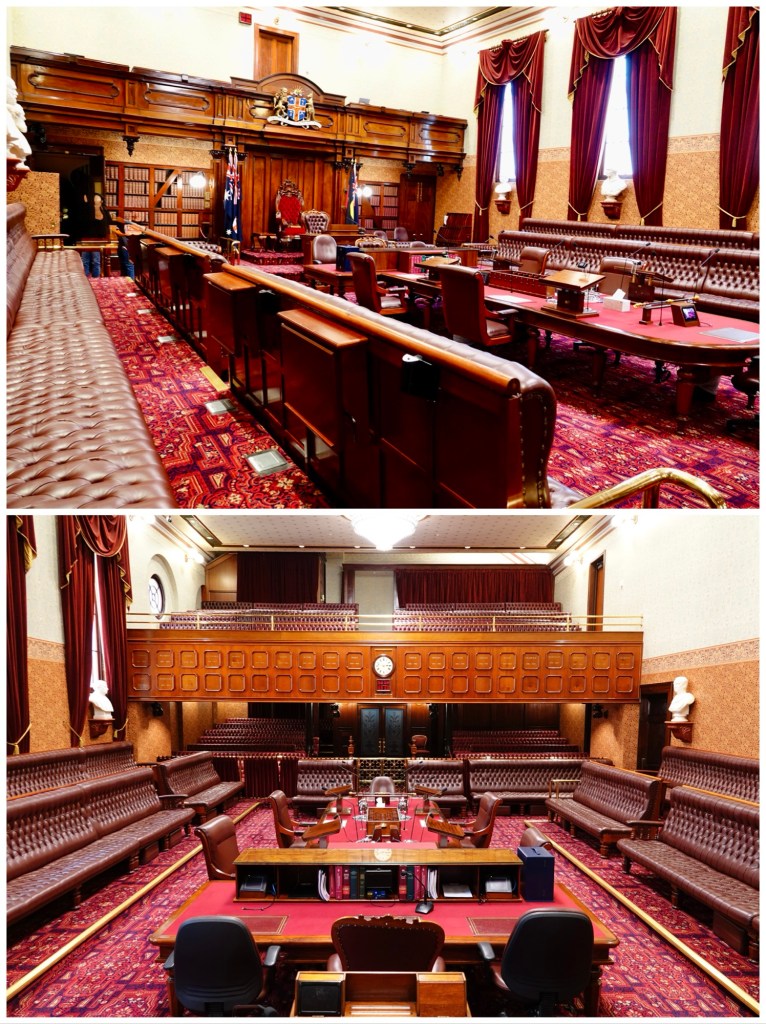
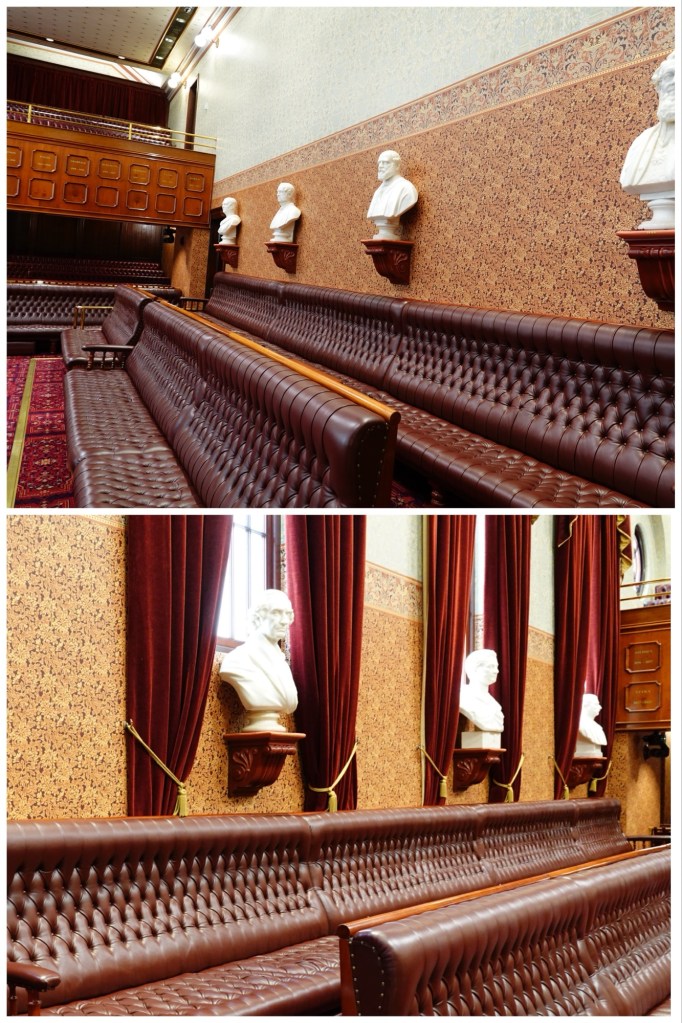
The Council President sits in the central chair (and I was allowed to).
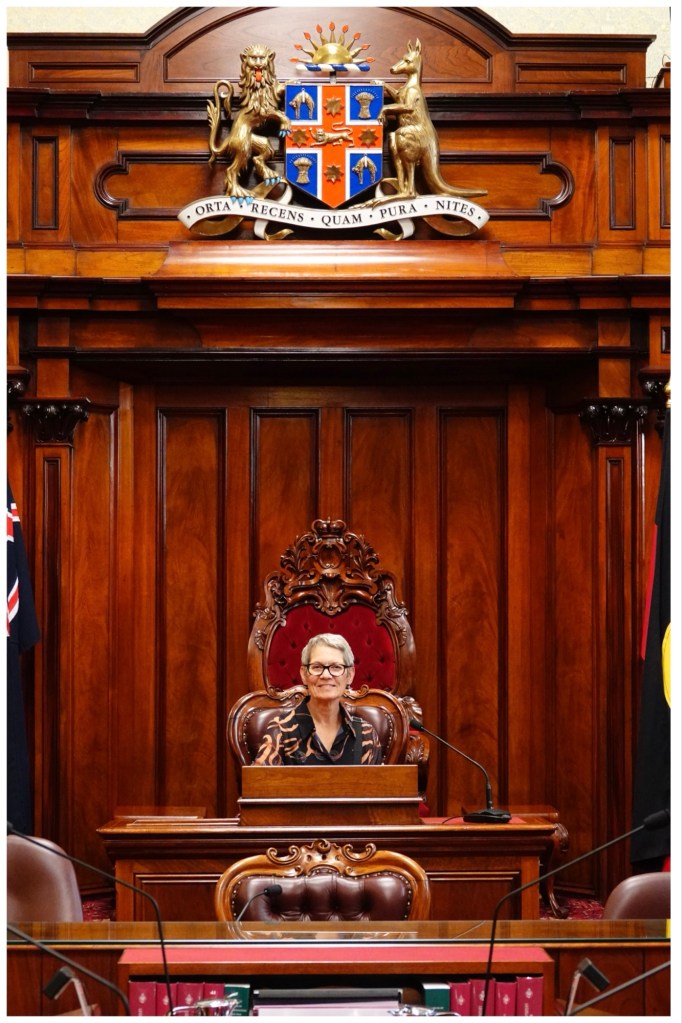
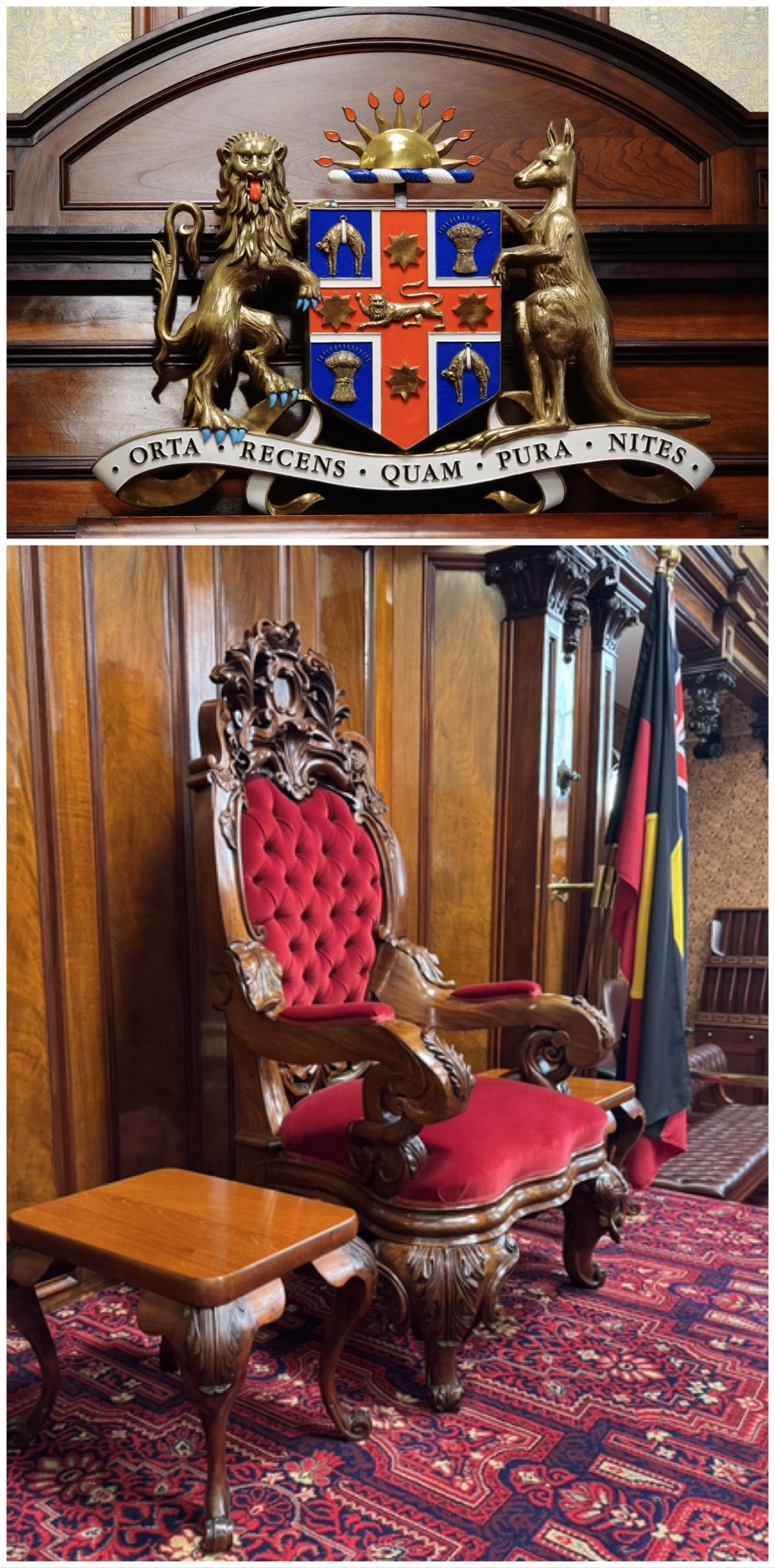
The vice-regal throne is reserved for the monarch or their representative the governor (and not me… sigh).
The Jubilee Library wasn’t part of our official tour, but was open to visit – just without handling the old books.
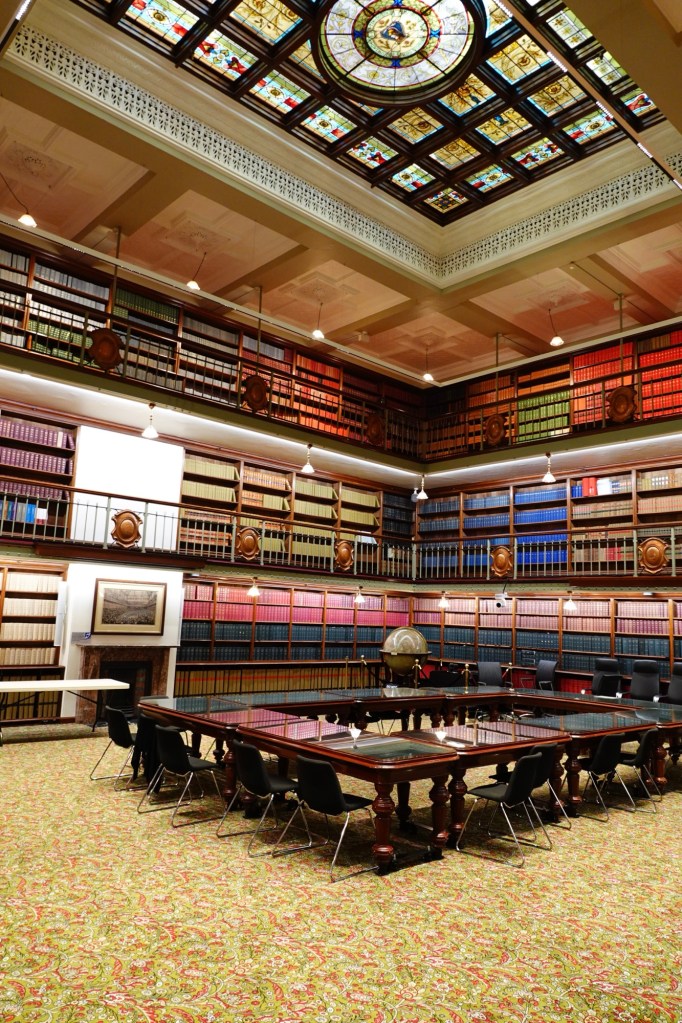
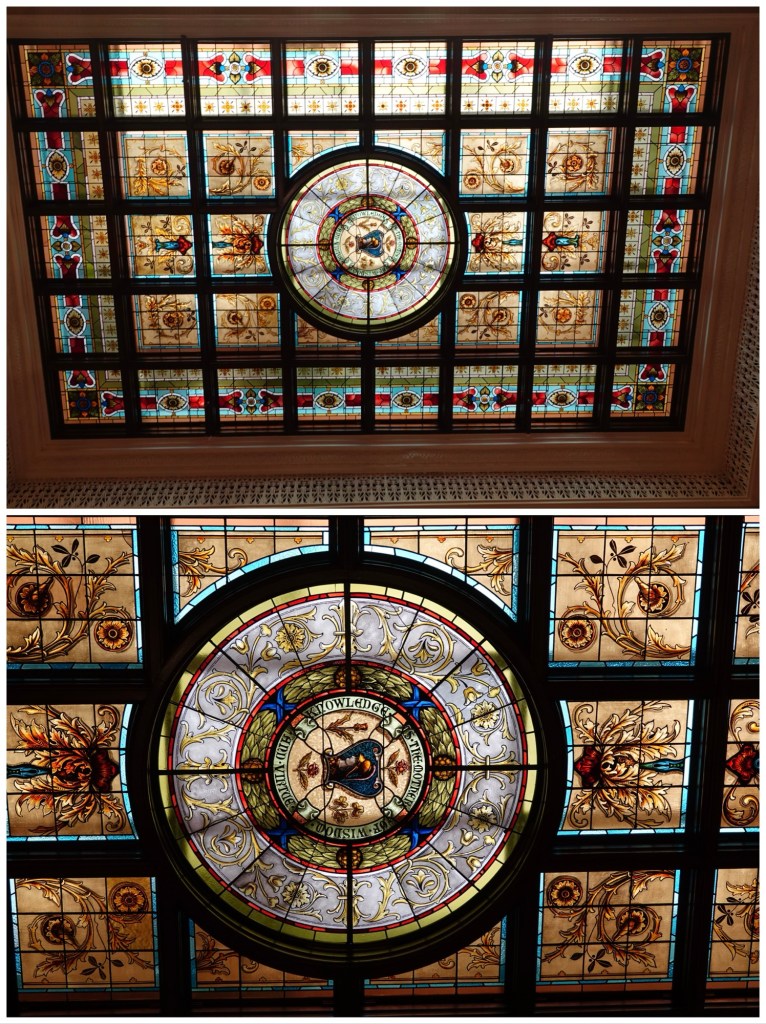
The latest conservation and restoration were completed in 2023.
The entire complex cannot be photographed without a drone, but a model in the foyer shows it.
Our guide spent a lot of time telling us about NSW political processes, most of which – with the exception of the way in which members are elected – felt very familiar.
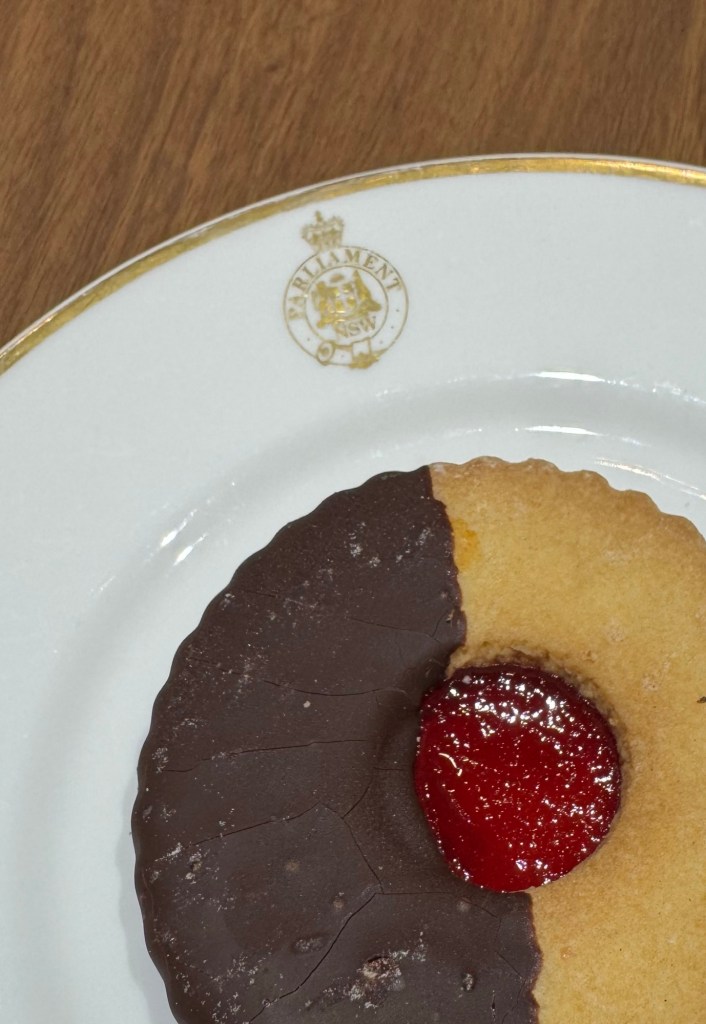
As has become our afternoon habit, we stopped for coffee, this time in the parliamentary café.
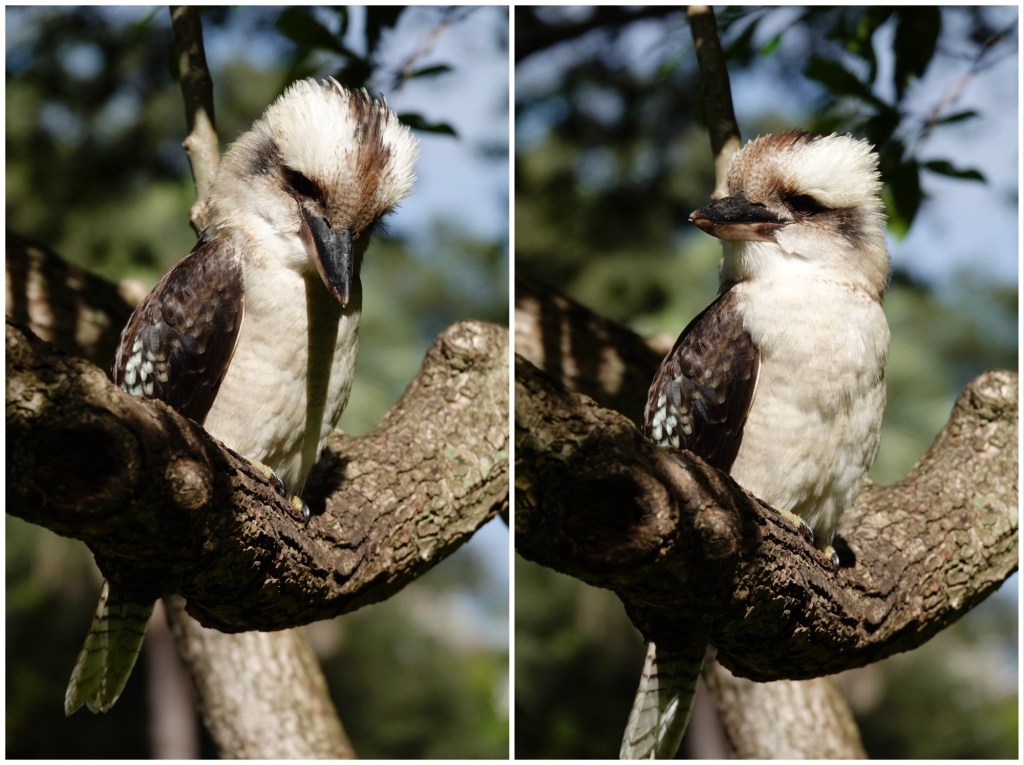
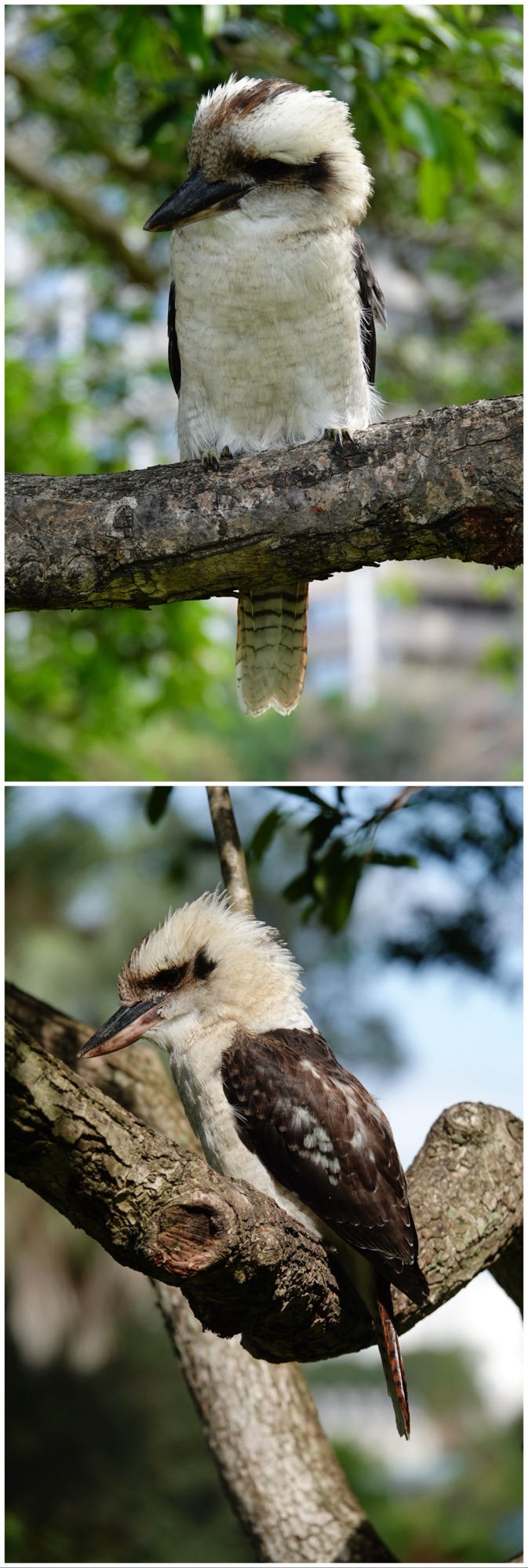
The route we took back to our hotel detoured through another section of the Domain and Botanic Garden, where a very bold Laughing Kookaburra posed for Ted.
We have 6 more days here… and continue to find so many things to see and stories to hear!
 Rose and Ted’s Excellent Adventure
I’m loving these blogs! I’ve been to most of them, but that was many years ago (10+). I’m not even sure what pics I have anymore. I think over winter, I will re-check these locations out and play tourist! Heidi
LikeLiked by 1 person
It’s great playing tourist in your own home town!!
LikeLike