Today we took a bit of break and the chance to connect with a Sydneysider (yup, that’s what folks from Sydney are called) who until now I only knew through our blog.
We should have met last year when our world cruise stopped in Sydney, but I got my dates confused, lost the critical contact information, and by the time we reconnected I had double-booked our day.
I was thrilled that Heidi didn’t hold that against me and agreed to meet us for brunch at City Extra on Circular Quay.
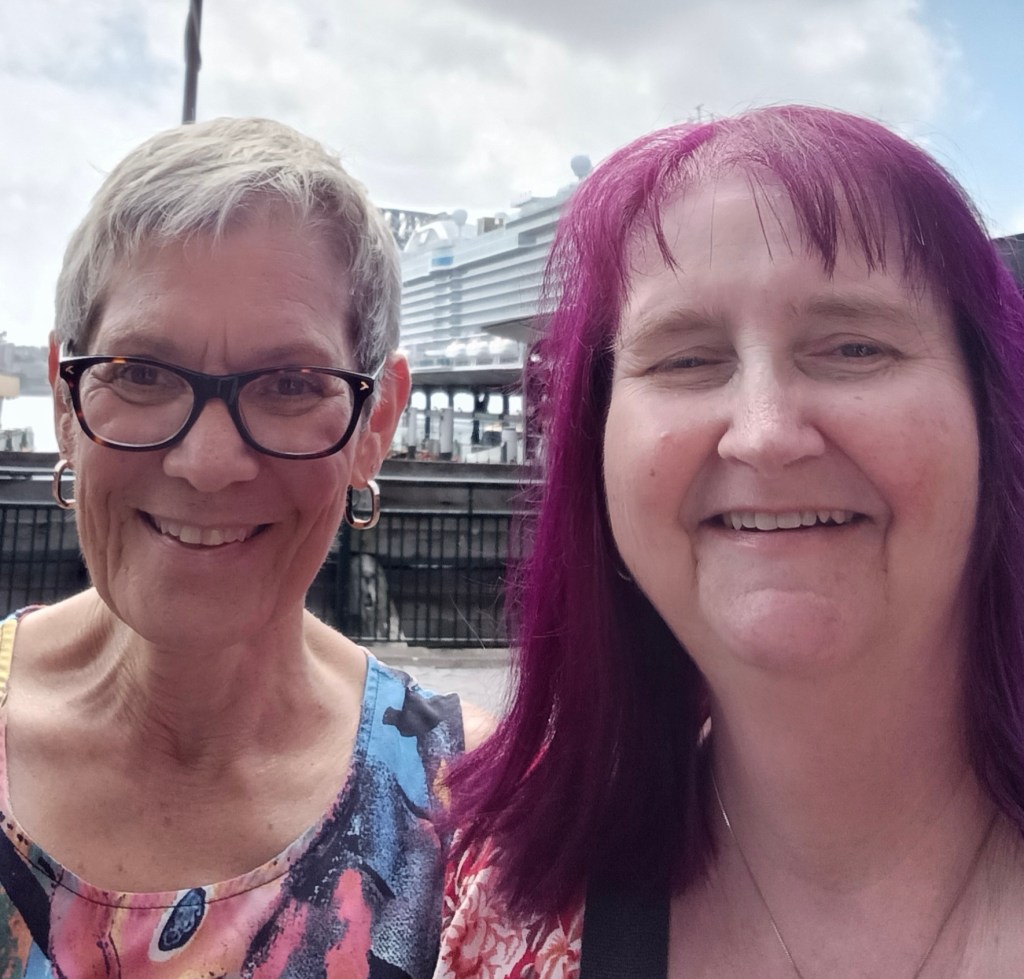
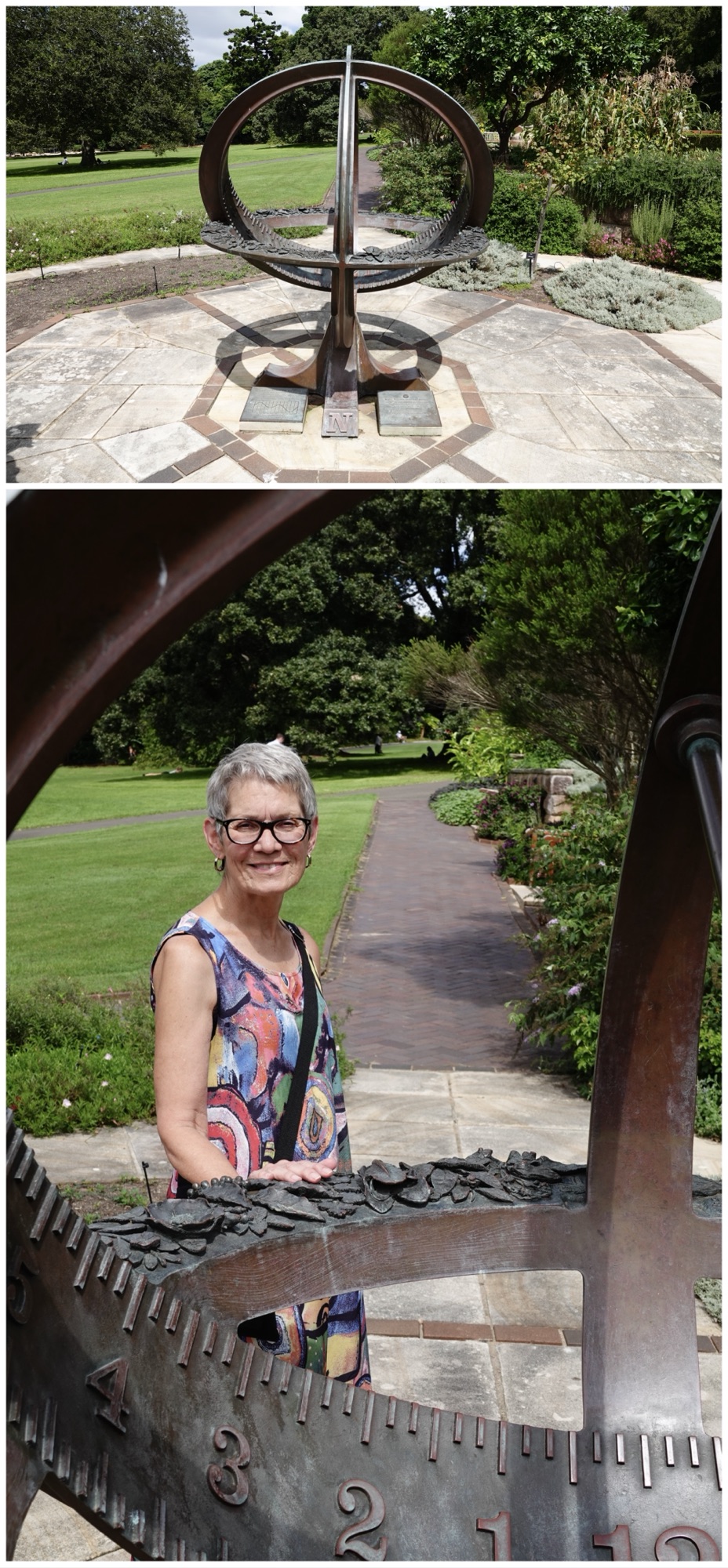
It also meant that after lunch, and a short stroll through the Botanic Gardens to Mrs. Macquarie’s Chair, I could take the afternoon to get caught up on recording some more of the things we’ve packed into the last couple of days.
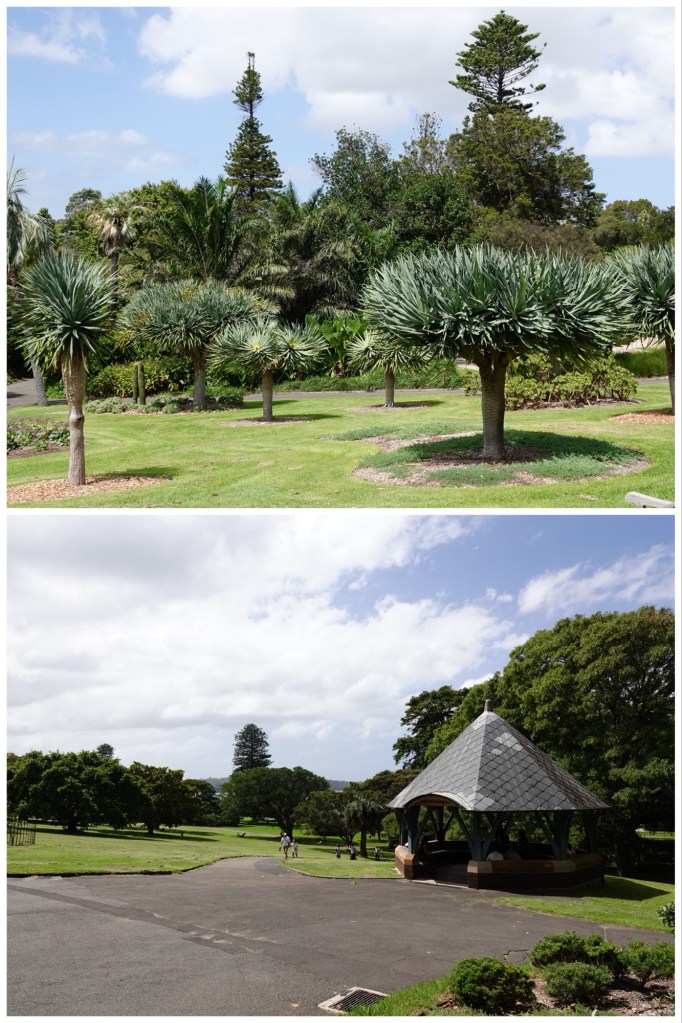
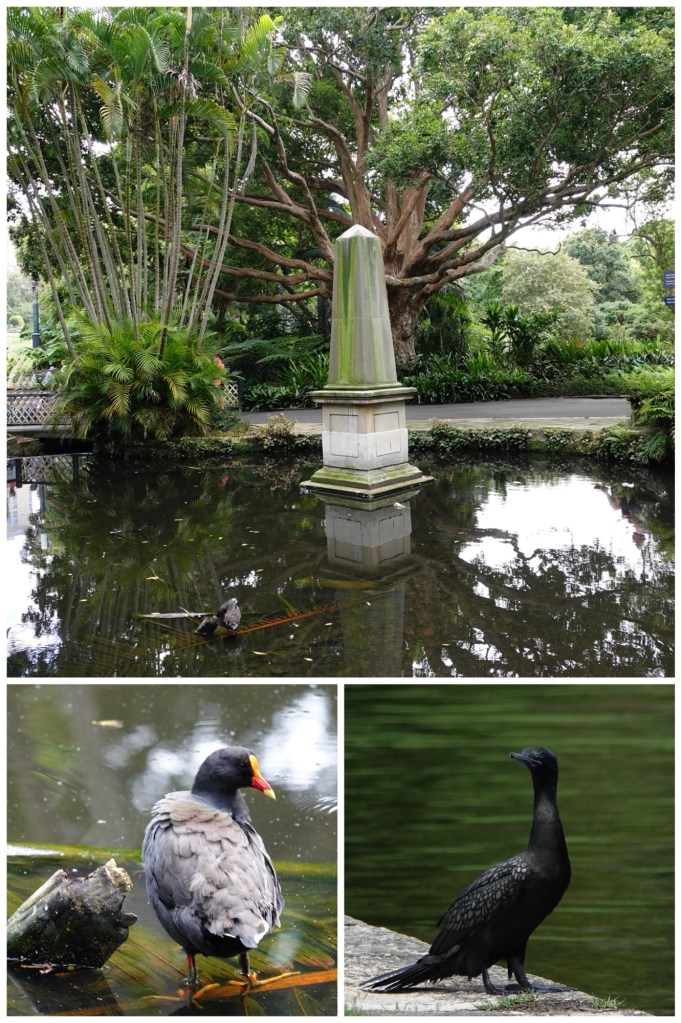
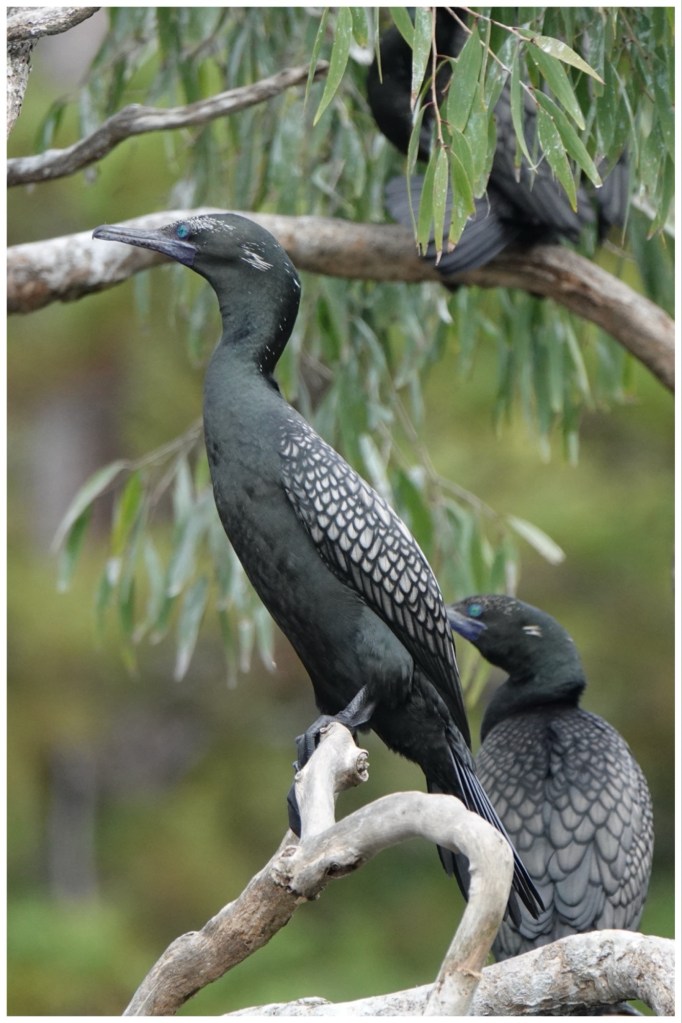
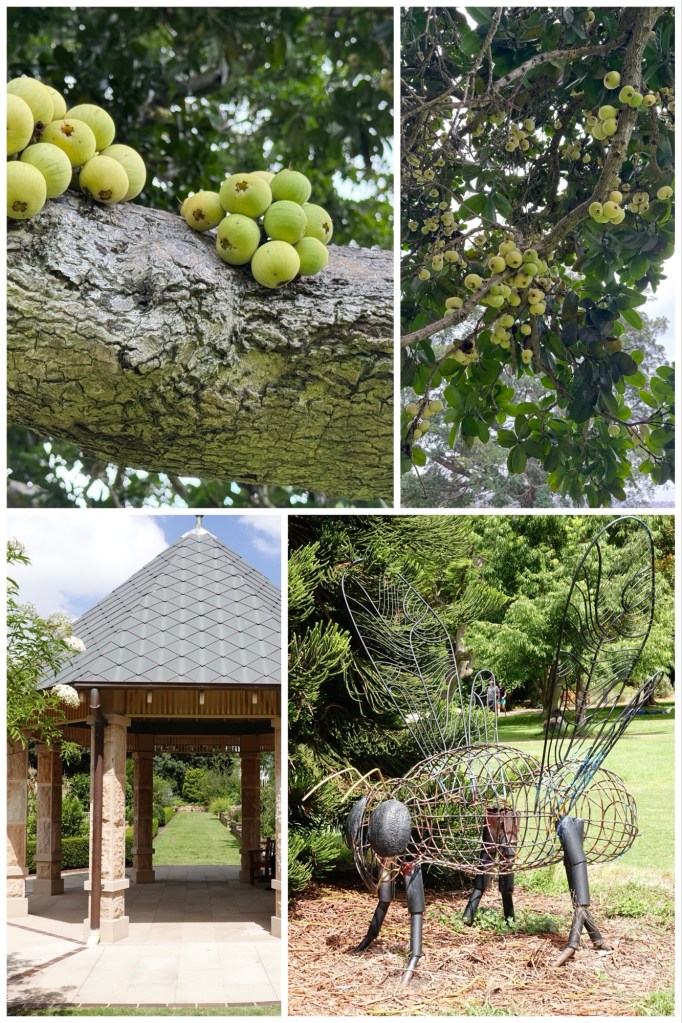
Bottom: one of many gazebos in the gardens, and a quirky wire bee sculpture.
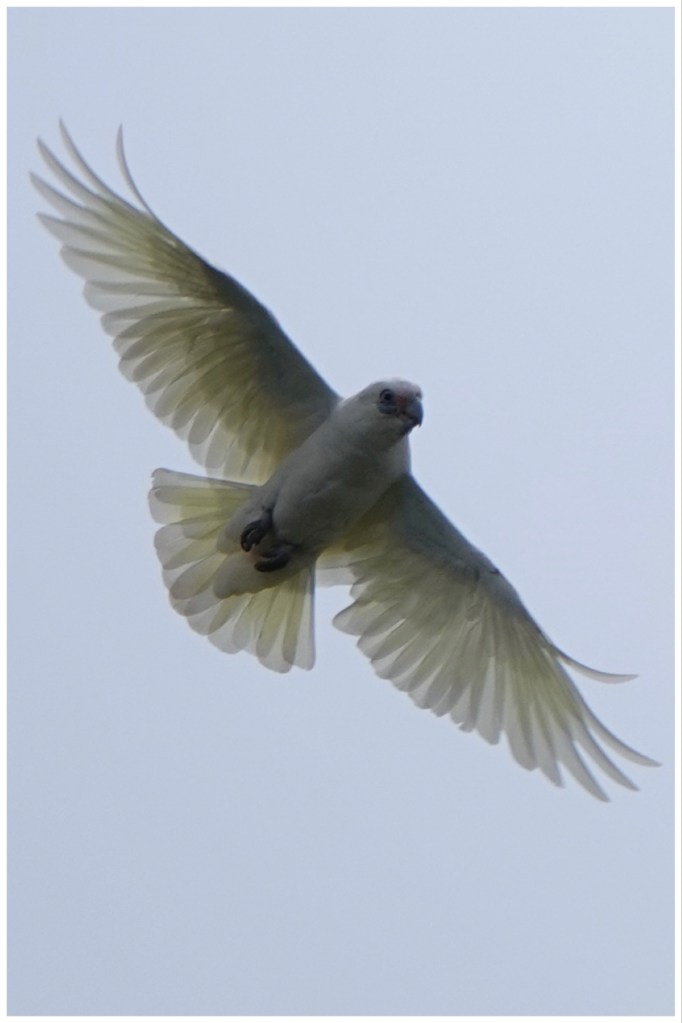
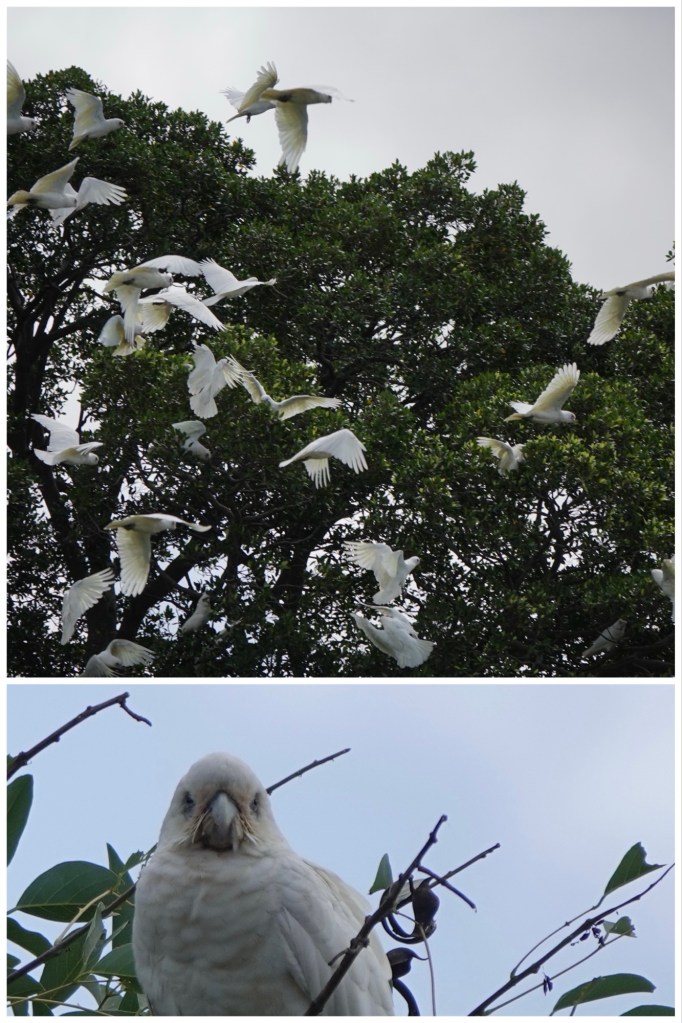
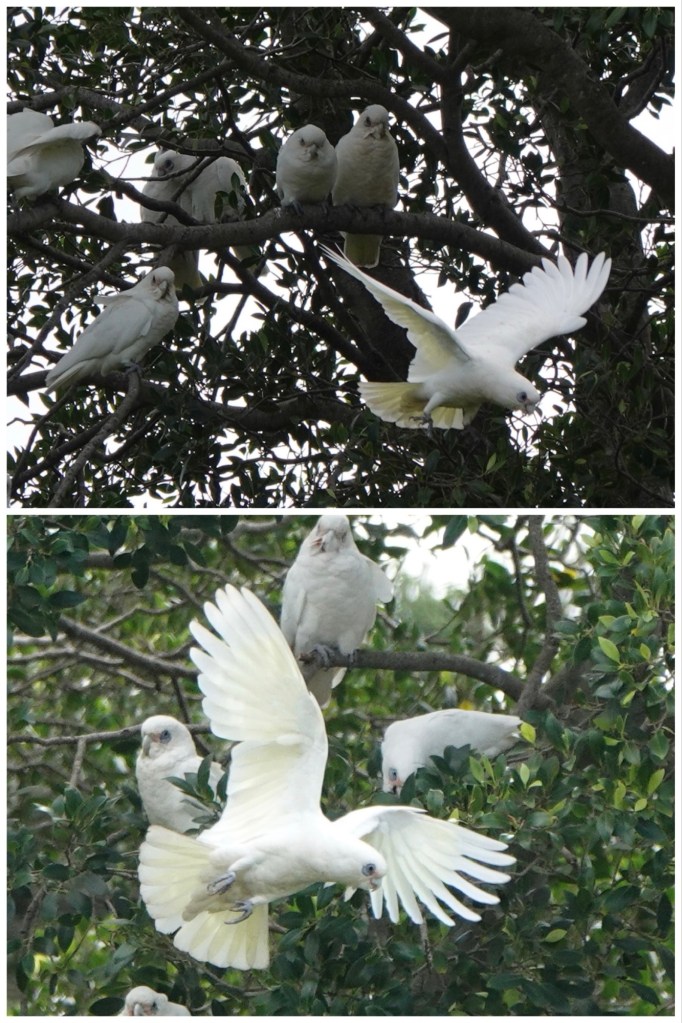
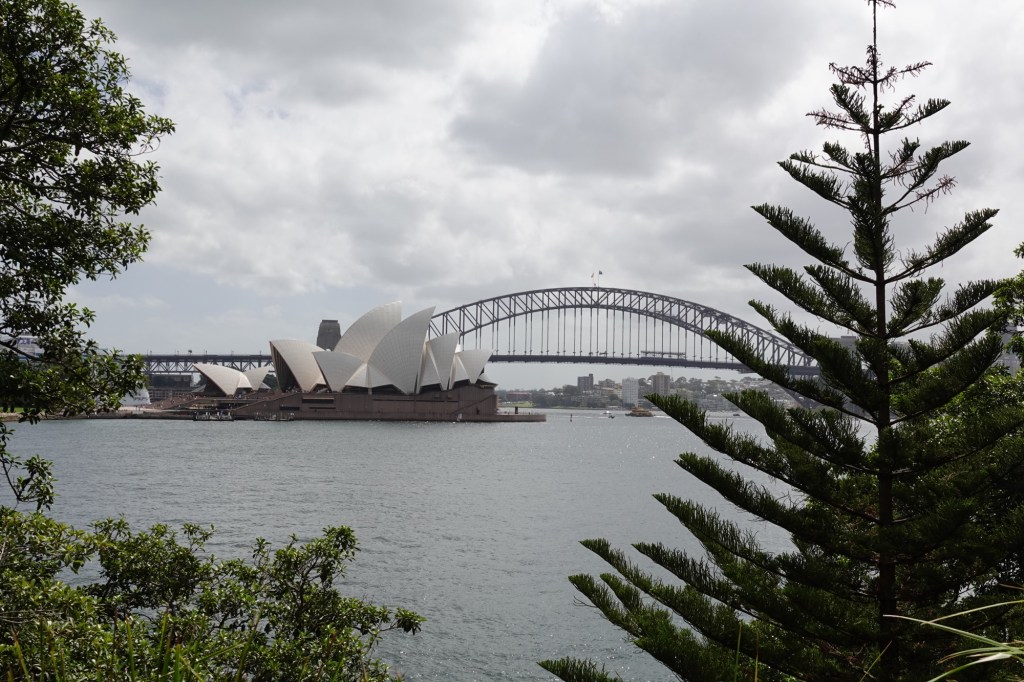
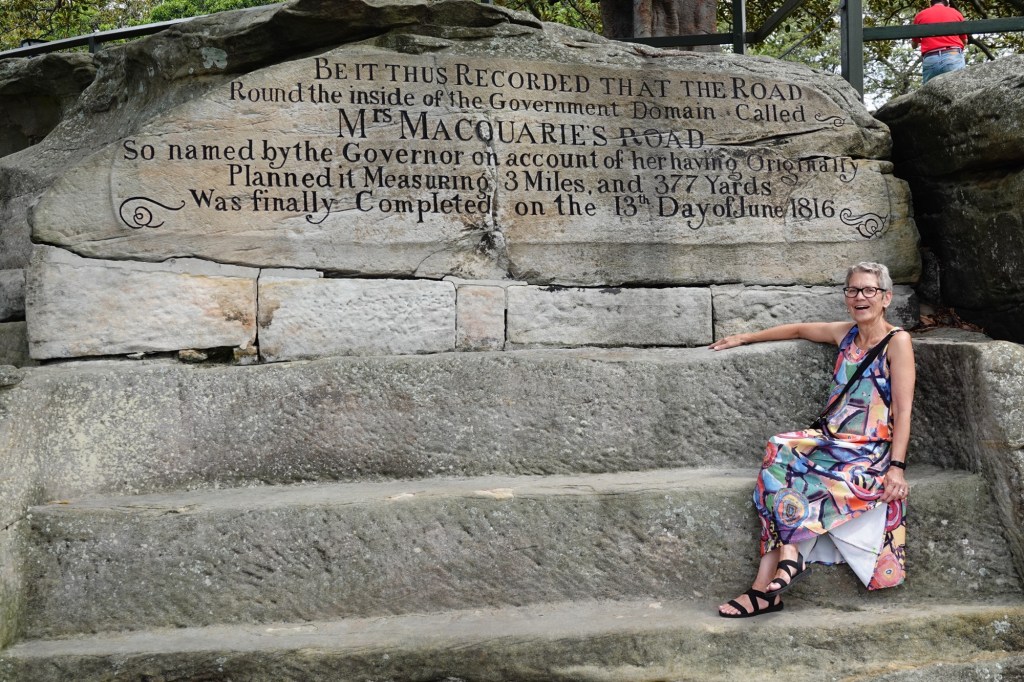
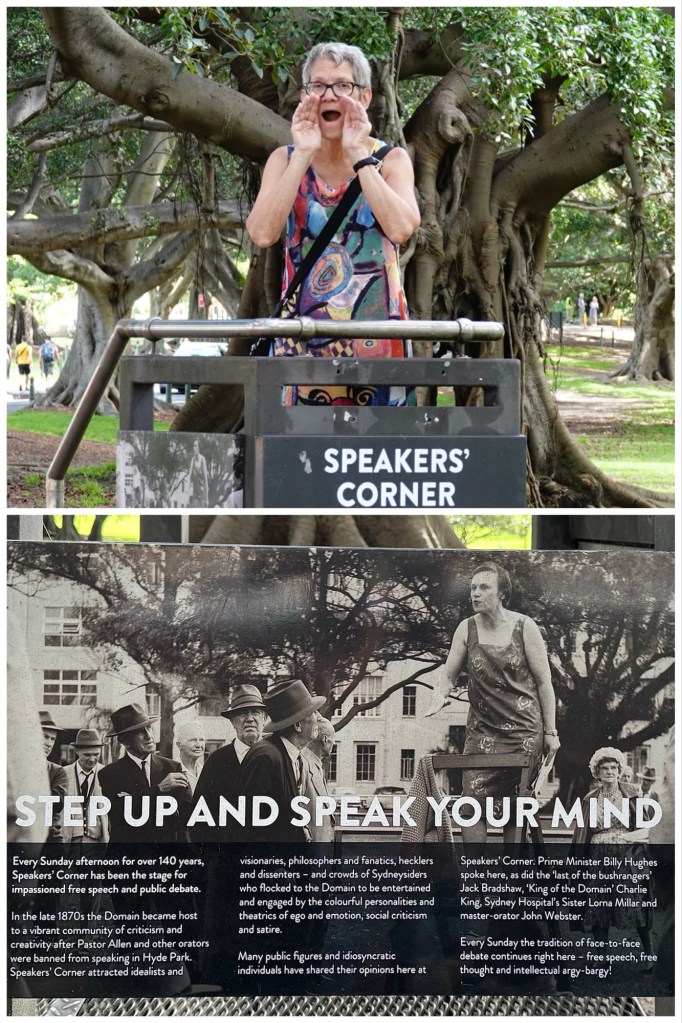
We were back at our hotel before 3:00 p.m,
First up on this afternoon’s writing priorities: delving into Sydney’s penal colony past.
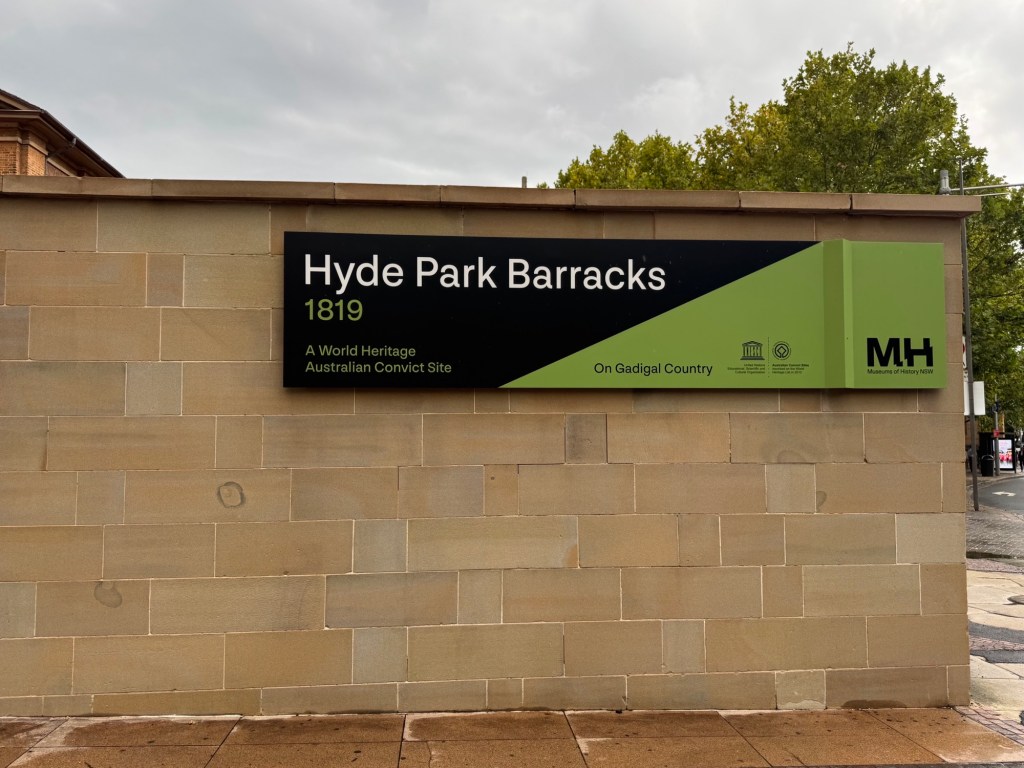
We walked into the Hyde Park Barracks earlier in the week, foregoing the proffered free audio guide, thinking we’d make it a quick visit by just reading the interpretive signs.
There weren’t any.
As a result, the building meant nothing to us, but we were too tired after a long day of exploration to start over.
Yesterday, after spending most of the day in Hyde Park, Ted was too tired to go back, and honestly maybe not that interested, so I returned on my own.
At the reception desk I was issued with noise-cancelling stereo headphones and an iPod that responds to sensors in each area of the barracks to narrate the museum’s stories. If you stand still in a space or beside a display, it plays; if you keep walking it assumes you’re not interested in that particular space and skips the narration.
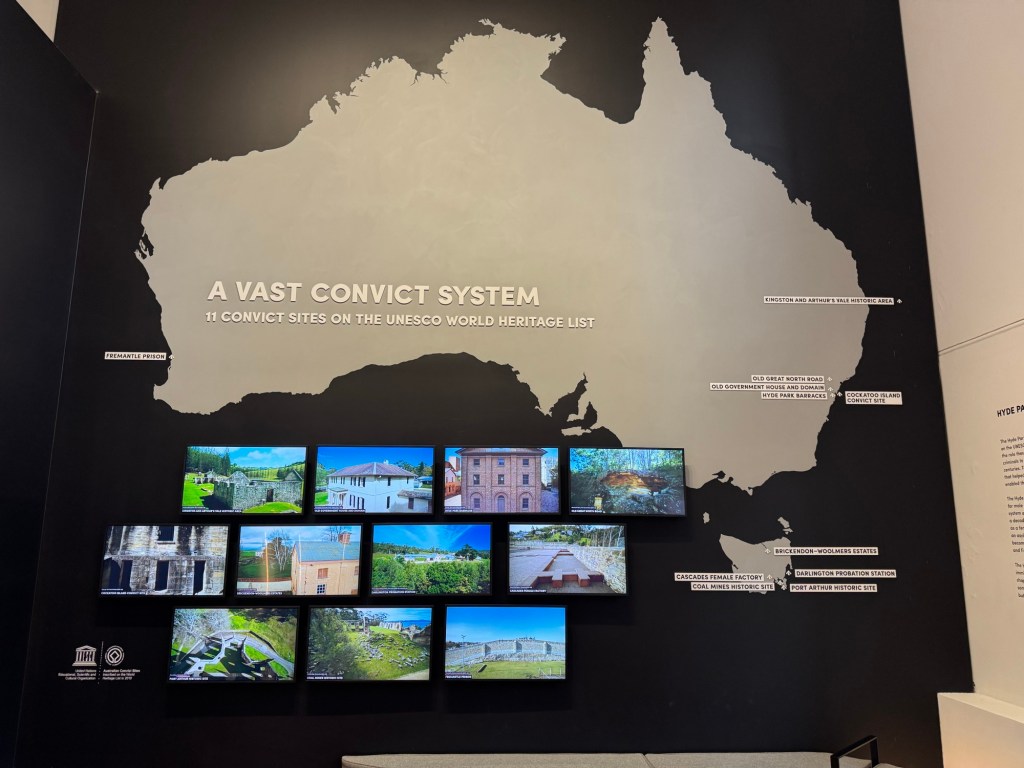
The entry to the experience is through a room with the names, ages, crimes, and sentences of real people who ended up in New South Wales as their punishment.
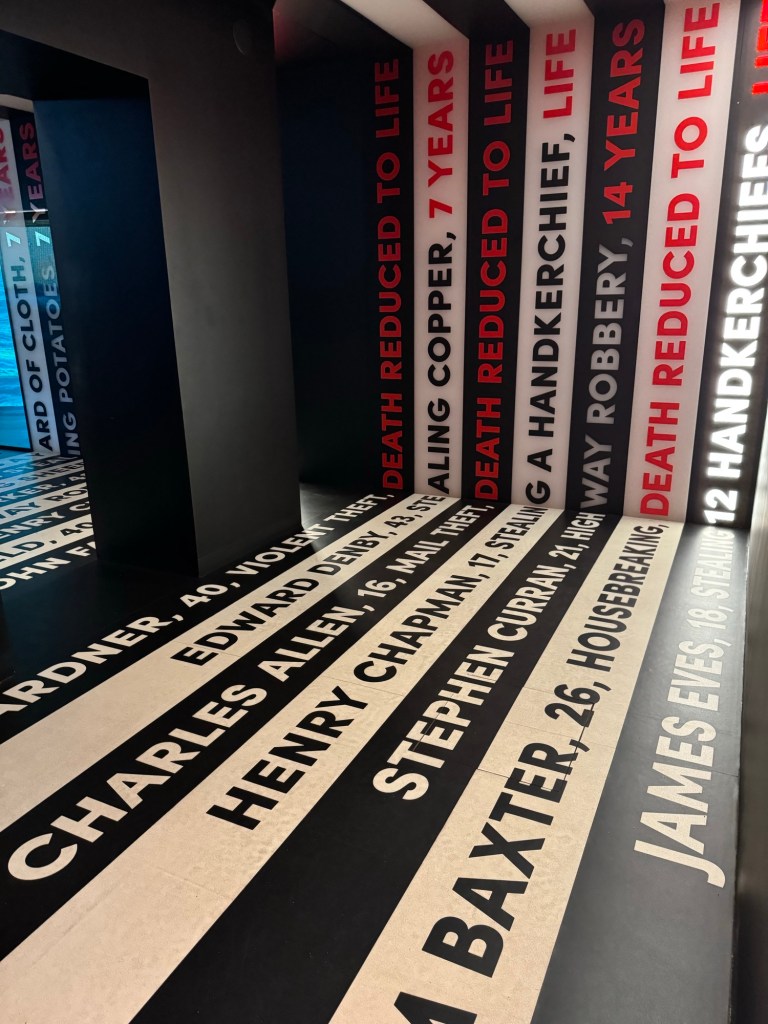
All were tried and convicted in British courts. Some were as young as an 11 year old transported for stealing a coral necklace. Others were relatively hardened criminals.
What made the experience so engaging was the use of real stories: actual letters read by voices true to the backgrounds of the people being depicted. The audio guide began with the story of Charles Allen, the 16 year old boy who stole a letter containing money (mail theft) and was sentenced to death, even though it was his first crime. His sentence was reduced to life, but he was exiled to NSW, transported with 300 men in the bowels of a ship for 140 days to Sydney – where everyone, other than the governors, either was or had been a convict.
The second room of the experience felt like crossing an ocean: waves as the visual and in the audio.

The third room had a mural depicting Sydney’s early penal colony, which was a place of labour but also of rehabilitation. The first convicts arrived here in 1788. Supervision was almost benevolent, if anything can be considered benevolent when it involves incarceration. Convicts were expected to work, unpaid, but generally not horribly mistreated.
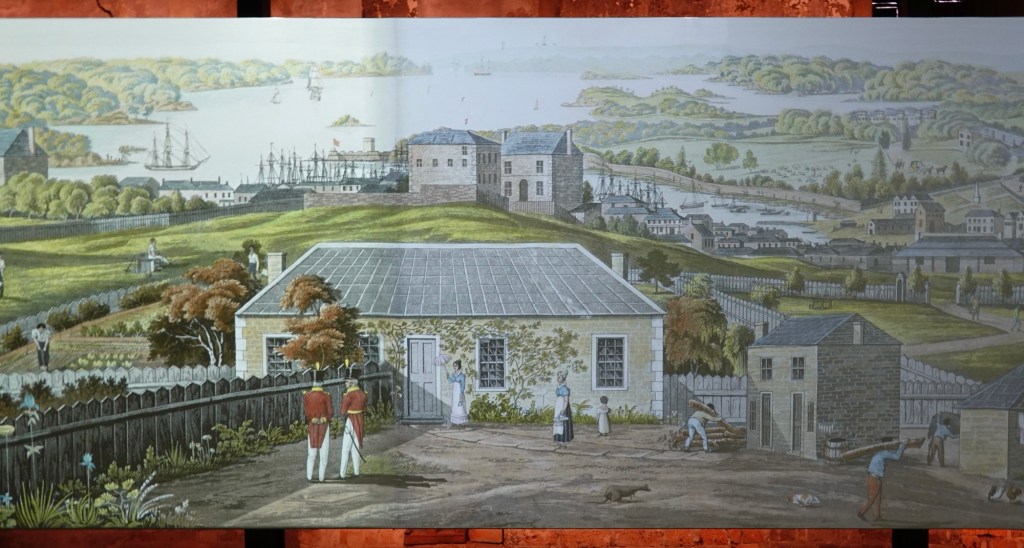
But this was Governor Macquarie’s colony – he of the statues all over the city that have nothing but glowing praise for his grand vision of what Sydney and New South Wales could be. He arrived in Port Jackson in 1809, and took office just after the Rum Rebellion.
His tenure is remembered for transforming the colony from a penal settlement into a free society, but in the interim he took full advantage of an almost unlimited supply of free convict labour. He did indeed have grand visions for the colony, but all of them were brought to life using convicts to do the work.
When he opened the 3 floor barracks, built by the convicts themselves, in 1814, they were externally attractive, but definitely purpose-built to house the male convicts who suddenly had to work much harder than they had before. Fulfilling Macquarie’s vision was not an easy job.
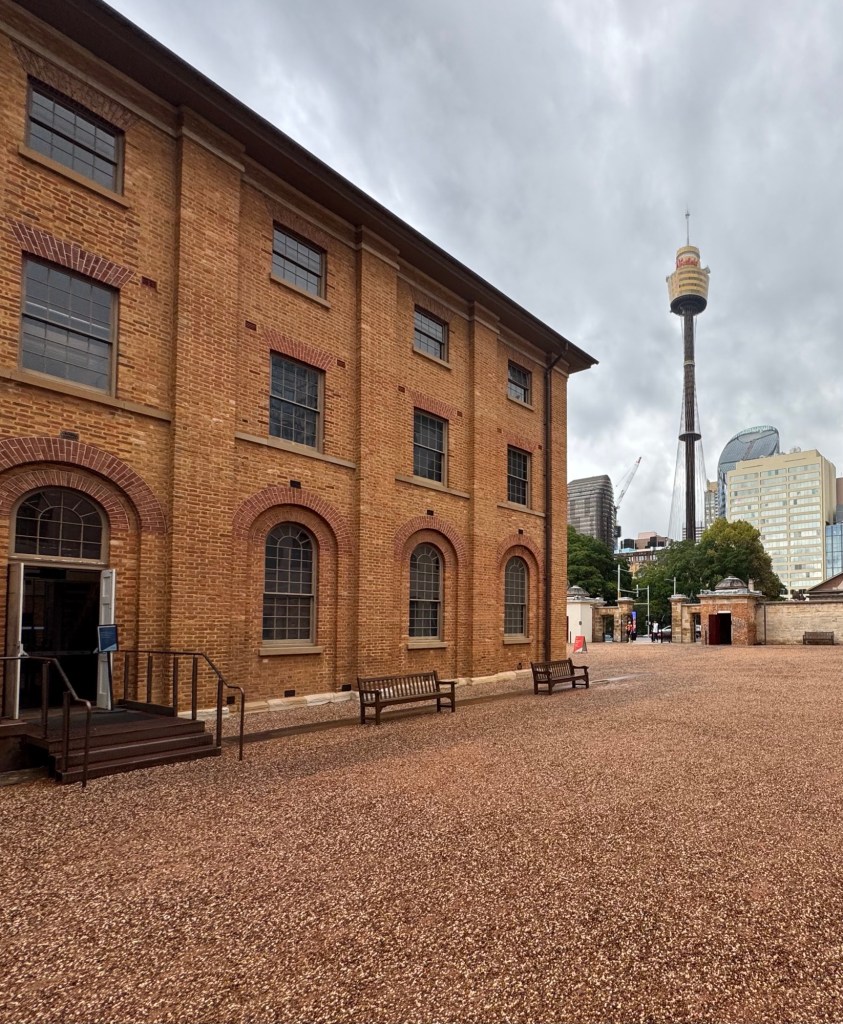
The three floors of the barracks now each represent different eras in the building’s life.
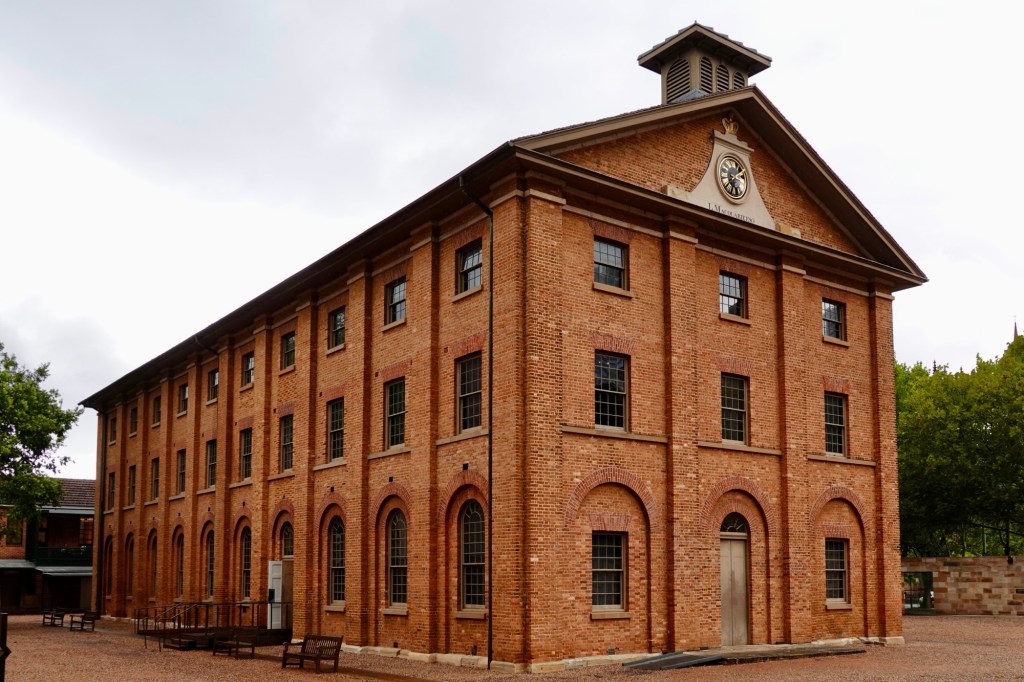
The top floor displays are all about CONTROL.
Here the narration switched to the voice of convict Joe Smith as I entered the “sleeping ward” . Seventy stinking, sweaty, coughing and hacking men slept in this room in tightly packed hammocks, in the company of rats and flies. Visitors can try the hammocks. I didn’t.
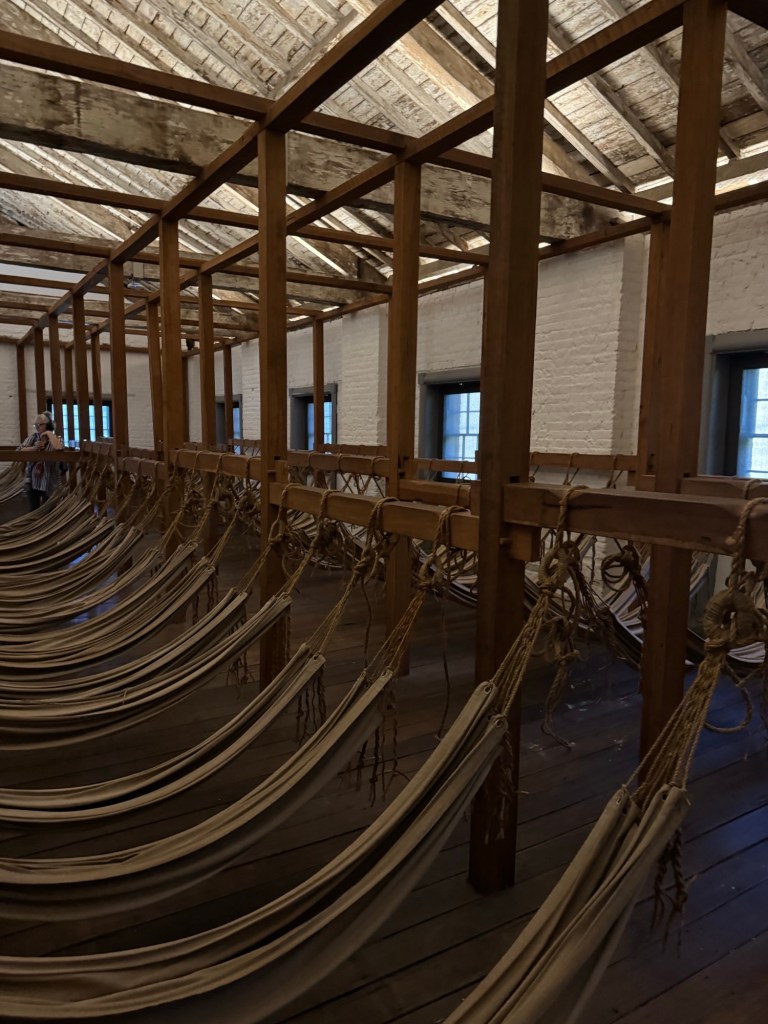
The audio guide and headphones provided stereo sound complete with flies that seemed to buzz right through my head from one ear to the other.
A second room had displays of work tools. A lot of the convicts were skilled craftsmen as well as criminals. They did everything from lumbering to making bricks and furniture, to cobbling shoes, tailoring clothes, and even making pipes. Of course convicts were the cooks too, even if they had no prior cooking experience.
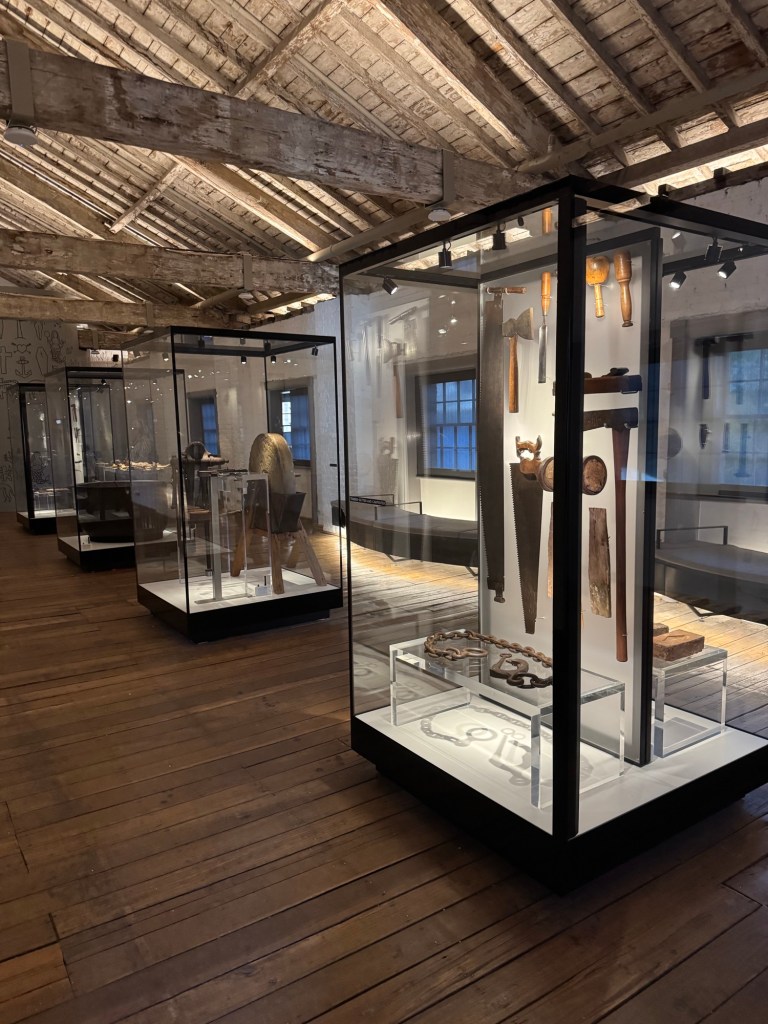
Convicts built all the original roads in New South Wales, working in gangs of 50 men.
Convicts quarried the local sandstone from which most of the grand buildings were constructed, including St James Church, which was designed as a courthouse by the Governor, whose plan was overruled when England decided a church was needed instead.
There were informative and disturbing displays about the impacts of Macquarie’s vision on the Aboriginal country. As just one example, through the 1820s the Darug countryside was virtually deforested for lumber. The Aborigines saw lumbering as desecration and the murder of trees which they revered as living things. In 1823, in a sad parallel to what happened in Canada as well, Macquarie decided to “civilize” the Aboriginals and began building residential schools to indoctrinate children to abandon their families and culture. It failed.
The Aboriginal area called Dalman Ngurang (place of plenty) was turned into Bathurst, a colonial farming settlement. It became the place where an aboriginal/colonist war was triggered by what should have been an innocent misunderstanding over the concept of sharing versus stealing crops . Settlers also ignored ceremonial lands and built farms on them, and lured aboriginals to reconciliation meals where they fed them poisoned bread as a way of clearing them from their lands, as if they were vermin.
If the upper floor was about control, the central floor was about FEAR.
As the speed of progress increased in the 1830s and 40s, the treatment of convicts became increasingly harsher.
Across the colony punishments for misbehaviour became more brutal, like being put into an iron gang, with shackles worn 24 hours per day, and overseers allowed to administer punishment like taking away rations, administering floggings, or putting convicts on interminable treadmills for even minor infractions. Banishment to Norfolk Island to work in chains was the most severe option, seen by many as worse than death.
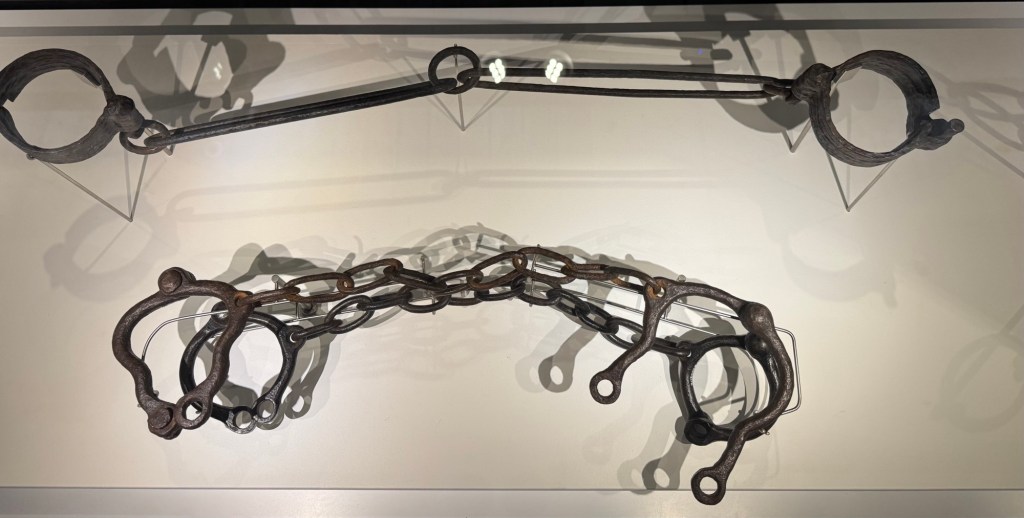
At the same time, another impact of increased colonization was conflict at the frontier.
In 1838, a gang of convicts and settlers murdered a small community of unarmed Aborigines. Of the 12 known perpetrators, 11 were tried and acquitted, with 7 later retried, convicted, and executed for carrying out the massacre.
In 1848, convict transport finally ended. More and more free European immigrants were arriving to the city which had been built entirely using convict labour by the almost 50,000 convicts who passed through these barracks.
The ground floor of the barracks experience focusses on HOPE.
Once they were no longer a prison, the barracks became a depot for immigrant women, initially those fleeing the Irish famine, but extending all the way through 1887.
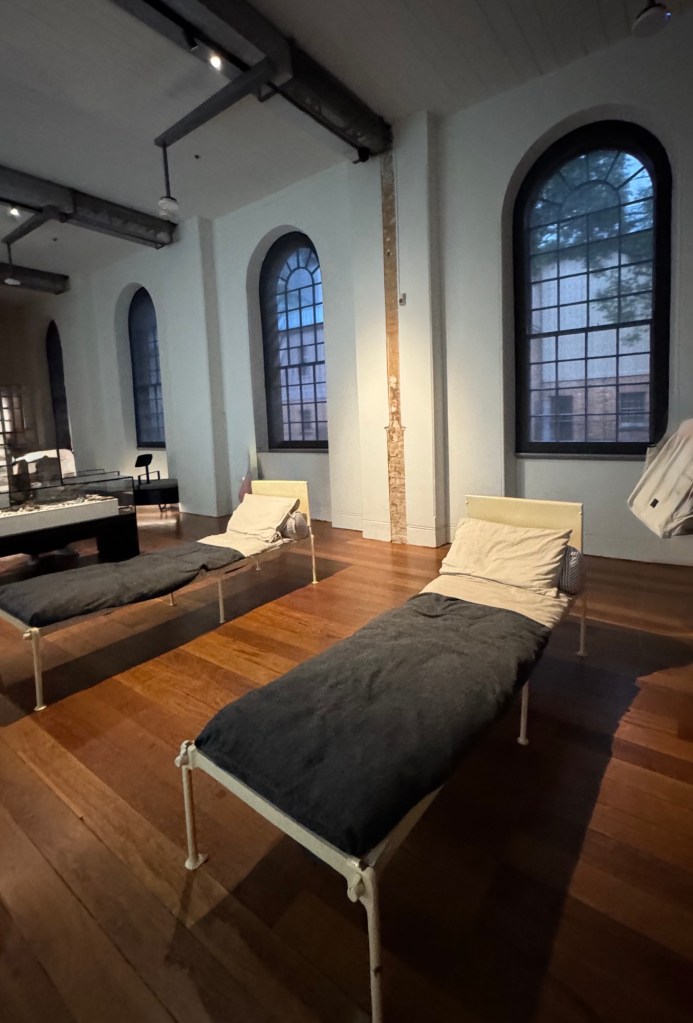
The women’s story was narrated by an Irish girl Margaret Hurley who took the opportunity of a free THREE MONTH sea voyage to a place of potential prosperity, and by Lucy Barton, the matron of the barracks who was in charge of helping the young women settle into new lives.
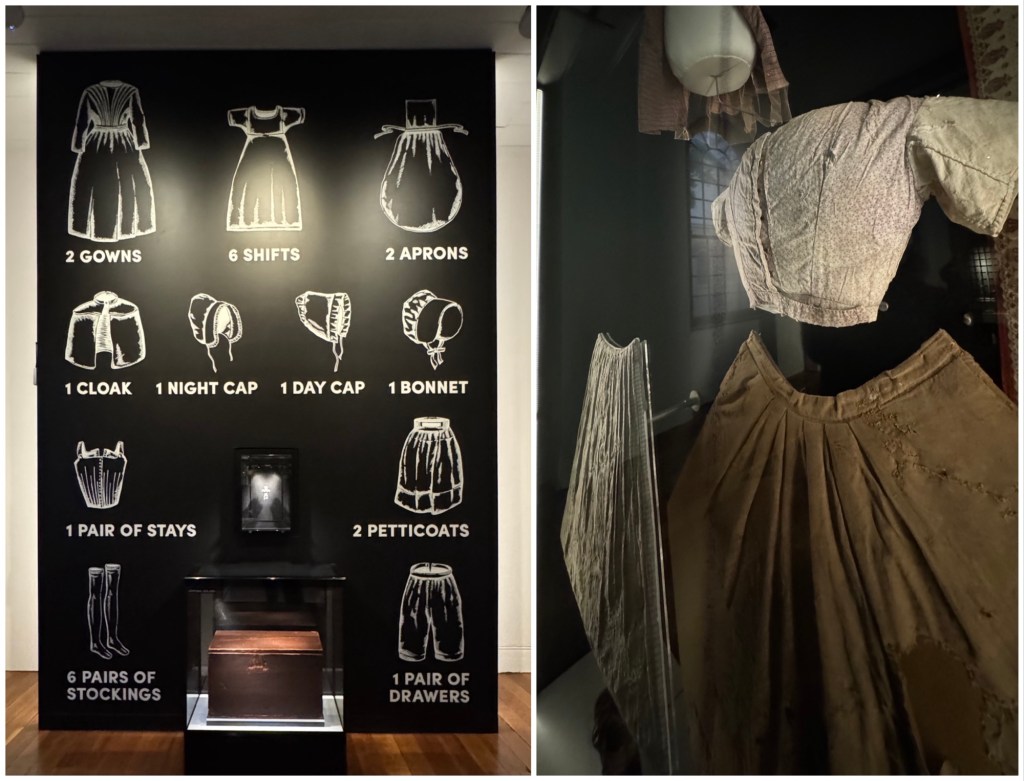
The barracks also became an asylum – literally a safe place – for women needing support, healthcare, or refuge.
The one thing that unfortunately never changed was the presence of rats.
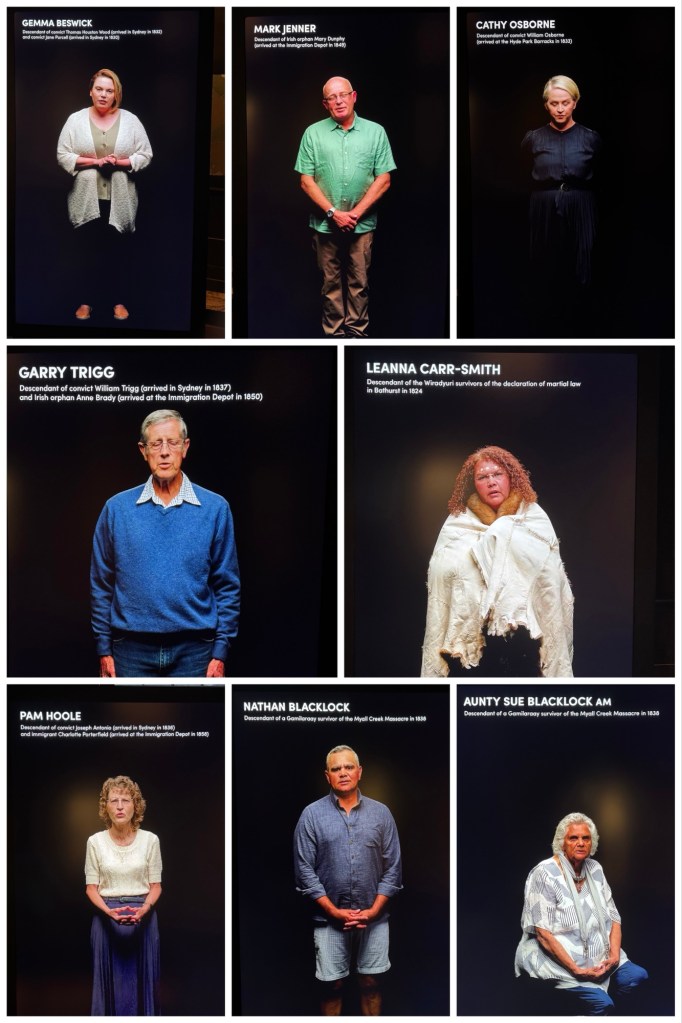
In the very last room of the experience were videos made by descendants of convicts, immigrant women, Wiradyuri and Gadigal Aboriginal peoples. Those stories were incredibly touching and impactful.
I left the barracks thinking that this was exactly the kind of museum experience that brings history to life.
I’m sure that this city built by convicts has many more stories to tell.
 Rose and Ted’s Excellent Adventure