I had a not-so-little list of things to see in Melbourne, but it turns out that Melbourne had a list already curated for us!
Like Adelaide, where we didn’t end up using it, Melbourne has a free “circle tram” that runs around the city centre and touches on virtually all of the most popular sites for visitors. (Actually, all of the trams within the inner core of the system are free!)
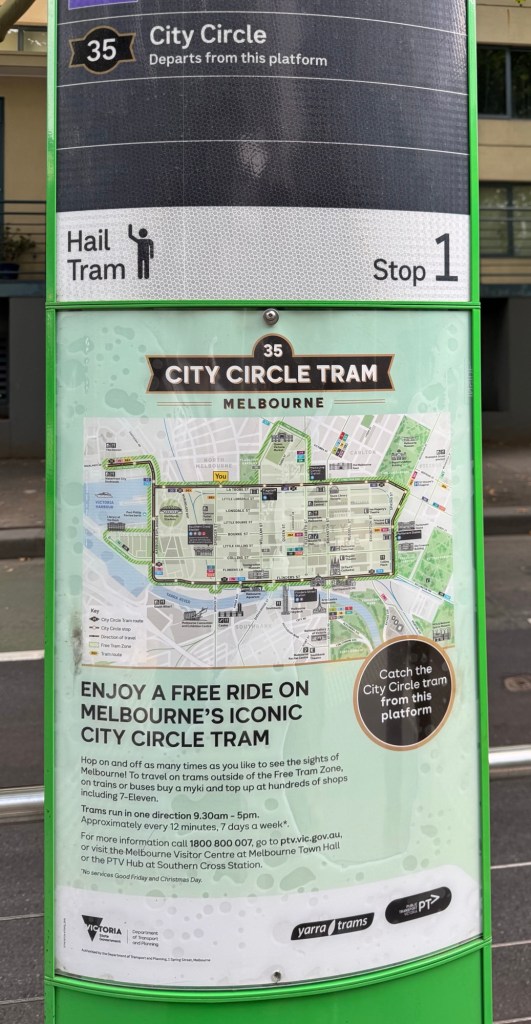
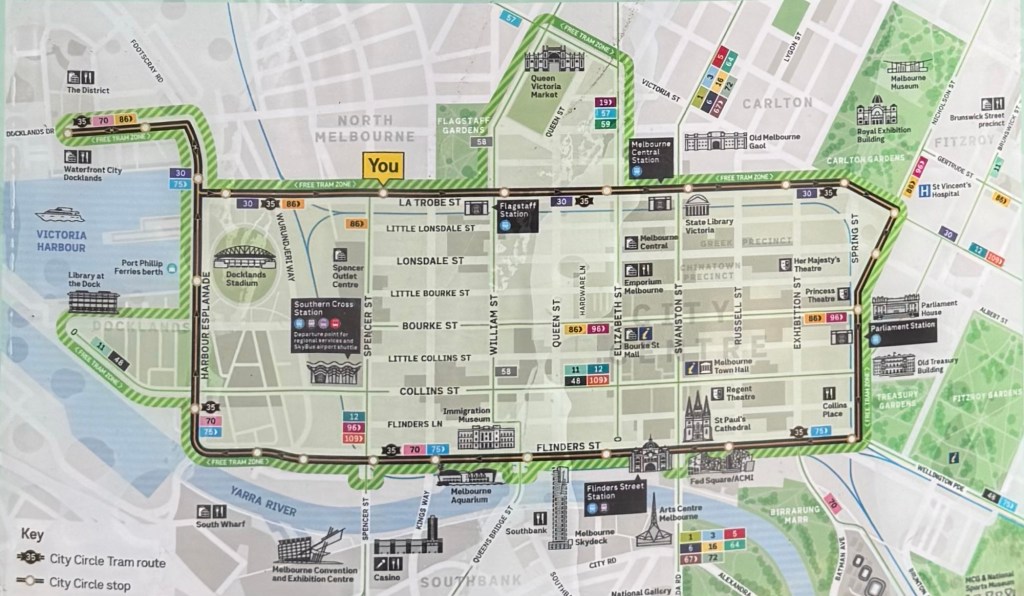
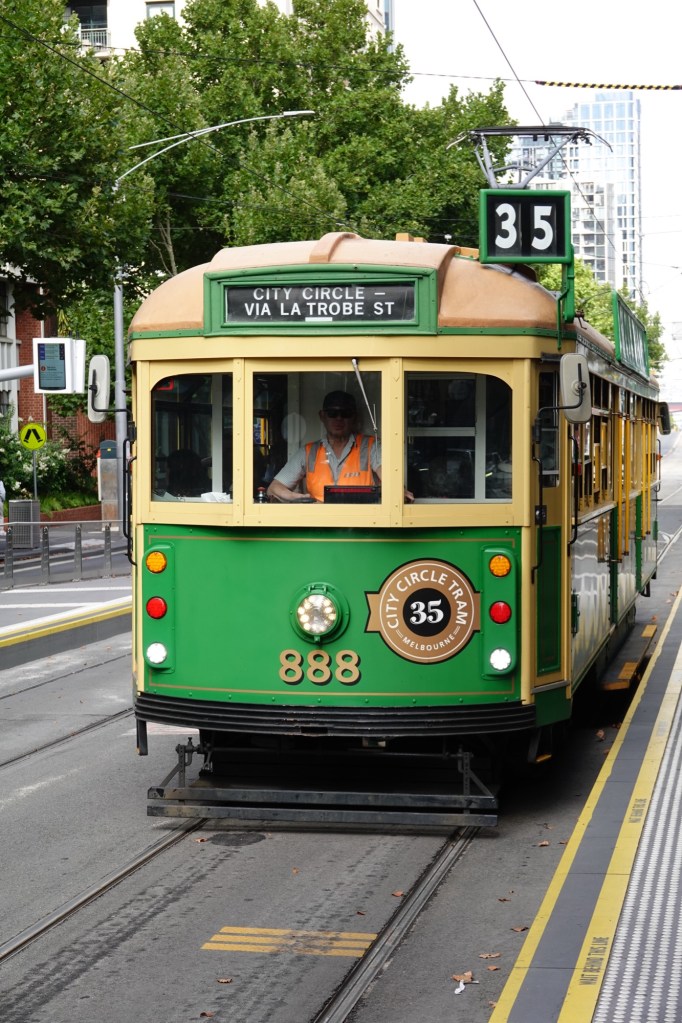
It’s a vintage tram, not one of the sleek modern network, but it runs on some of the same lines. There’s nothing to stop locals from using this free tram, but its route is clearly aimed at tourists.
Today’s exploration involved just one tram stop, but the hop on/hop off feature would have allowed us to do more if we’d wished.
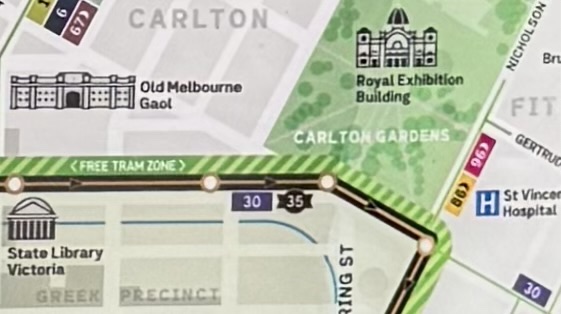
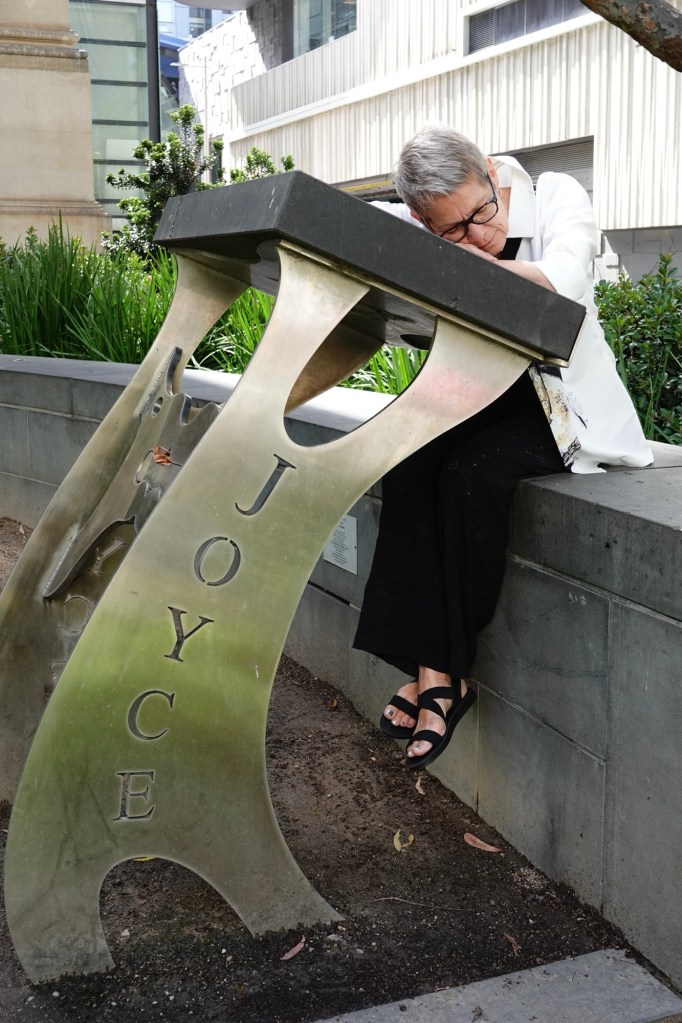
Our first stop was the Victoria State Library, but before we even crossed the street to get there, we noticed this quirky bench on the corner.
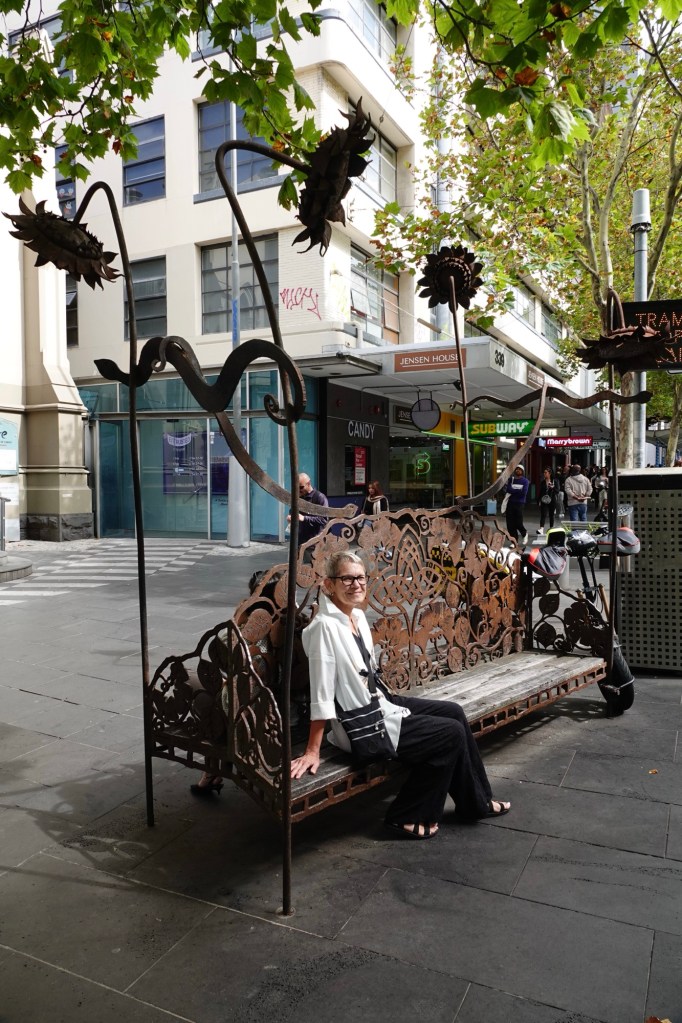
Melbourne’s architecture and streetscapes are incredibly varied; Victorian townhouses, monumental carved stone edifices, and towering glass skyscrapers vie for attention with manicured green spaces. It’s really a lovely city centre.
The library is one of those monumental stone edifices, and quite difficult to photograph because of its size. There’s also no way to get a picture without people in it. This is a vibrant university city of about 5 million people, and public spaces are well used.
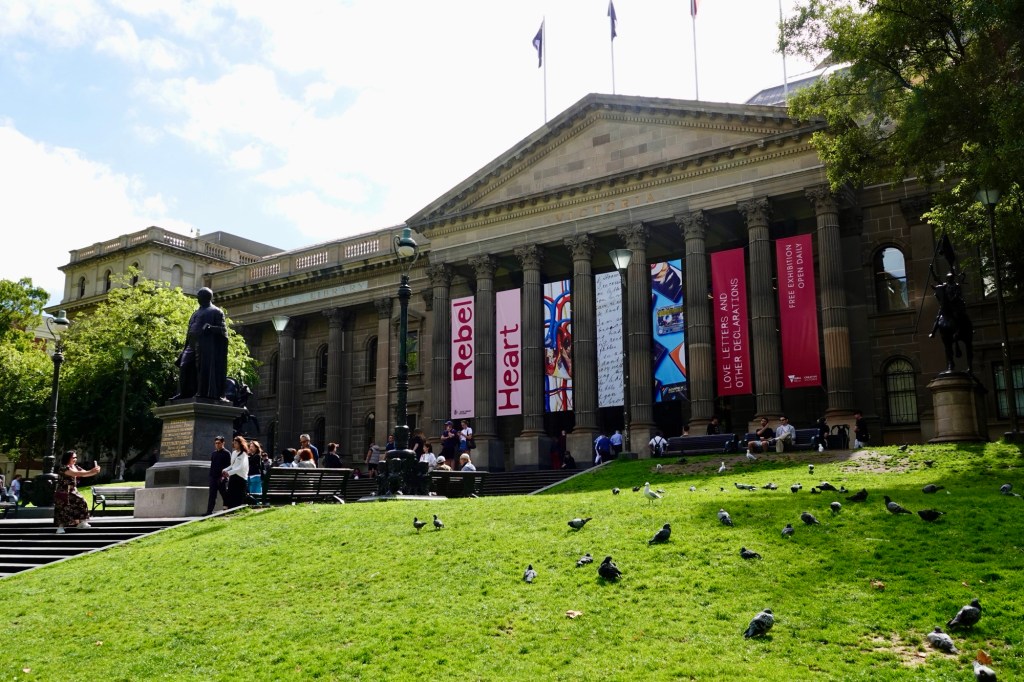
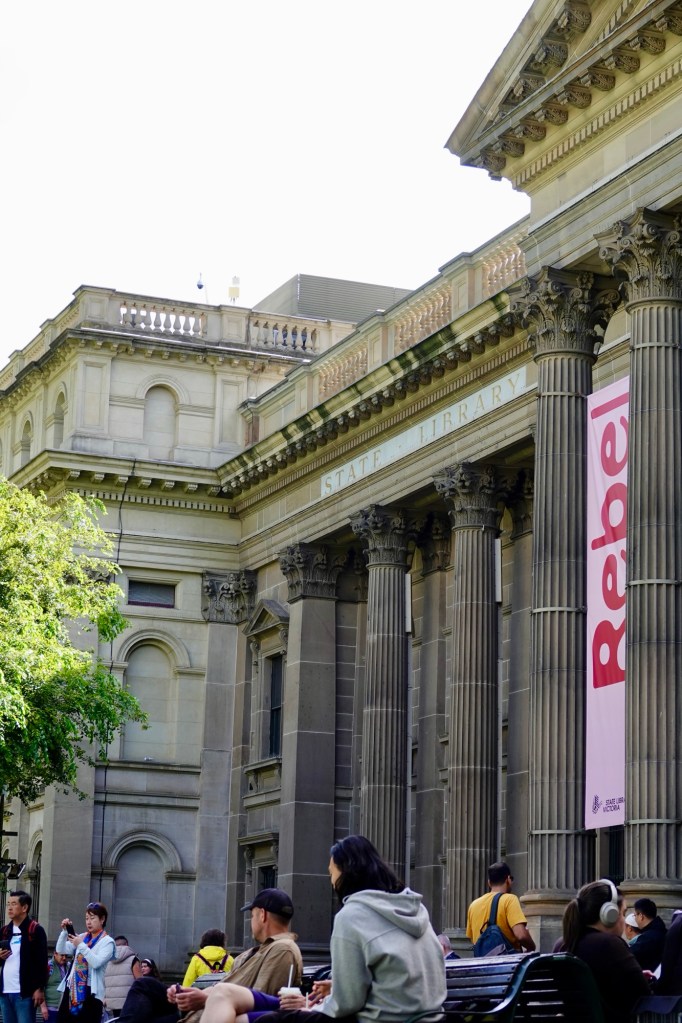
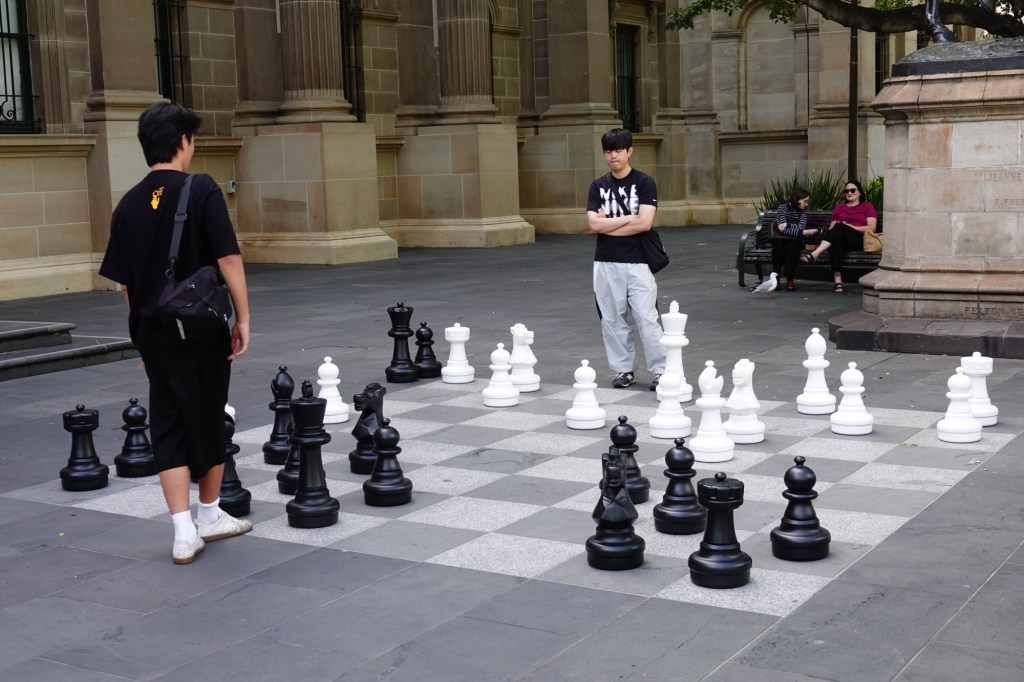
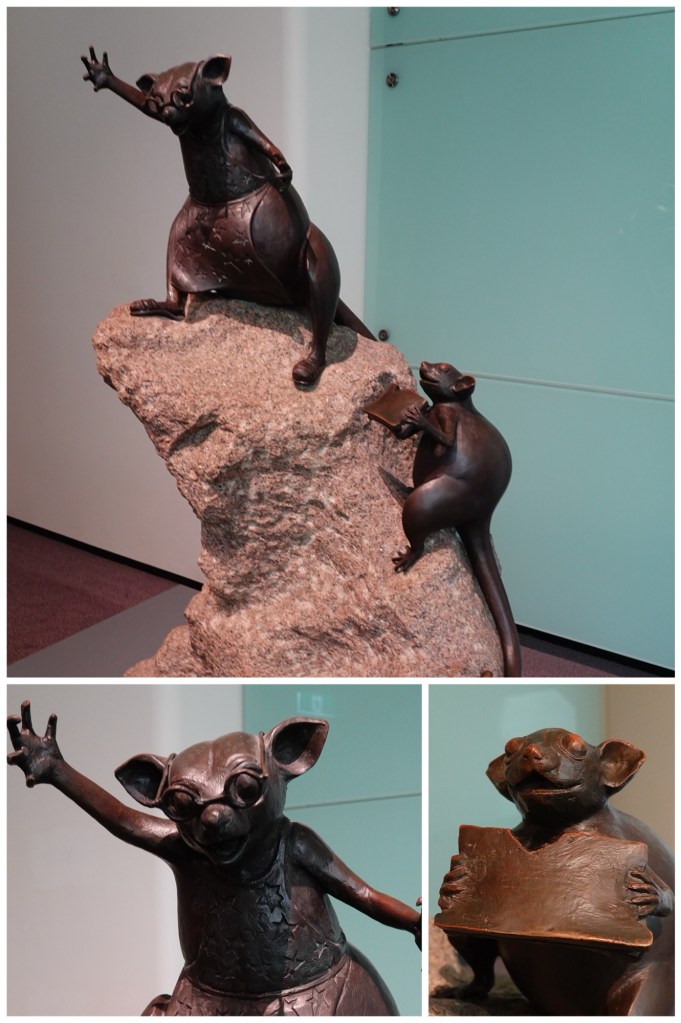
On the staircase and lawns were several interesting statues.
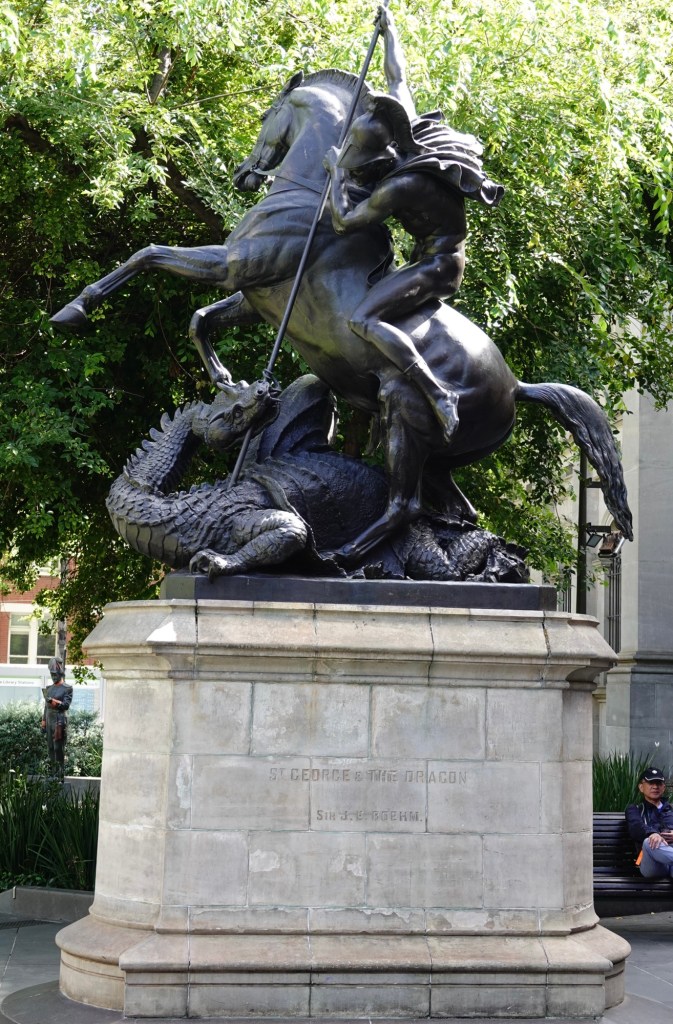
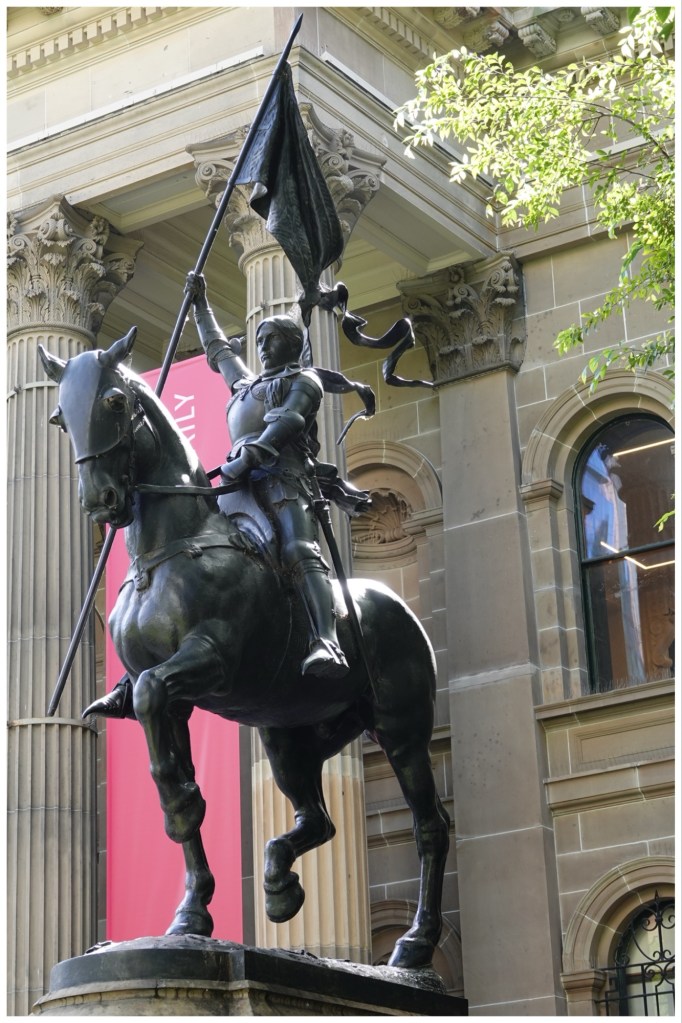
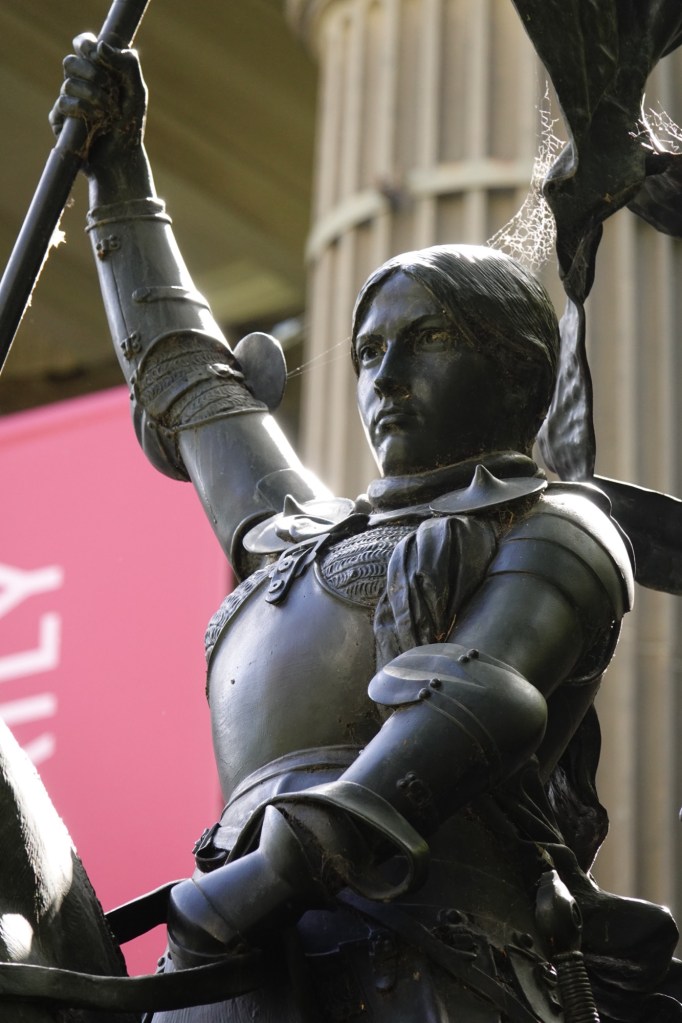
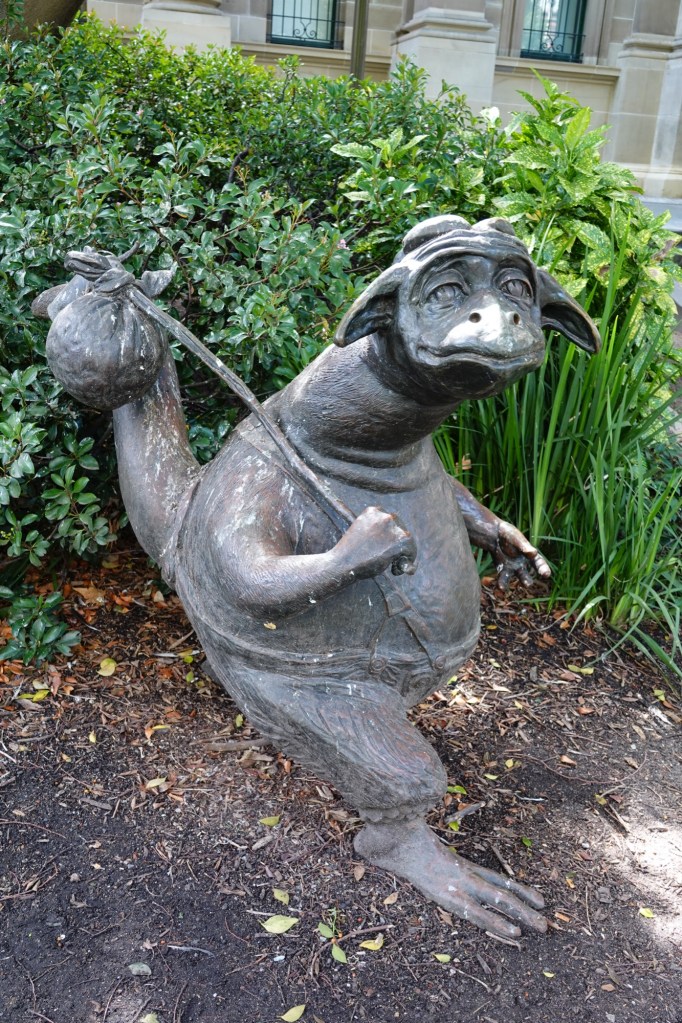
And of course there were literary references depicted, as befits a library.
As lovely as the exterior and grounds were, the inside of the library was nothing short of spectacular.
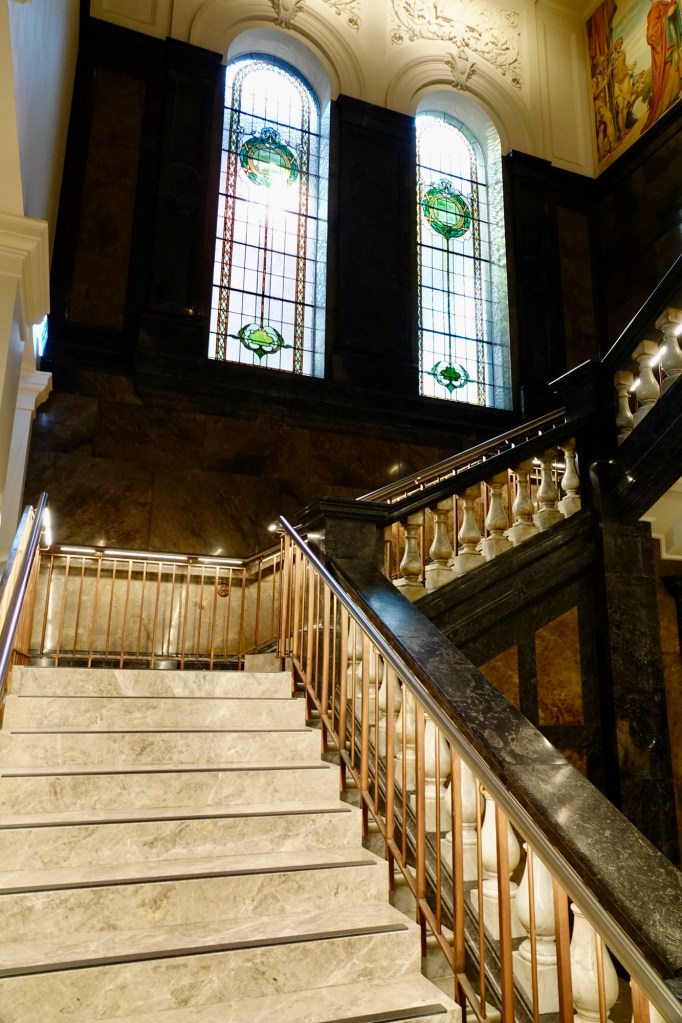
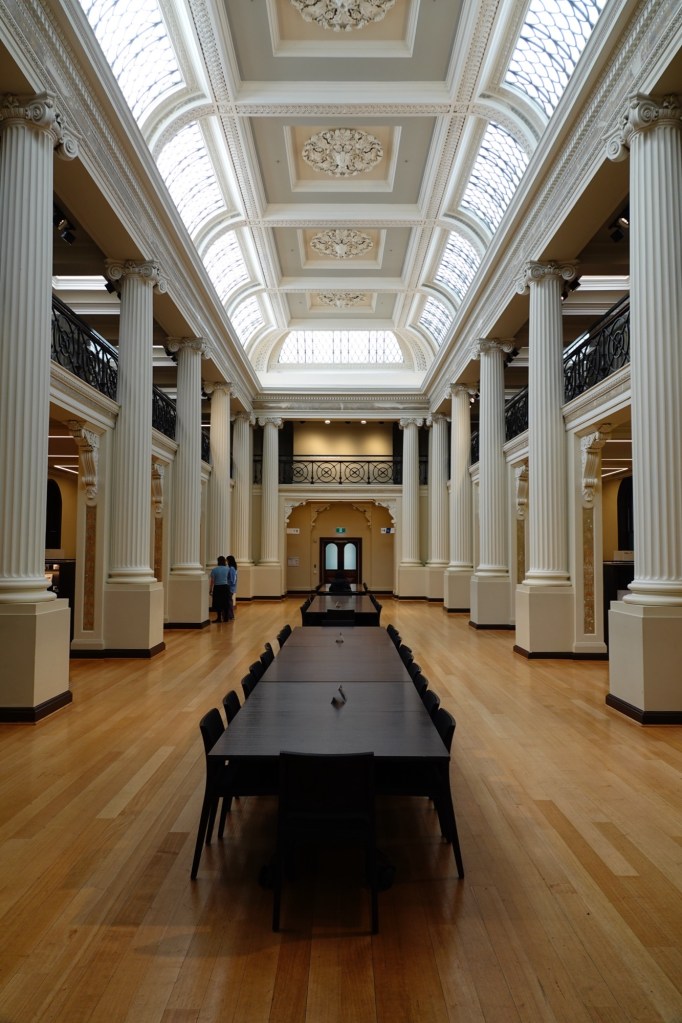
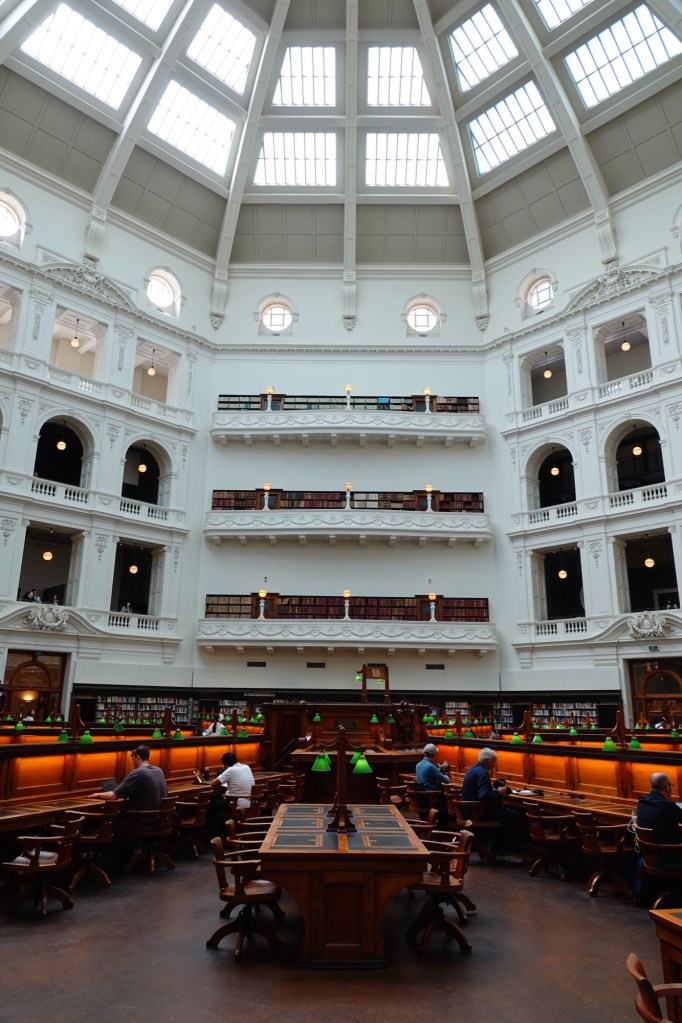
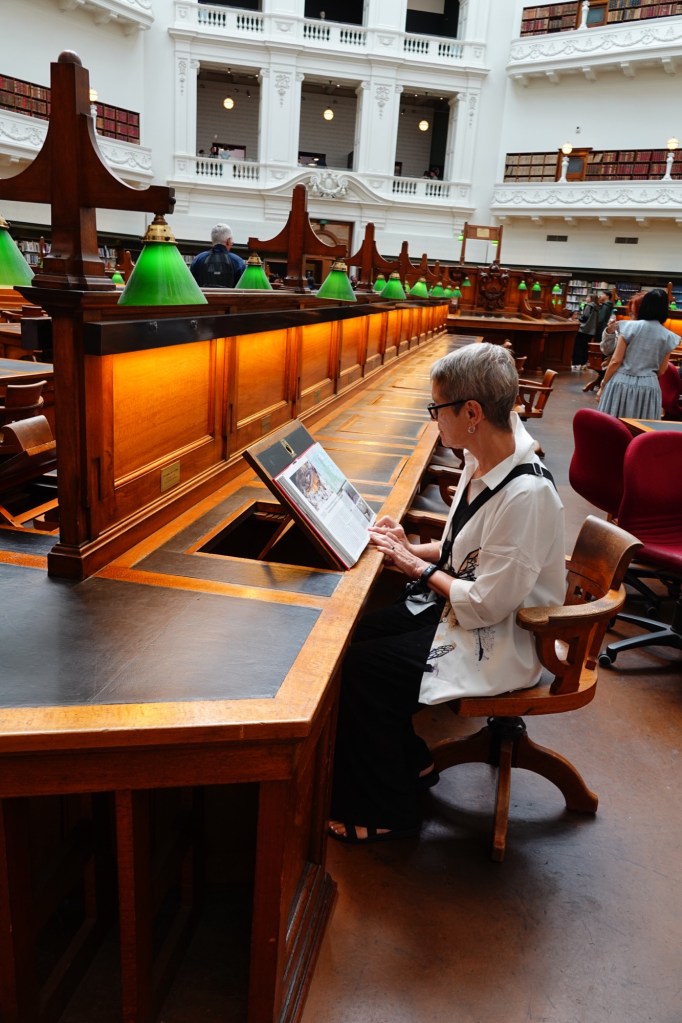
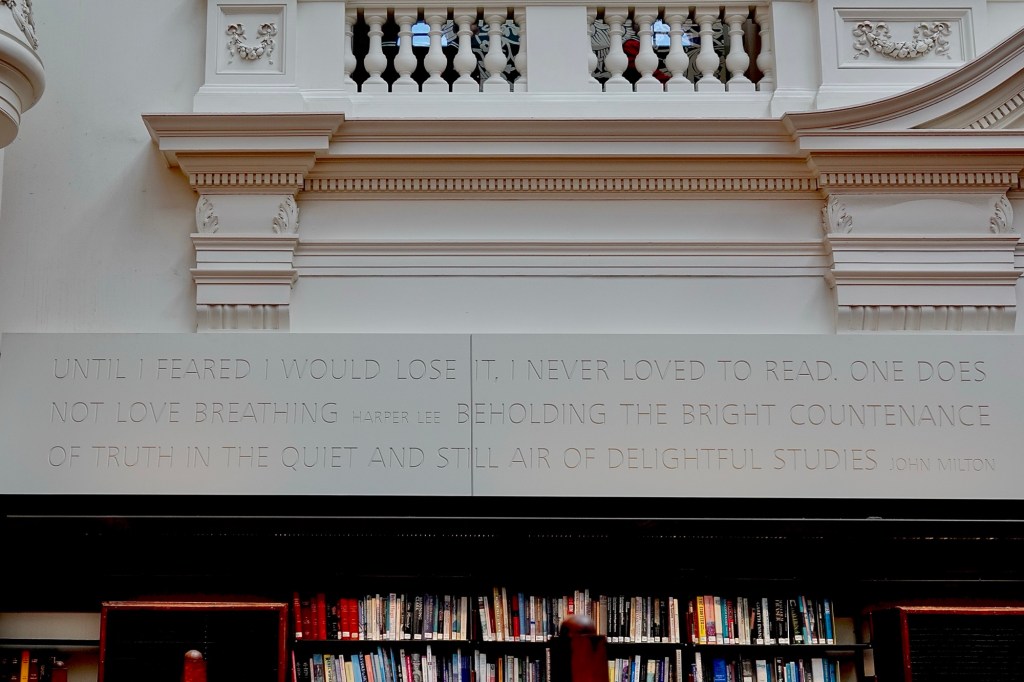
In another inscription, Arnold Zable described the space perfectly: “THE DOME AND ITS ASCENDING GALLERIES SEEMED LIKE A GIANT BRAIN VAULTING TOWARDS THE HEAVENS”.
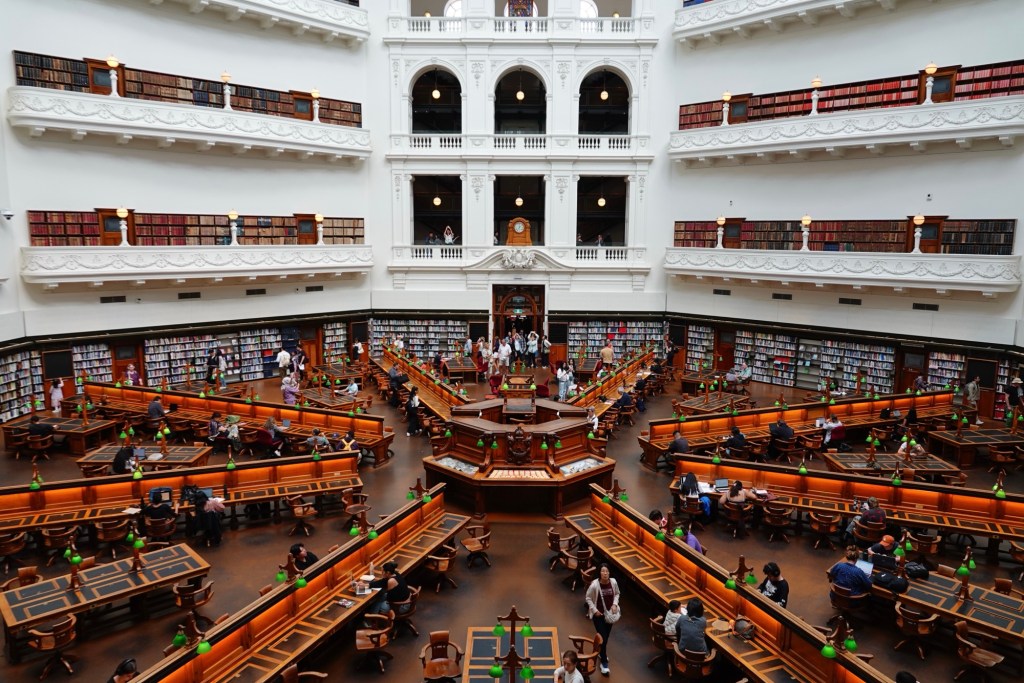
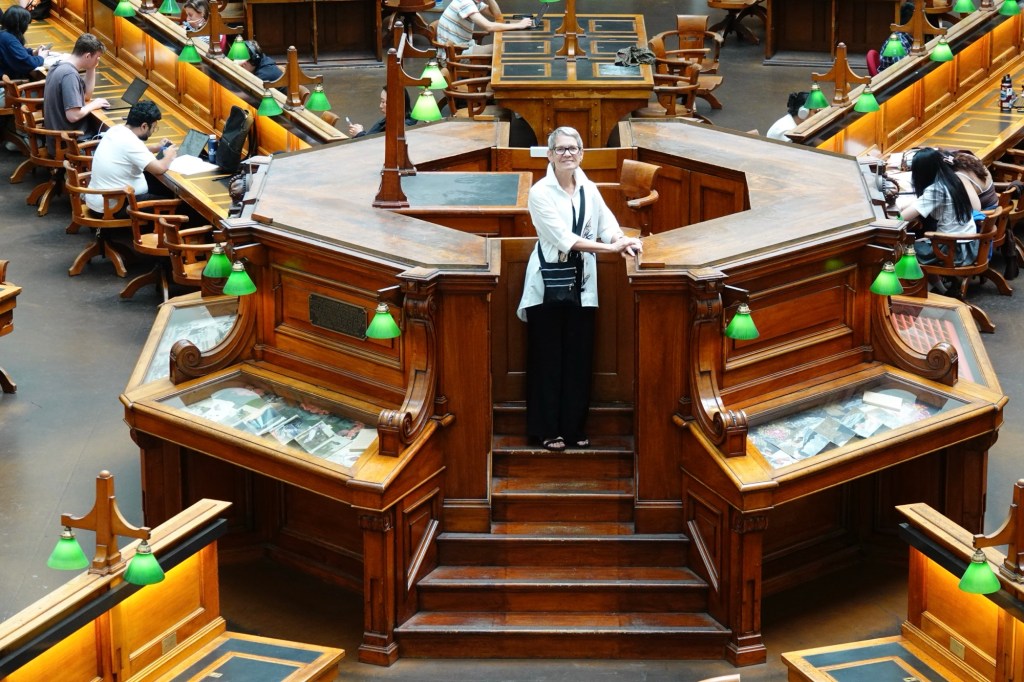
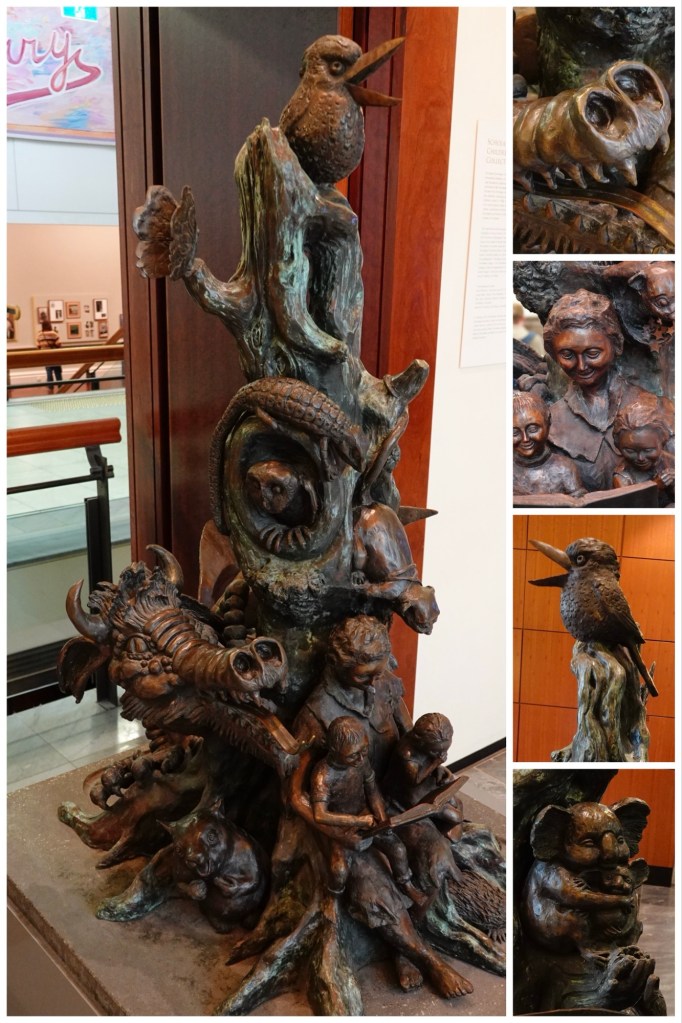
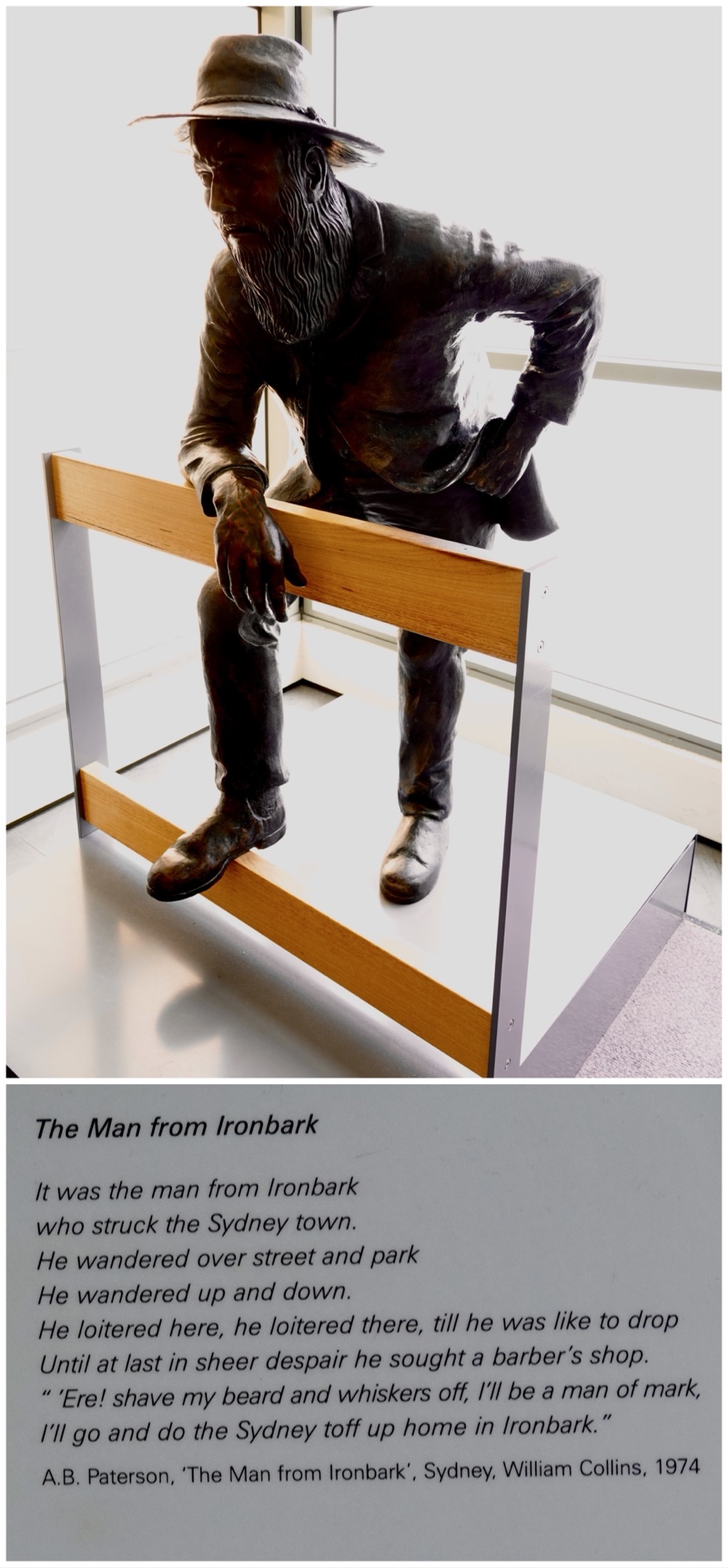
Inside the library, in addition to an art gallery wing, which we didn’t tour, were more literature-related sculptures, most relating to Australian author’s unfamiliar to us.
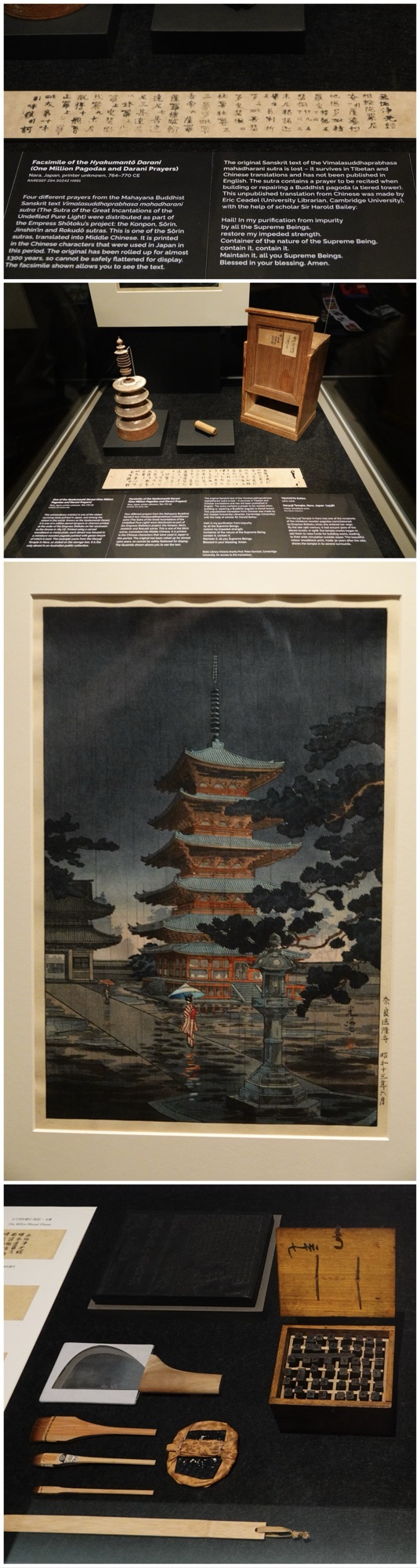
In the fourth floor gallery around the Reading Room was an exhibit about books and printing. We overheard one of the library docents talking about the art of printing using individual blocks in Japan, predating Gutenberg’s moveable type press by over 600 years.
From the Victoria State Library we walked to the Old Melbourne Gaol, the inside of which we decided not to tour. It was a stunning sunny day, and we’d already spent enough time indoors.
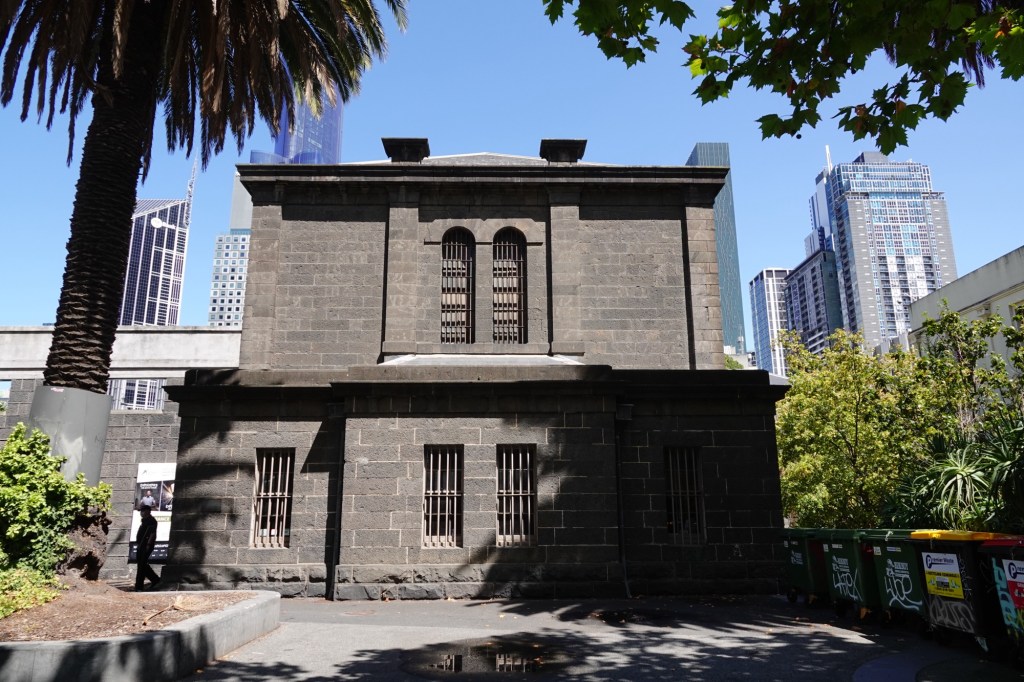
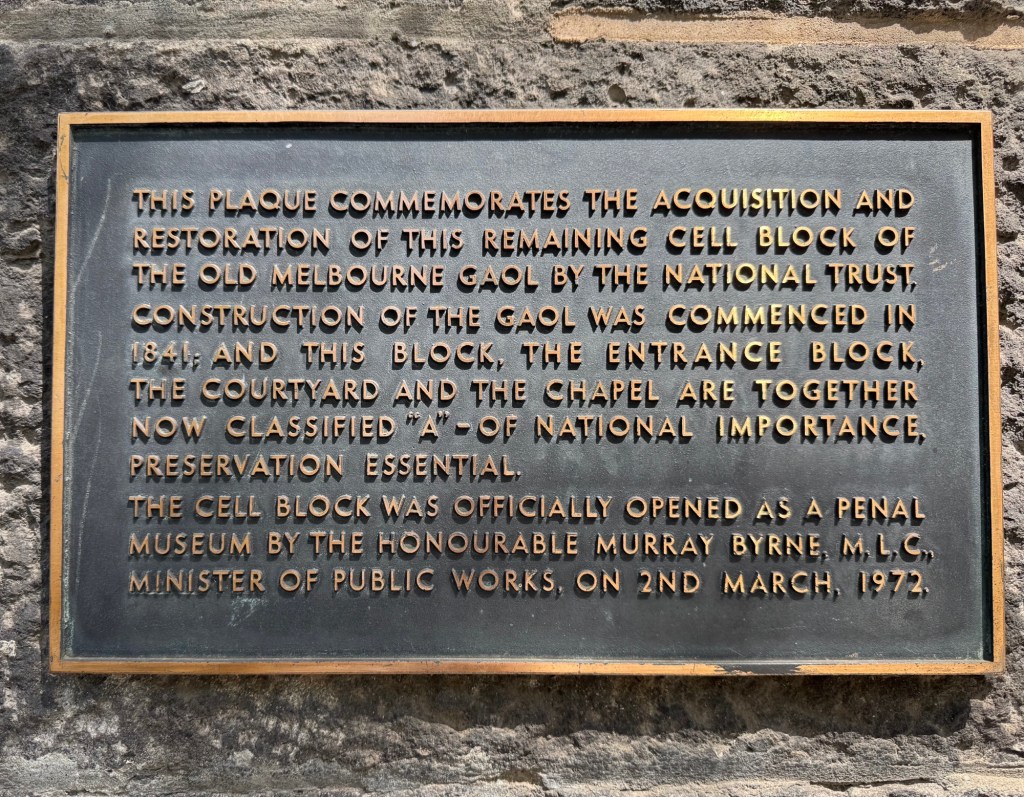
Instead, we admired the old City Court that is now “Building 20” of the RMIT University Campus. RMIT is an international university of technology and design and is Australia’s largest university.
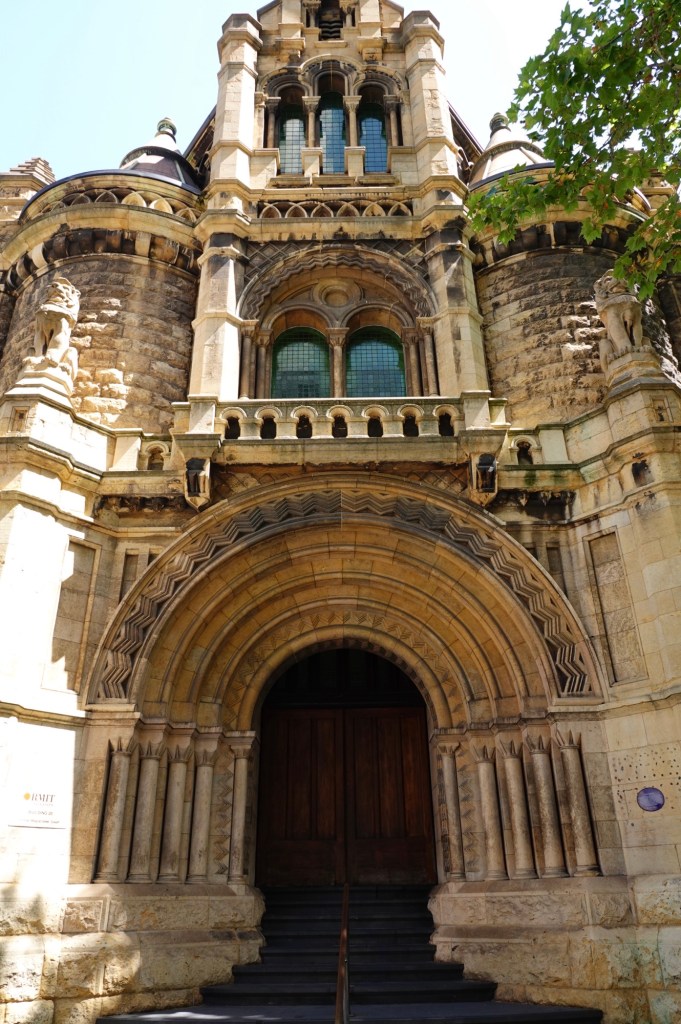
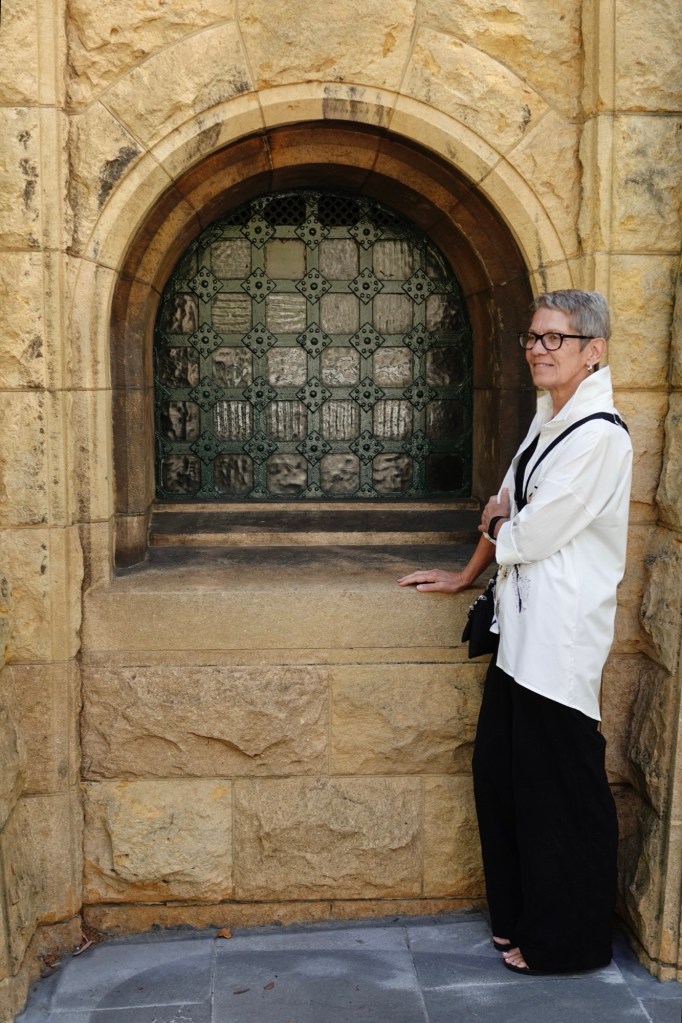
Designed by G.B.H. Austin of the Public Works Department and built by Swanston Bros in 1911, the building originally accommodated three large courtrooms and offices with a two storey octagonal main vestibule. The facades, faced in Moorabool sandstone, focus on the entrance where gables, turrets, and arches produce an exceptional Romanesque composition.
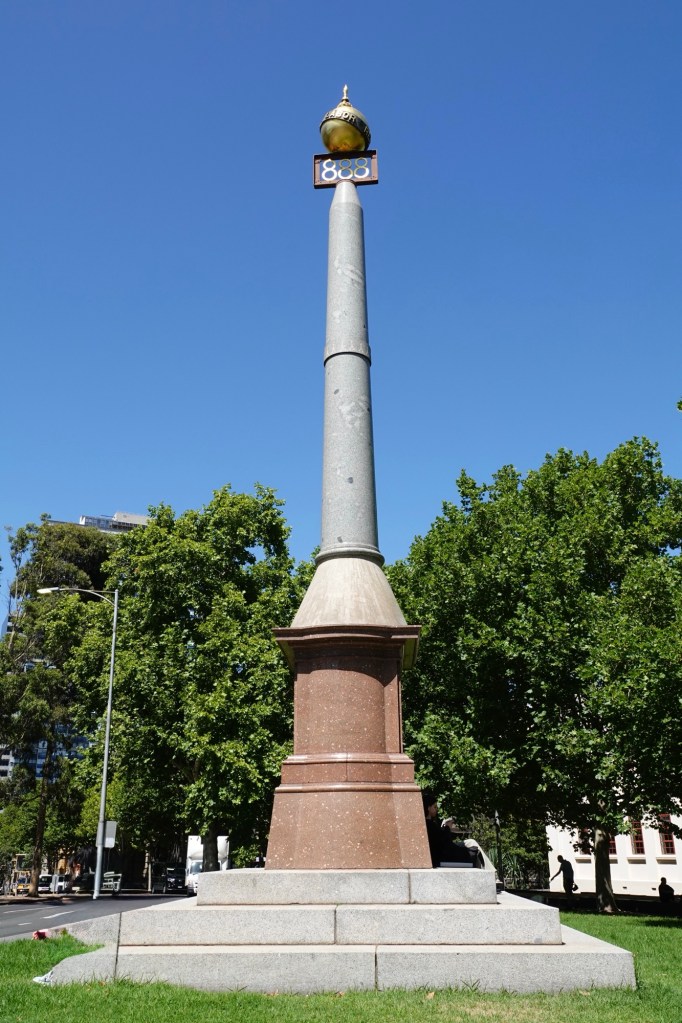
Around the corner we passed this interesting monument, with the “888” that matched the circle tram’s car number, but this time we learned its significance.
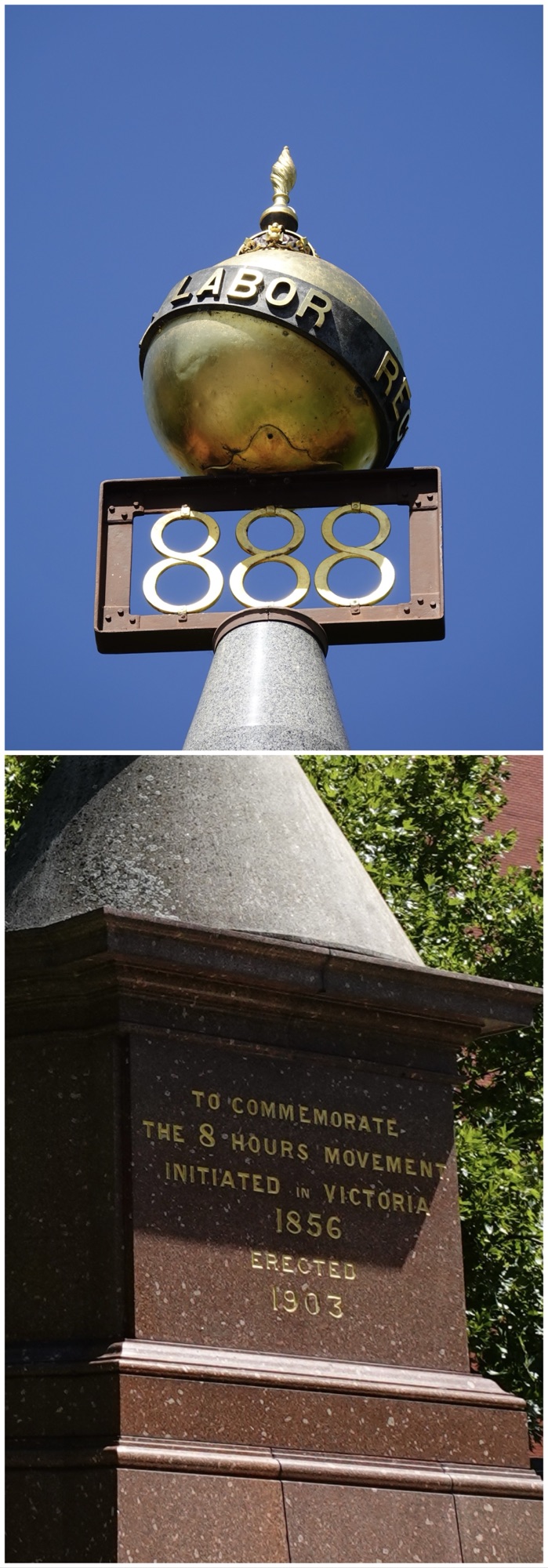
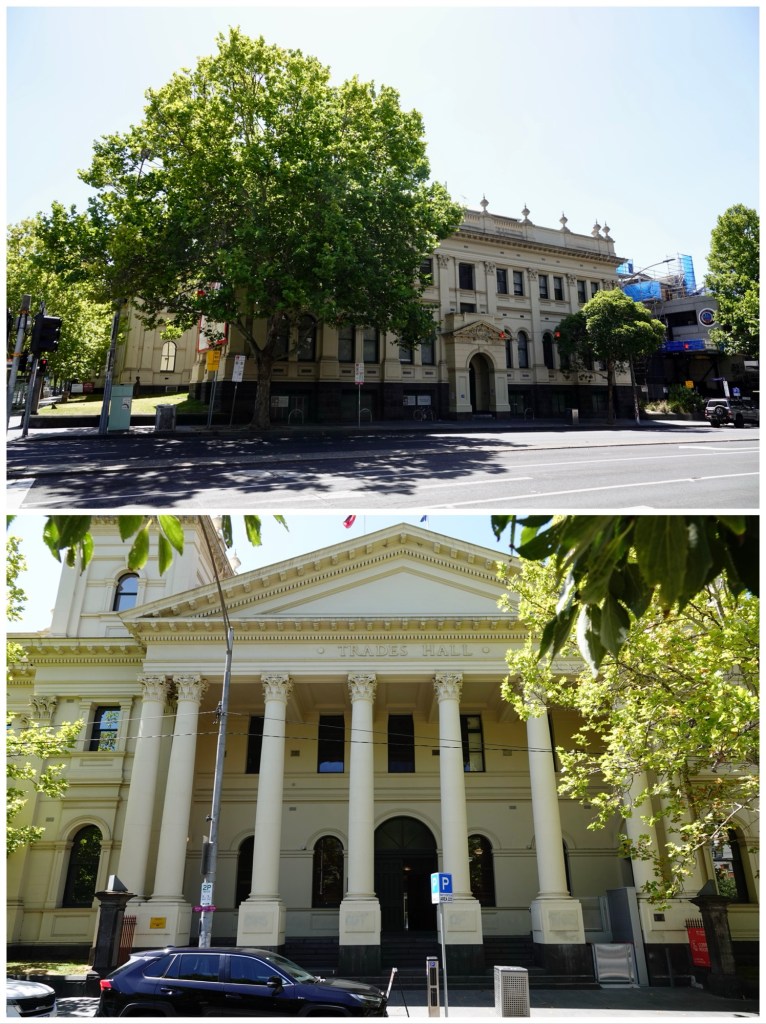
Kitty corner from the monument was an imposing stone building that was not represented on the tram map. Upon closer inspection, because a building that large absolutely needed to be checked out, we discovered that it was the Victorian Trades Building, and intimately connected to the 8-8-8 concept. It was – and still is – home to offices representing some of Victoria State’s trade unions. My dad, who had been a union steward for Canadian Auto Workers Local 707 for many years, would have been very impressed with this trade union building.
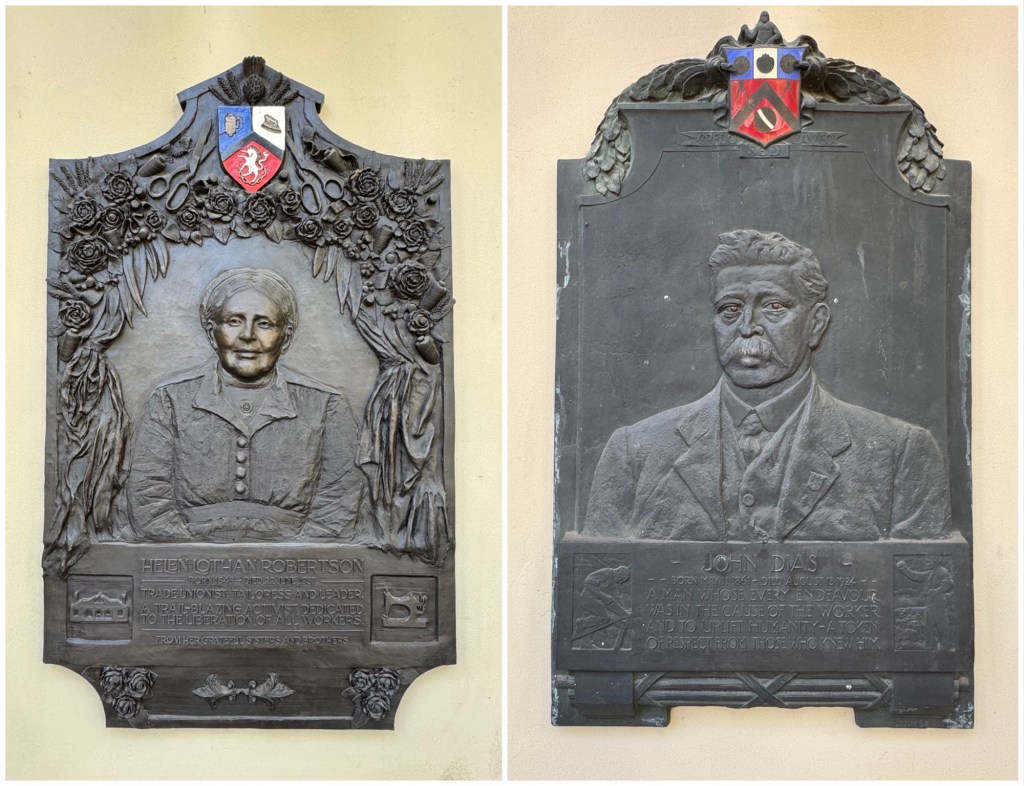
Beside the entry doors:
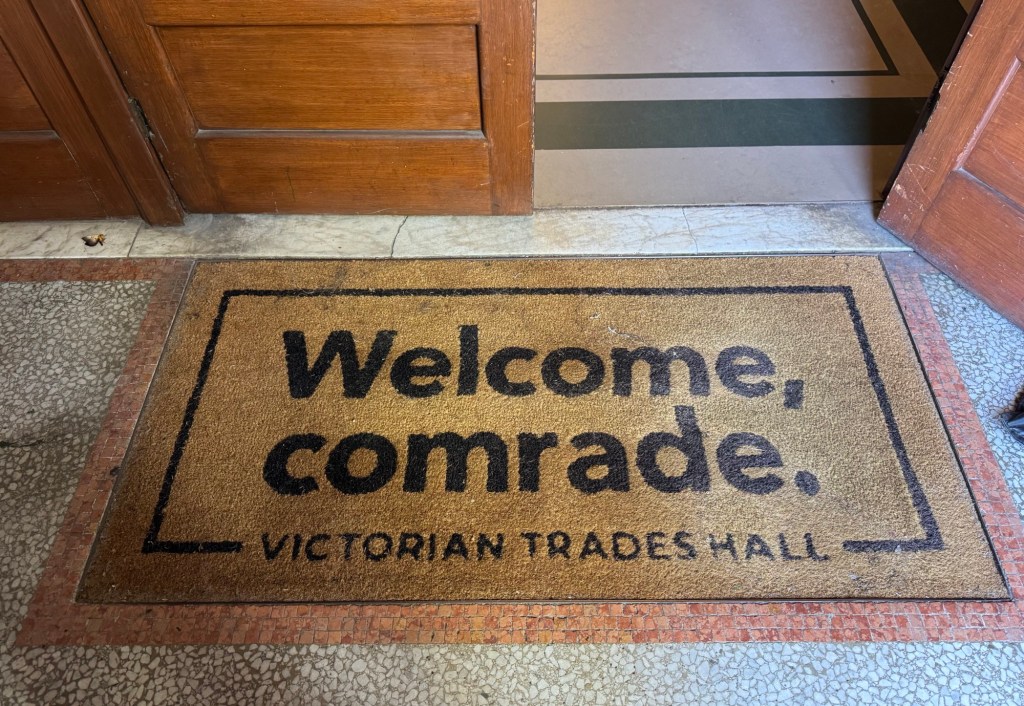
And at the threshold:
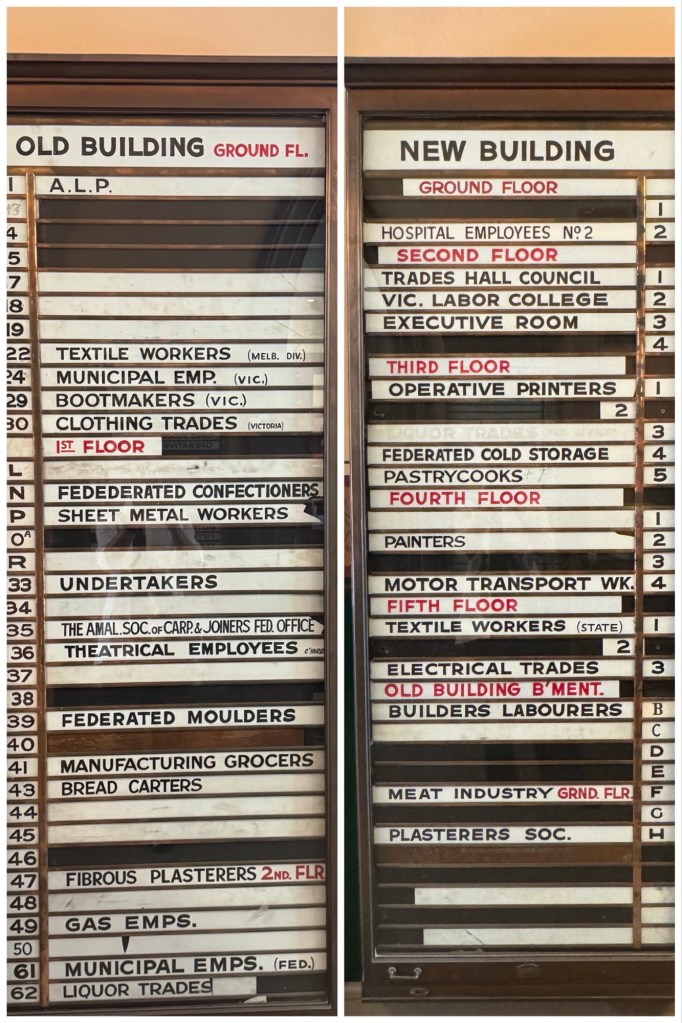
The list of unions with offices in the building was definitely eclectic. Bread carters?
The trades represented in the 19th century when the 8 hour work day was being fought for included many that don’t exist today, like “Bamboo & Wick Workers”, “Fellmongers”, and “Felt Hat Trimmers & Binders”.
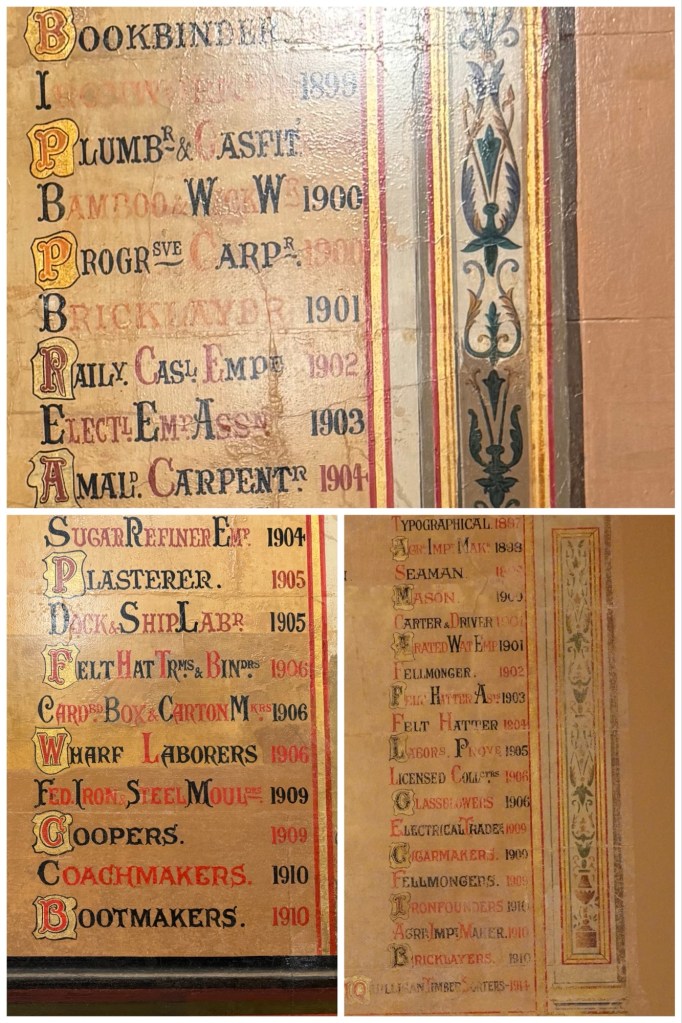
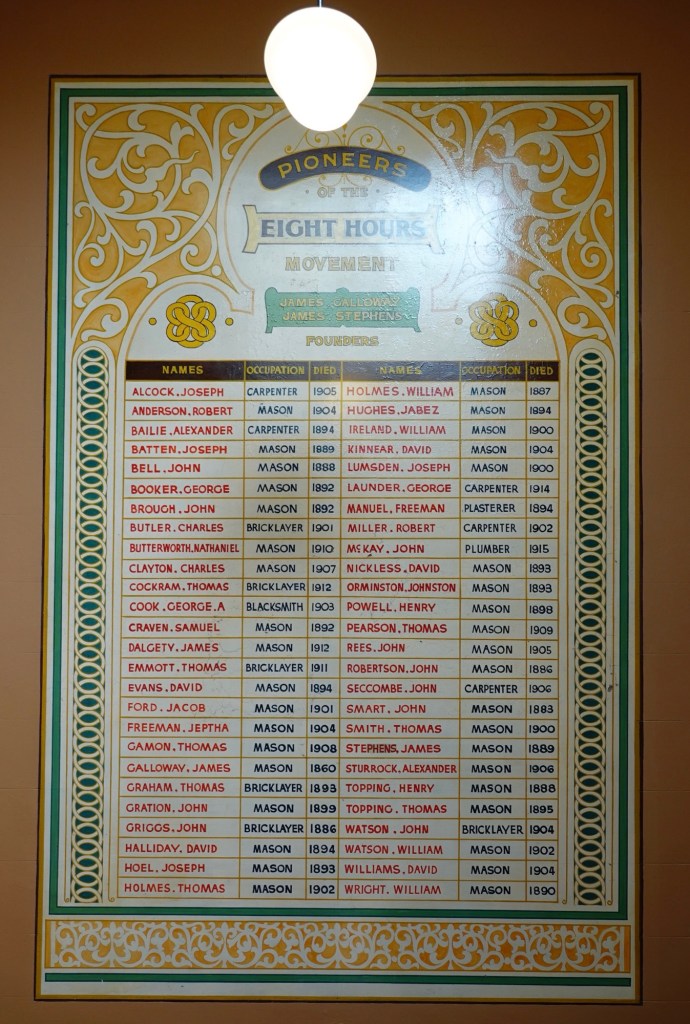
Those who founded the 8-8-8 movement were honoured. Note the number of masons.
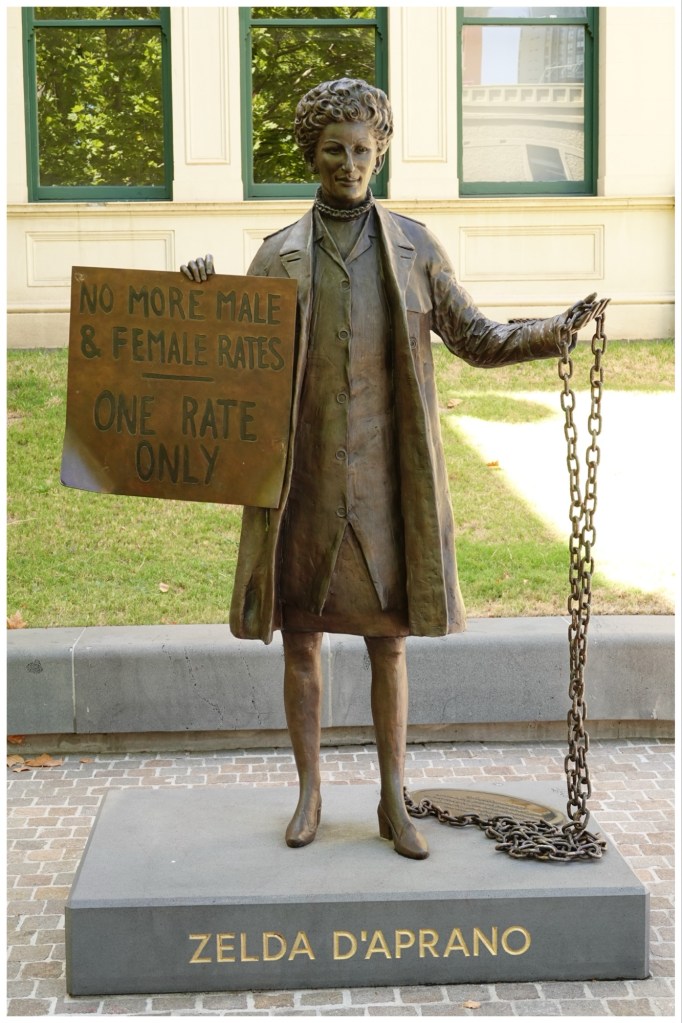
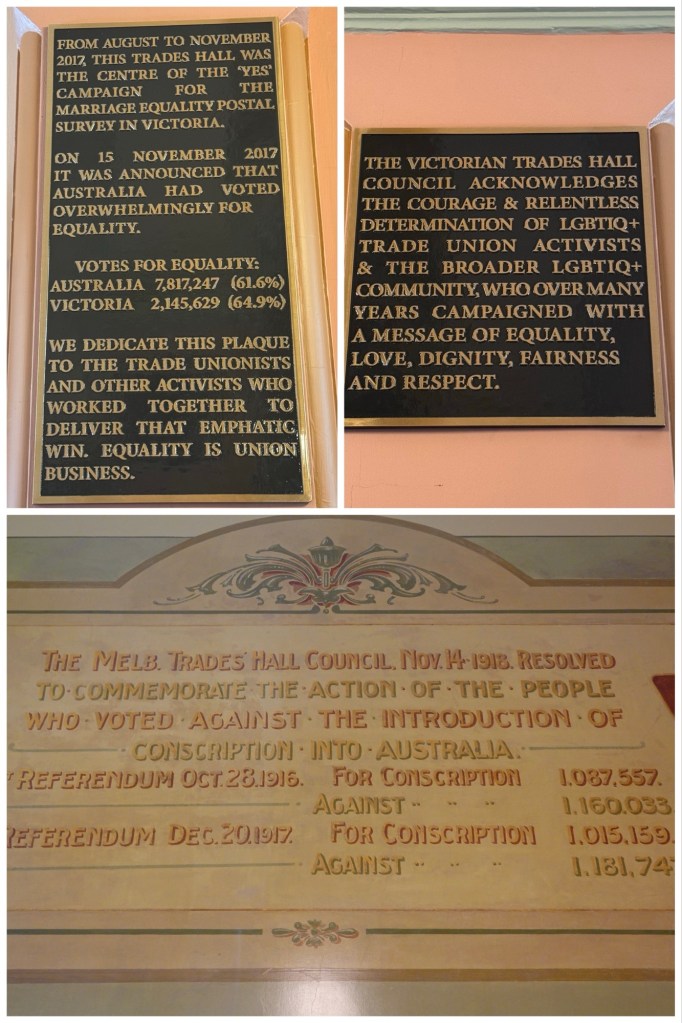
There were also posters, paintings, and plaques recognizing the contributions of trade unionists not only to worker’s rights and working conditions, but to wider social causes and to education.
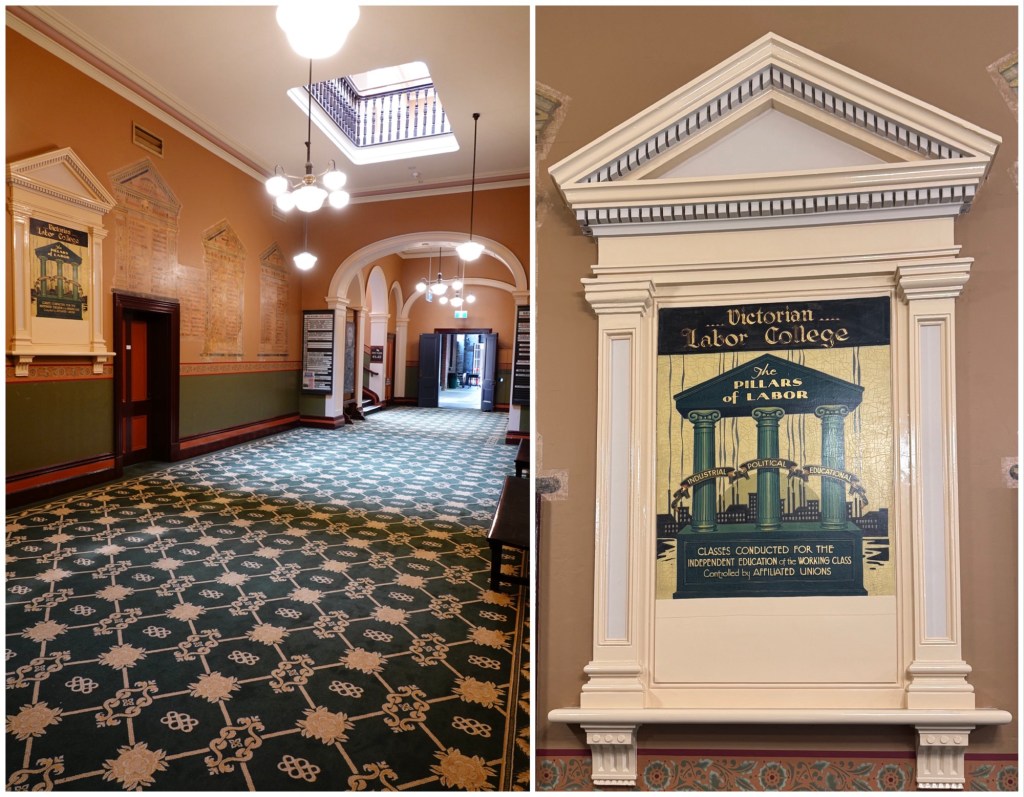
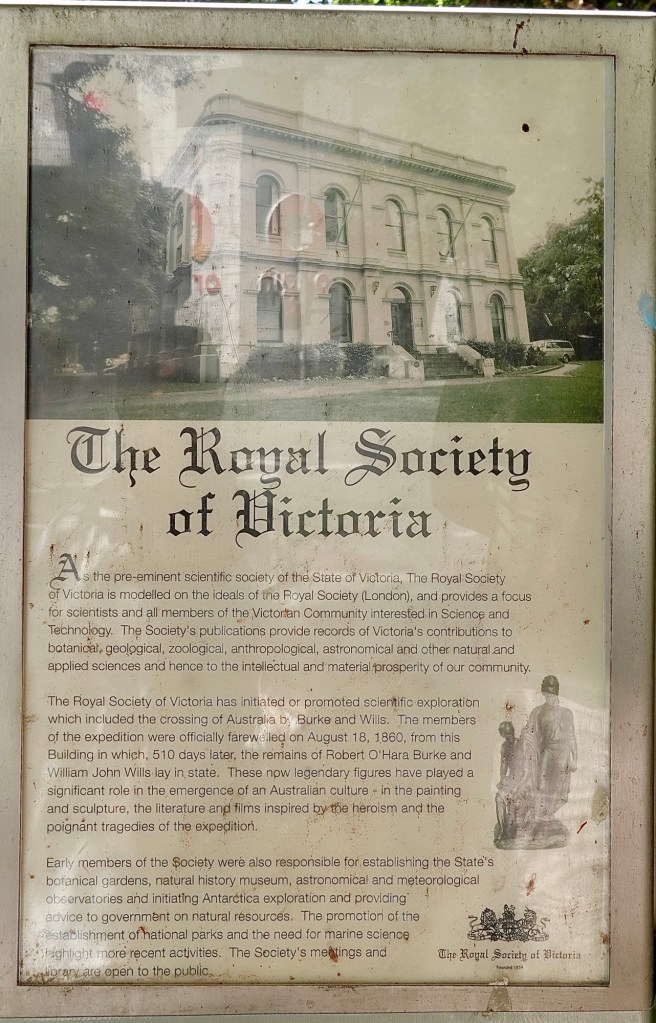
It was a unique glimpse into a part of Australian life that we didn’t expect to see, as was The Royal Society of Victoria which – contrary to its name – is actually a scientific society.
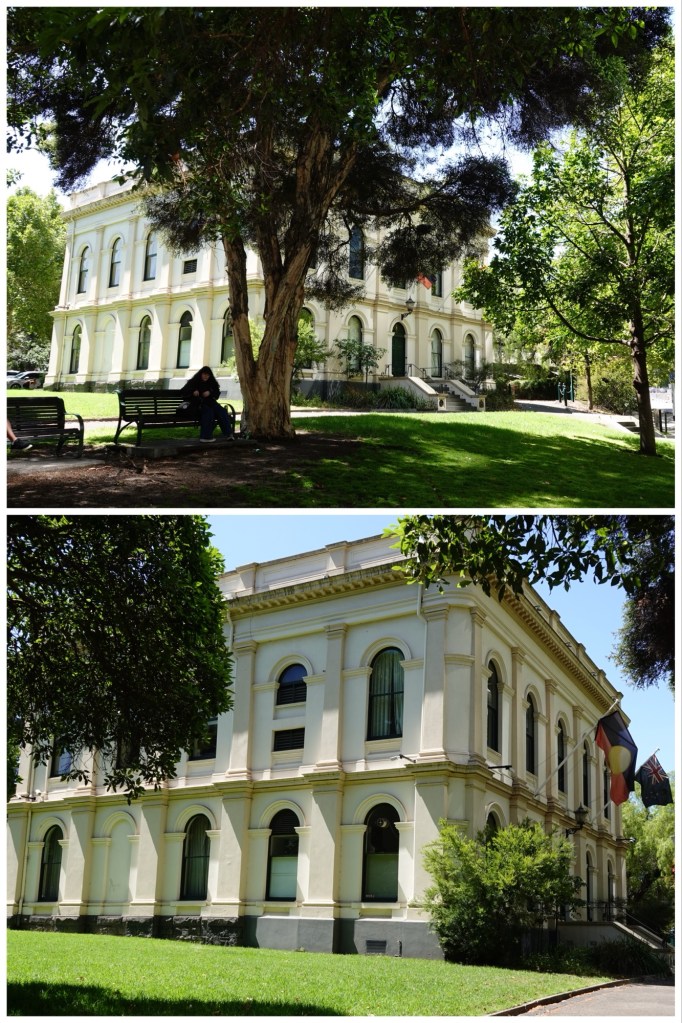
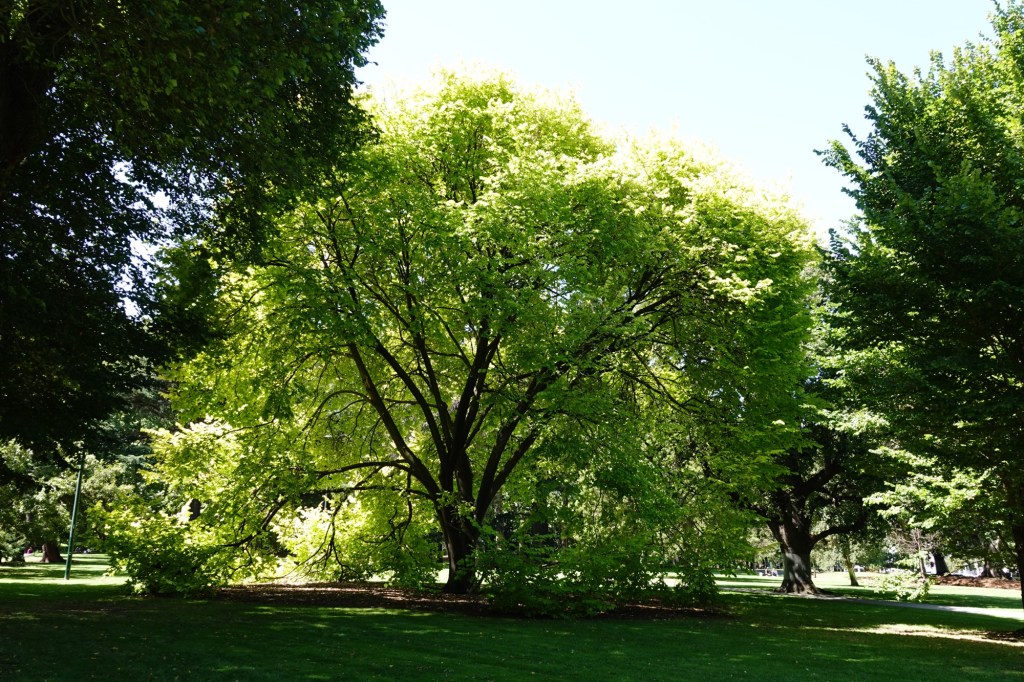
We did expect to see beautiful parks, though, and were not disappointed by Carleton Park, where we were again (as at the library) pleased to see a public space being well used by students and families enjoying the lawns.
The park is also home to the Royal Exhibition Building, erected for the Melbourne International Exhibition of 1880-81. As a ‘Palace of Industry’, it displayed the technologies and achievements of the mechanised age. Huge temporary halls housed exhibits of the latest products from more than thirty nations. Pianos, typewriters, lawnmowers, electric lights, carriages and decorative homewares were all on display. Public taste in Melbourne was changed for ever. The 1880 International Exhibition was the greatest show the city had ever seen, and attracted over one million visitors. A second, even larger world fair, the Centennial International Exhibition, was staged here in 1888. (Wording taken from the plaque on the grounds)
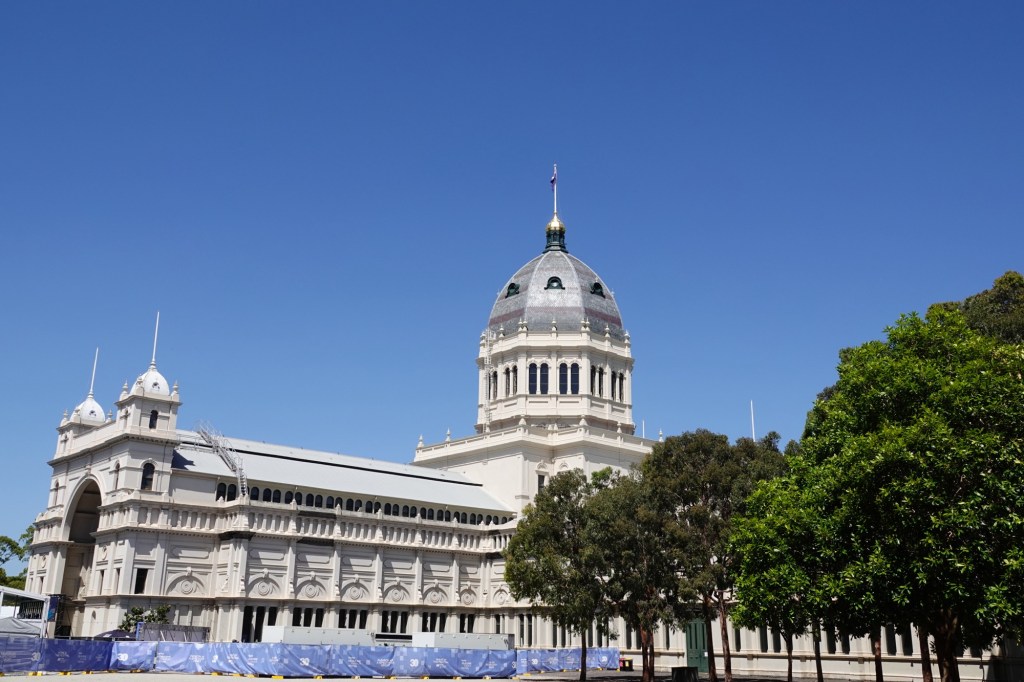
The Royal Exhibition Building is the only surviving ‘Palace of Industry’ from a nineteenth-century world fair on its original site. It is still in use as an exhibition venue, and was hosting the Melbourne Fashion Fair, which was why interior tours were not available.
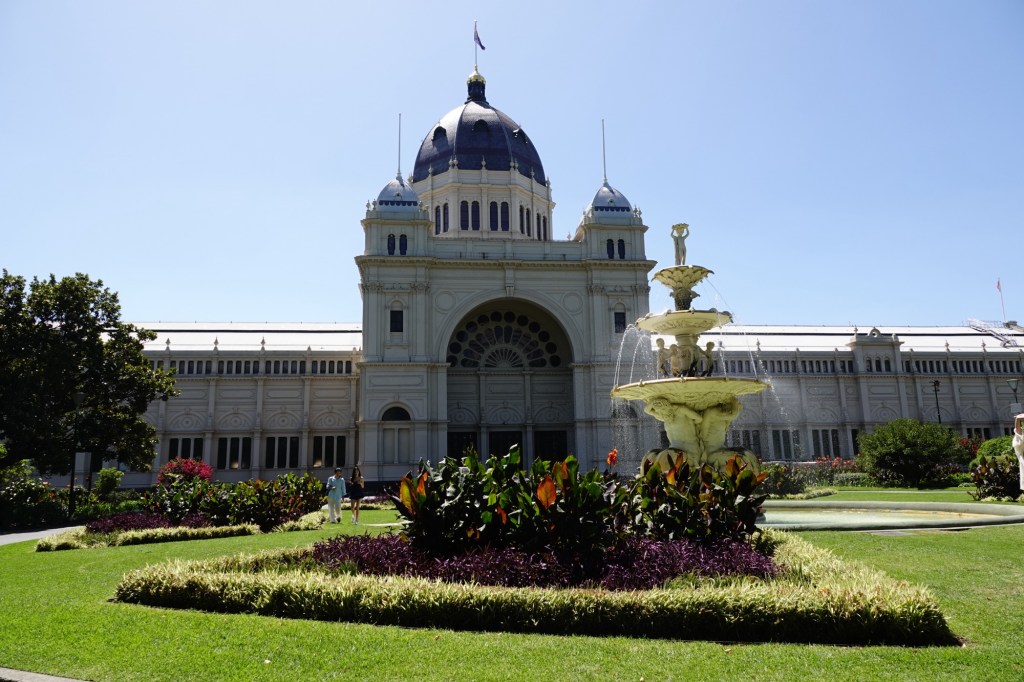
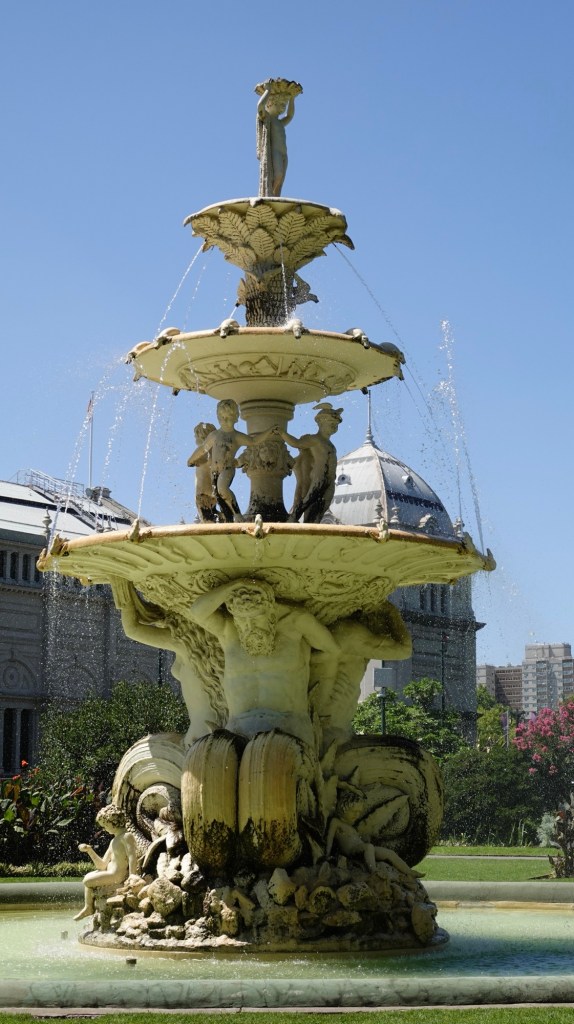
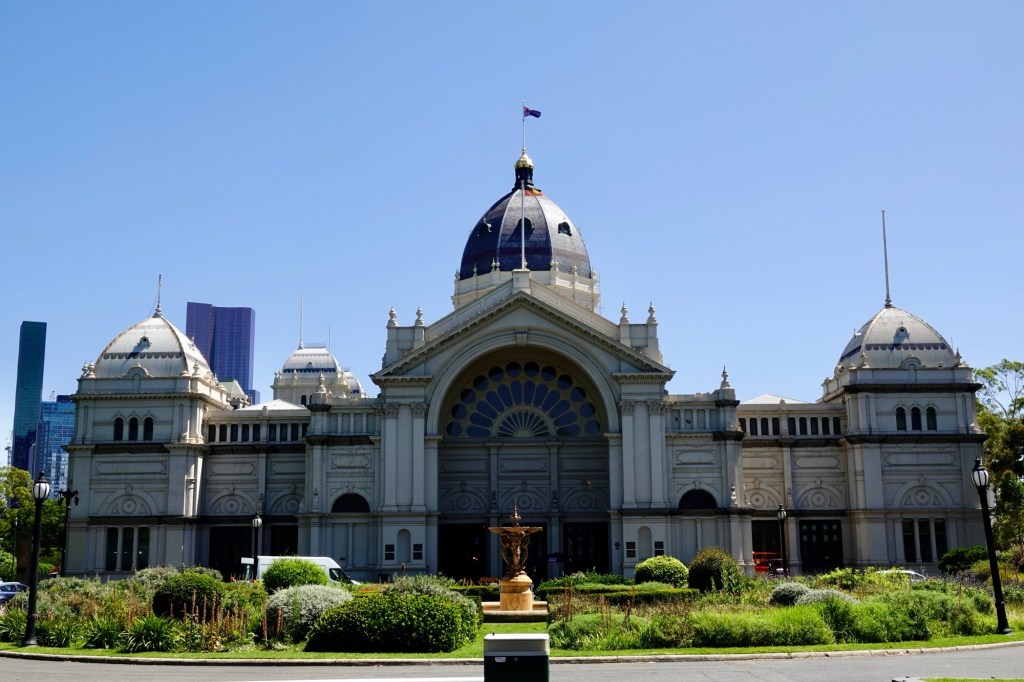
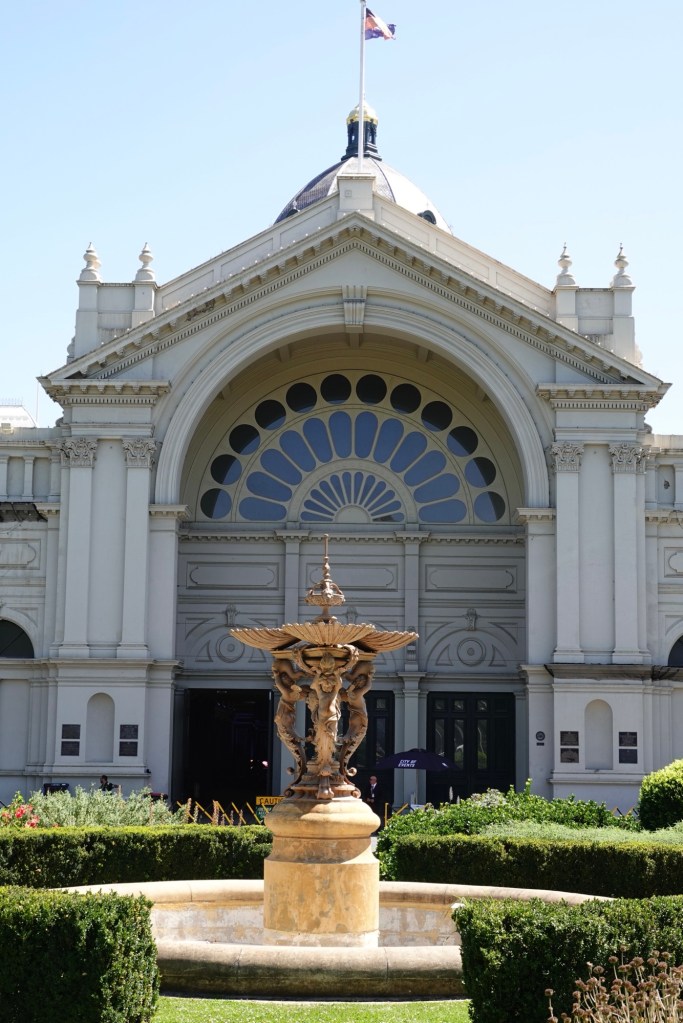
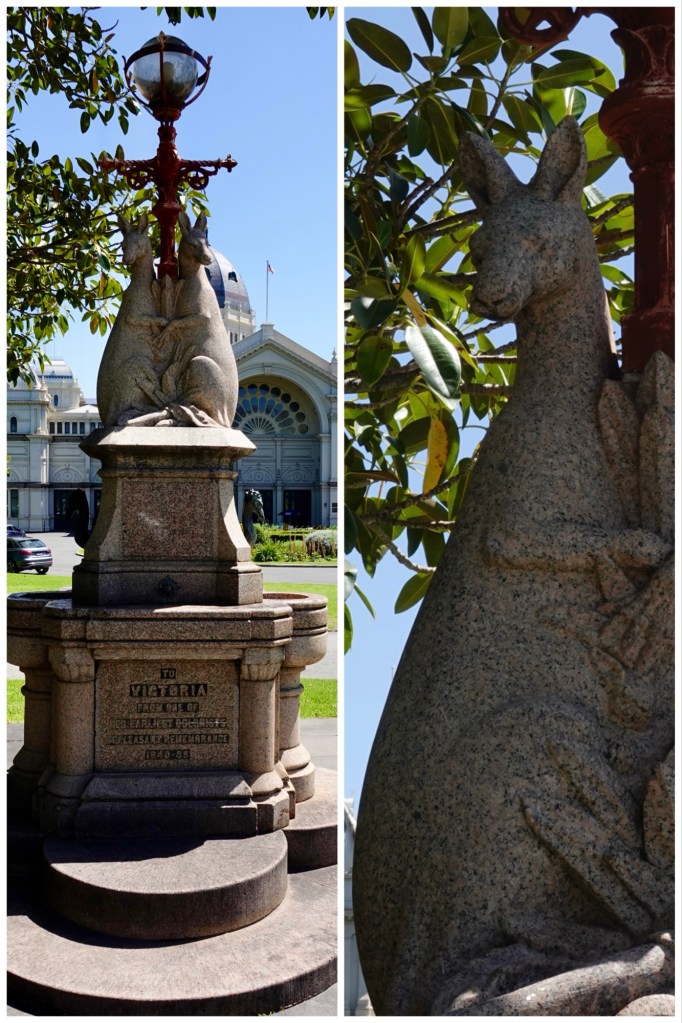
…plus a kangaroo combination fountain and light standard!
The stone of the building was stunning, but apparently not everyone thought so, leading to one of the funniest monuments we’ve ever seen:
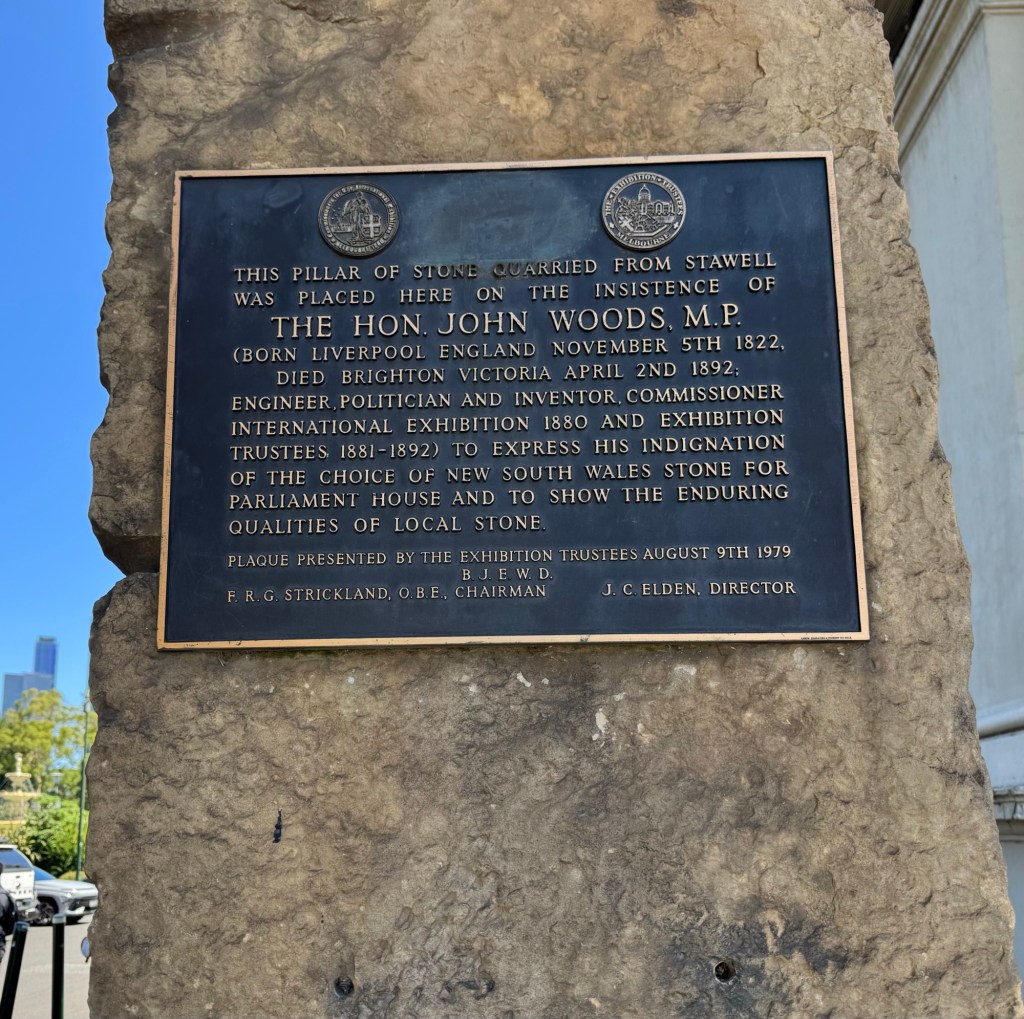
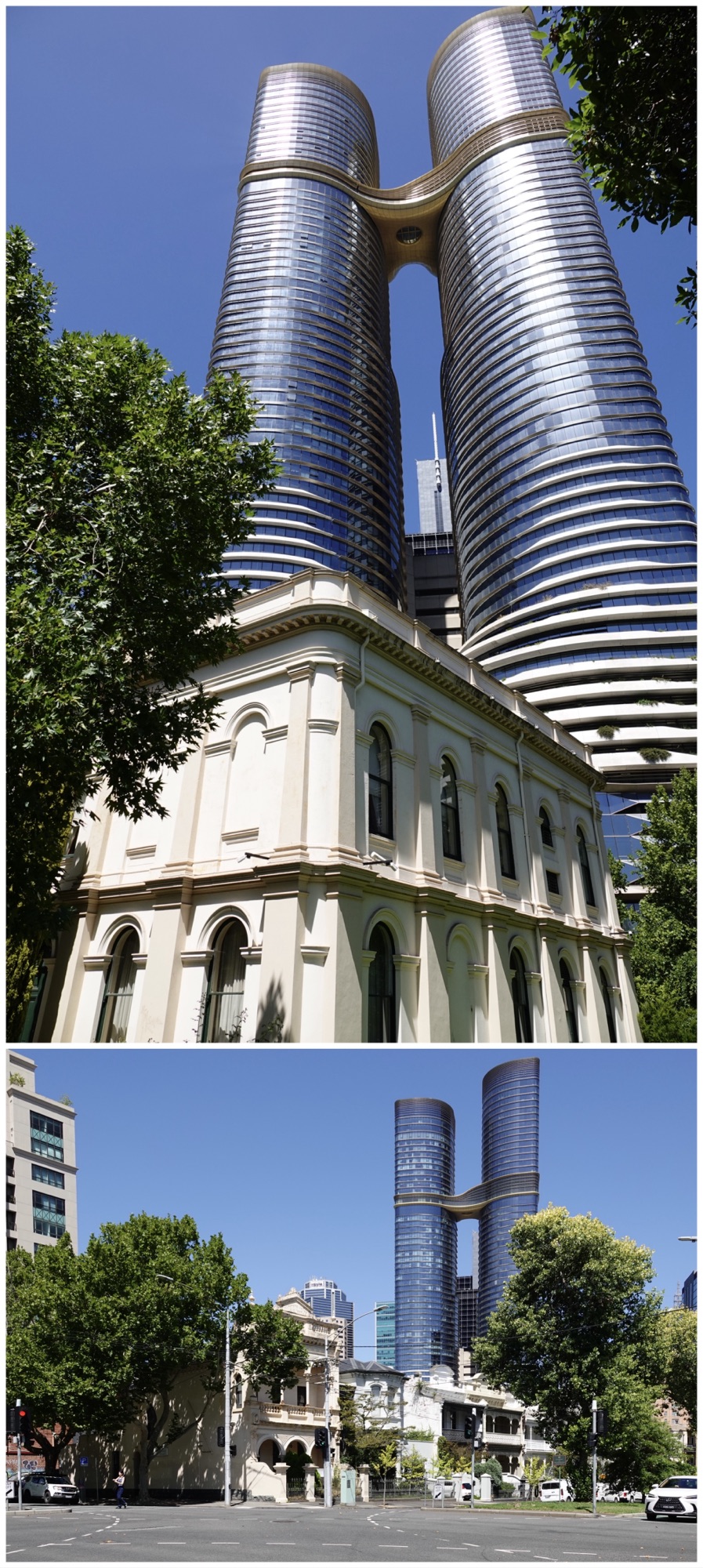
Before heading back to our hotel we gawked at some of the modern architecture that somehow exists in perfect harmony with the Victorian buildings.
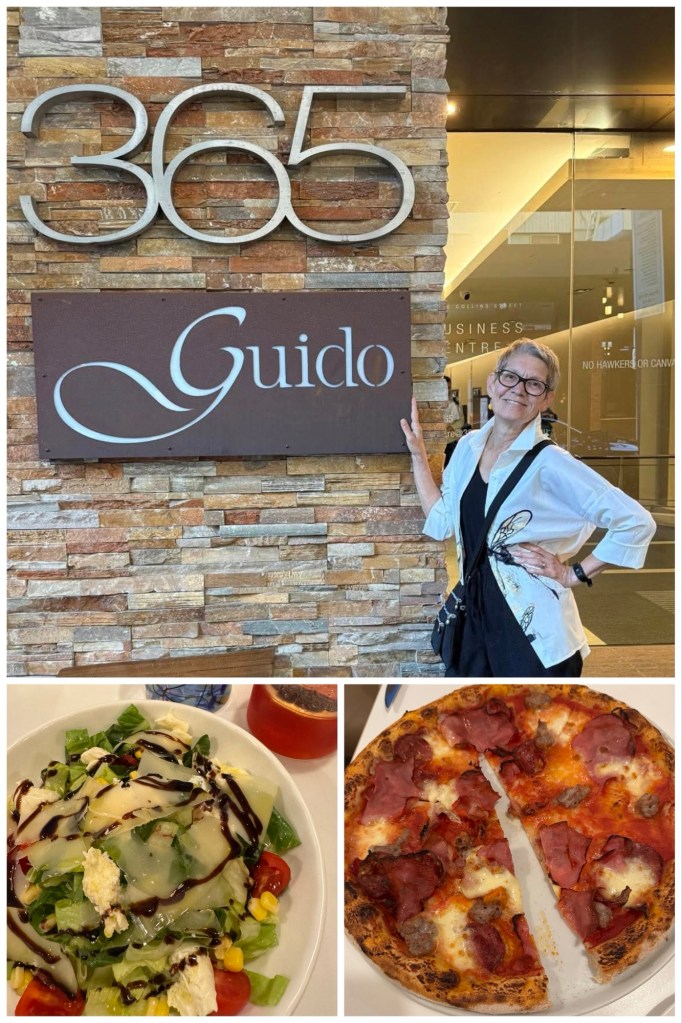
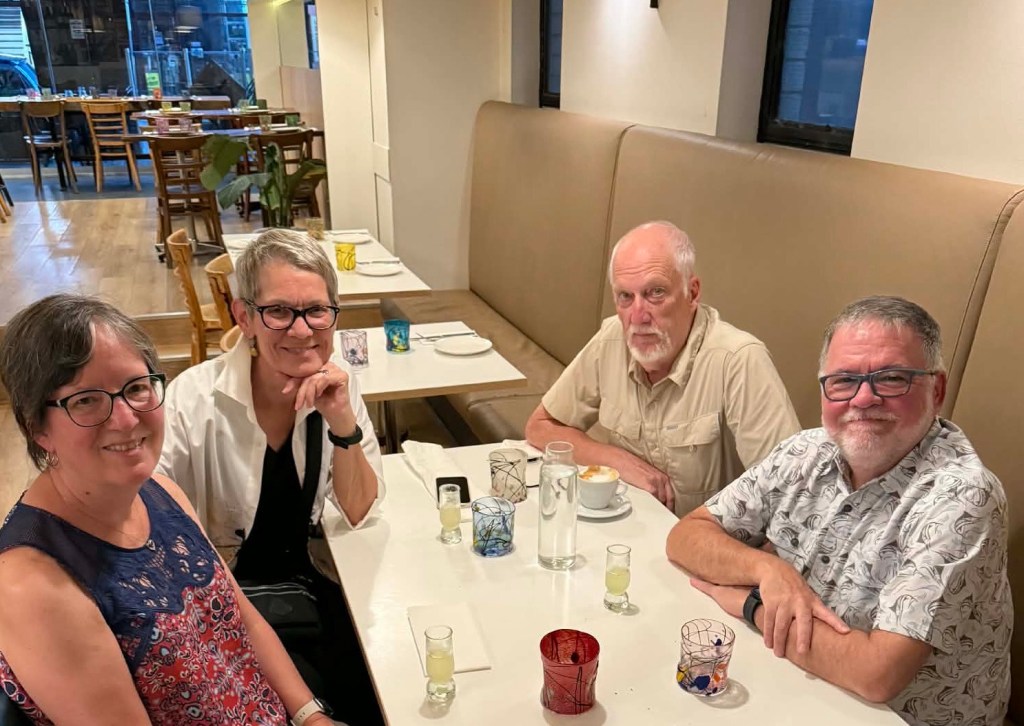
After a short break and snack, it was time to say farewell (over dinner) to new friends Pierre and Lynn, whose time in the Antipodes is sadly coming to an end. Hopefully our paths will cross again.
Tomorrow, another tram ride. Destination TBA.
 Rose and Ted’s Excellent Adventure
Kitty = Catty Corner
LikeLike
Not in Canada! LOL
Catty corner is mostly used in the Southern US from what I can glean
LikeLike
Southern part got cut off! ClayFollow and keep up with our retirement adventuresInstagram: @ClaynMike
LikeLike
Southern US
LikeLike
I had said southern USA originally😂ClayFollow and keep up with our retirement adventuresInstagram: @ClaynMike
LikeLiked by 1 person