Touring Adelaide’s Botanic Gardens was on my list of “must-dos” during our visit, but I ended up surprised that it was the fauna and the art installations, not the flora, that were the highlight.
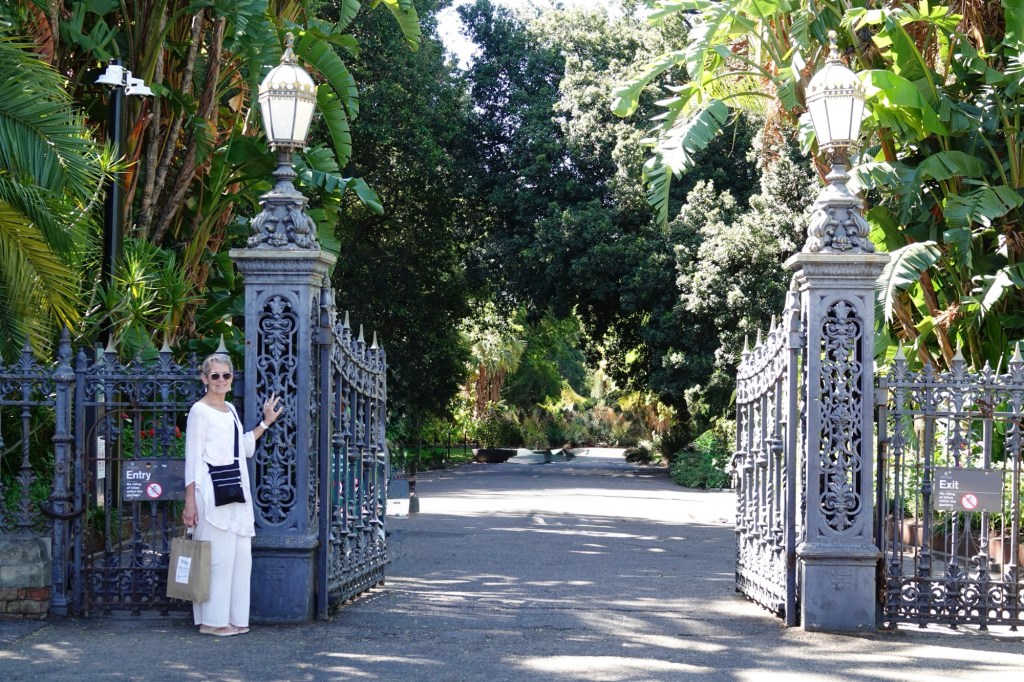
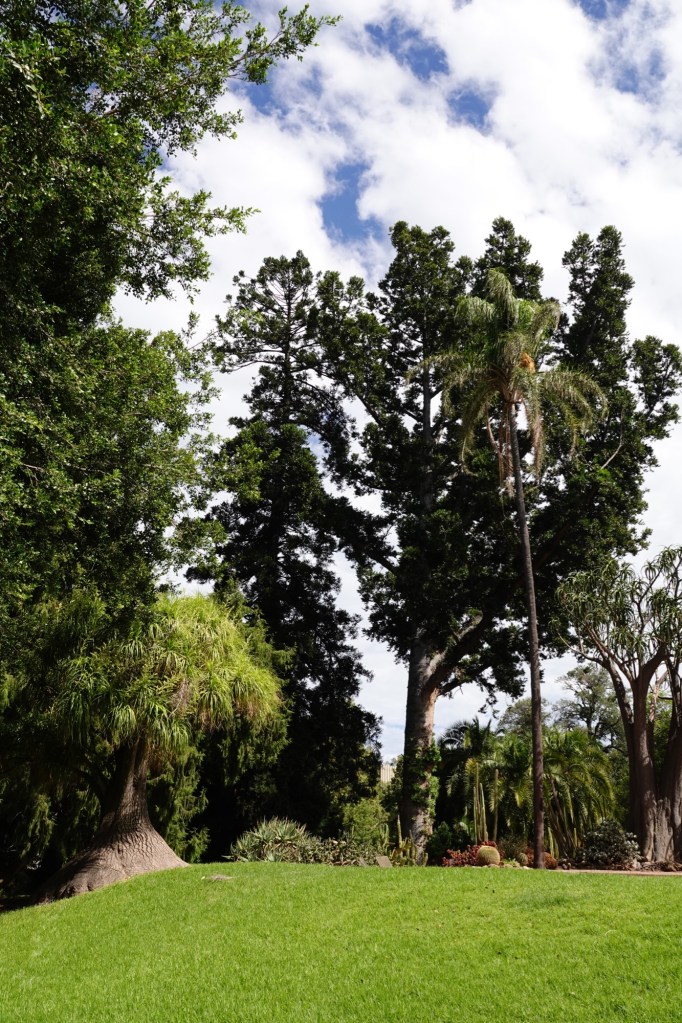
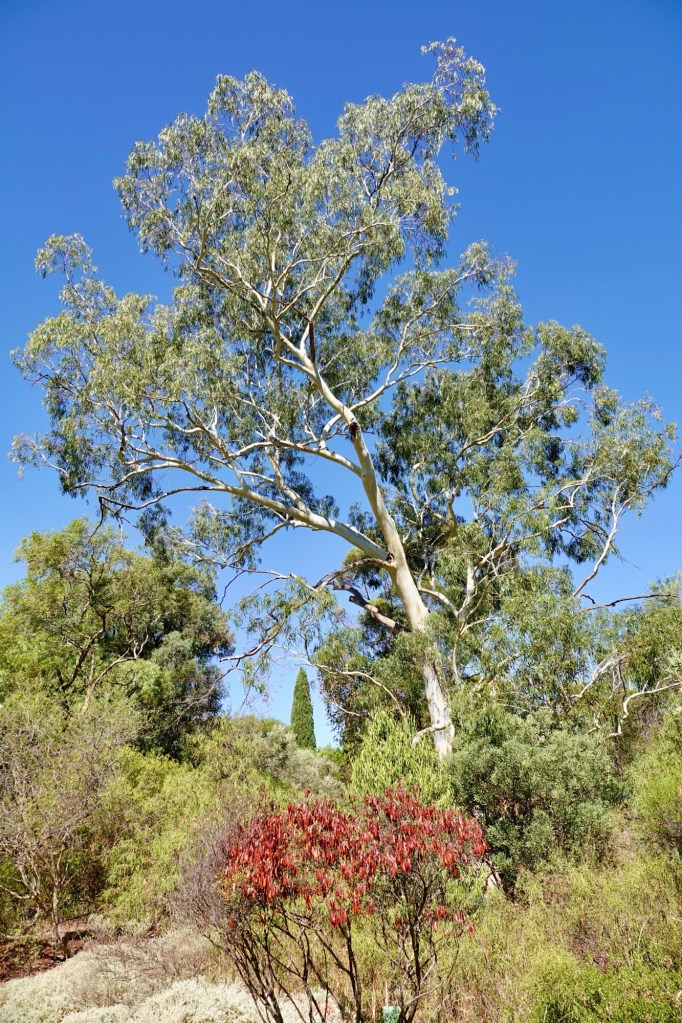
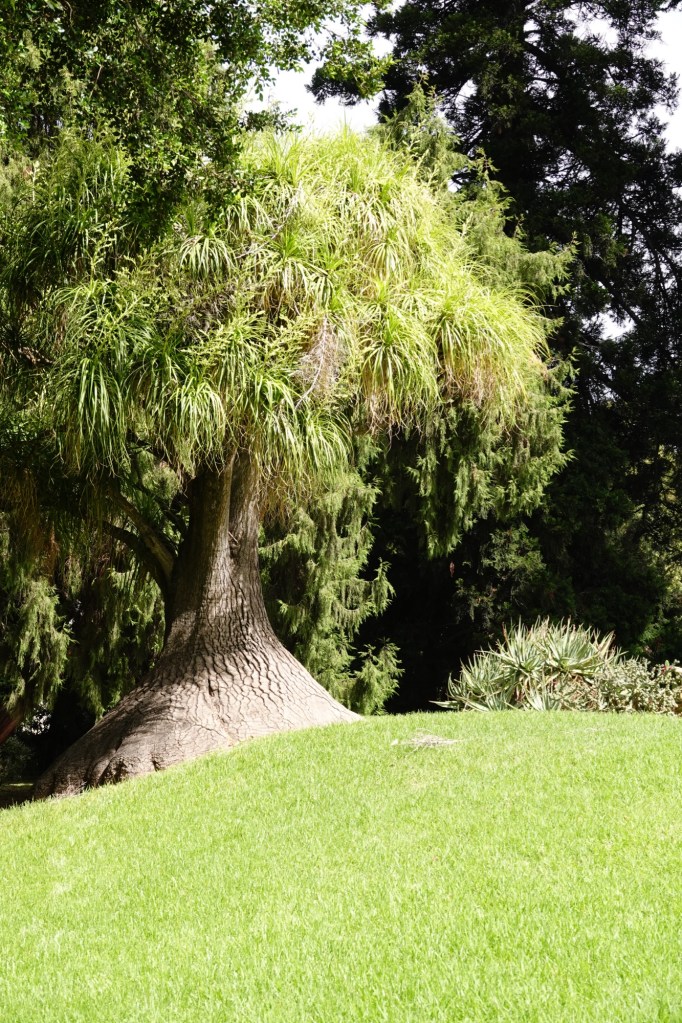
When compared to the Royal Botanical Gardens in Hamilton Ontario, or Van Dusen Botanical Gardens in Vancouver, or the simply magnificent Kew Gardens in London, Adelaide’s gardens in summer feel more like arboretum than “garden”, because there are relatively few flowers in bloom. Yet it is a true botanical garden in that its staff study plants, preserve seeds, and chronical their work in ensuring that plant life is properly cared for.
Despite the lack of great swaths of colour, it is a huge and beautiful green-space right next to Adelaide’s Central Business District and adjacent to the Adelaide University campus and Adelaide Botanic High School, and features some truly spectacular architecture.
Partway along the main path into the gardens is The Dead House.
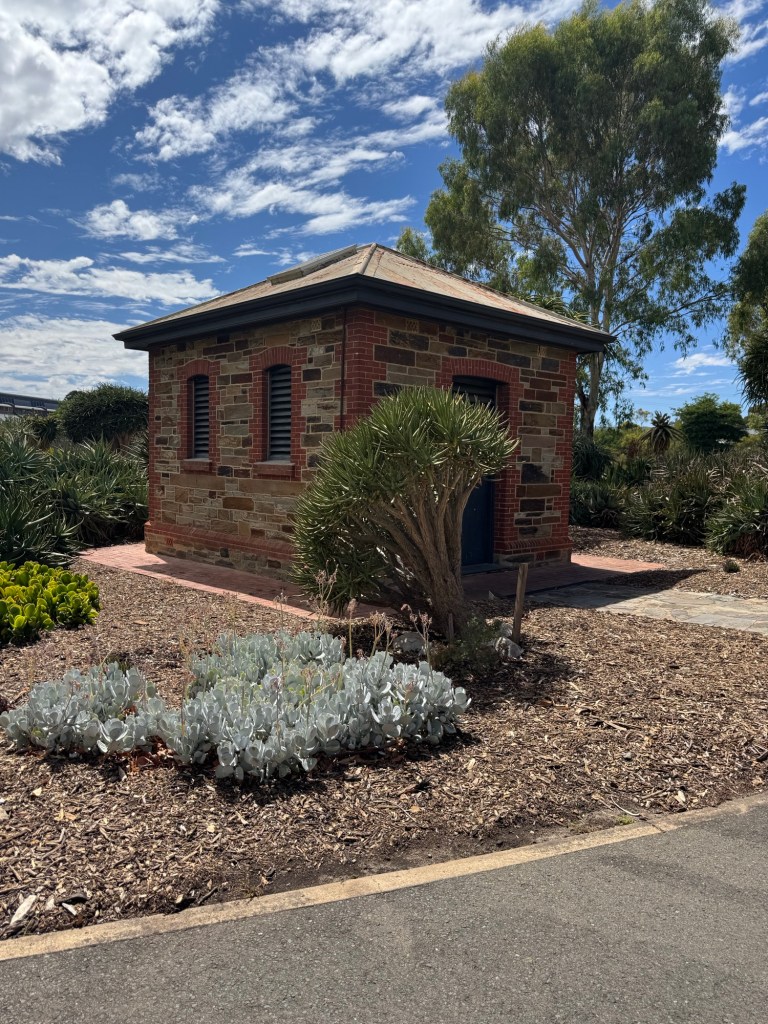
The Simpson Shade House, built in 1919, still allows the Garden to display exotic plants (rhododendrons magnolias, camellias, primulas, and ferns) that couldn’t otherwise survive Adelaide’s searing heat.
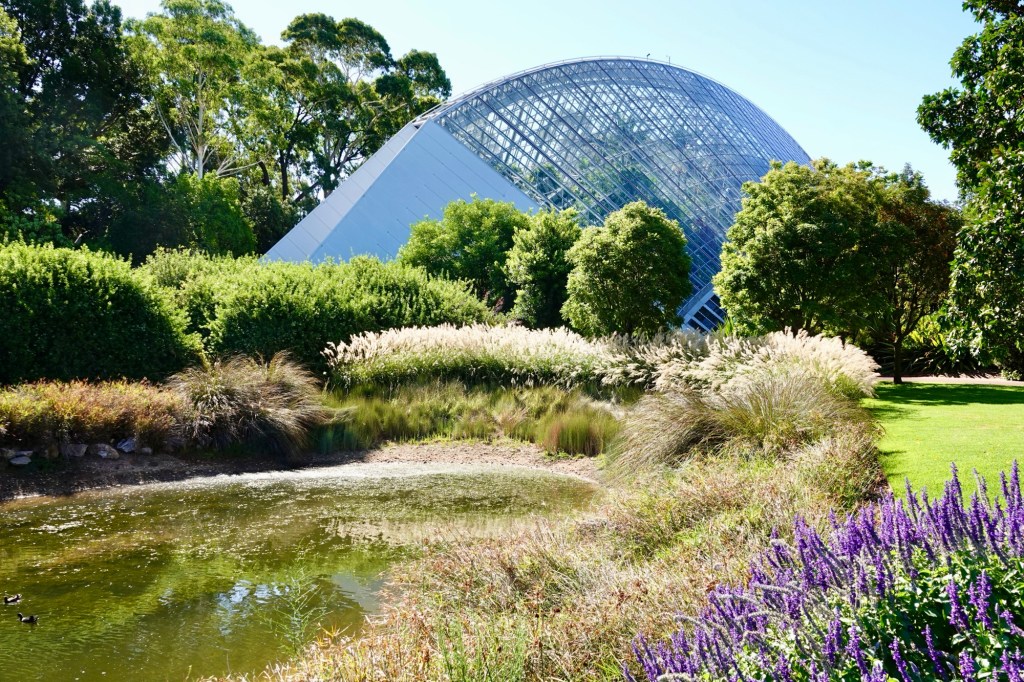
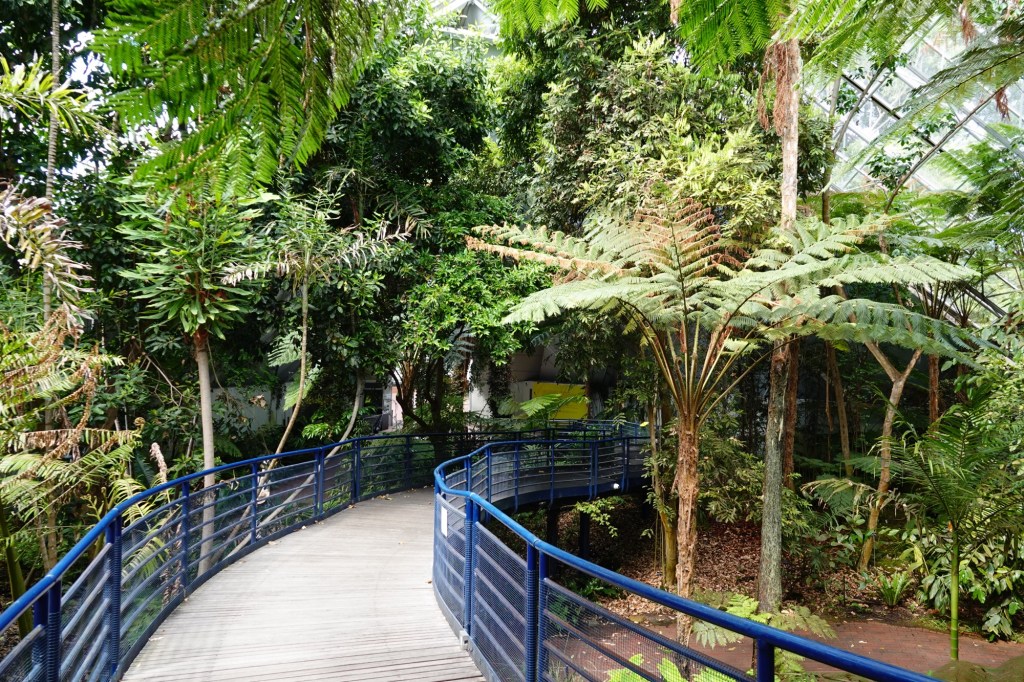
Looking from a distance like a crashed UFO, the Bicentennial Conservatory building houses a variety of tropical plants.
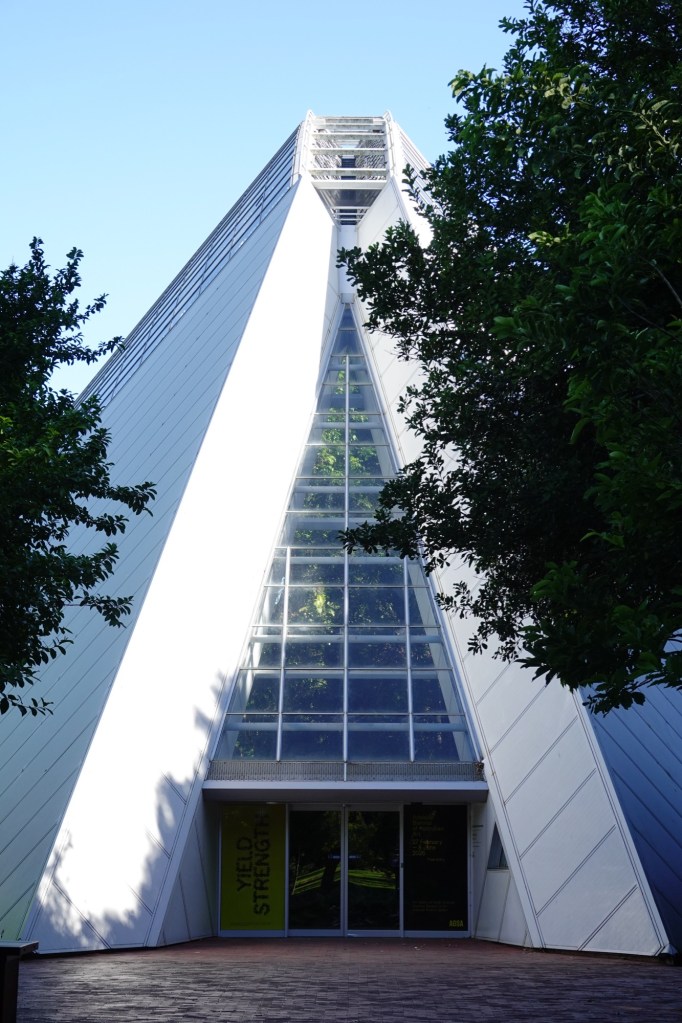
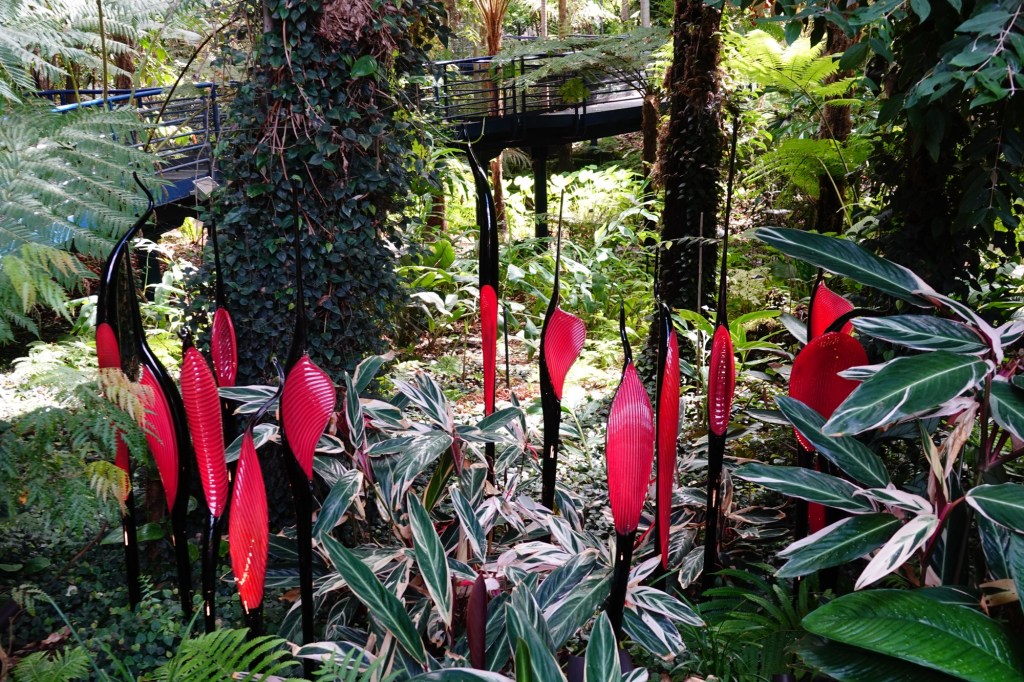
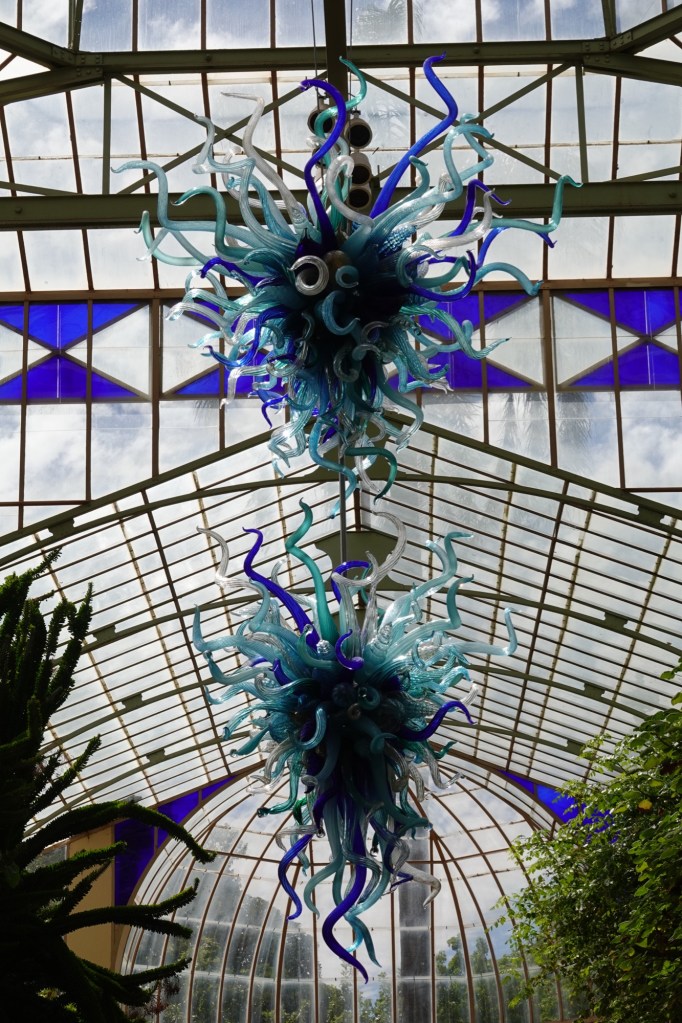
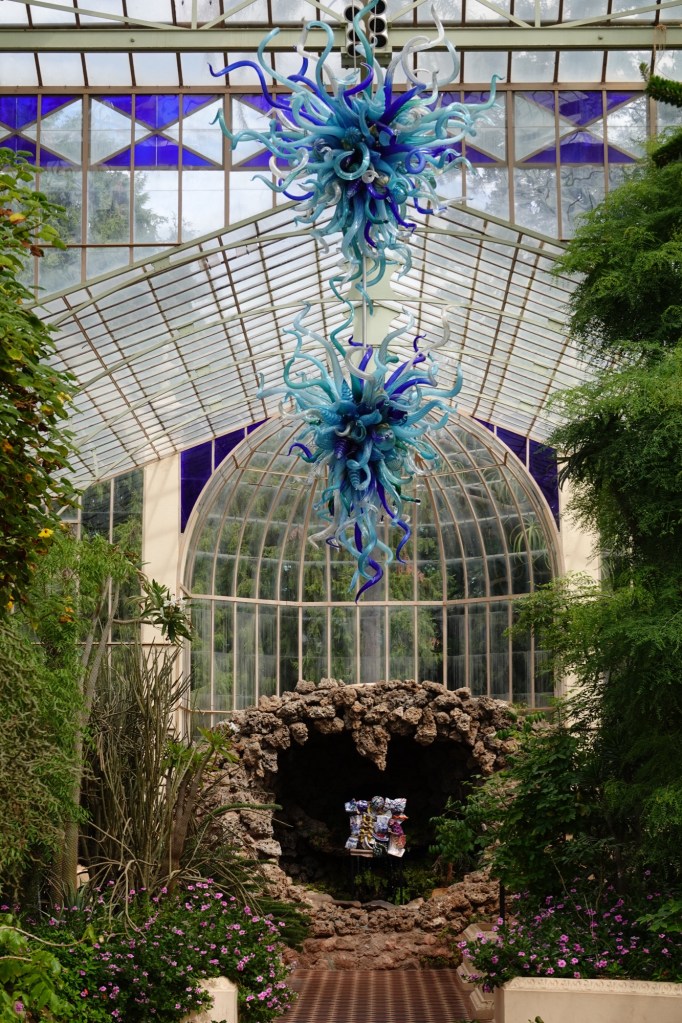
As we entered the Conservatory, we found an installation of beautiful Dale Chihuly glass :
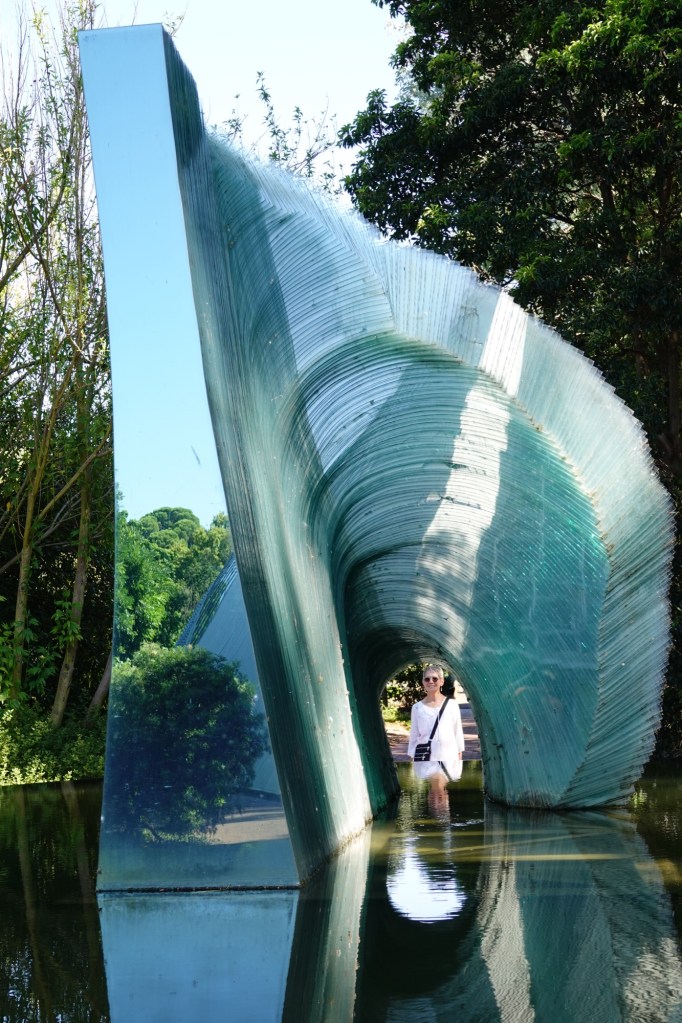
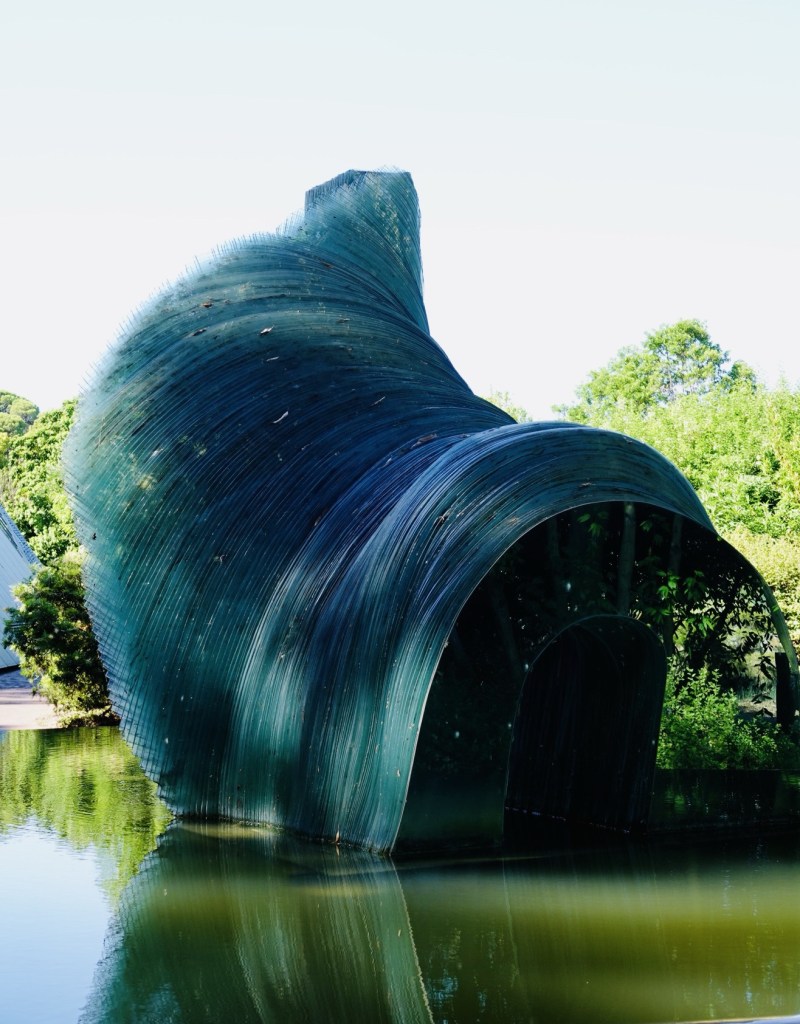
On the path leading up to the Conservatory is a stunning piece called Cascade, made by Australian artist Sergio Redegalli in 1988 for Australia’s bicentennial. It is made out of 500 pieces of 6mm thick turquoise glass, creating an effect like layers of mica, intended to look like an ocean wave.
The Palm House is arguably the Gardens’ pièce de résistance. It features in just about every promotional photo of the Gardens.
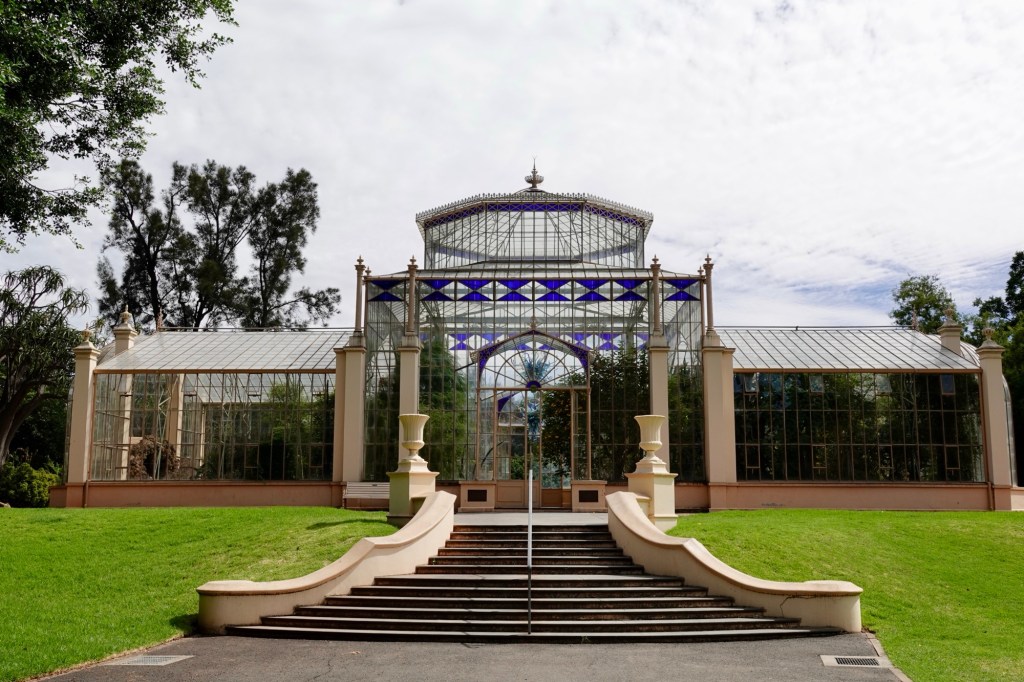
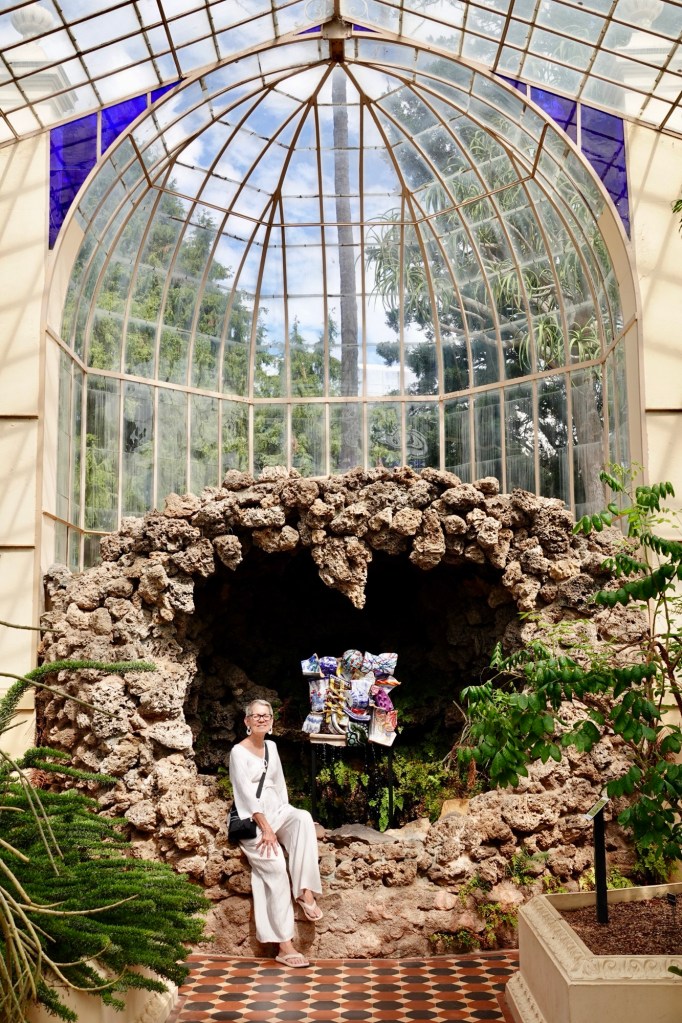
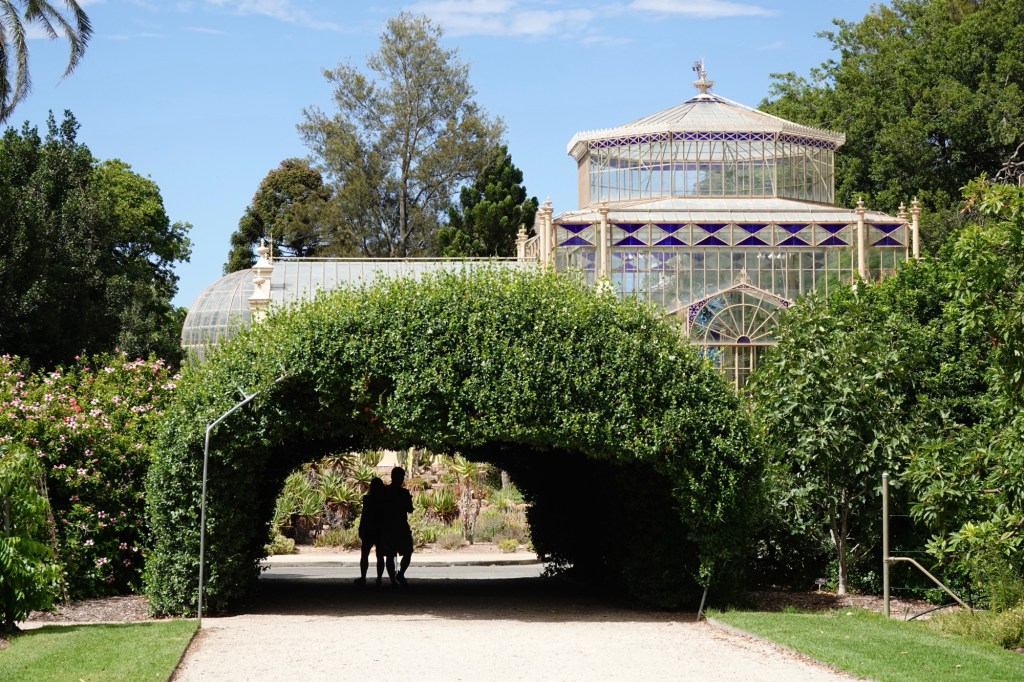
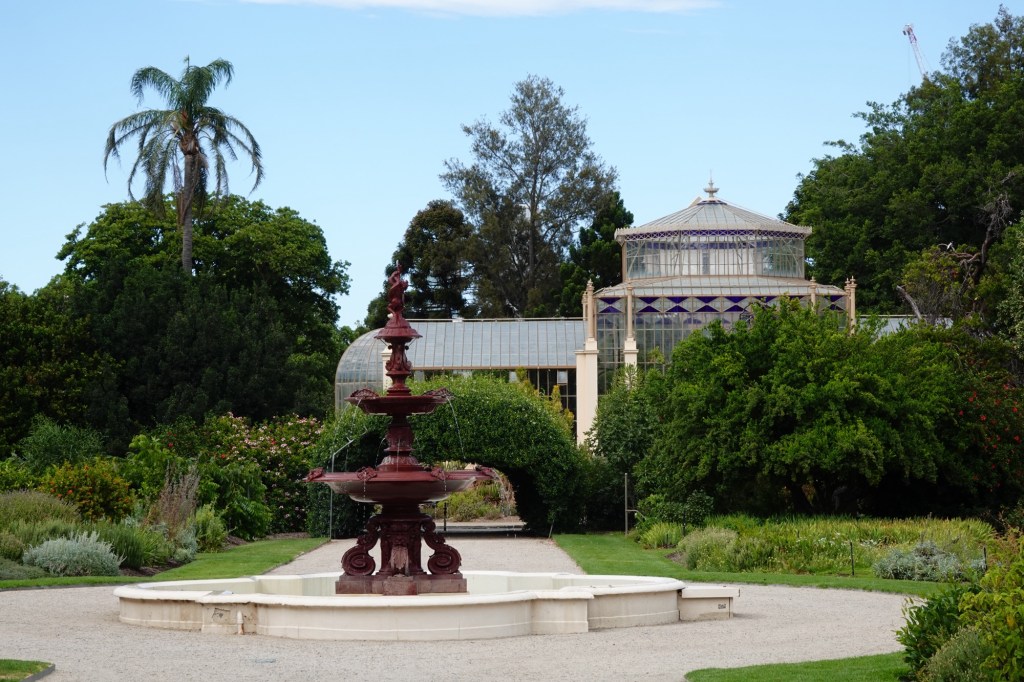
Outside the Palm House, a beautiful Victorian style fountain, and a thirsty Rainbow Lorikeet.

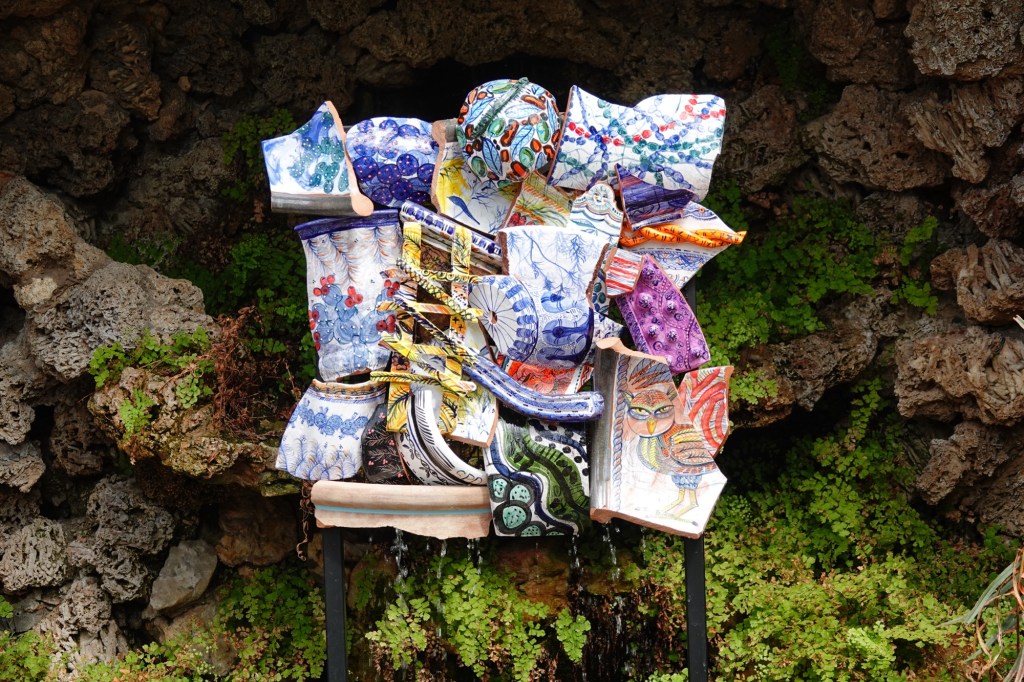
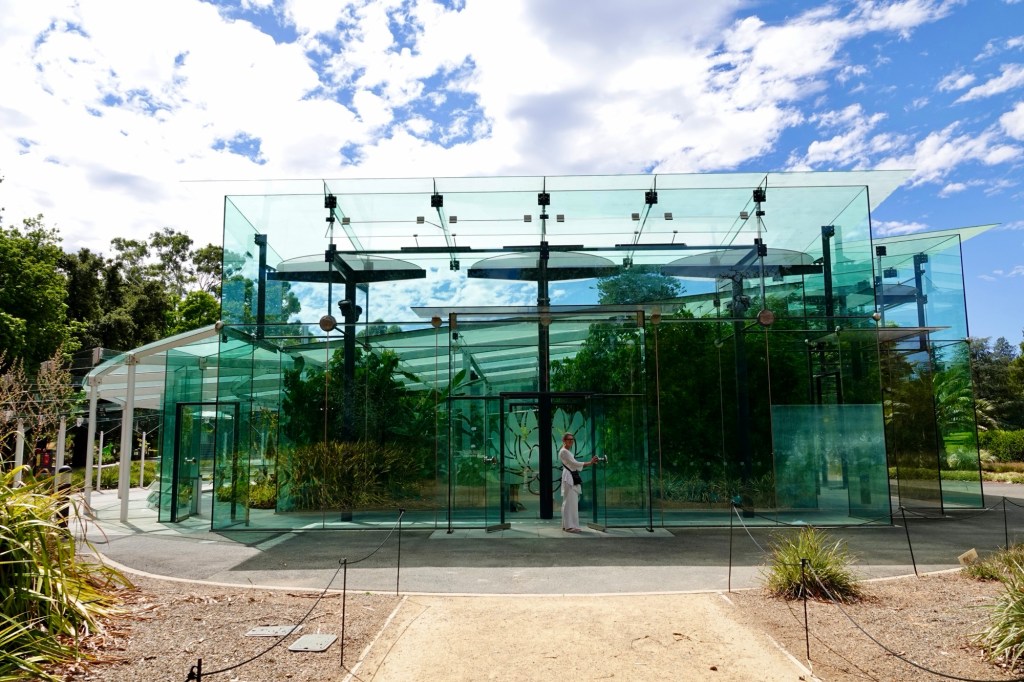
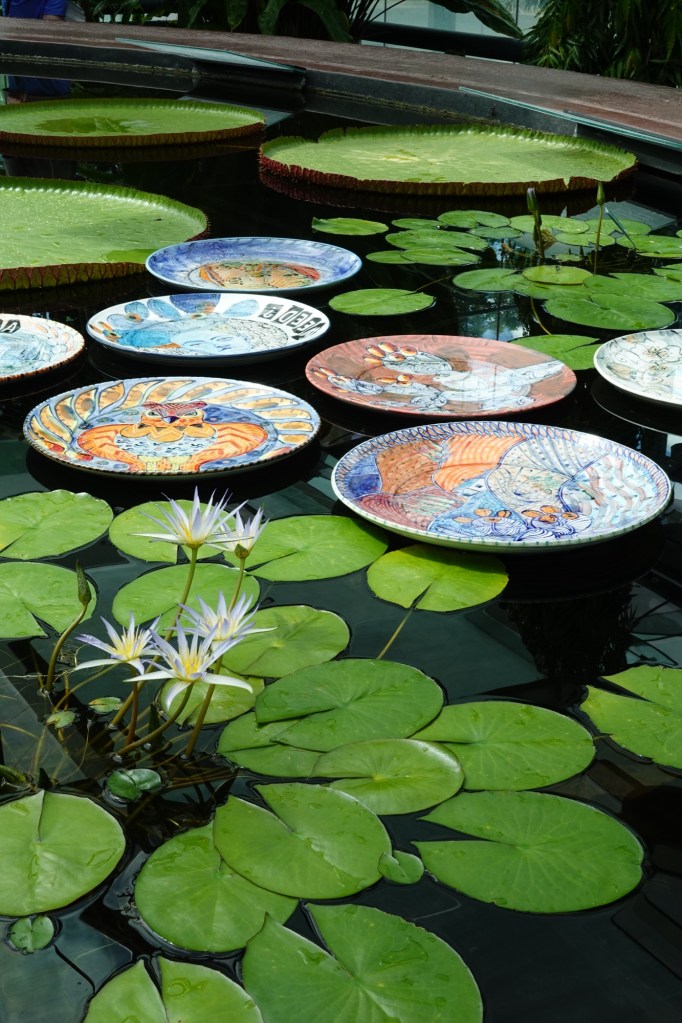
The Amazon Waterlily Pavilion, although fairly small, was made especially beautiful by the addition of floating ceramic plates in an installation called Floating Offerings created by Australian artist Giuseppe Matteo Pappalardo.
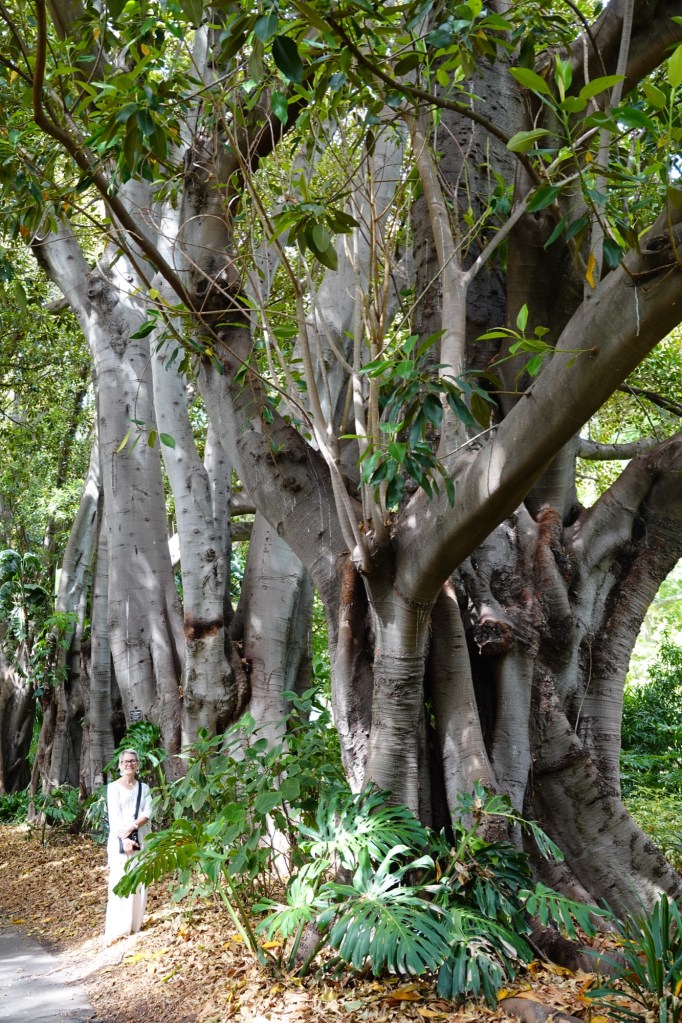
Along Ficus Avenue, we were dwarfed by the massive Moreton fig trees planted in 1866.
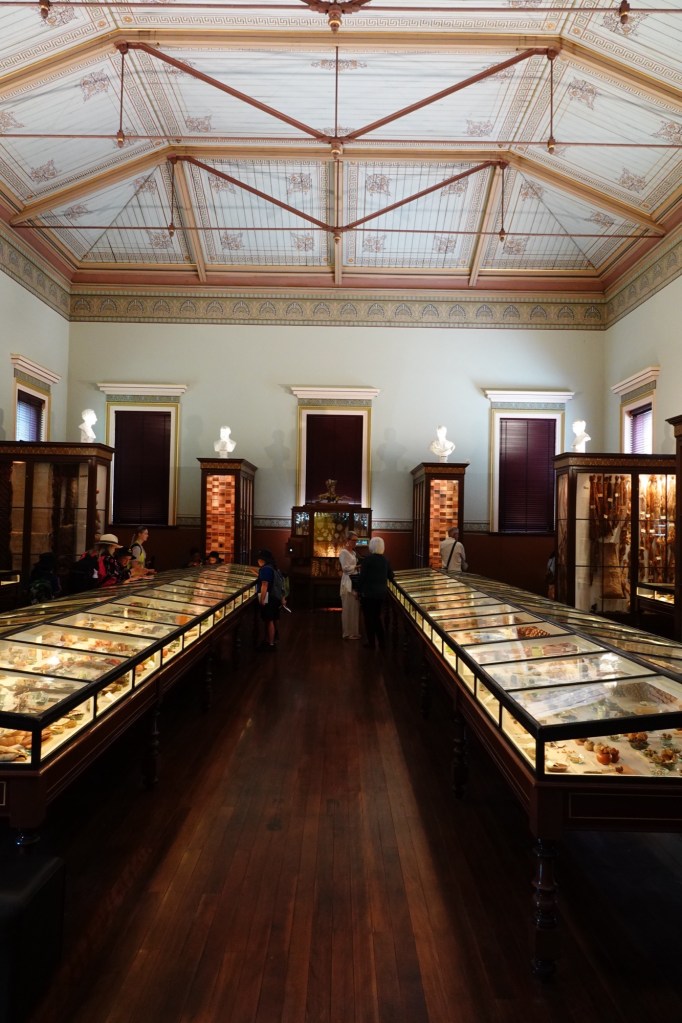
The Gardens held one big surprise for us: the only remaining Museum of Economic Botany in the world – although the curator on duty told us that Kew Gardens had something similar at one point.
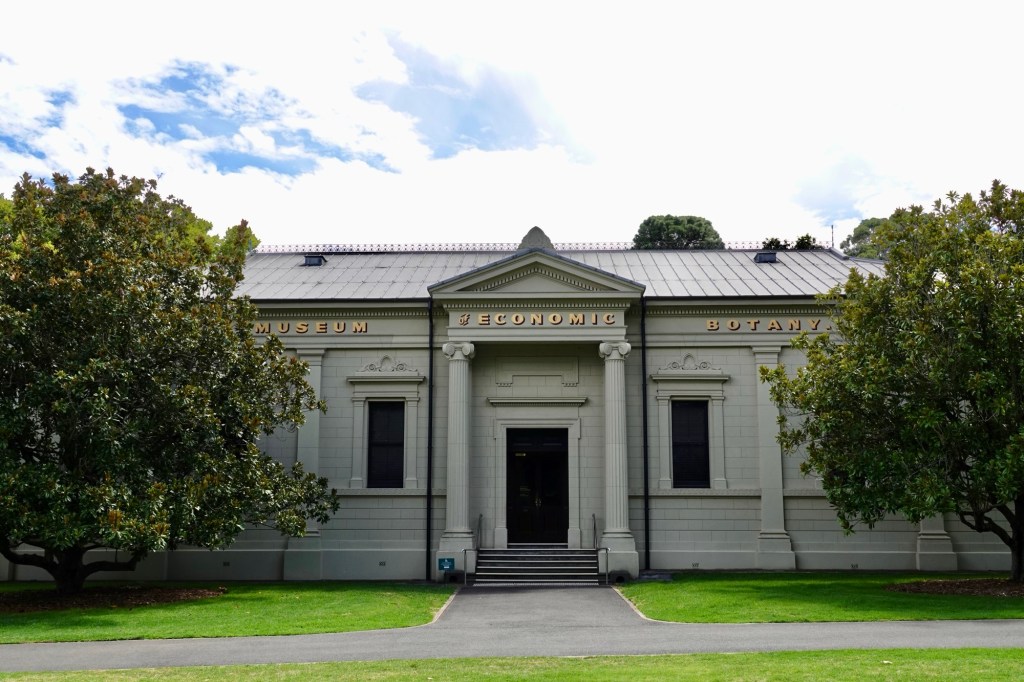
The Garden’s second director, Richard Schomburgh, commissioned this impressive Greek Revival building to display plants of economic importance and to encourage colonisers to cultivate plants that could turn a profit for themselves, the colony, and the British Empire.
In the central cases he grouped fruits and seeds according to taxonomic families, while vertical cases showed how, across the globe, plants are used for food, fibre, timber, dyes, and medicine.
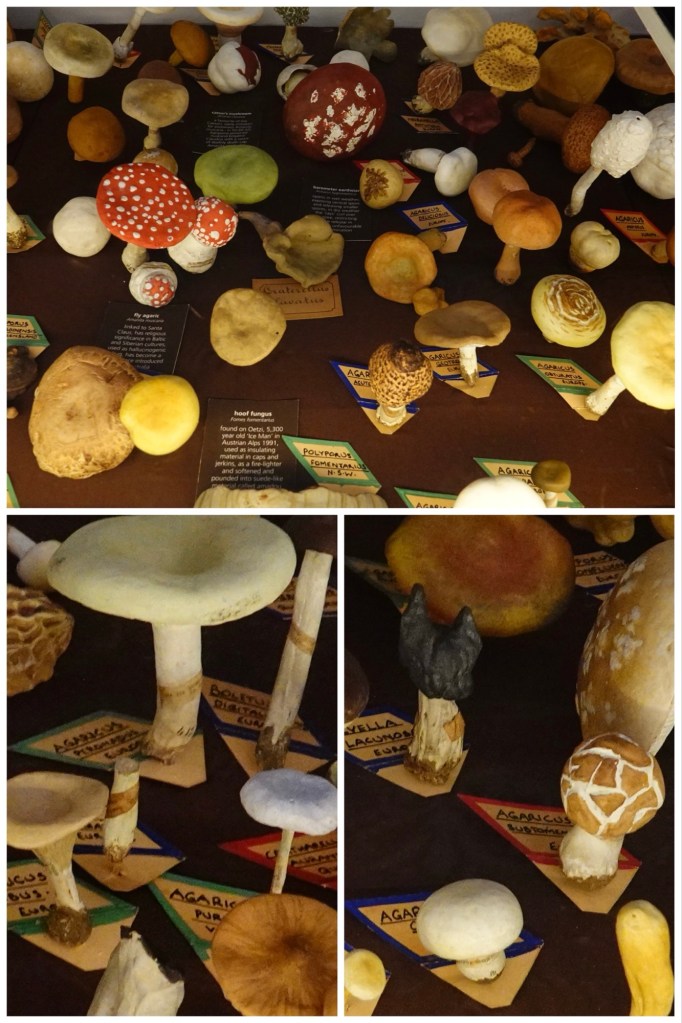
– edible species in blue, poisonous in red, and harmless in green.
The museum has on display the original receipt for the models.
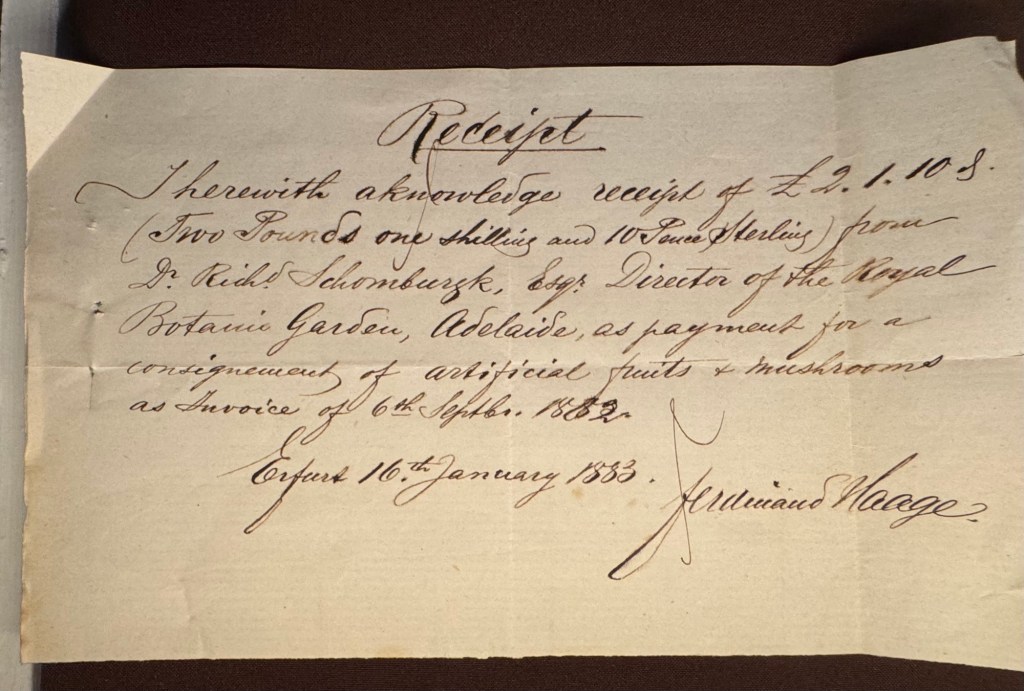
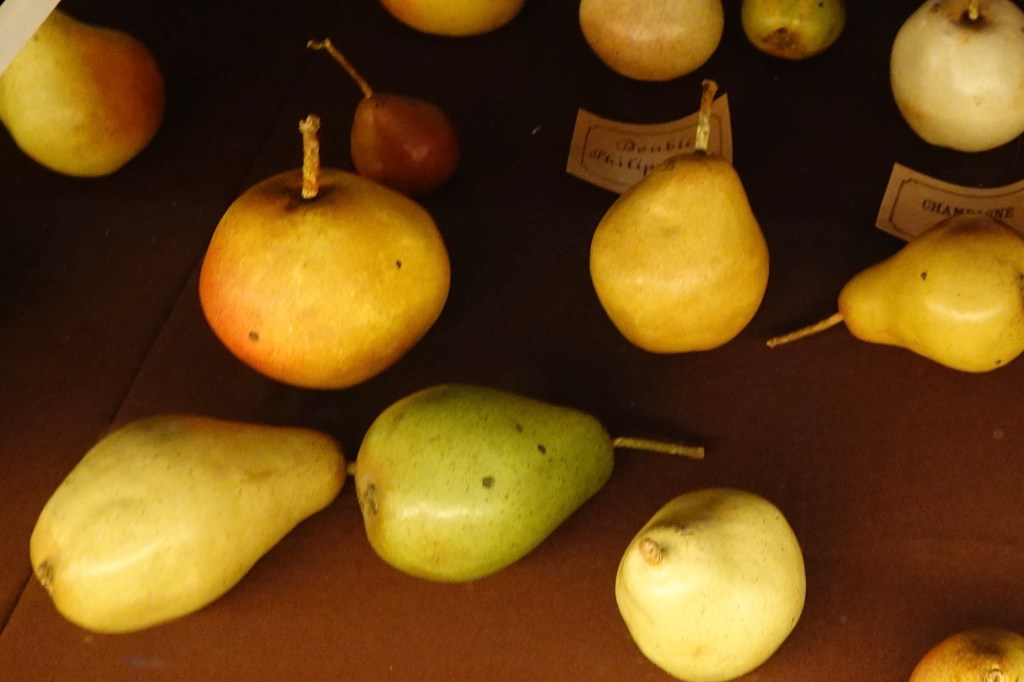
The models were incredibly realistic, which was impressive in itself, but even more-so when we learned that they were created in papier maché! The fruits looked good enough to pick up and bite into, and also reminded me a little of German marzipan confections.
The Museum’s fortunes ebbed and flowed, but in 2008 its exterior and interior were restored and its rich collection reorganised, capturing the display much as it was when it opened in 1881.
It was one of Adelaide’s “searingly hot” days, so before we perished of heat, it was time for a scone break under the shade of the eucalyptus trees.
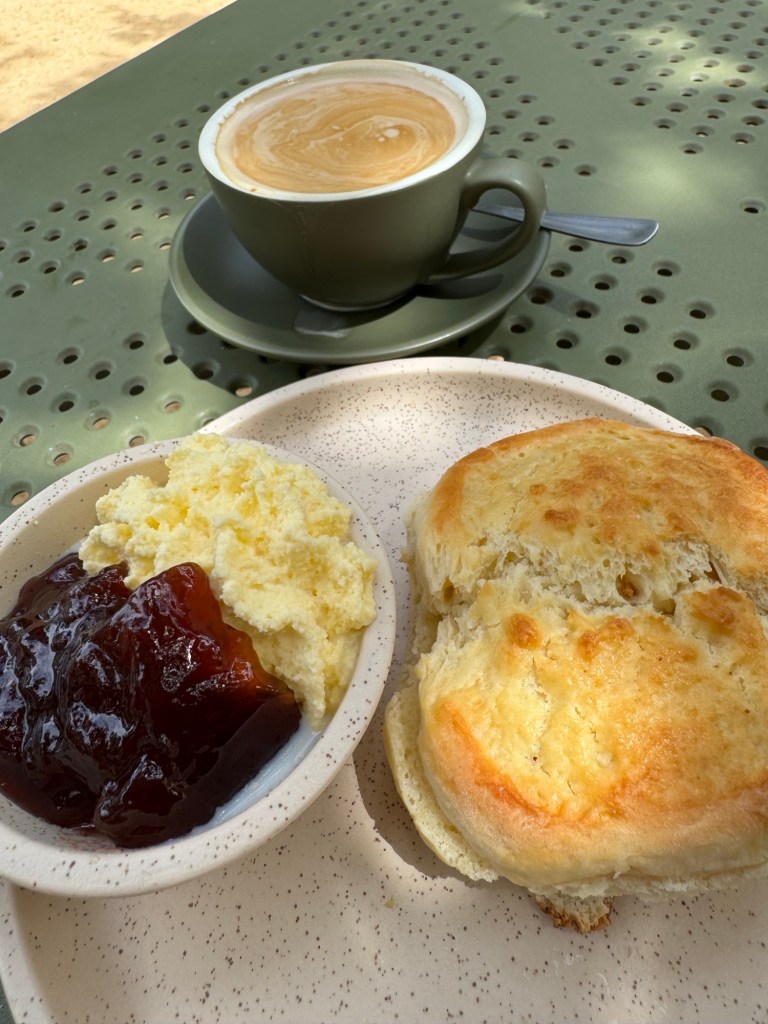
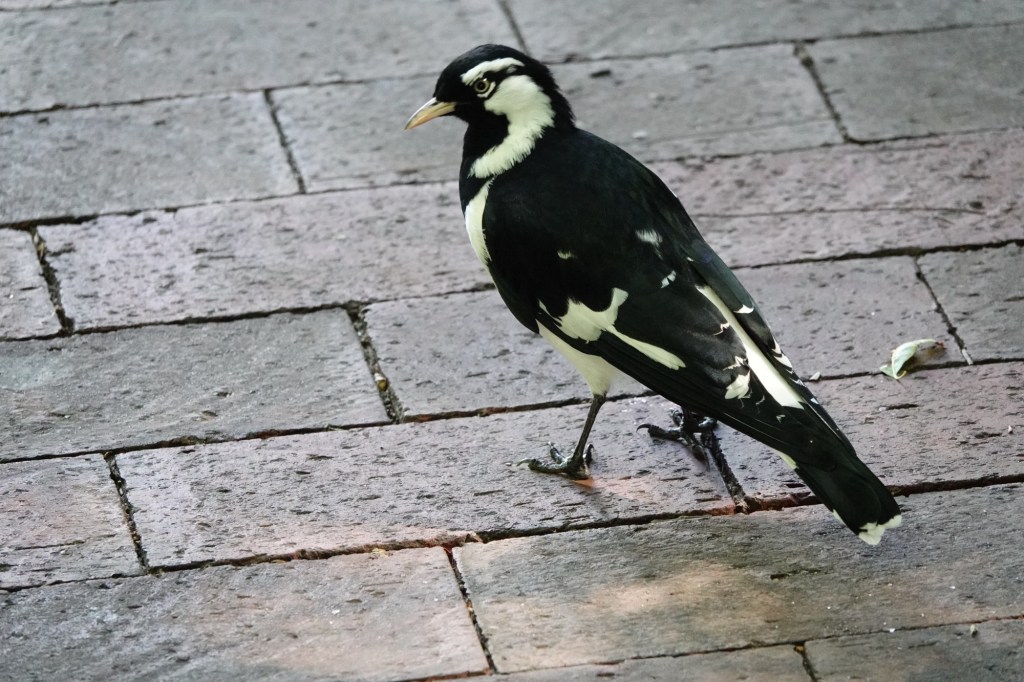
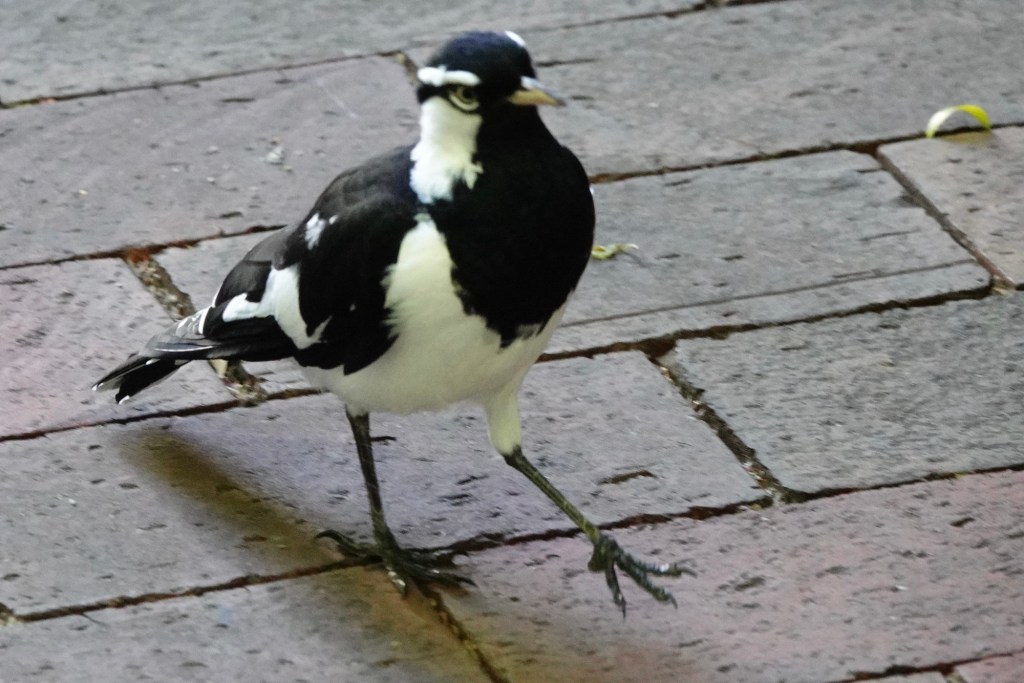
Noisy miners and Australian ibis were curious about our snack, but we weren’t sharing.
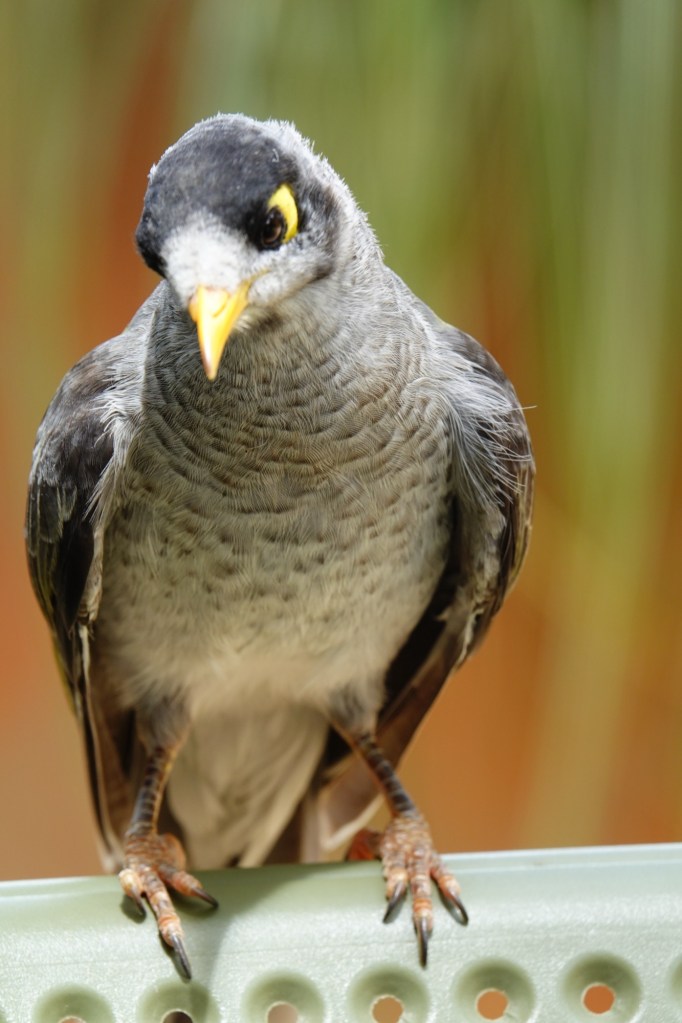
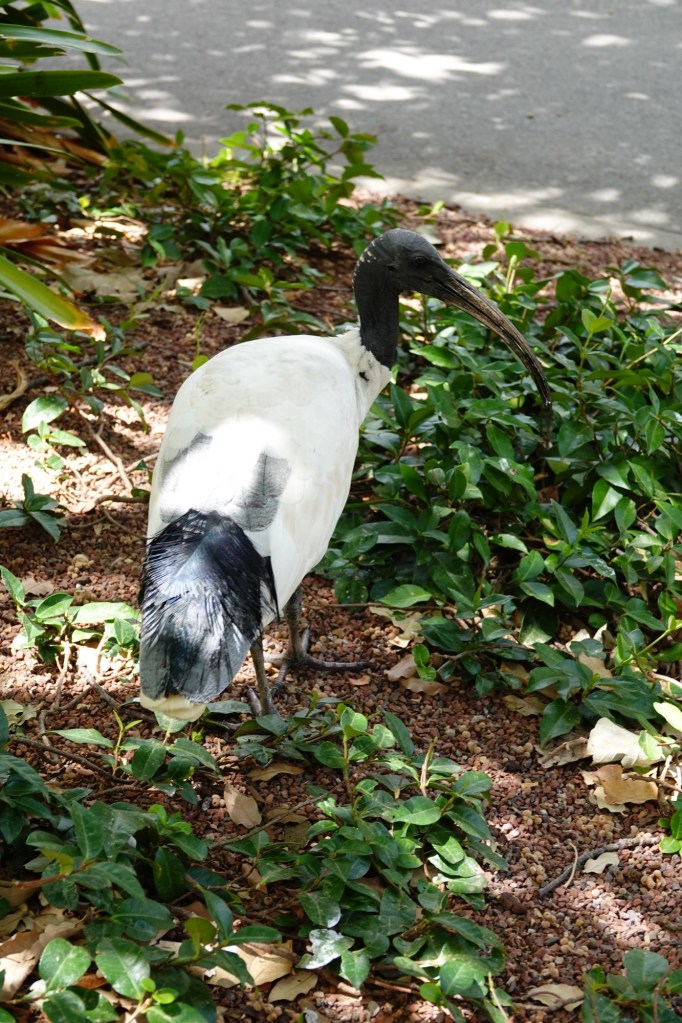
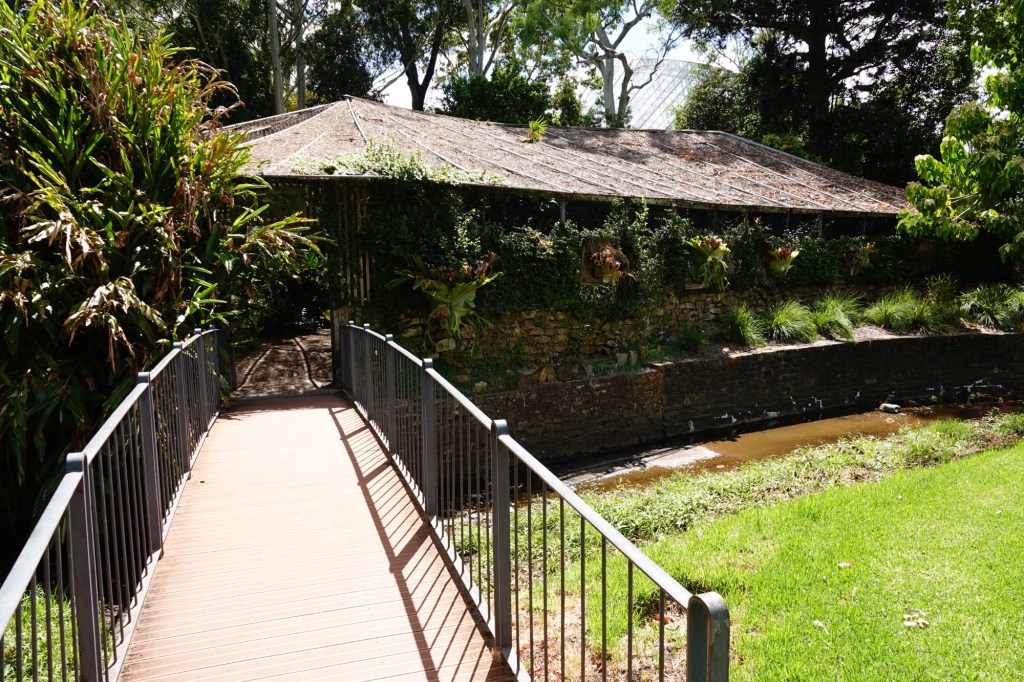
The gardens have what seems like a fairly small holding pond under a footbridge, but that pond irrigates the entire Botanical Garden property. In the pond, turtles and waterfowl.
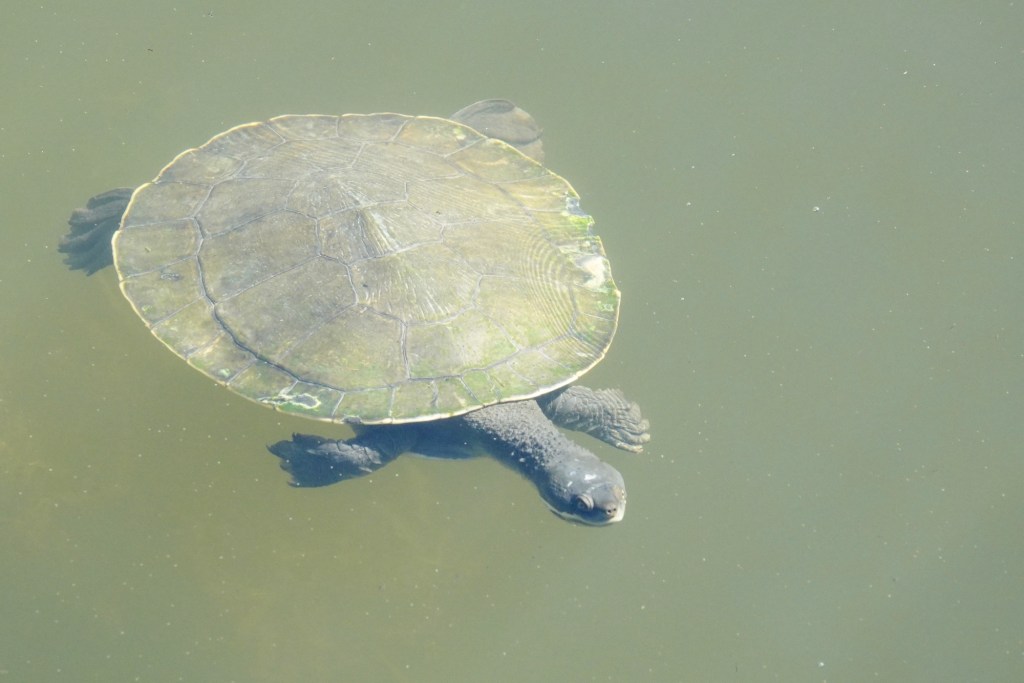
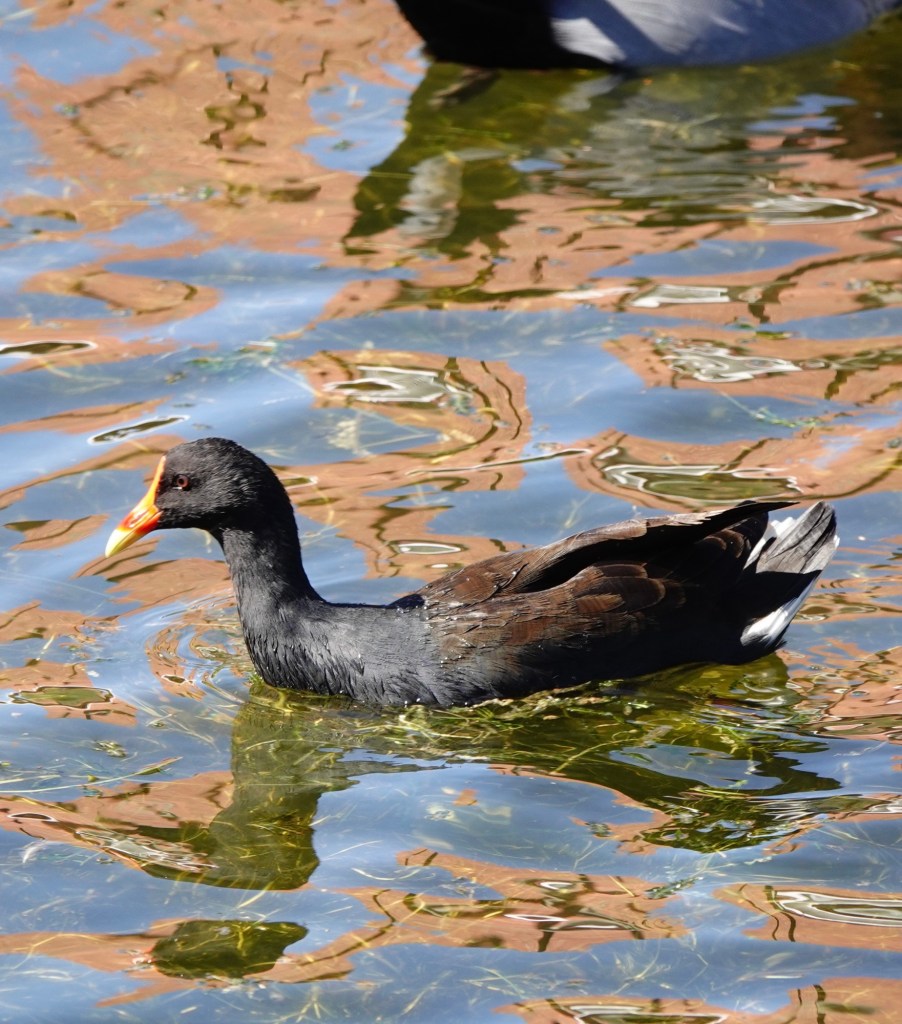
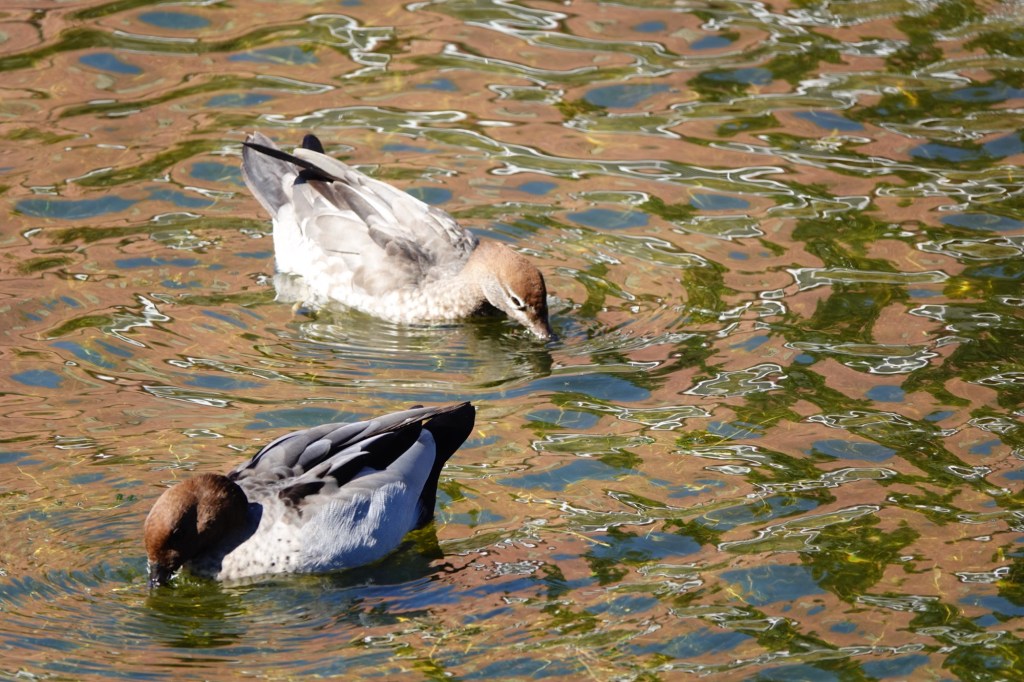
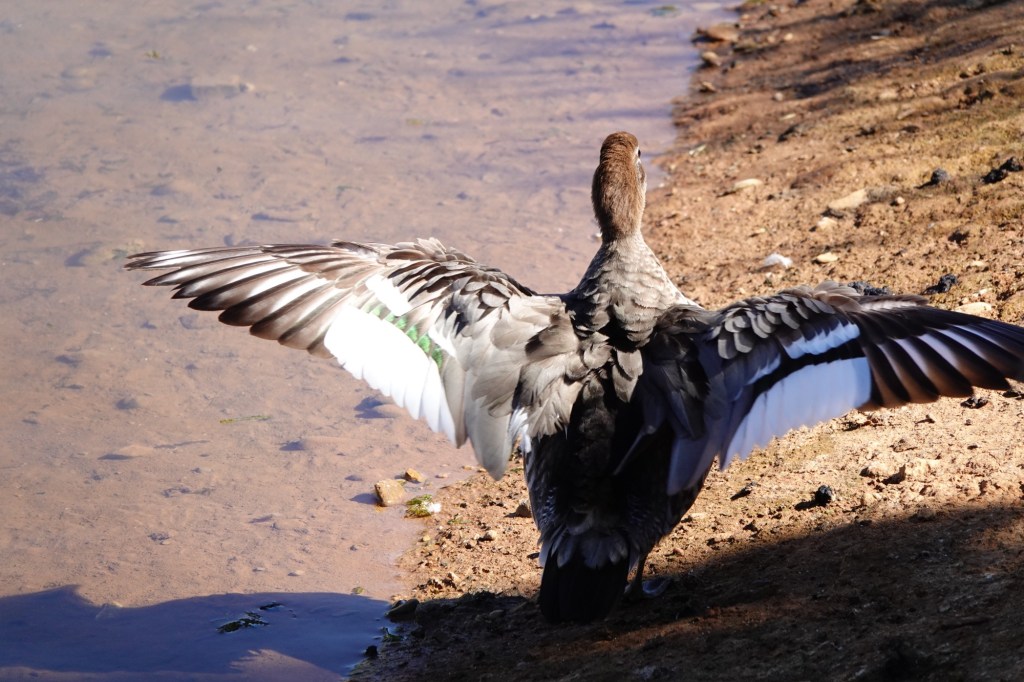
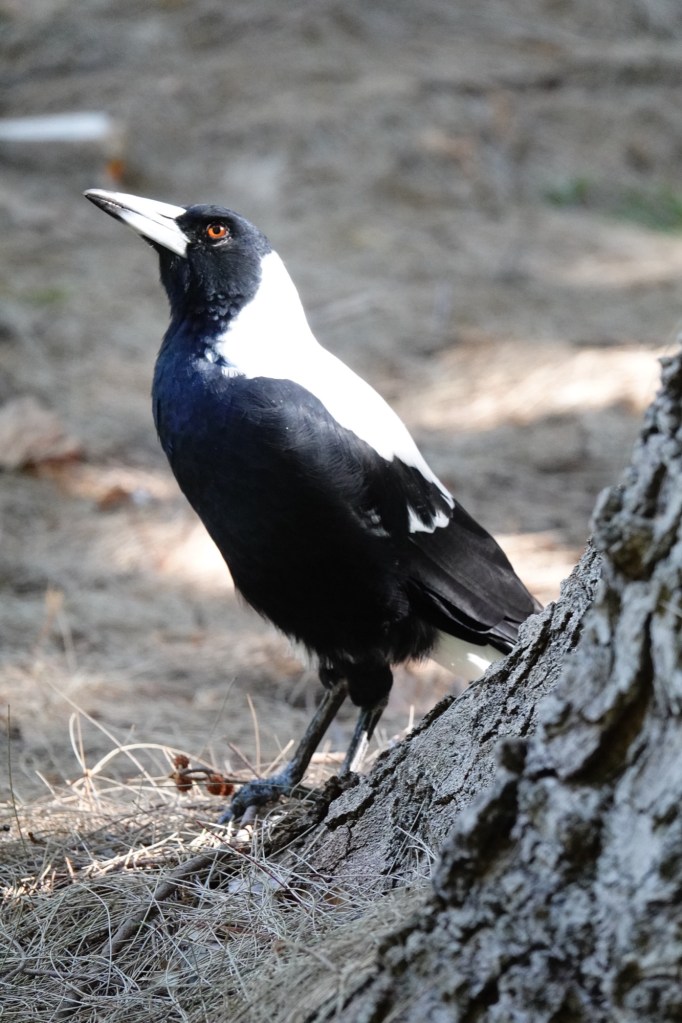
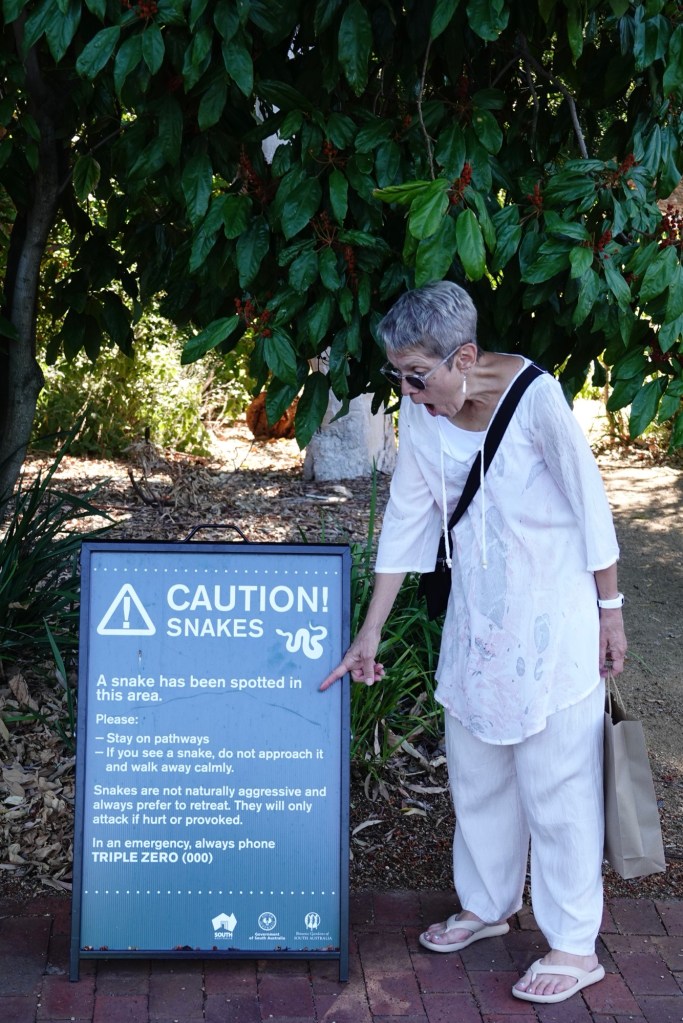
Given that we’re in Australia, which has somewhat of a reputation for deadly animals, I suppose we weren’t too surprised to see this sign:
But what neither of us expected as we exited the Botanical Garden and walked between Botanic Park and Frome Park was this:
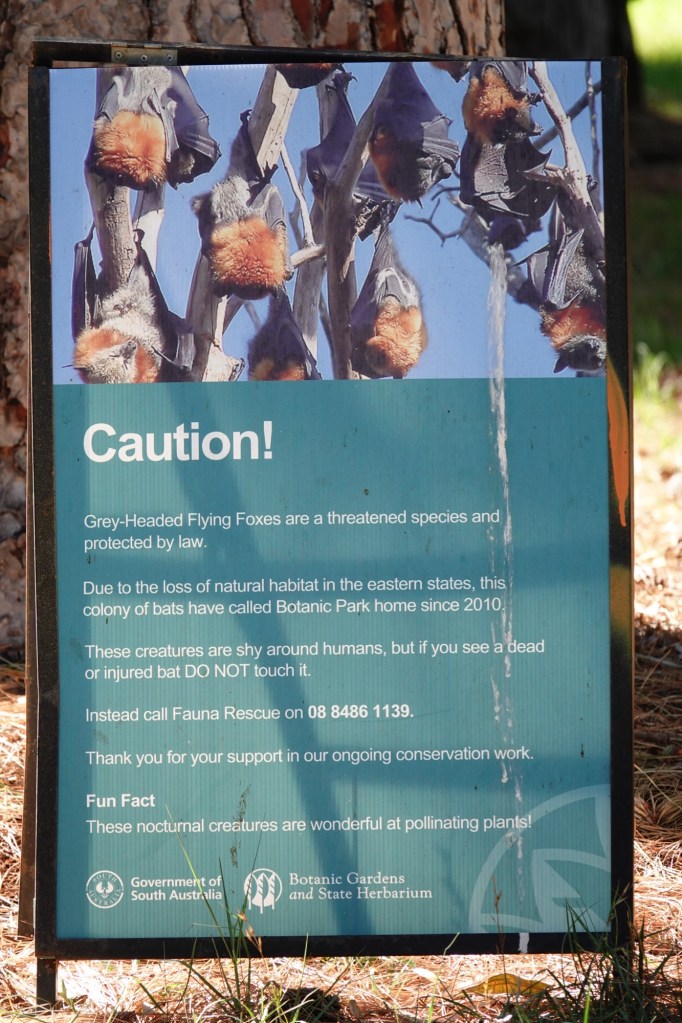
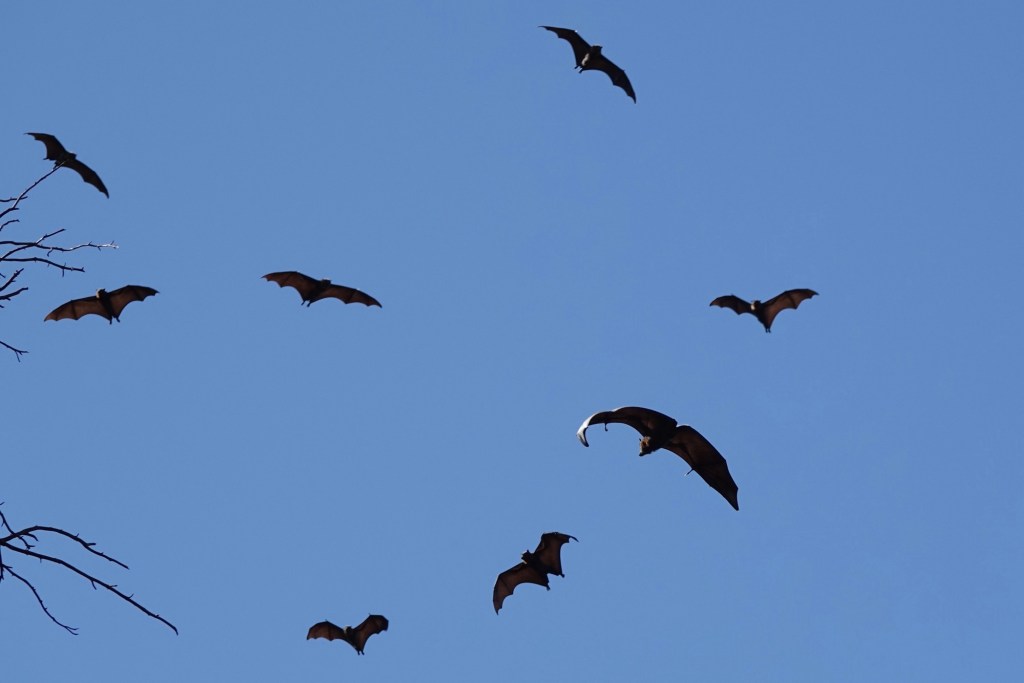
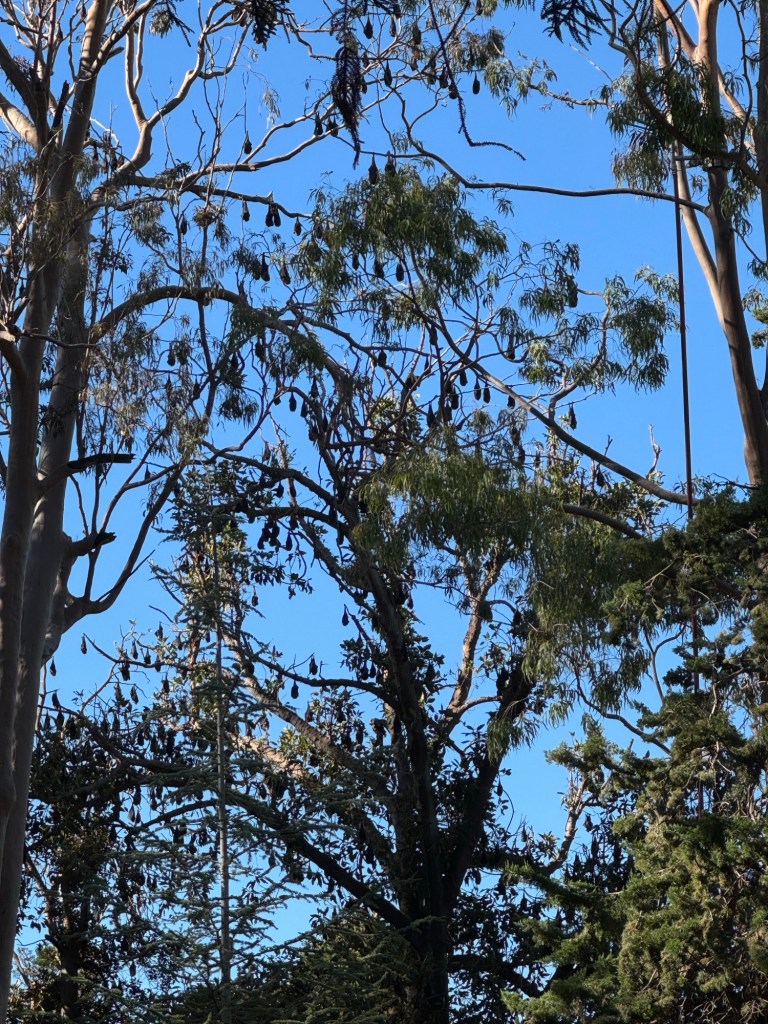
Adelaide is home to a significant, permanent colony of over 35,000 to 46,000 grey-headed flying foxes, primarily based in Botanic Park.
Yes, 40 THOUSAND plus! The colony arrived in 2010, relocated due to changing climates. The bats play a crucial role in pollinating native eucalypts.
The first thing we noticed was the squeaking.
Then the wings in the sky.
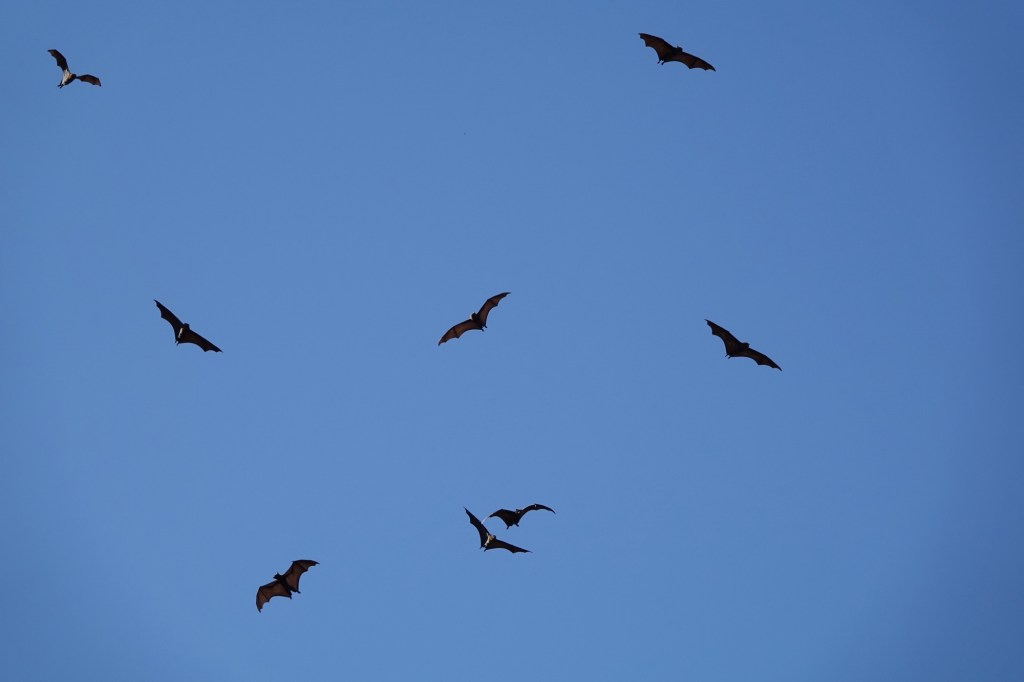
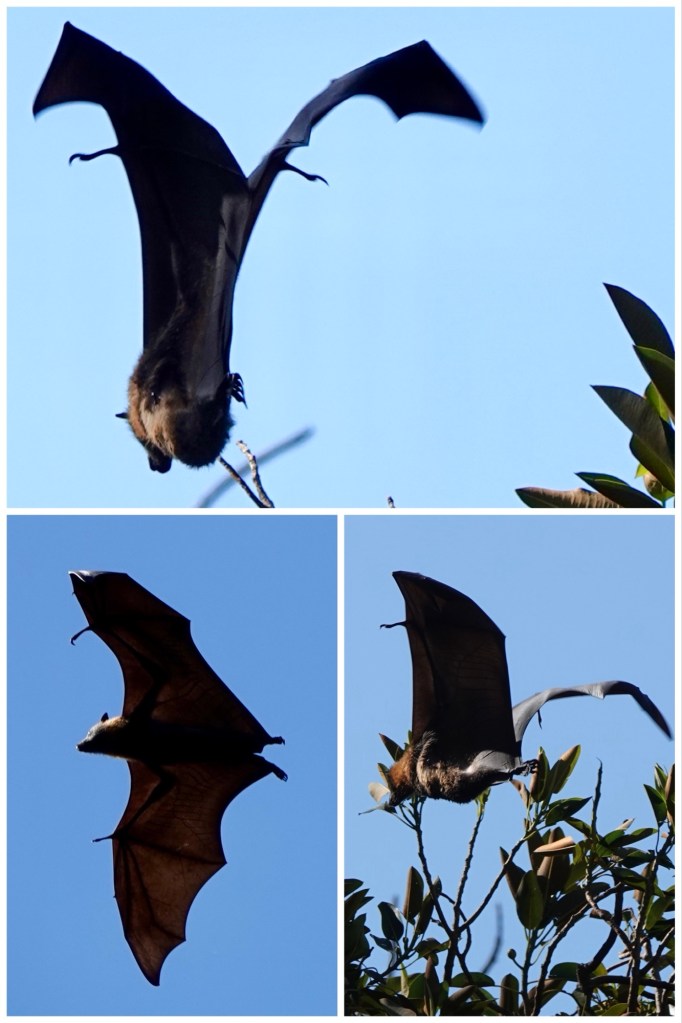
Then the trees!
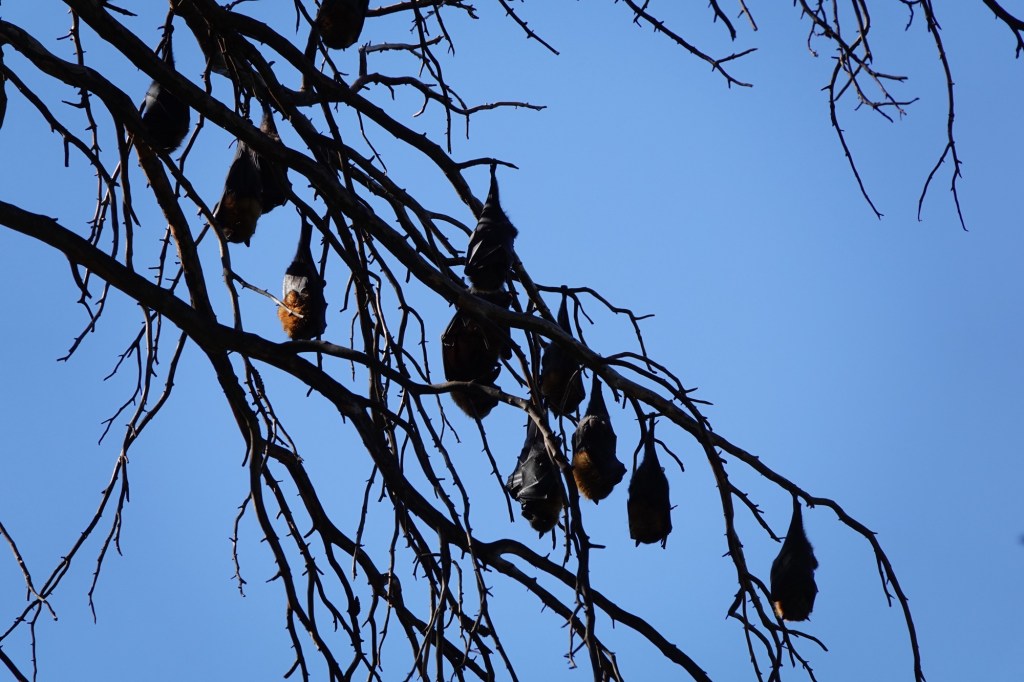
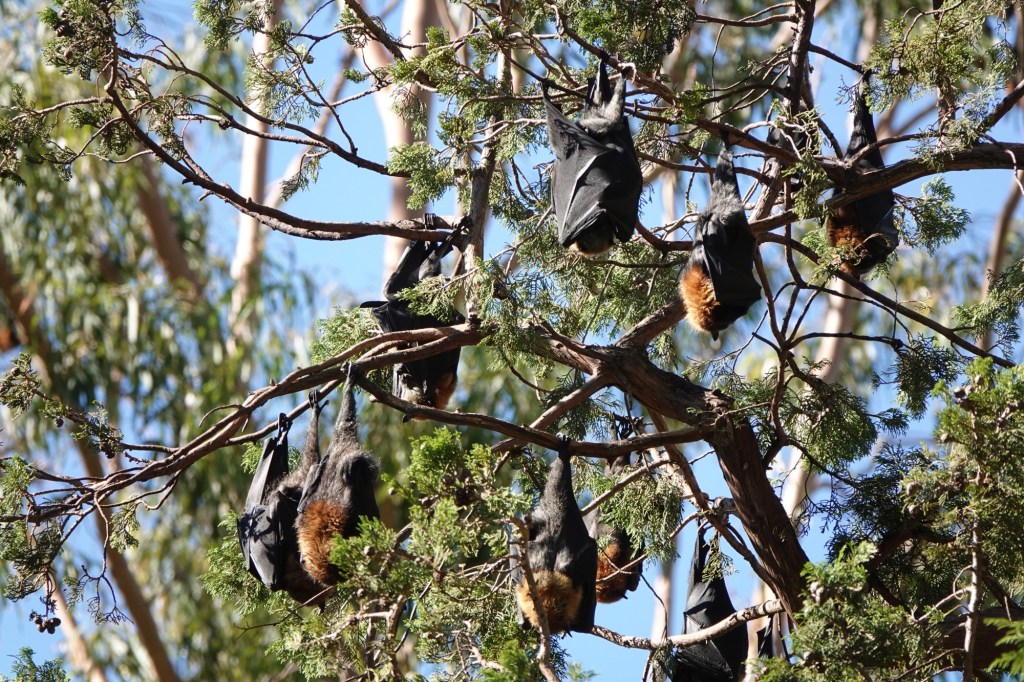
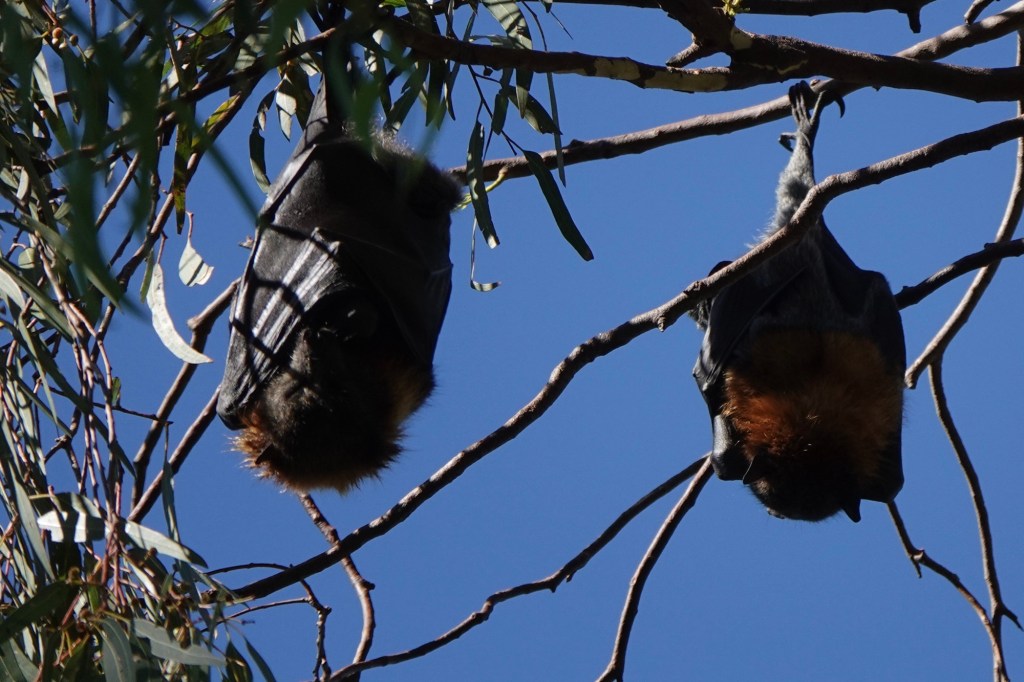
This is not a tiny fruit bat. The grey-headed flying fox is a “megabat” native to Australia. It is the largest bat in Australia, with the adults’ wingspan reaching up to 1m (3 ft 3 in) in width, and their furry bodies weighing up to 1 kg /2.2 lbs, although its weight can vary between 600 and 1,000 g (21 and 35 oz), with an average of 700 g (25 oz). The combined length of the head and body is from 230 to 290 mm /9-11 inches.
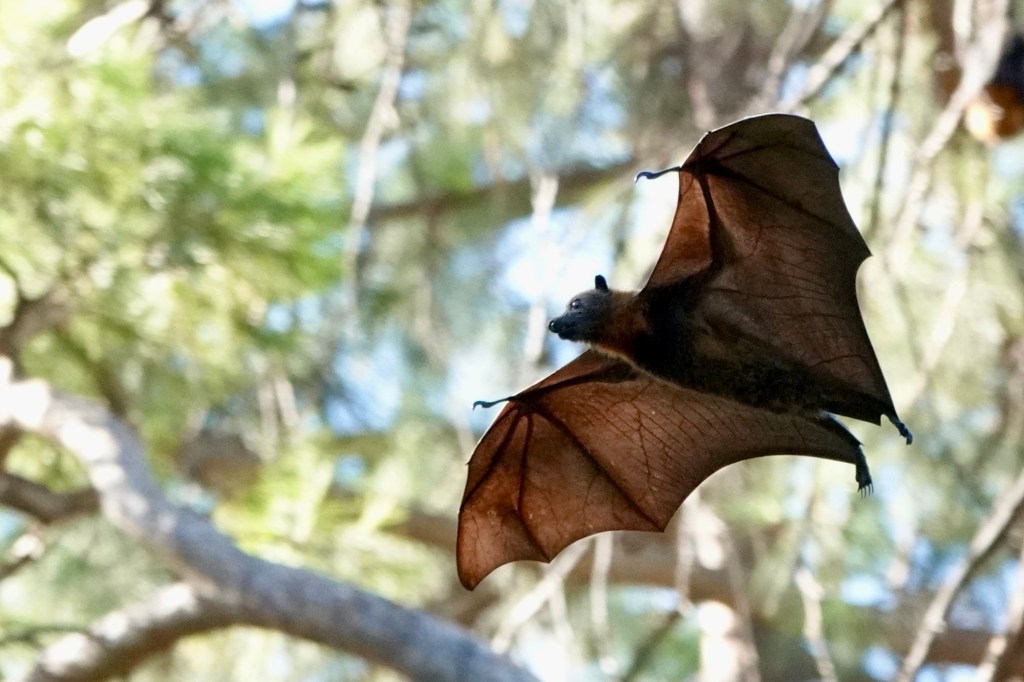
The gardens were lovely, but the bats were absolutely magnificent!!
 Rose and Ted’s Excellent Adventure
Cool! All of it. What a great botanical garden. That glass (mica look) sculpture alone was worth the visit. I’ve seen Chihuly works at Kew, displayed among the plants. I think his work really enhances certain plants on display. The papier mâché collection was fascinating. It reminds me of the glass flower collection at Harvard University by Rudolf and Leopold Blaschka. There is a lot on YouTube about these outstanding model makers. Unbelievable detail.
LikeLiked by 1 person